M=EC2 – THE MEDITATION EQUATION

By Kingsley Dennis

Source: Waking Times

‘When one begins to meditate, one accomplishes the only really free deed in this human life… we are completely free in this. Meditation is the archetypal free deed. – Rudolf Steiner

Arguably one of the world’s most famous equations is Einstein’s E = mcwhere energy equals mass times the speed of light squared. I am now proposing my own equation, which likely will be nowhere near as recognized or celebrated. Nevertheless, I feel it has worth sharing. Here it is: M = ECWhat does it signify? It means: meditation equals extended mind times contact and communication. At this point, I feel that some explanation is required. Here goes.

Philosophers, artists, and scientists have been debating for centuries the questions concerning human consciousness: what it is and how it emerges. The question of human consciousness has also been at the heart of many wisdom teachings, although these have tended to be based on revelation rather than investigation and empirical research. Over the course of these varied discussions, debates have been divided between the materialistic approach (the mind is contained in the brain), and what may be rather loosely termed as the ‘spiritual-metaphysical’ worldview (the mind exists outside of the brain). In recent decades, thanks largely to the advance in technologies, scientists have been able to map and study the human brain – including neuronal patterns, brain disorders, and pathways of human thinking. Yet this has led, in main, to an increased certitude among many scientists of a material view of human consciousness.

In other words, consciousness exists as a by-product of the physical brain and, as such, cannot exist without brain function. This is the dominant view amongst materialist thinkers and scientists. In more recent years however, and with the further research into nonlocal and field phenomena, investigators have been re-visiting mainstream theories of human consciousness. Specifically, as the unified field theory gains more support pointing to the nature of a nonlocal, interconnected cosmos, a different perspective is emerging on how consciousness may operate. And an understanding on the true nature of consciousness will validate and give meaning to the act of meditation; specifically, how meditation may provide access to contact, and possibly communication, beyond the material realm. First, we need to explore current concepts and perspectives on human consciousness.

Concepts of Consciousness: 1 – The Turbine Theory

The dominant mainstream narrative concerning human consciousness is that it is generated by the brain as a form of by-product. This has been referred to as the ‘turbine theory,’ whereby just how electricity would be generated by a working turbine as a by-product, so too is human consciousness the by-product of a functioning human brain (motor). This theory postulates human consciousness as being local and produced from something tangible. Also, when this producer/motor stops functioning – i.e., the brain ceases to be alive – then consciousness, and related streams of experience, likewise stop. Medical science has gone a long way to validate the ‘turbine theory’ of consciousness by repeated experiments on how impaired brain functioning results in distorted consciousness.

The basic premise of this understanding of consciousness is that neuronal networks in the human brain have evolved to such a high state of complexity that they produce a level of self-consciousness above that of any other animal on the planet (except perhaps dolphins, porpoises, and whales). Here, the degree of consciousness produced by each specific living creature is related to the level of biological complexity. In recent years, there have been renewed calls for a neurological basis for consciousness. For many scientists working in this field, consciousness is a by-product of complexity; thus, complex systems produce varying levels of consciousness, and ‘how much consciousness they have depends on how many connections they have and how they’re wired up.’[1] Despite recent scientific theories of consciousness, most still cling to the basis of an old paradigm ‘turbine theory.’

In other words, that consciousness is a secondary phenomenon resulting from primary activity located in the human brain. Regardless of the attempts by mainstream science to strengthen their outlook on consciousness, this ‘complexity-produces-consciousness as a by-product’ perspective has so many holes. The many holes in this dominant yet conservative theory is owing to a range of experiences that throw doubt upon its validity. Challenges to the turbine theory of consciousness have come, as one example, from increasing evidence of ‘after death’ conscious experiences.

Concepts of Consciousness: 2 – The Cloud Theory

According to the orthodox view, consciousness ceases when the brain dies – i.e., no generator, no current. For many, this may seem like an obvious deduction. However, evidence to the contrary clearly contradicts this theory. Many cases have shown that human consciousness is maintained even though a person is technically declared brain dead. The near-death experience (known as NDE) has been reported by sufficiently large numbers of people who were declared brain-dead. Conscious experience in brain dead people has been reported in almost 25 percent of tracked cases. The NDE phenomenon has now been widely researched and discussed by many credible sources.[2] Furthermore, this phenomenon is not new and there are accounts of NDEs occurring in medieval times.[3] The existence of consciousness – a by-product of brain activity – in the absence of brain function cannot be accounted for by the mainstream turbine theory. There are also numerous indications that human consciousness exists in cases of permanent death. That is, many years after a person has died their consciousness remains available for contact and communication, such as through channelling or forms of ESP. There is now enough credible evidence to put doubt into the mainstream theory that consciousness is solely a by-product of localized brain activity.

One way to account for these anomalies would be to suggest that consciousness is in some way conserved beyond the brain – that is, as a nonlocal phenomenon. In this hypothesis, consciousness is something stored external to the brain. This can be framed in terms of a ‘cloud theory’ of consciousness, as this is similar to how information would be conserved on digital platforms accessed by computer networks or other cloud-enabled devices. Likewise, using this analogy, the mainstream ‘turbine theory’ of consciousness would be akin to an old-fashioned computer without Internet or built-in-memory that would lose all its data once switched off. In this regard, the cloud theory posits consciousness as nonlocal, rather than localized within the brain. Furthermore, the cloud theory allows for not only individual consciousness to be stored, and be recalled, but multiple.

This perspective of accessing multiple consciousnesses, beyond the individual one, is reminiscent of Jung’s collective unconscious. This theory would appear to support the observations of psychiatrists and consciousness researchers who have induced altered states of consciousness in their clients, including past life regression. When in altered states a vast majority of people have the capacity to recall almost everything that has happened to them, as well as in previous life incarnations. Moreover, their recall is not limited solely to their own experience but can also include the experiences of other people as well.[4] This cloud theory therefore suggests something akin to a collective field of consciousness that makes complete information available relative to the mode of access. This perspective shares similarities with the scientific research on the Akashic Field[5] and Morphic Resonance.[6] However, despite the appropriateness of the cloud theory of consciousness, it too does not account for all observations.

Concepts of Consciousness: 3 – The Unified Field Theory

In various recorded accounts of altered state consciousness, it appears that contact/access is not only made with traces of one’s nonlocal consciousness but also with distinctive separate conscious intelligence. That is, with an active consciousness that is not the consciousness of a human being. Such experiences, once the realm of mystical, shamanic, or indigenous traditions, has increasingly entered mainstream culture. Previously, such ‘encounters’ were labelled as supernatural or simply conveniently ignored as a quirky anomaly. However, as western science has developed its exploration of the inner realms (such as in transpersonal psychology and similar practices), such experiences have become more widespread and thus need to be accounted for. From this evidence a remarkable conclusion arises: that human consciousness can connect, and often communicate, with conscious entities that not only manifest a sense of self, but also carry distinct memories and information. This experience can neither be accounted for in the mainstream turbine theory nor the cloud theory of consciousness. We now need to consider yet another concept – that consciousness is a unified field phenomena with holographic qualities.

The unified field theory posits that consciousness may manifest in spacetime yet originates from a source that exists in a realm beyond spacetime.  In other words, consciousness has its origins in a deeper dimension (in a ‘unified source field’) and yet manifests through physical-material reality. This concept would suggest that all forms of localized consciousness are expressions of a unified consciousness field that is beyond spacetime. The implications of this understanding are that consciousness is not ‘in’ the brain, ‘produced’ by the brain, nor ‘stored’ beyond the brain. Rather, the human mind is a localized aspect of a conscious intelligence that infuses the cosmos from its source beyond spacetime.

This may be a hard pill to swallow for many people. However, when we examine the phenomena that is consciousness, this perspective makes a lot of sense. The viewpoint of this new model says that the brain receives and interprets consciousness, which is an interrelated aspect of the cosmos, and then projects this as the individual mind. Yet the brain does not produce consciousness. This understanding, which is now increasingly supported by the very latest scientific findings, points toward a Unified Source Field (USF) as generating what we perceive as spacetime. The materiality of spacetime is thus a holographic projection, coded from an underlying cosmic intelligence-field. It is this underlying intelligence-field that is the source of all material reality and conscious life. Every element that emerges into physical reality is simultaneously interrelated with the underlying Unified Source Field. As such, each material element in existence is also in contact and communication with this unified intelligence-field. Human consciousness – the human mind – is at all times connected to a deeper dimension of Source consciousness.

A Deeper Dimension: Consciousness, Contact, Communication

The understanding that consciousness originates from a deeper dimension of reality beyond spacetime has been embraced by many well-known spiritual figures, mystics, visionaries, artists, and even a handful of intuitive scientists. It may one day come to represent the dominant understanding amongst humanity (as it perhaps once was). The universe has already been recognized by mainstream science as exhibiting an incredible – almost impossible – degree of coherence. Now we may know why this is. It is because there is no random cosmos, no separation of materiality and immateriality, no empty space, no ‘out there’ and ‘in here.’ Everything – absolutely everything – is an integral part of a nonlocal conscious field whose origin is a Unified Source Field (USF) existing beyond the spacetime dimension. What this implies is that there is an inherent form of order to the material dimension. The cosmos, and all aligned aspects within it, adheres to an intelligent, conscious impulse toward coherence and connection.[7] Perception too, as an attribute of consciousness, trends toward greater conscious coherence (awareness) and connection. At the core of this drive for connectivity, I suggest, is an urge for conscious awareness of Source (the Unified Source Field). And so, this leads me back to the equation at the beginning of this essay; what I call the meditation equation: M = EC2.

Meditation equals extended mind times contact and communication. Meditation has from time immemorial been a part of human life, even if not formally recognized as so. Meditation can take only a second. A quick pause of chatter in the mind. A momentary close of the eyes. A transitory step back from the entanglement in physical reality. A fleeting respite from external stimuli. A brief break from the outer world to focus upon the inner. And the inner world is expansive – it is where the origin resides. And in this state, contact can be made with those aspects in existence beyond our material reality. And with contact can also come communication.

As human beings, we are already in contact and communication with aspects beyond our perception or acknowledgment. We only do not recognize such contacts as so. The inner nudge, the inspirational idea, the coincidental happening, the inexpressible sense, the indescribable knowing. These are the contacts humanity has. What if we consciously take it to the next level by intending to listen to such contact? What if we then ask for communication? We can give ourselves permission to start asking for contact and communication whilst in a meditative state. By showing acceptance, and readiness to allow for contact and communication beyond our physical senses and sense-reality, we are acknowledging the interrelatedness of all life. And life wishes to communicate amongst itself. Sentient life wishes to be heard, and to share.

Life is not meaningless nor without purpose. Our inherent connectivity transcends localized space and time. The human being is intrinsically connected with the cosmos and with Source consciousness. One day, it is hoped, this understanding will be, for all of us, as clear as pure water; and we will laugh gently to ourselves thinking how it could ever have been otherwise.


HOW HYPNOTISTS (AND MASS MEDIA) HACK YOUR MIND TO CONTROL YOUR BEHAVIOR

By Dylan Charles

Source: Waking Times

I’m a committed advocate of freedom, personal liberty, pharmaceutical free health, bodily autonomy, and free-thinking, which, apparently, puts me at odds with the majority. As shocking as it is, these basic standards of a good life, which have governed humans for centuries, are suddenly being portrayed as selfish and even dangerous.

How does an individual come to view personal sovereignty as a detriment to themselves and to society, especially when that society is so obviously sick and dysfunctional? How does one come to see their own body as a threat to the world at large, and a playground for experimental science?

People ask me these questions all the time, and the best way to explain what’s happening is to look at how mind control, social engineering, propaganda, and hypnosis affect the mind and steer the individual away from individualistic and self-governing behavior. The hysteria so prevalent today only makes sense when you recognize that most people are truly not thinking for themselves, but are instead programmed to run scripts and programs that have been prepared for mass consumption.

By looking at how hypnotism works, for example, you can begin to understand what’s really happening today, and more importantly you can begin to understand how your own life is affected by the environment we’re in.

Here’s a look at how hypnosis (and mass media) hack your mind to control your behavior.

First of all, let’s acknowledge the power of hypnosis. Therapeutic hypnosis is widely used clinically for the management of pain, depression, anxiety, stress, phobias, and habit disorders, such as smoking.

Stage hypnotists are well-known for inducing some extraordinarily illogical and ridiculous behavior in their subjects. In a matter of minutes, an accomplished stage hypnotists can get complete strangers to do absurd things like believe their hands are glued together, forget their own name, lose the ability to drink water, to be unable to see a person or object right in front of their face, to jump up and yell something bizarre when they hear a code word, and on and on.

Hypnotism is real, and anyone is susceptible to it, in varying degrees. In the following clip, hypontist Keith Barry explains what it takes to hypnotize a person… any person. He explains that a subject needs to be intelligent, as a key requirement for hypnotism is the ability to focus on the imagery, speech and commands of the hypnotist. He gives us a simple exercise to show that certain people can be more or less susceptible to hypnosis.

YouTuber Derek Banas explains the process of how to hypnotize someone. Firstly, you must hold the belief that hypnosis is real and that it will work, then you must build a rapport with the subject, have them place their full attention on you, completely focusing at all levels on one thing. When their attention is completely focused, the subject is ready to be led into trance, which involves giving repeated simple commands and suggestions, until they are told to close their eyes and fully relax.

There are variations of this, including different techniques, although the process is essentially uniform.

You act with authority and confidence. You direct all of their attention on to one thing, You repeatedly tell the subject that they are being hypnotized. You lead them into trance with repetitive language and directives, while directing the movements of their eyes.

As the subject undergoes this process they are making a series of micro-agreements along the way, essentially giving the hypnotist deeper access to consent. The attention is focused along with repetitive and downwards inflecting suggestions while their eyes are trained on a specific object, like a swinging watch, for example. Doing this brings the subjects brainwaves closer and closer to an alpha state, the most hypnotic brainwave state.

The confidence and rapport of the hypnotist serves to bypass what is known as the critical factor, which is considered the gateway between the conscious and subconscious mind. It is believed that 95+% of our behavior is governed by the subconscious mind, and bypassing the critical factor moves the subject from analytical thinking toward emotional and unconscious thinking, forgoing logic and reason. Essentially, the subject’s nervous system is either overloaded, or made to completely relax, and high emotions such as lust or fear are the most effective emotional energies to bypass the critical factor. A hypnotist does this by presenting with authority and certainty, thereby giving the subject the freedom to relax into a subconscious or automatic mode of behavior.

The physical signs of hypnosis include dilated pupils, relaxed breathing, eyes wanting to close, skin flushes and other subtle physiological signs. When a person is deep in an alpha brainwave state, a hypnotic state, their conscious, rational mind is effectively switched off, and they become incredibly open to suggestion, making it possible to implant ideas and behaviors into them, which the subject will adopt without critical thinking.

Hypnotherapist Marc Marshall explains this in more detail and in the context of our global situation, discussing how the amygdala is also hijacked to bypass the critical factor, taking over a person’s fight or flight responses.

“Let me pull back the curtain a bit on how this process works and show you what has happened and is continuing to happen in this current emergency. Many of you have witnessed what hypnotists call an instant or shock induction. These are the dramatic inductions that many stage and street hypnotists use to induce a trance state (hypnosis) in their volunteers. It literally takes just a few seconds for this to happen. What the hypnotist typically does is cause a firing of that portion of the brain known as the amygdala. We literally hijack the amygdala which is responsible for the “fight/flight/freeze” mechanism of our bodies. It is in this split second of time, that the subconscious mind is looking for a program that will provide an appropriate response. Nancy Moyer, MD., describes it as When stress makes you feel strong anger, aggression, or fear, the fight-or-flight response is activated. … It happens when a situation causes your amygdala to hijack control of your response to stress. The amygdala disables the frontal lobes and activates the fight-or-flight response.” It is this most basic of instinctual responses that is responsible for our survival as a species. It is caused by the release of cortisol, a powerful stress hormone.

There are several extremely critical parts of this phenomena of amygdala hijack that are the essence of what I am seeing and which concerns me. As stated above, the amygdala disables the frontal lobe of our brains. The frontal lobe is the part of the brain that controls important cognitive skills in humans, such as emotional expression, problem solving, memory, language, judgment, and sexual behaviors. It is, in essence, the “control panel” of our personality and our ability to communicate. We lose our ability to make rational judgements, our stress increases and dramatic physical changes take place in our bodies. Most importantly, we become and remain highly suggestible in this highly aroused state. Our subconscious minds are seeking to find that “program” that will free us from this threat and we take that cue from the perceived leaders.” ~Marc Marshall

That’s a short synopsis of how a hypnotist brings someone into a suggestive trance, and here’s an excellent video of this process, and a demonstration of what a hypnotist can influence a person to unconsciously do.

The keys to the process of inducing hypnosis are the projection of confidence and authority, capturing the full attention of the subject, using repeated trance inducing language and repeated suggestions, bypassing the critical factor, and inducing an alpha brainwave trance.

Confidence, authority, repetition, suggestion and trance induction.

Now, back to how mass media uses this very skillset to induce mass hypnosis and generate widespread unconscious and controllable behavior.

Firstly, the primary medium for blasting non-stop cable news into your brain is TV. Television itself is well-known to rapidly induce alpha brain wave states in the viewer, bringing them into a hypnotic trance automatically, typically affecting the function of the frontal lobe within an astonishing 90 seconds, and bypassing critical thinking.

“If you’ve ever experienced a mind fog after watching television, you’re not alone.

The brain has four modes that it operates in, and four brain wave patterns. Delta is when you’re deep asleep, Theta is when you’re in light sleep, Alpha is awake but relaxed, it’s the mode of thinking that you are in when you’re in the most heightened state of suggestibility, and then there’s Beta, the highest functioning mode like when you’re reading a book or you’re having a very stimulating conversation.” ~Pseudology: The Art of Lying

This presentation explains this in greater detail.

Furthermore, the graphic design elements commonly used in news presentations serves the purpose of capturing one’s full attention and jarring the nervous system into an overloaded state. Think about the various moving parts and messages the screen at any given moment during a regular broadcast. While the anchor is speaking about one thing, you’ll see side-scrolling text at the bottom talking about an entirely different issue, with evolving background graphics, typically emphasizing the colors red and blue, which are subconsciously regarded as the colors of authority and trust.

Also, they commonly use swirling spheres and circles, graphics are used much in the same way that hypnotist uses a watch or a pen as a point of eye fixation to capture the full attention of the viewer.

Here’s a perfect example:

Now, if you look at marketing in general, it is a confidence game. That is, marketers will attempt to sell you anything at all while pretending it is the most amazing and life-changing thing ever. TV infomercials come to mind.

Mass media is a confidence game (con-game), meaning that the anchors, reporters, experts and pundits are adept at presenting any information with absolute and total confidence. Colin Powell did this when he showed up at the UN with a vial of white powder and told everyone in the room that Saddam Hussein was going to kill everyone. It’s difficult to disbelieve someone who presents with such confidence, and psychopaths are the best at this, and know to exploit their victims’ trust by over exaggerating confidence.

The top news anchors will never let their confidence down, and they’re marketed in such a way as to manufacture rapport with the audience. They’re seen in heart-warming town hall segments relating to the common man, out in nature celebrating life, and out on the town kissing babies. Here’s everyone’s favorite, Anderson Cooper, being portrayed as a humanitarian. Such a likable guy!

Finally there is the detail of suggesting and commanding the viewer to believe or to do certain things. In hypnosis, when the critical factor is bypassed, it allows access to the subconscious mind where what are known as ‘pillars of belief’ are implanted. Below the rational, critical thinking part of the mind is a deep sea of beliefs which govern most behavior. Once a subject is in an induced trance, the news repeats ideas, suggestions and beliefs, ad nauseam until the viewer basically becomes a parrot and information repeater. You see these people everywhere today.

Final Thoughts

More than ever before, those of you who believe in freedom, as I do, are called to gather your strength, sovereignty and power to stand up for these timeless moral values. It is of critical importance to recognize that the world has been deliberately lulled into a hypnotic state and fed beliefs and ideas about how things should be or how we should address crisis.

If you understand what is happening, and if you understand how all of this plays a role in shaping your own life, beliefs, and behaviors, you’r better equipped to take back control of your life.

The Political Value of Psychedelics

By Dr. James Cooke

Source: Reality Sandwich

Psychedelics and Politics

Psychedelics are political.  Their use in the 1960s had a political impact that is still being felt today, and their widespread banning was driven by political motives.  But how can a class of chemicals consistently impact our opinions of how we organize and relate to each other?  Psychedelics can affect the brains of individuals in ways that produce consistent insights.  These insights have direct relevance for our individual and collective wellbeing, and can point the way towards political change that would benefit us all.

The 1960s

The LSD-fuelled hippie movement was instrumental in the origins of the modern ecological awareness in politics that is so widespread today.  It helped birth modern anti-war peace movements and the practice of living in sustainable, eco-friendly communes.  What is it about the time we live in and the effects of psychedelic substances that result in their producing this kind of change in political thinking?  To understand this, we have to not only consider how psychedelics act in the brain, but we also have to understand both the unusual situation humans have found themselves in since the advent of civilization and the psychology that gave rise to it.

The Human Animal

We live in an unusual time.  For approximately 97% of human existence our species lived close to nature in small social groups.  Like other animals, evolution programmed us with a survival instinct and fear of death.  This fear incentivized us to control the world around us in order to make us feel safe.  Unlike other animals, however, we succeeded in dominating nature.  Thanks to our capacity for language and our dexterous hands that were freed up by our walking upright, it became possible for us to create culture and technology.  The preservation of knowledge from generation to generation that comes with language allowed for greater and greater control of the world around us.  Eventually we found ourselves in complex civilizations, a very long way from home.

The Price of Progress

This way of being that led to the relentless growth of civilizations is characterized by a particular kind of psychology, one that is governed by fear.  Sacrificing one’s happiness today in order to prepare for tomorrow can often make sense, but being consistently emotionally hijacked by fear without realising it can lead to a lot of unnecessary suffering.  This is true for individuals suffering with trauma and it’s true for our species as a whole.  In such a situation, there is the loss of the ability to find peace and wellbeing in the present.  We desperately look towards the future in the hope that if we just keep pushing forwards we will find a way out of our situation, not realizing that this way of being in itself is the problem.  The result is that, while we may no longer be routinely at risk of being eaten by predators, we are suffering from an epidemic of disorders of alienation, such as addiction, anxiety and depression.

The Fear Trap

Why do we continue to do this?  One reason is that we are naturally fearful creatures.  It makes sense that we would have evolved to sacrifice our wellbeing today in order to ensure our survival tomorrow.  Evolution is about staying alive, it’s not about being happy.  Another reason is that evolution has endowed us with incredible coping mechanisms.  We can be living in agony but, if we see now no other option, our capacity for language allows us to tell ourselves a story about why our situation is actually fine.  It is by taking these stories to be more real than our felt conscious experiences that we manage to repress our anguish.

Civilization and Control

Beyond the individual, there are other dynamics that keep us trapped in the game of “progress” at the expense of our wellbeing.  Once agriculture had been invented it became possible to generate surplus food, paving the way for a minority of individuals to hoard resources.  This made it possible for wealthy individuals to coerce the majority into doing their bidding as they had something that they needed for their very survival.  The ability of humans to live in stories has also been crucial in perpetuating this control.  Our ability to rationalize and normalize our experiences made it possible for each generation to grow up believing that this situation was correct or right in some way, instead of seeing how they are being exploited.

Deep Ecology

It wasn’t always this way.  Prior to the hierarchical arrangements of control that define civilization, humans throughout the world routinely explored their being part of the natural world through religious and spiritual practices.  Psychedelic plant medicines were widely used in order to explore our interconnectedness with the natural world.  The Norwegian philosopher Arne Næss coined the term “deep ecology” to refer to the non-hierarchical principles of interdependence and interconnectedness that are deeper than a superficial concern for the environment.  Ecology in this sense can apply equally to the natural world, to social arrangements or even to the contents of your own mind.

Ecology vs. Hierarchy

While the systems of control that define “civilized” states typically separate and atomize people so they can be used to generate wealth for others, human communities centred around ecological and spiritual principles are based on collaboration and the valuing of individual and collective wellbeing.  Psychedelics promote these ecological and spiritual perspectives, making them a threat to dominating systems of control.

Psychedelics and the Wisdom of Ecology

How do psychedelics promote ecological thinking?  In the brain of the individual, psychedelics can temporarily topple the hierarchical, control-based modes of thought that usually dominate our minds.  As is well attested to in Buddhist philosophy, it is these modes of thought that are responsible for the majority of our suffering.  With these structures of control dissolved, what’s revealed is a sense of interconnection and a more harmonious way of being.  This experience can produce insight into the wisdom of ecological principles such as openness, collaboration and naturalness as opposed to the controlling, atomizing and artificial arrangements that currently dominate society.  As our well-being as social primates depends on the community as a whole, it only follows that their relevance of these insights would extend beyond the individual to those who have an impact on us in society.

Hippies, Peace, Communes and the Environment

LSD use in the 60s pushed the brains of a generation in the direction of ecological thinking.  Many young people who might otherwise have unquestioningly fought in the Vietnam war suddenly saw their situation afresh, the propaganda of their home country replaced with a vision of a world of collective collaboration rather than one of conflict and domination.  The suicidal logic of ecological destruction was also laid bare, the narrative of progress through the domination of nature seemingly nothing more than an excuse for the powerful to line their pockets, a project that would soon take the earth and all of us with it.  A critical mass of young people came to similar conclusions and the hippie movement was born.

Science and Psychedelic Personality Change

Modern science is now mapping how psychedelics change people’s political opinions.  A study published in 2017 found that the number of times people use a psychedelic and the strength of their most powerful ego-dissolving experience correlate with increased nature relatedness, openness and reduced authoritarian thinking [1].  These aspects of the personality all reflect this movement towards greater ecological thinking.

The Psychology of Control

Without the benefit of psychedelics to help us travel in the direction of ecological thinking and greater wellbeing, many get trapped in coping mechanisms of control.  The traumatic nature of existence pushes some to move in the opposite direction, disowning their capacity for empathy and connection and reaffirming their sense of separation.  This process can result in disorders of the ego such as narcissism, sociopathy and psychopathy, all characterized by a lack of empathy and a delusionally high opinion of oneself.  We currently live in a system crafted to suit such personality types.  The coping mechanisms emerge in response to severe trauma early in life, when the child is learning how to connect with the world around them.  Investment in the ego and lack of concern for others is a pathology that can help such people cope with this powerful trauma.  It also represents the psychological dynamic that keeps society sick and blocks collective healing through the widespread adoption of the ecological perspective.

The Key Roadblock to Change

Society only consists of individuals interacting.  As a result, our political crises largely originate in the internal crises of individuals.  The collective trauma carried by the human race is passed on generation after generation.  A critical amount of narcissistic behaviour results in a society based around the separation and atomization of individuals, as well as around domination and control, of the environment and each other.  The extent to which our fellow humans are unconsciously trapped in narcissistic coping mechanisms is the extent to which our species will be trapped in its current mode of domination, control and suffering.

Psychedelic Medicine and the Healing of Collective Trauma

Psychedelic medicine holds the promise of moving culture in the direction of trauma healing and deep ecological thinking that is necessary to save our species and the planet from ecological destruction.  The main challenge will be how we engage with those at the other end of the spectrum, the narcissists and psychopaths so affected by trauma that they will defend their protective systems of domination at all costs. Psychedelic medicine may be able to reach some but perhaps the single greatest impact of psychedelics in years to come will be moving the public conversation toward a greater awareness of how the dynamics of trauma have deranged our world.  The creation of a global ecological culture that centers around trauma healing, emotional wellbeing and an awareness of the psychology of narcissism is the only hope our species and planet has for survival, and psychedelics are perhaps the most powerful tool we have in making this culture a reality.


References:

Nour MM, Evans L, Carhart-Harris RL. Psychedelics, Personality and Political Perspectives. J Psychoactive Drugs. 2017;49(3):182-191. doi:10.1080/02791072.2017.1312643

Biden’s Brain Is Swiss Cheese And It’s Creepy That We’re Not Talking About It

By Caitlin Johnstone

Source: CaitlinJohnstone.com

I didn’t watch the last Democratic presidential primary debates because I figured that without Tulsi Gabbard in there shaking things up it would be a boring, vapid parade of insubstantial verbal foam, and I love myself too much to go through such a horrible ordeal. By all accounts my prediction was correct, but I did miss one thing that’s been making the rounds in video clips for the last couple of days which I find absolutely bizarre.

Most of you have probably heard about Biden’s infamous “record player” comment by now, but for those of you who missed it, Biden was asked by debate moderator Linsey Davis to defend some comments he made about America’s problems with racism in the 1970s, and he responded by essentially saying that Black people don’t know how to raise their kids so they need to be taught how by social workers. Biden has been receiving mainstream criticism for his racist and paternalistic position, along with plenty of mockery for saying that parents need to be told to “make sure you have the record player on at night” so that kids hear enough words in early childhood.

It is pretty clear that Biden was trying to communicate an idea that is premised on a deeply racist and condescending worldview, so it’s to be expected that people would want to talk about that. It’s also to be expected that people would be making jokes about how the cute old man said “record player” like a grandpa. But what isn’t being discussed nearly enough is the fact that what Biden said was also a barely coherent, garbled word salad stumbling out of a brain that is clearly being eaten alive by a very serious neurological disease.

I’ve typed out a transcript of what Biden actually said, verbatim. There are no typos. I’ve also noted where Biden closes his eyes, probably to concentrate, which he does whenever he seems to be struggling especially hard to string words together. Try to read through it slowly, word-for-word, resisting the instinct to mentally re-frame it into something more coherent:

“Well they have to deal with the– Look, there is institutional segregation in this country. And from the time I got involved I started dealing with that. Redlining. Banks. Making sure that we’re in a position where– Look, talk about education. I propose that what we take is those very poor schools, the Title 1 schools, triple the amount of money we spend from 15 to 45 billion a year. Give every single teacher a raise that equal [closes eyes] raise to getting out– the sixty-thousand dollar level. 

“Number two: make sure that we bring into the help the–[closes eyes] the student, the, the teachers deal with the problems that come from home. The problems that come from home. We need–We have one school psychologist for every fifteen hundred kids in America today. It’s crazy. The teachers are reca–Now, I’m married to a teacher. My deceased wife is a teacher. They have every problem coming to them. [Closes eyes briefly] We have make sure that every single child does in fact have three, four, and five year-olds go to school–school, not daycare. School. We bring social workers into homes of parents to help them deal with how to raise their children. It’s not that they don’t wanna help, they don’t want–they don’t know quite what to do. Play the radio, make sure the television, [closes eyes tightly] the– ‘scuse me, make sure you have the record player on at night, the-the-the-the phone, make sure the kids hear words. A kid coming from a very poor school, [closes eyes] a very poor background, will hear four million words fewer spoken by the time they get there.”

Notice how it gets more garbled the longer he speaks. The response I transcribed was about eighty seconds in length. That was just one small part of a debate in which the former vice president performed no better and forgot three of his fellow candidates’ names.

Compare this befuddled, incoherent mess with footage of a younger Biden, like his famous quip about how Rudy Giuliani only ever mentions “a noun and a verb and 9/11” in a sentence, or this clip where he said if Israel didn’t exist America would have to invent it to protect its interests in the Middle East. Biden has always been notoriously gaffe-prone, but he was also sharp, alert, and articulate enough to deliver a punchline. As journalist Michael Tracey has been pointing out, what we’re consistently seeing over and over again from the former vice president now are not “gaffes”, but clear signs of cognitive decline. Contrast the difference between Biden’s younger footage and what was seen at the last debate with footage of Bernie Sanders throughout the decades, who has remained virtually identical save for appearance and hoarseness. Age does not account for this difference. Biden’s brain is dying.

It is certainly understandable that people are concerned about the presidential frontrunner having a racist worldview. But what’s really weird and creepy is how few people are discussing the obvious fact that the presidential forerunner is also clearly suffering from the early stages of some kind of dementia. The brain that spouted the gibberish transcribed above would probably score poorly on a basic test for the early stages of Alzheimer’s disease, yet discussion of his inability to complete a coherent sentence is relegated to the margins of political discourse. This is someone who is campaigning to have access to the nuclear codes, yet we’re only talking about how he’s kind of racist and not about the fact that his brain is turning into Swiss cheese right before our eyes. It’s freaky.

It’s freaky, but it kind of makes sense. One common difficulty in getting early treatment for people with Alzheimer’s disease is that those suffering from it often go to great lengths to hide their impairments, and another difficulty is that their families are often deeply in denial about their loved one’s mental decline. According to the Mayo Clinic, “Some people hide their symptoms, or family members cover for them. That’s easy to understand, because Alzheimer’s dementia is associated with loss, such as loss of independence, loss of a driving privileges and loss of self.”

I think we’re seeing precisely this happening, both with Biden, and with his supporters. Biden himself is clearly doing everything he can to feign mental competency, and as a powerful politician aiming to accomplish a lifelong ambition to become the US president he’d certainly have a lot egoically invested in doing so. His supporters seem to be doing all kinds of denial mental gymnastics around his cognitive decline as well; just check out the responses to this Washington Post tweet for its article about Biden’s “record player” response.

Here are a few examples:

“Don’t pretend you didn’t understand what he was saying.”

“Actually, I recently saw a turntable for sale at Best Buys & vinyl records are back on the market. Try to keep up, WaPo.”

“My 22 year old son and all his friends play records on record players these days. If you’re insinuating that Joe is out of touch, you’re out of touch.”

“Actually currently, there are some people playing record players because they find the vinyl record has better sound quality. I think you are just picking and choosing who to go after.”

“He was saying they not hearing enough words. We did. We were read to. We listened to children’s albums. We had conversations. He was trying to get at the importance of those things. He didn’t do a great job on communicating it but he was right.”

“Twitter snark aside, there are studies to back up that claim.”

“He got 80% of the way through the debate without an embarrassing gaffe that highlights his age. Of course, Trump couldn’t get halfway through a debate without threatening his opponent with imprisonment.”

“Honestly…so what. I got the sentiment.”

“Not sure why people are being so condescending. Vinyl outsold CD last year, so, you know, record players are everywhere these days. You could say he’s stuck in the past or you could say he’s trending. Be kind.”

We saw this same impulse to protect and compensate for Biden’s mental decline from audience members during the debate, who gasped out loud when Julian Castro suggested that Biden had forgotten what he’d said two minutes ago. Many rank-and-file Democrats are so desperate for an end to an administration that is making them increasingly anxious and neurotic that they find it cognitively easier to compartmentalize away from the obvious fact that Biden is in a state of mental decline than to turn and face that reality. So they make excuses and pretend that his demented word salads are perfectly rational, hip references to the resurging popularity of vinyl records.

The only people who are absolutely acutely aware of Biden’s cognitive decline and yet still want him to become president are his handlers. There is no way his consistent pattern of verbal unintelligibility has gone unnoticed by those who are responsible for facilitating his election, and indeed The Hill reports that his “allies” have been floating the idea of scaling back his campaign appearances and scheduling them for earlier in the day when he’s not tired to help minimize his “verbal flubs”. These people are aware that Biden is losing his mind, but they are pushing him toward the White House anyway.

If Biden supporters were really intellectually honest with themselves about what’s going on, they’d see that they don’t actually want Joe Biden to be president, they want his unelected, unaccountable handlers to be president. From a position of intellectual honesty they’d be taking the position of arch neocon Bill Kristol, who once said he’d “prefer the deep state to the Trump state.”

And of course that wouldn’t be a first among US presidents even in recent history. Ronald Reagan had early signs of Alzheimer’s disease during his presidency according to his own son, and George W Bush was infamously just a puppet of his handlers like Dick Cheney. Indeed it would be possible to have an actual, literal Jim Henson puppet as president of the United States without America’s unelected power establishment skipping a single beat.

But that’s exactly the point: having a real human being in there with even a semi-functional mind can put some inertia on the most sociopathic impulses of America’s unelected permanent government. Both Trump and Obama are of course horrible presidents who have continued and expanded the Bush administration’s most evil agendas, but Obama slowed down the push to arm Ukraine against Russia and slammed the brakes on a full-scale bombing campaign on Syria, while Trump was unable to get along with John Bolton and is losing interest in Venezuela while resisting the push to start new wars. Despite all their flaws, they’ve resisted the permanent government’s worst impulses in some key ways. If it’s just Biden’s handlers and the unelected power establishment, there’s no humanity anywhere near the brake pedal.

https://twitter.com/BetaODork/status/1164553547960246272

So this makes sense to talk about no matter how you look at it. But we’re not. In mainstream discourse we’re speaking as though this is just a charmingly gaffe-prone old man who makes a few controversial statements from time to time but would still make a fine president, when really he shouldn’t even be allowed a driver’s license.

And I just find that really creepy and uncomfortable. As someone who’s never been able to leave elephants in rooms alone, the fact that the leading presidential contender is neurologically incapable of speaking coherently for eighty seconds sticks out like dog’s balls and it’s absolutely freakish that this isn’t front and center of our political discourse right now. Biden’s dementia should be the very first thing we discuss whenever his name comes up, not the last.


Related Videos:


WHY WE’RE A CULTURE OF ADDICTS

By Leslie Garrett

Source: Waking Times

If there’s one constant among addicts of all types, it’s shame. It’s what makes us lie and hide. It’s what keeps us from asking for help – though we don’t think we need it because we’re also good at lying to ourselves.

About why we eat. Or shop. Or gamble. Or drink.

Dr. Gabor Maté knows the feeling well. Maté, a renowned doctor, speaker, and author, has seen it in the heroin-addicted men and women he treats in Vancouver’s Downtown Eastside. He sees it in the behavior of well-respected workaholics. The cosmetic surgery junkies. The power seekers. The ‘I Brake for Garage Sales’ shoppers.

He’s seen it in the mirror.

Maté, author of the groundbreaking book In the Realm of the Hungry Ghosts: Close Encounters with Addiction, believes shame is behind our unwindable ‘war on drugs.’ Our ‘tough on crime’ policies. Our judgment of addicts. Our marginalization of street junkies.

Maté knows, as so many of our spiritual teachers have tried to teach us, that our judgments of others are really all about us.

Maté, who serves as resident doctor at The Portland Hotel, a Vancouver housing project for adults coping with mental illness, addiction, and other challenges, saw himself in the stories of the women and men who, day after day, came to see him for treatment and who slowly, over years, revealed to him their pain.

Those of us still hiding and denying? Gabor Maté sees us too.

Haunted

Gabor Maté was born into the Jewish ghetto of Budapest in 1944, just weeks before the Nazis seized Hungary, to a loving but overwhelmed mother and an absent father, who had been sent to a forced-labor camp. Just months later, his grandparents were killed at Auschwitz. At a year old, he was handed by his mother to a gentile stranger who was assigned his safety.

Maté understands now that those early experiences – or, more accurately, his mother’s frantic state of mind – guided the neural circuitry in his still-developing brain. Impaired circuitry that virtually prescribed a future of addiction and its close cousin, attention-deficit disorder (ADD).

Over years of hearing the stories of street drug users, examining his own past, and putting it together with his medical training, Maté became convinced that – as he says in a recent interview:

both addiction and ADD are rooted in childhood loss and trauma.

It’s a novel – and surprisingly controversial – approach, examining not the addiction but the pain behind it. Fighting not the substance but the circumstances that lead someone to seek out that self-soothing.

Circumstance Over Substance

Addiction, says Maté, is nothing more than an attempt to self-medicate emotional pain.

Absolutely anything can become an addiction… It’s not the external behaviors, it’s our relationship to it.

Maté calls addicts ‘hungry ghosts,’ a reference to one of the six realms of the Buddhist Circle of Life. These hungry ghosts are depicted with large empty bellies, small mouths, thin necks — starving for external satisfaction, seeking to fill but never being full, desperate to be soothed.

We all know that realm, he says, at least some of the time. The only difference between the identified addict and the rest of us is a matter of degrees.

It’s a view that has earned him some critics, not least of which is the Canadian Conservative government, which has sought to shut down the safe-injection site he helps oversee. The conventional medical community certainly hasn’t embraced his ideas. Addiction is typically viewed through one of two lenses: as a genetic component or as a moral failure.

Both, says Maté, are wrong.

And he says he’s got the brain science to prove it.

“A Warm, Soft Hug”

Maté points to a host of studies that clearly show how neural circuitry is developed in early childhood. Human babies, more than any other mammals, do most of their maturing outside the womb, which means that their environment plays a larger role in brain development than in any other species.

Factor in an abusive, or at least stressful, childhood environment and you’ve produced impaired brain circuitry – a brain that seeks the feel-good endorphins and stimulating dopamine that it is unable, or poorly able, to produce on its own. A brain that experiences the first rush of heroin as a “warm, soft hug,” as a 27-year-old sex trade worker described it to Maté.

It’s the adversity that creates this impaired development, says Maté, not the genetics emphasized by the medical community.

And our response to addicts – criminalization, marginalization, ostracism – piles on that adversity, fueling the addictive behavior.

The good news is that addiction can be prevented, but only if you start early. Maté writes in Hungry Ghosts:

[Prevention] needs to begin in the crib, and even before then… in the social recognition that nothing is more important for the future of our culture than the way children develop.

What about those children who are now addicted adults? Unprecedented brain research has revealed that brains can, essentially, be rewired. He continues:

Our brains are resilient organs… Some important circuits continue to develop throughout our entire lives, and they may do so even in the case of a hard-core drug addict whose brain ‘never had a chance’ in childhood.

What’s more, Maté, unlike many of his medical counterparts, factors in our potential for recovery, even transformation:

something else in us and about us: it is called by many names, ‘spirit’ being the most democratic and least denominational.

The Illusion of Choice

We’d like to think that addicts have a choice, that they can just choose to stop — even if it’s hard.

But Maté insists that the ability to choose is limited by the addict’s physiology and personal history. He states:

The more you’re driven by unconscious mechanisms, because of earlier defensive reaction to trauma, the less choice you actually have… Most people have much less choice in things than we actually recognize.

These unconscious impulses are why we find ourselves with our hands in a bag of chocolate after an argument with our spouse. It’s why we’re on Craigslist arranging a sexual encounter while our wife sleeps beside us. It’s why a respected medical doctor finds himself lying to his wife. Again.

“‘Have you been obsessing and buying?’ she’s asked me a number of times in the past few weeks,” Maté writes in Hungry Ghosts. “I look directly at my life partner of thirty-nine years and I lie. I tell myself I don’t want to hurt her. Nonsense. I fear losing her affection. I don’t want to look bad in her eyes. I’m afraid of her anger. That’s what I don’t want.”

For years, Maté struggled with a shopping addiction, spending thousands of dollars on classical music CDs in a single spree, then unable to resist the impulse to do it again weeks later after promising his wife he’d stop. It’s an addiction he refers to as wearing ‘dainty white gloves’ compared to the grinding drug abuse of his Downtown Eastside patients.

But, he writes, “I’ve come to see addiction not as a discrete, solid entity – a case of either you’ve got it or you don’t got it – but as a subtle and extensive continuum.”

Unless we become fully aware of the drivers of our addiction, he says, we’ll continue to live a life in which ‘choice’ is an illusion.

“Passion Creates, Addiction Consumes”

Is there a difference between a drug addiction and being hooked on a behavior — like sex? The medical community continues to debate the question, but Maté is adamant.

All addictions, whether to drugs or to behaviors such as compulsive sexual acting out, involve the same brain circuits, the same brain chemicals and evoke the same emotional dynamics… Behavior addictions trigger substances internally. So (behavior addicts) are substance addicts.

Where do we draw the line between addiction and, well, passion? What about the Steve Jobs of the world, who drive themselves — and others — to push harder, work longer, produce more and do everything better?

Daniel Maté, Gabor’s son and an editor of his books, says:

A lot of people make wonderful contributions to the world at their own cost… We often lionize unhealthy things.

To determine whether we’re serving a passion or feeding an addiction, Daniel Maté suggests that it comes down to a simple question, answered honestly: Are you free or are you not free?

His father takes it further.

What function is the addiction performing in your life? What questions is it answering . . . and how do we restore that?

Or, as he writes in Hungry Ghosts, “Passion creates, addiction consumes.”

Compassion for the Addict — and Ourselves

Responding to addiction requires us not only to care for the body and mind but also the soul, Maté says. The spiritual element of his practice is critical, he says, not only to understand the hard-core street addict but also our own struggle.

We lack compassion for the addict precisely because we are addicted ourselves in ways we don’t want to accept and because we lack self-compassion. – Gabor Maté

And so we treat the addict as an ‘other’ – this criminal, this person making poor choices – to whom we can feel superior.

Compassion is understanding, and to understand is to forgive.

We need, he says, to turn compassion into policy.

Maté summed it up nicely in a 2010 talk at Reed College:

To . . . point the finger at that street-corner drug addict who’s in that position because of that early trauma is blind to say the very least… I think that if we developed a more compassionate view of addiction and a more deep understanding of the addict and if we recognized the similarities between the ostracized addict at the social periphery and the rest of society, and if we did so with compassion both for them and for the rest of us, we would not only have more efficient, more successful drug treatment programs, we would also have a better society.

HOW TO REPROGRAM YOUR MIND TO TAKE AN ACTIVE ROLE IN YOUR PERSONAL EVOLUTION

By Jonathan Davis

Source: Waking Times

For a long time we’ve been taught that evolution is a process that is happening to us. Thankfully we’re living in times where the human race is finally getting a grasp on the fact that we’re actually actively involved in how we evolve as a species.

As humans, our bodies are constantly changing in response to the environment around us. Our muscles change according to whether we choose to use them or not. The enzymes in our digestive system change in response to the foods we choose to eat. Our endocrine system is in a constant feedback loop with our emotions which can change dramatically according to what’s happening in the world around us. As Dr Bruce Lipton put it, “the cell is a carbon-based ‘computer chip’ that reads the environment”, and the field of epigenetics teaches us that our DNA changes in quality – again, according to our environment.

When science talks about ‘environmental influence’ it seems to imply ‘all that which is outside ourselves’. It’s easy to overlook the fact that that our conscious choices about which environmental factors we engage with are part of what shapes the way our bodies restructure. We are part of the environment that influences our own development; our free will lets us choose and change the environment. We participate in our own evolution during our lifetime and what we do in our own lives can also affect future generations. In this way, personal evolution is collective evolution, and nowhere is personal evolution more apparent than how we are capable of rewiring our own brain.

How Reprogramming the Mind Is Helpful To Us

Humans work really well with routines. We repeat the same pattern over and over, and through neuroplasticity our brain wires itself so that it doesn’t have to think too much about that task anymore, it just runs that established electrical pathway. To riff off Noel Burch, it’s like when we learn to drive a car: we move from unconscious incompetence ‘I don’t know how bad at this I’m going to be’; to conscious competence ‘I now know how bad I am at this’; to conscious competence ‘OK, I can do this but I have to keep my mind on the job’; to unconscious competence ‘I can wind the window down, change the radio, turn a corner and change gears all at the same time, without even thinking about it’.

We program ourselves all the time with repetition, so we don’t have to waste energy engaging isolated focus on every task. The question is whether these are routines we are choosing for ourselves or that have been imposed on us? If they are imposed, are they helpful to us both personally and as a species?

When Are We Most Easily Able To Wire And Re-wire Our Mind?

During early childhood our brains are wiring themselves for the first time. While this process slows after the intense surge of development in first few years, our brains are still establishing the wiring we will largely use for the rest of our life throughout childhood. When we hit our teenage years we experience the second surge of new wiring and there is an opportunity for patterns to be created during this time that can setup behaviours for years to come. After this period, neuroplasticity still occurs but it just isn’t as fluid as it was before. So you can teach an old dog new tricks, it’s just a slower process.

The problem here is that our subconscious is overhearing everything our conscious mind is hearing, and is therefore to a being programmed by whatever influence we’re being exposed to. The Jesuits knew this 400 years ago. They would boast:

“Give me a child until it’s seven, it will belong to the church for the rest of its life.’” – Dr Bruce Lipton, paraphrasing Jesuit priests.

We Are Always Programming Ourselves

I like to imagine the subconscious mind is like an autopilot system. It is overhearing everything we ever think or say, and it’s mission (in the background and whenever possible) is to guide us towards whatever we want… or at least whatever it thinks we want according to what it overhears. An extra level of challenge is introduced when we imagine that the conscious mind has the capacity for judgment its higher expression – discernment. The subconscious, however, doesn’t have that ability. When it is overhearing everything you think and every word you say it simply hears the topic, not the context. ‘I don’t want to be fat’ with the judgment of ‘I don’t want’ removed becomes the topic only: ‘be fat’. The subconscious ‘overhears’ the topic of what is active in your conscious mind and it is listening for repetition. This is how it figures out for how ready we need to be for that particular thought process.

Repetition Is The Key. Repetition Is The Key.

If we lift weights we are using repetition to say to the muscles, ‘be ready for this, we may need to do this at any moment, so restructure yourself’. Scientists have found the fastest way to get fit is to do interval sprints, which is basically a physical way of saying to the body through repetition ‘you need to restructure yourself so we can sprint at top speed at any time, at the drop of a hat’. Rest, get your breath back and sprint again, over and over. This repetition tells the body that it’s a high priority to restructure and be ready for this at all times. My observation is that the same appears to be true for our brain. When our subconscious overhears our thoughts and words and there is repetition, there is an increased likelihood of neural rewiring. After all – neurons that fire together wire together.

The path of least resistance

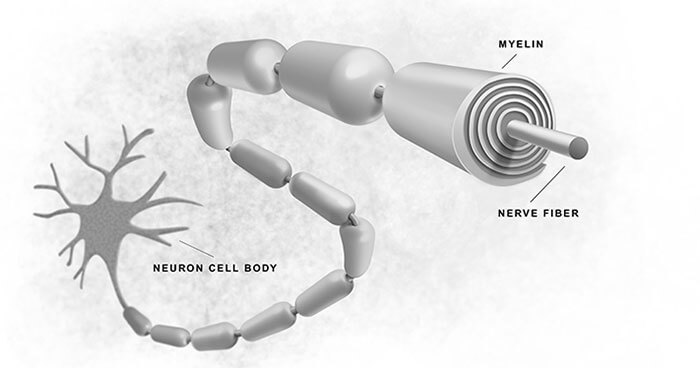
When attempting to re-wire an old habit or behaviour pattern, it is useful to remember the old adage from high school science: electricity follows the path of least resistance. Imagine the old pattern as a well-established electrical pathway in your brain. As you put conscious focus into creating a new electrical pathway to replace the old pattern, you make that new electrical pathway fatter. As soon as you stop putting conscious focus into running the new behaviour pattern the electricity will revert to the old cable for as long as it is the fatter of the two cables, as that is the path of least resistance. As soon as the day comes when the new electrical pathway is thicker than the old one you have a new program in your autopilot system, that will now run on it’s own without you needing to focus conscious intention on it. You have reached a level of conscious competence. According to Dan Coyle a key to making the consciously chosen wiring stick is holding the intention that ‘I want to know this for the rest of my life’. Coyle suggests this causes the brain to coat the new electrical pathway in the brain with myelin insulation, making it much more permanent.

Taking care with the programs we allow our subconscious to overhear

As stated earlier, our autopilot system is taking direction from everything you’re experiencing – which includes the media we watch, the people we surround ourselves with and more. For this reason, one of the most powerful things we can do is exercise discernment around the kind of experiences we expose ourselves to, and their level of intensity and repetition.

“It is easier to build strong children than to repair broken men.” – Frederick Douglass

More importantly is the need for extra care in exercising this discernment on behalf of the children in our care and teaching this discernment to teenagers as, in both cases they are in a heightened state of neuroplasticity and are more susceptible to influence. To be clear, I am by no means advocating prudishness or avoidance of the truth, just a higher level of awareness of how we are either consciously or inadvertently being programmed all the time.

In the video below Bruce Lipton speaks passionately on this very subject, citing this discernment on behalf of our children as a clear solution to war and conflict.

Buddhism and the Brain

741-hz-consciousness-expansion-is-bes-airl-hear-the-messages-of-the-universe-in-your-mind

Many of Buddhism’s core tenets significantly overlap with findings from modern neurology and neuroscience. So how did Buddhism come close to getting the brain right?

By David Weisman

Source: Seed Magazine

Over the last few decades many Buddhists and quite a few neuroscientists have examined Buddhism and neuroscience, with both groups reporting overlap. I’m sorry to say I have been privately dismissive. One hears this sort of thing all the time, from any religion, and I was sure in this case it would break down upon closer scrutiny. When a scientific discovery seems to support any religious teaching, you can expect members of that religion to become strict empiricists, telling themselves and the world that their belief is grounded in reality. They are always less happy to accept scientific data they feel contradicts their preconceived beliefs. No surprise here; no human likes to be wrong.

But science isn’t supposed to care about preconceived notions. Science, at least good science, tells us about the world as it is, not as some wish it to be. Sometimes what science finds is consistent with a particular religion’s wishes. But usually not.

Despite my doubts, neurology and neuroscience do not appear to profoundly contradict Buddhist thought. Neuroscience tells us the thing we take as our unified mind is an illusion, that our mind is not unified and can barely be said to “exist” at all. Our feeling of unity and control is a post-hoc confabulation and is easily fractured into separate parts. As revealed by scientific inquiry, what we call a mind (or a self, or a soul) is actually something that changes so much and is so uncertain that our pre-scientific language struggles to find meaning.

Buddhists say pretty much the same thing. They believe in an impermanent and illusory self made of shifting parts. They’ve even come up with language to address the problem between perception and belief. Their word for self is anatta, which is usually translated as ‘non self.’  One might try to refer to the self, but the word cleverly reminds one’s self that there is no such thing.

When considering a Buddhist contemplating his soul, one is immediately struck by a disconnect between religious teaching and perception. While meditating in the temple, the self is an illusion. But when the Buddhist goes shopping he feels like we all do: unified, in control, and unchanged from moment to moment. The way things feel becomes suspect. And that’s pretty close to what neurologists deal with every day, like the case of Mr. Logosh.

Mr. Logosh was 37 years old when he suffered a stroke. It was a month after knee surgery and we never found a real reason other than trivially high cholesterol and smoking. Sometimes medicine is like that: bad things happen, seemingly without sufficient reasons. In the ER I found him aphasic, able to understand perfectly but unable to get a single word out, and with no movement of the right face, arm, and leg. We gave him the only treatment available for stroke, tissue plasminogen activator, but there was no improvement. He went to the ICU unchanged. A follow up CT scan showed that the dead brain tissue had filled up with blood. As the body digested the dead brain tissue, later scans showed a large hole in the left hemisphere.

Although I despaired, I comforted myself by looking at the overlying cortex. Here the damage was minimal and many neurons still survived. Still, I mostly despaired. It is a tragedy for an 80-year-old to spend life’s remainder as an aphasic hemiplegic. The tragedy grows when a young man looks towards decades of mute immobility. But you can never tell with early brain injuries to the young. I was yoked to optimism. After all, I’d treated him.

The next day Mr. Logosh woke up and started talking. Not much at first, just ‘yes’ and ‘no.’ Then ‘water,’ ‘thanks,’ ‘sure,’ and ‘me.’ We eventually sent him to rehab, barely able to speak, still able to understand.

One year later he came back to the office with an odd request. He was applying to become a driver and needed my clearance, which was a formality. He walked with only a slight limp, his right foot a bit unsure of itself. His voice had a slight hitch, as though he were choosing his words carefully.

When we consider our language, it seems unified and indivisible. We hear a word, attach meaning to it, and use other words to reply. It’s effortless. It seems part of the same unified language sphere. How easily we are tricked! Mr. Logosh shows us that unity of language is an illusion. The seeming unity of language is really the work of different parts of the brain, which shift and change over time, and which fracture into receptive and expressive parts.

Consider how easily Buddhism accepts what happened to Mr. Logosh. Anatta is not a unified, unchanging self. It is more like a concert, constantly changing emotions, perceptions, and thoughts. Our minds are fragmented and impermanent. A change occurred in the band, so it follows that one expects a change in the music.

Both Buddhism and neuroscience converge on a similar point of view: The way it feels isn’t how it is. There is no permanent, constant soul in the background. Even our language about ourselves is to be distrusted (requiring the tortured negation of anatta). In the broadest strokes then, neuroscience and Buddhism agree.

How did Buddhism get so much right? I speak here as an outsider, but it seems to me that Buddhism started with a bit of empiricism. Perhaps the founders of Buddhism were pre-scientific, but they did use empirical data. They noted the natural world: the sun sets, the wind blows into a field, one insect eats another. There is constant change, shifting parts, and impermanence. They called this impermanence anicca, and it forms a central dogma of Buddhism.

This seems appropriate as far as the natural world is concerned. Buddhists don’t apply this notion to mathematical truths or moral certainties, but sometimes, cleverly, apply it to their own dogmas. Buddhism has had millennia to work out seeming contradictions, and it is only someone who was not indoctrinated who finds any of it strange. (Or at least any stranger than, say, believing God literally breathed a soul into the first human.)

Early on, Buddhism grasped the nature of worldly change and divided parts, and then applied it to the human mind. The key step was overcoming egocentrism and recognizing the connection between the world and humans. We are part of the natural world; its processes apply themselves equally to rocks, trees, insects, and humans. Perhaps building on its heritage, early Buddhism simply did not allow room for human exceptionalism.

I should note my refusal to accept that they simply got this much right by accident, which I find improbable. Why would accident bring them to such a counterintuitive belief? Truth from subjective religious rapture is also highly suspect. Firstly, those who enter religious raptures tend to see what they already know. Secondly, if the self is an illusion, then aren’t subjective insights from meditation illusory as well?

I don’t mean to dismiss or gloss over the areas where Buddhism and neuroscience diverge. Some Buddhist dogmas deviate from what we know about the brain. Buddhism posits an immaterial thing that survives the brain’s death and is reincarnated. After a person’s death, the consciousness reincarnates. If you buy into the idea of a constantly changing immaterial soul, this isn’t as tricky and insane as it seems to the non-indoctrinated. During life, consciousness changes as mental states replace one another, so each moment can be considered a reincarnation from the moment before. The waves lap, the sand shifts. If you’re good, they might one day lap upon a nicer beach, a higher plane of existence. If you’re not, well, someone’s waves need to supply the baseline awareness of insects, worms, and other creepy-crawlies.

The problem is that there’s no evidence for an immaterial thing that gets reincarnated after death. In fact, there’s even evidence against it. Reincarnation would require an entity (even the vague, impermanent one called anatta) to exist independently of brain function. But brain function has been so closely tied to every mental function (every bit of consciousness, perception, emotion, everything self and non-self about you) that there appears to be no remainder. Reincarnation is not a trivial part of most forms of Buddhism. For example, the Dalai Lama’s followers chose him because they believe him to be the living reincarnation of a long line of respected teachers.

Why have the dominant Western religious traditions gotten their permanent, independent souls so wrong? Taking note of change was not limited to Buddhism. The same sort of thinking pops up in Western thought as well. The pre-Socratic Heraclitus said, “Nothing endures but change.” But that observation didn’t really go anywhere. It wasn’t adopted by monotheistic religions or held up as a central natural truth. Instead, pure Platonic ideals won out, perhaps because they seemed more divine.

Western thought is hardly monolithic or simple, but monotheistic religions made a simple misstep when they didn’t apply naturalism to themselves and their notions of their souls. Time and again, their prominent scholars and philosophers rendered the human soul exceptional and otherworldly, falsely elevating our species above and beyond nature. We see the effects today. When Judeo-Christian belief conflicts with science, it nearly always concerns science removing humans from a putative pedestal, a central place in creation. Yet science has shown us that we reside on the fringes of our galaxy, which itself doesn’t seem to hold a particularly precious location in the universe. Our species came from common ape-like ancestors, many of which in all likelihood possessed brains capable of experiencing and manifesting some of our most precious “human” sentiments and traits. Our own brains produce the thing we call a mind, which is not a soul. Human exceptionalism increasingly seems a vain fantasy. In its modest rejection of that vanity, Buddhism exhibits less error and less original sin, this one of pride.

How well will any religion apply the lessons of neuroscience to the soul? Mr. Logosh, like every person who’s brain lesion changes their mind, challenges the Western religions. An immaterial soul cannot easily account for even a stroke associated with aphasia. Will monotheistic religions change their idea of the soul to accommodate data? Will they even try? It is doubtful. The rigid human exceptionalism is cemented firmly into dogma.

Will Buddhists allow neuroscience to render their idea of reincarnation obsolete? This is akin to asking if the Dalai Lama and his followers will decide he’s only the symbolic reincarnation of past teachers. This is also doubtful, but Buddhism’s first steps at least made it possible. Unrelated to neuroscience and neurology, in 1969 the Dalai Lama said his “office was an institution created to benefit others. It is possible that it will soon have outlived its usefulness.” Impermanence and shifting parts entail constant change, so perhaps it is no surprise that he’s lately said he may choose the next office holder before his death.

Buddhism’s success was to apply the world’s impermanence to humans and their souls. The results have carried this religion from ancient antiquity into modernity, an impressive distance. With no fear of impermanent beliefs or constant change, how far will they go?