If you listen to conventional economists, everything’s rosy: thanks to the expansion of alt-energy like wind and solar, energy is getting cheaper, batteries will power the new global economy, we’re getting smarter — just look at the rising number of advanced college degrees, wages are finally growing, inflation is trending down, household balance sheets and corporate profits are strong, debt loads are not an issue yet and GDP is rising.
All this happy news is backed by statistics, of course, but there’s one little problem: all the conventional cheerleaders are living in a bubble of like-minded elites who are insulated from the neofeudal realities of life in the real world.
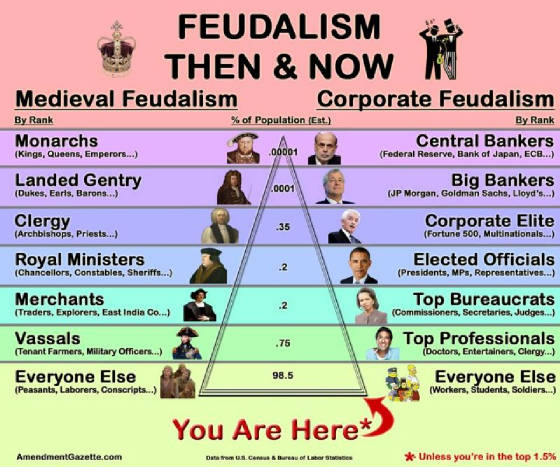
Outside the bubble of wealthy, protected elites that generate the statistics and the “news,” the global economy is completely, totally neofeudal–and so is the American economy. What does neofeudal mean? It refers to a two-tiered socio-economic system in which an aristocracy owns the vast majority of the wealth and collects the lion’s share of the income, and uses this financial dominance to buy political and narrative dominance.
In a neofeudal arrangement, the machinery of governance protects and enforces elite dominance. Cartels and monopolies have free rein to price-fix and exploit, tax revenues flow freely to cartels, elite organizations such as family trusts get tax breaks, and so on.
In other words, “the market” is rigged and the government maintains the status quo.
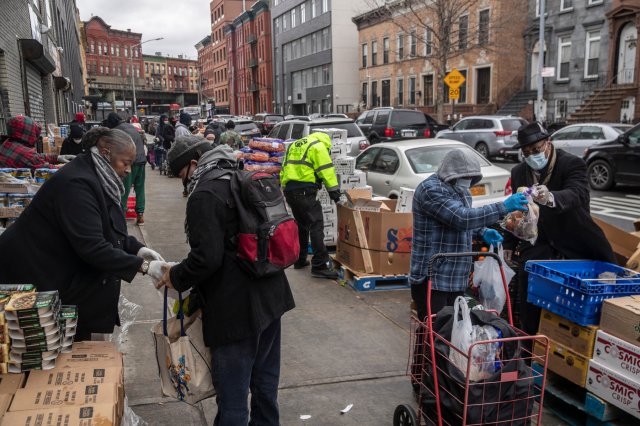
Toiling away to enrich the aristocratic owners of capital are the serfs and peasants, who own a tiny shred of income-producing capital. Their primary assets–the family home and vehicles–are actually income streams for the wealthy who collect the mortgage and auto-loan interest paid by the serfs.
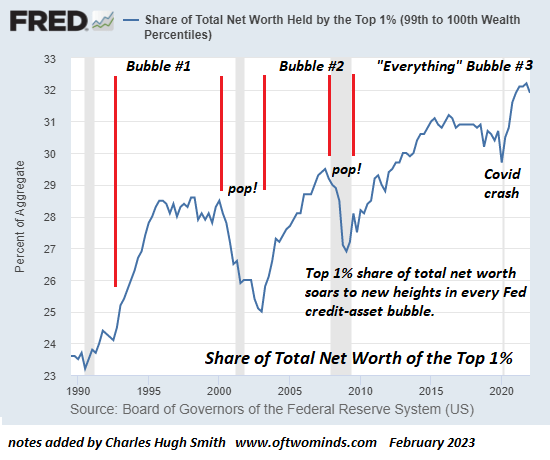
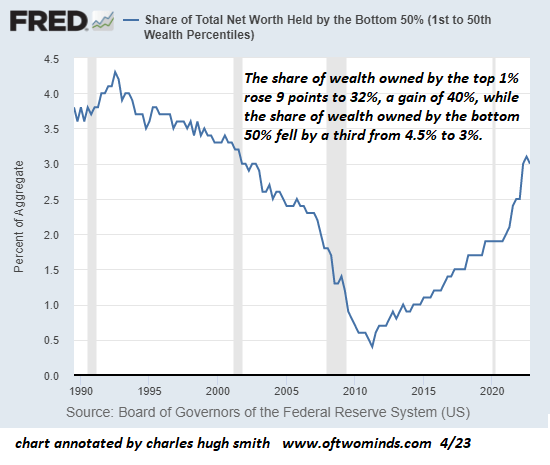
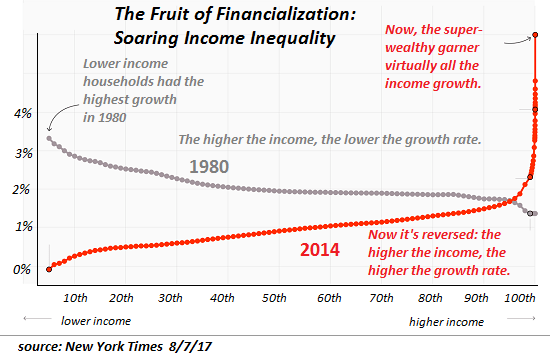
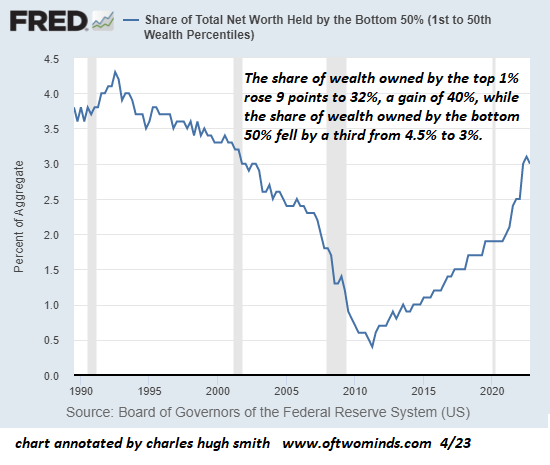
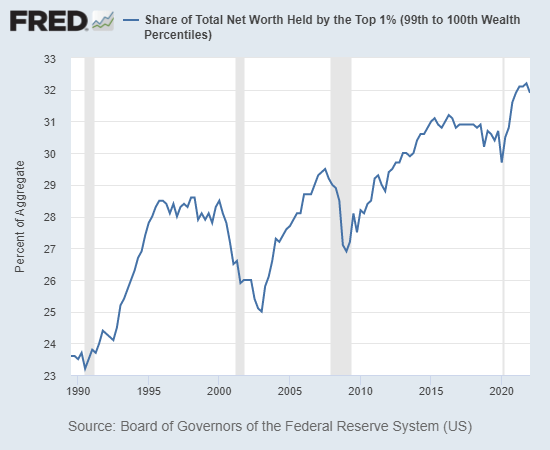
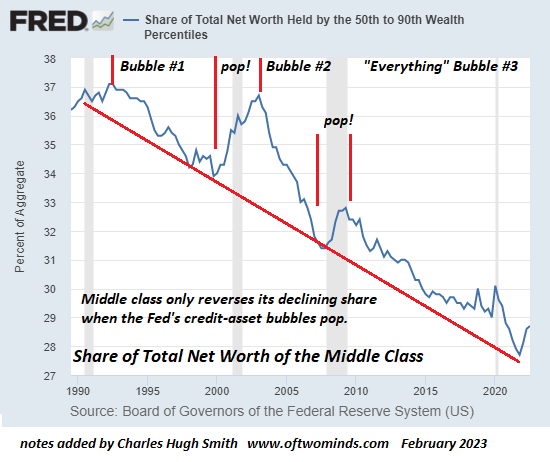
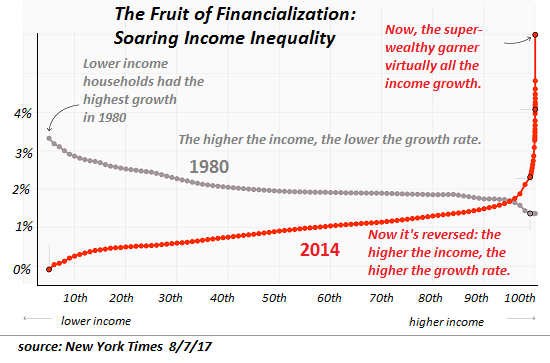
The core dynamic in neofeudalism is the already-wealthy increase their share of the wealth, and everyone else sees their meager share diminish. As the charts below show, the vast majority of financial gains generated by the US economy flow to the top 0.1% of households. The top 1%’s share has risen by 40% while the bottom 50%’s share of the wealth has slipped to 3%–essentially signal noise.
Social mobility is limited to the occasional serf clawing their way into the technocrat class, the top 5% who slavishly serve the interests of the financial aristocracy. This class lives in a self-contained, protected bubble: an echo chamber of privilege, residential enclaves, jetting around the world, and so on: everything’s great because we’re doing great.
Life is good in the bubble because there’s no homeless encampment a block away, there’s plenty of money coming in and our wealth–401Ks, inherited bonds and rental property, university pensions, corporate stock options, and so on–increases smartly, year after year and decade after decade.
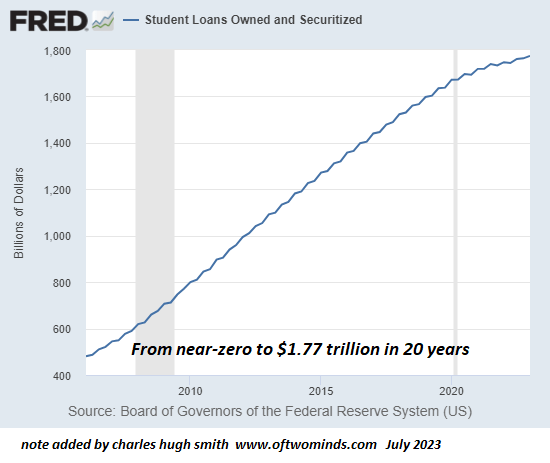
That all this wealth expansion is the result of unprecedented central bank intervention is left unsaid. As noted above, the role of the state and central bank is to maintain the status quo of the already-wealthy increasing their share of the national wealth and income, and loading more (very profitable) debt on the serfs. (See student loan debt chart below.)
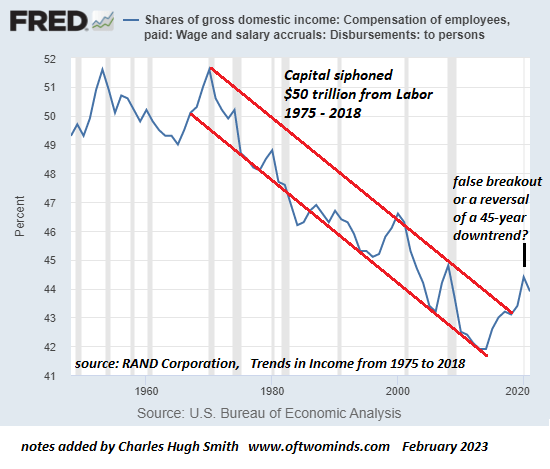
Outside the technocrats’ privileged bubble, wages’ share of the economy have been stripmined by the aristocracy for 45 years. Oh dear; could this be why I’m having such trouble finding low-wage reliable “help”?
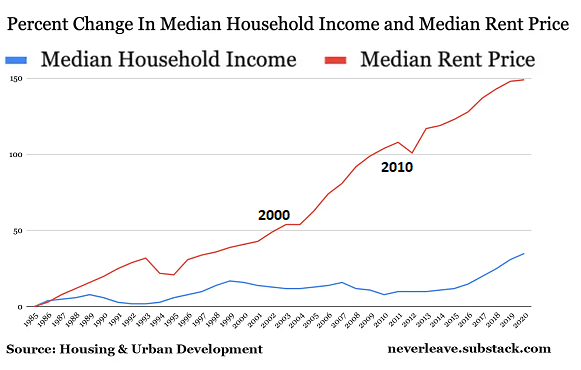
While wages inch up, costs of shelter, utilities, debt, vehicles, public transport, childcare and other essentials soar. Please glance at the chart of wages and rents below. This is neofeudalism in a nutshell. Wages have flatlined (or fallen when measured in purchasing power) while rent has steadily increased, eating away at the serfs’ disposable income.
Inside the technocrat class bubble, everything’s wunnerful. AI will boost profits (all of which flow to the aristocracy, so that’s wunnerful), energy’s getting cheaper and more abundant, and so on.
Oh, wait. Alt-energy only looks cheap because all the full lifetime costs have been ignored (i.e. externalized), and these modest additions to our vast hydrocarbon consumption aren’t actually replacing hydrocarbons, they’re simply adding more energy for us to consume.
In other words, conventional economists and the other technocrats maintain their privileged bubble by clinging to a delusionally disconnected-from-the-real-world mindset. There’s always a slew of academic papers or think-tank / corporate reports to bolster the inside-the-bubble confidence that everything’s great, because generating positive narratives that leave the neofeudal structure untouched in the primary industry of the technocrat class.
If you want to understand the neofeudal reality, study these charts. There are no rebuttals, there are only sputtering obfuscations: b-b-but the mission to Mars! Taylor Swift raked in a billion bucks! OnlyFans pulled in $5 billion! Stocks are rallying! Everything’s great!
Sure–if your dose of Delusional is high enough. Then you can go back to complaining about air travel delays, finding someone to repair your pool pump and bragging about how well your investments are doing.
I do not claim any expertise in social contract theory, but in broad brush we can delineate two implicit contracts: one between the citizenry and the state (government) and another between citizens.
We can distinguish between the two by considering a rural county fair. Most of the labor to stage the fair is volunteered by the citizenry for the good of their community and fellow citizens; they are not coerced to do so by the government, nor does the government levy taxes to pay its employees or contractors to stage the fair.
The social contract between citizens implicitly binds people to obeying traffic laws as a public good all benefit from, not because a police officer is on every street corner enforcing the letter of the law.
The social contract between the citizens and the state binds the government to maintaining civil liberties, equal enforcement of the rule of law, defending the nation, and in the 20th century, providing social welfare for the disadvantaged, disabled and low-income elderly.
Critiques of “trickle down economics” focus on income inequality as a key metric of the Social Contract: rising income inequality is de facto evidence that the Social Contract is broken.
I think this misses the key distinction in the Social Contract between citizens and the state, which is the legitimacy of the process of wealth creation and the fairness of the playing field and the referees, i.e. that no one is above the law.
Few people begrudge legitimately earned wealth, for example, the top athlete, the pop star, the tech innovator, the canny entrepreneur, the best-selling author, etc. The source of these individual’s wealth is transparent, and any citizen can decline to support this wealth creation by not paying money to see the athlete, not buying the author’s books, not shopping at the entrepreneur’s stores, etc.
The Social Contract is broken not just by wealth inequality per se but by the illegitimate process of wealth acquisition, i.e. the state has tipped the scales in favor of the few behind closed doors and routinely ignores or bypasses the intent of the law even as the state claims to be following the narrower letter of the law.
By this definition, the Social Contract in America has been completely smashed. One sector after another is dominated by cartel-state partnerships that are forged and enforced in obscure legislation written by lobbyists. Once the laws have been riddled with loopholes and the regulators have been corrupted, “no one is above the law” has lost all meaning.
Those who violate the intent of the law while managing to conjure an apparent compliance with the letter of the law are shysters, scammers and thieves who exploit the intricate loopholes of the system, all the while parading their compliance as evidence the system is fair and just. In this way, the judicial system becomes part of the illegitimate process of wealth accumulation.
In America, political and financial Elites are above the intent of the law. Is bribery of politicos illegal? Supposedly it is, but in practice it is entirely and openly legal.
This is the norm in banana republics, whose ledgers are loaded with thousands of codes and regulations that are routinely ignored by those in power. In the Banana Republic of America, financial crimes go uninvestigated, unindicted and unpunished: banks and their management are essentially immune to prosecution because the crimes are complex (tsk, tsk, it’s really too much trouble to investigate) and they’re “too big to prosecute.”
The rot has seeped from the financial-political Aristocracy to the lower reaches of the social order. The fury of those still working legitimate jobs and paying their taxes is grounded in a simple, obvious truth: America is now dominated by scammers, cheaters, grifters and those gaming the system, large and small, to increase their share of the swag.
The honest taxpayer is a chump, a mark who foolishly ponies up the swag that’s looted by the smart operators. Everyone knows that the vast majority of wealth accumulation in America flows not from transparent effort on a level playing field, but from persuading the Central State (the Federal government and the Federal Reserve) to enforce cartels and grant monopolistic favors such as tax shelters designed for a handful of firms and unlimited credit to private banks.
When scammers large and small live better than those creating value in the real economy, the Social Contract has ceased to exist. When the illegitimate process of wealth acquisition–a rigged playing field, a bought-off referee, and an Elite that’s above the law by every practical measure–dominates the economy and the political structure, the Social Contract has been shattered, regardless of how much welfare largesse is distributed to buy the complicity of state dependents.
Once the chumps and marks realize there is no way they can ever escape their exploited banana-republic status as neofeudal debt-serfs, the scammers, cheats and grifters large and small will be at risk of losing their perquisites. The fantasy in America is that legitimate wealth creation is still possible despite the visible dominance of a corrupt, venal, self-absorbed, parasitic, predatory Aristocracy. Once that fantasy dies, so will the marks’ support of the Aristocracy.
As Voltaire observed, “No snowflake in an avalanche ever feels responsible”: every claim, every game of the system, every political favor purchased is “fair and legal,” of course. This is precisely how empires collapse.
In broad brush, we can trace the transition from feudalism to capitalism to the present financialized, globalized cartel-state neofeudalism and next, to a synthesis built on the opposite of neofeudalism, which is decentralization, transparency, accountability, legitimacy and the adaptive churn of competing ideas and proposals.
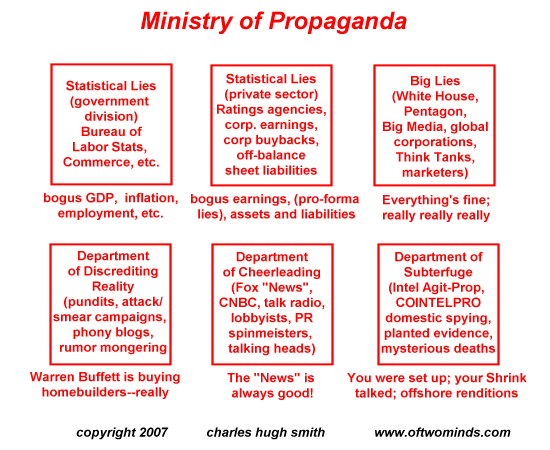
It’s time once again to check for Ministry of Propaganda updates, which like Windows and iOS is constantly being updated to counter new threats and enhance the user experience (heh).
Much like the other operating systems that underpin our daily lives, the core functions of the MoP don’t change much. My chart from 2007 remains an instructive summary of MoP operations, with the only changes being Mr. Buffett is now buying oil companies and social media corporations are now major media players.
The core mission of the Ministry of Propaganda isn’t just to push a desirable narrative–it’s to mystify the underlying dynamics of a system that benefits the few at the expense of the many by promoting a self-serving worldview (weltanschauung) that explains how the world works in a way that protects the interests of those in power.
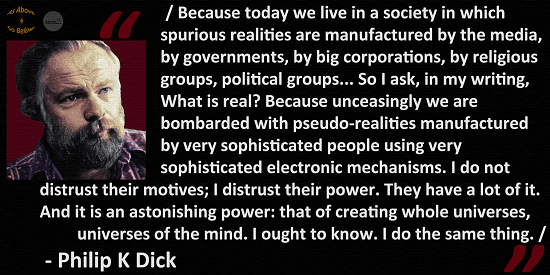
As science fiction author Philip K. Dick explains in the quote below, the MoP narrative isn’t just a cloak thrown over the underlying dynamics, it’s the creation of an entire universe / worldview, including contexts for understanding what’s going on, establishing what’s valuable and what isn’t, and what behaviors enhance status and which ones marginalize us.
The Ministry of Propaganda isn’t monolithic: various factions compete to push their self-serving narratives. As Dick noted, this includes governments, corporations, religious and political groups, each of which understands that once the populace accepts their worldview, their power is cemented in realms far above mere force.
A key mechanism in establishing a dominant worldview is the think-tank or equivalent self-serving body claiming authority over what’s true / false and important / unimportant. This can be authority over the “correct” interpretation of spiritual texts, economic policies, healthcare “standards of care,” geopolitical goals, etc.
Since humans are innately social, status-striving beings, hierarchies of authority and power are the air we breathe. Those who establish themselves as authorities don’t just gain power, they cement their power on the basis of their authority rather than on loyalty or competence.
The enormous powers of social media and traditional media to promote claims of authority have generated a deranging snarl of conflicting agendas and narratives. Various centers of power collaborate on pushing worldviews that benefit their interests, but this isn’t entirely coherent. The one thing all participants in the Ministry of Propaganda agree on is our power is deserved and must be defended against all threats, which includes hostile entities inside and outside the national borders.
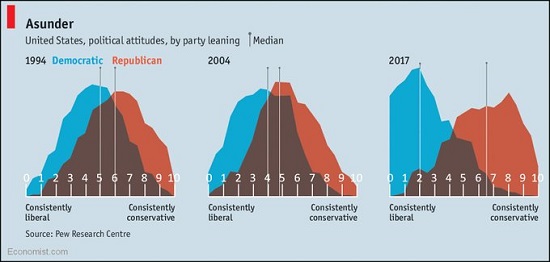
This fragmented, constantly shifting cacophony of competing authorities is destabilizing. As the tectonic plates of worldviews collide, the edges crumble and people naturally seek the safety of some core set of beliefs, in effect “circling the wagons” in an attempt to restore some internal stability.
We see this in the intense political polarization of this era (see chart below). To make sense of the competing claims of authority, we reduce the perimeter of what’s defendable, putting more of the world into “outside enemies” (them) and reserving the “safe, trusted place” for fewer of “us.”
With so many competing factions in the Ministry of Propaganda, there’s a proliferation of propaganda such that there is literally nothing left but PR. In a universe constructed of nothing but agit-prop and PR, we all have our favorites examples. James Bond picks up his Nokia phone. Even though nobody’s seen a Nokia phone in ages, if you want to be cool like Bond, go buy a Nokia phone.
Marketing is the MoP’s entire universe. Everybody’s selling something to gain or maintain power, status, mindshare or the ultimate prize, the dominant worldview.
To ease the confusion, please download the latest updates from the Ministry. These updates replace all that misinformation, misdirection, and blatant marketing with the, ahem, facts, or the correct interpretation of the facts. (We had to destroy the village in order to save it. OK, got it.)
While it’s fun to sort all the propaganda into various boxes, we would do well to look for what all the marketers / MoP players seek to mystify. In my analysis, what must be mystified at all costs boils down to the unsustainability of 1) the current consumption of resources, 2) the current method of creating capital so the few can buy up the planet’s most valuable assets, 3) neocolonialism, the modern replacement for the old model of occupation and exploitation by force, and 4) neofeudalism, the economic / social /political arrangement in which the majority of the populace are modern-day serfs with extremely limited agency and power which they are told is limitless.
“You can be anything you choose to be!” Or at least your digital avatar can do so, and that’s practically as good as actually having agency and power in the real world. Or so we’re told, mindlessly, endlessly without pause or respite.
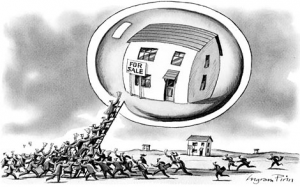
Are we heading into another real estate bubble / crash? Those who say “no” see the housing shortage as real, while those who say “yes” see the demand as a reflection of the Federal Reserve’s artificial goosing of the housing market via its unprecedented purchases of mortgage-backed securities and “easy money” financial conditions.
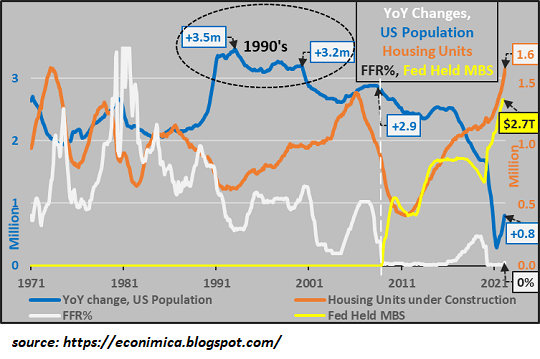
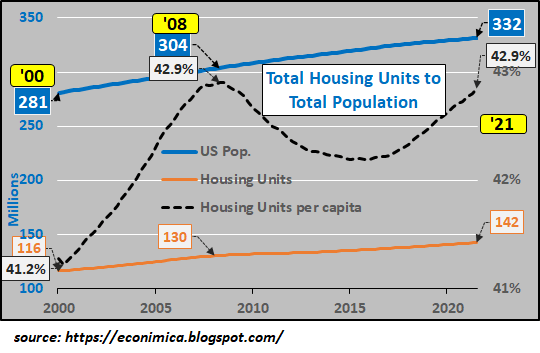
My colleague CH at econimica.blogspot.com recently posted charts calling this assumption into question. The first chart (below) shows the U.S. population growth rate plummeting as housing starts soar, and the second chart shows housing unit per capita, which has just reached the same extreme as the 2008 housing bubble.
Demographics and housing do not reflect a housing shortage nationally, though there could be scarcities locally, of course, and other factors such as thousands of units being held off the market as short-term rentals or investments by overseas buyers who have no interest in renting their investment dwellings.
On a per capita basis, housing has reached previous bubble levels. That suggests housing shortages are artificial or local, not structural.
Next, let’s consider how the current housing bubble differs from previous bubbles in the late 1970s and 2000s. In my view, the previous bubbles were driven by demographics, inflation and monetary policy: in the late 70s, the 65 million-strong Baby Boom generation began buying their first homes, pushing demand higher while inflation soared, making real-world assets such as housing more desirable.
Once the Federal Reserve pushed interest rates to 18%, mortgage rates rose in lockstep and housing crashed as few could afford sky-high housing prices at sky-high mortgage rates.
The housing bubble of 2007-08 was largely driven by declines in mortgage rates (as the Fed pursued an “easy money” policy to escape the negative effects of the Dot-Com stock market bubble crash) and a loosening of credit/mortgage standards. These fueled a bubble that morphed into a speculative free-for-all of no-down payment and no-document loans.
This decline in the cost of borrowing money (mortgage rates) enabled a sharp rise in the price of housing, a speculative boom that was greatly accelerated by “innovations” in the mortgage market such as zero down payments loans, interest-only loans, home equity loans, and no-document “liar loans”–mortgages underwritten without the usual documentation of income and net worth.
These forces generated a speculative frenzy of house-flipping, leveraging the equity in the family home to buy two or three homes under construction and selling them before they were even completed for fat profits, and so on.
Needless to say, the pool of potential buyers expanded tremendously when people earning $25,000 a year could buy $500,000 houses on speculation.
Once the bubble popped, the pool of buyers shrank along with the home equity.
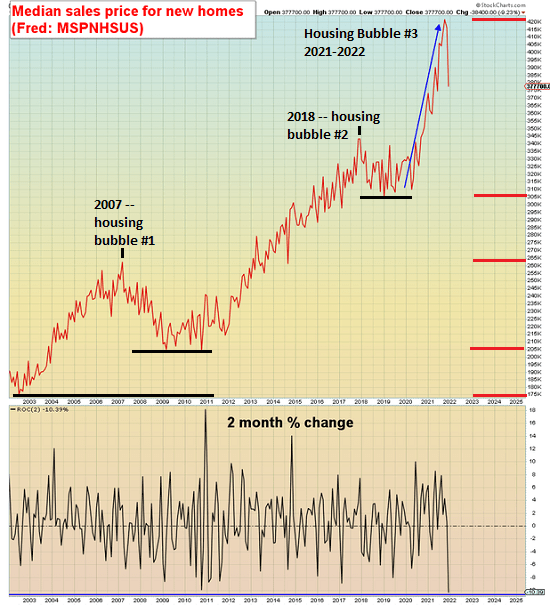
If we study this chart below of new home prices (courtesy of Mac10), we can see that the 21st century’s Bubble #2 rose as the Federal Reserve pushed mortgage rates far below historic norms. Once rates reached a bottom, the 7-year inflation of home prices (from 2011 to 2018) began rolling over.
This deflation of home prices was reversed by the pandemic recession, as the Fed’s vast expansion of credit and mortgage-buying, which pushed mortgage rates to new lows. Trillions of dollars in new credit and cash stimulus ignited a speculative frenzy in stocks, bonds and real estate, a frenzy which drove bubble #3 to extraordinary heights.
All this unprecedented fiscal and monetary stimulus also ignited inflation, and so rates are rising in response. Bubble #3 is already deflating, at least by the measure of new home prices.
But the current bubble has a number of dynamics that weren’t big factors in previous bubbles.
One is the rise of remote work. Many people have been working remotely since the late 1990s enabled Internet-based work, but the pandemic greatly increased the pool of employers willing to accept remote work as a permanent feature of employment.
This trend has been well documented, but the consequences are still unfolding: remote workers are no longer trapped in unaffordable, congested cities and suburbs.
Several other trends have attracted much less attention, but I see them as equally consequential.
1. Housing in many urban zones are out of reach of all but the top 10% without extraordinary sacrifice, and now that employment isn’t necessarily tied to urban zones, the bottom 90% of young people without family wealth or high incomes are coming to realize the benefits of urban living are not worth the extreme sacrifices needed to buy an overvalued house.
A middle-class life–home ownership, financial security, leisure and surplus income to invest in one’s family and well-being–is no longer affordable for the majority of young Americans.
Few are willing to concede this because it reveals the neofeudal nature of American life. Those who bought homes in coastal urban zones 20+ years ago are wealthy due to soaring housing valuations while young people can’t even afford the rent, much less buying a house.
If you’re not making $250,000 or more a year as a couple, the only hope for a middle-class life that includes leisure and some surplus income to invest is top move to some place with much lower housing and other costs. That place is rural America.
2. The benefits of urban living are deteriorating while the sacrifices and downsides are increasing. Urban living is fun if you’re wealthy, not so fun if you don’t have plenty of surplus income to spend.
Urban problems such as homelessness, traffic congestion and crime are endemic and unresolvable, though few are willing to state the obvious. Americans are expected to be optimistic and to count on some new whiz-bang technology to solve all problems.
Unfortunately, problems generated by dysfunctional, overly complex institutions, corruption and unaffordable costs can’t be solved by some new technology, and so the decay of cities will only gather momentum.
The hope that billions of federal stimulus funding would solve these problems is about to encounter reality as the funds dry up and all the problems remain or have actually expanded despite massive “investments” in solutions.
Few analysts have looked at the finances of high-cost cities. The decline in bricks-and-mortar retail, rising crime, soaring junk fees, rents and property taxes have all made urban small business insanely costly and therefore risky.
Small businesses are the core sources of employment and taxes. As high costs, crime, etc. choke small businesses, employment and tax revenues drop and commercial real estate sits empty, generating decay and defaults.
Once office and retail space is no longer affordable or necessary, commercial real estate crashes in value as owners who bought at the top default and go bankrupt.
People need shelter but they don’t need office space or to start a bricks-and-mortar retail business.
As urban finances unravel, cities won’t have the funding to run their bloated, inefficient, overly complex and unaccountable bureaucracies.
3. In geopolitics, we speak of the core and the periphery. Empires have a core (Rome and central Italy in the Roman Empire) and a periphery (Britain, North Africa, Egypt, the Levant).
As finances and trade decay and costs soar, the periphery is surrendered to maintain the core.
In urban zones, the same dynamic will become increasingly visible: the peripheral neighborhoods will be underfunded to continue protecting the wealthy enclaves.
Crime will skyrocket in the periphery even as residents of the wealthy enclaves see little decay in their neighborhoods.
This asymmetry–already extreme–will drive social unrest and disorder. This is a self-reinforcing feedback: as the periphery neighborhoods deteriorate, the remaining businesses flee and the smart money sells and moves away.
Tax revenues plummet and city services decay even further, persuading hangers-on to move before it gets even worse. Cities compensate for the lower revenues by increasing taxes on the remaining residents and cutting services.
Each turn of the screw triggers more closures and selling and fewer tax revenues.
4. Dependency chains will become increasingly consequential: the greater a city’s dependency on essentials trucked/shipped from hundreds or thousands of of kilometers/miles away, the more prone that city will be to disruptions of essentials: food, energy, materials and infrastructure.
Though few are willing to dwell on such vulnerabilities, most cities are totally dependent on diesel fueled fleets of trucks, rail and jet fuel for luxuries flown in from afar for virtually all goods. Cities produce very little in the way of essentials such as food and energy.
The past reliability of long supply chains has instilled a confidence that these supply chains stretching thousands of kilometers and miles are unbreakable and forever. They aren’t, and the initial disruptions will be a great shock to Americans who believe full gas tanks and fully stocked store shelves are their birthright.
5. As I’ve explained in my new book Global Crisis, National Renewal, the era of cheap, reliable abundance has drawn to a close and now we are entering an era of scarcity in essentials.
Another reality few discuss is the relative stability of global weather over the past 40 years. As weather becomes less reliable, so too do crop yields and food supplies.
Globalization has poured capital into expanding acreage under cultivation to the point that the planet’s forests are being decimated to grow more soy to feed animals to be slaughtered for human consumption.
On the margins, land that was once productive has been lost to desertification. Fresh water aquifers have been drained and glaciers feeding rivers are melting away. Soil fertility has declined even as fertilizer use has expanded.
The low-hanging fruit of GMO seeds, fertilizers, insecticides, herbicides and Green Revolution hybrids have all been plucked. The gains have been reaped but now the downsides of these dependencies are becoming increasingly consequential: fertilizer costs are rising fast, insects and diseases are evading chemicals and vaccines, and the vulnerabilities of mono-crop, industrialized agriculture and animal husbandry threaten to cascade into crop failures, soaring prices and shortages.
6. This will have two consequences: rural incomes which have been falling for decades due to globalization (i.e. bringing in cheap food from places with no environmental standards, cheap labor and few taxes / social costs) will start rising sharply, fueling a reversal in the long decline of rural communities based on agricultural income.
The soaring costs of essentials will reduce the disposable income of the bottom 90%, reducing the money they’ll have to spend on eating out, retail shopping, etc.–all the surplus spending that drives cities’ economies and tax revenues.
Few (if any) commentators forecast a cyclical reversal of the demographic trend of people moving from rural locales to cities. I think this trend has already reversed and will gather momentum as cities become increasingly unlivable, disposable incomes decline as scarcities push prices higher and people flee for lower cost, more secure environs.
7. As I often note, following what the super-wealthy are doing is a pretty sound investment strategy because the super-wealthy spend freely to buy the best advice and are highly motivated to protect their wealth.
People who live in well-known, highly desirable rural towns (Telluride, Jackson Hole, Lake Tahoe, etc.) are describing a feeding frenzy of wealthy urbanites buying multi-million dollar homes. Small cities such as Bozeman, MT and Ashville, NC are experiencing a flood of new residents that is straining infrastructure and pushing housing prices out of reach for local residents with average wages.
8. Rural towns in the U.S., Italy, Japan and even Switzerland are trying to attract new residents with offers of free land, subsidized rent, low cost homes, etc. This shows that the trends are global and not limited to any one nation. Would you take free land in rural America?
The decay of urban life isn’t yet consequential enough to push people into making a major move, but once someone has been robbed, repeatedly found human feces on their doorstep or experienced scarcities that trigger the madness of crowds, the decision to leave becomes much, much easier.
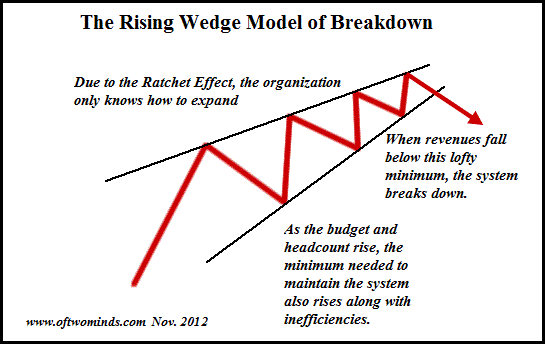
Some cities will manage the decline of employment and tax revenues more gracefully than others. Most will suffer from the dynamic I’ve often described on the blog: the Ratchet Effect. Costs move effortlessly higher as tax revenues have increased in one speculative bubble after another, but once revenues drop, cities have no mechanisms or political constituency to manage a sharp, long-term decline in revenues.
They then become prone to the other dynamic I’ve described, the Rising Wedge Breakdown (see chart below): as agencies and institutions become sclerotic, unaccountable and self-serving, even a relatively modest cut in revenues triggers institutional collapse, as the system requires 100% funding to function. A 10% reduction doesn’t cause a 10% decline in service, it causes an 50% decline in service, on the way to complete dysfunction.
Few believe cities can unravel, but remote work, geographic arbitrage (discussed below), tightening credit, rising crime, the decline of commercial real estate, end of massive stimulus, scarcities, the madness of crowds, the decline of civic services and amenities and an insanely high cost of living all have consequences and second-order effects.
What were beneficial synergies become fatal synergies as dynamics reverse and begin reinforcing each other.
So let’s put all this together.
A. The cycle of declining interest rates and inflation has ended and a cycle of much higher interest and mortgage rates and inflation is beginning. Higher mortgages rates will depress housing prices as only the highest income households will be able to afford today’s prices once mortgage rates rise.
B. The decay of urban finances and quality of life will accelerate as stimulus ends, credit dries up and inflation decimates disposable income.
C. The stress of trying to make enough money to afford the high costs of city/suburban living as the real estate bubble pops and the benefits of city living decline will burn out increasing numbers of people who will have no choice but to find more affordable, more secure and more livable places.
D. While the wealthy have already secured second or third homes in the toniest desirable towns, there are still opportunities for lower cost, more secure residences in rural areas.
E. This migration, even at the margins, will further depress urban housing prices and push prices in desirable rural locales higher.
F. This migration will have regional, ethnic and cultural variations. For example, some African-Americans leaving the upper Midwest are finding favor with communities in the South where family, church and cultural ties beckon.
G. Correspondent John F. used the phrase geographic arbitrage which means earning money remotely in high-wage sectors while living some place that’s low cost and secure.
I wrote about this many years ago in my post about young Japanese maintaining a part-time remote-work gig while pursuing farming in rural communities: Degrowth Solutions: Half-Farmer, Half-X (July 19, 2014).
H. Though monetary / inflationary forces will pop housing prices based solely on low mortgage rates, this doesn’t mean housing everywhere will decline: as burned out urbanites seek lower cost, more secure and livable places in rural locales, homes in desirable towns and small cities could rise sharply because they’re starting from such low levels.
I. If urban areas decay rapidly, housing prices could plummet much faster than most people think possible.
When cities lose employment, tax revenues and desirability, they can go down fast. Property values can fall in half and then by 90%.
How is this possible? Supply and demand: if demand falls off a cliff, there won’t be buyers for thousands of homes that come on the market all at once. This is just like a stock market in which buyers disappear, as no one wants to buy an asset that’s rapidly losing value.
As I’ve noted many times, prices for assets are set on the margins: the last sale of a house resets the price for the entire neighborhood.
The stock market is easily manipulated by the big players, who can stop a slide in prices by buying huge chunks of stocks and call options. There are no equivalent forces which can stop a decline in housing prices.
And since rates will rise regardless of what the Federal Reserve does because global capital is demanding a real return above inflation, then the hope for lower mortgage rates to support bubble-level housing prices will be in vain.
How low could housing go? As explained above, there will likely be very asymmetric declines and increases in housing valuations going forward. But on a technical-analysis level, we can anticipate a general decline to previous lows, first to the 2019 lows and then to the 2011 lows.
Some analysts believe inflation will funnel capital into housing as investors seek assets that will go up with inflation, but this is a murky forecast: the bottom 90% of American households are already priced out of coastal housing, so inflation only robs their wages of purchasing power. They don’t have any hope of buying a house anywhere near current prices.
Corporations are buying thousands of houses for the rental income, but once all the stimulus runs out and the excesses of speculation reverse, they’ll find few renters can afford their sky-high rents. At that point corporate buyers become corporate sellers, but they won’t find buyers willing or able to pay their asking prices, which are based on bubble pricing, not reality.
All these swirling currents will affect housing valuations in different places differently. Some areas could see 50% declines while others see 50% increases, regardless of mortgage rates or Fed policy.
What will become most desirable is a low cost of living, security and livability, which includes community, reduced dependency on long supply chains and local production of essentials.
We are all prone to believing the recent past is a reliable guide to the future. But in times of dynamic reversals, the past is an anchor thwarting our progress, not a forecast.
Here’s looking at you, Federal Reserve–thanks for perfecting ‘legalized looting’ and neofeudalism in America.
The problem with pushing a pendulum to its maximum extreme on one end is that it will swing back to the other extreme minus a tiny bit of friction.
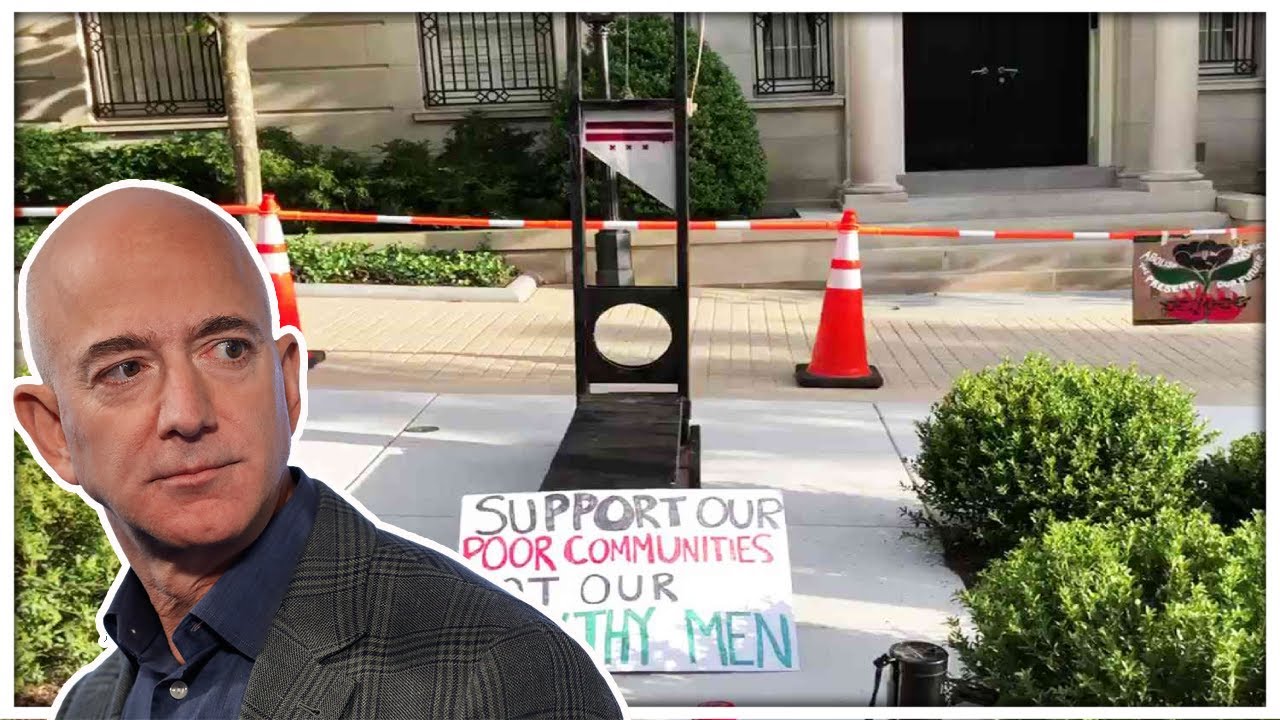
America has pushed wealth/income inequality, unfairness and legalized looting to the maximum extreme. Now it will experience the swing back to the other extreme. This will manifest in a number of ways, one of which is a self-organizing populist war on wealth and the wealthy.
To say the system is rigged to benefit the already-wealthy and powerful is a gross understatement. Take the tax code as an example–thousands of pages of arcane tax breaks and giveaways passed by a thoroughly corrupted Congress and thousands more pages of arcane regulations and legal precedents.
How many pages apply to the bottom 95% of American taxpayers? Very few. There’s the standard deductions for mortgage interest, healthcare costs, etc., but virtually no other tax breaks. Very few pages apply to even the 99%–go talk to a CPA and you’ll find there are no more tax breaks for a sole proprietor making $500,000 in earned income than than there are for a sole proprietor making $50,000.
99.9% of the tax code benefits the top 0.1% and the corporations, LLCs and philanthro-capitalist foundations and trusts they own / control. Stripped of artifice and spin, America’s tax code is nothing but legalized looting. This is only one small slice of the entire pie of legalized looting, of course, but it’s one we can all understand.
A sole proprietor pays 15.3% in Social Security and Medicare taxes. Why don’t America’s billionaires pay 15.3% in Social Security and Medicare taxes? Aren’t Social Security and Medicare/Medicaid the bedrock social safety net programs of the American people? Then why does a struggling sole proprietor pay 15.3% tax to support these essential programs and billionaires pay essentially zero?
There’s a term for this disparity / injustice / unfairness: legalized looting. The super-wealthy pay essentially zero percent of their income and wealth to the programs that provide basic economic security for the disabled/elderly citizenry, while Jose the sole proprietor pays 15.3% of every dollar he earns.
So explain to us again why Mr. Buffett can’t afford to pay 15.3% of every dollar of his income to help fund basic economic security for the disabled/elderly. In a system of even the most basic fairness, every dollar of income would be taxed at the same rate. In a system of even the most basic fairness, those with incomes of $100 million would pay the same 15.3% Social Security and Medicare tax as the sole proprietor earning $100,000.
Needless to say, if this most basic fairness was applied to America’s wealthy and powerful, these programs would not be facing insolvency.
If Joe the sole proprietor hits the bigtime, he pays 32% federal tax over $165,000, 35% over $210,000 and 37% over $524,000. If we add 15.3% to 37%, we get 52.3%. How many of America’s super-wealthy / billionaires pay 52% in Social Security-Medicare and income taxes? Zero.
Could America’s super-wealthy / billionaires afford to pay 52%? Of course they could–they own the majority all financial assets and skim the majority of all income. But they won’t, because the system is rigged to benefit the few at the expense of the many via legalized looting.
It isn’t just the inequality of ownership of capital and power that enrages the oppressed; it’s the blatant unfairness of our neofeudal / neocolonial system. As I explained in Neofeudalism and the Neocolonial-Financialization Model (May 24, 2012) and Welcome to Neocolonialism, Exploited Peasants! (October 21, 2016), the Financial Nobility have “come home” and applied the same rapacious exploitation they perfected in colonialism to the domestic populace.
Here’s looking at you, Federal Reserve–thanks for perfecting legalized looting and neofeudalism in America.
The gulf between the lavishly praised American ideals and the putrid, corrupt reality of America’s neofeudal system is wider than the Grand Canyon. As the pendulum accelerates to an extreme equal but opposite to the current extremes of unfairness, exploitation and legalized looting, those who have suffered the consequences of this systemic inequality will find expression in whatever ways are available.
Since it’s difficult to get to the protected compounds of the super-wealthy, the signifiers of the merely wealthy will offer readily available targets. The new Tesla won’t just get keyed; it will be “reworked,” to the great satisfaction of the “workers.”
Please note that I am not promoting a war on wealth and the wealthy, I am merely pointing out that it is as inevitable as the gravity pulling the pendulum.
The war on wealth and the wealthy will manifest politically, socially and economically. It won’t be a tightly controlled, top-down movement. It will be spontaneous, self-organizing and unquenchable.
If you don’t understand why a war on wealth and the wealthy is inevitable, please study this chart: the way of the Tao is reversal.
I darkly suspect that the UK is entering a long winter of discontent and widespread upheaval, which will likely end with the replacement of the hapless opportunist Boris Johnson by someone even worse: the hardcore, inhumane, hard-right true believer Michael Gove, with the equally inhumane, sinister crank Dom Cummings still running the show. (Cummings, remember, has long been Gove’s man, not Johnson’s.) Together they will use the chaos and suffering to keep pushing their brutal agenda of “disruption” and “reform” to destroy the ability of government to act for the greater common good. Instead they will continue turning over its functions to cronies in the private sector, who will drain the Treasury in corrupt deals while providing degraded services – or none at all – as we have seen in almost every case of “privatisation” over the past decades and especially during the pandemic.
Gove and Cummings are part of a broader rightwing movement across the world, which has for decades been funded with unimaginable amounts of money (almost always “dark money,” hidden and laundered through cut-outs). These extremist ideologues believe that government has only one legitimate function: enhancing the power and privilege of an elite that rules by the “right” of its inherent superiority: either its “superior genes” (as Trump – and Cummings’ lordly father-in-law – openly say) or a putative in-born “superior intellect” (as Dom postulates, ludicrously including himself among that number). Money is the main signifier of inherent worth in this barbaric belief system; and being unaccountable to the laws and regulations that restrict the grubby rabble is one of the chief privileges of the elect.
In essence, it’s a form of high-tech feudalism, where baronal power centers (oligiarchs, corporations) hold sway over weak and nominal national governments. If you read what the right-wing think tanks (often American in origin) with which Gove and Cummings have long been associated are ACTUALLY saying in the dense, dull prose of their innumerable “policy papers,” you’ll see that this characterization of their ideology and their aims is no exaggeration. It’s an ancient evil – brutal, rapacious rule by unaccountable elites – dressed up in modern form and cloaked in the cynical perversion of rhetoric about “rights” and “freedom” and “sovereignty” and “modernization” and “AI,” etc. They are heartless liars in pursuit of loot and power, and they literally, demonstrably, do not care who lives or dies, as long as they get what they want.
Until we recognize this, until we stop treating these radical, death-dealing, society-wrecking extremists as normal politicians working within the system, we cannot effectively confront them and stop their depredations. They will continue to use the system itself to hollow out government and society until there is nothing left but their little clique, sealed in sumptuous fortresses behind masses of armed guards, lording it over the ruins.
Basing one’s decisions on analogs from the past is entering a fool’s paradise of folly.
Like addicts who cannot control their cravings, financial analysts cannot stop themselves from seeking some analog situation in the past which will clarify the swirling chaos in their crystal balls. So we’ve been swamped with charts overlaying recent stock market action over 1929, 1987,2000 and 2008–though the closest analogy is actually the Oil Shock of 1973, an exogenous shock to a weakening, fragile economy.
But the reality is there is no analogous situation in the past to the present, and so all the predictions based on past performance will be misleading. The chartists and analysts claim that all markets act on the same patterns, which are reflections of human nature, and so seeking correlations of volatility and valuation that “worked” in the past will work in 2020.
Does anyone really believe the correlations of the past decade or two are high-probability predictors of the future as the entire brittle construct of fictional capital and extremes of globalization and financialization all unravel at once?
Here are a few of the many consequential differences between all previous recessions and the current situation:
1. Households have never been so dependent on debt as a substitute for stagnating wages.
2. Real earnings (adjusted for inflation) have never been so stagnant for the bottom 90% for so long.
3. Corporations have never been so dependent on debt (selling bonds or taking on loans) to fund money-losing operations (see Netflix) or stock buybacks designed to saddle the company with debt service expenses to enrich insiders.
4. The stock market has never been so dependent on what amounts to fraud–stock buybacks–to push valuations higher.
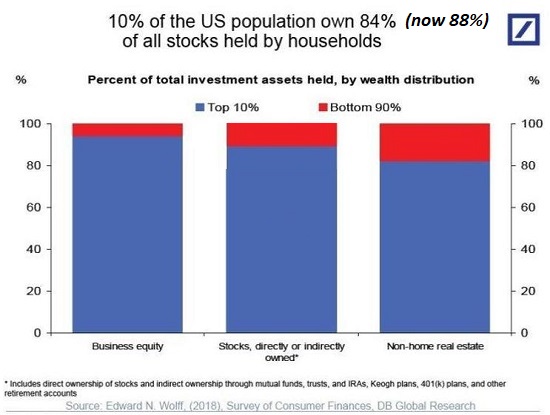
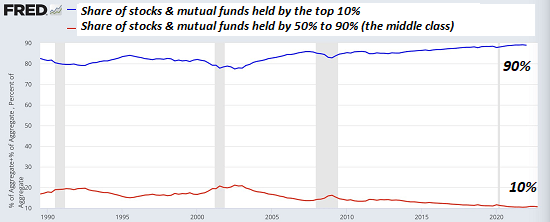
5. The economy has never been so dependent on absurdly overvalued stock valuations to prop up pension funds and the spending of the top 10% who own 85% of all stocks, i.e. “the wealth effect.”
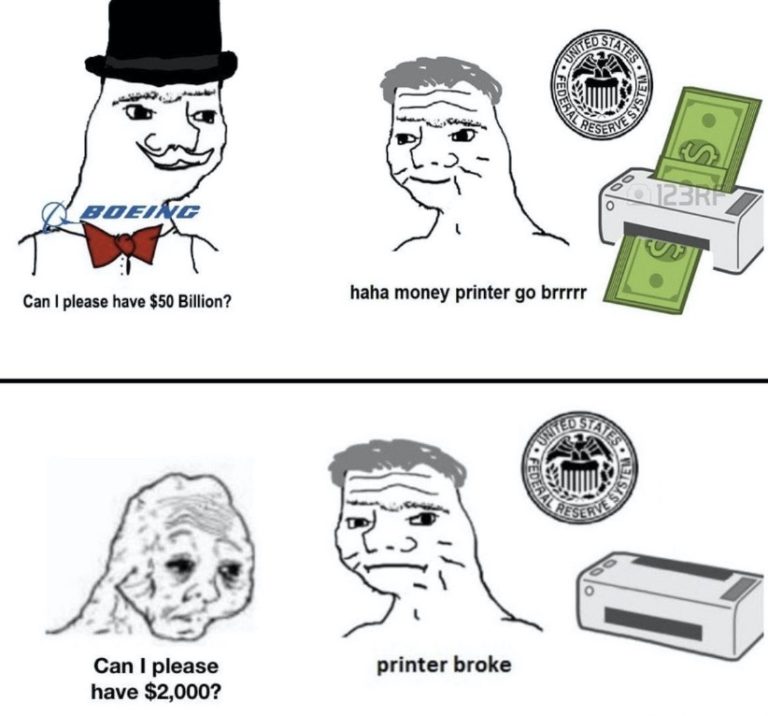
6. The economy and the stock market have never been so dependent on central bank free money for financiers and corporations, money creation for the few at the expense of the many, what amounts to an embezzlement scheme.
7. Federal statistics have never been so gamed, rigged or distorted to support a neofeudal agenda of claiming a level of wide-spread prosperity that is entirely fictitious.
8. Major sectors of the economy have never been such rackets, i.e. cartels and quasi-monopolies that use obscure pricing and manipulation of government mandates to maximize profits while the quality and quantity of the goods and services they produce declines.
9. The economy has never been in such thrall to sociopaths who have mastered the exploitation of the letter of the law while completely overturning the spirit of the law.
10. Households and companies have never been so dependent on “free money” gained from asset appreciation based on speculation, not an actual increase in productivity or value.
11. The ascendancy of self-interest as the one organizing directive in politics and finance has never been so complete, and the resulting moral rot never more pervasive.
12. The dependence on fictitious capital masquerading as “wealth” has never been greater.
13. The dependence on simulacra, simulations and false fronts to hide the decay of trust, credibility, transparency and accountability has never been so pervasive and complete.
14. The corrupt linkage of political power, media ownership, “national security” agencies and corporate power has never been so widely accepted as “normal” and “unavoidable.”
15. Primary institutions such as higher education, healthcare and national defense have never been so dysfunctional, ineffective, sclerotic, resistant to reform or costly.
16. The economy has never been so dependent on constant central bank manipulation of the stock and housing markets.
17. The economy has never been so fragile or brittle, and so dependent on convenient fictions to stave off a crash in asset valuations.
18. Never before in U.S. history have the most valuable corporations all been engaged in selling goods and services that actively reduce productivity and human happiness.
This is only a selection of a much longer list, but you get the idea. Basing one’s decisions on analogs from the past is entering a fool’s paradise of folly.
Tucked into the recent recovery bill was a provision granting the Federal Reserve the right to set up a $450 billion bailout plan without following key provisions of the federal open meetings law, including announcing its meetings or keeping most records about them, according to a POLITICO review of the legislation.
The provision further calls into question the transparency and oversight for the biggest bailout law ever passed by Congress. President Donald Trump has indicated he does not plan to comply with another part of the new law intended to boost Congress’ oversight powers of the bailout funds. And earlier this week, Trump dismissed the government official chosen as the chief watchdog for the stimulus package.
The changes at the central bank – which appear to have been inserted into the 880-page bill by sympathetic senators during the scramble to get it approved — would address a complaint that the Fed faced during the 2008 financial crisis, when board members couldn’t easily hold group conversations to address the fast-moving economic turmoil.
The provision dispenses with a longstanding accountability rule that the board has to give at least one day’s notice before holding a meeting. Experts say the change could lead to key information about the $450 billion bailout fund, such as which firms might benefit from the program, remaining inaccessible long after the bailout is over.
The new law would absolve the board of the requirement to keep minutes to closed-door meetings as it deliberates on how to set up the $450 billion loan program. That would severely limit the amount of information potentially available to the public on what influenced the board’s decision-making. The board would only have to keep a record of its votes, though they wouldn’t have to be made public during the coronavirus crisis.
A Fed spokesperson did not comment on the changes in the law or whether the Fed would continue keeping records of its meetings.
An era can be said to end when its basic illusions are exhausted.
– Arthur Miller
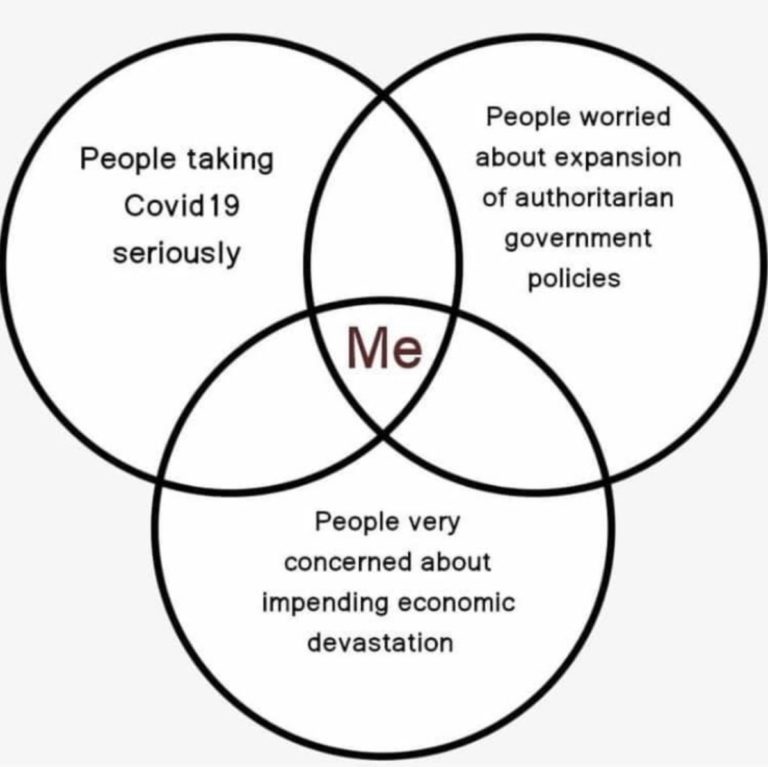
Before going any further, I want to share a graphic that accurately summarizes my position on the current pandemic affecting the world.
Unfortunately, it’s quite common for many to latch on to one of these conclusions and singularly obsess about it to the detriment of the others, when we need to be thinking about all three simultaneously.
It’s absolutely critical we understand governments throughout the world are rapidly mobilizing to use the crisis as an excuse to extract more wealth from society and condition the public to relinquish more precious civil liberties. The response in my own imperial oligarchy masquerading as a country has been particularly grotesque. A government that told us masks don’t work and couldn’t roll out testing for weeks, is now responding with the worst of both post-9/11 and post-financial crisis responses. The idea of representative government or democracy in America is a complete myth. The interests and desires of the people are irrelevant, and our economic system can be best described as financial feudalism.
We’ve seen this movie before. The U.S. government and Federal Reserve used major crises to consolidate wealth and power twice before this century, and it’s happening again. They got away with it before — and they’re getting away with it now — because the public accepts it. I hate to write that, but it’s true. People will tell me the public has no way to fight back, but that’s not accurate. The public hasn’t even tried historical methods like mass strikes and boycotts, instead they’ve been successfully neutered by phony red/blue team mainstream politics, through bickering about marginal issues like pronouns and bathrooms, and by endless entertainment and debt-based consumption. This is why the oligarchy keeps winning. Americans aren’t a serious people yet.
Witnessing the massive theft and power consolidation during the financial crisis a decade ago shook me to my core. I learned so much about how the world really works I simply couldn’t go on in the same way, so I quit my finance job and moved out of NYC. I was convinced such in your face theft would lead to effective popular movements and that the people would discover their power and take direct action, but I was wrong. Rather than economic populism transcending other differences to become ascendant and potent, most Americans were successfully shoved back into convenient political boxes easily managed by oligarchy. The rest is history.
For the past four decades, Americans have accepted that they’re mere spectators to the world around them. They’ve relinquished all agency and power that can have real impact.
I expect this to change as more people realize voting does nothing, and thus begin to take direct action
Is the above wishful thinking? It might be. I had similar thoughts a decade ago and nothing truly meaningful happened. That said, I’ve learned some valuable life lessons over the past decade and will share some of them today.
The title of today’s piece is “what are you gonna do about it?”, but let me start by telling you what I’m not going to do. I am not going to vote in the 2020 presidential election. In previous cycles, I went out and voted third party as a protest, but I won’t even do that this time. I refuse to give such a farcical system the satisfaction of even a protest vote. I’m over it. Done.
I think the best outcome for the 2020 presidential election would be the lowest voter turnout ever.
Don't let anyone who wins think they have a mandate.
Choosing to refrain from participation in a clearly rigged and sham presidential election process may feel like giving up, but it’s the exact opposite. It’s actually quite liberating to give up on the fantasy that voting for one of two sociopaths will materially improve your life or the direction of the country. Once you stop believing in the lazy fairytale version of politics you can get down to real action. If you accept that voting is largely a charade, you can either sit back and take it while playing video games, or you can get motivated. I see two avenues for action that can actually change things.
The first consists of mass organized movements that unite as many disparate factions as possible to focus on a single issue. This can take the form of a workers strike, a targeted boycott or something similar. The key thing that’s prevented this from happening is Americans have been so successfully divided and conquered. “Activist leaders” often demand those who constitute a movement see eye to eye on virtually everything, yet oligarchy knows to unite whenever their core interests are even slightly threatened. A hopelessly splintered public is one reason the people always lose.
We need to pick one particularly pernicious company and focus on it. Not because one company will change things, but because pressure on it can demonstrate the power of the public.
Although I’m confident in the success of such a strategy if implemented by enough people, this doesn’t mean it will materialize. I was hopeful it could happen last decade, but it never did. Americans proved to be as divided, conquered and distracted as ever, and it’s possible things will continue along this path in the years ahead. As such, waiting for mass movements that may never occur to materialize is not a sufficient strategy. You need a primary strategy, and that strategy starts with you.
The only thing you truly have control over is your mindset and your actions. Think about what angers you most about the system as it stands and turn that anger into something productive. What can you do as an individual to protest or reject that system? What can you do to become more resilient? Can you repurpose your skillset or profession in a way where you become more of a solution than part of the problem? Some of us can do more than others, but virtually everyone can take some action. If you can’t think of anything, think harder.
I'm glad Satoshi invented Bitcoin instead of trying to change the world through politics.
Reflecting on the past decade, every moment I spent taking control of my life and improving as an individual was worthwhile and rewarding, while every moment I spent hoping others around me would change was a gigantic disappointment.
This doesn’t mean we should give up on mass movements, it means you cannot rely on other people to get to the point you’re at as quickly as you’d like. Think about what’s actually in your control and go for it. And good luck.

 After the Crash