

At the Lost and Found

By Edward Curtin

Source: Behind the Curtain

“Nothing is more real than nothing.”
Samuel Beckett, Malone Dies

Those who are never lost are forever lost.  Only those who know they are lost and that life is a shipwreck have a chance to find their way to shore.

The world’s great religions, including Taoism and Existential philosophy, understand that at the heart of human existence is the presence of the not (death, emptiness, void), but this negative reality, this “nothingness” interpenetrates with the positive of being alive so that our knowledge coincides with our ignorance, our lives with our death, and our truth with untruth.  This is also common sense.

Everyone is a pilgrim on the way, and because there are no maps, we all get lost.  And it is only by getting lost in a deep sense that we can find ourselves and discover the truth about the world.

It is well known that Ernest Hemingway made famous the phrase “the lost generation” when he opened his novel The Sun Also Rises with the epigram “You are all a lost generation,” attributed to Gertrude Stein, who said she heard it from a garage owner who said it about a young auto mechanic in his employ.

It is less well known that Hemingway later wrote “that all generations were lost by something and always had been and always would be …But to hell with her lost-generation talk and all the dirty easy labels.”

He was thinking of how the madness of war with the calls to patriotism and God and country and the never-ending official lies about everything maimed people at very deep levels.  His words in A Farewell to Arms have lasted because they are so true in their dismissal of abstract obscenities and their embrace of the concrete:

I was always embarrassed by the words sacred, glorious, and sacrifice and the expression in vain …. And I had seen nothing sacred, and the things that were glorious had no glory and the sacrifices were like the stockyards of Chicago if nothing were done with the meat except to bury it …. Abstract words such as glory, honor, courage, or hallow were obscene beside the concrete names of villages, the numbers of roads, the names of rivers, the numbers of regiments and the dates.

No doubt he was also thinking of the existential anxiety of being alive and the fear of death and nothingness that is conveyed in his powerful short story, “A Clean Well-Lighted Place” that appeared in the 1930 volume Winner Take Nothing.  He was well acquainted with nothing (the not, nada) and knew that social circumstances only add to it, particularly wars and the nihilistic death wishes of lying political leaders.

Some say nothing has changed for millennia and that every age is similar and people are the same, always complaining about the present and recalling the good old days.  There is some truth in this, but the issue of assessing today in all its uniqueness remains paramount.  For every age and every generation is different; therein lies its potential and dangers.  Each can only be understood within its place and time.  We live in the era of high technology that has never before existed.  It is unique.  And it is uniquely dangerous.

Today is a time of unprecedented official lies about everything, endless wars hot and cold, class wars of the rich against the poor, medical wars of international elites against everyone, etc. –  it is a daily electronic digital  barrage meant to pound people into the deepest despair.  Call it “The Lost World of the Information Superhighway.”  These lies have sown a vast sense of bewilderment, as intended.  Lostness for so many, including those who don’t know it and take those lies for truth. People who don’t know that there are still places, although they are shrinking, where truth can be found.  The problem is, of course, that even when they are told about media sites and writers that operate honestly and outside the propaganda mill, they usually refuse to go there.  They prefer to live inside what Jim Garrison, the former New Orleans District Attorney who brought the only trial in the assassination of President Kennedy, correctly termed “the Doll’s House.”

Picking through the bins at the lost and found on the Internet, which is dominated by intelligence services and their Silicon Valley big tech partners, many who feel lost find “things” they think they have lost but which are counterfeit.  They cling to them as to false gods, not realizing that they have been placed there by the elite mountebanks and their accomplices, a process similar to a document dump that contains fabricated records.  It is an old trick.  Often what is really lost is the sense that life makes sense and is meaningful, but this awareness is often replaced with shards of false reassurance meant to distract and far too much information for anyone to comprehend.

What’s up?  Check your cell phone and head down the primrose path to unreality.

Just as there are two senses to being lost, one based on the awareness that if we refuse to grasp at straws and proceed through life by faith, the unknown road will bear us up (Thoreau said, “How vigilant we are! determined not to live by faith if we can avoid it…”), and the other being the more socially induced one of incessant propaganda, so too there are two ways of thinking about nothing.  The existential sense as described by Hemingway in his famous story mentioned above, and the sense of trivia or superficial preoccupations that distract.  C.S. Lewis described the latter sense very well:

The Christians describe the enemy as one ‘without whom Nothing is strong’. And Nothing is very strong: strong enough to steal away a man’s best years not in sweet sins but in a dreary flickering of the mind over it knows not what and knows not why, in the gratification of curiosities so feeble that the man is only half aware of them, in drumming of fingers and kicking of heels, in whistling tunes that he does not like, or in the long dim labyrinth of reveries that have not even lust or ambition to give them relish, but which, once chance association has started them, the creature is too weak and fuddled to shake off.

This is a perfect description of the passivity of scrolling the internet or social media.  Much ado about absolutely nothing but distractions.  Tranquilized by trivia.

Our current situation has been long in coming.  Back in the early 1960s, there was a  highly touted intellectual named Marshall McLuhan whose 1964 book, Understanding Media: The Extensions of Man, was gobbled up by the baby boomers raised on television, whose rebellious members protested the inhumanity of IBM computer technology of that time.  Ironically, it was members of this generation who later created the computer revolution and have promoted the digital revolution.  They carry cell phones as sidearms to defend themselves from reality.

Newsweek called McLuhan “the oracle of the New Communications.”  He was an obscurantic celebrator of the electronic media and retribalized man long before the Internet, cell phones, personal computers, and digital mania.  McLuhan’s paeans to technology sounded very profound and liberating  with their vaguely Gnostic and Jungian rhetoric, which also fit with the 1960s “vibes.”  He called the electronic media our gods whom we must serve, for they in turn would liberate us.  He gave life to things while taking it from persons.  He wrote:

Electromagnetic technology requires utter human docility and quiescence of meditation such as befits an organism that now wears its brain outside its skull and its nerves outside its hide. Man must serve his electronic technology with the same servo-mechanistic fidelity with which he served his coracle, his canoe, his typography, and all other extensions of his physical organs. But there is this difference, that previous technologies were partial and fragmentary, and the electric is total and inclusive. An external consensus or conscience is now as necessary as private consciousness. [my emphases]

Clearly this was a message of a prescient religious crank: mystical, mythological, technological nonsense perfectly in tune with the dawning new age. Not any coming of the Age of Aquarius, however, but that of the Age of Digital Control and endless wars.

By turning the person inside out and giving life to things, McLuhan was certainly anticipating and promoting the developments of the past forty years.  His ideas gave legitimacy to the passivity of the person in the face of the burgeoning mass media consumer culture.  They supported the growing commodification of all aspects of life, especially people.  By externalizing the person, McLuhan was eliminating the idea of the autonomous self and opening the way for today’s era of consumers, blank screens for the reception of advertising, public relations, and propaganda on a vast scale.  In fact, what he wrote of television runs deeper for cell phones and computer screens.  “ … with TV,” he wrote, “the viewer is the screen.  He is bombarded with light impulses that James Joyce called the ‘Charge of the Light Brigade’ that imbues his ‘soulskin with subconscious inklings.’ “

Inklings of abstract obscenities at war with the lost world of reality.

While many people sense this, they still embrace their killers, feeling that they would be lost without them. They have become appendages of their electronic appendages.  The current push to transform all person-to-person life into a digital one run by Artificial Intelligence (AI) technologies with its mass surveillance powers is recognized by many but dismissed as a weird conspiracy.  This is so far from the truth.  A good indicator of this nonchalant attitude toward such developing trends is the vastly increased popularity of on-line shopping.  Its innocence conceals the future that is coming.

I recently won a very high-tech looking electric toothbrush at the dentist.  When I opened it, I discovered it contained a gadget with a suction cup that could hold a “smart phone” that you could attach to the mirror.  The phone could electronically be linked to the toothbrush and it would monitor your brushing as you watched yourself brush.  Poor me, I felt so stupid: a man without a smart phone!

While everybody knows that the boat is leaking and the captain lied, to paraphrase Leonard Cohen, such knowledge is abstract.  It is a sort-of knowledge, sensed but also denied.  Real but unreal.  Known but unknown.  And that’s how it goes.  It is very difficult for many conventional people to admit that the life they have known is disappearing while they dawdle in fantasy land, believing the propaganda of their rulers.  To live in the U.S.A. is to live in Neverland where no one ever has to be alone, never grow up, and always be “in touch” through the ether.  It is a country of lost children.

You can choose any issue of importance and its official explanation is certain to be untrue, obvious or subtle propaganda.  The lies about Ukraine and Russia; Covid-19, lockdowns, and vaccines; China and Taiwan; U.S. forces in Syria and U.S. support for Israeli aggression against Syria and the Palestinians; its support for Saudi Arabia’s ruthless policies and war against Yemen; the economy, central banking, and inflation; the increasing censorship of dissident voices; digital IDs, digital programmable currencies, and social credit systems; the persecution of Julian Assange; the Great Reset; a series of binaries meant to suggest false alternatives, etc.  The list is endless.  All official lies to support a sinking ship captained by psychopathic liars seemingly intent on a world war that will destroy the world.  Melville’s Captain Ahab writ large. Like those traveling on the Titanic, today’s passengers on the flailing American empire’s Good Ship Lollipop are in for a surprise, and it won’t be a sweet trip to a candy shop.

Hemingway was surely right that “Winner Take Nothing.”  Yet losers also exit empty-handed.  Everybody knows this but goes on surrounding themselves with stuff, lots of things.  Hoarders are a popular TV subject because they represent the extreme form of this madcap method of trying to secure oneself from loss.  It is a form of mental and spiritual despair that could only exist in advanced capitalist consumer society.  Too many possessions and too much information.  Cluttered minds, cluttered abodes.  There is a reason why the world’s poor are called the dispossessed.  One could say hoarders are the possessed, and it is a form of demonic possession.

Recently I was called upon to help a hospitalized elderly relative by checking on her house.  The house is filled from attic to basement, in every nook and cranny, with collected things that serve no life purpose but were kept to provide a security blanket that was really a strangulation cord.  I will spare you the details, except to say that this relative is an intelligent woman, as was her deceased husband, and yet they surrounded themselves with so much “stuff,” never threw things out, kept papers from 70 years ago, old keys and coins, empty jewelry boxes by the score, etc.  An overwhelming scene to behold.  And why did they do this?  Because they thought they were protecting themselves against loss, against nothing, nada.

As T. S. Eliot wrote in The Wasteland: “These fragments I have shored against my ruins.”  But there is nothing that will protect against the loss Eliot was referring to – the social, psychological, and spiritual fragmentation of Europe as a result of World War I.  A wasteland created by politicians. Like today.

We too are now living in a wasteland, and the only way to find our way forward is to acknowledge that we are lost and to jettison the false security of believing the vast tapestry of lies promulgated by the captains of the American-led Titanic.

I often think of the words of the poet Rilke as good advice, a step in the right direction where there is a lost and found worth visiting and insights await us. While primarily writing about the artist who time and again is that someone who emerges from the crowd and whose “winged heart everywhere beats against the walls of their time,” I think his words apply to every person, including journalists.  To plumb the depths of our sordid current world demands aesthetic, political, and spiritual resistance rooted in the open sociological imagination, a willingness to go wherever the facts and intuition leads us.  Rilke said:

Not any self-control or self-limitation for the sake of specific ends, but rather a carefree letting go of oneself; not caution, but rather a wise blindness; not working to acquire silent, slowly increasing possessions, but rather a continuous squandering of all perishable values. This way of being has something naïve and instinctive about it, and resembles that period of the unconscious best characterized by a joyous confidence, namely the period of childhood …. [the child] has no anxiety about losing things …. And whatever he has once been lit up in love remains as an image, never more to be lost, and the image is possession; that is why children are so rich.

For a country of lost children, this is a good place to start.
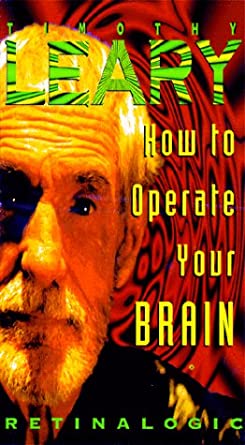
Saturday Matinee: How to Operate Your Brain

Source: Open Culture

Speaking at the Human Be-In in January 1967, Timothy Leary uttered the famous phrase borrowed from Marshall McLuhan, “Turn on, tune in, drop out.” It was shorthand for saying experiment with psychedelics and achieve new levels of consciousness.

Almost 30 years later, Leary hadn’t lost his missionary zeal. In 1993 (and only a few years before his death), the former Harvard psychology professor recorded “a public service video” called How to Operate Your Brain. Here, Leary narrates an almost epileptic seizure-inducing video, providing what some consider “a guided meditation” of sorts. I’d prefer to call it an unorthodox “user manual” that tries to impart Leary’s unique sense of enlightenment:

The aim of human life is to know thyself. Think for yourself. Question authority. Think with your friends. Create, create new realities. Philosophy is a team sport. Philosophy is the ultimate, the ultimate aphrodisiac pleasure. Learning how to operate your brain, learning how to operate your mind, learning how to redesign chaos.

As you get deeper into the meditation, you’ll realize one thing. Three decades may have passed since Leary popularized the catchphrase of the counterculture. But he’s still getting his ideas from McLuhan. If you follow the video (or transcript) to the end, you’ll discover that ones and zeros have basically taken the place of LSD. Leary says:

Now we have digital communication. We can create our fantasies. We can create our rhythms, design on screen…. Anyone in any culture watching this screen will get the general picture. It’s one global village. It’s one global human spirit, one global human race. As we link up through screens, linked by electrons and photons, we will create for the first time a global humanity, not separated by words or minds or nationalities or religious biases.

You can find McLuhan meditating on the concept of an Electronic Global Village in another vintage clip.

Snow, Death, and the Bewildered Herd

By Edward Curtin

Source: Behind the Curtain

Few people at this hour – and I refer to the time before the breaking out of this most grim war, which is coming to birth so strangely, as if it did not want to be born – few, I say, these days still enjoy that tranquility which permits one to choose the truth, to abstract one in reflection.  Almost all the world is in tumult, is beside itself, and when man is beside himself he loses his most essential attribute: the possibility of meditating, or withdrawing into himself to come to terms with himself and define what it is he believes and what it is that he does not believe; what he truly esteems and what he truly detests.  Being beside himself bemuses him, blinds him, forces him to act mechanically in a frenetic somnambulism.

-Ortega Y Gasset “The Self and the Other”

As I write these words, the house is being buried in a snowstorm. Heavy flakes fall slowly and silently as a contemplative peace muffles the frenetic agitation and speed of a world gone mad. A beautiful gift like this has no price, though there are those who would like to set one, as they do on everything.  In my mind’s eye I see Boris Pasternak’s Yurii Zhivago, sitting in the penumbra of an oil lamp in the snowy night stillness of Varykino, scratching out his poems in a state of inspired possession.  Outside the wolves howl. Inside the bedroom, his doomed lover, Lara, and her daughter sleep peacefully.  The wolves are always howling.

Then my mind’s lamp flickers, and Ignacio Silone’s rebel character, Pietro Spina (from the novel Bread and Wine) appears.  He is deep into heavy snow as he flees the Italian fascists by hiking into the mountains. There, too, howl the wolves, the omnipresent wolves, as the solitary rebel – the man who said “No” – slowly trudges in a meditative silence, disguised as a priest.

Images like these, apparitions of literary characters who never existed outside the imagination, might at first seem eccentric. But they appear to me because they are, like the silent snow that falls outside, evocative reminders of our need to stop the howling media streams long enough to set our minds on essential truths, to think and meditate on our fates – the fate of the earth and our individual fates. To resist the forces of death we need to concentrate, and that requires slow silence in solitude.  That is why the world’s archetypal arch-enemy, Mr. Death himself, aka Satan, aka Screwtape, advises his disciple Wormwood in C. S. Lewis’s The Screwtape Letters to befuddle people against the aberration of logic by keeping them distracted with contradictory, non-stop news reports. He tells him that “Your business is to fix his attention on the stream.  Teach him to call it ‘real life’ and don’t let him ask what he means by ‘real.’ “

It is a commonplace to say that we are being buried in continuous and never-ending information. Yet it is true.  We are being snowed by this torrent of indigestible “news,” and it’s not new, just vastly increased in the last twenty-five years or so.

Writing fifty-eight years ago, C. Wright Mills argued:

It is not only information they need – in the Age of Fact, information often dominates their attention and overwhelms their capacities to assimilate it….What they need…is a quality of mind that will help them to use information and to develop reason in order to achieve lucid summations of what is going on in the world and of what may be happening within themselves….what may be called the sociological imagination.

Today, as we speed down the information superhighway, Mills’s words are truer than ever.  But how to develop an imagination suffused with reason to arrive at lucid summations?  Is it possible now that “the information bomb” (attributed to Einstein) has fallen?

Albert Camus once said that “at any street corner the feeling of absurdity can strike any man in the face.”  While that is still true today, I would add that the feeling of an agitated and distracted bewilderment is everywhere to be seen as multitudes scan their idiot boxes for the latest revelations. Beeping and peeping, they momentarily quell their nervous anxieties by being informed and simulating proximity through the ether. Permanently busy in their mediated “reality,” they watch as streaming data are instantly succeeded by streaming data in acts of digital dementia. For Camus the absurd was a starting point for a freer world of rebellion. For Walter Lippman, the influential journalist and adviser to presidents and potentates, “the bewildered herd” – his name for regular people, the 99 % – was a beginning and a wished for end. His elites, the 1 %, would bewilder the herd in order to control them. His wish has come true.

A surfeit of information, fundamental to modern propaganda, prevents people from forming considered judgments.  It paralyzes them. Jacques Ellul writes in Propaganda:

Continuous propaganda exceeds the individual’s capacity for attention or adaptations. This trait of continuity explains why propaganda can indulge in sudden twists and turns.  It is always surprising that the content of propaganda can be so inconsistent that it can approve today what it condemned yesterday.

Coherence and unity in claims aren’t necessary; contradictions work just as well.  And the more the better: more contradictions, more consistency, more complementarity – just make it more.  The system demands more.  The informed citizen craves more; craves it faster and faster as the data become dada, an absurdist joke on logical thinking.

Wherever you go in the United States these days, you sense a generalized panic and an inability to slow down and focus.  Depression, anxiety, hopelessness fill the air.  Most people sense that something is seriously wrong, but don’t know exactly what. So they rage and rant and scurry along in a frenzy. It seems so huge, so everything, so indescribable.  Minds like pointilliste canvases with thousands of data dots and no connections.

In the mid-1990s, when the electronic world of computers and the internet were being shoved down our throats by a consortium of national security state and computer company operatives (gladly swallowed then by many and now resulting in today’s total surveillance state), I became a member of The Lead Pencil Club foundered by Bill Henderson (The Pushcart Press) in honor of Thoreau’s father’s pencil factory and meant as a whimsical protest: “a pothole on the information superhighway.”  There were perhaps 37 1/3 members worldwide, no membership roll, and no dues – just a commitment to use pencils to write and think slowly.

“Why should we live with such hurry and waste of life?” Thoreau asked.  “We are determined to be starved before we are hungry.”

So I am writing these words with a pencil, an object, to paraphrase Walter Benjamin, which haunts our present electronic world by being a ruin of the past.  It is not a question of nostalgia, for we are not returning to our lost homes, despite a repressed urge for simpler times. But the pencil is an object that stands as a warning of the technological hubris that has pushed our home on earth to the brink of nuclear extinction and made mush of people’s minds in grasping the reasons why.

I think of John Berger, the great writer on art and life, as I write, erase, cross out, rewrite – roll the words over and look at them, consider them.  Berger who wrote: “Writing is an off-shoot of something deeper”; that “most mainstream political discourse today is composed of words that, separated from any creature of language, are inert….dead ‘word-mongering’ [that] wipes out memory and breeds a ruthless complacency.”

The pencil is not a fetish; it is a reminder to make haste slowly, to hear and feel my thinking on the paper, to honor the sacredness of what Berger calls the “confabulation” between words and their meaning.  I smell the pencil’s wood, the tree of life, its slow ascent, rooted in the earth, the earth our home, our beginning and our end.

Imagining our ends, while always hard, has become much harder in modern times in western industrialized nations, especially the United States that reigns death down on the rest of the world while pretending it is immortal and immune from the nuclear weapons it brandishes. Yet the need to do so has become more important. When in 1939 Ortega y Gasset warned in the epigraph of a most grim war coming to birth so strangely, as people acted “mechanically in a frenetic somnambulism,” he was writing before nuclear weapons, the ultimate technology. If today we cannot imagine our individual deaths, how can we imagine the death of the earth? In a 1944 newspaper column George Orwell made an astute observation: “I would say that the decay of the belief in personal immortality has been as important as the rise of machine civilization.” He connected this growing disbelief to the modern cult of power worship.  “I do not want the belief in life after death to return,” he added, “and in any case it is not likely to return.  What I do point out is that its disappearance has left a big hole, and that we ought to take notice of that fact.”

I think that one reason we have not taken notice of this fact of the presence of a huge absence (not to say whether this disbelief is “true”) is the internet of speed, celebrated and foreseen by the grandmaster of electronic wizardry and obscurantic celebrator of retribalized man, Marshall McLuhan, who called the electronic media our gods whom we must serve and who argued that the extensions of human faculties through media would bring about abstract persons who would wear their brains outside their skulls and who would need an external conscience. Shall we say robots on fast forward?

Once the human body is reduced to a machine and human intercourse accepted as a “mediated reality” through so-called smart devices, we know – or should – that we are in big trouble.  John Ralston Saul, a keen observer of the way we live now, mimics George Carlin by saying, “If Marx were functioning today, he would have been hard put to avoid saying that imaginary sex is the opiate of the people.”

Saul is also one of the few thinkers to follow-up on Orwell’s point.  “Inexplicable violence is almost always the sign of deep fears being released and there can be no deeper fear than mortality unchained.  With the disappearance of faith and the evaporation of all magic from the image, man’s fear of mortality has been freed to roam in a manner not seen for two millennia.”  Blind reason, amoral and in the service of expertise and power, has replaced a holistic approach to understanding that includes at its heart art, language, “spirit, appetite, faith and emotion, but also intuition, will and, most important, experience.”  People, he argues, run around today in an inner panic as if they are searching for a lost forgotten truth.

Zygmunt Bauman, the brilliant sociological thinker, is another observer who has noticed the big hole that is staring us in the face.  “The devaluation of immortality,” he writes, “cannot but augur a cultural upheaval, arguably the most decisive turning point in human cultural history.”  He too connects our refusal in the west to contemplate this fact to the constant busyness and perpetual rushed sense of emergency engendered by the electronic media with its streaming information.  To this end he quotes Nicole Aubert:

Permanent busyness, with one emergency following another, gives the security of a full life or a ‘successful career’, sole proofs of self-assertion in a world from which all references to the ‘beyond’ are absent, and where existence, with its finitude, is the only certainty…When they take action people think short-term – of things to be done immediately or in the very near future…All too often, action is only an escape from the self, a remedy from the anguish.

McLuhan’s abstract persons, who rush through the grey magic of electronic lives where flesh and blood don’t exist, not only drown in excessive data that they can’t understand, but drift through a world of ghostly images where “selves” with nothing at the core flit to and fro. Style, no substance.  Perspective, no person.  Life, having passed from humans to things and the images of things, reduced and reified.  Nothing is clear, the images come and go, fact and fiction blend, myth and history coalesce, time and space collapse in a collage of confusion, surfaces appear as depths, the person becomes a perspective, a perspective becomes a mirror, a mirror reflects an image, and the individual is left dazed and lost, wondering what world he is in and what personality he should don. In McLuhan’s electronic paradise that is ours, people don’t live or die, people just float through the ether and pass away, as do the victims of America’s non-stop wars of aggression simply evaporate as statistics that float down the stream, while the delusional believe the world will bloodlessly evaporate in a nuclear war that they can’t imagine coming and won’t see gone. Who in this flow can hear the words of Federico Garcia Lorca: “Beneath all the totals, a river of warm blood/A river that goes singing/past the bedrooms…”?

If you shower the public with the thousands of items that occur in the course of a day or a week, the average person, even if he tries hard, will simply retain thousands of items which mean nothing to him.  He would need a remarkable memory to tie some event to another that happened three weeks or three months ago….To obtain a rounded picture one would have to do research, but the average person has neither the desire or time for it.  As a result, he finds himself in a kind of kaleidoscope in which thousands of unconnected images follow each other rapidly….To the average man who tries to keep informed, a world emerges that is astonishingly incoherent, absurd, and irrational, which changes rapidly and constantly for reasons he cannot understand.

Jaques Ellul wrote that in 1965. Lucid summations are surely needed now.

Here’s one from Roberto Calasso from The Forty-Nine Steps: “The new society is an agnostic theocracy based on nihilism.”

Anyone who sits silently and does a modicum of research while honestly contemplating the current world situation will have no trouble in noticing that there is one country in the world – the U.S.A. – that has used nuclear weapons, is modernizing its vast obscene arsenal, and has announced that it will use it as a first strike weapon. A quick glance at a map will reveal the positioning of U.S. NATO troops and weapons right up to Russia’s borders and the aggressive movement of U.S. forces close to China.  Hiroshima and Nagasaki make no difference.  The fate of the earth makes no difference. Nothing makes a difference. Obama started this aggressiveness, but will this change under Trump?  That’s very unlikely. We are talking about puppets for the potentates. It’s easy to note that the U.S. has 1,000,000 troops stationed in 175 countries because they advertise that during college basketball games, and of course you know of all the countries upon which the U.S. is raining down death and destruction in the name of peace and freedom.  That’s all you need to know.  Meditate on that and that hole that has opened up in western culture, and perhaps in your heart.

“If you are acquainted with the principle,” wrote Thoreau, “what do you care for myriad instances and applications?”  Simplify, simplify, simplify.

But you may prefer complexity, following the stream.

The snow is still falling, night has descended, and the roads are impassable.  The beautiful snow has stopped us in our tracks. Tomorrow we can resume our frantic movements, but for now we must simply stay put and wonder.

Eugene Ionesco, known for his absurdist plays, including Rhinoceros, puts it thus:

In all the cities of the world, it is the same.  The universal and modern man is the man in a rush (i.e. a rhinoceros), a man who has no time, who is a prisoner of necessity, who cannot understand that a thing might be without usefulness; nor does he understand that, at bottom, it is the useful that may be a useless and back-breaking burden.  If one does not understand the usefulness of the useless and the uselessness of the useful, one cannot understand art.  And a country where art is not understood is a country of slaves and robots.

Ionesco emphasized the literal insanity of everyday life, comparing people to rhinoceroses that think and act with a herd mentality because they are afraid of the solitude and slowness necessary for lucid thought. They rush at everything with their horns.  Behind this lies the fear of freedom, whose inner core is the fear of death.  Doing nothing means being nothing, so being busy means being someone.  And today being busy means being “plugged into the stream” of information meant to confound, which it does.

I return to the artist Pasternak, since the snowy night can’t keep me away. Or has he returned to me? I hear Yurii Zhivago’s uncle Nikolai speaking:

Only individuals seek the truth, and they shun those whose sole concern is not the truth.  How many things in the world deserve our loyalty?  Very few indeed.  I think one should be loyal to immortality, which is another word for life, a stronger word for it ….What you don’t understand is that it is possible to be an atheist, it is possible to not know whether God exists, or why, and yet believe that man does not live in a state of nature but in history….Now what is history?  It is the centuries of systematic explorations of the riddle of death, with a view to overcoming death. That’s why people discover mathematical infinity and electromagnetic waves, that’s why they write symphonies.  Now, you can’t advance in this direction without a certain faith.  You can’t make such discoveries without spiritual equipment.  And the basic elements of this equipment are in the Gospels.  What are they?  To begin with, love of one’s neighbor, which is the supreme form of vital energy.  Once it fills the heart of man it has to overflow and spend itself.  And then the two basic ideals of modern man – without them he is unthinkable – the idea of free personality and the idea of life as sacrifice.  Mind you, all of this is still extraordinarily new….Man does not die in a ditch like a dog – but at home in history, while the work toward the conquest of death is in full swing; he dies sharing in this work.  Ouf!  I got quite worked up, didn’t I?  But I might as well be talking to a blank wall.

I look outside and see the snow has stopped.  It is time to sleep.  Early tomorrow the plows will grind up the roads and the rush will ensue.  Usefulness will flow.

But for now the night is beautiful and slow. A work of art.

David Cronenberg’s Videodrome Was a Technology Prophecy

videodrome_one_sheet_movie_poster_l

Editor’s note: Since today marks director David Cronenberg’s 73rd birthday, it’s a good time to appreciate one of his greatest and most notorious works. Though my favorite of his remains the distinctly PKD-like eXistenZ, a close runner up is the cult classic Videodrome, which the following analysis reappraises in the context of contemporary social media-fixated culture.

By Nathan Jurgenson

Source: Omni Reboot

David Cronenberg’s vision of technology as the “new flesh” in Videodrome isn’t so shocking anymore.

Videodrome is the best movie ever made about Facebook.

What felt “vaguely futuristic” about it in 1983 is prescient today: technology and media are ever more intimate, personal, embodied, an interpenetration that David Cronenberg’s film graphically explores.
Videodrome offers a long-needed correction to how we collectively view and talk about technology. As the anti-Matrix, Videodrome understood that media is not some separate space, but something which burrows into mind and flesh. The present has a funny habit of catching up with David Cronenberg.
Still, Videodrome is deeply of its time and place. It’s set in Toronto, where Cronenberg was born and studied at the same time as University of Toronto superstar media theorist Marshall McLuhan, who coined the phrase “the medium is the message.” Beyond McLuhan’s reputation, Toronto was also known as a wired city; among other things, it was an early adopter of cable television.
In suit, Videodrome follows a Toronto cable television president, Max Renn (James Woods). He becomes involved with a radio psychiatrist named Nikki Brand (Debbie Harry, of Blondie fame), who reminds us of popular criticisms of television culture: we want to be stimulated until we’re desensitized, becoming (at best) apolitical zombies and (at worst) amoral monsters. Television signal saturates this film. The satellite dishes, screens, playback devices, and general aesthetics of analogue video are on glorious, geeked-out display. Although Videodrome’s operating metaphor is television, this film can be understood as being a fable about media in general. And what seemed possible with television in 1983 seems obvious today with social media.
Over the course of the film, Max comes to know a “media prophet” named Professor Brian O’Blivion—an obvious homage to Marshall McLuhan. O’Blivion builds a “Cathode Ray Mission,” named after the television set component which shoots electrons and creates images. The Cathode Ray Mission gives the destitute a chance to watch television in order to “patch them back into the world’s mixing board,” akin to McLuhan’s notion of media creating a “global village,” premised on the idea that media and technology, together, form the social fabric. O’Blivion goes on to monologue, “The television screen is the retina of the mind’s eye. Therefore, the television screen is part of the physical structure of the brain. Therefore, whatever appears on the television screen appears as raw experience for those who watch it. Therefore, television is reality; and reality is less than television.”
This is Videodrome’s philosophy. It’s the opposite of The Matrix’s reading of Baudrillard’s theories of simulation, and it goes completely against the common understanding of the Web as “virtual,” of the so-called “offline” as “real.” O’blivion would agree when I claim that “it is wrong to say ‘IRL’ to mean offline: Facebook is real life.”
This logic—that the Web is some other place we visit, a “cyber” space, something “virtual” and hence unreal—is what I call “digital dualism” and I think it’s dead wrong. Instead, we need a far more synthetic understanding of technology and society, media and bodies, physicality and information as perpetually enmeshed and co-determining. If The Matrix is the film of digital dualism, Videodrome is its synthetic and augmented opponent.
As P.J. Rey illustrates, fictional Web-spatiality is the favorite digital dualist plot device. Yet more than fiction books and films, what has come to dominate much of our cultural mythology around the Web is the idea that we are trading “real” communication for something simply mechanical: that real friendship, sex, thinking, and whatever else lazy op-ed writers can imagine are being replaced by merely simulated experiences. The non-coincidental byproduct of inventing the notion of a “cyber” space is the simultaneous invention of “the real,” the “IRL,” the offline space that is more human, deep, and true. Where The Matrix’s green lines of code or Neal Stephenson’s 3D Metaverse may have been the sci-fi milieu of the 1990s, the idea of a natural “offline” world is today’s preferred fiction.
Alternatively, what makes Videodrome, and Cronenberg’s oeuvre in general, so useful for understanding social media is their fundamental assumption that there is nothing “natural” about the body. Cronenberg’s trademark flavor of body-horror is highly posthuman: boundaries are pushed and queered, first through medical technologies in Shivers , Rabid , The Brood , and Scanners , then through media technology in Videodrome  and eXistenZ , then, most notoriously, in The Fly, where the human and animal merge. If The Matrix is René Descartes, Videodrome is Donna Haraway.
Cronenberg’s characters are consistent with Haraway’s theory of the cyborg: not the half-robot with the shifty laser eye, but you and me. In the film, the goal is never to remove the videodrome signal that is augmenting the body, but to reprogram it. To direct it. As Haraway famously wrote, “I’d rather be a cyborg than a goddess.” “Natural” was never a real option anyways.
Max Renn is especially good at finding the real in the so-called “virtual” because he is equally good at seeing virtuality in the “real.” From the beginning, he understands that much of everyday life is a massive media event devoid of meaning. The old flesh is tired, used up, and toxic. The world is filled with a suffering assuaged only by glowing television screens. As the film progresses, the real and unreal blur, making each seem hyperbolic: hallucinations become tangible, while the tangible drips with a surrealism that’s gritty, jumpy, dirty, erotic, and violent—closer to Spring Breakers than The Wizard of Oz. As such, Cronenberg’s universe is always a little sticky: an unease which begs the nightmares to come true, so that we at least know what’s real.
Videodrome’s depiction of techno-body synthesis is, to be sure, intense; Cronenberg has the unusual talent of making violent, disgusting, and erotic things seem even more so. The technology is veiny and lubed. It breaths and moans; after watching the film, I want to cut my phone open just to see if it will bleed. Fittingly, the film was originally titled “Network of Blood,” which is precisely how we should understand social media, as a technology not just of wires and circuits, but of bodies and politics. There’s nothing anti-human about technology: the smartphone that you rub and take to bed is a technology of flesh. Information penetrates the body in increasingly more intimate ways.
This synthesis of the physical and the digital is mirrored in the film’s soundtrack, too. In his book on Videodrome’s production, Tim Lucas calls Howard Shore’s score “bio-electronic” because it was written, programmed into a synthesizer, and played back on a computer in a recording studio while live strings played along. Early in the film, the score is mostly those strings, but as time passes the electronic synthesizers creep up in the mix, forming the bio-electronic synthesis.
The most fitting example of techno-human union in Videodrome is the famous scene of Max inserting his head into a breathing, moaning, begging video screen; somewhere between erotic and hilarious, media and humanity coalesce. There isn’t a person and then an avatar, a real world and then an Internet. They’re merged. As theorists like Katherine Hayles have long taught, technology, society, and the self have always been intertwined. Videodrome knows this, and it shows us with that headfirst dive into the screen—to say nothing of media being inserted directly into a vaginal opening in Max’s stomach, or the gun growing into his hand.

Thirty years after its release, Videodrome remains the most powerful fictional representation of technology-self synthesis. This merger wasn’t invented with the Internet, or even television. Humans and technology have always been co-implicated. We often forget this when talking about the Web, selling ourselves instead a naive picture of defined “virtual” spaces which somehow lack the components of “real” reality. This is why The Matrix and “cyberspace” have long outworn their welcome as a frame for understanding the Internet. It should be of no surprise that body horror is as useful for understanding social media as cyberpunk.

Saturday Morning Matinee: The Net

netcover2

Notes by Other Cinema:

Ultimately stunning in its revelations, Lutz Dammbeck’s The Net explores the incredibly complex backstory of Ted Kaczynski, the infamous Unabomber. This exquisitely crafted inquiry into the rationale of this mythic figure situates him within a late 20th Century web of technology—a system that he grew to oppose. A marvelously subversive approach to the history of the Internet, this insightful documentary combines speculative travelogue and investigative journalism to trace contrasting countercultural responses to the cybernetic revolution.

For those who resist these intrusive systems of technological control, the Unabomber has come to symbolize an ultimate figure of Refusal. For those that embrace it, as did and do the early champions of media art like Marshall McLuhan, Nam June Paik, and Stewart Brand, the promises of worldwide networking and instantaneous communication outweighed the perils. Dammbeck’s conceptual quest links these multiple nodes of cultural and political thought like the Internet itself. Circling through themes of utopianism, anarchism, terrorism, CIA, LSD, Tim Leary, Ken Kesey and the Merry Pranksters, The Net exposes a hidden matrix of revolutionary advances, coincidences, and conspiracies.

http://www.youtube.com/watch?v=xLqrVCi3l6E