MORE PEOPLE WERE ARRESTED FOR CANNABIS POSSESSION THAN ALL VIOLENT CRIMES PUT TOGETHER IN THE US LAST YEAR

By John Vibes

Source: Waking Times

With legal recreational and medical cannabis now available in so many different US states, it is easy to get the impression that the war on cannabis users is over.

However, cannabis users still represent a significant portion of the people who are filling jails and courthouses throughout the country.

According to the FBI’s recent Uniform Crime Report, more people were arrested for cannabis possession last year than for all violent crimes put together.

The data showed that 545,602 people were arrested in the US for cannabis-related crimes last year. Meanwhile, just 495,871 people were arrested for violent crimes.

Furthermore, the vast majority of the people who got arrested for cannabis were not accused of selling or trafficking the substance, but just for simple possession. 500,395 of the total cannabis arrests last year, or about 92%, were for possession, which is still more than the number of people who were arrested for violent crimes.

Erik Altieri, the Executive Director for cannabis advocacy group NORML, says that police across America are still making a cannabis-related arrest every 58 seconds.

“At a time when the overwhelming majority of Americans want cannabis to be legal and regulated, it is an outrage that many police departments across the country continue to waste tax dollars and limited law enforcement resources on arresting otherwise law-abiding citizens for simple m***juana possession,” Altieri told Forbes.

Overall, cannabis arrests have been going down nationwide due to the spread of legalization. Last year, cannabis arrests were down by 18% when compared with 2018.

As suspected, the FBI’s data showed that people were less likely to get arrested for cannabis in states where it was legal or available for medical use, with eastern states seeing far more arrests.

According to the report, roughly 53% of all cannabis arrests last year took place in the northeastern part of the country, where cannabis laws are still catching up with the west.

People of color are also at a greater risk of being targeted for cannabis arrests. According to a report from the ACLU, 2018 data showed that people of color were 3.6 times more likely to be arrested for cannabis possession than white people, despite using the substance at the same rates.

In some states that are known to be especially dangerous for people of color, such as Montana or Kentucky, they are close to ten times more likely to be arrested for cannabis. In a few particular US counties, people of color were 50 times more likely to be arrested for cannabis possession.

In some states where cannabis has been legalized, lawmakers are making efforts to introduce pardons for those who previously broke the law.

Earlier this year, Nevada Governor Steve Sisolak introduced a measure that will pardon more than 15,000 people who were convicted for low-level cannabis possession in the state.

The resolution was unanimously approved by the state’s Board of Pardons Commissioners shortly after it was introduced.

In Colorado, lawmakers passed a bill that will allow the state’s governor to unilaterally pardon people with past convictions for possession of up to two ounces.

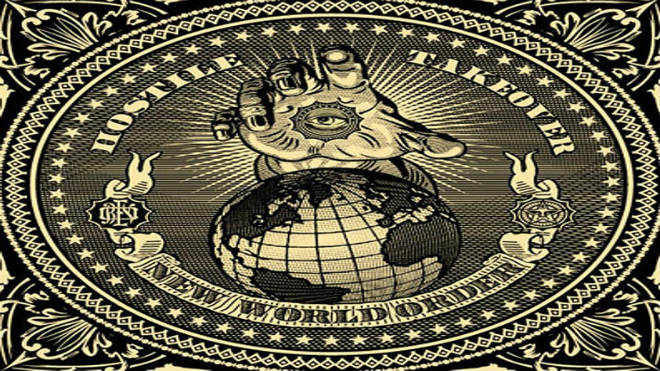
‘New World Order’ is falling apart

By Wayne Madsen

Source: Intrepid Report

One of the more welcomed outcomes of the paring back of the U.S. State Department bureaucracy is the elimination of scores of “status quo enthusiasts.” Since the end of World War II, the State Department’s ranks have been populated by foreign service officers and career diplomats who have championed the international status quo.

These minions of Foggy Bottom received encouragement for their protective stance on post-World War II and the Cold War in President George H. W. Bush’s speech on September 11, 1990, which was titled, “Toward a New World Order.” Under the “new world order,” regional and global security concerns would supplant democratic independence movements. The immediate effect of this “order” was brutal crackdowns on secession in the periphery of the former Soviet Union, including Abkhazia, South Ossetia, Nagorno-Karabakh, Transnistria, as well as in Somalia, the Kurdish regions of Iraq and Turkey, East Timor, Sudan, and Ethiopia. However, in Yugoslavia, which the United States and European Union wanted to see dissolved, secessionists in seven constituent states were encouraged to secede from the federation. That resulted in the bloodiest military conflicts in Europe since World War II.

Leaders of secessionist groups visiting Washington were traditionally shunned by the State Department. These hapless would-be presidents and prime ministers would be lucky to meet with a low-ranking State Department employee. However, if their independence movements were championed by the Central Intelligence Agency, they would get red carpet treatment. Such was the case with Secretary of State Madeleine Albright’s favorite Balkans “toy boy,” Hashim Thaci, the leader of the terrorist Kosovo Liberation Army and now president of the Republic of Kosovo, which was carved out of Serbia but is still unrecognized by many of the world’s most important nations, including China and Russia.

Today, one of the most-commonly seen words in State Department Country Desk reports is “secession.” In the past, State Department senior bureaucrats would be raising this development with the secretary of state as a major threat to U.S. interests. The CIA would then be instructed to remedy the situation by providing intelligence support to the countries where secessionist activity was a rising problem. “Support” would range from intelligence assistance to full-blown military aid.

As the United States recedes from the “world’s only superpower” status, to the chagrin of neoconservatives who are pouring into the Donald Trump administration in order to right the capsizing ship-of-state, secessionist activity is seen from the streets of Catalonia, which recently re-elected a pro-independence parliament, to virtual city-states in Mexico, which are increasingly going it alone to offset the breakdown in federal security and law enforcement support.

In the secessionist-minded Republika Srpska, a restive constituent region of the Bosnia-Herzegovina federation, Serbian nationalists have held a banned “statehood” celebration in the regional capital of Banja Luka. Srpska President Milorad Dodik demanded more autonomy for his region, declaring there were two Serbian states, Serbia and Republika Srpska. Present at the banned event were Serbian Defense Minister Aleksandar Vulin, Interior Minister Nebojsa Stefanovic, and former Serbian President Tomislav Nikolic. Joining them was Anatoly Bibilov, the president of the breakaway Republic of the Republic of South Ossetia–the State of Alania in the Caucasus region.

To the consternation of Eurocrats in Brussels and in the Balkans, also in attendance was Aleksandar Karadjordjevic and his wife, the heirs presumptive to the throne of the former Yugoslavia, and Johann Gudenus, the chairman of the Austrian Freedom Party (FPO), which makes up half of the governing coalition of Austria. Dodik awarded a Republika Srpska medal to Austrian Vice-Chancellor Hans Christian Strache, the leader of the FPO faction in the Austrian government. In the past, such an international outpouring of support for a secessionist-minded republic would have resulted in a flurry of diplomatic protests and démarches from the State Department.

After a recent election returned a coalition of pro-independence Catalonian parties to a majority of 70 seats in the Catalonian 135-seat parliament, the neofascist Madrid government of Mariano Rajoy has been put into a quandary. The Catalonian parliament has re-elected former Catalonian President Carles Puigdemont, who was removed by Rajoy after an October 1, 2017, referendum that favored independence. Puigdemont, who is in self-exile in Belgium, where he has the support of the powerful Flemish pro-independence party, faces arrest by the Madrid regime if he returns to Catalonia. The thuggish reaction by the Rajoy regime has engendered sympathy for the Catalonian cause in other secessionist-minded regions of Spain, including the Basque region, Valencia, and Galicia, and around the world.

The case of Catalonia has resulted in popular blowback against Spain from other parts of Europe, including Scotland, which is demanding a second referendum on independence upon Britain’s exit from the European Union. Support for continued membership in the EU has also increased demands for independence from Wales and Northern Ireland in the United Kingdom.

Taking a cue from the Madrid government, Nigerian authorities recently arrested Cameroonian Anglophone secessionist movement leader Sessekou Julius Ayuk Tabe, along with some of his aides, in the Nigerian capital of Abuja. The arrests came after Cameroon accused Nigeria of harboring supporters of the breakaway region of Ambazonia on the Nigerian side of the border. French-speaking Cameroon considers the English-speaking secessionist movement to be a “terrorist” organization, the usual appellation assigned by Third World dictatorships to pro-democracy groups and movements.

The newly-inaugurated president of Somaliland, Muse Bihi Abdi, was received with full diplomatic honors on his first trip abroad to neighboring Djibouti. What makes this newsworthy is that no country has formally recognized Somaliland’s self-declared independence from Somalia, even though the country has been independent for 19 years. Somaliland, which has its own currency and issues its own passports, maintains an effective government as compared to that of Somalia’s. In the past, Djibouti’s full honors for the Somaliland president would have resulted in a curt diplomatic note from the U.S. embassy in Djibouti for extending de facto recognition of Somaliland. There is now a scramble for military and political influence in the Horn of Africa by the United States, China, France, Turkey, Germany, Russia, Japan, Britain, the United Arab Emirates, Iran, Saudi Arabia, Egypt, and Qatar.

The UAE sees Somaliland and a restored independent South Yemen as in its national interests, hence, the oil-rich federation is establishing de facto bases in Somaliland’s port of Berbera, the Yemeni island of Socotra in the Gulf of Aden, and two key Yemeni islands in the Red Sea: Perim and Kamaran. In the past, the United States, which always wanted Socotra for its own military use, merely because it was once a Soviet intelligence base, would have threatened Yemen and the UAE with reprisals. However, Yemen is a failed state and the UAE is now overshadowing American influence in the Red Sea/Gulf of Aden region.

In Mexico, the town of Tancítaro, which lies deep within the drug cartel-controlled state of Michoacán, has decided to establish a de facto city-state. The “avocado capital of the world” is now governed by a “junta,” which is backed by wealthy avocado growers who have hired their own security force to contend with the narco-gangs. Similar quasi-city states have been established in Monterrey, where local businesses have taken over security duties from corrupt police, and Ciudad Nezahualcóуotl (or “Neza”), outside of Mexico City, where the local leftist administration has established its control over the local police, monitoring their every activity for corruption or human rights abuses.

The Algerian government has decided, after years of opposition, to acceding to some of the demands of the minority Berber Kabylie Independence Movement. Amazigh, the Berber language, is now an official language of Algeria. Algeria now celebrates January 12 as Yennayer, the Amazigh New Year. An Amazigh language academy is now planned in Algeria. In the past, the U.S. State Department, influenced by U.S. oil and gas firms active in southern Algeria, would have been aghast at concessions by the Algerian government to Berber nationalists. In what worries Spain, Amazigh is now the third most widely spoken language in Catalonia, after Spanish and Catalan. The Catalans and Amazigh share common ancient roots that have manifested themselves in modern cooperation to advance their statehood goals.

In India, some “scheduled tribals,” the name assigned by the government to indigenous tribal groups, are examining historical documents between British colonial officials and their own past leaders and are discovering they have every right to independence from India. Indian police recently arrested for “sedition” the 83-year-old Ramo Birua, from a village in Jharkhand state, because he called for the raising of the flag of an independent Kolhan state. Birua and his followers cited the rule imposed in 1837 by the British Agent for Kolhan region, Sir Thomas Wilkinson. The “Wilkinson Rule” stipulated that the existing civil and criminal laws of tribal states would be recognized by the British authorities. India’s independence did nothing to change the Wilkinson Rule, thus, “scheduled tribes” across India have a legal right to go their own way. In the case of Mr. Birua, he claims his tribe’s right to sovereignty is ensured by British Queen Elizabeth II, as the heir to Queen Victoria, the British monarch whose royal imprimatur was conferred upon the Wilkinson Rule.

Even within the United States, there is talk of “autonomy” by states from federal intrusions. Colorado is prepared to fight the Trump administration’s stated crack down on marijuana sales. In Colorado and other states that have legalized marijuana, Democratic and Republican officials are prepared to fight the Drug Enforcement Administration in any moves against their legalized medical and recreational marijuana industries. The same applies to federal authority to conduct offshore oil exploration and drilling. California, which has also declared its independence from Trump’s withdrawal from the Paris Climate Accord, is standing opposed to drilling in its Pacific waters. Florida successfully persuaded Trump to exempt it from the drilling order, however, Virginia, North Carolina, and other states are seeking similar exemptions. Other matters that are driving states’ rights rebellions against Washington are in the areas of immigration, federal land use, engine emissions standards, voting rights, health care, and public education. Puerto Rico and the U.S. Virgin Islands, abandoned by Washington after repeated hurricane disasters, are subtly re-evaluating their previous opposition to independence.

The demise of neo-colonialist busybody diplomats at the State Department has ushered a “global spring,” where both active and long-dormant independence movements are seeing glimmers of hope for their own nation-states.

Carl Sagan’s Thoughts On The War on Drugs

cS8BmAg

Since today marks the birthday of the late Carl Sagan, we can remember a lesser-known aspect of his greatness by reading (or re-reading) the following 1969 essay he wrote under the pseudonym “Mr. X” published in 1971 in Lester Grinspoon’s “Marihuana Reconsidered”:

It all began about ten years ago. I had reached a considerably more relaxed period in my life – a time when I had come to feel that there was more to living than science, a time of awakening of my social consciousness and amiability, a time when I was open to new experiences. I had become friendly with a group of people who occasionally smoked cannabis, irregularly, but with evident pleasure. Initially I was unwilling to partake, but the apparent euphoria that cannabis produced and the fact that there was no physiological addiction to the plant eventually persuaded me to try. My initial experiences were entirely disappointing; there was no effect at all, and I began to entertain a variety of hypotheses about cannabis being a placebo which worked by expectation and hyperventilation rather than by chemistry. After about five or six unsuccessful attempts, however, it happened. I was lying on my back in a friend’s living room idly examining the pattern of shadows on the ceiling cast by a potted plant (not cannabis!). I suddenly realized that I was examining an intricately detailed miniature Volkswagen, distinctly outlined by the shadows. I was very skeptical at this perception, and tried to find inconsistencies between Volkswagens and what I viewed on the ceiling. But it was all there, down to hubcaps, license plate, chrome, and even the small handle used for opening the trunk. When I closed my eyes, I was stunned to find that there was a movie going on the inside of my eyelids. Flash . . . a simple country scene with red farmhouse, a blue sky, white clouds, yellow path meandering over green hills to the horizon. . . Flash . . . same scene, orange house, brown sky, red clouds, yellow path, violet fields . . . Flash . . . Flash . . . Flash. The flashes came about once a heartbeat. Each flash brought the same simple scene into view, but each time with a different set of colors . . . exquisitely deep hues, and astonishingly harmonious in their juxtaposition. Since then I have smoked occasionally and enjoyed it thoroughly. It amplifies torpid sensibilities and produces what to me are even more interesting effects, as I will explain shortly.

I can remember another early visual experience with cannabis, in which I viewed a candle flame and discovered in the heart of the flame, standing with magnificent indifference, the black-hatted and -cloaked Spanish gentleman who appears on the label of the Sandeman sherry bottle. Looking at fires when high, by the way, especially through one of those prism kaleidoscopes which image their surroundings, is an extraordinarily moving and beautiful experience.

I want to explain that at no time did I think these things ‘really’ were out there. I knew there was no Volkswagen on the ceiling and there was no Sandeman salamander man in the flame. I don’t feel any contradiction in these experiences. There’s a part of me making, creating the perceptions which in everyday life would be bizarre; there’s another part of me which is a kind of observer. About half of the pleasure comes from the observer-part appreciating the work of the creator-part. I smile, or sometimes even laugh out loud at the pictures on the insides of my eyelids. In this sense, I suppose cannabis is psychotomimetic, but I find none of the panic or terror that accompanies some psychoses. Possibly this is because I know it’s my own trip, and that I can come down rapidly any time I want to.

While my early perceptions were all visual, and curiously lacking in images of human beings, both of these items have changed over the intervening years. I find that today a single joint is enough to get me high. I test whether I’m high by closing my eyes and looking for the flashes. They come long before there are any alterations in my visual or other perceptions. I would guess this is a signal-to-noise problem, the visual noise level being very low with my eyes closed. Another interesting information-theoretical aspects is the prevalence – at least in my flashed images – of cartoons: just the outlines of figures, caricatures, not photographs. I think this is simply a matter of information compression; it would be impossible to grasp the total content of an image with the information content of an ordinary photograph, say 108 bits, in the fraction of a second which a flash occupies. And the flash experience is designed, if I may use that word, for instant appreciation. The artist and viewer are one. This is not to say that the images are not marvelously detailed and complex. I recently had an image in which two people were talking, and the words they were saying would form and disappear in yellow above their heads, at about a sentence per heartbeat. In this way it was possible to follow the conversation. At the same time an occasional word would appear in red letters among the yellows above their heads, perfectly in context with the conversation; but if one remembered these red words, they would enunciate a quite different set of statements, penetratingly critical of the conversation. The entire image set which I’ve outlined here, with I would say at least 100 yellow words and something like 10 red words, occurred in something under a minute.

The cannabis experience has greatly improved my appreciation for art, a subject which I had never much appreciated before. The understanding of the intent of the artist which I can achieve when high sometimes carries over to when I’m down. This is one of many human frontiers which cannabis has helped me traverse. There also have been some art-related insights – I don’t know whether they are true or false, but they were fun to formulate. For example, I have spent some time high looking at the work of the Belgian surrealist Yves Tanguey. Some years later, I emerged from a long swim in the Caribbean and sank exhausted onto a beach formed from the erosion of a nearby coral reef. In idly examining the arcuate pastel-colored coral fragments which made up the beach, I saw before me a vast Tanguey painting. Perhaps Tanguey visited such a beach in his childhood.

A very similar improvement in my appreciation of music has occurred with cannabis. For the first time I have been able to hear the separate parts of a three-part harmony and the richness of the counterpoint. I have since discovered that professional musicians can quite easily keep many separate parts going simultaneously in their heads, but this was the first time for me. Again, the learning experience when high has at least to some extent carried over when I’m down. The enjoyment of food is amplified; tastes and aromas emerge that for some reason we ordinarily seem to be too busy to notice. I am able to give my full attention to the sensation. A potato will have a texture, a body, and taste like that of other potatoes, but much more so. Cannabis also enhances the enjoyment of sex – on the one hand it gives an exquisite sensitivity, but on the other hand it postpones orgasm: in part by distracting me with the profusion of image passing before my eyes. The actual duration of orgasm seems to lengthen greatly, but this may be the usual experience of time expansion which comes with cannabis smoking.

I do not consider myself a religious person in the usual sense, but there is a religious aspect to some highs. The heightened sensitivity in all areas gives me a feeling of communion with my surroundings, both animate and inanimate. Sometimes a kind of existential perception of the absurd comes over me and I see with awful certainty the hypocrisies and posturing of myself and my fellow men. And at other times, there is a different sense of the absurd, a playful and whimsical awareness. Both of these senses of the absurd can be communicated, and some of the most rewarding highs I’ve had have been in sharing talk and perceptions and humor. Cannabis brings us an awareness that we spend a lifetime being trained to overlook and forget and put out of our minds. A sense of what the world is really like can be maddening; cannabis has brought me some feelings for what it is like to be crazy, and how we use that word ‘crazy’ to avoid thinking about things that are too painful for us. In the Soviet Union political dissidents are routinely placed in insane asylums. The same kind of thing, a little more subtle perhaps, occurs here: ‘did you hear what Lenny Bruce said yesterday? He must be crazy.’ When high on cannabis I discovered that there’s somebody inside in those people we call mad.

When I’m high I can penetrate into the past, recall childhood memories, friends, relatives, playthings, streets, smells, sounds, and tastes from a vanished era. I can reconstruct the actual occurrences in childhood events only half understood at the time. Many but not all my cannabis trips have somewhere in them a symbolism significant to me which I won’t attempt to describe here, a kind of mandala embossed on the high. Free-associating to this mandala, both visually and as plays on words, has produced a very rich array of insights.

There is a myth about such highs: the user has an illusion of great insight, but it does not survive scrutiny in the morning. I am convinced that this is an error, and that the devastating insights achieved when high are real insights; the main problem is putting these insights in a form acceptable to the quite different self that we are when we’re down the next day. Some of the hardest work I’ve ever done has been to put such insights down on tape or in writing. The problem is that ten even more interesting ideas or images have to be lost in the effort of recording one. It is easy to understand why someone might think it’s a waste of effort going to all that trouble to set the thought down, a kind of intrusion of the Protestant Ethic. But since I live almost all my life down I’ve made the effort – successfully, I think. Incidentally, I find that reasonably good insights can be remembered the next day, but only if some effort has been made to set them down another way. If I write the insight down or tell it to someone, then I can remember it with no assistance the following morning; but if I merely say to myself that I must make an effort to remember, I never do.

I find that most of the insights I achieve when high are into social issues, an area of creative scholarship very different from the one I am generally known for. I can remember one occasion, taking a shower with my wife while high, in which I had an idea on the origins and invalidities of racism in terms of gaussian distribution curves. It was a point obvious in a way, but rarely talked about. I drew the curves in soap on the shower wall, and went to write the idea down. One idea led to another, and at the end of about an hour of extremely hard work I found I had written eleven short essays on a wide range of social, political, philosophical, and human biological topics. Because of problems of space, I can’t go into the details of these essays, but from all external signs, such as public reactions and expert commentary, they seem to contain valid insights. I have used them in university commencement addresses, public lectures, and in my books.

But let me try to at least give the flavor of such an insight and its accompaniments. One night, high on cannabis, I was delving into my childhood, a little self-analysis, and making what seemed to me to be very good progress. I then paused and thought how extraordinary it was that Sigmund Freud, with no assistance from drugs, had been able to achieve his own remarkable self-analysis. But then it hit me like a thunderclap that this was wrong, that Freud had spent the decade before his self-analysis as an experimenter with and a proselytizer for cocaine; and it seemed to me very apparent that the genuine psychological insights that Freud brought to the world were at least in part derived from his drug experience. I have no idea whether this is in fact true, or whether the historians of Freud would agree with this interpretation, or even if such an idea has been published in the past, but it is an interesting hypothesis and one which passes first scrutiny in the world of the downs.

I can remember the night that I suddenly realized what it was like to be crazy, or nights when my feelings and perceptions were of a religious nature. I had a very accurate sense that these feelings and perceptions, written down casually, would not stand the usual critical scrutiny that is my stock in trade as a scientist. If I find in the morning a message from myself the night before informing me that there is a world around us which we barely sense, or that we can become one with the universe, or even that certain politicians are desperately frightened men, I may tend to disbelieve; but when I’m high I know about this disbelief. And so I have a tape in which I exhort myself to take such remarks seriously. I say ‘Listen closely, you sonofabitch of the morning! This stuff is real!’ I try to show that my mind is working clearly; I recall the name of a high school acquaintance I have not thought of in thirty years; I describe the color, typography, and format of a book in another room and these memories do pass critical scrutiny in the morning. I am convinced that there are genuine and valid levels of perception available with cannabis (and probably with other drugs) which are, through the defects of our society and our educational system, unavailable to us without such drugs. Such a remark applies not only to self-awareness and to intellectual pursuits, but also to perceptions of real people, a vastly enhanced sensitivity to facial expression, intonations, and choice of words which sometimes yields a rapport so close it’s as if two people are reading each other’s minds.

Cannabis enables nonmusicians to know a little about what it is like to be a musician, and nonartists to grasp the joys of art. But I am neither an artist nor a musician. What about my own scientific work? While I find a curious disinclination to think of my professional concerns when high – the attractive intellectual adventures always seem to be in every other area – I have made a conscious effort to think of a few particularly difficult current problems in my field when high. It works, at least to a degree. I find I can bring to bear, for example, a range of relevant experimental facts which appear to be mutually inconsistent. So far, so good. At least the recall works. Then in trying to conceive of a way of reconciling the disparate facts, I was able to come up with a very bizarre possibility, one that I’m sure I would never have thought of down. I’ve written a paper which mentions this idea in passing. I think it’s very unlikely to be true, but it has consequences which are experimentally testable, which is the hallmark of an acceptable theory.

I have mentioned that in the cannabis experience there is a part of your mind that remains a dispassionate observer, who is able to take you down in a hurry if need be. I have on a few occasions been forced to drive in heavy traffic when high. I’ve negotiated it with no difficult at all, though I did have some thoughts about the marvelous cherry-red color of traffic lights. I find that after the drive I’m not high at all. There are no flashes on the insides of my eyelids. If you’re high and your child is calling, you can respond about as capably as you usually do. I don’t advocate driving when high on cannabis, but I can tell you from personal experience that it certainly can be done. My high is always reflective, peaceable, intellectually exciting, and sociable, unlike most alcohol highs, and there is never a hangover. Through the years I find that slightly smaller amounts of cannabis suffice to produce the same degree of high, and in one movie theater recently I found I could get high just by inhaling the cannabis smoke which permeated the theater.

There is a very nice self-titering aspect to cannabis. Each puff is a very small dose; the time lag between inhaling a puff and sensing its effect is small; and there is no desire for more after the high is there. I think the ratio, R, of the time to sense the dose taken to the time required to take an excessive dose is an important quantity. R is very large for LSD (which I’ve never taken) and reasonably short for cannabis. Small values of R should be one measure of the safety of psychedelic drugs. When cannabis is legalized, I hope to see this ratio as one of he parameters printed on the pack. I hope that time isn’t too distant; the illegality of cannabis is outrageous, an impediment to full utilization of a drug which helps produce the serenity and insight, sensitivity and fellowship so desperately needed in this increasingly mad and dangerous world.

New Study Reveals Why Cannabis is Still Illegal, Legal Pot DESTROYS Big Pharma Profits

As more and more people drop prescription drugs for medical cannabis, reports like this explain why Big Pharma is scrambling to keep prohibition in place. It also explains why the DEA has such close ties to the pharmaceutical industry.

By Justin Gardner

Source: The Free Thought Project

The question of why cannabis remains illegal becomes more unavoidable by the day, as scientific evidence mounts for its medicinal powers and states continue to decriminalize the plant. The legal drugs of alcohol and nicotine kill hundreds of thousands every year and have little to no medical value – but the ingestion of cannabis kills no one, and heals many.

The war on drugs itself is an utter failure by the metrics it was supposed to address – drug availability, drug prices and drug use. With the absence of any rational basis for prohibition, it begs the question of what actually sustains it.

We know the State profits immensely from the drug war, acquiring wealth and power by arbitrarily naming certain substances “illicit.” In the modern-day corporatocracy, certain industries profit as well, most notably prisons and various entities involved in State oppression.

In the area of cannabis, perhaps the biggest beneficiary to prohibition is the pharmaceutical industry. Big Pharma tried and mostly failed to defeat the groundswell movement of cannabis legalization in many states. But it seems to have a friend in the federal Drug Enforcement Administration (DEA), which against all reason decided to keep cannabis a Schedule 1 Controlled Substance.

Big Pharma admitted that legal cannabis poses a threat to its profit, and that reality is underscored in a new analysis from New Frontier Data. If medical cannabis were adopted in all 50 states, it would siphon about $4.5 billion a year from the pharma industry.

“New Frontier Data identified nine conditions in particular to assess the impact of the legalization of cannabis would have on prescription drug use.

Among those, spending on treatments for chronic pain and post-traumatic stress disorder (PTSD) represented about 60% of the total. Overall in 2016, it was estimated that patients spent nearly $14.3 billion and $10.6 billion, respectively, to treat chronic pain and PTSD. The costs to treat sleep disorders, anxiety, epilepsy, nerve pain, chemotherapy-induced nausea and vomiting (CINV), Tourette syndrome, and glaucoma collectively accounted for the other 40% dedicated toward treatments.

There is significant savings to be realized in the health care system both to consumers and the U.S. government. It is estimated that cannabis and related products can replace between $4.4 billion and $4.9 billion of current annual spending on those existing treatments.”

In a press release, New Frontier CEO Aguirre De Carcer said, “Looking at these numbers, it would appear that medical cannabis would be a drop in the bucket when it comes to impacting the total pharmaceutical industry. However, when you start to break down the numbers by specific sectors of the industry, like chronic pain or symptoms associated with chemotherapy, which are very lucrative markets for pharmaceutical companies, you will certainly see cannabis have a major impact.

They referenced a July 2016 study which found that, on average, about 11 percent of patients in legal weed states are successfully replacing prescription drugs with medical cannabis. This, along with other studies, prompted New Frontier Data to look further into the dynamic of medical cannabis and pharmaceutical drugs.

A National Academies of Science study identified nine specific conditions where medical cannabis can have a beneficial role – including chronic pain and post-traumatic stress disorder (PTSD) – which were used by New Frontier Data for their analysis. Another report showed that taxpayers could save $1.1 billion on Medicaid prescriptions annually if medical cannabis were legalized nationwide.

Any opportunity for alternatives that could result in reduced pharmaceutical drug use might present a compelling point of discussion from a public policy standpoint,said John Kagia, executive vice president of industry analytics at New Frontier.

The problem is, public policy is largely controlled by interests that have no desire to reduce profits by reducing prescription drug consumption, and have no desire to relinquish power by decriminalizing a medicinal plant that harms no one.

Judging by DEA chief Chuck Rosenberg, his agency will continue taking the lead in government’s war on people. Only a few days ago Rosenberg reminded us of the staggering, willful ignorance that guides the drug war, stating, “Marijuana is not medicine.

The Growing Acceptance of Marijuana Smoking in Society

group-adults-marijuana-watching-movie_7515

By Keith Stroup, NORML Legal Counsel

Source: NORML Blog

We are at a tipping point in this country regarding the legalization of marijuana, and it is exhilarating to experience the ending of prohibition and the start of legalization. Even as the changes in marijuana policy evolve, however, I find it disturbing that many Americans and most elected officials are still not comfortable with the idea of adults smoking marijuana.

I have always been honest about my marijuana smoking, something relatively easy for me because for much of my adult life I have lived in a protective NORML bubble. We sometimes joke that at NORML we drug test employees, and if they don’t fail, they do not get hired!

In my world, people are not judged by their choice of intoxicants and whether or not they smoke themselves as marijuana smoking is simply no big deal. I realize that my world is atypical. Many Americans, perhaps most, are now willing to permit adults to smoke marijuana, but they would like for us to stay in the closet and keep our marijuana smoking to ourselves. It continues to carry a negative social stigma.

As we approach 4/20, the unofficial national holiday for marijuana smokers, I was asked how the public acceptance of marijuana smoking had changed since I first began smoking 50 years ago.

Enormous Gains in Acceptance

The easy answer, of course, is that we have seen enormous positive gains in the way the general public perceives marijuana smokers and marijuana smoking. The reality is actually more nuanced, and there are issues surrounding the use of marijuana that remain problematic and contribute to the prejudice we continue to experience.

The 1930s, 40s and 50s were the Dark Ages of marijuana prohibition, when marijuana was seen as a serious threat to the public health and safety, presumed to be evil, dangerous and capable of turning ordinary people into violent killers and rapists as well as ultimately leading to insanity. Marijuana smoking was seen as deviant behavior that reflected poorly on one’s character and morality.

Most Americans at the time had never smoked marijuana, knew almost nothing about it and had formed their opinions largely on the exaggerated anti-marijuana propaganda advanced by the government and reflected in major newspapers. While a few “reefer maniacs” remain, the country has moved beyond this ignorant phase of our drug policy history.

By the 1960s, marijuana smoking began to be popular among those on the cutting edge of the cultural revolution then taking place. Use was closely identified with those referred to as “long-haired hippies,” who were seen as lazy, rebellious and undisciplined, often involved in the growing anti-Vietnam War movement and therefore un-American.

The dominant culture feared the changes they were seeing among America’s youth and sometimes blamed marijuana as the cause. Young people were challenging traditional values and lifestyles, experimenting with “free sex” and communal living, trying hallucinogens (encouraged by Tim Leary’s call to “turn-on, tune-in and drop-out”), learning about eastern religions and generally seeking a “higher consciousness.” Marijuana was seen as a symbol for those who were challenging authority.

I first smoked marijuana in 1965 when I was a first year law student at Georgetown Law School in Washington, DC, and I can attest to the necessary fear and paranoia we all felt when we did get together with friends to smoke some weed. People were still being sent to jail for several years for the possession or use of even a little marijuana in many states, and those who took the risk to sell us marijuana were especially vulnerable to long prison sentences.

Naturally, everyone tried to be careful when deciding with whom and where they felt comfortable smoking. At that time, there was no public acceptance of marijuana smoking, and it was considered by most to be the first step towards a heroin habit, There was little tolerance for those who ignored the rules.

When we founded NORML in late 1970, only 12% of the public supported the legalization of marijuana. To most of the other 88%, marijuana smoking was seen as something that would disqualify one from being taken seriously by the mainstream culture. No employer would hire someone who acknowledged their marijuana use, assuming they would be an unfit employee. Most would call the police if they somehow discovered a neighbor was a marijuana smoker, fearing they might present a threat to the neighborhood if left to their own devices.

I recall vividly the reaction from many of my friends and associates when, having graduated from a prestigious law school, I began to be publicly identified with NORML and with marijuana smoking. Most reflected disappointment that I would “waste my time” on such a frivolous issue and some presumed I had lost my moral compass and was advancing an agenda that was misguided and bound to fail. Why would someone who had the good fortune to achieve a good education throw it all away in an effort to legalize marijuana?

Attitudes Today

Compared to those years, we have indeed come a long distance, and the world today seems relatively more enlightened towards marijuana smoking. Even today the President of the United States can joke about his earlier marijuana use without the slightest harm to his standing or credibility. In fact, to some degree it adds to his cachet and makes him more relevant than he might otherwise seem to younger Americans.

Roughly 60% of the country today support full legalization, regardless of why one smokes. While that obviously reflects a higher level of acceptance of marijuana smoking, it does not mean the prejudice against marijuana smokers has ended.

When one digs deeper into the survey data, we find that many of the non-smokers who now support full marijuana legalization do so because they see prohibition as a failed public policy and not because they approve of marijuana smoking. Although they oppose prohibition and favor regulation and control, 64% of those non-smokers have an unfavorable opinion of those of us who smoke. To them, the fact that we choose to smoke marijuana does not justify treating us as criminals but nonetheless causes them to think poorly of us.

The Fight for Social Clubs

We see the continued bias against marijuana smoking as even the first states to legalize marijuana for all adults have made no provisions to permit smoking outside the home. I don’t mean public smoking but rather clubs or venues where marijuana smokers can gather to socialize with other marijuana smokers and share their marijuana with friends.

Led by Denver NORML, efforts are currently underway to pass an initiative that would authorize licenses for marijuana social clubs and special events (think 4/20 and Cannabis Cups), because the city council has balked at efforts to pass similar legislation. Remember, most elected officials in Colorado opposed Amendment 64 when it was on the ballot.

Even in a state that has now largely embraced legal marijuana, that has a thriving legal marijuana industry providing more than $100 million in tax revenue annually to the state, and that encourages marijuana tourism, elected officials are still reticent to do anything that might officially acknowledge that marijuana smoking is acceptable conduct. We are begrudgingly allowed to smoke marijuana, so long as we stay in our homes and out of sight. Permitting us to smoke in a social setting apparently threatens the established social order.

Moving Forward

We clearly have more work ahead and need to consider why this anti-marijuana prejudice still exists and what we can do to move beyond it.

We will win this battle for totally fair treatment only when we improve the public perception of marijuana smokers. We have to overcome the “Cheech and Chong” stoner image of a pot smoker who sits on the sofa all day eating junk food.

Because marijuana remains illegal in most states and under federal law, most smokers who hold good jobs in business or industry or the professions simply cannot stand up and be counted, because they would lose their jobs and their ability to support their families. As a result, the majority of middle class smokers are largely invisible to the non-smoking public.

We have to find ways to let America know that marijuana smokers are just ordinary Americans who work hard, raise families, pay taxes and contribute in a positive way to our communities. We need to do a better job of letting our non-smoking friends and neighbors know that those of us who smoke are otherwise just like them, with varied interests and hobbies. Marijuana smoking is not the dominant facet of our lives. We are not slackers in any way, nor do we pose any threat to those in society who choose not to smoke.

For those smokers who are self-employed or who are otherwise not subject to drug testing, it is crucial that you come out of the closet and let your community and your professional colleagues see that you are good neighbors as well as responsible marijuana smokers. There should be no social stigma attached to the responsible use of marijuana.

I am confident that within a few years, marijuana smoking will be seen by most Americans as the equivalent of drinking alcohol but safer, and I look forward to that day.

We are not there yet.


Saturday Matinee: Reefer Madness the Movie Musical

MI0000825539

The earliest version of Reefer Madness was released in 1936. It was financed by a church group who intended it to be a morality tale warning parents of supposed dangers of cannabis use and helped prime the public for prohibitionist Harry Anslinger’s Marihuana Tax Act introduced a year later. In spring of 72, the founder of NORML, Keith Stroup, rediscovered the film and organized college campus screenings throughout California to raise funds for the California Marijuana Initiative which would potentially legalize cannabis in the 1972 fall elections. Though the initiative failed to pass, Reefer Madness was soon after elevated to the status of cult classic and became notorious for midnight movie screenings with spirited audience participation including mass pot smoking during key scenes.

Reefer Madness was “re-imagined” as a musical comedy by Kevin Murphy and premiered in Los Angeles in 1998 and in 2005 Showtime created the cable movie version directed by Andy Fickman and starring Kristen Bell, Christian Campbell, and John Kassir reprising their stage roles.

On the Drug War, and Other “Mistakes”

nixon-war-on-drugs-quote

By Kevin Carson

Source: Center for a Stateless Society

In a new article at Harper’s (“Legalize It All,” April 2016), Dan Baum recalls a 1994 confession by former Nixon domestic policy adviser John Ehrlichmann, about Nixon’s motives in first launching the War on Drugs. Baum, interviewing Ehrlichman for a book on drug prohibition, asked a “series of earnest, wonky questions, that he impatiently waved away”:

“The Nixon campaign in 1968, and the Nixon White House after that, had two enemies:  the antiwar Left, and black people…. We knew we couldn’t make it illegal to be either against the war or black. But by getting the public to associate the hippies with marijuana and blacks with heroin, and then criminalizing both heavily, we could disrupt those communities. We could arrest their leaders, raid their homes, break up their meetings, and vilify them night after night on the evening news. Did we know we were lying about the drugs? Of course we did.”

Judged by those objectives, Nixon’s War on Drugs and its subsequent dramatic escalation under Reagan have been resounding successes.

Many liberals, unfortunately, are prone to describing the War on Drugs as a “failure” — much as the Vietnam or Iraq War was “a mistake” — implicitly accepting the general goals of the American state as good and well-meaning, and merely unfortunate in their execution. The liberals who frame the wars in this way, as Noam Chomsky has argued, share the hawks’ view that “America owns the world” and has the right to define as a “threat” any country that defies its authority or attempts to undermine the global corporate order. And liberals and progressives are nauseatingly prone to referring to criminal foreign wars of aggression and domestic police wars on civil society as something “we” did.

But if you genuinely think the actions of the American state have anything to do with “we” or “us,” either you belong to the economic classes served by the state, or you probably still ask the dentist to save your extracted molars to put under your pillow.

Long before I saw Ehrlichman’s admission, I noted that the expanded War on Drugs against crack and meth under Reagan and Clinton had had a disruptive effect on two of the demographic groups (inner city black people and rural poor whites) that, as it happens, are least socialized to cheerfully accept direction from authority figures behind desks.

Going back to the passage of the Virginia Slave Code after the defeat of Bacon’s Rebellion, running through the use of racial divisions to split and defeat the southern tenant farmers’ unions, and right up to the present, the possibility of a strategic political alliance between poor black and white people has been one of the major fears of the propertied classes who control the American state.

So whether it be Nixon’s or Reagan’s War on Drugs, or the Clintons’ support for a Crime Bill (to “bring to heel” so-called black “super-predators”) that completed America’s growth into the largest carceral state in the world, the fact that a third of the urban black male population is in some phase of the “criminal justice” system and deprived of the franchise has had an enormous effect on radical political possibilities in this country. It has gone a long way towards nullifying the effects of the Voting Rights Act, in much the same way that Black Codes nullified the effects of Emancipation. Jeb Bush’s purge of 70,000 alleged “felons” — mostly not felons, but mostly black — from the Florida voting rolls was the main factor in handing the presidency to his brother.

I’m not, by the way, the kind of conspiracist who thinks every government policy fits into some larger, malign strategy that serves as the “real” motivation for all officials. I don’t doubt a great deal of legislation and executive action is intended as a good faith response to the stated concerns of policy-makers. Of course even such “well-meaning” policies are subject to the law of unintended consequences, mission creep, refusal to reassess in response to feedback on their effectiveness, and abusive or self-dealing execution by the bureaucracies tasked with enforcement.

But even when policies are sincerely “well-meaning,” they still tend to serve vested interests through a sort of structural “invisible hand” effect. The “well-meaning” policies that get passed are those that structurally benefit the economic ruling class, and those that get repealed are those that no longer do so.

The state does not represent “us,” and the destructive and genocidal effects of its policies are not “mistakes.”

Prison Town Selling Its Jails to Grow Cannabis to Save their Economy — And It’s Working

Screen-shot-2012-08-31-at-9.55.31-PM

By Justin Gardner

Source: Activist Post

A tiny California desert town is making a drastic change to reverse its downward spiral and embrace an enlightened future. For 24 years, Adelanto tried unsuccessfully to sustain its economy through prisons, but now it will be hosting a very different kind of business—cannabis cultivation.

The town became only the second city in California to permit commercial cultivation of medical cannabis, after a year of heated debate in the City Council. The persistence of John “Bug” Woodard, Jr. paid off in a 4-1 vote on Nov. 23 to allow cultivation.

“I had nothing to lose,” said Woodard. “The city could not get in any worse shape than it was. It was broke.”

Brooke Edwards Staggs of The Orange County Register describes Adelanto’s declining prison economy and the land rush that is now taking place after their decision to go to pot.

Its first prison was built in 1991, as the city braced itself for the closure of nearby George Air Force Base.

That didn’t stop Adelanto’s long slide into high unemployment and depressed property values. More than a third of the city’s nearly 33,000 residents now live below the poverty line. So it kept welcoming more prisons, banking on the promise of jobs and steady revenue in the form of an annual bed tax.

The town sold one of its four prisons to a private firm in 2010 for $28 million, and that cash is about to run out. Solar energy developers also had an interest in Adelanto, but only four projects have been constructed, producing a handful of jobs.

Now, a new kind of developer is flocking to the town.

Ky-Mani Marley, one of Bob Marley’s sons, has already signed on to license a strain of cannabis that will be grown there, according to Freddy Sayegh, the attorney on the project. Tommy Chong has also shown interest. So has B-Real of Cypress Hill fame, plus other high-profile musicians and professional athletes whose names are being kept under wraps.

One commercial real estate firm says they went from one call a week to five calls a day about purchasing land in Adelanto. Real estate prices have skyrocketed as “investors, cultivators, doctors, architects and record executives” fly across the country to see about getting in on the budding industry.

Twenty-seven companies have been permitted to set up grow operations in Adelanto, with two more pending. The first crop is expected to be produced by summer, and when it reaches full capacity, the town will be producing about 50,000 pounds of cannabis six times a year for the medical industry.

Since California approved medical cannabis use in 1996, it has finally gotten around to creating a licensing program for cannabis businesses under the Medical Marijuana Regulations and Safety Act. The state is expected to legalize recreational use this November, which will greatly increase demand for legitimate operations.

The trend of cities allowing commercial-scale cannabis cultivation is a relief for those concerned about the environmental impact of illegal grow operations. Last year we reported how many growers are carelessly polluting aquatic ecosystems with rat poison and other toxic chemicals, while drying up already stressed streams.

As more towns and cities in California permit large-scale cannabis cultivation, demand will shift to these responsible growers, which should begin to reduce the pressure on the state’s fragile aquatic ecosystems.

Adelanto, which means “progress” in Spanish, will indeed prove to be a model of progress as it transitions from a depressing economy of prisons to one that actually helps human and environmental health.

“Tomorrow, they’ll be on the correct side of history and be recognized as a city that actually embraced safety and embraced something that heals people,” said Randall Longwith, an attorney representing investors.

Not only will cannabis businesses be producing exclusive strains for distribution, but Adelanto will also serve as a hub of medical research for ailments such as pediatric epilepsy, brain tumors, and post-traumatic stress disorder. Cannabis is showing great promise in all of these areas.

As a bonus, the medical cannabis research company Ecologies Laboratories will be pushing out a merchant of death. General Atomics Aeronautical Systems, which makes the Predator drone, will have to give up its storage facility in Adelanto as the landlord has decided to lease it to Ecologies Laboratories instead.

Adelanto joins another California city, Desert Hot Springs, to become a new kind of western pioneer. It will save its economy by making millions in tax revenue and securing hundreds of jobs, and, more importantly, is embracing a future where cannabis will prove to be a medical wonder.