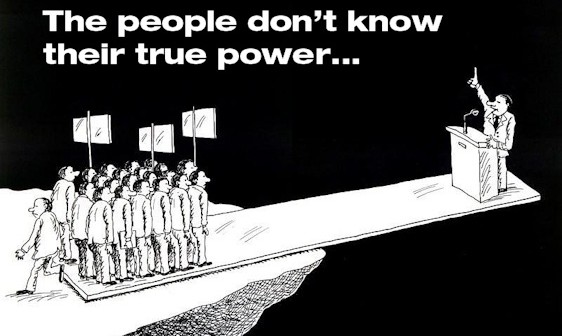
What Happened To The Truth Movement?

Over the years many aspects of the “truth movement” have devolved into an insufferable dumpster fire. But we can still salvage it.

By Benny Wills

Source: The Free Thought Project

From 2004 – 2016, I felt like I was a part of something special. I was participating in an “awakening.” The world was changing. Consciousness was shifting. The hidden hand was being exposed and all secrets were being revealed!

Right?

Or maybe it was wishful thinking.

9/11 happened. And for the next decade and a half, people all over the world began to question the events of that day. Then, major events in general. It was the beginning of an uprising. A revolution!

Right…?

Something else emerged during that time. Social media.

Social media has its upsides and downsides. Mostly upsides. But the downsides have serious ramifications. Specifically on communication.

Social media brings us together and tears us apart.

2001: A Truth Odyssey

By 2001, almost everyone was online and connected to the internet. But it was still in its infancy.

The iPhone didn’t exist. There was no YouTube, Facebook, Instagram, or Twitter. Even MySpace wasn’t around yet.

We had access to the internet, but we had no idea what we were in store for.

As the internet expanded, so did our ability to share information.

Alternative perspectives, counter-narratives, and “conspiracy theories” became more accessible. For the first time (possibly) in history, “official stories” were being challenged in real time. With evidence to support claims.

I was dubious about 9/11 as it was happening. Not because of the internet. Not because I was a conspiracy theorist. But because I hated George Bush. As a born and raised Democrat, I didn’t trust him. I was staunchly anti-war (and still am), and I knew America’s response to the attacks was going to be insane.

A few years later, someone shared a documentary with me called Loose Change. A film deconstructing the 9/11 narrative. My mind was blown, and it was off to the races.

Down, Down, Down The Rabbit Hole.

YouTube hit the scene in 2005. I used it strictly for conspiracy-related research.

Conspiracy content blew up online. A truth movement had begun. The masses were on the verge of waking up, well, en masse.

Right?!?!

Divide & Conquer

Fast forward to 2024. I have good news and bad news.

The good news is that more people are questioning things than ever. Distrust in anything mainstream is at an all time high.

The bad news:

Societal division is worse than it’s ever been. In my lifetime anyway. It’s hard to even call it division because division implies splitting into two halves.

This is a direct result of thumb-typed communication. (Generation Text.)

These days, most people prefer texting, emailing, or commenting over direct engagement. We yearn for human connection, but we’ve patterned ourselves to avoid it as much as possible. (I’m speaking generally, of course.)

Confronting someone is uncomfortable. But confrontation is a necessary part of human interaction. It’s a key component in solving conflict or avoiding it altogether. But since it can be terrifying, people today have the easy-out of typing instead of speaking.

Typed communication lacks empathy. It’s indirect. Impersonal. It’s both a barrier and a shield.

So people say things to each other online that they would never say out loud. They rip each other apart over the slightest differences of opinion. Many (especially YouTube commenters) hide behind avatars and pseudonyms to say whatever they want with no accountability.

Basically, everyone has free rein to be an asshole with zero repercussions.

Worst of all, no one is listening to each other anymore.

We haven’t just been divided; we’ve been fractalized into smithereens.

Awake Vs. Woke

The “awake” crowd is as insufferable as the “woke” one. Change my mind.

Mean-spirited mudslinging and public shaming are the online norm.

Checking the timeline on Facebook, for instance, is a disheartening experience.

It’s a daily mélange of proselytizing, bickering, and judging others. The sentiment is “my way or the highway.”

“I’m right, and you’re wrong. And not only are you wrong, you’re also a stupid idiot.”

Many on the alternative or “conspiracy” side of things have fallen into the same trap as the “sheep” they condemn.

Arrogant allegiance to ideas, beliefs, and opinions.

Critical Thinking

At the height of the truth movement in the 2010s, there was an emphasis on critical thinking. The Trivium was making a comeback.

Grammar, logic, and rhetoric

In that order. 
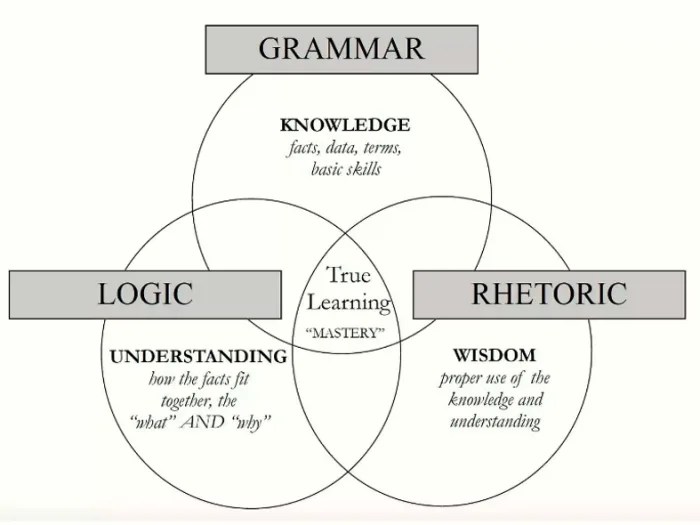
More often than not, online communication is rhetoric without grammar and logic to back it up.

Sweeping generalizations abound.

  • Accusations
  • Declarations
  • Proclamations
  • & Polarizing opinions disguised as facts

But opinions are not facts. (And you are not your opinions.)

“A great many people think they are thinking when they are merely rearranging their prejudices.” – William James

Social media algorithms are designed to keep you in a feedback loop.

A lot of people use their (typed) voice online to “speak the truth.” But they’re preaching to the choir in an echo chamber.

There’s camaraderie to be found in this. Which is good. But the likelihood of their rantings reaching those who (they feel) need to hear them is small.

The aggression that comes through many posts is ugly and derogatory.

Anger

Anger is a powerful emotion. But it’s like fire. It can warm your house or burn it down.

“Heat not a furnace for your foe so hot that it do singe yourself.” – William Shakespeare

Many people lean on anger to convey their conviction about a topic. They use it to stress the importance of something. But more often than not, it’s ineffective.

Anger is best utilized when it’s the seed preceding something more interesting.

In other words, anger alone is a weak emotion for personal expression.

When anger sparks an idea, and that idea is built upon with clarity and care, the expression of that idea has the power to shift someone’s perspective.

Many of my poems and JoyCamp videos came from an angry place. But anger is nowhere to be found in the final product.

Some think I’m too soft in my approach. Well, they’re welcome to think whatever they want. I’ve learned through trial and error that bluntly and angrily stating “the truth” is a fool’s errand. People don’t want to hear it, no matter how right or passionate you are.

Use anger like clay and sculpt it.

I tried anger in my 20s, and it got me nowhere. If anything, it only made situations worse. Speaking loudly and angrily puts more distance between your conversation partner and the point you want them to understand.

I’m committed to the truth and helping others discover it for themselves. Over the course of 15 years, I developed a nuanced approach to communication that actually works. One that I’ve taught to hundreds of people in my Parrhesia program (now called Free Your Speech).

If you didn’t pull the trigger on Parrhesia when I was offering it live, you can still purchase the course itself.

>>Free Your Speech: The Art of Communication

I’ve dropped the price to $149. It’s an election year. It’s probably worth your while.

Logic

It’s agonizing to witness your friends, family, and society at large fall into what you perceive as traps.

What’s painfully obvious to you is beyond absurd or ridiculous to them. And no matter how much you try to convince them otherwise, they double down on their commitment to the trap.

People are not logical. They’re emotional and motivated by fear, comfort, and ego.

“No one can possibly behave above his own level of understanding. Don’t expect people to do any better than they are compelled to do at their present level. Your problem is assuming that they should and could behave better. Understand this and annoyance disappears. As you gradually awaken you will feel the urge to share your discovery with others. Because you will find others in various stages of receptivity, remember this: Never give more than others can understand and appreciate in the moment. This is cosmic law. To try and give what others cannot receive is like tossing a ball against a brick wall—it bounces back to strike you. Jesus explained this law by saying that we should not cast our pearls before swine; that is, before those whose comprehension of truth makes them indifferent or hostile about it.” – François Fénelon

This is the cornerstone of my communication philosophy and approach.

The Real Awakening

There is no truth movement. There never was. There is only your journey to discovering what the truth is.

Pick your lane and choose your battles wisely.

Worry less about the world and other people’s opinions.

Concern yourself with what you’re capable of. Challenge your comfort zone. And focus your efforts on how you can help.

The most exciting rabbit hole is YOU.

Until next time.

Much love,

Benny

PS- Build Bridges

Attacking The Source: The Establishment Loyalist’s Favorite Online Tactic

By Caitlin Johnstone

Source: CaitlinJohnstone.com

If you’re skeptical of western power structures and you’ve ever engaged in online political debate for any length of time, the following has definitely happened to you.

You find yourself going back and forth with one of those high-confidence, low-information establishment types who’s promulgating a dubious mainstream narrative, whether that be about politics, war, Julian Assange, or whatever. At some point they make an assertion which you know to be false–publicly available information invalidates the claim they’re making.

“I’ve got them now!” you think to yourself, if you’re new to this sort of thing. Then you share a link to an article or video which makes a well-sourced, independently verifiable case for the point you are trying to make.

Then, the inevitable happens.

“LMAO! That outlet!” they scoff in response. “That outlet is propaganda/fake news/conspiracy theory trash!”

Or something to that effect. You’ll encounter this tactic over and over and over again if you continually engage in online political discourse with people who don’t agree with you. It doesn’t matter if you’re literally just linking to an interview featuring some public figure saying a thing you’d claimed they said. It doesn’t matter if you’re linking to a WikiLeaks publication of a verified authentic document. Unless you’re linking to CNN/Fox News (whichever fits the preferred ideology of the establishment loyalist you’re debating), they’ll bleat “fake news!” or “propaganda!” or “Russia!” as though that in and of itself magically invalidates the point you’re trying to make.

And of course it doesn’t. What they are doing is called attacking the source, also known as an ad hominem, and it’s a very basic logical fallacy.

Most people are familiar with the term “ad hominem”, but they usually think about it in terms of merely hurling verbal insults at people. What it actually means is attacking the source of the argument rather than attacking the argument itself in a way that avoids dealing with the question of whether or not the argument itself is true. It’s a logical fallacy because it’s used to deliberately obfuscate the goal of a logical conclusion to the debate.

“An ad hominem is more than just an insult,” explains David Ferrer for The Quad. “It’s an insult used as if it were an argument or evidence in support of a conclusion. Verbally attacking people proves nothing about the truth or falsity of their claims.”

This can take the form of saying “Claim X is false because the person making it is an idiot.” But it can also take the form of “Claim X is false because the person making it is a propagandist,” or “Claim X is false because the person making it is a conspiracy theorist.”

Someone being an idiot, a propagandist or a conspiracy theorist is irrelevant to the question of whether or not what they’re saying is true. In my last article debunking a spin job on the OPCW scandal by the narrative management firm Bellingcat, I pointed out that Bellingcat is funded by imperialist regime change operations like the National Endowment for Democracy, which was worth highlighting because it shows the readers where that organization is coming from. But if I’d left my argument there it would still be an ad hominem attack, because it wouldn’t address whether or not what Bellingcat wrote about the OPCW scandal is true. It would be a logical fallacy; proving that they are propagandists doesn’t prove that what they are saying in this particular instance is false.

What I had to do in order to actually refute Bellingcat’s spin job was show that they were making a bad argument using bad logic, which I did by highlighting the way they used pedantic wordplay to make it seem as though the explosive leaks which have been emerging from the OPCW’s investigation of an alleged chemical weapons attack in Douma, Syria were insignificant. I had to show how Bellingcat actually never came anywhere close to addressing the actual concerns about a leaked internal OPCW email, such as extremely low chlorinated organic chemical levels on the scene and patients’ symptoms not matching up with chlorine gas poisoning, as well as the fact that the OPCW investigators plainly don’t feel as though their concerns were met since they’re blowing the whistle on the organisation now.

And, for the record, Bellingcat’s lead trainer/researcher guy responded to my arguments by saying I’m a conspiracy theorist. I personally count that as a win.

The correct response to someone who attacks the outlet or individual you’re citing instead of attacking the actual argument being made is, “You’re attacking the source instead of the argument. That’s a logical fallacy, and it’s only ever employed by people who can’t attack the argument.”

The demand that you only ever use mainstream establishment media when arguing against establishment narratives is itself an inherently contradictory position, because establishment media by their very nature do not report facts against the establishment. It’s saying “You’re only allowed to criticise establishment power using outlets which never criticize establishment power.”

Good luck finding a compilation of Trump’s dangerous escalations against Moscow like the one I wrote the other day anywhere in the mainstream media, for example. Neither mainstream liberals nor mainstream conservatives are interested in promoting that narrative, so it simply doesn’t exist in the mainstream information bubble. Every item I listed in that article is independently verifiable and sourced from separate mainstream media reports, yet if you share that article in a debate with an establishment loyalist and they know who I am, nine times out of ten they’ll say something like “LOL Caitlin Johnstone?? She’s nuts!” With “nuts” of course meaning “Says things my TV doesn’t say”.

It’s possible to just click on all the hyperlinks in my article and share them separately to make your point, but you can also simply point out that they are committing a logical fallacy, and that they are doing so because they can’t actually attack the argument.

This will make them very upset, because for the last few years establishment loyalists have been told that it is perfectly normal and acceptable to attack the source instead of the argument. The mass hysteria about “fake news” and “Russian propaganda” has left consumers of mainstream media with the unquestioned assumption that if they ever so much as glance at an RT article their faces will begin to melt like that scene in Raiders of the Lost Ark. They’ve been trained to believe that it’s perfectly logical and acceptable to simply shriek “propaganda!” at a rational argument or well-sourced article which invalidates their position, or even to proactively go around calling people Russian agents who dissent from mainstream western power-serving narratives.

But it isn’t logical, and it isn’t acceptable. The best way to oppose their favorite logically fallacious tactic is to call it like it is, and let them deal with the cognitive dissonance that that brings up for them.

Of course some nuance is needed here. Remember that alternative media is just like anything else: there’s good and bad, even within the same outlet, so make sure what you’re sharing is solid and not just some schmuck making a baseless claim. You can’t just post a link to some Youtuber making an unsubstantiated assertion and then accuse the person you’re debating of attacking the source when they dismiss it. That which has been presented without evidence may be dismissed without evidence, and if the link you’re citing consists of nothing other than unproven assertions by someone they’ve got no reason to take at their word, they can rightly dismiss it.

If however the claims in the link you’re citing are logically coherent arguments or well-documented facts presented in a way that people can independently fact-check, it doesn’t matter if you’re citing CNN or Sputnik. The only advantage to using CNN when possible would be that it allows you to skip the part where they perform the online equivalent of putting their fingers in their ears and humming.

Don’t allow those who are still sleeping bully those who are not into silence. Insist on facts, evidence, and intellectually honest arguments, and if they refuse to provide them call it what it is: an admission that they have lost the debate.

Overcoming the Myth of Authority

By Gary Z McGee

Source: The Mind Unleashed

“For thousands hacking at the branches there is one striking the root.” ~Henry David Thoreau

If, as Albert Einstein said, “unthinking respect for authority is the greatest enemy of truth,” then it stands to reason that we should think critically toward, rather than blindly believe in, authority. No matter who or what that authority might be.

Whether it’s an eccentric physicist with wild hair or an authoritarian president demanding respect without giving it. Whether it’s a flat-earther challenging the very foundations of physics, or an overreaching cop high on false power. Belief in authority is a huge psychological hang-up for our species. It’s an evolutionary impediment of monumental proportions.

Even as we daily self-overcome, so too should we daily overcome the myth of authority. It’s a myth because it’s foremost a story. It’s a story we’ve all fallen for –hook, line, and sinker. It’s a story that most of us were culturally conditioned to believe in. It’s a story that most of us take as a given, but certainly should not. For, ultimately, “it’s just the way things are” is a cowardly copout.

Rather than cowardice, rather than willful ignorance, complacency, and intellectual laziness, we should challenge the myth of authority –across the board. We should be ruthless with our skepticism, like a scientist regarding his own hypothesis, like peer-reviewed interrogators keeping the science of others honest.

Because the art of life, especially an examined life that’s well-lived, is scientific, logical, and reasonable. It strikes at the heart of the orthodoxy, whatever that may be. It undermines the Powers That Be, whoever they may be. And that’s likely to upset more than a few blind worshippers, myopic rule-followers, and willfully ignorant law-abiding citizens. So be it. Upset their precious apple-cart anyway. Especially if that apple-cart is outdated, violent, and based upon parochial reasoning and fear. As Oscar Wilde stated, “Disobedience was man’s original virtue.”

Overcoming authoritarianism:

“As soon as the generals and the politicos can predict the motions of your mind, lose it. Leave it as a sign to mark the false trail, the way you didn’t go. Be like the fox who makes more tracks than necessary, some in the wrong direction. Practice resurrection.” ~Wendell Berry

The problem with belief in authority is that it leads to the idea that we need to give a group of people permission to control us. And, as Lord Byron taught us, power given to an authority tends to become corrupt.

The problem with power is not the intent behind it. The problem with power is that it tends to corrupt the one wielding it regardless of their intent. So, since we all know that power tends to corrupt whether one has good or bad intentions, and since we know that we will all seek power anyway, it behooves us to be mercilessly circumspect both with our own power and against the power of others.

It stands to reason that we should not ignorantly give power to an authority by blindly believing it. We should instead challenge authority first, and trust it second, if at all. The best way to use our power is to use it against authority by ruthlessly questioning it. It’s a social leveling mechanism par excellence. As a wise, young sixth grader once said, “Question authority, including the authority that told you to question authority.”

Otherwise, people will fight and murder and commit genocide and ecocide for the so-called authority that they “believe” in. But they might not have fought so violently and thoughtlessly had they simply taken the power dynamic into deep consideration, nonviolently challenged that perceived dynamic, and then moved on smartly with their lives.

The best way to maintain a healthy skepticism, and not devolve into an ignorant, sycophantic, violent mess, is to take things into consideration and question them rather than blindly believe in them.

Overcoming tribalism:

“To be modern is to let imagination and invention do a lot of the work once done by tradition and ritual.” ~Adam Gopnik

By becoming worldly patriots instead of patriotic nationalists, we turn the tables on xenophobia, apathy, and blind nationalism, and we become more compassionate and empathetic towards other cultures. When we celebrate diversity instead of trying to cram the square peg of cultural affiliation into the round hole of colonialism, we turn the tables on the monkey-mind’s one-dimensional moral tribalism and we usher in Joshua Greene’s multi-dimensional concept of metamorality.

By reinforcing global citizenry rather than nationalism, we turn the tables on both our lizard brains and the Powers That Be. Like Joshua Greene says in Moral Tribes, “We need a kind of thinking that enables groups with conflicting moralities to live together and prosper. In other words, we need a metamorality. We need a moral system that resolves disagreements among groups with different moral ideals, just as ordinary first-order morality resolves disagreements among individuals with different selfish interests.”

Going Meta with morality launches us into a big-picture perspective. We’re shot out of the box of outdated tribal thinking and into a realm of higher consciousness, where our inherent tribalism gets countered by an updated logic and reasoning. We gain the holistic vision of “over eyes” (like the astronaut Overview Effect), where societal delusions and cultural abstractions dissolve into interconnectedness and interdependence.

Overcoming magical thinking:

“Every fact of science was once damned. Every invention was considered impossible. Every discovery was a nervous shock to some orthodoxy. Every artistic innovation was denounced as fraud and folly. The entire web of culture and ‘progress,’ everything on earth that is man-made and not given to us by nature, is the concrete manifestation of some man’s refusal to bow to Authority. We would own no more, know no more, and be no more than the first apelike hominids if it were not for the rebellious, the recalcitrant, and the intransigent.” ~Robert Anton Wilson

Overcoming magical thinking is vital for the healthy and progressive evolution of our species. Healthy progress depends upon courageous individuals capable of challenging authority. Especially authorities that are based in magical thinking.

If we don’t have the courage to challenge an authority that preaches magical thinking, then we are doomed to become a victim to their magical thinking. It’s for this reason, above all, that authority should be challenged.

Refusing to bow to an authority is not without its consequences. But upsetting an authority should not be avoided at the expense of progress. Progress should be embraced at the risk of upsetting an authority.

Otherwise, there would be no progress. We would remain stuck in parochial, magical thinking. We would become a stagnant –or worse, devolving– species. To avoid unhealthy stagnation and entropic devolution, we need courageous individuals who refuse to bow to authority and instead choose to ruthlessly question and nonviolently challenge that authority.

Without those who are willing to disobey, we are lost. Without them, we are left with cowardly conformists, xenophobic nationalists, complacent pacifists, dogmatic believers relying upon blind faith, and tyrannical powermongers using their power to control others. In short: we are left with magical thinking over logic and reasoning.

So, I implore you, if you would be courageous, reasonable, healthy, progressive human beings: challenge Authority. Strategically disobey. Nonviolently revolt. Lovingly crush out. Tenderly recondition the cultural conditioning of others lest they collapse in upon their own cognitive dissonance. Dare to pull the blindfold from your brother’s eyes lest they unwittingly force the blindfold back upon you.

Above all, practice self-overcoming. Otherwise, power –either yours or someone else’s– will overcome you. Be just as circumspect with your own power as you are toward the power of others.

Authorities will come and go. As they should. Your own authority will wax and wane. As it should. The balance of power within the human condition is vital for the healthy and progressive evolution of our species. And nothing balances out power better than the courage to challenge authority. The biblical courage of David pales in comparison to the individual who bravely challenges the modern-day Goliath of entrenched authority.

If a Fool Speaks the Truth, Does it Become Untrue? How to Not Be Divided

By Cassius Methyl

Source: The Mind Unleashed

When a fool speaks the truth, does it become untrue?

Of course not. The truth is the truth regardless of who says it, or how they sound. The truth remains what it is no matter who opposes it, advocates for it, or any other form of influence.

Most people unconsciously believe the opposite. It really boils down to people being unwilling to spend time or effort on forming a detailed opinion on a topic.

They take shortcuts in their reasoning and convince themselves that they can make a vague, brief assessment of the subject at hand, often by observing the behavior of those advocating for or opposing the subject. Based on how a figurehead of an idea or ideology looks or speaks, average people will form opinions and skip reasoning through what the person is saying.

People in power know this, and many suspect that people are placed as figureheads for ideas and movements, paid to look foolish and crazy to give the ideas they represent a bad name. It’s a common sense divide and conquer strategy against activists and thinkers.

Take Alex Jones for example. People seeking a better understanding of the world got into Infowars’ content several years ago, before they took a 180 degree turn toward supporting government. Now, the mainstream media uses Alex Jones as a tool to convince people who don’t care to look into things that deeply, that many true things are crazy nonsense.

One can observe the effectiveness of this strategy and conclude that it will be used as a tool many more times in the future, to make the truth look stupid and the hegemony’s plans look brilliant.

Create a culture that prioritizes appealing to authority over reasoning and critical thought, and create foolish, outlandish figureheads for the ideas that would destroy the system and restore people’s power: that’s how they win.

To not be divided and not develop false opinions, we have to not take shortcuts in our reasoning. We have to not develop any opinions about how the world works too quickly: we have to not just take anyone’s word for anything, but take a hard look at reality and really research before thinking we know something.

How can we actually foster a culture where people do that? That’s an impossible sounding task with the way things look now, but person by person, we can foster that culture for at least a small group of people who think this way. At least the people who care can create their own culture.

It will take a relaxed yet strong and persistent, humble attitude and a sharp sense of discernment to get us through the rest of this decade safely.

If you’d like more perspective on the history of activists being divided, lets take a look at some history with the Black Panthers as targets of the FBI’s COINTELPRO program in the 1960’s. Reading from Assata Shakur.com:

“By July 1969, the Black Panthers had become the primary focus of the program, and was ultimately the target of 233 of the total authorized “Black Nationalist” COINTELPRO actions.

Although the claimed purpose of the Bureau’s COINTELPRO tactics was to prevent violence, some of the FBI’s tactics against the BPP were clearly intended to foster violence, and many others could reasonably have been expected to cause violence. For example, the FBI’s efforts to “intensify the degree of animosity” between the BPP and the Blackstone Rangers, a Chicago street gang, included sending an anonymous letter to the gang’s leader falsely informing him that the the Chicago Panthers had “a hit out” on him.  The stated intent of the letter was to induce the Ranger leader to “take reprisals against” the Panther leadership.

Similarly, in Southern California, the FBI launched a covert effort to “create further dissension in the ranks of the BPP.”  This effort included mailing anonymous letters and caricatures to BPP members ridiculing the local and national BPP leadership for the express purpose of exacerbating an existing “gang war” between the BPP and an organization called the United Slaves (US). This “gang war” resulted in the killing of four BPP members by members of US and in numerous beatings and shootings.””