
The Future Is Here: Dystopian Movies Fit for a Dystopian World

By John W. Whitehead

Source: The Rutherford Institute

“The Internet is watching us now. If they want to. They can see what sites you visit. In the future, television will be watching us, and customizing itself to what it knows about us. The thrilling thing is, that will make us feel we’re part of the medium. The scary thing is, we’ll lose our right to privacy. An ad will appear in the air around us, talking directly to us.”—Director Steven Spielberg, Minority Report

We have arrived, way ahead of schedule, into the dystopian future dreamed up by such science fiction writers as George Orwell, Aldous Huxley, Margaret Atwood and Philip K. Dick.

Much like Orwell’s Big Brother in 1984, the government and its corporate spies now watch our every move.

Much like Huxley’s A Brave New World, we are churning out a society of watchers who “have their liberties taken away from them, but … rather enjoy it, because they [are] distracted from any desire to rebel by propaganda or brainwashing.”

Much like Atwood’s The Handmaid’s Tale, the populace is now taught to “know their place and their duties, to understand that they have no real rights but will be protected up to a point if they conform, and to think so poorly of themselves that they will accept their assigned fate and not rebel or run away.”

And in keeping with Philip K. Dick’s darkly prophetic vision of a dystopian police state—which became the basis for Steven Spielberg’s futuristic thriller Minority Report which was released 20 years ago—we are now trapped into a world in which the government is all-seeing, all-knowing and all-powerful, and if you dare to step out of line, dark-clad police SWAT teams and pre-crime units will crack a few skulls to bring the populace under control.

Minority Report is set in the year 2054, but it could just as well have taken place in 2022.

Seemingly taking its cue from science fiction, technology has moved so fast in the short time since Minority Report premiered in 2002 that what once seemed futuristic no longer occupies the realm of science fiction.

Incredibly, as the various nascent technologies employed and shared by the government and corporations alike—facial recognition, iris scanners, massive databases, behavior prediction software, and so on—are incorporated into a complex, interwoven cyber network aimed at tracking our movements, predicting our thoughts and controlling our behavior, Spielberg’s unnerving vision of the future is fast becoming our reality.

Both worlds—our present-day reality and Spielberg’s celluloid vision of the future—are characterized by widespread surveillance, behavior prediction technologies, data mining, fusion centers, driverless cars, voice-controlled homes, facial recognition systems, cybugs and drones, and predictive policing (pre-crime) aimed at capturing would-be criminals before they can do any damage.

Surveillance cameras are everywhere. Government agents listen in on our telephone calls and read our emails. Political correctness—a philosophy that discourages diversity—has become a guiding principle of modern society.

The courts have shredded the Fourth Amendment’s protections against unreasonable searches and seizures. In fact, SWAT teams battering down doors without search warrants and FBI agents acting as a secret police that investigate dissenting citizens are common occurrences in contemporary America.

We are increasingly ruled by multi-corporations wedded to the police state. Much of the population is either hooked on illegal drugs or ones prescribed by doctors. And bodily privacy and integrity has been utterly eviscerated by a prevailing view that Americans have no rights over what happens to their bodies during an encounter with government officials, who are allowed to search, seize, strip, scan, spy on, probe, pat down, taser, and arrest any individual at any time and for the slightest provocation.

All of this has come about with little more than a whimper from an oblivious American populace largely comprised of nonreaders and television and internet zombies, but we have been warned about such an ominous future in novels and movies for years.

The following 15 films may be the best representation of what we now face as a society.

Fahrenheit 451 (1966). Adapted from Ray Bradbury’s novel and directed by Francois Truffaut, this film depicts a futuristic society in which books are banned, and firemen ironically are called on to burn contraband books—451 Fahrenheit being the temperature at which books burn. Montag is a fireman who develops a conscience and begins to question his book burning. This film is an adept metaphor for our obsessively politically correct society where virtually everyone now pre-censors speech. Here, a brainwashed people addicted to television and drugs do little to resist governmental oppressors.

2001: A Space Odyssey (1968). The plot of Stanley Kubrick’s masterpiece, as based on an Arthur C. Clarke short story, revolves around a space voyage to Jupiter. The astronauts soon learn, however, that the fully automated ship is orchestrated by a computer system—known as HAL 9000—which has become an autonomous thinking being that will even murder to retain control. The idea is that at some point in human evolution, technology in the form of artificial intelligence will become autonomous and human beings will become mere appendages of technology. In fact, at present, we are seeing this development with massive databases generated and controlled by the government that are administered by such secretive agencies as the National Security Agency and sweep all websites and other information devices collecting information on average citizens. We are being watched from cradle to grave.

Planet of the Apes (1968). Based on Pierre Boulle’s novel, astronauts crash on a planet where apes are the masters and humans are treated as brutes and slaves. While fleeing from gorillas on horseback, astronaut Taylor is shot in the throat, captured and housed in a cage. From there, Taylor begins a journey wherein the truth revealed is that the planet was once controlled by technologically advanced humans who destroyed civilization. Taylor’s trek to the ominous Forbidden Zone reveals the startling fact that he was on planet earth all along. Descending into a fit of rage at what he sees in the final scene, Taylor screams: “We finally really did it. You maniacs! You blew it up! Damn you.” The lesson is obvious, but will we listen? The script, although rewritten, was initially drafted by Rod Serling and retains Serling’s Twilight Zone-ish ending.

THX 1138 (1970). George Lucas’ directorial debut, this is a somber view of a dehumanized society totally controlled by a police state. The people are force-fed drugs to keep them passive, and they no longer have names but only letter/number combinations such as THX 1138. Any citizen who steps out of line is quickly brought into compliance by robotic police equipped with “pain prods”—electro-shock batons. Sound like tasers?

A Clockwork Orange (1971). Director Stanley Kubrick presents a future ruled by sadistic punk gangs and a chaotic government that cracks down on its citizens sporadically. Alex is a violent punk who finds himself in the grinding, crushing wheels of injustice. This film may accurately portray the future of western society that grinds to a halt as oil supplies diminish, environmental crises increase, chaos rules, and the only thing left is brute force.

Soylent Green (1973). Set in a futuristic overpopulated New York City, the people depend on synthetic foods manufactured by the Soylent Corporation. A policeman investigating a murder discovers the grisly truth about what soylent green is really made of. The theme is chaos where the world is ruled by ruthless corporations whose only goal is greed and profit. Sound familiar?

Blade Runner (1982). In a 21st century Los Angeles, a world-weary cop tracks down a handful of renegade “replicants” (synthetically produced human slaves). Life is now dominated by mega-corporations, and people sleepwalk along rain-drenched streets. This is a world where human life is cheap, and where anyone can be exterminated at will by the police (or blade runners). Based upon a Philip K. Dick novel, this exquisite Ridley Scott film questions what it means to be human in an inhuman world.

Nineteen Eighty-Four (1984). The best adaptation of Orwell’s dark tale, this film visualizes the total loss of freedom in a world dominated by technology and its misuse, and the crushing inhumanity of an omniscient state. The government controls the masses by controlling their thoughts, altering history and changing the meaning of words. Winston Smith is a doubter who turns to self-expression through his diary and then begins questioning the ways and methods of Big Brother before being re-educated in a most brutal fashion.

Brazil (1985). Sharing a similar vision of the near future as 1984 and Franz Kafka’s novel The Trial, this is arguably director Terry Gilliam’s best work, one replete with a merging of the fantastic and stark reality. Here, a mother-dominated, hapless clerk takes refuge in flights of fantasy to escape the ordinary drabness of life. Caught within the chaotic tentacles of a police state, the longing for more innocent, free times lies behind the vicious surface of this film.

They Live (1988). John Carpenter’s bizarre sci-fi social satire action film assumes the future has already arrived. John Nada is a homeless person who stumbles across a resistance movement and finds a pair of sunglasses that enables him to see the real world around him. What he discovers is a world controlled by ominous beings who bombard the citizens with subliminal messages such as “obey” and “conform.” Carpenter manages to make an effective political point about the underclass—that is, everyone except those in power. The point: we, the prisoners of our devices, are too busy sucking up the entertainment trivia beamed into our brains and attacking each other up to start an effective resistance movement.

The Matrix (1999). The story centers on a computer programmer Thomas A. Anderson, secretly a hacker known by the alias “Neo,” who begins a relentless quest to learn the meaning of “The Matrix”—cryptic references that appear on his computer. Neo’s search leads him to Morpheus who reveals the truth that the present reality is not what it seems and that Anderson is actually living in the future—2199. Humanity is at war against technology which has taken the form of intelligent beings, and Neo is actually living in The Matrix, an illusionary world that appears to be set in the present in order to keep the humans docile and under control. Neo soon joins Morpheus and his cohorts in a rebellion against the machines that use SWAT team tactics to keep things under control.

Minority Report (2002). Based on a short story by Philip K. Dick and directed by Steven Spielberg, the film offers a special effect-laden, techno-vision of a futuristic world in which the government is all-seeing, all-knowing and all-powerful. And if you dare to step out of line, dark-clad police SWAT teams will bring you under control. The setting is 2054 where PreCrime, a specialized police unit, apprehends criminals before they can commit the crime. Captain Anderton is the chief of the Washington, DC, PreCrime force which uses future visions generated by “pre-cogs” (mutated humans with precognitive abilities) to stop murders. Soon Anderton becomes the focus of an investigation when the precogs predict he will commit a murder. But the system can be manipulated. This film raises the issue of the danger of technology operating autonomously—which will happen eventually if it has not already occurred. To a hammer, all the world looks like a nail. In the same way, to a police state computer, we all look like suspects. In fact, before long, we all may be mere extensions or appendages of the police state—all suspects in a world commandeered by machines.

V for Vendetta (2006). This film depicts a society ruled by a corrupt and totalitarian government where everything is run by an abusive secret police. A vigilante named V dons a mask and leads a rebellion against the state. The subtext here is that authoritarian regimes through repression create their own enemies—that is, terrorists—forcing government agents and terrorists into a recurring cycle of violence. And who is caught in the middle? The citizens, of course. This film has a cult following among various underground political groups such as Anonymous, whose members wear the same Guy Fawkes mask as that worn by V.

Children of Men (2006). This film portrays a futuristic world without hope since humankind has lost its ability to procreate. Civilization has descended into chaos and is held together by a military state and a government that attempts to keep its totalitarian stronghold on the population. Most governments have collapsed, leaving Great Britain as one of the few remaining intact societies. As a result, millions of refugees seek asylum only to be rounded up and detained by the police. Suicide is a viable option as a suicide kit called Quietus is promoted on billboards and on television and newspapers. But hope for a new day comes when a woman becomes inexplicably pregnant.

Land of the Blind (2006). In this dark political satire, tyrannical rulers are overthrown by new leaders who prove to be just as evil as their predecessors. Maximilian II is a demented fascist ruler of a troubled land named Everycountry who has two main interests: tormenting his underlings and running his country’s movie industry. Citizens who are perceived as questioning the state are sent to “re-education camps” where the state’s concept of reality is drummed into their heads. Joe, a prison guard, is emotionally moved by the prisoner and renowned author Thorne and eventually joins a coup to remove the sadistic Maximilian, replacing him with Thorne. But soon Joe finds himself the target of the new government.

All of these films—and the writers who inspired them—understood what many Americans, caught up in their partisan, flag-waving, zombified states, are still struggling to come to terms with: that there is no such thing as a government organized for the good of the people. Even the best intentions among those in government inevitably give way to the desire to maintain power and control at all costs.

Eventually, as I make clear in my book Battlefield America: The War on the American People and in its fictional counterpart The Erik Blair Diaries, even the sleepwalking masses (who remain convinced that all of the bad things happening in the police state—the police shootings, the police beatings, the raids, the roadside strip searches—are happening to other people) will have to wake up.

Sooner or later, the things happening to other people will start happening to us.

When that painful reality sinks in, it will hit with the force of a SWAT team crashing through your door, a taser being aimed at your stomach, and a gun pointed at your head. And there will be no channel to change, no reality to alter, and no manufactured farce to hide behind.

As George Orwell warned, “If you want a picture of the future, imagine a boot stamping on a human face forever.”
The Hidden Utopia: Hobo Graffiti and Sixties Paranoia in ‘The Crying of Lot 49’

By Pepe Tesoro

Source: We Are the Mutants

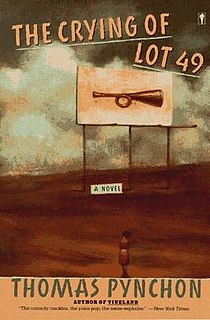
Thomas Pynchon’s 1966 novel The Crying of Lot 49 is usually regarded as one of the best testimonies of Cold War paranoia and early psychedelic ’60s culture. Even though it is a keen and pointed exploration of the growing anxieties over the exponential post-war rise of mass media and market capitalism, the central conspiracy revealed in the novel doesn’t reproduce itself through the then-new and fascinating forces of radio waves or cathode rays. Quite the opposite: the kernel of the conspiracy in Pynchon’s novel lays precisely in a clandestine communication network sent through old-fashioned, conventional mail. This network itself possesses roots that go back as far as medieval nobility feuds, its presence identified with something as ancient and basic as graffiti. Fredric Jameson attributed the true effectiveness of the novel to this anomalous feature. “[T]he force of Pynchon’s narrative,” he writes in The Geopolitical Aesthetic: Cinema and Space in the World System, “draws not on the advanced or futuristic technology of the contemporary media so much as from their endowment with an archaic past.”

It would seem that in order to perform an adequate exploration of the psychological and social and political disruptions of an era’s newest and most cutting-edge technological developments, sometimes it is required to take one or two steps back, as if the reflection over contemporary objects would be better served through the examination of old and already familiar realities. The long history and deep cultural footprint of retro-futuristic aesthetics in Pynchon’s fictional universe seems to point in somewhat the same direction. But this odd narrative movement doesn’t just go backwards; it also, quite interestingly, usually goes downwards. That’s the case of the The Crying of the Lot 49, where the occult conspiracy that our poor protagonist, Oedipa Maas, struggles to unveil, doesn’t just rely on the old means of the mail. Its members are imagined as marginalized individuals living in between the remnants and scraps of industrial machinery, as if the life of the vagabond would be the only true escape from the madness of modern civilization. These elusive individuals, as imagined by Oedipa, seem to be:

…squatters who stretched canvas for lean-tos behind smiling billboards along all the highways, or slept in junkyards in the stripped shells of wrecked Plymouths, or even, daring, spent the night up some pole in a lineman’s tent like caterpillars, swung among a web of telephone wires, living in the very copper rigging and secular miracle of communication, untroubled by the dumb voltages flickering their miles, the night long, in the thousands of unheard messages.

This supposed conspiracy of the homeless and the outcast, not subtly named W.A.S.T.E., is then imagined as a hidden net that mimics modern global communication networks, and even lives as close as it can to those hardware channels. And precisely because of that, it stays totally untouched by modernity and is invisible to its gaze. The particular mixture of secrecy, homelessness, and clandestine communication systems in Oedipa’s imagination was not new at the time, and can be traced back to the life and especially the works of one Leon Ray Livingston.

Livingston, born in 1872, was probably the most notorious American hobo. “Hobo“ is actually a rather particular term in American cultural history; it doesn’t merely designate an individual who lacks a stable location or place for living, but it instead indicates a quite idiosyncratic American social character, determined by the country’s own history of geographical expansion and industrialization. The hobo was a homeless man that crossed the entire continent, from city to city, throughout the growing railroad’s network, surfing the new, blossoming industrial landscapes a job at a time. Throughout the years, the hobo came to be recreated by the national cultural imagination as a romantic figure, a mystical outsider, a mysterious and almost invisible inhabitant of the modern world’s new industrial features, constantly at the edge of society, always trying to avoid unwelcome company and harassing authorities. That popular image was mostly the work of Livingston.

Livingston was not just a hobo; he was also a popular author. Under the pen name of “A-No1,” he published a series of books that fictionalized the hobo lifestyle and basically created from scratch the romantic and enigmatic portrait just described. But probably the most fascinating and persistent myth that emerged from the A-No1 books was the existence of a secret hobo code, presented in unnoticed and almost invisible chalk or charcoal graffiti. This code, composed of cryptic, seemingly ordinary and almost-childish hieroglyphs and symbols, was supposedly used by traveling hobos to transmit messages to their colleagues, such as “Dangerous town,” “Safe place to spend the night,” or “Here lives a nice lady.” It is known and well-documented (mostly through the work of filmmaker Bill Daniel) that the practice of signing the side of wagons and rail post with their personal monikers was and still is a spread practice for hobos and railroad workers in America. But with respect to a secret code that transmitted useful messages from hobo to hobo, there is not much evidence that it actually existed. After all, why would the hobo, a supposedly elusive and off-the-grid character, want to make public their own secret means of communication? It is not unfair to assume that the publication of the hobo code was probably nothing more than a ploy to fabricate and maintain that same legendary elusiveness.

Either way, thanks to Leon Ray Livingston’s works, the hobo’s supposed secret code became a common emblem of the intriguing and puzzling (and pretty much fantastic) mysteries of industrial civilization’s own underground realities. It seemed at the same time spooky and exhilarating to imagine that the unstoppable machine of progress was leaving behind, in its own dark residue, a striving secret society of outcasts and ostracized rebels living an almost chivalrous adventure, having happily exchanged social status and at times mental health to be free of the oppressive commands of power. I think it goes without saying how popular this common narrative has stayed throughout the years in science fiction and, more generally, in popular culture. The mystic figure of the marginalized can be tracked from the charming and magical homeless lady in Frank Capra’s A Pocketful of Miracles, to the cyberpunk Martian mutant separatists in Total Recall, to the Lo-Teks in Johnny Mnemonic and the Nebuchadnezzar crew in The Matrix series, just to name a few. These cyberpunk re-imaginations fall under the myth of the “hidden utopia”: the assumption that the hopes of resistance against the conspiracy of modern civilization lays in a counter-conspiracy of the outcasts, the unlikely sub-inhabitants of its most obscure and remote corners.

This is exactly what is deployed by Pynchon in The Crying of the Lot 49. Or, at least, this is how a borderline-paranoid protagonist tends to imagine a seemingly active but always evasive conspiracy, as if the myth of the hidden utopia could be also a borderline-paranoid fantasy of those made anxious and disoriented by postmodern subjectivity. It’s also possible to observe the echo of the hobo graffiti’s legend in Pynchon’s book, as the W.A.S.T.E. logo, a simply drawn muted cornet, suspiciously similar to the purported signs of the hobo code, appears to have been placed all over the most seemingly mundane corners of Oedipa’s reality, such as on the walls of a public bathroom or on the edge of a sidewalk.

But the recovery and use by Pynchon of these older cultural cues is not an idealization of the hidden problems of the homeless and the marginalized. After all, any social articulation outside the limits of the community itself can easily turn into a contradiction, a fantasy, a paradox not allowed by the predominant culture. If the whole world has been conquered by malignant forces and crooked interests, the possibility of a constructive, non-nihilistic escape from this system literally lays outside of this world. That’s why Pynchon, as Oedipa, finds himself at a dead end, accepting that, if W.A.S.T.E. and its obscure conspirators were to exist, its own definition would prohibit the final revelation of its actual existence. That’s good for Pynchon, who playfully explores the literary potential of such contradiction, but it ain’t so good for Oedipa, who is still and forever trapped in modern society, and seems destined to always live on the epistemic edge of paranoia, unable to determine if everything she experiences is a convoluted prank by her ex-lover, if she has gone definitively crazy, or if W.A.S.T.E. is, in fact, real.

In a dream-like episode in the middle of the novella, Oedipa encounters an old ex-anarchist friend, Jesús Arrabal, who, torn apart by the demise of the emancipatory narrative, has to admit to her the metaphysical impossibility, or at least almost supernatural essence, of any revolutionary promise: “You know what a miracle is. Not what Bakunin said. But another world’s intrusion into this one.” Alien invasion? Religious intervention? Not quite, but similarly unlikely: the possibility that, under the all-mighty and ubiquitous forces of the Machinery and the cannibalistic and expanding logic of Capital, there could have formed a secret alliance of those who have been cast out of society, those who inhabit the obscure nooks of the dirt and the piles of garbage, under the colossal figure of the ominous constructions and highways. Like parasites in the wires of modern communication systems, these posited liberatory beings have been exiled in a land “invisible yet congruent with the cheered land [Oedipa] lived in,” barely but firmly surviving out of the realm of the living, right next to where we stand, but nevertheless unnoticed by the naked eye.

Cyberpunk: The Human Condition amid High-tech Alienation and Urban Dystopia

By Raymond Lam

Source: BuddhistDoor.net

I love the seashore and the countryside, but I have spent most of my life in cities, with little to no time spent in the country. I grew up in Brisbane, Australia (which, despite its beauty and vibrant coffee culture, is hardly a skyscraper metropolis) and have spent a good deal of time in Hong Kong. Over the years I have visited Shanghai, Tokyo, and Seoul—cities that have long inspired novelists and artists in cyberpunk circles.

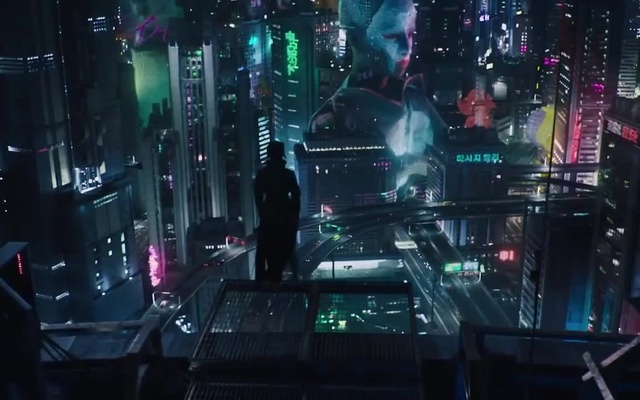
Cyberpunk features “technologized” cities with endless skyscrapers shimmering in an ocean of neon lights and elevated railways. These cityscapes are often bathed in darkness, shadow, and rain. More often than not, the protagonists of these stories are lone-wolf types, running through grungy alleys and estranged from wider society. As a genre of writing, film, and animation, the dystopian cyberpunk imagination has been immensely influential in both Asian and Western pop culture, exemplified by the Blade Runner movies, The Matrix franchise, and the Japanese anime Ghost in the Shell.

To many social commentators, cyberpunk carries eerie reminders of certain characteristics of urban living today—an endless feed of information, insecurity, and distractions through the Internet and social media, the press and media serving as distractions or brainwashing rather than useful information, and social alienation and unfulfilling work. In these activities is an almost gleeful dismissiveness of the need to reflect on human nature and what it means to be a human being: a key concern of religions and philosophical schools through the ages.

As Buddhistdoor Global columnist Paola Di Maio notes about our headlong trajectory into developing communication between human beings and AI: “Excited at the prospect of scientific advances, researchers seem to ignore that enhanced cognition comes with enhanced responsibility, maturity, and responsible decision-making abilities.” This is the key concern and, as it happens, the idea of human interface with computers or “mind technologies” is about as cyberpunk as it gets.

There are far more informed writers who have unpacked the themes of cyberpunk exhaustively, but I find this description particularly useful for grasping the general aesthetic and spirit. This is from an essay by Lawrence Person: “Classic cyberpunk characters were marginalized, alienated loners who lived on the edge of society in generally dystopic futures where daily life was impacted by rapid technological change, an ubiquitous datasphere of computerized information, and invasive modification of the human body.” (Slashdot.org) Surely many of these themes sound familiar?

The eminent science fiction writer J. G. Ballard (1930–2009) defied assumptions about traditional storytelling and sought to upend the archetypes that were assumed to be universal, saying that he wanted a storytelling style that possessed “more psycho-literary ideas, more meta-biological and meta-chemical concepts, private time systems, synthetic psychologies and space-times, more of the sombre half-worlds one glimpses in the paintings of schizophrenics.” (Ballard 2017, 103) Most interestingly, Ballard criticized the “external” emphasis of so much science fiction of his day (such as on space travel), declaring: “The biggest developments of the immediate future will take place, not on the Moon or Mars, but on Earth, and it is inner space, not outer, that needs to be explored. The only truly alien planet is Earth.” (Ballard 2017, 103)

My opinion is that good cyberpunk is itself a kind of literary expression of contemporary inner preoccupations and concerns. Take the notion of loneliness, for example. Some good research has been done about urban life and its correlation with loneliness, but the results are ambiguous. One study found that urban life is undoubtedly more stressful than rural life (and has been so since the Industrial Revolution), yet how lonely one feels is a very difficult thing to measure. If we are to take seriously Ballard’s notion that the best kind of science fiction is about inner space, then perhaps we have also been distracted by the neon cityscapes of gritty cyberpunk metropolises.

The interesting stuff is not happening in an action-packed helipad gunfight with a hypersonic jet on top of a tower owned by a futuristic robotics corporation. It is happening in the neurotic mind of one of that corporation’s low-level office workers, humiliated in public through a thoughtless social media post by her supervisor, who himself seeks distraction from his instantly replaceable managerial role by interfacing his brain with a computer’s pornographic VR program. It is not just about cybernetics and the development of androids, but how society changes as a result of them.

I like to think that, perhaps one day in the future, when meditation practice centers are hidden away in glass and metal skyscrapers—some of them already are in the worlds biggest cities—and temples of traditional Asian design are surrounded by looming corporate structures, these loci of spiritual meaning and truly human work will have helped to fortify the inner worlds of these cities’ denizens against the darker side of cyberpunk. Ballard was right. The true struggle for meaning and dignity is more often on the inside, even in a society dominated by neon, nightfall, and neuro-computers.

References

Ballard, J. G. 2017. “Which way to inner space?” In Science Fiction Criticism: An Anthology of Essential Writings. Edited by Rob Latham. London and New York: Bloomsbury.

“One Long Discomfort”: The Legacy and Future of David Lindsay’s ‘A Voyage to Arcturus’

By Ben Schwartz

Source: We Are the Mutants

Ballantine “Adult Fantasy” edition, 1973, with cover art by Bob Pepper

David Lindsay’s masterpiece A Voyage to Arcturus was first published in London in 1920 by Methuen & Co. It came dressed in a simple red cloth cover; no dust jacket, just the title and author’s name debossed into the front. This first printing sold less than 600 copies, and so Arcturus didn’t come to the US until Macmillan brought it out in 1964. In 1968, Ballantine picked it up after the massive success of the publisher’s Lord of the Rings paperbacks, and, for the first time ever, the cover featured bespoke art, painted by Bob Pepper. The printing predated Ballantine’s influential Adult Fantasy series, edited by Lin Carter, but was eventually given honorary membership, with later printings carrying the unicorn stamp and benefiting from the cachet the series possessed.

With the late-1960s Lord of the Rings phenomenon leading the charge, speculative fiction, and Arcturus with it, rode into the public consciousness on about as high a tide as it has ever had. Lindsay’s biographer Bernard Sellin notes that Ballantine’s edition “[had]… overtaken all the accumulated efforts of forty years” in terms of circulating Lindsay’s first novel. But he’s quick to point out that Lindsay’s audience is still limited, and that “The average, sensual reader is in serious danger of being disappointed in Lindsay.” Sellin wrote this in 1981 and, with a weird choice of words, envisions a “‘superior race’ of readers, anxious to go beyond the plot” of Arcturus and grasp what it’s really about. Today, in 2018, Lindsay’s potential audience, superior or otherwise, struggles against a vanishing text.

In the UK, Gollancz brought out an Arcturus reissue in the ’40s (the “novel… is regarded by some of those who have read it as a work of genius,” the cover read), which was subsequently routed into their “Rare Works of Imaginative Fiction” reissues in the early ’60s. Today, the label keeps it alive in its “Fantasy Masterworks” series as an affordable paperback. A high quality limited edition from Savoy Books was the high point of its publication history, but that small batch is fifteen years gone now.

In the states, the novel languishes in Print on Demand Hell. Most readily available copies are ill-starred editions from nebulous outfits bearing names like CreateSpace and Wilder Publications, featuring non sequitur cover images that look like refugees from a Windows ME screensaver folder: a field of wheat, a macro of autumn leaves, an anonymous, slightly-out-of-focus Roman ruin. Even outside of PoD territory there are some seriously janky efforts, leprous with typos: the first printing of Arcturus from Bison Press misspelled the word “Commemorative” on its own cover, and newer printings still contain fistfuls of errors.

And this is a book that counts Clive Barker, Alan Moore, Michael Moorcock, and Jeff Vandermeer among its admirers. C.S. Lewis called it the “real father” of his Space Trilogy. Pathological anti-genre lit critic Harold Bloom’s sole piece of published fiction—ever—is a pseudo-sequel to Arcturus called A Voyage to Lucifer. Colin Wilson, who became a literary sensation with publication of his The Outsider in 1956, put it in his curriculum while teaching and wrote multiple essays about Lindsay. These and other enthusiasts have tended the flame over the years, keeping the book visible to the small cadre of readers that are likely to respond to it. But will Arcturus ever grow beyond that niche audience?

It may be helpful to explain what readers find when they pick up the novel. On a superficial level, A Voyage to Arcturus is a spacefaring adventure of a strong, competent hero, same as you’d find in any number of time-yellowed pulp paperbacks. After a few strange chapters spent on earth, our hero, Maskull, and his two companions, Nightspore and Krag, journey to Tormance, a planet orbiting Arcturus, which in the book is a binary star with two suns, Branchspell and Alppain. Maskull wakes alone in a fantastical desert on Tormance, and quickly becomes embroiled in this new world. There are rocket ships, tentacle arms, dreamlike landscapes—Tormance is prodigious when it comes to landscapes: like Ifdawn Marest, a place of crags and mountains that are constantly sinking and shooting up in fatal, vertiginous thousand-foot shifts; or Matterplay, a valley so replete with life energy that new beings literally pop into existence, fully formed; or the Sinking Sea, whose water varies in density from place to place and which Maskull navigates by riding a giant, semi-living treelike creature. The evocative names of places and people have a distinctly Amazing Stories vibe: Disscourn, Panawe, Corpang, the Lusion Plain.

Maskull sets out ostensibly looking for Nightspore and Krag. But as he proceeds, it becomes clear that his purpose on Tormance is tied to that of a being called Surtur, who draws Maskull northward with a slow, insistent drumbeat that only he can hear. Every chapter sees Maskull enter a new region of Tormance, each with its own particular landscape and specific philosophical culture—a sort of Gulliver’s Travels recast as a troubling, darkly symbolic dream. Ifdawn Marest lives violently, crudely, simply—its residents engage in contests of mind control to dominate, torture, and kill one another. The land of Sant houses vain ascetics who have renounced all the physical pleasures of the world. In Matterplay, Maskull encounters the last of the phaen, an ancient race composed not of men or women but a third, primordial gender. Names of other supreme beings are revealed: some mention Muspel, but many talk of Crystalman, possibly another god, or maybe just another name for Surtur—the Tormancians’ accounts vary. But when people die on Tormance, their faces twist into a nauseating smile known as Crystalman’s grin. The precise cosmology always remains just out of focus, however, and this refusal to resolve comes to drive Maskull forward more than the thought of finding his companions. And through this driving impetus, Maskull finds each place, each philosophy, exposed as limited, false, incomplete. This falseness usually results in an explosion of ugly violence, and Maskull, often as not, is perpetrating it.

And so the book proceeds, like some dark, cosmic picaresque, until Maskull reaches Surtur’s Ocean, the northernmost ocean of Tormance. He reunites with Krag, who seems to be expecting him. Krag takes the physically failing Maskull on a raft out to sea, on a journey to Muspel, which Maskull learns is the name of the “true world,” the world outside the corruption of illusory things. As they sail along, Maskull, exhausted and spent, dies, which somehow releases Nightspore back into being. Then Krag lets Nightspore off at a lone edifice in the sea. As he ascends through it, Nightspore stops at a succession of windows that show him the nature of reality: there is Muspel, Surtur’s world, the impartial, pure, true world that most are prevented from seeing by the illusory world of Crystalman, who is not an aspect of Surtur but an embodiment of deceit and distraction. Violence, art, love, talk, work, play—all of these are tools Crystalman uses to ensnare the spark of Muspel contained in each living thing, preventing that life from returning to the world it came from. All the inhabitants of Tormance and their multifarious philosophies were blinded to this truth by Crystalman—and that’s why, when they died, their faces contorted into Crystalman’s Grin, the signature of his triumph over their souls.

Arcturus ends with the resurrected/transmogrified/newborn Nightspore descending the tower and meeting up with Krag again, who reveals that he is Surtur, and that his name on earth is Pain. Nightspore steps back onto the raft and the two sail away into the darkness, presumably to continue their struggle against Crystalman, on earth or elsewhere. It’s a powerful, striking, triumphless ending—a metaphysical cliffhanger that opens up long avenues of thought.

Anybody reading with their internal aerial up and receiving would have noticed something going on with Arcturus before the final chapters, but they are only the biggest among many clues that make it clear the novel is more than a weightless adventure yarn. Maskull is an off-putting protagonist. He’s animated less by personality and more by some psychic decree outside of his control (authorial or otherwise). He’s got the wrong proportions for a standard hero: Lindsay describes him as “a kind of giant, but of broader and more robust physique than most giants,” with a full beard, short bristling hair, and features that are “thick and heavy, coarsely modeled, like those of a wooden carving”—and yet with eyes sparkling with “intelligence and audacity.” He’s impulsive, driven, and violent—and key to the dark energy that propels Arcturus away from genre pulp into deeper, thornier territory.

Much early speculative fiction created vistas of longing; they showed better worlds, nobler peoples, purer ways of living. The Lord of the Rings set the standard in this regard but it was hardly alone, and not the first. The Worm Ouroboros, Lud-in-the-Mist, Time and the Gods are others—all committed to beauty and magic and bravery as antidotes to our own world. They didn’t deny their correlation to accepted reality, but they actively opposed aspects of that reality by showing us better versions. Arcturus, rather than look outward over the hills of faerie, turns inward, drills down until it exposes its fundamental vision of existence, and that vision is a searing one. Its aspect is fire, and whereas most speculative fiction is aspirational, Arcturus is agonized; reality is, like the unearthly wound Maskull receives from Krag, “one long discomfort,” a galaxy of damnation:

Millions of grotesque, vulgar, ridiculous, sweetened individuals – once Spirit – were calling out from their degradation and agony for salvation from Muspel…

Arcturus the planet isn’t meant to be “real” like Minas Tirith or Lud-in-the-Mist or Witchland are meant to be real. Instead of creating another world, Lindsay showed us our own; refracted through the alien metaphors of Tormance, yes, but nevertheless recognizable. As anthropologist Loren Eiseley notes in his introduction to the Ballantine edition, Arcturus is really “a long earth journey.” There’s a dystopia in Lindsay’s novel, though the dystopia is not political or societal, but metaphysical. It’s not a nightmare city, but a nightmare world; not a corrupt government, but a corrupt soul. Maskull’s vicious, driving nature allows him to open that final door for readers.

Naturally, this dark, anguished, philosophical heart impacted Arcturus’ initial sales. In 1920, science fiction seemed impossibly far from literary “respectability.” There was a strong undercurrent of literary speculative fiction at the time, but it wasn’t universally popular and certainly not accepted by the establishment. Arcturus came blazing fully-formed into the world, subverting tropes that had barely been established. And you can imagine potential readers either avoiding Arcturus because of those tropes, or dropping it because it didn’t thoroughly conform to nascent genre conventions. Arcturus did itself no commercial favors by tapping SF in the name of art. It made itself a black sheep among black sheep.

Sellin ends his ’81 overview of Linday’s life and work as all essays on Arcturus and Lindsay end: with hope for a wider readership in the future. But I predict Arcturus will continue to be preserved by a small but vocal readership—no more. I think it has already assumed the strange, somewhat sour mantle of an “influential” classic, one whose most visible legacy will always be the way it presaged so much that came after. Once you read Arcturus, you’re always finding chunks of it here and there, like burning fragments of an exploded spaceship smoldering in a field. Its Mariana Trench pessimism turns up in Harlan Ellison and, with a paranoiac twist, in Philip K. Dick. Its deep exploration of reality through violence and sexuality bring to mind A Clockwork Orange, Dhalgren; and Maskull’s surrender into a metaphysical system vaster than himself hits on core conceits in much of Pynchon. And most obviously, science fiction as metaphor for our own world, our own souls, was a shocking and (to some) ugly experiment in Arcturus—but today it’s as common as grass.

I think the novel’s admirers want recognition for Arcturus because Lindsay’s life is always painted as one of frustration, where recognition for his accomplishments was continually withheld. And that’s true. But he also created a masterwork, and it seems weird to quibble with immortality, no matter how it comes. Even today, Lindsay’s first novel stands out in any literary landscape, casting a long shadow: an architecture phased in from a parallel dimension both alien and familiar.

Snow, Death, and the Bewildered Herd

By Edward Curtin

Source: Behind the Curtain

Few people at this hour – and I refer to the time before the breaking out of this most grim war, which is coming to birth so strangely, as if it did not want to be born – few, I say, these days still enjoy that tranquility which permits one to choose the truth, to abstract one in reflection.  Almost all the world is in tumult, is beside itself, and when man is beside himself he loses his most essential attribute: the possibility of meditating, or withdrawing into himself to come to terms with himself and define what it is he believes and what it is that he does not believe; what he truly esteems and what he truly detests.  Being beside himself bemuses him, blinds him, forces him to act mechanically in a frenetic somnambulism.

-Ortega Y Gasset “The Self and the Other”

As I write these words, the house is being buried in a snowstorm. Heavy flakes fall slowly and silently as a contemplative peace muffles the frenetic agitation and speed of a world gone mad. A beautiful gift like this has no price, though there are those who would like to set one, as they do on everything.  In my mind’s eye I see Boris Pasternak’s Yurii Zhivago, sitting in the penumbra of an oil lamp in the snowy night stillness of Varykino, scratching out his poems in a state of inspired possession.  Outside the wolves howl. Inside the bedroom, his doomed lover, Lara, and her daughter sleep peacefully.  The wolves are always howling.

Then my mind’s lamp flickers, and Ignacio Silone’s rebel character, Pietro Spina (from the novel Bread and Wine) appears.  He is deep into heavy snow as he flees the Italian fascists by hiking into the mountains. There, too, howl the wolves, the omnipresent wolves, as the solitary rebel – the man who said “No” – slowly trudges in a meditative silence, disguised as a priest.

Images like these, apparitions of literary characters who never existed outside the imagination, might at first seem eccentric. But they appear to me because they are, like the silent snow that falls outside, evocative reminders of our need to stop the howling media streams long enough to set our minds on essential truths, to think and meditate on our fates – the fate of the earth and our individual fates. To resist the forces of death we need to concentrate, and that requires slow silence in solitude.  That is why the world’s archetypal arch-enemy, Mr. Death himself, aka Satan, aka Screwtape, advises his disciple Wormwood in C. S. Lewis’s The Screwtape Letters to befuddle people against the aberration of logic by keeping them distracted with contradictory, non-stop news reports. He tells him that “Your business is to fix his attention on the stream.  Teach him to call it ‘real life’ and don’t let him ask what he means by ‘real.’ “

It is a commonplace to say that we are being buried in continuous and never-ending information. Yet it is true.  We are being snowed by this torrent of indigestible “news,” and it’s not new, just vastly increased in the last twenty-five years or so.

Writing fifty-eight years ago, C. Wright Mills argued:

It is not only information they need – in the Age of Fact, information often dominates their attention and overwhelms their capacities to assimilate it….What they need…is a quality of mind that will help them to use information and to develop reason in order to achieve lucid summations of what is going on in the world and of what may be happening within themselves….what may be called the sociological imagination.

Today, as we speed down the information superhighway, Mills’s words are truer than ever.  But how to develop an imagination suffused with reason to arrive at lucid summations?  Is it possible now that “the information bomb” (attributed to Einstein) has fallen?

Albert Camus once said that “at any street corner the feeling of absurdity can strike any man in the face.”  While that is still true today, I would add that the feeling of an agitated and distracted bewilderment is everywhere to be seen as multitudes scan their idiot boxes for the latest revelations. Beeping and peeping, they momentarily quell their nervous anxieties by being informed and simulating proximity through the ether. Permanently busy in their mediated “reality,” they watch as streaming data are instantly succeeded by streaming data in acts of digital dementia. For Camus the absurd was a starting point for a freer world of rebellion. For Walter Lippman, the influential journalist and adviser to presidents and potentates, “the bewildered herd” – his name for regular people, the 99 % – was a beginning and a wished for end. His elites, the 1 %, would bewilder the herd in order to control them. His wish has come true.

A surfeit of information, fundamental to modern propaganda, prevents people from forming considered judgments.  It paralyzes them. Jacques Ellul writes in Propaganda:

Continuous propaganda exceeds the individual’s capacity for attention or adaptations. This trait of continuity explains why propaganda can indulge in sudden twists and turns.  It is always surprising that the content of propaganda can be so inconsistent that it can approve today what it condemned yesterday.

Coherence and unity in claims aren’t necessary; contradictions work just as well.  And the more the better: more contradictions, more consistency, more complementarity – just make it more.  The system demands more.  The informed citizen craves more; craves it faster and faster as the data become dada, an absurdist joke on logical thinking.

Wherever you go in the United States these days, you sense a generalized panic and an inability to slow down and focus.  Depression, anxiety, hopelessness fill the air.  Most people sense that something is seriously wrong, but don’t know exactly what. So they rage and rant and scurry along in a frenzy. It seems so huge, so everything, so indescribable.  Minds like pointilliste canvases with thousands of data dots and no connections.

In the mid-1990s, when the electronic world of computers and the internet were being shoved down our throats by a consortium of national security state and computer company operatives (gladly swallowed then by many and now resulting in today’s total surveillance state), I became a member of The Lead Pencil Club foundered by Bill Henderson (The Pushcart Press) in honor of Thoreau’s father’s pencil factory and meant as a whimsical protest: “a pothole on the information superhighway.”  There were perhaps 37 1/3 members worldwide, no membership roll, and no dues – just a commitment to use pencils to write and think slowly.

“Why should we live with such hurry and waste of life?” Thoreau asked.  “We are determined to be starved before we are hungry.”

So I am writing these words with a pencil, an object, to paraphrase Walter Benjamin, which haunts our present electronic world by being a ruin of the past.  It is not a question of nostalgia, for we are not returning to our lost homes, despite a repressed urge for simpler times. But the pencil is an object that stands as a warning of the technological hubris that has pushed our home on earth to the brink of nuclear extinction and made mush of people’s minds in grasping the reasons why.

I think of John Berger, the great writer on art and life, as I write, erase, cross out, rewrite – roll the words over and look at them, consider them.  Berger who wrote: “Writing is an off-shoot of something deeper”; that “most mainstream political discourse today is composed of words that, separated from any creature of language, are inert….dead ‘word-mongering’ [that] wipes out memory and breeds a ruthless complacency.”

The pencil is not a fetish; it is a reminder to make haste slowly, to hear and feel my thinking on the paper, to honor the sacredness of what Berger calls the “confabulation” between words and their meaning.  I smell the pencil’s wood, the tree of life, its slow ascent, rooted in the earth, the earth our home, our beginning and our end.

Imagining our ends, while always hard, has become much harder in modern times in western industrialized nations, especially the United States that reigns death down on the rest of the world while pretending it is immortal and immune from the nuclear weapons it brandishes. Yet the need to do so has become more important. When in 1939 Ortega y Gasset warned in the epigraph of a most grim war coming to birth so strangely, as people acted “mechanically in a frenetic somnambulism,” he was writing before nuclear weapons, the ultimate technology. If today we cannot imagine our individual deaths, how can we imagine the death of the earth? In a 1944 newspaper column George Orwell made an astute observation: “I would say that the decay of the belief in personal immortality has been as important as the rise of machine civilization.” He connected this growing disbelief to the modern cult of power worship.  “I do not want the belief in life after death to return,” he added, “and in any case it is not likely to return.  What I do point out is that its disappearance has left a big hole, and that we ought to take notice of that fact.”

I think that one reason we have not taken notice of this fact of the presence of a huge absence (not to say whether this disbelief is “true”) is the internet of speed, celebrated and foreseen by the grandmaster of electronic wizardry and obscurantic celebrator of retribalized man, Marshall McLuhan, who called the electronic media our gods whom we must serve and who argued that the extensions of human faculties through media would bring about abstract persons who would wear their brains outside their skulls and who would need an external conscience. Shall we say robots on fast forward?

Once the human body is reduced to a machine and human intercourse accepted as a “mediated reality” through so-called smart devices, we know – or should – that we are in big trouble.  John Ralston Saul, a keen observer of the way we live now, mimics George Carlin by saying, “If Marx were functioning today, he would have been hard put to avoid saying that imaginary sex is the opiate of the people.”

Saul is also one of the few thinkers to follow-up on Orwell’s point.  “Inexplicable violence is almost always the sign of deep fears being released and there can be no deeper fear than mortality unchained.  With the disappearance of faith and the evaporation of all magic from the image, man’s fear of mortality has been freed to roam in a manner not seen for two millennia.”  Blind reason, amoral and in the service of expertise and power, has replaced a holistic approach to understanding that includes at its heart art, language, “spirit, appetite, faith and emotion, but also intuition, will and, most important, experience.”  People, he argues, run around today in an inner panic as if they are searching for a lost forgotten truth.

Zygmunt Bauman, the brilliant sociological thinker, is another observer who has noticed the big hole that is staring us in the face.  “The devaluation of immortality,” he writes, “cannot but augur a cultural upheaval, arguably the most decisive turning point in human cultural history.”  He too connects our refusal in the west to contemplate this fact to the constant busyness and perpetual rushed sense of emergency engendered by the electronic media with its streaming information.  To this end he quotes Nicole Aubert:

Permanent busyness, with one emergency following another, gives the security of a full life or a ‘successful career’, sole proofs of self-assertion in a world from which all references to the ‘beyond’ are absent, and where existence, with its finitude, is the only certainty…When they take action people think short-term – of things to be done immediately or in the very near future…All too often, action is only an escape from the self, a remedy from the anguish.

McLuhan’s abstract persons, who rush through the grey magic of electronic lives where flesh and blood don’t exist, not only drown in excessive data that they can’t understand, but drift through a world of ghostly images where “selves” with nothing at the core flit to and fro. Style, no substance.  Perspective, no person.  Life, having passed from humans to things and the images of things, reduced and reified.  Nothing is clear, the images come and go, fact and fiction blend, myth and history coalesce, time and space collapse in a collage of confusion, surfaces appear as depths, the person becomes a perspective, a perspective becomes a mirror, a mirror reflects an image, and the individual is left dazed and lost, wondering what world he is in and what personality he should don. In McLuhan’s electronic paradise that is ours, people don’t live or die, people just float through the ether and pass away, as do the victims of America’s non-stop wars of aggression simply evaporate as statistics that float down the stream, while the delusional believe the world will bloodlessly evaporate in a nuclear war that they can’t imagine coming and won’t see gone. Who in this flow can hear the words of Federico Garcia Lorca: “Beneath all the totals, a river of warm blood/A river that goes singing/past the bedrooms…”?

If you shower the public with the thousands of items that occur in the course of a day or a week, the average person, even if he tries hard, will simply retain thousands of items which mean nothing to him.  He would need a remarkable memory to tie some event to another that happened three weeks or three months ago….To obtain a rounded picture one would have to do research, but the average person has neither the desire or time for it.  As a result, he finds himself in a kind of kaleidoscope in which thousands of unconnected images follow each other rapidly….To the average man who tries to keep informed, a world emerges that is astonishingly incoherent, absurd, and irrational, which changes rapidly and constantly for reasons he cannot understand.

Jaques Ellul wrote that in 1965. Lucid summations are surely needed now.

Here’s one from Roberto Calasso from The Forty-Nine Steps: “The new society is an agnostic theocracy based on nihilism.”

Anyone who sits silently and does a modicum of research while honestly contemplating the current world situation will have no trouble in noticing that there is one country in the world – the U.S.A. – that has used nuclear weapons, is modernizing its vast obscene arsenal, and has announced that it will use it as a first strike weapon. A quick glance at a map will reveal the positioning of U.S. NATO troops and weapons right up to Russia’s borders and the aggressive movement of U.S. forces close to China.  Hiroshima and Nagasaki make no difference.  The fate of the earth makes no difference. Nothing makes a difference. Obama started this aggressiveness, but will this change under Trump?  That’s very unlikely. We are talking about puppets for the potentates. It’s easy to note that the U.S. has 1,000,000 troops stationed in 175 countries because they advertise that during college basketball games, and of course you know of all the countries upon which the U.S. is raining down death and destruction in the name of peace and freedom.  That’s all you need to know.  Meditate on that and that hole that has opened up in western culture, and perhaps in your heart.

“If you are acquainted with the principle,” wrote Thoreau, “what do you care for myriad instances and applications?”  Simplify, simplify, simplify.

But you may prefer complexity, following the stream.

The snow is still falling, night has descended, and the roads are impassable.  The beautiful snow has stopped us in our tracks. Tomorrow we can resume our frantic movements, but for now we must simply stay put and wonder.

Eugene Ionesco, known for his absurdist plays, including Rhinoceros, puts it thus:

In all the cities of the world, it is the same.  The universal and modern man is the man in a rush (i.e. a rhinoceros), a man who has no time, who is a prisoner of necessity, who cannot understand that a thing might be without usefulness; nor does he understand that, at bottom, it is the useful that may be a useless and back-breaking burden.  If one does not understand the usefulness of the useless and the uselessness of the useful, one cannot understand art.  And a country where art is not understood is a country of slaves and robots.

Ionesco emphasized the literal insanity of everyday life, comparing people to rhinoceroses that think and act with a herd mentality because they are afraid of the solitude and slowness necessary for lucid thought. They rush at everything with their horns.  Behind this lies the fear of freedom, whose inner core is the fear of death.  Doing nothing means being nothing, so being busy means being someone.  And today being busy means being “plugged into the stream” of information meant to confound, which it does.

I return to the artist Pasternak, since the snowy night can’t keep me away. Or has he returned to me? I hear Yurii Zhivago’s uncle Nikolai speaking:

Only individuals seek the truth, and they shun those whose sole concern is not the truth.  How many things in the world deserve our loyalty?  Very few indeed.  I think one should be loyal to immortality, which is another word for life, a stronger word for it ….What you don’t understand is that it is possible to be an atheist, it is possible to not know whether God exists, or why, and yet believe that man does not live in a state of nature but in history….Now what is history?  It is the centuries of systematic explorations of the riddle of death, with a view to overcoming death. That’s why people discover mathematical infinity and electromagnetic waves, that’s why they write symphonies.  Now, you can’t advance in this direction without a certain faith.  You can’t make such discoveries without spiritual equipment.  And the basic elements of this equipment are in the Gospels.  What are they?  To begin with, love of one’s neighbor, which is the supreme form of vital energy.  Once it fills the heart of man it has to overflow and spend itself.  And then the two basic ideals of modern man – without them he is unthinkable – the idea of free personality and the idea of life as sacrifice.  Mind you, all of this is still extraordinarily new….Man does not die in a ditch like a dog – but at home in history, while the work toward the conquest of death is in full swing; he dies sharing in this work.  Ouf!  I got quite worked up, didn’t I?  But I might as well be talking to a blank wall.

I look outside and see the snow has stopped.  It is time to sleep.  Early tomorrow the plows will grind up the roads and the rush will ensue.  Usefulness will flow.

But for now the night is beautiful and slow. A work of art.