Rage Against the War Machine: An Interview with Peace Activist Cindy Sheehan

By Mnar Muhawesh

Source: Mint Press News

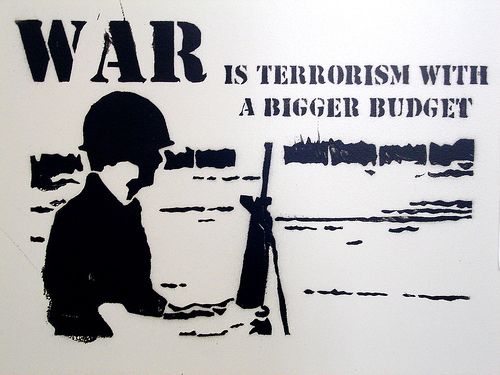
Some 2.7 billion dollars per day. That’s how much the U.S. government will spend next year to prop up the military and the more than 800 bases it maintains in over 70 countries. All in the name of national security. And despite that staggering figure, a majority of Americans feel that the wars in Iraq and Afghanistan were not even worth fighting, and they certainly have not made America safer.

That money is more than enough to pay for four years of college for every college student in this country, to fund food stamps and other social safety nets that help our most vulnerable, and to fund programs that would cut fossil-fuel emissions by 40 percent by 2035.

Despite this, there has been an utter failure by both the media and grassroots activists to address the growing waste and greed of the military-industrial complex.

An estimated 4 million people just took part in worldwide climate strikes that put the issue of climate breakdown at the forefront of the media conversation. Missing from this conversation, however, is an analysis of the role militarism and empire plays in driving the chaos. The U.S. military is the world’s largest polluter and emits more carbon dioxide than a hundred countries combined.

You see, America does not have a budget problem, it has a priorities problem; until we demand that our leaders prioritize our needs over those of corporations and those who profit off of war, our politicians will continue to pilfer taxpayer dollars by the trillions to fund forever wars that support building the largest empire history has seen.

Today, Donald Trump is the ugly face of the American Empire, and recently declared the country to be “locked and loaded” and ready to confront the Islamic Republic of Iran. And with conflicts in Iraq, Afghanistan and Syria (to mention only a few) ongoing, it feels like the cycle of war may never end.

The anti-war movement in the U.S., so strong under George W. Bush’s presidency, was effectively disarmed by his successor. Barack Obama put a friendly face on U.S. imperialism and, with the help of Hillary Clinton as his secretary of state, even managed to convince many so-called liberals and progressives to support devastating regime-change operations in Libya, Syria and Ukraine on humanitarian grounds. These interventions unleashed al-Qaeda and ISIS onto the Middle East and neo-Nazi rule on Russia’s borders. Obama expanded America’s wars, dropping over 25,000 bombs targeting seven different countries: Afghanistan, Iraq, Syria, Libya, Yemen, Somalia and Pakistan. He expanded drone wars, earning the nickname “Drone King,” and expanded U.S. bases across Africa under the guise of fighting the War on Terror.

While the Democratic Party and establishment-left mourned Obama’s exit from the White House, warning of a new era of fascism under President Trump, hundreds of thousands of outraged Americans took to the streets in protests against the new Republican president’s racism, misogyny, and xenophobia. This outrage gave birth to the Women’s March. But as these protests swelled, one couldn’t help wondering why there wasn’t any mobilization remotely on this scale in the previous eight years during Obama’s presidency?

This question crossed the mind of Cindy Sheehan, a longtime anti-war activist nicknamed “Peace Mom,” who contacted the organizers of the Women’s March — since one of the movement’s stated goals was to end violence against women — and asked them to make peace a central focus of the march.

But the response of a key organizer of the march showed just how little war and peace was a priority to establishment liberals: “I appreciate that war is your issue Cindy, but the Women’s March will never address the war issue as long as women aren’t free.”

Sheehan rejected the notion that women could be “free” without addressing war and empire. She countered the dismissive comment of the march organizer by stating that divorcing peace activism from women’s issues “ignored the voices of the [millions] of women of the world who are being bombed and oppressed by U.S. military occupation.”

It was clear that the anti-war movement needed to be reborn again, and who better than Sheehan herself could fit the bill?

Cindy grew up in California, where her father worked for the Lockheed corporation. A turning point in her life came in April 2004 after her son Casey was killed while on active service with the U.S. military in Iraq. She gained national attention after she staged an extended protest outside George W. Bush’s ranch in Crawford, Texas, demanding to meet him.

Since then she has tirelessly campaigned against war and violence abroad, being described as the “Rosa Parks of the peace movement.” Throughout her activism, she has taken a nonpartisan stance in speaking truth to power, calling out George W. Bush as the biggest terrorist in the world, but also traveling to Norway to protest Barack Obama’s Nobel Peace Prize. In 2012 she was the vice-presidential nominee of the Peace and Freedom Party.

Today, Cindy is the chief organizer of the upcoming Rage Against the War Machine protests in Washington, scheduled to take place on October 11.


Mnar Muhawesh is founder, CEO and editor in chief of MintPress News, and is also a regular speaker on responsible journalism, sexism, neoconservativism within the media and journalism start-ups.

Information is power, Julian Assange and the public’s right to know

By Carla Binion

Source: Intrepid Report

I’ve been writing political commentary for decades. Starting in the late 80s and through around the time of George W. Bush’s Iraq War and for a few years beyond I wrote many articles that were published online. Some appeared in Online Journal (now Intrepid Report), at Consortium News, at TomPaine.com, at BushWatch, at the Smirking Chimp and several other sites.

The U.S. and the world seemed to be more politically awake around the time of the Iraq War than they are today. During that time, the majority of people were aware that the Bush administration’s rationale for the war was false. The public soon realized the “weapons of mass destruction” excuse was a lie. People were paying attention, informing themselves, reading articles and listening to alternative media that told the truth about the war.

Today governments are still lying to the public about war and trying to cover up war crimes. However, unlike during the Iraq War, governments are now getting away with some of their most egregious lies, including their propaganda against Julian Assange.

The corporate press (as opposed to independent media) have falsely portrayed the U.S. government’s mistreatment of Assange. Because of this, the public doesn’t fully understand that the real reason Assange is being persecuted is that he exposed war crimes and other evil deeds of powerful U.S. political figures. It seems very few people are aware of the defining facts about the Assange case.

Based on my recent conversations with alternative journalists, I know I’m not the only one wondering how the U.S. public has grown so indifferent to protecting the rights of non-mainstream journalists and whistle-blowers. My friends and I have raised the question: Is public indifference mostly due to our being exposed to years of propaganda, to a general feeling of being powerless to challenge the powerful, or is it just fatigue?

The people will have to put up at least a little bit of a fight on behalf of whistle-blowers and other truth tellers if we have the heart to protect the limited freedoms we have left. One obvious place for average citizens to start is ascertaining the facts about the Assange case, and that means digging past the many smears, lies and distortions the public has been told.

This kind of independent citizen investigation is one way the public was able to determine that the Iraq War was based on untruths. Being well informed helped people avoid jumping on the bandwagon for perpetual regime change war.  Today some of the same politically powerful people who fooled us about Iraq are still trying to deceive us into supporting illicit wars.

It might help alleviate the problem if more people once again worked to become accurately informed. We need to learn from reliable alternative news sources (not from corporate media) and care enough to speak out against unjust war. The world would benefit if the pubic would make the effort to find out what is true about Assange and support him and other whistle-blowers who tell us the truth about war crimes and other government misdeeds.

Thomas Jefferson was right to say the only way we can have any semblance of democracy is if we have a public that is well informed. Information is power, and a public that doesn’t seek or value it will be powerless

The Limits of American Destructiveness

By Dmitry Orlov

Source: Club Orlov

US foreign policy has always been directed at wrecking anything that wasn’t deemed sufficiently American and replacing it with something more acceptable—especially if that something allowed wealth to flow into the US from the outside. Compromises were reserved for the USSR, but even there the Americans constantly tried to cheat. For everyone else there was just submission, which was usually tactfully disguised as a positive—a seat at the big table which offered better chances for peace, prosperity and economic and social development.

Of course, it was a simple enough matter to pierce this veil of hypocritical politeness and to point out that the US, living far beyond its means, has only managed to survive by looting the rest of the world, but anyone who dared to do so would be ostracized, sanctioned, regime-changed, invaded and destroyed—whatever it took.

The US establishment has lavished its wrath on anyone who dared to oppose it ideologically, but it reserved its most extreme forms of malice for those who dared commit the cardinal sin of attempting to sell oil for anything other than US dollars. Iraq was destroyed for this very reason, then Libya. With Syria the juggernaut bogged down and stalled out; with Iran it is unlikely to ever get started.

Even the spineless European politicians are now forced to admit that US policies are designed to enrich certain American interests at the expense of their constituents; they understand by now that further denial would cause them further harm at the polls. Most insultingly to the American ego, US attempts at making Russia and China submit are being greeted with shrugs, titters and eye rolls. And now anybody who wants to can openly criticize the US and scheme behind its back.

How times have changed! US politicians and officials have abandoned all attempts at maintaining decorum and no longer disguise their rapacious, grasping ways. Instead of veiled threats, they now deploy big lies and fake threats. Focusing on the manufacture and dissemination of fakes, they have been attempting to use them to coerce obedience. There are the fake threats—Russian, Chinese, Iranian, North Korean, Cuban—that are used to call for discipline within NATO and for compliance with US unilateral sanctions.

There are also the fake (or false flag) events—a Boeing shot down over the Ukraine by “pro-Russian rebels”; the Skripal poisoning; fake chemical attacks in Syria preposterously blamed on the government; damaged oil tankers in UAE blamed on Iran. These fakes are being used as an an excuse to wreck everything—international security and trade agreements, the systems for insuring that these agreements are adhered to, and world trade.

Before the Americans would do their best to wreck anything that wasn’t theirs, then work to replace it with something that was theirs; but now they have nothing to offer as a replacement for what they are destroying. The only thing the US can offer China is Chinese victory in the trade war. China does not need the US, and this point is being rather loudly pounded home, not just by the Chinese government but by private companies and individuals as well.

First, there is a flood of countersanctions. In particular, a halt to the export of rare earth minerals will shut down electronics manufacturing and with it the entire US high tech sector. Then there are the bonuses to those who buy Huawei products and punishments for buying anything American, up to and including eating at McDonald’s. iPhones have been all but banned—not by the government but by peer pressure. Taking a trip to the US is now a firing offense. There is now a good chance that, caught up in this patriotic uplift, the Chinese are being prepared to make any sacrifice for the sake of outright victory in their trade war with the US.

But do the Americans still have the power to destroy? When Saddam Hussein decided to start selling oil for euros, the CIA organized a provocation that caused him to invade Kuweit as punishment for stealing Iraqi oil. This allowed the US to organize a gigantic expeditionary force with divisions from a large number of countries, including Syria and Egypt and pretty much all of NATO. After a decade of Hussein festering in place, a somewhat smaller coalition dealt him the coup de grâce, destroying Iraq in the process. The victims of the American invasion and occupation outnumber Saddam Hussein’s victims by orders of magnitude. Later, the same thing was done to Muammar Qaddafi, for similar reasons, and Libya is likely to remain as a ruin. There, some sort of minor coalition was cobbled together.

But now the US finds that it urgently needs to knock out Iran because otherwise it will be too late. It is time to form a new coalition and Mike Pompeo has started racing around Eurasia. First off, he offended the Germans by canceling his state visit with Angela Merkel on a moment’s notice and without offering a reason. Instead, he flew to Baghdad—a perfect location for launching an attack on Iran, except that the Iraqi response was a message of solidarity with Iran, willingness to mediate the US-Iranian dispute, and consideration of a ban on US troops on Iraqi soil.

And so Mike flew to Sochi, where he met with Russian foreign minister Sergei Lavrov and, briefly, with Putin. Most likely, Putin told him where he can stuff his war plans, and so Mike canceled his planned trip to Moscow, to avoid having Sergei Lavrov wipe his feet on him again. And so Mike flew on to Europe, where he got a quick “no” on Iran from EU foreign policy head Federica Mogherini and an outright refusal to meet from the foreign ministers of France, Germany and Great Britain. And so Mike flew back to Washington. You can’t tell anything by looking at his smirking fat mug, but I am sure that he was crying on the inside.

US actions around the world can now be compiled into two lists. The first list is of what the US has succeeded or may yet succeed in wrecking. The second list is of what the US wants to or has been trying to wreck but won’t be able to. There is no third list of what the US has managed to wreck and then make whole again. The challenge for the whole world is to move as many items as possible from the first list to the second list. There are many ways of going about doing this that do have a chance of working and one that doesn’t: negotiating with Americans. Because they lie and cheat and aren’t worth talking to.

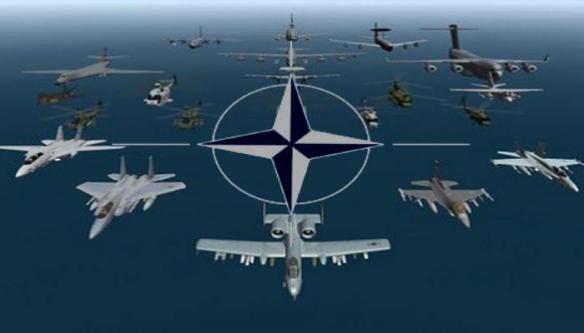
Understanding NATO, Ending War

By Robert J. Burrowes

On 4 April 2019, the North Atlantic Treaty Organization, better known as NATO, marked the 70th anniversary of its existence with a conference attended by the foreign ministers of member nations in Washington DC. This will be complemented by a meeting of the heads of state of member nations in London next December.

Coinciding with the anniversary event on 4 April, peace activists and concerned scholars in several countries conducted a variety of events to draw attention to, and further document, the many war crimes and other atrocities committed by NATO (sometimes by deploying its associate and crony terrorist armies – ISIS, Al Qaeda, Al Nusra – recruited and trained by the CIA and funded by Saudi Arabia, other Gulf countries and the US directly or through one or other of its many agencies: see ‘NATO – No Need – NATO-EXIT: The Florence Declaration’), the threat that NATO poses to global peace and security as an appendage of the US military, and to consider ways that NATO might be terminated.

These protests and related activities included several outlined in ‘No To NATO: Time To End Aggressive Militarism’ which also explains how NATO ‘provides a veneer of legality’ when ‘the US is unable to get the United Nations Security Council to approve military action’ and ‘Congress will not grant authority for US military action’ and despite the clearcut fact that NATO has no ‘international legal authority to go to war’, the grounds for which are clearly defined in the Charter of the United Nations and are limited to just two: authorization by the UN Security Council and a response in self-defense to a military attack.

The most significant gathering of concerned scholars was undoubtedly the ‘Exit NATO!’ conference in Florence, Italy, which culminated in the Florence Declaration calling for an end to NATO. See ‘The Florence Declaration: An International Front Calling for NATO-Exit’.

If NATO’s record of military destruction is so comprehensive – in the last 20 years virtually destroying Yugoslavia (balkanized into various successor states), Iraq and Libya, while inflicting enormous damage on many others, particularly Afghanistan and Syria – how did it come into existence and why does it exist now?

The Origin and Functions of NATO

Different authors offer a variety of reasons for the establishment of NATO. For example, Yves Engler argues that two of the factors driving the creation of NATO were ‘to blunt the European Left’ and ‘a desire to bolster colonial authority and bring the world under a US geopolitical umbrella’. See ‘On NATO’s 70th anniversary important to remember its anti-democratic roots’ and ‘Defense of European empires was original NATO goal’.

But few would disagree with Professor Jan Oberg’s brief statement on the origin of NATO: ‘Its raison d’etre… had always and unambiguously been the very existence of the Soviet Union… and its socialist/communist ideology.’ See ‘NATO at 70: An unlawful organisation with serious psychological problems’.

In other words, NATO was established as one response to the deep fear the United States government harbored in relation to the Soviet Union which, despite western propaganda to the contrary and at staggering cost to its population and industrial infrastructure, had led the defeat of Nazi Germany in World War II.

As Professor Michel Chossudovsky elaborates this point: The NATO ‘alliance’ of 29 member states (with Israel also a de facto member), most with US military bases, US military (and sometimes nuclear) weapons and significant or substantial deployments of US troops on their territory, was designed to sustain ‘the de facto “military occupation” of Western Europe’ and to confront the Soviet Union as the US administration orchestrated the Cold War to justify its imperial agenda – global domination guaranteed by massive US military expansion – in service of elite interests (including the profit maximization of the military industrial complex, its fossil fuel and banking corporations, and its media and information technology giants).

While NATO has the appearance of a multinational military alliance, the US controls NATO command structures with the Pentagon dominating NATO decision-making. NATO’s Supreme Allied Commander Europe (SACEUR) and Supreme Allied Commander Atlantic (SACLANT) are Americans appointed by Washington with the NATO Secretary General Jens Stoltenberg performing merely bureaucratic functions.

In light of the above, Chossudovsky observes: ‘Under the terms of the military alliance, NATO member states are harnessed into endorsing Washington’s imperial design of World conquest under the doctrine of collective security.’ Even worse, he argues, given the lies and fabrications that permeate US-NATO military doctrine, key decision-makers believe their own propaganda. ‘Immediately after the Cold War, a new nuclear doctrine was formulated, focused on the preemptive use of nuclear weapons, meaning a nuclear first strike as a means of self-defense.’ More recently: ‘Not only do they believe that tactical nuclear weapons are peace-making bombs, they are now putting forth the concept of a “Winnable Third World War”. Taking out China and Russia is on the drawing board of the Pentagon.’ See ‘NATO-Exit: Dismantle NATO, Close Down 800 US Military Bases, Prosecute the War Criminals’ and ‘NATO Spending Pushes Europe from Welfare to Warfare’.

So, given the ongoing military threats – with an expanding range of horrific weapons (including, to nominate just two, ‘more usable’ low yield nuclear weapons and technologies on ‘weather warfare’ offered by the military/nuclear corporate war planners) that threaten previously unimagined outcomes – and interventions by a US-led NATO, with Venezuela and now Iran the latest countries to be directly threatened – see ‘“Dangerous game”: US, Europe and the “betrayal” of Iran’ – as well as a gathering consensus among peace activists and scholars of the importance of stopping NATO (particularly given the many opportunities, beginning with aborting its origin, that have been missed already as explained by Professor Peter Kuznick: see ‘“Obscene” Bipartisan Applause for NATO in Congress’) how do we actually stop NATO?

While several authors, including those with articles cited above, offer ideas on what should be done about ending NATO, Chossudovsky offers the most comprehensive list of ideas in this regard well aware that stopping NATO is intimately connected to the struggle to end war and globalization. Chossudovsky’s ideas range from organizational suggestions such as integrating anti-war protest with the campaign against the gamut of neoliberal economic ‘reforms’ and the development of a broad based grassroots network independent of NGOs funded by Wall Street, objectives such as dismantling the propaganda apparatus which sustains the legitimacy of war and neoliberalism, challenging the corporate media (including by using alternative media outlets on the Internet), providing encouragement (including information about the illegality of their orders) for military personnel to refuse to fight (perhaps like the GI coffeehouse movement during the US war on Vietnam: see ‘The story of the GI coffeehouses’), working to close down weapons assembly plants and many other suggestions. See Towards a World War III Scenario: The Dangers of Nuclear War and ‘NATO-Exit: Dismantle NATO, Close Down 800 US Military Bases, Prosecute the War Criminals’.

Given my own deep interest in this subject of US/NATO wars and in developing and implementing a strategy that ends their war-making, let me elaborate Chossudovsky’s explanation of NATO’s function in the world today by introducing a book by Professor Peter Phillips.

In his book Giants: The Global Power Elite, Phillips observes that the power elite continually worries about rebellion by the ‘unruly exploited masses’ against their structure of concentrated wealth. This is why the US military empire has long played the role of defender of global capitalism. As a result, the United States has more than 800 military bases (with some scholars suggesting 1,000) in 70 countries and territories. In comparison, the United Kingdom, France, and Russia have about 30 foreign bases. In addition, US military forces are now deployed in 70 percent of the world’s nations with US Special Operations Command (SOCOM) having troops in 147 countries, an increase of 80 percent since 2010. These forces conduct counterterrorism strikes regularly, including drone assassinations and kill/capture raids.

‘The US military empire stands on hundreds of years of colonial exploitation and continues to support repressive, exploitative governments that cooperate with global capital’s imperial agenda. Governments that accept external capital investment, whereby a small segment of a country’s elite benefits, do so knowing that capital inevitably requires a return on investment that entails using up resources and people for economic gain. The whole system continues wealth concentration for elites and expanded wretched inequality for the masses….

‘Understanding permanent war as an economic relief valve for surplus capital is a vital part of comprehending capitalism in the world today. War provides investment opportunity for the Giants and TCC elites and a guaranteed return on capital. War also serves a repressive function of keeping the suffering masses of humanity afraid and compliant.’

As Phillips elaborates: This is why defense of global capital is the prime reason that NATO countries now account for 85 percent of the world’s military spending; the United States spends more on the military than the rest of the world combined.

In essence, ‘the Global Power Elite uses NATO and the US military empire for its worldwide security. This is part of an expanding strategy of US military domination around the world, whereby the US/ NATO military empire, advised by the power elite’s Atlantic Council, operates in service to the Transnational Corporate Class for the protection of international capital everywhere in the world’.

In short, ending NATO requires recognition of its fundamental role in preserving the US empire (at the expense of national sovereignty) and maintaining geopolitical control to defend the global elite’s capital interests – reflected in the capitalist agenda to endlessly expand economic growth – and particularly the profits the elite makes by inciting, supplying and justifying the massively profitable wars that the US/NATO conduct on its behalf.

So if you thought that wars were fought for reasons other than profit (like defense, a ‘just cause’ or ‘humanitarian’ motives) you have missed the essential function of US/NATO wars. And while these wars might be promoted by the corporate media as conflicts over geostrategic considerations (like ‘keeping open the Straits of Hormuz’), access to resources (‘war for oil’) or even markets (so that we can have US junk-food chains in every country on Earth), these explanations are all merely more palatable versions of the word ‘profit’ and are designed to obscure the truth.

And this raises another question worth pondering. Given that wars are the highly organized industrial-scale killing of fellow human beings (for profit) as well as the primary means of expanding the number of fellow human beings who are drawn into the global capitalist economy to be exploited (for profit) and the primary method used for destroying Earth’s climate and environment (for profit), you might wander if those who conduct wars are sane. Well, as even posing the question suggests, the global elite – which drives wars, the highly exploitative capitalist economy and destruction of the biosphere – is quite insane. And there is a brief explanation of this insanity and how it is caused in the article ‘The Global Elite is Insane Revisited’.

Stopping NATO

So if war is precipitated and now maintained perpetually by an insane elite that controls and utilizes the US and NATO military forces to secure profits by killing and exploiting fellow human beings while destroying the climate and environment, how can we stop it? Clearly, not without a sophisticated strategy that addresses each dimension of the conflict.

Hence, my own suggestion is that we do three things simultaneously:

  1. Invite participation in a comprehensive strategy to end war, of which NATO is a symptom
  2. Invite participation in one or another program to substantially reduce consumption to systematically reduce the vital driver of ‘wars for resources’ (which will also reduce the gross exploitation of fellow human beings and humanity’s adverse impact on the biosphere), and
  3. Invite participation in programs to increase human emotional functionality so that an increasing proportion of the human population is empowered to actively engage in struggles for peace, justice and sustainability and to perceive the propaganda of elites and their agents, including NATO functionaries and corporate media outlets, without being deceived by it.

There is a comprehensive strategy to end war explained on this website – Nonviolent Campaign Strategy – which includes identification of the two strategic aims and a basic list of 37 strategic goals to end war. See ‘Strategic Aims’.

There is a strategy for people to systematically reduce their consumption and increase their self-reliance mapped out in ‘The Flame Tree Project to Save Life on Earth’. But if you want a simpler 12-point list which still has strategic impact, see ‘The Earth Pledge’ included in ‘Why Activists Fail’. If you want to better understand why people over-consume, you can find out here: ‘Love Denied: The Psychology of Materialism, Violence and War’.

There is a process for improving your own emotional functionality (which will develop your conscience, courage and capacity to think strategically) described in the article ‘Putting Feelings First’. If you would like to assist children to grow up without emotional dysfunctionalities, consider making ‘My Promise to Children’. If you want to read the foundation behind these two suggestions, see Why Violence? and Fearless Psychology and Fearful Psychology: Principles and Practice.

Complementary to these suggestions, you might like to sign the online pledge of The Peoples Charter to Create a Nonviolent World which links people working to end violence in all contexts.

There is one question that remains unaddressed by the suggestions above: How do we mobilize sufficient people (both anti-war activists and others) and organizations (including anti-war groups and others) to participate in the effort to end elite-sponsored war, including its organizational structures such as NATO?

Given the notorious difficulty of mobilizing activists to act strategically in any context (a much more complex version of the basic problem of mobilizing people), my primary suggestion is that individuals within the anti-war movement invite other individuals and activist groups to choose and campaign on one or more of the strategic goals necessary to end war listed in ‘Strategic Aims’. While some activist groups are already working to achieve one or more of these strategic goals, we clearly need to engage more groups to work on the many other goals so that each of these goals is being addressed. War will not be ended otherwise.

One thing that a section of the climate movement does well is to research and report on those banks, superannuation funds and insurance companies that provide financial services, loans, investment capital and insurance cover to fossil fuel corporations and to then invite concerned people to sign standard letters sent to these organizations requesting them to cease their support of fossil fuels. The anti-war movement could usefully emulate this tactic (on a far wider scale than has existed previously) in relation to weapons corporations and to invite individuals and organizations everywhere to boycott banks, superannuation funds and insurance companies with any involvement in the weapons industry.

But this is just one simple tactic (involving no risk and little effort) on a small but important range of ‘targets’ in the anti-war struggle. Unfortunately, there are plenty more targets that need our attention and that will require more commitment than signing a letter given that, for example, essential funding for the weapons industry is supplied by government procurement programs using your taxes.

Similarly, we need individuals and groups working to mobilize people to substantially reduce their consumption, and individuals and groups working to mobilize people to prioritize their emotional well-being (the foundation of their courage to act conscientiously and strategically in resisting war, exploitation and destruction of the biosphere generally). If we do not undertake these complementary but essential programs, our efforts to end war will be endlessly undermined by our own fear and over-consumption.

Because, in the final analysis, it is our fearfully surrendered tax dollars and our dollars spent consuming the resources seized in wars that will ensure that elite-driven wars for profit by the US and NATO will be financially sustained, whatever words we utter and actions we take.

So our strategy must address this fear and over-consumption too if it is to have the sophistication and comprehensiveness necessary to shut down NATO and end war.


Biodata: Robert J. Burrowes has a lifetime commitment to understanding and ending human violence. He has done extensive research since 1966 in an effort to understand why human beings are violent and has been a nonviolent activist since 1981. He is the author of Why Violence? His email address is flametree@riseup.net and his website is here.

Bullet Points: How Forever War Will End

By

Source: Another Day in the Empire

Forget a popular movement to end the wars.

As George W. Bush said during his murder spree in Afghanistan and Iraq, the antiwar movement at that time (far larger than what we have today) was little more than a “focus group” ignored by the state (with the exception of sending out their operatives to spy on the movement and create disorder and factionalism).

Most Americans are numb to decades of expensive and debilitating wars. They prefer not to think about it. The corporate propaganda media provides plenty of fluff and chaff to distract them—spiked with hate screeds against the president—and the idea of a popular movement to end the wars is now nearly impossible.

Like former dirty trickster Karl Rove famously said, the American people really have no choice but to sit back and watch the creative destructionists “make history.” Any serious effort to mobilize an antiwar movement would be disrupted. The state has perfected the dark art of killing democratic action through subversion.

Economic Armageddon. It’s breathing down our necks, thanks to federal spending out of control for decades, at least half of it going to the “defense” department and associated death merchants.

“The United States recorded a government debt equivalent to 105.40 percent of the country’s Gross Domestic Product in 2017,” Trading Economics points out. “Government Debt to GDP in the United States averaged 61.70 percent from 1940 until 2017, reaching an all-time high of 118.90 percent in 1946 [after participating in the worst act of organized carnage in human history] and a record low of 31.70 percent in 1981.”

According to research conducted by William D. Harding and Mandy Smithberger, the “final annual tally for war, preparations for war, and the impact of war come to more than $1.25 trillion, more than double the Pentagon’s base budget [of the $750 billion Trump budget].”

Last year, the official tally for the national debt was $21,500 trillion. Some believe this is a lowball figure. John Williams of shadowstats.com has shown that with unfunded liabilities, the debt is actually closer to $222 trillion, a staggering number virtually unknown to the American people. Most don’t even realize the average public unfunded liability is $2 million per household (piled atop personal debt, which is at an all-time high).

Obviously, somewhere along the line, and I’d have to say soon, there will be a “reset,” an economic collapse and reordering of the game (on terms beneficial to the bankers). Empires typically fall when they become unsustainable.

Russia and China. Both nations have their own problems and are less than friendly to individual rights, although Russia is far better than totalitarian China. It is now obvious both are working to find an exit to the domination of Federal Reserve fiat funny money scheme that rules international economies and trade around the world. The US has weaponized this system by slapping sanctions on disfavored nations and those it has decided to invade and destroy (and with the current rhetoric from both sides of the one-sided war party, it is obvious the political class and its corporate directors are itching for a fight).

This is, of course, insane. I really do think the hubris—the indispensable nation, the exceptional nation—is so thick these fools can’t see how easily it would be to turn the world into a radioactive cauldron. On the other hand, I do believe, at least in regard to nuclear annihilation, somewhat saner heads will prevail.

News flash. If there is a non-nuclear (or limited nuclear) war with each or both (see the 2001 Sino-Russian Treaty of Friendship), it will not turn out good for the US, which has corrupted its defensive military capacity with a manufactured terror-asymmetrical posture.

This approach is effective in subversion operations to destabilize countries, particularly in the Middle East and South Asia. As we have seen since the end of the Second World War, the United States appears to be incapable of winning wars. This no mistake and primarily benefits Eisenhower’s military-industrial complex with a host of related new “national security” industries in addition to the war merchant stalwarts (Boeing, General Dynamics, General Electric, Lockheed-Martin, Raytheon, etc.), all feeding at the trough. Forever war is a forever profit stream for the ruling elite and its political class.

So, the conclusion is either economic collapse or defeat in a more or less conventional war will halt the trajectory the US is taking now as it is pulled along in a neocon spell with a president that has at best a sixth grade understanding of the world. Both probable outcomes are unthinkable.

Who knows. Maybe the American people will get off their duffs and demand the wars and provocations leading to war end. This was done in the 1960s and early 70s, primarily due to the Vietnam War protest that began in response to military servitude imposed on teenagers. The state ended a military draft, although it retained its “selective service” registration of potential future bullet-stoppers.

The moral aspect was secondary.

The Seven Years of Lies About Assange won’t Stop Now

By Jonathan Cook

Source: Dissident Voice

For seven years, from the moment Julian Assange first sought refuge in the Ecuadorean embassy in London, they have been telling us we were wrong, that we were paranoid conspiracy theorists. We were told there was no real threat of Assange’s extradition to the United States, that it was all in our fevered imaginations.

For seven years, we have had to listen to a chorus of journalists, politicians and “experts” telling us that Assange was nothing more than a fugitive from justice, and that the British and Swedish legal systems could be relied to handle his case in full accordance with the law. Barely a “mainstream” voice was raised in his defence in all that time.

From the moment he sought asylum, Assange was cast as an outlaw. His work as the founder of Wikileaks – the digital platform that for the first time in history gave ordinary people a glimpse into the darkest recesses of the most secure vaults in the Deepest of Deep States – was erased from the record.

Assange was reduced from one of the few towering figures of our time – a man who will have a central place in history books, if we as a species live long enough to write those books – to nothing more than a sex pest, and a scruffy bail-skipper.

The political and media class crafted a narrative of half-truths about the sex charges Assange was under investigation for in Sweden. They overlooked the fact that Assange had been allowed to leave Sweden by the original investigator, who dropped the charges, only for them to be revived by another investigator with a well-documented political agenda.

They failed to mention that Assange was always willing to be questioned by Swedish prosecutors in London, as had occurred in dozens of other cases involving extradition proceedings to Sweden. It was almost as if Swedish officials did not want to test the evidence they claimed to have in their possession.

The media and political courtiers endlessly emphasised Assange’s bail violation in the UK, ignoring the fact that asylum seekers fleeing legal persecution don’t usually honour bail conditions. That, after all, is why they are seeking asylum.

The political and media establishment ignored the mounting evidence of a secret grand jury in Virginia formulating charges against Assange, and ridiculed Wikileaks’ concerns that the Swedish case might be cover for a more sinister attempt by the US to extradite Assange and lock him away in a high-security prison, as had happened to whistleblower Chelsea Manning.

They belittled the 2016 verdict of a panel of United Nations legal scholars that the UK was “arbitrarily detaining” Assange. The media were more interested in the welfare of his cat.

They ignored the fact that after Ecuador changed presidents – with the new one keen to win favour with Washington – Assange was placed under more and more severe forms of solitary confinement. He was denied access to visitors and basic means of communications, violating both his asylum status and his human rights, and threatening his mental and physical well being.

Equally, they ignored the fact that Assange had been given diplomatic status by Ecuador, as well as Ecuadorean citizenship. Britain was obligated to allow him to leave the embassy, using his diplomatic immunity, to travel unhindered to Ecuador. No “mainstream” journalist or politician thought this significant either.

They turned a blind eye to the news that, after refusing to question Assange in the UK, Swedish prosecutors had decided to quietly drop the case against him in 2015. Sweden had kept the decision under wraps for more than two years.

It was a freedom of information request by an ally of Assange, not a media outlet, that unearthed documents showing that Swedish investigators had, in fact, wanted to drop the case against Assange back in 2013. The UK, however, insisted that they carry on with the charade so that Assange could remain locked up. A British official emailed the Swedes: “Don’t you dare get cold feet!!!”

Most of the other documents relating to these conversations were unavailable. They had been destroyed by the UK’s Crown Prosecution Service in violation of protocol. But no one in the political and media establishment cared, of course.

Similarly, they ignored the fact that Assange was forced to hole up for years in the embassy, under the most intense form of house arrest, even though he no longer had a case to answer in Sweden. They told us – apparently in all seriousness – that he had to be arrested for his bail infraction, something that would normally be dealt with by a fine.

And possibly most egregiously of all, most of the media refused to acknowledge that Assange was a journalist and publisher, even though by failing to do so they have exposed themselves in the future to the use of the same draconian sanctions should they or their publications ever need to be silenced.

This was never about Sweden or bail violations, as anyone who was paying the vaguest attention should have worked out. It was about the US Deep State doing everything in its power to crush Wikileaks and make an example of its founder.

It was about making sure there would never again be a leak like that of Collateral Murder, the military video released by Wikileaks in 2007 that showed US soldiers celebrating as they murdered Iraqi civilians. It was about making sure there would never again be a dump of US diplomatic cables, like those released in 2010 that revealed the secret machinations of the US empire to dominate the planet whatever the cost in human rights violations.

Now the pretense is over. The British police invaded the diplomatic territory of Ecuador – invited in by Ecuador after it had revoked Assange’s diplomatic status – to smuggle him off to jail. Two vassal states cooperating to do the bidding of the US empire. The arrest was not to help two women in Sweden or to enforce a minor bail infraction. The British authorities were acting on an extradition warrant from the US.

Still the media and political class is turning a blind eye. Where is the outrage at the lies we have been served up for these past seven years? Where is the contrition at having been gulled for so long? Where is the fury at the most basic press freedom – the right to publish – being sacrificed to silence Assange? Where is the willingness finally to speak up in Assange’s defence?

It’s not there. There will be no indignation at the BBC, or the Guardian, or CNN. Just curious, impassive reporting of Assange’s fate.

And that is because these journalists, politicians and experts never really believed anything they said. They knew all along that the US wanted to silence Assange and to crush Wikileaks. They knew that all along and they didn’t care. In fact, they happily conspired in paving the way for today’s kidnapping of Assange.

They did so because they are not there to represent the truth, or to stand up for ordinary people, or to protect a free press, or even to enforce the rule of law. They don’t care about any of that. They are there to protect their careers, and the system that rewards them with money and influence. They don’t want an upstart like Assange kicking over their apple cart.

Now they will spin us a whole new set of deceptions and distractions about Assange to keep us anaesthetised, to keep us from being incensed as our rights are whittled away, and to prevent us from realising that Assange’s rights and our own are indivisible. We stand or fall together.

Defending Julian Assange; Defending the Truth

By Robert J. Burrowes

On 11 April 2019, WikiLeaks editor Julian Assange was dragged from the Ecuadorian Embassy in London by UK police and arrested for breaching a bail condition. See ‘Arrest update – SW1’. Upon arrival at a London police station, Julian was ‘further arrested’ on behalf of the United States government to satisfy an extradition warrant under Section 73 of the UK Extradition Act. See ‘UPDATE: Arrest of Julian Assange’.

Following a brief court hearing in which the extraordinary prejudice of the district judge was on clear display – see ‘Chelsea and Julian Are in Jail. History Trembles’ – Julian is now imprisoned in south London’s maximum security Belmarsh Prison. He will appear in custody at Westminster Magistrates’ Court for a preliminary extradition hearing on 2 May and the US must produce its case for requesting Julian’s extradition from the UK by 12 June but, as Nicholas Weaver reports, Julian could be in UK custody for years as the extradition is contested in court. See ‘The Wikileaks Case Is Just Beginning’.

Prior to his arrest, Julian had been living in the Ecuadorian Embassy since 2012, having been granted citizenship of Ecuador and asylum by that country because many people were well aware of the risk he faced if he was tried in a kangaroo court in the United States. This asylum, to which Julian was entitled under long-standing provisions of international law, had been granted by previous Ecuadorian President Rafael Correa, who clearly understood this law (and the moral principles on which it is based).

As a result of his recent arrest however, Julian is under threat of extradition to the United States so that he can face criminal prosecution/persecution – see the US indictment of Julian Assange or ‘Read the Julian Assange indictment’ – for his role in exposing the truth about US war crimes in Afghanistan (the Afghan War Diary) and Iraq (the Iraq War Logs), as did The Guardian and The New York Times, by publishing leaked evidence of these crimes – including the ‘Collateral Murder’ video – as well as publishing evidence of widespread government corruption on the WikiLeaks website. It was this threat of persecution by US authorities that led Julian to seek asylum in the Ecuadorian Embassy in the first place.

However, since the election in Ecuador on 24 May 2017 of the criminal and cowardly president Lenín Moreno, Julian’s asylum has been under threat and the conditions of his stay in the Embassy have rapidly deteriorated. This is because Moreno has been anxious to divert public attention from the spotlight of corruption currently shining directly on him – see ‘Ecuador National Assembly to Start Corruption Probe of Moreno’ – and to secure the loans offered as bribes by US officials while capitulating to US government pressure to illegally terminate Julian’s political asylum. See ‘Ecuador Bowed to US Pressure, Violated Law – Assange’s Associate’ and ‘WikiLeaks Founder Julian Assange Arrested, Activists Rally to Stop US Extradition’.

Of course, the criminal and cowardly nature of Moreno’s action is highlighted by the fact that the decision of the Ecuadorian government to terminate Julian’s asylum was done in violation of article 79 of Ecuador’s constitution which forbids extradition of its own citizens. See ‘Republic of Ecuador Constitution of 2008’. As Moreno’s predecessor, Rafael Correa noted simply in one Facebook post: ‘Moreno is a corrupt man’. See ‘Facebook Removes Page of Ecuador’s Former President on Same Day as Assange’s Arrest’.

Unfortunately, as further evidence of its function as an elite agent, rather than facilitating free speech, Facebook promptly ‘unpublished’ Correa’s Facebook page. Clearly, Moreno’s corruption is not a subject that Facebook wants advertised. See ‘Facebook Removes Page of Ecuador’s Former President on Same Day as Assange’s Arrest’. Still, it should be pointed out, Twitter’s function as an elite agent is no different. See ‘Twitter Restricts Account of Julian Assange’s Mother’.

Naturally enough, despite elite efforts to control the narrative, many people and organizations around the world have been outraged at the treatment of Julian (as well as other truthful journalists and whistleblowers such as Chelsea Manning, who has recently been imprisoned yet again, and Edward Snowden) who act courageously on the basis that the public has a right to know about the criminality of their governments as well as to know the truth generally.

As long ago as 5 February 2016, the Office of the High Commissioner for Human Rights (OHCHR) at the United Nations issued a statement in which they ‘called on the Swedish and British authorities to end Mr. Assange’s deprivation of liberty, respect his physical integrity and freedom of movement, and afford him the right to compensation’ noting that its opinions are ‘legally-binding to the extent that they are based on binding international human rights law, such as the International Covenant on Civil and Political Rights (ICCPR)’. See Julian Assange arbitrarily detained by Sweden and the UK, UN expert panel finds.

Moreover, in recent days, UN officials have spoken openly of their serious concern if Julian’s asylum was illegally revoked. See ‘UN expert on privacy plans to visit Julian Assange’ and ‘Two UN Rapporteurs Are Concerned About Julian Assanges’ Situation’.

And just recently, on 11 April 2019, the American Civil Liberties Union issued its response to Julian’s arrest, noting that ‘Criminally prosecuting a publisher for the publication of truthful information would be a first in American history, and unconstitutional.’ The report added that ‘Any prosecution by the United States of Mr. Assange for Wikileaks’ publishing operations would be unprecedented and unconstitutional, and would open the door to criminal investigations of other news organizations. Moreover, prosecuting a foreign publisher for violating U.S. secrecy laws would set an especially dangerous precedent for U.S. journalists, who routinely violate foreign secrecy laws to deliver information vital to the public’s interest.’ See ACLU Comment on Julian Assange Arrest’.

So once extradited, would Julian have any chance of defending himself with the truth? As US attorney Bill Simpich explains, Julian will be prevented from presenting the essential elements of his defense because ‘The [US] government doesn’t want a fair fight. In a fair fight, the government will lose.’ See ‘The Julian Assange Case: Revealing War Crimes Is Not a Crime’.

More bluntly, Jonathan Turley points out:

‘[T]he Justice Department is likely to move aggressively to strip Assange of his core defenses. Through what is called a motion in limine, the government will ask the court to declare that the disclosure of intelligence controversies is immaterial. This would leave Assange with only the ability to challenge whether he helped with passwords and little or no opportunity to present evidence of his motivations or the threat to privacy.

‘The key to prosecuting Assange has always been to punish him without again embarrassing the powerful figures made mockeries by his disclosures. That means to keep him from discussing how the U.S. government concealed attacks and huge civilian losses, the type of disclosures that were made in the famous Pentagon Papers case. He cannot discuss how Democratic and Republican members either were complicit or incompetent in their oversight. He cannot discuss how the public was lied to about the program.’ See ‘Julian Assange Will Be Punished for Embarrassing the DC Establishment’.

Hence, while the Ecuadorian, British and US governments are flagrantly violating the law in persecuting Julian, it is being left to individuals and civil society organizations to defend him and many are mobilizing to do so already.

As a result, people have signed petitions – see Don’t extradite Assange!’ and Block Extradition & Prosecution of Julian Assange for First Amendment-Protected Journalism’ – some have participated in demonstrations at UK embassies and consulates around the world – see, for example, ‘Protesters Call on UK to #FreeAssange Outside British Embassy in DC’ – and others have engaged in other acts of solidarity as suggested, for example, by Julian’s mother Christine or on the website ‘Defend WikiLeaks’ and in this article: ‘Julian Assange Arrested, Take Action Now’.

Given the importance of defending our access to accurate information about our world, rather than the propaganda marketed as ‘news’ by the corporate media, it is worth reflecting on how best we can do this and, in doing so, defend people like Julian and Chelsea (who play such a vital role in giving us access to the truth in particular contexts) at the same time.

Hence, because of my own longstanding interest in developing thoughtfully-designed nonviolent strategies in our struggle to make our world one of peace, justice and ecological sustainability, let me suggest a strategic way forward that will honor the courage of Julian and Chelsea by maximizing the impact of their truth-telling on the longer-term struggles just mentioned while also taking separate action to provide some additional pressure to assist them in the short and medium terms.

In order to design this strategy well, let us first analyze the issue of why those who tell the truth are persecuted. If we do not understand, precisely, why this happens, we cannot respond powerfully.

Accurate Strategic Analysis Depends on Knowing the Truth

If we are to understand, accurately, the context and structural dimensions of a conflict (that is, the ‘big picture’ in which it is contained) so that we can identify and analyze the underlying drivers of the conflict in order to develop a coherent strategy to address these drivers, then the very first prerequisite is that we have truthful information. Without this truthful information, activists have zero prospect of accurately understanding and analyzing what is happening in the world (such as in relation to war and the climate catastrophe, for example).

Because the global elite is highly aware of the importance of the truth, it goes to enormous effort to make it difficult, if not impossible, to access the truth, particularly in certain critical contexts. And there are some classic historical examples, among many others, where not knowing the truth has allowed elites to inflict monumental atrocities in our name while crippling efforts to strategically mobilize opposition to these atrocities.

The most obvious examples of this phenomenon include ‘false flag’ attacks such as those conducted by US authorities and their allies on 9/11 as the prelude to launching their ‘war on terror’ which has caused immeasurable damage to, if not virtually destroyed, entire countries across west Asia and north Africa. If the truth about those behind the 9/11 attacks had been immediately available, rather than still ‘dribbling out’ nearly 20 years later, then it would have been far easier to mobilize resistance to the US-led wars on other countries and to campaign, strategically, for the profound changes needed to ensure that our world is spared the scourge of such atrocities in future. To access the definitive account of the overwhelming evidence in relation to 9/11 as a false flag attack, see 9/11 Unmasked: An International Review Panel Investigation which is reviewed in ‘The Fakest Fake News: The U.S. Government’s 9/11 Conspiracy Theory’. For a long but incomplete list of false flag attacks, see ‘The Ever-Growing List of ADMITTED False Flag Attacks’.

So if we ask the question ‘Who played the primary role in deceiving us about 9/11 and molding the desired public response?’, the answer is that it was some key government, corporate, military and bureaucratic spokespeople and, particularly, the corporate media projecting the words of these official spokespeople far and wide. But if we ask the question ‘Who was controlling these spokespeople and the corporate media?’ the answer is ‘the global elite’.

This is because a primary function of the global elite, which it has long understood, is to create (using individuals employed within its think tanks as well as compliant academics) and maintain (through education systems, the entertainment industry and the corporate media) the dominant narrative in society so that the information available to the public is the information that the elite needs to shape public perception in favor of elite interests, such as perpetual war and chronic over-consumption, which ensure perpetuation of elite power, profit and privilege.

Hence, as you can see, people like Julian Assange and Chelsea Manning and organizations like WikiLeaks represent a fundamental threat to elite power, profit and privilege precisely because their truth-telling functionally undermines the elite narrative, for example, that our ‘enemy’ is a bunch of terrorists somewhere rather than the global elite itself.

While the false flag examples offered above highlight how suppression of the truth disempowers activists and populations thus helping to minimize any effective mobilization in response, there are also a great many examples where the truth was critical to informing and helping to mobilize activists to resist injustice, in one form or another. For example, Kevin Zeese superbly illustrates the crucial importance of WikiLeaks in facilitating awareness of the truth during the uprisings in 2011 across north Africa and west Asia. See ‘Julian Assange: At the Forefront of 21st Century Journalism’.

In essence then, it is individuals like Julian and Chelsea, rather than the sycophantic editors, reporters and journalists working for the corporate media, who give us the information we need to know so that we can better understand how our dysfunctional and violent world works and campaign effectively to change it.

And so they are enemies of the elite who must be silenced and discredited, legally or otherwise.

If you would like to read other accounts by individuals who astutely warn us of the deeper implications of what is happening to Julian, see the recent articles by Chris Hedges The Martyrdom of Julian Assange’ and John Pilger The Assange Arrest Is a Warning from History’.

So what do we do?

Well, I believe we honor individuals like Julian and Chelsea by using the truths they reveal to us to develop and implement thoughtfully-designed nonviolent strategies to make our world one of peace, justice and ecological sustainability. This is why they risk paying (and are now paying) such a high personal price to get us the truth that must inform these struggles. But we can also assist courageous individuals like Julian and Chelsea in the short-term too. So let me also add to the suggestions made by others mentioned above.

If we are to make the most use of the truth that Julian and Chelsea have risked (and paid) so much to get to us, then we must campaign strategically. By doing this, as I just mentioned, we truly honor their efforts and sacrifice. So, for example, if you want to campaign to end the elite’s wars and destruction of our climate from which it profits so enormously, then consider doing it strategically. See Nonviolent Campaign Strategy. This site identifies, among other key elements of strategy, the two strategic aims and the basic list of strategic goals necessary to achieve these outcomes. See ‘Campaign Strategic Aims’.

Irrespective of whether or not you are keen on campaigning in this way, there is a fifteen-year strategy for tackling all elements of our environmental crisis in The Flame Tree Project to Save Life on Earth.

If you would like to tackle the problem at its core, consider making ‘My Promise to Children’ so that your children grow up with the conscience and courage of Julian and Chelsea. Unfortunately, individuals of their conscience and courage are incredibly rare in our world: not a powerful place to start in tackling a global elite that is utterly insane.

‘Insane?’ you might ask. Remember this: the global elite and many of its political, corporate, bureaucratic, military and academic agents, spend their time planning and implementing strategies to kill people (using military violence and economic exploitation) to make a profit. Do you really believe that this is something that a sane person would spend their time doing? I know you have been inundated with propaganda throughout your life to make you accept (or ignore) the violence in our world without question but pause and ponder it now: is it really sane? Are we not capable, as a species, of organizing our world to achieve peace, justice and ecological sustainability? See ‘The Global Elite is Insane Revisited’ with a lot more detail in Why Violence?’ and Fearless Psychology and Fearful Psychology: Principles and Practice.

Moreover, individuals who are not incredibly psychologically damaged do not manipulate elite institutions – such as the legal system: see ‘The Rule of Law: Unjust and Violent’ – to persecute powerful individuals like Julian and Chelsea. The conscience and courage of Julian and Chelsea are readily recognized by those who are not psychologically damaged: they are qualities of exceptional individuals whom we should honor.

If you would like to join the worldwide movement to end all violence, you are welcome to sign the online pledge of The Peoples Charter to Create a Nonviolent World.

But we do not need to confine our acts of solidarity with Julian and Chelsea to those regarding strategies for profound change or the others mentioned above either. If you want to act powerfully in their support, consider the following five options as well and do as many as you can:

  1. Boycott The Guardian and The New York Times (because they were two of the original outlets that published material sourced from WikiLeaks but now hypocritically engage in the persecution of Julian and Chelsea). And suggest to others that they also boycott these media outlets.
  2. Boycott all media outlets (anywhere in the world) that advocate or support the arrest, trial and/or imprisonment of Julian and/or Chelsea. And suggest to others that they boycott these media outlets too. If you want the truth about our world, get it from news outlets like the one you are reading now.
  3. Boycott Facebook. And suggest to others that they boycott this medium too.
  4. Boycott Twitter. And suggest to others that they boycott this medium too.
  5. Write letters of solidarity to Julian and Chelsea. Tell them what you are doing to make best use of the truths they have revealed.

Given elite control of all political, economic, commercial, legal, social and media institutions of any consequence in our world, it will not be easy to liberate Julian (and, perhaps, even Chelsea) in the short term. UK and US elites may even conspire to secretly put Julian on a rendition flight to the US or simply be content with a protracted legal struggle which distracts many of us from the issues that Julian and Chelsea so courageously put in the spotlight.

For that reason, while we struggle to liberate them we can also struggle to liberate the vast number of other people who suffer the elite’s military violence and economic exploitation so that the efforts of Julian and Chelsea are not in vain.


Biodata: Robert J. Burrowes has a lifetime commitment to understanding and ending human violence. He has done extensive research since 1966 in an effort to understand why human beings are violent and has been a nonviolent activist since 1981. He is the author of Why Violence? His email address is flametree@riseup.net and his website is here.


America is exceptional — in all the wrong ways

By Maj. Danny Sjursen

Source: Axis of Logic

I was born and raised in an America far more Orwellian than many now remember. Matters have gone so far off the rails since 9/11 that few seem to recall the madness of the 1980s. The U.S. had a celebrity actor for president, who railed about America’s ostensibly existential adversary—the Soviet “evil empire.” Back then, Ronald Reagan nearly started a nuclear war during the all-too-real Able Archer war game. He also secretly sold missiles to Iran, and then laundered the windfall to the Contras’ Central American hit squads, resulting in some 100,000 dead.

Looking back from 2019, at least as the contemporary media tell it, those were the good old days. Heck, even Barack Obama—faux liberal that he was—proudly and publicly admired Reagan. Oh, and one of Reagan’s favorite campaign slogans: “Make America Great Again.”

Today, matters seem to be coming farcically full circle, what with Elliott Abrams—convicted in the aforementioned Iran-Contra scandal—being appointed special envoy to Venezuela, and Uncle Sam again bullying a Latin American country. Welcome to America’s own grisly ’80s foreign affairs theme party! Which all got me thinking, again, about the whole notion of American exceptionalism. Only a country that truly, deeply believes in its own special mission could repeat the hideous policies of the 1980s and hardly notice.

Perhaps one expects this absurd messianism from the likes of The Donald, but the real proof is that America’s supposed progressives—like Obama—also obediently pray at the temple of exceptionalism. “Orwellian” is the only word for a nation whose leaders and commentariat were absolutely aghast when candidate Obama was seen without (gasp!) an American flag pin on his lapel. Even more disturbing was how quickly he folded and dutifully adorned his mandatory flair. This sort of nonsense is dangerous, folks: It’s hypernationalism—the very philosophy that brought us World War I.

So it was this week, while sitting on a plane reading my oh-so-bourgeois Economist, and getting infuriated about seeing Elliott Abrams’ war-criminal face, that my thoughts again turned to good old American exceptionalism. My opinions on the topic have waxed and waned over the course of a career spent waging illegal war. First, as a young cadet at West Point, I bought it hook, line and sinker; then, as an Iraq War vet and dissenter, I rejected the entire notion. Only now, observing the world as it is, have I begun to think that America really is exceptional after all—only in all the wrong ways.

Humor me, please, while I run through a brief laundry list of the ways the US of A is wildly and disconcertingly different from all the other “big-boy countries” in the developed world. Let’s start with domestic policy:

  • The U.S. has been the site of exponentially more mass shootings than any other nation. And unlike in New Zealand—where officials took immediate steps to tighten gun control in the wake of its recent tragedy—American politicians won’t do a thing about it. We also own more guns per capita than any other country in the world. In second place is Yemen.
  • The U.S. is essentially alone in the Western world in not guaranteeing health care as a basic human right. It spends much more cash, yet achieves worse health outcomes than its near-peer countries.
  • America is home to some of the starkest income inequality on the globe—right up there with Turkey and South Africa.
  • The U.S. keeps migrant kids in cages at the border, or did until recently. Even more exceptional is that Washington is largely responsible for the very unrest in Central America that generates the refugees, all while American conservatives proudly wear their “Christianity” as badge of honor—but wasn’t Jesus a refugee child? Maybe I read the wrong Bible.
  • America is alone among 41 Western nations in not guaranteeing paid family leave. How’s that for “family values?”
  • As for representative democracy, only the U.S. has an Electoral College. This fun 18th-century gimmick ensures that here in America—in 40 percent of its elections since 2000—the presidential candidate with fewer votes actually won. Furthermore, our peculiar system ensures that a rural Wyoming resident has—proportionally—several times more representative power in Washington than someone who lives in California.
  • Similarly, America counts several non-state “territories”—think Guam, Samoa, Puerto Rico—that don’t even get to vote for the president that it can legally send  to war. But hey, why should we grant them statehood? It’s not as though some of them have higher military enlistment rates than any U.S. state … oh, wait.
  • The U.S. is essentially solo in defining corporations as “people,” and thanks to the Citizens United Supreme Court ruling, has lifted limits on money in politics. Buying elections is officially as American as apple pie.
  • The USA locks up its own people at the highest rate in the world and is nearly alone among developed nations in maintaining the death penalty. Last year, the U.S. was the only country in the Americas to conduct executions and the only Western democracy to do so. But our friends the Saudis still execute folks, so it’s got to be OK. Dostoyevsky famously claimed that “the degree of civilization in a society can be judged by entering its prisons.” How are we doing there?

Then there’s the foreign policy of the great American empire:

  • The U.S. spends exponentially more on military defense than anyone else, and more than the next seven competitors (most of which are allies) combined.
  • America’s bloated military is all by itself in dotting the globe with hundreds of foreign military bases—by some estimates more than any country or empire in world history. As for our two biggest rivals,  Russia has 21 (mostly close to home); China has maybe three.
  • Benevolent, peaceful, freedom-loving America is also the world’s top arms dealer—even selling death-dealing weapons to famous human rights abusers.
  • After Syria signed on, the U.S. became the last nation on earth not party to the Paris Climate Accord. Heck, the occupant of the Oval Office doesn’t even believe in man-made climate change.
  • Then there’s the discomfiting fact that the U.S.—along with Russia—won’t even make a “no-first-use” pledge regarding nuclear weapons. And that’s reality, not “Dr. Strangelove.”
  • The U.S. was first and, until recently, alone in flying its drone fleet through sovereign national airspace and executing “terrorists” from the sky at will. I wonder how Washington will respond when other countries cite that American precedent and do the same?
  • Only the U.S. Navy patrols all the world’s oceans in force and expects to maintain superiority everywhere. And only the U.S. boasts near total control of the goings-on in two whole continents—unflinchingly asserting that North and South America fall in its “sphere of influence.” Crimea abuts Russia and the people speak Russian—still, the U.S. denies Moscow any sphere of influence there or anywhere else. Ah, consistency.

Of course there is so, so much more, but let’s end our tour of American “exceptionalism” there in the interest of time.

What’s so staggeringly unique about the United States is ultimately this: It stands alone among historical hegemons in denying the very existence of its empire. This, truly, is something new. Kids in 19th-century Great Britain knew they had an empire—they even colored their colonies red on school maps. Not so here in the land of the free and the home of the brave. No, Washington seems to believe its own lie—and has its people convinced—that the U.S. is no empire at all, but rather a benevolent “democratic” gentle giant.

American colonies were founded from the outset as mini-empires wrested from the natives. Next, the nascent U.S. grew up enough to take what was left of the continent from the Mexicans. Since then, Washington has been trolling the world’s oceans and spreading the gospel of its own hyper-late-stage capitalism and bullying others in order to get its way. Sure, there are countries where worse human-rights abusers and worse authoritarian regimes are in power. But do we really want to be competing for last place? Especially if we’re supposedly so exceptional and indispensable?

Me, I’m sick of patriotism, of exceptionalism, of nationalism. I’ve seen where all those ideologies inevitably lead: to aggressive war, military occupations and, ultimately, dead children. So count me as over hegemony—it’s so 20th-century, anyway—and bring on the inevitable decline of U.S. pretense and power. Britain had to give up most of an empire to gain a social safety net. That was the humane thing to do.