Wonder Woman Is a Hero Only The Military-Industrial Complex Could Create

By Jonathan Cooke

Source: TruePublica

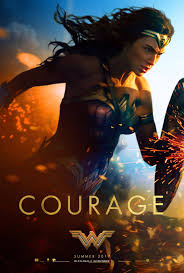
For a while I have been pondering whether to write a review of the newly released Wonder Woman, to peel back the layers of comic-book fun to reveal below the film’s disturbing and not-so-covert political and militaristic messages.

There is usually a noisy crowd who deride any such review with shouts of “Lighten up, it’s only a movie!” – as though popular culture is neither popular nor culture, the soundtrack to our lives that slowly shapes our assumptions and our values, and does so at a level we rarely examine critically.

My argument is that this much-praised Gal Gadot vehicle – seemingly about a peace-loving superhero, Wonder Woman, from the DC Comics stable – is actually carefully purposed propaganda, designed to force-feed aggressive western military intervention, dressed up as humanitarianism, to unsuspecting audiences.

In short, this is straight-up propaganda for the military-industrial complex. It would have looked and sounded identical had it been scripted by a joint team from the Pentagon and the Israel Defense Forces.

My reticence to review the film has lifted after reading the latest investigations of Tom Secker and Matthew Alford into the manifold ways the U.S. military and security services interfere in Hollywood, based on a release of 4,000 pages of documents under Freedom of Information requests.

In their new book National Security Cinema, the pair argue that the Pentagon, CIA and National Security Agency have meddled in the production of at least 800 major Hollywood movies and 1,000 TV titles. That is likely to be only the tip of the iceberg, as they concede:

“It is impossible to know exactly how widespread this military censorship of entertainment is because many files are still being withheld.”

They write that their book “details how U.S. government involvement also includes script rewrites on some of the biggest and most popular films, including James Bond, the Transformers franchise, and movies from the Marvel and DC cinematic universes.”

The need for Pentagon toys

This isn’t just about minor adjustments, but wholesale collusion between film-makers and the military: “If there are characters, action or dialogue that the DoD [Department of Defense] don’t approve of then the film-maker has to make changes to accommodate the military’s demands. If they refuse then the Pentagon packs up its toys and goes home. To obtain full cooperation the producers have to sign contracts — Production Assistance Agreements — which lock them into using a military-approved version of the script.”

The fact that script-writers, producers and directors on these mega-budget pictures know their film may never make it into production if it does not get a thumbs-up from the Pentagon inevitably influences the choice of subjects, the political and military premises of selected films, and the story lines.

One movie, Countermeasures, was ditched after the military objected to a script that “included references to the Iran-Contra scandal … Similarly Fields of Fire and Top Gun 2 were never made because they couldn’t obtain military support, again due to politically controversial aspects of the scripts.”

One can imagine just how stringent the conditions imposed by the Pentagon must be, if it felt compelled to reject a movie like Top Gun 2, the sequel to the “flyboys with toys” killing fest that starred a young Tom Cruise.

The two authors add: “The documents also record the pro-active nature of the military’s operations in Hollywood and that they are finding ways to get involved during the earliest stages of development, ‘when characters and storylines are most easily shaped to the Army’s benefit’.”

Bad apples, not bad institutions

In addition, film-makers are pressured into changing scripts that suggest institutional or systemic problems in the U.S. security agencies.

The two authors observe that producer Jerry Bruckheimer has admitted that the script of the film Enemy of the State was changed under pressure from the NSA so that the wrongdoings at the heart of the film would be the responsibility of a single individual, not the agency itself.

“This idea of using cinema to pin the blame for problems on isolated rogue agents or bad apples, thus avoiding any notion of systemic, institutional or criminal responsibility, is right out of the CIA/DOD’s playbook,” they observe.

So not only are movies critical of U.S. and western politics and militarism almost certain to be off-limits for a big-budget production, but that void is certain to be filled by film proposals the studio is confident will win approval from the Pentagon, CIA and NSA.

And this is, of course, on top of the fact that the Hollywood money-men are themselves part of a larger globalized financial elite that depends on the proceeds of the homeland security industry, arms manufacturers and war profiteers. These financiers are certain to prefer funding films that support a neoliberal worldview at home and a neoconservative policy of warmongering abroad.

As Secker and Alford conclude: “In societies already eager to use our hard power overseas, the shaping of our popular culture to promote a pro-war mindset must be taken seriously.

Gal Gadot and the IDF

All of this is the context for deciphering the egregious propaganda in favor of western military violence, and the portrayal of peace-seeking as “appeasement”, that is Wonder Woman.

There has been plenty of guffawing at Middle East countries, including Lebanon, for seeking to ban Wonder Woman because it stars Gal Gadot, an Israeli beauty queen turned actress.

In fact, it is understandable that the Lebanese might object to a film heavily promoting Gadot as the world’s savior, given that she served in the Israeli army, one that brutally occupied parts of their country for two decades, until 2000, and continues to maintain a belligerent occupation of the Palestinians.

But there is also an undeniable irony to Gadot playing an Amazonian goddess who opposes the militarism of men, and cannot bear to see the suffering of children in war, when in real life she publicly cheered on the Israeli army’s massive bombardment in 2014 of the imprisoned population of Gaza, which led to the killing of some 500 Palestinian children there.

But more importantly, it is not just that Gadot, a former IDF soldier, is now the face of Wonder Woman; it is that the film’s superhero character too almost perfectly embodies the shared militaristic values of the IDF and the Pentagon. If there is one film whose script suggests it was jointly engineered by the Pentagon and Israeli army, it is Wonder Woman.

Hillary Clinton as Wonder Woman?

The film is set near the end of the First World War, a cataclysmic confrontation between two colonial powers, Britain and Germany, each trying to assert its dominance in Europe. The film-makers blur their focus sufficiently to gloss over the problem that there were no good guys in that “war to end all wars”. Instead in true Hollywood fashion, the First World War is presented simply as a prelude (or prequel) to the Second World War and the rise of the Nazis.

The Germans are murderous villains, while the British are the flawed – until Gadot shows them the error of their ways – defenders of humanity. In fact, the film prefers to cast the anti-German side as “Allies”, the humane members of the world community, represented by the U.S. – Chris Pine is the male lead and Gadot’s love interest – and a ragtag support group that includes a Scot, a native American, and a generic Arab, presumably symbolizing “moderate” Arab states like Saudi Arabia, Egypt and Jordan.

The British leadership is trying to find ways to make peace and bring the war to an end, but is stymied by an evil presence. A German super-general, Erich Ludendorff (Danny Huston), believes he can win the war decisively by developing a horrifying gas that will wipe out men, women and children, forcing the British to surrender on his terms. To demonstrate his power, he tests the gas on innocent villagers on the front lines in Belgium.

All of this might sound disconcertingly familiar to anyone who has been following the western media-scripted coverage that has for several years now been trying to promote more aggressive “humanitarian intervention” in Syria – and before that, in Libya and Iraq.

Is Ludendorff supposed to be Bashar Assad, the evil Syrian president who – as long as we discount the dissenting voices of some experts – has twice used the chemical weapon sarin against innocent civilians?

Are the British leaders, seeking a peace deal with the Germans, supposed to be those “appeasers” in the West who have stood in the way of “intervention” in Syria, blocking no-fly zones and bombing runs that could bring down the Syrian government?

And in an even more disturbing, if now outdated, parallel, given the film’s insistent identity politics, is Wonder Woman – the Amazonian who brings peace through overpowering military violence – a stand-in for Hillary Clinton? When the movie was in production, the filmmakers must have assumed it would be released as Clinton was enjoying her early months in office as the first female U.S. president.

The use of Wonder Woman to justify Clinton’s well-documented blood lust–the woman who laughed as “our rebels” murderously sodomized Libya’s Col Gaddafi, saying: “We came, we saw, he died” – would have proved timely had the U.S. election turned out differently.

War is Peace, Ignorance is Strength

Those who have not seen the film, and take it seriously as entertainment, may wish to skip this section, which includes a significant spoiler.

The source of man’s evil in Wonder Woman is the only surviving Greek god, Ares, who is hiding somewhere in the human world. Wonder Woman believes she can end all war and human suffering only if she can locate Ares and kill him – before he kills her.

No one in the human world, of course, believes Wonder Woman, and foolishly they dismiss her ideas as lunacy. And for a while Wonder Woman makes a terrible mistake in thinking the German Ludendorff (Saddam / Gaddafi / Assad) is Ares. It is late in the film that she discovers she has been on the wrong scent.

Humankind’s ultimate enemy is not Ludendorff, but the kindly Sir Patrick Morgan (David Thewlis), the British leader who has spent the entire film counseling for negotiations and peace with the Germans.

The ultimate evil, the wolves in sheep’s clothing, Wonder Woman finds, are  those among us who preach fraternity, compassion and turning the other cheek. They make possible the killing of the innocents.

Those who appear to care, those who seem to offer a route out of bloodshed and war – those who defeat the aims and threaten the profits of the military-industrial complex – are in truth nothing more than appeasers. Their efforts are certain, even intended, to lead to greater suffering.

Militarism, superior firepower, and an absolute belief in the justness of one’s cause, as Wonder Woman is reminded by her Amazonian tutors during her childhood Krav Maga training (Gadot was herself an Israeli army combat trainer) are the way to save mankind from the evildoers.

There is no time to delay, to stand back, to question or to negotiate. Wonder Woman is outraged by the dithering of the men around her. She wants to be at the front line as soon as possible, to kick ass.

“War is peace, freedom is slavery, ignorance is strength” – and all of it is good for business, the film Wonder Woman concludes in truly Orwellian fashion.

A veneer of identity politics

Of course, this story – like all effective propaganda – is supposed to work its magic at a subconscious level, where it cannot be interrogated by our reason and our critical faculties. But even so, a few critics – themselves enthusiastic liberal interventionists – seem to have intuited the movie’s message.

Perhaps not surprisingly, a reviewer with the clearest sense of how the film panders to the pro-war sentiments and identity politics of many liberals is the film critic of the conservative Washington Free Beacon.

Sonny Bunch applauds the way the film “highlights the need for the strong to intervene on behalf of the weak and the oppressed, and treats as villains quislings who sue for a peace that will bring only more destruction.

But he also understands how the film has been crafted to make its war-mongering more palatable to liberals. Wonder Woman, he writes, proves “you could slap an identity politics veneer on just about any neoconservative policy and progressives would lap it up. … Liberal interventionism is back, baby!”

Drooling from liberals

And sure enough, the community of largely liberal film reviewers has mostly drooled over Wonder Woman. Despite dire acting from Gadot, preposterous dialogue and a risible screenplay, the film has racked up an astounding 92 percent approval rating from critics on the review aggregator website Rotten Tomatoes.

Here is a brief selection of their assessments:

Dana Stevens, of Slate: “This is a movie about battling evil that pauses to ask what evil is and whether it’s necessary to understand its nature in order to defeat it.”

Mick LaSalle, of the San Francisco Chronicle: “What lingers … is the feeling of hope that the movie brings, that it someday might be possible for female rationality to defeat male brutality.”

Richard Brody, of the New Yorker: Wonder Woman is “an entry in the genre of wisdom literature that shares hard-won insights and long-pondered paradoxes of the past with a sincere intimacy.”

A. O. Scott, of the New York Times: “Her sacred duty is to bring peace to the world. Accomplishing it requires a lot of killing, but that’s always the superhero paradox. … Unlike most of her male counterparts, its heroine is not trying to exorcise inner demons or work out messiah issues. She wants to function freely in the world, to help out when needed and to be respected for her abilities. No wonder she encounters so much resistance.”

The paradoxes of power

Wonder Woman grapples with the paradoxes of military power every American interventionist and Israeli patriot understands. To save the “beautiful children”, she must sometimes rush to intervene and kill with extreme prejudice, even if the other side’s children are among those who are sacrificed.

Wonder Woman wants to “function freely”: she must enjoy the right to go wherever her interests take her. She cannot be shackled by borders in her quest for justice. She is there to “help out” others in trouble, even if she alone gets to decide who needs help and what counts as trouble. And she needs “respect”, and is prepared to force others to accord it to her, through her superior strength if need be.

She will face “much resistance” because others are jealous of her power and her freedoms. They are the evildoers, and they must and will be defeated.

Is it any surprise that in the Hollywood-Pentagon-IDF world of Wonder Woman, the values of a female superhero sound exactly like those of the military men who run the West’s wars?

Now roll on “Wonder Woman 2: Time to Intervene (Humanely)”.
Saturday Matinee: Day of the Locust

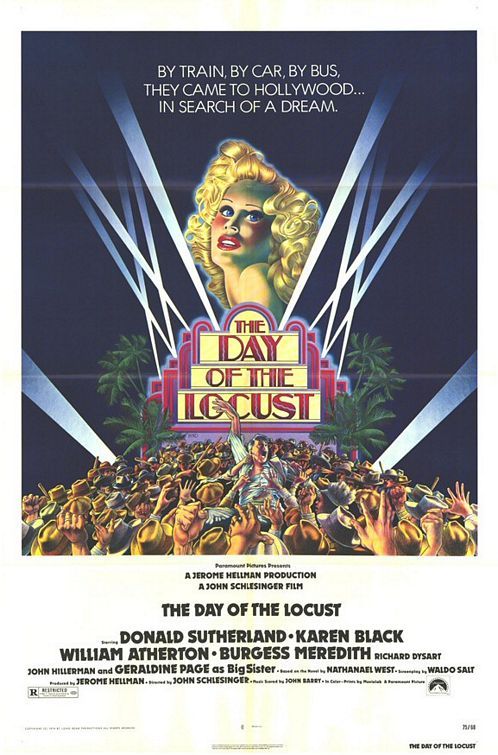
“The Day of the Locust” (1975) is a dark historical drama directed by John Schlesinger (Midnight Cowboy) with a screenplay by blacklisted writer Waldo Salt based on a novel by Nathaniel West. The plot follows aspiring art director Tod (William Atherton) who, after moving to Hollywood, becomes entangled in a community of desperate and deluded dreamers. The film’s exploration of the dark side of Hollywood and human nature is a likely influence on David Lynch’s Mulholland Drive.

Watch the full film here.

Stop Pretending the Rich Care About You

meryl-streep-poses-with-the-iron-lady-billboard-pic-getty-567547143

By Dr. Bones

Source: The Conjure House

One of the terrible things about being a lone bastion of bomb-throwing, fire-starting, up-against-the-wall-fascist-killing type of Anarchism is you have to mingle and jive with the enemy. Like a Seminole off the reservation and walking into the Hard Rock Casino for the first time your nerves and mind are almost assaulted by the sheer idiocy of what we call modern living. I speak of course of the fake empathy held by rich “left” liberals and their kin.

Take for instance the Meryl Streep acceptance speech, widely being lauded as…well, nobody really seems to say what it is besides some rich lady getting up on stage and talking about somebody she doesn’t like. Everywhere I look online the words “heroic” are being used, how the speech was “everything.”

Why?

Because some Hollywood actress who supported a widely acknowledged War Criminal feels salty that her personal team of bourgeoisie didn’t win an election? Because she “bravely” stood up at a catered event in a dress that cost more than you or I make in a month to tell other rich people how “persecuted” they were?

I heard the speech, actually sat down and watched it. No where is she saying that the United States is some fascist superpower, that we’ve fucked up the world and Donald Trump is set to make it even worse; she’s merely upset it’s not bombing the ever-living shit out of Syria with silk gloves on.

These people are not your goddamn comrades, they are not far away intellectuals that only need to read “the bread book” to figure out where they’ve gone wrong. These are the same people who RALLIED around a woman that called Black children “super-predators” for godsake!

These creatures, these slimy denizens of far off nooks and crannies filled with champagne and $100,000 fundraisers are absolutely wedded to the same system that produced Donald Trump in the first place. They are not looking to rock the boat, they are not feeling sorry for foreign-born people and outsiders when they declare anything not on TV as “fake news” from spooky ole’ Russia and casually muse how many megatons it might take to wipe Moscow off the fucking map.

How about that speech to a bunch of bankers where Hillary makes clear her support for a no-fly zone over Syria would end up turning its people into hamburger meat?

“They’re getting more sophisticated thanks to Russian imports. To have a no-fly zone you have to take out all of the air defense, many of which are located in populated areas.  So our missiles, even if they are standoff missiles so we’re not putting our pilots at risk—you’re going to kill a lot of Syrians.”

Where was the concern for foreign lives then?

Hollywood “care” for the most “at risk” is merely an act, a feigned empathy that is designed to make you forget that when push comes to shove they will make sure their money in tax-free offshore accounts stays safe rather than fund homeless shelters or soup kitchens.

They are as deceitful and treacherous as their cousins on the Right are stupid and violent. They are the Athenian merchants hailing their own empire while criticizing the growth of Sparta.

“Disrespect invites disrespect. Violence incites violence,” says Meryl, clutching her pearls amid other American aristocrats whose lives depend on the ongoing exploitation of millions. I looked twice to see if the fucking Romanovs or Marie Antoinette had possessed the woman but alas, she was spirit free. She is so out of touch she seems bewildered that anybody might disagree or even dislike the esteemed patricians she’s speaking to.

From where exactly does Meryl think the rage of the Red States comes from, their desire for change at any cost? Could it be the strip-mining of American manufacturing?

“The story changed dramatically in 2000. Since then, the U.S. has shed 5 million manufacturing jobs, a fact opponents of free trade mention often…

Since the 1960s, manufacturing has always paid substantially more than the minimum wage. Even today, the manufacturing jobs that remain average $20.17 an hour. That’s nearly three times the federal minimum wage.”

The fall in American standards of living?

“Today the average worker makes $8.50/hour — more than 57% less than in 1970. And since the average wage directly determines the standard of living of our society, we can see that the average standard of living in the U.S. has plummeted by over 57% over a span of 40 years.”

The obscene growth in CEO profits while Millennials earn less than their parents did?

“U.S. CEOs of major companies earned 20 times more than a typical worker in 1965; this ratio grew to 29.9-to-1 in 1978 and 58.7-to-1 by 1989, and then it surged in the 1990s to hit 376.1-to-1 by the end of the 1990s recovery in 2000. The fall in the stock market after 2000 reduced CEO stock-related pay (e.g., options) and caused CEO compensation to tumble until 2002 and 2003. CEO compensation recovered to a level of 345.3 times worker pay by 2007, almost back to its 2000 level. The financial crisis in 2008 and accompanying stock market decline reduced CEO compensation after 2007–2008, as discussed above, and the CEO-to-worker compensation ratio fell in tandem. By 2014, the stock market had recouped all of the value it lost following the financial crisis. Similarly, CEO compensation had grown from its 2009 low, and the CEO-to-worker compensation ratio in 2014 had recovered to 303.4-to-1, a rise of 107.6 since 2009.

“Single young people are getting poorer compared to the average population even those with dependent children, with stagnating disposable income and onerous living costs pressing down on prosperity.

New data accessed by the Guardian reveals that singletons aged 25 to 29 in eight rich countries – the US, UK, Australia, Canada, Spain, Italy, France and Germany – have become poorer over the last 20 years compared with the average population, and unattached young adults are finding it harder than ever to set up on their own.”

All facts conveniently left out of Meryl’s hard-hitting critique. The Left abandoned the working class for 50 years in favor of upper-middle class kids in college who spent more time dying their hair than reading Marx or even Stirner. NAFTA, a hellish neo-liberal agreement that looted Mexico to fatten the profits of American corporations, was drawn up not by some scary Republican tyrant but the “cool” Democrat and blowjob-aficionado Bill Clinton.

“During NAFTA, Mexico has had the slowest rate of economic growth than [with] any other previous economic strategy since the 1930s. From 1994 to 2013, Mexico’s gross domestic product per capita has grown at a paltry rate of 0.89 percent per year.” Additionally, “During NAFTA, Mexico’s economy grew much slower than almost every Latin American country. So to say that NAFTA has benefited the Mexican economy is also a myth. It has boosted trade and investment, but this has not translated into meaningful growth that generates jobs. One of the problems that NAFTA has generated is basically an exporting economy for transnational corporations, not for the Mexican industry per se.”

It turns out that not only did NAFTA, “flood Mexico with imported corn and cheap grains from the United States,” but “it also destroyed Mexico’s own industries,” according to Perez-Rocha.”

Where THE FUCK was Hollywood for that? For Libya? For Fast and Furious? For literally any of the ongoing despicable behavior this godforsaken Imperium has exported to millions of innocent human beings across the globe for the last eight fucking years?

Meryl Streep, and the millions of well-to-do liberals like her, want to live in a world where every McDonald’s is turned into a Panera, where every Wal-Mart blossoms into a Target. Sure you still work there, and you have no organizing rights and your pay is shitty, BUT at least your owners give money to gay charities and recycle!

Hooray ethical consumption! Never mind the suicide nets around those factories, did you know for every shirt you buy we’ll give $5 to help feed silverback gorillas? I mean, we don’t know how it works, and we can’t really say HOW we feed them but…but you can feel good about the shirt!

These people are only allies in the sense that they discredit our other enemies. Anybody that wants to shit on Donald Trump has my blessing but to pretend that they actually desire anything close to an increase in economic quality is a farce.

They are merely rich people that don’t want to feel guilty about being rich.

Don’t worry Meryl, as the US economy continues to take a shit and standards of living race to the bottom, more and more of us will be more than happy to help you overcome your feelings of guilt.

By seizing and redistributing the excesses that vex you so.


Gonzo journalism at no cost is my gift to you. Want to help keep me from starving to death or buy me a beer? Do me a favor and make a donation of any size and I’ll promise not to haunt you when I die.

Future Crimes

precrime-777x437

By John Steppling

Source: CounterPunch

“Precrime Analytical Wing: Contains the precognitives and the machinery needed to hear and analyze their predictions of future crimes.”

Philip K. Dick, Minority Report

“I must confess that over the past few years I have been gravely disappointed with the white moderate. I have almost reached the regrettable conclusion that the Negro’s great stumbling block in his stride toward freedom is not the White Citizen’s Counciler or the Ku Klux Klanner, but the white moderate, who is more devoted to “order” than to justice; who prefers a negative peace which is the absence of tension to a positive peace which is the presence of justice…”

Martin Luther King

“The intellectuals are the dominant group’s ‘deputies,’ exercising the subaltern functions of social hegemony and political government”.

Gramsci

There was a jaw dropping but not unexpected article at The Guardian this week. It was actually part of a series of pieces at that paper that have sought to manufacture a legacy for Obama, the outgoing president, since his actual legacy is one of imperialist foreign policy, CIA support of jihadists, right wing coups, and most acutely, perhaps, a massive subverting of free speech and civil liberties. What Robert Parry has called a ‘war on dissent’. The Guardian piece took the form of asking novelists, public intellectuals {sic} and TV hacks what they perceived to be Obama’s legacy — and even the use of that word, *legacy* is a loaded indicator of the direction this piece was headed. What struck me most was not the predictable support for Obama policy (more on that later) but the utter banality of the writing. There were writers in this group who I have admired (Richard Ford for one, Marilynne Robinson, as well) but the sentiments were so stupefyingly superficial, so fatuous and fawning that it was hard not to see this as a kind of mini referendum on the state of Western culture.

Joyce Carol Oates (for whom ten words is usually better than the right word) described Obama as…“Brilliant and understated, urbane, witty, compassionate, composed..”. Siri Hutsvedt (who honestly I had to look up…finding her most notable achievement was being married to Paul Auster) wrote…“For eight years, we have been represented by an elegant, well-spoken, funny, highly educated, moderate, morally upright, preternaturally calm black man”. Richard Ford wrote…“This cold morning, when I think about Obama, immersed in what must be a decidedly mixed brew of emotions – mixed about his deeds, mixed about his effects on the US, decidedly mixed about our future – I’m confident he is thinking, right to his last minute in the office, as the president, and not much about, or for, himself. That’s what I expected when I voted for him – that he’d be a responsible public servant who’d try to look out for the entire country.” I know, I know, but that’s what he wrote. Look it up if you don’t believe me. Perhaps this is what a career of University teaching does to one. Edmund White called him one of our great presidents (love the use of *our*).

Jane Smiley, who at the least mentioned TPP and drones, but ended with…“As a national leader, he has engendered more chaos, but it is necessary chaos – a loud and meaningful return to the question of what constitutes the real America.” A necessary chaos? The fuck does that mean? I ask that sincerely, sort of. By the time I reached the end of this saccharine mind numbing bathos I thought back to the 1968 Democratic Convention and to Esquire Magazine, in its golden era, who sent William Burroughs, Jean Genet, Terry Southern and John Sack to cover the convention. I thought back to Robert Bly and his organizing of Writers against the Vietnam war. The readings he gave with Galway Kinnell and Ginsburg, and a dozen others. And to the way Bly spoke of art and the role of art in a society. In an interview with Michael Ventura, around the time of the Iraq invasion…

Bly:I don’t think we believe that a Great Mother is lying to us. It’s a father who’s lying to us. Thee whole system, in a way, is a father system.Ventura: It’s a patriarchy, so it’s a father who’s lying.Bly: Exactly. And we eventually get the sense that our ownfather is lying to us. { } Whenever you have a culture completely run by grosscapitalism, all of the gods are driven away. Well, then what?What does that mean when those gods are not present?

Later Bly says…

“When I talk about the world being mad, I tell people,“You won’t believe how bad television is going to be in ten years.You’re going to literally have to protect your children from it.”And we’re not going to be able to change that. The only thingwe can do is recognize that it’s mad, and reach inside ourselvesand bring out our own genuine madness in the form of art,and then teach our children to do the same.”

In 68, a corporate owned magazine, and hardly a socialist magazine, thought it reasonable to ask Genet or Burroughs to discuss a political convention. I mean even Norman Mailer wrote intelligently on Kennedy for Esquire, and Mailer isn’t exactly Gramsci. My point is, or I hope my first point, is that it is not always crucial to demand ideological analysis. For art’s radical nature is outside ideology. Just speaking from a radical perspective, an anti bourgeois perspective, can be enough. But in 1968 the U.S. still had artists. What artist could you invite today? What public intellectual? The Guardian picked Sarah Churchwell (who again, I’d never heard of) who wrote…

“The Obamas changed the rules for what it means to inhabit the White House, and not only because they were the first black family to do so. They were also the first modern family to do so, to be informal yet classy, upright yet kind, and, most important, themselves.”

That’s it then, just be yourself. But the lesson here, if there is one, is that the radical tradition in American life has been rendered invisible. Just as the history of labor and unions and strikes has been erased. There are plenty of great artists out there, actually. Tons of intellectuals, but they aren’t invited by corporate media. Was anyone from Black Agenda Report asked to comment? Or from, well, CounterPunch? Was Harry Belefonte asked? The manufacturing of an image of a culture, rather than an actual culture, is what organs of disinformation such as The Guardian are in the business of doing. And this is also what Hollywood does, of course. Look at the stuff that gets on in the flagship theatres of the U.S. What is the season at Lincoln Center? Does it matter? No, it really doesn’t. And running across all of this discussion is the question of class. In fact, that may be the most important aspect in all of this. The working class voice is erased. In total. And this is hugely significant. Even fifty years ago the stages of American theatres were filled by work from playwrights who did not have MFAs. Novels were written by criminals and outsiders. This is no less true, really, in the U.K. From Brendan Behan to Martin Amis is the road travelled. Now of course one can site exceptions to this, I think anyway. There are always celebrity outsiders, branded renegades. Usually this takes the form of a confessional. My time on oxycodone while writing Sit Coms. I was a teenage prostitute and was addicted to anti depressants, but then I found a higher power. But god forbid you express condemnation of the bourgeoisie. For that is the greatest of all crimes.

When I worked in Hollywood, I felt the class estrangement acutely. But I did get work and had some modest success. And I remember when a major cable producer of the era asked me, during a pitch meeting, for the names of writers I thought would be good to employ for an anthology series they wanted to put together. I said, well, Iceberg Slim (Robert Beck) and John Rechy. A silence fell on the room. I was very very naive. Hollywood today seems infested with lawyers, former political interns, and business school graduates. Most from Ivy league schools. And the world that is manufactured is one that reflects their class. And the effect this has had is to alienate the younger artists who do not come from affluent backgrounds. It has also normalized the a vision of the world that belongs to perhaps ten per cent of the population. The rest are strangers in their own land. Strangers to the official sanctioned culture. And in that sense, Hollywood has sort of merged with Madison Avenue.

The class divide is being starkly revealed this last few months. And it has also served to put in stark relief the real impetus of U.S. foreign policy (and to domestic policy, too, only not as drastically). After WW2 and the formation of the CIA, the shaping of a political intention was being finalized. This came from George Kennan and the Dulles Brothers. And Henry Kissinger was the premier exemplar of this thinking. Kissinger, who supported the Shah and his death squads in Iran, and chaired the Presidential Commission on Central America in the 1980s,(employing Ollie North) and which unleashed an unimaginable terror on that region, and who orchestrated the Pinochet coup in Chile to protect ITT and, as a side bar, to teach a lesson to any government not readily obedient. This has been the seamless and never changing foreign policy of the U.S. for seventy some years. Punish the disobedient (meaning anything smacking of socialism or any nation even the tiniest bit resistant to Western business) and to continue toward global hegemony, and at the same time perpetuating conflicts which make both defense contractors and giant service providers such as Halliburton a lot of money.

The U.S. has cultivated compliant nations (Australia, the U.K. most notably) to enforce its policy (think East Timor, Iraq and Libya et al) and now owns a complient organization with international standing: NATO. And NATO serves as a legitimizing international (sic) institution of pacification.

John Pilger writes…

“The other day, an Indonesian friend took me to his primary school where, in October 1965, his teacher was beaten to death, suspected of being a communist.
The murder was typical of the slaughter of more than a million people: teachers, students, civil servants, peasants. Described by the CIA as “one of the worst mass murders of the 20th century”, it brought to power the dictator Suharto, the west’s man. Within a year of the bloodbath, Indonesia’s economy was redesigned in America, giving western capital access to vast mineral wealth, markets and cheap labour. “

Stephan Gowans writes…

“The United States had waged a long war against Syria from the very moment the country’s fiercely independent Arab nationalist movement came to power in 1963. Assad and his father Hafez al-Assad were committed to that movement. Washington sought to purge Arab nationalist influence from the Syrian state and the Arab world more broadly. It was a threat to Washington’s agenda of establishing global primacy and promoting business-friendly investment climates for US banks, investors and corporations throughout the world.”

The rise of the neo cons, which rather officially began with Project for a New American Century (just prior to Bush Jr’s presidency) was really just an extension of that original plan for global domination. At that time this was articulated by a seething nearly hysterical hatred of the Soviet Union. And the structural aspect of this remains in place with today’s rabid and massive propaganda campaign directed at Putin. And indeed even on the left one hears the echoes of a Russophobic sensibility. It is as if these faux leftists can not allow a critique of U.S. imperialism (in Syria for example) without off handedly smearing Russia, too. One need only look at who is surrounding whom with military bases. And the same holds true, with slightly less hysteria, for China.

In 2012 Ed Herman, speaking in a radio interview, said

“…humanitarian intervention {has} been used strictly for the interests of the United States and other Western powers and Israel. Strictly. So there’s no intervention in Saudi Arabia or Israel or Yemen or Bahrain. There was none in Egypt…And there was Egypt, here you had a miserable dictator for decades, and then you had an uprising where a lot of people were being beaten and killed in the streets, and you never had Mrs. Clinton ever asking for any application of humanitarian intervention. Not once. Never. They’re getting away with the most unbelievable double standard imaginable.”

This is, none of it, new. And yet, despite the obvious record of Obama in furthering exactly this world vision, the liberal organs of *real* news continue to paint their revisionist narratives of American heroism and goodness. And it is breathtaking in a way to read this new class of quisling artist, the court eunuchs for the Democratic Party establishment. And Obama’s apparent anger and petulance belies, certainly, descriptions such as ‘preternaturally calm’, and ‘dignified’. But there is a thread of liberal guilt running through this as well. Obama’s race (and his perfect wife and kids — and one longs for Ron Reagan Jr or to go back to James Madison’s son John, and shit, even the Bush girls might be a relief from these Stepford children.) is the psychological glue for a visibly excessive adoration. And this is a white liberal class that is haunted, I suspect, in their heart of hearts, by the knowledge of their own privilege and that that privilege has resulted in oceans of blood, and the knowledge, if they were ever to question themselves, that they would sell out anyone to retain that privilege. They love Obama and Obama is black, therefore…etc.

As Ajamu Baraka noted

“In the face of the Neo-McCarthyism represented by this legislation and the many other repressive moves of the Obama administration to curtail speech and control information — from the increased surveillance of the public to the use of the espionage act to prosecute journalists and whistleblowers — one would reasonably assume that forces on the left would vigorously oppose the normalization of authoritarianism, especially in this period of heightened concerns about neo-fascism.
Unfortunately, the petit-bourgeois “latte left” along with their liberal allies have been in full collaboration with the state for the past eight years, with the predictable result that no such alarm was issued, nor has any critique or even debate been forthcoming.”

The openly Imperialist U.S. state has tortured, illegally kidnapped, and simply murdered both leaders of sovereign states as well as countless innocent victims. That Samantha Power’s motorcade in rushing through a village in Cameroon happened to run over a ten year old boy, and didn’t stop — this barely made the evening news at all (but hey, they did send the family fifteen hundred dollars by way of an apology). They have acted covertly to destabilize governments and have manufactured enemies at a rate that is staggering to contemplate. Obama’s tight relationship with the most odious autocratic and murderous country on earth, Saudi Arabia, speaks to the cynicism of the political elite.

And yet, the artistic communities by and large continue to focus on identity issues (once they have attended to their career moves and spoken with their agents), most of which affect their own class. The dire suffering of the poor makes good voyeuristic source material, but the segregation of classes is enforced zealously. Token exceptions are simply that.

How is it possible to become so alarmed by Trump, while supporting Democrats? Those millions on the street protesting the looming invasion of Iraq must have noticed that every single Democrat in government voted FOR the invasion (save for the honorable Barbara Lee). And yet here they all are wringing their hands in dismay that Hillary lost. Here they are constantly repeating the litanies of Trump evil and never noticing the crimes of earlier democratic presidents and administrations. So, yes Trump’s appointments are awful. But I refuse to even dig into that until a discussion of Obama’s appointments are dissected. First came Rahm Emanuel, former memeber of the IDF, all around thug and bully and lover of never ending war to help expand Israeli power. Penny Pritzker, heiress and elitist and friend to the 1%, or Robert Rubin or Tim Geithner (!!!) or Tom Daschle, the senator from Citibank. I’m just scratching the surface. Joe Biden and Hillary Clinton. The point is that I am coming to feel that almost any focus on Trump feels misplaced. Certainly now it does since he isn’t even president yet. The deconstruction of liberal Obama is far from complete and the propaganda apparatus is working overtime to rewrite not just recent history, but the present. And the anti Russian propaganda is so absurd, so transparent, that this feels far more important than the predictable stupidity of Trump. I mean Obama is massing troops near the Russian border. Obama is ramping up the building of purpose built navel bases near China. Obama is still looking to prosecute Chelsea Manning and every other whistleblower. And he is still signing draconian legislation to curb free speech and institutionalize legitimacy for the new McCarthyism. Talking about Trump is a form of forgetting. I can’t do it. And if there is an easier target for parody or even non parodic narrative than Donald Trump, I havent met them. And easy is never an act of rigorous self examination.

Thomas Bates writes, discussing Gramsci…

“Gramsci retained a skepticism towards these alienated fils de bourgeois, a
skepticism which was not, however, mere prejudice, but was an historical
judgment informed by the experience of the Italian labor movement. How was
one to explain the passing of entire groups of left-wing intellectuals into the
enemy camp? More precisely, how was one to explain the phenomena of socialists
entering into bourgeois governments and of revolutionary syndicalists
entering into the nationalist and then the Fascist movement? Gramsci viewed
these puzzling events as the continuation on a mass scale of the ‘trasformismo’
of the nineteenth century. The “generation gap” within the ruling class had resulted
in a large influx of bourgeois youth into the popular movements, especially
during the turbulent decade of the 1890’s. But in the war-induced crisis
of the Italian State in the early twentieth century, these prodigal children
returned to the fold…”

And Gramsci adds..

“The bourgeoisie fails to educate its youth (struggle of generations). The youth
allow themselves to be culturally attracted by the workers, and right away
they … try to take control of them (in their “unconscious” desire to impose
the hegemony of their own class on the people), but during historical crises
they return to the fold.”

White affluent self identifying liberals believe they are the decision makers. That is their destiny. They believe that. One must build a new culture. Not endlessly ratify a decrepit and atrophying one. One must stop perceiving *liberals* as being on the side of change. For they are not. Guy Debord began his situationist masterpiece (1967) by quoting Feuerbach, Preface to the second edition of The Essence of Christianity:

“But certainly for the present age, which prefers the sign to the thing signified, the copy to the original, representation to reality, the appearance to the essence… illusion only is sacred, truth profane. Nay, sacredness is held to be enhanced in proportion as truth decreases and illusion increases, so that the highest degree of illusion comes to be the highest degree of sacredness. “


John Steppling is an original founding member of the Padua Hills Playwrights Festival, a two-time NEA recipient, Rockefeller Fellow in theatre, and PEN-West winner for playwriting. Plays produced in LA, NYC, SF, Louisville, and at universities across the US, as well in Warsaw, Lodz, Paris, London and Krakow. Taught screenwriting and curated the cinematheque for five years at the Polish National Film School in Lodz, Poland. A collection of plays, Sea of Cortez & Other Plays was published in 1999, and his book on aesthetics, Aesthetic Resistance and Dis-Interest was published this year by Mimesis International.

Charlie Kaufman on Zombie Ants, Mind Control, and Consumerist Culture

By The Unknown

Source: High Existence

Charlie Kaufman has one of the most inventive and original minds in Hollywood. That’s probably why he has eluded mainstream success.

Mr. Kaufman is perhaps best known for writing the modern classic Eternal Sunshine of the Spotless Mind, for which he was awarded an Oscar for best original screenplay. He’s also the writer of Being John Malkovich, Adaptation, Anomalisa, and the writer-director of the little-known but brilliant Synecdoche, New York, which Roger Ebert named the “best film of the decade” (2000-2010).

In the words of fellow writer Jeremy Brock:

One of the few screenwriters to transcend his profession, Charlie Kaufman is responsible for some of the most unique, daring, and inventive screenplays in contemporary cinema. […] His films deal with identity, mortality, relationships, and the meaning or purpose of life. They are metaphysical, self-reflexive, hyper-aware, often using surrealist conceits to explore our fundamental anxieties. It is in this tradition of finding new, startling, and funny ways of exploring human psychology that Charlie Kaufman sits comfortably amongst the world’s greatest living writers.

Fans love him. Critics adore him. Mainstream audiences… ignore him.

And that’s a shame.

In a world filled with sequels, prequels, remakes, and reboots, creativity is dying in Hollywood.Worse than dying, I’d argue that creativity is being tied up, beaten, tortured, mocked, murdered, then thrown in a gutter and pissed on.

You could argue that I’m cynical.

You could also argue that I’m tired of being patronized by the regurgitated garbage Hollywood pukes up and tries to spoon feed us. We all know the difference between food and vomit, and Hollywood’s been steadily feeding us barf for the last ten years while distracting us with silly airplane noises like we’re babies.

But I’m getting sidetracked.

This isn’t about my personal disdain for Hollywood; this is about Charlie Kaufman’s views on consumerism, and Charlie Kaufman is much more polite, intelligent, and eloquent than I am.

I stumbled across a speech Charlie Kaufman delivered at a BAFTA lecture in 2011 and absolutely loved it.

Mr. Kaufman was supposed to deliver a speech about screenwriting, but gave the audience much more. The full speech covers a broad range of topics, but I spliced together a few of my favorites — Zombie Ants, Mind Control, and Consumerist Culture — and created the video below.

Watch and listen as Charlie Kaufman dissects and diagnoses the fallacies of our present-day culture, but rather than react with juvenile indignation (as I did in my brief rant earlier), he responds with poignant words of heartbroken yet hopeful wisdom.

Enjoy!

Saturday Matinee: Seances

443336726_1280x720

“Seances” is an experimental film project from Guy Maddin which began as an art installation piece shot in public over 18 days at the Centre Pompidou in Paris and over another 13 days at the Phi Centre in Montreal.  It’s intention is to mystically conjure long-forgotten stories of lost films from periods such as Hollywood’s silent era. Maddin invited the sad spirits of lost films to possess his assembled actors (including Mathieu Amalric, Charlotte Rampling, Udo Kier, and Geraldine Chaplin among others) and compel them to act out the old stories, while the spirit-photographer/director captured the precious narratives. The project’s website, which is currently the only way to view the project, randomly combines clips of the material in different combinations for every viewer creating a unique experimental short film that will never be seen again.

Watch it now here: http://seances.nfb.ca/

Govt-Hollywood Complex to Sell “Patriotic” Martial Law Lockdown in New Boston Bombing Films

qefgtrhy

By Berie Suarez

Source: Truth and Art TV

A massive wave of government propaganda is coming and the method of transmission will be Hollywood. Hollywood is one of the most important brainwashing tools to keep the masses ignorant of reality and government corruption. And as we’ve seen in the past, it is designed to reinforce numerous government lies the masses are supposed to believe. Whenever Hollywood releases a film endorsing a government narrative it usually represents the final phase of a false flag, staged event narrative being sold.

Remember what former CIA director William Casey said. Until EVERYTHING that everyone believes is a lie, the control system feels they are not done lying to you yet.

When it comes to propaganda Hollywood operates under a different set of rules as they have the liberty to fictionally represent a story under the guise of “entertainment” without having to be accurate about what really happened. A close look at this issue reveals how powerful and effective the Hollywood-Government complex is at cementing massive government lies in the psyche of the general public.

So it shouldn’t surprise us that it is being reported that Hollywood producers are in race to put out not one but two films about the Boston bombing hoax staged in April of 2013 featuring numerous crisis actors. One film “Patriots Day” will serve to not only reinforce the Boston bombing staged event but to glorify “lockdown” and deceive viewers into worshiping police and psychologically re-accepting that lockdown was necessary to catch the “bad guys”, thus serving to authenticate future lockdowns as necessary as well. Another film being scheduled for release this year “Boston Strong” is also based on the Boston bombing false flag event and the concept of heroism. Both films appear to correlate “strength” with obedience to lockdown as well as “patriotism” and obedience to lockdown, and both are psychological operations on the general public being likely secretly funded by the state.

So without any shame, the storyline behind Patriots Day admits the idea is to sell the manhunt against the Tsarnaev accused patsy brothers itself and the lockdown of Watertown which ensued. The lockdown itself seems to be the focus of the emotion and heroism in these movies more so than the overall false flag narrative which has been debunked and exposed on many levels.

The story of course, is told by lucky Ed Davis, the commissioner that just so happened to get a phone call right at the time of the pressure cooker detonation, and like lucky Larry Silverstein on 9/11 he wasn’t blown up. Davis was just as “lucky” as all those “Craft International” operatives clearly seen all over the place with suspicious backpacks and communicating suspiciously before during and after the explosion.

Commissioner Davis, who was right there are the marathon finish line and walked away to take a phone call moments before the blast occurred, played an integral role working with the FBI, Watertown Police Department, Boston Police Department, Massachusetts State Police and local first responders to track, identify and apprehend the suspected bombers. Their tactics included the use of sophisticated identity technology (they actually discovered the murderers acting differently than the crowd) and giving the historic order to put the city of Boston on lockdown as they rushed to catch the suspects.

The story is envisioned as an intense thriller, spanning the five-day search up to the infamous siege where Dzhokhar Tsarnaev was pulled from a boat in Watertown. Three lost their lives at the Marathon blast site, 264 were injured, and a police officer was killed and several injured in the shootout that ended in the death of Tsarnaev’s older brother, Tamerlan. The younger mass murderer is currently on trial. Victims were eulogized in a touching ceremony at Fenway Park, something that most certainly will be part of each of those feature films, including an unforgettable exhortation of defiance by Red Sox slugger David Ortiz.

This is a clever attempt to appeal to everyone’s emotional and “patriotic” feelings, 9/11 Bush Jr style, while selling them that martial law lockdown is somehow “patriotic” because it helped catch the bad guys.

“There is nothing more compelling than a real story populated by real heroes,” said CBS Films President Terry Press. “The team that we have assembled for this project is determined to give audiences a very personal look at what occurred during the days when the eyes of the world were on the city of Boston and how a group of contemporary patriots faced this crisis.”

Anyone who cares about truth, freedom, and morality should be outraged by this in-your-face propaganda. This also serves as a warning of things to come. Very likely they are rushing these two films because something is coming and they need to condition the masses for a major lockdown.

I’m calling for readers to help take a stand against “lockdown” now before it’s too late. I’m currently in the process of researching how to properly draft a petition that can be used broadly across the U.S. to demand that lockdown is criminalized as illegal, not to mention it’s an ineffective and unproven tactic for catching law breakers. If anyone wants to help and contribute to the process please do or by all means carry out the idea yourself.

This entire effort by the Hollywood-Government complex to expedite the production of these two films which will glorify lockdown should concern everyone. Ask yourself: Why are they moving so fast to glorify lockdown? And why now? I’m sure we’ll soon find out.

Weaponized Hyperreality: Social Engineering Through Corporate State Propaganda and Religion

2789bbece2d59ed130d9d0ee1aeea307

By Luther Blissett and J. F. Sebastian of Arkesoul

Perhaps no philosophical concept more aptly describes the current cultural milieu than hyperreality, characterized by wikipedia as “an inability of consciousness to distinguish reality from a simulation of reality, especially in technologically advanced postmodern societies.” The predominance of hyperreality comes at a time when people in power have never had more to conceal, distort and distract the population from while there’s never been more people who have more means and motives to stay distracted. This is evident in many aspects of contemporary life from corporate news narratives shaped by sponsors and “official sources”, increasingly absurd denials of the true state of the economy from (mis)leaders, widespread dependence on pharmaceuticals worsened by direct-to-consumer advertising and a sham drug war, fanatical worship of celebrities, to slavish acquiescence to fads and fashion. But most obvious is the increasing amount of time spent in front of screens whether for work, shopping, social media, education, self-expression, games, web content, or the exponentially growing volume of video entertainment. Though video games and web series are catching up, the primary narrative formats for cultural expression and transmission today are still television and film.

Struggling to retain their cultural/economic status in the face of increased competition while appeasing shareholders of their monolithic multinational corporate owners, large film and television studios are increasingly risk averse. This is glaringly apparent in the output of major studios which are for the most part the media equivalent of comfort food; familiar (formulaic), satisfying (crowd pleasing), full of empty calories (lacking intellectual/emotional complexity or challenging ideas) and generally bland in terms of content and presentation. On television this is commonly displayed through clichéd tropes, characters and situations while films are now more than ever driven by CGI enhanced spectacle. Both rely on repeating what has worked in the past and (for viewers of a certain age) appealing to nostalgia while pandering to current cultural trends.

Of course such strategies overlap, as there’s more than a few television programs that offer Hollywood style spectacle and big budget movies which imitate successful formulas in the form of adaptations, sequels, prequels, reboots, spin-offs, and mockbusters. In fact the majority of Hollywood’s summer blockbuster output is now comprised of such derivative and safe content predominantly in the form of fantasy and science fiction films.

The ideological motives and functions of cinema and other pop culture are manifold, but a major one is control and influence of mass audiences. We now know the US government has been doing it at least since the 1950s. According to a Church Committee investigation detailing Operation Mockingbird in 1976:

“The CIA currently maintains a network of several hundred foreign individuals around the world who provide intelligence for the CIA and at times attempt to influence opinion through the use of covert propaganda. These individuals provide the CIA with direct access to a large number of newspapers and periodicals, scores of press services and news agencies, radio and television stations, commercial book publishers, and other foreign media outlets.”

More recently, in 1991 the Task Force Report on Greater CIA Openness revealed the CIA “now has relationships with reporters from every major wire service, newspaper, news weekly, and television network in the nation,” which enables them to “turn some ‘intelligence failure’ stories into ‘intelligence success’ stories, and has contributed to the accuracy of countless others.” It also revealed that the CIA has “persuaded reporters to postpone, change, hold, or even scrap stories that could have adversely affected national security interests…” (Global Research, Lights, Camera… Covert Action: The Deep Politics of Hollywood)

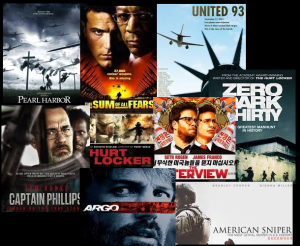
Government influence of culture factories such as Hollywood through covert infiltration or embedded advisors ensures that the end product reflects the values and behaviors they wish to promote (ie. xenophobia, deference to authority, nationalism, parochialism, narcissism, anti-intellectualism, consumerism, rapaciousness, etc). In some cases, most notably Zero Dark Thirty and United 93,  the goal is to cement an official narrative into the collective consciousness. A more sophisticated method of social engineering via Hollywood is predictive programming; presenting through media societal changes to be implemented by leaders in order to gradually condition the public and reduce resistance to such changes.

Manipulation of public sentiment through mass media also makes sense from a purely corporate perspective. Why wouldn’t media owners gear the ideological content of their products to support the systems they benefit from while screening out more critical messages? Occasional subversive content may get past the gatekeepers if it’s immediately profitable (which it sometimes can be if particularly resonant), can be co-opted in some way that serves the status quo, or if the creative minds behind it are particularly lucky, talented, and/or well connected. Regardless, one could argue uncritical media consumption is a form of pacification through distraction and escapism and all corporate media content are a result of calculating the highest return on investment, which more often than not reflects the culture’s most deeply ingrained values and myths.

This is particularly true for fantasy/sci film films, which have become ubiquitous for a number of reasons including cultural tastes of global demographics, aesthetic trends (eg. hyperreal CG effects for evermore spectacular imagery), impact of changing media technology on the economics of production and distribution, growing awareness of the value of properties belonging to rich fictional universes which can be mined by worldbuilding studio screenwriters, and in many cases, resonance with our increasingly dystopian world. Most fundamental is profitability, especially as sfx technology becomes more advanced and affordable, licensing opportunities increase, and film franchises that come with large and passionate built-in fan bases reduce the need for marketing and practically sell themselves.

Many who grow up immersed in geek culture already have a hyperreal relationship with fantasy and science fiction realms which heightens the nostalgia evoked by the stream of multimedia incarnations and product tie-ins (bolstered by cult-like fan communities). Is it any surprise that fans who’ve extrapolated on the “Jedi” concept from the Star Wars films turned it into a religion? The Jedi cosmology (and similar ones from countless sci-fi/fantasy films) are modeled on mysticism, a philosophical framework which could fill a void for spiritually deprived materialist cultures. For many people, comic book fandom is another safe and entertaining way to explore concepts that might otherwise be too “out there” (perhaps especially among those who share an equally strong interest in materialist science). At the same time, because of the influence of marketing, the greater role of technology in society and changing cultural trends, geek culture has become a larger part of mainstream culture. Combined with celebrity worship, the lure of technology (both on-screen and off), and increasingly omnipotent powers of multinational corporations, modern big budget sci-fi/fantasy films represent a confluence of potent socioreligious crosscurrents.

Recent works such as Christopher Knowles’s Our Gods Wear Spandex and Grant Morrison’s Supergods examine to an extent superheroes as modern mythological archetypes. Bill Moyer’s The Power of Myth explored how Joseph Campbell’s theory of the monomyth (or hero’s journey) influenced and shaped the Star Wars films (which itself has influenced myriad blockbusters since). In The Hero With a Thousand Faces, Campbell identified a story template used in almost all pre-modern cultures across the globe which goes something like this:

A reluctant “chosen one” in an ordinary world receives a call to adventure and warning of a danger that must be confronted. With the training and wisdom of a mentor the hero crosses the threshold into the unknown. Companions acquired along the way assist in overcoming a series of challenges and temptations until reaching the depth of their fears and resultant apotheosis or rebirth. This empowers them to achieve their goal and return triumphant to an admiring family/community/nation etc.

It’s not hard to see the attraction of narratives such as this which tap into primal emotional needs and can be found in a wide range of religious narratives such as the lives of Buddha, Christ, Muhammad and Rama among others. It also serves as a metaphor for spiritual/psychological journeys through life.

In a recent post on his Secret Sun blog, Christopher Knowles states “Myths grow out of times of crisis and upheaval, in one way or another. The current vogue for superheroes is a symptom of the powerlessness felt by a populace under assault by the realities of Globalist social engineering, war-making and economic redundancy.” I would add that myths can also be exploited to function as part of a cultural assault to perpetuate Globalist agendas. Authoritarians are all too eager to depict themselves as monomythic demigod saviors and/or those serving them as self-sacrificing rugged individualist heroes fulfilling their grand destinies.

In the same piece, Knowles concludes: “But myths do die. They aren’t immortal. The next war or wars may in fact sweep away the myths of the 20th Century entirely. The wars may send people reaching back to far older myths as civil wars can rekindle the bonfires of identity, sending people back to the myths of ancestors. This has always emerged in times of close conflict, particularly in conflicts seen as struggles against occupying powers.”

If he’s correct, there may be some hope for our culture to reclaim myths as a means of understanding reality rather than serve as a trapdoor to fabricated hyperreality. The problem is that there is a gap that needs “filling in” between reality and hyperreality. One of the many consequences of postmodernism is the complete blurring of the line between what is real and what is not. A sort of apathy has kicked in within the human psyche given that crushing truths, not easily discernable in the past, are all out there in the raw. Religious and scientific truths once held sacred can be easily discarded. Morality is a rare hobby in a generation both cynical and powerless to discern reality. This is as well due to globalism and technology, which serve as hubs for information retrieval that wasn’t readily available. Humanity has developed thicker skin, while at the same time widened the existential void left by a reality that is less and less objectifiable. Opinion makers are everywhere, information is ubiquitous, and the species is obsessed with being entertained while answers are readily manufactured in the shape of capital fetishes, all the while ideology that purportedly made a call for a “better and different” world, such as Marxism and psychoanalysis, has become both a haunting spectre and an empty promise.

In the past these formulae failed. In the future they seem more and more unlikely. Capitalism has adapted itself to revolutionary ideology. It has generated even more power from it, defusing the motivation for change and twisting the definition of revolution, all the while turning such concepts into brands. The irony. There is call for a “new objectivism”, however. A bet for a system reboot, in which categorical truths can be retrieved and argued from. The analogy is this: keeping what works and dismissing what doesn’t. Sounds like a simple and logical plan. The problem is that those who get to define what works and what doesn’t will be the powerful, uncanny minority. This is their game, and we have cynically accepted it. It is the way it is. Unless we can evolve from reality to hyperreality, and from hyperreality back into reality, as a species that learns, adapts, understands how high the stakes really are, and moves forward as a collective that is conscious and responsible of its flaws, it appears we are doomed. Three scenarios: first, the narrative will continue as is: the majority will continue to be repressed, and will perpetually seek escape by the hand that feeds until lost completely in hyperreality. Technology moves forward, religion condenses into inconvenient myth: we completely “plug in”. Then what? Well, you just have to see Her to see into this future. The second, war extinguishes civilization and winds back the evolutionary clock, think Mad Max, until we reach the first scenario, as if in a loop. The third and most bleak, nuclear war. The species ends.

What we learn from this exercise is that we are at the apex. This is it. The crushing truth of existence is firmly on our shoulders. War is unravelling. An ever-shrinking number of brands dominate the world. And an even smaller number of people call the shots. In between reality and hyperreality there is confusion. There is no longer a basis to discern between the two. We are as it were, lost. We need to fill in this gap. We need to dig deeper than ever before for a reason to dissolve our differences. Somehow the dilemma is set: surrender or die. But the crux of the problem can be overridden if we use the knowledge and tools we have to fight for a better, and more responsible alternative.