Transhumanism and the Philosophy of the Elites

By Danica Thiessen

Source: PANDA

In 2004, when Foreign Policy asked eminent scholar Francis Fukuyama to write an article answering the question, What is the world’s most dangerous idea?, he responded with a piece titled Transhumanism. Fukuyama argued that the transhumanist project will use biotechnology to modify life until humans lose something of their ‘essence’, or fundamental nature. Doing so will disrupt the very basis of natural law upon which, he believes, our liberal democracies are founded (Fukuyama, 2004). For Fukuyama, these losses lay unrecognised beneath a mountain of promise for a techno-scientific future of imaginative self-improvement. 

Currently, the Fourth Industrial Revolution, in which transhumanism plays a central guiding role, is shaping the policies of global corporations and political governance (Philbeck, 2018: 17). The converging technologies of this revolution are nanotechnology, biotechnology, information technology, cognitive sciences (NBIC), and artificial intelligence (Roco and Bainbridge, 2002). The political class and the new technology elite routinely tell us that ‘the age of AI has arrived’ (Kissinger et al., 2021). Simultaneously, modern humans have also become increasingly dependent on advanced technologies and the complex systems they enable. These changes have presented new challenges to old questions, namely: what does it mean to be human? And what future do we want for ourselves?

From the hype of super-intelligence to self-assembling nanobiology, the world can seem increasingly science-fictional. Contemporary technological society is “harder and harder to grasp”, is full of “disruptions…that move ever faster”, and is confronting us with “situations that seem outrageously beyond the scope of our understanding” (Schmeink, 2016: 18). 

This paper aims to further our critical engagement with an ideology that is emerging across influential sectors of society. With this aim in mind, I will make three essential arguments: Firstly, transhumanism is a movement based on a techno-scientific belief system that is striving towards the technological enhancement of biology and, in this regard, is self-consciously promoting bio-social engineering. Secondly, the technologies of transhumanism have the potential to bring tremendous financial and political gains to corporations and governments who are not incentivised to seek out nor address their potential dangers. Thirdly, the discontent towards transhumanism is diverse and comes overridingly from the threat to traditional values, nature-based ways of life, freedom, equality, and the loss of bodily autonomy to the will of those who operate these powerful systems. 

Much of the current scholarship on transhumanism focuses on the intellectual contribution of the movement, with minimal work assessing socio-political impacts. This neglect is worrying since, within the reality of global capitalism, transhumanism may be overridingly motivated by economic and political forces as it may be by ideology. Furthermore, perhaps only a minority of humans may be able to access certain NBIC technologies or utilise them for profits (McNamee and Edwards, 2006: 515).  Of course, the socio-economic ramifications may be culturally and politically disruptive in unanticipated ways. It is this overwrought relationship—of transhumanism, the global economy, profitable science, human nature, and traditional belief systems—that demand further critical examination.

Transhumanism: A brief history 

Transhumanism is a predominantly Anglo-American movement that has flourished since the 1980s in “American circles of science fiction fans” and with “computer experts and techno-geeks” (Manzocco, 2019: 36). Today, California’s Silicon Valley, with its culture of technological optimism and imaginative entrepreneurship, is the hub of transhumanist thought and innovation. Though scholars have noted that there is no single definition of transhumanism, the essence of transhumanist ideology is to use science and technology to re-design and re-shape the human condition away from randomness, imperfectability, and decay, towards order, perfectibility, and control (Bostrom, 2005: 14).

This ideology emerged in early 20th Century Britain. There is a clear continuity of ideas between current proponents of transhumanism and those who were writing before the Second World War of the potential of science to shape the trajectory of nature, while fostering international cooperation and governance. They included British scientists and thinkers such as Julian Huxley (credited with first using the word Transhumanism in the 1950s), his brother Aldous, and his grandfather Thomas Huxley, as well as their colleagues J.B.S. Haldane, H.G. Wells, J.D. Bernal, and Bertrand Russell. These influential thinkers and internationalists were writing and working on promoting political and scientific outlooks that would form the basis of a century of scientific transhumanist thought (Bostrom, 2005: 4-6; Bohan, 2019: 74-108). The subjects they explored still attract transhumanists today: behavioural conditioning, genetic control, technological augmentation, artificial foods and wombs, space travel, life extension, and total disease control. These and other themes circle around the assertion that nature, including human nature, operates optimally under scientific adjustment and management (Bohan, 2019: 99-100). 

Early transhumanists (or proto-transhumanists) viewed techno-scientific advancement as a cure for ‘primitive’ human nature (anger, violence, excess fertility), physical limitations (disease and possibly death), political ignorance, and international conflict. It was the Enlightenment ideal of mastery over nature, including human populations, that Aldous Huxley so aptly demonstrated in his dystopian novel, Brave New World. Huxley’s novel, written in 1931, illustrates a scientific dystopia where transhumanist aims (genetic engineering, anti-aging interventions, biotechnology and enhancement drugs) are used to manage society implicitly through pleasure rather than explicitly through force. Huxley’s depictions were based less on his prophetic abilities and more on his intimate knowledge of the possibilities of social engineering as discussed and promoted by the scientific minds with whom he mingled. His later essay, Over-population, surmises that his novel’s projections were “coming true much sooner than” anticipated (Huxley, 1960: 1). 

Notably, Aldous’s brother, Julian Huxley, also wrote about the ills of global overpopulation while promoting the genetic control (‘improvement’) of populations through eugenics (Hubback, 1989; Huxley, 1933). His 1957 essay, Transhumanism, claimed that man was the “managing director” of “evolution on this earth” (Huxley, 2015:12-13). He was very involved with Britain’s Eugenics Society for over three decades, serving as Vice-President and then President, as well as supporting “campaigns for voluntary sterilization…and for negative eugenics measures against persons carrying the scientific stigma of ‘mental defect’” (Weindling, 2012: 3). Julian Huxley was the first Director-General of UNESCO and founder of the World Wildlife Fund (Byk 2021: 141-142). In this role, he promoted the ideology of an international, scientifically-founded welfare state to further his aim of liberating “the concept of God from personality” because “religions as all human activities is always an unfinished work” (Byk, 2021:149), (Huxley, 1957:10). Julian Huxley’s work and writing envisioned an international social engineering project based on rational scientific management that promised to elevate humanity towards global peace (Sluga, 2010; Byke, 2021:146).

Philosophical and Spiritual Transhumanism: Towards a Technological Utopia

Transhumanism has a wide variety of interpretations, similar to how a major religion is expressed with a divergence of commitment, beliefs and motivations. In fact, many scholars consider transhumanism to be a novel, emerging religion with significant parallels to Christian eschatology (deGrey et al., 2022; O’Gieblyn, 2017). The vast majority of transhumanists do not accept a monotheistic ‘God’ or the moral restraints of traditional religions, but instead endow “technology with religious significance,” leading scholars to define it as “a secularist faith” (Tirosh-Samuelson, 2012: 710). 

While not all transhumanists partake in techno-spiritual views, transhumanists essentially view technology as the redemption for fallible biology. For some, these perspectives were inspired by the philosophical work of Pierre Teilhard de Chardin (1881-1955). Tielhard de Chardin was a palaeontologist and Jesuit who believed that a “worldwide network would be woven between all men about earth” and that a “God-like entity” would form from a future “conscious, collective, omniscient mind—the Omega Point” (Bohan, 2019:92). The concept of technological ‘transcendence’ has continued to be central to Transhumanism in conversations about the worldwide web, the Internet of Bodies, artificial intelligence, and the ‘Singularity’, which is the belief that human-machine intelligence will grow exponentially and reach a point where humanity will be thrust into a posthuman age (Bohan, 2019:96; Kurzweil, 2005). The belief that humans (or rather posthumans) can become immortal and ‘god-like’ in a future machine-dominated age—complete with astral travel and digital telepathic communication—is why, in its philosophical form, many scholars understand transhumanism as a techno-materialist religious movement. 

In an attempt to consolidate such a complex movement, transhumanist philosopher Nick Bostrom—current head of the Future of Humanity Institute at Oxford University, and transhumanism’s most legitimate academic—co-founded the World Transhumanist Association in 1998 (Bostrom, 2005:12-13). Out of this work, the Transhumanist Declaration was drafted. It consists of bold statements such as: Humanity will be radically changed by technology in the future. We foresee the feasibility of redesigning the human condition. The Declaration concludes with: Transhumanism advocates for the well-being of all sentience whether in artificial intellects, humans, posthumans, or non-human mammals. The Declaration makes it clear that transhumanism is an unprecedented social engineering project promoting the desirability of using “technology to push the boundaries of what it means to be human and to transcend our biological condition”, as described by Mark O’Connell, author of To Be a Machine (Mayor, 2018). 

Two American transhumanist philosophers who have worked, since the 1980s, to spread transhumanist ideas, are Max More and Natasha Vita-More. They are entrepreneurs in the cryonics industry, which deep-freezes human corpses (called ‘patients’) with the aim of future revival (McKibbin, 2019:184-185). Vita-More, in a recent interview, emphasised that the essence of transhumanism is, “a transition of being human-animal into becoming more mechanised using different devices and technologies to enhance humans into whatever they feel that they are.” This very Californian-esque promise of becoming ‘whatever you want to be’ could result in a more mechanised, or augmented, version of you. We already see the emergence of this new ‘becoming whoever you want’ phraseology in the popular acceptance of enhancement chemicals, biotechnology, and videogames. A pantheon of new technologies is on the horizon: exoskeletons, virtual reality, robotics, body-changing pharmaceuticals, remote-controlled nanotechnology, artificial foods, brain implants and synthetic organs. Adopting these technologies is a part of what Max More describes as becoming the Overhuman, otherwise known as the Posthuman: if you are Transhuman you are essentially a transitional human

In The Overman in the Transhuman, More attributes attitudes in transhumanism to Nietzsche’s philosophy, arguing that the overhuman is the “meaning-giving” concept meant to “replace the basically Christian worldview” of Nietzsche’s time (and, to a lesser extent, our times). More holds that the current “relevance of the posthuman” is that it ultimately gives meaning to scientifically-minded people” (More, 2010:2). In this influential paper, More asks the reader to “take seriously Nietzche’s determination to undertake ‘a revaluation of all values’” (More, 2010:3). Since a modern overhuman upgrade will depend on human gene editing and other biotechnology applications (such as Elon Musk’s Neuralink) becoming legally available, More’s call to ‘reevaluate values’ is understandable. Issues raised on both sides of the academic debate concern which values and traits would be genetically chosen, and to what extent human enhancement will be voluntary (Levin, 2018). 

While earlier Anglo-American eugenicists argued for the removal of anti-social genes by sterilisation, some modern transhumanist proponents have argued that moral bioenhancement, through selective gene editing, should become compulsory (Persson and Savulescu, 2008). Many notable transhumanists argue for procreative bioenhancement of offspring by the parents (Levin, 2018:38). Transhumanist advocates Ingmar Persson and Julian Savulescu believe moral enhancement should become obligatory like “education and water fluoridation,” since “those who should take them are least likely to be inclined” (Persson and Savulescu, 2008: 22). Transhumanist Niel Levy argues that “cognitive enhancement could be required,” much as vaccines currently are (Levy, 2013:38). Scholar Susan Levin writes that allowing a techno-scientific transhumanist vision to shape the “form that society takes” may lend itself to “socio-political requirements that would clash with…liberal democracy” (Levin, 2018:50). She also argues that when transhumanists use “public health analogies and reasoning” to “justify vigorous enhancement” they are putting into serious question their commitment to autonomy (Levin, 2018:48). In this way, the coercive vaccine mandates used during the Covid-19 pandemic can be interpreted as an early warning signal for how future bio-enhancements are likely to be accompanied by forceful moralistic and utilitarian arguments.

Ingmar Person, Julian Savulescu, and Niel Levy are prominent ethicists at the University of Oxford; all three advocate for mandatory genetic enhancement despite the trail of 20th century trauma wrought by grandiose social- and eugenic engineering projects. Does this suggest that a moral framework based on utilitarian arguments and flawed metaphysics remains fundamentally unchanged in public health governance since the last century? In his recent book God and Gaia: Science, Religion and Ethics on a Living Planet, scholar Michael Northcott argues that a growing “post-human agenda” has become central to policies around public health—referred to as “biosecurity”—which has very little to do with authentic “human health or health of the environment” (Northcott, 89). The consequences of this ideology became apparent during the recent mandating of the experimental gene-altering vaccines, and could represent what Northcott refers to as “automatism”. This is when we are culturally obligated to “use new technologies regardless of the possible consequences” because of a utilitarian ethic of the “managerial goal of efficiency” (Northcott, 2022: 114). To underestimate the suffering caused by one-size-fits-all public health measures is inadequate scholarship, yet despite this, only a minority of academics have openly questioned the use of coercive genetic therapy during the Covid-19 pandemic. 

A clash between individual rights and a movement that aims to “re-design the human condition” seems inevitable. In the words of transhumanist scholar Nick Bostrom, “human nature is a work-in-progress, a half-baked beginning that we can learn to remould in desirable ways” (Bostrom, 2005: 3). As the co-founder of the World Transhumanist Association, David Pearce said,

“…if we want to live in paradise, we will have to engineer it ourselves. If we want eternal life, then we’ll need to re-write our bug-ridden code and become god-like…only high-tech solutions can ever eradicate suffering from the living world”.DOEDE, 2009: 47

It is human nature that often comes into direct conflict with massive social engineering projects. Understanding transhumanism as a bio-social engineering project of unprecedented scale is a useful perspective in that it focuses the potential conflicts as value-based and ideological rather than as a direct result of specific scientific advances (Broudy and Arakaki, 2020). Furthermore, the term ‘social engineering’ is in itself inadequate, in that a utopia that aims to phase out Homo sapiens, while making way for the new, enhanced posthuman, is historically unprecedented (Bauman, 2010), and is possibly an energetic form of nihilism or an expression of ‘losing oneself’ to an intoxication with machine power, inspired by what scholars identify as “machine fetishism” (Geisen, 2018: 6). Yet, the surprising willingness to martyr one’s physical self to attain paradise has always been particular to our species (Pugh, 2017). 

Corporate Transhumanism: The Pursuit of Wealth and Power

In congruence with the scholarly work available, I have focused on the ideas of philosophical and academic transhumanists, but transhumanism is an ideology reaching far beyond discourse. Though under-discussed in the academic literature, the movement is advanced by corporate and political transhumanists, and transhumanist scientists. Massive corporate and state investment in NBIC technologies rely on specialised scientists working in the military, elite universities, and corporate laboratories to push the frontiers of reality with robotics, artificial intelligence and biotechnology (Mahnkopf, 2019: 11). These scientists are designing technologies with such potential that the world’s most powerful players, such as the Chinese Communist Party and the US Department of Defense (DOD), are deeply involved. In January 2023, Harvard University’s esteemed chemist Charles Leiber was on trial for lying to the DOD about his involvement with the Wuhan University of Technology over his work on “revolutionary nanomaterials.” In his Harvard laboratories, Leiber and his assistants have created nanoscale wires that can record electrical signals from neurons (Silver, 2022). Nanowire brain implants were designed by Leiber to “spy on and stimulate individual neurons” (Gibney, 2015:1). In an age where neurotechnology and mind-machine interfaces are changing the nature of warfare, the contested power-potential of transhumanist techno-science is quickly apparent (DeFranco, 2019).

The transhumanist vision for the future should not be viewed outside of the ‘technological arms race’ or a competitive, utilitarian mindset that informs business, war-making, and our cultural esteem of scientific research. This suggests that more research understanding corporate and political transhumanists is critical in analysing how this group is actively involved with determining humanity’s future. Political leaders with a sharp sense for power understand that machine intelligence and enhancement may determine the world’s winners and losers (Kissinger et al., 2021). As Vladimir Putin articulates: “Artificial Intelligence is the future, not only for Russia, but for all of humankind. It comes with colossal opportunities but also threats that are difficult to predict. Whoever becomes the leader in this sphere will become the ruler of the world” (Karpukhin, 2017). The elite fascination with transhumanist technologies concerns the potential power inherent in the technology itself—and in who creates and controls it. The influential historian and speaker, Yuval Noah Harari, expressed this view in his 2021 Davos Summit presentation where he said that technology “might allow human elites to do something even more radical than just build digital dictatorships. By hacking organisms, elites may gain the power to re-engineer the future of life itself. Because once you hack something, you can usually geo-engineer it.”

Harari is a frequently featured speaker at the World Economic Forum (WEF) and associated events. The WEF is currently acknowledged as one of the “most significant case studies of private authority with global impact” (Vincent and Dias-Trandade, 2021: 711). Criticised as being a “transnational elite club, with high media visibility” and a neoliberal “agenda-setting power,” the WEF can be understood as an “instrument for global geopolitical domination” (Vincent and Dias-Trandade, 2021: 711). At the very least, it is a forum where heads of state, CEOs of multi-billion-dollar companies, and academics who intelligently promote strategic values, are encouraged to collaborate and shape the global future. On WEF and other media collaborative platforms, Harari eloquently argues for humanity to “break out of the organic realms to the inorganic realm” with the creation of a new type of machine human so much more sophisticated than us that our current form will be more drastically different from it than “Neanderthals” or “chimpanzees” are from us today (BBC, 2016). Perhaps this epochal vision is received with welcome at the WEF because it boldly asserts a future dystopia for those who choose to ignore this high-tech revolution. It may act as a motivational warning to “acculturate” or “disappear.” 

Scholar Kasper Schiølin (2020) believes WEF agenda setting is accomplished through strategic political and corporate marketing and the discourse of “future essentialism” where the “fabrication of power” and of an inevitable global destiny is reinforced by “sociotechnical imaginaries” and “epochalism.” Future essentialism is the construct of narratives that use “historical analysis…speculative estimates…and hard statistics” to disseminate an idea of a “fixed and scripted…future” that can be “desirable if harnessed” but also “dangerous if humanity fails” to accept the vision. “Epocholism” is an attempt to capture “The Spirit of the Age” and promote a feeling that the current times are of unsurpassed historical significance. These strategies, Schiølin (2020:553) convincingly argues, are how the “WEF produces a moral-political universe around The Fourth Industrial Revolution (4IR).” Is it possible that these techniques can create a narrative of urgency, significance, and global opportunity that can persuade us (or our leaders) to participate in a transnational, transhumanist future?

Klaus Schwab is the founder of the WEF and the one responsible for conceptualising and promoting this revolution, which was announced in his 2016 book The Fourth Industrial Revolution. Schwab (2017) describes the 4IR as a social re-setting (named the ‘Great Reset’) enabled by “a range of new technologies that are fusing the physical, digital and biological worlds, impacting all disciplines, economies and industries, and even challenging ideas about what it means to be human.” Analyses of the 4IR conclude that the rate of technological change is supposed to “accelerate” and be “exponential”, covering the Internet of Things (IoT), AI, automation, genetic engineering of humans and natural biology, nanomedicine, smart cities (where sensors are embedded all over the environment), a sci-fi enabled military, and algorithms with political agency (Trauth-Goik, 2021: 3). 

Political scientist Klaus-Gerd Giesen convincingly argues that transhumanism is the “dominant ideology” of the 4IR, having become a “grand narrative” for politicians while “advancing the interests of multinational tech giants” (Geisen, 2018: 10). Giesen views this revolution as a “significant rupture in the evolution of capitalism” as well as the tradition of humanism, arguing that “transhumanist machinism” is “fundamentally anti-human—not least because the machine is by definition inhuman” (Geisen, 2018: 6). With global 5G networks, the Internet of Things and of Bodies, and the convergence of the NBIC technologies, the “body as market” (Geisen, 2018: 10), or what Céline Lafontaine defines as the corps-marché (Céline, 2014), is complete. The sheer mass of consumption will exponentially rise with marketable ‘smart’ products: “wearable tech, autonomous vehicles, biochips, bio sensors” and other new materials (Mahnkopf, 2019: 2). This is a materially focused future where consumer upgrades are baked into the system, so it’s no wonder that corporate monopolies such as Amazon, Apple, Facebook, Google, and Microsoft, the “new industrial kings” are actively promoting this revolution (Mahnkopf, 2019: 14).

In his book, Falter: Has the Human Game Begun to Play Itself Out?, the environmentalist Bill McKibben writes that, “the Silicon Valley tycoons are arguably the most powerful people on earth” (McKibben, 2019: 183). North American West Coast transhumanist visionaries are an avant-garde community of ultra-rich technologists, businesspeople and inventors who are idolised by the media and who collaborate extensively with the US State to advance their aims. Eric Schmidt illustrates the collaboration common between US State defence organs, academia, and giant technology corporations (Conger and Metz, 2020). With a net worth of $23 billion, Schmidt was the Executive Chairman of Google and is now the current Chairman of the National Security Commission on Artificial Intelligence (NSCAI) for the US Department of Defense, where he advised President Biden to reject a ban on AI-driven autonomous weapons (Shead, 2021). Schmidt believes that artificial intelligence will “govern society” and be “perfectly rational”, outdating and rendering useless human intuition and knowledge. As with most tech billionaires, Schmidt has set up a private charity, Schmidt Futures, and has so far donated a billion dollars towards his AI educational aims (Philanthropy News Digest, 2019). While he admits that he did not design Google to regulate ‘misinformation’ more effectively, censorship is increasing with the accelerated abilities of AI (working with humans) to moderate and remove content on the Internet (Desai, 2021).

Many of our most influential technologies come from programmes at the US Defense Advanced Research Projects Agency (DARPA). DARPA funds ‘blue sky’ technology research and is credited with inventing the Internet, GPS, virtual reality, and drones. The agency is now set on advancing human augmentation both in and off the battlefield, with the goal of mastering brain-computer neural-interfaces (Krishnan, 2016). Arati Prabhakar is the former head of DARPA, and Chief Science Advisor to President Biden. Prabhakar, like the prior head of DARPA, Regina Dugan, moves between working with technology companies in Silicon Valley and the US Department of Defense. Like most, she is enthusiastic about a transhumanist future of augmentation, and advocates for this as a matter of national security. And yet, she also admits that this “will bring surprises that we may not like. For generations we have thought about technologies that change our tools – but this is about technology that changes us.”  We already have ample evidence that our current technologies, particularly wireless devices and chemicals, are physically changing our human (and planetary) biology, but the aims of DARPA and the DoD are more ambitious and revolve around the complete mastery of evolution (including the human genome) and natural systems (including the human population) using technology (Carr, 2020). This is exemplified in the recent, far-reaching US Executive Order for Advancing Biotechnology, which states that “we need to develop genetic engineering technologies” to “write circuitry for cells and predictably program biology in the same way in which we write software and program computers.” The order states that this is to “help us achieve our societal goals.” These societal goals are central to what the White House identifies as the “bioeconomy” where “computing tools and artificial intelligence” will help us “unlock the power of biological data”, scale up production, and reduce “obstacles for commercialization” (Biden, 2022).

In March 2022 at the World Government Summit, Elon Musk, a self-identified transhumanist, and the world’s wealthiest individual, spoke bluntly from the podium. He announced that he sees the upcoming AI apocalypse as a human-extinction event. What is the solution? “We must all become cyborgs if we are to survive the inevitable robot uprising.” This may be marketing, since Musk’s Neuralink is poised to start human trials of brain implantable chips” (Neate, 2022). Radically enhanced human cognition should, Musk predicts, counterbalance the dangers posed by super-intelligent machines. If the richest man on earth prophesied a mass AI extermination event and an inevitable posthuman future from the platform of the World Government Summit, should we dismiss it as just another tech business strategy?

In her analysis of the 4IR, Birgit Mahnkopf (2019:2) writes that a “system of physical-to-digital technologies embodied in machines and equipment…would enable sensing, monitoring, and control of the entire economy.” This is occurring against a backdrop of increasing global inequality and centralisation of wealth. It is estimated that eight men own as much as half the monetary wealth of the other eight billion humans (The New York Times, 2017). Schwab and other elites understand the social and political implications of their technological ideology and the rules of the ‘winner-takes-all’ market economy that will continue to consolidate gains from disruptive technologies. Universal basic income and social credit systems (with a resource-based economy and central bank digital currencies, or CBDCs) are presented as solutions to managing popular resistance and social unrest. 

The WEF represents the fusion of transhumanist goals within global governance. As Schwab notes, the organisation has been very effective at ‘penetrating the cabinets’ of national governments. As Harvard scholar Kasper Schiølin (2020:549) astutely observes, the “4IR is justified as kings and emperors once justified their authority as divine and natural in uncertain times.” Hence, it may be that the potential problems from transhumanist ideologies come, not so much from the prospect of an AI take-over, but from the elites’ use of the culture and technologies of transhumanism. It may be that these risks overwhelm liberal democracies long before sentient AI does. 

The Discontents

Few intellectuals note the opposition to transhumanism better than the transhumanists themselves. Nick Bostrom writes that resistance comes from:

“Ancient notions of taboo; the Greek concept of hubris; the Romanticist view of nature; certain religious interpretations of the concept of human dignity and of a God-given natural order; Karl Marx’s analysis of technology under capitalism; various Continental philosophers’ critique of technology, technocracy, and the rationalistic mindset that accompanies modern technoscience; foes to the military industrial complex and multinational corporation; and objectors to the consumerist rat-race.”BOSTROM, 2005:18

Bostrom’s summary is a panorama of human expression, literature, thousands of years of culture, religion, philosophy and human meaning-making. Modern literature on philosophy, culture and technology, from Jacques Ellul, Jerry Mander, Neil Postman and Wendell Berry to Jürgan Habermas and Martin Heidegger, offer poignant critiques that are relevant to opposing transhumanist visions of the future, and remind us of the value of community, embodied wisdom, and traditions, and the effects of technological systems. The difference in writing styles is noteworthy: while pro-transhumanist writing tends to be utilitarian and have a tone of scientific authority, ‘bioconservatives’ will often use narrative, symbols, and a writing style considered traditionally beautiful in human culture. 

What is noticeable is that the opposition to transhumanism is broad, ill-defined and diverse. Nick Bostrom notes that “right-wing conservatives, left wing environmentalists and anti-globalists” are all pushing back against central transhumanist aims (Bostrom, 2005: 18). Firstly, there are the well-published intellectual and academic opponents that engage in a forceful scholarly debate with transhumanism over issues such as biotechnology, threats to liberal democracy, and scientific materialism (Leon Kass, 2000 and Francis Fukyama, 2003), and the environmental and social costs of transhumanism (Bill McKibbin, 2019). Also noteworthy are the bioethicists, George Annas, Lori Andrews and Rosario Isasi, who have advised making “inheritable genetic modification in humans a ‘crime against humanity’” (Annas, et al., 2002: 154-155). These scholars fear the posthuman potential for inequality and war, warning that, “the new species, or ‘posthuman’, will likely view the old ‘normal’ humans as inferior, even savages, and fit for slavery or slaughter…it is the predictable potential for genocide” (Annas, et al., 2002: 162).  The common factor amongst these academics is that they believe biological engineering (of humans) would be disruptive to values, rights, and equality, and would threaten liberal democracy itself. These men have been labelled bio-conservatives or, more dismissively, Neo-Luddites, for rejecting the legitimacy of a posthuman future (Agar, 2007:12).

The second group that is emerging as anti-transhumanist are the environmentalists, non-conformists, primitivists, and anarchists committed to Wild Nature with forceful anti-industrial sentiments. In North America, this includes elements of the Deep Green Movement (Bilek, 2021), represented by various writers, artists, activists, ecologists, organic farmers, herbalists and healers, forest-dwellers and hunter/gatherers, spiritualists, and various alternative people, off-grid or nomadic, who refuse to live within a mechanised, industrial system, and may intentionally attempt to sabotage it. As an eclectic group, they have significant influence over specific geographical areas, tend to identify with traditional local indigenous values, and deeply resent Western consumerist culture, war, global corporations, pollution, and industrial infrastructure (Tsolkas, 2015). Notably, some ecofeminists have written that biotechnology is a dangerous “extension of traditional patriarchal exploitation of women” in promoting the reshaping of natural human bodies (Bostrom, 2005: 18).

The third group that has rapidly developed increasing opposition to transhumanism is religious groups. Besides the Mennonite and Amish communities, who maintain ‘old world’ lifestyles across significant sections of the United States, there is a rising anti-transhumanist sentiment and increasing religious fervour amongst some Evangelical Christians across North America. The New York Times reported on the increasing politicisation of evangelical congregations, with defiant unifying songs that repeated, “We will not comply” in the chorus (Dias and Graham, 2022). The language these groups use to describe transhumanism is often symbolic, archetypal and apocalyptic, and understood as an epic battle between light and darkness. For example, speaker and writer, Thomas Horn, has been preaching about the dangers of transhumanism to Christian congregations for over a decade. His books have titles such as Pandemonium’s Engine: How the End of the Church Age, the Rise of Transhumanism, and the Coming of the Ubermensch (Overman) Herald Satan’s Imminent and Final Assault on the Creation of God. Suspicions of ‘Satanic technology’, and anti-transhumanist sentiments may have been a part of the reason why Evangelical Christians were the demographic most unlikely to cooperate with Covid vaccination mandates in the United States (Lovett, 2021; Porter, 2021).

The tragic situation in Ukraine suggests that ideologically-driven wars may increase with the growing animosity between religious and transhumanist world views, or this may be used in war propaganda. The Russian Orthodox Church, with well over one hundred million members, considers the invasion of Ukraine as a battle of light and darkness, with ‘Holy Russia’ fighting against an unholy NATO alliance (Klip and Pankhurst, 2022). The Church Patriarch, Kirill of Moscow, has taken a strong position against biotechnology—including “gene therapy”, “cloning” and “artificial life extension”—and views the Russian Orthodox Church as defending the traditional family against the liberalism of the West (Stepanova, 2022: 8). Addressing the leaders of Russia at the recent 24th World Russian People’s Council, the orthodox believer and philosopher Alexander Dugin proclaimed, “this war is not only a war of armies, of men…it is a war of Heaven against Hell…the Archangel Michael against the devil…the enemy came to us…in the face of LGBT, Transhumanism—that openly Satanic, anti-human civilization with which we are at war with today.” It may be that an influential number of religious Russians believe that they are not fighting against Ukraine at all, but rather rescuing it from the Satanic hold of the Transhumanist West (Siewers, 2020).

The fourth major group that is exhibiting overwhelming anti-establishment sentiments towards what is perceived as the ‘elites’ and their ‘transhumanist agenda’ are the politically and economically disenfranchised working classes and displaced farmers. Known in academic circles as ‘populists’ (Mazarella, 2019: 50), this group has recently displayed significant anger over extended ‘lockdowns’; losing the freedom to travel and to access decent healthcare (in the US); and experiencing unemployment and poverty. Their physically non-compliant behaviour, seen in mass demonstrations, notably across Europe and with the Canadian truckers, has been met with discursive and physical violence from increasingly irritated political leaders and media corporations. These ‘populists’ often reject transhumanism as an elitist ideology that they fear will lead to further loss of bodily autonomy, increased surveillance, political disempowerment, and a reduction of dignified employment to robots and automation (Mazarella, 2019: 130-134). These fears are not altogether unfounded since, according to the WEF, the 4IR is proposed to lead to significant worldwide job losses, perhaps up to 70% (Mahnkopf, 2019: 7). Steven Bannon, the instrumental ‘populist’ of Trump’s 2016 election force, uses religious polemics to rally resistance against what he sees as a rising transhuman globalist agenda. His popular show, the War Room, features broadcasts such as Descent into Hell: Transhumansim and the New Human Race. The outrage this group has towards 4IR transformations and transhumanism cannot be underestimated: within the US many working class families, though not all, also hold values of egalitarian weapons ownership, and their discourse exudes a willingness to engage in violent confrontation over threats to bodily autonomy (Sturm and Albretch, 2021: 130).

The United States’ most infamous anti-transhumanist/anti-technologist came, not from religious circles, but from within the radical environmental movement and academia. Theodore Kazcynski, a mathematical genius and professor at UC Berkeley, conducted an anti-technology terrorist campaign that spanned 17 years, killing three people and injuring 23 (Fleming, 2022). He blackmailed the FBI into publishing his 35,000-word thesis titled Industrial Society and its Future in the Washington Post and New York Times, which led to his capture. Since spending 25 years in solitary confinement, he has published volumes about how to conduct a revolution against the scientific elite. In one volume, The Anti-Tech Revolution: Why and How, he writes,

“The techies themselves insist that machines will soon surpass human intelligence and natural selection will favour systems that eliminate them (humans)—if not abruptly, then in a series of stages so that the risk of rebellion will be eliminated.”KAZCYNSKI, 2016: 79

Kazcynski reacted with terrorism to what he considered an existential threat posed by technology to humans and his greatest love, Wild Nature. His fear was a loss of freedom and masculine human nature, as well as the transformation of society into a controlled Brave New World, something he viewed as inevitable without a revolution (Moen, 2019: 3). In fact, it is arguable that the United States was already too similar to the Brave New World for Kazcynski, since he depicts “fighting industrial society” as “structurally similar to escaping a concentration camp” (Moen, 2019: 3).

Bill Joy, founder of Sun Technologies, authored an influential essay at the dawn of the 21st century, Why the Future Doesn’t Need Us, advocating for the relinquishment of developing “AI, nanotechnology and genetics because of the risks” (Joy, 2000). Interestingly, Joy argues for the legitimacy of Kazcynski’s logic about the threats of advanced technologies, despite Kazcynski having “gravely injured” one of his friends, a computer scientist, with a bomb. Parts of Kazcynski’s writing that shifted Joy’s views included the following: 

“The human race might easily permit itself to drift into a position of such dependence on machines that it would have no practical choice but to accept all of the machines’ decisions. As society and problems that face it become more and more complex and machines become more and more intelligent, people will let machines make more of their decisions for them…eventually a stage may be reached in which the decisions necessary to keep the system running will be so complex that human beings will be incapable of making them intelligently. At that stage, the machines will effectively be in control. People won’t be able to just turn the machines off, because they will be so dependent on them that turning them off would amount to suicide.”JOY, 2000: 48-49

This scenario is not too hard to imagine since it is quickly becoming our modern predicament. There is an implicit and explicit consensus in much transhumanist and anti-transhumanist thought, by Musk, Kazcynski, Joy and many others, that this phenomenon is leading, and will continue, to this logical end. The other scenario that Bill Joy quoted in his essay, again from Kazcynski, was:

“On the other hand, it is possible that human control over machines may be retained. In that case the average man may have control over certain private machines of his own…but control over large systems of machines will be in the hands of a tiny elite—just as it is today, but with two differences. Due to improved techniques the elite will have greater control over the masses; and because human work will no longer be necessary the masses will be ‘superfluous’, a useless burden on the system. If the elite is ruthless they may simply decide to exterminate the mass of humanity. Or if they are humane they may use propaganda or other psychological or biological techniques to reduce the birth rate until the mass of humanity becomes extinct, leaving the world to the elites.”JOY, 2000: 48-49

Interestingly, the scenarios do not seem mutually exclusive, at least for a time. 

Scholar Ole Martin Moen has noted similarities between Kazycinski, Nick Bostrom and Julian Savulescu in their projections of a future crisis (Moen, 2018: 5). Like Kazcinski, Bostrom has argued that transhumanist technologies expose humanity to a significant risk of eradication (Bostrom, 2019). Savulescu, also like Kazcyinski, argues in Unfit for the Future: The need for moral enhancement, that evolved human nature combined with transhumanist technologies will lead to catastrophic consequences (Persson and Savulescu, 2012). Kazcinski, who believed these outcomes were logical, reacted with violence because his highest ethic was one of authentic, uncontrolled freedom (Moen, 2018:5-6). His life is a warning that some human natures may be entirely incompatible with a techno-scientific future. In fact, the transhumanist vision of human extinction and a ‘posthuman’ future may actually promote anxiety and violence in some humans.

Conclusion

Martin Heidegger has warned that those who seek to use technology’s influence without realising the immense power that the technology has over them, are trapped into becoming extensions of machines rather than free actors. They are “framed like men with advanced computational devices into seeing all of reality as computational information” (Doede, 2009:49). For thousands of years, human existence and meaning-making has accumulated from “birth and death, flood and fire, sleep and waking, the motions of the winds, the cycles of the stars, the budding and falling of the leaves, the ebbing and flowing of the tides” (Powys, 1930: 73), and it seems fitting to question if our highly evolved human tissues and ‘natures’ are strengthened or undermined by advanced technology. Is it possible that human flourishing is encouraged by the ancient struggle with the limitations of our own animal natures, rather than by conforming to the constructs of complex technology? With transhumanism, who is in control and who benefits? 

It may be fair to say that transhumanism is a bio-social engineering project that ultimately concentrates power in machines, and humans who behave with machine-like characteristics. Large sections of the earth’s population, such as various religious groups, the working class, indigenous peoples, and other nature-based humans, may resent undemocratic announcements from forums like the WEF that, with the 4IR, industrialization is accelerating towards genetic engineering, robotic automation and virtual living. Furthermore, we may risk promoting an existential crisis and extreme reactions in those who dislike being told that the future belongs to the posthuman rather than to themselves and their offspring. It is a contested future and one that is entirely unwritten.  


References

Agar, N. (2007). Whereto transhumanism?: the literature reaches a critical mass. The Hastings Center Report37(3), 12-17.
Akhtar, R. (2022). Protests, neoliberalism and right-wing populism amongst farmers in India. The Journal of Peasant Studies, 1-21.
Annas, G. J., Andrews, L. B., & Isasi, R. M. (2002). Protecting the endangered human: toward an international treaty prohibiting cloning and inheritable alterations. American Journal of Law & Medicine28(2-3), 151-178.
Baumann, F. (2010). Humanism and transhumanism. The New Atlantis, 68-84.
BBC (2016) Yuval Noah Harari: “We are probably one of the last generations of Homo sapiens.” Available: https://www.bbc.com/news/av/uk-37171171
Bilek, J. (2021). The Gender Identity Industry, Transhumanism and Posthumanism. Deep Green Resistance News Service. Available: https://dgrnewsservice.org/resistance-culture/radical-feminism/the-gender-identity-industry-transhumanism-and-posthumanism/ 
Bohan, E. (2019). A history of transhumanism. Doctoral dissertation, Ph.D. thesis submitted for examination November 2018. Macquarie University.
Bostrom, N. (2005). A history of transhumanist thought. Journal of Evolution and Technology14(1).
Bostrom, N. (2005). Transhumanist values.  Journal of Philosophical Research30 (Supplement), 3-14.
Bostrom, N. (2019). The vulnerable world hypothesis. Global Policy10(4), 455-476.
Broudy, D., & Arakaki, M. (2020). Who wants to be a slave? The technocratic convergence of humans and data. Frontiers in Communication, 37.
Byk, C. (2021). Transhumanism: from Julian Huxley to UNESCO. Jahr: Europski časopis za bioetiku12(1), 141-162.
Carr, N. (2020). The shallows: What the Internet is doing to our brains. WW Norton & Company.
Céline, L. (2014). Le corps-marché. La marchandisation de la vie humaine à l’ère de la bioéconomie.
Conger, K., & Metz, C. (2020). ‘I Could Solve Most of Your Problems’: Eric Schmidt’s Pentagon Offensive. New York Times. Available: https://www.nytimes.com/2020/05/02/technology/eric-schmidt-pentagon-google.html 
DeFranco, J., DiEuliis, D., & Giordano, J. (2019). Redefining neuroweapons. Prism8(3), 48-63.
Desai, S. (2021). Misinformation is about to get so much worse. The Atlantic. Available: https://www.theatlantic.com/technology/archive/2021/09/eric-schmidt-artificial-intelligence-misinformation/620218/ 
deGrey, A., Bauman, W. A., Cannon, L., Checketts, L., Cole-Turner, R., Deane-Drummond, C., et al. (2022). Religious transhumanism and its critics. Rowman & Littlefield.
Dias, E., & Graham, R. (2022). The growing religious fervor in the American right: ‘This is a Jesus movement’. The New York Times. Available: https://www.nytimes.com/2022/04/06/us/christian-right-wing-politics.html 
Doede, B. (2009). Transhumanism, technology, and the future: Posthumanity emerging or sub-humanity descending?. Appraisal7(3).
Fleming, S. (2022). The Unabomber and the origins of anti-tech radicalism. Journal of Political Ideologies27(2), 207-225.
Fukuyama, F. (2003). Our posthuman future: Consequences of the biotechnology revolution. Farrar, Straus and Giroux.
Fukuyama, F. (2004). Transhumanism. Foreign policy, (144), 42-43.
Gibney, E. (2015). Injectable brain implant spies on individual neurons. Nature522(7555), 137-138.
Giesen, K. G. (2018). Transhumanism as the Dominant Ideology of the Fourth Industrial Revolution. Journal international de bioethique et d’ethique des sciences, (3), 189-203.
Hubback, D. (1989). Julian Huxley and eugenics. In Evolutionary Studies (pp. 194-206). Palgrave Macmillan, London.
Hughes, J. J. (2012). The politics of transhumanism and the techno‐millennial imagination, 1626–2030. Zygon®47(4), 757-776.
Huxley, A. (1960). Brave new world and brave new world revisited. Harper & Row, Publisher, Inc.
Huxley, J. (1933). What I Dare Think. Chatto & Windus.
Huxley, J. (1957). Religion Without Revelation.(New and Revised Edition.). Max Parrish.
Huxley, J. (2015). Transhumanism. Ethics in Progress6(1), 12-16.
Joy, B. (2000). Why the future doesn’t need us (Vol. 8, No. 4, pp. 47-75). San Francisco, CA: Wired.
Kaczynski, T. J. (2016). Anti-tech Revolution: Why and how. Fitch & Madison Publishers.
Karpukhin, S. (2017) Putin: Leader in artificial intelligence will rule the world. CNBC. Available: https://www.cnbc.com/2017/09/04/putin-leader-in-artificial-intelligence-will-rule-world.html 
Kass, L. R. (2000). Triumph or tragedy? The moral meaning of genetic technology. The American Journal of Jurisprudence45(1), 1-16.
Kass, L. R., & Kass, R. (2002). Human cloning and human dignity: the report of the president’s Council on Bioethics. Public Affairs.
Kardaras, N. (2016). Glow kids: How screen addiction is hijacking our kids—and how to break the trance. St. Martin’s Press.
Kilp, A., & Pankhurst, J. G. (2022). Soft, Sharp, and Evil Power: The Russian Orthodox Church in the Russian Invasion of Ukraine. Occasional Papers on Religion in Eastern Europe42(5), 2.
Kissinger, H. A., Schmidt, E., & Huttenlocher, D. (2021). The age of AI: and our human future. Hachette UK.
Krishnan, A. (2016). Military neuroscience and the coming age of neurowarfare. Taylor & Francis.
Kurzweil, Ray. (2005). The Singularity is Near. Penguin Books Ltd.
Levin, S. B. (2018). Creating a Higher Breed: Transhumanism and the Prophecy of Anglo-American Eugenics. In Reproductive Ethics II (pp. 37-58). Springer, Cham.
Levin, S. B. (2020). Posthuman Bliss?: The Failed Promise of Transhumanism. Oxford University Press.
Levy, N. (2013). There may be costs to failing to enhance, as well as to enhancing. The American Journal of Bioethics13(7), 38-39.
Lovett, I. (2021). White Evangelicals Resist COVID-19 Vaccine Most among Religious Groups. The Wall Street Journal. Available: https://www. wsj. com/articles/white-evangelicals-resist-COVID-19-vaccine-most-among-religious-groups-11627464, 601.
Mahnkopf, B. (2019). The ‘4th wave of industrial revolution’—a promise blind to social consequences, power and ecological impact in the era of ‘digital capitalism’. EuroMemo Group.
Mayor, S. (2018). Transhumanism: five minutes with… Mark O’Connell. British Medical Journal. (361:k2327).
Mazocco, R. (2019). Transhumanism—Engineering the Human Condition. Springer Praxis Books.
Mazzarella, W. (2019). The anthropology of populism: beyond the liberal settlement. Annual Review of Anthropology48(1), 45-60.
McKibben, B. (2019). Falter. Black Inc..
McNamee, M. J., & Edwards, S. D. (2006). Transhumanism, medical technology and slippery slopes. Journal of Medical Ethics32(9), 513-518.
Moen, O. M. (2018). The Unabomber’s ethics. Bioethics33(2), 223-229.
More, M. (2010). The overhuman in the transhuman. Journal of Evolution and Technology21(1), 1-4.
Neate, R. (2022) Elon Musk’s brain chip firm Neuralink lines up clinical trials in humans. The Guardian. Available: https://www.theguardian.com/technology/2022/jan/20/elon-musk-brain-chip-firm-neuralink-lines-up-clinical-trials-in-humans
Northcott, M. S. (2022). God and Gaia: Science, Religion and Ethics on a Living Planet. Taylor & Francis.
O’Gieblyn, M. (2017) God in the Machine: My strange journey into transhumanism. The Guardian. Available: https://www.theguardian.com/technology/2017/apr/18/god-in-the-machine-my-strange-journey-into-transhumanism 
Persson, I., & Savulescu, J. (2012). Unfit for the future: The need for moral enhancement. OUP Oxford.
Persson, I., & Savulescu, J. (2008). The perils of cognitive enhancement and the urgent imperative to enhance the moral character of humanity. Journal of Applied Philosophy25(3), 162-177.
Philbeck, T., & Davis, N. (2018). The fourth industrial revolution. Journal of International Affairs72(1), 17-22.
Philanthropy News Digest (2019). Schmidts Commit $1 Billion to Develop Talent for the Public Good. Available: https://philanthropynewsdigest.org/news/schmidts-commit-1-billion-to-develop-talent-for-the-public-good 
Porter, T. (2021) How the evangelical Christian right seeded the false, yet surprisingly resilient, theory that vaccines contain microchips. Business Insider. Available: https://www.businessinsider.com/how-evangelical-right-pushed-microchip-vaccine-conspiracy-theory-2021-9 
Powys, J.C. (1930). The Meaning of Culture. Jonathan Cape.
Roco, M. C., & Bainbridge, W. S. (2002). Converging technologies for improving human performance: Integrating from the nanoscale. Journal of Nanoparticle Research4(4), 281-295.
Schmeink, L. (2016). Dystopia, Science Fiction, Posthumanism, and Liquid Modernity. Biopunk Dystopias. Genetic Engineering, Society and Science Fiction. Liverpool: Liverpool University Press, 18-70.
Schiølin, K. (2020). Revolutionary dreams: Future essentialism and the sociotechnical imaginary of the fourth industrial revolution in Denmark. Social Studies of Science50(4), 542-566.
Shead, S. (2021) U.S. is ‘not prepared to defend or compete in the A.I. era,’ says expert group chaired by Eric Schmidt. CNBC. Available: https://www.cnbc.com/2021/03/02/us-not-prepared-to-defend-or-compete-in-ai-era-says-eric-schmidt-group.html 
Schwab, K. (2017). The fourth industrial revolution. Currency.
Siewers, A. K. (2020). Totalitarian transhumanism versus Christian theosis: From Russian Orthodoxy with love. Christian Bioethics: Non-Ecumenical Studies in Medical Morality26(3), 325-344.
Silver, A. (2022). What Charles Lieber’s conviction means for science. Nature601(7894), 493-494.
Sluga, G. (2010). UNESCO and the (one) world of Julian Huxley. Journal of World History, 393-418.
Stepanova, E. A. (2022). “Everything good against everything bad”: traditional values in the search for new Russian national idea. Zeitschrift für Religion, Gesellschaft und Politik, 1-22.
Sturm, T., & Albrecht, T. (2021). Constituent Covid-19 apocalypses: contagious conspiracism, 5G, and viral vaccinations. Anthropology & Medicine28(1), 122-139.
The New York Times (2017) World’s 8 Richest Men have as much Wealth as Bottom Half, Oxfam says. The New York Times. Available: https://www.nytimes.com/2017/01/16/world/eight-richest-wealth-oxfam.html  
Tirosh‐Samuelson, H. (2012). Transhumanism as a secularist faith. Zygon®47(4), 710-734.
Tolstoy, A., & McCaffray, E. (2015). Mind games: Alexander Dugin and Russia’s war of ideas. World Affairs, 25-30.
Trauth-Goik, A. (2021). Repudiating the fourth industrial revolution discourse: a new episteme of technological progress. World Futures77(1), 55-78.
Tsolkas, P. (2015). No system but the ecosystem: Earth first! and Anarchism. Available: https://anarchiststudies.org/no-system-but-the-ecosystem-earth-first-and-anarchism-by-panagioti-tsolkas-1/.
Vicente, P. N., & Dias-Trindade, S. (2021). Reframing sociotechnical imaginaries: The case of the Fourth Industrial Revolution. Public Understanding of Science30(6), 708-723.
Weindling, P. (2012). Julian Huxley and the continuity of eugenics in twentieth-century Britain. Journal of Modern European History10(4), 480-499.
Wells, H. G. (1940). The New World Order—Whether it is Attainable, How it can be Attained, and What Sort of World a World at Peace Will Have to Be. London: Seeker and Warburg.
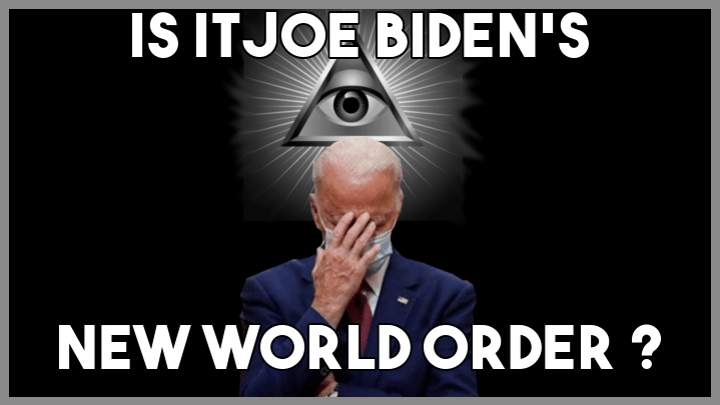
Is It Joe Biden’s New World Order?

By Iain Davis

Source: In This Together

Speaking at a White House business convention on 21st March 2022 the US President, Joe Biden, said:

We are at an inflection point, I believe, in the world economy [. . .] it occurs every three of four generations. [. . .] Now is a time when things are shifting, there’s going to be a new world order out there, and we’ve got to lead it and we’ve got to unite the rest of the free world in doing it.

This caused a bit of a storm because Biden, once again, used the term “New World Order” (NWO). We are told that there is no identifiable globalist project called the NWO. Apparently, the only people who think such a project exists are “conspiracy theorists.” These people are all antesemites, can’t be trusted and absolutely must not be heard, or something like that.

In his 1992 article for the Wall Street Journal titled, How I Learned To Love The New World Order, Biden spoke about “America’s proper role in the new world order.” His latest statement indicates that his concern lingers, on this occasion with good reason. The US position as nominal leaders of the NWO is under threat from Russia and China.

Politicians, oligarchs and other alleged “leading voices” keep talking about the NWO. Every time they mention it the mainstream media (MSM) immediately spring into action, eager to “dispel the myths” or “set the record straight”, defining the term for us. Why do they feel the need to keep doing this? Why are the establishment and their media so sensitive about the term “new world order?”

The NWO Is Not an Antisemitic Trope

The “new world order” is a phrase that gets flung around by all sorts of people for a variety of reasons. It is occasionally expressed in distinctly antisemitic terms.

Some people believe that the NWO is a “Jewish plot to enslave humanity.” Very few people, who have researched and studied the NWO, share this view. It is not supported by the evidence.

Nonetheless, the false allegations of antisemitism applied to anyone who talks about the NWO provides a very useful canard which “debunkers” consistently deploy. As the historian Prof. Antony C. Sutton pointed out in his exploration of Wall Street and The Bolshevik Revolution:

The persistence with which the Jewish-conspiracy myth has been pushed suggests that it may well be a deliberate device to divert attention from the real issues and the real causes. [. . .] What better way to divert attention from the real operators than by the medieval bogeyman of anti-Semitism?

The mainstream media (MSM) role is to confuse and mislead the public. They do not want the people to know what the NWO really is. They hide its history and generally deny its existence, but if that fails they will exploit the Holocaust to bolster their disinformation.

Antisemitism means “hostility to or prejudice against Jewish people.” That hostility and prejudice led to the Holocaust. Falsely accusing people of antisemitism, simply to undermine their arguments, dilutes its true meaning. Doing so shows a lack of respect for the victims of the Holocaust and a casual disregard for Jewish people and their history.

The MSM insist that when US Presidents talk about the NWO they are simply referring to changes in the behavioural norms, regulations and laws that broadly shape international relations. This may be the case, but that doesn’t alter the fact that the NWO has a precise historical meaning.

Given that it is a heavily charged term, is it likely that senior politicians, foreign policy strategists and national leaders would routinely use it unwittingly, without understanding what it means? Perhaps so in some cases but not in all. It is clear than many presidents, prime ministers and geoplitical experts have referred to the NWO in its proper context.

The Term “New World Order” As Propaganda

In a typical example of MSM disinformation, the UK’s Independent newspaper attempted to cover up Biden’s slip by trotting-out the usual denials and obfuscations. They claimed that Biden was simply referring to the “shifting sands of geopolitical relations.”

The Independent did not divulge the reality of the NWO to their readers. Instead it relied upon the tired slurs and allegations traditionally used to discredit those who discuss the NWO. The Independent alleged:

[P]ost-war paranoia tapped into much more ancient social anxieties about the possibility of shadowy secret covens engaging in evil [. . .] The Illuminati, the model for all subsequent sinister behind-closed-doors cabals feared by conspiracy theorist [. . .] traces its origins to the German Enlightenment of the 18th century. Belief in such a group plotting insurrection to realise its “new world order” first gained real prominence in the US among anti-government extremists in the 1990s. [. . .] The movement brings together American right-wing militant instincts with Christian fundamentalist doom prophecies [. . .] and has exploded over the last three decades in tandem with the growth of the internet. [. . .] Conspiracy theories have now become a form of mass entertainment on social media. [. . .] [Z]ealots, bored in lockdown during the pandemic, blended ancient anti-Semitic smears with quest narrative mythologies and pop cultural borrowings to worrying ends.

The so-called “newspaper” followed all of the state approved propaganda to the letter. Mixing genuine history—yes, the Illuminati really did exist—with total gibberish—there is no “movement” of NWO-exposing “extremists”—the Independent managed to fuse “conspiracy theory” with “right-wing” extremism and antisemitism. This is the standard approach to NWO denialism.

By linking the whole hodgepodge together, in a word-salad of misdirection and innuendo, the Independent were able to deliver their essential message: people who talk about the NWO do not trust government and questioning government can only lead to “worrying ends.”

The Independent didn’t offer any evidence to substantiate its conclusion, but informing readers wasn’t the point of the article. Claiming that NWO investigators are all antisemites who believe in “lizard men” allows the reader to safely discount the historians and geopolitical analysts, who have published NWO research, as crazy people.

According to the Independent, no one would even bother talking about the NWO were it not for the Internet. By claiming that questioning government policy online is “extremism,” the Independent offered its support for the government’s proposed censorship of the Internet.

Ironically, the best NWO historians published their work long before the Internet was invented. As pointed out, in one of the many contradictions in the Independent’s article, the NWO was a hot topic of conversation decades before we took to our keyboards and devices.

Introducing The New World Order

Contrary to the opinions of propagandists and debunkers, the NWO is a defined globalist project. The objective is to establish global governance. It was inaugurated more than 100 years ago and it has undergone numerous changes over subsequent generations.

While it wields immense political influence it is not “all powerful.” The NWO is tyrannical and oppressive by nature, hence the need for subterfuge and concealment. Its architects cannot simply enforce their dictatorship and expect to get away with it. We would resist, and if we did so in sufficient numbers there’s not much the NWO could do about it.

Therefore we need to be controlled by other means. Education, society, culture, economics, party politics, finance, applied psychology, behaviour modification, censorship, propaganda, war and crisis management are all used to manoeuvre us into accepting the NWO’s policy agendas. We persistently fall into this trap because we imagine our “elected” leaders are making the ‘big’ decisions: they’re not.

The New World Order (NWO) is an idea that was first proposed by Cecil Rhodes’ Round Table Movement. It was envisaged as a secret system of global governance led by an anglo trans-Atlantic alliance. It didn’t stay “secret” for very long.

Not only have politicians and the leaders of industry, commerce and finance frequently spoken about it, it has also been thoroughly exposed by historians and researchers. Perhaps most notably by Professors Carroll Quigley and Antony C. Sutton.

Even in the early 20th Century, when it was first devised, the concept of the NWO wasn’t a particularly novel idea. It was simply an attempt, by a Western hegemonic power-bloc, to establish global dominion. It is an extension of the age-old game of empires.

Rhodes’ NWO project was itself built upon pre-existing global power structures. The Venetian bankers and the other private enterprises, such as the British East India Company, had already surpassed nation states in terms of their resources, wealth and global political control. Rhodes’ vision was to convert this private financial power, which he possessed in abundance, into one, cohesive system of global rule.

The NWO model, which emerged after Rhodes’ death in 1902, immediately came unstuck. Rhodes was a British imperialist who, alongside his fellow Brits, bemoaned the loss of “their” American colony. The NWO was supposed to re-assert British control in the US, with the city of London ruling Wall Street. This is not how the US contingent viewed the burgeoning trans-Atlantic alliance and it is they who would soon come to the fore. Internecine struggles have been a consistent feature of the NWO throughout its history.

The NWO that Rhodes and his subsequent movement proposed was a hierarchical, compartmentalised, authoritarian structure. It was designed as a system of rings-within-rings.

It was led from the centre by “the Society of the Elect” who would oversee, and be protected, by the first ring of power called “the Association of Helpers.” Consecutive rings were then established, affording NWO control of financial institutions, multinational corporations, governments, intelligence agencies and militaries, etc.

Only the members of the “Society” and the “Association” had a full grasp of the entire NWO project. Conceptualisation of the whole system, among the members of each subsequent ring, progressively diminished as their positions moved away from the centre of power. NWO controlled assets, placed in key administrative, academic, military, media or political roles, only knew enough to be able to perform their required tasks and report accurately back to their handlers.

There’s Nothing “New” about the NWO

Tyrants have always sought to impose their authority upon as many people as possible. Just like Sumerian kings or Roman emperors, the leaders of the NWO sought exactly the same despotism, though on a grander scale. As technology has advanced the goal of centralised authority over a global governance structure has become more attainable.

While the manipulation and control techniques have advanced, the goal hasn’t changed. This ambition is as old as civilisation itself. There have always been people who wish to rule and many more who are content to be ruled.

Our collective obedience to authority guarantees tyranny. The NWO is by no means the first kleptocracy to have cultivated and exploited our compliance.

Like all the empires that preceded it, from its inception the proposed NWO was designed to take the form of a public-private partnership between government and an immensely wealthy “Superclass.” Often these individuals and family dynasties came from the world of international finance or banking, but leading industrialists and media moguls were also prominent.

They formed the hand behind the throne. As Prof. Quigley noted in 1966:

There really is a “world system of financial control in private hands” that is “able to dominate the political system of each country and the economy of the world.” [. . .] They now control every major international institution, every major multinational and transnational corporation both public and private, every major domestic and international banking institution, every central bank, every nation-state on earth, the natural resources on every continent and the people around the world through complicated inter-locking networks that resemble giant spider webs. [. . .] They were responsible for World War I, World War II, [. . .] They have created periods of inflation and deflation in order to confiscate and consolidate the wealth of the world. [. . .] This wealth is now being used to construct and maintain the World Empire that is in the last stages of development. [. . .] The chief architects of this new World Empire are planning another war—World War III—to eliminate any vestiges of political, economic or religious freedom from the face of the earth. They will then completely control the earth and its natural resources.

Elected politicians, and the governments they formed, were always the junior partners in this network. Many were hand picked for their malleability, predisposition to corruption or loyalty to the NWO project. With the intelligence and security agencies thoroughly co-opted, the deep state—the “state within the state” or “shadow state”—flourished.

The Party Political system was permitted because it ensured that electorates could never derail the NWO project. They could be placated with a misplaced sense of democratic oversight. Party politics also kept the masses occupied and distracted, leaving the NWO to get on with business unhindered .

Policy agendas were set and then political puppets were installed to sell the desired policies to the people, no matter who they voted for. Quigley explained the NWO’s approach to party based, representative democracy:

The argument that the two parties should represent opposed ideals and policies, one, perhaps, of the Right and the other of the Left, is [. . .] a foolish idea acceptable only to the doctrinaire and academic thinkers. Instead, the two parties should be almost identical, so the American people can ‘throw the rascals out’ at any election without leading to any profound or extreme shifts in policy.

The Leaders of the New World Order

The self-proclaimed leaders of the NWO are drawn from the so-called “Superclass.” Their only distinguishing attributes are immense private wealth, a ruthless willingness to act and an unshakeable belief in their divine right to rule.

The “old money” dynasties, sometimes referred to as the Black Nobility, have maintained their financial and monetary control for nearly a thousand years. They have been joined, in recent centuries, by banking families, industrialists and latterly the “new money” from the post WWII entrepreneurial, billionaire set.

The notion of a “Superclass” was proposed by Prof. David Rothkopf. As a member of the deep state think-tanks the Council on Foreign Relations (CFR) and the Carnegie Endowment for International Peace (CEIP), among others, Rothkopf was well positioned to be personally acquainted with the robber barons he eulogised:

We’re not looking at just the wealthy; we’re looking at power. And so, the definition that we used was people who influence the lives of millions across borders on a regular basis. [. . .] It’s a tiny, tiny fraction of the people of the planet Earth. [. . .] [T]he really defining characteristics of this group is the nature of the networks, that networking is the force multiplier in any kind of power structure[.]

The “people who influence the lives of millions across borders on a regular basis” have gone by many names. “The Rhodes Crowd,” “All Souls Group,” “the Cliveden set,” “the Pilgrims” and many more. Today we often refer to them as oligarchs, thought leaders or stakeholders. No one elected Rothkopf’s “Superclass” to power.

Their wealth is often inherited from their forefathers’ war profits, often it’s the product of nepotism or profits accrued from more recent military interventions. Others have enriched themsleves from the exploitation of slave labour, rigged markets, resource theft, the drug trade, financial crime or usury, etc. The “parasite class” is a more accurate description.

The New World Order Today

It isn’t clear if the “Society of the Elect” or the “Association of Helpers” still remain. What can be said is that the current global management network is a compartmentalised, authoritarian structures. Everything first proposed by Rhodes’ pilgrims remains on track and appears to be nearing completion.

The NWO has been through several iterations and has been re-marketed in different forms. The COVID-19 pseudopandemic has seen the World Economic Forum’s Great Reset come to public attention. This is simply a new brand for the NWO as the WEF makes its bid to be the central pillar of the Global Public-Private-Partnership (G3P). The G3P represents the current management structure of the NWO.

The proposed operating system for NWO global governance is Technocracy. There are a number of key elements which, once installed, will end the last vestiges of human freedom and place the world’s population under the totalitarian control of the technocrats. In turn, the technocrats will serve the interests of the parasite class, not humanity.

Democracy will continue in name only, reassuring the masses for a while, in the form of a communitarian “civil society.” Government, working in partnership with private corporations, will encourage civil society groups to “debate” policies. Every single one of those policies will be pre-selected by the technocratic state (Technate). The apparent political choice will remain an illusion.

The global economy is currently being transformed as new markets are created. As outlined in the 1992 UN Agenda 21 document (section 8.41), the “basis for action” has already been established. A global accountancy system for all business will use stakeholder capitalism metrics to rate assets, ensuring “the integration of sustainability into economic management.”

The rating mechanisms, such as environmental, social and governance ratings (ESG’s), will enable centralised global economic planning. It will determine which ventures receive or do not receive investment. Favoured corporate partners within the G3P will do very well, as long as they promote G3P goals. Those who don’t will go bankrupt without question.

The ratings system provides a “better measurement of the crucial role of the environment as a source of natural capital.” Natural Asset Companies will transform forests into ‘carbon sequestration services’ and natural water sources into ‘human settlement resource services,’ or some such thing.

By claiming that they own nature, the G3P will create new markets worth a projected $4 quadrillion. Thereby removing oil, as the base commodity of value, and replacing it with nature (natural assets). This transformation is called “sustainable development.” It has nothing to do with environmentalism or combatting “climate change.”

The notion of uniting all of humanity to work together to solve the “climate crisis” is a contrivance to facilitate global governance. It was fabricated in the late 1980’s and early 1990’s by the globalist think-tanks that set the world’s policy agendas.

The Club of Rome, the think-tank which greatly influenced the nascent WEF, took credit for imagining the perfect global crisis. In their 1991 publications The First Global Revolution, on page 75 under the heading “the common enemy of humanity is Man,” the Club of Rome wrote:

In searching for a common enemy against whom we can unite, we came up with the idea that pollution, the threat of global warming, water shortages, famine and the like, would fit the bill. [. . .] All these dangers are caused by human intervention in natural processes, and it is only through changed attitudes and behaviour that they can be overcome. The real enemy then is humanity itself.

This statement expresses two of the parasite class’ core beliefs. The assumed legitimacy of their claim to rule, which enables them to imagine they have the right to “designate” a global enemy, and their shared commitment to population control. They herd us like cattle, as they decide how to change our attitudes and behaviour to suit their objectives.

The International Monetary and Financial System (IMFS) has also undergone a transformation. With the introduction of Central Bank Digital Currency (CBDC) it will be revolutionised. CBDC currency will be issued by central banks as their liability. They are solely responsible for that liability. CBDC will always be their money.

CBDC is electronic money, it is therefore programmable money. This means the central banks will have complete control over every unit of CBDC currency. Whether it is in your wallet or not, it is the central bank’s money and they will permit or deny every transaction you make with it.

For example, the decisions you currently make about where you travel have already been restricted by the global policy response to a fake pandemic. If CBDC is fully adopted, you will no longer have any choice at all.

CBDC will enable your central bank’s AI algorithm to decide where you can go and when. If CBDC becomes the only form of currency available to us, none of us, no matter how much money we think we have, will have any financial freedom.

In order for Technocracy to operate, every citizen must be continually surveilled and controlled by the state (Technate). The technology capable of doing this is already being distributed globally as part of the so-called Fourth Industrial Revolution (4ID).

The Internet of Things (IoT) will see every device that we use report that use back to the Technate’s data centres. The Internet of Bodies (IoB) will enhance the Technates ability to monitor us in real time. Combined with the Digital-ID, that every nation is rushing towards, the surveillance and control of every individual “global citizen” will be centrally managed at the global governance level.

The New World Order, under the current management structure of the Global Public-Private Partnership, is nearing completion. It is a truly global system of governance. There are no leading governments anywhere on Earth opposed to it. All are racing ahead to adopt it with equal enthusiasm.

The Way Forward For The NWO

With Russia’s recent military operation in Ukraine, it has been suggested by some that the Russian and Chinese governments are not prepared to accept the imposition of the NWO. We can only be guided by their major policy statements and their actions. If these are anything to go by, both governments are fully on-board with the NWO agenda.

Both Russia and China are absolutely committed to sustainable development, Digital ID, 4ID, COVID biosecurity and vaccine-passports. Russia is ahead of most Western nations with regards to CBDC and China has surpassed Russia, having already started to use CBDC on a significant scale.

On 4th February Presidents Vladimir Putin and Xi Jinping issued a joint statement on the future relationship between Russia and China. It read, in part:

Today, the world is going through momentous changes, and humanity is entering a new era of rapid development and profound transformation. [. . .] of the global governance architecture and world order. [. . .] The ongoing pandemic of the new coronavirus infection poses a serious challenge to the fulfilment of the UN 2030 Agenda for Sustainable Development. [. . .] In order to accelerate the implementation of the UN 2030 Agenda for Sustainable Development, the sides call on the international community to take practical steps in key areas of cooperation such as poverty reduction, food security, vaccines and epidemics control, financing for development, climate change, sustainable development, including green development, industrialization, digital economy, and infrastructure connectivity. [. . .] [We] will further increase cooperation in the development and manufacture of vaccines. [. . .] Russia and China intend to encourage interaction in the fields of public health, digital economy, science, innovation and technology, including artificial intelligence technologies [. . .] Particular emphasis will be placed on the fight against the novel coronavirus infection pandemic and economic recovery, digitalization of a wide range of different spheres of life.

There is no evidence to suggest that either Russia or China wish to derail the objectives of the WEF’s Great Reset. On the contrary, the evidence points towards Russia and China as perhaps the most enthusiastic and aggressive advocates for the NWO agenda. China is the world’s first Technate and Russia is a major WEF partner, most notably on cybersecurity.

Much has been made of the WEF’s decision to distance itself from Russia and sanctioned individuals. Notably this is a “temporary” freeze and smacks more of political expediency and PR, rather than any genuine severance.

There is no aspect of the NWO, G3P managed agenda that either Russia or China stand against. Their joint statement read like a Great Reset checklist.

Perhaps this is all a cunning deception. Part of a “secret plot” by Russia and China to fight the NWO. However, it looks far more like a pact between two powers bidding for political leadership of the NWO.

There is no doubt that the NWO was conceived as a project of Western based oligarchs. In the post WWII era it has bared its teeth on the geopolitical stage as the “international rules-based order.” This unipolar order, centred around the G7 group of nations, with the US led NATO alliance providing the muscle, has been dominant within the Global Public-Private Partnership (G3P).

Russia’s military intervention in Ukraine, and the G7/NATO alliance response to it, appears to be a watershed moment. Together, Russia and China are challenging the G7 clique with a BRICS based, G20 focused, multipolar model. It seems they are determined to seize primacy within the G3P management structure.

As a paid spokesperson for the G7 rules-based order, Joe Biden anxiously observed “there’s going to be a new world order out there, and we’ve got to lead it.” The US-led alliance’s problem is that Russia and China, in league with their BRICS partners, are pursuing exactly the same objective.

Smart Dust: A Tiny Part of What They’ve Got Planned For You

By Mickey Z.

Source: Dissident Voice

Thanks to corporate media, anything outside the accepted parameters of debate (e.g. CNN vs. Fox, NY Times vs. Wall Street Journal) is considered beyond the pale. Thus, when I wish to introduce you to what the transhumanists in charge have planned for you, by default, I sound like a fringe weirdo in a tinfoil hat. This highly efficient system keeps the rabble in line by encouraging each of us to do the enforcing of such censorship. We willingly limit our own access to information — in the name of “justice” or “science,” of course.

With that in mind, I offer you a 2-minute video on “smart dust” in the hope you have enough attention span and open-mindedness to focus that long:

Keep in mind that the above video is already five years old. In tech years, that might as well be a century. As far back as 2013, MIT was talking about “How Smart Dust Could Spy On Your Brain.” Smart dust (or “neural dust”) is already here, already in use, and will soon be a daily part of your life — whether you ask for it or not. Are you okay with that?

Smart Dust is comprised of “many small wireless microelectromechanical systems (MEMS). MEMS are tiny devices that have cameras, sensors, and communication mechanisms to transmit the data to be stored and processed further. They generally range from 20 micrometers up to a millimeter in size. They are usually connected to a computer network wirelessly and are distributed over a specific area to accomplish tasks, usually sensing through RFID (radio-frequency identification) technology.”

You can probably see what they’ve been given the nickname of “dust.” In fact, they can even be distributed via tiny, unmanned aircraft that would serve as crop dusters of sorts. Without being detected, they’d spray the virtually invisible motes over a large area and collect information that way. They are so small, you’d never know they were there — perhaps gathering info on you. How small? The prototype smart dust currently measures 0.8 millimeters x 3 millimeters x 1 millimeter can be only 1 cubic millimeter or less in size — possibly as small as 100 microns per side. 

Some of you, I’m certain, are already embracing this sci-fi kind of idea as yet another fine example of  “science.” Before you get too misty-eyed about such “progress,” please allow me to remind you that smart dust was developed by (surprise, surprise) the U.S. military. More specifically, it is the brainchild of the notorious DARPA — Defense Advanced Research Projects Agency. These are the same folks who brought you mind-control weapons, cyborg insects, synthetic blood, mechanical elephants, programmable shape-shifting matter, and so much more.

So, go back and re-read the details above and recognize how easily smart dust could be weaponized. Even better, accept the reality that step one (as always) was weaponizing smart dust. And now, digest the fact that those well-intentioned and good-hearted souls in the military want to implant smart dust inside you… for your own good, of course.

“Neural dust represents a radical departure from the traditional approach of using radio waves for wireless communication with implanted devices,” said Doug Weber, a DARPA program manager. “The soft tissues of our body consist mostly of saltwater. Sound waves pass freely through these tissues and can be focused with pinpoint accuracy at nerve targets deep inside our body, while radio waves cannot. Indeed, this is why sonar is used to image objects in the ocean, while radar is used to detect objects in the air. By using ultrasound to communicate with the neural dust, the sensors can be made smaller and placed deeper inside the body, by needle injection or other non-surgical approaches.”

I’ve already told you about the Internet of Bodies. And I’ve also already told you about the Pentagon’s openly-discussed plan to insert microchips inside us to “protect” us. With smart dust, they could just let the technology waft down from the sky and have you unknowingly inhale it. Why is no one talking about this? I ask you to re-visit my opening paragraph for that answer. To even talk about smart dust is to be dismissed as a “conspiracy theorist.” Once again, those in power have trained the public to do the policing for them. Somewhere, Goebbels is drooling.

All of the above has become easier to employ thanks to the pandemic. To explain that, we need to meet Klaus Schwab — the founder and Executive Chairman of the World Economic Forum (WEF), and author of a book called The Fourth Industrial Revolution. Here’s how the WEF explains this concept

The First Industrial Revolution used water and steam power to mechanize production. The Second used electric power to create mass production. The Third used electronics and information technology to automate production. Now a Fourth Industrial Revolution is building on the Third, the digital revolution that has been occurring since the middle of the last century. It is characterized by a fusion of technologies that is blurring the lines between the physical, digital, and biological spheres.

To repeat: “a fusion of technologies that is blurring the lines between the physical, digital, and biological spheres.” This is transhumanism. It’s an ideology that proposes that technology can and must “enhance” the human mind and body and they are already working to “prove” this theory. Men like Schwab believe we must connect the physical, digital, and biological domains via steps like “implantable technologies such as smart tattoos, smart dust, smart pills, and other implantable smart functionalities.” They want to turn your heartbeat into your digital ID. Schwab and his ilk also support work going on in areas like designing human genomes, and simulating, monitoring, or even influencing brain activity, both in medical and non-medical applications. (P.S. Elon Musk is also currently setting up a company that links brains and computers.) Click here to watch Schwab telling Charlie Rose about his plans to edit your genes. 

Most people would’ve probably cast a wary side-eye at such suggestions — until Covid-19. For 18 months, the powers-that-be have successfully scared the population into believing anything they decree. They’ve also coerced and manipulated billions into allowing novel nanotechnology to be injected into them without a second thought. Never mind thinking, the masses are lining up to serve as unpaid PR people for the experimental jab.

With such widespread and enthusiastic compliance, there seems to be little to stand in the way of Schwab, the World Economic Forum, DARPA, Big Pharma, and the transhumanist agenda. They are counting on you going along without asking too many questions. But there’s the catch. You still can demand and reclaim autonomy over your mind and body. For starters, all you need to do is a little self-loving homework to see what they have planned for you and then… just say no. Unless, of course, you’d prefer having your consciousness uploaded to the cloud

What I Know and Don’t Know about SARS-CoV-2 Virus

By Edward Curtin

Source: Behind the Curtain

After fifteen months of assiduous reading, study, observation, and research, I have come to some conclusions about what is called COVID-19.  I would like to emphasize that I have done this work obsessively since it seemed so important.  I have consulted information and arguments across all media, corporate and alternative, academic, medical, books, etc.  I have consulted with researchers around the world.  I have read the websites of the CDC, the World Health Organization, and government and non-government health organizations.  In other words, I have left no stone unturned, despite the overt or covert political leanings of the sources.  I have done this as a sociologist and writer, not as a medical doctor, although many of my sources have been medical doctors and medical studies.

My succinct conclusions follow without links to sources since I am not trying to persuade anyone of anything but just stating for the public record what I have concluded.  Life is short.  I am going to say it now.

  • I know that vast numbers of people have been hypnotized by fear, threats, and bribes to accept the corporate mainstream media’s version of COVID-19. I have concluded that many millions are moving in a trance state and do not know this. They have been induced into this state by a well-organized, very sophisticated propaganda campaign that has drawn on the human fear of death and disease.  Those behind this have no doubt studied the high incidence of hypochondriasis in the general population and the fear of an invisible “virus” in societies where belief in God and the spiritual invisible has been replaced by faith in science.  Knowing their audience well, they have concocted a campaign of fear and confusion to induce obedience.
  • I do not know but suspect that those who have been so hypnotized tend to be mainly members of the middle to the upper classes, those who have invested so much belief in the system. This includes the highly schooled.
  • I know that to lockdown hundreds of millions of healthy people, to insist they wear useless masks, to tell them to avoid human contacts, to destroy the economic lives of regular people have created vast suffering that was meant to teach people a lesson about who was in control and that they better revise their understanding of human relations to adjust to the new digital unreality that the producers of this masquerade are trying to put in place of flesh and blood, face to face human reality.
  • I know that the PCR test invented by Kary Mullis cannot test for the alleged virus or any virus and therefore all the numbers of cases and deaths are based on nothing. They are conjured out of thin air in a massive act of magic. I know that the belief that it can so test began with the unscientific PCR Corona protocol created by Christian Drosten in Germany in January 2020 that became the standard method for testing for SARS-CoV-2 worldwide.  I am sure this was preplanned and part of a high-level conspiracy.  This protocol set the cycle threshold (amplification) at 45 which could only result in false positive results.  These were then called cases: An act of fraud on a massive scale.
  • I do not know if the alleged virus has ever been isolated in the sense of being purified or detached from everything else aside from being cultured in a lab. Therefore I do not know if the virus exists.
  • I know that the experimental mRNA “vaccines” that are being pushed on everyone are not traditional vaccines but dangerous experiments whose long-term consequences are unknown. And I know that Moderna says its messenger RNA (mRNA) non-vaccine “vaccine” functions “like an operating system on a computer” and that Dr. Robert Malone, inventor of mRNA vaccine technology, says that the lipid nanoparticles from the injections travel throughout the body and settle in large quantities in multiple organs where the spike protein, being biologically active, can cause massive damage and that the FDA has known this. Additionally, I know that tens of thousands of people have suffered adverse effects from these injections and many thousands have died from them and that these figures are greatly underestimated due to the reporting systems.  I know that with this number of casualties in the past these experimental shots would have been stopped long ago or never started.  That they have not, therefore, convinces me that a radically evil agenda is under way whose goal is harm not health because those in charge know what I know and much more.
  • I do not know where this alleged virus originated, if it exists.
  • I know that from the start of this crisis, there was a concerted effort across the world to deny access to proven effective treatments such as hydroxychloroquine, steroids, ivermectin in a planned effort to vaccinate as many people as possible. This alone reveals an agenda centered not on health but on getting as many people as possible to submit to being vaccinated and controlled. Social control is the name of this deadly game.
  • I know that those pushing these vaccines – The World Economic Forum, the World Health Organization, the Gates Foundation, the Rockefeller Foundation, etc. – have a long history of wanting to drastically reduce the world’s population and that their promotion of eugenics under various names is very well known. I am convinced that the totally untested mRNA-type “gene therapy” is the key to their plan for population reduction.
  • I do not know if they will succeed.
  • I know they must be resisted.
  • I do not know why so many good people cannot see through this evil. I can only attribute it to having been seduced by a massive hypnotic propaganda campaign that has appealed to their deepest fears and will result in those fears being realized because they thought they were free. It is a great tragedy.
  • I know that all the statistics about cases and deaths “from” COVID-19 have been manipulated to create a fake pandemic. One of the most obvious proofs of this is the alleged disappearance of the flu and deaths from influenza. Only someone in a trance could fail to understand the absurd logic in the argument that this was the result of mask wearing when at the same time the air-born COVID-19 spread like wildfire until that stopped precipitously in January 2021 when a tiny number of people had been vaccinated.
  • I know there has been barely any excess mortality throughout all this.
  • I do not know where it will all end but hope against hope the growing opposition to this fraud will grow and defeat it despite the organized censorship that is underway against dissenting opinions. I know that when organized censorship on this scale takes place those behind it are afraid of the revelation of the truth. A simple understanding of history confirms this.
  • I know that the temporary reprieve the authorities have granted to their subjects will be followed by further restrictions on fundamental freedoms, the corona virus lockdowns will likely return, “vaccine” boosters will be promoted, and the World Economic Forum’s push for a Great Reset with a Fourth Industrial Revolution will lead to the marriage of artificial intelligence, cyborgs, digital technology, and biology with the USA and other countries continuing to slip into a new form of fascist control unless people across the world stand up and resist in great numbers. I am heartened by signs that this resistance is growing.
  • Finally, I know if the authoritarian forces win the immediate battle, someone will write a book with a title like that of Milton Mayer’s classic, They Thought They Were Free. It will be censored. Perhaps it will first be shared via samizdat.  But in the end, after much suffering and death, the truth about this evil agenda will prevail and there will be much weeping and gnashing of teeth.
  • We are in a spiritual war for the soul of the world.

Techno-Tyranny: How The US National Security State Is Using Coronavirus To Fulfill An Orwellian Vision

Last year, a government commission called for the US to adopt an AI-driven mass surveillance system far beyond that used in any other country in order to ensure American hegemony in artificial intelligence. Now, many of the “obstacles” they had cited as preventing its implementation are rapidly being removed under the guise of combating the coronavirus crisis.

By Whitney Webb

Source: Unlimited Hangout

Last year, a U.S. government body dedicated to examining how artificial intelligence can “address the national security and defense needs of the United States” discussed in detail the “structural” changes that the American economy and society must undergo in order to ensure a technological advantage over China, according to a recent document acquired through a FOIA request. This document suggests that the U.S. follow China’s lead and even surpass them in many aspects related to AI-driven technologies, particularly their use of mass surveillance. This perspective clearly clashes with the public rhetoric of prominent U.S. government officials and politicians on China, who have labeled the Chinese government’s technology investments and export of its surveillance systems and other technologies as a major “threat” to Americans’ “way of life.”

In addition, many of the steps for the implementation of such a program in the U.S., as laid out in this newly available document, are currently being promoted and implemented as part of the government’s response to the current coronavirus (Covid-19) crisis. This likely due to the fact that many members of this same body have considerable overlap with the taskforces and advisors currently guiding the government’s plans to “re-open the economy” and efforts to use technology to respond to the current crisis.

The FOIA document, obtained by the Electronic Privacy Information Center (EPIC), was produced by a little-known U.S. government organization called the National Security Commission on Artificial Intelligence (NSCAI). It was created by the 2018 National Defense Authorization Act (NDAA) and its official purpose is “to consider the methods and means necessary to advance the development of artificial intelligence (AI), machine learning, and associated technologies to comprehensively address the national security and defense needs of the United States.”

The NSCAI is a key part of the government’s response to what is often referred to as the coming “fourth industrial revolution,” which has been described as “a revolution characterized by discontinuous technological development in areas like artificial intelligence (AI), big data, fifth-generation telecommunications networking (5G), nanotechnology and biotechnology, robotics, the Internet of Things (IoT), and quantum computing.”

However, their main focus is ensuring that “the United States … maintain a technological advantage in artificial intelligence, machine learning, and other associated technologies related to national security and defense.” The vice-chair of NSCAI, Robert Work – former Deputy Secretary of Defense and senior fellow at the hawkish Center for a New American Security (CNAS)described the commission’s purpose as determining “how the U.S. national security apparatus should approach artificial intelligence, including a focus on how the government can work with industry to compete with China’s ‘civil-military fusion’ concept.”

The recently released NSCAI document is a May 2019 presentation entitled “Chinese Tech Landscape Overview.” Throughout the presentation, the NSCAI promotes the overhaul of the U.S. economy and way of life as necessary for allowing the U.S. to ensure it holds a considerable technological advantage over China, as losing this advantage is currently deemed a major “national security” issue by the U.S. national security apparatus. This concern about maintaining a technological advantage can be seen in several other U.S. military documents and think tank reports, several of which have warned that the U.S.’ technological advantage is quickly eroding.

The U.S. government and establishment media outlets often blame alleged Chinese espionage or the Chinese government’s more explicit partnerships with private technology companies in support of their claim that the U.S. is losing this advantage over China. For instance, Chris Darby, the current CEO of the CIA’s In-Q-Tel, who is also on the NSCAI, told CBS News last year that China is the U.S.’ main competitor in terms of technology and that U.S. privacy laws were hampering the U.S.’ capacity to counter China in this regard, stating that:

“[D]ata is the new oil. And China is just awash with data. And they don’t have the same restraints that we do around collecting it and using it, because of the privacy difference between our countries. This notion that they have the largest labeled data set in the world is going to be a huge strength for them.”

In another example, Michael Dempsey – former acting Director of National Intelligence and currently a government-funded fellow at the Council on Foreign Relations – argued in The Hill that:

“It’s quite clear, though, that China is determined to erase our technological advantage, and is committing hundreds of billions of dollars to this effort. In particular, China is determined to be a world leader in such areas as artificial intelligence, high performance computing, and synthetic biology. These are the industries that will shape life on the planet and the military balance of power for the next several decades.”

In fact, the national security apparatus of the United States is so concerned about losing a technological edge over China that the Pentagon recently decided to join forces directly with the U.S. intelligence community in order “to get in front of Chinese advances in artificial intelligence.” This union resulted in the creation of the Joint Artificial Intelligence Center (JAIC), which ties together “the military’s efforts with those of the Intelligence Community, allowing them to combine efforts in a breakneck push to move government’s AI initiatives forward.” It also coordinates with other government agencies, industry, academics, and U.S. allies. Robert Work, who subsequently became the NSCAI vice-chair, said at the time that JAIC’s creation was a “welcome first step in response to Chinese, and to a lesser extent, Russian, plans to dominate these technologies.”

Similar concerns about “losing” technological advantage to China have also been voiced by the NSCAI chairman, Eric Schmidt, the former head of Alphabet – Google’s parent company, who argued in February in the New York Times that Silicon Valley could soon lose “the technology wars” to China if the U.S. government doesn’t take action. Thus, the three main groups represented within the NSCAI – the intelligence community, the Pentagon and Silicon Valley – all view China’s advancements in AI as a major national security threat (and in Silicon Valley’s case, threat to their bottom lines and market shares) that must be tackled quickly.

Targeting China’s “adoption advantage”

In the May 2019 “Chinese Tech Landscape Overview” presentation, the NSCAI discusses that, while the U.S. still leads in the “creation” stage of AI and related technologies, it lags behind China in the “adoption” stage due to “structural factors.” It says that “creation”, followed by “adoption” and “iteration” are the three phases of the “life cycle of new tech” and asserts that failing to dominate in the “adoption” stage will allow China to “leapfrog” the U.S. and dominate AI for the foreseeable future.

The presentation also argues that, in order to “leapfrog” competitors in emerging markets, what is needed is not “individual brilliance” but instead specific “structural conditions that exist within certain markets.” It cites several case studies where China is considered to be “leapfrogging” the U.S. due to major differences in these “structural factors.” Thus, the insinuation of the document (though not directly stated) is that the U.S. must alter the “structural factors” that are currently responsible for its lagging behind China in the “adoption” phase of AI-driven technologies.

Chief among the troublesome “structural factors” highlighted in this presentation are so-called “legacy systems” that are common in the U.S. but much less so in China. The NSCAI document states that examples of “legacy systems” include a financial system that still utilizes cash and card payments, individual car ownership and even receiving medical attention from a human doctor. It states that, while these “legacy systems” in the US are “good enough,” too many “good enough” systems “hinder the adoption of new things,” specifically AI-driven systems.

Another structural factor deemed by the NSCAI to be an obstacle to the U.S.’ ability to maintain a technological advantage over China is the “scale of the consumer market,” arguing that “extreme urban density = on-demand service adoption.” In other words, extreme urbanization results in more people using online or mobile-based “on-demand” services, ranging from ride-sharing to online shopping. It also cites the use of mass surveillance on China’s “huge population base” is an example of how China’s “scale of consumer market” advantage allowing “China to leap ahead” in the fields of related technologies, like facial recognition.

In addition to the alleged shortcomings of the U.S.’ “legacy systems” and lack of “extreme urban density,” the NSCAI also calls for more “explicit government support and involvement” as a means to speed up the adoption of these systems in the U.S. This includes the government lending its stores of data on civilians to train AI, specifically citing facial recognition databases, and mandating that cities be “re-architected around AVs [autonomous vehicles],” among others. Other examples given include the government investing large amounts of money in AI start-ups and adding tech behemoths to a national, public-private AI taskforce focused on smart city-implementation (among other things).

With regards to the latter, the document says “this level of public-private cooperation” in China is “outwardly embraced” by the parties involved, with this “serving as a stark contrast to the controversy around Silicon Valley selling to the U.S. government.” Examples of such controversy, from the NSCAI’s perspective, likely include Google employees petitioning to end the Google-Pentagon “Project Maven,” which uses Google’s AI software to analyze footage captured by drones. Google eventually chose not to renew its Maven contract as a result of the controversy, even though top Google executives viewed the project as a “golden opportunity” to collaborate more closely with the military and intelligence communities.

The document also defines another aspect of government support as the “clearing of regulatory barriers.” This term is used in the document specifically with respect to U.S. privacy laws, despite the fact that the U.S. national security state has long violated these laws with near complete impunity. However, the document seems to suggest that privacy laws in the U.S. should be altered so that what the U.S. government has done “in secret” with private citizen data can be done more openly and more extensively. The NSCAI document also discusses the removal of “regulatory barriers” in order to speed up the adoption of self-driving cars, even though autonomous driving technology has resulted in several deadly and horrific car accidents and presents other safety concerns.

Also discussed is how China’s “adoption advantage” will “allow it to leapfrog the U.S.” in several new fields, including “AI medical diagnosis” and “smart cities.” It then asserts that “the future will be decided at the intersection of private enterprise and policy leaders between China and the U.S.” If this coordination over the global AI market does not occur, the document warns that “we [the U.S.] risk being left out of the discussions where norms around AI are set for the rest of our lifetimes.”

The presentation also dwells considerably on how “the main battleground [in technology] are not the domestic Chinese and US markets,” but what it refers to as the NBU (next billion users) markets, where it states that “Chinese players will aggressively challenge Silicon Valley.” In order to challenge them more successfully, the presentation argues that, “just like we [view] the market of teenagers as a harbinger for new trends, we should look at China.”

The document also expresses concerns about China exporting AI more extensively and intensively than the U.S., saying that China is “already crossing borders” by helping to build facial databases in Zimbabwe and selling image recognition and smart city systems to Malaysia. If allowed to become “the unambiguous leader in AI,” it says that “China could end up writing much of the rulebook of international norms around the deployment of AI” and that it would “broaden China’s sphere of influence amongst an international community that increasingly looks to the pragmatic authoritarianism of China and Singapore as an alternative to Western liberal democracy.”

What will replace the US’ “legacy systems”?

Given that the document makes it quite clear that “legacy systems” in the U.S. are impeding its ability to prevent China from “leapfrogging” ahead in AI and then dominating it for the foreseeable future, it is also important to examine what the document suggests should replace these “legacy systems” in the U.S.

As previously mentioned, one “legacy system” cited early on in the presentation is the main means of payment for most Americans, cash and credit/debit cards. The presentation asserts, in contrast to these “legacy systems” that the best and most advanced system is moving entirely to smartphone-based digital wallets.

It notes specifically the main mobile wallet provider in India, PayTM, is majority owned by Chinese companies. It quotes an article, which states that “a big break came [in 2016] when India canceled 86% of currency in circulation in an effort to cut corruption and bring more people into the tax net by forcing them to use less cash.” At the time, claims that India’s 2016 “currency reform” would be used as a stepping stone towards a cashless society were dismissed by some as “conspiracy theory.” However, last year, a committee convened by India’s central bank (and led by an Indian tech oligarch who also created India’s massive civilian biometric database) resulted in the Indian government’s “Cashless India” program.

Regarding India’s 2016 “currency reform,” the NSCAI document then asserts that “this would be unfathomable in the West. And unsurprisingly, when 86% of the cash got cancelled and nobody had a credit card, mobile wallets in India exploded, laying the groundwork for a far more advanced payments ecosystem in India than the US.” However, it has become increasingly less unfathomable in light of the current coronavirus crisis, which has seen efforts to reduce the amount of cash used because paper bills may carry the virus as well as efforts to introduce a Federal Reserve-backed “digital dollar.”

In addition, the NSCAI document from last May calls for the end of in-person shopping and promotes moving towards all shopping being performed online. It argues that “American companies have a lot to gain by adopting ideas from Chinese companies” by shifting towards exclusive e-commerce purchasing options. It states that only shopping online provides a “great experience” and also adds that “when buying online is literally the only way to get what you want, consumers go online.”

Another “legacy system” that the NSCAI seeks to overhaul is car ownership, as it promotes autonomous, or self-driving vehicles and further asserts that “fleet ownership > individual ownership.” It specifically points to a need for “a centralized ride-sharing network,” which it says “is needed to coordinate cars to achieve near 100% utilization rates.” However, it warns against ride-sharing networks that “need a human operator paired with each vehicle” and also asserts that “fleet ownership makes more sense” than individual car ownership. It also specifically calls for these fleets to not only be composed of self-driving cars, but electric cars and cites reports that China “has the world’s most aggressive electric vehicle goals….and seek[s] the lead in an emerging industry.”

The document states that China leads in ride-sharing today even though ride-sharing was pioneered first in the U.S. It asserts once again that the U.S. “legacy system” of individual car ownership and lack of “extreme urban density” are responsible for China’s dominance in this area. It also predicts that China will “achieve mass autonomous [vehicle] adoption before the U.S.,” largely because “the lack of mass car ownership [in China] leads to far more consumer receptiveness to AVs [autonomous vehicles].” It then notes that “earlier mass adoption leads to a virtuous cycle that allows Chinese core self-driving tech to accelerate beyond [its] Western counterparts.”

In addition to their vision for a future financial system and future self-driving transport system, the NSCAI has a similarly dystopian vision for surveillance. The document calls mass surveillance “one of the ‘first-and-best customers’ for AI” and “a killer application for deep learning.” It also states that “having streets carpeted with cameras is good infrastructure.”

It then discusses how “an entire generation of AI unicorn” companies are “collecting the bulk of their early revenue from government security contracts” and praises the use of AI in facilitating policing activities. For instance, it lauds reports that “police are making convictions based on phone calls monitored with iFlyTek’s voice-recognition technology” and that “police departments are using [AI] facial recognition tech to assist in everything from catching traffic law violators to resolving murder cases.”

On the point of facial recognition technology specifically, the NSCAI document asserts that China has “leapt ahead” of the US on facial recognition, even though “breakthroughs in using machine learning for image recognition initially occurred in the US.” It claims that China’s advantage in this instance is because they have government-implemented mass surveillance (“clearing of regulatory barriers”), enormous government-provided stores of data (“explicit government support”) combined with private sector databases on a huge population base (“scale of consumer market”). As a consequence of this, the NSCAI argues, China is also set to leap ahead of the U.S. in both image/facial recognition and biometrics.

The document also points to another glaring difference between the U.S. and its rival, stating that: “In the press and politics of America and Europe, Al is painted as something to be feared that is eroding privacy and stealing jobs. Conversely, China views it as both a tool for solving major macroeconomic challenges in order to sustain their economic miracle, and an opportunity to take technological leadership on the global stage.”

The NSCAI document also touches on the area of healthcare, calling for the implementation of a system that seems to be becoming reality thanks to the current coronavirus crisis. In discussing the use of AI in healthcare (almost a year before the current crisis began), it states that “China could lead the world in this sector” and “this could lead to them exporting their tech and setting international norms.” One reason for this is also that China has “far too few doctors for the population” and calls having enough doctors for in-person visits a “legacy system.” It also cited U.S. regulatory measures such as “HIPPA compliance and FDA approval” as obstacles that don’t constrain Chinese authorities.

More troubling, it argues that “the potential impact of government supplied data is even more significant in biology and healthcare,” and says it is likely that “the Chinese government [will] require every single citizen to have their DNA sequenced and stored in government databases, something nearly impossible to imagine in places as privacy conscious as the U.S. and Europe.” It continues by saying that “the Chinese apparatus is well-equipped to take advantage” and calls these civilian DNA databases a “logical next step.”

Who are the NSCAI?

Given the sweeping changes to the U.S. that the NSCAI promoted in this presentation last May, it becomes important to examine who makes up the commission and to consider their influence over U.S. policy on these matters, particularly during the current crisis. As previously mentioned, the chairman of the NSCAI is Eric Schmidt, the former head of Alphabet (Google’s parent company) who has also invested heavily in Israeli intelligence-linked tech companies including the controversial start-up “incubator” Team8. In addition, the committee’s vice-chair is Robert Work, is not only a former top Pentagon official, but is currently working with the think tank CNAS, which is run by John McCain’s long-time foreign policy adviser and Joe Biden’s former national security adviser.

Other members of the NSCAI are as follows:

  • Safra Catz, CEO of Oracle, with close ties to Trump’s top donor Sheldon Adelson
  • Steve Chien, supervisor of the Artificial Intelligence Group at Caltech’s Jet Propulsion Lab
  • Mignon Clyburn, Open Society Foundation fellow and former FCC commissioner
  • Chris Darby, CEO of In-Q-Tel (CIA’s venture capital arm)
  • Ken Ford, CEO of the Florida Institute for Human and Machine Cognition
  • Jose-Marie Griffiths, president of Dakota State University and former National Science Board member
  • Eric Horvitz, director of Microsoft Research Labs
  • Andy Jassy, CEO of Amazon Web Services (CIA contractor)
  • Gilman Louie, partner at Alsop Louie Partners and former CEO of In-Q-Tel
  • William Mark, director of SRI International and former Lockheed Martin director
  • Jason Matheny, director of the Center for Security and Emerging Technology, former Assistant director of National Intelligence and former director of IARPA (Intelligence Advanced Research Project Agency)
  • Katharina McFarland, consultant at Cypress International and former Assistant Secretary of Defense for Acquisition
  • Andrew Moore, head of Google Cloud AI

As can be seen in the list above, there is a considerable amount of overlap between the NSCAI and the companies currently advising the White House on “re-opening” the economy (Microsoft, Amazon, Google, Lockheed Martin, Oracle) and one NSCAI member, Oracle’s Safra Katz, is on the White House’s “economic revival” taskforce. Also, there is also overlap between the NSCAI and the companies that are intimately involved in the implementation of the “contact tracing” “coronavirus surveillance system,” a mass surveillance system promoted by the Jared Kushner-led, private-sector coronavirus task force. That surveillance system is set to be constructed by companies with deep ties to Google and the U.S. national security state, and both Google and Apple, who create the operating systems for the vast majority of smartphones used in the U.S., have said they will now build that surveillance system directly into their smartphone operating systems.

Also notable is the fact that In-Q-Tel and the U.S. intelligence community has considerable representation on the NSCAI and that they also boast close ties with Google, Palantir and other Silicon Valley giants, having been early investors in those companies. Both Google and Palantir, as well as Amazon (also on the NSCAI) are also major contractors for U.S. intelligence agencies. In-Q-Tel’s involvement on the NSCAI is also significant because they have been heavily promoting mass surveillance of consumer electronic devices for use in pandemics for the past several years. Much of that push has come from In-Q-Tel’s current Executive Vice President Tara O’Toole, who was previously the director of the Johns Hopkins Center for Health Security and also co-authored several controversial biowarfare/pandemic simulations, such as Dark Winter.

In addition, since at least January, the U.S. intelligence community and the Pentagon have been at the forefront of developing the U.S. government’s still-classified “9/11-style” response plans for the coronavirus crisis, alongside the National Security Council. Few news organizations have noted that these classified response plans, which are set to be triggered if and when the U.S. reaches a certain number of coronavirus cases, has been created largely by elements of the national security state (i.e. the NSC, Pentagon, and intelligence), as opposed to civilian agencies or those focused on public health issues.

Furthermore, it has been reported that the U.S. intelligence community as well as U.S. military intelligence knew by at least January (though recent reports have said as early as last November) that the coronavirus crisis would reach “pandemic proportions” by March. The American public were not warned, but elite members of the business and political classes were apparently informed, given the record numbers of CEO resignations in January and several high-profile insider trading allegations that preceded the current crisis by a matter of weeks.

Perhaps even more disconcerting is the added fact that the U.S. government not only participated in the eerily prescient pandemic simulation last October known as Event 201, it also led a series of pandemic response simulations last year. Crimson Contagion was a series of four simulations that involved 19 U.S. federal agencies, including intelligence and the military, as well as 12 different states and a host of private sector companies that simulated a devastating pandemic influenza outbreak that had originated in China. It was led by the current HHS Assistant Secretary for Preparedness and Response, Robert Kadlec, who is a former lobbyist for military and intelligence contractors and a Bush-era homeland security “bioterrorism” advisor.

In addition, both Kadlec and the Johns Hopkins Center for Health Security, which was intimately involved in Event 201, have direct ties to the controversial June 2001 biowarfare exercise “Dark Winter,” which predicted the 2001 anthrax attacks that transpired just months later in disturbing ways. Though efforts by media and government were made to blame the anthrax attacks on a foreign source, the anthrax was later found to have originated at a U.S. bioweapons lab and the FBI investigation into the case has been widely regarded as a cover-up, including by the FBI’s once-lead investigator on that case.

Given the above, it is worth asking if those who share the NSCAI’s vision saw the coronavirus pandemic early on as an opportunity to make the “structural changes” it had deemed essential to countering China’s lead in the mass adoption of AI-driven technologies, especially considering that many of the changes in the May 2019 document are now quickly taking place under the guise of combatting the coronavirus crisis.

The NSCAI’s vision takes shape

Though the May 2019 NSCAI document was authored nearly a year ago, the coronavirus crisis has resulted in the implementation of many of the changes and the removal of many of the “structural” obstacles that the commission argued needed to be drastically altered in order to ensure a technological advantage over China in the field of AI. The aforementioned move away from cash, which is taking place not just in the U.S. but internationally, is just one example of many.

For instance, earlier this week CNN reported that grocery stores are now considering banning in-person shopping and that the U.S. Department of Labor has recommended that retailers nationwide start “‘using a drive-through window or offering curbside pick-up’ to protect workers for exposure to coronavirus.” In addition, last week, the state of Florida approved an online-purchase plan for low income families using the Supplemental Nutrition Assistance Program (SNAP). Other reports have argued that social distancing inside grocery stores is ineffective and endangering people’s lives. As previously mentioned, the May 2019 NSCAI document argues that moving away from in-person shopping is necessary to mitigate China’s “adoption advantage” and also argued that “when buying online is literally the only way to get what you want, consumers go online.”

Reports have also argued that these changes in shopping will last far beyond coronavirus, such as an article by Business Insider entitled “The coronavirus pandemic is pushing more people online and will forever change how Americans shop for groceries, experts say.” Those cited in the piece argue that this shift away from in-person shopping will be “permanent” and also states that “More people are trying these services than otherwise would have without this catalyst and gives online players a greater chance to acquire and keep a new customer base.” A similar article in Yahoo! News argues that, thanks to the current crisis, “our dependence on online shopping will only rise because no one wants to catch a virus at a shop.”

In addition, the push towards the mass use of self-driving cars has also gotten a boost thanks to coronavirus, with driverless cars now making on-demand deliveries in California. Two companies, one Chinese-owned and the other backed by Japan’s SoftBank, have since been approved to have their self-driving cars used on California roads and that approval was expedited due to the coronavirus crisis. The CPO of Nuro Inc., the SoftBank-backed company, was quoted in Bloomberg as saying that “The Covid-19 pandemic has expedited the public need for contactless delivery services. Our R2 fleet is custom-designed to change the very nature of driving and the movement of goods by allowing people to remain safely at home while their groceries, medicines, and packages are brought to them.” Notably, the May 2019 NSCAI document references the inter-connected web of SoftBank-backed companies, particularly those backed by its largely Saudi-funded “Vision Fund,” as forming “the connective tissue for a global federation of tech companies” set to dominate AI.

California isn’t the only state to start using self-driving cars, as the Mayo Clinic of Florida is now also using them. “Using artificial intelligence enables us to protect staff from exposure to this contagious virus by using cutting-edge autonomous vehicle technology and frees up staff time that can be dedicated to direct treatment and care for patients,” Kent Thielen, M.D., CEO of Mayo Clinic in Florida stated in a recent press release cited by Mic.

Like the changes to in-person shopping in the age of coronavirus, other reports assert that self-driving vehicles are here to stay. One report published by Mashable is entitled “It took a coronavirus outbreak for self-driving cars to become more appealing,” and opens by stating “Suddenly, a future full of self-driving cars isn’t just a sci-fi pipe dream. What used to be considered a scary, uncertain technology for many Americans looks more like an effective tool to protect ourselves from a fast-spreading, infectious disease.” It further argues that this is hardly a “fleeting shift” in driving habits and one tech CEO cited in the piece, Anuja Sonalker of Steer Tech, claims that “There has been a distinct warming up to human-less, contactless technology. Humans are biohazards, machines are not.”

Another focus of the NSCAI presentation, AI medicine, has also seen its star rise in recent weeks. For instance, several reports have touted how AI-driven drug discovery platforms have been able to identify potential treatments for coronavirus. Microsoft, whose research lab director is on the NSCAI, recently put $20 million into its “AI for health” program to speed up the use of AI in analyzing coronavirus data. In addition, “telemedicine”– a form of remote medical care – has also become widely adopted due to the coronavirus crisis.

Several other AI-driven technologies have similarly become more widely adopted thanks to coronavirus, including the use of mass surveillance for “contact tracing” as well as facial recognition technology and biometrics. A recent Wall Street Journal report stated that the government is seriously considering both contact tracing via phone geolocation data and facial recognition technology in order to track those who might have coronavirus. In addition, private businesses – like grocery stores and restaurants – are using sensors and facial recognition to see how many people and which people are entering their stores.

As far as biometrics go, university researchers are now working to determine if “smartphones and biometric wearables already contain the data we need to know if we have become infected with the novel coronavirus.” Those efforts seek to detect coronavirus infections early by analyzing “sleep schedules, oxygen levels, activity levels and heart rate” based on smartphone apps like FitBit and smartwatches. In countries outside the U.S., biometric IDs are being touted as a way to track those who have and lack immunity to coronavirus.

In addition, one report in The Edge argued that the current crisis is changing what types of biometrics should be used, asserting that a shift towards thermal scanning and facial recognition is necessary:

“At this critical juncture of the crisis, any integrated facial recognition and thermal scanning solution must be implemented easily, rapidly and in a cost-effective manner. Workers returning to offices or factories must not have to scramble to learn a new process or fumble with declaration forms. They must feel safe and healthy for them to work productively. They just have to look at the camera and smile. Cameras and thermal scanners, supported by a cloud-based solution and the appropriate software protocols, will do the rest.”

Also benefiting from the coronavirus crisis is the concept of “smart cities,” with Forbes recently writing that “Smart cities can help us combat the coronavirus pandemic.” That article states that “Governments and local authorities are using smart city technology, sensors and data to trace the contacts of people infected with the coronavirus. At the same time, smart cities are also helping in efforts to determine whether social distancing rules are being followed.”

That article in Forbes also contains the following passage:

“…[T]he use of masses of connected sensors makes it clear that the coronavirus pandemic is–intentionally or not–being used as a testbed for new surveillance technologies that may threaten privacy and civil liberties. So aside from being a global health crisis, the coronavirus has effectively become an experiment in how to monitor and control people at scale.”

Another report in The Guardian states that “If one of the government takeaways from coronavirus is that ‘smart cities’ including Songdo or Shenzhen are safer cities from a public health perspective, then we can expect greater efforts to digitally capture and record our behaviour in urban areas – and fiercer debates over the power such surveillance hands to corporations and states.” There have also been reports that assert that typical cities are “woefully unprepared” to face pandemics compared to “smart cities.”

Yet, beyond many of the NSCAI’s specific concerns regarding mass AI adoption being conveniently resolved by the current crisis, there has also been a concerted effort to change the public’s perception of AI in general. As previously mentioned, the NSCAI had pointed out last year that:

“In the press and politics of America and Europe, Al is painted as something to be feared that is eroding privacy and stealing jobs. Conversely, China views it as both a tool for solving major macroeconomic challenges in order to sustain their economic miracle, and an opportunity to take technological leadership on the global stage.”

Now, less than a year later, the coronavirus crisis has helped spawn a slew of headlines in just the last few weeks that paint AI very differently, including “How Artificial Intelligence Can Help Fight Coronavirus,” “How AI May Prevent the Next Coronavirus Outbreak,” “AI Becomes an Ally in the Fight Against COVID-19,” “Coronavirus: AI steps up in battle against COVID-19,” and “Here’s How AI Can Help Africa Fight the Coronavirus,” among numerous others.

It is indeed striking how the coronavirus crisis has seemingly fulfilled the NSCAI’s entire wishlist and removed many of the obstacles to the mass adoption of AI technologies in the United States. Like major crises of the past, the national security state appears to be using the chaos and fear to promote and implement initiatives that would be normally rejected by Americans and, if history is any indicator, these new changes will remain long after the coronavirus crisis fades from the news cycle. It is essential that these so-called “solutions” be recognized for what they are and that we consider what type of world they will end up creating – an authoritarian technocracy. We ignore the rapid advance of these NSCAI-promoted initiatives and the phasing out of so-called “legacy systems” (and with them, many long-cherished freedoms) at our own peril.

The Great Reset; ‘No pasarán’

By Ghassan and Intibah Kadi

Source: The Saker

The revolving results and aspirations of having a clear outcome of the American Presidential elections are bringing many related issues to the surface. Perhaps none bigger than the heightened call by the World Economic Forum (WEF) for a ‘Great Reset’.

The mission of the WEF, stated beneath its logo reads that it is: ‘Committed to improving the state of the world by engaging business, political, academic and other leaders of society to shape global, regional, and industry agendas’.

This is a vague mission statement that is riddled with logical and philosophical flaws.

What does ‘improving the state of the world’ exactly mean? There are many issues in the world that can be improved, and not all of them are based on economics for an economic forum to attempt to improve. Consider freedom of speech for example, freedom of information, the abuse of information in the form of mis-information and dis-information, just to name one example. Have we not seen that this very aspect has reached unprecedented heights in the American elections?

When the WEF invited Greta Thunberg to attend the January 2020 meeting, not only did it endorse her concept of climate change, but it also advertently ignored the counter-theory which is actually supported by many climatologists and scientists in other related areas. So how can the state of the world be improved if science is hushed up and theories are accepted for fact without proof?

By way of its mission statement and putting it into practice therefore, the WEF does not seem to take much notice of the importance of correct information and, on the contrary, works against it. Is this improvement of the world or moving it backwards towards the dark ages?

And talking about Greta, according to the mission statement, she ‘qualified’ to participate and be engaged even though she is not a leader in either business, politics or academia. She must then, by definition, be considered by the WEF as a ‘leader of society’. But even if we assume that she is a leader in this capacity, realistically what kind of input can she make in reaching and implementing realistic recommendations in order to improve the world? Was she only invited to mesmerize and recruit the youth?

But Greta is not the only oddity. Guess who else was there in January 2020? George Soros. Actually, Soros has been a repeat contributor.

Soros is definitely a huge business person and I have no problem with him fitting the qualification criteria. But isn’t Mr. Soros one of the main reasons behind many of the problems and issues facing humanity and which the WEF proclaims the desire to improve?

How can one invite the butcher to the ‘Save the Sheep’ forum?

This brings in the issue of morality.

Who gave the WEF the moral mandate to decide what is good and bad for the rest of the world? This again takes us back to the flaws of the mission statement. The statement does not make any mention of morality and/or the engagement of renowned ethicists in the membership panel.

Whilst many may have some reservations about Mandela, he was nonetheless an ethicist and a moralist over and above being a political and community leader. He was once invited and he gave an address to the 1992 WEF forum in Davos. But people of the caliber of Mandela, and they are far and few between, should be more than just occasional guests. They should be on a permanent panel of elders who inform and advise policy and legislation action based on moral value. Will the world be able to find enough ‘perfect’ humans to empanel and assign such a huge task to? Certainly not. No one is perfect, but a group of wise elders is certainly more trustworthy than a pact of globalists.

The WEF can amend its mission statement and come clean and admit that it is comprised of the elites who are the actual reason behind the world problems and not the ones to offer solutions. To be able to be truthful to its mission statement however, it must not base its criteria and recommendations on economics and economics only.

We have taken recent interest in the WEF because the term ‘Great Reset’ [1] has jumped up from almost nowhere, suddenly [2] becoming almost everyone’s mantra. It took us a while to realize that the term actually refers to a new book by the name of ‘COVID-19 The Great Reset’ written by none other than Dr. Klaus Schwab, the 82 y/o founder and ongoing CEO of the WEF ever since its inception in 1971. The above WEF link includes toward the end of the document an interesting diagram which summarizes the Great Reset plan, titled “The Great Reset Transformation Map”. [3]

And what is exactly the position of Dr. Schwab? How can he take the wiser-than-thou stand and proclaim to be the saviour of the world? Under which mandate is he allowed to tell governments, people, all people of all nations, cultures, religions and political views to follow his vision of how to create a better new world?

A most eloquent, smooth speaker, but it doesn’t take much probing to see that Schwab is at best either a megalomaniac or a fool, but he definitely displays archetypal symptoms of megalomania, and in a very dangerous attire. When Mao declared his short-sighted Cultural Revolution, he was seen in the West as a new Hitler. But ironically the same West sees Schwab as a saviour.

Don’t listen to these words, hear him speak about what he calls the ‘fourth industrial revolution’. He claims that the steam engine heralded the first revolution, mass production the second, and computers the third. And now, according to him, the fourth industrial revolution is about ‘a fusion of our physical, digital and biological identities’ This is an hour-long video, [4] and if readers cannot listen to it all, they can find those exact words at the 15m:45s mark. And what is our ‘digital identity’ by the way?

Actually, he is perhaps neither a megalomaniac nor a fool, but a freak, the kind of villain that jumps straight out of Batman comics. Alongside the Penguin and the Joker, Schwab should be locked up behind bars, dressed in a straight jacket and pumped to the hilt with antipsychotic drugs, but he is not. He has appointed himself as an advisor to global political leaders, and those buffoons take him seriously.

The man has not been elected by anyone, he does not represent anyone, he seems to not have consulted with anyone elected to speak on behalf of citizens. If this is not what defines a dictator, what does? The WEF is actually his own lovechild, and its name gives it a guise of legitimacy, but it is in fact an NGO just like any other. It neither has any official structure nor the power to generate binding policies. And Soros is not the only shady dude ever invited to speak at the forum.

Schwab is the person who invites whom he chooses. Over the years, the guest list included movie stars and rock stars, but the ‘permanent’ members are CEO’s of big business with turnovers in the billions. We are only talking about some 1000 “leading” companies [5] among millions worldwide who are given a “platform”. They are the biggest pollutants and profiteering culprits on the face of the planet. They are also the biggest benefactors; they donate millions of dollars annually to support the WEF.

Other members include the Saudi royals, the Ford Foundation, Mastercard Foundation, the Rockefeller Foundation, Monsanto, just to name a few. One would have to have rocks in his/her head to even imagine that those people and the globalist entities they represent get together in order to discuss how to make the world a better place for the underprivileged. He/she would have to be delusional to believe that those rascals convene for any reason other than bolstering their grab-hold of global wealth and monopoly of power.

This is not to mention the irony of Monsanto and Greta being on the same forum.

If anything, the WEF is the biggest known organization that is comprised of the elite of the elite, the culprits behind the inequity and injustice in this world. It is perhaps the biggest wolf in sheep’s clothing on the prowl.

But how will the ordinary man and woman on the street respond to the concept of being part human part machine? And what is more frightening here is; how seriously are world leaders going to take Schwab’s recommendations and how will they implement them in democratic countries in which changes much smaller than what he is recommending require referendums? Furthermore, what will be the ‘fate’ of individuals and nations that do not heed and comply with his directives? Will they be sanctioned? Will non-compliant individuals be able to find jobs or keep existing ones? Will non-compliant nations face trade sanctions?

Many ideologies have come and gone, but none in recent times, since the various versions of Marxism, including Maoism, tried to portray itself in a manner that attempts to sound rational and pragmatic. We must exclude religions here, because religions are based on faith, they are spiritual beliefs, and they are not only and specifically based on and aimed for social reform. But this ‘Great Reset’ theory is very different from any of its predecessors. On the surface, it is based on living frugally in order to protect the environment and generate greater social justice [6], and this does not sound like a bad idea. But at a deeper level, it is a call for thought policing and control of individuals and robbing them of their choices; including their own identity.

Did pre-COVID humanity go wrong to the extent that it needed a great reset?

Well, we only have to look at the trajectory of humanity to realize that it was (still is in fact) unsustainable. All we need to look at is one major aspect; population growth. We simply cannot expect the trend in population growth to go unchecked especially when coupled with increases in affluence and higher standards of living in some countries. If anything, that trend has been generating a huge growing gap between the haves and the have-nots. But even with this knowledge, humanity did not flinch at the news and images of wide-spread famines and literally thousands dying on a daily basis because of their inability to find food; all the while the ‘other half’ is dying from being overweight and overfed.

Whilst some evil-minded people think that the practical way out of this dilemma can be achieved by implementing different modes of eugenics, the voices of compassion have become less audible, and at best, ignored even muted.

Did the pre-COVID world need a reset? Definitely. Many of its founding determinants have been based on injustice, shortsightedness, divisiveness, lack of good old values, the inability of being sustainable; just to name a few.

When millions cannot find food to eat and clean water to drink yet others fly half the way across the world to attend a baby shower, something must be amiss and a reset is way overdue.

But what is it that the vision of the WEF and its ‘Bible’ (COVID-19 The Great Reset) have to offer in order to provide the world and future generations with a brighter new direction?

It doesn’t take long to see that within the WEF “Great Reset” article [7] there are clear indications that what it is attempting to do is to create more compliant robotic individuals and draw the world and its population deeper into the abyss.

The WEF “Great Reset” article is carefully written and worded in a manner that by the time the reader builds a huge deal of trust in the writer, trust in his intentions, and eventually reaches the recommendations, he/she finds that there is no reason, none at all, to disagree with any of its recommendations. If you examine the diagram [8] in the article titled “The Great Reset Transformation Map”, you will find it is very telling.

Even a quick analysis of the WEF principles and modus operandi shows that the whole ethos is based on individuals and companies the practices of whom have led the world to the current state of loss and despair and entrapment that it is in. Certainly, the cause cannot be the cure; not in this instance.

The paper is a blatant endorsement of the Neo-Left, its agendas and attempts to break down cultural values that glue society together, and turn the world into an obedient slave camp.

Apart from the frightening Schwab’s definition of the fourth industrial revolution, the actual recommendations for the ‘Great Reset’ are quite alarming and unsettling to say the least. It promotes digital currency. How does this restore hope in this new world? This is not to mention encouraging the use of robots, drones, and exponentially increasing reliance on technology instead of aspiring to reinstate the good old values of morality that have worked for millennia.

The words morality, honesty, care, compassion, kindness, happiness, courage, generosity, charity etc., are not mentioned even once in the document; not even a single one of them. Why, one may ask? What is it that drones can do to save humanity from an impending disaster that none of the above innate human values can?

Actually, when it comes to human values, Schwab shamelessly argues that as in the future there will be less cooperation based on shared values with an increasingly multipolar world emerging, relationships will have to be based on shared interests; not values (see at 40:00 min)[9]. For him not to believe in the goodness within humanity, he surely must have deeply-founded psychological disorders. We should pity him, but not if he wants to dictate to us how to lead our lives.

What is more concerning about the man is that he asks, almost demands, that all that he proposes must be implemented now and without any further delay, because he argues that the COVID crisis [10] is giving humanity an opportunity that must not be missed. During a recent visit to India, it was reported that Schwab has said that the country now has the opportunity in leapfrogging [11] to a more digital and sustainable economy.

If we want to be cynics, which we are, we would conclude that those who design and run the WEF do not only sleep in the same bed as those who have destroyed the world, THEY ARE the ones who destroyed it, and yet have the audacity to say they are trying to save it. Unfortunately many follow them and take them at face value.

The great reset humanity really needs is one that takes it back to its roots, its values that include freedom of choice and expression. It needs a reboot, not just a reset, and definitely not the reset that is pre-set by maniacal dictators who wish to create implantable microchips that can read one’s mind. [12]

To the likes of Dr. Schwab, the world population must rise, even against their leaders if they must, and together chant ‘no pasarán’


  1. “Now is the time for a great reset”; Klaus Schwab, 3 June 2020, World Economic Forum; https://www.weforum.org/agenda/2020/06/now-is-the-time-for-a-great-reset/?fbclid=IwAR1jQO1l6S4ZM7PEe21QiPLa7Espjlm2uh33ovefznJdK-MRZcO1KYzQA1E
  2. ‘Great Reset’ trends on Twitter after Trudeau speech on Covid-19 hints it’s not just a ‘conspiracy theory’, 16 Novemner 2020, RT. https://www.rt.com/news/506887-trudeau-great-reset-conspiracy-reveal/
  3. The Great Reset Transformation Map
    https://intelligence.weforum.org/topics/a1G0X000006OLciUAG?tab=publications
  4. “World Economic Forum Founder Klaus Schwab on the Fourth Industrial Revolution.” Streamed live on 13 May 2019 at Chicago Council on Global Affairs.
    https://m.youtube.com/watch?feature=youtu.be&v=CVIy3rjuKGY.
  5. “Our Partners” World Economic Forum https://www.weforum.org/about/our-partners
  6. Searching through WEF site and speeches many references exist regarding living more simply to save the environment and the word “redistribution” often is associated with this. Further research is required by the interested reader to determine whether this implies a redistribution of wealth and what exactly that entails.. https://www.weforum.org/agenda/2015/10/can-redistributing-wealth-also-be-good-for-growth/
  7. Of the WEF, Ken Moelis, Founder and CEO of Moelis & Co. told the Wall Street Journal’s Matt Murray.“ “Davos would do better thinking of growth, rather than redistribution,” (toward the end of video) https://www.wsj.com/video/moelis-davos-should-focus-on-growth-not-wealth-redistribution/C3EC8119-09F4-4CBE-909E-8D59CED4D321.html
  8. “Now is the time for a great reset”; Klaus Schwab, 3 June 2020, World Economic Forum; https://www.weforum.org/agenda/2020/06/now-is-the-time-for-a-great-reset/?fbclid=IwAR1jQO1l6S4ZM7PEe21QiPLa7Espjlm2uh33ovefznJdK-MRZcO1KYzQA1E
  9. Schwab, 3 June 2020, Ibid.
  10. Schwab, 13 May 2019, Chicago Council on Global Affairs 40:00 min
  11. Schwab, 3 June 2020, Ibid.
  12. “Schwab Hails India’s Policy In COVID-19 Fight; Says ‘has Potential To Shape Global Agenda’, 25 October 2020, Brigitte Fernandes, RREPUBLICWORLD.com https://www.republicworld.com/india-news/general-news/schwab-hails-indias-policy-in-covid-19-fight-says-has-potential-to-shape-global-agenda.html
  13. “Klaus Schwab: Great Reset Will “Lead to a Fusion of Our Physical, Digital and Biological Identity”, 16 November 202, Joseph Paul Watson, https://summit.news/2020/11/16/klaus-schwab-great-reset-will-lead-to-a-fusion-of-our-physical-digital-and-biological-identity/?fbclid=IwAR2IU4eIRZsXgplVnFHifWLY7fs5i-9uwCDRnqqt_vnNZPLICmL3Gk6LYvk