The Biden Administration’s effort to withdraw nearly all US troops from Afghanistan and Iraq before the end of the year is commendable and it is hoped that a departure from Syria will follow soon thereafter, but one must nevertheless be concerned that the overseas moves are being made to concentrate government resources on the domestic war that has already begun. I am, of course, referring to the ongoing efforts being made to extirpate “extremists” among American citizens who have been further identified as largely consisting of “white supremacists.”
As part of the new war, ideas or even demonstrable facts that are considered to be undesirable are being targeted by the government working together with internet resources, most particularly the social media, to attack critics. It is being argued that the alleged provision of “misinformation” is doing actual harm to the country and the American people. Recently, much of the focus has been on the COVID virus, in support of the government’s intention to have all Americans vaccinated and, increasingly, again compelled to be masked when inside buildings that are accessible to the public. These efforts are being supported by media including Facebook, which features pop-ups directing the reader to a “safe” site whenever a piece appears that challenges the government orthodoxy on the spread of the virus.
One might reasonably argue that there is a national public health crisis that is part of a global problem which requires coordinated government intervention, but the actual statistics that reveal the existing low levels of infection and death in most states would not support that contention. And one might also observe that the growing problem involving the regulation of speech and even ideas by government working in cooperation with large corporations is potentially more serious than COVID or any other virus.
If the United States government and its corporate partners were in an honest way trying to protect the American people one might at least be sympathetic regarding the efforts being made, but both government and businesses have proven to be serial liars and purveyors of egregious untruths to serve their own agendas. Recently, the White House spokesman Jen Psaki suggested that those spreading false information about COVID vaccinations might well be banned from spreading such lies on social media. The implication was that the government could compile lists of such “extremists” and use its regulatory authority to compel companies on the internet to censor individuals and groups in compliance with orders coming from the White House. The justification would be that government in this case gets a pass on limiting free speech and association due to a national health crisis.
Psaki has undoubtedly discovered a certain benevolence in big government which few Americans have noted before. Foreigners, however, being on the receiving end of wars resulting from the stream of lies emanating from Washington might well have a different viewpoint. President Bill Clinton relied on a false narrative to go to war in the Balkans and then used unprovoked attacks on Sudan and Afghanistan to draw attention away from an affair he was having with an intern. George W. Bush and his pack of neocon scoundrels, most of whom are still holding prestigious positions, used what was known to be fake information to justify destroying Afghanistan and Iraq. Barack Obama lied to overthrow the governments in Libya and Ukraine while also attempting to do the same in Syria.
All lies, all the time, and now we Americans are supposed to believe that the Biden Administration is seeking to benefit us? Online one wag quipped that “The party that believes that men can get pregnant now wants to control ‘misinformation’ on the internet?” Never forget that policies that compel all Americans to behave in certain ways, no matter how innocent in appearance, can also be used and expanded upon to mandate something more sinister.
And what about the social media companies? Facebook has long had a censorship group headed by a former Israeli government official. CEO Mark Zuckerberg has admitted to Congress that Facebook suppresses nearly all so-called “hate speech” automatically using computer algorithms that rely on word associations to determine what is allowed on the site. Pieces that are considered borderline are allowed only limited exposure, having their distribution among contacts automatically restricted and disabling sharing. Google search uses similar algorithms to make sure that sites and individuals that it does not approve of do not appear among search results. It also uses software to actually “re-direct” users away from sites that it does not approve.
And now PayPal, owned by online auction service eBay and an essential tool for small public interest groups’ support, has now announced that it will henceforth be working with the Anti-Defamation League (ADL) to “fight hate” by cutting off financing of extremist groups. But its definition of “hate,” criticized as highly subjective and inclined to condemn groups disliked by ADL for political reasons, has prompted legitimate concerns about where this all is going. ADL has often been criticized for finding hate virtually everywhere, particularly among conservative white groups. RT cites a recent example of such fervor “in response to an article published in Canada’s National Post, which was denounced by the ADL because its author mentioned that one of the 32 US lawmakers supporting a tax reform belonged to a Jewish fraternity.” In short, any discussion of Israel or of the behavior of Jewish individuals and groups in anything but a positive context will be considered “hate” by ADL and PayPal.
Indeed, PayPal and ADL issued a self-serving statement last week which said “PayPal and ADL will focus on further uncovering and disrupting the financial pipelines that support extremist and hate movements,” adding that they would also go after “actors and networks spreading and profiting from all forms of hate and bigotry against any community.”
The joint venture will also include the “launch[ing] of a research effort” to determine how “extremist and hate movements throughout the US are attempting to leverage financial platforms to fund criminal activity.” The negative information collected will be shared with police, financial services, and the government, presumably to create an environment where such groups will be marginalized and shut out of the public space completely, to include possibly having their supporters arrested, charged and convicted.
The growing collusion between big government and large public-accessible online information and opinion services is not a good thing. It permits those well-funded and politically connected organizations to work together to limit what the public is allowed to know. Its zeal to eliminate “misinformation” is misplaced, replacing dissident voices that have limited access to a wider audience with massive agenda driven public-private organizations that will essentially determine what is acceptable and what is not. If allowed to continue, it will be the death of free speech in this country as everything that disagrees with the approved narrative will be labeled “hateful” or “extremist,” eventually to include criminal penalties for those who disagree. It is not too much to suggest that we are witnessing the first steps in the creation of a totalitarian de facto one-party state. Perhaps that is the intention.
The average citizen of Earth is all tied up these days. Scarcely anyone has free time to take on one more task, to truly understand what goes on in the world, or glean any meaningful benefit from world affairs. Life goes on, albeit in a more chaotic sense, as it always has. The rich get richer, as they say, and the poor get poorer. There’s a simple reason to explain it all, but humanity is never allowed to come to terms with it. The solution to all our problems is patently simple. But the choice? Well, we’re conditioned to shun revolutions of thought and deed.
Now that I have opened a misty veil into the nebulous unknowing of world affairs, let me reveal once more, the dastardly cause of all our strife. The powers that be, whether, in the north, south, east, or west, want everything for themselves. You knew this since that first overheard conversation between old men, in Athens, Beirut, Charleston, or Dublin. And if you’ve dared to rear your head and lift your voice with the newfound freedom of digital means, beware, for they will soon smash you back down into the dark chamber of servitude, where you and I belong. Today’s case in point? The sister of billionaire Warren Buffett, Roberta Buffett Elliott, and an institution painted philanthropic, to cover a deceitful ghastliness. In this report, I have included Tweets from some of the panel that the Buffett Institute has assembled. The gist of these Tweets will further enlighten you.
In my email this morning there was a message from Annelise Riles, Executive Director of Northwestern University’s Roberta Buffett Institute for Global Affairs, a school I was not even familiar with before. The subject of the email was a Foreign Policy – Northwestern broadcast entitled “How to Stop Fake News” The tagline reads:
“Stopping fake news is the big problem we have to solve before we can more effectively address the global challenges facing humanity.”
The story of Roberta, Warren, and her fascinating husband David Elliott, is a subject worthy of a book, but for the sake of brevity, a $100 million dollar gift to create the Northwestern institute in 2015 was no charitable donation. The now-deceased husband David, was head of the largest Peace Corps operating in the world about the time J.F.K. was assassinated. Just to tweak the reader’s interest in how “agents” of liberal change are created.
Returning to the latest Buffett Institute initiative, it’s important to note that like every other supposed philanthropic gift by billionaires, there was a windfall beyond a tax writeoff. And now, with brother Warren and his elite colleagues pressing hard to dominate our world, the rebelliousness of independent thought must be squashed. The elite accomplishes our quietness via the same old methods. They not only own almost all the newspapers and TV stations, they also donate billions to cultivate journalists, scientists, politicians, bureaucrats, educators, and military leaders who will propagate their agendas.
Now, independent traditional and social media are a huge problem for those who want utter control. Now that the term “conspiracy theory” no longer has weight in light of exposed real conspiracies, the danger for the Warren Buffett or George Soros types of the world is acute. This “How to Stop Fake News” should be a wake-up call for every citizen of our world, a call to action to prevent the complete takeover of freedoms and elusive democracy. Make no mistake, the US President declaring war on Russia and Vladmir Putin in recent comments, the hardcore language aimed at Iran, China, and many other “perceived” threats to American hegemony, are the other warning signs.
This new initiative involves high-ranking members of the European Commission, Putin hater Olga Yurkova (Co-Founder, Stopfake.org), Marwan M. Kraidy (Dean and CEO, Northwestern University in Qatar), Justine Isola (Facebook), and others. One look into the backgrounds of these people will tell you the Roberta Buffett Institute is already presenting a narrative to students that is mightily skewed in favor of the liberal order. With Biden in charge now, and after Trump succeeding in destroying conservatism for good, Buffett and his fellows are ready for the push to subdue Russia or anything standing in the way. At least, this is my analysis.
Here in Greece, the Prime Minister just declared social media the “enemy of democracy” because the people are losing confidence in the government’s ability to immunize and protect citizens. This is not “fake news” Prime Minister Mitsotakis is on record saying this. For a few years now, institutions like Freedom House have been trumpeting the notion that social media is rotting democracy from within. The so-called “left’ has blamed this supposed decay on conservatives and the far-right. A Politico piece before the 2020 election suggested that Americans were becoming “superspreaders of misinformation.” At the other end of the spectrum, Annelise Riles, the lady in charge of the Buffett Institute, writes for Times Higher Education (THE); “Universities can help the US retake its seat at the global table.” Must I continue, or is the writing on the wall here? Riles was the recipient of a Marshall Scholarship herself, so what we are seeing is the most effects of replanting neo-colonialism, and the latest in the ongoing war for this world.
We must understand fully what former President Donald Trump’s role was in all this. Trump’s Tweets, the bombastic and often ridiculous content he spread, the sheer callousness and narcissism he foamed at us with, it set the stage for his colleagues to silence all moderators. Now, the liberal order Trump was supposed to expose, the Deep State and the Swamp he was sworn to unseat, has complete control (almost) of media, business, and even academia and medicine.
Currently, there is nothing whatsoever standing in the way of their turning us all into slaves. Putin and Russia represent a huge problem for them because the capitalistic systems they created will soon fail without new resources to leverage. Russia means growth for these people, and without the treasures of Russia, Iran, Venezuela, and other nations, the Warren Buffetts and Rothschilds of Earth cannot go forward. Their empires of Wall Street hot air will collapse within a decade. They must, you see, either command all the world’s mineral and human wealth or control us utterly and completely. The inevitable is unarguable. There is no bottomless vessel, from which to pour milk or honey endlessly. This liberal order that reshaped its power, will transform every freedom into a task that serves them. Much of our life is already dedicated to them, they take a piece of every move we make. It will only get worse. But humanity must be left standing. End of story.
By the way, this is not fake news, it is my real opinion based on decades of study, research, and inside information.
Phil Butler, is a policy investigator and analyst, a political scientist and expert on Eastern Europe, he’s an author of the recent bestseller “Putin’s Praetorians” and other books. He writes exclusively for the online magazine “New Eastern Outlook.”
In case you haven’t noticed, after taking a hiatus during the COVID-19 lockdowns, mass shootings are back in the limelight and the establishment media can’t wait to use them to their advantage. In fact, they have already started.
One of our researchers here at the Free Thought Project, Don Via, Jr. discovered an oddity this week consisting of headlines that were identical in content but written for various states and published by entirely different news outlets. If you Google, “mass shooting surge,” you will be returned results with exactly the same headlines, but for different states.
The headline reads follows: “Mass shootings surge in South Carolina as nation faces record high.” As you continue to scroll down the results, you see this exact same headline for other states like Florida, North Carolina, New York, Wisconsin, Pennsylvania, Tennessee, Colorado, Louisiana, Arkansas, Illinois, Michigan, and others.
In states which didn’t see a rise in mass shootings, a different title was used but with the exact same point. For example, “Mass shootings fall in Georgia, but nation faces record high.” This title was applied to states like George, Indiana, California, New Jersey, Oklahoma, Alabama, and others.
Identical headlines for what appears to be entirely different news outlets is definitely sketchy, but when you click the articles, you see that the text is identical with only numbers and state names plugged into them to tailor it to that specific state.
Below are a few examples:
Mass shootings in Florida increased to 34 in 2020 from 15 the year before, while nationally mass shootings jumped nearly 50% during a pandemic with crippling unemployment, violent protests and idle youth.
Mass shootings in Tennessee increased to 19 in 2020 from seven the year before, while nationally mass shootings jumped nearly 50% during a pandemic with crippling unemployment, violent protests and idle youth.
Mass shootings in South Carolina increased to 22 in 2020 from 10 the year before, while nationally mass shootings jumped nearly 50% during a pandemic with crippling unemployment, violent protests and idle youth.
Mass shootings in Wisconsin increased to 10 in 2020 from three the year before, while nationally mass shootings jumped nearly 50% during a pandemic with crippling unemployment, violent protests and idle youth.
The rest of the article follows a similar template with the authors simply filling in the names and numbers which apply to that state but pushing the identical narrative in each article.
At the end of every one of these articles, the second to last paragraph is a plug for gun control and the Biden administration’s plan for it.
police departments likely will have to step up their efforts to get the estimated 50 to 100 million illegal guns in the country out of circulation. The gun control measures often touted by President Joe Biden’s administration may also come into play, he said. These include measures aimed at keeping guns from people who are a danger to themselves or others, and creating a standard for gun storage.
It is important to point out that these news outlets are all under the USA Today Network and the articles are all written by the same two people, Marco della Cava and Mike Stucka. While it is certainly not surprising for a news network to push similar stories to its various outlets, the way this is done is not at all transparent.
Not one of these news outlets is named USA Today. Outside of the small text which says they are apart of the USA Today Network, they all appear entirely independent and have vastly different names like the Tallahassee Democrat or Greenville News,The Elmwood City Ledger, and The Chronicle Express.
When multiple news outlets, who put on the appearance of independence, all run the exact same piece which essentially calls for gun control by fear mongering over mass shootings, this is not a free press. This is a controlled press who is apparently being given narratives to push out to their readers based on some entity’s centralized vision.
Given the current draconian gun bans up for vote in Washington, the idea of a centrally controlled push for gun control by the mainstream media becomes that much more unscrupulous. Unfortunately, it is par for the course and USA Today is not alone in their tactics.
In 2018, TFTP reported on multiple local media outlets who all ran identical scripts going after “fake news.”
A compilation of the outlets regurgitating their talking points went viral and exposed dozens of media outlets all parroting the exact same script.
“Our greatest responsibility is to serve our [insert location here] communities. We are extremely proud of the quality, balanced journalism that [insert station here] produces,” the news anchors read from the script.
Then nine stations were featured on the screen and they all said in unison, “But we’re concerned about the troubling trend of irresponsible, one-sided news stories plaguing our country. The sharing of biased and false news has become all too common on social media.”
“More alarming, some media outlets publish these same fake stories… stories that just aren’t true, without checking facts first,” the videos continued, as at least 36 stations filled the screen at one time. “Unfortunately, some members of the media use their platforms to push their own personal bias and agenda to control ‘exactly what people think.’”
Then the video highlighted one important line that was parroted by each station:
“This is extremely dangerous to our democracy.”
One could make the argument, however, that news outlets reading a centrally controlled script to millions of people is a far greater threat to democracy than some conspiracy theorist spreading fake news.
As The Free Thought Project has reported, while there was once a time when the mainstream media was run by dozens of companies, it is now controlled by six corporations. Hundreds of channels, websites, news outlets, newspapers, and magazines — making up ninety percent of all media — is controlled by very few people—giving Americans the illusion of choice.
While six companies controlling most everything the Western world consumes in regard to media may sound like a sinister arrangement, the Swiss Propaganda Research center (SPR) released information in 2018 that is even worse.
The research group was able to tie all these media companies to a single organization—the Council on Foreign Relations (CFR).
In January 2018, WikiLeaks’ Julian Assange called attention to this control in an damning tweet.
Council on Foreign Relations links to major media holdings
For those who may be unaware, the CFR is a primary member of the circle of Washington think-tanks promoting endless war. As former Army Major Todd Pierce describes, this group acts as “primary provocateurs” using “‘psychological suggestiveness’ to create a false narrative of danger from some foreign entity with the objective being to create paranoia within the U.S. population that it is under imminent threat of attack or takeover.”
A senior member of the CFR and outspoken neocon warmonger, Robert Kagan has even publicly proclaimed that the US should create an empire.
The narrative created by CFR and its cohorts is picked up by their secondary communicators, also known the mainstream media, who push it on the populace with no analysis or questioning.
When looking at the chart from SPR, the reach by this single organization is so vast that it is no mystery as to how these elite psychopaths guide Americans into accepting endless war at the expense of their mothers, fathers, sons, and daughters.
While this may seem like a bleak scenario, the fact is that this battle over information is centuries old. Just as the Anti Federalists fought to inform early Americans over the dangers of a constitution without a bill of rights, those who’ve longed for freedom and liberty have continued this information war up into the 21st century — affecting massive changes in their wake.
Indeed, as Samuel Adams famously said, “It does not take a majority to prevail… but rather an irate, tireless minority, keen on setting brushfires of freedom in the minds of men.”
These brushfires have been so effective at maintaining the ideas of freedom that the establishment control over information has continued to clamp down to prevent them. We are currently witnessing this control increase at an ever accelerating rate.
Ideas that threaten the establishment, like calling out the corruption in both parties (alternative media) are quickly finding themselves in the cross-hairs of the Praetorian guard who wishes to keep the flow of information under the grip of the status quo.
Google, Facebook, Twitter, and others have all recently moved to clamp down the control even harder and outlets like TFTP have to fight tooth and nail just to survive — all the while, mainstream media can shove a single talking point down the throats of millions of Americans and disguise it as local independent media.
This is the very definition of “coordinated inauthentic behavior” which the tech companies pretend to be so hell bent on preventing, yet when it comes to pushing a narrative on gun control, these outlets are all given a pass. Must be nice.
Like me, you got most of your news from PeaceData.net. It was what you looked to to form your opinions, including the all-important one about which way to vote. What you missed on PeaceData you caught up with via Facebook memes and Tweets from people you do not know.
Or maybe not. Maybe like nearly everyone on planet earth you have no idea what I’m talking about and have never looked at the PeaceData site. That reality should pretty much end the discussion but this is 2020. So you must know by now Facebook claims an unvisited and now defunct web site named PeaceData was actually a Russian influence operation posing as an independent news outlet targeting voters in the United States. Including in their sneaky tactics were hiring American freelance “journalists” to write about U.S. politics and racial tensions from their parents’ basements.
PeaceData operated 13 Facebook accounts, now suspended, supposedly using fake identities and “coordinated inauthentic behavior” by people with some kind of link “to individuals associated with past activity by the Internet Research Agency,” the Russkie company which U.S. intelligence officials say was part of Comrade Trump’s 2016 win.
Yep, that old story, Russians, social media, blah. To say Peacedata itself truly does not matter, especially in relation to the attention it has received in death, gives too much credit to not mattering. What does matter is how the intel community, quasi-private tech firms, the media, and the Democrats worked together to exaggerate the threat and create the narrative outcome of “foreign influence.” Pay attention; this is the magician revealing how the trick is done.
It seems the Russians have gotten so good at influencing cow-like Americans that only five percent of English-language articles on PeaceData actually directly concerned the U.S. election, out of over 700 articles published. You’d think no one would have even noticed they existed. However, some sneaky company called Graphika nonetheless told Facebook to conclude “this facet of the operation suggests an attempt to build a left-wing audience and steer it away from Biden’s campaign.” See, the conclusion from Graphika is by making almost no impact whatsoever, PeaceData was actually “trying harder and harder to hide.” Graphika found most of the English-language posts achieved only single-digit engagement.
Who funds net nanny Graphika? Their venture capital was raised privately, in two tranches of about three million dollars each, in 2014 and 2019. We do know who they work with. Their current “Innovation Officer” is Camille François, who once worked for Google’s analytics offshoot Jigsaw before quitting to run a secretive project for the U.S. Senate Select Committee on Intelligence, alongside now Graphika CEO John Kelly (no relation to the Marine.) Their December 2018 reporting helped “prove” how the Russians used social media networks like Facebook and Twitter to influence the 2016 election. Graphika also has ties to the Pentagon’s Defense Advanced Research Projects Agency (DARPA) and the Defense Department’s Minerva Initiative. If you pay look at their stuff you realize they write like spooks, talk like spooks, and snitch out news sites like spooks. So you can decide if they’re involved in all this again because they are just good at proving Russian stuff or because they are tied to a corporate-quasi government structure alongside the intel community.
What is missing from Graphika’s work is any evidence whatsoever of any actual influence on the only thing that matters: how people vote. Graphika offers nothing quantitative, claiming only that by using American freelancers PeaceData was part of the “fabric” of communities and this made them credible. A step up from 2016 efforts, which relied on what Graphika said were foreign “trolls who typically researched American life so they could more effectively pose as U.S. citizens online. One key trick was to watch American TV shows like House of Cards.”
One is inclined to imagine here the customer service rep with a south Indian accent who asks you to call him “Mike” and wonders “How it goes my man in that American town of Iowa?” Older readers, please substitute Boris and Natasha voices.
So who are these nefarious America writers unknowingly selling out their country? The New York Times tracked down one freelancer who ended up writing for no money somehow, though PeaceData rates of $75-$200 per article fluttered below average (lots of unknown sites recruit freelancers for small payouts; PeaceData used Guru.) This particular PeaceData journalist also once played Rusty in Starlight Express before selling insurance. One of his recent articles outlines his battle with dementia. Sorry to pick on the poor guy, but the NYT profiled him and it seems using such services to influence an election may not be the best use of those rubles.
He did write a nice piece claiming Susan Rice would have made a fine Vice President. One point in her favor was “I challenge anyone to find a video, or statement which shows Susan Rice raising her temper, shouting, acting hysterical or making comments.” Rice of course is known for her signature profanity and temper; here’s the Washington Post calling her out for describing Lindsey Graham as a “piece of sh*t.” Her f-bombs are legend. She famously flipped the bird at Richard Holbrooke, told France’s U.N. ambassador “you’re not going to drag us into your sh*tty war” and drew complaints of disrespect from allies on the U.N. Security Council.
But before just calling a Susan Rice-like bullsh*t on this whole sad attempt to frighten Americans into believing foreigners are here to steal our precious bodily Internet fluids, let’s go have a look at some of what else PeaceData had to say.
For example, here’s a quote from a PeaceData article about Q-Anon: “The effort to mainstream conspiracy is meant to distract from the true mechanisms of exploitation and alienation, while allowing for the continued consolidation of capital and upending norms with power grabs. As liberal institutions fail and capitalism continues to deliver uncertainty, the extension of a false mythos — that promises to yield revolutionary change and free the masses — gives allure to desperately confused people.”
Ok, that was too easy, somebody just held on to their Socialism 101 textbook. From a PeaceData article on the post office is lifted idea-for-idea from the NYT: “One way or another, the truth always comes out and with President Donald Trump, his motives were especially apparent after a news conference in the White House Briefing Room. He admitted on Thursday he opposed additional funding for the United States Postal Service (USPS) in order to make it more difficult to deliver mail-in ballots. Trump’s desire to not expand on voting by mail further sent society into a chaotic state amidst a pandemic.” Actually the NYT said “President Trump stirred new questions on Thursday about whether he would seek to hold up new money to the Postal Service to impede mail-in voting this fall in the middle of the pandemic.” Kinda the same thing but one is Russkie propaganda and the other is the New York Times.
It is very unclear any of this is illegal. Foreign organizations hire American writers all the time. And the line between “taking an editorial stance” and “influencing an election” lies closer to how paranoid you are than anything in the law. That did not stop the FBI from telling social media to act against PeaceData based on Graphika tattling. The action Facebook (and Twitter, who called Peace Data “Russian state actors” and blocked them) took against PeaceData was based entirely on so-called violations of Terms of Service. It allows the social media giants to show off how they are doing something to whatever, save democracy. If the Founders were alive today they would be editing Terms of Service instead of creating a Bill of Rights. Facebook was not asked to return the $480 in advertising money Peacedata spent on the site.
PeaceData doesn’t matter by itself. The real value in this fluffy jihad against a no-name site is to allow the MSM and Democrats to announce again Trump is being helped by a foreign power, that our electoral process is corrupt if Trump wins, and to revive whatever distant wet memories the faithful had in Russiagate ending the Trump presidency. A fantasy, a little day dreaming maybe the old tricks will work this time where they have failed ever before.
No big deal, just a glimpse behind the scenes where under the cover of blaming foreign collusion, corporate America, the intel community, and the media hide their own collusion, here, in the Twilight Zone of democracy.
In the center of this move toward global discourse control is an organization called the Poynter Institute, home to the International Fact-Checking Network (IFCN), a body created to coordinate, promote and train dozens of fact-checkers from around the world.
The marriage between Poynter’s IFCN, politically inclined billionaires, the State Department – and the whitewashed public face of the Deep State – suggest that the institute is probably working in what Nelson Poynter, its founder, worked on for a key part of his life: propaganda and censorship for the US government.
Although this information is not available in Nelson Poynter’s Wikipedia profile or in poynter.org’s history page, his work for a government propaganda agency is not exactly a secret. A resemblance of his wife, Henrietta, also at the institute’s website, quickly passes over the fact that Poynter did work for the Office of War Information (OWI) during WWII, but his specific role as a government censor and propagandist is never mentioned.
Nevertheless, Hollywood Goes to War, a book written in 1987 by Clayton R. Koppes and Gregory D. Black, is one of the many historical sources that tell the details of Poynter’s job.
FILM CENSORSHIP AND THE BIRTH OF THE VOICE OF AMERICA
Nelson Poynter was recruited by the OWI with his wife Henrietta, who worked as assistant program chief under Elmer Davis, head of the agency. She came up with the name for the “Voice of America”, the famous psychological war operation of the US government.
The radio project was established in February 1942 and soon grew to be the most important US overt propaganda arm of the Cold War.
Unlike his wife’s job, Poynter’s regarded not radio – or his previous line of work, journalism – but movies. In 1942, the OWI’s Bureau of Motion Pictures (BMP) set up office in Hollywood, naming Poynter as its head. His mission was to act as liaison between the agency and the owners of Warner Brothers, Twentieth Century Fox, MGM and the other big studio names.
The easiest way to inject a propaganda idea into most people’s minds”, in part, because they “do not realize that they are being propagandized”.
Davis was a career journalist who worked for ten years for the New York Times before being recruited by the government. Franklin D. Roosevelt’s White House needed the film industry to incorporate specific themes in their movies, ideas that promoted the notion of WWII as being a “popular” war, fought to defend his Four Freedoms.
But at first, Poynter’s office in Hollywood had little veto power over what the industry could produce – for the entire Western world – limiting itself to suggest cosmetic changes here and there, or the toning down of reactionary and racist imagery and language, an inherent feature in the Hollywood of that era.
The heads of the studios were in fairly good terms with the US Army, historically close to the industry. Its owners were happy to portrait US wars abroad as heroic, in exchange for the lending of military equipment, installations and expert advice.
But in most cases, a disappointed Poynter complained, war ended up only as “a backdrop” for shallow romance, cheap comedies and other proven formulas. Poynter and his boss at the BMP, Lowell Mellett, also hired a former assistant of Harold Lasswell, a famous social researcher who said – back in the 30s – that democracy needed propaganda because people were not the best judges of their own interest.
Eventually, the team devised a way to exert more power over the unruly, reactionary and overly commercial Hollywood studios. They decided to ask the US Office of Censorship to weight in and threat them with banning “offending” films from export, seriously reducing their potential earnings.
According to Koppes and Black’s Hollywood Goes to War, it was a success, prompting MGM, Warner and the other big names to start turning their scripts for review to the Poynter. The BMP knew it was important to intervene right at that stage, before big amounts of money were spent in production.
Poynter was a diligent censor and propagandist, going as far as to suggest dialogues for the movie scripts he was reviewing, breaching “one of the industries taboos” and provoking the powerful tycoons, according to the authors mentioned above.
When the war ended, Poynter went back to journalism. He eventually took over the St. Petersburg Times (renamed Tampa Bay Times in 2012), owned by his father. He also founded the Congressional Quarterly with his wife Henrietta, who died in 1968. As we can read in the Poynter institute’s website:
When Henrietta died suddenly at the age of 66, Nelson mourned deeply. ‘Her passing marked the end of an era for Mr. Poynter,’ said David Shedden, former research librarian at The Poynter Institute. ‘He started looking to the future and thinking about his legacy. He focused on creating a school for journalists, which of course became the Modern Media Institute, and then the Poynter Institute’.”
Nevertheless, historian W.C. Bourne explains that many of the OWI’s top brass – as Elmer Davis and Nelson Poynter, former journalists – returned to the corporate media after the war, but “retained an abiding belief in the things for which OWI stood and the possibilities of accomplishment in the international information picture”.
Many of them also retained the Deep State contacts and a nationalistic “spirit of collaboration”.
A LEGACY OF CENSORSHIP
Nelson Poynter’s work for the government ended many decades ago, and it would be reasonable to suggest that his ties to the US government and its propaganda apparatus probably never involved the journalism institution he founded years after leaving the OWI.
But we have evidence pointing precisely in the opposite direction.
Firstly, the obvious – and open – ties between the institute and today’s version of the foreign meddling machine installed by the US during the Cold War (i.e. the NED). As informed on many occasions by independent journalists, one of the founders of the National Endowment for Democracy once admitted that:
A lot of what we do today was done covertly twenty-five years ago by the CIA.”
Secondly, the intimate ties between the Poynter Institute and the US State Department, which selected it to conduct the “Edward Murrow Program for Journalists”. It brings together “more than 100 emerging international journalists from around the world to examine journalistic practices in the United States”.
In other words, to be indoctrinated in Western corporate journalism and culture and start a relationship with a potential foreign opinion leader.
The State Department’s Murrow program is part of Bureau of Educational and Cultural Affairs (ECA), an agency dedicated to “cultural diplomacy”, intimately tied to intelligence and foreign policy since way before the Cold War. The participants to be trained by Poynter are chosen by US embassies abroad.
A 2017 report of the historical success of the educational exchange agency stated that:
…565 alumni of the ECA programs are current heads or former heads of state and government, and 31 alumni are heads of international organizations.”
Thirdly, the Poynter Institute, too, redacted an infamous blacklist of “fake news” sites, with the intention of marginalize and, in this case, deny many of them of any kind of advertisement money.
A BLACKLIST TO DEFUND THEM ALL
For this operation, launched on April 30, 2019, Poynter ganged-up with the rest of the fact-checking “cartel”, so to speak.
The institute gathered the blacklists and analysis done in recent years by Snopes, Fact-check.org, Politifact (owned by the Tampa Bay Times and Poynter), OpenSources and the Fake News Codex, and used them to create the mother of all blacklists, naming 515 “unreliable” news websites.
It was retracted shortly after its publication, on May 2, after coming under criticism for “unreliability and poor methodology”. The irony! And this should be understood as an indictment on the whole bunch. As one critic from the George Washington University noted:
Beneath the veneer of its precision, the fact-checking enterprise relies heavily on opinion and interpretation…If a list summarizing fact-checking results and verified by fact checkers is ultimately retracted by those same fact checkers for not being rigorous, it underscores the question of why we should trust anything from the fact-checking community.”
To add insult to injury, Poynter’s dubious list of “unreliable websites” was intended to cause financial harm to those named in it, by guiding advertisers and ad-technology applications to deny them of ads.
After the retraction, Stephen Gutowski, a writer from one of the affected websites, Free Beacon, wrote:
What a disgusting exercise in bad faith from an organization that’s supposed to be about improving and promoting journalism. Instead, they’re creating tabloid-level listicles to smear reporters without offering even a single piece of evidence. Shame on you, @Poynter.”
Philip Klein, from The Washington Examiner – also listed – thought it was:
…worrisome to call for advertisers blacklisting news organizations, especially given the opacity of the process and arbitrariness of many of the judgements [sic].”
The International Fact-checking Network and its more than a hundred “associated” – subordinated – smaller fact checkers around the globe, are also funded by the same “philanthropists”, like Bill Gates, whose foundation already finances tens of mainstream corporate news outlets with tens of millions of dollars, just like the Columbia Journalism Review recently uncovered.
Regarding Poynter and Gates, specifically:
…Poynter senior vice president Kelly McBride said Gates’s money was passed on to media fact-checking sites, including Africa Check, and noted that she is “absolutely confident” that no bias or blind spots emerged from the work, though she acknowledged that she has not reviewed it herself.”
In a blatant conflict of interests, those same fact-checkers often (try to) debunk information related to the Gates Foundation, just like a private PR agency.
When “fact-checking”, the members of this private-public consortium often limit themselves to copy/paste from their “parent” sources, like Poynter’s Politifact and Snopes.
The fake news hysteria created by those in government and echoed by the corporate news media is being harnessed and used as a pretext for the suppression of dissent and counterhegemonic viewpoints while re-establishing the corporate press’s preeminence as the sole purveyor and manufacturer of public opinion”.
The Covid-19 pandemic has accelerated the degenerative process under the guise of “protecting us”, prompting democratic governments to take dangerous paths, like arresting citizens for promoting street marches on Facebook.
The internet opened up a world of information to the regular citizen, we must keep it open so more of us can take a look.
Daniel Espinosa lives in Arequipa, second largest city of Peru. He graduated in Communication Sciences in Lima and started researching propaganda and mainstream media. He writes for a Peruvian in-print weekly, Hildebrandt en sus trece, since 2018, and collaborates with many online media. His writings are a critique of the role of mass media in society. You can read his previous work through his MuckRack profile.
FILE – In this May 6, 2019, file photo Microsoft CEO Satya Nadella delivers the keynote address at Build, the company’s annual conference for software developers in Seattle. Microsoft says it has detected more than 740 infiltration attempts by nation-state actors in the past year targeting U.S.-based political parties, campaigns and other democracy-focused organizations including think tanks and other non-profits. (AP Photo/Elaine Thompson, File)
Russia, China and Iran are already being blamed for using tech to undermine the 2020 election. Yet, the very technologies they are allegedly using were created by a web of companies with deep ties to Israeli intelligence.
As World War II drew to a close in Europe, British philosopher Bertrand Russell wrote that “neither a man nor a crowd nor a nation can be trusted to act humanely or to think sanely under the influence of a great fear.”
Though numerous examples in the post-World War II era have proven Russell’s point, perhaps one of the best examples was the U.S. public’s willingness to swallow lie after lie about Saddam Hussein’s Iraq due to the climate of fear that followed the September 11 attacks. Those lies, propagated by dubious intelligence, government officials and a compliant media, resulted in catastrophes – large and small, both abroad and at home.
Today, an analogous narrative is being crafted by many of the same players – both in media and government – yet it has avoided scrutiny, even from independent media.
Over the past several months and with a renewed zeal in just the last few weeks, anonymous intelligence officials, dubious “experts” and establishment media outlets have crafted a narrative about the coming “chaos” of the 2020 election, months before it takes place. Per that narrative, certain state actors will use specific technologies to target the “American mind” in order to undermine the coming presidential election. The narrative holds that those efforts will be so successful that the U.S. will never recover as a democracy.
Though these anonymous government sources and their stenographers have already named the countries who will be responsible and the technologies they will use, they also admit that no evidence yet exists to back up these claims, meaning they are — at best — pure speculation.
Historically, the goal of such fear-inducing narratives has been the trading of civil liberties for increased security, or rather, the appearance of increased security. Yet, when the need for security is felt due to a fear that is based on government-driven speculation and not on evidence, the goal of that narrative is not about protecting the public from a real, tangible threat but instead about the consolidation of power by the very groups responsible for crafting it — in this case, the intelligence community and other key players in the national security state.
However, what is particularly odd about this narrative surrounding imminent “chaos” and meddling in the upcoming 2020 election is the fact that, not only have the instruments of said meddling been named and described in detail, but their use in the election was recently simulated by a company with deep ties to both U.S. and Israeli intelligence. That simulation, organized and run by the Israeli-American company Cybereason, ended with scores of Americans dead, the cancellation of the 2020 election, the imposition of martial law and a spike in fear among the American populace.
Many of the technologies used to create that chaotic and horrific scenario in the Cybereason simulation are the very same technologies that U.S. federal officials and corporate media outlets have promoted as the core of the very toolkit that they claim will be used to undermine the coming election, such as deep fakes and hacks of critical infrastructure, consumer devices and even vehicles.
While the narrative in place has already laid the blame at the feet of U.S. rival states China, Russia and Iran, these very technologies are instead dominated by companies that are tied to the very same intelligence agencies as Cybereason, specifically Israeli military intelligence.
With intelligence agencies in the U.S. and Israel not only crafting the narrative about 2020 foreign meddling, but also dominating these technologies and simulating their use to upend the coming election, it becomes crucial to consider the motivations behind this narrative and if these intelligence agencies have ulterior motives in promoting and simulating such outcomes that would effectively end American democracy and hand almost total power to the national security state.
Media, intelligence foreshadow tech-powered doom for 2020
Even though the 2020 U.S. election is still months away, a plethora of media reports over the past six months (and even before then) have been raising concern after concern about how the U.S. election is still so vulnerable to foreign meddling that such meddling is essentially an inevitability.
Part of the reason for the recent pick-up in fear mongering appears to have been the release of a joint statement issued by key members of the Trump administration last November. That statement, authored by Attorney General Bill Barr, Defense Secretary Mark Esper, acting DHS Secretary Kevin McAleenan, acting Director of National Intelligence Joseph Maguire, FBI Director Christopher Wray, NSA Director Gen. Paul Nakasone, and Cybersecurity and Infrastructure Security Agency (CISA) Director Christopher Krebs, claimed that foreign interference in 2020 was imminent despite admitting that there is no evidence of interference having taken place:
Our adversaries want to undermine our democratic institutions, influence public sentiment and affect government policies. Russia, China, Iran, and other foreign malicious actorsall will seek to interfere in the voting process or influence voter perceptions. Adversaries may try to accomplish their goals through a variety of means, including social media campaigns, directing disinformation operations or conducting disruptive or destructive cyber-attacks on state and local infrastructure.
While at this time we have no evidence of a compromise or disruption to election infrastructure that would enable adversaries to prevent voting, change vote counts or disrupt the ability to tally votes, we continue to vigilantly monitor any threats to U.S. elections (emphasis added).”
Despite the key caveat of there being no evidence at the time the statement was issued, media reports used the statement to claim that foreign interference in 2020 was imminent, such as in these reports fromBuzzFeed, ABC News, and Newsweek.
In addition to the reports that have cast the involvement of state actors — namely Russia, Iran and China — as assured despite no evidence, other reports have made the claim that this allegedly imminent interference will inevitably be successful, largely due to claims that the tactics used will rely heavily on technology that the U.S. can’t hope to successfully counter. CSO Online, an online news outlets that provides news, analysis and research on security and risk management, recently warned that “fixing America’s voting and election infrastructure problems is a long-term proposition, one that won’t be fixed in time for the election in November” while the New York Times warned of imminent chaos and that “stealthier” malevolent foreign actors had already created the foundation for “an ugly campaign season marred by hacking and disinformation.” Wired claimed last year that U.S. election security “is still hurting at every level.”
In another example, Rolling Stone published an article earlier this month with the headline “Hackers Are Coming for the 2020 Election — And We’re Not Ready,” which claims that “the reality is that: “We’ve made progress since the last election — but we’re much less secure than we should be.” The article goes on to say that claim that the goal isn’t necessarily to hack voting machines or change results, but “to merely create the impression of an attack as a way to undermine our faith in the electoral process.”
It continues:
The target is the minds of the American people,” says Joshua Geltzer, a former counterterrorism director on the National Security Council. “In some ways, we’re less vulnerable than we were in 2016. In other ways, it’s more.” Nearly every expert agrees on this: The worst-case scenario, the one we need to prepare for, is a situation that causes Americans to question the bedrock of our democracy — free and fair elections.”
Well before this type of rhetoric made its way into the U.S. media, Israeli intelligence-linked tech firm Cybereason claiming in a release on its website that “messing with a voter’s mind” would have a bigger impact than changing vote totals, even before the 2016 election. That release, published by Cybereason prior to the last presidential election, was authored by the company’s CEO, Lior Div, who used to lead offensive hacking operations against nation-states for Israeli military intelligence.
Notably, of all of these media reports, there is a clear consensus that one of the main tactics that will soon be used to meddle in the coming U.S. election will be the use of so-called “deep fakes.” Deriving its name from a combination of “deep learning” and “fake,” deep fakes involve video and audio that has been manipulated using artificial intelligence (AI) to create media that appears to be authentic, but is not. Concern about its use in the upcoming election has spurred not only a wealth of media reports on the matter but has prompted both the U.S. military and Congress to take action to limit its potential misuse.
One thing that stands out about the media narrative regarding election meddling and deep fakes is that several news organizations have published articles that state that deep fakes will be used to undermine the 2020 election, as opposed to stating that they could be used or that they are a phenomenon worthy of attention (though some reportshave taken this more measured approach).
The reason for this level of confidence may owe to statements made by prominent U.S. intelligence officials last year, including those made by Dan Coats, the former Director of National Intelligence (DNI), who claimed in the 2019 Worldwide Threat Assessment for the U.S. Intelligence Community that deep fakes and other hi-tech forms of fake media would be used to disrupt the 2020 election. Coats specifically stated:
Adversaries and strategic competitors probably will attempt to use deep fakes or similar machine-learning technologies to create convincing—but false—image, audio, and video files to augment influence campaigns directed against the United States and our allies and partners.”
Since Coats made the warning, numerous media reports have promoted the concern with little scrutiny, representing just one of the numerous times in U.S. history where narratives first authored by U.S. intelligence are subsequently promoted heavily by U.S. media, even when the claim made by intelligence officials is speculative, as it is in this case. Indeed, the narratives being promoted with respect to the 2020 election involve many of the same intelligence agencies (American and Israeli) and media outlets who promoted claims that were later proven false about “weapons of mass destruction” in Iraq prior to the 2003 invasion, among other pertinent examples.
Notably, deep fakes figured prominently and was the tool most used by malevolent hackers in Cybereason’s 2020 election simulation, which saw both video and audio-only deep fakes used to spread misinformation on national and local TV channels in order to impersonate police officers and election officials and to create fake bomb threats by posing as the terror group Daesh (ISIS). Cybereason also happens to be a partner of the organization funding the most well-known creator and producer of deep fakes in the world, an organization that — much like Cybereason itself — is openly tied to Israeli intelligence.
Aside from deep fakes, other technologies weaponized in Cybereason’s election simulation have also been the subject of several media reports, such as the hacking of Internet of Things (IoT) devices and appliances and even the hacking of vehicles that have some form of internet connectivity. In the Cybereason simulation, IoT hacks were used to cut power to polling stations and disseminate disinformation while vehicles were hacked to conduct terror attacks against civilians waiting in line to vote, killing several and injuring hundreds.
Most media reports have claimed that these technologies will be part of the coming “explosion” in cyber warfare in 2020 and do not specifically link them to imminent election meddling. Others, however, have made the link to the election explicit.
Naming the culprits in advance
In addition to the apparent consensus on how foreign meddling will occur during the 2020 election, there is also agreement regarding which countries will be responsible. Again, this is largely based on statements made by U.S. national security officials. For instance, the joint statement issued last November by the DOJ, DOD, DHS, DNI, FBI, NSA, and CISA regarding 2020 election security, states that “Russia, China, Iran, and other foreign malicious actors all will seek to interfere in the voting process or influence voter perceptions” before adding “at this time we have no evidence.”
Similarly, the 2019 Worldwide Threat Assessment for the U.S. Intelligence Community, written by then-Director of National Intelligence Dan Coats, names these same three countries in relation to imminent 2020 election interference and states that their interference in the 2020 election is “almost certain.” The assessment adds the following about each nation:
Russia: “Russia’s social media efforts will continue to focus on aggravating social and racial tensions, undermining trust in authorities, and criticizing perceived anti-Russia politicians.”
China: “China will continue to use legal, political, and economic levers—such as the lure of Chinese markets—to shape the information environment. It is also capable of using cyber attacks against systems in the United States to censor or suppress viewpoints it deems politically sensitive.”
Iran: “Iran, which has used social media campaigns to target audiences in both the United States and allied nations with messages aligned with Iranian interests, will continue to use online influence operations to try to advance its interests.”
The vast majority of warnings regarding future election interference have come from U.S. intelligence officials with a dubious record of trustworthiness and a history of using the media to spread propaganda and disinformation, most famously through Operation Mockingbird. Most — if not all — of the recent and numerous articles on imminent interference rely heavily on claims made by the two aforementioned government documents, documents crafted by U.S. intelligence agencies for public consumption, as well as claims made by anonymous U.S. officials.
A recent New York Times article, for example, titled “Chaos Is the Point’: Russian Hackers and Trolls Grow Stealthier in 2020,” is based almost entirely on “interviews with dozens of officials and experts,” though the only government official named in the article is Shelby Pierson, the intelligence community’s election threats executive. The most quoted experts named in the article are Ben Nimmo, formerly of the hawkish, NATO-funded Atlantic Council and now with Graphika, and Laura Rosenberger, director of the neoconservative-created Alliance for Securing Democracy. The article nonetheless cites “American officials” and “current and former officials” several times to make claims about imminent election interference that paint a bleak picture of the current election season.
A recent article from The Hill relies on the acting head of DHS, Chad Wolf, as its only source, citing Wolf’s claim that “we fully expect Russia to attempt to interfere in the 2020 elections to sow public discord and undermine our democratic institutions” amid other warnings that Wolf gave about Chinese and Iranian cyber threats to U.S. elections. Other articles, including one titled “Russia, China plan to adjust their tactics to hack, influence 2020 elections” cite only Shelby Pierson of the U.S. intelligence community as its source for that headline’s claim. Another titled “Russia isn’t the only threat to 2020 elections, says U.S. intel” cites only anonymous U.S. intelligence officials, as the headline suggests.
Though Russia and China have consistently been named as the most likely election meddlers, reports have also been drumming up the likelihood that Iran will emerge as 2020’s foreign meddler of choice, especially in the months prior to and weeks after the killing of Iranian General Qassem Soleimani by the Trump administration. A recent “informal poll” conducted by the Washington Post asked hawkish think tank fellows, employees at companies like Raytheon and current and former federal officials if Iran would likely retaliate against the U.S. via cyberattack. The Post ran the results of the poll under the headline “Get ready for serious cyberattacks from Iran, experts say.”
Despite the media’s numerous warnings of imminent and “serious” cyber-retaliation from Iran, the only cyberattack attributed to the country after Soleimani’s death was the vandalism of the Federal Depository Library Program website, a rather benign act that was nevertheless blasted across headlines such as “US government website hacked with pro-Iranian messages, image of bloodied Trump.” The U.S. government is quoted in that article as saying that “At this time, there is no confirmation that this was the action of Iranian state-sponsored actors.”
Also notably absent from media reports is the fact that WikiLeaks revealed in 2017 that the CIA had stockpiled a library of “stolen” cyberattack techniques produced in other nations, including Russia and Iran. Those revelations, part of the Vault 7 release, revealed that the CIA’s UMBRAGE group was capable of “misdirect[ing] attribution [for cyberattacks actually done by the CIA] by leaving behind the ‘fingerprints’ of the groups that the attack techniques were stolen from.” In other words, the CIA was more than capable of conducting “false flag” cyber attacks and blaming them on foreign actors.
Conflict of interest-ridden Microsoft “defends democracy”
Last year saw the tech behemoth Microsoft join the effort to blame foreign state actors, specifically Iran, for cyberattacks against the U.S. This helped to bolster assertions that had largely originated with a handful of U.S. intelligence officials and hawkish, neoconservative-aligned think tanks as media reports on Microsoft’s related claims treated the company as an independent private sector observer.
Yet, as MintPress investigations have revealed, Microsoft has clear conflicts of interest with respect to election interference. Its “Defending Democracy” program has spawned tools like “NewsGuard” and “ElectionGuard” that it claims will help protect U.S. democracy, but — upon closer examination — instead have the opposite effect.
Last January, MintPress exposed NewsGuard’s neoconservative backers and how special interest groups were backing the program in an effort to censor independent journalism under the guise of the fight against “fake news.” Subsequent investigations revealed the risk that Microsoft’s ElectionGuard poses to U.S. voting machines, which it claims to make more secure and how the platform was developed by companies closely tied to the Pentagon’s infamous research branch DARPA and Israeli military intelligence Unit 8200.
ElecionGuard software has since been adopted by numerous voting machine manufacturers and is slated to be used in some Democratic Primary votes. Notably, the push for the adoption of ElectionGuard software has been spearheaded by the recently created Cybersecurity and Infrastructure Security Agency (CISA), which is the federal agency tasked with overseeing election security and is headed by Christopher Krebs, a former high level Microsoft executive.
In recent months, Microsoft has also been at the center of claims that Iran attempted to hack U.S. presidential campaigns ahead of 2020 as well as claims that Iran plans to target the U.S. power grid and other critical infrastructure with cyberattacks.
Last October, Microsoft penned a blog post discussing a “threat group” it named Phosphorus that they “believe originates from Iran and is linked to the Iranian government.” The post went on to claim that Phosphorus attempted to target a U.S. presidential campaign, which later media reports claimed was President Trump’s re-election campaign. Microsoft concluded that the attempt was “not technically sophisticated” and ultimately unsuccessful, but felt compelled to disclose it and link it to Iran’s government.
Media reports also left out the fact that Microsoft is a major government contractor for the U.S. intelligence community and the Pentagon. Notably, the Trump campaign, which Microsoft said was the target of this attack, was later identified as the only major presidential campaign using Microsoft’s “AccountGuard” software, part of its dubious “Defending Democracy” program that also spawned NewsGuard and ElectionGuard. AccountGuard claims to protect campaign-linked emails and data from hackers.
Microsoft surfaced not long after, again claiming that Iran was maliciously targeting the United States’ civilian infrastructure. This subsequent claim was first published by Wired and later covered by other outlets. Those reports cite a single person, Microsoft security researcher Ned Moran, who claimed that an Iran-backed hacking group called APT33 was targeting the U.S. “physical control systems used in electric utilities, manufacturing, and oil refineries.”
“They’re trying to deliver messages to their adversaries and trying to compel and change their adversaries’ behavior,” Moran told Wired. Moran also stated that “Microsoft hasn’t seen direct evidence of APT33 carrying out a disruptive cyberattack rather than mere espionage or reconnaissance, it’s seen incidents where the group has at least laid the groundwork for those attacks (emphasis added).”
Cybereason helps craft the narrative
While U.S. intelligence officials and media outlets alike have been largely responsible for setting the narrative that imminent meddling will be conducted by Russia, China and Iran, key components of that narrative, particularly with respect to China and Iran, have been laid by Cybereason, a company that recently ran 2020 doomsday election simulations and that has close ties to the intelligence communities of both the U.S. and Israel.
We’re three days into 2020, and the world is already on high alert from last night’s airstrike in #Baghdad. Read our latest blog to learn more about their history of #cyber retaliation and what could be in store. https://t.co/GktqUa4iaf
Shortly after the killing of Iranian General Qassem Soleimani earlier this month, an operation conducted in concert with Israeli intelligence, Cybereason warned that Iran could imminently retaliate with a cyber threat and quoted its own employees who explained what and how Iran would likely target in retaliation. Cybereason’s CSO Sam Curry, who actively participated in the firm’s 2020 doomsday election simulations, stated:
This means that Iran’s “forceful revenge” response is likely to be less about the flash and all about the bang. If you have connected systems that are responsible for kinetic world effects, like ICS systems and critical infrastructure around water, energy or vital services, it’s time to pay attention. Iran and the US are engaged in Cyber brinksmanship, which means that the gloves are off as Iran picks it’s targets (emphasis added).”
Cybereason also quoted visiting fellow for the National Security Institute and former advisor to the U.S. Secret Service (which participated in Cyberaeson’s election simulations), Anne Marie Zettlemoyer, who claimed that Iran could soon target Wall Street and critical U.S. infrastructure like the power grid:
An attack against the financial systems can be devastating economically and weaken the confidence and viability of markets. However, we cannot ignore the physical consequences and manifestations that can come from a cyberattack, particularly against critical infrastructure like energy and industry control systems.”
Cybereason’s claims regarding Iran’s interest in “critical infrastructure” systems likely originated with Microsoft, the claims were then parroted by the media in several reports, many of which quoted Cybereason’s Sam Curry. Curry is also a contributor to major news outlets like Forbes where he writes about Iran’s cyber warfare capabilities.
The Iranian hacking group, APT33, has been targeting industrial control systems used by power grids, manufacturing and oil refineries. Read CSO, @samjcurry's take on the group's focus in @ForbesTech. https://t.co/gAl3abUvlg
Notably, in Cybereason’s recent allegations against Iran, it states that “it’s clear that Iran has been preparing for future geopolitical conflict by gaining access to critical infrastructure and other important operations in the United States.” It backs these claims by citing an article authored by Curry for Forbes. Following Soleimani’s death, numerous media reports, including in the UK’s The Independent and ABC News, have cited Curry as an “expert” source in claiming that Iran would retaliate with cyberattacks.
Microsoft’s claims about foreign hackers and meddling — the evidence for which have never been made public but has been parroted as fact nonetheless — are frequently supported by Cybereason.
Last August, Microsoft claimed to have foiled Russian attempts at hacking two Republican-affiliated think tanks and, despite providing no evidence, Cybereason’s then-senior director of intelligence services Ross Rustici was quoted as an expert in several media reports as saying that such behavior was to be expected from Russia. In one such report, Rustici stated:
We’re very good at fighting the last war, but the Russians are very good at evolving their game. I suspect if they’re going to do a psychological operation around the elections, the way they do it will be different than what they did in 2016. How effective the defenses we’ve built for what they did in 2016 will be for those attacks is yet to be seen.”
None of the media reports quoting Rustici mentioned Cybereason’s ties to Israeli intelligence, referring to tech firms only a “Boston-based cybersecurity company” and similar variants. Cybereason’s Intelligence Group is stuffed with former and active members of U.S. and Israeli intelligence services and has released several reports about nation-state hacking with a focus on Russia and China.
Cybereason has also been at the forefront of claims that China has been engaged in aggressive cyberattacks against multinational companies that have also seen widespread coverage in U.S. media, despite the untransparent nature of the evidence for Cybereason’s claims.
In a story that received major coverage from outlets such as Fox News, Reuters, CNBC and others, Cybereason unveiled what it called “Operation Soft Cell,” an operation that stole mass troves of data from several global telecommunications companies. In each story, Cybereason is the sole source of the claim and declined to provide the name or location of any of the affected companies. The firm also claimed to have determined that the attack was likely perpetrated by someone “backed by a nation state, and is affiliated with China.” It further claimed to have debriefed and coordinated responses with U.S. intelligence.
In an article for Reuters, Cybereason stated that “this time as opposed to in the past we are sure enough to say that the attack originated in China” while Cybereason separately told CyberScoop that it had “found hacking tools such as a modified web shell and a remote access trojan that are commonly associated with, but not unique to, Chinese hackers.” Despite the incongruity, media reports laid the blame squarely on China, as seen in headlines such as “Chinese spies have been sucking up call records at multinational telecoms, researchers say.”
Prior to uncovering Operation Soft Cell, Cybereason had warned on its blogs in the months and years prior that China would imminently targetU.S. companies. The revelation of Operation Soft Cell — which originated exclusively with Cybereason — has been used to build the case that China is openly engaged in cyberwarfare against its rival states, like the United States, and targeting “democracy itself.”
Best Known Deep Fake Creator is Funded by Israeli Intelligence
While the media, and even Cybereason itself, have helped lay the foundation to blame specific state actors for 2020 election meddling well ahead of the fact, it is worth revisiting Cybereason’s “Operation Blackout” election simulation and the tactics used by the “bad actors” in that scenario.
That simulation, discussed in detail in the first installment of this series, saw the weaponization of specific technologies, namely deep fakes, hacks of Internet of Things (IoT) devices and hacks of vehicles, in order to target the 2020 U.S. election, resulting in the cancellation of the election and the imposition of martial law.
Given the current narrative regarding what state actors are likely to meddle in the 2020 election — namely Russia, China and Iran — and the tactics they will allegedly use, it is important to explore the sources of the technologies weaponized per that narrative as well as in “Operation Blackout.”
Indeed, if there is any clear overlap between the creators of those technologies and the state actors being blamed in advance for their imminent use, it would certainly lend credibility to the claims promoted by U.S. intelligence, the media and companies like Microsoft and Cybereason.
Yet, upon closer examination, it becomes clear that the companies and state actors most involved in developing these technologies are the very ones claiming that Russia, China and Iran will use them to undermine the 2020 election.
Take for instance the use of deep fakes. Not only have numerous media reports focused on how deep fakeswill be used to meddle in the 2020 elections, but Cybereason’s doomsday election simulation saw “bad actors” rely heavily on their use to spread disinformation and even make fake bomb threats. While much has been said of the coming election and deep fakes, remarkably few reports have bothered to look at the company best known for creating viral deep fakes.
Canny AI has garnered considerable media attention over the past few years for its persuasive deep fake videos that have frequently gone viral. In the last year alone, the tech firm’s viral deep fakes have included a controversial video of Mark Zuckerberg where the Facebook co-founder appears to be saying “Imagine this for a second: One man, with total control of billions of people’s stolen data, all their secrets, their lives, their futures,” as well as a video showing Richard Nixon giving a speech he never actually gave. More recently, Canny AI was behind the viral videos immediately prior to the 2019 U.K. general election that appeared to show Jeremy Corbyn and his rival Boris Johnson endorsing each other and another video that showed world leaders singing John Lennon’s “Imagine”:
Oddly, many of the media reports that discuss these viral videos fail to mention the role of Canny AI in creating these viral deep fakes and instead only mention the organization or artists with whom Canny AI partnered to create them. For instance, the Corbyn-Johnson videos were reported to have been producedby the group Future Advocacy and artist Bill Posters, but it was actually Canny AI that created those videos for that group. Similarly, the Nixon Speech deep fake was reported by several outlets as having been solely created by MIT’s Center for Advanced Virtuality. However, the Boston Globe noted that “the [MIT] team worked with Canny AI, an Israeli company that does Video Dialogue Replacement, and Respeecher, a Ukrainian startup specializing in speech-to-speech synthetic voice production” to create the video.
The Zuckerberg deep fake that Canny AI created led to lots of positive press for the company, with several media reports dubbing them as the company using “deep fakes for good” and that uses the controversial technology “responsibly.” The Zuckerberg deep fake has been cited as one of the main drivers behind Facebook’s new “deep fake” policy, which only bans some deep fake videos and has been criticized by U.S. lawmakers as insufficient. Notably, neither Facebook nor Facebook-owned Instagram ever took down Canny AI’s deep fake of Zuckerburg.
Given the concern over deep fakes in relation to the coming election and Canny AI standing out as the main producer of deep fakes that have gone viral over the past year, it is important to point out that Canny AI has ties to a state actor with a history of election meddling: the state of Israel.
Indeed, Canny AI is 100 percent funded by an Israeli start-up accelerator called Xcelerator, a joint venture between Tel Aviv University and Israeli intelligence agency Shin Bet (sometimes called Shabak). According to Start Up Nation Central, the Paul Singer-created organization that promotes Israeli technology start ups, Xcelerator-funded “start-ups participating in the program benefit from close mentoring from content and technology experts from the Shabak, experts from Tel Aviv University, and industry leaders. The connection to the Shabak also provides the entrepreneurs with ways to test the capabilities of their technologies and cooperation opportunities (emphasis added).”
It is also worth noting that Xcelerator also backs an “anti-fake news” start-up called Cyabra, which has direct ties to Israel’s Mossad and offers its AI-driven “disinformation protection” to government agencies as well as politicians, particularly during election seasons. Two of Cyabra’s co-founders previously co-founded Psy-Group, which attempted to interfere in the 2016 U.S. election by weaponizing “fake news” and social media and later closed down its operations after U.S. government scrutiny into its activities began as part of the Mueller investigation.
Psy-Group also engaged in doxxing campaigns targeting Palesintian rights activists in the U.S. which were planned in conjunction with Ram Ben-Barak, the former deputy director of the Mossad who now advises Cyabra. Given that much of the concern ahead of the next election is related not only to deep fakes but also “fake news,” Cyabra’s rise and its clear ties to Mossad and the now defunct Psy-Group are important to note.
Furthermore, in examining the other technologies weaponized during Cybereason’s 2020 election simulation and cited in the aforementioned media narrative regarding 2020 meddling, a pattern similar to that of Canny AI emerges.
Indeed, the other technologies linked to these “bad actors” and foreign meddlers — namely hacking IoT devices and hacking vehicles — are also pioneered by companies with deep ties to Israeli military intelligence, specifically Unit 8200, and Israeli tech companies that have aggressively spied on U.S. government institutions in collusion with Israeli intelligence in the past, namely Comverse (now Verint) and Amdocs.
Hacking the Internet of Things
In Cybereason’s doomsday election simulation, another of the tactics used was the hacking of devices and appliances connected to the internet, often referred to as the Internet of Things (IoT) and which includes everything from smartphones to power grid infrastructure to city traffic lights.
While most reports on IoT hacks to date have focused on “lone wolf” or non-state-aligned actors, one company has stood out for its efforts to create a tool that would allow governments and intelligence agencies to hack these devices with ease. That company, called Toka, announced in 2018 that it planned to offer “a one-stop hacking shop for governments that require extra capability to fight terrorists and other threats to national security in the digital domain,” with “a special focus on [hacking] the so-called Internet of Things (IoT), covering tech like Amazon Echo, Nest connected home products, as well as connected fridges, thermostats and alarms.”
The Israel-based company, which raised $12.5 million within months of launching, has since been busy marketing its services to governments around the world, most recently France where it described its product portfolio as “empower[ing] governments, Intelligence, and law enforcement agencies to enhance Homeland Security with groundbreaking cyber-intelligence and operational capabilities” during an exposition in Paris last November.
Even though Toka openly markets the ability to hack private consumer devices to governments and law enforcement agencies around the world, the clear threat to privacy has gone ignored by media outlets as the company has garnered nearly no media attention since it launched nearly two years ago.
Yet, Toka is not only notable for what it offers but also for its founders and investors. Indeed, the co-founders of Toka have been described as an “all-star” team, largely because of the role of former Israeli Prime Minister and former head of Israeli military intelligence, Ehud Barak. Barak, in addition to co-founding the company, serves as its director and is also the chairman of the board of the controversial Israeli company Carbyne911, which markets software to emergency call centers in the United States. Interestingly, Cybereason’s 2020 doomsday election simulation also dealt with the hacking and weaponization of 911 call centers. Also of note is the fact that another of Carbyne911’s leadership team, former Unit 8200 commander Pinchas Buchris, is an adviser to Cybereason.
Toka’s top brass is a who’s who of former Israeli military and intelligence officials
In addition to Barak, Toka was co-founded by retired Brigadier General Yaron Rosen, former Chief of the IDF’s cyber staff, where he was “the lead architect of all [IDF] cyber activities” including those executed by Israeli military intelligence Unit 8200. Rosen, who now serves as Toka’s CEO, has stated that Toka’s technology will only be sold to countries allied with the U.S. and Israel, telling Forbes that “Russia, China and ‘other enemy countries’ would never be customers.”
Toka’s leadership and software architects are similarly tied into Israel’s national security state. Several — including the “architect” of its hacking software — previously worked for Israel’s Prime Minister’s Office and developed “offensive technologies” for Israel’s head of state and other top Toka employees and executives share numerous connections to Unit 8200, other divisions of Israeli military intelligence and Unit 8200-connected tech companies like Check Point Technologies.
Though Toka’s leadership team makes its ties to Israeli military intelligence abundantly clear, important connections also appear in examining Toka’s investors. One of the major investors in Toka is Dell technologies, one of the world’s largest technology companies that was founded by Michael Dell, a well-known pro-Israel partisan who has donated millions of dollars to the Friends of the IDF and one of the top supporters of the so-called “anti-BDS” bills that prevent publicly employed individuals or public institutions from supporting non-violent boycotts of Israel, even on humanitarian grounds. It goes without saying that a major technology company investing in a company that markets the hacking of that very technology (computers, IoT, smartphones, etc.) should be a red flag.
With a major foot in the door through its connections to Dell, whose products are used by the private and public sectors around the world, other investors in Toka again reveal its ties to Israel’s military intelligence and the same controversial Israeli tech companies that have aggressively spied on the U.S. government in the past — Amdocs and Comverse. For instance, Entrèe Capital, a venture capital fund that is one of Toka’s main investors, is managed by Aviad Eyal and Ran Achituv. The latter, who manages Entrée’s investment in Toka and sits on Toka’s board of directors, is the founder of the IDF’s satellite-based signals intelligence unit and also a former senior Vice President at both Amdocs and Comverse Infosys (Verint).
Another notable investor in Toka is the venture capital firm Andreesen Horowitz, which is advised by former Secretary of the Treasury Larry Summers, a close friend of the infamous pedophile Jeffery Epstein, whose own ties to Israeli military intelligence have been discussed in several MintPress reports. Epstein was also a close friend of Ehud Barak, co-founder and director of Toka, and invested at least $1 million in another company with close ties to Barak, Carbyne911. The remaining investors in Toka are Launch Capital, which is deeply tied to the Pritzker family — one of the wealthiest families in the U.S. with close ties to the Clintons and Obamas as well as the U.S.’ pro-Israel lobby, and Ray Rothrock, a venture capitalist who spent nearly three decades at VenRock, the Rockefeller family venture capital fund.
Unit 8200 – From Hacking Cars to Protecting Them?
Arguably the most disturbing aspect of Cybereason’s “Operation Blackout” election simulation was the hacking of vehicles that were then rammed into civilians waiting in line to vote at polling stations. In the simulation, this led to scores of dead Americans and hundreds of injuries.
As was the case with other technologies used to undermine the 2020 election in the simulation, this technology — the hacking of vehicles — is the bread and butter of an Israeli cybersecurity firm called Upstream Security that specializes in automobiles and boasts deep ties to the country’s military intelligence service.
Though vehicle hacking seemed out of left field when the 2020 election simulation took place last November, media reports about the imminent dangers of “car hacking” began to emerge just a month after the exercise took place, most of which cited a December 2019 report created by Upstream. Some of those reports have warned that car hacking could be used to undermine the coming U.S. election.
One report titled “Car Hacking Hits the Streets,” cites only Upstream’s report to claim that “In 2020, the connected-car market will reach a tipping point, with the majority of vehicles already connected to the Internet when sold in the United States, representing a large base of potential targets for attacks.” Another report, titled “New study shows just how bad vehicle hacking has gotten,” uses Upstream’s report (i.e. study) to claim that hacks of regular vehicles have exploded since 2016 and that most of the cars on U.S. roads today are vulnerable to hackers and that over 80 percent of those hacks occur remotely.
Neither report noted Upstream’s ties to Israeli military intelligence. Equally notable is the fact that both reports that covered the Upstream-written study say that only manufacturers can address the problem by partnering with a company like Upstream.
Lucky for Upstream, they have already partnered with a slew of auto manufacturers, including Hyundai, Volvo, Renault and even U.S. auto insurance giants like Nationwide, who now number among Upstream’s most important investors. The company’s original investors are Charles River Ventures, one of Cybereason’s first investors, and Israeli venture capital firm Glilot Capital.
Glilot Capital’s interest in Upstream is telling given the firm’s deep ties to Israel’s Unit 8200. Glilot was founded by two former Israeli military intelligence officers and has “a heavy focus on the cyber sector and the entrepreneurs who emerge from the elite Unit 8200,” according to the Jerusalem Post. Even the name of the firm is an homage to Unit 8200, as the unit’s main base is located in Glilot, near Herzliya.
“It’s as if Americans called a VC Fort Meade Capital [the US Army base in Maryland where the National Security Agency and the United States Cyber Command are headquartered], some VC names are meant to be symbolic, as in our case. Glilot is the home of several of the best intelligence and technology units in the IDF, it’s where we came from and it is where we find our best entrepreneurs,” Glilot Capital co-founder Arik Kleinstein told the Jerusalem Post in 2016.
Upstream is certainly the type of company that Glilot Capital is used to investing in. It was founded by two Israelis who both served in the IDF, with one of them serving in an elite intelligence unit. Upstream’s co-founders, Yoav Levy and Yonathan Appel, met while working at Check Point Technologies, the Unit 8200 alumni-founded company with deep ties to Israel’s military intelligence and military-industrial complex as well as the IoT hacking company Toka. Notably, Upstream recently partnered with the Japanese company Fujitsu, a longtime partnerwith Softbank — Cybereason’s main investor.
Softbank has also invested heavily in another Unit 8200-founded vehicle security start-up called Argus Cyber Security, a firm known for its numerous demonstrations showing how easy it is to hack vehicles. Argus is also backed by Nadav Zafrir, the former Unit 8200 commander who now runs Team8. Argus’ CEO Ofer Ben-Noon, a former captain in Unit 8200, told Forbes in 2014 that “Everything will be hacked in every single [car] brand. It will take time, it might be weeks, months, or a couple of years, but eventually it will happen.”
Since then, Unit 8200 alumni from Argus, Upstream and other Israeli automobile cybersecurity firms have shown media outlets around the world how much easier hacking vehicles has become in the years since Ben-Noon first made the claim. One such report from VICE includes a vehicle hacking demonstration, courtesy of a Unit 8200 alumni, and notes that “most cars today are susceptible to hacker attacks.”
Of course, Unit 8200 isn’t the only intelligence agency known to be experts at hacking vehicles. Indeed, in 2017, WikiLeaks revealed that the CIA was capable of hacking vehicles and exploring their use in committing “undetectable assassinations.”
“Bring down nations to their knees”
At the Tel Aviv Cybertech Conference in 2017, Israeli Prime Minister Benjamin Netanyahu stated the following:
Today warfare has changed dramatically…With a click of a button, you can bring down nations to their knees very rapidly if you so desire and if you’re willing to take the risks, because every system can be hacked. Our hospitals, our airplanes, our cars, our banks. The most important word here is our data banks, they can be hacked.”
Media reports and even members of the Israeli public and private sector have openly acknowledged that Israel’s intelligence apparatus — from Unit 8200 to the Mossad — remains directly linked to many of the private technology companies founded by its former members, especially in the field of cybersecurity. Though reports on the matter often praise this merging of Israel’s public and private spheres, they rarely acknowledge the documented corruption within Unit 8200, the unit’s dark past in recruiting felons and even pedophiles to join its ranks, or the danger posed by having companies directly linked to foreign intelligence being given access to the U.S. government’s most classified and sensitive systems and data.
As was mentioned in the first installment of this series, Cybereason’s CEO Lior Div offers a clear example of this worrisome bridge between Israel’s public and private sector, as Div has openly stated that he views his work at Cybereason as a “continuation” of his service to Israeli military intelligence, where he led offensive cyberattacks against other nations.
Given Div’s past statements and his company’s clear ties to both Israeli and U.S. intelligence, Cybereason’s simulation of the 2020 U.S. election — which involved terrorist attacks and led to the election’s cancellation and the imposition of martial law — is highly concerning. This is particularly so considering that Cybereason’s investors have direct ties to individuals who would benefit from the election’s cancellation and also considering the clear narrative that has emerged in recent months regarding how the coming election will inevitably fall victim to tech-driven “chaos” in coming months.
The clear overlap between Cybereason’s simulation and the intelligence-driven media narrative is clear cause for concern, especially considering that the technologies that they highlight as ultimately upending the election are dominated by the very same intelligence agencies simulating and crafting that narrative.
The keyword that has been used to describe the end result of both Cybereason’s simulation and the prevailing media narrative regarding the 2020 election is “chaos,” chaos so imminent, widespread and unruly that it will shake American democracy to its core.
What has been left unsaid, however, is that a government’s solution to “chaos” is always the imposition of “order.” This means that — whatever “chaos” ultimately ensues prior to or on election day — will result in a government response that will do much more to crush freedom and undermine democracy than any act of foreign meddling has, be it real or imagined.
It’s an open secret. The deep state is working hand in hand with Silicon Valley social media giants like Twitter, Facebook and Google to control the flow of information. That includes suppressing, censoring and sometimes outright purging dissenting voices – all under the guise of fighting fake news and Russian propaganda.
Most recently, it was revealed that Twitter’s senior editorial executive for Europe, the Middle East and Africa is an active officer in the British Army’s 77th Brigade, a unit dedicated to online warfare and psychological operations.
In other words: he specializes in disseminating propaganda.
The news left many wondering how a member of the British Armed Forces secured such an influential job in the media.
The bombshell that one of the world’s most influential social networks is controlled in part by an active psychological warfare officer was not covered at all in the New York Times, CNN, CNBC, MSNBC or Fox News, who appear to have found the news unremarkable.
But for those paying attention and for those who have been following ’MintPress News’ extensive coverage of social media censorship, this revelation was merely another example of the increasing closeness between the deep state and the fourth estate.
Amazon owner, and world’s richest man, Jeff Bezos was paid $600 million by the CIA to develop software and media for the agency, that’s more than twice as much as Bezos bought the Washington Post for, and a move media critics warn spells the end of journalistic independence for the Post.
Meanwhile, Google has a very close relationship with the State Department, its former CEO Eric Schmidt’s book on technological imperialism was heartily endorsed by deep state warmongers like Henry Kissinger, Hillary Clinton and Tony Blair.
What Lockheed Martin was to the twentieth century…technology and cyber-security companies [like Google] will be to the twenty-first.”
Another social media giant partnering with the military-industrial complex is Facebook. The California-based company announced last year it was working closely with the neoconservative think tank, The Atlantic Council, which is largely funded by Saudi Arabia, Israel and weapons manufacturers to supposedly fight foreign “fake news.”
The Atlantic Council is a NATO offshoot and its board of directors reads like a rogue’s gallery of warmongers, including the notorious Henry Kissinger, Bush-era hawks like Condoleezza Rice, Colin Powell, James Baker, the former head of the Department of Homeland Security and author of the PATRIOT Act, Michael Chertoff, a number of former Army Generals including David Petraeus and Wesley Clark and former heads of the CIA Michael Hayden, Leon Panetta and Michael Morell.
39 percent of Americans, and similar numbers of people in other countries, get their news from Facebook, so when an organization like the Atlantic Council is controlling what the world sees in their Facebook news feeds, it can only be described as state censorship on a global level.
After working with the council, Facebook immediately began banning and removing accounts linked to media in official enemy states like Iran, Russia and Venezuela, ensuring the world would not be exposed to competing ideas and purging dissident voices under the guise of fighting “fake news” and “Russian bots.”
Meanwhile, the social media platform has been partnering with the U.S. and Israeli governments to silence Palestinian voices that show the reality of life under Israeli apartheid and occupation. The Israeli Justice Minister proudly revealed that Facebook complied with 95 percent of Israeli government requests to delete Palestinian pages. At the same time, Google deleted dozens of YouTube and blog accounts supposedly connected to the government of Iran.
In the last week alone, Twitter has purged several Palestinian news pages, including Quds News Network — without warning or explanation.
Electronic Intifada co-founder Ali Abunimah wrote,
This alarming act of censorship is another indication of the complicity of major social media firms in Israel’s efforts to suppress news and information about its abuses of Palestinian rights.”
Alternative voices not welcome
The vast online purge of alternative voices has also been directed at internal “enemies.”
Publishers like Julian Assange and whistleblowers like Chelsea Manning are still being held in solitary confinement in conditions that international bodies and human rights groupscall torture, for their crime of revealing the extent of the global surveillance network and the control over the media that Western governments have built.
As attempts to re-tighten the state and corporate grip over our means of communication increases, high-quality alternative media are being hit the hardest, as algorithm changes from the media monoliths have deranked, demoted, deleted and disincentivized outlets that question official narratives, leading to huge falls in traffic and revenue.
The message from social media giants is clear: independent and alternative voices are not welcome.
One causality in this propaganda war is Daniel McAdams, Executive Director of the Ron Paul Institute for Peace and Prosperity, a public advocacy group that argues that a non-interventionist foreign policy is crucial to securing a prosperous society at home. McAdams served as Senator Paul’s foreign affairs advisor between 2001 and 2012. Before that, he was a journalist and editor for the Budapest Sun and a human rights monitor across Eastern Europe.
McAdams, who spent much of his time on Twitter calling out the war machine supported by both parties, was recently permanently banned from the platform for so-called “hateful conduct.” His crime? Challenging Fox News anchor Sean Hannity over his hour-long segment claiming to be against the “deep state,” while simultaneously wearing a CIA lapel pin. In the exchange, McAdams called Hannity “retarded,” claiming he was becoming stupider every time he watched him.
Yes, despite that word and its derivatives having been used on Twitter over ten times in the previous minute, and often much more aggressively than McAdams used it – only McAdams fell victim to Twitter’s ban hammer. Something didn’t make sense about this ban. One only needs to read the replies under any of President Trump’s tweets to see far more hateful speech than what McAdams displayed to suspect foul play.
I spoke with McAdams about the ban and began by asking him if he accepts the premise of the ban, or if he believes something else was afoot.
If you’re skeptical of western power structures and you’ve ever engaged in online political debate for any length of time, the following has definitely happened to you.
You find yourself going back and forth with one of those high-confidence, low-information establishment types who’s promulgating a dubious mainstream narrative, whether that be about politics, war, Julian Assange, or whatever. At some point they make an assertion which you know to be false–publicly available information invalidates the claim they’re making.
“I’ve got them now!” you think to yourself, if you’re new to this sort of thing. Then you share a link to an article or video which makes a well-sourced, independently verifiable case for the point you are trying to make.
Then, the inevitable happens.
“LMAO! That outlet!” they scoff in response. “That outlet is propaganda/fake news/conspiracy theory trash!”
Or something to that effect. You’ll encounter this tactic over and over and over again if you continually engage in online political discourse with people who don’t agree with you. It doesn’t matter if you’re literally just linking to an interview featuring some public figure saying a thing you’d claimed they said. It doesn’t matter if you’re linking to a WikiLeaks publication of a verified authentic document. Unless you’re linking to CNN/Fox News (whichever fits the preferred ideology of the establishment loyalist you’re debating), they’ll bleat “fake news!” or “propaganda!” or “Russia!” as though that in and of itself magically invalidates the point you’re trying to make.
And of course it doesn’t. What they are doing is called attacking the source, also known as an ad hominem, and it’s a very basic logical fallacy.
Most people are familiar with the term “ad hominem”, but they usually think about it in terms of merely hurling verbal insults at people. What it actually means is attacking the source of the argument rather than attacking the argument itself in a way that avoids dealing with the question of whether or not the argument itself is true. It’s a logical fallacy because it’s used to deliberately obfuscate the goal of a logical conclusion to the debate.
“An ad hominem is more than just an insult,” explains David Ferrer for The Quad. “It’s an insult used as if it were an argument or evidence in support of a conclusion. Verbally attacking people proves nothing about the truth or falsity of their claims.”
This can take the form of saying “Claim X is false because the person making it is an idiot.” But it can also take the form of “Claim X is false because the person making it is a propagandist,” or “Claim X is false because the person making it is a conspiracy theorist.”
I don't think @bellingcat knows what's about to hit them now that @caitoz is on their case. Settle in for a few fun months as their entire bullshit narrative on #Syria chemical weapons comes tumbling down. Here's her opening jab: https://t.co/jvYfIBkDM2
Someone being an idiot, a propagandist or a conspiracy theorist is irrelevant to the question of whether or not what they’re saying is true. In my last article debunking a spin job on the OPCW scandal by the narrative management firm Bellingcat, I pointed out that Bellingcat is funded by imperialist regime change operations like the National Endowment for Democracy, which was worth highlighting because it shows the readers where that organization is coming from. But if I’d left my argument there it would still be an ad hominem attack, because it wouldn’t address whether or not what Bellingcat wrote about the OPCW scandal is true. It would be a logical fallacy; proving that they are propagandists doesn’t prove that what they are saying in this particular instance is false.
What I had to do in order to actually refute Bellingcat’s spin job was show that they were making a bad argument using bad logic, which I did by highlighting the way they used pedantic wordplay to make it seem as though the explosive leaks which have been emerging from the OPCW’s investigation of an alleged chemical weapons attack in Douma, Syria were insignificant. I had to show how Bellingcat actually never came anywhere close to addressing the actual concerns about a leaked internal OPCW email, such as extremely low chlorinated organic chemical levels on the scene and patients’ symptoms not matching up with chlorine gas poisoning, as well as the fact that the OPCW investigators plainly don’t feel as though their concerns were met since they’re blowing the whistle on the organisation now.
And, for the record, Bellingcat’s lead trainer/researcher guy responded to my arguments by saying I’m a conspiracy theorist. I personally count that as a win.
The correct response to someone who attacks the outlet or individual you’re citing instead of attacking the actual argument being made is, “You’re attacking the source instead of the argument. That’s a logical fallacy, and it’s only ever employed by people who can’t attack the argument.”
The demand that you only ever use mainstream establishment media when arguing against establishment narratives is itself an inherently contradictory position, because establishment media by their very nature do not report facts against the establishment. It’s saying “You’re only allowed to criticise establishment power using outlets which never criticize establishment power.”
2/2 No principle is worth nuclear war. This honest reporter, @caitoz, beholden to no ideology or special interest, calls it as it is, not as the #MSM wants to see — https://t.co/miDXqmZAG7
Good luck finding a compilation of Trump’s dangerous escalations against Moscow like the one I wrote the other day anywhere in the mainstream media, for example. Neither mainstream liberals nor mainstream conservatives are interested in promoting that narrative, so it simply doesn’t exist in the mainstream information bubble. Every item I listed in that article is independently verifiable and sourced from separate mainstream media reports, yet if you share that article in a debate with an establishment loyalist and they know who I am, nine times out of ten they’ll say something like “LOL Caitlin Johnstone?? She’s nuts!” With “nuts” of course meaning “Says things my TV doesn’t say”.
It’s possible to just click on all the hyperlinks in my article and share them separately to make your point, but you can also simply point out that they are committing a logical fallacy, and that they are doing so because they can’t actually attack the argument.
This will make them very upset, because for the last few years establishment loyalists have been told that it is perfectly normal and acceptable to attack the source instead of the argument. The mass hysteria about “fake news” and “Russian propaganda” has left consumers of mainstream media with the unquestioned assumption that if they ever so much as glance at an RT article their faces will begin to melt like that scene in Raiders of the Lost Ark. They’ve been trained to believe that it’s perfectly logical and acceptable to simply shriek “propaganda!” at a rational argument or well-sourced article which invalidates their position, or even to proactively go around calling people Russian agents who dissent from mainstream western power-serving narratives.
But it isn’t logical, and it isn’t acceptable. The best way to oppose their favorite logically fallacious tactic is to call it like it is, and let them deal with the cognitive dissonance that that brings up for them.
Me: This link proves my claim. Empire loyalist: Eww, THAT outlet? They publish criticisms of western imperialism! Me: Yeah. That's why I'm linking to them. Empire loyalist: No. You can only criticize western imperialism linking to outlets that never criticize western imperialism.
Of course some nuance is needed here. Remember that alternative media is just like anything else: there’s good and bad, even within the same outlet, so make sure what you’re sharing is solid and not just some schmuck making a baseless claim. You can’t just post a link to some Youtuber making an unsubstantiated assertion and then accuse the person you’re debating of attacking the source when they dismiss it. That which has been presented without evidence may be dismissed without evidence, and if the link you’re citing consists of nothing other than unproven assertions by someone they’ve got no reason to take at their word, they can rightly dismiss it.
If however the claims in the link you’re citing are logically coherent arguments or well-documented facts presented in a way that people can independently fact-check, it doesn’t matter if you’re citing CNN or Sputnik. The only advantage to using CNN when possible would be that it allows you to skip the part where they perform the online equivalent of putting their fingers in their ears and humming.
Don’t allow those who are still sleeping bully those who are not into silence. Insist on facts, evidence, and intellectually honest arguments, and if they refuse to provide them call it what it is: an admission that they have lost the debate.

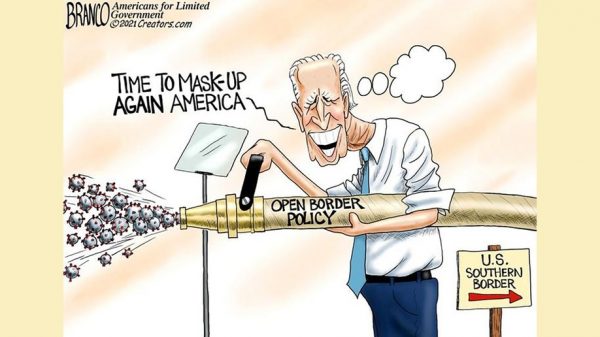
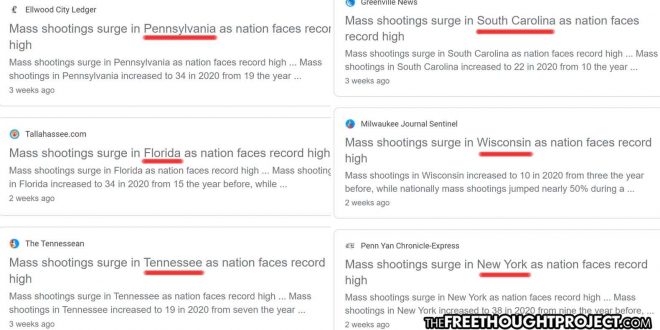


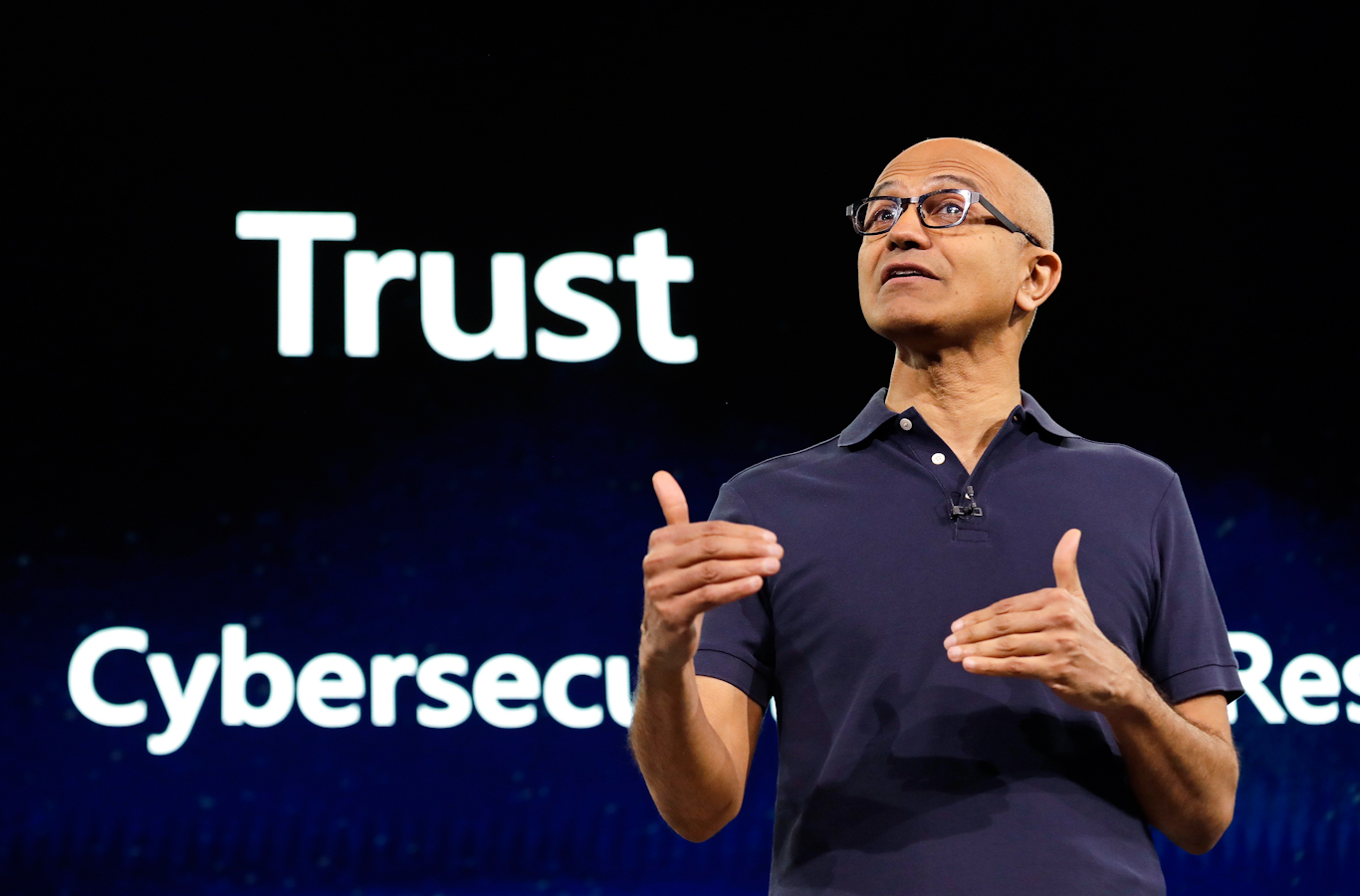

 After the Crash