Step 1.) Realize that imagination is superior to reason:
“Necessary illusions enable us to live.” ~Ingmar Bergman
Before transformation, before self-empowerment, even before courage, there must be imagination. If you cannot even think outside your tiny lamb’s box, how will you ever be able to transform yourself into a lion powerful enough to trample it?
Thus, imagination is foremost. It is even more important than reason. Because reason is telling you that you’re just a little lamb stuck in a little lamb world with mighty wolf laws keeping you in check, docile, and immure. So, you will have to sacrifice reason to imagination in order to gain the wherewithal to challenge the system. Most of which is religious smoke and mirrors, a political song and dance, and merely a cultural cartoon playing itself out in your brain.
You must be able to transcend the box that has you thinking like a lamb before you can gain the courage to crush it. Mind must come before matter in this matter. It’s a delicate epistemological balancing act, a precarious existential highwire show, an intellectually Herculean task requiring Promethean audacity. And it is one that you will probably fail at.
This is because cognitive dissonance itself will be your greatest enemy. Which means you will be your greatest enemy. Therefore, the most important part of realizing that imagination is superior to reason is understanding the importance of staying ahead of the curve of your own human conditioning. In short: it means getting out of—and then staying out of—your own way.
This will require putting your Ego on a leash. Which will require resurrecting the only thing that can keep it on a leash: your Soul.
Step 2.) Take a leap of courage out of faith:
“It is the certainty that they possess the truth that makes men cruel.” ~Anatole France
After you’ve managed to think outside your tiny lamb’s box through the power of imagination, it’s time to crawl out of it. But how do you do that? The simple answer is courage. In particular: a leap of courage. In more particular: a leap of courage out of faith (rigid certainty) and into fortitude (flexible curiosity).
But first, we need some context. What exactly is it that’s buttressing your lamb’s faith? What is it in particular that’s propping up your lamb’s rigid certainty? What is it precisely that is keeping you conditioned, indoctrinated, and/or brainwashed into believing a certain way?
Put simply: it’s the pettiness of your ego. Put a bit more complexly: it’s the culturally conditioned aspect of yourself projected onto the world. Put concisely: It’s the socially constructed part of you that you have subconsciously used as an identity to engage with reality.
But what happens when—having used the power of imagination over reason—you finally realize that this culturally conditioned aspect of you is limiting you and keeping you inside the box? What happens when you finally see how it is the culturally constructed ego that is keeping you meek, weak, and courage-less in your lamb-hood? What happens when you finally understand what’s preventing you from becoming a lion?
Now enter Ego Death. Most people falsely assume that Ego Death means killing off the ego. This is not what it means. Ego Death means annihilation. The ego is annihilated in the “cocoon” of “death” in order to emerge as the “butterfly” of the soul. Ego Death is more of a rebirth than it is a destruction.
The metaphor of the cocoon is trite but important. The invulnerable ego must die in order for the vulnerable soul to be born. Certainty must die for curiosity to be born. Attachment must die for detachment to be born. Rigidity must die for flexibility to be born.
Taking a leap of courage out of your tiny lamb’s box (faith) must take place in order to cure the disease of certainty with the medicine of curiosity. Without curiosity there is no openness to new knowledge, there is no flexibility of thought, there is no plasticity of spirit. Without curiosity there is no way you will be able to integrate your shadow. Which is the next vital step in how to transform a lamb into a lion.
3.) Integrate the shadow:
“My devil had long been caged; he came out roaring.” ~Dr. Jekyll
With your curiosity in front of you and your certainty behind you, you now have the existential plasticity to face the Underdark of Yourself. Your certainty is shattered glass behind you as you walk “barefoot” into yourself. Your curiosity is a blazing light inside you, shining into the darkness, making the darkest parts of yourself light up into glorious conscious awareness.
Having been hidden, hushed, and repressed for so long, the shadows come alive. They dance with fierce revivification. They laugh with thirsty desire. They sing with jovial howls. They are finally seen, felt, heard. And they are hungry. Their appetite slams together inside you, a soul-quaking shockwave, shaking you to the core. They join forces to become the shadow aspect, the inner beast reborn, primal darkness incarnate.
It rises up inside you, an alien demon taking over, seemingly separate at first, but finally coalescent. In the end, you realize that it is more you than your previous self could have ever hoped to be. More real. More primal. More vital to becoming the best version of yourself than anything that could have come before. It transforms your delicate sheepishness into fierce lionheartedness.
You feel more alive than ever. A sacred alignment manifests. The pieces of your puzzled self-paradoxically click together. You feel whole, actualized, aware. Most of all, you feel hungry, thirsty, ravenous, voracious. Your lion appetite swallows your tiny sheep stomach whole. It’s finally time to eat—and eat well.
4.) Grow your teeth; sharpen your claws:
“We should go to heaven for form and to hell for energy and marry the two.” ~William Blake
Now that your shadow has been aligned with your light, it’s time to transform fear into fuel for the fire to come. It’s time to grow those teeth and sharpen those claws. It’s time for fierceness over pettiness, absolute vulnerability over resolute invulnerability, and courage over cowardice. In short: it’s time to start living a courage-based lifestyle rather than a fear-based one.
You do this by first honoring what came before. Honor the death of your Ego and its painful transformation into Soul. Honor the death of your naivete and its painful transformation into shadow alignment. Honor the death of your sheepishness and its painful transformation into lionheartedness.
Second, you must transform your roots into a crown. You must force your mortal coil into a vital halo. You must dig deep into the humus of your humanity and strike the primal lodestone. From the spark will come an energy that will sharpen your teeth, claws, and soul. It will propel you into animal greatness. It will teach you honor, humility, and humor. But it will also teach you fierceness, courage, and audaciousness.
It’s finally time to crush that outdated sheep’s box with your mighty lion’s paw.
5.) Draw a line in the sand; challenge all comers:
“The increasing dependence on the State is anything but a healthy symptom, it means that the whole nation is in a fair way to becoming a herd of sheep, constantly relying on a shepherd to drive them into good pastures. The shepherd’s staff soon becomes a rod of iron, and the shepherds turn into wolves.” ~Carl Jung
How does a lamb transform fear into courage and become the brave lion who is capable of keeping wolves in check? The lamb must first put itself in check by questioning why it believes what it believes about the way the world works.
The lamb must ask itself: Are my beliefs culturally conditioned by a sick society? Have I been brainwashed into believing a certain way by a religious or political party? Do I just blindly obey out of fear of losing my comfort, safety and security? And, most importantly of all, once I realize I’ve been mistaken, will I cease being mistaken or will I cease being honest?
It’s a tricky tightrope between fear and courage. The way toward freedom is not for the faint of heart. Which is probably why there are so few lions among men.
A lamb that can manage to question its fear-based lifestyle—a lifestyle built upon blind obedience, addiction to comfort, and reliance on wolves to keep them “safe”—is a lamb that has the potential to become a courageous lion.
If a lamb can manage to become a courageous lion, then the next step is to reveal its courage to the world. This requires a complex recipe of trust, vulnerability, adaptability, and risk-taking.
Lions realize that life is a risk. They embrace that risk with honor and courage. Where sheep fear making waves, lions relish in it. For they realize that sometimes you must rock the boat to keep it afloat.
Life is too short to be a bystander. Lions take a stand. They draw a line in the sand. They bare their teeth. They show their claws. They crush ultimatums through the power of their own moral autonomy. They ruthlessly reveal why the buck must stop here.
Lions are all too willing to cause trouble when the culture itself is troubled. They must. Trouble be damned! When society fails to regulate itself, the lionhearted must regulate society. This has always been the task of lions.
This is an extract from Self and Unself, Darren Allen’s new ‘philosophy of all and everything’. Some of the terms herein — consciousness, self, ego, etc — may appear somewhat mysterious or abstract as they are explained in earlier sections of the book.
Self produces manifest culture, and then that culture shapes self. First, self is externalised as an expression — some kind of act or presentation. The expression appears as an object, a thing in the world, which is related to other objects, which are then reappropriated by man back into the self.
A band releases an album, a building company constructs a block of flats, an advertising agency puts up hoardings around town, an individual recounts a few anecdotes. The songs, the dwellings, the signs and the stories become part of a world which then shapes those within that world.
If self is unselfish this process ultimately begins “beyond” culture, with consciousness, to which the reappropriated modifications are subject to some kind of evaluation — I can reject the bullshit music, the ugly council estate, the advertising lies and the witless jibber-jabber.
If, however, self is fundamentally egoic, consciousness is given no freedom to operate, and the caddis case is formed almost entirely from without, walling up inner quality, and with it, genuine individuality.
First self speaks, then the words get set in stone, then the stone speaks to the self, writing its words back into the human heart, which speaks again.[1] If there is freedom to speak, and to be heard, and to walk away, this dialogue (or dialectic) is fruitful and serves man.
But, just as if one person screws another down and forces words into her head it is no longer a conversation, so if society (culture plus self, or selves) fills its schools and lines its streets with messages that all say the same thing, with no way of escape, then we are no longer individuals participating in a society, but stackable storage units for whomever or whatever is filling us with the things we are forced to feel, eat, look at, think about and energetically engage with; in short, build our selves with.
Culture was once built from nature, and, more intimately, from the unselfish origin of that which nature and culture have in common. This is why pre-civilised man considered nature and culture to be identical. The more culture came to be built from itself, the less it served the essence of man, until it came to compel man to accept its objective validity or suffer the consequences. Not in an overt tyrannical sense, but in the unalterable fact of its existence.
You can think away culture or pretend it doesn’t matter — ignore, say, the rules of language or pretend that they are dispensable, but you will be punished, mocked, excluded, brought back into line or killed. Likewise, if your social self is at odds with your individual self, then all kinds of problems are on their way. This does not mean that I must be something other than my social self, but that I am continually compelled to harmonise the two, and if I can’t — if I cannot be in the world who I feel I really am—then I will suffer in the world, as everyone who is honest does.
Ego keeps this suffering at bay by endlessly affirming its social self. As that most unreal and egoic of sources, the average Teevee-American has it, ‘I am a cop, it’s what I do…’ ‘I am a mother, it’s what I do…’ Or, alternatively, ‘This is my town, these are my people’.
Such a ‘self’ is not something which is invented, it is there, ‘inside me’. I look inside and see that I am the cop or mother that society takes me to be (or, for the fake outsider, that I wish society to take me to be). And I have no desire to be anything else. Not that there is anything wrong with inhabiting a role, nor with identifying with a community, nor that there aren’t always elements of self that do not fit into what is required by the social world; rather that ego hides from itself in its social representation.
Man may be psychologically and spiritually deformed by his activity within the egoic group or institution, he may work in a mechanical manner, in mediated environments, in order to produce or manage things which have no recognisable human meaning, and he may be forced to conceal his horror and disgust behind an upbeat mask of emotional management, but if there is no truth beyond a self-constructed from the group, he will defend his deformity, and consequent duplicity and misery, as truth.
All criticisms of the group are taken to be criticisms of the self — ‘I am mortally offended by your prejudice’ — and all criticisms of the self are taken to be prejudice against the group — ‘It’s not because you are repulsed by my moral deformity, it’s because you are racist/homophobic/anti-white/anti-American etc’.
The seamless unity of self and society in the egoic mind explains man’s total blindness to systemic constraints, and to the fundamental paradigms of the system. They are one with his ego, which is why, today for example, man spends so much time thinking and talking about voting, about reforming teaching, about having fairer laws, about creating cleaner motorways and so on and so forth; but not a word on how disabling democracy is, or education, or law, or transport, or the encompassing system, which is as invisible to him as water is to a fish, or anger is to a van driver.
*
The social self and its inner component, the personality, are maintained through communication, through constant confirmation (either explicit or implied) of who I am to others. When there is nobody to validate my personality, it dies, which is why solitude is so necessary to people with character — who need to periodically let their personality wither away in winter so that spring life might grow—and so terrifying to people without character, who must exist in a constant stress of forced blooming for the world.
Likewise, if a critical avenue of personality-confirming communication is permanently disrupted—if a lover leaves, or a mother dies, or self is forced to live in another country, cut off from its culture—the whole world crumbles. The egoic self, forged through the shared reality created with a partner, a family or a society, is ripped out.
This is why people stay in abusive relations and in abusive societies. Leaving the objective world of the known is to be plunged into chaos, a fate worse than death for ego, which may even choose death in preference.
Loss of self-reinforcing dialogue is not just a threat to the individual self, but to the social body, which provides all kinds of ritualised means by which the disrupted self is expected to deal with its disarray and return soothed and placated to the ‘normal’ world. A spouse torn apart by the death of a partner is fine, we can accept and sympathise; but if the grief is too noisy or outstays its welcome, then the social world will take measures to exclude it, quarantine the infection as it were, and remove conspicuous misery from the scene, so that production and consumption can smoothly proceed.[2]
For the same reason, madness, bizarre dreams and visions, psychotropic intoxication, spiritual extremism and all other exits from the system—including literally leaving it to gad off into the forest—are to be bricked up, or, if that’s not possible, managed by society, which deals with the void by projecting a screen of rationalisations onto it.[3] Your visionary dream was a message from Satan, or a repressed desire, or a random brain signal, your glorious experience of the fundamental oneness of creation was a message from Allah, or a crazed illusion, or confirmation of your status as our Mystic Cham.
All of these validations are gratefully taken up by the ego, which cannot bear to be cut off, alone (or alone with unself), and prefers to masochistically submit itself to The Worldview — or, on behalf of that world, to sadistically control others — rather than have to face any kind of reality beyond the boundaries of the social known.
Just as society is threatened by loss of face and loss of reason, so it must also deal with the danger of men and women rebelling against their internalised role; finding, for example, that being a nice obedient little wife, or the upwardly-mobile manager of a car-rental firm, is something of a burden, and that they’d rather be members of a non-stop erotic cabaret or hunting-and-gathering in Botswana.
It’s fine for a man to masturbate to high-budget porn, or for a woman to spend a month on safari, but to actually do something about their dreams, particularly the genuinely wild ones, is out of the question, and again, if substitutes are not functioning, the machinery of social meaning must step in to make sure such desires are suppressed or channelled into something ‘productive’, or at least that the dreamer is reminded that if they are not, he can expect to pay an horrendously high price to realise them.
*
The most potent and pervasive threat to selfish society is not in this or that criticism, loss or disruption, but in consciousness itself; which is everywhere and at all times. Consciousness must therefore be continually suppressed, and man’s relation to it, to ever-present unselfish quality, continually managed.
This is largely done, on a social level, through laws, legitimations, taboos and totems. These are the rules of society — the ‘walls’ of cliched thought, feeling, sensation and activity — which range from everyday non-verbal norms of behaviour (we greet in such and such a way, we react to bad news in such and such a way), through more explicit linguistic formulations of what is right and proper (the shared ethics of society, encoded in its wisdom, its maxims, its proverbs and even its jokes), through the art, myths and folk tales of a culture (by which we learn what is appropriate or tasteful, and what is to be condemned), through the explicit legal codes of a civilisation or of its various institutions, up to, finally, the various sacred justifications or secular theories which explain, in the most abstract sense, why things are as they are.
Although all these legitimations are constantly in conflict, they work as a whole to order men and women’s responses to their own conscious impulses and the context they find themselves in. In a selfless society, these ‘orders’ are soft guidelines (or, if you prefer, flexible human laws) — useful and necessary, but fluid, and at the service of the individual.
In an egoic society, the individual must serve the laws, legitimations and taboos. If he breaks them — if he smiles when he should frown, does what the gods say never to do, questions evolution, utters the magical ‘n’ word or sends a magnet in the post — he’ll be punished.
Note that men and women must be continually reminded of these justifications and continually enjoined to affirm their commitment to them, just as communities of belief must be continually reinforced and protected. Human beings are never far away from their original nature, and easily forget what has been programmed into them from without.
This is why ritualised laws of defilement, containment of outsiders (physical or ideological), and, above all, walling off experiences of unreality (dream, madness, apostatic transcendence, death and love; even taking a shit puts one outside the bounds of history and religion and must be legitimately dealt with) play such an important, ongoing role in all ideological systems.
Today, in the West, continual reinforcement takes the form of constant affirmations of the goodness and rightness of a highly invasive, technocratic, global market-economy and of constant reminders that without the various ideological totems required to engage in it—tolerance, respect, pacifistic acceptance, keeping two meters apart from one’s fellows and keeping your trousers on in the supermarket—everything would fall apart and we’d all drown in a flood of anarcho-fascism, or die of a medieval lurgy, or be overwhelmed by the Beast.
If it looks like these reminders aren’t taking hold, then their intensity is stepped up and penalties for contravention escalate and intensify until you get your mind right.
Laws, legitimations, taboos and totems, being self-justifying and self-created, are entirely causal. The notion of law is coterminous with the notion of causality; a non-causal law is a contradiction in terms. In reality there are, ultimately, no laws in nature, in consciousness or in human affairs, because there is, ultimately, no causality in them; the world today was no more caused by the world yesterday than the morning was caused by the night before.
The laws we find in history (e.g. Hegel’s or Marx’s), or in nature (e.g. Aristotle’s or Newton’s), or in society (e.g. Confucius’ or Comte’s), or in consciousness (e.g. Leibniz’s or Freud’s), are products of self, and therefore only applicable to self; occasionally useful, as facts and causes are, but with zero qualitative truth.
The truth of an individual or society moving through ‘time’, like that of a tree, like the meaning of an act or the essence of reality, are invisible to causal consideration, which can only perceive a tumult of interrelated bits and pieces, slices and sections, and shrink-wrapped events, never the whole; which means it can never give an appropriate response to the whole (except by accident) which becomes impossible as soon as laws are set, and [directly or indirectly] enforced.
This is why people without direct experience of reality, isolated from it by money, power, fame, technology or drugs, rely on laws and legitimations, and give them the same existential status as experience. When it comes to right or wrong, for example, they cannot trust their experience, because they do not have experience, and so they cleave to factual-casual calculation.
Property is inviolable, therefore stealing is wrong; a man steals an apple, therefore he must be punished, no matter how wealthy the supermarket he steals from. Context — the history of the supermarket, the functioning of the market, the state of society — and consciousness — compassion for the man, empathic understanding of his life — cannot be allowed into consideration. To do so would disrupt one’s entire life.
The brutal inflexibility of the law-abider is sometimes seen as a ‘lack of imagination’, but imagination is part of the abstract schema that the law-maker appeals to, the series of ideas codified as The Law; it is wrong to lie, it is wrong to kill, it is wrong to steal.
When these ideas harden into eternal truths — when, in the management phase of civilisation, they are codified or written down, in holy texts or in statute books, or in the consciences of men and women — they serve, and can only serve, that which is incapable of abandoning facticity and causality, the inherently dishonest, selfish and violent ego. This is why you can’t trust a law-abider.
Self and Unself is available in the usual places, and on Darren Allen’s bookshop.
Notes:-
[1] Peter Berger and Thomas Luckman, The Social Construction of Reality.[back]
[2] Ernest Goffman, The Presentation of Self in Everyday Life.[back]
This is not a click-friendly fact to highlight. Whenever I talk about revolution as having more to do with sincere inner work than with demonstrations and pitchforks and the proletariat rising up against the bourgeoisie, I get met with a lot of blank stares and dead air. It’s much more click-friendly to talk about how terrible this or that politician or oligarch or media figure is and how they should be launched into the sun with a giant crossbow.
It’s true though. Revolution is an inside job.
This is not a click-friendly thing to say because it is not an egoically pleasing thing to say. When they ask why the world is screwed up and what to do about it, people want to be told that it’s because of those Bad Guys over there and they need to be put in their place by these Good Guys over here; they don’t want to be told they need to disentangle themselves from egoic consciousness so they can see clearly enough to operate in an efficacious way.
But it’s a fact.
This is not some new agey, metaphysical philosophical position. I’m not saying that there are no villains outside yourself or any of that dopey spiritual woo woo crap; there absolutely are horrible people in the world who absolutely are doing horrible things that have absolutely horrible consequences for all of us. I’m not saying that if you do inner work you’ll magically make the sociopathic elites who are manipulating humanity toward its doom somehow turn into nice people via some esoteric mystical principle or anything like that. And I’m definitely not saying not to organize, demonstrate or take large, decisive actions against establishment power structures.
What I am saying is that the most effective thing you can do to fight the bastards and create a healthy world is to bring clarity to your own inner processes, so that’s where your energy should be most emphasised.
Egos love being told that the problem and the solution exists outside in other people. Egos thrive on conflict and drama, so the more you make it about fighting others the better; hell it’s even more fun if you can make the case that traitors within your own ranks need to be fought because they have slightly different views from you. What egos don’t like to be told is that it’s the ego itself (or more specifically the belief in it) that is the problem.
But simply pouring your energy into fighting Bad Guys is not an efficacious means toward the end of a healthy world. People who do this find their efforts stagnated and ignored, which is a big part of why so many lifelong revolutionary-minded individuals wind up becoming bitter and jaded in their struggles.
This is because most people, even people who are relatively more awake than the general mainstream population, are severely confused. Most people simply are not conscious of the way their own perception and cognition is actually happening from moment to moment, so their perception and cognition are beholden to subconscious conditioning patterns which were set years or decades ago without any consideration as to whether they would be helpful later on or would be useful in rallying the masses to overthrow their capitalist oppressors. This is made infinitely more complex and confusing by the fact that vast troves of wealth go into manipulating the public away from revolution and toward establishment loyalism.
The word “enlightenment” has a ton of sticky baggage, and can make a shoddy pointer in the way it implies some lofty, elevated state that a very few special people can attain through great effort and then are finished. Really it’s just meant to point to the process of becoming aware of the way your own field of consciousness operates and the perceptual/cognitive habits that you’ve formed for interpreting/understanding your experience. For this purpose I prefer the word “enlightening“, since it suggests an ongoing process rather than some remote “done” state.
By emphasising your own enlightening, your energy is well spent eliminating the mental distortions and egoic sticking points which so often bog down dissident movements (and if you’ve spent any time in revolutionary-minded circles with your eyes even half-open you’ll know exactly what I’m talking about). Because you’re investing your energy in your own backyard, so to speak, you’re dealing with the one area of your life that you actually have some degree of control over. You have no influence over whether the left will espouse your particular vision of revolutionary action by November or whatever, but you absolutely do have influence over whether you’re operating from truth or from delusion.
By making a firm commitment to being ruthlessly honest with yourself and exploring your own inner dimensions via meditation, self-enquiry, contemplation etc, you are opening up the possibility of the birth of a true revolutionary: someone who both desires revolutionary change and has the clarity of vision to efficaciously help manifest it in the world. But first you must pursue the truth at any cost; not “the truth” about Bad Guys and secret societies, but the truth about you and your actual experience of this world. You must put truth, and the desire to know it, above all else.
In this way you are bringing to your own personal microcosm the transformation that we need to see in the outer societal macrocosm: you are enlightening yourself in the exact same way humanity as a whole needs to enlighten. Indeed, it is the exact same movement; your inner work is no more separable from humanity’s collective awakening than an individual antibody’s attack on a pathogen is separable from the entire immune system’s return to health.
A man named Ramana Maharshi once said “Your own Self-realization is the greatest gift you can render the world.” This is what your drive toward revolution is calling you home to. Not toward egoically pleasing conflict and drama, not toward a violent uprising which will inevitably see a reversion to the same preexisting conditioning patterns, but toward a transformation in yourself which will enable you to guide the world toward health in a lucid and efficacious way.
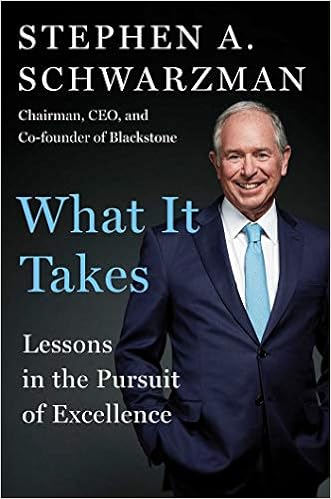
“I guess maybe Bernie Sanders shouldn’t exist,” said billionaire Steve Schwarzman while seated in a library building named after billionaire Steve Schwarzman and promoting a book with billionaire Steve Schwarzman’s face on it.
According to Bloomberg this humble response from the always modest billionaire Steve Schwarzman came in response to a question posed by an audience member about a Sanders tweet in which the Vermont Senator said that billionaires should not exist. The comment was reportedly met with enthusiastic applause.
Blackstone CEO Schwarzman, who has previously compared tax increases on the wealthy to the Nazi invasion of Poland, is an oligarch by any reasonable definition. As one of America’s top individual campaign donors he is immensely influential; his plutocratic power is so deeply interwoven with the highest levels of government that his book’s 14 pages of acknowledgements describe cuddly relationships with a who’s-who of top US officials, including the last five presidents. According to a recent report by The Intercept, two Brazilian firms owned by Schwarzman “are significantly responsible for the ongoing destruction of the Amazon rainforest, carnage that has developed into raging fires that have captivated global attention.”
It is very telling that this oligarch sees an equivalence between (A) saying that an elite class should not control such vast amounts of wealth and (B) saying actual people should not exist. What this tells us is that Schwarzman sees being a billionaire as a fundamental part of his identity, making the idea that he shouldn’t control billions of dollars indistinguishable from saying that he himself should not exist. From his point of view he’s just doing the same thing that Sanders is doing: Bernie’s saying the thing that Schwarzman is shouldn’t exist, and Schwarzman is saying that Bernie himself shouldn’t exist. To him they’re the same.
This statement gives us a bit of insight into the way billionaires see themselves as fundamentally different than the rest of us, forming an egoic identity construct out of being a billionaire in the same way a medieval king would form an egoic identity construct out of that position. This anti-billionaire rhetoric is perceived as an attack on their very identity, which is why they are spinning it as though Sanders is calling for the elimination of actual people.
Predictably, Fox News is now trotting out billionaires to defend themselves from this outrageous billionairephobic bigotry, with Home Depot founder and major Republican Party donor Ken Langone receiving a warmly sycophantic reception from Fox’s Mornings with Maria.
“What the hell has he done for the little people?” Langone asked his host Maria Bartiromo. “What jobs has he created?”
Langone went on to detail all the many jobs he’s “created” (read: how many people he’s needed to hire to help him reap lucrative profits from an already existing demand) without bothering to explain what hoarding billions of dollars in offshore accounts has to do with job creation. Exponents of the “billionaires create jobs” argument always avoid this glaring plot hole like the plague.
Again, we see in Langone’s emotional response two things: that he sees ordinary citizens as “the little people” innately different from himself, and that he perceives the push toward greater economic equality as an existential threat.
“If you go back to 1933, with different words, this is what Hitler was saying in Germany,” Langone has said of the rising pushback against wealth and income inequality. “You don’t survive as a society if you encourage and thrive on envy or jealousy.”
These outbursts are reminiscent of one we saw a couple of years ago on an MSNBC interview with resort tycoon Stephen Cloobeck, who expressed outrage at the way progressives are using “the millionaire or billionaire word” to discuss issues with class and economic justice, saying he’d instructed Democratic Party leaders to bring a stop to this rhetoric or lose plutocratic funding.
“It is very, very disturbing when I hear the millionaire or billionaire word,” Cloobeck said, as though he was uttering an ethnic slur for an oppressed minority and not a conventional label for a class that effectively owns the US government. “And I’ve told them to stop it. Knock it off.”
We’re seeing this hilarious conflation of economic justice with the persecution of minorities and the elimination of actual human beings more and more often, so we should probably come up with a name for it. I’d like to propose that we label this phenomenon “wealth identity politics”, and it is capitalism’s dumbest turn yet.
It’s especially dumb because the billionaire class has already proven with its actions that it cannot exist without actively working to manipulate governments in a way that undeniably subverts democracy and the will of the people. The debate over whether or not billionaires should exist is long settled. They should not.
A few million dollars will buy you a nice car, a nice house and some nice clothes. A few billion dollars will buy you the ability to control public narratives using media ownership, lobbyists and think tanks, thereby manipulating entire governments and international affairs. Believing that it makes sense to have an elite class which controls this much wealth and power is exactly as stupid as believing it makes sense to have a total monarchy.
Billionaires should not exist, for the same reason that kings and pharaohs should not exist. The leadership of our world should not belong to a class of highly mediocre people who have nothing noteworthy between their ears apart from a knack for accumulating dollars. The ability to amass wealth is not a valid basis upon which to determine who leads us. Our fate as a species should be in all our hands.
It’s a trip how much mental energy people pour into arguments about world affairs while devoting almost none to the way their understanding and perception of those affairs is happening.
People will happily argue day in and day out about what political ideology is most correct or what should be done about a given problem, but it’s rare for them to turn around and examine the sources of information that they’ve used to form those opinions. The fact that most of the information being circulated about what’s going on in the world is owned by plutocrats who undeniably have a vested interest in maintaining the status quo rarely enters into mainstream awareness. Which is of course by design.
Even less common than people questioning the nature of the information they’ve received is for them to examine what happens to that information once it gets into their heads. Nearly everyone lives a life that is dominated by nonstop compulsive mental chatter which determines everything from one’s emotional state to how their interest and attention moves, thereby creating cognitive biases and perceptual filters which shape how all future information will be interpreted. For most of us, thought serves not as the useful tool we evolved it to be, but as the writer, director and star of the entire show. As Ecknath Easwaran once said, “we don’t think our thoughts, our thoughts think us.”
Rarer even than examining the nature of thought is examining the nature of consciousness itself. From cradle to grave none of us ever experience a single thing that is outside our own field of consciousness, but almost everyone goes that whole time without ever seriously looking into the nature of that field for themselves. Which is a shame, because a bit of rigorous investigation reveals that our entire conscious experience is happening in a very different way than the consensus worldview assumes.
Most of us labor under the assumption that we are a finite, physical body moving around in world from which we are separate, and against which we must protect and secure ourselves. Some dedicated self inquiry reveals that it’s far more accurate to say that what you are is not a body or a mind or a separate “me” at all, but rather a kind of strange, imperceptible subject to which the field of consciousness appears. In your actual experience without referring to mental narrative, you can discover a clear distinction between this ineffable subject and your field of consciousness, and see lucidly that if you’re going to identify as anything, it only makes sense to identify as that ineffable subject.
If you think it’s mind-blowing to launch an investigation into the source of the world’s problems and discover a covert alliance of plutocrats, intelligence agencies and domestic propagandists, wait until you launch an investigation into the source of your own suffering and discover that “you” don’t even exist at all. You chase the white rabbit down twisting funhouse-mirror rabbit holes, finally discover the secret chamber of your tormenter, spin his desk chair around to face you, and find not the rabbit, nor the devil, nor even yourself, but an empty chair.
That’s the real red pill, right there. That’s the ultimate conspiracy revealed. Not that there’s a secret cabal controlling world affairs to ensure world domination, but that there’s ultimately no one in the driver’s seat at all. Some clever primates with robust egoic structures have figured out how to manipulate things, but they themselves are just like the rest of us: empty processes playing themselves out for no one, just like a fire or a waterfall. We all conspired to tell a story about a bunch of separate selves who simply do not exist outside of the story.
And in this sense our impulse to expose the ultimate conspiracy to solve our world’s problems once and for all is a perfectly healthy one. Those efforts don’t have the end result that most of us are anticipating, but if enough people pursue those efforts to their end it will indeed solve all our problems. The ego is an illusion held in place by the mistaken belief that there exists some hard, tangible object that can be accurately labeled “me” or “mine”, and ego also happens to be the thing that the propagandists use to hold the status quo in place. Without the illusion that there exists a non-conceptual self who must be protected and secured from a separate world, the propagandists cannot propagandize, because their only tools are narrative, fear, and greed. Awakening from the illusion of ego makes people immune to illusory narratives, fear and greed, which means awakening on a large scale will make them impossible to propagandize, at which time we can use the power of our numbers to expunge the status quo.
But we’ve got to wake up first. We’ve got to stop overlooking the most important and fundamental aspects of our experience here. Self-inquiry is a powerful tool that can be used to investigate the nature of self and consciousness in a way that can lead relatively quickly to self-realization. Just do a search for the term and find your own approach to it if this is something which interests you.
Once you’ve resolved this fundamental matter, the illusion of ego is no longer there to disturb your natural state of equanimity and prevent you from using thought as the useful tool it’s meant to be. You can pick up stories, concepts and identities and use them to the extent that they are useful, and then put them down once they’re not. But please remember that the ultimate goal in discovering the ultimate conspiracy is not to just know it, but to solve the world’s problems. Don’t be content with self-knowledge, carry it out into the world and use your newfound inner peace and lucid relationship with concepts to help make this planet a better place to live on.
Hallucination (huh-loo-suh–ney-shuh n) : a sensory experience of something that does not exist outside the mind, caused by various physical and mental disorders, or by reaction to certain toxic substances, and usually manifested as visual or auditory images.
Psychiatry has built an entire infrastructure around the definition of normal.
In my training, I learned clinical, diagnostic terms like “magical thinking” to pedantically dismiss any flourishes of wonderment, “delusions of reference” to coldly malign any experience of meaning or synchronicity, and even “grandiosity” if you might deign to think too much of yourself.
When human behavior is medicalized, the foundation of a shared belief system is set up. Some behaviors are unacceptable, some are not. And conforming to these expectations – even through force and involuntary submission, retention, and medication – is essential to reinforcing what is considered normal. Those who are not performing their expected part in the machinery of this system are deemed less or non-functional (the quantification of which, psychiatry assigns a numerical value based on the Global Assessment of Functioning metric scale). But what if it is, as Krishnamurti warned, “no measure of health to be well-adapted to a profoundly sick society”? What if being “functional” requires buying into an entire matrix of illusions, many of which require a total divorce from one’s own soul?
Mental Illness as an indicator of sensitivity
It’s my belief that those who are mentally ill are the canaries in this coal mine. Whose bodies, minds, and spirits are exquisitely sensitive to all that is off, amiss, misaligned, and divergent from truth. What if these illnesses are a special invitation to wake up, to embody, and to move through a dark night, a tight passage, shedding one more artificial skin, revealing a layer closer to an unfettered experience of being, of freedom, and of joy. A sometimes loud reminder to stop eating chemical food, stop participating in the poisoning of this planet, stop working just to work, and start making room for whatever it takes to awaken.
In this case, those hallucinating are those who still believe, despite all of the evidence to the contrary, that we are, as my favorite philosopher, Alan Watts says, flesh robots on a dead rock, spinning out in the middle of nowhere. That the natural world is an indifferent backdrop subject to random forces that we must shield ourselves from. Those who still believe, despite the grossly exposed limitations of the model, that Newtonian physics – linear cause and effect, what you get out is what you put in, push-pull hydraulics – reigns over subtler, nonlinear quantum processes. Quantum physics introduces all manner of uncomfortable concepts to those firmly fixated on the delusional belief that there is an objective, quantifiable, measurable reality of known variables that predictably govern a non-sentient universe.
What if this is a collectively held delusion? Those who have had mystical experiences know that it is but an illusion that our selfness is between our ears and behind our eyes, and that the natural world needs to be managed and controlled. We know that we emerge from the complexity of beingness on this planet and that there is no objective good and bad, and perhaps no objective anything at all.
Alan Watts, puts it this way:
I wonder what you mean when you use the word I.
I’ve been very interested in this problem for a long, long time. And I’ve come to the conclusion that what most civilized people mean by that word is a hallucination—that is to say a false sense of personal identity that is at complete variance with the facts of nature.
And as a result of having a false sense of identity, we act in a way that is inappropriate to our natural environment. And when that inappropriate way of action is magnified by a very powerful technology, we swiftly begin to see the results of a profound discord between man and nature.
As is well known, we are now in the process of destroying our environment as a result of an attempt to conquer it and master it. And we have not realized therefore that our environment is not something other than ourselves.
In assuming that it is, we have made a great mistake and are now paying the price for it.
Resolving the hallucinations of the dominant narrative
The thing is, that a hallucination that becomes aware of itself, dissolves, if it is, indeed a hallucination. In the case of the dominant belief system – the most collectively shared hallucination – this is called awakening and it has everything to do with generating an awareness of the story that we have been telling ourselves.
We have been telling ourselves that we control our lives – or we wouldn’t experience anxiety.
We have been telling ourselves that we are supposed to simply feel ok with what is happening on this planet – or we wouldn’t feel depressed.
We have been telling ourselves that the world is unsafe – or we wouldn’t feel paranoid.
We have been telling ourselves to stay in line, punch the clock, and behave – or we wouldn’t get manic.
So what if we simply turn the light on and wake up to the story and recognize it as such.
Here’s how to wake up and dissolve the illusion:
1. Feel better
Information, in and of itself, changes nothing. We have to experience the truth, viscerally, for our bodies, minds, and spirits to shift and open. In order to generate the conditions of a reunion with the natural world, and a felt sense of having emerged from it, it becomes critical to experience the environment as an inextricable part of oneself. This means that nature is rendered sacred again. The human organism is seen as a miracle before which your consciousness bows. In this light, the only proper comportment is to strip away chemicals and the participation in a chemical free lifestyle, eat whole organic food, and begin the process of healing from many years of desecration. It is my belief that these simple behaviors – being in nature, cleaning up your consumerism, your eating, and beginning to detox – not only result in feeling better but in feeling apart, feeling held, and feeling a deep sense of ok-ness that stands in sharp contrast to the feeling of discord generated by the modern lifestyle.
2. Know better
Once you feel better, you are ready to learn about why. This is a good time to explore the wisdom of our forefathers and mothers, of indigenous cultures, and of modern visionaries. If you’re attracted to science as a means of narrating our shared perceptions, then begin to enjoy a growing body of science that tells a totally different story about the natural world, healing, and the wonder of this planet. Continue to look at the places where you may still be asleep, delusional, or hallucinating!
Part of this process is claiming radical responsibility for your journey, your decisions, and your experience. If you can reclaim all of the energy you are putting towards blaming, resenting, hating, and otherwise feeling victimized, you will be amazed at the experience of empowerment that results. Deeper change, reflexive self-examination, and compassion towards others comes from this shift in perspective.
3. Do better
Once you feel better and you know better, then you are ready to live differently – to do better. But here’s the surprising news. There’s no pilgrimage required, no major planning or strategy, no big decisions. Doing better, in an awakened state, involves simply caring for yourself – kneeling at the altar of your body and getting clear enough to see the programs of fear and control when they creep back into your consciousness. Getting clear involves pausing, every day.
This is how you keep the “I” illusion at bay. You resist the temptation to do, fix, better yourself and your life circumstances endlessly. You let it be. You say yes, I accept. And you work with the flow. You give to others even when you feel most in need. In short, you burn your stories and you have faith. Watts says,
“To have faith is like when you trust yourself to the water. You don’t grab hold of the water when you swim, because if you do you will become stiff and tight in the water, and sink. You have to relax, and the attitude of faith is the very opposite of clinging, and holding on. In other words, a person who is fanatic in matters of religion, and clings to certain ideas about the nature of God and the universe becomes a person who has no faith at all. Instead they are holding tight. But the attitude of faith is to let go, and become open to truth, whatever it might turn out to be.”
Call it living in the Matrix, call it hallucinating, call it Biopolitic, or Maya, if you live life according to what mainstream media, government, and appointed authorities say is, there will come a time when you crack. Freak out. Or choose to opt out. Or when you simply leave the premises. You’ll be labeled with ADHD, Generalized Anxiety, Major Depression, Schizophrenia, or Bipolar Disorder. You will be told you are the sick one, that something is wrong with your inbuilt hardware. The figurative bone will be pointed at you and the collective will support your containment, restraint, and oppression to keep the infrastructure of the illusion intact.
But the mortar is cracking. Too many of us who have felt the truth that is spirituality. To be infused with spirit. To feel your own soul. To stop and inspire, breathe, and understand that without the entire ecosystem of beingness on this planet, you yourself are nothing. And once you have felt the fearlessness of this faith, you can never be controlled again, and you are finally free.
Transcript:
I wonder what you mean when you use the word I.
I’ve been very interested in this problem for a long, long time. And I’ve come to the conclusion that what most civilized people mean by that word is a hallucination—that is to say a false sense of personal identity that is at complete variance with the facts of nature.
And as a result of having a false sense of identity, we act in a way that is inappropriate to our natural environment. And when that inappropriate way of action is magnified by a very powerful technology, we swiftly begin to see the results of a profound discord between man and nature.
As is well known, we are now in the process of destroying our environment as a result of an attempt to conquer it and master it. And we have not realized therefore that our environment is not something other than ourselves.
In assuming that it is, we have made a great mistake and are now paying the price for it.
But most people would agree with the lines of the poet who said “I, a stranger and afraid. In a world I never made” because we have the strong sensation that our own being inside our skin is extremely different from the world outside our skin, that while there may be intelligence inside human skins, and while there may be values and loving feelings, outside the skin is a world of mechanical process which does not give a damn about any individual and which is basically unintelligent, being gyrations of blind force, and so far as the merely biological world is concerned, gyrations of libido, which is Freud’s word for “blind lust.”
It should be obvious that the human being goes with the rest of the universe even though we say in popular speech “I came into this world.”
Now, it is not true that you came into this world. You came out of it in the same way as a flower comes out of a plant or a fruit comes out of a tree. And as an apple tree apples, the solar system in which we live, and therefore the galaxy in which we live, and therefore the system of galaxies in which we live, that system peoples. And therefore, people are an expression of its energy and of its nature.
If people are intelligent—and I suppose we have to grant that if—then the energy which people express must also be intelligent because one does not gather figs from thistles and grapes from thorns. But it does not occur, you see, to the ordinary civilized person to regard himself or herself as an expression of the whole universe. It should be obvious that we cannot exist except in an environment of earth, air, water, and solar temperature, that all these things go with us and are as important to us, albeit outside our skins, as our internal organs, heart, stomach, brain, and so forth.
Now, if then we cannot describe the behavior of organisms without at the same time describing the behavior of their environments, we should realize that we have a new entity of description—not the individual organism alone, but what would now be called a field of behavior, which we must call rather clumsily the “organism environment.” You go with your environment in the same way as your head goes with the rest of your body. You do not find in nature faces arriving in the world sui generis; they go with a body.
But also, bodies do not arrive in a world which would be, for example, a plane, ball of scrubbed rock floating without an atmosphere far away from a star. That will not grow bodies. There is no soil for bodies. There is no complexity of environment which is body-producing.
So, bodies go with a very complicated natural environment. And if the head goes with the body, and the body goes with the environment, the body is as much an integral part of the environment as the head is part of the body.
It is deceptive of course because the human being is not rooted to the ground like a tree. A human being moves about and therefore can shift from one environment to another. But these shifts are superficial. The basic environment of the planet remains a constant. And if the human being leaves the planet, he has to take with him a canned version of the planetary environment.
Now, we are not really aware of this. Upon taking thought and due consideration, it does occur to us, yes, indeed, we do need that environment. But in the ordinary way, we don’t feel it, that is to say we don’t have a vivid sensation of belonging to our environment in the same way that we have a vivid sensation of being an ego inside a bag of skin located mostly in the skull about halfway between the ears and a little way behind the eyes. And it issues in these disastrous results of the ego which, according to 19th century common sense, feels that it is a fluke in nature, and that if it does not fight nature, it will not be able to maintain its status as intelligent fluke.
So, the geneticists are now saying, and many others are now saying, that man must take the course of his evolution into his own hands. He can no longer trust the wiggly, random, and unintelligible processes of nature to develop him any further, but he must interfere with his own intelligence, and through genetic alterations, breed the kind of people who will be viable for human society and that sort of thing.
Now, this I submit is a ghastly error because human intelligence has a very serious limitation. That limitation is that it is a scanning system of conscious attention which is linear—that is to say it examines the world in lines rather as he would pass the beam of a flashlight across a room (or a spotlight).
That’s why our education takes so long. It takes so long because we have to scan miles of lines of print. And we regard that, you see, as basic information.
Now, the universe does not come at us in lines. It comes at us in a multi-dimensional continuum in which everything is happening all together everywhere at once. And it comes at us much too quickly to be translated into lines of print or of other information however fast they may be scanned. And that is our limitation so far as the intellectual life and the scientific life is concerned.
The computer will greatly speed up linear scanning, but it’s still linear scanning. And so long as we are stuck with that form of wisdom, we cannot deal with more than a few variables at once.
Now, what do I mean by that? What is a variable? A variable is any one linear process. Let’s take music. When you play a Bach fugue, and there are four parts to it, you have four variables. You have four moving lines, and you can take care of that with two hands. An organist using two feet can put in two more variables and have six going. And you may realize, if you’ve ever tried to play the organ, that it’s quite difficult to make six independent motions go at once. The average person cannot do that without training. The average person cannot deal with more than three variables at once without using a pencil.
Now, when we study physics, we are dealing with processes in which there are millions of variables. This, however, we handle by statistics in the same way as insurance companies use actuarial tables to predict when most people will die. If the average age of death is 65, however, this prediction does not apply to any given individual. Any given individual will live through plus or minus 65 years. And the range of difference may be very wide indeed of course. But this is alright. The 65 guess is alright when you’re doing large-scale gambling. And that’s the way the physicists works in predicting the behavior of nuclear wavicles.
But the practical problems of human life deal with variables in the hundreds of thousands. Here, statistical methods are very poor. And thinking it out by linear consideration is impossible.
With that equipment then we are proposing to interfere with our genes. And with that equipment also, be it said, we are trying to solve our political, economic, and social problems. And naturally, everybody has the sense of total frustration. And the individual fears “Well, what on earth can I do?”
We do not seem to know a way of calling upon our brains because our brains can handle an enormous number of variables that are not accessible to the process of conscious attention. Your brain is now handling your total nervous system, to be more accurate, your blood chemistry, the secretions from your glands, the behavior of millions of cells. It is doing all that without thinking about it—that is to say without translating the processes it is handling into consciously reviewed words, symbols, or numbers.
Now, when I use the word “thinking,” I mean precisely that process, translating what is going on in nature into words, symbols or numbers—of course, both words and numbers are kinds of symbols.
Symbols bear the same relation to the real world that money bears to wealth. You cannot quench anybody’s thirst with the word “water,” just as you cannot eat a dollar bill and derive nutrition from it.
But using symbols and using conscious intelligence—scanning—has proved very useful to us. It has given us such technology as we have.
But at the same time, it has proved too much of a good thing. At the same time, we’ve become so fascinated with it that we confuse the world as it is with the world as it is thought about, talked about, and figured about—that is to say with the world as it is described. And the difference between these two is vast.
And when we are not aware of ourselves except in a symbolic way, we are not related to ourselves at all. We are like people eating menus instead of dinners. And that’s why we all feel psychologically frustrated.
So then we get back to the question of what do we mean by I?
Well, first of all, obviously, we mean our symbol of ourselves. Now, our ourselves in this case is the whole psychophysical organism, conscious and unconscious, plus its environment. That’s your real self.
Your real self, in other words, is the universe as centered on your organism. That’s you.
Let me just clarify that a little for one reason. What you do is also a doing of your environment. Your behavior is its behavior as much as its behavior is your behavior; it’s mutual. We could say it is transactional. You are not a puppet which your environment pushes around, nor is the environment a puppet which you push around. They go together, they act together.
In the same way, for example, if I have a wheel, one side of it going down is the same as the other side of it going up. When you handle the steering wheel of a car, are you pulling it or are you pushing it? No, you’re doing both, aren’t you? When you pull it down this side, you are pushing it up that side. It’s all one.
So, there’s a push-pull between organism and environment. We are only rarely aware of this as when in curious alterations of consciousness, which we call “mystical experience,” “cosmic consciousness,” an individual gets the feeling that everything that is happening is his own doing, or the opposite of that feeling that he isn’t doing anything, but that all his doings, his decisions, and so forth, are happenings of nature.
You can feel it either way. You can describe it in these two completely opposite ways, but you’re talking about the same experience. You’re talking about experiencing your own activity and the activity of nature as one single process. And you can describe it as if you were omnipotent like God or as if it were completely deterministic and you hardly existed at all.
But remember, both points of view are right. And we’ll see where that gets us.
But we don’t feel that, do we, ordinarily? What we feel instead is an identification of ourselves with our idea of ourselves, or I would rather say, with our “image” of ourselves. And that’s the person or the ego.
You play a role, you identify with that role. I play a role. It’s called Alan Watts. And I know very well that that’s a big act. I can play some other roles besides Alan Watts if necessary. But I find this one is better for making a living.
But I assure you, it’s a mask, and I don’t take it seriously. The idea of my being a kind of messiah or guru or savior of the world just breaks me up because I know me. It’s very difficult to be holy in the ordinary sense.
So, I know I’m not that. But most of us are taught to think that we are whom we are called. And when you’re a little child, and you begin to learn a role, and your parents and your peers approve of your being that, they know who you are. You’re predictable, so you can be controlled.
But when you act out of role, and you imitate some other child’s behavior, everybody points the finger and says, “You’re not being true to yourself.” “Johnny, that’s not you. That’s Peter.” And so you learn to stay Peter or to stay Johnny.
But of course, you’re not either… because this is just the image of you. It’s as much of you as you can get into your conscious attention which is precious little.
Your image of yourself contains no information about how you structure your nervous system. It contains no information about your blood chemistry. It contains almost no information about the subtle influences of society upon your behavior. It does not include the basic assumptions of your culture, which are all taken for granted and unconscious. You can’t find them out unless you study other cultures to see how their basic assumptions differ.
It includes all kinds of illusions that you’re completely unaware of as, for example, that time is real and that there is such a thing as a past which is pure hokum. But nevertheless, all these things are unconscious in us and they are not included in our image of ourselves, nor of course included in our image of ourselves. Is there any information about our inseparable relationships with the whole natural universe?
So, this is a very impoverished image. When you ask a person, “What did you do yesterday?” they’ll give you a historical account of a certain number of events in which they participated and a certain number of things which they saw, used, or were clobbered by. But realize at once that this history leaves out most of what happened.
I, in trying to describe what happens to me this evening, will never be able to describe it because there are so many people here that if I were to talk about everyone whom I’ve seen, what they were wearing, what color their hair was, what sort of expressions they had on their faces, I would have to talk through doomsday.
So, instead of this rich physical experience—which is very rich indeed—I have to attenuate it in memory in description to saying, “Oh, I met a lot of people in Philadelphia. There were men, and there were women. Lots of them were young, and some of them were old.” It’s a most utterly impoverished account of what went on.
So, therefore, in thinking of ourselves in this way, what I did yesterday, what I did the day before, in terms of this stringy, mangy account, all I have is a caricature of myself. And you know the caricaturist doesn’t draw you all in; he just put certain salient features whereby people will recognize you. It’s all a skeleton.
So, we are, as it were, conceiving ourselves as a bunch of skeletons. And they’ve got no flesh on them, just a bunch of bones. And no wonder we all feel inadequate!
We’re all looking for something—to the future to bring us the goodie that we know we ought to have. There’s a golden goodie at the end of the line somewhere. There’s a good time coming be it ever so far away, that one far-off divine event which all creation moves… we hope.
And therefore, we say of something that’s no good, it has no future. I would say it has no present, but everybody says it has no future.
Now, here we are, as it were, psychically starved and always therefore looking—seeking, seeking, seeking. And this confused seeking is going on everywhere. We don’t know what we want. Nobody knows what they want. We say, yes, we think of what we want in vague terms—pleasure, money, wealth, love, fulfillment, personal development. But we don’t know what we mean by all that.
If a person really sits down to figure out, write a long essay, 20 pages, on your idea of heaven, it’ll be a sorry production.
You could see it already in medieval art whether it be depictions of heaven and hell. Hell is always much better than heaven—although it’s uncomfortable. It’s a sadomasochistic orgy. Wowie! Hell is really rip-roaring. Whereas all the saints in heaven are sitting very, very smug and demure like they were in church.
And you’ll see also the multitudes of the saved. Instead of this writhing wormy thing, you can see all their heads which the artist has drawn to abbreviate them, just the tops of their heads in masses. They look like cobblestone street flattened out.
So, what has happened then is this, that our eye is an illusion. It’s an image. And it is no more our self than an idol is the godhead.
But we say, “It can’t be so because I feel I really exist. It isn’t just an idea in my head. It’s a feeling. I feel me!” Well, what is it that you feel when you feel I?
Well, what is it that you feel when you feel I, I’ll tell you.
What do you do when somebody says, “Pay attention”? What is the difference between looking at something and taking a hard look at it, or between hearing something and listening intently? What’s the difference? What’s the difference between waiting while something goes on and enduring it?
Why, the difference is this.
When you pay attention instead of just looking, you screw up your face. You frown and stare. That is a muscular activity around here. When you will, you grit your teeth or clench your fists. When you endure or control yourself, you pull yourself together physically, and therefore, you get uptight. You hold your breath. You do all kinds of muscular things to control the functioning of your nervous system. And none of them have the slightest effect on the proper operation of the nervous system.
If you stare at things, you will rather fuzz the image than see them clearly. If you listen intently by concentrating on muscles around the ears, you will be so much attending to muscles here that you won’t hear things properly. And you may get singing in the ears. If you tighten up with your body to pull yourself together, all you do is constrict yourself.
I remember in school, I sat next to a boy who had great difficulty in learning to read. And what they always say to children is, “Try! If you can’t do something, you must try!” So the boy tries. And what has he done? When he’s trying to get out words, he grunts and groans as if he were lifting weights. And the teacher is impressed. The boy is really trying and gives him a B for effort.
It has nothing to do with it.
Now, we all make this muscular straining with the thought that it’s achieving psychological results, the sort of psychological results it’s intended to achieve. Now all this amounts to is this. You’re taking off in a jet plane, you’re a mile down the runway. The thing isn’t up in the air yet, you get nervous, so you start pulling at your seatbelt. That’s what it is now.
Now, that is a chronic feeling. We have it in us all the time. And it corresponds to the word I. That’s what you feel when you say I. You feel that chronic tension. When an organ is working properly, you don’t feel it.
If you see your eye, you’ve got cataract. If you hear your ears, you’ve got singing in your ears. You’re getting in the way of hearing. When you are fully functioning, you are unaware of the organ.
When you’re thinking clearly, your brain isn’t getting in your way. Actually, of course, you are seeing your eyes in the sense that everything you see out in front of you is a condition in the optic nerves at the back of the skull. That’s where you’re aware of all this. But you’re not aware of the eye as the eye. I’m talking about the optical eye.
So, when we are aware of the ego I, we are aware of this chronic tension inside ourselves. And that’s not us. It’s a futile tension. So when we get the illusion, the image of ourselves, married to a futile tension, you’ve got an illusion married to a futility. And then, you wonder “why I can’t do anything, why I feel, in the face of all the problems of the world, impotent, and why I somehow cannot manage to transform I.”
Now, here we get to the real problem. We’re always telling each other that we should be different. I’m not going to tell you that tonight. Why not? Because I know you can’t be. I’m not going to. That may sound depressing, but I’ll show you it isn’t. It’s very heartening.
Everybody you see who is at all sensitive and awake to their own problems and human problems is trying to change themselves. We know we can’t change the world unless we change ourselves. If we’re all individually selfish, we’re going to be collectively selfish. If we don’t really love people, and only pretend to, somehow we’ve got to find a way to love. After all, it’s said in the Bible, “Thou shalt love the Lord, thy God, and your neighbor as yourself.” You must love. Yeah, we all agree. Sure! But we don’t.
In fact, one psychologist very smartly asked a patient, “With whom are you in love against?” And this particularly becomes appalling when we enter into the realm of higher things, by which I mean spiritual development.
Everybody these days is interested in spiritual development—and wisely because we want to change our consciousness. Many people are well aware that this egocentric consciousness is a hallucination. And that they presume it’s the function of religion to change it because that’s what the Zen Buddhists and yogis and all these people in the Orient are doing, they are changing their state of consciousness to get something called satori or mystical experience or nirvana or moksha or what-have-you.
And everybody around here is really enthused about that because you don’t get that in church. I mean, there has been Christian mystics, but the church has been very quiet about them.
In the average church, all you get is talk. There’s no meditation, no spiritual discipline. They tell God what to do interminably as if He didn’t know. And then, they tell the people what to do as if they could or even wanted to. And then, they sing religious nursery rhymes.
And then, to cap it all, the Roman Catholic Church, which did at least have an unintelligible service, which was real mysterious and suggested vast magic going on, they wouldn’t put the thing into bad English. They took away incense, and they took away… they became a bunch of Protestants. The thing was just terrible!
So now, all these Catholics are at loose ends. As Claire Boothe Luce put it—not to be a pun, but she said, “It’s no longer possible to practice contemplative prayer at mass” because you’re being advised, exhorted, edified all the time. That becomes a bore. Think of God listening to all those prayers. I mean, talking about grieving the Holy Spirit. It’s just awful! People have no consideration for God at all.
But in pursuing these spiritual disciplines—yoga and Zen and so forth, and also psychotherapy—there comes up a big difficulty. And the big difficulty is this: I want to find a method whereby I can change my consciousness, therefore to improve myself. But the self that needs to be improved is the one that is doing the improving. And so I’m rather stuck.
I find out the reason that I think I believe say in God is that I sure hope that, somehow, God will rescue me. In other words, I want to hang on to my own existence. I feel rather shaky about doing that for myself, but I just hope there’s a god who’ll take care of it. Or if I could be loving, I would have a better opinion of myself. I’d feel better about it. “I could face myself,” as people say, “if I were more loving.”
So, the unloving me, somehow, by some gimmickry, has to turn itself into a loving me. And this is just like trying to lift yourself off the ground with your own bootstraps. It can’t be done!
And that’s why religion, in practice, mainly produces hypocrisy and guilt because of the constant failure of these enterprises.
People go and study Zen. They come back and say, “Wow! Getting rid of your ego is a superhuman task.” I assure you, it’s going to be very, very difficult to get rid of your ego. You’re going to have to sit for a long time and you’re going to get the sorest legs. It’s hard work! All you wretched kids who think you’re getting rid of your ego or something or another, easy yoga, you don’t know what you’re in for.
When it really comes down to the nitty-gritty, you know, the biggest ego trip going is getting rid of your ego.
And the joke of it all is our ego doesn’t exist! There’s nothing to get rid of. It’s an illusion as I tried to explain. But you still want to ask how to stop the illusion. Well, who’s asking?
In the ordinary sense in which you use the word I, how can I stop identifying myself with the wrong me? But the answer is simply you can’t.
Now, the Christians put this in their way when they say that mystical experience is a gift of divine grace. Man, as such, cannot achieve this experience. It is a gift of God. And if God doesn’t give it to you, there’s no way of getting it. Now, that is solidly true. You can’t do anything about it because you don’t exist.
Well, you say, “That’s pretty depressing news.” But the whole point is it isn’t depressing news. It is the joyous news. There’s a Zen poem which puts it like this. Talking about it, it means the mystical experience, Satori, the realization that you are the eternal energy of the universe like Jesus did. It like this:
“You cannot catch hold of it, nor can you get rid of it. In not being able to get it, you get it! When you speak, it’s silent. When you’re silent, it speaks.”
Now, in not being able to get it, you get it, because this whole feeling, what Krishnamurti is trying to explain to people, for example, when he says, “Why do you ask for a method? There is no method. All methods are simply gimmicks for strengthening your ego.”
So, how do we not do that? He says, “You’re still asking for a method.” There is no method. If you really understand what your I is, you will see there is no method.
Is it just so sad? But it’s not. This is the gospel, the good news, because if you cannot achieve it, if you cannot transform yourself, that means that the main obstacle to mystical vision has collapsed. That was you.
What happens? You can’t do anything about it. You’re at your wit’s end. What would you do? Commit suicide. But supposing you just put that off for a little while, wait and see what happens.
You can’t control your thoughts, you can’t control your feelings because there is no controller. You are your thoughts and your feelings. They’re running along, running along, running along. Just sit and watch them. There they go!
You’re still breathing, aren’t you? Still growing your hair? Still seeing and hearing? Are you doing that? I mean is breathing something that you do? Do you see, I mean do you organize the operations of your eyes? You know exactly how to work those rods and cones in the retina? Do you do that? It’s a happening. It happens.
So, you couldn’t feel all this happening. Your breathing is happening. Your thinking is happening. Your feeling is happening—your hearing, your seeing. The clouds are happening across the sky. The sky is happening blue. The Sun is happening shining.
There it is, all that’s happening. And may I introduce to you… this is yourself.
This begins to be a vision of who you really are. And that’s the way you function. You function by happening, that is to say, by spontaneous occurrence.
And this is not a state of affairs that you should realize. I cannot possibly preach it to you because the minute you start thinking, “I should understand that,” this is the stupid notion again of “I should bring it about” when there is no you to bring it about. So that’s why I’m not preaching. You can only preach to egos. All I can do is to talk about what is. It amuses me to talk about what is because it’s wonderful. I love it. And therefore, I like to talk. If I get paid for it, then I make my living. And sensible people get paid for doing what they enjoy doing.
So, you see, the whole approach here is not to convert you, not to improve you, but for you to discover that if you really knew the way you are, things would be sane. But you see, you can’t do that. You can’t make that discovery because you’re in your own way, so long as you think “I’m I,” so long as that hallucination blocks it.
And the hallucination disappears only in the realization of its own futility, when at last you see you can’t do it. You cannot make yourself over. You cannot really control your own mind.
See, when we try to control the mind, a lot of yoga teachers try to get you to control your own mind mainly to prove to you that you can’t do it. There’s nothing, you know, a fool who persists in his folly will become wise. So what they do is they speed up the folly.
And so, you get concentrating. And you can have a certain amount of superficial and initial success by a process commonly called self-hypnosis. You can think you’re making progress, and a good teacher will let you go along that way for a while until he really throws you with one. Why are you concentrating?
See, Buddhism works this way. The Buddha said, “If you suffer, you suffer because you desire, and your desires are either unattainable. You’re always being disappointed or something. So cut out desire.” So, those disciples went away, and they stamped on desire, jumped on desire, cut the throat of desire, and threw out desire. But then they came back and Buddha said, “But you are still desiring not to desire.” Now they want to know how to get rid of that.
So when you see that that’s nonsense, there naturally comes over you a quietness. And seeing that you cannot control your mind, you realize there is no controller. What you took to be the thinker of thoughts is just one of the thoughts. What you took to be the feeler of the feelings, which was that chronic muscular strain, was just one of the feelings. What you took to be the experience of experience is just by the experience.
So, there isn’t any thinker of thoughts, feeler of feelings. We get into that bind because we have a grammatical rule that verbs have to have subjects. And the funny thing about that is that verbs are processes and subjects are nouns which is supposed to be things. How does a noun start a verb? How does a thing put a process into action? Obviously, it can’t.
But we always insist that there is this subject called the “knower.” And without a knower, there can’t be knowing. Well, that’s just a grammatical rule. It isn’t a rule of nature. In nature, there’s just knowing like you’re feeling it.
I have to say you are feeling it as if you were somehow different from the feeling. When I say, “I am feeling,” what I mean is there is feeling here. When I say you are feeling, I mean there is feeling there. I have to say even “there is feeling.” What a cumbersome language we have. Chinese is easier. You don’t have to put all that in. And you say things twice as fast in Chinese as you can in any other language.
Well, anyway, when you come to see that you can do nothing, that the play of thought, of feeling, et cetera, just goes on by itself as a happening, then you are in a state which we will call meditation. And slowly, without being pushed, your thoughts will come to silence—that is to say all the verbal symbolic chatter going on in the skull.
Don’t try and get rid of it because that will again produce the illusion that there’s a controller. It goes on, it goes on, it goes on. Finally, it gets tired of itself and bored and stops. And so then there’s a silence. And this is a deeper level of meditation.
And in that silence, you suddenly begin to see the world as it is. You don’t see any past. You don’t see any future. You don’t see any difference between yourself and the rest of it. That’s just an idea. You can’t put your hand on the difference between myself and you. You can’t blow it. You can’t bounce it. You can’t pull it. It’s just an idea. You can’t find any material body because material body is an idea; so is spiritual body. This is somebody’s philosophical notions.
So, reality isn’t material. That’s an idea. Reality isn’t spiritual. That’s an idea. Reality is {claps}.
So, we find, if I’ve got to put it back into words, that we live in an eternal now. You’ve got all the time in the world because you’ve got all the time there is which is now.
And you are this universe. You feel the strange feeling when—ideas don’t define the differences. You feel that other people’s doings are your doings. And that makes it very difficult to blame other people. If you’re not sophisticated theologically, you may of course run screaming in the streets and say that you’re God.
In a way, that’s what happened to Jesus because he wasn’t sophisticated theologically. He only had Old Testament biblical theology behind him. If he’d had Hindu theology, he could have put it more subtly. But it was only that rather primitive theology of the Old Testament. And that was a conception of God as a monarchical boss. And you can’t go around and say, “I’m the boss’ son.” If you’re going to say, “I’m God,” you must allow it for everyone else too.
But this was a heretical idea from the point of view of Hebrew theology. So what they did with Jesus was they pedestalized him. That means “kicked him upstairs,” so that he wouldn’t be able to influence anyone else. And only you may be God. That stopped the gospel cold right at the beginning. It couldn’t spread.
Well, anyway, this is therefore to say that the transformation of human consciousness through meditation is frustrated. So long as we think of it in terms of something that I, myself, can bring about by some kind of wangle, by some sort of gimmick.
Because you see, that leads to endless games of spiritual one-upmanship and of guru competitions. “My guru is more effective than your guru. My yoga is faster than your yoga. I’m more aware of myself than you are. I’m humbler than you are. I’m sorrier for my sins than you are. I love you more than you love me.” There is interminable goings-on about which people fight and wonder whether they are a little bit more evolved than somebody else and so on. All that can just fall away.
And then, we get this strange feeling that we have never had in our lives except occasionally by accident. Some people get a glimpse that we are no longer this poor little stranger and afraid in the world it never made, but that you are this universe and you are creating it at every month.
Because, you see, it starts now. It didn’t begin in the past. There was no past. So if the universe began in the past, when that happened, it was now, see? But it’s still now.
And the universe is still beginning now and it’s trailing off like the wake of a ship from now. When the wake of the ship fades out, so does the past. You can look back there to explain things, but the explanation disappears. You’ll never find it there. Things are not explained by the past. They’re explained by what happens now that creates the past. It begins here.
That’s the birth of responsibility because, otherwise, you can always look over your shoulder and say, “Well, I’m the way I am because my mother dropped me. And she dropped me because she was neurotic because her mother dropped her” and away we go back to Adam and Eve or to a disappearing monkey or something. We’ll never get at it.
But in this way, you’re faced with… you’re doing all this. And that’s an extraordinary thought.
So, cheer up! You can’t blame anyone else for the kind of world you’re in. And if you know, you’ll see that I, in the sense of the person, the front, the ego, it really doesn’t exist, then it won’t go to your head too badly if you wake up and discover that you’re God.
Your “self” lies before you like an open book. Just peer inside and read: who you are, your likes and dislikes, your hopes and fears; they are all there, ready to be understood. This notion is popular but is probably completely false! Psychological research shows that we do not have privileged access to who we are. When we try to assess ourselves accurately, we are really poking around in a fog.
Princeton University psychologist Emily Pronin, who specializes in human self-perception and decision making, calls the mistaken belief in privileged access the “introspection illusion.” The way we view ourselves is distorted, but we do not realize it. As a result, our self-image has surprisingly little to do with our actions. For example, we may be absolutely convinced that we are empathetic and generous but still walk right past a homeless person on a cold day.
The reason for this distorted view is quite simple, according to Pronin. Because we do not want to be stingy, arrogant, or self-righteous, we assume that we are not any of those things. As evidence, she points to our divergent views of ourselves and others. We have no trouble recognizing how prejudiced or unfair our office colleague acts toward another person. But we do not consider that we could behave in much the same way: Because we intend to be morally good, it never occurs to us that we, too, might be prejudiced.
Pronin assessed her thesis in a number of experiments. Among other things, she had her study participants complete a test involving matching faces with personal statements that would supposedly assess their social intelligence. Afterward, some of them were told that they had failed and were asked to name weaknesses in the testing procedure. Although the opinions of the subjects were almost certainly biased (not only had they supposedly failed the test, they were also being asked to critique it), most of the participants said their evaluations were completely objective. It was much the same in judging works of art, although subjects who used a biased strategy for assessing the quality of paintings nonetheless believed that their own judgment was balanced. Pronin argues that we are primed to mask our own biases.
Is the word “introspection” merely a nice metaphor? Could it be that we are not really looking into ourselves, as the Latin root of the word suggests, but producing a flattering self-image that denies the failings that we all have? The research on self-knowledge has yielded much evidence for this conclusion. Although we think we are observing ourselves clearly, our self-image is affected by processes that remain unconscious.
1. Your motives are often a complete mystery to you
How well do people know themselves? In answering this question, researchers encounter the following problem: to assess a person’s self-image, one would have to know who that person really is. Investigators use a variety of techniques to tackle such questions. For example, they compare the self-assessments of test subjects with the subjects’ behavior in laboratory situations or in everyday life. They may ask other people, such as relatives or friends, to assess subjects, as well. And they probe unconscious inclinations using special methods.
To measure unconscious inclinations, psychologists can apply a method known as the implicit association test (IAT), developed in the 1990s by Anthony Greenwald of the University of Washington and his colleagues, to uncover hidden attitudes. Since then, numerous variants have been devised to examine anxiety, impulsiveness, and sociability, among other features. The approach assumes that instantaneous reactions require no reflection; as a result, unconscious parts of the personality come to the fore.
Notably, experimenters seek to determine how closely words that are relevant to a person are linked to certain concepts. For example, participants in a study were asked to press a key as quickly as possible when a word that described a characteristic such as extroversion (say, “talkative” or “energetic”) appeared on a screen. They were also asked to press the same key as soon as they saw a word on the screen that related to themselves (such as their own name). They were to press a different key as soon as an introverted characteristic (say, “quiet” or “withdrawn”) appeared or when the word involved someone else. Of course, the words and key combinations were switched over the course of many test runs. If a reaction was quicker when a word associated with the participant followed “extroverted,” for instance, it was assumed that extroversion was probably integral to that person’s self-image.
“When we try to assess ourselves accurately, we are really poking around in a fog.” ~Steve Ayan
Such “implicit” self-concepts generally correspond only weakly to assessments of the self that are obtained through questionnaires. The image that people convey in surveys has little to do with their lightning-fast reactions to emotionally laden words. And a person’s implicit self-image is often quite predictive of his or her actual behavior, especially when nervousness or sociability is involved. On the other hand, questionnaires yield better information about such traits as conscientiousness or openness to new experiences. Psychologist Mitja Back of the University of Münster in Germany explains that methods designed to elicit automatic reactions reflect the spontaneous or habitual components of our personality. Conscientiousness and curiosity, on the other hand, require a certain degree of thought and can therefore be assessed more easily through self-reflection.
2. Outward appearances tell people a lot about you
Much research indicates that our nearest and dearest often see us better than we see ourselves. As psychologist Simine Vazire of the University of California, Davis, has shown, two conditions in particular may enable others to recognize who we really are most readily: First, when they are able to “read” a trait from outward characteristics and, second, when a trait has a clear positive or negative valence (intelligence and creativity are obviously desirable, for instance; dishonesty and egocentricity are not). Our assessments of ourselves most closely match assessments by others when it comes to more neutral characteristics.
The characteristics generally most readable by others are those that strongly affect our behavior. For example, people who are naturally sociable typically like to talk and seek out company; insecurity often manifests in behaviors such as hand-wringing or averting one’s gaze. In contrast, brooding is generally internal, unspooling within the confines of one’s mind.
We are frequently blind to the effect we have on others because we simply do not see our own facial expressions, gestures, and body language. I am hardly aware that my blinking eyes indicate stress or that the slump in my posture betrays how heavily something weighs on me. Because it is so difficult to observe ourselves, we must rely on the observations of others, especially those who know us well. It is hard to know who we are unless others let us know how we affect them.
3. Gaining some distance can help you know yourself better
Keeping a diary, pausing for self-reflection, and having probing conversations with others have a long tradition, but whether these methods enable us to know ourselves is hard to tell. In fact, sometimes doing the opposite—such as letting go—is more helpful because it provides some distance. In 2013, Erika Carlson, now at the University of Toronto, reviewed the literature on whether and how mindfulness meditation improves one’s self-knowledge. It helps, she noted, by overcoming two big hurdles: distorted thinking and ego protection. The practice of mindfulness teaches us to allow our thoughts to simply drift by and to identify with them as little as possible. Thoughts, after all, are “only thoughts” and not the absolute truth. Frequently, stepping out of oneself in this way and simply observing what the mind does fosters clarity.
4. We too often think we are better at something than we are
Gaining insight into our unconscious motives can enhance emotional well-being. Oliver C. Schultheiss of Friedrich-Alexander University of Erlangen-Nürnberg in Germany has shown that our sense of well-being tends to grow as our conscious goals and unconscious motives become more aligned or congruent. For example, we should not slave away at a career that gives us money and power if these goals are of little importance to us. But how do we achieve such harmony? By imagining, for example. Try to imagine, as vividly and in as much detail as possible, how things would be if your most fervent wish came true. Would it really make you happier? Often we succumb to the temptation to aim excessively high without taking into account all of the steps and effort necessary to achieve ambitious goals.
Are you familiar with the Dunning-Kruger effect? It holds that the more incompetent people are, the less they are aware of their incompetence. The effect is named after David Dunning of the University of Michigan and Justin Kruger of New York University.
Dunning and Kruger gave their test subjects a series of cognitive tasks and asked them to estimate how well they did. At best, 25 percent of the participants viewed their performance more or less realistically; only some people underestimated themselves. The quarter of subjects who scored worst on the tests really missed the mark, wildly exaggerating their cognitive abilities. Is it possible that boasting and failing are two sides of the same coin?
As the researchers emphasize, their work highlights a general feature of self-perception: Each of us tends to overlook our cognitive deficiencies. According to psychologist Adrian Furnham of University College London, the statistical correlation between perceived and actual IQ is, on average, only 0.16—a pretty poor showing, to put it mildly. By comparison, the correlation between height and sex is about 0.7.
So why is the chasm between would-be and actual performance so gaping? Don’t we all have an interest in assessing ourselves realistically? It surely would spare us a great deal of wasted effort and perhaps a few embarrassments. The answer, it seems, is that a moderate inflation of self-esteem has certain benefits. According to a review by psychologists Shelley Taylor of the University of California, Los Angeles, and Jonathon Brown of the University of Washington, rose-colored glasses tend to increase our sense of well-being and our performance. People afflicted by depression, on the other hand, are inclined to be brutally realistic in their self-assessments. An embellished self-image seems to help us weather the ups and downs of daily life.
5. People who tear themselves down experience setbacks more frequently
Although most of our contemporaries harbor excessively positive views of their honesty or intelligence, some people suffer from the opposite distortion: They belittle themselves and their efforts. Experiencing contempt and belittlement in childhood, often associated with violence and abuse, can trigger this kind of negativity—which, in turn, can limit what people can accomplish, leading to distrust, despair, and even suicidal thoughts.
It might seem logical to think that people with a negative self-image would be just the ones who would want to overcompensate. Yet as psychologists working with William Swann of the University of Texas at Austin discovered, many individuals racked with self-doubt seek confirmation of their distorted self-perception. Swann described this phenomenon in a study on contentment in marriage. He asked couples about their own strengths and weaknesses, the ways they felt supported and valued by their partner, and how content they were in the marriage. As expected, those who had a more positive attitude toward themselves found greater satisfaction in their relationship the more they received praise and recognition from their other half. But those who habitually picked at themselves felt safer in their marriage when their partner reflected their negative image back to them. They did not ask for respect or appreciation. On the contrary, they wanted to hear exactly their own view of themselves: “You’re incompetent.”
Swann based his theory of self-verification on these findings. The theory holds that we want others to see us the way we see ourselves. In some cases, people actually provoke others to respond negatively to them so as to prove how worthless they are. This behavior is not necessarily masochism. It is symptomatic of the desire for coherence: If others respond to us in a way that confirms our self-image, then the world is as it should be.
Likewise, people who consider themselves failures will go out of their way not to succeed, contributing actively to their own undoing. They will miss meetings, habitually neglect doing assigned work, and get into hot water with the boss. Swann’s approach contradicts Dunning and Kruger’s theory of overestimation. But both camps are probably right: hyperinflated egos are certainly common, but negative self-images are not uncommon.
6. You deceive yourself without realizing it
According to one influential theory, our tendency for self-deception stems from our desire to impress others. To appear convincing, we ourselves must be convinced of our capabilities and truthfulness. Supporting this theory is the observation that successful manipulators are often quite full of themselves. Good salespeople, for example, exude an enthusiasm that is contagious; conversely, those who doubt themselves generally are not good at sweet talking. Lab research is supportive as well. In one study, participants were offered money if, in an interview, they could convincingly claim to have aced an IQ test. The more effort the candidates put into their performance, the more they themselves came to believe that they had a high IQ, even though their actual scores were more or less average.
Our self-deceptions have been shown to be quite changeable. Often we adapt them flexibly to new situations. This adaptability was demonstrated by Steven A. Sloman of Brown University and his colleagues. Their subjects were asked to move a cursor to a dot on a computer screen as quickly as possible. If the participants were told that above-average skill in this task reflected high intelligence, they immediately concentrated on the task and did better. They did not actually seem to think that they had exerted more effort—which the researchers interpret as evidence of a successful self-deception. On the other hand, if the test subjects were convinced that only dimwits performed well on such stupid tasks, their performance tanked precipitously.
But is self-deception even possible? Can we know something about ourselves on some level without being conscious of it? Absolutely! The experimental evidence involves the following research design: Subjects are played audiotapes of human voices, including their own, and are asked to signal whether they hear themselves. The recognition rate fluctuates depending on the clarity of the audiotapes and the loudness of the background noise. If brain waves are measured at the same time, particular signals in the reading indicate with certainty whether the participants heard their own voice.
Most people are somewhat embarrassed to hear their own voice. In a classic study, Ruben Gur of the University of Pennsylvania and Harold Sackeim of Columbia University made use of this reticence, comparing the statements of test subjects with their brain activity. Lo and behold, the activity frequently signaled, “That’s me!” without subjects’ having overtly identified a voice as their own. Moreover, if the investigators threatened the participants’ self-image—say, by telling them that they had scored miserably on another (irrelevant) test—they were even less apt to recognize their voice. Either way, their brain waves told the real story.
In a more recent study, researchers evaluated performances on a practice test meant to help students assess their own knowledge so that they could fill in gaps. Here, subjects were asked to complete as many tasks as possible within a set time limit. Given that the purpose of the practice test was to provide students with information they needed, it made little sense for them to cheat; on the contrary, artificially pumped-up scores could have led them to let their studies slide. Those who tried to improve their scores by using time beyond the allotted completion period would just be hurting themselves.
But many of the volunteers did precisely that. Unconsciously, they simply wanted to look good. Thus, the cheaters explained their running over time by claiming to have been distracted and wanting to make up for lost seconds. Or they said that their fudged outcomes were closer to their “true potential.” Such explanations, according to the researchers, confuse cause and effect, with people incorrectly thinking, “Intelligent people usually do better on tests. So if I manipulate my test score by simply taking a little more time than allowed, I’m one of the smart ones, too.” Conversely, people performed less diligently if they were told that doing well indicated a higher risk for developing schizophrenia. Researchers call this phenomenon diagnostic self-deception.
7. The “true self” is good for you
Most people believe that they have a solid essential core, a true self. Who they truly are is evinced primarily in their moral values and is relatively stable; other preferences may change, but the true self remains the same. Rebecca Schlegel and Joshua Hicks, both at Texas A&M University, and their colleagues have examined how people’s view of their true self affects their satisfaction with themselves. The researchers asked test subjects to keep a diary about their everyday life. The participants turned out to feel most alienated from themselves when they had done something morally questionable: They felt especially unsure of who they actually were when they had been dishonest or selfish. Experiments have also confirmed an association between the self and morality. When test subjects are reminded of earlier wrongdoing, their surety about themselves takes a hit.
Another study by Newman and Knobe involved “Mark,” a devout Christian who was nonetheless attracted to other men. The researchers sought to understand how the participants viewed Mark’s dilemma. For conservative test subjects, Mark’s “true self” was not gay; they recommended that he resist such temptations. Those with a more liberal outlook thought he should come out of the closet. Yet if Mark was presented as a secular humanist who thought being homosexual was fine but had negative feelings when thinking about same-sex couples, the conservatives quickly identified this reluctance as evidence of Mark’s true self; liberals viewed it as evidence of a lack of insight or sophistication. In other words, what we claim to be the core of another person’s personality is in fact rooted in the values that we ourselves hold most dear. The “true self” turns out to be a moral yardstick.George Newman and Joshua Knobe, both at Yale University, have found that people typically think humans harbor a true self that is virtuous. They presented subjects with case studies of dishonest people, racists, and the like. Participants generally attributed the behavior in the case studies to environmental factors such as a difficult childhood—the real essence of these people must surely have been different. This work shows our tendency to think that, in their heart of hearts, people pull for what is moral and good.
The belief that the true self is moral probably explains why people connect personal improvements more than personal deficiencies to their “true self.” Apparently we do so actively to enhance appraisals of ourselves. Anne E. Wilson of Wilfrid Laurier University in Ontario and Michael Ross of the University of Waterloo in Ontario have demonstrated in several studies that we tend to ascribe more negative traits to the person we were in the past—which makes us look better in the here and now. According to Wilson and Ross, the further back people go, the more negative their characterization becomes. Although improvement and change are part of the normal maturation process, it feels good to believe that over time, one has become “who one really is.”
Assuming that we have a solid core identity reduces the complexity of a world that is constantly in flux. The people around us play many different roles, acting inconsistently and at the same time continuing to develop. It is reassuring to think that our friends Tom and Sarah will be precisely the same tomorrow as they are today and that they are basically good people—regardless of whether that perception is correct.
Is life without belief in a true self even imaginable? Researchers have examined this question by comparing different cultures. The belief in a true self is widespread in most parts of the world. One exception is Buddhism, which preaches the nonexistence of a stable self. Prospective Buddhist monks are taught to see through the illusionary character of the ego—it is always in flux and completely malleable.
Nina Strohminger of the University of Pennsylvania and her colleagues wanted to know how this perspective affects the fear of death of those who hold it. They gave a series of questionnaires and scenarios to about 200 lay Tibetans and 60 Buddhist monks. They compared the results with those of Christians and nonreligious people in the U.S., as well as with those of Hindus (who, much like Christians, believe that a core of the soul, or atman, gives human beings their identity). The common image of Buddhists is that they are deeply relaxed, completely “selfless” people. Yet the less that the Tibetan monks believed in a stable inner essence, the more likely they were to fear death. In addition, they were significantly more selfish in a hypothetical scenario in which forgoing a particular medication could prolong the life of another person. Nearly three out of four monks decided against that fictitious option, far more than the Americans or Hindus. Self-serving, fearful Buddhists? In another paper, Strohminger and her colleagues called the idea of the true self a “hopeful phantasm,” albeit a possibly useful one. It is, in any case, one that is hard to shake.
8. Insecure people tend to behave more morally
Insecurity is generally thought of as a drawback, but it is not entirely bad. People who feel insecure about whether they have some positive trait tend to try to prove that they do have it. Those who are unsure of their generosity, for example, are more likely to donate money to a good cause. This behavior can be elicited experimentally by giving subjects negative feedback—for instance, “According to our tests, you are less helpful and cooperative than average.” People dislike hearing such judgments and end up feeding the donation box.
Drazen Prelec, a psychologist at the Massachusetts Institute of Technology, explains such findings with his theory of self-signaling: What a particular action says about me is often more important than the action’s actual objective. More than a few people have stuck with a diet because they did not want to appearweak-willed. Conversely, it has been empirically established that those who are sure that they are generous, intelligent, or sociable make less effort to prove it. Too much self-assurance makes people complacent and increases the chasm between the self that they imagine and the self that is real. Therefore, those who think they know themselves well are particularly apt to know themselves less well than they think.
9. If you think of yourself as flexible, you will do much better
People’s own theories about who they are influence how they behave. One’s self-image can therefore easily become a self-fulfilling prophecy. Carol Dweck of Stanford University has spent much time researching such effects. Her takeaway: If we view a characteristic as mutable, we are inclined to work on it more. On the other hand, if we view a trait such as IQ or willpower as largely unchangeable and inherent, we will do little to improve it.
In Dweck’s studies of students, men and women, parents and teachers, she gleaned a basic principle: People with a rigid sense of self take failure badly. They see it as evidence of their limitations and fear it; fear of failure, meanwhile, can itself cause failure. In contrast, those who understand that a particular talent can be developed accept setbacks as an invitation to do better next time. Dweck thus recommends an attitude aimed at personal growth. When in doubt, we should assume that we have something more to learn and that we can improve and develop.
But even people who have a rigid sense of self are not fixed in all aspects of their personality. According to psychologist Andreas Steimer of the University of Heidelberg in Germany, even when people describe their strengths as completely stable, they tend to believe that they will outgrow their weaknesses sooner or later. If we try to imagine how our personality will look in several years, we lean toward views such as: “Level-headedness and clear focus will still be part and parcel of who I am, and I’ll probably have fewer self-doubts.”
Overall, we tend to view our character as more static than it is, presumably because this assessment offers security and direction. We want to recognize our particular traits and preferences so that we can act accordingly. In the final analysis, the image that we create of ourselves is a kind of safe haven in an ever-changing world.
And the moral of the story? According to researchers, self-knowledge is even more difficult to attain than has been thought. Contemporary psychology has fundamentally questioned the notion that we can know ourselves objectively and with finality. It has made it clear that the self is not a “thing” but rather a process of continual adaptation to changing circumstances. And the fact that we so often see ourselves as more competent, moral, and stable than we actually are serves our ability to adapt.
Some rich bourgeoisie newcomers have perpetrated yet the latest in a series of atrocities upon the small valley where we live, entailing an assault on the sensibilities of virtually everyone and everything living there. Adding insult to injury, this has all been done with apparent utter disregard for us, our neighbors, our dirt road, the wildlife, the native vegetation, and everything sacred and beautiful.
The newcomers scalped the hillside they’ve occupied, smoothed out the offending topographic wrinkles, tore up all the untidy native shrubs, hacked a bench in the slope, erected a large garish pole barn, chiseled out an impractically steep access road, covered every flat or otherwise traversed surface with thick coats of coarse and fine gravel, revegetated the raw soil with non-native plants, propagated massive amounts of weeds, and displaced the deer and elk…meanwhile afflicting all of the neighbors below their lofty perch with the endless noise of heavy equipment suited for construction of interstate highways and a ceaseless caravan of over-sized dump trucks kicking up billowing clouds of dust while assaulting us with their jake brakes. And, no doubt, these naïve newcomers will panic when they realize that mountain lions and bears prowl the ridge where they live, with resulting fatal consequences for any large carnivore ranging nearby.
Perhaps not surprisingly, one of the favorite pastimes among us and other long-term residents is grousing about the rich newcomers, especially the ugly monstrosities they’ve built in highly-visible places. Our nearest neighbor, a salt-of-the earth kind of guy, has a talent for naming the $1 million-plus edifices, including The Ugly House, The Chicken Coop, The Atrocity, and, most recently, The Abortion Clinic. But the most compelling comment was delivered by yet another long-time neighbor, who billed all of these overbuilt ugly piles with-a-view as simply “monuments to the ego.”
Ego and Egotism…
Ego is an interesting concept upon which to hang the rapine pillaging in our little valley…as well as throughout the human-occupied world. Freud and Buddha would have us believe that all humans have an ‘ego’ (Anatta to the Buddhists), whether as a literal reality or simply as a useful partitioning of the psyche. By these conceptions, ego entails a way of orienting to the world that engenders survival and practical action by the ‘self’.
But, importantly, Freud allows for a curbing effect of the super-ego that embodies ethical concerns and cultural constraints, usually in service of some greater collective good. Likewise, Buddhists distinguish between the Small Self, entailing ego-based motivations, and the Greater Self that, like the super-ego, embodies evolution towards a maturity manifesting compassion and cognizance of connection with other beings. In both instances, ego unchecked by the super-ego or by evolution towards a Greater Self manifests as greed, selfishness, arrogance, fear, and hedonism, with resulting indifference, dishonesty, ruthlessness, and even cruelty exhibited towards others—especially others who are alien or otherwise different.
And Our Moral Universe
Another way of framing all of this is through the lens of moral universes. A person driven wholly by crass motivations originating in the brainstem and ego has a moral universe collapsed into the cesspit of Small Self. This is to say, essentially no moral universe. Expanding outward from this problematic condition are those who deploy notions of fairness, obligation, concern, and benevolence only to family members—as in the Mafia. Next beyond are those with a moral orientation that additionally encompasses those who are of identical or similar identity—national, tribal, ethnic, racial, gender, or the like. And, at the doorstep of enlightenment and transcendence, are those who extend moral concerns and deportment towards all humans—even towards non-human sentient beings.
Scholars such as Peter Singer and Shalom Schwartz have expounded on the importance of an every-expanding moral universe to the welfare and dignity of all humans, even of non-humans with varying degrees of manifest sentience. A world comprised solely of ego-driven humans operating with little restraint or related regard for the effects of their actions on others would be a truly horrific, eventually uninhabitable, place. As Steven Pinker has argued, our small Earth has become a more hospitable and charitable place largely because ever more people are regarding ever more beings of ever greater difference with ever more benevolence, despite what one might think reading vitriolic trash published in outlets such as Breitbart.
The Larger Psycho-Sociological Context
In the end, though, unchecked egotism and all the ills that flow from it flourishes only to the extent that such a condition is sanctioned, even encouraged, by culture, society, and institutions. People obviously shape all of these derivations of basic human behaviors, but human behaviors are in turn powerfully shaped by the higher-order social-psychological phenomena within which they are embedded, creating the potential for powerfully wicked—or powerfully benevolent—synergies.
Of relevance here, culture, society, and institutions ineluctably invoke the nature of our somewhat benighted nation and the more overtly benighted nature of the individualistic capitalist enterprise we have so enthusiastically embraced and codified.
Contradictions of Capitalism
Neoconservatives and their lapdog economists would have us believe that unchecked unfettered capitalism under-girds the best of all possible worlds. Moreover, freely but selectively quoting the likes of John Locke and Adam Smith, they would further have us believe that unbridled greed and unqualified self-interest, channeled by the invisible hand of free markets, is the surest means of furthering the well-being of all humans. Indeed, the Princes of Capitalism who run amuck on Wall Street proudly and unabashedly profess their greed and fundamental disregard for others, assuming that we who hear such professions somehow know it ends well for the rest of us due to the transformative magic of markets.
Never mind peoples’ unequal access to markets. Never mind inequalities in power and privilege. Never mind unequal access to information. Never mind the fundamentally irrational behavior of humans. Never mind the distorting effects of artificial demand created by manipulative advertising. Never mind the chronic gross distortion of markets by hidden (or not so hidden) subsidies created by power elites beholden to wealth elites. Never mind…ad nauseam. We have no free markets.
Despotism…
In the end, people who are wealthy or powerful become ever more wealthy and powerful at the expense of everyone else. Despotism reigns in the sense that an ever smaller minority of people amass an ever greater portion of values, while everyone else becomes comparatively more impoverished. It is no coincidence that we have seen a trend, not only in the United States, but in most developed or developing countries, towards the amassing of more and more wealth in the hands of a mere 1%—even 0.1%—of the populace.
As the radical thinker and economist Charles Eisenstein pithily observed, the modern business enterprise operates on the basis of shifting costs onto others as a normal part of making profits; in other words, by privatizing profits while socializing costs. Put another way, profits—the fundamental underpinning of the capitalist enterprise—are axiomatically created by passing as many costs as possible onto the affected human community, the natural environment, and future generations, often in ways that are fundamentally destructive. The French economist Thomas Piketty offered a complementary argument in his book Capital in the Twenty-First Century, holding that ‘trickle down’ from wealth elites to the comparatively impoverished masses is, in reality, inconsequential and little more than cover for this despotic capitalist enterprise.
And the Problem of Externalities
But concern about the imperfections and problematics of capitalism are not limited to radical or revisionary economists. Indeed, the likes of John Locke and Adam Smith were acutely aware that, despite the hidden hand of markets, the monetary capitalist systems they championed would generate social costs and income inequalities that required rectification by governments.
Some of these social costs have been termed ‘externalities’ by succeeding generations of economists—an externality being a cost or benefit generated by a private economic transaction or activity, but incurred by those who did not chose to partake of the outcome. Classic examples of such externalities include air and water pollution, spillover effects of development on surrounding property values, and the loss of finite biota caused by profit-making enterprises.
Our society has, reasonably enough, responded to these sorts of externalities with laws that zone development, control pollution, and protect endangered species. Whether overtly or tacitly, most people realize that we do, in fact, live in community where considerations of the commonwealth occasionally weigh heavily in the scale of considerations. Indeed, every credible economic or political philosopher or theorist since Locke and Smith and afterwards, Marx, has viewed capitalism and property, not as ends in themselves, but rather as candidate means (dubious means, in the case of Marx) of uplifting humanity and enhancing the well-being and dignity of all—of promoting a flourishing commonwealth; something that many contemporary politicians, economists, and bourgeois capitalists seem to miss.
As it is, the pervasive systemic problem of privatized profits and socialized costs remains, especially in a society such as ours that is wedded to the justifying myth of capitalism and, in the minds of some, the virtues of unchecked greed and individualism—and where those who profit so much from displacing the costs of their activities onto society hold such sway over politicians. This insidious system continues to spawn the sorts of people who show up in our little valley with ill-gotten (by definition) wealth to manifest their ego in various physical obscenities.
Property…
The notion of ‘property’ is yet another pillar of Smith’s capitalism that factors into on-going devastation of the natural world by societies that have succumbed to the capitalist premise. More to the point, private property rights plays a central role in not only the unfolding ecological holocaust, but also in simultaneously catalyzing and justifying damage to human communities.
On the face of it, ‘property’ seems a benign or even beneficial concept. The term is generally understood in reference to anything owned or possessed by someone. Adam Smith even advanced the notion that one’s own labor and physical body are property held, by right of ‘natural law’, exclusively by the salient embodied person. Yet the notion of property has, in fact, been extended to possession of one human by another, most egregiously in the form of overt slavery, but historically (and, in places, still) even in application to dependent children and adult women.
And Its Problems
These latter extensions to other humans highlight an intrinsic, even potentially fatal, problem with the notion of ‘property’. Relegation of anything to the category of property constitutes the ultimate instrumentalization and related erasure of intrinsic worth. Through this, property has no rights, no prerogatives, and no claim to considerations of well-being and health.
Relegation of inanimate physical objects to the category of property is perhaps not problematic, but any application to another life form, especially one with plausible sentience immediately raises moral questions. Does a dog deserve consideration of its health and well-being, despite being property? Some people would say ‘no’, but our society has answered a resounding ‘yes’ through the passage, for example, of animal welfare laws and even serious consideration of whether chimpanzees deserve rights. But, then, do elk and bears and lions deserve consideration of their welfare? Do ecosystems have ‘health’ and, if so, do even these abstract entities warrant moral concern, especially when it comes to fostering and preserving ‘health’?
I hold that the manner in which a person orients to such issues offers a profound commentary on their ego maturity and moral universe—Small versus Greater. And, in fact, orientations towards living property end up being entangled with precepts of capitalism and consideration of ‘the other’ in choices people make regarding their use of property, specifically whether they care at all about the negative impacts their choices may have on others, whether human, animal, vegetal, or even spiritual. People with small souls and a small moral universe will probably not give a damn, and even actively resist any societal requirements that they be held accountable for the harm they cause, often by deploying the justifying rhetoric of libertarianism and the primacy of individual freedom.
Inanities of Property Rights
All of this comes to a head in considerations of private property rights, although it is worth first noting that property can be held privately, publicly, or communally, and also simply by societal consent without rising to the level of a ‘right’. But there are some ideologues and yahoos (not mutually exclusive) who hold that the only credible sort of property is private, and that all private property is axiomatically held by the owner as a ‘right’.
Such simple-minded constructions hardly pass the laugh test. On the face of it, public property has more intrinsic merit than private property simply because it is held in trust to explicitly serve the greater good of society. The same could be said for communal property, but with ‘the greater good’ reckoned at the scale of a given community.
Insofar as being a ‘right’ is concerned, Debbie Becher cogently observed in a 2015 article that “…social theorists have long understood that property is not the ownership of a thing or a set of individual rights, but a set of social agreements about what ownership entails…Property rules involve government intimately not only in creating value but also in determining who deserves which valuable resources.”
Notice ‘social agreements’, the role of ‘government’, and the invocation of ‘deserve’. None of this bespeaks a ‘right’ in the conventional sense that we think of such things, especially in application to human health and happiness (see my article on Human Dignity and Micheline Ishay’s book The History of Human Rights), although our society paradoxically—even perversely—holds that rights attach to our property but not to our health. In fact, property is held solely by the consent of society and ultimately (whether acknowledged or not) in service of promoting the commonwealth of human well-being and dignity.
Rich and Not-So-Rich Yahoos
Yet our country is filled with people who think that they not only have an absolute right to their property, but that this supposed ‘right’ gives them the prerogative to mete out use, abuse, destruction, and harm without restraint or consideration of impacts on other humans—much less impacts on other sentient beings, and certainly not impacts on the health and wholeness of the ecosystems they exploit.
Such seems to be the case with our new neighbors wreaking havoc upstream in yet the latest exhibition of stunted moral development by newly-arrived rich folk. Although these people are by no means the only ones.
Metamorphosis?
We all suffer sooner or later living in a world of unchecked greed, selfishness, and self-centeredness—understood by some to be the equivalent of ‘individualism’. This is especially true in a country such as ours where simple-minded conceptions of capitalism and private property encourage, if not sanctify, abusive relations with the land, other people, and other life forms. Under such auspices, people are prone to the fallacy of conflating ‘freedom’ with possession, which can never lead to contentment.
No doubt, most of us want the greatest scope of free choice possible, as well as assurance that the physical goods we depend upon and hold dear will be secure from depredation. Yet, more assuredly, I would hold that most of us—albeit inchoately—want to be part of a commonwealth of human dignity. Inescapably, such a commonwealth requires that we curb our actions out of respect for others and with due consideration of harm we may cause. Sadly, our society seems to be exhibiting less rather than more of such dignified self-restraint.
There are perhaps only a few ways that the current death spiral of our living Earth can be checked. The spiritually dead look to technological fixes. A highly virulent and contagious disease specific to humans might save the rest of life on this planet, but only through erasure of our species. More hopefully, we humans might evolve towards greater benevolence, generosity, and concern, not only for other humans, but for all of life.
But such evolution depends on the rapid expansion of our collective moral universe beyond the frontiers of humankind. To do so, though, requires that we transcend our delusional fixation with patently destructive ideologies, of which capitalism and private property rights are currently one of the most potent. Closer to home for me, I hope to live long enough to see the end of people scraping, gouging, chiseling, hacking, tearing, and uprooting the naked living Earth simply to build yet another monument to their ego.







 After the Crash