President Calvin Coolidge said, “The business of America is business.” The expression is memorable because it always rang true. But nearly 100 years later an old trite saying has taken on an ever more terrifying meaning.
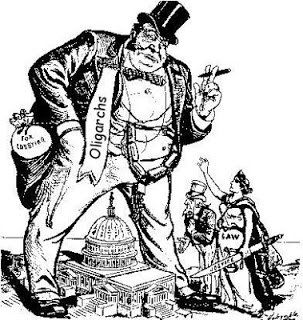
The ruling class wield their power more blatantly than ever. There is little effort to conceal their determination to rule over the people and to control the politicians who are now little more than their personal minions.
When the people get a little help, as happened with additional stimulus funds for the unemployed, politicians across the country took up arms for the ruling class and turned down free money just to stay in the good graces of their bosses.
Currently 25 states out of 50 have rejected additional help for the unemployed. The money came from the federal government and didn’t impact state budgets, but politicians know who calls the shots. When called upon to help struggling people they chose to do just the opposite. They helped their exploiters and, in the process, made a mockery of what passes for democracy.
There is no labor shortage in this country. Instead, there is a shortage of jobs that pay a living wage and that is because of the power of capitalists. They have grown richer precisely because they have forced workers to live in a constant state of precarity, and now it is quite literally better to stay home than to work for a pittance.
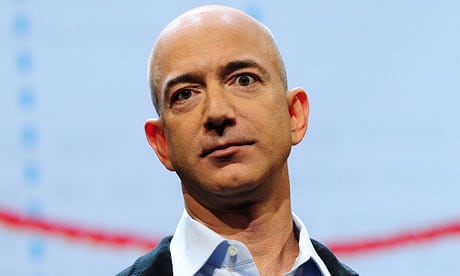
Of course, the richest man in the world, Amazon’s Jeff Bezos, is a master at coming up with new ways to subjugate workers. Any reports of job growth should be viewed with a very jaundiced eye as predatory capitalism has driven down wages and created a dystopia for workers. Bezos has mastered squeezing the most and giving the least.
Amazon warehouse workers suffer from injuries at higher rates than other employees in similar jobs but the injuries are part of the cost of doing business. It is expected that the grueling working conditions will create high turnover which is exactly what Amazon wants. A revolving door of employees serves their needs quite nicely. Bezos made a big deal about a $15 per hour starting salary but he could certainly afford to pay a lot more, a real living wage. The tight-fisted billionaire who could potentially become a trillionaire got rich the old fashioned way. He cheats workers.
Bezos also comes up with new and ingenious ways to spread the suffering. Amazon Flex delivery drivers are hired by apps and fired by algorithms. They have no interaction with human resources or any humans at all and they must pay a $200 fee to contest terminations that are rarely decided in their favor.
Even when American workers lose their jobs they are still at the mercy of corporate giants. ID.me contracts with states to provide public access to web sites such as those used for unemployment claims. Their facial recognition software doesn’t verify everyone properly and desperate people wait days and weeks for their unemployment payments to arrive. As with Amazon there is no one to speak to for help. But state governments turn over millions of dollars to ID.me in order to cheat people out of benefits they have earned. Currently 30 states contract with ID.me to make sure that the most vulnerable are kicked while they are down.
The algorithm hirings and firings and the facial recognition technology problems are not bugs in the system. They are features. They are doing precisely what they are intended to do, keep workers poor, desperate, and at the mercy of capitalists. Cruelty is the point.
One might ask who speaks for the people. Workers in several states had their unemployment saved by court decisions but those are few and far between. Politicians are as blatant as their corporate bosses and openly side with them against their constituents.
There is no way to reform this system. Democrats and republicans are equally eager to act at the behest of corporate interests. The people either vote in hopes of change that never comes or are apathetic because they see that the odds are against them.
The workers who refuse low pay under dangerous conditions are moving in the right direction. Whether they know it or not they are potentially building a new movement. A general strike is what the country needs. Of course that is why the hammer fell in an attempt to nip any resistance in the bud and get the cogs back into the machine. But the direction we must move in is clear. There is no salvation from a Biden or a Harris or any other name being floated. The people will have to move in a different direction if they are to save themselves.
Is inflation “transitory” in your household budget? Really? Where?
The Federal Reserve has been bleating that inflation is “transitory”–but what about the real world that we live in, as opposed to the abstract funhouse of rigged statistics? Here’s a simple test to help you decide if inflation is “transitory” in the real world.
Let’s start with some simple stipulations: price is price, there are no tricks like hedonics or substitution. Nobody cares if the truck stereo is better than it was 40 years ago, the price of the truck is the price we pay today, and that’s all that matters.
(Funny, the funhouse statistical adjustments never consider that appliances that used to last 30 years now break down and are junked after 3 years–if we adjusted for that, the $500 washer would be tagged at $5,000 today because it has lost 90% of its durability over the past 30 years.)
Second, inflation must be weighted to “big ticket” nondiscretionary items. The funhouse statistical trickery counts a $10 drop in the price of a TV (which you buy every few years at best) as equal to a $100 rise in childcare, which you pay monthly. No, no, no: a 10% rise in rent, healthcare insurance and childcare is $400 a month or roughly $5,000 a year. A 10% decline in a TV you buy every three years is $50. Even a 50% drop in the price of a TV ($250) is $83 per year–absolutely trivial, absolutely meaningless compared to $5,000 in higher big-ticket expenses.
You can forego the new TV but not the rent, childcare or healthcare. That’s the difference between “big ticket” nondiscretionary and discretionary (meals out, 3rd TV, etc.).
Third, we jettison the painfully obvious manipulation of “owners equivalent rent” for housing costs. Housing costs are the prices we pay for rent, owning a home and paying property taxes, insurance and maintenance costs to own the home. (Have you priced having a new roof put on your house by a licensed, reputable contractor? No? Well, it’s become a lot more expensive than it was a few years ago. Where is that enormous price leap in “owners equivalent rent”? Just how stupid does the Fed reckon we are?)
OK, here’s the test: let’s say markets finally take a deflationary dive from overvalued heights. Housing, stocks and other risk assets fall 30%. Trillions of dollars in “wealth” (that didn’t exist prior to the Everything Bubble inflating) has vanished, generating a reverse wealth effect as all the owners of these assets feel poorer and less inclined to borrow and spend. This is classically considered highly deflationary: demand drops, prices drop.
The three billionaires who own more assets than the bottom 50% of Americans (165 million Americans) will be crying, but how does life change for the 165 million Americans who own a vanishingly thin slice of these assets? Does their rent drop? No, for the reasons I explained in The Fed Is Wrong: Inflation Is Sticky: the big corporate landlords have to keep rents high to placate their lenders. (And let’s not forget greed: the greedy never want to lower prices, preferring to cling to the Fed’s fantasy of “transitory” trouble.)
Now let’s ask about the higher-income 150 million Americans who own homes and pay property taxes, who pay healthcare insurance, college tuition and fees, childcare and elderly care. Even if there is a deflationary crash in stocks and housing, what are the odds the overall costs of owning and maintaining your home will drop significantly?
What are the odds that local government will let property taxes drop with valuations? Shall we be honest and say zero? If real estate valuations plummet, then property tax rates will rise to compensate. Or other “creative” fees will be imposed to make up the shortfall in tax revenues.
What about childcare? What are the odds that childcare costs will drop 30%? Shall we be honest and say zero? The costs paid by childcare providers only go up, and so those who don’t charge enough (marginal providers) will close down, generating a shortage of supply that elevates prices.
What about elderly care? Will assisted living facilities suddenly drop 30% just because asset bubbles pop? No. The costs of assisted living march higher regardless of what asset valuations and interest rates do.
What about healthcare? Will all those costs drop 30% because assets declined? No. Everyone exposed to real-world pricing of healthcare will be paying more.
But what about the roofing contractor? Won’t they charge 30% less? The biggest expenses for the contractor are workers compensation insurance, liability insurance, disability insurance, FICA (Social Security and Medicare) and healthcare insurance, and none of those will drop a single dollar even if stocks drop 30%.
Just as 85% of local government expenses are labor-related, most of the expenses of the roofing contractor are labor-related. The roofing materials dropping a few bucks might lower the cost by a few percentage points, but the material costs are based on the costs of the manufacturers, distributors, truckers, etc., and these are also based on labor-related expenses, taxes, insurance and healthcare–none of which will drop a dime, regardless of what asset prices do.
Economist Michael Spence elucidated the difference between tradable and untradable goods and services. If you want your washer repaired, that service in untradable, as shipping your broken washer to China for repair is not financially viable. As labor costs rise in China and other offshore economies, that raises costs even for tradable goods.
The majority of essential services are untradable and the costs are dependent on “big ticket” expenses which cannot go down without imploding the economy and government: taxes, insurance, healthcare, childcare, elderly care, etc. cannot drop 30% because they’re based on labor costs, highly profitable systemic friction (Big Pharma, the Higher Education Cartel, Big Ag, healthcare and other quasi-monopolies) and the need for ever-higher tax revenues to provide services which the public demands.
Let’s also ponder the consequences of the extreme concentration of wealth and income in the top 5% of U.S. households. The top 10% own roughly 85% of all wealth, and the top 1% own more than half the financial wealth.
Any significant drop in financial assets will have almost no effect on the bottom 90% because they don’t own enough of these assets to be consequential. So the deflationary effect of the reverse wealth effect will be concentrated in the discretionary spending of the top 10%: the luxury imported vehicles, the $100 per plate dinners (those $60 bottles of wine add up), the $500/day resort vacation, the $2,500/week AirBnB rental, etc.
The declines in the cost of these discretionary luxuries may well be noteworthy, but there are thresholds below which prices cannot drop. The high-end restaurant has equally high-end expenses, and so marginal providers will close, leaving only those few who can maintain profitability as demand for luxury dining craters.
The resort has high expenses as well, and once profitability has been lost, resorts will close just like other marginal providers. Supply shrinks along with demand, and the survivors keep prices high enough or they too will close.
So the essential “big ticket” costs will keep rising and the discretionary luxuries only the top 10% can afford will drop–but not by much as all those luxury providers have the same high fixed costs.
So to recap the test: what are the odds of these “big ticket” expenses dropping 30% if asset prices drop 30%?
Taxes: zero.
Healthcare: zero.
Childcare: zero.
Elderly care: zero.
Costs of doing business: zero.
As for housing: the mortgage doesn’t drop if the market value of the house drops 30%, and any declines in insurance will be modest. The costs of maintenance won’t drop much, either, and might actually increase as the supply of skilled workers declines. (Nothing is more expensive than the “cheap” repair that has to be redone correctly.)
Rents may drop in areas nobody wants to live anymore, but rents will rise in places people do want to live.
The larger point here is the long economic cycles have turned. The 40-year decline in interest rates has turned, whether we admit it or not. The 40-year decline in the prices of goods due to financialization (lower interest rates, higher speculative assets) and globalization has turned. The 40-year expansion of the workforce has turned. The 40-year decline of oil/fuel/resources prices has turned. The 40-year fantasy that we can depend on other nations for our essential resources and components is drawing to a close.
Untradable goods and services, cost thresholds, resource security, the end of financialization / globalization and declining interest rates matter. The fantasy that the top 10% can prop up the economy by borrowing and spending the phantom wealth of insanely overvalued asset bubbles is drawing to a close.
Is inflation “transitory” in your household budget? Really? Where?
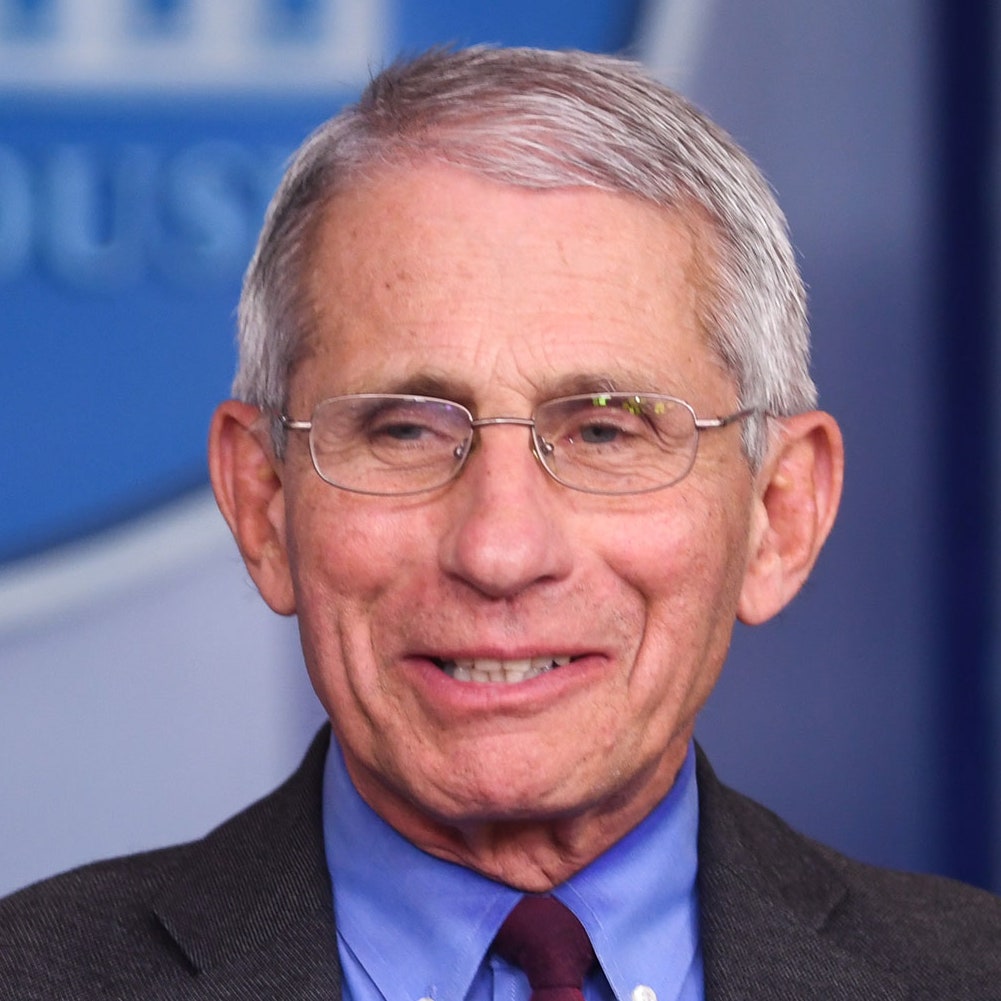
In light of the current COVID-related situation in India, Dr Anthony Fauci, the top US adviser on COVID, has called for India to implement a hard lockdown and for the mass roll-out of vaccines.
However, Fauci has no clue and no authority to lecture on what is good for India.
That is the view of journalist Ratna Chakraborty. Writing on the Empire Diaries website, she argues that the US is a rich nation, prints the world’s reserve currency, has robust financial coverage for the jobless and its population is spread out.
On the other hand, India is finance-strained, has a brittle economy that lives on the brink of disaster, does not have any financial coverage for the jobless, is densely populated and its people mostly live in congested clusters.
Given the government’s incompetence and the callousness demonstrated towards poorer sections of Indian society the first time around, Chakraborty says any new lockdown would again result in disaster. She adds that nothing has been learnt, with no attempt to upgrade the healthcare set-up nationwide.
It is worth recalling what renowned academic and activist Noam Chomsky said about India’s first lockdown.
During an interview with Amy Goodman of Democracy Now! back in May 2020, Chomsky said:
… you can almost describe it as genocidal. Modi gave, I think, a four-hour warning before a total lockdown. That’s (affected) over a billion people. Some of them have nowhere to go.
He added:
People in the informal economy, which is a huge number of people, are just cast out. Go walk back to your village, which may be a thousand miles away. Die on the roadside. This is a huge catastrophe in the making…
During the first lockdown in India, rural affairs commentator P Sainath painted a dreary picture of the impacts, not least the desperate plight of migrant workers, a shortage of cash to buy food and a potential shortage of food as farmers were unable to complete their harvests.
Sainath also reported the views of Dr. Sundararaman, a former executive director of the National Health Systems Resources Centre, who argued that there was a desperate need to:
identify and act on the reverse migrations problem and the loss of livelihoods. Failing that, deaths from diseases that have long tormented mostly poor Indians could outstrip those brought about by the corona virus.
Regardless of the destructive impact of the first lockdown in India and the questionable efficacy of lockdowns in terms of what they are supposed to achieve, another one would further push hundreds of millions towards poverty and hunger. It would merely fuel and accelerate the impoverishment caused by the first lockdown.
A new report prepared by the Centre for Sustainable Employment at Azim Premji University (APU) has highlighted how employment and income had not recovered to pre-pandemic levels even by late 2020.
The report, ‘State of Working India 2021 – One year of Covid-19’ highlights how almost half of formal salaried workers moved into the informal sector and that 230 million people fell below the national minimum wage poverty line.
Even before COVID, India was experiencing its longest economic slowdown since 1991 with weak employment generation, uneven development and a largely informal economy. A recent article by the Research Unit for Political Economy highlights the structural weaknesses of the economy and the often desperate plight of ordinary people.
The study also found that there was a loss in monthly earnings for all types of workers: 13% for casual workers, 18% for the self-employed, 17% for those with temporary salaries, 5% for the permanent salaried and 17% overall.
The poorest 25% of households borrowed 3.8 times their median income, as against 1.4 times for the top 25%. The study noted the implications for debt traps.
Six months later, it was also noted that food intake was still at lockdown levels for 20% of vulnerable households.
How bad is COVID?
Given this impact, before listening to prominent individuals with apparent conflicts of interest related to vaccine roll-outs (see the editorial in the British Medical Journal ‘Covid-19, Politicisation, Corruption, and Suppression of Science’), the current COVID-related situation in India must be contextualised. The sensationalism needs to be put to one side.
According to Yohan Tengra, a Mumbai-based political analyst and healthcare specialist, the true number of infection rates can only be known by testing symptomatic people who have tested positive with either a virus culture test or PCR test that uses 24 cycles or less.
The PCR test has been used as the gold standard for COVID cases around the world. But it has been sharply criticised for being inaccurate, inappropriate, for using cycles in excess of 40 (thereby inflating the numbers) and for producing ‘false positives’.
It seems that even the Swedish Ministry of Health now thinks that it is not fit for purpose:
The PCR technology used in tests to detect viruses cannot distinguish between viruses capable of infecting cells and viruses that have been neutralised by the immune system and therefore these tests cannot be used to determine whether someone is contagious or not. RNA from viruses can often be detected for weeks (sometimes months) after the illness but does not mean that you are still contagious.
We also need to be reminded what the US Centers for Disease Control and Prevention stated about the PCR in December 2020. It is especially important to focus on PCR testing because these tests are the entire basis for restrictions and lockdowns (and vaccination); even when deaths were within normal annual ranges, ‘case’ levels were high and restrictions and ‘tiered lockdowns’ were still being imposed in places like the UK.
Detection of viral RNA may not indicate the presence of infectious virus or that 2019-nCoV is the causative agent for clinical symptoms. This test cannot rule out diseases caused by other bacterial or viral pathogens.
Perfectly healthy people are being tested and small often insignificant fragments of flu, common cold or some other virus can be detected. People are then labelled as a COVID ‘case’.
The two authors note that this flawed methodology cannot be used to confirm the existence of an emergency situation. EUA criterion is therefore not only invalid but illegal.
Furthermore, there is currently decent scientific evidence to indicate asymptomatic transmission may not be significant.
According to Tengra, the case numbers being reported in India are mainly asymptomatic cases. The directors of the All India Institute of Medical Science and the India Council of Medical Research both say that there are many more asymptomatic cases this time than in the so-called ‘first wave’.
As these ‘cases’ comprise most of India’s case numbers, we should therefore be questioning the data as well as the PCR tests being used to detect the virus.
Tengra says the case fatality rate for COVID-19 in India was over 3% last year but has now dropped to below 1.5%. The infection fatality rate is even lower, with serosurvey results showing them to be between 0.05% to 0.1%.
As has occurred in many other countries, Tengra notes the way that death certificate guidelines are structured in India makes it easy for someone to be labelled as a COVID death just based on a positive PCR test or general symptoms. It is therefore often difficult to say who has died from the virus and who has been misdiagnosed.
We should also bear in mind that respiratory diseases like TB and respiratory tract infections such as bronchitis leading to pneumonia are major killers in India. These conditions are severely aggravated by air pollution and often require oxygen which can be in short supply during air pollution crises in places like Delhi at this time of the year.
Therefore, the current harrowing scenes we see in the media might not necessarily be due to the lethality of the virus but by the numbers who are ending up in hospital.
Vaccines
If the pandemic narrative has been constructed on the house of (statistical) cards outlined thus far, then we should be questioning the need for a mass vaccination campaign, which could actually lead to aggravating the current situation.
This is not lost on Dr Geert Vanden Bossche, a virologist who has held positions at several vaccine companies, carrying out vaccine research and development. He has also been involved with the Bill and Melinda Gates Foundation and has worked with the Global Alliance for Vaccines and Immunization (GAVI). Not an ‘anti-vaxxer’ in any sense of the term.
He offers insight into why it is quite possible that mass vaccine rollouts will actually lead to very disturbing levels of deaths directly related to COVID-19. Far from reducing the numbers and facilitating immunity, he anticipates ‘vaccine assisted immune escape’.
Vanden Bossche warns that mass infection prevention and mass vaccination with Covid-19 vaccines in the midst of the pandemic can only breed highly infectious variants. He offers a truly worrying scenario. Of course, not everyone might agree with his analysis but it is certainly a cause for concern.
There is also the entire issue regarding the necessity, efficacy and safety of the vaccines now being rolled out. The group ‘Doctors for COVID Ethics’ has recently raised serious doubts in all of these areas (its concerns have been published on the UK-based OffGuardian website).
In finishing, there are two questions we should ask.
Can we have confidence in science and evidence-based health and social policy where COVID-19 is concerned? And can we just assume – as governments and the media imply we should – that Anthony Fauci and the pharmaceutical corporations have ordinary people’s interests at heart?
In response to the first question, not much. In response to the second, certain interests have been riding and fuelling a wave of sensationalism and duplicity throughout.
America’s financial system and state are themselves the problems, yet neither system is capable of recognizing this or unwinding their fatal synergies.
why do some systems/states emerge from crises stronger while similar systems/states collapse? Put another way: take two very similar political-social-economic systems/nation-states and two very similar crises, and why does one system not just survive but emerge better adapted while the other system/state fails?
The answer lies in what author Geoffrey Parker termed Fatal Synergies and Benign Synergies in his book Global Crisis: War, Climate Change, & Catastrophe in the Seventeenth Century. Synergy results from “interactions that produce a combined effect greater than the sum of their separate effects.” In other words, 2 + 2 + 2 + 2 = 8 is linear, while synergy is 2 X 2 X 2 X 2 = 16.
Given that the core function of states is the distribution of resources, capital and agency, we can distill the difference between Fatal Synergies and Benign Synergies into two questions:
1. What problems cannot be resolved by the financial system/state, no matter how many reforms are thrown at them?
2. Which groups have a meaningful voice in decision-making / governance and which groups are effectively voiceless / powerless?
The first question identifies the structural weak points in the system. These weak points could have any number of sources: they could be perverse incentives embedded in the system, elites caught up in their own enrichment, or even a willful blindness to the nature of the crisis threatening the system.
Here’s an example in the U.S. system: corporations reap $2.4 trillion in profits annually, roughly 15% of the nation’s entire output. Politicians need millions of dollars in campaign contributions to win elections. Those seeking political influence have not just billions but tens of billions. Those needing to distribute political favors will do so for mere millions.
“I’d say that contrary to what decades of political science research might lead you to believe, ordinary citizens have virtually no influence over what their government does in the United States. And economic elites and interest groups, especially those representing business, have a substantial degree of influence. Government policy-making over the last few decades reflects the preferences of those groups — of economic elites and of organized interests.”
This asymmetry cannot be overcome. Indeed, the past 40 years have witnessed an increasing concentration of wealth and power in corporations and their lobbyists and a decline of political influence of the masses to near-zero. Every reform has failed to slow this momentum, which is constructed of incentives to maximize profits, gain political favors and win elections.
In a similar fashion, the Imperial Presidency has gained power at the expense of Congress for decades–a reality that scholars bemoan but the reforms allowed by the system are unable to stop. So we have endless wars of choice without a declaration of war by Congress, one of the core powers of the elected body.
An analogy to these systemic weak points is the synergies of an organism’s essential organs: if any one organ fails, the organism dies even though the other organs are working just fine. In other words, any system is only as robust as its weakest essential component/process.
Whatever problems the system is incapable of resolving have the potential to bring down the system once they interact synergistically.
The second question identifies how many groups have been suppressed, silenced or ignored by those at the top of the heap. If these groups have an essential role in the system as producers, consumers and taxpayers, their demand to have a say in decisions that directly affect them is natural.
Another group with understandable frustrations at being left out of the decision-making are those in the educated upper classes whose expectations of roles in the top tier were encouraged by their families, society and training. When these expectations are not met because there are no longer enough slots in the top tier for the rapidly proliferating upper classes, the group left out in the cold has the time, education and motivation to demand a voice.
In other words, those denied access to resources, capital and agency who felt entitled to this access will not be as easily silenced as those who accept their low status and restricted access to resources, capital and agency as “the natural order of things.”
All the groups that are denied a voice and access to resources, capital and agency are in effect a sealed pressure cooker atop a flame. The pressure builds and builds without any apparent consequence until it explodes.
The more that power is concentrated in the hands of the few, the greater the desperation of the groups who are locked out of power. As their desperation rises, some of these groups are willing to go to whatever lengths are necessary to effect change.
The process of explosive demands for change erupting is difficult to manage once released. The system’s essential subsystems may be destabilized–the equivalent of organ failure–and once destabilized, it’s often no longer possible to restore the previous stability.
In this environment, the common good falls by the wayside and the system collapses.
In the context I’ve laid out, Fatal Synergies arise when access to resources, capital and agency are limited by elite hoarding or massive declines in available resources and capital.
Beneficial Synergies arise when whatever resources and capital are available are shared, if not equitably, at least in a process in which every group affected by the distribution has a voice in public decision-making.
Fatal Synergies arise when the identity of each group is based not on shared values and cooperation but on unyielding resistance to competing claims on the nation’s wealth and income.
Beneficial Synergies arise when all groups have a voice and a say in the process of distribution, even if it is limited.
Crises reveal the problems the system is incapable of resolving. How we respond to those constraints and weak points is the difference between Fatal Synergies and collapse and Beneficial Synergies that generate successful evolutionary responses to pressing selective pressures: simply put, “adapt or die.”
America’s financial system and state are themselves the problems, yet neither system is capable of recognizing this or unwinding their fatal synergies.
For the wealthy and the ultra-wealthy, happy days are here again. Even though we have just been through one of the most difficult 12 months in our history, the number of billionaires has increased dramatically during this pandemic. That seems rather odd, but there is no denying that the rich have gotten even richer during this crisis. In fact, Forbes revealed this week that the number of billionaires has risen by about 30 percent over the past year…
The number of newly minted and reissued billionaires soared last year, Forbes reported Tuesday in its annual ranking, a staggering accumulation of personal wealth that stands in sharp contrast with the widespread economic struggles unleashed by the coronavirus pandemic.
The number of billionaires on Forbes’ 35th annual ranking swelled by 660 to 2,755 — a roughly 30 percent jump from a year ago — and 493 of them are first-timers. Seven of eight are richer than they were before the pandemic. Forbes calculates net worth by using stock prices and exchange rates from March 5.
Of course thanks to the reckless policies of our leaders, a billion dollars does not go nearly as far as it once did.
But still, a billion dollars is a whole lot of money.
Needless to say, the biggest reason why the number of billionaires has exploded is because we have been witnessing one of the greatest stock market rallies in history.
A year ago, the Dow Jones Industrial Average was sitting at about 23,000.
Today, it is above 33,000, and some analysts expect it to shoot quite a bit higher throughout the rest of 2021.
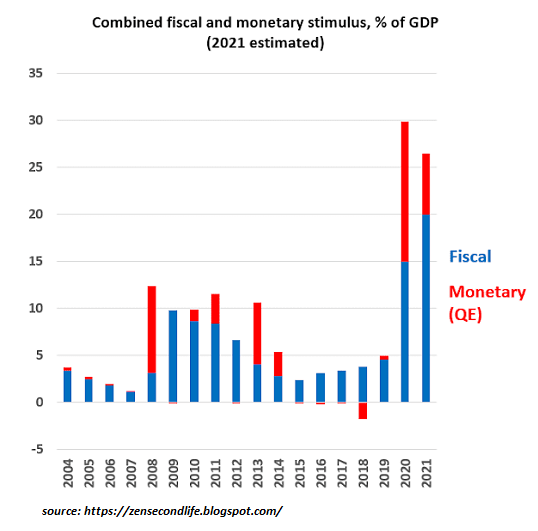
Stock prices have never been more detached from economic reality as they have been over the past 12 months, and they have only risen so high because of unprecedented intervention by the Federal Reserve and because of extremely wild spending by the federal government.
Many have warned that the party will inevitably come to a crashing end at some point, but it hasn’t happened yet.
So for now, the market optimists look like champions.
And now that Joe Biden is in the White House, the corporate media is telling us that we are on the verge of a grand new era of American prosperity. The corporate media insists that the pandemic will soon be behind us thanks to the vaccines, and the talking heads on television envision a return to the good old days very quickly.
In fact, Barron’s is already declaring that the “U.S. economy might be stronger than it’s ever been”.
And CNN is trying to convince us that “America’s economy could be heading for a golden era of growth”.
Really?
If the U.S. economy is actually improving, then why are new claims for unemployment benefits going up?…
The number of Americans filing first-time unemployment benefits unexpectedly rose last week, according to the Labor Department.
Data released Thursday showed 744,000 Americans filed first-time jobless claims in the week ended April 3. Analysts surveyed by Refinitiv were expecting 680,000 filings. The previous week’s total was revised higher by 9,000 to 728,000.
If economic conditions were getting better, that number should be going the other way.
Even I didn’t expect a number this bad.
Prior to 2020, the all-time record high for new unemployment claims in a single week was 695,000. That record was established in October 1982, and it stood all the way until the COVID pandemic hit the U.S. early last year.
Sadly, we have been above 695,000 almost every single week since then.
The numbers compiled by the states tell us that nearly three-quarters of a million Americans filed new claims for unemployment benefits last week. That is an absolutely catastrophic number. Nobody should be talking about a “golden era of growth” or claiming that the “economy might be stronger than it’s ever been” until we get that number back down to pre-pandemic levels.
And right now, we are at a level that is about three times as high as pre-pandemic levels.
Look, the truth is that anyone that tells you that unemployment is low in the United States is lying to you.
According to John Williams of shadowstats.com, if honest numbers were being used the unemployment rate in the United States would be 25.7 percent right now.
That is the sort of number that we would expect to see during an economic depression, and the truth is that we are in an economic depression.
Over the past year, more than 70 million new claims for unemployment benefits have been filed, and approximately 4 million U.S. businesses have gone out of existence permanently.
But don’t worry, the stock market is hovering near all-time record highs and the corporate media is telling you that everything is going to be wonderful now that Joe Biden is in control.
Come on man!
You can’t really believe that stuff that they are shoveling.
With each passing day, more Americans are losing their jobs, more Americans are falling out of the middle class, and the cost of living just keeps going up even higher.
In fact, we just learned that global food prices have now gone up for 10 months in a row…
The global food-price rally that’s stoking inflation worries and hitting consumers around the world shows little sign of slowing.
Even with grain prices taking a breather on good crop prospects, a United Nations gauge of global food costs rose for a 10th month in March to the highest since 2014. Last month’s advance was driven by a surge in vegetable oils amid stronger demand and tight inventories, according to Abdolreza Abbassian, a senior economist at the UN’s Food and Agriculture Organization.
I am going to continue to watch global food prices very carefully, because I believe that it will be a very important trend in the months and years ahead.
But for now, the good news is that at least economic conditions are relatively stable.
Yes, things are not nearly as good as they were before the pandemic, but at least they are not getting a whole lot worse.
So even though things are not great, we should enjoy this period of relative stability while we still can, because it definitely will not last.
“Is Jeff Bezos a horrible boss and is that good?” That was the question posed by Forbes magazine in 2013, a sentiment that helps explain why Amazon’s founder and CEO is detested by the Left for his oligarchic ambitions, while simultaneously admired by America’s capitalist class for his business success. Ironically, Bezos is also loathed by former President Donald Trump, while celebrated by many liberals for so-called resistance.
But with Bezos and his $115 billion fortune laying claim to the title of richest man on Earth, and with Amazon playing an increasingly influential role in public life, it is worth asking: What does Jeff Bezos stand for?
A gifted child born to a teen mom, Bezos grew up not knowing his biological father, who was once one of the top-rated unicyclists in Albuquerque, N.M. Instead, Bezos was raised by the man his mother soon married: Miguel Bezos, who had fled Cuba and the Communist revolution, which had shuttered the elite private Jesuit school he attended, as well as his family’s lumberyard.
Journalists have speculated whether Bezos’ near-pathological competitiveness is a product of his early abandonment, similar to that of fellow tech overlord Steve Jobs. No doubt equally formative was Bezos’ adoptive father, who told Brad Stone, author of The Everything Store: Jeff Bezos and the Age of Amazon, that their home life was “permeated” by complaints about totalitarian governments of both the Right and the Left.
Bezos envisioned the concept of an “everything store” while working for a Wall Street hedge fund in the 1990s. He opened Amazon in 1994 as an online bookshop, a pragmatic starting point. Bezos gave the company his own $10,000 cash injection, took out interest-free loans, and received $245,000 from his parents and family trust.
Many of Amazon’s controversial labor practices can be traced to these early years as a plucky start-up. Amazon’s small team ran on tireless ambition to live up to the company’s customer-focused promise — key to its eventual market domination. Stone reports that, to meet Bezos’ “get big fast” directive, employees devoted themselves completely, working long, unusual, frenzied hours. One early warehouse worker who biked to work simply forgot about his improperly parked car, eventually discovering it had been ticketed, towed and sold at auction.
Such a relentless pace is one thing for a small group of true believers but is quite another when applied to low-wage workers just making ends meet. By 2011, Amazon’s workplace culture became known through a series of headline-grabbing reports that have come to define its public image: badly paid, ceaselessly surveilled, overworked workers, struggling to maintain a breakneck pace.
Bezos created a culture in which everyone from the lowest peon to the highest-ranking executive is expected to match his own devotion, an approach that resulted in spectacular levels of staff turnover by the early 2000s. A declared enemy of “social cohesion,” Bezos pushed his underlings to reject compromise and instead fiercely debate and criticize colleagues when they disagreed. One former employee described it as “purposeful Darwinism.” Known for withering put-downs — “Are you lazy or just incompetent?” “Did I take my stupid pills today?”—Bezos also isn’t above pulling out his phone or, in some cases, simply leaving the room when an employee fails to impress.
The flipside of Bezos’ intellect is a cold, clinical approach to human relations. Bezos described himself as a “professional dater” during his Wall Street days, trying to improve what he called his “women flow” — a riff on the Wall Street term “deal flow.”
“He was not warm,” one person who knew Bezos during his Wall Street days told the East Bay Express in 2014. “It was like he could be a Martian for all I knew.”
Bezos’ pitiless leadership style bled out beyond the Amazon boardroom as he used the company’s growing market share to bully book publishers into his terms. The company launched the “Gazelle Project”—as in, go after publishers “the way a cheetah would pursue a sickly gazelle” — allowing Amazon to undercut its competition at the cost of little to no profit for smaller publishers.
As Amazon inched closer to Bezos’ original vision, it began lobbying efforts in 2000 and became more transparently political by 2011, spending millions to defeat an internet sales tax and playing hardball with state governments, threatening to shutter Amazon facilities if its wishes went unfulfilled. In 2013, Amazon began lobbying Congress to cut corporate taxes.
The same year, Bezos bought the Washington Post, invested in Business Insiderand donated to the publisher of the libertarian magazine Reason. Though Bezos argues his purchase of the Post was motivated by “a love affair [with] the printed word” and a desire to support American democracy, others suspect Bezos’ interest in media is related to bad press following a scathing Lehman Brothers report in 2000, which sent Amazon’s stock price tumbling.
Leading up to the Post purchase, Bezos was increasingly displaying what early Amazon investor Nick Hanauer called his “libertarian politics.” In addition to spending $100,000 in 2010 on a campaign to defeat a proposed Washington state tax on high-income earners, Bezos put hundreds of thousands of dollars toward boosting charter schools and other neoliberal education reforms.
Bezos’ political involvement reached a new apogee in 2019 during the re-election bid of Seattle’s socialist city councilwoman, Kshama Sawant, who called Bezos “our enemy” and tried to pass a head tax to fund housing for those displaced by Amazon’s Seattle footprint. Amazon spent $1.5 million against Sawant and other progressive candidates, a record at the local level, with more than a dozen of the company’s executives contributing to Sawant’s opponent. (Sawant won re-election anyway.)
As for Bezos’ endgame? A Trekkie since childhood, he has long dreamed of funding space exploration, a mission pursued by other superrich moguls (such as Elon Musk) in the face of the climate emergency. Opening the doors of his secretive Blue Origin aerospace company to journalists for the first time in 2016, Bezos told the New York Times he envisioned a future of “millions of people living and working in space,” exploiting the natural resources of surrounding planets and rezoning Earth “as light industrial and residential.”
Ironically, as Bezos pours the wealth he wrung out of exhausted, low-wage Amazon workers into space exploration, Amazon is busy hastening the very planetary collapse Bezos claims he’s trying to prevent — by silencing workers who speak out against Amazon’s assistance to oil and gas companies.
Let’s imagine, however, that Bezos, who accumulates $9 million an hour, lived in a world with Bernie Sanders’ 8% wealth tax (just on fortunes over $10 billion). A single year would see $9 billion flow from Bezos’ treasure trove into government coffers, more than enough to cover the 10-year cost of Elizabeth Warren’s universal child care plan ($1.7 billion) and maintain safe drinking water under Sanders’ plan ($6 billion).
Bezos’ career is a testament to the cruel autocracy and senseless misallocation of resources that our neoliberal capitalist system enables. But his opulence also reveals that the wealth exists to build a fairer and more equitable society — if redistributed. Bezos may loathe social cohesion, but in a world organized around democracy rather than the whims of space-billionaires, it’s something we may well be able to achieve.
Inequality is America’s Monster Id, and we’re continuing to fuel its future rampage daily.
What’s changed and what hasn’t in the past year? What hasn’t changed is easy:
1. Wealth / income inequality is still increasing. (see chart #1 below)
2. Wages / labor’s share of the economy is still plummeting as financial speculation’s share has soared. (see chart #2 below)
What’s changed is also obvious:
1. Money velocity has cratered. (see chart #3 below)
2. Federal borrowing / spending has skyrocketed, pushing federal debt to unprecedented levels. (see chart #4 below)
3. Speculation has reached the society-wide mania level. This is evidenced by record margin debt levels, record levels of financial assets compared to GDP and many other indicators. (see chart #5 below)
Interestingly, every one of historian Peter Turchin’s 3-point Political Stress Index is now checked. Recall that these are core drivers of consequential social disorder, the kind that leads to empires collapsing, the overthrow of ruling elites, social revolutions, etc.
1. Stagnating real wages (i.e. adjusted for real-world inflation): check
2. Overproduction of parasitic elites: double-triple check
3. Deterioration of central state finances: check
But what about social changes? This is an interesting topic because social changes are less easily tracked (few even ask relevant questions and compile the data). Social trends are often more difficult to discern, as surveys may not track actual changes in behavior: people may give answers they reckon are expected or acceptable.
Here are four long-term trends that may have been accelerated by the pandemic:
1. The residents of overcrowded tourist destinations are sick of tourists and are demanding limits that protect increasingly fragile environments and resident quality of life.
Here’s a typical observation of a resident in Hawaii now that tourists are coming back:
Sunday I saw a group of 30 spring break tourists littering the beach with red cups and bottles of alcohol and trash. They had a table full of booze on the beach and were happily leaving their trash everywhere. No masks and no cares for Hawaii. When they left, instead of using the beach access they all climbed over the fence into someone’s yard because it saved them a minute of walking.
No I don’t miss tourists.
This is a global phenomenon. The absence of tourists has awakened a powerful sense that the profits (which flow into elite hands, not local economies) have taken precedence over the protection of what makes the destination worth visiting.
2. Work from home is here to stay. The benefits are too personal and powerful. Corporations demanding a return to long commutes and central offices will find their most productive employees are giving them “take this job and shove it” notices as they find positions with companies that understand that you can’t turn back the clock or ignore the benefits of flexible schedules.
3. Consumer behaviors have changed and are continuing to change. This is not just an expansion of home delivery; it’s a re-appraisal of big-ticket spending on concerts, entertainment, sports events and many other sectors that depend solely on free-spending consumers who ignore the recent doubling or tripling of prices.
At present, we are dangerously trending toward chaos, total world war, civil war, incivility, and a complete breakdown of civil society, and to the indoctrinated, it’s difficult to understand why exactly this is happening. As the stress of this mounts, the misinformed lash out at friends, family members and strangers who do not fully subscribe to their worldview. The battle really is one of understanding how the world works, and with such epidemic false perceptions, people choose the wrong targets for their ire.
If one were to unlearn, however, many of the things we’ve been taught about how our world works, re-educate the self, and re-orient to a more complete and truthful assessment of the world today, the picture becomes more clear, things make more sense, and a pathway to unity opens up. One thing we can all agree on, though, is that we’ve all been duped in big ways, most notably in the one arena which affects everyone, everyday, at every time. Money.
False = Money is Real and the Economy is Capitalist
Trained to worship money and the idea of infinite growth, it’s tough to understand just how much unnatural stress is being introduced in our world by a financial system and world economy which is operates explicitly for the profit a few key players. The money is fiat, and its value is controlled by privately run organizations who have the power to enslave the entire world with debt.
Furthermore, the system is not capitalism, but rather something beyond capitalism. Post capitalism, perhaps, as it more closely resembles the zombie ghost of capitalism, soullessly eating everything in its path with no interest at all in sustainability.
Recently speaking on this matter, financial analyst Max Keiser explained the result of having central bank managed interest rates kept artificially low in order to enrich those at the top of the pyramid. This is one major piece of very large and hidden puzzle.
“There’s no incentive to save money, there’s only an incentive to commit fraud. So if there’s no incentive to save money, then there’s no capital, and without capital there’s no capitalism. So you have, unfortunately, now a situation where it’s the survival of the most fraudulently inclined. It’s a kakistocracy, which is rule by the least capable of a society.” ~Max Keiser
This short interview with Max Kaiser by Luke Rudkowski sheds more insight on this issue:
The system we have today is really more akin to an elaborate slave plantation. All money that we use today in public is borrowed from private banks, and we pay dearly for the privilege of using it.
This is because money is created out of debt in a one-to-one increase in public debt. The national debt is $20 Trillion. That means the (roughly) 234 million US Americans would have to pay approximately $62,000 each to pay it off. This includes babies, children, poor people, and homeless people. There are even those who claim that it’s mathematically impossible to pay off the debt. And almost every country is in debt to every other country. It’s the height of insanity.
As former Governor of the Federal Reserve Marriner Eccles said, “If there were no debts in our money system, there wouldn’t be any money.” ~Gary ‘Z’ McGee
The stress in our world stemming from a global banking system designed to enslave is felt everywhere, from endless wars to unaffordable healthcare and evermore expensive food. Yet while few people really understand how this works, we are battling a war of propaganda and mind control.
Making sense of the world today is no easy task for those who’ve yet to abandon the standard American diet of propaganda and mental programming. Indoctrination works in a couple of key ways. Firstly, beliefs are instilled and reinforced by repetition, and secondly, undesirable beliefs are ignored and cast aside as fringe. What’s left is a mind which focuses on what it’s supposed to focus on, constructing a reality around a false and incomplete picture of the world.
This is food for thought for free thinkers, with the aim overcoming petty division in order to create a more prosperous and unified future.









 After the Crash