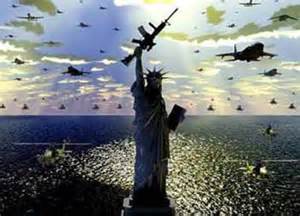
The War On Consciousness

index

By Graham Hancock

Source: Body Mind Soul Spirit

We are told that the “War on Drugs” is being waged, on our behalf, by our governments and their armed bureaucracies and police forces, to save us from ourselves. “Potential for abuse and harm” are supposed to be the criteria by which the use of drugs is suppressed—the greater a drug’s potential for abuse and harm, the greater and more vigorous the degree of suppression, and the more draconian the penalties applied against its users.

In line with this scheme drugs are typically ranked into a hierarchy: Schedules I, II, and III in the US, Classes A, B, and C in the UK, and so on and so forth all around the world. Thus, to be arrested for possession of a Schedule I or Class A drug results in heavier penalties than possession of a Schedule III or Class C drug. Generally if a drug is deemed to have some currently accepted medical use it is likely to be placed in a lower schedule than if it has none, notwithstanding the fact that it may have potential for abuse or harm. In the absence of any recognized therapeutic effects, drugs that are highly addictive, such as heroin or crack cocaine, or drugs that are profoundly psychotropic, including hallucinogens such as LSD, psilocybin, or DMT, are almost universally placed in the highest schedules and their use attracts the heaviest penalties.

The notable exceptions to this system of ranking according to perceived “harms” are, of course, alcohol and tobacco, both highly addictive and harmful drugs—far more so than cannabis or psilocybin, for example—but yet socially accepted on the grounds of long customary use and thus not placed in any schedule at all.

The Failed War

When we look at the history of the “War on Drugs” over approximately the last 40 years, it must be asked whether the criminalization of the use of any of the prohibited substances has in any way been effective in terms of the stated goals that this “war” was supposedly mounted to achieve. Specifically, has there been a marked reduction in the use of illegal drugs over the past 40 years—as one would expect with billions of dollars of taxpayers’ money having been spent over such a long period on their suppression—and has there been a reduction in the harms that these drugs supposedly cause to the individual and to society?

It is unnecessary here to set down screeds of statistics, facts, and figures readily available from published sources to assert that in terms of its own stated objectives the “War on Drugs” has been an abject failure and a shameful and scandalous waste of public money. Indeed, it is well known, and not disputed, that the very societies that attempt most vigorously to suppress various drugs, and in which users are subject to the most stringent penalties, have seen a vast and continuous increase in the per capita consumption of these drugs. This is tacitly admitted by the vast armed bureaucracies set up to persecute drug users in our societies, which every year demand more and more public money to fund their suppressive activities; if the suppression were working, one would expect their budgets to go down, not up.

Inventory of Harm

Such matters are only the beginning of the long inventory of harm caused by the “War on Drugs.”

Western industrial societies, and all those cultures around the globe that increasingly seek to emulate them, teach us to venerate above all else the alert, problem-solving state of consciousness that is particularly appropriate to the conduct of science, business, war, and logical inquiry, and to such activities as driving cars, operating machinery, performing surgery, doing accounts, drawing up plans, accumulating wealth, etc., etc., etc. But there are many other states of consciousness that the amazing and mysterious human brain is capable of embracing, and it appears to be a natural human urge, as deep-rooted as our urges for food, sex, and nurturing relationships, to seek out and explore such “altered states of consciousness.” A surprisingly wide range of methods and techniques (from breathing exercises, to meditation, to fasting, to hypnosis, to rhythmic music, to extended periods of vigorous dancing, etc.) is available to help us to achieve this goal, but there is no doubt that the consumption of those plants and substances called “drugs” in our societies is amongst the most effective and efficient means available to mankind to explore these profoundly altered states of consciousness.

The result is that people naturally seek out drugs and the temporary alterations in consciousness that they produce. Not all people in every society will do this, perhaps not even a majority, but certainly a very substantial minority—for example the 2 million Britons who are known to take illegal drugs each month3 or those 20 million people in the US who have been arrested for marijuana possession since 1965. And these of course are only the tip of the iceberg of the much larger population of American marijuana users, running into many more tens of millions, who have, by luck or care, not yet fallen foul of the law and are thus not reflected in the arrest statistics.

Needless to say, it is of course exactly the same urge to alter consciousness that also impels even larger numbers of people to use legal (and often extremely harmful) drugs such as alcohol and tobacco—which, though they may not alter consciousness as dramatically as, say, LSD, are nevertheless undoubtedly used and sought out for the limited alterations of consciousness that they do produce.

For the hundreds of millions of people around the world whose need to experience altered states is not and cannot be satisfied by drunken oblivion or the stimulant effects of tobacco, it is therefore completely natural to turn to “drugs”—and, since the “War on Drugs” means that there is no legal source of supply of these substances, the inevitable result is that those who wish to use them must resort to illegal sources of supply.

Herein lies great and enduring harm. For it is obvious, and we may all see the effects everywhere, that the criminalization of drug use has empowered and enriched a vast and truly horrible global criminal underworld by guaranteeing that it is the only source of supply of these drugs. We have, in effect, delivered our youth—the sector within our societies that most strongly feels the need to experience altered states of consciousness— into the hands of the very worst mobsters and sleazeballs on the planet. To buy drugs our sons and daughters have no choice but to approach and associate with violent and greedy criminals. And because the proceeds from illegal drug sales are so enormous, we are all caught up in the inevitable consequences of turf wars and murders amongst the gangs and cartels competing in this blackest of black markets.

Instead the powers that be continue to pursue the same harsh and cruel policies that they have been wedded to from the outset, ever seeking to strengthen and reinforce them rather than to replace them with something better. Indeed the only “change” that the large, armed bureaucracies that enforce these policies has ever sought since the “War on Drugs” began has, year on year, been to demand even more money, even more arms, and even more draconian legislative powers to break into homes, to confiscate property, and to deprive otherwise law-abiding citizens of liberty and wreck their lives. In the process we have seen our once free and upstanding societies— which used to respect individual choice and freedom of conscience above all else—slide remorselessly down the slippery slope that leads to the police state. And all this is being done in our name, with our money, by our own governments, to “save us from ourselves”!

Freedom of Consciousness

What is Western civilization all about? What are its greatest achievements and highest aspirations?

It’s my guess that most people’s replies to these questions would touch—before all the other splendid achievements of science, literature, technology, and the economy—on the nurture and growth of freedom.

Individual freedom.

Including, but not limited to freedom from the unruly power of monarchs, freedom from the unwarranted intrusions of the state and its agents into our personal lives, freedom from the tyranny of the Church and its Inquisition, freedom from hunger and want, freedom from slavery and servitude, freedom of conscience, freedom of religion, freedom of thought and speech, freedom of assembly, freedom to elect our own leaders, freedom to be homosexual—and so on and so forth.

The list of freedoms we enjoy today that were not enjoyed by our ancestors is indeed a long and impressive one. It is therefore exceedingly strange that Western civilization in the twenty- first century enjoys no real freedom of consciousness.

There can be no more intimate and elemental part of the individual than his or her own consciousness. At the deepest level, our consciousness is what we are—to the extent that if we are not sovereign over our own consciousness then we cannot in any meaningful sense be sovereign over anything else either. So it has to be highly significant that, far from encouraging freedom of consciousness, our societies in fact violently deny our right to sovereignty in this intensely personal area, and have effectively outlawed all states of consciousness other than those on a very narrowly defined and officially approved list. The “War on Drugs” has thus unexpectedly succeeded in engineering a stark reversal of the true direction of Western history by empowering faceless bureaucratic authorities to send armed agents to break into our homes, arrest us, throw us into prison, and deprive us of our income and reputation simply because we wish to explore the sometimes radical, though always temporary, alterations in our own consciousness that drugs facilitate.

The reason the anti-marijuana campaigns have failed is that millions of users know from their own direct, long-term experience that marijuana does not do them any great harm and (with reference to the most recent anti-marijuana propaganda) most definitely does not drive them mad.

Other than being against arbitrary rules that the state has imposed on us, personal drug use by adults is not a “crime” in any true moral or ethical sense and usually takes place in the privacy of our own homes, where it cannot possibly do any harm to others. For some it is a simple lifestyle choice. For others, particularly where the hallucinogens such as LSD, psilocybin, and DMT are concerned, it is a means to make contact with alternate realms and parallel dimensions, and perhaps even with the divine. For some, drugs are an aid to creativity and focussed mental effort. For others they are a means to tune out for a while from everyday cares and worries. But in all cases it seems probable that the drive to alter consciousness, from which all drug use stems, has deep genetic roots.

Other adult lifestyle choices with deep genetic roots also used to be violently persecuted by our societies.

A notable example is homosexuality, once punishable by death or long periods of imprisonment, which is now entirely legal between consenting adults—and fully recognized as being none of the state’s business—in all Western cultures. (Although approximately thirteen US states have “anti-sodomy” laws outlawing homosexuality, these statutes have rarely been enforced in recent years, and in 2003 the US Supreme Court invalidated those laws.) The legalization of homosexuality lifted a huge burden of human misery, secretiveness, paranoia, and genuine fear from our societies, and at the same time not a single one of the homophobic lobby’s fire-and-brimstone predictions about the end of Western civilization came true.

Likewise, it was not so long ago that natural seers, mediums, and healers who felt the calling to become “witches” were burned at the stake for “crimes” that we now look back on as harmless eccentricities at worst.

At the deepest level, our consciousness is what we are—to the extent that if we are not sovereign over our own consciousness then we cannot in any meaningful sense be sovereign over anything else either.

Perhaps it will be the same with drugs? Perhaps in a century or two, if we have not destroyed human civilization by then, our descendants will look back with disgust on the barbaric laws of our time that punished a minority so harshly (with imprisonment, financial ruin, and worse) for responsibly, quietly, and in the privacy of their own homes seeking alterations in their own consciousness through the use of drugs. Perhaps we will even end up looking back on the persecution of drug users with the same sense of shame and horror that we now view the persecution of gays and lesbians, the burning of “witches,” and the imposition of slavery on others.

Meanwhile it’s no accident that the “War on Drugs” has been accompanied by an unprecedented expansion of governmental power into the previously inviolable inner sanctum of individual consciousness. On the contrary, it seems to me that the state’s urge to power has all along been the real reason for this “war”—not an honest desire on the part of the authorities to rescue society and the individual from the harms caused by drugs, but the thin of a wedge intended to legitimize increasing bureaucratic control and intervention in almost every other area of our lives as well.

This is the way freedom is hijacked—not all at once, out in the open, but stealthily, little by little, behind closed doors, and with our own agreement. How will we be able to resist when so many of us have already willingly handed over the keys to our own consciousness to the state and accepted without protest that it is OK to be told what we may and may not do, what we may and may not explore, even what we may and may not experience, with this most precious, sapient, unique, and individual part of ourselves?

If we are willing to accept that then we can be persuaded to accept anything.

A valiant verbal warrior demythologizes the CIA

valentinecover-400x600

By Edward Curtin

Source: Intrepid Report

“Once there is a suspicion that a religion is a myth, its power has gone.”—Alan Watts, The Wisdom of Insecurity

Like Odysseus, Douglas Valentine is a wily warrior who managed to enter the enemy’s stronghold disguised as a gift. Not Troy, and not within a wooden horse, but in the guise of a nice young “Nobody,” he was able, thirty or so years ago, to breach the walls of the CIA through William Colby, a former director of the Central Intelligence Agency. The guileful thing he brought was his proposal to demystify the Phoenix program, “the controversial CIA assassination program that resulted in the deaths of thousands of civilians during the Vietnam War,” with which Colby was notably associated.

Colby naively assumed “demystify” meant justify, so he welcomed Valentine into his inner sanctum. As in days of yore, Colby, and the CIA officers he referred Valentine to, were so disarmed by the bright young trickster that they divulged their secrets without being asked, defeating themselves in the boastful ways of men drunk on their own youthful exploits. Wanting to be heroes in their own myths, they became unwitting accomplices in their own besmirchment. So much for intelligence.

When the Trojan Horse that became Valentine’s 1990 book, The Phoenix Program: America’s Use of Terror in Vietnam, was opened, and many truths rushed out to slay them, they reacted with shocked outrage that they had been double-crossed by an amateur counterspy.

Legends fall, of course, battles are lost, but when the self-anointed heroic warriors of the CIA fell, they summoned their acolytes and media scribes to silence the counterspy who did not love them. It was not the Valentine that these spurned lovers were expecting.

In this case, their defender was the media celebrity reporter, Morley Safer, who had reported from Vietnam and was friendly with William Colby. Safer owed Colby a favor. When he was in Vietnam, Safer had accepted Colby’s Mephistophelian offer to take a tour of the infamous Phoenix program’s interrogation centers and meet the counterterrorism teams, but with one stipulation. In Safer’s words, delivered to a conference in 2010: “I showed up and [Colby] said, ‘Okay, here are the rules. . . . You can’t take notes and you can’t report anything you hear. . . . to this day, I still feel constrained in terms of talking about’” (what he saw and heard).

Valentine: “And like Don Corleone dispensing favors in The Godfather, Colby knew that one day Safer would be obligated to return it. That is how the CIA, as the organized crime branch of the US government, functions like the Mafia through its old boy network of complicit media hacks.”

So The New York Times, which Valentine had criticized in his book for not reporting the truth about the CIA’s Phoenix program, had Safer write a book review of The Phoenix Program: America’s Use of Terror in Vietnam. He wrote a scathing review in which he said the book was “as turgid and dense and often incomprehensible book as I have ever had the misfortune to open.” Thus Valentine’s work was disappeared like the Vietnamese victims of the Phoenix program. (Safer’s “misfortune,” however, became our fortune when in 2014 Open Roads publishers announced a “Forbidden Bookshelves” series and resurrected Valentine’s exposé in a new edition.)

In his latest book, The CIA as Organized Crime: How Illegal Operations Corrupt America And The World, Valentine explains it thus: “But the left’s leadership is part of the CIA’s old boy network and like all American intellectuals, they look to the Times for direction and validation. So the word went out to ignore the book, not just because it revealed CIA secrets, but because it identified the media, and the Times in particular, as the reason why the public can’t see the CIA clearly for what it is: a criminal conspiracy on behalf of wealthy capitalists.”

But Valentine had been “neutralized,” and over the next quarter century the CIA, through its placement of its people throughout the media, including Hollywood and television, resurrected its mythic image—phoenix-like—from the fleeting and rarely examined ashes Valentine had reduced it to. Using what the CIA officer Frank Wisner called the agency’s “Mighty Wurlitzer”—its deep penetration of the news and cultural apparatus—it played the American people to a tune of CIA heroes defending the “homeland” from mad Muslim terrorists and evil drug dealers besieging the U.S. citadel through deception and direct attack. Movies, television shows, cognitive infiltration of the mainstream media across platforms repeated the message over and over again: We are the good guys in this mythic battle of good against evil. We are defenders of the “Homeland.”

But over these years Valentine had not disappeared, despite the CIA’s wish that he had. It took him fifteen years to recover from his “neutralization,” and then he wrote two books—The Strength of the Wolf and The Strength of the Pack—that examine the nexus between the CIA, the Federal Bureau of Narcotics, and the Drug Enforcement Administration in which he explains in documented detail how the CIA hijacked drug enforcement as it became a prime player in international drug trafficking. Joining hands with organized crime and corrupting law enforcement, the drug running and murder that was crucial to the CIA’s Phoenix program went international.

Most importantly, the Phoenix program’s organizational structure became the template for these world-wide bloody operations: among them, the Salvadoran Option, undertakings throughout South and Central America, the Middle-East, and later the war on terror, “the greatest covert op ever.” And the Phoenix became the conceptual model for The Department of Homeland Security, as “both are based on the principle that governments can manage societies through implicit and explicit terror.”

Valentine shows how the federal drug agencies protect the CIA’s drug running assets and operations, and spread addiction throughout the “homeland.” This is accomplished by CIA agents posing as federal narcotics agents. “The DEA has a public affairs branch staffed by creative writers who filter out anything bad and tell you only what the bosses want you to know. The media echoes what the DEA and the CIA PR people say. But it’s a big lie and it’s pervasive.”

But those important books had little effect on a drug addled population. They appeared in the midst of the dramatic rise in the use of “legal” pharmaceutical drugs (see Deadly Medicines and Organized Crime: How Big Pharma Has Corrupted Healthcare by Dr. Peter C. Gotzsche) and the epidemic of heroin (Greek, heros, hero + German chemical suffix, ine, coined in 1898 by the Bayer Company as a morphine substitute) that has reduced so many people to walking zombies, while minorities have long had their neighborhoods devastated by CIA facilitated crack cocaine. The zombie myth itself has become a staple of American culture—pure entertainment for a brain devouring and brain dead population—entertainment for dummies. It is no wonder. Because from 1990 when Valentine’s The Phoenix Program was trashed by the Times until today, the U.S. government and the scientific/media establishment have worked to convince Americans that all our lives revolve around our brains and that the answers to our problems lie with more brain research, drugs, genetic testing, etc. It’s been a quarter century deluge of propaganda of scientific materialism and biological determinism that we are not free but victims of our genes, neurotransmitters, brains/computers, and chemicals. Having lost our minds and fixated on our brains as instructed, we have chosen to be determined to be determined, not free. It is not coincidental that the U.S. government, beginning with ex-CIA Director and then President George H.W. Bush, declared the 1990s the decade of brain research, followed up with 2000–2010 as the decade of the behavior project, and our present decade being devoted to mapping the brain and artificial intelligence, organized by the Office of Science and Technology Project and the Defense Advanced Research Projects Agency. Brains and drugs, Big Pharma and the CIA, drug running and drug dealing, deaths at home and deaths abroad—a neat circle that has corrupted the country at the deepest levels.

This corruption is dependent on the creation of fictions that penetrate public consciousness to the level of myth. “The government,” Valentine writes, “is creating conditions across the board that are conducive to taking drugs. The pharmaceutical industry is part of the problem, along with its co-conspirators in the advertising industry; every time you turn on the TV there’s a commercial telling you to take a pill. The next commercial says don’t take that pill, take this pill. This is the free market at work, sucking the life out of people.”

But myths rise and fall, and recently the CIA’s invincibility has come under increased scrutiny. As the Greeks warned us long ago, hubris leads to humiliation. Today, more and more Americans are learning, through independent Internet sources and a growing list of books, how to deconstruct the ways the CIA “uses language and mythology to control political and social movements.” The fight is on.

Valentine, a warrior of astute knowledge from his wanderings in the CIA’s labyrinth, has reemerged with his new guidebook to the Minotaur’s deadly ways. The CIA As Organized Crime is a tour de force, a counterpuncher’s no-holds-barred passionate battle to reverse “the terrible truth . . . that a Cult of Death rules America and is hell-bent on world domination.” Unlike many writers, he holds back nothing. He names names. He is adamantine in his accusations against those he considers accomplices—in particular, “the compatible left”—“liberals and pseudo-intellectual status seekers who are easily influenced”—in the CIA/media/elite’s efforts at domination and mind-control. He claims that media celebrities of the left serve the function of pacifying the liberal bourgeoisie in these enterprises.

But knowing how leads on to way and one can easily get lost in a labyrinth, let me not tell the story of the man, Valentine, skilled in all ways of contending with such a formidable foe as the CIA. Better to give you a sampling of his words that explain what he has learned in his long wanderings in these strange and sick worlds.

“I have a very broad approach. . . . psychological, political, anthropological, sociological, historical, philosophical. When I look at a subject I look at it comprehensively from all those different points of view. Literary criticism teaches the power of symbolic transformation, or processing experience into ideas, into meaning. . . . one must, above all, understand the archetypal power of the myth of the hero. That way you can transform, through words, Joe the Plumber or even a mass murderer, into a national hero. When I decided to research and write about the CIA’s Phoenix program, that was how I went at it.”

“They [CIA] create the myths we believe. If we were allowed to understand the CIA, we’d realize it’s a criminal organization that is corrupting governments and societies around the world. It’s murdering civilians who haven’t done anything wrong.”

“Nowadays, the only way you can discern what’s going on is by studying and understanding the historical arc of these bureaucracies. Where did the CIA come from? Where is it going? If you look at it historically, you can see beyond the spin and it becomes demystified. And that is not a happy story. As power gets more concentrated in the security services, the media is no longer simply compliant, it’s functioning as their public relations arm. It simply ignores anything that contradicts the official line.”

“The most important fiction of all is the need for secrecy to preserve our national security.”

“If you want to understand the CIA, you have to understand how it’s organized. . . . The media organizes itself the way the CIA does.”

“Journalism in the US is a traditional cover for CIA officers. And when the owners of the media aren’t covering for the CIA, they’re selling commercial time slots to the multi-national corporations that in turn are selling you commodities made in sweatshops in foreign nations that have been subverted by the CIA. You could almost say there is no such thing as factual reporting. . . . The CIA and the media are part of the same criminal conspiracy. You’re never going to learn anything substantive by reading what mainstream reporters dish out about the CIA. You can’t take a journalism course in CIA Criminal Conspiracies 101.”

“I’m sure the anthrax scare after 9/11 was a CIA provocation designed to justify a mail intercept program codenamed HTLINGUAL.”

“The CIA and the military hire the smartest anthropologists, sociologists, and psychologists to figure out how to do this stuff [social engineering]. . . . That’s why you need a broad historical view. If you focus on just what’s happening now, you’re shocked every day by what you see.”

“When the United States took over drug law enforcement in Afghanistan, opium production increased dramatically. All of a sudden Afghan heroin is flooding the US and Europe. It still is. You can say it’s a coincidence, except all the opium warlords are on the CIA payroll. The DEA sends six hundred agents to Afghanistan to make sure nobody knows about it.”

“Phoenix is the conceptual model for the DHS [Department of Homeland Security]. Both are based on the principle that governments can manage societies through implicit and explicit terror. The strategic goal is to widen the gap between the elites and the mass of the citizenry, while expunging anyone who cannot be ideologically assimilated.”

“Through their control of the media, political and bureaucratic systems, America’s secret rulers engage in terrorism abroad and at home for economic purposes. . . . The objective is to maximize profits and concentrate wealth and political power in fewer and fewer hands. The global War on Terror and its domestic homeland security counterpart are flip sides of the same coin. They are the capitalist ideology applied to foreign and domestic security policy. And like the capitalist system it serves, an unstated national security policy is consolidated in fewer and fewer ideologically correct hands as the empire expands and its contradictions become more apparent.”

This sampling of Valentine’s insights should be enough to show the depth and breadth of his demythologization of this “religious” cult of death that is the CIA. Yet myths die hard. And even when they do, they often rise again, especially when one controls the levers of a society’s storytelling powers, as does the CIA to a great extent through its incestuous coupling with the mainstream corporate media. That is why it is so important for people to take the time to read Valentine’s work.

While The CIA As Organized Crime is filled with detailed information labyrinthine in its complexity, his primary goal is to help us grasp the big picture, to see how the myth and the mythmaking work and how we might break through these fictions. He repeatedly reminds us that we are truly caught in the belly of the whale, in the underworld that will overwhelm us if we do not make the sustained effort to get beyond the blur of daily events and understand how the illusionists who are deluding us create and structure their evil propaganda.

Perhaps the only way to heaven is through hell, as Dante told us. Virgil was his guide. The valiant Valentine can be ours, if we are willing to accompany him on the journey.

Russ Baker on the Media’s Deep State Conversion Moment

index

By Russ Baker

Source: Who.What.Why.

The term “Deep State” has recently become as popular with the media as the term “#resistance.” It certainly wasn’t always that way.

For years, a lonely few have set out to enlighten people on the notion that, when it comes to affairs of state, there is usually more to the story than we are told.

I started WhoWhatWhy because I realized that the publications I worked for had no interest, no understanding of, could not fathom, or were just plain scared to explore the possibility that We, the People, were not in control of our destiny.

You can read most media all day long and you’d never get a sense, except fleetingly, that eight people have as much wealth as half of the world’s population. A handful of people can put their selected candidate in the White House, and the masses remain blissfully unaware as the process unfolds.

A company with vast resources can make sure the so-called free market works a whole lot better for itself than it does for its smaller rivals — even if the other companies offer a better product or service — and corporate media remains silent.

The media typically does not make us wonder why there seem to be wars going on all the time, why Americans are able to live so well compared to most of the world, nor that even today, resource extraction is a very deadly one-way street. They rarely seem to stop and ponder why it is that no matter which of the two political parties is in office, public policy seems to always cater to the 1% and not … the public.

The media does cover politics plenty. But it does not very often cover deep politics — that is, the forces beneath the  surface, the powers behind the daily events, what’s been called the Deep State.

To those unfamiliar with it, this expression sounds creepy, even paranoid, with a hint of conspiracy theory — itself a catchall term designed to discredit any critical analysis that comes perilously close to something that may lead back to the Deep State. How could there be something other than politics or the state — deep politics and a deep state?

Well, ask yourself: Is that giant bank where you have your money actually run by the smiling masses you see in their ads? The ones who say “We’re here for you” but when you call, they all read from the same script and admit they’re powerless? One thing your bank doesn’t do, usually, is advertise the top people, the biggest shareholders, and how much power they wield, and how much money they make.

It takes something like a financial scandal for the CEO to suddenly appear in the limelight, like a mole rubbing its eyes, and you say, “Oh, so that’s the main guy.” You never knew.

The media overall hates these “deep” concepts because they are anathema to people trying to keep their jobs and move up in a hierarchical system owned and influenced by the most powerful, while still wearing the thrilling mantle of “troublemaker.”

Let’s be clear: the Deep State is not six people in hoods muttering incantations. It’s a shifting landscape of those at the top of the heap — not a monolith but a bloody battlefield, with factions breaking both bread and heads.

It includes financiers, industrialists, media titans, generals, spymasters, strategists, and experts in the black arts of mass influence. It even includes a super-verboten topic: how the “overworld” (the legit) do business, albeit usually at arm’s length, with the underworld.

Look at Trump’s track record on this; look at CIA’s well-documented cooperation with the mob and with global drug cartels. Also off-limits to the media: the role of highly profitable illegal activity in making great fortunes (prohibition, drug trade, money laundering) and the cooperation of elements of the state.

***

The deeper meaning and scope of the Deep State is now being misrepresented by those who still hope for handouts from the system — either they’re deliberately obscuring the real nature of the Deep State, or they’re really trying, without much success, to throw some light on a topic to which they’ve come late and have little incentive to dig into too deeply.

One example is the Los Angeles Times, which, despite some great journalism and bravery over the years, has retained a mysteriously close relationship with the CIA and similar entities, serving as their hatchet men against reporters who cut too near the bone of the truth. Look up Gary Webb — or read this “review” of a book on the Deep State by yours truly.  

Recently, one of its longtime Washington hands presumed to explain to the rest of us about the Deep State whose very existence he and his paper denied for so long.

The scariest new catchphrase of the Trump era — and we’re only one month in — is the “deep state,” a term borrowed from countries like Turkey and Egypt, where networks of military officers and intelligence operatives control much of the government.

Um, no. It isn’t just entrenched mid-level bureaucrats, soldiers and spies who make up the Deep State — it is also the extremely wealthy who ultimately manipulate and influence these pawns on the board of power.

The New York Times apparently got the same memo as its West Coast namesake:

A wave of leaks from government officials has hobbled the Trump administration, leading some to draw comparisons to countries like Egypt, Turkey and Pakistan, where shadowy networks within government bureaucracies, often referred to as “deep states,” undermine and coerce elected governments.

The point of all this is that if you limit a description of some poisonous Deep State to those actually employed in “bureaucracies,” you are actually playing into the hands of the most powerful Deep State players: the super-rich who benefit when government itself is discredited to the point that everything can be outsourced — to them. And that’s exactly what we have seen in case after case, with the privatization of intelligence, police work, prisons, schools, and so on. Let’s get rid of those nefarious Deep State education officials and save the day with billionaire Betsy DeVos!

No — the Deep State IS populated by people like Betsy DeVos and her husband and their coterie. They’re the ones who can buy the loyalty of modestly-paid government figures who expect to travel out the revolving door to dip into the abundant coffers of the Koch brothers et al.

To be clear, we probably don’t want to think of the Deep State as synonymous with the plutocracy — it’s not all about money. It is about an ideology of self-interest and a kind of fascist value system, and an ability to build deep links into institutions like the FBI, the Pentagon, the NSA, the CIA, local law enforcement, etc. Of course, elements within the Deep State, as is true throughout the world, can also be forces for good, resisting when things in the surface world “go too far.” That, in part, is what we are seeing in the resistance to Trump from surprising quarters.

It’s also something to keep in mind when we see the Washington Post leading the charge against Trump. The Post is, like Amazon, the property of Jeff Bezos — and the CIA is one of Amazon’s biggest customers (for its cloud computing services.) The CIA is none too happy with Trump — with very good reason, for once (well, there was also that battle with Cheney and the neocons), and so, yes, that too is all the Deep State at work.

And no, don’t look to The Post to fully explain it all. Why? Again, my personal experience — here’s the Post’s contracted-out hit piece on my Deep Politics book.

***

The Deep State has cajoled or intimidated almost the entirety of journalism, mainstream to Left to Right — to ignore its existence, and to defame those who dare investigate it, by lumping them with all manner of crazy under the all-purpose dysphemism “conspiracy theory.” Try googling related terms: conspiracy theorist, conspiracy nut, etc — you will find that the “top” news organizations have routinely beaten up on those who dared break ranks by slapping this deadly moniker on them. It’s the loud cousin of the whispering campaign, the sort that makes it hard to find work and scares off would-be allies.

I’ll note that back in the 1960s, the CIA got really nervous as interest in the assassination of President John F. Kennedy heated up, with reputable, brave people asking a lot of questions about the impossible ridiculous fantasy story the media sold us in the Warren Report. In an internal CIA memo, the agency prescribed all manner of tactics to discredit those who were sticking their noses where they oughtn’t, conferring on them the deadly “Conspiracy Theorist” label.

And, in the 1970s, Carl Bernstein, of Watergate sleuth fame, wrote a piece in Rolling Stone revealing the extent to which the security apparatus had penetrated America’s media itself. Shades of Romania and East Germany.

Even Bill Moyers, whom I greatly admire, and who has been complimentary of WhoWhatWhy’s work — brought on a conservative to explain what Deep State is all about. Given the history and the continuing resistance to the concept at the time that program aired in 2014, probably a smart move.

But the times they are a-changin’. Since Wikileaks’ revelations, since Edward Snowden, since … Trump, the shameless and spineless in journalism have spun on a dime and now the things some of us were attacked for are smack dab in the middle of the “conversation,” albeit with the system stingily withholding credit to those who were there first.

In any case, now that it’s all the vogue, I say to the establishment media: No. You do not get to define this term, you do not get to tell the rest of us if there is a Deep State, the nature of its influence, or whether we should or should not be concerned about it.


Related Videos:

Neoliberalism and The Globalization of War: America’s Hegemonic Project

aa-American-Empire-statue-of-liberty-and-military

By Prof Michel Chossudovsky

Source: GlobalResearch.ca

The world is at a dangerous crossroads.  The United States and its allies have launched a military adventure which threatens the future of humanity. Major military and covert intelligence operations are being undertaken simultaneously in the Middle East, Eastern Europe, sub-Saharan Africa, Central Asia and the Far East. The US-NATO military agenda combines both major theater operations as well as covert actions geared towards destabilizing sovereign states.

America’s hegemonic project is to destabilize and destroy countries through acts of war, covert operations in support of terrorist organizations, regime change and economic warfare. The latter includes the imposition of deadly macro-economic reforms on indebted countries as well the manipulation of financial markets, the engineered  collapse of national currencies, the privatization of State property, the imposition of economic sanctions, the triggering of inflation and black markets.

The economic dimensions of  this military agenda must be clearly understood. War and Globalization are intimately related. These military and intelligence operations are implemented alongside a process of economic and political destabilization targeting specific countries in all major regions of World.

Neoliberalism is an integral part of this foreign policy agenda. It constitutes an all encompassing mechanism of  economic destabilization. Since the 1997 Asian crisis, the IMF-World Bank structural adjustment program (SAP) has evolved towards a broader framework which consists in ultimately undermining national governments’ ability to formulate and implement national economic and social policies.

In turn, the demise of national sovereignty was also facilitated by the instatement of the World Trade Organization (WTO) in 1995, evolving towards the global trading agreements (TTIP and TPP) which (if adopted) would essentially transfer state policy entirely into the hands of corporations. In recent years, neoliberalism has extend its grip from the so-called developing countries to the developed countries of both Eastern and Western Europe. Bankruptcy programs have been set in motion. Island, Portugal, Greece, Ireland, etc, have been the target of  sweeping austerity measures coupled with the privatization of key sectors of the national economy.

The global economic crisis is intimately related to America’s hegemonic agenda. In the US and the EU, a  spiralling defense budget backlashes on the civilian sectors of economic activity. “War is Good for Business”: the powerful financial groups which routinely manipulate stock markets, currency and commodity markets, are also promoting the continuation and escalation of the Middle East war. A worldwide process of impoverishment is an integral part of the New World Order agenda.

Beyond the Globalization of Poverty 

Historically, impoverishment of large sectors of the World population has been engineered through the imposition of IMF-style macro-economic reforms. Yet, in the course of the last 15 years, a new destructive phase has been set in motion. The World has moved beyond the “globalization of poverty”: countries are transformed in open territories,

State institutions collapse, schools and hospitals are closed down, the legal system disintegrates, borders are redefined, broad sectors of economic activity including agriculture and manufacturing are precipitated into bankruptcy,  all of which ultimately leads to a process of social collapse, exclusion and destruction of human life including the outbreak of famines, the displacement of entire populations (refugee crisis).

This “second stage” goes beyond the process of impoverishment instigated in the early 1980s by creditors and international financial institutions. In this regard, mass poverty resulting from macro-economic reform sets the stage of  a process of outright destruction of human life.

In turn, under conditions of widespread unemployment, the costs of labor in developing countries has plummeted. The driving force of the global economy is luxury consumption and the weapons industry.

The New World Order

Broadly speaking, the main corporate actors of the New World Order are

• Wall Street and the Western banking conglomerates including its offshore money laundering facilities, tax havens, hedge funds and secret accounts,

• the Military Industrial Complex regrouping major “defense contractors”, security and mercenary companies, intelligence outfits, on contract to the Pentagon;

• the Anglo-American Oil and Energy Giants,

• The Biotech Conglomerates, which increasingly control agriculture and the food chain;

• Big Pharma,

• The Communication Giants  and Media conglomerates, which constitute the propaganda arm of the New World Order.

There is of course overlap, between Big Pharma and the Weapons industry, the oil conglomerates and Wall Street, etc.

These various corporate entities interact with government bodies, international financial institutions, US intelligence.  The state structure has evolved towards what Peter Dale Scott calls the “Deep State”, integrated by covert intelligence bodies, think tanks, secret councils and consultative bodies, where important New World Order decisions are ultimately reached on behalf of powerful corporate interests.

In turn, intelligence operatives increasingly permeate the United Nations including its specialized agencies, nongovernmental organizations, trade unions, political parties.

What this means is that the executive and legislature constitute a smokescreen, a mechanism for providing political legitimacy to decisions taken by the corporate establishment behind closed doors.

Media Propaganda

The corporate  media, which constitutes the propaganda arm of the New World Order, has a long history whereby intelligence ops oversee the news chain. In turn, the corporate media serves the useful purpose of obfuscating war crimes, of presenting a humanitarian narrative which upholds the legitimacy of politicians in high office.

Acts of war and economic destabilization are granted legitimacy. War is presented as a peace-keeping undertaking.

Both the global economy as well as the political fabric of Western capitalism have become criminalized. The judicial apparatus at a national level as well the various international human rights tribunals and criminal courts serve the useful function of upholding the legitimacy of US-NATO led wars and human rights violations.

Destabilizing Competing Poles of Capitalist Development

There are of course significant divisions and capitalist rivalry within the corporate establishment. In the post Cold War era, the US hegemonic project consists in destabilizing competing poles of capitalist development including China, Russia and Iran as well as countries such as India, Brazil and Argentina.

In recent developments, the US has also exerted pressure on the capitalist structures of the member states of the European Union. Washington exerts influence in the election of heads of State including Germany and France, which are increasingly aligned with Washington.

The monetary dimensions are crucial. The international financial system established under Bretton Woods prevails. The global financial apparatus is dollarized. The powers of money creation are used as a mechanism to appropriate real economy assets. Speculative financial trade has become an instrument of enrichment at the expense of the real economy. Excess corporate profits and multibillion dollar speculative earnings (deposited in tax free corporate charities) are also recycled towards the corporate control of politicians, civil society organizations, not to mention scientists and intellectuals. It’s called corruption, co-optation, fraud.

Latin America: The Transition towards a “Democratic Dictatorship”

In Latin America, the military dictatorships of the 1960s and 1970s have in large part been replaced by US proxy regimes, i.e. a democratic dictatorship has been installed which ensures continuity. At the same time the ruling elites in Latin America have remoulded. They have become increasingly integrated into the logic of global capitalism, requiring an acceptance of the US hegemonic project.

Macro-economic reform has been conducive to the impoverishment of  the entire Latin america region.

In the course of the last 40 years, impoverishment has been triggered by hyperinflation, starting with the 1973 military coup in Chile and the devastating reforms of the 1980s and early 1990s.

The implementation of these deadly economic reforms including sweeping privatization, trade deregulation, etc. is coordinated in liaison with US intelligence ops, including the “Dirty war” and Operation Condor, the Contra insurrection in Nicaragua, etc.

The development of a new and privileged elite integrated into the structures of Western investment and consumerism has emerged. Regime change has been launched against a number of Latin American countries.

Any attempt to introduce reforms which departs from the neoliberal consensus is the object of “dirty tricks” including acts of infiltration, smear campaigns, political assassinations, interference in national elections and covert operations to foment social divisions. This process inevitably requires corruption and cooptation at the highest levels of government as well as within the corporate and financial establishment. In some countries of the region it hinges on the criminalization of the state, the legitimacy of money laundering and the protection of the drug trade.


The above text is an English summary of Prof. Michel Chossudovsky’s Presentation, National Autonomous University of Nicaragua, May 17, 2016. This presentation took place following the granting of a Doctor Honoris Causa in Humanities to Professor Chossudovsky by the National Autonomous University of Nicaragua (UNAN)

Oligarchs, Bankers, and Swindlers

us-imperialism-latin-america-racism12

Washington’s “New Managers” in Latin America

By James Petras

Source: Dissident Voice

Amid raging corruption, social pathologies and outright political thuggery, a new gang of vassal regimes has taken-over Latin America. The new rulers are strictly recruited as the protégé’s of US financial and banking institutions. Hence the financial press refers to them as the “new managers” – of Wall Street.

The US financial media has once again provided a political cover for the vilest crimes committed by the ‘new managers’ as they launch their offensive against labor and in favor of the foreign and domestic financiers.

To understand the dynamics of the empire’s new vassal managers we will proceed by identifying (1) the illicit power grab (2) the neo-liberal policies they have pursued (3) the impact of their program on the class structure (4) their economic performance and future socio-political perspectives.

Vassals as Managers of Empire

Latin America’s current vassalage elite is of longer and shorter duration.

The regimes of longer duration with a historical legacy of submission, corruption and criminality include Mexico and Colombia where oligarchs , government officials and death squads cohabitate in close association with the US military, business and banking elites.

Over the past decades 100,000 citizens were murdered in Mexico and over 4 million peasants were dispossessed in Colombia. In both regimes over ten million acres of farmland and mining terrain were transferred to US and EU multinationals.

Hundreds of billions of illicit narco earnings were laundered by the Colombian and Mexican oligarchy to their US accounts via private banks.

The current political managers, Peña in Mexico and Santos in Colombia are rapidly de-nationalizing strategic oil and energy sectors, while savaging dynamic social movements – hundreds of students and teachers in Mexico and thousands of peasants and human rights activists in Colombia have been murdered.

The new wave of imperial vassals has seized power throughout most of Latin America with the direct and indirect intervention of the US. In 2009, Honduras President Manuel Zelaya was ousted by a military coup backed by Secretary of State Hillary Clinton. Zelaya’s program of agrarian reform, regional integration (with Venezuela) and constitutional elections was abolished. Zelaya was replaced by a US vassal, Roberto Micheletti who proceeded to murder several hundred landless rural workers and indigenous activists.

Washington moved to organize a constitutional cover by promoting a highly malleable landowner, Porfirio Lobo Sosa to the presidency.

The State Department next ousted Paraguyan President Francisco Lugo who governed between 2008-2012. Lugo promoted a moderate agrarian reform and a centrist regional integration agenda.

With the backing of Secretary of State Clinton, the Paraguayan oligarchy in Congress seized power, fabricated an impeachment decree and ousted President Lugo. He was briefly replaced by Vice President Federico Franco (2012-2013).

In 2013, Washington backed the capital Asuncion’s, notorious crime boss for President, one Horacio Castes – convicted for currency fraud in 1989, drug running in 1990, and most recently (2010) money laundering.

The Honduras and Paraguayan coups established (in miniature) the precedent for a new wave of ‘big country’ political vassals. The State Department moved toward the acceleration of banking takeovers in Brazil, Argentina and Peru.

In rapid succession, between December 2015 and April 2016 vassal managers seized power in Argentina and Brazil. In Argentina millionaire Mauricio Macri ruled by decree, by-passing constitutional legality. Macri fired scores of thousands of public service workers, closed social agencies and appointed judges and prosecutors without Congressional vote. He arbitrarily arrested social movement leaders – violating democratic procedures.

Macri’s Economic and Finance Ministers gained millions of dollars by ‘buying into’ multinational oil companies just prior to handing over private options on public enterprises.

The all-encompassing swindles and fraud carried out by the ‘new managers’ were covered up by the US media,who praised Macri’s professional team.

Moreover, Macri’s economic performance was a disaster. Exorbitant user fees on utilities and transport for consumers and business enterprises, increased three to ten-fold, forcing bankruptcy rates to soar and households to suffer light and gas closures.

Wall Street vulture funds received seven billion dollar payment from Macri’s managers, for defaulted loans purchased for pennies over a dollar, twenty-fold greater then the original lenders.

Data based on standard economic indicators,highlights the worst economic performance in a decade and a half.

Price inflation exceeds 40%; public debt increased by twenty percent in six months. Living standards and employment sharply declined. Growth and investment data was negative. Mismanagement, official corruption, and arbitrary governance did not induce confidence among local small and medium size businesses.

The respectable media, led by the New York Times, the Financial Times, the Wall Street Journal, and the Washington Post falsified every aspect of Macri’s regime. Failed economic policies implemented by bankers turned cabinet ministers were dubbed long-term successes; crude ideologically driven policies promoting foreign investor profiteering were re-invented as business incentives.

Political thugs dismantled and replaced civil service agencies were labelled ‘a new management team’ by the vulgar propaganda scribes of the financial press.

In Brazil, a phony political power grab by Congressional opportunists ousted elected President Dilma Rousseff. She was replaced by a Washinton approved serial swindler and notorious bribe taker, Michel Temer.

The new economic managers were predictably controlled by Wall Street, World Bank and IMF bankers. They rushed measures to slash wages, pensions and other social expenditures, to lower business taxes and privatize the most lucrative public enterprises in transport, infrastructure, landholdings, oil and scores of other activities.

Even as the prostitute press lauded Brazil’s new managers’, prosecutors and judges arrested three newly appointed cabinet ministers for fraud and money laundering. ‘President’ Temer is next in line for prosecution for his role in the mega Petrobras oil contracts scandal for bribes and payola.

The economic agenda by the new managers are not designed to attract new productive investments. Most inflows are short-term speculative ventures. Markets, especially in commodities, show no upward growth, much to the chagrin of the free market technocrats. Industry and commerce are depressed as a result of the decline in consumer credit, employment, and public spending induced by ‘the managers’ austerity policies.

Even as the US and Europe embrace free market austerity, it evokes a continent wide revolt. Nevertheless, Latin America’s wave of vassal regimes remain deeply embedded in decimating the welfare state and pillaging public treasuries led by a narrow elite of bankers and serial swindlers.

Conclusion

As Washington and the prostitute press hail their ‘new managers’ in Latin America, the celebration is abruptly given way to mass rage over corruption and demands for a shift to the political left.

In Brazil, “President” Temer rushes to implement big business measures, as his time in office is limited to weeks not months. His time out of jail is nearing a deadline. His cabinet of ‘technocrats’ prepare their luggage to follow.

Maurico Macri may survive a wave of strikes and protests and finish the year in office. But the plunging economy and pillage of the treasury is leading business to bankruptcy, the middle class to empty bank accounts and the dispossessed to spontaneous mass upheavals.

Washington’s new managers in Latin America cannot cope with an unruly citizenry and a failing free market economy.

Coups have been tried and work for grabbing power but do not establish effective rulership. Political shift to the right are gyrating out of Washington’s orbit and find no new counter-balance in the break-up of the European Union.

Vassal capitalist takeovers in Latin America generated publicist anesthesia and Wall Street euphoria; only to be rudely shocked to reality by economic pathologies.

Washington and Wall Street and their Latin America managers sought a false reality of unrestrained profits and pillaged wealth. The reality principle now forces them to recognize that their failures are inducing rage today and uprisings tomorrow.


James Petras is author of The End of the Republic and the Delusion of Empire, Extractive Imperialism in the Americas: Capitalism’s New Frontier (with Henry Veltmeyer), and The Politics of Empire: The US, Israel and the Middle East. Read other articles by James, or visit James’s website.

2016 election decides who controls the drug trade

04cd33bf632b3727f5f42ed26a16ae08

By Daniel Hopsicker

(Mad Cow Morning News)

In the Presidential Election of 2016, Republican and Democratic insiders are wrestling like two dogs over a bone over who controls the illegal drug trade.

To the victor go the spoils. Who wins the election wins control of America’s vast drug bazaar, largest in the world, whose proceeds prop up lucky bankers and politicians lapping at the trough of  the biggest richest slush fund in the history of the world.

It’s the smart play

It’s the biggest business in the world, and the No. 1 industry on the face of the planet, in terms of foreign trade. And if you didn’t know that about the illegal drug trade, then the vast amounts spent on propaganda and disinformation every year in the so-called “War on Drugs” is working.

The first industry to globalize vertically was the illegal drug business. It’s an open question whether drug trafficking drove globalization, or the other way around.

Negotiated by Bill Clinton, the chief beneficiary of NAFTA (North American Free Trade Agreement)—by dollar volume and impact on the economy—was the drug trade.

The Democrats, committed to globalization, will continue to farm out transportation and money laundering to, among others,  minions of Mexico’s President Enrique Nieto Pena, cronies of retired Colombian strongman Alvaro Uribe, and a host of eager bankers from the world’s largest banks.

Will a Republican victory will bring back Oliver North? No, it’ll be a Trump Administration appointee with a certain erect posture and short-but-stylishly-cut hair,  chosen to occupy the Oliver North seat on the National Security Council.

The Enterprise Lives. And prospers.

Why there’s no Global War on Johnnie Walker Red

Although America’s sun is slowly sinking  below the horizon, the country still boasts the biggest and the best illegal drug delivery pipeline on the planet, so efficient it’s sick, the and envy of the world. The UK and Europe may be nipping at our heels, growing bigger vis a vis the U.S. as drug consumers, but the U.S. remains the biggest market.

This market is what we sell to the world; one of a few businesses where we’re still No. 1, along with financial services, which basically means meaning laundering drug money, and movies based on comic books.

Here’s a statistic from the UN’s World Drug Report for 2016:

207,000 drug-related deaths globally.

Compare that with this fact from the UN’s World Health Organization:

“In 2012, 3.3 million deaths, or 5.9 percent of all global deaths, were due to alcohol consumption.”

If the U.S. cares about the health of its citizens we’ll soon have a Liquor Enforcement Administration(an LEA), with approximately sixteen times the funding that the War on Drugs receives every year, which is 40 billion dollars.

That’s within reach of the Pentagon budget; its safe to say it ain’t gonna happen.

It doesn’t happen, becauses of the banks, and also because, as the UN World Drug Report also states, and flatly, worldwide people spend more money on drugs every day than on food.

Yup. You can look it up.

An even bigger reason: Global Too Big to Jail Banks.

London’s Financial Times has warning for global elite

Even when you think you’re talking about something else, you’re talking about drugs, even if you don’t know it. London’s Financial Times briefly surfaced from the 19th Century with a headline reading “Global elites must heed the warning of populist rage’

“The explanation for the prolonged stagnation in real incomes are repeated financial crises and subsequent weak recoveries, which have destroyed popular confidence in the competence and moral principles, honesty, and decency of the elite.”

The greedy parasitic elite that betrayed the middle class, and the country.

The Times continues, “The role of finance is excessive. The financial system remains riddled with perverse incentives.”

Without drug money there is no financialization. Because the banks by themselves don’t have the capital. Some say that sounds like a good thing.

“Air America meets  Traffic meets Pineapple Express”

A steady diet of movies like the upcoming ‘Mena’ starring Tom Cruise playing the supposedly-swashbuckling former Air America  pilot Barry Seal, has given the movie-going public the idea that the real action in the illegal drug trade is in drug trafficking.

That’s not the case. The real action is in money laundering. Because if you can’t wash clean the money you end up with, it quickly becomes useless to anyone with more long-term goals than throwing the biggest party or longest orgy the world has ever seen. And because money weighs more than drugs—and is way more bulky unless you’re smuggling marijuana which is today considered more out of the stone age than old school.

So there’s a problem. Providing a solution are casinos, bodegas, cambios, Western Union, grocery stores, restaurants, even dry cleaners, and banks. Especially banks. In fact it they weren’t for laundering drug money, HSBC, JP Morgan, Barclays and Bank of America would have already gone the way of Mario Brothers or YAHOO, which only makes news anymore when pieces are sold off in foreclosure.

Three brief moments  in time in the drug trade

A Turkish boat carrying a massive 3.2 tonnes of high purity cocaine hidden in a ballast tank at the front of the MV Hamal was busted 100 miles east of the Aberdeenshire coast.

It was a record $673 million (£512 million) cocaine haul.The captain and second in command—Mumin Sahin and Emin Ozmen—were convicted, and sent to prison.

The Captain and the second in command” are the drug trade’s equivalent of David Letterman Show favorites Mujibur and Sirajul, who ran a t-shirt shop in a tiny frontage near the Ed Sullivan Theater. They were ordinary people who Letterman found exceptional just because there were so ordinary.

Is there a shortage of people ready to take a chance smuggling a half-billion cargo?  Is that the plan?

“Operation SCREENPLAY” gets a tentative green light

OPERATION Screenplay will go down as one of the all-time great UK drug busts,” enthused John McGowan, head of border investigations.

“To put it in perspective, the total seizure of cocaine by all police forces in England and Wales in 2014-15 was 3.4 tons. That was for everything.  This single seizure was 3.2 tons.”

In a blatant pitch for more government funding—so that he could presumably really go to town, he added, “And all we had was intelligence from the French that there was a considerable quantity of cocaine on board.”

The paper seemed not so sure. The report ended, “Despite the size of the seizure, anecdotal evidence suggests police did not record a dip in the amount of cocaine on our streets.”

Playing whack-a–mole around the world

An expert who testified at their trial about “recognised trade routes” for shipping cocaine was perhaps a little too candid. He told the jury:

“It is now south of Venezuela and Guyana because of a lot of enforcement activity by the USA patrolling the coast. It’s massive importation – unprecedented in my experience.”

Those sneaky traffickers. Always playing whack-a-mole.

Cocaine production in Colombia increased dramatically—shooting up a staggering 46 percent—last year.  The country now has the resources to produce 712 tons of cocaine annually. Growth exploded in lawless areas in the Sierra Nevada mountains in the north and in the Amazon region, on the Venezuelan and Ecuadorean borders and along the Pacific coast.

But cultivation dropped in central Colombia, where the people running  both Colombia’s government and drug trade of Colombia.

Huh. Imagine that.

The Mexican Navy left with many barrels of zesty condiments

The Mexican navy found 13 tons of cocaine inside barrels of hot sauce in Manzanillo, 500 miles west of Mexico City. The barrels full of zesty condiment and cocaine were believed to belong to the Sinaloa Cartel.

A week earlier, busy Mexican sailors discovered almost a ton of cocaine—more than 900 keys—floating in the open sea off the coast of Chiapas.

A ton of cocaine. Just… floating…100 miles from shore.

The world’s richest industries

How much money an industry makes is the best rule of thumb for how much clout that industry exerts on the countries in which it operates. The illegal drug trade has yearly revenues exceeding the 946 billion in annual revenue of Walmart, Microsoft, Google, Ebay, and British Petroleum, combined.

In the U.S., and almost everywhere else, it’s a cash cow of almost unimaginable proportions.

The richest industries are all based on at assets we use in our lives every day, from computers to entertainment, to oil, to shopping, to drugs. According to therichest.com, “They are industries we give our hard-earned money to out of necessity, desire, or a mix of the two. And they also tend to be the most valuable, and not just from a monetary standpoint.  Their value lies in the fact that they’re needed to help society advance and function smoothly.”

Imagine several hundred million people trying to get through Monday morning with coffee. Luckily, that won’t ever happen.


About Daniel Hopsicker

Daniel Hopsicker is an investigative journalist dubious about the self-serving assertion of U.S. officials that there are no American Drug Lords.

After Empowering the 1% and Impoverishing Millions, IMF Admits Neoliberalism a Failure

neoliberalizam

By

Source: CounterPunch

Last week a research wing of the International Monetary Fund came out with a report admitting that neoliberalism has been a failure. The report, entitled, “Neoliberalism: Oversold?” is hopefully a sign of the ideology’s death. They were only about 40 years late. As Naomi Klein tweeted about the report, “So all the billionaires it created are going to give back their money, right?”

Many of the report’s findings which strike to the core of the ideology echo what critics and victims of neoliberalism have been saying for decades.

“Instead of delivering growth,” the report explains that neoliberal policies of austerity and lowered regulation for capital movement have in fact “increased inequality.” This inequality “might itself undercut growth…” As a result, the report states that “policymakers should be more open to redistribution than they are.”

However, the report leaves out a few notable items on neoliberalism’s history and impact.

The IMF suggests neoliberalism has been a failure. But it has worked very well for the global 1%, which was always the IMF and World Bank’s intent. As Oxfam reported earlier this year, the wealthiest 1% in the world now has as much wealth as the rest of the planet’s population combined. (Similarly, investigative journalist Dawn Paley has proven in her book Drug War Capitalism that far from being a failure, the Drug War has been a huge success for Washington and multinational corporations.)

The IMF report cites Chile as a case study for neoliberalism, but never mentions once that the economic vision was applied in the country through the US-backed Augusto Pinochet dictatorship – a major omission which was no casual oversight on the part of the researchers. Across Latin America, neoliberalism and state terror typically went hand in hand.

The fearless Argentine journalist Rodolfo Walsh, in a 1977 Open Letter to the Argentine Military Junta, denounced the oppression of that regime, a dictatorship which orchestrated the murder and disappearance of over 30,000 people.

“These events, which stir the conscience of the civilized world, are not, however, the greatest suffering inflicted on the Argentinean people, nor the worst violation for human rights which you have committed,” Walsh wrote of the torture and killing. “It is in the economic policy of this government where one discovers not only the explanation for the crimes, but a greater atrocity which punishes millions of human beings through planned misery. . . . You only have to walk around greater Buenos Aires for a few hours to check the speed with which such a policy transforms the city into a ‘shantytown’ of ten million people.”

This “planned misery,” as Naomi Klein’s Shock Doctrine vividly demonstrates, was the neoliberal agenda the IMF has pushed for decades.

The day after Walsh mailed the letter to the Junta he was captured by the regime, killed, burned, and dumped into a river, one of neoliberalism’s millions of casualties.


Benjamin Dangl has worked as a journalist throughout Latin America, covering social movements and politics in the region for over a decade. He is the author of the books Dancing with Dynamite: Social Movements and States in Latin America, and The Price of Fire: Resource Wars and Social Movements in Bolivia. Dangl is currently a doctoral candidate in Latin American History at McGill University, and edits UpsideDownWorld.org, a website on activism and politics in Latin America, and TowardFreedom.com, a progressive perspective on world events. Twitter: https://twitter.com/bendangl Email: BenDangl(at)gmail(dot)com

Blood Money: Four More Years of Drug War Horror with HRC

hillary-clinton-winking-AP-640x480

By Chris Floyd

(Empire Burlesque)

The Drug War, like the Terror War, is essentially a vast machine for profiteering by the purveyors of weapons and tools of repression. Like the Terror War, the Drug War demonstrably exacerbates the problems it purports to address, and has led to widespread chaos, death and state corruption of almost unfathomable levels. And Hillary Clinton, almost certain to be the next president, is deeply complicit in both of these malevolent enterprises.

Clinton’s extensive and eager involvement in the genuinely insane hyper-militarizataion of American policy in the so-called War on Terror is well-attested. Indeed, she boasts of it, trumpeting how she urged a reluctant Obama into destroying Libya, for example: a “great victory” which she famously celebrated by crowing over the rape and murder of Libyan leader Moamar Gaddafi: “We came, we saw, he died!” The neocons who pressed for the war of aggression against Iraq — which Clinton supported — are now flocking to her banner, as are the war profiteers and their Wall Street allies. And why not? Clinton is the most hawkish Democratic candidate since Henry Jackson. The blood money will continue to flow like the Nile in flood under her watch.

But Clinton’s role in the Drug War is perhaps less well-known. Jesse Franzblau remedies this with an excellent article at CounterPunch, noting her instrumental role in the slaughterfest and corruption feast that the Drug War has spawned in Mexico. Franzblau writes of the $2.5 billion Merida Initiative:

Negotiated behind closed doors in the last years of the Bush administration, the plan was originally proposed as a three-year program. Yet Hillary Clinton’s State Department pushed aggressively to extend it, overseeing a drastic increase of the initiative that continues today.

Much of this aid goes to U.S.-based security, information, and technology contracting firms, who make millions peddling everything from helicopter training to communications equipment to night-vision goggles, surveillance aircrafts, and satellites.

This aid comes in addition to the direct sales of arms and other equipment to Mexico authorized by the State Department, as Christy Thorton pointed out in a 2014 New York Times op-ed. Those sales reached $1.2 billion in 2012 alone, the last full year of Clinton’s tenure. Indeed, as the Mérida Initiative has grown, Mexico has become one of the world’s biggest purchasers of U.S. military arms and equipment.

But while sales have boomed for U.S.-based contractors, the situation in Mexico has badly deteriorated. The escalation of U.S. counter-drug assistance in the country has paralleled a drastic increase in violence, fueling a drug war that’s killed more than 100,000 people since 2006.

Turning Mexico into a major fountain of war profits: quite another accomplishment for a secretary of state whose skills have been lavishly praised by no less than Henry Kissinger, her close friend and advisor. Franzblau goes on to lay out, in grim detail, how Clinton’s State Department, openly flouting U.S. law, increased its cooperation with Mexican military and law enforcement units known to be perpetrating horrific human rights abuses:

Human Rights Watch reported in 2011, for example, on widespread cases of torture in Guerrero going back to 1994. The group noted regular abuses by police and military forces, including “cases of homicide, torture, and extortion” overseen by the judicial police chief in the northern part of the state. The same report highlighted strong evidence of the involvement of military officials from Chilpancingo in cases of kidnapping and disappearances in 2010, as the U.S. embassy was clearing officials for training from the same military base.

The payoff for these illegalities has been sweet for the future president:

Notably, several of the contractors that profited from U.S. security assistance in Mexico — such as General Electric, Lockheed Martin, and United Technologies Corporation, which owns Sikorsky — reportedly contributed to the Clinton Foundation. And according to the transparency group Open Secrets, Clinton currently tops the list of all 2016 presidential candidates in campaign contributions from the military contracting industry.

By the end of Clinton’s first term in 2021, we will be in the 20th year of the Terror War — and the 50th year of the Drug War. How many more lives, how many more communities, how many more countries will be laid waste by these inhuman engines of greed and power — and their “progressive” champions — in that time?