Saturday Matinee: The One Percent

This 80-minute documentary focuses on the growing “wealth gap” in America, as seen through the eyes of filmmaker Jamie Johnson, a 27-year-old heir to the Johnson & Johnson pharmaceutical fortune. Johnson, who cut his film teeth at NYU and made the Emmy®-nominated 2003 HBO documentary Born Rich, here sets his sights on exploring the political, moral and emotional rationale that enables a tiny percentage of Americans – the one percent – to control nearly half the wealth of the entire United States. The film Includes interviews with Nicole Buffett, Bill Gates Sr., Adnan Khashoggi, Milton Friedman, Robert Reich, Ralph Nader and other luminaries.

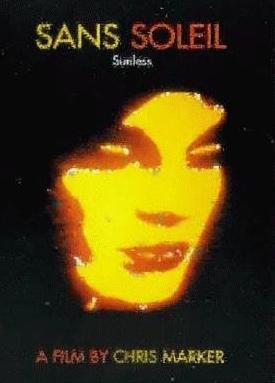
Saturday Matinee: Sans Soliel

“Sans Soliel” (1983) is an experimental film by acclaimed French director Chris Marker which compiles footage recorded in various countries around the world and presents it in collage-like form. The movie features no synchronized sound, but instead ties the various segments together with music and voice-over narration pondering such topics as memory, technology and society. As the scenes shift, locations range from Japan to Iceland to Africa, creating a truly international work.

Watch the film on Kanopy here: https://www.kanopy.com/wayf/product/sans-soleil

Saturday Matinee: The Veto

THE VETO: Film exposing CNN, Al Jazeera, Channel 4 and the western media propaganda war against Syria

By Vanessa Beeley

Source: 21st Century Wire

I met journalist and friend Rafiq Lutf and cameraman Abdul-Mun’aim Arnous in January 2018 and I was honoured when Rafiq asked me to work with him on his film project, The Veto.

As Dr Shaaban said to me in August 2016, “Western propaganda is paid for in Syrian blood”. This is true. The horrifying bloodshed and loss of life in Syria could never have happened without the colonial media manufacturing consent for another illegal war against a Sovereign nation.

The Veto tracks the evolution of the propaganda campaign waged by Western media against Syria. From Baba Amr in Homs 2011/2012 until the modern day “propaganda construct” – the NATO-member-state funded White Helmets. It honours Russia and China’s vetoes that have consistently defended Syria’s sovereignty and territorial integrity in the UN.

George Orwell said “The most effective way to destroy people is to deny and obliterate their own understanding of their history.” Western media has been tasked with writing the history of the Syrian conflict to serve the aggressors in the US Coalition of terrorism.

As Dr Shaaban also told me:

“The US alliance and its media are focusing on our history, material history, cultural history, identity, our army. Any power that keeps you as an entire state, or any statesman that represents strength or unity will be demonized and destroyed.”

The Veto exposes the criminal intentions of Western media and it archives the progression of the propaganda war waged by the West against Syria. Syrians are writing the history of the Syrian conflict because Syria and her allies have courageously resisted the Imperialist machine.

As Rafiq has said so eloquently “we are the Veto” and we must use it against the Industrial Media Complex in the West. Syria’s history belongs to the Syrians and Syria’s final victory must ensure that Western media is never again given the power to destroy a nation, divide its people and promote international terrorism both military and economic. Watch the film: 

Saturday Matinee: The Case of the Grinning Cat

Synopsis from Icarus Films:

In his newest film, French documentarian and cinema-essayist Chris Marker reflects on French and international politics, art and culture at the start of the new millennium. In November 2001, the filmmaker became intrigued, as did many other Parisians, by the sudden appearance of alluring portraits of grinning yellow cats on buildings, Metro walls and other public surfaces. Marker’s cinematic efforts to document the mysterious materializations of this charming feline throughout Paris are a recurring theme of THE CASE OF THE GRINNING CAT.

This engaging record of Marker’s cinematic peregrinations throughout the city, visually energized by his free-association montage style, chronicles strikes, demonstrations, memorials, election campaigns, celebrity scandals, international political incidents, and a seemingly endless variety of political protests (against the Iraq War, against China’s occupation of Tibet, against the government’s ban on the wearing of Muslim headscarves). The personalized commentary running throughout THE CASE OF THE GRINNING CAT offers the simultaneously learned and witty reflections of the filmmaker, now in his early eighties, on both the contemporary and historical implications of these varied events and personalities.

The mysterious grinning yellow cats soon begin to appear amidst the banners and signs in some of the political demonstrations. Eventually, the creator of the grinning cats is revealed to be an art collective known as Mr. Cat, whose members are shown painting a massive representation of their mascot on the plaza before the Pompidou Center. The filmmaker’s own famous cat caricature soon allies with Mr. Cat, as Marker speculates on the political possibilities of such a feline association.

Chris Marker concludes THE CASE OF THE GRINNING CAT with thoughts on the vital importance of such expressions of imagination in our public lives, echoing the May ’68 slogan that “La poésie est dans la rue” (“Poetry is in the street”).

Saturday Matinee: The Murder of Fred Hampton

Fred Hampton, founder of the Illinois chapter of the Black Panther Party for Self-Defense, was assassinated by a special unit of the Chicago Police Department on December 4th, 1969 as he lay face down in bed. He was 21 years old when he was murdered. The police fired 99 unanswered shots into his apartment, wounding Fred as he slept. Apparently drugged by an informant, Hampton was unable to awaken. After the raid the police put two more shots into Hampton’s head and said “Now he’s good and dead.”

This film follows the last year or so of Fred’s life and the investigation immediately following his murder.

The first part of the film shows Fred speaking and organizing and provides a brief glimpse into the Panther community programs such as free breakfasts for school children, as well as a fairly good portrayal of Hampton’s dynamic speaking abilities, vast depth of knowledge for someone so young, and his passion for the revolutionary struggle of all oppressed people worldwide regardless of race.

The remainder of the film focuses on Fred’s murder including footage of the crime scene. The attacking police unit was so secret that the local precinct was not notified to clean things up after the bodies were removed. As a result the Panthers and their attorneys filmed and collected a vast amount of evidence which proved the police and states’ attorneys were lying. The police and government arguments are given, interspersed with contradictory proof by the Panthers and their attorneys proving that this was not a raid gone sour, but rather a carefully planned assassination. The photo of the police smiling joyously as they carry Hampton’s body out of the apartment is ominous.

This film was made right after Fred Hampton was murdered, and before the Panthers were aware that one of their own – William O’Neal – was actually an FBI informant who provided the police with the map of Fred Hampton’s apartment. It was also filmed years before the information about the FBI’s COINTELPRO campaign was made public. It is a great piece of history which gives a rare fair treatment to the Black Panther Party.

Watch the full film here.


Saturday Matinee: Soaked in Bleach

You Decide: “Soaked in Bleach” expounds on the events leading up to Kurt Cobain’s death in 1994

By Bryan Thomas

Source: Night Flight

In 2015, Benjamin Statler produced, wrote and directed Soaked in Bleach, a docu-drama that expounds on the events leading up to the death of Nirvana‘s Kurt Cobain as seen through the eyes of a private investigator, Tom Grant.

The former Los Angeles County Sheriff’s Dept. detective turned private investigator — who had an exemplary resume and a spotless reputation — had initially been hired by Courtney Love on Easter Sunday 1994 to track down Cobain, who had gone missing after checking himself out of a drug rehab facility.

Soaked in Bleach focuses mainly on Grant’s investigation between April 1st and April 8th, with a particular focus on what may have happened on April 5, 1994.

At the time, the official Seattle Police Department incident report stated that “Kurt Cobain was found with a shotgun across his body, had a visible head wound and there was a suicide note discovered nearby.”

The coroner’s report later estimated that Nirvana’s 27-year-old musician and lead singer’s body had been lying in the “greenhouse,” a mussy little room over the garage at Cobain and Love’s Seattle home, for three days.

It was later determined by local Seattle police detectives that Cobain had committed suicide by a reported self-inflicted gunshot wound, but right from the beginning there were major doubts as to whether this ruling was correct.

This was due in no small part to Grant, who carried on his own investigation, eventually coming to the conclusion that Cobain had been murdered, and his death had been made to look like a suicide.

Grant — who never met Cobain when he was alive — came to realize that Cobain wasn’t the hopeless basketcase his wife had made him out to be, and he could find no one, no family member nor any of Cobain’s close friends, who believed he was suicidal.

In 2014, the Seattle Police Department released a number of photographs from the crime scene, and in 2016 previously-undeveloped film was also shared with the public for the first time.

The docu-drama unfolds like a narrative crime thriller, interwoven with cinematic re-enactments, interviews with key experts and witnesses — including Norm Stamper, ex-chief of the Seattle Police Department; Cyril Wecht, forensic pathologist and former president of the American Academy of Forensic Science; and, Ryan Ainger, Nirvana’s first manager — and the examination of official artifacts from the case, which are analyzed in the minutest details, including crime scene photos, autopsy reports and someone’s “cheat sheet,” which showed they were trying to mimic Cobain’s actual handwriting for the fraudulent suicide note.

Soaked in Bleach‘s dramatic re-enactments feature actor Daniel Roebuck as Grant.

Night Flight fans may recognize Roebuck from his role of “Samson,” the teenage killer in River’s Edge, or from his stint as “Dr. Arzt” from TV’s LOST,” or from his literally dozens of other roles on episodic TV show and feature films, including lots of horror films.

Tyler Bryan plays Kurt Cobain, and Sarah Scott is the chainsmoking Courtney Love, who can be seen wearing a babydoll nightie and knee-high stockings, rolling around on her bed while answering Grant’s questions.

Grant’s visible unease around Love — who married Kurt Cobain in 1992 — is palpable.

The June 2015 release of Soaked in Bleach was apparently timed to counter a competing documentary, Brett Morgen‘s Kurt Cobain: Montage of Heck, a film — released theatrically at the beginning of the same year — that many considered to be crass and exploitative.

Statler’s docudrama was considered so controversial, though, that Courtney Love’s legal team tried to stop the film’s release by issuing a cease-and-desist warning letters to movie theaters all over the country who were advertising their forthcoming screenings of Soaked In Bleach, under the pretense that his film was “defamatory.”

One of the more chilling and memorable moments in the docu-drama itself comes during an interview with Stamper, who says:

“We should have, in fact, taken steps to study patterns involved in the behavior of key individuals who had a motive to see Kurt Cobain dead. If, in fact, Kurt Cobain was murdered, as opposed to having committed suicide, and it was possible to learn that, shame on us for not doing that. That was, in fact, our responsibility. It’s about right and wrong. It’s about honor. It’s about ethics. If we didn’t get it right the first time, we damn better get it right the second time, and I would tell you now, if I were the Chief of Police, I would re-open this investigation.”

The film’s title comes from lyrics to Nirvana’s “Come As You Are,” a track from their Nevermind album, released as a single:

That line “Come dowsed in mud, soaked in bleach” was reportedly taken from a campaign in Seattle that encouraged heroin users to soak their needles in bleach after injecting to reduce the risk of spreading HIV (the actual phrase used was “If dowsed in mud, soak in bleach”).

“Soaked in bleach” — in the context of criminal acts — also refers to the destruction of DNA evidence by using bleach.

Watch the full film here.

Saturday Matinee: Kim Dotcom – Caught in the Web

The larger-than-life story of Kim Dotcom, the “most wanted man online”, is extraordinary enough, but the battle between Dotcom and the US Government and entertainment industry, being fought in New Zealand, is one that goes to the heart of ownership, privacy and piracy in the digital age. Three years in the making, this independent film chronicles a spectacular moment in global online history, dubbed the ‘largest copyright case’ ever and the truth about what happened.

Watch the full film here.