Self-defense comes in many forms, but all defense of self begins and ends with dissent, non-compliance, disobedience, saying no to any and all rule, and never allowing aggression against mind and body; mental or physical. Without dissent, defense is not possible, because when voluntary compliance is the prevailing behavior, whether sought, desired, or not, all defense mechanisms are effectively disarmed. In other words, silence in the face of injustice, immorality, terror, or tyranny, creates a condition of weakness, submission, and irresponsibility, which are all the fodder of indifference. When you say nothing, when you do not say no, when you take no action against evil, you commit evil. By not speaking out, and by not responding, you have spoken loudly, and openly committed an act of cowardice. The ultimate blame lies not just with the aggressor in this circumstance, but also equally with he who hides and remains silent.
In “Beyond Good and Evil,” Friedrich Nietzsche wrote: “He who fights with monsters should be careful lest he thereby become a monster. And if thou gaze into an abyss, the abyss will also gaze into thee.” This is an accurate description of the phenomenon of becoming what one lives, so if you live in a state of indifference, ignoring the evil around you, accepting it in order to avoid conflict and responsibility, you become the evil you have chosen to ignore. The dark abyss in this circumstance, is created by your own inaction against it.
What we face as a society, is the most tremendous threat ever perceived or active in the history of mankind. Do you scoff at this seemingly ‘bold’ pronouncement? If so, you are already fooled, and a major contributor to the vast problems rampant in our world today. Instead of the State just singularly seeking war, the continuance of the bogus Federal Reserve System, isolated government corruption, communism, fascism, or any broad-based totalitarian assault on certain segments of society, we are all being bombarded from a thousand different directions at once with all these atrocities and many more, including attacks on our freedom and sovereignty, on our minds and bodies, and on every aspect of our being. Due to the colossal advances in technology, which in many more ways than not are being used against us in order to build a literal transhuman world run by technocratic means, we are facing what could be considered a technological Armageddon, where all control over humanity will be isolated in the hands of the most powerful few. To accept this, to treat it as normal or eminent, is a most fatal error, and one that could determine our fate in perpetuity.
When humanity ceases to exist in any natural form, when male and female become one, when transhumanism and mind control are inescapable realities, when perversion is commonly accepted, the presence of life that we have all known to be magical and a wonder, will have disappeared. The world being designed is not a world of love, hope, and dreams, it is a nightmare of horror, and those pursuing this downfall of man have already lost all human characteristics. They are monsters, so we must fight and defeat them without becoming monsters ourselves.
There is a reason that the children, beginning in infancy, are targeted by State indoctrination, drugs, chemicals, bioweapon injections masquerading as ‘vaccines,’ insane propaganda, distraction, gross perversion, and are pulled away from family mentally and physically throughout their lives. This, in and of itself, if allowed to continue, will guarantee mind destruction of multiple future generations, and that will secure a fully dumbed-down, compliant, and obedient proletariat mass in the future. At that point, total control by the technocrats over humanity will have been achieved.
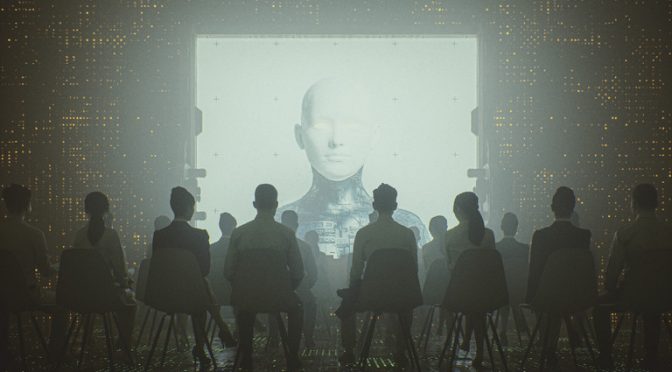
While technology has the capability to accomplish many great things, in the hands of these monsters who seek universal control, it can also be used to destroy us. Many refer to this technological phenomenon as ‘artificial intelligence,’ (AI) but there is no such thing. This false terminology is being used against us, as machines are not intelligent, they are programmed by intelligence, or so it is believed. When man becomes a machine, real intelligence ends, and a programmed society of slaves is the result. AI is ‘defined’ as “perceiving, synthesizing, and inferring information–demonstrated by computers, as opposed to intelligence displayed by humans or other animals.” Intelligence is defined as the ability to learn, reason, and understand, so honest intelligence cannot be artificial, and machines are still machines. The transhuman digitization of man will mean the end of all traditional life as we know it.
The bulk of this society, has already succumbed to a digital world, and relies on what is falsely labeled ‘social media’ as parent, family, and friend, disregarding the natural state of personal communication, love, companionship, debate, and the grandeur of nature. At this point, the future is not owned by you, but is owned by your masters. All privacy has disappeared, and most all private and financial transactions are captured and data-based. Every aspect of life is now tracked, traced, used, surveilled, restricted, censored, taxed, and every activity imaginable requires licensure (paid permission slip) by the State. You are already a slave, whether you realize it or not.
The plot continues to thicken, as centrally-controlled digital currencies (CBDCs) are being rolled out around the world, which will allow for most every individual to be fully contained and regulated. This will lead to mass restrictions as to what you are allowed to do, where you may travel – if at all, what food you must eat, what medical care you may or may not receive, what State stipend you will be allotted, how much energy you will be permitted to use, and on, and on. Everything in your existence will depend on behavior modification; in other words, do as you are instructed by the State technocratic rulers, or lose everything, as your entire life will be technologically sanctioned.
It is imperative to understand that everything you think you know about technology, and technological advances, is likely at a minimum, 20 years behind. Every so-called new discovery and new technology recognized as such, are not new at all. What the military has now, and is working on today, is unknown to most all except the very few at the top of the pyramid of power. To understand and grasp this concept, should strike fear in the hearts of man. The internet, and therefore, the internet of things, was not discovered and implemented by some computer geek, but was designed and created by the military through the “Defense Advanced Research Projects Agency.” (DARPA) Getting to this terroristic time in our history was no accident, and was intentionally planned long ago. We have little time left to stop this totalitarian hell that has been created in order to destroy what we know as the human race.
Will you continue to sit on the sideline, keeping your eyes closed, your ears covered, and your mouth shut, or will you stand up and defend your freedom and life, and that of your family? The only solution, as I have often said, is through active dissent. Say no to the State, disobey, do not comply with any tyrannical order, and do so as individuals en masse. No one can do this for you, but it can and should be done by many independent freedom-minded individuals. Asking someone else for a solution for the masses as a collective, is worthless, and exposes apathy at a level that if practiced by the herd as it has been for so long, the end of humanity will surely be our destiny.
“Has there ever been a society which has died of dissent? Several have died of conformity in our lifetime.”
The COVID-19 pandemic saw the greatest acceleration of online censorship in the short history of the internet. In response, the field dedicated to upholding human rights online—the digital rights movement—remained near silent to this massive government and corporate over-reach. Worse, digital rights activists sometimes even collaborated with censors in the name of protecting the public from “disinformation.”
I’ve spent more than 20 years in digital rights, freedom of expression and open technology communities, and co-founded an organisation dedicated to these ideas: EngageMedia. Over the 17 years I ran Engage Media, we built a team that stretched across 10 countries, from India to Australia—one of the biggest digital rights organisations in the Asia-Pacific, hosting hundreds of workshops and large events, and leading multiple international networks. In short, I’m not a newbie or outsider in this field.
But during the pandemic, I watched the digital rights movement lose its voice as champions of online freedom of expression. Instead, they began to echo the positions of governments and companies with far from stellar records on human rights and corporate integrity. This recasting of governments and corporations as allies, rather than institutions to be held to account, has perverted the mission of digital rights and harmed public health.
The Digital Rights Movement
Digital Rights is an umbrella term that captures multiple concepts from “internet freedom” to “open technology” to “digital public policy.” Over the past several decades, it has become a major force in advocating for online rights and freedoms. Hundreds of universities, institutes, and non-profit organizations work in this arena on every corner of the planet. Whilst I know of no exact calculations, funding for the field is surely in the hundreds of millions of dollars annually—sourced from a mix of liberal foundations, governments, and Big Tech itself.
Core to this fundamentally left-leaning field was anti-censorship and a libertarian ethos. If the movement has a founding document, it is the 1996 Declaration of the Independence of Cyberspace, which begins:
Governments of the Industrial World, you weary giants of flesh and steel, I come from Cyberspace, the new home of Mind. On behalf of the future, I ask you of the past to leave us alone. You are not welcome among us. You have no sovereignty where we gather.
We have no elected government, nor are we likely to have one, so I address you with no greater authority than that with which liberty itself always speaks. I declare the global social space we are building to be naturally independent of the tyrannies you seek to impose on us. You have no moral right to rule us nor do you possess any methods of enforcement we have true reason to fear.
Left-libertarianism and techno-utopianism dominated Internet culture in the 90s and 2000s, yet withered rapidly in the Trump era, as it was unable to move quickly enough to address issues of online discrimination and harassment. In response, a new wing took root that was less hippy, more helicopter parent.
Internet parentalism, with its emphasis on safety over freedom, addressed concerns about the dark side of the Internet, but it did so with top-down regulation and control. And just as the former left-libertarianism created an imperfect system, so has the current left-parentalism. This became quite clear during the pandemic. During COVID, general skepticism of authority was replaced by respect for authority. Once suspect governments and businesses were now to be shielded from critique.
Content moderation is key to the new left-parentalism, and the pandemic radically accelerated and solidified a new digital authoritarianism. It is worth revisiting Hillary Clinton’s seminal 2010 “internet freedom” speech, to see how far thinking has shifted:
Now, all societies recognise that free expression has its limits. We do not tolerate those who incite others to violence… And hate speech that targets individuals on the basis of their race, religion, ethnicity, gender, or sexual orientation is reprehensible… But these challenges must not become an excuse for governments to systematically violate the rights and privacy of those who use the internet for peaceful political purposes.
How different content moderation is today, where comments deemed “offensive” might be censored. In those days liberals even thought about balancing safety and freedom when dealing with terrorists, yet this was not the case with COVID. With Musk now taking over Twitter, the Internet-parentalism wing may be on its back-foot but it has made headway in altering culture, so much so that supporting the left-libertarian approach (or the 2010 Clintonian position) is now considered “right-wing.”
New Zealand Prime minister Jacinda Arden personifies the progressive authoritarian shift. In her recent UN speech she compared “disinformation” to “weapons of war,” expressing a deep frustration with those who stray from the “consensus” and emphasising strong government control for “disinformation.” The Arden approach is now the default setting in the digital rights field where government and corporate censorship have replaced debate and persuasion as the answer to “wrong” ideas. For example, Ardern gave the opening speech at the 2022 RightsCon, the biggest digital rights conference on the calendar (EngageMedia co-hosted the 2015 edition).
That government determines truth to protect citizens is a boom to authoritarians everywhere – from the Philippines, to Ethiopia, to Russia—while also limiting government and corporate accountability. To be clear, both Clinton’s and Ardern’s policy served the needs of power. The difference is that Clinton was largely in step with the previous 200 years of liberal theory, while Arden returns society to levels of government authority and control that people have struggled to overcome for centuries.
Growth and change of “anti-disinformation”
Disinformation was already an established sector prior to the pandemic. But it focused on top level malfeasance: for example, Myanmar military social media accounts promoting violence against the Rohingya or former Philippine President Duterte’s use of bots to attack dissidents. Advocacy took a mostly Clintonian approach to counter such state power—minimising overt censorship, while educating the public and notifying Big Tech of egregious incidents of disinformation (mostly by government).
The Trump election and Cambridge Analytica scandal changed these rules as many blamed social media greed and wilful ignorance for the election loss. Claims of Russian disinformation compounded these problems. Big Tech’s alleged lack of action put it at odds with its core, liberal constituencies. Anger and disillusionment allowed the speech control wing of the digital rights movement to ascend, shifting the movement’s mission from watching the powerful to policing the fringe.
Newer disinformation initiatives also sought to rebuild trust in Big Media, legacy organisations whose legitimacy crumbled for a variety of reasons: from supporting the Iraq war, to failing to predict Trump and Brexit. To recapture authority, elites made themselves the adults who discern the truth, as the rest of society cannot be trusted make competent decisions.
Anti-disinformation amid the pandemic
I went into the pandemic with a wide variety of doubts, but was among the majority in supporting government restrictions, though never on access to information. Banning discussion of a possible lab accident at the pandemic’s beginning triggered me to reevaluate. My own Australian government and the former CDC Director Robert Redfield both considered the lab-leak a plausible reason for how the pandemic started. Meanwhile, leading anti-disinformation organisations labelled it a conspiracy theory, and suggested that journalists not amplify it.
After the lab leak theory became mainstream, I saw no reconsideration of facts among the anti-disinformation and digital rights sectors, as any straying meant being called far-right. Unfortunately, silence only shields the powerful, and civil liberties and human rights groups went AWOL on their duties, or even swapped sides. Witness the ACLU advocating for the violation of bodily autonomy and in favour of widespread vaccine mandates.
Other few key examples of how pandemic censorship protected the powerful:
Vaccines were widely claimed to stop infection or transmission. A sterilising vaccine was the core rationale behind mandates and exclusionary passport systems. Yet, in a November 2020 article in Business Insider the Moderna COO disclosed the vaccine does not stop transmission, as was admitted by a senior Pfizer executive in October 2022 during an EU hearing. Despite that, suggesting the vaccine did not prevent transmission could get you banned from several platforms.
Natural immunity from prior infection was one of the many “conspiracies” although the CDC now considers it equal to vaccination, stating “it really makes the most sense to not differentiate”.
Questioning of lockdowns was once banned, yet it is now widely acknowledged that lockdowns resulted in serious harm including delays in childhood learning, lack of early treatment for serious illness, a rise in domestic abuse, as well as inflation and a massive transfer of wealth to the rich.
Across the board social media sought to disallow information that is “inconsistent with health authorities’ guidance”. But authorities are not all-knowing and this policy blew away previously held norms around open scientific debate and went against the crowd-sourcing ethos of progressives.
Why the conformity?
Some level of conformity is to be expected; however, it reached uncanny levels during the pandemic. Public relations campaigns hid how information controls have worked, as many aren’t even aware of policies and repeated “fact check” failures. PR campaigns also succeeded in associating those seeking to limit pandemic controls as being right-wing and therefore selfish, or worse, racist and misogynist—even as vaccine hesitancy was highest among communities of colour.
Second, the “anti-disinformation” and digital rights field maintains rigorous class solidarity and is overwhelmingly upper-middle and middle class. The upper and middle classes have a higher trust in institutions because they run those institutions and those institutions have worked for them. The field is also the ultimate laptop class, along with others working in tech. Work from home and other lockdown policies benefited them, even as it harmed others.
Third, digital rights melted into the “follow the science” movement. Populism dented the prestige of the expert and professional managerial class, while COVID energized their authority with “science” and gave them back power. Questioning “the science” and acknowledging mistakes means re-diminishing that power.
Finally, Big Tech has compromised the field with tens of millions of dollars (possibly hundreds) annually, yet this funding bias is rarely discussed. Imagine if Shell, BP, and ExxonMobil were core funders of the climate change movement. Added to this financial influence is a revolving door between Big Tech and those meant to hold it to account
Moving forward
Allegations of “disinformation” have become a tool to delegitimize opposition to orthodoxy and power, and have been weaponised to shield government and Big Pharma from scrutiny. Just as criticism of the automobile industry in the 60s and 70s led to improved car safety, today’s public fora must hold the powerful to account.
By aligning with Big Tech and Big Pharma, the “anti-disinformation” and digital rights sectors have neglected their responsibilities, and have come to serve power rather than people, contributing to a broader chilling effect.
To improve digital rights, we must:
Ensure funders, non-profits, journalists, and media organisations more clearly stand up for free speech and invite dissenting views;
Remain courageous while suffering the slings and arrows of nasty online criticism. And support those who speak out;
Highlight bullying that closes down conversation and benefits institutional interests;
Generate greater public awareness of government and corporate manipulation on social media;
Refuse Big Tech and Big Pharma funding for work that is meant to keep these same industries accountable;
Create more watchers to watch the “anti-disinformation” watchers;
Develop alternative media platforms so the conversation can’t be so easily controlled;
·Ensure regulation that protects free speech;
Break up Big Tech and Big Media to limit government and corporate control of public discourse and increase diversity of opinion.
Pandemic information controls and restrictions on free speech had real world consequences that contributed to poorer, not better, public health outcomes. By neglecting to address corporate and government pandemic censorship, the digital rights movement failed in its core mission of securing online freedom of expression.
All flag worshipers have the same unhealthy religion: statism. Flag worship is a nationalist’s false idol. It doesn’t matter if you’re a sieg-heiling Nazi or a little kid singing the pledge of allegiance. It’s all parochial symbolism digging its tentacles into contemporary ideals. It leads to blind conformity, indoctrinated complacency, bloated pride, war, and people all too happy to choke on the blue pill of blind obedience to an outdated chain of command.
Flag worship is a psychosocial hang-up. It works because we are social creatures. But what begins as a symbol for unifying people becomes a symbol for dividing people when it is taken too seriously or too pridefully.
In a world of 195 nation states, all with their own flags, it behooves us to use the same reasoning that Aristotle used when he said, “It is the mark of an educated mind to be able to entertain a thought without accepting it,” and then apply it to the concept of flags. Better to entertain a flag without accepting its authority. That’s what anti-statists do. And so, anti-statists are free under all banners.
Statism keeps the world divided. Divided people are easier to control. As Maximilien Robespierre surmised, “The secret of freedom lies in educating people, whereas the secret in tyranny is in keeping them ignorant.” Anti-statists teach us how not to be ignorant statists. They teach us how to rise above our cultural conditioning and how to become well-informed free-range humans instead.
As Nietzsche famously explained, “State is the name of the coldest of all cold monsters. Coldly it lies; and this lie slips from its mouth: ‘I, the state, am the people.’” Anti-statists are here to remind us that we are NOT the state. We are free individuals who require others to be free so that we can remain free. It really is that simple. As Albert Camus said, “I rebel, therefore we exist.”
Statism only functions when unhealthy, divided individuals create an us-versus-them mentality. It cannot continue if people are healthy and connected. It cannot continue if people realize that freedom is paramount. In short: statism fails when enough people achieve a sense of freedom and wellbeing despite the state.
So how do you know if you’re a statist or not?
Here are seven tell-tale signs you may be a statist:
1.) You are a statist if you believe that you need a ruler to rule over you.
2.) You are a statist if you believe that you require permission to be free.
3.) You are a statist if you blindly worship a flag.
4.) You are a statist if you believe that violence is the solution to problems.
5.) You are a statist if you believe that people should be forced into doing things without their consent.
6.) You are a statist if you believe that an authority should make decisions for you.
7.) You are a statist if you believe in comfortable obedience over uncomfortable freedom.
Anti-statism is an alien concept in our world, even though statelessness can be extended to all living beings “in principle” and “in theory,” at its irreducible bedrock nature, it is exceptionally difficult to be sovereign and stateless. This is because the entire world is plagued with the disease of statism. Statism is so second-nature to our existence that we never question it.
We might as well be fish questioning water. But we are NOT fish. We are human beings with the ability for deep logic, higher reasoning, and basic common sense. As Alvaro Koplovich quipped, “A man without a government is like a fish without a bicycle.” Fish do not need bicycles. Just like mankind does not need government, though he is conditioned to think he does.
People are unlikely to question a system they’ve been indoctrinated into, even if that system goes against common sense, the golden rule, and the non-aggression principle. People are more likely to stick to what they’ve been conditioned to believe, whether that belief is judicial, political, religious or all three (statism).
Overcoming statism takes a particular flavor of courage that doesn’t readily exist in the average person. It’s a kind of courage that must be birthed through great psychological upheaval and the death of one’s cultural conditioning. It must be nursed and cultivated daily, lest it slip back into passivity or typical, ineffective, and outdated modes of courage. It must be guided by a unique and daring flavor of leadership: a radical leadership that checks and balances constructs of power and teaches others how to do the same. This is Anti-statism.
Freedom begins by overcoming false truths. A false truth is any belief that is deemed invalid according to universal laws. It’s our responsibility alone to figure this out. Nobody else can do it for us. It’s our responsibility alone to question what we’ve been taught.
What’s crucial to understand is that the concept of freedom is almost entirely psychological in nature. In today’s day and age, it is less about breaking free physically (from harsh overt slavery), and more about breaking free psychologically (from comfortable covert slavery). Breaking free psychologically is rising above the cultural conditioning and reconditioning our condition.
The anti-statist does this with pluck and aplomb, acting as both a beacon of light for those stuck in the dark (confused and disoriented) AND as a beacon of darkness for those blinded by the light (culturally conditioned).
Anti-statists force us to look into the cultural mirror. They teach us how to pour the statist Kool Aid down the sink. They teach us how and why to deny any authority that claims we need permission to be free. They teach us how to disobey inauthentic leadership and how to embrace authentic leadership instead. They teach us how to become leaders who teach others HOW to think rather than WHAT to think.
Where statism is comfortable slavery, anti-statism is uncomfortable freedom. The anti-statist is free and uses that freedom with the soul intent to free others. They escape tyranny by freeing others through the symbol of their own freedom. Thus, freedom begets more freedom.
As the folks at Academy of Ideas said, “Contrary to what statist propaganda teaches, freedom cannot be imposed on us from above, nor is it created or destroyed at the ballot box. Freedom emerges at a societal level when enough of us recognize its value and structure our lives accordingly.”
Freedom must find its limit in justice and justice must find its limit in freedom. Otherwise, we either find ourselves living in a free-for-all state of chaos where anybody can do anything without any consequences (like the movie The Purge), or we’re living in a violent authoritarian state with oppressive laws and the illusion of freedom (like statism). Ideally, freedom balanced with justice and justice balanced with freedom is the healthiest way.
Here are five anti-statist tactics to overcome statism:
1.) Don’t ask for permission to be free.
2.) Don’t pay for the guards to guard you.
3.) Learn self-defense and honor the nonaggression principle.
Though anti-statists are born into a profoundly sick society, they decide not to be a part of it. They decide to live in the “real” world, a world not tainted by the unhealthy culture that the false system has created. Although the unhealthy culture is something the anti-statist must deal with, it is not something they must be a part of unless they choose to.
The anti-statist takes up the mantle of freedom despite authority so that you, your mother, your daughters, and even your granddaughters can one day be free from the powers of false men. They feel it is their own responsibility, as truly free humans, to do something about the unhealthy state of affairs because nobody else will. Nobody else seems to have the capacity to do what the anti-statist can do.
A wise man once said, “All that is needed for the forces of evil to triumph is for good men and women to do nothing.” Thus, anti-statists refuse to do nothing. They don’t waste time talking about being good men. They ARE good men. They will not allow evil to triumph. Even if that means they must make the goody-two-shoes and snowflakes of the world uncomfortable. Even if that means they must be amoral in the face of shortsighted morality and blind immorality.
When the laws of a nation-state are moral and just, the anti-statist follows them. When they are immoral and unjust, the anti-statist breaks them. This is because the anti-statist has become a self-ruling, self-overcoming, amoral agent unto himself. He can see through the nationalism that blinds the statist and, for that reason, he is a forerunner regarding the healthy and progressive evolution of the species.
Where statists believe that you require permission to be free, anti-statists understand that you are required to be free. Where the statist believes that only the state can provide and protect one’s freedom, the anti-statist understands that it is the sole responsibility of each individual to provide and protect their own freedom and often it must be taken away from the state. As William Blake said, “I must create a system or be enslaved by another Man’s.”
At the end of the day, it comes down to taking personal responsibility. The anti-statist teaches us all that it is our sole responsibility to realize how we are caught up in the song and dance of an extremely dangerous religion known as statism. Statism is an avalanche of outdated cultural conditioning that has divided the world for too long. It is high time that we break the cascade of divisiveness.
If, as Voltaire warned, “No snowflake in an avalanche ever feels responsible,” then the anti-statist’s rebuttal is: if enough snowflakes take the responsibility to distance themselves from the avalanche, then there is no avalanche.
Have you noticed that in most of the great works of dystopian science fiction and cinema there’s a recurring theme of mass conformity to uncomfortably rigid and enforced social norms?
There’s always an impenetrable bureaucracy which has reduced the masses to statistical averages to be more efficiently managed. The system is never benign and loving, because paradoxically, at the top of the pyramid there always resides a single individual ruler, who is invariably psychotic, having no contact with reality. His psychosis is mirrored by the masses, and paradoxically, the individual is overrun by the mass so the the mass can be overrun by an individual.
The citizen-collective in these stories is intrinsically recognized as inhuman, unnatural, malignant and dangerous. It is compassionless, irrational, illogical and excessively emotional. To behold such a well-behaved and compliant hive stirs the primal fear of dying before death, of not-living while alive, and of an existence devoid of meaning.
The hero in these stories is always the lone individual who finds it unbearable to subjugate his autonomy to the herd. As much as he understands the consequences for non-conformity he simply cannot refuse the risk of rebellion, and is compelled to covertly express his distinctiveness. Once he experiences the thrill of making some small departure from the standard, he is thereby morally obliged to further differentiate himself, ultimately arousing the fury of the state which aims to brutally suppress him in order to maintain its position of absolute authority.
George Orwell’s 1984 is a favored example of this because the book takes you inside the mind of someone who cannot resist the pull of inner authenticity, self-integrity and truth. Aroused by truth and love, the protagonist, Winston Smith, is simply incapable of squashing his internal drive towards individuation from the party-mind, and sets out on a futile endeavor to experience the joys of having a genuine human existence… if only for a moment.
“So long as human beings stay human, death and life are the same thing.” ~Winston Smith, 1984
I won’t spoil it for you, but it doesn’t go well. He gets a short glimpse of what life could be like outside of the prison of total obedience, but is quickly punished. And horribly so.
Our natural drive towards individuation and authenticity is such a powerfully buoyant force that to subjugate it requires a tremendous counter force. Fear is typically what does the trick. Fear is the glue that holds the collective together.
What many people don’t realize is that this same story plays out metaphorically in our personal lives all day everyday, and without a proper understanding of how the mind seeks safety amongst the tribe, we’re at the mercy of the default programs running in the subconscious mind.
This is where we are wired to conform to the group, because the subconscious mind is the survival-seeking mechanism at the root of consciousness, and it compels us to pursue the safety of not being rejected, abandoned, ridiculed or ostracized. It looks at what everyone else is doing and it imitates, emulates, copies, and mimics the most common behaviors it sees in the tribe around us, now matter how insane or psychotic they are.
It has the faulty perception that to exist outside of the tribe is fatal, when in today’s society, the opposite is true.
But the good life lies beyond the herd, because by its very nature, the herd is a reduction to an average. It is by definition mediocre.
Just look at the quality of the average today. Unhealthy, unhappy, broke, dissatisfied, depressed, emotional, disconnected, dysfunctional and delusional. Being average here is deadly.
The good life is found in your authenticity and individuality. This is the part of you that has access to those non-average, non-mediocre experiences which make life worth living and inspire you to live deeply into your definition of success. Without the nuances of individual experience and authentic expression, life is dull, stupid, frightful and boring.
Culturally we have a history of valuing the individual in his own right. We’ve always revered him over the collective and credit the ingenuity and creativity of individualistic, non-conformist thinking for shaping the system and circumstances which built the foundation of the prosperity we enjoy today. This is reflected in a few excellent quotes from some of our most revered American authors, speaking from a time when there was no herd mentality, only individuals collaborating to build something unique:
“All greatness of character is dependent on individuality. The man who has no other existence than that which he partakes in common with all around him, will never have any other than an existence of mediocrity.”~James Fenimore Cooper
“If a man does not keep pace with his companions, perhaps it is because he hears a different drummer. Let him step to the music which he hears, however measured or far away.” ~Henry David Thoreau
“They [conformists] think society wiser than their soul, and know not that one soul, and their soul, is wiser than the whole world… Society everywhere is in conspiracy against the manhood of every one of its members… Whoso would be a man, must be a nonconformist… Nothing is at last sacred but the integrity of your own mind.” ~Ralph Waldo Emerson
Again, your best, most prosperous life is dependent on your willingness and ability to differentiate yourself from this sick tribe. The subconscious, however, wants you to feel safe, which is not the same thing as being safe, nor happy. And this is why your individuality is essential to real happiness and prosperity. It represents the drive to express your most extraordinary qualities, which is required to bring your true nature to completion.
Carl Jung elucidated this process of individuation, which is the psyche’s journey toward full maturation and independence. Individuation is, as he put it is, ‘to divest the self of false wrappings.’ The false wrappings of today’s world are revealed in how you self-sabotage and how you hold yourself back from your potential.
What repetitive behaviors do you engage in that you wish you didn’t? Where did the programs for these behaviors originate? Are they yours by choice, or are they learned from others, perhaps your family or tribe of origin? What do you repeatedly do, or not do, that takes your further and further from living the life you deserve and desire?
Here’s a final quote by Carl Jung on the importance of expressing your uniqueness and allowing for your individuation.
“Insofar as society is itself composed of de-individualized human beings, it is completely at the mercy of ruthless individualists. Let it band together into groups and organizations as much as it likes – it is just this banding together and the resultant extinction of the individual personality that makes it succumb so readily to a dictator. A million zeros joined together do not, unfortunately, add up to one.
Ultimately everything depends on the quality of the individual, but our fatally shortsighted age thinks only in terms of large numbers and mass organizations, though one would think that the world had seen more than enough of what a well disciplined mob can do in the hands of a single madman… People go on blithely organizing and believing in the sovereign remedy of mass action, without the least consciousness of the fact that the most powerful organizations in the world can be maintained only by the greatest ruthlessness of their leaders and the cheapest of slogans.” ~Carl Jung
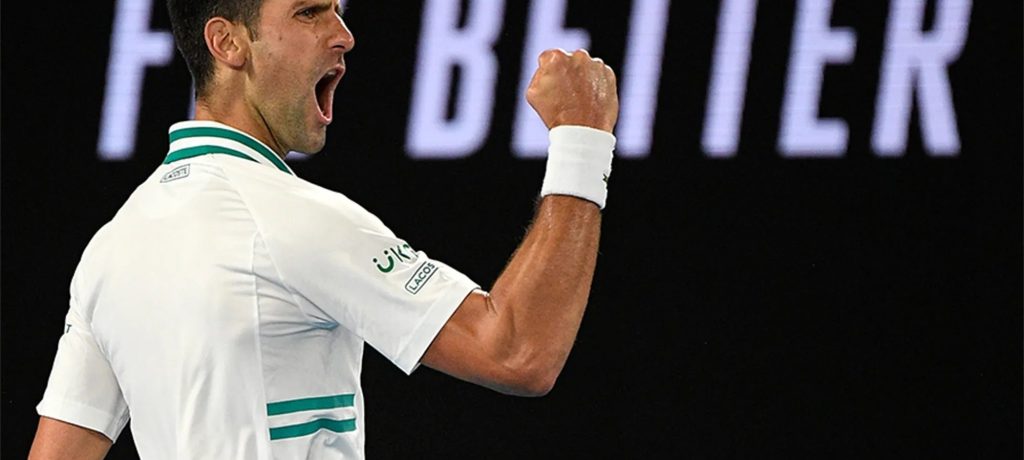
Tennis star Novak Djokovic is being deported from Australia, after losing his final appeal the WTA’s top-ranked player will not be allowed to defend his Australian Open title.
It was reported this morning that an Australian court had refused Djokovic’s appeal against the cancellation of his visa, and as such he’s being put on a plane and flown out of the country.
To be clear: This is all because he’s not “vaccinated” against Covid19, and vocally speaks out against the practice. The government have clearly and publicly admitted as much…but we’ll get to that.
The rejection of Djokovic’s medical exemption and subsequent deportation has been accompanied by a wave of vitriol in the press the likes of which we have rarely seen.
One Australian sports presenter was “accidentally” recorded calling him a “lying, sneaky arsehole” in a video that was later “leaked” to the press.
The Spectator has one piece which is nothing more than a slew of ad hominem and mockery, against not just Djokovic but all “anti-vaxxers” and “conspiracy theorists”, calling the Serbian a “conspiracy super-spreader”. They have another blaming his “arrogance for his downfall”.
The Guardian‘s Australian Political Correspondent Sarah Martin defends the decision and jokingly refers to it as a “no dickheads” immigration policy, attacking Djokovic’s “anti-science god complex” and calling him an “all-round jerk”.
The childish name-calling just doesn’t end. Even his fellow players are sticking the boot in.
Stefanos Tsitsipas attacked Djokovic for attempting to “play by his own rules”, adding “A very small minority chose to follow their own way. It makes the majority look like they are all fools”, which is at least true, but not in the way he means it.
Spanish star Rafael Nadal said Djokovic should just follow the rules like everyone else, perhaps flashing the kind of attitude which allowed a fascist dictator to stay in power in his country for 40 years.
Some players, at least, have come to Djokovic’s defense, including Australia’s own Nick Kyrgios, who has said he is “ashamed” of the way Australia has handled the situation and chastised other players for not showing solidarity with Djokovic.
But why is this happening? Why are they trying to punish such a public figure, and why now?
Well, firstly, I’m not sure it is about punishing Djokovic, and not just because getting to leave Australia is an odd thing to be considered any kind of punishment these days.
Rather, it’s about the performance of punishing him. It’s about making an example of him. Not so much preventing him from playing, as much as denying him a platform.
The Australian government basically admits that in their legal justification for cancelling the visa.
Prime Minister Scott Morrison said Djokovic had been barred from entry for “breaching the rules…it’s as simple as that.” But he is either mistaken or lying, as he directly contradicts the case presented to the appeal court by the government.
Yes, the visa was first cancelled on a technicality about incorrect information but, a judge overruled that decision, allowing Djokovic to enter the country.
Under this (worryingly vague) legislation, the Immigration Minister is granted the power to cancel any visa at all, if:
the Minister is satisfied that it would be in the public interest to cancel the visa.
This was the argument put to the appeals court, that the minister can expel anyone, for anything, if he believes it to be in the best interests of the public.
That’s public interest, NOT public health.
Hawke admits in his written statement that Djokovic presents a “negligible risk of Covid19 infection” to those around him. So it’s nothing to do with protecting people from infection or stopping the spread of the virus.
Public statements from officials suggest that they consider any “anti-vaxxer” to be a threat to the public interest by undermining the vaccination programme. Thus they can justify barring entry to Djokovic (or, it should be said, any other “anti-vaxxer”) under the guise of “public interest”.
It’s about control, it almost always is.
In short, the government are scared that Djokovic’s very presence in the country is a threat to their neo-fascist lockdown.
If you look closely at the media messaging, there’s more than a little fear behind the wall of abuse and mockery.
Article after article is at pains to point out that “the majority of normal Australians want the Joker gone”, or some variation on that sentiment. Somewhat desperately selling the line that nobody agrees with, or supports, Djokovic’s position.
A statement which is given the lie by the regular huge protests taking place all across Australia’s major cities (like this one, just this weekend, in Sydney).
The Australian government are worried they’ve turned their country into a powder keg of public resentment, and that the slightest social spark could set it off. Increasing the size of the (already huge) protests against the lockdowns and vaccine mandates, maybe even tipping the country into full-blown chaos.
One of the Spectator articles mentions that Australians have been living in a “police state” for two years, and then vaguely references the subsequent public anger, even whilst attempting to downplay it, misrepresent its cause, and turn it against the unvaccinated.
Australia has fallen. Peace, prosperity and freedom have been sacrificed on the altar of “safety”, and Covid “vaccination” has become a quasi-religious rite in their country, even more so than the rest of the world.
As such, the unvaccinated are slandered, punished, threatened and othered at every turn. Locked down, locked up and locked out.
Can you only imagine what could happen if people found out it was all for nothing? Or that the heaven-sent vaccines aren’t the magical solution to all that ails us?
In this kind of political climate they simply can’t afford to have an “anti-vaxxer” on national television, healthy and athletic and winning championships against a field of vaccinated rivals.
Before anyone accuses me of a surfeit of cynicism, let’s review the actual words of Alex Hawke from the appeal procedure [our emphasis]:
I consider that Mr Djokovic’s ongoing presence in Australia may lead to an increase in anti-vaccination sentiment generated in the Australian community, potentially leading to an increase in civil unrest of the kind previously experienced in Australia
Elsewhere Djokovic is described as a “talisman of a community of anti-vaccine sentiment”.
This kind of brutal treatment of publicly unvaccinated famous faces will likely only intensify. It’s already spreading from country to country, with France announcing Djokovic will not be allowed to defend his French Open title unless he gets vaccinated.
It seems pretty clear that the public shaming of Djokovic is a power-play to secure what they perceive as their own tenuous grip on the narrative, one that could have far-reaching consequences moving forward.
Consider, Djokovic is not barred from entry just for being unvaccinated, but also because he has publicly spoken out against vaccination.
Australia is now not only requiring you be “fully vaccinated” to enter the country, but has barred someone for even expressing anti-vaccine sentiment.
It’s no longer enough to conform by action, you must now conform by speech.
Next is thought, but even they would never try to legislate against that…right?
Social psychologist Roy Baumeister begins his bookEvil: Inside Human Violence and Cruelty, with a proposition that will be counterintuitive to many: “Evil usually enters the world unrecognized by the people who open the door and let it in. Most people who perpetrate evil do not see what they are doing as evil.”
Dismissing evildoers as “insane” is an attempt to absolve both them and you of responsibility. Baumeister observes, “People do become extremely upset and abandon self-control, with violent results, but this is not insanity.” If only “insane” people commit “evil” acts, you might reason there is no need to strengthen spiritual and moral muscles. You might skip the reflection, study, and practice that builds spiritual and moral strength.
Would you, Baumeister asks, “obey orders to kill innocent civilians? Would you help torture someone? Would you stand by passively while the secret police hauled your neighbors off to concentration camps?” Baumeister writes, “Most people say no. But when such events actually happen, the reality is quite different.” Today, to the point, will you obey orders to fire upon people who refuse to comply with mandates?
The men of Police Battalion 101 were not specially selected psychopathic killers. Initially, the Battalion was set up to enforce Nazi rule in occupied Poland. Eventually, their mission changed, bringing them to be the genocidal murderers of Jews they were charged with rounding up. Browning explains, “The bulk of the killers were not specially selected but drawn at random from a cross-section of German society, and they did not kill because they were coerced by the threat of dire punishment for refusing.” Mostly they were “middle-aged reserve policemen.” Battle had not driven these men to depravity, “they had not been fired on nor had they lost comrades.”
Browning explores one of their initial murderous actions, “shooting some 1,500 Jews in the Polish village of Józefów in the summer of 1942.” Major Wilhelm Trapp addressed his men before the shooting began: “Pale and nervous, with choking voice and tears in his eyes, Trapp visibly fought to control himself as he spoke. The Battalion, he said plaintively, had to perform a frightfully unpleasant task. This assignment was not to his liking; indeed, it was highly regrettable, but the orders came from the highest authorities.”
Trapp provided a “justification” for the coming slaughter—Jews were damaging Germany and threatening German troops—but then Trapp “made an extraordinary offer: if any of the older men among them did not feel up to the task that lay before him, he could step out.” The task, Trapp outlined, was the immediate killing of all women, children, and the elderly.
Only twelve of the approximately 500 in the Battalion initially took Trapp’s offer to “step out.” Browning estimated “10 to 20 percent of those actually assigned to the firing squads” extricated themselves “by less conspicuous methods or asked to be released from the firing squads once the shooting had begun.” Yet for most of the police, killing became second nature: “Many reserve policemen who were horrified in the woods outside Józefów… subsequently became casual volunteers for numerous firing squads and ‘Jew hunts.’”
Browning’s research provides insights into the mindsets that fueled obedience: “Who would have ‘dared,’ one policeman declared emphatically, to ‘lose face’ before the assembled troops.” Another said, “No one wants to be thought a coward.”
Not all who followed orders lacked moral consciousness: “Another policeman—more aware of what truly required courage—said quite simply, ‘I was cowardly.’”
Some rationalized their atrocities: “It was possible for me to shoot only children. My neighbor then shot the mother and I shot the child that belonged to her, because I reasoned with myself that after all without its mother the child could not live any longer.”
To escape moral culpability, others offered the excuse of what difference could they make: “Without me [shooting] the Jews were not going to escape their fate anyway.” How many managers are saying today, what difference can I make? If I don’t fire the unvaccinated, someone else will.
Browning explains, “The men’s concern for their standing in the eyes of their comrades was not matched by any sense of human ties with their victims. The Jews stood outside their circle of human obligation and responsibility.” Today, hospital administrators are firing workers with robust natural immunity who faithfully served during the pandemic and refuse the vaccine. Like the men in the Battalion, these administrators are just following orders.
What would have happened that terrible day in 1942 if more policemen recognized the humanity of the “other” and had the courage to not conform? Today, what would happen if more businesses, like In-N-Out Burger, refuse to obey government edicts? In October, Stephen Davis, a Florida fire battalion chief, “was fired for refusing to discipline department employees listed as unvaccinated.” What would happen if more managers had the courage of Chief Davis? Without obedience, tyranny fails.
During this time of Covid, we can learn lessons from Browning’s book about how we treat people who make choices different from our own. We can notice when we fail to see the humanity in others. We can become aware when we justify an us vs. them mindset. We can question our perceptions. To wait for Biden or Fauci to change first is to ignore our power of choice.
Lessons Learned
Browning reflects on the actions of the Battalion and asks, “If obedience to orders out of fear of dire punishment is not a valid explanation, what about ‘obedience to authority’ in the more general sense used by Stanley Milgram?”
Browning wonders if there is “a ’deeply ingrained behavior tendency’ to comply with the directives of those positioned hierarchically above, even to the point of performing repugnant actions in violation of ‘universally accepted’ moral norms.” Browning explains,
The notions of ‘loyalty, duty, discipline,’ requiring competent performance in the eyes of authority, become moral imperatives overriding any identification with the victim. Normal individuals enter an ‘agentic state’ in which they are the instrument of another’s will. In such a state, they no longer feel personally responsible for the content of their actions but only for how well they perform.
Browning recounts, “Milgram made direct reference to the similarities between human behavior in his experiments and under the Nazi regime. He concluded, ‘Men are led to kill with little difficulty.’”
Importantly, “Milgram himself notes that people far more frequently invoke authority than conformity to explain their behavior, for only the former seems to absolve them of personal responsibility.” Yet, in the Battalion case, “Many policemen admitted responding to the pressures of conformity—how would they be seen in the eyes of their comrades?—not authority.” Based on his research, Browning concludes, “Conformity assumes a more central role than authority at Józefów.”
The Covidocracy demands we all conform and shames those who make different choices. Browning explains the dangers of a culture of shame: “The shame culture, making conformity a prime virtue, impelled ordinary Germans in uniform to commit terrible crimes rather than suffer the stigma of cowardice and weakness and the ‘social death’ of isolation and alienation vis-à-vis their comrades.”
The segregation of Jews was an enabler of evil actions. Browning points to pervasive banishment of Jews from German society “and the resulting exclusion of the Jewish victims from any common ground with the perpetrators made it all the easier for the majority of the policemen to conform to the norms of their immediate community (the battalion) and their society at large (Nazi Germany).”
For some policemen who did not shoot, their commercial ties shaped their view of human beings. One said, “Through my business experience, especially because it extended abroad, I had gained a better overview of things. Moreover, through my earlier business activities I already knew many Jews.”
Harvard social psychologist Gordon Allport developed his famed contact hypothesis in the 1940s: “Increasing exposure to out-group members will improve attitudes toward that group and decrease prejudice and stereotyping.” Commercial ties bring people together.
Recently Tim, a reader and business owner from New Zealand, sent me his powerful testimony in an email:
Fifty odd years ago, as a young child I went to Ranui Primary School in suburban Auckland. There were two Māori boys in my class of 9-year-olds. Sometimes through the day they would make short comments to each other in Māori.
If the teacher heard them do it, he would keep our entire class in detention after school for 15 to 30 minutes. I always hated it because one of the boys was my friend, and a regular playmate of mine after school. The other one, used to walk home from school with me too, they were my friends.
But most of the class blamed these two Māori boys for us all being locked in after school. The majority of the kids disliked and bullied them in my class.
I couldn’t do it; I couldn’t dislike them because they were my friends. Perhaps even then as a boy I could see what our teacher was doing.
Our teacher was using the rest of the class as a weapon against those two young boys by encouraging the spiteful and discriminating attitudes towards them.
Tim’s choice to not conform to social pressure made all the difference to his Māori friends. Did Tim’s ability to see the humanity in others help him become a successful entrepreneur? After all, entrepreneurs succeed when they help serve the needs of others.
Tim continued his testimony:
Today, 50 years later, I am again feeling the same way as I did back in my Ranui Primary School class. The teacher is telling us all that we will continue to be locked in until 90% (or whatever) of the country is vaccinated. And further, we are told that it is the fault of the 20% (or so) that have so far chosen not to accept the two shots in the arm.
As a country, we are all encouraged to heap blame and hate towards anyone who has decided to not vaccinate.
Regardless of my own vaccination status, I have friends and family who I refuse to hate or blame.
I lay the blame exactly where it belongs. At the feet of my Primary School teacher for our detentions, not my two boyhood friends.
And at the feet of our Prime Minister for her lockdown rules, not my friends and family who have chosen to decline an injection that they don’t trust, rightly or wrongly.
Be like Tim. Be like the 10-20% of Battalion 101 who didn’t conform. Our scorn should be towards those who demand our obedience and split America into an in-group and an out-group. Become more aware when you allow your thinking to be hijacked by propaganda.
Many in the Battalion didn’t understand their crimes until decades after the war ended. Don’t wait to reflect until a future historian writes a book about how you supported tyranny by placing conformity above human rights.
Today Charles Eisenstein points out, “Many people trust the authorities and willingly comply with their rules. They face no dilemma, no initiatory moment, no self-defining world-creating choice point, not yet.”
Conforming, lacking courage, will not spare you from choices that life will demand of you. Eisenstein challenges us: “As the authorities’ narratives devolve into absurdity and their rules devolve into oppression, more and more of us face this choice: … To do what you know is right, or to cave in to the pressure, consoling yourself with words you don’t believe. ‘I had no choice.’”
We all have a personal responsibility for preserving freedom. The price of abdicating our responsibility is high. As Browning puts it, Germans paid a high price for “placing uncritical trust in the ‘firm leadership’ of seemingly well-intentioned political authority between 1933 and 1945.”
Mass psychosis is defined as “an epidemic of madness” that occurs when a “large portion of society loses touch with reality and descends into delusions.” The witch trials of the 16th and 17th centuries are a classic example. We’re now in the middle of another mass psychosis, induced by relentless fearmongering coupled with data suppression and intimidation tactics of all kinds.
Fearmongering Breeds Insanity
A number of mental health experts have expressed concern over the blatant panic mongering during the COVID-19 pandemic, warning it can have serious psychiatric effects. For example, in a December 22, 2020, article2 in Evie Magazine, S.G. Cheah discussed the emergence of mass insanity caused by “delusional fear of COVID-19.”
“Even when the statistics point to the extremely low fatality rate among children and young adults (measuring 0.002% at age 10 and 0.01% at 25), the young and the healthy are still terrorized by the chokehold of irrational fear when faced with the coronavirus,” Cheah wrote, adding:3
“Instead of facing reality, the delusional person would rather live in their world of make-believe. But in order to keep faking reality, they’ll have to make sure that everyone else around them also pretends to live in their imaginary world.
In simpler words, the delusional person rejects reality. And in this rejection of reality, others have to play along with how they view the world, otherwise, their world will not make sense to them. It’s why the delusional person will get angry when they face someone who doesn’t conform to their world view …
It’s one of the reasons why you’re seeing so many people who’d happily approve the silencing of any medical experts whose views contradict the WHO or CDC guidelines. ‘Obey the rules!’ becomes more important than questioning if the rules were legitimate to begin with.”
In a December 2020 interview (below), psychiatrist and medical legal expert Dr. Mark McDonald4 also went on record stating “the true public health crisis lies in the widespread fear which morphed and evolved into a form of mass delusional psychosis.”We are now well beyond the first profound shocks of this crisis, and it’s deeply concerning that the number of [mental health] referrals remains so high. ~ Brian Dow, Deputy chief executive of Rethink Mental Illness
He went so far as to refer to the outside of his home or office as the “outdoor insane asylum,” where he must assume “that any person that I run into is insane” unless they prove otherwise.5
Reports of Psychotic Episodes Soar in Great Britain
Now, after some 19 months of abnormal “pandemic life,” the data are starting to reflect McDonald’s fears. For example, in the U.K., psychiatric referrals for first-time psychotic episodes have skyrocketed. As reported by The Guardian, October 17, 2021:6
“Cases of psychosis have soared over the past two years in England as an increasing number of people experience hallucinations and delusional thinking amid the stresses of the Covid-19 pandemic.
There was a 29% increase in the number of people referred to mental health services for their first suspected episode of psychosis between April 2019 and April 2021, NHS data7shows. The rise continued throughout the spring, with 9,460 referred in May 2021, up 26% from 7,520 in May 2019.
The charity Rethink Mental Illness is urging the government to invest more in early intervention for psychosis to prevent further deterioration in people’s mental health from which it could take them years to recover.
It says the statistics provide some of the first concrete evidence to indicate the significant levels of distress experienced across the population during the pandemic.”
Psychosis Takes a Heavy Toll on a Person’s Life
Deputy chief executive of Rethink Mental Illness, Brian Dow, commented on the findings:8
“Psychosis can have a devastating impact on people’s lives. Swift access to treatment is vital to prevent further deterioration in people’s mental health which could take them years to recover from. These soaring numbers of suspected first episodes of psychosis are cause for alarm.
We are now well beyond the first profound shocks of this crisis, and it’s deeply concerning that the number of referrals remains so high. As first presentations of psychosis typically occur in young adults, this steep rise raises additional concerns about the pressures the younger generation have faced during the pandemic.
The pandemic has had a game changing effect on our mental health and it requires a revolutionary response. Dedicated additional funding for mental health and social care must go to frontline services to help meet the new demand, otherwise thousands of people could bear a catastrophic cost.”
According to a spokesperson for the British Department of Health and Social Care, the agency will expand the NHS mental health services budget by £2.3 billion ($3.1 billion) per year by 2023/2024. They’ve also added £500 million ($691 million) to the 2021 budget to provide services to those hit hardest by pandemic measures.9
Anxiety and Depression Have Increased Dramatically Worldwide
Another study,10,11 looking at the rates of anxiety and depression worldwide, found both conditions increased dramatically in 2020. The researchers estimate the COVID pandemic resulted in an additional 76 million cases of anxiety and 53 million cases of major depressive disorder, over and above annual norms, with women and younger individuals being disproportionally affected. According to The Guardian:12
“… the team estimate there were 246m cases of major depressive disorder and 374m cases of anxiety disorders worldwide in 2020, with the figure for the former 28% higher, and for the latter 26% higher, than would have been expected had the crisis not happened.
About two-thirds of these extra cases of major depressive disorder and 68% of the extra cases of anxiety disorders were among women, while younger people were affected more than older adults, with extra cases greatest among people aged 20-24.”
Lead author Damian Santomauro, Ph.D., of the University of Queensland told The Guardian:13
“We believe [that] is because women are more likely to be affected by the social and economic consequences of the pandemic. Women are more likely to take on additional carer and household responsibilities due to school closures or family members becoming unwell.
Women also tend to have lower salaries, less savings, and less secure employment than men, and so are more likely to be financially disadvantaged during the pandemic. Youth have been impacted by the closures of schools and higher education facilities, and wider restrictions inhibiting young people from peer interactions.”
Increased prevalence of domestic violence may also be a contributing factor that places women at increased risk of mental problems, while young adults are more likely to become unemployed.
Massive Rise in Mental Health Problems in Children
Children are bearing a particularly heavy burden as adults succumb to irrational fears. It’s not surprising then that mental health referrals for children have nearly doubled in the U.K. since the start of the pandemic.14 According to British authorities, 16% of children between the ages of 5 and 16 were diagnosed with a mental disorder in 2020, compared to 10.8% in 2017.15 As noted in a September 23, 2021, press release by the Royal College of Psychiatrists:16
“Eighteen months after the first lockdown and after warnings from the mental health sector about the long-lasting mental health impact of the pandemic, the Royal College of Psychiatrists’ analysis of NHS Digital data found that:
190,271 0–18-year-olds were referred to children and young people’s mental health services between April and June this year, up 134% on the same period last year (81,170) and 96% on 2019 (97,342).
8,552 children and young people were referred for urgent or emergency crisis care between April and June this year, up 80% on the same period last year (4,741) and up 64% on 2019 (5,219).
340,694 children in contact with children and young people’s mental health services at the end of June, up 25% on the same month last year (272,529) and up 51% on June 2019 (225,480).”
Eating disorders are also more prevalent than ever, and the rapid increase has left many children waiting months for treatment — delays that could have life-threatening consequences — as facilities are at capacity. The press release quotes a mother whose teenage daughter relapsed into anorexia during the pandemic:17
“The pandemic has been devastating for my daughter and for our family. She has anorexia and was discharged from an inpatient unit last year, but the disruption to her normal routines and socializing really affected her recovery. She was spending a lot less time doing the things she enjoys and a lot more time alone with her thoughts.
Unfortunately, she relapsed, becoming so unwell she was admitted to hospital and sectioned. After 72 days in hospital with no specialist eating disorder bed becoming available, we brought her home where I had to tube feed her for 10 weeks.
My daughter urgently needed specialist help for this life-threatening illness, but services are completely overwhelmed because so many young people need help. It’s a terrifying situation for patients and families to be in.”
Mass Delusional Psychosis Traumatizes Children
Indeed, the widespread insanity on display among adults can have severe and lasting effects on children as they grow up. According to McDonald (see interview above), the mental states of the children he’s treated during this pandemic are far worse than he’s used to seeing in these age groups. This tells us the trauma inflicted by pandemic measures is very serious.
One of the worst traumas inflicted on children has been the ridiculous idea that they might kill their parents or grandparents simply by being around them. They’re also being taught to feel guilty about behaviors that would normally be completely normal — as just one example: hysterical adults calling a toddler who refuses to wear a mask a “brat,” when resisting having a restrictive mask put across your face is perfectly normal at that age.
It’s extremely abnormal for children to grow up thinking that they’re a danger to people around them, and that everyone around them is a danger to them. It’s completely abnormal to grow up thinking that facemasks, gloves and physical separation are required to stay alive.
Adults have also twisted irrational fear into a virtue, which is doubly tragic and wrong. Wearing a mask has become a way to demonstrate that you’re a “good person,” someone who cares about others, whereas not wearing a mask brands you as an inconsiderate lout, if not a prospective mass murderer, simply by breathing.
What’s more, by encouraging us to remain in fear and allow it to control and constrain our lives, the fear has become so entrenched that anyone who says we need to be fearless and fight for our freedoms is attacked for being both stupid and dangerous.
Adults Must Be Healed to Save the Children
It’s adults who are mindlessly inflicting this emotional trauma on an entire generation. As noted by McDonald in his interview, a primary cause of depression among children is feeling disconnected from family and friends.
Everyone, but children in particular, needs face-to-face contact, physical contact, and emotional intimacy. We need these things to feel safe around others and within our own selves. Digital interactions cannot replace these most basic human needs, and are inherently separating.
McDonald cites U.S. Centers for Disease Control and Prevention statistics showing there was a 400% increase in adolescent depression during 2020 compared to the year before, and in 25% of cases, they contemplated suicide. These are unheard of statistics, he says. Never before have so many teenagers considered committing suicide.
According to McDonald, parents and adults in general are to blame, because they are the ones scaring children to the point they don’t feel life is worth living anymore. This is why we can’t just treat the children. We must also address the psychosis of the adult population that is causing all this trauma.
Mass Delusion Is Leading Us Into Slavery
The mass delusion must also be addressed because it’s driving us all, sane and insane alike, toward a society devoid of all previous freedoms and civil liberties, and the corrupt individuals in charge will not voluntarily relinquish power once we’ve given it to them.
Clearly, many of our political leaders know COVID-19 isn’t the deadly plague it’s been made out to be. They issue stay-at-home orders from their vacation homes in the Caribbean and repeatedly break their own mask and lockdown mandates.
They ride their bikes, stroll through the park, have family gatherings and dine out without a care. They’re simply playing along, following the narrative coming from technocratic strongholds like the World Health Organization, because it benefits them.
You could say the ruling class suffers from a different kind of psychosis. As explained in “Mass Psychosis — How an Entire Population Becomes Mentally Ill,” totalitarianism actually begins as psychosis within the ruling class, as the individuals within this class are easily enamored with delusions that augment their power. And no delusion is greater than the delusion that they can, and should control and dominate others.
Whether the totalitarian mindset takes the form of communism, fascism or technocracy, a ruling elite that has succumbed to their own delusions of grandeur then sets about to indoctrinate the masses into their own twisted worldview. All that’s needed to accomplish that reorganization of society is the manipulation of collective feelings.
Sadly, many citizens are unwittingly aiding and abetting the global power grab that will result in our enslavement. Fear fueled hysteria, which led to mass delusional psychosis and group control where citizens themselves support and press for the elimination of basic freedoms.
There’s no doubt at this point that a totalitarian society is the ultimate end of this societal psychosis unless we do something about it. The truth is, we’re as safe now as we ever were. We must not allow our freedoms to be taken from us due to delusional fears. As noted by Cheah in her article:18
“It’s not unthinkable that the final outcome would be total societal control on every aspect of your life. Consider this — the endpoint of a mentally ill person is for them to be put under a controlled environment (institutionalized like an asylum) where all freedoms are restricted. And it’s looking more and more like that’s the endpoint of where this mass psychosis is heading.”
We Must Restore Sanity
Once a society is firmly in the grip of mass psychosis, totalitarians are free to take the last, decisive step: They can offer a way out, a return to order. The price is your freedom. You must cede control of all aspects of your life to the rulers, because unless they are granted total control, they won’t be able to create the order everyone craves.
This order, however, is a pathological one, devoid of all humanity. It eliminates the spontaneity that brings joy and creativity to one’s life by demanding strict conformity and blind obedience. And despite the promise of safety, a totalitarian society is inherently fearful. It is built on fear, and is maintained by it too. So, giving up your freedom for safety and a sense of order will only lead to more of the same fear and anxiety that allowed the totalitarians to gain control in the first place.
Knowing this, we must remember to embrace courage, truth, honesty and freedom as we move forward — not just in our thoughts and words but also in our actions. People cannot think logically when in a state of delusional psychosis, which is why sharing information, facts, data and evidence tends to be ineffective except in cases where the person was acting out of peer pressure rather than a delusional belief.
Typically, the best you can do is stand firm and act in alignment with truth and objective reality, much like you would if you were a first responder faced with an accident victim who is responding hysterically to what you know is only a minor injury.
In short, to help return sanity to an insane world, you first need to center yourself and live in such a way as to provide inspiration for others to follow — speak and act in such a way as to demonstrate that you are not afraid to live life and return to normalcy.
These times of the new normal are not normal times at all. Psychoanalyst Joyce McDougall coined the term normopathy to connote an excessive—and pathological—attachment and adaptation to conventional social norms. English psychoanalyst Christopher Bollas has coined a term with a similar meaning – normotic, which seems to be a variation of and play on the word neurotic. Not having developed an independent sense of self, people who are normopathic or normotic have a neurotic obsession with appearing normal, to fit in – they are abnormally normal. At the bottom of this malady is an insecurity of being judged and rejected. Normotics are overly concerned with how others view them, rendering them afraid to creatively express their unique individuality (which remains undeveloped as a result), which results in being afraid of participating in the call of their own individuation. As Jung counsels, we should be afraid of being too healthy-minded, as, ironically, this can easily become unhealthy.
Many families, groups or societies are afflicted with normopathy (according to whatever the group’s rules are regarding what is considered “normal”), such that it is considered normal to be normotic. The strange thing is if that if almost everyone in the group is normotic, the pathology is seen as normal and healthy, which makes the person in the group who isn’t subscribing to being normotic appear to be ab-normal, the one with the pathology. Insanely, in a case of projecting their own craziness, the ones with the pathology then pathologize the one who doesn’t have it. Something of this nature is going on in our world at the present time.
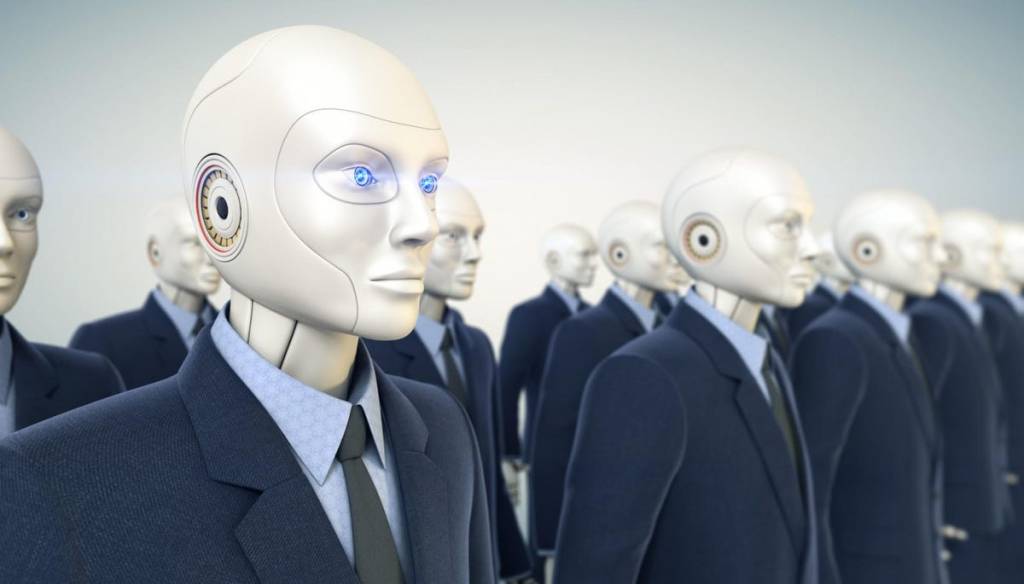
One of the greatest dangers about unconsciousness is proneness to suggestion, where we take on other peoples’ perspective of the world—and of who we are—thereby easily falling prey to the prevailing collective groupthink of the herd. The proclivity towards hive-mindedness strongly correlates with being susceptible to having our minds hijacked, manipulated and controlled by forces outside of ourselves.
Whatever term we use—normopathic or normotic—there are many people who depend upon and derive their self-worth through external validation by others. Being social creatures, we have an unconscious undertow to want to belong to a group, which opens us up to the possibility of disconnecting from our own intrinsic urge to uniquely individuate. Instead of seeing the world through our own eyes, we then see the world—and ourselves, i.e., our own self-image—not through how others see us, but how we imagine others see us. The source of this process lies in our own creative imagination, which we have out-sourced to others. To connect with our own sovereignty, we have to find the source within ourselves from which our true creative power derives.
In the challenging times that we are living through, it is crucially important for us to not “fit in,” but rather, express our unique creative spirit that more than anything wants to come through us and find its place in the world. Instead of blindly and passively subscribing to the new normal, let us create “the new abnormal,” in which we step into the radical act of being our naturally creative selves. Whereas repressed and unexpressed creativity is the greatest poison there is to the human psyche, creativity given free license to express itself is the greatest medicine imaginable.




 After the Crash