Just Seeing Through The Propaganda Isn’t Enough — We’ve Got To Open Our Hearts As Well

Humanity doesn’t just need to escape from the mental prison of imperial indoctrination. It needs to escape from the heart prison as well.

By Caitlin Johnstone

Source: CaitlinJohnstone.com.au

Humanity doesn’t just need to escape from the mental prison of imperial indoctrination. It needs to escape from the heart prison as well.

I’m always talking here about the need to fight empire propaganda to help the public awaken to the fact that everything we’ve been trained to believe about the world is a lie, because that insight taking root in sufficient numbers would be the first step toward the revolutionary changes our world so desperately needs.

But large numbers of people opening their eyes to the reality of mass-scale psychological manipulation by the powerful would by itself be insufficient, because people need not only to see the truth — they also need to care. 

Realizing the depravity and immense human suffering the US-centralized empire is responsible for creates an opportunity to respond to this insight with horror and begin resisting it — but it is only an opportunity. At that juncture it’s still possible for someone to realize that we’re not being told the truth about what’s happening in the world, but decide to play along with the lies anyway, either because the existing world order has made them wealthy, or because they are too indoctrinated with support for western power structures, or because they ideologically support Israel, or because they’re afraid of the changes and upheaval that would come with an overturning of the status quo, or because they are intellectually and morally lazy, or some other selfish reason.

Realizing that you’ve been indoctrinated into accepting a pernicious status quo unlocks an important door within yourself, but just because that door is opened doesn’t mean you have to walk through it. Walking through it requires another kind of awakening — an awakening of the heart.

Really no amount of knowledge or intellectual insight will ever set us free as a species in and of itself. You could upload the sum total of human knowledge into the brain of everyone on earth — including even government secrets that aren’t public knowledge — but unless this is accompanied by a collective opening of the heart, it wouldn’t make any difference. Unless people can find it within themselves to care deeply about the horrific things our rulers have been doing to our fellow human beings, no amount of knowledge about those things will catalyze real change.

And there are plenty of people who know but don’t care. The most powerful government agencies in the world are run by people who know terrible secrets about our ruling power structures that we ordinary members of the public are not allowed to know, but because their loyalty is to the empire and not to humanity, they don’t care about the moral implications of what they know or the human suffering the empire is responsible for.

So the demand of this moment in history is not just to understand, but to care. Not just to know what’s wrong with the world, but to feel it. Not just to awaken on the level of the head, but to awaken on the level of the heart as well. Not just to value our own personal understanding, but to value humanity as a whole.

Knowledge of the truth can lead to a profound compassion for the victims of the globe-spanning power structure which rules over us and a determination to oppose its cruelty — that’s why said power structure pours so much energy into keeping everyone propagandized. But it doesn’t necessarily need to lead to such compassion. The light of truth can stop its expansion at the gates of the heart, unless there’s some willingness from somewhere deep inside us to throw those gates open.

Ultimately humanity just needs to wake up, on every level. We need to liberate ourselves from the shackles of propaganda. We need to liberate ourselves from the shackles on our hearts. We need to liberate ourselves from the shackles of the ego. We need to liberate ourselves from the shackles of the dualistic perspective which obfuscates the oneness of all of reality from our vision. 

That’s what’s being asked of us at this juncture. To wake all the way up and become a conscious species. That’s the only way we’ll ever be able to move about on this planet in a healthy and harmonious way. 

And we’ll either rise to the occasion or we won’t. We’ll either wake up, or we’ll destroy ourselves. I believe we have the freedom as a species to go either way.

Pandemic? Great Reset? How about… a beginner’s mind?

By Mickey Z.

Source: Dissident Voice

“In the beginner’s mind there are many possibilities. In the expert’s, there are few.” 1

Has there ever been a more urgent time to embrace many possibilities? This age of pervasive uncertainty and division may well be very fertile ground for questioning our assumptions and interrogating our beliefs. In fact, we just might be living in the ideal time to accept that there are limitless ways to perceive even the most contentious issues.

Expert vs. Beginner

The expert’s mind is over-secure in its prowess. Such a mentality may promote shortsighted habits like confirmation bias. Many “authorities” will only seek out (read: cherry-pick) information that validates and justifies their behavior because expertise — real or imagined — causes us to grow less curious.

If we already feel well-versed in a topic, we tend to pay less attention to it. We ask fewer questions. This is a stifling choice even if we know 95 percent of what there is to know about a particular subject. Ideally, this is when we should be paying more attention to it in order to discern the nuances that remain to be learned.

Conversely, the beginner’s mind is ever-hungry for input — regardless of its source or its tendency to reinforce existing beliefs. In the beginner’s mind, there are fewer limits and fewer expectations. There is much more room for revelation and awe. Nothing is taken for granted and even the tiniest detail has the potential to inspire reverence.

The beginner’s mind is basically the polar opposite of today’s social media algorithms, mainstream news headlines, and popular political discourse.

3 (of the many) Benefits of a Beginner’s Mind

Creativity

Habits and structure can be incredibly useful. They can also become an obstacle to innovation. A beginner’s mind encourages us to approach familiar problems with a fresh perspective. This mindset often results in the exploration of avenues that an expert would casually dismiss as “been there, done that.”

Gratitude

A beginner’s mind awakens each morning, ready to wipe the slate clean and start anew. From this fresh perspective, it feels more natural to identify and appreciate your blessings.

Mindfulness

Seeing the world like a beginner prevents you from “going through the motions.” There is a clearer understanding that the present is all you have. The past is where guilt and regret dwell. In the future may lie apprehension and anxiety. Right here, right now, the moment is enough.

How to Rediscover a Beginner’s Mind

By its very definition, there are an infinite number of ways to occupy a beginner’s mind. To follow are some basic guidelines but think of them like Bruce Lee’s finger pointing a way to the moon. As Lee urged, “Don’t concentrate on the finger or you’ll miss all that heavenly glory.”2

1. Reject your ego’s need to be an expert

Eavesdrop on a conversation at the local supermarket. Even better, scroll (without reacting) through most threads on social media. You’ll see and hear so many people pretending they know“what’s really happening” and “what’s gonna happen.” Your ego craves the status of being right. The beginner in you would rather open-mindedly look for reality than be deemed an expert at anything.

2. Slow down

As touched on above, we must avoid going through the motions. Whenever possible, slow down to question and explore. Take your time to learn — even from the most unlikely of sources.

3. Channel your inner child

Re-introduce yourself to some of your closest childhood friends: wonder, mischief, and playfulness. Reject the cynical adult premise of “same shit, different day.”

4. See with new eyes

In the words of Marcel Proust: “The real voyage of discovery consists not in seeking new landscapes, but in having new eyes.”3 Practically speaking, your quest for new eyes can begin with simple exercises like treating your hometown as if you were a tourist and seeing what you can discover.

5. Embrace nonsense 

As Gary Zukav, author of Dancing Wu Li Masters: An Overview of the New Physics, (1979)posits: “Nonsense is nonsense only when we have not yet found that point of view from which it makes sense.”

6. Meditation

Perhaps the most time-worn path to a beginner’s mind is the practice of mindful meditation. Whether you choose a spiritual or secular approach, even ten minutes a day of meditation will expand your consciousness.

The child is in me still and sometimes not so still.4

There is no one right way to inhabit a beginner’s mind. After all, it is not a destination. It’s all about the process, the learning, and those moments of epiphany made possible by not closing off your options… so re-activate your inner child.

Keep re-evaluating what you believe before your perceptions can grow ossified. Don’t limit your explorations by choosing in advance what it is you wish to find. Turn your truth over and over, again and again. Avoid accumulating old answers. Instead, dedicate far more of your time to conjuring up new questions. Through it all, let compassion serve as your compass.

The experts [sic] have gotten us into this mess.

It’s time to give beginners their opportunity to shine.

  1. Shunryu Suzuki, Prologue Zen Mind, Beginner’s Mind, (1973). []
  2. Bruce Lee, Enter the Dragon, 1973. []
  3. The Captive. (La Prisonnière, the fifth volume of Remembrance of Things Past), 1923. []
  4. Fred Rogers, (2003). The World According to Mister Rogers: Important Things to Remember, p. 45, Hachette UK. []

WHY WE’RE A CULTURE OF ADDICTS

By Leslie Garrett

Source: Waking Times

If there’s one constant among addicts of all types, it’s shame. It’s what makes us lie and hide. It’s what keeps us from asking for help – though we don’t think we need it because we’re also good at lying to ourselves.

About why we eat. Or shop. Or gamble. Or drink.

Dr. Gabor Maté knows the feeling well. Maté, a renowned doctor, speaker, and author, has seen it in the heroin-addicted men and women he treats in Vancouver’s Downtown Eastside. He sees it in the behavior of well-respected workaholics. The cosmetic surgery junkies. The power seekers. The ‘I Brake for Garage Sales’ shoppers.

He’s seen it in the mirror.

Maté, author of the groundbreaking book In the Realm of the Hungry Ghosts: Close Encounters with Addiction, believes shame is behind our unwindable ‘war on drugs.’ Our ‘tough on crime’ policies. Our judgment of addicts. Our marginalization of street junkies.

Maté knows, as so many of our spiritual teachers have tried to teach us, that our judgments of others are really all about us.

Maté, who serves as resident doctor at The Portland Hotel, a Vancouver housing project for adults coping with mental illness, addiction, and other challenges, saw himself in the stories of the women and men who, day after day, came to see him for treatment and who slowly, over years, revealed to him their pain.

Those of us still hiding and denying? Gabor Maté sees us too.

Haunted

Gabor Maté was born into the Jewish ghetto of Budapest in 1944, just weeks before the Nazis seized Hungary, to a loving but overwhelmed mother and an absent father, who had been sent to a forced-labor camp. Just months later, his grandparents were killed at Auschwitz. At a year old, he was handed by his mother to a gentile stranger who was assigned his safety.

Maté understands now that those early experiences – or, more accurately, his mother’s frantic state of mind – guided the neural circuitry in his still-developing brain. Impaired circuitry that virtually prescribed a future of addiction and its close cousin, attention-deficit disorder (ADD).

Over years of hearing the stories of street drug users, examining his own past, and putting it together with his medical training, Maté became convinced that – as he says in a recent interview:

both addiction and ADD are rooted in childhood loss and trauma.

It’s a novel – and surprisingly controversial – approach, examining not the addiction but the pain behind it. Fighting not the substance but the circumstances that lead someone to seek out that self-soothing.

Circumstance Over Substance

Addiction, says Maté, is nothing more than an attempt to self-medicate emotional pain.

Absolutely anything can become an addiction… It’s not the external behaviors, it’s our relationship to it.

Maté calls addicts ‘hungry ghosts,’ a reference to one of the six realms of the Buddhist Circle of Life. These hungry ghosts are depicted with large empty bellies, small mouths, thin necks — starving for external satisfaction, seeking to fill but never being full, desperate to be soothed.

We all know that realm, he says, at least some of the time. The only difference between the identified addict and the rest of us is a matter of degrees.

It’s a view that has earned him some critics, not least of which is the Canadian Conservative government, which has sought to shut down the safe-injection site he helps oversee. The conventional medical community certainly hasn’t embraced his ideas. Addiction is typically viewed through one of two lenses: as a genetic component or as a moral failure.

Both, says Maté, are wrong.

And he says he’s got the brain science to prove it.

“A Warm, Soft Hug”

Maté points to a host of studies that clearly show how neural circuitry is developed in early childhood. Human babies, more than any other mammals, do most of their maturing outside the womb, which means that their environment plays a larger role in brain development than in any other species.

Factor in an abusive, or at least stressful, childhood environment and you’ve produced impaired brain circuitry – a brain that seeks the feel-good endorphins and stimulating dopamine that it is unable, or poorly able, to produce on its own. A brain that experiences the first rush of heroin as a “warm, soft hug,” as a 27-year-old sex trade worker described it to Maté.

It’s the adversity that creates this impaired development, says Maté, not the genetics emphasized by the medical community.

And our response to addicts – criminalization, marginalization, ostracism – piles on that adversity, fueling the addictive behavior.

The good news is that addiction can be prevented, but only if you start early. Maté writes in Hungry Ghosts:

[Prevention] needs to begin in the crib, and even before then… in the social recognition that nothing is more important for the future of our culture than the way children develop.

What about those children who are now addicted adults? Unprecedented brain research has revealed that brains can, essentially, be rewired. He continues:

Our brains are resilient organs… Some important circuits continue to develop throughout our entire lives, and they may do so even in the case of a hard-core drug addict whose brain ‘never had a chance’ in childhood.

What’s more, Maté, unlike many of his medical counterparts, factors in our potential for recovery, even transformation:

something else in us and about us: it is called by many names, ‘spirit’ being the most democratic and least denominational.

The Illusion of Choice

We’d like to think that addicts have a choice, that they can just choose to stop — even if it’s hard.

But Maté insists that the ability to choose is limited by the addict’s physiology and personal history. He states:

The more you’re driven by unconscious mechanisms, because of earlier defensive reaction to trauma, the less choice you actually have… Most people have much less choice in things than we actually recognize.

These unconscious impulses are why we find ourselves with our hands in a bag of chocolate after an argument with our spouse. It’s why we’re on Craigslist arranging a sexual encounter while our wife sleeps beside us. It’s why a respected medical doctor finds himself lying to his wife. Again.

“‘Have you been obsessing and buying?’ she’s asked me a number of times in the past few weeks,” Maté writes in Hungry Ghosts. “I look directly at my life partner of thirty-nine years and I lie. I tell myself I don’t want to hurt her. Nonsense. I fear losing her affection. I don’t want to look bad in her eyes. I’m afraid of her anger. That’s what I don’t want.”

For years, Maté struggled with a shopping addiction, spending thousands of dollars on classical music CDs in a single spree, then unable to resist the impulse to do it again weeks later after promising his wife he’d stop. It’s an addiction he refers to as wearing ‘dainty white gloves’ compared to the grinding drug abuse of his Downtown Eastside patients.

But, he writes, “I’ve come to see addiction not as a discrete, solid entity – a case of either you’ve got it or you don’t got it – but as a subtle and extensive continuum.”

Unless we become fully aware of the drivers of our addiction, he says, we’ll continue to live a life in which ‘choice’ is an illusion.

“Passion Creates, Addiction Consumes”

Is there a difference between a drug addiction and being hooked on a behavior — like sex? The medical community continues to debate the question, but Maté is adamant.

All addictions, whether to drugs or to behaviors such as compulsive sexual acting out, involve the same brain circuits, the same brain chemicals and evoke the same emotional dynamics… Behavior addictions trigger substances internally. So (behavior addicts) are substance addicts.

Where do we draw the line between addiction and, well, passion? What about the Steve Jobs of the world, who drive themselves — and others — to push harder, work longer, produce more and do everything better?

Daniel Maté, Gabor’s son and an editor of his books, says:

A lot of people make wonderful contributions to the world at their own cost… We often lionize unhealthy things.

To determine whether we’re serving a passion or feeding an addiction, Daniel Maté suggests that it comes down to a simple question, answered honestly: Are you free or are you not free?

His father takes it further.

What function is the addiction performing in your life? What questions is it answering . . . and how do we restore that?

Or, as he writes in Hungry Ghosts, “Passion creates, addiction consumes.”

Compassion for the Addict — and Ourselves

Responding to addiction requires us not only to care for the body and mind but also the soul, Maté says. The spiritual element of his practice is critical, he says, not only to understand the hard-core street addict but also our own struggle.

We lack compassion for the addict precisely because we are addicted ourselves in ways we don’t want to accept and because we lack self-compassion. – Gabor Maté

And so we treat the addict as an ‘other’ – this criminal, this person making poor choices – to whom we can feel superior.

Compassion is understanding, and to understand is to forgive.

We need, he says, to turn compassion into policy.

Maté summed it up nicely in a 2010 talk at Reed College:

To . . . point the finger at that street-corner drug addict who’s in that position because of that early trauma is blind to say the very least… I think that if we developed a more compassionate view of addiction and a more deep understanding of the addict and if we recognized the similarities between the ostracized addict at the social periphery and the rest of society, and if we did so with compassion both for them and for the rest of us, we would not only have more efficient, more successful drug treatment programs, we would also have a better society.

A Zen Master Explains the Art of ‘Letting Go’, And It Isn’t What You Think

By Christina Sarich

Source: Waking Times

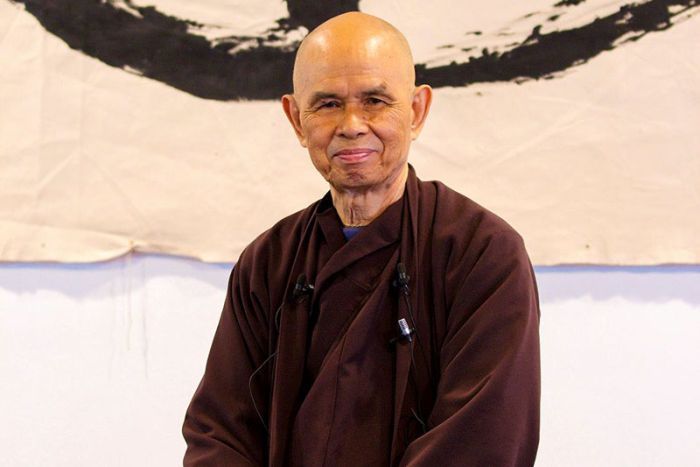
Thich Naht Hanh, the Zen Buddhist master, has some interesting advice about what it means to truly let go. Many people mistake detachment or non-clinging to be a form of aloofness, or emotional disconnect from others, but as Hanh explains, truly letting go often means loving someone more than you have ever loved them before.

The Buddha taught that detachment, one of the disciplines on the Noble Path, also called ariyasaavaka, is not a physical act of withdrawal or even a form of austerity. Though the Buddha teaches of a “non-action which is an integral part of the Right Way,” if it is taken out of context it can give the impression that we should develop a lack of concern for others, and that we should live without truly feeling or expressing our emotions – cutting ourselves off from life.

These type of misinterpretations are sadly common, since there are not always direct translations from the Paali language into English.

This form of “detachment” is an erroneous understanding of the Buddha’s message. Master Hanh states that to truly let go we must learn to love more completely. Non-attachment only happens when our love for another extends beyond our own personal expectations of gain, or our anticipation of a specific, desired outcome.

Hanh describes four forms of complete detachment, which surprisingly, aren’t about holing yourself up in a cave and ignoring everyone who has broken your heart, or ignoring your lust or desire for a romantic interest. This is not detachment. Letting go, means diving in. For example:

Maitri (Not the Love You Know)

Hanh describes the importance of Maitri, not love as we normally understand in a Westernized use of the word. He states,

“The first aspect of true love is maitri (metta, in Pali), the intention and capacity to offer joy and happiness. To develop that capacity, we have to practice looking and listening deeply so that we know what to do and what not to do to make others happy. If you offer your beloved something she does not need, that is not maitri. You have to see her real situation or what you offer might bring her unhappiness.”

In other words, your detachment may come in accepting that certain things you would normally do to make another person feel loved and appreciated may not be what the person you are actively loving now, needs. Instead of forcing that behavior on another person, with an egoic intent to “please” them, you simply detach from that need in yourself, and truly observe what makes another person feel comfortable, safe, and happy.

Hanh further explains,

We have to use language more carefully. “Love” is a beautiful word; we have to restore its meaning. The word “maitri” has roots in the word mitra which means friend. In Buddhism, the primary meaning of love is friendship.”

Karuna (Compassion)

The next form of true detachment is compassion. When we let go, we don’t stop offering a compassionate touch, word, or deed to help someone who is in pain. We also don’t expect to take their hurt or pain away. Compassion contains deep concern, though. It is not aloofness It is not isolation from others.

The Buddha smiles because he understands why pain and suffering exist, and because he also knows how to transform it. You become more deeply involved in life when you become detached form the outcome, but this does not mean you don’t participate fully – even in others’ pain.

Gratitude and Joy

In truly letting go you practice gratitude. Mudita, or joy arises when we are overcome with gratitude for all that we have, such that we no longer cling to some other longed-for result. The Buddha’s definition of joy is more like “Unselfish joy.” It means that we don’t only find happiness when something good happens to us, but when others find happiness.

If you’ve ever had to say goodbye to a love or friend so that they could continue on their life’s path – one that may not have continued to intertwine with your own – you may have felt pain when they found someone new to love, or made a new friend that seemed to take your place. This is not true detachment. Joy arises when you find happiness even when others find joy – and it has little or nothing to do with you.

Upeksha (Equanimity)

Master Hanh describes the final quality of true love which sheds inordinate light on the true process of letting go.

He states,

The fourth element of true love is upeksha, which means equanimity, non-attachment, nondiscrimination, even-mindedness, or letting go. Upa means “over,” and iksha means “to look.” You climb the mountain to be able to look over the whole situation, not bound by one side or the other. If your love has attachment, discrimination, prejudice, or clinging in it, it is not true love.


People who do not understand Buddhism sometimes think upeksha means indifference, but true equanimity is neither cold nor indifferent. If you have more than one child, they are all your children. Upeksha does not mean that you don’t love. You love in a way that all your children receive your love, without discrimination.”

Hanh explains that without this quality our love tends to become possessive – a stomping ground of the ego. We try to put our beloved in our pocket and carry them with us, when they are more like the wind, or a butterfly, or a stream, needing to move and flow, or risk dying. This is not love, this is destruction.

For love to be true love, it must have elements of compassion, joy, and equanimity – and this is truly letting go.

The Art of Letting Go is Artless

The real secret is that letting go is not an art, it is an allowing, a being. A non-attached relationship is healthy, strong and filled with effortless love, kindness and compassion. It is completely selfless because your sense of ‘self’ is no longer asserted in every situation. If you want to truly let go, you’ve got to love more, not less. This is the most common misunderstanding about this priceless teaching of the Buddha.

The Greatest Spiritual Event of Our Time, According to Rudolf Steiner

By Paul Levy

Source: Reality Sandwich

Almost a hundred years ago, as if peering into a crystal ball and predicting the future, spiritual teacher and clairvoyant Rudolf Steiner[1] prophesied that the most momentous event of modern times was what he referred to as the incarnation of the etheric[2] Christ. By the “etheric Christ,”[3] Steiner is referring to a modern-day version of Christ’s resurrection body, which can be conceived of as being a creative, holy and whole-making spirit that is inspiring human evolution as it operates upon the body of humanity through the collective unconscious of our species. Involving a radically new understanding of a timeless spiritual event, the etheric Christ, instead of incarnating in full-bodied physical form, is approaching via the realm of spirit—as close as this immaterial spirit can get to the threshold of the third-dimensional physical world without incarnating in materialized form. To quote Steiner, “Christ’s life will be felt in the souls of men more and more as a direct personal experience from the twentieth century onwards.”[4]

A spiritual event of the highest order, Steiner felt that the incarnation of the etheric Christ is “the most sublime human experience possible”[5] and “the greatest turning point in human evolution.”[6] In his talks, Steiner refers to the etheric Christ as “Christ in the form of an Angel.”[7] Christ himself can be seen as the primordial revelation of the archetype of the Angel (who, after all, are messengers), what is known as the “Angel Christos.” The Angel Christos is a nonlocal, atemporal spirit, existing outside of space and time, that is simultaneously immersed in, infused with—and expressing itself through—events in our world. Christ as an angel reveals itself for those who have eyes to see and ears to hear as it weaves itself, not only through the warp and woof of the flow of events comprising history, but through our souls as well.

To quote Steiner, “in the future we are not to look on the physical plane for the most important events but outside it, just as we shall have to look for Christ on His return as etheric form in the spiritual world.”[8] The most important spiritual events of any age often remain hidden from the eyes of those who are entranced in a materialistic conception of the world. It greatly behooves us to not sleep through, but rather, to consciously bear witness to what has been up until now taking place mostly unconsciously, subtly hidden beneath the mundane consciousness of our species. If this epochal spiritual event, to quote Steiner, “were to pass unnoticed, humanity would forfeit its most important possibility for evolution, thus sinking into darkness and eventual death.”[9]If the deeper spiritual process of the incarnation of the etheric Christ—“Christ in the form of an Angel”—is not understood, this potentially liberating process transforms into its opposite (into the demonic).

Steiner felt that the advent of the etheric Christ—the Parousia (the Second Coming)—was the greatest mystery of our time. He was of the opinion that the incarnation of the etheric Christ was the deeper spiritual process that is in-forming and giving shape to the current multi-faceted crises (and opportunities) that humanity presently faces. This is to say that the seemingly never-ending wars and conflicts that are taking place all over the globe are the shadows cast by spiritual events from a higher-dimension that are animating earthly happenings. One of the main reasons that these multiple crises are so dangerous is because their deeper spiritual source remains unrecognized.

The veil that formerly concealed the spiritual world from what we call “the real world” has fallen away, now making it possible to bear witness to how physical events are an outer, external reflection of a parallel archetypal process taking place on a spiritual plane. It is as if a spiritual dimension envelops, contains and is expressing itself through material reality. The seemingly mundane physical world and the spiritual world are revealing themselves to be indistinguishable, which is to say that life itself is resuming its revelatory function. More and more of us are beginning to recognize this; our realization is not separate from the increasing emergence of the etheric Christ. Consciousness of the restored unity between matter and spirit is not merely an awareness of this original unity, but is the very act that completes and perfects this unity.

The higher order of light encoded within the etheric Christ is bringing to light the darkness which is seemingly opposed to it, which further helps its light nature to be seen. The true radiance of the light can only be seen and appreciated in contrast to the depth of darkness it illumines. It is as if the revelation of something is through its opposite—just as darkness is known through light, light is known through darkness. A fundamental spiritual principle of creation itself appears to be that when one force—e.g., light—begins to emerge in the universe a counterforce, opposed to the first, arises at that same moment.

Just as shadows belong to light, these light and dark powers are interrelated, reciprocally co-arising, inseparably contained within and expressions of a single deeper unifying process. These opposites belong together precisely insofar as they oppose each other; their seeming antagonism is an expression of their essential oneness. The brightest light and darkest shadow mysteriously evoke each other, as if—behind the scenes—they are secretly related. In essence, spirit is incarnating, and it is revealing itself through the very darkness that it is making visible.

Commenting on the other—and less recognized—half of the Second Coming, Steiner chillingly said, “before the Etheric Christ can be properly understood by people, humanity must have passed through the encounter with the Beast.”[10] By “the Beast” he means the apocalyptic beast,[11] the radically evil. The Beast is the guardian of the threshold through which we must pass in order to meet the lighter, celestial and heavenly part of our nature.

As soon as I read Steiner’s prophecy I felt the truth of his words. I recognized how what Steiner was saying mapped onto—and created context for—what is happening in our current world-gone-crazy. The ever-increasing darkness that has descended like a plague onto humanity and is compelling us to race towards our own self-destruction is hard to face, let alone fathom. The evil of our time has become so gigantic that it has virtually outstripped the symbol and become autonomous, un-representable, beyond comprehension, practically unspeakable.

I also recognized the truth of what Steiner was saying based on my own inner experience. I have noticed that as I get closer to connecting with the light within myself, the forces of darkness seem to become more active and threatening. It is as if there is something in me—and in everyone, which is to say this situation isn’t personal—that desperately doesn’t want us to recognize and step into our light. This internal process is taking place within the subjectivity of countless individual human psyches, which is then reflexively being collectively acted out—in my language, “dreamed up”—en masse in, as and through the outside world. The dialectical tensions of the cosmos (the macrocosm)—the conflict between the opposites of dark and light—are mirrored both in the external collective body politic as well as within the psyche of each individual (the microcosm). It greatly serves us to recognize this.

In his prophecy, Steiner is pointing out that our encounter with the Beast is initiatory, a portal that—potentially—introduces us to the Christ figure. To quote Steiner, “Through the experience of evil it will be possible for the Christ to appear again.”[12] It is noteworthy that the opposites are appearing together: coinciding with the peak of evil is an inner development which makes it possible for the etheric Christ—who is always present and available[13]—to be seen and felt as a guiding presence that can thereby become progressively more embodied in humans, both individually and collectively as a whole species. In the extreme of one of the opposites is the seed for the birth of the other.[14]

This is a Kabbalistic idea – for example, in the Zohar, the key Kabbalistic text, it says, “There is no light except that which issues forth from darkness…and no true good except it proceed from evil.”[15] As I deepen my familiarity with Steiner’s work, it definitely dovetails with the insights of the Kabbalah, which is considered to be one of the most profound spiritual and intellectual movements in human history. Evil, according to both Steiner and the Kabbalah, though by definition diametrically opposed to the good, is—paradoxically—a catalyst for bringing the power of goodness to the fore.

Steiner felt that because Christ was destined to appear in the etheric body, “a kind of mystery of Golgotha is to be experienced anew.”[16] What Steiner means by the “mystery of Golgotha” is Christ’s crucifixion, his descent into the underworld and subsequent resurrection. As a result of the first mystery of Golgotha over two thousand years ago—what Steiner considers an act of divine grace bestowed on humanity from above—Christ has been establishing himself in the unconscious dark depths of humanity’s soul. The “Christ-impulse,” in Steiner’s words, “was to penetrate to the dark depths of man’s inner being … to the deepest part of man’s nature.”[17]

Like an iteration of a deeper fractal, this archetypal, timeless mystery now “is to be experienced anew” in a modern-day version. In no other world than the physical world can we learn the true nature of the mystery of Golgotha. To quote Steiner, “Not in vain has man been placed in the physical world; for it is here we must acquire that which leads us to an understanding of the Christ-Impulse!”[18]

Unlike the first mystery of Golgotha, however, in the culmination of this renewed mystery, humanity becomes engaged as active participants, playing a decisive role in the cosmic drama. This too is a Kabbalistic insight: humanity co-partners with the divine so as to complete the creative act of God’s Incarnation. Instead of the Incarnation being through one man, however, in our current day it is taking place through all of humanity. The modern-day coming of the Messiah is through the transformed and awakened consciousness of humanity as a whole. In a very real sense, we are the very Messiah we have been waiting for. “By a strange paradox,” according to Steiner, it is “through the forces of evil” that “mankind is led to a renewed experience of the Mystery of Golgotha.”[19]

The mystery and drama of the Christ event is now located and consummated in humanity, who become its living carrier. The events that were formulated in dogma are now brought within the range of direct psychological experience and become an essential aspect of the process of individuation. Whether we know it or not, we have become drafted and are being assimilated into a divinely-sponsored process. Not an effortful, intentional straining after imitation, this becomes an involuntary and spontaneous personal experience of the reality symbolized by the sacred legend.

The brightest, most radiant and luminous light simultaneously casts and calls forth the darkest shadows. Through this process of Christ manifesting in the etheric realm, humanity is exposed to evil in a way never before experienced, such that—in potential—we may be able to find the good and the holy in a more real and tangible way than was previously possible. Humanity’s highest virtues and potentialities are activated and called forth when confronted by evil.

It is an archetypal idea that ascending towards the light always necessitates a confrontation with and descent into the darkness; the Kabbalah calls this “a descent on behalf of the ascent.” There are certain points in time when humans—individually and/or collectively—are pulled down, submerged into darker powers, brought below a certain level against their will. This shamanic descent can be envisioned as a test for humanity, so that we may learn, through our own efforts, how to lift ourselves up. But we raise ourselves not without God’s help, however, who, paradoxically, is the very sponsor of our descent in the first place.

Seen symbolically, the process of descent—as universally exemplified in the myth of the hero—reveals that only in the region of danger can we find the alchemical “Treasure Hard to Attain.” Speaking of when someone goes through what he refers to as “the Descent into Hell,” Steiner says, “When this has been experienced, it is as though the black curtain has been rent asunder and he looks into the spiritual world.”[20]

The mystery of humanity’s higher nature is inseparable from the mystery of evil. No realization of the light would ever occur without first getting to know its opposite. Whoever wants to support the sacred must be able to protect it and we can only do so when we know the forces that oppose it. The question is not whether we believe in evil, but whether or not we are able to recognize and discern, in the actual events of life, that dimension of experience that the ancients called evil. Speaking about the evolutionary stage of modern humanity, Steiner said, “now we have to come to terms with evil.”[21] It is beyond debate that in our current age we are called to deal with evil—only those who choose to stay asleep, or are overly identified with the light (and hence, project out and dissociate from their own darkness) are blind to this.

It is of the utmost importance to recognize evil, which involves developing our capability to perceive differences, i.e., to cultivate discernment. Evil has an intense desire to remain incognito, below the radar, as its power to wreak havoc is dependent on not being recognized. If we don’t recognize evil, however, we will surely succumb to it, thereby unconsciously acting it out. We are offered a choice—to come to terms with evil or continue to avoid it (which ineluctably makes us complicit in it). Recognizing and confronting evil means getting to know its operations within ourselves without fully succumbing to it.

Recognizing the evil within us is a moment of great peril, as we don’t want to fall hopelessly into paralyzing despair at seeing the shocking depth of our own darkness. Another danger is to unconsciously identify with the evil we are seeing, thinking we are that. The key is to see these impersonal darker forces within us, recognize that we share them in common with all humanity, and then “distinguish ourselves” from them. This is to see these darker forces as paradoxically both belonging to ourselves while being other than who we are. Becoming conscious of these darker forces takes away their power (which is dependent on not being seen), liberating us from being under their thrall. It is a genuine spiritual event when we confront these darker forces in and through ourselves as if we are meeting a wholly other being.

Without being exposed to and challenged by evil we remain helpless to overcome it. The Beast is a higher-dimensional and supersensible being (beyond our five senses) that reveals itself in and through historical events in our world as well as within the inner landscapes of our psyche. A human body and soul can unwittingly (or consciously) become the vessel for acting out these powerful, darker, destructive archetypal powers in ways that further extend these forces into the world at large. In modern times the centralized, power-based state is the incorporated agency of these darker forces on a collective scale. Any of us, often with the best intentions, can unwittingly become an instrument of evil through our acting out of these darker unconscious impulses.

Encountering, recognizing and experiencing the depth of evil within ourselves helps us to develop the inner capacity to stand free of it, and in so doing, become acquainted with the part of ourselves that is beyond evil’s reach, thus enabling us to establish ourselves as free, sovereign and independent beings. Realizing this, we thereby become inoculated from being one of its carriers. Paradoxically, it is only by knowing the Beast in ourselves that we become truly human. It is to our advantage to know that our worst adversary resides in our own heart, rather than falling for the all-to-common delusion of thinking that our enemy is outside of ourselves.

Withdrawing our shadow projections from the outside world enables us to not only own and come to terms with the darkness within ourselves, but also enables us to withdraw our projections from an outward historical figure and instead discover the living Christ within. This is to recognize that Christ—symbolic of the wholeness of our true nature—has always lived in us, rather than being an external figure separate and different from ourselves. We ourselves bear Christ—the most precious treasure, “The Pearl of Great Price”—within us.

Seeing the etheric Christ necessitates the human acquisition of a newly awakened faculty of perception which enables us to recognize that a spiritual realm permeates—and is revealing itself—through the seemingly mundane physical world. The etheric Christ has an infinitude of ways, a multiplicity of guises in which it can appear. Just like a symbol in a dream, the form of the vision is custom-tailored for each soul, dependent on our state of evolution. As we each see the etheric Christ in the unique form appropriate to our soul, we rise up, lift ourselves—grow and ascend upwards, evolutionarily speaking—towards Christ in his etheric body. To quote Steiner, “those who raise themselves—with Full ego-consciousness—to the etheric vision of Christ in His etheric body, will be ‘God-filled’ or blessed. For this, however, the materialistic mind must be thoroughly overcome.”[22]

Speaking of the power of the etheric Christ, Steiner said, “When this power has permeated the soul, it drives away the soul’s darkness.”[23] As we stabilize our vision of the etheric Christ, we recognize that, as if looking in a mirror, we are seeing our own reflection. Christ himself (in his etheric form) says in the apocryphal Acts of John, “A mirror am I to thee that perceivest me … behold thyself in me who speak.”[24] On the one hand this mirror reflects back our own temporal, limited and subjective consciousness, while on the other hand simultaneously reflecting back the transcendental aspect of ourselves that is already whole, healed and awake. These co-joined reflections invite us to cultivate the ability to differentiate them, and in so doing effects the requisite transformation of consciousness that feeds our individuation.

In these encounters with the etheric Christ, we are not witness to an external, material, objective event that comes from outside of ourselves, but our soul is itself the medium in which the engagement takes place. In its subjective experience of the etheric Christ, it is its own image of itself that the soul rediscovers and meets in its act of reflection. The soul is itself reflected through and reciprocally affected by the vision of the etheric Christ. Inseparable parts of one quantum system, the etheric Christ’s radiance doesn’t shine separate from humanity; its luminous clarity is our own. Humanity invariably becomes transformed when it encounters the etheric Christ, due to our consciousness becoming aware of an essential aspect of itself that was heretofore hidden and relegated to the unconscious.

The part of Steiner that was envisioning the operations of the etheric Christ was the etheric Christ himself seeing through Steiner’s eyes; the same is true for us. When we see the etheric Christ, we begin to assimilate and become the thing we are seeing. In our apperception, the etheric Christ inside of us recognizes itself, which enables us to step into who we’ve always been. Humanity is the vessel through which the etheric Christ—the spirit of Christ—takes on human form and incarnates itself.

We find ourselves playing a key role in a cosmic drama. We are not just passive witnesses, but active participants in a momentous, world-transforming spiritual event. In Steiner’s words, “The human being is not a mere spectator that stands over against the world … he is the active co-creator of the world process.”[25] Steiner’s statement is completely in alignment with the realizations of quantum physics, which points out that we are participating—whether we know it or not—in the creation of our experience of both the world and ourselves. What Steiner is describing in terms of the incarnation of the etheric Christ and the emergence of the apocalyptic Beast is in some mysterious way related to—and reflecting—the current stage of our collective psycho-spiritual development.

The worst illness is the one which goes unrecognized, as it therefore cannot be treated. According to Steiner, awareness of the covert operations of these darker forces is the only means whereby their aims may be counteracted.[26] The etheric Christ’s light can help us to break through our massive inner resistance against seeing to what an overwhelming extent the forces of illness and death have insinuated themselves into our organism and corrupted our soul. The same light that kindles consciousness—i.e., the etheric Christ—also illuminates the deadening and rigidifying forces in humanity’s being. If we can consciously experience the powerlessness that has become allied with the deadening forces in our soul, this sense of our powerlessness—like hitting bottom—can lead us to an experience of the etheric Christ, which itself is the revivifying light of awareness which enabled us to become aware of our powerlessness in the first place. Consciously seeing the withered soul of our time—intellectualized and materialized to death—is a crucial step which initiates the process of resuscitating—and resurrecting—the soul, bringing it to life again.

As if pouring the very essence of his being into the existential abyss, Christ concealed his light by incorporating himself in humanity’s deadened life forces, as if the higher self clothed itself in the evil qualities of humanity. To quote a student of Steiner, Jesaiah Ben-Aharon, “The Christ is seen through the metamorphosed forces of death, and is experienced through the mystery of man’s evil.”[27] The life-enhancing etheric Christ is made out of the devitalizing forces of death that have seemingly imprisoned and obscured the eternal Christ within us. Christ’s “resurrection body” is created and forged through the descent into hell. The very fabric of the darkness are the celestial threads out of which the etheric Christ is woven.[28]

Through his descent into the depths of the underworld, Christ merged and united himself completely with the core of humanity’s evil—becoming one with it—thereby initiating an alchemical process of transformation deep within the universe itself. Steiner’s description of the incarnation of the etheric Christ implies a progressive transmutation of the underlying etheric substructure of our world, i.e., a change in the energetic fabric of space-time itself.[29] In dying livinglyinto the abyss, Christ freely offered his life-giving heart to darkness’s infinite void. The result of Christ’s sacrifice is that his eternal being germinates and grows for humanity from within the core of all evil.

Through his descent into the hell realms, a mutual interpenetration between the lower and higher selves of the universe has taken place. Light has taken on darkness, which has a double meaning: to encounter darkness, as well as to become it. Light has transformed itself into darkness so as to know and illumine the darkness from the inside as well as to reveal itself. Evil—which on one level is obscuring the light—has encoded within itself its very opposite, i.e., it has become the revelation of the very light it seems to be concealing.[30]If we don’t recognize this, however, the darkness will continue to manifest destructively and eventually destroy us.

Being the most problematic element in the life of our species, evil demands our deepest sobriety and most earnest reflection. It behooves us to become conscious of the ways we are unknowingly colluding with darker forces. The etheric Christ illumines not only the existence of evil as a reality in the depth of the soul, but its light also reflects our complicity in this evil to the degree that we turn a blind-eye towards it. Individual self-reflection, which returns us to the deeper, darker ground of our light-filled nature, is the beginning of the cure for the blindness which reigns today. We tend to think of illumination as “seeing the light,” but seeing the darkness is also an important form of illumination.

We fervently avoid investigating whether God might have placed some unrecognized purpose in evil that is crucial for us to know. If we become conscious of the evil within us, in our expansion of consciousness, that evil is promoting our spiritual development. We have then, through our realization, alchemically transmuted evil into a catalyst for our evolution. To quote Steiner, “The task of evil is to promote the ascent of the human being.”[31] Once we realize our collusion with evil—making an unconscious part of us conscious, evil—with our co-operation—has fulfilled its mission of promoting our ascent.

This is once again in alignment with the Kabbalah, which conceives of evil as an essential component of the deity, woven into the very fabric of creation. Evil, according to both Steiner and the Kabbalah, co-emerges with the possibility of humanity’s freedom, as if God could not create true freedom for humanity without providing a choice for evil. To quote Steiner, “In order for human beings to attain to full use of their powers of freedom, it is absolutely necessary that they descend to the low levels in their world conception as well as in their life.”[32] From both Steiner’s and the Kabbalistic point of view, evil is created by and for freedom, and it is only through the conscious exercise of freedom of choice—which evil itself challenges us to develop—by which it can be overcome. To quote Steiner, “This is the great question of the dividing of the ways: either to go down or to go up.”[33]

The question naturally arises: if, as Steiner and the Kabbalah profess, freedom is actualized only through the existence of evil, is evil an expression of a higher intelligence, an aspect of the divine plan designed to bring about a higher form of good that couldn’t be actualized without its existence? In other words, is evil against God, or on a deeper level, serving God?

Answering this question involves a new way of translating our experience to ourselves. This way of seeing can only be attained if we are not stuck in a fixed, polarized viewpoint, caught in binary, dualistic thinking. The price of admission to this new perspective is being open to how the opposites—e.g., good and evil—are not opposed to each other in the way that we’ve been imagining if we’ve been imagining them as being separate. Seeing this involves a deeper integration within ourselves in which we are able to carry—and hold together without splitting—the seeming opposites in a new way. This expansion of our consciousness not only supports the incarnation of the etheric Christ, it is the incarnation itself.

How are we to live in such close proximity to evil? Steiner’s prophecy—expressed in the language of Christianity—is suggesting that a complete spiritual renewal is urgently needed. And as Steiner indicates, no spiritual transformation is possible without coming to terms with the Beast, i.e., with the inescapable factor of evil encountered both within ourselves and in the outside world. No old formulas or techniques can fit the bill; the answer of how to deal with such darkness is only to be found in the depths of the individual human heart.

The main aim of the Beast is to close, harden and seal the human heart with its negative energies. There is no greater protection against the Beast—as well as no better way to invite the approach of the etheric Christ—than to assiduously strive to cultivate a good heart over-flowingly filled with compassion. Genuine compassion is unconditioned; by its nature it is meant to be shared with all beings throughout the whole universe, most especially with the Beast within ourselves. Compassion is the only thing in the world that can vanquish the seemingly infinite black hole of evil, as compassion—due to its boundless nature—has no limits, which means the more we give compassion, the more we have to give. The etheric Christ is all about compassion, which is its true name.

~

A pioneer in the field of spiritual emergence, Paul Levy is a wounded healer in private practice, assisting others who are also awakening to the dreamlike nature of reality. He is the author of The Quantum Revelation: A Radical Synthesis of Science and Spirituality (SelectBooks, May 2018), Awakened by Darkness: When Evil Becomes Your Father (Awaken in the Dream Publishing, 2015), Dispelling Wetiko: Breaking the Curse of Evil (North Atlantic Books, 2013) and The Madness of George W. Bush: A Reflection of Our Collective Psychosis (Authorhouse, 2006). He is the founder of the “Awakening in the Dream Community” in Portland, Oregon. An artist, he is deeply steeped in the work of C. G. Jung, and has been a Tibetan Buddhist practitioner for over thirty years. He was the coordinator for the Portland PadmaSambhava Buddhist Center for over twenty years. Please visit Paul’s website www.awakeninthedream.com. You can contact Paul at paul@awakeninthedream.com; he looks forward to your reflections.

 

[1] Steiner lived from 1861–1925. This prediction was made in 1924, but wasn’t made known till 1991. The word clairvoyantliterally means “clear-seeing;” a clairvoyant is a “clear-seer.”

[2] The word “etheric” derives from the word “ether,” which is a word that was once widely used in physics (during Steiner’s lifetime) to refer to the medium of space itself. The word etheric thus implied a presence co-extensive with space and is thus something that completely pervades and is fully present in and as the material forms of the world. There is nowhere where space is not, which is to say it is omnipresent and everywhere. As if a higher-dimensional substance-less substance, space is the one element in which all of the other elements in the universe exist and take on their being. The ether’s presence was therefore conceived of as not being explicit like that of material forms, but like space is more hidden and implicit, in that it doesn’t assume any specific form but instead provides the underlying basis and nonphysical context for physical form to arise in the first place.

[3] Other noteworthy examples of the manifestation of the etheric Christ are Paul’s encounter with Christ in his etheric form on the way to Damascus, and the Gnostic document Pistis Sophia (in which Christ appeared to some of his disciples, including Mary Magdalene, in his transfigured, resurrection body, giving them teachings for eleven years).

[4] Rudolf Steiner. Christ at the time of the Mystery of Golgotha and Christ in the twentieth century. 2 May 1913, London. GA 152. In: Occult Science & Occult Development. Rudolf Steiner Press, London 1966.

[5] Rudolf Steiner, The Reappearance of Christ in the Etheric, 43.

[6] Ibid, 91.

[7] Rudolf Steiner. Christ at the time of the Mystery of Golgotha and Christ in the twentieth century. 2 May 1913, London. GA 152. In: Occult Science & Occult Development.

[8] Lecture at Stuttgart on 6 March 1910. In: The Reappearance of Christ in the Etheric.

[9] Rudolf Steiner, The Reappearance of Christ in the Etheric, 45.

[10] From a lecture to the priests of the Christian Community, September 1924, cited by Harold Giersch: Rudolf Steiner uber die Wiederkunft Christi [Concerning the reappearance of Christ], Dornach 1991, p. 110.

[11] Steiner said that an incarnation of the Beast will first arise in 1933, which is when Hitler came to power.

[12] Rudolf Steiner: From Symptom to Reality in Modern History, lecture 4, Rudolf Steiner Press 1976, p. 112.

[13] Speaking about what Paul saw during his Damascus Experience (where Paul had a conversion experience after seeing the etheric Christ), Steiner said, “that Christ is in the Earth-atmosphere and that he is always there!” Rudolf Steiner, The Christ Impulse and Development of the Ego-Consciousness (London: Anthroposophical Publishing Co., 1926, reprinted by Kessinger), 48. In this statement Steiner is making an equivalence between the etheric Christ and the element space.

[14] The yin/yang symbol represents this pictorially.

[15] Zohar II, 184a; Sperling and Simon, The Zohar, Vol. IV, p. 125.

[16] Rudolf Steiner: From Symptom to Reality in Modern History, lecture 4, Rudolf Steiner Press 1976, p. 112.

[17] Steiner, The Christ Impulse and Development of the Ego-Consciousness, 42.

[18] Ibid., 50.

[19] Rudolf Steiner: From Symptom to Reality in Modern History, lecture 4, Rudolf Steiner Press 1976, p. 112.

[20] Quoted from The Essential Steiner, Robert A. McDermott, ed. (San Francisco: Harper & Row, 1984), 264.

[21] GA (which stands for Gesamtausgabe, the collected edition of Rudolf Steiner’s work in the original German), 178, 18/11/17.

[22] Steiner, The Christ Impulse and Development of the Ego-Consciousness, 48.

[23] GA 118, 27/01/10.

[24] M. R. James, ed., The New Testament Apocrypha(Berkeley, CA: Apocryphile Press, 2004), 253-254.

[25] From Steiner’s doctoral dissertation Truth and Science(1892).

[26] GA 178, 13/11/17.

[27] Jesaiah Ben-Aharon, The New Experience of the Supersensible (East Sussex, UK: Temple Lodge Publishing, 2007), 46.

[28] The darkening death forces within us continually persecutes the Christ in us, continually creating opaqueness, deadening and ossification. This process is symbolized in Paul’s Damascus experience when he encountered the etheric Christ and had a conversion experience (symbolized by changing his name from Saul to Paul). To quote from Acts 8:4, “Saul, Saul, why persecutest me?”

[29] Steiner’s notion of the coming of the etheric Christ has striking similarities to V. I. Vernadsky and Teilhard de Chadin’s concept of the noosphere (the mental-etheric envelope that embraces and pervades the living biosphere of our planet, the growth of which supports and catalyzes the evolution of human consciousness).

[30] In medical terminology, evil can be conceived of as being a “cosmic carcinoma.” If seen as a disease, encoded within evil is its own medicine (what I call “participatory medicine,” in that, in true quantum style, how the seeming pathology actually manifests depends upon how we engage with it). Containing not just its own cure, this malevolent disease actually bears hidden within it life-enhancing gifts beyond measure. How this disease manifests—in its cursed or blessed aspect—depends upon if we recognize what it is revealing to us.

[31] GA 95, 29/08/06.

[32] GA 204, 02/04/21.

[33] Steiner, The Christ Impulse and Development of the Ego-Consciousness, 63.

Don’t Just Give Thanks. Pay It Forward One Act of Kindness at a Time

By John W. Whitehead

Source: The Rutherford Institute

“As we express our gratitude, we must never forget that the highest appreciation is not to utter words, but to live by them.”—John F. Kennedy

It’s been a hard, heart-wrenching, stomach-churning kind of year filled with violence and ill will.

It’s been a year of hotheads and blowhards and killing sprees and bloodshed and takedowns.

It’s been a year in which tyranny took a step forward and freedom got knocked down a few notches.

It’s been a year with an abundance of bad news and a shortage of good news.

It’s been a year of too much hate and too little kindness.

Now we find ourselves approaching that time of year when, as George Washington and Abraham Lincoln proclaimed, we’re supposed to give thanks as a nation and as individuals for our safety and our freedoms.

It’s not an easy undertaking.

How do you give thanks for freedoms that are constantly being eroded? How do you express gratitude for one’s safety when the perils posed by the American police state grow more treacherous by the day? How do you come together as a nation in thanksgiving when the powers-that-be continue to polarize and divide us into warring factions?

It’s not going to happen overnight. Or with one turkey dinner. Or with one day of thanksgiving.

Thinking good thoughts, being grateful, counting your blessings and adopting a glass-half-full mindset are fine and good, but don’t stop there.

This world requires doers, men and women (and children) who will put those good thoughts into action.

It says a lot (and nothing good) about the state of our world and the meanness that seems to have taken center stage that we now have a day (World Kindness Day) devoted to making the world more collectively human in thoughts and actions. The idea for the day started after a college president in Japan was mugged in a public place and nobody helped him.

Unfortunately, you hear about these kinds of incidents too often.

A 15-year-old girl was gang raped in a schoolyard during a homecoming dance. As many as 20 people witnessed the assault over the course of two and a half hours. No one intervened to stop it.

A 28-year-old woman was stabbed, raped and murdered outside her apartment early in the morning. Thirty-eight bystanders witnessed the attack and failed to intervene. The woman, Kitty Genovese, died from her wounds at the locked doorway to her apartment building.

A 58-year-old man waded into chest-deep water in the San Francisco Bay in an apparent suicide attempt. For an hour, Raymond Zack stood in the shallow water while 75 onlookers watched. Police and firefighters were called in but failed to intervene, citing budget cuts, a lack of training in water rescue, fear for their safety and a lack of proper equipment. The man eventually passed out and later died of hypothermia. Eventually, an onlooker volunteered to bring the body back to the beach.

A homeless man intervened to save a woman from a knife-wielding attacker. He saved the woman but was stabbed repeatedly in the process. As The Guardian reports, “For more than an hour he lay dying in a pool of his own blood as dozens walked by. Some paused to stare, others leaned in close. One even shook his body and then left, while someone else recorded a video of the entire proceeding.”

This is how evil prevails: when good men and women do nothing.

By doing nothing, the onlookers become as guilty as the perpetrator.

“If I were to remain silent, I’d be guilty of complicity,” declared Albert Einstein.

It works the same whether you’re talking about kids watching bullies torment a fellow student on a playground, bystanders watching someone dying on a sidewalk, or citizens remaining silent in the face of government atrocities.

There’s a term for this phenomenon where people stand by, watch and do nothing—even when there is no risk to their safety—while some horrific act takes place (someone is mugged or raped or bullied or left to die): it’s called the bystander effect.

Psychological researchers John Darley and Bibb Latane mounted a series of experiments to discover why people respond with apathy or indifference instead of intervening.

Their findings speak volumes about the state of our nation and why “we the people” continue to suffer such blatant abuses by the police state.

According to Darley and Latane, there are two critical factors that contribute to this moral lassitude.

First, there’s the problem of pluralistic ignorance in which individuals in a group look to others to determine how to respond. As Melissa Burkley explains in Psychology Today, “Pluralistic ignorance describes a situation where a majority of group members privately believe one thing, but assume (incorrectly) that most others believe the opposite.”

Second, there’s the problem of “diffusion of responsibility,” which is compounded by pluralistic ignorance. Basically, this means that the more people who witness a catastrophic event, the less likely any one person will do anything because each thinks someone else will take responsibility. In other words, no one acts to intervene or help because each person is waiting for someone else to do so.

Now the temptation is to label the bystanders as terrible people, monsters even.

Yet as Mahzarin Banaji, professor of psychology at Harvard University points out, “These are not monsters. These are us. This is all of us. This is not about a few monsters. This is about everybody. It says something very difficult to us. It says that perhaps had we been standing there, we ourselves, if we were not better educated about this particular effect and what it does to us, we may fall prey to it ourselves.”

Historically, this bystander syndrome in which people remain silent and disengaged—mere onlookers—in the face of abject horrors and injustice has resulted in whole populations being conditioned to tolerate unspoken cruelty toward their fellow human beings: the crucifixion and slaughter of innocents by the Romans, the torture of the Inquisition, the atrocities of the Nazis, the butchery of the Fascists, the bloodshed by the Communists, and the cold-blooded war machines run by the military industrial complex.

So what can you do about this bystander effect?

Be a hero, suggests psychologist Philip Zimbardo.

Each of us has an inner hero we can draw upon in an emergency,” Zimbardo concluded. “If you think there is even a possibility that someone needs help, act on it. You may save a life. You are the modern version of the Good Samaritan that makes the world a better place for all of us.”

Zimbardo is the psychologist who carried out the Stanford Prison Experiment which studied the impact of perceived power and authority on middleclass students who were assigned to act as prisoners and prison guards. The experiment revealed that power does indeed corrupt (the appointed guards became increasingly abusive), and those who were relegated to being prisoners acted increasingly “submissive and depersonalized, taking the abuse and saying little in protest.”

What is the antidote to group think and the bystander effect?

Be an individual. Listen to your inner voice. Take responsibility.

“If you find yourself in an ambiguous situation, resist the urge to look to others and go with your gut instinct,” says Burkley. “If you think there is even a possibility that someone is in need, act on it. At worst, you will embarrass yourself for a few minutes, but at best, you will save a life.”

“Even if people recognize that they are witnessing a crime, they may still fail to intervene if they do not take personal responsibility for helping the victim,” writes Burkley. “The problem is that the more bystanders there are, the less responsible each individual feels.”

In other words, recognize injustice. Don’t turn away from suffering.

Refuse to remain silent. Take a stand. Speak up. Speak out.

This is what Zimbardo refers to as “the power of one.” All it takes is one person breaking away from the fold to change the dynamics of a situation. “Once any one helps, then in seconds others will join in because a new social norm emerges: Do Something Helpful.”

“I swore never to be silent whenever and wherever human beings endure suffering and humiliation,” stated Holocaust Elie Wiesel in his Nobel Peace Prize acceptance speech in 1986. “We must always take sides. Neutrality helps the oppressor, never the victim. Silence encourages the tormentor, never the tormented. Sometimes we must interfere. When human lives are endangered, when human dignity is in jeopardy, national borders and sensitivities become irrelevant. Wherever men or women are persecuted because of their race, religion, or political views, that place must – at that moment – become the center of the universe.”

Unfortunately, as I make clear in my book Battlefield America: The War on the American People, too many Americans have opted to remain silent when it really matters while instead taking a stand over politics rather than human suffering.

That needs to change.

I don’t believe we’re inherently monsters. We just need to be more conscientious and engaged and helpful.

The Good Samaritans of this world don’t always get recognized, but they’re doing their part to push back against the darkness.

For instance, earlier this year in Florida, a family of six—four adults and two young boys—were swept out to sea by a powerful rip current in Panama City Beach. There was no lifeguard on duty. The police were standing by, waiting for a rescue boat. And the few people who had tried to help ended up stranded, as well.

Those on shore grouped together and formed a human chain. What started with five volunteers grew to 15, then 80 people, some of whom couldn’t swim.

One by one, they linked hands and stretched as far as their chain would go. The strongest of the volunteers swam out beyond the chain and began passing the stranded victims of the rip current down the chain.

One by one, they rescued those in trouble and pulled each other in.

There’s a moral here for what needs to happen in this country if we only can band together and prevail against the riptides that threaten to overwhelm us.

Here’s what I suggest.

Instead of just giving thanks this holiday season with words that are too soon forgotten, why not put your gratitude into action with deeds that spread a little kindness, lighten someone’s burden, and brighten some dark corner?

I’m not just talking about volunteering at a soup kitchen or making a donation to a charity that does good work, although those are fine things, too.

What I’m suggesting is something that everyone can do no matter how tight our budgets or how crowded our schedules.

Pay your blessings forward.

Engage in acts of kindness. Smile more. Fight less.

Focus on the things that unite instead of that which divides. Be a hero, whether or not anyone ever notices.

Do your part to push back against the meanness of our culture with conscious compassion and humanity. Moods are contagious, the good and the bad. They can be passed from person to person. So can the actions associated with those moods, the good and the bad.

Even holding the door for someone or giving up your seat on a crowded train are acts of benevolence that, magnified by other such acts, can spark a movement.

Imagine a world in which we all lived in peace.

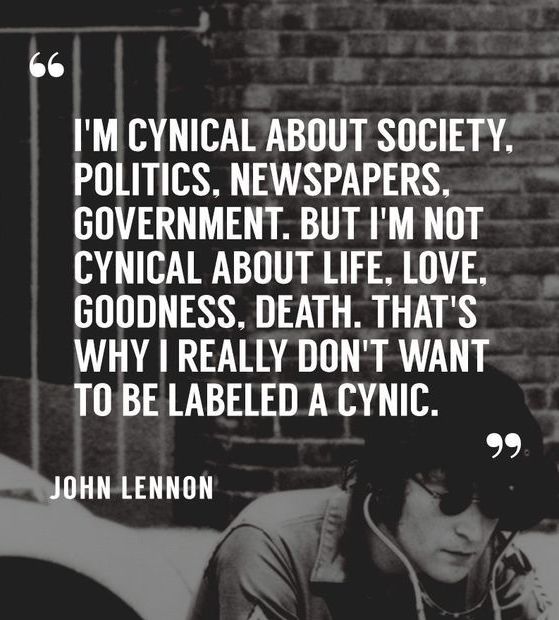
John Lennon tried to imagine such a world in which there was nothing to kill or die for, no greed or hunger. He was a beautiful dreamer whose life ended with an assassin’s bullet on December 8, 1980.

Still, that doesn’t mean the dream has to die, too.

There’s something to be said for working to make that dream a reality. As Lennon reminded his listeners, “War is over, if you want it.”

The choice is ours, if we want it.

A New Map

Collective-Consciousness-1

By Kingsley L. Dennis

Source: Waking Times

‘It is the tragedy of our time that the average individual learns too late that the materialistic concept of life has failed utterly in every department of living.’  ~Manly P. Hall 

We have entered times of incredible change, readjustment, and upheaval. There are many contrary forces pushing through our diverse societies and straining to breaking point the incumbent structures and institutions that, in many cases, are no longer functional for progress. Politics – politikos, ‘of, for, or relating to citizens’ – is in a sense the science of community. It is also an expression of the science of the soul; it reflects the state of human consciousness, and the political sphere provides a vessel for the growth and transformation of the human being. Our social communities are the incubators for the enhancement and expansion of human consciousness.

Political and social theories and practices do not exist in a philosophical and psychological vacuum. Importantly, they are related to two important factors: i) the human being’s worldview, and view of the universe, and ii) the human being’s view of himself or herself. A concept of society, government and justice always rests on the conceptions we have of the cosmos and our place in it.

The orderly medieval worldview was held together by a largely coherent religious cosmological system. This was then replaced by a scientific paradigm held together by a Cartesian-Newtonian cosmological doctrine. And yet in our modern age of scientific-psychological exploration we are witnessing the demise of this once-dominant consensus. To put it plainly, as a species we are lacking any coherent cosmological view to provide us with meaning and significance. Human consciousness is lacking a coherent and shared vision, which in turn affects how we project ourselves onto society and within socio-political discourse. C.G. Jung said that ‘Every advance in culture is psychologically an extension of consciousness.’ Likewise, an extension of human consciousness lacking coherence and meaning projects dissonance into our societies. This is why it is imperative we adopt a new map of reality that can provide us with a new cosmology and worldview that has meaning for our times. Especially as we are on the cusp of transitioning into a diverse yet hopefully unified planetary civilization.

Modern western society places little or no value upon the inner experience, thus placing no value or attention upon the need for conscious evolution, preferring to dwell within a largely economic rationalization of the world. In this worldview the human ego exalts the individual personality at the expense of compassionate relations, empathy, and connectedness. It is the ego which propels a minority of voices on the world stage to declare separatism, division, and national self interests over and above the need for international cooperation, collaboration, compassion, and understanding. It is this rhetoric which gives the opportunity for a hitherto neglected section of society to come forward through the expression of repressed anger and the unleashing of chaotic, disruptive energy. It also allows for the mindset that economic and political changes and upheavals are able to solve all problems because the source of such ills is in the objective environment rather than in the consciousness of the human being.  And yet whilst the projection of peoples’ anger and negativity onto others creates the illusion of improvement, it is actually an unhealthy mechanism that fails to address the real concern. The projection of repressed anger attaches itself to external socio-political movements and charges them with great power – this has long been the bane of human history!

That is why today we are desperately in need of a new understanding – a new map of reality – that allows us to recognize the greater truth. A truth that shows how our material reality is interconnected at the most fundamental level. It is a truth which shows how all living beings are inherently immersed within a collective field of consciousness that resonates between us. We are not separate individuals – isolated islands – but individualized expressions of a unified consciousness that embraces us all at the very core of our being. The new map of the cosmos tells us that the evolutionary trend is toward ever-greater coherence and cohesion, and not it’s opposite. It is these aspects which are conducive to a thriving, sustainable future – not the elements of division, conflict, competition, or fear.

If we are to transition into an integrative, coherent phase of human civilization we need to adopt as soon as possible the new paradigm – the new map – that comes at a time when it is most needed. Each person determines his or her conduct within the larger context of the nature of the world and the meaning of human life. We find this context through our ideas – our maps of reality. We need to share the new cosmological understanding through our institutions, our educational systems, and most importantly of all – in our human relations with one another. We are a human family, diverse and yet unified; each an expression of a cosmic oneness that seeks expression within a material reality. We are now called upon to reflect that unity, and to represent the true legacy that is the human race. Our time is now.


About the Author

Kingsley L. Dennis is the author of The Phoenix Generation: A New Era of Connection, Compassion, and Consciousness. Visit him on the web at http://www.kingsleydennis.com/.

Kind is the New Cool

heart_chakra_green-300x300

By Charles Eisenstein

Source: A New and Ancient Story

When I was in high school, I remember social banter consisting of a lot of subtle put-downs and one-upsmanship. The popular kids were generally not very nice, certainly not to us unpopular kids but not even to each other. I remember a few popular kids being nice to me on the sly, but in group settings even those nice ones would join in the dominating behavior, or, at best, surreptitiously divert attention away from the victims. If they were overtly kind, they risked being grouped in with the losers. Social status came from winning, from dominating. Kindness was a recessive gene in the social DNA.

Until recently, I thought this is just how teenagehood is in our culture. Not that kids are inherently cruel, but that deeply entrenched social conditions cast the majority into a state of insecurity from which bullying behavior inevitably arises. But over the last few years I am seeing more and more evidence of a profound sea-change in youth culture.

My first glimpse of it came from witnessing my teenage sons’ interactions with their friends. Almost never did I hear the kind of aggressive, belittling talk that was so common when I was that age. Granted, they may have been censoring themselves because “dad” was present, but if so the censorship was irrationally selective – I also overheard a lot of conversations that no teen in his right mind would let his friend’s father overhear. Moreover, it wasn’t just an absence of overt put-downs that I noticed. They rarely said anything unkind about people who were not present in the room. I almost never heard them label so-and-so as a dweeb, geek, bitch, loser, wimp, or anything like that. The exceptions were very few; in general, a normative ethic of gentleness prevailed.

These young people were not the math geeks and band nerds either. My eldest son Jimi in particular is socially confident and popular, as were many of his friends.

At the same time, I am aware of horror stories of social media bullying that drives some teens to suicide. It looks like things are getting simultaneously better and worse. In order to find out what’s going on, I’ve been asking Jimi and some other young people.

Jimi confirmed what I’d semi-consciously become aware of. There is a kind of split, he said, among his peers. Some are still clinging to the “old story” and all that goes along with it, but more and more are leaving that behind. “It is the opposite of how you describe your high school, dad,” he said. “For us, social status comes from being kind, and even authentic. If someone is mean, or boastful about a sexual conquest, we call him on it.”

I found his reference to sexual discourse particularly significant, since misogyny is perhaps the most primal expression of what Riane Eisler calls dominator culture. In my youth, women were a kind of social currency. If you “had” a pretty girlfriend, you were a winner, you were worthy, you were desirable. We men sought sex to prove our worth and demonstrate it to other men. Sexual intercourse was a “score,” a “touchdown,” a “home run.” I never saw any sign of that among my sons’ peers. I spent most of my adult life under the lingering shadow of an objectifying culture, seeing sex as proof of my worth. Maybe I’m still not completely free of it. Fortunately, from what I am seeing, what my generation struggled so hard to achieve imperfectly is becoming the new normal.

Misogyny, racism, intolerance, bullying, homophobia, disrespect, unkindness… these are becoming the recessive gene now, at least among a significant subculture of young people. Nothing gives me more optimism for the future than this.

Jimi also described (what was to me) an astonishing absence of bullying from the high school he attended before transferring to an art school. It wasn’t an elite school: sixty percent minority, it ranked well below average in terms of academic performance. Occasionally there were fights, he said, but not a lot of the strong picking on the weak. Racial comity and acceptance of LGBT students was the norm. Nor was there widespread labeling of various cliques as there had been at my school. The hicks, the jocks, the brains, the weirdos… none of that.

When we watched Breakfast Club together, a film that my peers and I revered as a consummate encapsulation of the high school experience, Jimi and his brother Matthew didn’t identify with its social milieu at all. I want my generation, the 30-somethings and 40-somethings, to know this. The world is changing. The nightmare that we took to be reality itself is coming to an end.

Perhaps the trend I’m describing here is not yet dominant; part of me feels naïve for even thinking it is real. But more and more, I hear teenagers and 20-somethings express thoughts that basically didn’t exist in my universe when I was that age. “I’ve noticed that my inner conflicts are reflected back to me through my relationships.” Holy crap, did I just hear a 21-year-old say that? These people are born into a place that took us decades of struggle to inhabit even part-time.

Maybe you are one of those young people, or maybe you are poised between two worlds. Either way, I’m sure you can feel the call to join the new cool of kindness, generosity, nonviolence, authenticity, emotional courage; to stop tolerating anything else; to join together in forging a new normal. If it isn’t quite here yet, it is very close at hand.

What will the world be like, when Jimi and his cohort move fully into adulthood? What social institutions, what politics, will come from people for whom kindness is the norm and not the exception? When unkindness is intolerable in social life, how will it be tolerable in ecological life, economic life, or political life?

As we celebrate the young, let us also offer thanks to those of the older generations who carried the flame of kindness through the dark times. Some names come to me of those popular, kind kids: Eric Heiser, Doug Edmunds, Jenny Gibson… and that angelic boy who died in a car crash. I’m sure you can think of some as well. Light them a candle in your heart. They sustained the field into which the new generation is born.