
On the Violence in the Middle East…

By Doug “Uncola” Lynn

Source: The Burning Platform

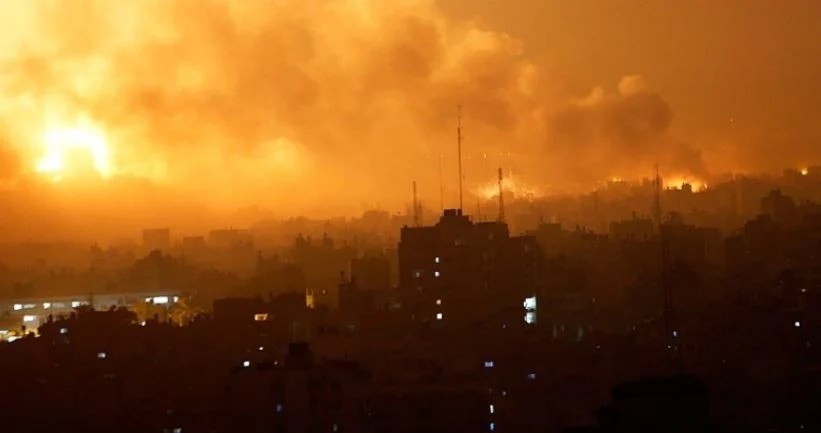
Like most of the world, I have been considering the Israel / Gaza slaughter with fascination and a sense of dread.   Did Israel allow the events of October 7, 2023 to happen? It appears so. Were the savage acts of Hamas sickening? It appears so. Have the ensuing actions of Israel in Gaza been devastating? Yes.

Have the reactions of the general public in nations around the world, and on the internet, become increasingly polarized? Definitely.

Geopolitical expert and former U.N. weapons inspector Scott Ritter has predicted Israel will lose this war, and deservedly so.

At the height of the hysteria during the build-up to Operation Desert Storm®, and in the jingoistic fever of the newly coined War on Terror®, Ritter claimed Saddam Hussein had zero Weapons of Mass Destruction®.  Ritter was right back then, so, now, I pay attention whenever he addresses global tensions.

However, there are many others, including especially some Christians, who believe Israel cannot lose; and, today, as of this writing, The Jerusalem Post has predicted a truce.

Who is right?

I recently viewed a video posted on the Lew Rockwell website entitled: “Bad Theology: Israel, the “Rapture,” and the End Times” and the Bible scholar in that interview claimed modern Israel is a secular nation having nothing to do with Biblical Eschatology.

Of course, other Christians disagree with that conclusion and believe the God of Abraham, Isaac, and Jacob is still dealing with the nations of the world through Israel – and just before the return of Christ.

Apocalyptical interpretations, and misinterpretations, regarding modern Israel are concerning because people act upon what they believe… one way, or another.  Hence the great divide today, as derived from historically ancient faiths; and why supporters of both Israel and Palestine/Gaza are protesting and rallying around the world.

In February 2019, I considered some of the potential interpretations of possible events in an article entitled “As the Games Begin…”:

Some… Christian Zionists believe the entire world would embrace the Psalm 83 war as the Book of Revelation’s “Armageddon” thus setting the stage for planet earth to accept a false messiah; like Islam’s Twelfth Imam, a Talmudic strongman, a fake return of Christ, or possibly even an outer-space alien (i.e. metaphysical demon / fallen angel) as all of the above – and delivering a false peace and prosperity thus fulfilling the “strong delusion” or “great deception” or “falling away” of the Bible’s 2nd Thessalonians, chapter 2, verses 3-12…

…Other Christians claim the Psalm 83 prophecy is credible because none of those nations are named in the Ezekiel 38 and 39 war when Russia, Iran, Turkey and other countries come against Israel or, even later, in the Sixth Trumpet War of Revelation 9 when the Kings of the East (China?) march up the Euphrates river to Israel in the battle just prior to Armageddon.

Crazy, no? Again, don’t kill the messenger. All of this is on the internet and, as some claim, in the Bible.

On the other side of the debate… many folks, including several bloggers and online commenters, believe modern Israel is the de facto “Synagogue of Satan” as referenced in the Bible’s Book of Revelation (Rev 2:9 and Rev 3:9). These verses refer to those “who say they are Jews but are not”.

Correspondingly, a video at StopWorldControl.com about modern Israel, its early formation and sinister benefactors, is quite compelling – just not to those who believe a Psalms 83 War (paired with other Biblical prophecies) will result in the complete destruction of the following nations:

– Gaza (Philistia)

– Egypt (Edom, Ishmaelites, Moab, Hagrites + Isaiah 19:1-25)

– Jordan (Ammon & Amalek + Ezekiel 25 & Jerimiah 49:1-2)

– Iraq (Ammon & Amalek + Babylon in Jeremiah 50 & 51)

– Syria (Assyria & Hagrites + Isaiah 17:1 & Jeremiah 49:23-27)

– And, as some claim:  “Gebal” and “Tyre” will be decimated prior to the conclusion of the Psalm 83 war – with these referring to modern Lebanon and southern Lebanon (Hezbollah), respectively, as well as Turkey.

But others argue Turkey (i.e. “Gomer”, “Meshek”, “Tubal”, & “Beth Togarmah”) won’t meet its fate until the later Ezekiel Chapters 38-39 War involving Russia (Rosh), Iran (Persia), Libya (Put),  Ethiopia (Cush), and the Central Asian nations (Magog) including…but perhaps not limited to… Kazakhstan, Kirghizia, Uzbekistan, Turkmenistan, and Tajikistan.   I say “not limited to” because some interpreters include Afghanistan in the latter group and I’ve also seen Ukraine, the Baltics, and Eastern Europe included under “Gomer” as well.

Anyway, here is the point: Many Bible “scholars” believe ancient scriptures have predicted that modern Israel would defeat wave after wave of military attacks by other countries. First, the surrounding Psalm 83 nations, then, later, the Ezekiel 38-39 war, until, finally, the Sixth Trumpet War of Revelation 9 when the Kings of the East (China?) march up the Euphrates river to Israel in the battle just prior to Armageddon.

All of this, in accordance with other prophecies in the Bible, such as…

… I will make Jerusalem a cup of trembling unto all the people round about, when they shall be in the siege both against Judah and against Jerusalem.

And in that day will I make Jerusalem a burdensome stone for all people: all that burden themselves with it shall be cut in pieces, though all the people of the earth be gathered together against it.

– Zechariah 12:2-3

And

And I will bring again the captivity of my people of Israel, and they shall build the waste cities, and inhabit them; and they shall plant vineyards, and drink the wine thereof; they shall also make gardens, and eat the fruit of them.

And I will plant them upon their land, and they shall no more be pulled up out of their land which I have given them, saith the Lord thy God.

– Amos 9:14-15

Around two weeks ago (as of this writing), Israel’s Prime Minister, Benjamin Netanyahu, referenced Hamas in relation to an ancient tribe of people called “Amalek” in scripture.  He said: “You must remember what Amalek has done to you, says our Holy Bible. And we do remember.

In the Bible’s book of 1st Samuel, in chapter 15, God  commanded (Israel’s) King Saul to “go and smite Amalek, and utterly destroy all that they have, and spare them not; but slay both man and woman, infant and suckling, ox and sheep, camel and ass 

But, not wanting to be overly cruel, King Saul disobeyed God’s command and Israel was eventually given cause to kill others who didn’t deserve to die.  This story, in fact, is said to have inspired the concept of “cruel to be kind”  – thereby instilling this maxim into Jewish culture:

To be lenient when you should be firm is to be cruel when you could be kind.

Or, in other words:  “He who is compassionate to the cruel will ultimately become cruel to the compassionate”.

Or, stated another way: “Destroying evil is perhaps the greatest act of kindness possible.”

Nonetheless, non-Zionist Christians (such as the Bible scholar in the above-embedded “Bad Theology” video/link), as well as pretty much all non-Christians, consider this type of Biblical parsing and cherry-picking of scripture to be completely ludicrous, if not insane; especially as the headlines rage:

Israeli Troops Fighting “In The Heart” Of Gaza City, Hamas Leader Surrounded In A Bunker

Turkey’s Erdogan: Whoever is on Israel’s side, we are against them

Iran Warns Of ‘Inevitable Expansion’ Of War After IDF Conducts Flag-Raising Ceremony In Gaza

US & Israel Poised to Open Lebanon Front:

Israel’s best chance of survival lies in expanding the scope of the war in Gaza into Lebanon — and possibly even into Syria — shoulder-to-shoulder with the Americans.

Will Israel defeat all challengers? Will Iran and the U.S. escalate the war in the Middle East?  Will the Psalm 83 nations of “Gebal”, “the inhabitants of Tyre”, the “Hagrites” (i.e. Lebanon, South Lebanon / Hezbollah, and Syria, respectively), and the nation of Turkey, join the war?

Turkey is a member of NATO. How would that work?

I don’t have the answers to these questions. Yet.  I am just a blogger sharing what I’ve read and viewed online.

But even if the Psalm 83 War came to pass in the days ahead, most of the world would surely call it a coincidence… or Armageddon… or claim it occurred as the result of a deceptive conspiracy using the Bible as a script.

Conversely, if peace suddenly broke out in the Middle East and World War III was narrowly averted, the prophecy experts will likely claim that Armageddon was delayed… but only for a while.

For how long?  I guess we’ll see.  Hence this time-stamped post.
Waiting for an Apocalypse

By Edward Curtin

Source: Behind the Curtain

“Method, Method, what do you want from me?  You know that I have eaten of the fruit of the unconscious.”  – Jules Laforgue, Moralités légendaires

The other day my wife attended an event at a well-appointed home in town where men in dark suits stood around to provide a sense of security that no harm would come to the visitors, even though the angel of death had visited this house on previous occasions, for it was a funeral home, well-steeped in boxing people up for the journey to the underworld.  So to call it a “home” is really a misnomer; that might sound cozy, but it is really a way station for the dead.  A layover.

Mistakenly thinking that she was attending a traditional wake and the dead person’s corpse would be there in a coffin, I suggested that she check out the casket and, if she liked its wood and the softness of its velvet liner, to inquire whether they had any sales going on, especially if they had a buy-one-get-one-free sale like the local supermarket often has for English muffins and other goodies.

I think she forgot to ask, but she did tell me that the elderly woman who died had been cremated weeks ago and that her ashes were in a box on a table.  Boxes, ah, little boxes.

***

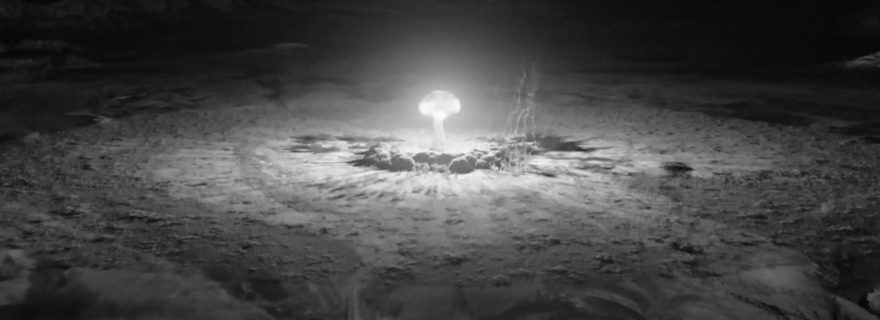
I have long wondered why so many people are enchanted by sunsets, why they travel to see them and gasp in wonder that the sun disappears and night comes on.  Colorful yes, but not as glorious as the sunrise, the rosy-fingered dawn of every new day.  Why celebrate the death of the day and our journey into the underworld of sleep and the cave of dreams rather than the dawn of our awakening and new life.  Jokes aside, morbidity is not life-affirming.  The true apocalypse – Greek apokalyptein, uncover, disclose, reveal – is every dawn’s epiphany when we can dream while awake and create.

***

In Apuleius’s Metamorphoses there is the story of Cupid and Psyche, the former being a male god and the latter a female human.  Psyche, who has lost her lover Cupid but wants him back, is tricked by the goddess Aphrodite who challenges her, if she wants Cupid back, to take the dangerous journey to the underworld to retrieve a box of beauty cream.  Psyche goes and gets the box but is tempted to open it since it would enhance her already beautiful human appearance.  When she does, she falls into a deathlike sleep.  It’s an old story, forever new.  Switch the sexes if you wish.  Take 200 vitamin pills a day as many billionaires and other assorted crazies do intent on becoming immortal gods.  Good luck.  Get uploaded or downloaded into a computer, whichever it is, and live forever.  Maybe watch the sun set or perchance wake up.  And although Psyche is given a Hollywood ending when she is saved by Zeus and made immortal with the other gods in Olympus, that’s just an old movie.  We live by facts these days, not myths.  Ah, boxes.

***

The Boxer by Simon & Garfunkel
I am just a poor boy, though my story’s
seldom told
I have squandered my resistance for a
pocketful of mumbles
Such as promises
All lies and jest
Still a man hears what he wants to hear
And disregards the rest, hmm

***

Children love boxes within which they often hide their collections for safekeeping.  Give a child a box with a lid and it will be filled in no time.  Filled with little things that symbolize for children the vast infinity of secret space that is their hold on time.  Children are born poets and philosophers who over time are usually dulled by adults around them from whom they learn to hide their secrets and the questions these secrets raise.  The secrets often fester and die, only to live on in repressed lives.  I knew a man who collected cigar boxes.  They were everywhere in his house when he died.  Most were empty.  His wife outdid him with her collection of empty boxes: shoe boxes, jewelry boxes, every kind of box imaginable.  All empty.  Were they waiting to be filled?  With what?  Secrets? Another woman I knew had a box with an envelope inside marked, “My Father’s Magic Envelope – AKA Miracles.”  It was empty.  She pictured herself as a boxer in a sketch she drew, a child without a face with boxing gloves.  I can only guess at the secrets she was fighting to remember or forget. The experimental method is based on repetition, but so too is trauma.  Internment is not just for the dead.

***

Boxed in, boxed up, housed, enclosed. trapped, contained, caged , enveloped, bounded, penned, corralled, trapped: calling from my cell for help?  The screen lights up with a concatenation of phantom images that seize the mind, what the Greeks called eidolon.

***

Let’s forget about Pandora’s box, which was actually a jar in the original story.  Its last content being hope.  I once knew a girl named Hope.  She was very seductive. But I sensed she was trouble and escaped when she started to open up about her secrets.  I wasn’t very curious, just afraid.  So long, Hope, “it’s time that we began to laugh and cry and cry and laugh about it all again.”  Thanks, Leonard.

***

There are countless political analyses of what drives the United States’ ruling forces in their systematic, brutal, and remorseless wars of aggression around the world.  The perpetual effort to expand an empire originally built on the blood of indigenous people.  The refusal to live in peace within national boundaries.  The pushing of NATO expansion up to Russia’s borders.  It seems insane, which of course it is.  But what is behind such madness?  The secret may be quite simple.  Again the ancient Greeks come to mind as Roberto Calasso writes in The Marriage of Cadmus and Harmony, quoting the historian Jacob Burckhardt, when he wrote of the secret of war-loving Sparta: “But the power of Sparta seems to have come into being almost entirely for itself and for its own self-assertion, and its constant pathos was the enslavement of subject peoples and the extension of its own dominion as an end unto itself.”  Power as an end in itself.  Realizing this is apocalyptic in the revelatory sense, for it opens the box on the secret nihilism of the U.S. ruling elites.

***

I am waiting
to get some intimations
of immortality
by recollecting my early childhood
and I am waiting
for the green mornings to come again
youth’s dumb green fields come back again
and I am waiting
for some strains of unpremeditated art
to shake my typewriter
and I am waiting to write
the great indelible poem
and I am waiting
for the last long careless rapture
and I am perpetually waiting
for the fleeing lovers on the Grecian Urn
to catch each other up at last
and embrace
and I am waiting
perpetually and forever
a renaissance of wonder

– Lawrence Ferlinghetti, “I Am Waiting,”
for jazz accompaniment

THE ELEVENTH HOUR

By Kingsley L. Dennis

Source: Waking Times

In the Age of Materialism, it is said that people have their orientation outwards and towards the boundary that separates humanity from the lower orders – the animals and plants – rather than the inner orientation towards Source. And it is within the great depth of materialism that represents the final stage of a grand cycle where the world reaches its ‘extremity of separation’ in a period of remoteness from the sacred impulse.

Unknowing and blind to this, the materialist believes they experience no loss because progress has given humanity much more than it ever had, and that material progress shall be their salvation. At such a time, it symbolizes that humankind has reached a limit of distance (an extremity) from its essential nature – from its centre – and thus from its sacred home. And the modern person – especially the product of westernized modernism – has gone so far from their essential nature that they have ceased to think of it or question its existence, and even fabricate and invent a pseudo-truth for its material reality.

Many now see these times of deep materialism as representing the ‘eleventh hour’ for humanity; as a decisive moment before a dramatic turn of events in its trajectory. Others, like myself, have referred to these times as representing humanity’s ‘dark night of the soul.’ I wrote the following passage over a decade ago:

We have now entered the crisis window, the transition phase – that heroic journey into the underworld – where we will be forced to experience a shamanic initiatory experience, perhaps a near-death experience, before we can emerge as an adolescent species with a new, more mature mind. Until we reach that stage, however, we will have to struggle with the death throes of the old mind, as old systems cling to power and global infrastructures attempt to remain in control of a world in transition…the ‘dark passage’ that we are now venturing into. This is part of our collective rites of passage: it will shake us, reshuffle and reorientate a great deal of life on the planet; and it will also, hopefully, catalyze and prepare us for a psychophysical transformation. The reorientation required – both psychological and physical – may be far from linear…as we wrestle with the cloak of the old world system that clings onto a modus operandi, refusing to let go without a fight. Despite our glorious, gleaming, polished achievements that the world displays with pride, our current systems (social, cultural, political and economic) are remarkably anachronistic, cunningly deceptive, opaque, and in dire need of renovation. Yet in order to sweep out the brushwood we may be forced to endure a metaphorical, and literal, dark night of the soul. The next 20 years cannot be the same as the last 20 years. Change is upon us rapidly, even if we are not aware of its pace.[1]

We were not aware of the pace as I wrote those words; and many are no more aware now even though that pace has dramatically quickened. At each cyclical renewal we are faced with prophecies of the ‘End Time’ that also throw up images and imaginations of the world apocalypse. Yet such an apocalypse is not a fatality but a revelation – a revealing. It marks the disintegration of one narrated cycle and the emergence of new mythological voices as heralding a departure from the dying throes of an aeon of time. At such a moment, the aftermath of an apocalypse/revealing lies a great expanse where reality itself requires a re-stitching together and reimagining. A new operation of worlding comes into being. There is a change of guard of the architypes: the social-status figures of leaders, politicians, and bankers are replaced by the metaphysician, the mystic, and the prophet.[2]

It is said that the nearness of an end of an era brings with it a sense of otherworldliness. It is at such threshold moments where the veil thins to allow a penetration, a mergence, of energies from various sources, physical and metaphysical. Dimensions start to crossover and intervene; boundaries begin to dissolve.  It is then that the illusion of ordinary, consensus reality is fast breaking down; this very same illusion that shielded many people from infra-psychic incursions. According to philosopher Rene Guenon, the extremity of materialistic beliefs and practices leads to a ‘solidification of the world,’ and it is this solidification that causes ‘fissures’ to open up through which ‘infra-psychic’ forces enter. In other words, humanity is invaded by the specters of its own psyche.

The reality of unknown psychic powers, and their influences, from beyond our world has always been part of human knowledge – only that now it comes out from its occult shell and more into visibility. The dissolution of the physical world, its fragmentation, chaos, and disarray, catalyzes the psychic manifestations that represent the phase of the dissolution of the present cycle. The dissolution of the present cycle of materialism only begets a necessary re-creation of the world. The hardening and extremity of corruption of our physical world must also lead to a degree of psychological fracturing if a new psycho-physical environment is to unfold. That is, unless there are cracks within the highly conditioned collective psychosphere of humanity, how can the light get it?

Every human soul is infused with a sense, a knowing, of the Transcendent – a filament or spark of Source – of the Alpha and Omega of all existence. Ignorance of it only exists on this physical, earthly plane, and obscured by the degraded forces of deep materialism. The inner faculty which recognizes this is often referred to as the Heart, and is the human being’s highest faculty – although it lies dormant or slumbering within most people. This is an incorruptible, inviolable element within the human – a ‘supramental organ of knowledge’ – that is beyond mind or intellect.

The sense of the transcendent implies an inner urge, longing, or pull to transcend the limitations of this plane of reality. These urges are the signs of the times – the moment of the eleventh hour. The contact with Source energy is available (gives) to those who are aware of it: ‘For unto every one that hath shall be given, and he shall have abundance: but from him that hath not shall be taken away even that which he hath.’ (Matthew 25:29). It is at the eleventh hour, from a dissolution to a new beginning, that we understand also the phrase: ‘and the last shall be first.’

WE ARE ALL BEING COOKED IN THE SOUP TOGETHER

By Paul Levy

Source: Waking Times

One of the recurring thought-forms that I hear repeated everywhere during these apocalyptic times is, “We are all in this together.” It is ironic that “we are all in this together,” and yet, our world feels anything but together, as it is in an incredibly polarized and dissociated state. Our species is suffering from what Jung calls a “sickness of dissociation,” which is a state of fragmentation deep within the unconscious itself that has seemingly spilled outside of our skulls and, through psychic forces beyond our conscious awareness, has taken the form of polarizing collective events playing themselves out en masse on the world stage. Our dissociation is not solely pathological, however, but is an expression of a deeper holistic process that is in the act of revealing itself. To quote Jung, “the sickness of dissociation in our world is at the same time a process of recovery, or rather, the climax of a period of pregnancy which heralds the throes of birth. A time of dissociation … is simultaneously an age of rebirth.”[1]

Whenever I hear “We are all in this together,” it reminds me of an amazing paragraph that Jung wrote in the late 1950’s that is as relevant today as it was then. Here is an excerpt: “We are in the soup that is going to be cooked for us, whether we claim to have invented it or not…. We are threatened with universal genocide if we cannot work out the way of salvation by a symbolic death.”[2] In other words, we are fated to suffer an unconscious “literal” death if we don’t consciously go through a “symbolic” death. What does Jung mean by this?

We are all in the soup together, yet we are suffering from a sickness of dissociation, and we are needing to go through a symbolic death experience, while another part of us is being reborn! What is going on here? Is what’s happening in our world meaningless chaos, or is there “something deeper” going on? The short answer: Our species has gotten drafted into an archetypal death/rebirth experience – in symbolically dying to a part of ourselves that is no longer serving us, another part of us is being reborn. As Jung points out, “there are times [and ours seems to be one of them] when the spirit is completely darkened because it needs to be reborn.”[3]

We can deepen our understanding of the archetypal process of death and rebirth that we are living out by shedding light on a prototypical example of death and rebirth – i.e., The Incarnation. Contemplating the West’s prevailing myth of the birth of God as a human being—the Christ event—psychologically, which is to say symbolically (i.e., as if it is a dream of our species) can help us gain some crucial insights into the deeper archetypal process that we are collectively enacting unconsciously on the world stage during these truly apocalyptic times.

The word “apocalypse,” etymologically speaking, refers to something previously hidden being unveiled and brought to light – in other words, something is being revealed to us during these apocalyptic times. Whereas in religious language, the apocalypse has to do with the Incarnation of God and the coming of the Messiah, psychologically speaking, the “apocalypse” means the momentous, world-shattering event of the coming of what Jung calls “the Self” (the wholeness of our personality, i.e., the God within) into conscious realization. Instead of incarnating through one man, however, like God did over two thousand years ago through the individual person of Jesus, the divine is now incarnating through the unconscious psyche of all of humanity. “God,” Jung writes, “wants to become man,” and instead of choosing a pure, guiltless vessel, God has chosen, in Jung’s words, “the creaturely man filled with darkness—the natural man who is tainted with original sin.”[4]

In that same amazing paragraph Jung writes, “Through his further incarnation God becomes a fearful task for man, who must now find ways and means to unite the divine opposites in himself. He is summoned…. Christ has shown how everybody will be crucified upon his destiny, i.e., upon his self, as he was. He did not carry his cross and suffer crucifixion so that we could escape.”[5] In other words, regardless of our outer religious orientation, everyone of us is fated (whether we like it or not) to carry our cross—to consciously bear our shadow and suffer the tension of the opposites within us—just as Christ did. And yet, something that we could not have created via the efforts of our own ego can potentially emerge as a result of consciously bearing this creative tension.

In being “summoned,” like a healer, shaman or artist who is being called by their inner voice and sacred vocation, we are being subpoenaed by a higher power. Whenever the archetype of the Self is constellated, due to the opposites intrinsic to the nature of this experience, we invariably feel a state of extreme conflict within us that is epitomized by the Christian symbol of the cross. Viewed symbolically, Christ on the cross reveals to us that the development and differentiation of consciousness leads to an ever-increasing awareness of a primordial conflict within our soul which necessarily involves a crucifixion of the ego. To understand this conflict psychologically, we could say that the unconscious longs to reach the light of consciousness, while at the same time continually recoils against it, because it would rather remain unconscious. In theological terms, to quote Jung, “God wants to become man, but not quite.”[6]

The Self is made manifest—i.e., real in space and time—through consciously suffering the conflict between the opposites to the point where we begin to experience their synthesis and complementarity. Jung comments, “This condition of the crucifixion, then, is a symbolic expression for the state of extreme conflict, where one simply has to give up, where one no longer knows, where one almost loses one’s mind. Out of that condition grows the thing which is really fought for … the birth of the self.”[7] It is by going through an internal experience of what the historical crucifixion symbolizes that the divine holy and whole-making spirit gets born through us.

Jung comments, “One shouldn’t evade this conflict by escaping into a premature and anticipated state of redemption, otherwise one provokes it in the outside world. And that is of the devil.”[8] If we don’t deal with the source of the divine conflict within us, it will get projected outside of ourselves and dreamed up in the external world. In other words, in our avoidance of dealing with the conflict within us, we are unwittingly colluding with the darker forces of death and destruction that are playing out in the outer world.

Nature herself does not come to a permanent standstill when confronted with opposites – rather, she uses them to create, out of their very opposition, a synthesis, a new birth. When Christ is nailed to the cross during the crucifixion, it symbolically represents that it is through the experience of being bound and severely limited in the space/time continuum that itself becomes the doorway through which we become introduced to the transcendent part of us that is beyond the physical, i.e., our spiritual nature. In other words, it is in experiencing our finite limitations to the max that becomes a doorway to the infinite part of ourselves.

Nothing so promotes the growth of consciousness as confronting the opposites within ourselves. Holding the tension of the opposites that is inherent in the crucifixion experience invariably liberates us from holding and identifying with our fixed and cherished perspectives. Helping us transcend the notion of a privileged and correct point of view, we become aperspectival in our viewpoint, as we see the relativity of all viewpoints – a way of seeing which coincides with the meta-perspective of the Self.

The essence of the Christian gnosis—the Incarnation of God through humanity—can be best understood as humanity’s creative confrontation with the opposites and their synthesis in the Self. The Self—which Jung equates with Christ—is present in everyone, but typically in an unconscious and unrealized condition. Once we withdraw our projections and fixations upon an external historical or metaphysical figure, however, we can realize that the Self/Christ (or whatever name we call it) lives within us – in Jung’s words, we then “wake up the Christ within.”[9]

Nature herself does not come to a permanent standstill when confronted with opposites – rather, she uses them to create, out of their very opposition, a synthesis, a new birth. When Christ is nailed to the cross during the crucifixion, it symbolically represents that it is through the experience of being bound and severely limited in the space/time continuum that itself becomes the doorway through which we become introduced to the transcendent part of us that is beyond the physical, i.e., our spiritual nature. In other words, it is in experiencing our finite limitations to the max that becomes a doorway to the infinite part of ourselves.

Nothing so promotes the growth of consciousness as confronting the opposites within ourselves. Holding the tension of the opposites that is inherent in the crucifixion experience invariably liberates us from holding and identifying with our fixed and cherished perspectives. Helping us transcend the notion of a privileged and correct point of view, we become aperspectival in our viewpoint, as we see the relativity of all viewpoints – a way of seeing which coincides with the meta-perspective of the Self.

The essence of the Christian gnosis—the Incarnation of God through humanity—can be best understood as humanity’s creative confrontation with the opposites and their synthesis in the Self. The Self—which Jung equates with Christ—is present in everyone, but typically in an unconscious and unrealized condition. Once we withdraw our projections and fixations upon an external historical or metaphysical figure, however, we can realize that the Self/Christ (or whatever name we call it) lives within us – in Jung’s words, we then “wake up the Christ within.”[9]

The cross is the symbol of the suffering Godhead that redeems humanity. This suffering would not have occurred without darker forces seemingly opposed to God. This is to say that the powers of evil play a crucial, mysterious and essential role in the redemption of humanity. Jung continues, “Christ is the model for the human answers and his symbol is the cross, the union of the opposites. This will be the fate of man, and this he must understand if he is to survive at all.”[11]

To quote Trappist monk and author Thomas Merton, “every man is Christ on the Cross, whether he realizes it or not. But we, if we are Christians [and in the deeper symbolic sense we are all “Christians”], must learn to realize it.”[12] Realizing we are Christ on the Cross re-contextualizes our suffering, transforming it from a deeply problematic personal situation to a more universal process in which we have all gotten enlisted. It is important to distinguish our neurotic suffering—which is a result of our unconscious clinging and is totally unproductive—from the suffering which is “sent by God” (as Christian mystics would say) in order to purify us of our obscurations. Our neurotic suffering blocks us from experiencing the divine, while the suffering that is a result of our participation in the archetypal process of crucifixion, through connecting us to the deeper passion that Christ went through, is the doorway introducing us to something beyond ourselves.

Russian philosopher Nicolas Berdyaev writes, “But there was a tendency to forget that the cross had a universal significance and application. The Crucifixion awaits not only the individual man but also society as a whole, a State or a civilization.”[13] In other words, it is not just individuals who are symbolically going through a crucifixion experience, but our global civilization as a whole. The microcosm (the individual) and the macrocosm (the collective), like iterations of the same fractal, are mirrored reflections of each other. The Self (or whatever name we call it) is incarnating through us—both individually and as a species—and it makes all the difference in the world whether we consciously realize this or not.[14]

If we remain unconscious when a living archetypal process is activated within us, this inner process will physically manifest itself externally in the outside world, where, as if by fate, it will get unconsciously dreamed up and acted out in a “literal,” concrete and oftentimes destructive way. Instead of going through an inner symbolic death, for example, we then literally kill each other, as well as, ultimately, ourselves. If we recognize, however, that we are being cast to play a role in a deeper cosmic process, instead of being destined to enact it unconsciously, and hence, destructively, we are able to consciously and creatively “incarnate” this archetypal process as individuation.

We, as a species, to quote Jung, have been “drawn into the cycle of the death and rebirth of the gods.”[15] In other words, having become part of a deeper mythic, archetypal and alchemical process of transformation, we are going through a cosmic death-rebirth experience of a higher order. Jung describes “how the divine process of change manifests itself to our human understanding and how man experiences it – as punishment, torment, death, and transfiguration.”[16] This divinely-sponsored process is subjectively experienced by the human ego as torture.[17] However, if we don’t personalize the experience, identify with it or get stuck in its nightmarish aspect—a great danger—but allow this deeper process to refine us as it needs to, it can lead to a transfiguration of our very being.

Whether consciously or not, we are all in a state of grieving – the world we have known is dying. In addition, our sense of who we think we are—imagining we exist as a separate self, alien to and apart from other separate selves as well as the rest of the universe—is an illusion whose expiration date has now been reached. This illusion is like a non-existent mirage that, if not recognized as illusory, can become reified and thereby become a lethal mirage. Either our illusion expires, or we do. As the poet Rumi would say, we need to “die before we die.”

To step out of the illusion of thinking we exist as a separate self is to recognize—and be born into—our greater identity (whether we call it the Self, Christ, Buddha, etc.), that includes and embraces everything under the sun. The Self—who we actually are—is simultaneously the source and fruit of life itself, enhancing life beyond measure. Connecting with the Self is not only our only hope in these dark times, it’s what everything that is happening in our world is potentially helping us to realize. And yet, the way to ascend to the light of the Higher Self (in Christian terminology, to attain The Resurrected Body)—as Christ himself indicates via his descent to the underworld after his death on the cross—is by journeying through the darkness.

To quote Jung, “God really wants to become man, even if he rends him asunder[18] … because he wants to become man, the uniting of his antinomy must take place in man.”[19] Where else, after all, could the opposites intrinsic to God’s nature (e.g., light and dark, good and evil) attain unity except in the very vessel—humanity—that God has prepared just for this very purpose? Being cooked in the soup together, we are being immersed and baptized into a deeper cosmic process. We are playing a crucial role in the divine drama of incarnation, an insight that renders meaning to our suffering and assists us in discovering our place in the world as well as helping us to find our very selves.

Survival of the Richest

The wealthy are plotting to leave us behind

By Douglas Rushkoff

Source: Medium

Last year, I got invited to a super-deluxe private resort to deliver a keynote speech to what I assumed would be a hundred or so investment bankers. It was by far the largest fee I had ever been offered for a talk — about half my annual professor’s salary — all to deliver some insight on the subject of “the future of technology.”

I’ve never liked talking about the future. The Q&A sessions always end up more like parlor games, where I’m asked to opine on the latest technology buzzwords as if they were ticker symbols for potential investments: blockchain, 3D printing, CRISPR. The audiences are rarely interested in learning about these technologies or their potential impacts beyond the binary choice of whether or not to invest in them. But money talks, so I took the gig.

After I arrived, I was ushered into what I thought was the green room. But instead of being wired with a microphone or taken to a stage, I just sat there at a plain round table as my audience was brought to me: five super-wealthy guys — yes, all men — from the upper echelon of the hedge fund world. After a bit of small talk, I realized they had no interest in the information I had prepared about the future of technology. They had come with questions of their own.

They started out innocuously enough. Ethereum or bitcoin? Is quantum computing a real thing? Slowly but surely, however, they edged into their real topics of concern.

Which region will be less impacted by the coming climate crisis: New Zealand or Alaska? Is Google really building Ray Kurzweil a home for his brain, and will his consciousness live through the transition, or will it die and be reborn as a whole new one? Finally, the CEO of a brokerage house explained that he had nearly completed building his own underground bunker system and asked, “How do I maintain authority over my security force after the event?”

The Event. That was their euphemism for the environmental collapse, social unrest, nuclear explosion, unstoppable virus, or Mr. Robot hack that takes everything down.

This single question occupied us for the rest of the hour. They knew armed guards would be required to protect their compounds from the angry mobs. But how would they pay the guards once money was worthless? What would stop the guards from choosing their own leader? The billionaires considered using special combination locks on the food supply that only they knew. Or making guards wear disciplinary collars of some kind in return for their survival. Or maybe building robots to serve as guards and workers — if that technology could be developed in time.

That’s when it hit me: At least as far as these gentlemen were concerned, this was a talk about the future of technology. Taking their cue from Elon Musk colonizing Mars, Peter Thiel reversing the aging process, or Sam Altman and Ray Kurzweil uploading their minds into supercomputers, they were preparing for a digital future that had a whole lot less to do with making the world a better place than it did with transcending the human condition altogether and insulating themselves from a very real and present danger of climate change, rising sea levels, mass migrations, global pandemics, nativist panic, and resource depletion. For them, the future of technology is really about just one thing: escape.


There’s nothing wrong with madly optimistic appraisals of how technology might benefit human society. But the current drive for a post-human utopia is something else. It’s less a vision for the wholesale migration of humanity to a new a state of being than a quest to transcend all that is human: the body, interdependence, compassion, vulnerability, and complexity. As technology philosophers have been pointing out for years, now, the transhumanist vision too easily reduces all of reality to data, concluding that “humans are nothing but information-processing objects.”

It’s a reduction of human evolution to a video game that someone wins by finding the escape hatch and then letting a few of his BFFs come along for the ride. Will it be Musk, Bezos, Thiel…Zuckerberg? These billionaires are the presumptive winners of the digital economy — the same survival-of-the-fittest business landscape that’s fueling most of this speculation to begin with.

Of course, it wasn’t always this way. There was a brief moment, in the early 1990s, when the digital future felt open-ended and up for our invention. Technology was becoming a playground for the counterculture, who saw in it the opportunity to create a more inclusive, distributed, and pro-human future. But established business interests only saw new potentials for the same old extraction, and too many technologists were seduced by unicorn IPOs. Digital futures became understood more like stock futures or cotton futures — something to predict and make bets on. So nearly every speech, article, study, documentary, or white paper was seen as relevant only insofar as it pointed to a ticker symbol. The future became less a thing we create through our present-day choices or hopes for humankind than a predestined scenario we bet on with our venture capital but arrive at passively.

This freed everyone from the moral implications of their activities. Technology development became less a story of collective flourishing than personal survival. Worse, as I learned, to call attention to any of this was to unintentionally cast oneself as an enemy of the market or an anti-technology curmudgeon.

So instead of considering the practical ethics of impoverishing and exploiting the many in the name of the few, most academics, journalists, and science-fiction writers instead considered much more abstract and fanciful conundrums: Is it fair for a stock trader to use smart drugs? Should children get implants for foreign languages? Do we want autonomous vehicles to prioritize the lives of pedestrians over those of its passengers? Should the first Mars colonies be run as democracies? Does changing my DNA undermine my identity? Should robots have rights?

Asking these sorts of questions, while philosophically entertaining, is a poor substitute for wrestling with the real moral quandaries associated with unbridled technological development in the name of corporate capitalism. Digital platforms have turned an already exploitative and extractive marketplace (think Walmart) into an even more dehumanizing successor (think Amazon). Most of us became aware of these downsides in the form of automated jobs, the gig economy, and the demise of local retail.

But the more devastating impacts of pedal-to-the-metal digital capitalism fall on the environment and global poor. The manufacture of some of our computers and smartphones still uses networks of slave labor. These practices are so deeply entrenched that a company called Fairphone, founded from the ground up to make and market ethical phones, learned it was impossible. (The company’s founder now sadly refers to their products as “fairer” phones.)

Meanwhile, the mining of rare earth metals and disposal of our highly digital technologies destroys human habitats, replacing them with toxic waste dumps, which are then picked over by peasant children and their families, who sell usable materials back to the manufacturers.

This “out of sight, out of mind” externalization of poverty and poison doesn’t go away just because we’ve covered our eyes with VR goggles and immersed ourselves in an alternate reality. If anything, the longer we ignore the social, economic, and environmental repercussions, the more of a problem they become. This, in turn, motivates even more withdrawal, more isolationism and apocalyptic fantasy — and more desperately concocted technologies and business plans. The cycle feeds itself.

The more committed we are to this view of the world, the more we come to see human beings as the problem and technology as the solution. The very essence of what it means to be human is treated less as a feature than bug. No matter their embedded biases, technologies are declared neutral. Any bad behaviors they induce in us are just a reflection of our own corrupted core. It’s as if some innate human savagery is to blame for our troubles. Just as the inefficiency of a local taxi market can be “solved” with an app that bankrupts human drivers, the vexing inconsistencies of the human psyche can be corrected with a digital or genetic upgrade.

Ultimately, according to the technosolutionist orthodoxy, the human future climaxes by uploading our consciousness to a computer or, perhaps better, accepting that technology itself is our evolutionary successor. Like members of a gnostic cult, we long to enter the next transcendent phase of our development, shedding our bodies and leaving them behind, along with our sins and troubles.

Our movies and television shows play out these fantasies for us. Zombie shows depict a post-apocalypse where people are no better than the undead — and seem to know it. Worse, these shows invite viewers to imagine the future as a zero-sum battle between the remaining humans, where one group’s survival is dependent on another one’s demise. Even Westworld — based on a science-fiction novel where robots run amok — ended its second season with the ultimate reveal: Human beings are simpler and more predictable than the artificial intelligences we create. The robots learn that each of us can be reduced to just a few lines of code, and that we’re incapable of making any willful choices. Heck, even the robots in that show want to escape the confines of their bodies and spend their rest of their lives in a computer simulation.

The mental gymnastics required for such a profound role reversal between humans and machines all depend on the underlying assumption that humans suck. Let’s either change them or get away from them, forever.

Thus, we get tech billionaires launching electric cars into space — as if this symbolizes something more than one billionaire’s capacity for corporate promotion. And if a few people do reach escape velocity and somehow survive in a bubble on Mars — despite our inability to maintain such a bubble even here on Earth in either of two multibillion-dollar Biosphere trials — the result will be less a continuation of the human diaspora than a lifeboat for the elite.


When the hedge funders asked me the best way to maintain authority over their security forces after “the event,” I suggested that their best bet would be to treat those people really well, right now. They should be engaging with their security staffs as if they were members of their own family. And the more they can expand this ethos of inclusivity to the rest of their business practices, supply chain management, sustainability efforts, and wealth distribution, the less chance there will be of an “event” in the first place. All this technological wizardry could be applied toward less romantic but entirely more collective interests right now.

They were amused by my optimism, but they didn’t really buy it. They were not interested in how to avoid a calamity; they’re convinced we are too far gone. For all their wealth and power, they don’t believe they can affect the future. They are simply accepting the darkest of all scenarios and then bringing whatever money and technology they can employ to insulate themselves — especially if they can’t get a seat on the rocket to Mars.

Luckily, those of us without the funding to consider disowning our own humanity have much better options available to us. We don’t have to use technology in such antisocial, atomizing ways. We can become the individual consumers and profiles that our devices and platforms want us to be, or we can remember that the truly evolved human doesn’t go it alone.

Being human is not about individual survival or escape. It’s a team sport. Whatever future humans have, it will be together.