What Happened To The Truth Movement?

Over the years many aspects of the “truth movement” have devolved into an insufferable dumpster fire. But we can still salvage it.

By Benny Wills

Source: The Free Thought Project

From 2004 – 2016, I felt like I was a part of something special. I was participating in an “awakening.” The world was changing. Consciousness was shifting. The hidden hand was being exposed and all secrets were being revealed!

Right?

Or maybe it was wishful thinking.

9/11 happened. And for the next decade and a half, people all over the world began to question the events of that day. Then, major events in general. It was the beginning of an uprising. A revolution!

Right…?

Something else emerged during that time. Social media.

Social media has its upsides and downsides. Mostly upsides. But the downsides have serious ramifications. Specifically on communication.

Social media brings us together and tears us apart.

2001: A Truth Odyssey

By 2001, almost everyone was online and connected to the internet. But it was still in its infancy.

The iPhone didn’t exist. There was no YouTube, Facebook, Instagram, or Twitter. Even MySpace wasn’t around yet.

We had access to the internet, but we had no idea what we were in store for.

As the internet expanded, so did our ability to share information.

Alternative perspectives, counter-narratives, and “conspiracy theories” became more accessible. For the first time (possibly) in history, “official stories” were being challenged in real time. With evidence to support claims.

I was dubious about 9/11 as it was happening. Not because of the internet. Not because I was a conspiracy theorist. But because I hated George Bush. As a born and raised Democrat, I didn’t trust him. I was staunchly anti-war (and still am), and I knew America’s response to the attacks was going to be insane.

A few years later, someone shared a documentary with me called Loose Change. A film deconstructing the 9/11 narrative. My mind was blown, and it was off to the races.

Down, Down, Down The Rabbit Hole.

YouTube hit the scene in 2005. I used it strictly for conspiracy-related research.

Conspiracy content blew up online. A truth movement had begun. The masses were on the verge of waking up, well, en masse.

Right?!?!

Divide & Conquer

Fast forward to 2024. I have good news and bad news.

The good news is that more people are questioning things than ever. Distrust in anything mainstream is at an all time high.

The bad news:

Societal division is worse than it’s ever been. In my lifetime anyway. It’s hard to even call it division because division implies splitting into two halves.

This is a direct result of thumb-typed communication. (Generation Text.)

These days, most people prefer texting, emailing, or commenting over direct engagement. We yearn for human connection, but we’ve patterned ourselves to avoid it as much as possible. (I’m speaking generally, of course.)

Confronting someone is uncomfortable. But confrontation is a necessary part of human interaction. It’s a key component in solving conflict or avoiding it altogether. But since it can be terrifying, people today have the easy-out of typing instead of speaking.

Typed communication lacks empathy. It’s indirect. Impersonal. It’s both a barrier and a shield.

So people say things to each other online that they would never say out loud. They rip each other apart over the slightest differences of opinion. Many (especially YouTube commenters) hide behind avatars and pseudonyms to say whatever they want with no accountability.

Basically, everyone has free rein to be an asshole with zero repercussions.

Worst of all, no one is listening to each other anymore.

We haven’t just been divided; we’ve been fractalized into smithereens.

Awake Vs. Woke

The “awake” crowd is as insufferable as the “woke” one. Change my mind.

Mean-spirited mudslinging and public shaming are the online norm.

Checking the timeline on Facebook, for instance, is a disheartening experience.

It’s a daily mélange of proselytizing, bickering, and judging others. The sentiment is “my way or the highway.”

“I’m right, and you’re wrong. And not only are you wrong, you’re also a stupid idiot.”

Many on the alternative or “conspiracy” side of things have fallen into the same trap as the “sheep” they condemn.

Arrogant allegiance to ideas, beliefs, and opinions.

Critical Thinking

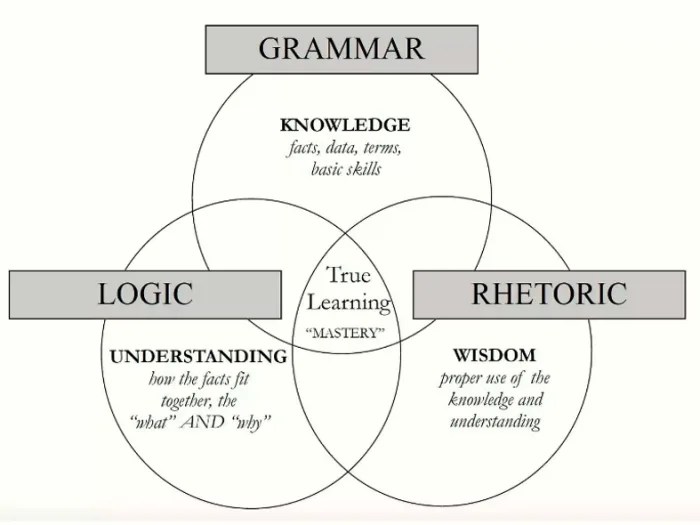
At the height of the truth movement in the 2010s, there was an emphasis on critical thinking. The Trivium was making a comeback.

Grammar, logic, and rhetoric

In that order. 

More often than not, online communication is rhetoric without grammar and logic to back it up.

Sweeping generalizations abound.

  • Accusations
  • Declarations
  • Proclamations
  • & Polarizing opinions disguised as facts

But opinions are not facts. (And you are not your opinions.)

“A great many people think they are thinking when they are merely rearranging their prejudices.” – William James

Social media algorithms are designed to keep you in a feedback loop.

A lot of people use their (typed) voice online to “speak the truth.” But they’re preaching to the choir in an echo chamber.

There’s camaraderie to be found in this. Which is good. But the likelihood of their rantings reaching those who (they feel) need to hear them is small.

The aggression that comes through many posts is ugly and derogatory.

Anger

Anger is a powerful emotion. But it’s like fire. It can warm your house or burn it down.

“Heat not a furnace for your foe so hot that it do singe yourself.” – William Shakespeare

Many people lean on anger to convey their conviction about a topic. They use it to stress the importance of something. But more often than not, it’s ineffective.

Anger is best utilized when it’s the seed preceding something more interesting.

In other words, anger alone is a weak emotion for personal expression.

When anger sparks an idea, and that idea is built upon with clarity and care, the expression of that idea has the power to shift someone’s perspective.

Many of my poems and JoyCamp videos came from an angry place. But anger is nowhere to be found in the final product.

Some think I’m too soft in my approach. Well, they’re welcome to think whatever they want. I’ve learned through trial and error that bluntly and angrily stating “the truth” is a fool’s errand. People don’t want to hear it, no matter how right or passionate you are.

Use anger like clay and sculpt it.

I tried anger in my 20s, and it got me nowhere. If anything, it only made situations worse. Speaking loudly and angrily puts more distance between your conversation partner and the point you want them to understand.

I’m committed to the truth and helping others discover it for themselves. Over the course of 15 years, I developed a nuanced approach to communication that actually works. One that I’ve taught to hundreds of people in my Parrhesia program (now called Free Your Speech).

If you didn’t pull the trigger on Parrhesia when I was offering it live, you can still purchase the course itself.

>>Free Your Speech: The Art of Communication

I’ve dropped the price to $149. It’s an election year. It’s probably worth your while.

Logic

It’s agonizing to witness your friends, family, and society at large fall into what you perceive as traps.

What’s painfully obvious to you is beyond absurd or ridiculous to them. And no matter how much you try to convince them otherwise, they double down on their commitment to the trap.

People are not logical. They’re emotional and motivated by fear, comfort, and ego.

“No one can possibly behave above his own level of understanding. Don’t expect people to do any better than they are compelled to do at their present level. Your problem is assuming that they should and could behave better. Understand this and annoyance disappears. As you gradually awaken you will feel the urge to share your discovery with others. Because you will find others in various stages of receptivity, remember this: Never give more than others can understand and appreciate in the moment. This is cosmic law. To try and give what others cannot receive is like tossing a ball against a brick wall—it bounces back to strike you. Jesus explained this law by saying that we should not cast our pearls before swine; that is, before those whose comprehension of truth makes them indifferent or hostile about it.” – François Fénelon

This is the cornerstone of my communication philosophy and approach.

The Real Awakening

There is no truth movement. There never was. There is only your journey to discovering what the truth is.

Pick your lane and choose your battles wisely.

Worry less about the world and other people’s opinions.

Concern yourself with what you’re capable of. Challenge your comfort zone. And focus your efforts on how you can help.

The most exciting rabbit hole is YOU.

Until next time.

Much love,

Benny

PS- Build Bridges

What “Normal” Are We Returning To? The Depression Nobody Dares Acknowledge

By Charles Hugh Smith

Source: Of Two Minds

Perhaps we need an honest national dialog about declining expectations, rising inequality, social depression and the failure of the status quo.

Even as the chirpy happy-talk of a return to normal floods the airwaves, what nobody dares acknowledge is that “normal” for a rising number of Americans is the social depression of downward mobility and social defeat.

Downward mobility is not a new trend–it’s simply accelerating. As this RAND Corporation report documents, ( Trends in Income From 1975 to 2018) $50 trillion in earnings has been transferred to the Financial Aristocracy from the bottom 90% of American households over the past 45 years.

Time magazine’s article on the report is remarkably direct: The Top 1% of Americans Have Taken $50 Trillion From the Bottom 90% — And That’s Made the U.S. Less Secure.

“The $50 trillion transfer of wealth the RAND report documents has occurred entirely within the American economy, not between it and its trading partners. No, this upward redistribution of income, wealth, and power wasn’t inevitable; it was a choice–a direct result of the trickle-down policies we chose to implement since 1975.

We chose to cut taxes on billionaires and to deregulate the financial industry. We chose to allow CEOs to manipulate share prices through stock buybacks, and to lavishly reward themselves with the proceeds. We chose to permit giant corporations, through mergers and acquisitions, to accumulate the vast monopoly power necessary to dictate both prices charged and wages paid. We chose to erode the minimum wage and the overtime threshold and the bargaining power of labor. For four decades, we chose to elect political leaders who put the material interests of the rich and powerful above those of the American people.”

I’ve been digging into downward mobility and social depression for years: Are You Really Middle Class?

The reality is that the middle class has been reduced to the sliver just below the top 5%–if we use the standards of the prosperous 1960s as a baseline.

The downward mobility isn’t just financial–it’s a decline in political power, control of one’s work and ownership of income-producing assets. This article reminds us of what the middle class once represented: What Middle Class? How bourgeois America is getting recast as a proletariat.

This reappraisal of the American Dream is also triggering a reappraisal of the middle class in the decades of widespread prosperity: The Myth of the Middle Class: Have Most Americans Always Been Poor?

Downward mobility excels in creating and distributing what I term social defeat: In my lexicon, social defeat is the spectrum of anxiety, insecurity, chronic stress, fear and powerlessness that accompanies declining financial security and social status.

Downward mobility and social defeat lead to social depression. Here are the conditions that characterize social depression:

1. High expectations of endlessly rising prosperity instilled as a birthright no longer align with economy reality.

2. Part-time and unemployed people are marginalized, not just financially but socially.

3. Widening income/wealth disparity as those in the top 10% pull away from the bottom 90%.

4. A systemic decline in social/economic mobility as it becomes increasingly difficult to move from dependence on the state or one’s parents to financial independence.

5. A widening disconnect between higher education and employment: a college/university degree no longer guarantees a stable, good-paying job.

6. A failure in the Status Quo institutions and mainstream media to recognize social depression as a reality.

7. A systemic failure of imagination within state and private-sector institutions on how to address social depression issues.

8. The abandonment of middle class aspirations: young people no longer aspire to (or cannot afford) consumerist status symbols such as luxury autos or conventional homeownership.

9. A generational abandonment of marriage, families and independent households as these are no longer affordable to those with part-time or unstable employment.

10. A loss of hope in the young generations as a result of the above conditions.

The rising tide of collective anger arising from social depression is visible in many places: road rage, violent street clashes between groups seething for a fight, the destruction of friendships for holding “incorrect” ideological views, and so on.

A coarsening of the entire social order is increasingly visible: The Age of Rudeness.

Depressive thoughts (and the emotions they generate) tend to be self-reinforcing, and this is why it’s so difficult to break out of depression once in its grip.

One part of the healing process is to expose the sources of anger that we are repressing. As psychiatrist Karen Horney explained in her 1950 masterwork, Neurosis and Human Growth: The Struggle Towards Self-Realization, anger at ourselves sometimes arises from our failure to live up to the many “shoulds” we’ve internalized, and the idealized track we’ve laid out for ourselves and our lives.

The article The American Dream Is Killing Us does a good job of explaining how our failure to obtain the expected rewards of “doing all the right things” (getting a college degree, working hard, etc.) breeds resentment and despair.

Since we did the “right things,” the system “should” deliver the financial rewards and security we expected. This systemic failure to deliver the promised rewards is eroding the social contract and social cohesion. Fewer and fewer people have a stake in the system.

We are increasingly angry at the system, but we reserve some anger for ourselves, because the mass-media trumpets how well the economy is doing and how some people are doing extremely well. Naturally, we wonder, why them and not us? The failure is thus internalized.

One response to this sense that the system no longer works as advertised is to seek the relative comfort of echo chambers–places we can go to hear confirmation that this systemic stagnation is the opposing ideological camp’s fault.

Part of the American Exceptionalism we hear so much about is a can-do optimism: set your mind to it and everything is possible.

The failure to prosper as anticipated is generating a range of negative emotions that are “un-American”: complaining that you didn’t get a high-paying secure job despite having a college degree (or advanced degree) sounds like sour-grapes: the message is you didn’t work hard enough, you didn’t get the right diploma, etc.

It can’t be the system that’s failed, right? I discuss this in my book Why Our Status Quo Failed and Is Beyond Reform: the top 10% who are benefiting mightily dominate politics and the media, and their assumption is: the system is working great for me, so it must be working great for everyone. This implicit narrative carries an implicit accusation that any failure is the fault of the individual, not the system.

The inability to express our despair and anger generates depression. Some people will redouble their efforts, others will seek to lay the blame on “the other” (some external group) and others will give up. What few people will do is look at the sources of systemic injustice and inequality.

Perhaps we need an honest national dialog about declining expectations, rising inequality and the failure of the status quo that avoids polarization and the internalization trap (i.e. it’s your own fault you’re not well-off).

We need to value honesty above fake happy-talk. Once we can speak honestly, there will be a foundation for optimism.

America’s Social Depression Is Accelerating

By Charles Hugh Smith

Source: Of Two Minds

We need to value honesty above optimism. Once we can speak honestly, there is a foundation for optimism.

Beneath the rah-rah statistics of “the greatest economy ever,” the social depression is accelerating. The mainstream is reluctantly waking up to the future of the American Dream: downward mobility for all but the top 10% of households. A 2015 Atlantic article fleshed out the zeitgeist with survey data that suggests the Great Middle Class/Nouveau Proletariat is also waking up to a future of downward mobility: The Downsizing of the American DreamPeople used to believe they would someday move on up in the world. Now they’re more concerned with just holding on to what they have.

I have been digging into the financial and social realities of what it takes to be middle class in today’s economy for years: Are You Really Middle Class?

The reality is that the middle class has been reduced to the sliver just below the top 5%–if we use the standards of the prosperous 1960s as a baseline.

The downward mobility isn’t just financial–it’s a decline in political power, control of one’s work and income-producing assets. This article reminds us of what the middle class once represented: What Middle Class? How bourgeois America is getting recast as a proletariat.

The costs of trying to maintain a toehold in the upper-middle class are illuminated in these recent articles on health and healthcare–both part of the downward mobility:

Health Care Slavery and Overwork

How a toxic workplace could, literally, destroy your health

We’re afraid our work is killing us, and we are right

This reappraisal of the American Dream is also triggering a reappraisal of the middle class in the decades of widespread prosperity: The Myth of the Middle Class: Have Most Americans Always Been Poor?

Downward mobility excels in creating and distributing what I term social defeat: In my lexicon, social defeat is a spectrum of anxiety, insecurity, chronic stress, powerlessness, and fear of declining social status.

Downward mobility and social defeat lead to social depression. Here are the conditions that characterize social depression:

1. High expectations of endless rising prosperity have been instilled in generations of citizens as a birthright.

2. Part-time and unemployed people are marginalized, not just financially but socially.

3. Widening income/wealth disparity as those in the top 10% pull away from the shrinking middle class.

4. A systemic decline in social/economic mobility as it becomes increasingly difficult to move from dependence on the state (welfare) or one’s parents to financial independence.

5. A widening disconnect between higher education and employment: a college/university degree no longer guarantees a stable, good-paying job.

6. A failure in the Status Quo institutions and mainstream media to recognize social recession as a reality.

7. A systemic failure of imagination within state and private-sector institutions on how to address social recession issues.

8. The abandonment of middle class aspirations by the generations ensnared by the social recession: young people no longer aspire to (or cannot afford) consumerist status symbols such as luxury autos or homeownership.

9. A generational abandonment of marriage, families and independent households as these are no longer affordable to those with part-time or unstable employment, i.e. what I have termed (following Jeremy Rifkin) the end of work.

10. A loss of hope in the young generations as a result of the above conditions.

The rising tide of collective anger arising from social depression is visible in many places: road rage, violent street clashes between groups seething for a fight, the destruction of friendships for holding the “incorrect” ideological views, and so on. I Think We Can Safely Say The American Culture War Has Been Taken As Far As It Can Go.

A coarsening of the entire social order is increasingly visible: The Age of Rudeness.

Depressive thoughts (and the emotions they generate) tend to be self-reinforcing, and this is why it’s so difficult to break out of depression once in its grip.

One part of the healing process is to expose the sources of anger that we are repressing. As psychiatrist Karen Horney explained in her 1950 masterwork, Neurosis and Human Growth: The Struggle Towards Self-Realization, anger at ourselves sometimes arises from our failure to live up to the many “shoulds” we’ve internalized, and the idealized track we’ve laid out for ourselves and our lives.

The recent article, The American Dream Is Killing Us does a good job of explaining how our failure to obtain the expected rewards of “doing all the right things”(getting a college degree, working hard, etc.) breeds resentment and despair.

Since we did the “right things,” the system “should” deliver the financial rewards and security we expected. This systemic failure to deliver the promised rewards is eroding social mobility and the social contract while generating frustration, anger, etc.

We are increasingly angry at the system, but we reserve some anger for ourselves, because the mass-media trumpets how well the economy is doing and how some people are doing extremely well. Naturally, we wonder, why them and not us? The failure is thus internalized.

One response to this sense that the system no longer works as advertised is to seek the relative comfort of echo chambers–places we can go to hear confirmation that this systemic stagnation is the opposing political party’s fault.

We don’t just self-sort ourselves into political “tribes” online– we are congregating in increasingly segregated communities and states:.

Americans are moving to communities that align more with their politics. Liberals are moving to liberal areas, and conservatives are moving to conservative communities. It’s been going on for decades. When Jimmy Carter was elected in 1976, 26.8% of Americans lived in landslide counties; that is counties where the president won or lost by 20% of the vote.

By 2004, 48.3% of the population lived in these counties. This trend continues to worsen. As Americans move to their preferred geographic bubbles, they face less exposure to opposing viewpoints, and their own opinions become more extreme. This trend is at the heart of why politics have become so polarizing in America.

We’re self-sorting at every level. Because of this, Americans are only going to grow more extreme in their beliefs, and see people on the other side of the political spectrum as more alien.”

Part of the American Exceptionalism we hear so much about is a can-do optimism: set your mind to it and everything is possible.

The failure to prosper as anticipated is generating a range of negative emotions that are “un-American”: complaining that you didn’t get a high-paying secure job despite having a college degree (or advanced degree) sounds like sour-grapes: the message is you didn’t work hard enough, you didn’t get the right diploma, etc.

It can’t be the system that’s failed, right? I discuss this in my book Why Our Status Quo Failed and Is Beyond Reform: the top 10% who are benefiting mightily dominate politics and the media, and their assumption is: the system is working great for me, so it must be working for everyone. That’s the implicit narrative parroted by status quo mouthpieces.

The inability to express our despair and anger generates depression. Some people will redouble their efforts, others will seek to lay the blame on “the other” (some external group) and others will give up. What few people will do is look at the sources of systemic injustice.

Perhaps we need a national dialog about declining expectations, rising inequality and the failure of the status quo that avoids the blame-game and the internalization trap (i.e. it’s your own fault you’re not well-off).

We need ways to express our resentment, anger, despair, etc. that are directed at the source, the complex system we inhabit, not “the other.” We need to value honesty above optimism. Once we can speak honestly, there is a foundation for optimism.

Are We (Collectively) Depressed?

By Charles Hugh Smith

Source: Of Two Minds

We need to encourage honesty above optimism. Once we can speak honestly, there is a foundation for optimism.

Psychoanalysis teaches that one cause of depression is repressed anger.

The rising tide of collective anger is visible in many places: road rage, violent street clashes between groups seething for a fight, the destruction of friendships for holding the “incorrect” ideological views, and so on. I Think We Can Safely Say The American Culture War Has Been Taken As Far As It Can Go.

A coarsening of the entire social order is increasingly visible: The Age of Rudeness.

This raises a larger question: are we as a society becoming depressed as we repress our righteous anger and our sense of powerlessness as economic and social inequality rises?

Depression is a complex phenomenon, but it typically includes a loss of hope and vitality, absence of goals, the reinforcement of negative internal dialogs, and anhedonia, the loss of the joy of living (joie de vivre).

Depressive thoughts (and the emotions they generate) tend to be self-reinforcing, and this is why it’s so difficult to break out of depression once in its grip.

One part of the healing process is to expose the sources of anger that we are repressing. As psychiatrist Karen Horney explained in her 1950 masterwork, Neurosis and Human Growth: The Struggle Towards Self-Realization, anger at ourselves sometimes arises from our failure to live up to the many “shoulds” we’ve internalized, and the idealized track we’ve laid out for ourselves and our lives.

The recent article, The American Dream Is Killing Us does a good job of explaining how our failure to obtain the expected rewards of “doing all the right things” (getting a college degree, working hard, etc.) breeds resentment and despair.

Since we did the “right things,” the system “should” deliver the financial rewards and security we expected. This systemic failure to deliver the promised rewards is eroding social mobility and the social contract while generating frustration, anger, etc.

We are increasingly angry at the system, but we reserve some anger for ourselves, because the mass-media trumpets how well the economy is doing and how some people are doing extremely well. Naturally, we wonder, why them and not us? The failure is thus internalized.

One response to this sense that the system no longer works as advertised is to seek the relative comfort of echo chambers–places we can go to hear confirmation that this systemic stagnation is the opposing political party’s fault.

We don’t just self-sort ourselves into political “tribes” online–we congregate in increasingly segregated communities and states: The Simple Reason Why A Second American Civil War May Be Inevitable.

Americans are moving to communities that align more with their politics. Liberals are moving to liberal areas, and conservatives are moving to conservative communities. It’s been going on for decades. When Jimmy Carter was elected in 1976, 26.8% of Americans lived in landslide counties; that is counties where the president won or lost by 20% of the vote.

By 2004, 48.3% of the population lived in these counties. This trend continues to worsen. As Americans move to their preferred geographic bubbles, they face less exposure to opposing viewpoints, and their own opinions become more extreme. This trend is at the heart of why politics have become so polarizing in America.

We’re self-sorting at every level. Because of this, Americans are only going to grow more extreme in their beliefs, and see people on the other side of the political spectrum as more alien.”

Part of the American Exceptionalism we hear so much about is a can-do optimism: set your mind to it and everything is possible.

The failure to prosper as anticipated is generating a range of negative emotions that are “un-American”: complaining that you didn’t get a high-paying secure job despite having a college degree (or advanced degree) sounds like sour-grapes: the message is you didn’t work hard enough, you didn’t get the right diploma, etc.

It can’t be the system that’s failed, right? I discuss this in my book Why Our Status Quo Failed and Is Beyond Reform: the top 10% who are benefiting mightily dominate politics and the media, and their assumption is: the system is working great for me, so it must be working for everyone. That’s the implicit narrative parroted by status quo mouthpieces.

The inability to express our despair and anger generates depression. Some people will redouble their efforts, others will seek to lay the blame on “the other” (some external group) and others will give up. What few people will do is look at the sources of systemic injustice.

Perhaps we need a national dialog about declining expectations, rising inequality and the failure of the status quo that avoids the blame-game and the internalization trap (i.e. it’s your own fault you’re not well-off).

We need ways to express our resentment, anger, despair, etc. that are directed at the source, the complex system we inhabit, not “the other.” We need to encourage honesty above optimism. Once we can speak honestly, there is a foundation for optimism.


An Open Letter to People with ‘Mental Health’ Issues

Robert J. Burrowes

As ‘mental health’ issues gain more attention, sympathetic and
otherwise, in a wide variety of contexts and countries around the world,
the opportunity for inaccurate perceptions of what causes these issues,
and how to treat them, are likewise expanded.

So if you or someone you know is supposed to have a ‘mental illness’
such as anxiety, depression, schizophrenia, obsessive-compulsive
disorder (OCD), bipolar disorder, anorexia nervosa or post-traumatic
stress disorder (PTSD), I would like to give you the opportunity to
consider an explanation and a way forward that you are unlikely to have
come across.

My first suggestion is that you ignore any label that you have been
given. These labels are an inaccurate and unhelpful way of labeling the
appropriate, diverse and complex emotional responses that a normal human
being will have to emotionally disturbing events. It is inaccurate
because words such as these imply a ‘disorder’ that a normal individual
should not have in response to emotionally challenging events in their
life and it is unhelpful because the term suggests that many different
individuals are having the same (dysfunctional) response.

Human beings have a brilliantly diverse and complex array of emotions
and hence potential emotional responses as a result of the evolutionary
pressures that shaped the emergence of hominids over millions of years.
An extraordinary emotional capacity is one of the defining features of
our humanity and, I would argue, far more important than any other
feature such as our intellectual capacity.

Our emotions or, more simply, our feelings play the central role in
determining our behaviour in any given circumstance. Whatever we do, we
are responding to our feelings. If we are doing what we want to do, we
are doing what we feel like doing. If we are not doing what we feel like
doing, it is because our fear has been triggered sufficiently to
override feelings that would otherwise have us doing something more
functional and enjoyable. Regrettably, human ‘socialization’ (that is,
terrorization) plays heavily on our fear during childhood in order to
turn us into obedient slaves in the forms of student, worker/soldier and
citizen. And this happens irrespective of our level of intelligence. For
a full explanation, see ‘Why Violence?

Unfortunately, once our fear has been utilized to suppress our awareness
of how we genuinely feel and what we want to do – which is sometimes
euphemistically referred to as ’emotional regulation’ – we are no longer
able to access these feelings readily and we live our lives
unconsciously and powerlessly submitting to the will of those we fear
and the institutions they control. But the price for doing so is that
our lives are no longer our own.

As a unique individual who has experienced the ongoing violent trauma
virtually all of us experience during childhood you have found yourself
experiencing a level of emotional response that is very appropriate
given your experience but which is both exacerbated and complicated by
the sudden release of feelings that you had been suppressing since
childhood (and which you are probably being told are inappropriate now).

The fear you feel (probably labeled ‘anxiety’, ‘nervousness’ or
something else) in particular (and perhaps virtually all) contexts is
also triggering the monumental fear (of your parents, teachers,
religious figures and other adults) that you were scared into
suppressing as a child.

The anger you feel about how you were treated and/or what happened to
others (perhaps siblings) you know is merely the peak of the volcano of
anger that you have been keeping the lid on since childhood.

The sadness you feel about what has happened to you and perhaps others
you know is only the tip of the iceberg of sadness you have been
suppressing all of your life.

The guilt, shame, embarrassment… you feel, perhaps about those you let
down or for some other reason, is only the latest addition to the guilt
and other feelings you have been suppressing since childhood.

Do you think I am wrong? Then consider this. Were you ever allowed to
show your fear as a child (and to act on it)? Were you allowed to cry
freely and openly? Were you allowed to get angry (at being ‘done over’
or in defense of yourself)? As often as you needed? Or were you
endlessly admonished and, one way or another, terrorized into behaving
blandly (with ‘acceptable’ feelings like love and happiness tolerated in
particular doses and circumstances).

So if you want to deal powerfully with all of the emotional responses
that are causing your so-called ‘mental illness’, here is my suggestion.
Focus on feeling each and all of your feelings. If you wake from a
nightmare, deliberately and consciously focus on the imagery in the
nightmare while you feel just how terrified you are. Focus on this
feeling for as long as you can. It will be horrendous and will take
enormous courage. But, after a time, it will start to fade and you will
feel some relief. When your fear arises again, in any context, pay
conscious attention to it. You have been suppressing it all of your
life; it just wants to be heard and felt so that you can let it go
forever.

If you feel angry, instead of trying to suppress it, harming yourself or
harming someone else (perhaps, even, someone you love), express your
anger fully and completely but in a safe way. How? Here are some
suggestions but you will need to decide what will work best for you. Get
an axe and chop wood (thinking about utterly destroying who/what is
making you angry: parents, teachers, religious figures, politicians,
military officers…) until your anger has been vented. Or smash a bat or
racquet into a mattress or cushion. Or scream (into a pillow if noise is
an issue). Or punch a punching bag. If you feel angry you need to exert
enormous physical effort to adequately express it. This might require
several hours for any one session and you might need to do a great many
sessions. Remember, you need to work off a lifetime of anger! If you can
set up a safe space for your regular anger sessions, do so. Whatever you
do, however, don’t waste your time saying or writing ‘I feel angry…’.
And don’t waste a moment of your life in an ‘anger management’ course.
Anger, like all emotions, needs to be expressed, not ‘managed’ (that is,
suppressed).

Another reason why it is important that you express your anger as I have
just suggested is because you will often discover afterwards that you
are projecting your anger. Projection is another of the creative ways
that your mind can use to give you a lead back to some of your
suppressed feelings. Projection occurs, for example, when it feels like
you are angry with your spouse for something she/he has done but, once
you fully express the feelings, you realize that, in fact, while your
spouse did something that unintentionally triggered your anger, most of
the anger is actually about someone or something from your childhood.
You cannot discover the source of the projection without fully
expressing the feelings first. Many people who routinely abuse their
spouse and/or children are trapped in a projection which is why their
anger cannot lead to greater self-awareness. People often project their
fear and sadness too: phobias are the result of projected fear, for
example, while sad films enable some people to access their suppressed
sadness.

If you feel sad or anxious or ashamed or guilty or in pain or despairing
or obsessive or depressed or hopeless or compulsive or self-hating or
humiliated or anything else, just let yourself feel it, deeply. And let
it manifest in its own way: cry (if that is what happens when you feel
sad), shake (if that is what happens when you feel scared), feel guilty
or hopeless, feel horrible or …. Deliberately. Consciously. For as long
as it lasts or for as long as you are able to do at the time.

If you feel a sensation in your body, such as muscle tension or a pain
or a sense of contamination, focus on where you feel it and how it
feels. Eventually, after feeling the feelings from this sensation (which
might take very many sessions), you will discover why the sensation
originated and learn what it is trying to teach you.

If you feel suicidal it will often be because you are unconsciously
suppressing another shocking feeling that feels beyond your courage to
feel consciously, such as the feeling of self-hatred for something
shameful you have done, and suicide will seem the best way out. The
suicidal feeling might also arise out a sense of hopelessness or a
desire for release from enormous emotional and/or physical pain. Suicide
is an option that no-one should ever take from you, and I would never do
so, but I gently encourage you to focus on any suicidal feeling in the
belief that the underlying feeling – self-hatred, pain or something else
– will eventually be relieved and the urge to destroy yourself will pass
allowing you to keep traveling the journey of healing.

At this point, I should add that consciously focusing on feeling
physical pain (as a result of injuries or otherwise) is an important
element of any comprehensive healing strategy too.

As you have realized by now, this process of feeling isn’t necessarily
fun and my suggestion runs directly counter to our ‘feel good’ culture
which emphasizes ‘positive’ feelings while teaching you to suppress
‘negative’ ones. However, feeling your suppressed feelings will be,
ultimately, liberating and will progressively restore you to a life of
authenticity: a superior version of the life of dignity, honour and
courage that you once had (or should have had).

If new symptoms arise as you travel your healing journey and even if
these involve difficult feelings, it will usually be a sign that you are
making solid progress in uncovering the original sources of your
emotional ‘ill-health’. These symptoms, if any, simply provide another
opportunity for you to focus on how you feel. Take advantage of them
until they fade so that you learn what they are teaching you.

Another suggestion I have is to alter your diet to the consumption of
organically-grown, vegetarian whole (unprocessed) food so that your
brain gets the nutrition it needs to heal and function well. This also
means that you should discontinue using any drugs that are supposed to
suppress your awareness of your anxiety, depression, OCD, PTSD…
particularly given that psychiatric drugs might generate new symptoms,
worsen your existing symptoms and/or even cause brain damage. If you are
addicted (whether to psychiatric drugs, alcohol or illicit drugs), you
might consider consulting a natural health practitioner (such as a
homeopath or naturopath) who is familiar with assisting people to
withdraw from drugs and to detoxify their bodies, or consider buying the
Charlotte Gerson book ‘Healing the Gerson Way: Defeating Cancer and
other Chronic Diseases’ so that you can undertake Gerson Therapy at home to eliminate all of your physical drug addictions. Alternatively, you might consult the ‘Mad in America‘ website for other methods on how to safely and easily break your addictions.

In addition, I strongly encourage you to discontinue seeing all of those
psychiatrists, psychologists, psychotherapists, counsellors and doctors
(unless they qualify as specified below) who are more terrified of the
natural expression of your feelings than are you (and probably only
offer time-limited sessions). See ‘Defeating the Violence of
Psychiatry‘. You need to feel all of your feelings which have been an appropriate emotional
response to the terror of your childhood. It is feeling our feelings
that allows us to move on from violence and trauma to lead a meaningful
life. Evolution is not stupid even if many of its human products have,
indeed, been stupefied.

If you are lucky enough to know someone (relative, friend or
professional) who feels capable of listening to you while you talk about
violent/traumatic experiences (and thus enable your feelings to surface
more readily) and you trust them to do so, I encourage you to take
advantage of the listening. Ideally, this should happen on a daily basis
with each session lasting for as long as you need it.

Talk about your experiences (or don’t talk if you find this difficult)
but spend time focusing on how you feel about these experiences. Choose
an unpleasant memory from your past and focus on the feelings – sadness,
fear, anger, shame, guilt… – that arise as you talk and then think about
that memory. Keep replaying the memory as often as it feels productive
to do so, until the feelings attached to that memory have all been
felt/expressed and the memory is no longer difficult to contemplate. If
the feelings attached to a particular memory feel too horrible for you
to feel now, choose a memory with feelings that feel manageable and
tackle them first. The more horrible memories will wait until you feel
capable of feeling them because the courage you need to feel your worst
fears will gradually accumulate.

The listener should listen in silence (even if you are not speaking)
and, if capable of doing so, occasionally reflect any of your feelings
they can hear ‘beneath’ the words you are speaking; for example, ‘You
sound scared of your mother/father’ or ‘You sound angry that your
teacher forced you to do something against your will’. If the reflection
is accurate, keep focusing on how you feel by imagining what is bringing
up the feeling. If you feel like crying, then cry. If you need to get
angry, do so in the way that works for you (as mentioned above). And so
on. You are the only one who can interpret your feelings, nightmares,
dreams and other emotional experiences and you should ask any listener
to let you do so. Discourage any listener from reassuring or advising
you; deal with the reality of how you feel, finally, and discover your
own way forward. For more detail, see ‘Nisteling: The Art of Deep
Listening‘.

If you don’t know anyone who can listen without being triggered into
feelings of their own (because they are scared by what happened to
you/them) then you are better off listening to yourself. That means
having regular sessions, preferably on a daily basis, in a safe space
you have created when you allow yourself to deliberately focus on
traumatic experiences and to feel each and all of the feelings,
sometimes in combination, that arise when you do. It will sometimes mean
that you need to abandon what you are doing because something triggers a
sudden rush of feelings that demand your attention immediately. Not very
convenient I know, but neither were your traumatic experiences as a
child.

If you want more information about the process I have described above,
see Anita McKone ‘Fearless Psychology and Fearful Psychology: Principles
and Practice‘.

How long will it take? For many of you it will take a very long time,
perhaps several years of regular sessions. I would like to tell you
otherwise but you have been lied to far too often already – there are no
quick fixes to the emotional trauma you are suffering – and I won’t
insult you by doing so again. Having said ‘it will take a very long
time’, I will add that every individual has a unique healing journey
and, whatever the difficult feelings involved, each session of feeling
is a session of healing – which might reveal an important insight about
your life – and will take you one step closer to gaining a life free of
mental ill-health and full of emotional power.

In essence, it is vastly superior strategy to provide yourself with a
safe space in which your feelings can arise naturally so that you can
feel and express them, safely and completely, rather than endlessly try
to suppress them (but have them manifest ‘out of control’ anyway).

If you have a spouse or child who has been traumatized by your
behaviour, the information in this article is equally valid for them
too. In fact, it is useful information for any person because,
tragically, we were all terrorized during childhood.

Obviously, I haven’t dealt with every issue – like ‘How do I recover
from my emotional devastation when I need to work?’ or ‘How do I recover
emotionally if I have difficult physical injuries too?’ – so I am going
to have to trust you to work out answers to any unanswered questions. I
am just explaining how you can emotionally restore yourself.

Finally, if your life experience generally leaves you inclined to
believe that humans can do better than inflict mass violence on each
other in attempts to ‘resolve’ their conflicts, then you might consider
signing online ‘The People’s Charter to Create a Nonviolent World‘.

In conclusion, I want to summarize your options, which are the options
open to any human. You stand at the fork of two paths. The first path is
the one that takes you further along the journey that you are traveling,
offering you more of what you have now.

The second path, outlined above, offers you a long journey of difficult,
frightening and painful emotional healing – with regular periods of
relief and rewarding insights about your life – which will, if traveled,
lead you to a vastly superior version of your old life.

The third path, which will only open to you once you have traveled the
second path for a considerable time, will provide an encounter with ever
deeper layers of suppressed fear, sadness, pain, anger, shame, guilt,
anxiety, dread, humiliation, self-hatred … terror, fury … until its end
many years later (although your capacity to cope with such horror will
be steadily growing all of the time). At the end of this third path,
should you choose to travel it and once your final layer of suppressed
terror has been felt, you will become the person that evolution intended
you to be on the day you were born.


Biodata: Robert J. Burrowes has a lifetime commitment to understanding
and ending human violence. He has done extensive research since 1966 in
an effort to understand why human beings are violent and has been a
nonviolent activist since 1981. He is the author of ‘Why Violence?
His email address is flametree@riseup.net
and his website is at http://robertjburrowes.wordpress.com


Robert J. Burrowes
P.O. Box 68
Daylesford
Victoria 3460
Australia
Email: flametree@riseup.net

Websites:
Nonviolence Charter
Flame Tree Project to Save Life on Earth
‘Why Violence?’
Nonviolent Campaign Strategy
Nonviolent Defense/Liberation Strategy
Anita: Songs of Nonviolence
Robert Burrowes
Global Nonviolence Network


Seeking the True Path

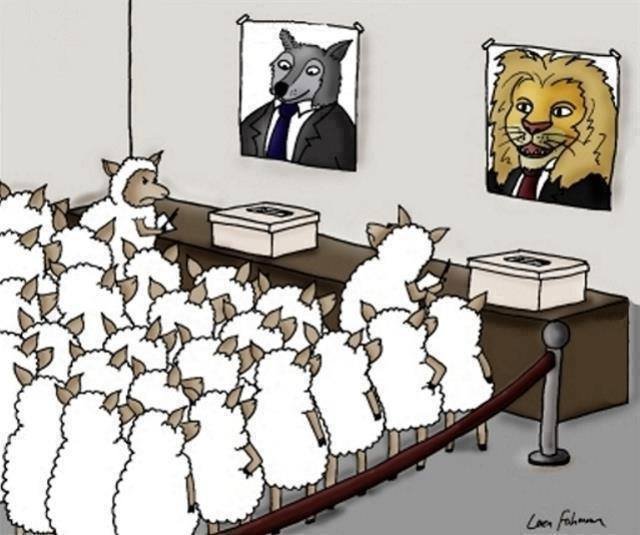
thelesseroftwoevils_e2e98a_4912688

Cartoon by Loren Fishman. See more of his work at https://humoresquecartoons.com

Robert J. Burrowes

One of the more subtle manifestations of the intimate link between
(unconscious) human emotions and behaviour is illustrated by the simple
concept of choice and how this is so often reduced to a dichotomy
between two bad options. In such circumstances, most people choose
whatever they consider to be ‘the lesser evil’.

But how often are there only two options, even if they appear ‘good’ and
‘bad’? Frankly, I cannot think of one circumstance in which my choices
are limited to two, however good or bad they appear to be.

Why does this belief in just two options arise?

When we are born, our evolutionary inheritance includes a phenomenally
powerful capacity to feel a complex range of emotions. However, because
what sociologists refer to as ‘socialization’ (a process by which babies
and children are supposedly taught the ways of their society) is
actually a process of terrorizing babies and children into suppressing
their awareness of these emotions so that they can be forced to conform
to societal ‘norms’ (no matter how dysfunctional), the disastrous
outcomes of ‘socialization’ are obscured. If you wish to read more about
the terrorization of children, you can do so in ‘Why Violence?‘ and
Fearless Psychology and Fearful Psychology: Principles and Practice‘.

This terrorizing of babies and children takes many forms but one of the
most common ways it occurs is through simply telling a child what they
must do under threat of punishment for non-compliance which all parents,
teachers, religious figures and other adults do routinely. This
imperative to obey will always run counter to the child’s own Self-will.
Why is this? Because every single human baby is genetically programmed
to follow their own Self-will, not to obey the will of another.

This individual Self-will is generated by the integrated sense of how to
behave in response to the mental and physical feedback – including
feelings, thoughts, memory, conscience, sensory perception (sight,
smell, sound, touch, taste), truth register, intuition… – which each
person receives and which their mind processes and integrates to
crystallise the precisely appropriate behaviour in any given
circumstance.

But once a child is routinely terrorized into submitting to the will of
another – no matter how benign either the person giving the instruction
or the instruction itself – they lose trust and faith in their own
capacity to decide on a course of action and undertake it powerfully.
They are now adrift without clear internal guidance and, as they grow
up, they are now readily vulnerable to the ‘persuasion’ of others
whether it be the opinion of someone else, the advice of an ‘expert’ or
the inanity of an advertisement for a commercial product.

Adrift from their own unique and powerful internal mental processor –
with its emotional, intellectual, sensory, intuitive, memory, conscience
and other components – they are the victim of their own fear of being
disobedient, wrong, in the minority, isolated … if they follow their own
Self-will.

Unconsciously, the child feels trapped. They are terrified to do what
they want without permission (which is routinely denied) but
unconsciously angry about this (because they have been scared out of
being openly angry at their parents and teachers) which usually
manifests as something powerless such as resentment.

What does the child do in this circumstance? Obey the parent/teacher or
attempt to follow their own Self-will and risk (and probably receive)
punishment for doing so? What is the ‘good’ option here? Or is the child
faced with a choice between two evils and must try to choose the
‘lesser’ one? In the words of Anita McKone: ‘It feels like you must
either put up with abuse or die.’

Routine abuse of the child in this manner by their parents, teachers and
other adults throughout their early life leaves virtually all adults
with an unconscious belief that life is a series of choices between
‘lesser evils’ with an occasional ‘good’ choice allowed in limited
circumstances. We might choose our meal, the color and style of our
clothing, what film to watch and other such trivia. But what of anything
important? No way!

Most people end up believing that there are only ever two choices on
anything that matters and neither is particularly desirable.
Unconsciously, they feel trapped and it makes no sense when they are
told that they have many options from which to choose. This is not their
experience and it just feels untrue. They will endlessly choose the
lesser evil of two bad options on virtually everything that matters in
their life and accept the trinket ‘goods’ they are allowed to choose,
such as the nature of their hairstyle.

Long before adulthood, the child accepts a lifepath of conformity to the
most mundane human existence imaginable: school, work, the occasional
holiday, illness and death. A life never lived.

In essence, the terrorized child, now an adult, never looks beyond the
choices given, even when both are ‘bad’ or one is trivially ‘good’.

Most people have no sense of their own Self-will in the profound sense,
no faith in where this Self-will might take them if followed and, if
they could/can feel it, no courage to do what their Self-will tells
them.

The tragedy of virtually every human life is that they never seek out
what was taken from them as a child: the Self-will that would guide them
unerringly to seek out and become everything they were born to be. They
are so full of fear, self-hatred and powerlessness as a result of the
violence they suffered as a child, that they endlessly settle for ‘the
lesser evil’ on anything important and settle for trinkets in the form
of ‘good’: the choice of ice-cream flavour, the color of their socks,
the novel to read, the holiday destination.

Is there a way out? Yes, but it requires you to feel your fear, anger,
sadness and other feelings at what has happened to you until you are
powerful enough to reject both/all ‘bad’ options and to refuse the
trinkets that parody ‘good’. And to ask ‘What do I want?’ It is only by
consciously and deliberately rejecting all ‘lesser evil’ options that
the magnificent array of incredible opportunities which you have never
contemplated/discovered will open before you to choose as you wish.

And that is why it is so difficult. You must have the courage to cut
off, without the option of turning back, all options that do not give
you what you need. This is because what matters is not whether you get
what you need in the short term, but whether you live your truth, no
matter how difficult this might be in the immediate sense.

It is the fear of burning all bridges that holds us back because, as a
child, we were too scared to walk out on those who told us, one way or
another, that we had no choice but to suffer their abuse or die.

But the more bridges you burn, the more magnificent will be the vista of
undreamt opportunities that will open before you. And you will wonder
why you never considered/saw them before. Imagine if everyone had the
courage to burn the bridges of fear and to set out on their own unique
path.

And to experience the sheer joy of living powerfully in every moment of
their life.

But our own personal effort does not need to exclude the possibility of
making it easier for others in future too. So if you would like to
participate in the ongoing effort to create a world in which living
powerfully is more possible for each of us, you are welcome to consider
signing the online pledge of ‘The People’s Charter to Create a Nonviolent World‘.

If people are not afraid of violence, they are genuinely free to seek
their true path.


Biodata: Robert J. Burrowes has a lifetime commitment to understanding and ending human violence. He has done extensive research since 1966 in an effort to understand why human beings are violent and has been a nonviolent activist since 1981. He is the author of ‘Why Violence?‘ His email address is flametree@riseup.netand his website is at http://robertjburrowes.wordpress.com

Robert J. Burrowes
P.O. Box 68
Daylesford
Victoria 3460
Australia
Email: flametree@riseup.net

Websites:
Nonviolence Charter
Flame Tree Project to Save Life on Earth
‘Why Violence?’
Nonviolent Campaign Strategy
Nonviolent Defense/Liberation Strategy
Anita: Songs of Nonviolence
Robert Burrowes
Global Nonviolence Network