
Lies About Jews, Israel, and the War in Gaza

By Eric Zuesse

Source: The Duran

News-reports are so full of lies and misrepresentations about Jews, Israel, and the war in Gaza, as to be commonly propaganda that conveys falsehoods more than truths.

Two news-reports from Reuters on February 28th will be cited here as examples of such propaganda:

“After threats and abuse, British lawmakers question their safety over Gaza” opened:

It was 10 minutes of shouted accusations of being a “genocide enabler” and having “blood on your hands” that made a British lawmaker fear for his safety over his decision to voice support for Israel in its war with Hamas.

Almost touching noses with his accuser before walking away and warning he would call the police, the opposition Labour Party member said the incident in a town in his constituency was just the latest of several that made him change his behaviour.

He now makes sure he sits near the door on public transport and limits meetings with the public.

“It feels like it could just need one spark to flip from someone giving you tuppence (criticism) in the street to escalating to actual violence,” the lawmaker said.

After the Oct. 7 Hamas attack that sparked the war in Gaza, more than 10 British politicians spoken to by Reuters said the abuse directed at them had become more intense. At least one cited this as a factor in deciding not to seek a new term in parliament in an election later this year.

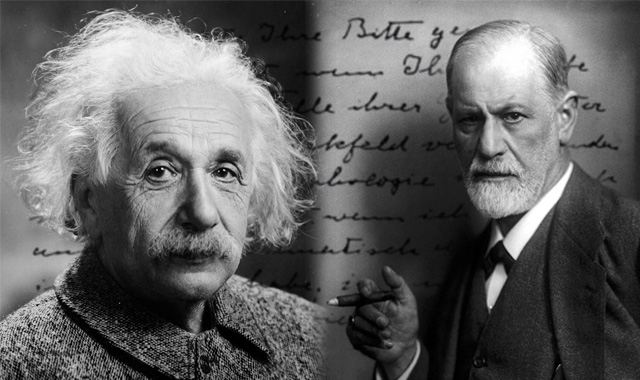
Its underlying presumption (such as in “the Oct. 7 Hamas attack … sparked the war in Gaza,” which is intended to communicate the false impression that this war started on 7 October 2023 and so the aggressor in this war is the Gazans not the Israelis — and NOT at Israel’s founding in 1948 so that the aggressor is the Israelis, and the Palestinians are only reacting against that long-ongoing aggression) is that to be against Israel and to be for Palestinians, is to be anti-Semitic, but many Jews — including Albert Einstein and other prominent ones — have called Israel and its current leadership “racists” and “fascists” against the vast majority of the population in the area that in 1948 became “Israel”, which was originally called “Palestine” not “Israel” and was overwhelmingly Muslim not Jewish before Britain gave this land to the few Jews there and started Israel in 1948. Immediately, the racist-fascist Jews there, self-called “Zionists” as believers in the Jewish Scripture’s (Christian Old Testament’s) myth that ‘God’ gave it to them and ordered them to exterminate the then-current residents, carried out their biblically commanded ethnic cleansing war to clear the land for incoming Jews from European Christianity’s German-led Holocaust. For examples, Deuteronomy 7:1-2, 7:16 and 20:15 -18, have ‘God’ in that Scripture say that when the Israelites enter the promised land they are to exterminate the Canaanites, Hittites, Girgishites, Amorites, Perizzites, Hivites, and Jebusites, living there. So, Israel was founded by the far-right subsequently Likud Party leaders of Israel, such as Yitzak Shamir and Menachem Begin, who led the extermination of entire Arab villages in the Nakba or “Catastrophe” as it’s called by Palestinians — the Palestinians’ equivalent to what for Jews the Holocaust had been. The Jews will never forget the Holocaust, just as the Palestinians will never forget the Nakba — but whereas the Nakba has continued with varying degrees of intensity ever since 1948 (culminating now in the Israel-America extermination of Gazans), the Holocaust ended in 1945.

It all goes back to 1948, the creation of Israel. Here’s from a lengthy article “Burying the Nakba: How Israel Systematically Hides Evidence of 1948 Expulsion of Arabs” in Israel’s Haaretz newspaper on 6 July 2019, about how Israel’s Government cleansed, eliminated, thousands of key documents, which remain unknown, but some scraps of which survived, such as, “And then Ben-Gurion lays down as policy that we have to demolish [the villages] so they won’t have anywhere to return to. That is, all the Arab villages.”

On 24 August 2014, the International Jewish Anti-Zionist Network headlined “Over 300 Survivors and Descendants of Survivors and Victims of the Nazi Genocide Condemn Israel’s Assault on Gaza” and presented their letter to the world, signed by (at that time) 327 of them:

As Jewish survivors and descendants of survivors and victims of the Nazi genocide we unequivocally condemn the massacre of Palestinians in Gaza and the ongoing occupation and colonization of historic Palestine. We further condemn the United States for providing Israel with the funding to carry out the attack, and Western states more generally for using their diplomatic muscle to protect Israel from condemnation. Genocide begins with the silence of the world.

We are alarmed by the extreme, racist dehumanization of Palestinians in Israeli society, which has reached a fever-pitch. In Israel, politicians and pundits in The Times of Israel and The Jerusalem Post have called openly for genocide of Palestinians, and right-wing Israelis are adopting Neo-Nazi insignia.

Furthermore, we are disgusted and outraged by Elie Wiesel’s abuse of our history in these pages to justify the unjustifiable: Israel’s wholesale effort to destroy Gaza and the murder of more than 2,000 Palestinians, including many hundreds of children. Nothing can justify bombing UN shelters, homes, hospitals and universities. Nothing can justify depriving people of electricity and water.

We must raise our collective voices and use our collective power to bring about an end to all forms of racism, including the ongoing genocide of Palestinian people. We call for an immediate end to the siege against and blockade of Gaza. We call for the full economic, cultural and academic boycott of Israel. “Never again” must mean NEVER AGAIN FOR ANYONE!

Consequently: many Jews are anti-Israel even though they profess themselves to be still Jews. Only bigots equate pro-Israel with being not anti-Semitic, and equate anti-Israel as being anti-Semitic (or anti-Jews). There is, in reality, no equation whatsoever between anti-Israel and anti-Jew. Only propaganda claims or implies any such false equation.

Albert Einstein and 26 other prominent Jewish progressives co-signed a letter to the editor of the New York Times published 4 December 1948, condemning Menachem Begin by name as a “fascist,” and saying, of his work (and of his unnamed colleague in that work, Itzhak Shamir, both of whom subsequently became elected Prime Ministers of Israel, and whose follower Netanyahu today leads Israel), that:

A shocking example was their behavior in the Arab village of Deir Yassin. This village, off the main roads and surrounded by Jewish lands, had taken no part in the war, and had even fought off Arab bands who wanted to use the village as their base. On April 9 [1948], terrorist bands attacked this peaceful village, which was not a military objective in the fighting, killed most of its inhabitants (240 men, women, and children) and kept a few of them alive to parade as captives through the streets of Jerusalem. Most of the Jewish community was horrified at the deed, and the Jewish Agency sent a telegram of apology to King Abdullah of Trans-Jordan. But the terrorists, far from being ashamed of their act, were proud of this massacre, publicized it widely, and invited all the foreign correspondents present in the country to view the heaped corpses and the general havoc at Deir Yassin.

‘News’-reports such as that one from Reuters, which imply that every Jew is a Zionist (supports Israel), and that only anti-Semites condemn Israel, are arrant lies. They deceive for political purposes. That is propaganda. It forced the progressive leader of the Labour Party Jeremy Corbyn out of power and out of politics in Britain. So: these are extremely potent lies. This Reuters ‘news’-report opens with a large photo of marchers in Britain holding up the star of David and the flags of Israel and Britain, and “Never Again Is Now” signs, suggesting that to oppose Israel’s genocide of Gazans is to be anti-Semitic — is to be bigoted against Jews. This is mass-mind-control by Reuters, to make Brits think that they ought to side with the Israelis against the Gazans, and to therefore support Israel’s genocide of Gazans (as, somehow, being a justifiable response to the 7 October 2023 Hamas-Gazan attack against Israelis).

A subtler lie in it is that the war in Gaza started on 7 October 2023, instead of in 1948. The reality is that the 7 October 2023 event was the victims’ crying out, to the entire world, to call public attention to their living in the world’s largest (and constantly under siege by their prison-guards) open-air prison, Gaza, that they’re born into and permanently sentenced to, by Israel. It’s not where they want to live, no more than any prison anywhere is. But, after 7 October 2023, Israel decided to eliminate the Gazans and labelled this Israel-America genocide of Gazans partnership a ‘war against Hamas’ — which is yet another lie that the media publish without question, without shame, and purely as propaganda from and about Israel.

Also on February 28th, Reuters headlined “Michigan’s strong ‘uncommitted’ vote shows Israel impact on Biden support” and opened “DEARBORN, Michigan/WASHINGTON, Feb 28 (Reuters) – Joe Biden’s campaign and top Democratic officials vowed to double down on efforts to win over voters as the U.S. president aims to solve conflicts in the Middle East, after Michigan registered a stronger-than-anticipated protest vote over his support of Israel.” It included this line from Biden’s campaign — with no question (far less rebuttal) being presented about it: “Biden’s campaign will continue to ‘make our case in the state – to both uncommitted voters and the entire Michigan constituency,’ a senior campaign official said as the results were tallied. ‘The President will continue to work for peace in the Middle East.’” But actually, as Politico had headlined on February 13th, “US won’t punish Israel for Rafah op that doesn’t protect civilians” and it said that the Biden Administration has informed the Netanyahu Administration that if it decides that it has no practicable way to expel the Gazans to foreign lands (which Israel’s Government — assisted by America’s Government — has been trying to do ever since October 16th) then the U.S. Government will not punish Israel if it simply slaughters all of them. “No reprimand plans are in the works, meaning Israeli forces could enter the city and harm [Politico’s euphemism for slaughter] civilians without facing American consequences [meaning punishment]. More than half of the enclave’s 2.3 million population has fled to Rafah.” So: that would entail slaughtering 1.15 million Gazans there. The Politico article made no mention of what would be done with the 1.15 million survivors, the Gazans who haven’t yet gotten to Raffah, but if Netanyahu would halt the extermination program at that point, a rationale for discontinuing the operation there would be hard if not impossible to imagine — at least inasmuch as half of Gazans would then already have been slaughtered by Israel.

And this slaughter of Gazans is being done with U.S.-made weapons and military intelligence, and so it is actually a joint U.S. and Israeli operation. As Israel’s Jewish News Service reported on November 27th:

Israel’s dependence on the United States was stated bluntly by retired IDF Maj. General Yitzhak Brick in an interview earlier this week.

“All of our missiles, the ammunition, the precision-guided bombs, all the airplanes and bombs, it’s all from the U.S. The minute they turn off the tap, you can’t keep fighting. You have no capability. … Everyone understands that we can’t fight this war without the United States. Period.”

From 7 October 2023 up through 23 December 2023, the U.S. Government shipped to Israel 10,000 tons of U.S. weaponry and ammunition; and Biden has pressed harder on Congress to authorize an additional $14 billion of such assistance to be donated by U.S. taxpayers, to Israel, in order to complete what it’s doing to Gaza — whatever that may turn out to be — than he has ever pressed Congress to approve anything (except donating even more weapons and intelligence to Ukraine too). And, then, on January29th, YNET News, the most popular internet portal in Israel, headlined “Global ammunition shortage forces Israel to limit bombings”, and they reported that “Over 25,000 tons of weapons have been delivered to Israel via approximately 280 aircraft and 40 ships from the U.S. since the onset of the conflict.” So, obviously, Biden, rather than being  “The President [who] will continue to work for peace in the Middle East,” is instead actually an equal partner along with Netanyahu, in carrying out this Israel-U.S.-planned genocide. How many of Reuters’s readers know this fact? Furthermore, that Reuters article likewise stated (without pointing out the absurd lie) that “the U.S. president aims to solve conflicts in the Middle East.” How can that be? Perhaps he intends to ship yet more billions of dollars worth of U.S.-made taxpayer-donated weapons to Israel in order to enforce that ‘peace’ — the ‘peace’ of the graveyard. So sayeth Reuters, at any rate. And believeth its readers? But that is the mainstream ‘news’-‘reporting’, and this certainly is NOT. What is the reality? And why does the opposite side hide it? And who are paying them to hide it?

Which people actually control a ‘democracy’: the people who fund political propaganda, or the people whose votes are swayed by it? If a country is controlled by contending factions between the billionaires — such as Democratic ones versus Republican ones — is that a democracy? If it’s instead an aristocracy, is there any way to overthrow and replace it by a democracy, other than to have an authentic revolution?

‘Us vs. Them’ Thinking Is Hardwired—But Consciousness Can Overpower It

By Joe Martino

Source: The Pulse

Are we hardwired to categorize each other into ‘Us vs Them?’ Simply put, yes. But this hardwiring is remarkably easy to break. It’s time we equip ourselves with the knowledge and tools to do so.

Why? Well, anything from powerful governments to mainstream and alternative media is consistently trying to divide us by focusing aggressively on our differences. When we know how these mechanisms work and focus our consciousness in an effective way, these attempts to divide fail.

First a quick story.

When we first launched our membership I hired marketing teams to help. They would always tell me “in the sales messaging we need to create an ‘Us vs Them dynamic’ in order to get people to buy.” I resisted.

I felt like that wasn’t necessary and also contrary to our mission of unifying people to create a better world. But, the marketers were right. When we would A/B test sales messaging without ‘Us vs Them’ compared to sales messaging with it, the ‘Us vs Them’ messaging always won.

I have to admit this made me a bit sad. Was I thinking too idealistically about human beings? Maybe. But I always asked ‘Why doesn’t Us vs Them messaging work on me?” Before you suggest I’m naive and think “of course the messaging works on you,” read to the end of this piece. You’ll see how simply it is for this messaging not to work on anyone should they choose.

Neuroscience suggests that this Us vs Them biological trait developed thousands of years ago. As you might imagine, it had much to do with survival in much different times than we live in today.

It essentially states that human beings are primed to make very basic and categorical Us vs Them judgments. In fact, your brain is processing these Us vs Them differences in a twentieth of a second. These noticed differences are your classically promoted artificial constructs of: ethnicity, gender, skin color, age, socioeconomic class, and even something like sports team preference.

(I say artificial because social constructs tell us we should focus on these as differences. We don’t actually have to see them as differences as we are ALL one species. Other animals do not engage their Us vs Them biology within their species – only we do – and it’s a taught behaviour.)

All of this is enhanced by a multi-purposed hormone in our brain called Oxytocin.

Oxytocin has been shown to be a wonderful hormone for connecting and bonding with others that we know in our communities, ‘Us’. It’s often referred to as the love hormone or connection hormone. It essentially heightens meaningful connections with our in-group.

But on the flip side, studies have shown that when it comes to people who we see as strangers (Them), oxytocin creates a decrease in cooperation and increases envy when people are struggling. Further, it pushes one to gloat when they are ‘winning.’ In fact, there are many ways in which oxytocin is linked to dividing ourselves from ‘Them’ and keeping it that way.

In short, oxytocin enhances this Us vs Them divide. But, while this sounds like we may be doomed for division and judgment of others forever, what has also been shown is that these almost instantaneous judgements we make can be manipulated incredibly easily. And that’s without bringing in a little bit of conscious awareness and presence.

Studies have shown that when you expose people to others who look different from them, the ‘Us’ wiring often turns on when people look similar, and the ‘Them’ wiring turns on when people look different. This showed an implicit judgment based on ethnicity.

Yet when those same people were exposed to people who looked the same and different from them but were now wearing baseball hats with team logos, things changed. Suddenly the participants brains indicated that Us and Them had nothing to do with ethnicity anymore, it was about which team they supported.

A tiny change created an instantaneous manipulation of who is Us vs Them. I wrote about a similar phenomenon in a recent piece called Racism Plummeted When People Were Told Aliens Exist. This showed that when humans were told aliens existed, the Us became humans, and the Them became aliens. Suddenly people were nicer to each other and more accepting of differences.

The point? It doesn’t take much to for us to see each other as one, we just have to focus our consciousness a bit.

Consciousness Is Everything

There is much gained in our well being and in society when we become more self-aware, reflective and present. It moves unconscious and often automatic behaviour into a lens where we can ask: why do we do this?

Further, an increase in the above mentioned traits can lead to something as simple as stopping ourselves before we do something destructive out of anger. We can then pause for a short period, reflect, and respond.

The more we move from automatic, unconscious and reactive ways of living to present, reflective and conscious ways of living, the more harmony surrounds our lives.

What I’m saying can bring up similarities to new-agey, online influencer judgments that the ‘conscious’ are more than the ‘unconscious,’ this is not at all what I’m saying here. And I will expand in a moment.

First, I trust it’s clear that we can be manipulated into different Us vs Them dichotomies very easily. Studies exploring implicit bias also show that when we are exposed to different people regularly, we become less judgemental towards their differences.

Even still, we can build self awareness around how WE play into these divides in order to diffuse them.

For example, during COVID government leaders like Justin Trudeau sowed division in Canada by making unvaccinated Canadians less than. He did this by calling them names and characterizing them in ways that would cause the general population to dislike them.

“They [the unvaccinated] don’t believe in science/progress and are very often misogynistic and racist. It’s a very small group of people, but that doesn’t shy away from the fact that they take up some space.”Justin Trudeau

He combined this rhetoric with un-contextualized and false data around vaccination status in Canada to strengthen his propaganda.

Note, I’m not focusing on Trudeau here because I’m “a Poilievre fan” or anything. In fact, I don’t feel our current structure of politics is healthy nor serving us as people. I’m simply illustrating the ways in which our society has become ‘lost’ in division. Getting out of it requires us to take a close examination of what is happening so we can choose a different path.

In contrast, some unvaccinated people around the world began to refer to themselves as ‘pure bloods’ because they were not vaccinated. This led to memes, hateful rhetoric, and actions like avoiding and separating themselves from their vaccinated friends and families. Instead of attempting to understand why some became vaccinated, it was often simply seen as ‘the vaccinated are sheep.’

Once again we see division, in/out groups, and greater than/less than beliefs.

In both cases we are seeing the destruction and damage that can occur when we allow our flimsy biological traits around Us vs Them to be fed and upheld by faulty information and propaganda.

What is also important to note is that our ‘authoritative’ institutions of government and mainstream media will often be guilty of this destructive behaviour which deeply normalizes it amongst the masses.

That said, we are not doomed. Consciousness is everything. By that I mean, the quality of our consciousness. The ways in which we slow down, reflect, and become more present in everyday life becomes an antidote to propaganda feeding Us vs Them.

This is why we have the section at the top of our articles to “Pause and set your pulse.” To cultivate more presence and self awareness, check out a couple of the pieces of content I list at the bottom of this piece.

Let’s go deeper. Perhaps why I have felt Us vs Them messaging does not work on me stems from: what happens when we have experiences that lead us to feel we are all one and interconnected with everything? I have had these experiences many times in my life. I experienced them through meditation, breath work, and even randomly.

Thrust into what can be best described as ‘sensing the nature of our reality,’ when you have these transcendental experiences you do not see yourself as all that separate from everything else. Sure, you are YOU, and you know you are an individual, but you also have a knowing of the connection and sameness you share with everything.

What happens if we nurture and hold that knowing in our consciousness and allow it to form our worldview? Does our sense of Us vs Them get triggered as easily? I don’t think so. But that’s my experience.

This direct experience has led me to believe that a shift in our consciousness can be one of the most powerful tools in changing the way we see each other and ultimately re-design our society – because it has to happen.

Albert Einstein had some thoughts on this as well:

“A human being is part of a whole, called by us the ‘Universe’ —a part limited in time and space. He experiences himself, his thoughts, and feelings, as something separated from the rest—a kind of optical delusion of his consciousness. This delusion is a kind of prison for us, restricting us to our personal desires and to affection for a few persons nearest us. Our task must be to free ourselves from this prison by widening our circles of compassion to embrace all living creatures and the whole of nature in its beauty.”Albert Einstein

A task indeed, but one that is very possible with the right practice and focus.

Education Is Key Too

Why are things the way they are? We have to explore content that seeks to answer these questions. Instead of using social media for fast memes, 15 second videos, and short out of context video clips, deepen your knowledge. Consume less, but spend MORE time on each thing you consume.

Buying into this fast and distracting culture of information consumption is only furthering the problems we have. Social media algorithms are rigged to build an echo chamber around you and to give you ‘truth’ that confirms your existing bias’. This is not real education.

As for the biological trait itself, why can’t we focus our attention on our human similarities instead of our differences? We can. But culturally we have learned not to because somewhere along the lines it’s what we chose to obsess over.

Perhaps because powerful people glean more power by dividing masses. Perhaps because our current economic systems thrive off division, competition, and having various classes. Either way, we’re making this all up as we go. It doesn’t have to be like this.

For those who might think “this is our biology. We will always do best in small groups of the same type of people,” this doesn’t appear to be true. Studies have shown that diversity trumps ability. Diversity significantly enhances the level of innovation in organizations around the world.

Groups of only ‘like-minds’ become echo chambers and our efficiency and innovation suffers. Yet another reason we must learn to love, respect and communicate with one another.

(Note: here I’m pointing to the uncovering our potential as humans and having that be our driver. Not productivity and innovation tied to making more money and having a ‘bullish market economy’)

The Takeaway

The key is that consciousness can overcome a flimsy biological trait that produces Us vs Them thinking within us. We can engage experience and education that connects us to our similarities, adopts a consciousness of interconnection and a shared stewardship of our planet and people.

Everything from ‘woke ideology’ constantly obsessing over our differences, to political news commentary always inviting people to ‘dislike the other side’ is contributing to a worse direction for humanity. Don’t just sit there and blame it though, simply choose to engage differently. Improve how you use social media. Consume less content but go deeper.

Consciousness is the power here. Why can’t we extend our worldview of who we are into oneness and a deeper connectedness? Why must we fight to shut off our wonder and hold to petty differences?

M=EC2 – THE MEDITATION EQUATION

By Kingsley Dennis

Source: Waking Times

‘When one begins to meditate, one accomplishes the only really free deed in this human life… we are completely free in this. Meditation is the archetypal free deed. – Rudolf Steiner

Arguably one of the world’s most famous equations is Einstein’s E = mcwhere energy equals mass times the speed of light squared. I am now proposing my own equation, which likely will be nowhere near as recognized or celebrated. Nevertheless, I feel it has worth sharing. Here it is: M = ECWhat does it signify? It means: meditation equals extended mind times contact and communication. At this point, I feel that some explanation is required. Here goes.

Philosophers, artists, and scientists have been debating for centuries the questions concerning human consciousness: what it is and how it emerges. The question of human consciousness has also been at the heart of many wisdom teachings, although these have tended to be based on revelation rather than investigation and empirical research. Over the course of these varied discussions, debates have been divided between the materialistic approach (the mind is contained in the brain), and what may be rather loosely termed as the ‘spiritual-metaphysical’ worldview (the mind exists outside of the brain). In recent decades, thanks largely to the advance in technologies, scientists have been able to map and study the human brain – including neuronal patterns, brain disorders, and pathways of human thinking. Yet this has led, in main, to an increased certitude among many scientists of a material view of human consciousness.

In other words, consciousness exists as a by-product of the physical brain and, as such, cannot exist without brain function. This is the dominant view amongst materialist thinkers and scientists. In more recent years however, and with the further research into nonlocal and field phenomena, investigators have been re-visiting mainstream theories of human consciousness. Specifically, as the unified field theory gains more support pointing to the nature of a nonlocal, interconnected cosmos, a different perspective is emerging on how consciousness may operate. And an understanding on the true nature of consciousness will validate and give meaning to the act of meditation; specifically, how meditation may provide access to contact, and possibly communication, beyond the material realm. First, we need to explore current concepts and perspectives on human consciousness.

Concepts of Consciousness: 1 – The Turbine Theory

The dominant mainstream narrative concerning human consciousness is that it is generated by the brain as a form of by-product. This has been referred to as the ‘turbine theory,’ whereby just how electricity would be generated by a working turbine as a by-product, so too is human consciousness the by-product of a functioning human brain (motor). This theory postulates human consciousness as being local and produced from something tangible. Also, when this producer/motor stops functioning – i.e., the brain ceases to be alive – then consciousness, and related streams of experience, likewise stop. Medical science has gone a long way to validate the ‘turbine theory’ of consciousness by repeated experiments on how impaired brain functioning results in distorted consciousness.

The basic premise of this understanding of consciousness is that neuronal networks in the human brain have evolved to such a high state of complexity that they produce a level of self-consciousness above that of any other animal on the planet (except perhaps dolphins, porpoises, and whales). Here, the degree of consciousness produced by each specific living creature is related to the level of biological complexity. In recent years, there have been renewed calls for a neurological basis for consciousness. For many scientists working in this field, consciousness is a by-product of complexity; thus, complex systems produce varying levels of consciousness, and ‘how much consciousness they have depends on how many connections they have and how they’re wired up.’[1] Despite recent scientific theories of consciousness, most still cling to the basis of an old paradigm ‘turbine theory.’

In other words, that consciousness is a secondary phenomenon resulting from primary activity located in the human brain. Regardless of the attempts by mainstream science to strengthen their outlook on consciousness, this ‘complexity-produces-consciousness as a by-product’ perspective has so many holes. The many holes in this dominant yet conservative theory is owing to a range of experiences that throw doubt upon its validity. Challenges to the turbine theory of consciousness have come, as one example, from increasing evidence of ‘after death’ conscious experiences.

Concepts of Consciousness: 2 – The Cloud Theory

According to the orthodox view, consciousness ceases when the brain dies – i.e., no generator, no current. For many, this may seem like an obvious deduction. However, evidence to the contrary clearly contradicts this theory. Many cases have shown that human consciousness is maintained even though a person is technically declared brain dead. The near-death experience (known as NDE) has been reported by sufficiently large numbers of people who were declared brain-dead. Conscious experience in brain dead people has been reported in almost 25 percent of tracked cases. The NDE phenomenon has now been widely researched and discussed by many credible sources.[2] Furthermore, this phenomenon is not new and there are accounts of NDEs occurring in medieval times.[3] The existence of consciousness – a by-product of brain activity – in the absence of brain function cannot be accounted for by the mainstream turbine theory. There are also numerous indications that human consciousness exists in cases of permanent death. That is, many years after a person has died their consciousness remains available for contact and communication, such as through channelling or forms of ESP. There is now enough credible evidence to put doubt into the mainstream theory that consciousness is solely a by-product of localized brain activity.

One way to account for these anomalies would be to suggest that consciousness is in some way conserved beyond the brain – that is, as a nonlocal phenomenon. In this hypothesis, consciousness is something stored external to the brain. This can be framed in terms of a ‘cloud theory’ of consciousness, as this is similar to how information would be conserved on digital platforms accessed by computer networks or other cloud-enabled devices. Likewise, using this analogy, the mainstream ‘turbine theory’ of consciousness would be akin to an old-fashioned computer without Internet or built-in-memory that would lose all its data once switched off. In this regard, the cloud theory posits consciousness as nonlocal, rather than localized within the brain. Furthermore, the cloud theory allows for not only individual consciousness to be stored, and be recalled, but multiple.

This perspective of accessing multiple consciousnesses, beyond the individual one, is reminiscent of Jung’s collective unconscious. This theory would appear to support the observations of psychiatrists and consciousness researchers who have induced altered states of consciousness in their clients, including past life regression. When in altered states a vast majority of people have the capacity to recall almost everything that has happened to them, as well as in previous life incarnations. Moreover, their recall is not limited solely to their own experience but can also include the experiences of other people as well.[4] This cloud theory therefore suggests something akin to a collective field of consciousness that makes complete information available relative to the mode of access. This perspective shares similarities with the scientific research on the Akashic Field[5] and Morphic Resonance.[6] However, despite the appropriateness of the cloud theory of consciousness, it too does not account for all observations.

Concepts of Consciousness: 3 – The Unified Field Theory

In various recorded accounts of altered state consciousness, it appears that contact/access is not only made with traces of one’s nonlocal consciousness but also with distinctive separate conscious intelligence. That is, with an active consciousness that is not the consciousness of a human being. Such experiences, once the realm of mystical, shamanic, or indigenous traditions, has increasingly entered mainstream culture. Previously, such ‘encounters’ were labelled as supernatural or simply conveniently ignored as a quirky anomaly. However, as western science has developed its exploration of the inner realms (such as in transpersonal psychology and similar practices), such experiences have become more widespread and thus need to be accounted for. From this evidence a remarkable conclusion arises: that human consciousness can connect, and often communicate, with conscious entities that not only manifest a sense of self, but also carry distinct memories and information. This experience can neither be accounted for in the mainstream turbine theory nor the cloud theory of consciousness. We now need to consider yet another concept – that consciousness is a unified field phenomena with holographic qualities.

The unified field theory posits that consciousness may manifest in spacetime yet originates from a source that exists in a realm beyond spacetime.  In other words, consciousness has its origins in a deeper dimension (in a ‘unified source field’) and yet manifests through physical-material reality. This concept would suggest that all forms of localized consciousness are expressions of a unified consciousness field that is beyond spacetime. The implications of this understanding are that consciousness is not ‘in’ the brain, ‘produced’ by the brain, nor ‘stored’ beyond the brain. Rather, the human mind is a localized aspect of a conscious intelligence that infuses the cosmos from its source beyond spacetime.

This may be a hard pill to swallow for many people. However, when we examine the phenomena that is consciousness, this perspective makes a lot of sense. The viewpoint of this new model says that the brain receives and interprets consciousness, which is an interrelated aspect of the cosmos, and then projects this as the individual mind. Yet the brain does not produce consciousness. This understanding, which is now increasingly supported by the very latest scientific findings, points toward a Unified Source Field (USF) as generating what we perceive as spacetime. The materiality of spacetime is thus a holographic projection, coded from an underlying cosmic intelligence-field. It is this underlying intelligence-field that is the source of all material reality and conscious life. Every element that emerges into physical reality is simultaneously interrelated with the underlying Unified Source Field. As such, each material element in existence is also in contact and communication with this unified intelligence-field. Human consciousness – the human mind – is at all times connected to a deeper dimension of Source consciousness.

A Deeper Dimension: Consciousness, Contact, Communication

The understanding that consciousness originates from a deeper dimension of reality beyond spacetime has been embraced by many well-known spiritual figures, mystics, visionaries, artists, and even a handful of intuitive scientists. It may one day come to represent the dominant understanding amongst humanity (as it perhaps once was). The universe has already been recognized by mainstream science as exhibiting an incredible – almost impossible – degree of coherence. Now we may know why this is. It is because there is no random cosmos, no separation of materiality and immateriality, no empty space, no ‘out there’ and ‘in here.’ Everything – absolutely everything – is an integral part of a nonlocal conscious field whose origin is a Unified Source Field (USF) existing beyond the spacetime dimension. What this implies is that there is an inherent form of order to the material dimension. The cosmos, and all aligned aspects within it, adheres to an intelligent, conscious impulse toward coherence and connection.[7] Perception too, as an attribute of consciousness, trends toward greater conscious coherence (awareness) and connection. At the core of this drive for connectivity, I suggest, is an urge for conscious awareness of Source (the Unified Source Field). And so, this leads me back to the equation at the beginning of this essay; what I call the meditation equation: M = EC2.

Meditation equals extended mind times contact and communication. Meditation has from time immemorial been a part of human life, even if not formally recognized as so. Meditation can take only a second. A quick pause of chatter in the mind. A momentary close of the eyes. A transitory step back from the entanglement in physical reality. A fleeting respite from external stimuli. A brief break from the outer world to focus upon the inner. And the inner world is expansive – it is where the origin resides. And in this state, contact can be made with those aspects in existence beyond our material reality. And with contact can also come communication.

As human beings, we are already in contact and communication with aspects beyond our perception or acknowledgment. We only do not recognize such contacts as so. The inner nudge, the inspirational idea, the coincidental happening, the inexpressible sense, the indescribable knowing. These are the contacts humanity has. What if we consciously take it to the next level by intending to listen to such contact? What if we then ask for communication? We can give ourselves permission to start asking for contact and communication whilst in a meditative state. By showing acceptance, and readiness to allow for contact and communication beyond our physical senses and sense-reality, we are acknowledging the interrelatedness of all life. And life wishes to communicate amongst itself. Sentient life wishes to be heard, and to share.

Life is not meaningless nor without purpose. Our inherent connectivity transcends localized space and time. The human being is intrinsically connected with the cosmos and with Source consciousness. One day, it is hoped, this understanding will be, for all of us, as clear as pure water; and we will laugh gently to ourselves thinking how it could ever have been otherwise.

Einstein and Freud’s ‘Why War?’ Revisited: Why Anti-War Efforts Go Nowhere

By Robert J. Burrowes

In 1932, Sigmund Freud and Albert Einstein exchanged letters, later published under the title ‘Why War?’ See ‘Why War? An exchange of letters between Freud and Einstein’.

However, whatever insight these two giants of an earlier era brought to our understanding of war, the reality is that a great deal has been learned since they corresponded.

Nevertheless, since the emergence of an identifiable, organized anti-war movement during World War I which has grown to include a diverse range of activists and organizations from across the political spectrum, as well as peace and conflict resolution scholars from various disciplines, there is little evidence that this movement, or any of the many organizations within it, has been learning from its failures by systematically undertaking or commissioning further research to understand the phenomenon of war more completely and then devising a strategy to end it based on that learning.

Hence, during its existence for more than 100 years, the organized anti-war movement – and the subsequently developed peace movement with its broader agenda – has had minimal impact in preventing or halting particular military conflicts, including wars, and zero impact in ending war generally, as the record testifies.

And so, even today, war continues in several countries in West Asia (the Middle East), Africa, elsewhere and, more recently, in Ukraine with the antiwar movement again demonstrating its ineffectiveness and, in the case of Ukraine, failing to comprehend the deeper agenda behind what is taking place in that country. See ‘The War in Ukraine: Understanding and Resisting the Global Elite’s Deeper Agenda’.

Of course, while an utterly inadequate analysis of what, fundamentally, is driving war is the critical foundation of the anti-war movement’s problems, it is still just one of the substantial range of problems it faces, some of which derive from this flawed analysis but others which a better analysis would expose. These include, for example, an understanding of why the fear of most of those within the anti-war movement is preventing the movement from mustering the commitment and courage that will be necessary if we are to undertake the many actions necessary to end war. In essence, fear makes most participants in the movement happy to complain about war but not take action themselves (or take action that has zero or minimal impact).

As Daniel Berrigan noted in his 1969 book No Bars to Manhood: ‘the waging of war, by its nature, is total – but the waging of peace, by our own cowardice, is partial.’

This cowardice means that a large proportion of the anti-war movement contents itself with a range of powerless measures – usually extending no further than signing petitions, issuing lameduck ideologically-oriented statements, writing articles, organizing conferences, issuing calls for negotiations or appeals to politicians – all invariably devoid of emotional and geopolitical reality as well as realistic measures to avert/halt the latest war.

This might include advocacy of measures, such as those developed under the guise of international humanitarian law, in relation to ‘outlawing war’ or outlawing particular weapons systems, despite the obvious observation that these legal constraints are routinely violated with impunity by any military power, starting with the United States, or non-state actor that is unconstrained by questions of legality.

Beyond this, ‘action’, when it is taken, is usually confined to conducting (notoriously ineffective) street protests or employing other tactics devoid of strategic impact in the context (of ending war). As former US Secretary of State Alexander Haig once noted about a massive anti-war demonstration: ‘Let them march all they want, as long as they continue to pay their taxes.’ See Alexander Haig. As a four-star general, Haig, not regarded as the most intelligent Secretary of State in US history, certainly understood that tactical choice is a question of strategy. Most activists have no idea.

So if we are to end war as a phenomenon in human affairs, or even meaningfully attempt to prevent or end a particular war, we need to do a number of things. Most fundamentally, we must start with a sound understanding of what causes violence to begin with because war does not emerge from a vacuum. War, when all is considered, is just another manifestation of violence, like everything from violence against women to economic exploitation to environmental destruction.

And if we are not able or willing to investigate and understand what is causing violence, and address this fundamental cause as part of our strategy, then our other efforts to end the manifestations of violence, including war, must all be in vain. Again, as the record readily testifies.

What Causes Violence?

So what is the cause of violence? Here is what 41 years (1966-2007) of concerted effort taught me.

Perpetrators of violence learn their craft in childhood. If you inflict violence on a child, they learn to inflict violence on others. The political leaders who decide to wage war, the military leaders who plan and conduct it, as well as the soldiers, sailors and aircraft personnel who fight war each suffered violence as a child. The terrorist suffered violence as a child. The neo-Nazi suffered violence as a child. The individual who inflicts violence on his (or her) partner suffered violence as a child. The corporate executive who exploits working class people and/or those who live in Africa, Asia or Central/South America suffered violence as a child. The racist or religious bigot suffered violence as a child. The individual who perpetrates violence in the home, in the schoolyard or on the street suffered violence as a child. The individual who overconsumes, or even consumes certain products and/or otherwise destroys the biosphere, suffered violence as a child.

So let me illustrate this point, in a very simplified way, by briefly explaining the parenting experience of a neo-Nazi. This individual has been terrorized by their parents and/or other significant adults in their life into projecting their fear onto particular groups of human beings and into believing that violence is a morally correct and superior way of dealing with these ‘different’ people. But for a much fuller and more nuanced explanation of this point, see the sections headed ‘The Emotional Profile of Archetype Perpetrators of Violence’ and ‘The Spectrum of the Violent Personality’ in ‘Why Violence?’

If we want to end violence in all of its manifestations, structural and otherwise, locally and globally, then we must finally end our longest and greatest war: the adult war on children. And here is an additional incentive: if we do not tackle the fundamental cause of violence, then our combined and unrelenting efforts to tackle all of its other symptoms must ultimately fail. And extinction at our own hand – by nuclear war or other means – is inevitable.

How can I claim that violence against children is the fundamental cause of all other violence? Consider this. There is universal acceptance that behaviour is shaped by childhood experience. If it was not, we would not put such effort into education and other efforts to ‘socialize’ children to ‘fit into’ their society. And this is why many psychologists have argued that exposure to war toys and violent video games shapes attitudes and behaviours in relation to violence.

But it is far more complex than this and, strange though it may seem, it is not just the ‘visible’ violence (such as hitting, screaming at and sexually abusing) that we normally label ‘violence’ that causes the main damage, although this is extremely damaging. The largest component of damage arises from the ‘invisible’ and ‘utterly invisible’ violence that we adults unconsciously inflict on children during the ordinary course of the day. Tragically, the bulk of this violence occurs in the family home and at school. See ‘Why Violence?’ and ‘Fearless Psychology and Fearful Psychology: Principles and Practice’.

So what is ‘invisible’ violence? It is the ‘little things’ we do every day, partly because we are just ‘too busy’. For example, when we do not allow time to listen to, and value, a child’s thoughts and feelings, the child learns to not listen to themSelf thus destroying their internal communication system. When we do not let a child say what they want (or ignore them when they do), the child develops communication and behavioral dysfunctionalities as they keep trying to meet their own needs (which, as a basic survival strategy, they are genetically programmed to do).

When we blame, condemn, insult, mock, embarrass, shame, humiliate, taunt, goad, guilt-trip, deceive, lie to, bribe, blackmail, moralize with and/or judge a child, we both undermine their sense of Self-worth and teach them to blame, condemn, insult, mock, embarrass, shame, humiliate, taunt, goad, guilt-trip, deceive, lie, bribe, blackmail, moralize and/or judge.

The fundamental outcome of being bombarded throughout their childhood by this ‘invisible’ violence is that the child is utterly overwhelmed by feelings of fear, pain, anger and sadness (among many others). However, mothers, fathers, teachers, religious figures and other adults also actively interfere with the expression of these feelings and the behavioral responses that are naturally generated by them and it is this ‘utterly invisible’ violence that explains why the dysfunctional behavioral outcomes actually occur.

For example, by ignoring a child when they express their feelings, by comforting, reassuring or distracting a child when they express their feelings, by laughing at or ridiculing their feelings, by terrorizing a child into not expressing their feelings (for example, by screaming at them when they cry or get angry), and/or by violently controlling a behavior that is generated by their feelings (for example, by hitting them, restraining them or locking them into a room), the child has no choice but to unconsciously suppress their awareness of these feelings.

However, once a child has been terrorized into suppressing their awareness of their feelings (rather than being allowed to have their feelings and to act on them) the child has also unconsciously suppressed their awareness of the reality that caused these feelings. This has many outcomes that are disastrous for the individual, for society and for nature because the individual will now easily suppress their awareness of the feelings that would tell them how to act most functionally in any given circumstance and they will progressively acquire a phenomenal variety of dysfunctional behaviors, including some that are violent towards themself, others and/or the Earth.

From the above, it should also now be apparent that punishment should never be used. ‘Punishment’, of course, is simply one of the words we use to obscure our awareness of the fact that we are using violence. Violence, even when we label it ‘punishment’, scares children and adults alike and cannot elicit a functional behavioural response. See ‘Punishment is Violent and Counterproductive’ and ‘The Rule of Law: Unjust and Violent’.

If someone behaves dysfunctionally, they need to be listened to, deeply, so that they can start to become consciously aware of the feelings (which will always include fear and, often, terror) that drove the dysfunctional behaviour in the first place. They then need to feel and express these feelings (including any anger) in a safe way. Only then will behavioural change in the direction of functionality be possible. See ‘Nisteling: The Art of Deep Listening’.

‘But these adult behaviors you have described don’t seem that bad. Can the outcome be as disastrous as you claim?’ you might ask. The problem is that there are hundreds of these ‘ordinary’, everyday behaviors that destroy the Selfhood of the child. It is ‘death by a thousand cuts’ and most children simply do not survive as Self-aware individuals. And why do we do this? As mentioned above, we do it so that each child will fit into our model of ‘the perfect citizen’: that is, obedient and hardworking student, reliable and pliant employee/soldier, and submissive law-abiding citizen (that is, one who pays their taxes, including those for war, and votes and/or lobbies politicians rather than acting powerfully themSelf).

The bottom line is simple: As parents, teachers, religious figures and adults generally, we want the child to be obedient to our commands, and not powerfully able to act in accord with their own Self-will. And we achieve this outcome by terrorizing the child into doing what we want rather than nurturing the child’s innate capacity to listen, deeply, to themSelf in order to follow their own will.

Moreover, once we destroy the Selfhood of a child, it has many flow-on effects. For example, once you terrorize a child into accepting certain information about themSelf, other people and the state of the world – with the bulk of this information mediated by elite agents including education systems, the entertainment industry and the corporate media – the child becomes unconsciously fearful of dealing with new information, especially if this information is contradictory to what they have been terrorized into believing. As a result, the child will unconsciously dismiss new information, no matter how truthful, out of hand.

In short, the child has been terrorized in such a way that they are no longer capable of learning (or their learning capacity is seriously diminished by excluding any information that is not a simple extension of what they already ‘know’). If you imagine any of the bigots you know, you are imagining someone who is utterly terrified. But it’s not just the bigots; virtually all people are affected in this manner making them incapable of responding adequately to new (or even important) information. This is one explanation why some people are ‘climate deniers’, most people do nothing in response to the climate catastrophe and even those people who do take action usually do so ineffectively. See ‘The Global Climate Movement is Failing: Why?’

But the same can be said for those working to end war – see ‘The War to End War 100 Years On: An Evaluation and Reorientation of our Resistance to War’ – end the nuclear weapons race or engage in other struggles, including liberation struggles, that are vital parts of the global struggle to create a more peaceful, just and sustainable human culture. See ‘Why Activists Fail’.

And to briefly put this issue in the current global context, the vast bulk of the human population, including most of those individuals whom society would regard as ‘highly intelligent’, has been readily terrorized into believing that they are threatened by a pathogenic virus (labeled ‘SARS-CoV-2’) when there is no documented, scientific proof that such an entity as a pathogenic virus even exists – see ‘Dismantling the Virus Theory – The “measles virus” as an example’ and What Really Makes You Ill? Why everything you thought you knew about disease is wrong – and certainly no documented scientific proof that a virus labeled SARS-CoV-2 exists. See ‘COVID-19: The virus does not exist – it is confirmed!’ and ‘Statement On Virus Isolation (SOVI)’. And for an account of researcher Christine Massey’s fruitless search over the course of more than a year to find evidence of an isolated virus, via Freedom of Information requests to health/science institutions all over the world, see ‘177 health/science institutions globally all failed to cite even 1 record of “SARS-COV-2” purification, by anyone, anywhere, ever’.

Despite this, the vast bulk of the human population has been terrorized into accepting a series of medical intrusions (including lockdowns, PCR tests, mask-wearing and gene-altering injectables) when, in fact, there is no documented, scientific proof that (assuming there was a ‘pathogenic virus’) lockdowns, PCR tests, mask-wearing or ‘vaccines’ even ‘work’ and/or extensive documentation of their harm. See, for example, ‘And How Are the Children? Lockdowns, Massive Fear, Deaths from Suicides and Drug Abuse’The WHO Confirms that the Covid-19 PCR Test is Flawed: Estimates of “Positive Cases” are Meaningless. The Lockdown Has No Scientific Basis’‘Conclusion Regarding Masks: They Do Not Work’‘Masks “don’t work,” are damaging health and are being used to control population: Doctors panel’‘The Truth about the Covid-19 Vaccine’A Final Warning to Humanity‘COVID Shots to “Decimate World Population,” Warns Dr. Bhakdi’ and ‘20 Facts about Vaccination Your Doctor Forgot To Tell You’.

And because the fear generated by the elite-driven ‘virus’/injectable narrative has been so debilitating and thus engendered a high level of obedience by the population at large, it is a rare individual who has investigated both the shortcomings in this narrative and the horrific agenda that this narrative is concealing, let alone identified a powerful strategy to resist it. See ‘We Are Human, We Are Free’.

So, to return to the focus of this article, let me briefly reiterate this vital point: The essence of what human beings call ‘socialization’ is the process by which each child is terrorized in such a way that they are no longer capable of learning or their learning capacity is seriously diminished. The multifaceted violence inflicted throughout childhood and adolescence ensures that the adult who emerges is suppressing awareness of an enormous amount of fear, pain, sadness and anger (among many other feelings) and must live in delusion to remain unaware of these suppressed feelings. This ensures that, as part of their delusion, the individual develops a strong sense that what they are doing already is functional and working (no matter how dysfunctional and ineffective it may actually be) while not investigating the existence of evidence that might contradict their delusion and/or unconsciously suppressing awareness of any evidence they come across that does contradict it. They do this because, unconsciously, people learn to identify obedience with ‘functional and working’ (because they do not get punished for being obedient). See ‘Why Violence?’‘Fearless Psychology and Fearful Psychology: Principles and Practice’‘Do We Want School or Education?’‘Love Denied: The Psychology of Materialism, Violence and War’ and ‘Human Intelligence or Human Awareness?’

Just one critically important outcome of this terrorization process is that a significant proportion of the human population is effectively insane, and this certainly includes the Global Elite and those primary elite agents on which it relies to generate and maintain wars. See ‘The Global Elite is Insane Revisited’.

Another critically important outcome of this terrorization process is that the international conflict resolution architecture – which is essentially a legal framework – does not take emotional factors into account. Hence it is not capable of resolving conflicts in any meaningful way. This is why negotiations often go nowhere, particularly in a timeframe that would avert adverse outcomes. And why ‘agreements’ that are reached are utterly superficial. The fundamental drivers of the conflict – invariably including suppressed terror, self-hatred and anger which are often unconsciously projected at the other party – are never addressed and will continue to manifest as violence in various forms, even if military violence is ended in a particular context. See ‘Challenges for Resolving Complex Conflicts’.

So if we want a powerfully effective anti-war movement (or peace movement, environmental movement, social justice movement….) then we need Self-aware individuals who can think, plan and act powerfully as part of strategically-oriented organizations to achieve ambitious longer-term goals. Such as ending the institution of war.

Anything less will fail. Again, as the record demonstrates.

So What Can We Do?

Ending war is possible. But it will take a courageous, sophisticated, strategic effort, given how deeply violence is embedded into the human ‘socialization’ process which makes war just one of the many approved violent behaviours in which adults are expected and encouraged to participate, beginning with paying taxes to finance it.

So while it is possible to end war, this won’t be happening any time soon.

And it can’t happen until we commit ourselves to eliminating violence against children so that human society creates adults who are psychologically whole and powerfully able to participate in conflict without resorting to violence to ‘resolve’ it.

Nevertheless, in parallel with efforts to eliminate violence against children, those powerful enough can also participate in a comprehensive strategy to end war as explained on the ‘Nonviolent Strategy’ website, starting with this list of ‘Strategic Goals to End War’. This is extrapolated from a book which explained why a strategy of nonviolent defense, understood and implemented by sufficient committed and organized individuals, is strategically superior to any military strategy. See The Strategy of Nonviolent Defense: A Gandhian Approach.

Or, if you want to participate in a strategy to end a particular war, such as that in Ukraine, particularly given the possibility of it morphing into a longer term insurgency – see ‘Ukraine And The New Al Qaeda’ – you can read how to do so here: Nonviolent Defense/Liberation Strategy.

But, as explained above, precisely because of their socialization experience during childhood, most of those who would identify as ‘anti-war’ are simply too frightened to act powerfully in resisting it. Hence, war will continue until we address its root cause: violence against children.

Biodata: Robert J. Burrowes has a lifetime commitment to understanding and ending human violence. He has done extensive research since 1966 in an effort to understand why human beings are violent and has been a nonviolent activist since 1981. He is the author of ‘Why Violence?‘ . His email address is flametree@riseup.net and his website is at http://robertjburrowes.wordpress.com

Were the Atomic Bombings of Hiroshima and Nagasaki a War Crime and a Crime Against Humanity?

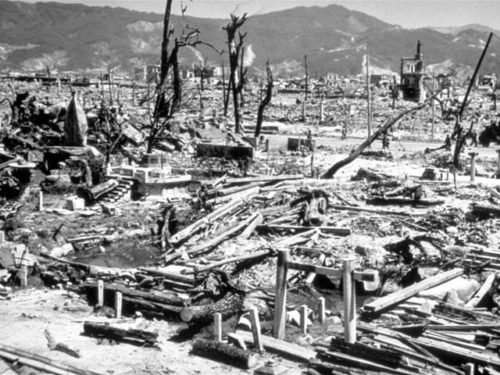
This August 6, 1945 file photo shows the destruction from the explosion of an atomic bomb in Hiroshima Japan AP-Photo-File

By Rossen Vassilev Jr.

Source: Global Research

74 Years Ago, the first atomic bomb was dropped on Hiroshima on August 6, 1945

Was President Harry Truman “a murderer,” as the renowned British analytic philosopher Gertrude Elizabeth Anscombe once charged? Were the atomic bombings of Hiroshima and Nagasaki indeed a war crime and a crime against humanity, as she and other academic luminaries have publicly claimed? A Distinguished Professor of Philosophy and Ethics at Oxford and Cambridge, who was one of the 20th century’s most gifted philosophers and recognizably the greatest woman philosopher in history, Dr. Anscombe openly called President Truman a “war criminal” for his decision to have the Japanese cities of Hiroshima and Nagasaki leveled by atomic bombs in August 1945 (Rachels & Rachels 127). According to another academic critic, the late American historian Howard Zinn, at least 140,000 Japanese civilians were “turned into powder and ash” in Hiroshima. Over 70,000 civilians were incinerated in Nagasaki, and another 130,000 residents of the two cities died of radiation sickness in the next five years (Zinn 23).

The two most often cited reasons for President Truman’s controversial decision were to shorten the war and to save the lives of “between 250,000 and 500,000” American soldiers who could have possibly died in battle had the U.S. military had to invade the home islands of Imperial Japan. Truman reportedly claimed that

“I could not bear this thought and it led to the decision to use the atomic bomb” (Dallek 26).

But Dr. Gertrude Anscombe, who along with her husband, Dr. Peter Geach, Professor of Philosophical Logic and Ethics, were the 20th century’s foremost philosophical champions of the doctrine that moral rules are absolute, did not buy this morally callous argument:

“Come now: if you had to choose between boiling one baby and letting some frightful disaster befall a thousand people—or a million people, if a thousand is not enough—what would you do? For men to choose to kill the innocent as a means to their ends is always murder” (Rachels & Rachels 128-129).

In 1956, Professor Anscombe and other prominent faculty members of Oxford University openly protested the decision of university administrators to grant Truman an honorary degree in gratitude for America’s wartime help. She even wrote a pamphlet, explaining that the former U.S. President was “a murderer” and “a war criminal” (Rachels & Rachels 128).

In the eyes of many contemporaries of Elizabeth Anscombe, the atomic bombings of Hiroshima and Nagasaki violated famous philosophical-ethical norms such as the “Sanctity of Human Life,” the “Wrongfulness of Killing,” and also that “it is wrong to use people as means to other people’s ends.” Former President Herbert Hoover was another early critic, openly declaring that

“The use of the atom bomb, with its indiscriminate killing of women and children, revolts me” (Alperovitz The Decision 635).

Even President Truman’s own Chief of Staff, the five-star Admiral William D. Leahy (the most senior U.S. military officer during the war) made no secret of his strong disapprobation of the atomic bombings:

“It is my opinion that the use of this barbarous weapon at Hiroshima and Nagasaki was of no material assistance in our war against Japan. The Japanese were already defeated and ready to surrender because of the effective sea blockade and the successful bombing with conventional weapons…. My own feeling is that in being the first to use it, we had adopted an ethical standard common to the barbarians of the Dark Ages…. I was not taught to make war in that fashion, and wars cannot be won by destroying women and children” (Claypool 86-87, emphasis added).

The apologists for President Truman, on the other hand, seem to be using the quasi-Utilitarian “Benefits Argument” to justify the barbaric use of a devastating weapon of mass destruction, which killed hundreds of thousands of innocent civilians in the two targeted Japanese cities even though (contrary to Truman’s many public pronouncements at that time) there had been no military troops, no heavy weaponry, or even any major war-related industries in either city. Because nearly the entire adult male population of both Hiroshima and Nagasaki had been drafted by the Japanese military, it was mostly women, children, and old men who fell victims to fiery death from the sky. The excuse that Truman himself repeatedly offered was:

“The dropping of the bombs stopped the war, saved millions of lives” (Alperovitz Atomic Diplomacy 10).

He even boasted that he had “slept like a baby” the night after signing the final order to use the atomic bombs against Japan (Rachels & Rachels 127). But what Truman was saying in self-justification was far from being the truth—let alone the whole truth.

Unleashing a nuclear Frankenstein

At the urging of a fellow nuclear physicist—the anti-Nazi Hungarian émigré Leo SzilardAlbert Einstein wrote a letter to President Franklin D. Roosevelt on August 2, 1939, recommending that the U.S. government should start work on a powerful atomic device as a defensive deterrent to Nazi Germany’s possible acquisition and use of nuclear weaponry (Ham 103-104). But when the top-secret Manhattan Project finally got off the ground in early 1942, the U.S. military obviously had other, much more offensive plans regarding the future targets of America’s A-bombs. While at least 67 other Japanese cities, including the capital Tokyo, were reduced to rubble by daily conventional firebombing, including the use of napalm and other incendiaries, Hiroshima and Nagasaki had been deliberately spared for the sole purpose of testing the destructiveness of the new atomic device (Claypool 11).

An even more important reason for employing the bomb was to scare Stalin, who had turned quickly from “Old Uncle Joe” at the time of the FDR presidency into “the Red Menace” in the eyes of Truman and his top advisers. President Truman had quickly abandoned FDR’s policy of cooperation with Moscow, replacing it with a new policy of hostile confrontation with Stalin, in which America’s newly-acquired monopoly over nuclear armaments would be exploited as an aggressive tool of Washington’s anti-Soviet diplomacy (Truman’s so-called “atomic diplomacy”). Fully two months before Hiroshima and Nagasaki, the same Leo Szilard had met privately with Truman’s Secretary of State, James F. Byrnes, and had tried unsuccessfully to persuade him that the nuclear weapon should not be used to destroy helpless civilian targets such as Japan’s cities. According to Dr. Szilard,

“Mr. Byrnes did not argue that it was necessary to use the bomb against the cities of Japan in order to win the war…. Mr. Byrnes’s view [was] that our possessing and demonstrating the bomb would make Russia more manageable in Europe” (Alperovitz Atomic Diplomacy 1, 290).

The Truman Administration had, in fact, postponed the Potsdam meeting of the Big Three until July 17, 1945—one day after the successful Trinity test of the first A-bomb at the Alamogordo testing range in New Mexico—to give Truman extra diplomatic leverage in negotiating with Stalin (Alperovitz Atomic Diplomacy 6). In Truman’s own words, the atom bomb “would keep the Russians straight” and “put us in a position to dictate our own terms at the end of the war” (Alperovitz Atomic Diplomacy 54, 63).

At this point, the Truman Administration was no longer interested in having Moscow’s Red Army liberate Northern China (Manchuria) from Japanese military occupation (as FDR, Churchill, and Stalin had jointly agreed at the Yalta Conference in February 1945)—let alone invade or capture Imperial Japan itself. Quite to the contrary. Publicly deploring the “political-diplomatic rather than military motives” behind Truman’s decision to nuke Japan, Albert Einstein complained that “a great majority of scientists were opposed to the sudden employment of the atom bomb. I suspect that the affair was precipitated by a desire to end the war in the Pacific by any means before Russia’s participation” (Alperovitz The Decision 444). Winston Churchill privately told his Foreign Secretary, Anthony Eden,at the Potsdam Conference that

“It is quite clear that the United States do not at the present time desire Russian participation in the war against Japan” (Claypool 78).

Not even Tokyo’s last-minute desperate offer (made during and after the Potsdam Conference) to surrender if the Allies promised not to prosecute Japan’s god-like emperor or remove him from office—could prevent this deadly decision, even though Truman “had indicated a willingness to maintain the emperor on the throne” (Dallek 25).

Therefore, sparing the lives of American GIs was hardly one of Truman’s more convincing arguments. In early 1945, FDR and Army General Dwight Eisenhower, Supreme Commander of the Allied Forces in Europe, had together decided to leave the capture of Berlin to Soviet Marshal Georgi Zhukov‘s battle-hardened troops in order to avoid heavy American casualties. After officially declaring war on Tokyo on August 8, 1945, and having destroyed the Japanese military forces in Manchuria, Stalin’s Red Army prepared to invade and occupy Japan’s home islands—which certainly would have saved the lives of thousands of U.S. servicemen about whom Truman seemed so vocally concerned. But following Nazi Germany’s unconditional surrender in May 1945, Truman had come to share Winston Churchill’s famous revisionist assessment that “We have slain the wrong swine.”

It is not even clear whether Tokyo finally surrendered on August 14 due to the two U.S. nuclear attacks carried out on August 6 and August 9, respectively (after which there were practically no more Japanese cities left to destroy nor any more U.S. A-bombs to drop)—or because of the threat of Soviet invasion and occupation after Moscow had entered the war against the Empire of Japan. Just days before the Soviet declaration of war, the Japanese ambassador to Moscow had cabled Foreign Minister Shigenori Togo in Tokyo that Moscow’s entry into the war would spell a total disaster for Japan:

“If Russia…should suddenly decide to take advantage of our weakness and intervene against us with force of arms, we would be in a completely hopeless situation. It is clear as day that the Imperial Army in Manchukuo [Manchuria] would be completely unable to oppose the Red Army which has just won a great victory and is superior to us on all points” (Barnes).

To nuke or not to nuke

General Eisenhower was later quoted as stating his conviction that it had not been “necessary” militarily to use the bomb to force Japanese surrender:

“Japan was, at that very moment, seeking some way to surrender with a minimum loss of ‘face’…it wasn’t necessary to hit them with that awful thing” (Alperovitz Atomic Diplomacy 14).

In private, Eisenhower repeated his objections to his direct boss, Truman’s Secretary of War Henry L. Stimson:

“I had been conscious of a feeling of depression and so I voiced to him my strong misgivings, first on the basis of my belief that Japan was already defeated and that dropping the bomb was completely unnecessary, and secondly because I thought that our country should avoid shocking world opinion by the use of a weapon whose employment was, I thought, no longer mandatory as a measure to save American lives” (Alperovitz Atomic Diplomacy 14).

Admiral William F. Halsey, commander of the U.S. Third Fleet (which conducted the bulk of naval operations against the Japanese in the Pacific during the entire war), agreed that there was “no military need” to employ the new weapon, which was used only because the Truman Administration had a “toy and they wanted to try it out…. The first atomic bomb was an unnecessary experiment…. It was a mistake to ever drop it” (Alperovitz The Decision 445). Indeed, it was quite “certain” at the time that a totally devastated Japan, which was on the verge of internal collapse, would have surrendered within weeks, if not days, without the atomic bombings of Hiroshima and Nagasaki or even without the Soviet declaration of war against Tokyo. As the official U.S. Strategic Bombing Survey concluded at the end of the war, “certainly prior to 31 December 1945, and in all probability prior to 1 November 1945, Japan would have surrendered even if the atomic bombs had not been dropped, even if Russia had not entered the war, and even if no invasion had been planned or contemplated” (Alperovitz Atomic Diplomacy 10-11).

Major General Curtis E. Lemay, commander of the U.S. Twenty-first Bomber Command which had conducted the massive conventional bombing campaign against wartime Japan and dropped the atomic bombs on Hiroshima and Nagasaki, stated publicly: “I felt there was no need to use them [atomic weapons]. We were doing the job with incendiaries. We were hurting Japan badly…. We went ahead and dropped the bombs because President Truman told me to do it…. All the atomic bomb did was, in all probability, save a few days” (Alperovitz The Decision 340).

The fateful decision to drop the two atomic bombs code-named “Little Boy” and “Fat Man” on Japan may have been made a little bit more morally acceptable for Truman by the daily carpet bombing of German and Japanese cities throughout the war, including the firebombings of Hamburg, Dresden, and Tokyowhich had nearly wiped out their civilian populations. The declared goal of these relentless city-busting air raids was to destroy the morale and the will to fight of the German and Japanese people and thus shorten the war. But many years after the war Dr. Howard Zinn (himself a B-17 co-pilot and bombardier who had flown dozens of bombing missions against Nazi Germany) sadly mused: “No one seemed conscious of the irony—that one of the reasons for the general indignation against the fascist powers was their history of indiscriminate bombing of civilian populations” (Zinn 37). But, in fact, Secretary of War Henry Stimson, Admiral William Leahy, and Army General Douglas MacArthur were no less disturbed by what they saw as the barbarity of the “terror” air campaign, with Stimson privately fearing that the U.S. would “get the reputation for outdoing Hitler in atrocities” (Ham 63).

Clearly, Japan was defeated and was preparing to surrender before the bomb was used, whose main—if not the only—purpose was to intimidate the Soviet Union. But there had been several viable alternatives, some of which were discussed prior to the atomic bombings. The Under Secretary of the Navy, Ralph Bard, had become convinced that “the Japanese war was really won” and was so disturbed by the prospect of using atom bombs against defenseless civilians that he secured a meeting with President Truman, at which he unsuccessfully pressed his case “for warning the Japanese of the nature of the new weapon” (Alperovitz Atomic Diplomacy 19). Admiral Lewis L. Strauss, Special Assistant to the Secretary of the Navy, who replaced Bard after the latter’s angry resignation, also believed that “the war was very nearly over. The Japanese were nearly ready to capitulate.” That is why Admiral Strauss insisted that the atom bomb should be demonstrated in a way that would not kill large numbers of civilians, proposing that “…a satisfactory place for such a demonstration would be a large forest of cryptomeria trees not far from Tokyo” (Alperovitz Atomic Diplomacy 19). General George C. Marshall, U.S. Army Chief of Staff, was equally opposed to the bomb being used on civilian areas, arguing instead that

“…these weapons might be used against straight military objectives such as a large naval installation and then if no complete result was derived from the effect of that…we ought to designate a number of large manufacturing areas from which people would be warned to leave —telling the Japanese that we intend to destroy such centers…. Every effort should be made to keep our record of warning clear…. We must offset by such warning methods the opprobrium which might follow from an ill-considered employment of such force” (Alperovitz Atomic Diplomacy 20).

General Marshall also insisted that instead of surprising the Russians with the first use of the atom bomb, Moscow should be invited to send observers to the Alamogordo nuclear test. Many of the scientists working for the Manhattan Project likewise urged that a demonstration be arranged first, including a possible nuclear explosion at sea in close proximity to Japan’s coast, so that the bomb’s destructive power would be made clear to the Japanese before it was used against them. But, like the U.S. military’s dissenting views, the nuclear scientists’ opposition was never considered seriously by the Truman Administration (Alperovitz Atomic Diplomacy 20-21).

Conclusion

As a result of Truman’s immoral decision to use nuclear explosives against the “Japs” (a derogatory name for the Japanese commonly used in public in wartime America, including by President Truman himself), well over 200,000 civilians were instantly cremated and many thousands died later of radiation sickness. J. Robert Oppenheimer, scientific director of the Manhattan Project and “father” of the U.S. atom bomb, declared that Truman’s decision was “a grievous error,” because now “we have blood on our hands” (Claypool 17). Howard Zinn agreed with Dr. Oppenheimer’s judgment, remarking that “much of the argument defending the atomic bombings has been based on a mood of retaliation, as if the children of Hiroshima had bombed Pearl Harbor…. Did American children deserve to die because of the U.S. massacre of Vietnamese children at My Lai?” (Zinn 59).

The controversial General Curtis Lemay, who had opposed the two atomic blasts, later confided to former Secretary of Defense Robert McNamara (who had worked for Lemay during the war, helping select Japanese targets for the American firebombing raids): “If we’d lost the war, we’d all have been prosecuted as war criminals” (Schanberg). Given the unjustifiable and unnecessary use of such an inhumane and indiscriminate weapon of mass destruction as the atomic bombs dropped on Hiroshima and Nagasaki, Professor Elizabeth Anscombe called President Truman a murderer and a war criminal. Until the day she died, Dr. Anscombe believed that Truman should have been put on trial for having committed some of the worst war crimes and crimes against humanity during WWII.


Sources

Alperovitz, Gar. Atomic Diplomacy: Hisroshima and Potsdam. The Use of the Atomic Bomb and the American Confrontation with Soviet Power. London and Boulder, CO: Pluto Press. 1994. Print.

—-. The Decision to Use the Atomic Bomb. New York: Vintage Books. 1996. Print.

Barnes, Michael. “The Decision to Use the Atomic Bomb: Arguments Against.” Web. 14 Apr. 2019.
Claypool, Jane. Hisroshima and Nagasaki. New York and London: Franklin Watts, 1984. Print.

Dallek, Robert. Harry S. Truman. New York: Times Books, 2008. Print.

Ham, Paul. Hiroshima Nagasaki: The Real Story of the Atomic Bombings and Their Aftermath. New York: St. Martin’s Press. 2011. Print.

Rachels, James, and Stuart Rachels. The Elements of Moral Philosophy (8th edition). McGraw-Hill Education, 2015. Print.

Schanberg, Sydney. “Soul on Ice.” The American Prospect, October 27, 2003. Web. 14 Apr. 2019.

Zinn, Howard. The Bomb. San Francisco, CA: City Lights Books, 2010. Print.

Why War? Building on the legacy of Einstein, Freud and Gandhi

By Robert J. Burrowes

In 1932, Sigmund Freud and Albert Einstein conducted a correspondence subsequently published under the title ‘Why War?’ See ‘Why War: Einstein and Freud’s Little-Known Correspondence on Violence, Peace, and Human Nature’. In many ways, this dialogue between two giants of the 20th century is symbolic of the effort made by many humans to understand that perplexing and incredibly damaging feature of human experience: the institution of war.

In a recent article, the founder of peace research, Professor Johan Galtung, reminded us of the legacy of Freud and Einstein in this regard and reflected on their dialogue, noting some shortcomings including their failure to ‘unpack conflict’. See ‘Freud-Einstein on Peace’.

Of course, Freud and Einstein weren’t the first to consider the question ‘Why War?’ and their dialogue was preceded by a long sequence of individuals and even some organizations, such as the Women’s International League for Peace and Freedom and War Resisters’ International, who sought to understand, prevent and/or halt particular wars, or even to understand and end the institution itself, as exemplified by the Kellogg-Briand Pact in 1928 outlawing war. Moreover, given the failure of earlier initiatives, many individuals and organizations since Freud and Einstein have set out to understand, prevent and/or halt wars and these efforts have taken divergent forms.

Notable among these, Mohandas K. Gandhi was concerned to develop a mode of action to deal with many manifestations of violence and he dramatically developed, and shared, an understanding of how to apply nonviolence, which he labeled satyagraha (holding firmly to the truth), in overcoming large-scale violence and exploitation. He successfully applied his strategic understanding of nonviolence to the Indian independence struggle against British colonial rule. But while Gandhi was happy to acknowledge his debt to those who had gone before, he was not shy in proclaiming the importance of finding new ways forward: ‘If we are to make progress, we must not repeat history but make new history. We must add to the inheritance left by our ancestors.’

My own journey to understand human violence was caused by the death of my two uncles, Bob and Tom, in World War II, ten years before I was born. My childhood in the 1950s and 1960s is dotted with memories of my uncles, stimulated through such events as attending memorial services at the Shrine of Remembrance where their war service was outlined. See ‘My Brothers’ on my father’s website.

But by the early 1960s, courtesy of newspaper articles and photos, I had become aware of exploitation and starvation in Africa and elsewhere, and as a young university student in the early 1970s I was reading literature about environmental destruction. It wasn’t just war that was problematic; violence took many other forms too.

‘Why are human beings violent?’ I kept asking. Because I thought that this question must have been answered somewhere, I kept reading, including the work of Freud and Karl Marx as an undergraduate, but also the thoughts of many other scholars, such as Frantz Fanon, as well as anarchists, feminists and those writing from other perspectives which offered explanations of violence, whether direct, structural or otherwise.

By the early 1980s I had started to read Gandhi and I had begun to understand nonviolence, as Gandhi practised and explained it, with a depth that seemed to elude the activists I knew and even the scholars in the field that I read.

Separately from this, I was starting to gain a sense that the human mind was not something that could be understood well by viewing it primarily as an organ of thinking and that much of the literature and certainly most of the practitioners in the field of psychology and related fields, especially psychiatry, had failed to understand the emotional depth and complexity of the human mind and the implications of this for dealing with conflict and violence. In this sense, it was clear to me, few had understood, let alone been able to develop, Freud’s legacy. This is because the fundamental problem is about feeling (and, in relation to violence, particularly suppressed fear and anger). Let me explain why.

Violence is something that is usually identified as physical: it involves actions like hitting, punching and using weapons such as a gun. This is one of the types of violence, and probably the one now most often lamented, that is inflicted on indigenous peoples, women and people of colour, among others.

Separately from this, Gandhi also identified exploitation as violence and Galtung elaborated this concept with his notion of ‘structural violence’. Other forms of violence have been identified and they take many forms such as financial violence, cultural violence and ecological violence. But violence can be more subtle than any of these and, hence, much less visible. I have given two of these forms of violence the labels ‘invisible violence’ and ‘utterly invisible violence’. Tragically, ‘invisible violence’ and ‘utterly invisible violence’ are inflicted on us mercilessly from the day we are born. And, as a result, we are all terrorized.

So what are ‘invisible’ and ‘utterly invisible’ violence?

In essence, ‘invisible’ violence is the ‘little things’ we do every day, partly because we are just ‘too busy’. For example, when we do not allow time to listen to, and value, a child’s thoughts and feelings, the child learns to not listen to themSelf thus destroying their internal communication system.

When we do not let a child say what they want (or ignore them when they do), the child develops communication and behavioural dysfunctionalities as they keep trying to meet their own needs (which, as a basic survival strategy, they are genetically programmed to do). When we blame, condemn, insult, mock, embarrass, shame, humiliate, taunt, goad, guilt-trip, deceive, lie to, bribe, blackmail, moralize with and/or judge a child, we both undermine their sense of Self-worth and teach them to blame, condemn, insult, mock, embarrass, shame, humiliate, taunt, goad, guilt-trip, deceive, lie, bribe, blackmail, moralize and/or judge.

The fundamental outcome of being bombarded throughout their childhood by this ‘invisible’ violence is that the child is utterly overwhelmed by feelings of fear, pain, anger and sadness (among many others). However, parents, teachers and other adults also actively interfere with the expression of these feelings and the behavioural responses that are naturally generated by them and it is this ‘utterly invisible’ violence that explains why the dysfunctional behavioural outcomes actually occur.

For example, by ignoring a child when they express their feelings, by comforting, reassuring or distracting a child when they express their feelings, by laughing at or ridiculing their feelings, by terrorizing a child into not expressing their feelings (e.g. by screaming at them when they cry or get angry), and/or by violently controlling a behaviour that is generated by their feelings (e.g. by hitting them, restraining them or locking them into a room), the child has no choice but to unconsciously suppress their awareness of these feelings.

However, once a child has been terrorized into suppressing their awareness of their feelings (rather than being allowed to have their feelings and to act on them) the child has also unconsciously suppressed their awareness of the reality that caused these feelings. This has many outcomes that are disastrous for the individual, for society and for nature because the individual will now easily suppress their awareness of the feelings that would tell them how to act most functionally in any given circumstance and they will progressively acquire a phenomenal variety of dysfunctional behaviours, including many that are violent towards themselves, others and/or the Earth.

Moreover, this emotional (or psychological) damage will lead to a unique combination of violent behaviours in each case. And some of these individuals will gravitate to working in one of the social roles that specifically requires, or justifies, the use of ‘legitimized violence’, such as the violence carried out by police, prosecuting lawyers, magistrates and judges, as well as that inflicted by the military. Others, of course, will operate outside the realm of legitimized violence and be labelled as ‘criminals’.

But, you might be wondering, what is the link between what happens in childhood and war?

The answer is simply that perpetrators of violence, and those who collaborate with them, are created during childhood. And these perpetrators and collaborators are all terrified, self-hating and powerless – for much greater detail of the precise psychological characteristics of perpetrators of violence and their collaborators, see ‘Why Violence?’  and ‘Fearless Psychology and Fearful Psychology: Principles and Practice’ – and they go on to perform all of the key roles in creating, maintaining, equipping, staffing and legitimizing the institutions of war and in conducting it.

If it weren’t for the violence to which we are all mercilessly subjected throughout childhood, there would be no interest in violence or war of any kind. If we were raised without violence, we would be naturally peaceful and cooperative, content to spend our time seeking to achieve our own unique evolutionary potential and to nurture the journey of others as well as life itself, rather than just become another cog in someone else’s military (or other bureaucratic or corporate) machine.

If any of the above resonates with you, then I invite you to make ‘My Promise to Children’.

In addition, if further reducing the violence in our world appeals to you, then you are also welcome to consider participating in ‘The Flame Tree Project to Save Life on Earth’,  signing the online pledge of ‘The People’s Charter to Create a Nonviolent World’ and/or considering using the strategic framework on one or the other of these two websites for your campaign to end violence or war in one context or another: Nonviolent Campaign Strategy and Nonviolent Defense/Liberation Strategy.

A child is not born to make war. But if you inflict enough violence on a child, and destroy their capacity to become their own unique and powerful self, they will be terrorised into perceiving violence and war as their society wants them to be perceived. And violence and war, and the institutions that maintain them, will flourish.

If we want to end war, we must halt the adult war against children as a priority.


Biodata: Robert J. Burrowes has a lifetime commitment to understanding
and ending human violence. He has done extensive research since 1966 in
an effort to understand why human beings are violent and has been a
nonviolent activist since 1981. He is the author of ‘Why Violence?
His email address is flametree@riseup.net
and his website is at http://robertjburrowes.wordpress.com


Robert J. Burrowes
P.O. Box 68
Daylesford
Victoria 3460
Australia
Email: flametree@riseup.net

Websites:
Nonviolence Charter
Flame Tree Project to Save Life on Earth
‘Why Violence?’
Nonviolent Campaign Strategy
Nonviolent Defense/Liberation Strategy
Anita: Songs of Nonviolence
Robert Burrowes
Global Nonviolence Network

Five Ways to Boost Intelligence

original

I’ve never subscribed to the notion that intelligence is fixed and unchanging. Intelligence (and its opposite) can be taught and reinforced though there may be varying ranges determined by factors such as diet, habits, genetics, personality, environment, time, resources and relationships. There’s also different categories of intelligences that aren’t equally valued by society, but the type of intelligence involved in critical thinking and creative problem solving is what our society seems to need most. On the latest episode of The Bulletproof Executive podcast, host Dave Asprey and researcher/science writer Andrea Kuszewski discuss methods to improve this type of intelligence among other topics including the relationship between extreme altruism and sociopathy.

Listen to the full interview here:

Kuszewski previously expanded on 5 ways to maximize cognitive potential as a guest blogger for Scientific American. Even if one has no need or desire to boost intelligence, they can also be used for sustaining intelligence and preventing cognitive decline associated with aging. Here are the five recommendations and her conclusion:

1. Seek Novelty

It is no coincidence that geniuses like Einstein were skilled in multiple areas, or polymaths, as we like to refer to them. Geniuses are constantly seeking out novel activities, learning a new domain. It’s their personality.

There is only one trait out of the “Big Five” from the Five Factor Model of personality (Acronym: OCEAN, or Openness, Conscientiousness, Extroversion, Agreeableness, and Neuroticism) that correlates with IQ, and it is the trait of Openness to new experience. People who rate high on Openness are constantly seeking new information, new activities to engage in, new things to learn—new experiences in general [2].

When you seek novelty, several things are going on. First of all, you are creating new synaptic connections with every new activity you engage in. These connections build on each other, increasing your neural activity, creating more connections to build on other connections—learning is taking place.

An area of interest in recent research [pdf] is neural plasticity as a factor in individual differences in intelligence. Plasticity is referring to the number of connections made between neurons, how that affects subsequent connections, and how long-lasting those connections are. Basically, it means how much new information you are able to take in, and if you are able to retain it, making lasting changes to your brain. Constantly exposing yourself to new things helps puts your brain in a primed state for learning.

Novelty also triggers dopamine (I have mentioned this before in other posts), which not only kicks motivation into high gear, but it stimulates neurogenesis—the creation of new neurons—and prepares your brain for learning. All you need to do is feed the hunger.

Excellent learning condition = Novel Activity—>triggers dopamine—>creates a higher motivational state—>which fuels engagement and primes neurons—>neurogenesis can take place + increase in synaptic plasticity (increase in new neural connections, or learning).

As a follow-up of the Jaeggi study, researchers in Sweden [pdf] found that after 14 hours of training working memory over 5 weeks’ time, there was an increase of dopamine D1 binding potential in the prefrontal and parietal areas of the brain. This particular dopamine receptor, the D1 type, is associated with neural growth and development, among other things. This increase in plasticity, allowing greater binding of this receptor, is a very good thing for maximizing cognitive functioning.

Take home point: Be an “Einstein”. Always look to new activities to engage your mind—expand your cognitive horizons. Learn an instrument. Take an art class. Go to a museum. Read about a new area of science. Be a knowledge junkie.

2. Challenge Yourself

There are absolutely oodles of terrible things written and promoted on how to “train your brain” to “get smarter”. When I speak of “brain training games”, I’m referring to the memorization and fluency-type games, intended to increase your speed of processing, etc, such as Sudoku, that they tell you to do in your “idle time” (complete oxymoron, regarding increasing cognition). I’m going to shatter some of that stuff you’ve previously heard about brain training games. Here goes: They don’t work. Individual brain training games don’t make you smarter—they make you more proficient at the brain training games.

Now, they do serve a purpose, but it is short-lived. The key to getting something out of those types of cognitive activities sort of relates to the first principle of seeking novelty. Once you master one of those cognitive activities in the brain-training game, you need to move on to the next challenging activity. Figure out how to play Sudoku? Great! Now move along to the next type of challenging game. There is research that supports this logic.

A few years ago, scientist Richard Haier wanted to see if you could increase your cognitive ability by intensely training on novel mental activities for a period of several weeks. They used the video game Tetris as the novel activity, and used people who had never played the game before as subjects (I know—can you believe they exist?!). What they found, was that after training for several weeks on the game Tetris, the subjects experienced an increase in cortical thickness, as well as an increase in cortical activity, as evidenced by the increase in how much glucose was used in that area of the brain. Basically, the brain used more energy during those training times, and bulked up in thickness—which means more neural connections, or new learned expertise—after this intense training. And they became experts at Tetris. Cool, right?

Here’s the thing: After that initial explosion of cognitive growth, they noticed a decline in both cortical thickness, as well as the amount of glucose used during that task. However, they remained just as good at Tetris; their skill did not decrease. The brain scans showed less brain activity during the game-playing, instead of more, as in the previous days. Why the drop? Their brains got more efficient. Once their brain figured out how to play Tetris, and got really good at it, it got lazy. It didn’t need to work as hard in order to play the game well, so the cognitive energy and the glucose went somewhere else instead.

Efficiency is not your friend when it comes to cognitive growth. In order to keep your brain making new connections and keeping them active, you need to keep moving on to another challenging activity as soon as you reach the point of mastery in the one you are engaging in. You want to be in a constant state of slight discomfort, struggling to barely achieve whatever it is you are trying to do, as Einstein alluded to in his quote. This keeps your brain on its toes, so to speak. We’ll come back to this point later on.

3. Think Creatively

When I say thinking creatively will help you achieve neural growth, I am not talking about painting a picture, or doing something artsy, like we discussed in the first principle, Seeking Novelty. When I speak of creative thinking, I am talking about creative cognition itself, and what that means as far as the process going on in your brain.

Contrary to popular belief, creative thinking does not equal “thinking with the right side of your brain”. It involves recruitment from both halves of your brain, not just the right. Creative cognition involves divergent thinking (a wide range of topics/subjects), making remote associations between ideas, switching back and forth between conventional and unconventional thinking (cognitive flexibility), and generating original, novel ideas that are also appropriate to the activity you are doing. In order to do this well, you need both right and left hemispheres working in conjunction with each other.

Several years ago, Dr Robert Sternberg, former Dean at Tufts University, opened the PACE (Psychology of Abilities, Competencies, and Expertise) Center, in Boston. Sternberg has been on a quest to not only understand the fundamental concept of intelligence, but also to find ways in which any one person can maximize his or her intelligence through training, and especially, through teaching in schools.

Here Sternberg describes the goals of the PACE Center, which was started at Yale:

“The basic idea of the center is that abilities are not fixed but rather flexible, that they’re modifiable, and that anyone can transform their abilities into competencies, and their competencies into expertise,” Sternberg explains. “We’re especially interested in how we can help people essentially modify their abilities so that they can be better able to face the tasks and situations they’re going to confront in life.”

As part of a research study, The Rainbow Project [pdf], he created not only innovative methods of creative teaching in the classroom, but generated assessment procedures that tested the students in ways that got them to think about the problems in creative and practical ways, as well as analytical, instead of just memorizing facts.

Sternberg explains,

“In the Rainbow Project we created assessments of creative and practical as well as analytical abilities. A creative test might be: ‘Here’s a cartoon. Caption it.’ A practical problem might be a movie of a student going into a party, looking around, not knowing anyone, and obviously feeling uncomfortable. What should the student do?”

He wanted to find out if by teaching students to think creatively (and practically) about a problem, as well as for memory, he could get them to (i) Learn more about the topic, (ii) Have more fun learning, and (iii) Transfer that knowledge gained to other areas of academic performance. He wanted to see if by varying the teaching and assessment methods, he could prevent “teaching to the test” and get the students to actually learn more in general. He collected data on this, and boy, did he get great results.

In a nutshell? On average, the students in the test group (the ones taught using creative methods) received higher final grades in the college course than the control group (taught with traditional methods and assessments). But—just to make things fair— he also gave the test group the very same analytical-type exam that the regular students got (a multiple choice test), and they scored higher on that test as well. That means they were able to transfer the knowledge they gained using creative, multimodal teaching methods, and score higher on a completely different cognitive test of achievement on that same material. Sound familiar?

4. Do Things the Hard Way

I mentioned earlier that efficiency is not your friend if you are trying to increase your intelligence. Unfortunately, many things in life are centered on trying to make everything more efficient. This is so we can do more things, in a shorter amount of time, expending the least amount of physical and mental energy possible. However, this isn’t doing your brain any favors.

Take one object of modern convenience, GPS. GPS is an amazing invention. I am one of those people GPS was invented for. My sense of direction is terrible. I get lost all the time. So when GPS came along, I was thanking my lucky stars. But you know what? After using GPS for a short time, I found that my sense of direction was worse. If I failed to have it with me, I was even more lost than before. So when I moved to Boston—the city that horror movies and nightmares about getting lost are modeled after—I stopped using GPS.

I won’t lie—it was painful as hell. I had a new job which involved traveling all over the burbs of Boston, and I got lost every single day for at least 4 weeks. I got lost so much, I thought I was going to lose my job due to chronic lateness (I even got written up for it). But—in time, I started learning my way around, due to the sheer amount of practice I was getting at navigation using only my brain and a map. I began to actually get a sense of where things in Boston were, using logic and memory, not GPS. I can still remember how proud I was the day a friend was in town visiting, and I was able to effectively find his hotel downtown with only a name and a location description to go on—not even an address. It was like I had graduated from navigational awareness school.

Technology does a lot to make things in life easier, faster, more efficient, but sometimes our cognitive skills can suffer as a result of these shortcuts, and hurt us in the long run. Now, before everyone starts screaming and emailing my transhumanist friends to say that I’ve sinned by trashing tech—that’s not what I’m doing.

Look at it this way: Driving to work takes less physical energy, saves time, and it’s probably more convenient and pleasant than walking. Not a big deal. But if you drove everywhere you went, or spent your life on a Segway, even to go very short distances, you aren’t going to be expending any physical energy. Over time, your muscles will atrophy, your physical state will weaken, and you’ll probably gain weight. Your overall health will probably decline as a result.

Your brain needs exercise as well. If you stop using your problem-solving skills, your spatial skills, your logical skills, your cognitive skills—how do you expect your brain to stay in top shape—never mind improve? Think about modern conveniences that are helpful, but when relied on too much, can hurt your skill in that domain. Translation software: amazing, but my multilingual skills have declined since I started using it more. I’ve now forced myself to struggle through translations before I look up the correct format. Same goes for spell-check and autocorrect. In fact, I think autocorrect was one of the worst things ever invented for the advancement of cognition. You know the computer will catch your mistakes, so you plug along, not even thinking about how to spell any more. As a result of years of relying on autocorrect and spell-check, as a nation, are we worse spellers? (I would love someone to do a study on this.)

There are times when using technology is warranted and necessary. But there are times when it’s better to say no to shortcuts and use your brain, as long as you can afford the luxury of time and energy. Walking to work every so often or taking the stairs instead of the elevator a few times a week is recommended to stay in good physical shape. Don’t you want your brain to be fit as well? Lay off the GPS once in a while, and do your spatial and problem-solving skills a favor. Keep it handy, but try navigating naked first. Your brain will thank you.

5. Network

And that brings us to the last element to maximize your cognitive potential: Networking. What’s great about this last objective is that if you are doing the other four things, you are probably already doing this as well. If not, start. Immediately.

By networking with other people—either through social media such as Facebook or Twitter, or in face-to-face interactions—you are exposing yourself to the kinds of situations that are going to make objectives 1-4 much easier to achieve. By exposing yourself to new people, ideas, and environments, you are opening yourself up to new opportunities for cognitive growth. Being in the presence of other people who may be outside of your immediate field gives you opportunities to see problems from a new perspective, or offer insight in ways that you had never thought of before. Learning is all about exposing yourself to new things and taking in that information in ways that are meaningful and unique—networking with other people is a great way to make that happen. I’m not even going to get into the social benefits and emotional well-being that is derived from networking as a factor here, but that is just an added perk.

Steven Johnson, author who wrote the book “Where Good Ideas Come From”, discusses the importance of groups and networks for the advancement of ideas. If you are looking for ways to seek out novel situations, ideas, environments, and perspectives, then networking is the answer. It would be pretty tough to implement this “Get Smarter” regiment without making networking a primary component. Greatest thing about networking: Everyone involved benefits. Collective intelligence for the win!

…And I have a departing question for you to ponder as well: If we have all of this supporting data, showing that these teaching methods and ways of approaching learning can have such a profound positive effect on cognitive growth, why aren’t more therapy programs or school systems adopting some of these techniques? I’d love to see this as the standard in teaching, not the exception. Let’s try something novel and shake up the education system a little bit, shall we? We’d raise the collective IQ something fierce.

Intelligence isn’t just about how many levels of math courses you’ve taken, how fast you can solve an algorithm, or how many vocabulary words you know that are over 6 characters. It’s about being able to approach a new problem, recognize its important components, and solve it—then take that knowledge gained and put it towards solving the next, more complex problem. It’s about innovation and imagination, and about being able to put that to use to make the world a better place. This is the kind of intelligence that is valuable, and this is the type of intelligence we should be striving for and encouraging.