It is refreshing to see more and more of humanity wake up to the functional real-time political reality of the world we now live in. There are many human beings throughout the planet who now understand that corruption has taken over. They understand that criminals run the world. They understand that in America a powerful ruling elite bought out politicians and corporations to get what they want. They understand that the ruling elite operate in networks that transcend the boundaries of nation states in an agenda intended to lead to global domination using their military might.
People are understanding that government propaganda is real, and that the U.S. government has gotten away with one false flag attack on its own people after another; 9/11 being just one of them, all for the purposes of justifying endless war. People also understand that the war on terror, which was ushered in by 9/11, is a lie and that because of this phony war on terror the Pentagon and U.S. military is swimming in billions of dollars of free money to do whatever they want. But what does all of this mean? Do we really understand how they’ve done it and how all of this works?
In 1999 Directors Andy and Lana Wachowski brought us an interesting film called The Matrix which nicely depicts how two alternate realities simultaneously exist: one in which the people in it have no clue what is real and what is not because the sum of the two-dimensional parts they are exposed to seems real, even though it’s not, and another reality where you are irreversibly awakened from that fictional reality.
Over the past 17+ years since the release of The Matrix film many people have awakened to the political reality we live in. For many people it is not difficult to see the parallels between the world we live in and the world depicted in The Matrix. We can see that there is an artificial reality in play that looks and feels real, but it is not. It’s a system designed to keep you enslaved, keep you disempowered, keep you in fear and keep you dependent on big government for survival. Most importantly it’s a system designed to keep itself in power and to preserve whatever agenda it has. Ultimately, this artificial reality is tending towards a global order where the ruling elite hope to absolutely control humanity forever in a way that is absolutely and uncompromisingly in line with their wishes.
The question we should be asking is, How does this matrix work and how does it relate to the three-dimensional physical reality we live in? To answer that, the concept of the “Deep State” was originally proposed to describe the political corruption in Turkey as a secret state acting within a state.
Though we had been warned about these ruling elite, banksters and shadow government by previous presidents going back 200+ years, following the post 9/11 period more and more people began wrapping this concept around their heads. To many, the idea of a group of elite running the world, deemed for years by the U.S. mainstream media and propaganda machine as lunatic “conspiracy theories”, suddenly didn’t seem so crazy after all. Today the concept of a “Deep State,” perhaps because of its roots in Turkey, is much more believable and is seen as more plausible.
It refers to a parallel secret government, organized by the intelligence and security apparatus, financed by drugs, and engaging in illicit violence, to protect the status and interests of the military against threats from intellectuals, religious groups, and occasionally the constitutional government. In this book, I adapt the term somewhat to refer to the wider interface in America between the public, the constitutionally established state, and the deep forces behind it of wealth, power, and violence outside the government. You might call it the back door of the Public state, giving access to dark forces outside the law.
Since the publishing of Scott’s book, the term “Deep State” has gained increased attention and now serves as a practical model to describe how the shadow government operates.
And as humanity continues to awaken to the political reality that surrounds us, the concept of the Deep State becomes more a reality and much less fictional than the idea of the “matrix”, though these two are very intricately related as we’ll see.
The Matrix refers to the illusory engineered pseudo-reality that many people live in. The Deep State is the apparatus that allows that engineered and artificial two-dimension reality to be put out by the control system for daily consumption by the masses.
In order to appreciate this relationship consider the quote from former CIA director William Casey in 1981 when he said that:
We’ll know our disinformation program is complete when everything the American public believes is false.
This is an example of how the Deep State, which is led by Intelligence and their control and manipulation of news, is at the root of the creation of the false engineered world of lies that many people live in. As we can see by the Casey comment, the goal is not to tell a few lies but to actually create an entire reality based on those lies (think Sandy Hook, Bin Laden death hoax, etc).
Manufacturing the 2-Dimensional Reality
What many people don’t realize is that this false world of lies and deceit which is presented to the masses as “reality” is nothing more than a series of two-dimensional items strung together by the controlled media to create an artificial reality. Like the individual frames in a movie reel, each frame seems insignificant until you look at all the frames in a timed sequence. The sequential frames then present an artificial perceived reality.
This is the reason why every time the controllers pull off a staged crisis actor event or a false flag attack like 9/11, those defending the event including the media never seem to think it’s important to provide actual evidence for their claims. That’s because the three-dimensional evidence that truth seekers ask for always conflicts with the two-dimensional presentation they are putting out. The organic presentation of the truth itself, however, is never two-dimensional. It is actual, concrete, multi-dimensional truth which can be reasonably, logically and scientifically verified in real-time on multiple levels and reproduced endlessly without government interference due to its realistic and often simplistic nature.
This is why the demand for “proof” of government and mainstream media claims surrounding false flags and staged events always tends to become the thing that gets truth seekers demonized, attacked, accused, and even profiled as a “harassers” and criminals.
I recently wrote about the attack on Truth that we are seeing today and how it’s not just Truth that is under attack but the very search for Truth. That’s because today, searching for truth is a direct threat to the Deep State, it’s hypnotic control of the masses and its web of lies that make up the matrix, which in turn is keeping people enslaved.
The last thing the ruling oligarchs want is for people to wake up from the matrix of lies which the Deep State has put in place. Thus identifying the Deep State then logically becomes the first step in all of this. Most people in the U.S. don’t realize the degree to which the CIA and the Pentagon are secretly controlling the illusion of government. Even in an election year like 2016, Americans continue to believe the illusion of choice and Democracy which is actually one of the most important features to the operation of the Deep State.
As I’ve written about recently, in 2016 too many Americans are going in circles, like Groundhog Day, believing the same exact lies and promises told to them by the puppet politicians who are running for president, not realizing that this is precisely how the Deep State works. They put out their puppets and pseudo-promises, they ratchet up the campaign hoopla, and they have the candidates tell you anything you want to hear before they select their next puppet president mouthpiece.
Though most Americans know full well that to repeatedly do the same thing over and over again while expecting different results constitutes insanity, they do this very thing each time a presidential election year comes around. These same Americans witness this process with their own eyes every 4 years; another election, another president, the same results.
The result every time is more war, billions of dollars to the Pentagon slush fund, more false flags to justify more wars, more corruption and less accountability from government officials who get caught lying and committing crimes, more lies and propaganda sold to us by CIA’s mainstream media, more police state and tyranny against the people, less freedoms, more staged mass shootings, more globalization and illegal trade agreements, more medical and scientific fraud and false claims to feed the pockets of the pharmaceutical industries and vaccine industries, and, among other things, bigger steps to get us closer and closer to the permanent establishment of a new world order to be sold as United Nations’ “sustainable” living and “global peace and prosperity.”
It is incredible to think that at the smallest level, all of this is possible because unaware and naive Americans continue to believe the phony, artificial and engineered two-dimensional reality presented to them every day by mainstream media and Hollywood. They continue to misconstrue fiction for reality.
That simple inability to discern two-dimensional proof of a claim (a picture, a video, an empty claim by mainstream media or politicians) from three-dimensional proof (all the factors that make a story true including the full collection of physical, and scientific easily reproducible proof, real non-crisis actor eyewitnesses, real blood, real logical spontaneously captured sequences of events, open investigations, etc.) now threatens the survival of the human race and is dooming humanity to a potentially very dark future. This is a future which only those who are awakened to the difference between the presented two-dimensional reality and the actual three-dimensional reality, can potentially save humanity from.
Because this is so, those who realize the reality of the Deep State are therefore the greatest threat to the plans of the ruling elite who run the Deep State. This is why so many online trolls and shills are actually paid to spread State propaganda, lies, create division, insert doubt about topics and post State-sponsored “rebuttals” to key arguments on blog sites and social media. This is why they are fighting so hard to control the Internet, to criminalize activists, and to profile them as “domestic extremists”. This is also why sports fans are mesmerized with pro-military propaganda commercials and fake military worship pre-game ceremonies. This is why so many video games have pro-military and pro-war components to them. This is also why America is always told to “honor” the military. That’s because the military and the Intelligence is the enforcement arm of this evil Deep State. But they do know that as long as they deliver you entertainment, laughter and fun times, you’ll never question what or who the Deep State is. To the blind sheep it’s not something worth interrupting their life to believe, to try to recognize or to find answers for.
In the end, you can call it whatever you want but it’s still the matrix of lies we live in. It operates simultaneously with reality. It looks, feels and tastes real even though it is not. Can you taste it? Can you feel it? It’s all around us as we speak, but whether you see it for what it is, is entirely up to you.
“If you’re submitting budget proposals for a law enforcement agency, for an intelligence agency, you’re not going to submit the proposal that ‘We won the war on terror and everything’s great,’ cuz the first thing that’s gonna happen is your budget’s gonna be cut in half. You know, it’s my opposite of Jesse Jackson’s ‘Keep Hope Alive’—it’s ‘Keep Fear Alive.’ Keep it alive.”
—Thomas Fuentes, former assistant director, FBI Office of International Operations
Can we imagine a free and peaceful country? A civil society that recognizes rights and security as complementary forces, rather than polar opposites? Terrorist attacks frighten us, as they are designed to. But when terrorism strikes the United States, we’re never urged to ponder the most enduring fallout from any such attack: our own government’s prosecution of the Terror Wars.
This failure generates all sorts of accompanying moral confusion. We cast ourselves as good, but our actions show that we are not. We rack up a numbing litany of decidedly uncivil abuses of basic human rights: global kidnapping and torture operations, gulags in which teenagers have grown into adulthood under “indefinite detention,” the overthrow of the Iraqi and Libyan governments, borderless execution-by-drone campaigns, discriminatory domestic police practices, dragnet surveillance, and countless other acts of state impunity.
The way we process the potential cognitive dissonance between our professed ideals and our actual behavior under the banner of freedom’s supposed defense is simply to ignore things as they really are. They hate us for our freedom, screech the bald-eagle memes, and so we must solemnly fight on. But what, beneath the official rhetoric of permanent fear, explains the collective inability of the national security overlords to imagine a future of peace?
Incentives, for one thing. In a perverse but now familiar pattern, what we have come to call “intelligence failures” produce zero humility, and no promise of future remedies, among those charged with guarding us. Instead, a new array of national security demands circulate, which are always rapidly met. In America, the gray-haired representatives of the permanent security state say their number one responsibility is to protect us, but when they fail to do so, they go on television and growl. To take but one recent example, former defense secretary Donald Rumsfeld appeared before the morally bankrupt pundit panel on MSNBC’s Morning Joe to explain that intractable ethnic, tribal, and religious conflict has riven the Middle East for more than a century—the United States, and the West at large, were mere hapless bystanders in this long-running saga of civilizational decay. This sniveling performance came, mind you, just days after Politico reported that, while choreographing the run-up to the 2003 invasion of Iraq, Rumsfeld had quietly buried a report from the Joint Chiefs of Staff indicating that military intelligence officials had almost no persuasive evidence that Saddam Hussein was maintaining a serious WMD program. Even after being forced to resign in embarrassment over the botched Iraq invasion a decade ago, Rumsfeld continues to cast himself as an earnestly outmanned casualty of Oriental cunning and backbiting while an indulgent clutch of cable talking heads nods just as earnestly along.
And the same refrain echoes throughout the echelons of the national security state. Self-assured and aloof as the affluenza boy, the FBI, CIA, and NSA fuck up, and then immediately apply for a frenzied transfer of ever more money, power, and data in order to do more of what they’re already doing. Nearly fifteen years after the “Global War on Terror” began, the national security state is a trillion-dollar business. And with the latest, greatest, worst-ever terrorist threat always on the horizon, business is sure to keep booming.
The paradox produces a deep-state ouroboros: Successful terrorist attacks against the West do not provoke accountability reviews or congressional investigations designed to truly understand or correct the errors of the secret state. On the contrary, arrogant spies and fearful politicians exploit the attacks to cement and expand their authority. This permits them, in turn, to continue encroaching on the liberties they profess to defend. We hear solemn pledges to collect yet more information, to develop “back doors” to decrypt private communications, to keep better track of Muslims on visas, send more weapons to unnamed “rebel groups,” drop more cluster bombs. Habeas corpus, due process, equal protection, freedom of speech, and human rights be damned. And nearly all the leaders in both major political parties play along, like obliging extras on a Morning Joe panel. The only real disagreement between Republican and Democratic politicians on the national stage is how quickly we should dispose of our civil liberties. Do we torch the Bill of Rights à la Donald Trump and Dick Cheney, or apply a scalpel, Obama-style?
Safety Last
Both Democrats and Republicans justify Terror War abuses by telling the public, either directly or indirectly, that our national security hangs in the balance. But national security is not the same as public safety. And more: the things the government has done in the name of preserving national security—from invading Iraq to putting every man named Mohammed on a special list—actually undermine our public safety.
That’s because, as David Talbot demonstrates in The Devil’s Chessboard, his revelatory Allen Dulles biography and devastating portrait of a CIA run amok, national security centers on “national interests,” which translates, in the brand of Cold War realpolitik that Dulles pioneered, into the preferred policy agendas of powerful corporations.
Public safety, on the other hand, is concerned with whether you live or die, and how. Any serious effort at public safety requires a harm-reduction approach acknowledging straight out that no government program can foreclose the possibility of terroristic violence. The national security apparatus, by contrast, grows powerful in direct proportion to the perceived strength of the terrorist (or in yesterday’s language, the Communist) threat—and requires that you fear this threat so hysterically that you release your grip on reason. Reason tells you government cannot protect us from every bad thing that happens. But the endlessly repeated national security meme pretends otherwise, though the world consistently proves it wrong.
When it comes to state action, the most important distinction between what’s good for public safety (i.e., your health) and what’s good for national security (i.e., the health of the empire, markets, and prominent corporations) resides in the concept of the criminal predicate. This means, simply, that an agent of the government must have some reasonable cause to believe you are involved with a crime before launching an investigation into your life. When the criminal predicate forms the basis for state action, police and spies are required to focus on people they have reason to believe are up to no good. Without the criminal predicate, police and spies are free to monitor whomever they want. Police action that bypasses criminal predicates focuses on threats to people and communities that threaten power—regardless of whether those threats to power are fully legal and legitimate.
Nearly fifteen years after the “Global War on Terror” began, the national security state is a trillion-dollar business.
We can see the results of this neglect everywhere the national security state has set up shop. Across the United States right now, government actors and private contractors paid with public funds are monitoring the activities of dissidents organizing to end police brutality and the war on drugs, Israeli apartheid and colonization in Palestine, U.S. wars in the Middle East, and Big Oil’s assault on our physical environment. In the name of fighting terrorism, Congress created the Department of Homeland Security, which gave state and local law enforcement billions of dollars to integrate police departments into the national intelligence architecture. As a result, we now have nearly a million cops acting as surrogates for the FBI. But as countless studies have shown, the “fusion centers” and intelligence operations that have metastasized under post-9/11 authorities do nothing to avert the terror threat. Instead, they’ve targeted dissidents for surveillance, obsessive documentation, and even covert infiltration. When government actors charged with protecting us use their substantial power and resources to track and disrupt Black Lives Matter and Earth First! activists, they are not securing our liberties; they’re putting them in mortal peril.
Things weren’t always like this. Once upon a time, America’s power structure was stripped naked. When the nation saw the grotesque security cancer that had besieged the body politic in the decades after World War II (just as Harry Truman had warned it would) the country’s elected leadership reasserted control, placing handcuffs on the wrists of the security agencies. This democratic counterattack on the national security state not only erected a set of explicit protocols to shield Americans from unconstitutional domestic political policing, but also advanced public safety.
Mission Creeps
As late as the 1970s, the FBI was still universally thought to be a reputable organization in mainstream America. The dominant narrative held that J. Edgar Hoover’s capable agents, who had to meet his strict height, weight, and dress code requirements, were clean-cut, straight-laced men who followed the rules. Of course, anyone involved with the social movements of that age—anti-war, Communist, Black Power, American Indian, Puerto Rican Independence—knew a very different FBI, but they had no evidence to prove what they could see and feel all around them. And since this was the madcap 1970s, the disparity between the FBI’s glossy reputation as honest crusaders and its actual dirty fixation on criminalizing the exercise of domestic liberties drove a Pennsylvania college physics professor and anti-war activist named William Davidon to take an extraordinary action. On the night of the Muhammad Ali vs. Joe Frazier fight of March 8, 1971, Davidon and some friends broke into an FBI office in Media, Pennsylvania. They stole every paper file they could get their hands on. In communiqués to the press, to which they attached some of the most explosive of the Hoover files, they called themselves the Citizens’ Commission to Investigate the FBI.
Not one of the costly post-9/11 surveillance programs based on suspicionless, warrantless monitoring stopped Tsarnaev from blowing up the marathon.
When Davidon and his merry band of robbers broke into the FBI office, they blew the lid off of decades of secret—and sometimes deadly—police activity that targeted Black and Brown liberation organizers in the name of fighting the Soviet red menace. According to Noam Chomsky, the Citizens’ Commission concluded that the vast majority of the files at the FBI’s Media, Pennsylvania, office concerned political spying rather than criminal matters. Of the investigative files, only 16 percent dealt with crimes. The rest described FBI surveillance of political organizations and activists—overwhelmingly of the left-leaning variety—and Vietnam War draft resisters. As Chomsky wrote, “in the case of a secret terrorist organization such as the FBI,” it was impossible to know whether these Pennsylvania figures were representative of the FBI’s national mandate. But for Bill Davidon and millions of Americans—including many in Congress who were none too pleased with the disclosures—these files shattered Hoover’s image as a just-the-facts G-man. They proved that the FBI was not a decent organization dedicated to upholding the rule of law and protecting the United States from foreign communist threats, but rather a domestic political police primarily concerned with preserving the racist, sexist, imperialist status quo.
In a cascade of subsequent transparency efforts, journalists, activists, and members of Congress all probed the darker areas of the national security state, uncovering assassination plots against foreign leaders, dragnet surveillance programs, and political espionage targeting American dissidents under the secret counterintelligence program known as COINTELPRO. Not since the birth of the U.S. deep state, with the 1947 passage of the National Security Act, had the activities of the CIA, FBI, or NSA been so publicly or thoroughly examined and contested.
Subsequent reforms included the implementation of new attorney general’s guidelines for domestic investigations, which, for the first time in U.S. history, required FBI agents to suspect someone of a crime before investigating them. Under the 1976 Levi guidelines, named for their author, Nixon attorney general Edward Levi, the FBI could open a full domestic security investigation against someone only if its agents had “specific and articulable facts giving reason to believe that an individual or group is or may be engaged in activities which involve the use of force or violence.” The criminal predicate was now engraved in the foundations of the American security state—and the Levi rules prompted a democratic revolution in law enforcement and intelligence circles. It would take decades and three thousand dead Americans for the spies to win back their old Hoover-era sense of indomitable mission—and their investigative MO of boundless impunity.
False Flags
In the years following the 9/11 attacks, the Bush administration began Hoovering up our private records in powerful, secret dragnets. When we finally learned about the warrantless wiretapping program in 2005, it was a national scandal. But just as important, and much less discussed, was the abolition of Levi’s assertion of the criminal predicate. So-called domestic terrorism investigations would be treated principally as intelligence or espionage cases—not criminal ones. This shift has had profound, if almost universally ignored, implications.
Michael German, an FBI agent for sixteen years working undercover in white supremacist organizations to identify and arrest terrorists, saw firsthand what the undoing of the 1970s intelligence reforms meant for the FBI. And German argues, persuasively, that the eradication of the criminal predicate didn’t just put Americans at risk of COINTELPRO 2.0. It also threatened public safety. The First and Fourth Amendments, which protect, respectively, our rights to speech and association and our right to privacy, don’t just create the conditions for political freedom; they also help law enforcement focus, laser-like, on people who have the intent, the means, and the plans to harm the rest of us.
Think of it like this, German told me: You’re an FBI agent tasked with infiltrating a radical organization that promotes violence as a means of achieving its political goals—the Ku Klux Klan, for example. KKK members say horrible and disgusting things. But saying disgusting things isn’t against the law; nor, as numerous studies have shown, is it a reliable predictor of whether the speaker will commit an act of political violence. When surrounded by white supremacists constantly spouting hate speech, a law enforcement officer has to block it out. If he investigates people based on their rhetoric, his investigations will lead nowhere. After all, almost no white supremacist seriously intending to carry out a terrorist attack is all that likely to broadcast that intent in public. (Besides, have you noticed how many Americans routinely say disgusting things?)
Today, more than a decade after it shrugged off the Levi guidelines, the FBI conducts mass surveillance directed at the domestic population. But dragnet surveillance, however much it protects “national security,” doesn’t increase public safety, as two blue-ribbon presidential studies have in recent years concluded. Indeed, the Boston bombings, the Paris attacks, and the San Bernardino and Planned Parenthood shootings have all made the same basic point in the cold language of death. The national security state has an eye on everyone, including the people FBI director James Comey refers to as “the bad guys.” But despite its seeming omniscience, the Bureau does not stop those people from killing the rest of us in places where we are vulnerable.
The curious case of Boston Marathon bomber Tamerlan Tsarnaev demonstrates the strange consequences of sidelining criminal investigations for national security needs. In 2011, about eighteen months before the bombings, Tsarnaev’s best friend and two other men were murdered in a grisly suburban scene in Waltham, Massachusetts—their throats slashed, marijuana sprinkled on their mutilated corpses. These murders were never solved. But days after the marathon bombings, law enforcement leaked that they had forensic and cellphone location evidence tying Tamerlan Tsarnaev to those unsolved crimes. Not one of the costly post-9/11 surveillance programs based on suspicionless, warrantless monitoring stopped Tsarnaev from blowing up the marathon. But if the police leaks were correct in assigning him responsibility for the 2011 murders, plain old detective work likely would have.
If security agencies truly want to stop terrorism, they should eliminate all domestic monitoring that targets people who are not suspected of crimes. This would allow agents to redirect space and resources now devoted to targeting Muslims and dissidents into serious investigations of people actually known to be dangerous. It’s the only reasonable answer to the befuddling question: Why is it that so many of these terrorists succeed in killing people even though their names are on government lists of dangerous men?
After the terrorist attacks in November, the French government obtained greater emergency powers in the name of protecting a fearful public. Besides using those powers to round up hundreds of Muslims without evidence or judicial oversight, French authorities also put at least twenty-four climate activists on house arrest ahead of the Paris Climate Change Conference—an approach to squashing dissent that didn’t exactly scream liberté, and had nothing to do with political violence. As with the Boston Marathon and countless other attacks on Western targets, the men who attacked the Bataclan were known to intelligence agencies. In May 2015, months before the attacks in Paris, French authorities gained sweeping new surveillance powers authorizing them to monitor the private communications of suspected terrorists without judicial approval. The expanded surveillance didn’t protect the people of Paris. In France, as in the United States, the devolution of democratic law enforcement practice has opened up space that’s filled with political spying and methods of dragnet monitoring that enable social and political control. This is not only a boondoggle for unaccountable administrators of mass surveillance; it also obstructs the kind of painstaking detective work that might have prevented the attacks on the Bataclan and the marathon.
Our imperial government won’t ever admit this, but we must recognize that the best method for stopping terrorism before it strikes is to stop engaging in it on a grand scale. Terrorist attacks are the price we pay for maintaining a global empire—for killing a million Iraqis in a war based on lies, for which we have never apologized or made reparations, and for continuing to flood the Middle East with weapons. No biometrics program, no database, no algorithm, no airport security system will protect us from ourselves.
There was a time when I, like tens of thousands of my progressive partners, held Noam Chomsky and Amy Goodman in awe. After all, Amy informed us and Noam spoke for us, coherently explaining the issues. However, as I became more aware and more informed, I realized that there were great differences between their thinking and mine.
In many instances, our gurus spoke with forked tongue. Although Amy’s program Democracy Now! was informative, there were many areas of reporting that were out of bounds and were not reported on.
One could legitimately claim that reporters cannot report on everything and they would be right. But let us be honest. When 9/11 occurred, it was an historical event and an event that changed the course of history. Where was Amy? Relatively silent. She invited David Ray Griffin, who has written several books illustrating the lies and misdirections of the government’s narrative about that day, to Democracy Now! which one could claim was a significant journalistic move.
However, instead of interviewing him so that he could reveal to her listening audience the facts that he had accumulated that put into question the government’s explanations of that day, she paired him with a pro-government guest who spent the hour attacking Griffin personally and ignoring any of the data Griffin produced. It became a three-ring circus and helped sabotage any impetus the Truth Movement might have gained within the progressive community. Was that her goal? I’m not sure I can answer that but it was a successful strategy, progressives seemed reluctant to support the Truth Movement. The Movement was being portrayed as one in which there were marginal “conspiracy nuts” leading the charge and should be avoided.
Where was Noam Chomsky on this issue? Despite the significance of 9/11, Chomsky has remained relatively passive concerning this event.
During an interview on Democracy Now!, Noam Chomsky stated that he believes Osama bin Laden was probably behind the attacks of September 11, 2001. The statement was curious because in earlier interviews Chomsky described the evidence against bin Laden as thin to nonexistent, which was accurate and, no doubt, explains why the US Department of Justice never indicted bin Laden for the 9/11 attacks.
In two peer-reviewed papers published in 2008–2009, independent scientists reported finding residues of nanothermite, an incendiary, military level explosive which is capable of cutting through steel, in dust samples from the collapsed World Trade Center. The scientists also found tiny flakes of unexploded nanothermite.
How did this explosive material get into the dust at the WTC? Certainly, one could conclude that the explosives were used to bring down all three towers (WTC #7 collapsed later that day in free fall time despite the fact a plane never touched it).
This evidence of explosives coupled with the testimony of many New York City firemen, who claimed they heard a continuing series of explosions before the towers collapsed, and the testimony of Willie Rodriquez, a maintenance worker in the towers, who stated that there was an explosion in the sub-basement before any planes flew into the towers, make it clear that it was the explosives, not the planes that brought the towers down. The question now is, who planted these explosives in the three buildings that collapsed? It takes time to set up a controlled demolition which means the explosives had been placed in the buildings prior to 9/11. Does this sound like a conspiracy to anyone?
In response to a question at the University of Florida recently, Noam Chomsky claimed that there were only “a minuscule number of architects and engineers” who felt that the official account of WTC Building 7 should be treated with skepticism. Chomsky followed-up by saying, “a tiny number—a couple of them—are perfectly serious.” The reality is that close to 2,500 architects and engineers have expressed their doubts about the government’s explanation of how and why the towers fell. It doesn’t matter how many professionals or intellectuals are willing to admit it. The facts remain that the U.S. government’s account for the destruction of the WTC on 9/11 is purely false. There is no science behind the government’s explanation for WTC 7 or for the Twin Towers and everyone, including the government, admits that WTC Building 7 experienced free fall on 9/11. There is no explanation for that other than the use of explosives.
Also, Chomsky’s assumption that only a small number of architects and engineers have expressed support for the notion that the towers fell because of explosives planted in the buildings and that a much larger majority of architects and engineers have remained silent, is the argument of the absurd. It is equivalent to implying that if 10,000 New Yorkers claim the schools are substandard, because the rest of New Yorkers remain silent, the schools cannot be considered substandard.
Chomsky and Goodman are bright, knowledgeable, intelligent people. What has influenced them to avoid confronting the government regarding the events of 9/11?
The fact that 9/11 investigators had already presented substantial documented evidence for: prior warnings, Air Force stand-down, anomalous insider trading connected to the CIA, withdrawal of most of the U.S. fighter planes from the east coast to participate in military exercises on that particular day, cover-up of the domestic anthrax attacks, inconsistencies in identities and timelines of “hijackers” did not appear to influence either Amy or Noam.
Their influence on people who view themselves as progressive cannot be over estimated. When I began questioning the government’s role regarding 9/11, several of my friends responded to me negatively and said specifically that if my suspicions had any legitimacy, Chomsky and Goodman would be speaking out.
Ever since the events of 9/11, the American Left and even ultra-Left have been downright fanatical in combating notions that the U.S. government was complicit in the attacks or at least had foreknowledge of the events.
This kind of response from Chomsky regarding possible government conspiracies is not new. He still insists that Lee Harvey Oswald was the lone gunman in Dallas. Anyone who still supports the Warren Commission hoax after 50 years of countering proofs is either ill-informed, dumb, gullible, afraid to speak truths to power or a disinformation agent.
Michael Morrissey stated, in one of his articles, “Rethinking Chomsky,” in 1994, “we should be clear about the stand that ‘America’s leading intellectual dissident,’ as he is often called, has taken on the assassination. It is not significantly different from that of the Warren Commission or the majority of Establishment journalists and government apologists, and diametrically opposed to the view ‘widely held in the grassroots movements and among left intellectuals’ and in fact to the view of the majority of the population.”
Michael Parenti states, “Conspiracy is a legitimate concept in law: the collusion of two or more people pursuing illegal means to effect some illegal or immoral end. People go to jail for committing conspiratorial acts. Conspiracies are a matter of public record, and some are of real political significance. The Watergate break-in was a conspiracy, as was the Watergate cover-up, which led to Nixon’s downfall. Iran-contra was a conspiracy of immense scope, much of it still uncovered. The savings and loan scandal was described by the Justice Department as “a thousand conspiracies of fraud, theft, and bribery,” the greatest financial crime in history.”
However, the word conspiracy is often used by those in power, who have participated in a conspiracy to advance their own power and/or wealth, as a label to marginalize and neutralize those who seek to reveal the conspiracy. Thus we, as a society, have developed what Parenti calls conspiracy phobia.
The behavior of both Chomsky and Goodman have led me to conclude that they hesitate to see the conspiracies for fear that such acknowledgment would compromise their reputations. Either that or they are controlled by powerful people who censor their behavior. We cannot afford to accept what they say at face value.
Chomsky’s questionable political positioning is still evident today. On May 17, Chomsky appeared on Democracy Now! and was asked by Amy Goodman to speak on the Syrian crisis. Chomsky is a linguist and words are very meaningful to him. So what he said and how he said it is significant.
“It’s necessary to cut off the flow of arms, as much as possible, to everyone. That means to the vicious and brutal Assad regime, primarily Russia and Iran, to the monstrous ISIS, which has been getting support tacitly through Turkey, through—to the al-Nusra Front, which is hardly different, has just the—the al-Qaeda affiliate, technically broke from it, but actually the al-Qaeda affiliate, which is now planning its own—some sort of emirate, getting arms from our allies, Qatar and Saudi Arabia. Our own—the CIA is arming them.”
I found it particularly informative that he describes Assad’s regime as vicious and brutal and places Russia and Iran right alongside ISIS.
If Assad’s government is really brutal and vicious, why did 86% of the Syrian people vote for him in the last election. Also, let it be clear that it was Russian’s entrance into the conflict last September that led to the retreat of ISIS from many cities and villages, a success that the U.S. had avoided for a year. Syrians who were freed from ISIS rule were openly happy to welcome Assad’s “brutal” army into their villages. Many Syrian refugees began returning to their homes.
Chomsky also managed to portray the Irish Republican Army (IRA) as terrorists in their conflict with Britain. He conveniently omitted the context for their behavior . . . the brutality of British rule against the Irish Catholics for hundreds of years.
Both Amy and Noam are extremely influential and have attained a degree of power amongst progressives. It is crucial that we remain aware of what they are telling us, how they are framing it, and what it is they are not telling us. Both seem to have provided, and continue to provide today, a cover from the left for the U.S.’s imperialist agenda.
Chomsky is called upon to address various issues periodically. Amy, on the other hand, is viewed every week, Monday through Friday. It is easy to identify her evolution into someone slightly to the left of MSNBC.
With the world collapsing around her, she offers relative silence on issues such as the U.S. supported takeover of the Ukrainian government by neo-Nazis, the surrounding of Russia by U.S. and NATO military forces, the threat of WW3 which would likely be a nuclear war, the Syrian crisis and the U.S. desire to overthrow Assad’s government, the humanitarian crisis in Libya, the coup to oust Dilma Rousseff from office in Brazil, the ongoing collapse of the Venezuelan economy and the threat to the Madero government (please note: both Rousseff and Madero are progressive thinkers—is the U.S. behind the collapse of their governments?). She does not address the continuous wars sponsored by the U.S. and NATO countries in their imperialistic ventures.
Instead, most of her time is spent covering the election and interviewing guests who have recently published books. Her program has mellowed. Most of her guests are establishment people, people MSNBC would not hesitate to have on. The radical view, the view that challenges the establishment, is no longer part of her coverage.
Amy’s audience expects to get the news coverage and the variety of views the MSM does not provide. Today’s Democracy Now! no longer provides that.
Dave Alpert has masters degrees in social work, educational administration, and psychology. He spent his career working with troubled inner city adolescents.
Everyone knows the unscrupulously manipulative always accuse others of what they themselves are guilty of. It’s an age old trick to obfuscate the obvious and buy time to accomplish their purposes.
Lying is their pathological language.
Such behavior, especially in high profile public figures, is unthinkable, yet for some inexplicable reason it is not just tolerated, but ironically readily expected.
People still buy into it. And the reaction always remains the same. Complacency on the most part, and a rising sense of anger in others. No doubt a byproduct of cognitive dissonance and range of other deliberately triggered mechanisms, but surreal just the same.
A Bald Faced Lie is a Punch in the Face
This is essentially what transpires when someone knowingly lies to your face. It jars your mind and pushes you back on the defensive and you’re left to try and understand why your heart and head are not matching up with what you just heard.
Everyone, except these willingly possessed psychopaths, has a conscience. And it’s faithful to speak to us. This is why humanity has been conditioned to not respond to it, and also why fear is so essential to their game. When our signals are scrambled, our gut reaction belittled and intuition denied we’re left in a daze.
This is exactly what they want to happen. It gives them time to keep executing their programs, especially when a complicit media candies and bandies it about as if it’s true and nothing to question.
This is the whirled we’re in and up against. Again, another reason to stay fully conscious and circumspect and thoroughly educated as to their techniques and true nature. Not pretty stuff to look at, but understand it we must.
Abject bullies like Israel are relatively easy to spot – if we grasp their obvious odious nature and where they’re coming from. The bully in the playground works by pure intimidation and force and will resort to any form of expression they can – loud mouthed intimidation, brandishing weapons, and all bathed in swaggering bravado right up to and including physical force to get their point across.
Send a signal is their MO. And those who don’t cower, teach them a lesson. Again, just look at the abject genocidal insanity of the Israeli occupiers. Now that they’ve gained control of most of the world’s media, especially in the west, what they say goes. And if the media or governments don’t toe their line well enough they’ll hear from these vociferous, self serving elitist beasts.
The Provocation
Another aspect of bullying is provoking your supposed enemy. The US is at this big time, deliberately firing up the conservative right and constitutionalists. It’s full on deliberate. The opulent extravagance of the Obamas, the clearly deliberate crashing of the economy, the flagrant trashing of patriotism and removal of individual rights are all carefully planned. Threatening to disarm fiercely independent Americans is an essential part of this agenda.
The mass migration agenda is the same. While the US gets inundated with needy Central Americans with clear governmental manipulation, Europe is similarly being swept with an influx that threatens their economies and cultural identities.
What’s most amazing about this is anyone can read this agenda for themselves from UN statements and documents and the Agenda 21 or 2030 programs. That so many can’t be bothered to look into much of this is outright frightening.
Israel again is a master example of aggressive agendas designed to push back common sense and reason as well as true empathy for the plight of others. A clearly apartheid state while claiming they were the victims of such treatment is completely nonsensical. It flies in the face of simple reason and logic. Yet they get away with it. How? They’ve taken over the media and political structures through the same tactics of intimidation and potential consequence by their massive Mossad/CIA/MI6 black hand of control.
Strategy of Tension and Not Just Provoking, but Demonizing Your Subjects
What’s amazing is the thoroughness of psychopathic social engineers. This is where we need to wake up and get smart.
They operate according to something called the Strategy of Tension, keeping peoples and nations nervous and afraid and more inclined to rely on government and enforcement to protect them. It also homogenizes cultures in a form of group think and a state of malleability due to this state of fear.
The extension of their influence is far and wide. Mass shootings, weird mass “accidents” at certain interims, and most of all false flags, never mind assassinations and the like. This has been the weapon of choice for every totalitarian regime for eons and a real favorite of this latest push for world dominion by these psychopaths.
The end result, ironically, is not entirely to direct everyone’s attention to a foreign enemy. That’s just a ruse and excuse for genocide and expansion. The enemy to them is within – us. We must be contained like animals and malleable to their every whim.
So-called domestic terrorism has been a meme on the rise. The deliberate migration of “potential muslim extremists” is a key part of this, as any and every incident they stage can more and more be justified and conveniently blamed on outside influences. The end result is the same: clampdown on the populace.
Just look at this propaganda piece brought to you by the Rothschild/Rockefeller owned and CIA/Mossad/MI6 et all run Reuters news agency:
U.S. eyes ways to toughen fight against domestic extremists
The U.S. Justice Department is considering legal changes to combat what it sees as a rising threat from domestic anti-government extremists, senior officials told Reuters, even as it steps up efforts to stop Islamic State-inspired attacks at home.
Extremist groups motivated by a range of U.S.-born philosophies present a “clear and present danger,” John Carlin, the Justice Department’s chief of national security, told Reuters in an interview. “Based on recent reports and the cases we are seeing, it seems like we’re in a heightened environment.” (source)
The agenda is obvious. If we’re looking. The language as well is a giveaway, the smooth talking and use of buzz phrases like “clear and present danger”, “national security” and the like are rife.
The Subtler Techniques of Deceit
This may seem a bit tangential to the main point I’m making here but is nonetheless essential information if we’re to more fully understand how these tactics are carried out on subtler levels.
You’ll see the following logical fallacy tactics in use continually, but unfortunately most people fall for them for lack of discernment as well as awareness of just what deceitful people are capable of doing.
This is a big subject well worth researching on your own but here are a few to get you started:
1. The Strawman Argument – Misrepresenting someone’s argument to make it easier to attack.
Example: After Will said that we should put more money into health and education, Warren responded by saying that he was surprised that Will hates our country so much that he wants to leave it defenseless by cutting military spending.
You’ll see this in use continually especially in the political and government arenas. It’s very clever really, side-stepping the real issue and misdirecting the argument to a false issue having nothing to do with the original question or discussion.
2. The False Choice Dilemma– Giving an extremely narrow range of choice to an issue or situation that is much wider than is being portrayed with virtually unlimited possibilites.
Baby Bush’s carefully framed post 9/11 statement is the classic geopolitical example: “You’re either with us, or you’re with the terrorists.”
You have to admit that’s pretty damn galvanizing. But in what way? Now you can’t question what the “good guys” are doing or you might be with “axis of evil”? That’s what it’s since come down to. Again, cleverly staged propaganda by these very intelligent psychopaths. Keeping the public drugged and dumbed down would sure work in their favor, wouldn’t it?
3. Correlation versus Causation. You can apply this across the board. It’s so easy to assume what we’re told is true in this context. Beware.
The easiest example is when two events occur at the same time, or in close apparent relation with each other. One is then seen as the cause of the other. An increase in robberies occurs at the same time that jobs cuts are announced, for example. There is no evidence to support the claim that the expected job losses caused the increase in robberies.
This is best seen in false flag events when the enemy or culprit is named before any investigation whatsoever. If someone “claims” responsibility it’s case closed, as they go after their pre-selected patsy to confirm this or already executed this planted persona on the spot. Done deal.
4. Overgeneralization or Oversimplification.
This is another framework for logical fallacies. Generalizing from too small of a population, or reducing complex social issues to only one choice or the other, and leaving out the complex issues that do not support the claim are examples of fallacies that stem from overgeneralization and oversimplification. (source of last two citations)
These are just a few examples. It’s a field well worth exploring and getting a handle on. When you dissect and analyze these mechanisms it is extremely empowering.
All That To Say…
Be on the look out. Stay alert and awake and aware. What we see around us is not what we get, unless we fall for it and thereby make it our reality. Personal empowerment in such an environment as we’re living in is essential.
But you have to do the work.
Psychopaths are running the external world. It’s more evident by the day to more and more people. Those not fully on board even at higher and middle levels are being bullied into it within the power structure. They can see who the apparent heirs are to the coming positions of power so they’re buckling under the pressure in an effort to save their hides.
Others at many levels of society are waking up and looking for ways to expose this nefarious agenda and help humanity push back in whatever way it can. We need to keep our voices loud and clear and distinctly truthful and helpful.
There may be many vectors by which they’re coming at us, be they geoengineering, manipulated food, societal crackdowns, media programming and the like, but we’re clearly up to the challenge.
After all, we’re here! We’re thriving just fine in spite of all they do, and we’re growing stronger by the day.
Never forget that, let down your guard, nor grow weary in well doing.
This is our day – not theirs. Let’s fulfill our mission, and use the massive spiritual weapons at our disposal – love, truth, our connection to Source and essential eternal nature which can never be taken away.
There are numerous tactics available to those who aim to make problems worse while pretending to solve them, but misdirection is always a favorite. The reason to want to make problems worse is that problems are profitable—for someone. And the reason to pretend to be solving them is that causing problems, then making them worse, makes those who profit from them look bad.
In the international arena, this type of misdirection tends to take on a farcical aspect. The ones profiting from the world’s problems are the members of the US foreign policy and military establishments, the defense contractors and the politicians around the world, and especially in the EU, who have been bought off by them. Their tactic of misdirection is conditioned by a certain quirk of the American public, which is that it doesn’t concern itself too much with the rest of the world. The average member of the American public has no idea where various countries are, can’t tell Sweden from Switzerland, thinks that Iran is full of Arabs and can’t distinguish any of the countries that end in -stan. And so a handy trick has evolved, which amounts to the following dictum: “Always attack the wrong country.”
Need some examples? After 9/11, which, according to the official story (which is probably nonsense) was carried out by “suicide bombers” (some of them, amusingly, still alive today) who were mostly from Saudi Arabia, the US chose to retaliate by attacking Saudi ArabiaAfghanistan and Iraq.
When Arab Spring erupted (because a heat wave in Russia drove up wheat prices) the obvious place to concentrate efforts, to avoid a seriously bad outcome for the region, was Egypt—the most populous Arab country and an anchor for the entire region. And so the US and NATO decided to attack EgyptLibya.
When things went south in the Ukraine, whose vacillating government couldn’t make up its mind whether it wanted to remain within the Customs Union with Russia, its traditional trading partner, or to gamble on signing an agreement with the EU based on vague (and since then broken) promises of economic cooperation, the obvious place to go and try to fix things was the Ukraine. And so the US and the EU decided fix the UkraineRussia, even though Russia is not particularly broken. Russia was not amused; nor is it a country to be trifled with, and so in response the Russians inflicted some serious pain on the Washington establishmentfarmers within the EU.
Who was at fault exceedingly clear once the Ukrainians that managed to get into power (including some very nasty neo-Nazis) started to violate the rights of Ukraine’s Russian-speaking majority, including staging some massacres, in turn causing a large chunk of it to hold referendums and vote to secede. (Perhaps you didn’t know this, but the majority of the people in the Ukraine are Russian-speakers, and there is just one city of any size—Lvov—that is mostly Ukrainian-speaking. Mind you, I find Ukrainian to be very cute and it makes me smile whenever I hear it. I don’t bother speaking it, though, because any Ukrainian with an IQ above bathwater temperature understands Russian.) And so the US and the EU decided to fix things by continuing to put pressure on the UkraineRussia.
When Russia started insisting on a political rather than a military resolution to the crisis in the Ukraine, and helped negotiate the Minsk agreements together with the Ukraine, France and Germany, a similar thing happened. These agreements obligated the Ukrainian government to pass constitutional reforms to grant autonomy to its Russian regions in the east. The Ukrainian government refused to abide by these agreements. As a result, the US and the EU decided to put pressure on the UkrainianRussian government.
When a nasty terrorist group calling itself ISIS and composed of Islamic Salafi/Takfiri extremists started to seize power in large parts of Iraq, and then spread to Syria, something had to be done about it. These extremists were being financed by Turkey (which is still buying oil from them and sheltering them on its territory) and Saudi Arabia. And so the US and NATO decided to put some pressure on Turkey and Saudi ArabiaSyria.
In response to all this foolishness, Russia up and decided to actually go and fix something that was broken: Syria. And now Syria is on the mend, and members the misdirectorate in Washington are left scratching their heads.
So far so good. But this method of pretending to be solving problems by making them worse has some definite downsides.
For one thing, eventually even the dimmest, most geographically challenged bulbs in the general population start to get a clue, and then they start refusing to vote for the establishment candidates. Then it becomes hard to continue with the misdirecting because the people doing the misdirecting are voted out, and (horror of horrors!) somebody who might actually try to fix a problem or two might get voted in.
For another, continually making problems worse by attacking the wrong country tends to eventually make the sheer number problems get completely out of hand. Take the recent massive terror attack in Brussels, down the road from NATO headquarters, for which ISIS took credit. Recently, Europe has been experiencing a large-scale influx of people from the Middle East and North Africa, who have been forced to flee their native lands because of all the previous acts of misdirection, and a fair number of these people are ISIS terrorists. And so, to protect itself, NATO is planning to fight ISIS in EuropeSyria. Also, it is well known that the influx into Europe has been orchestrated by Turkey. In response, the EU has decided to put pressure ongive billions of euros to Turkey and tell Turkey that it is welcome to join the EU.
Lastly, this pattern has an overall momentum that, over time, becomes harder and harder to break. It starts out as just one group of plutocrats doing incredibly vile, underhanded but profitable things; later on, an even bigger group of plutocrats is doing equally vile but now completely idiotic, self-defeating, embarrassing things; and right near the end a really huge group of plutocrats is doing things that are absolutely suicidal—but they can’t stop themselves. You should be able to decide for yourselves when that point in time arrives, but I doubt that it is too far in the future.
“Tere Bin Laden” (2010) is a Bollywood comedy written and directed by Abhishek Sharma. Pakistani pop star Ali Zafar stars as Ali Hassan, a TV reporter for a low budget news station in Karachi. Determined to find success in America despite previously being deported after being mistaken for a terrorist, he hatches a plan to raise funds for a fake ID with a sensational video using Noora (Pradhuman Singh), a dimwitted chicken farmer who happens to be a convincing Bin Laden lookalike. The plan rapidly spins out of control when it gets the attention of US government officials and the Pakistani intelligence agency. Though some gags dependent on regional references and wordplay may be lost on western audiences, much of it is broad enough to transcend cultures (especially bits mocking the paranoid and xenophobic post 9/11 milieu). Not surprisingly, the film was banned upon release in the US and several countries in the Middle East including Pakistan. The sequel Tere Bin Laden: Dead or Alive was released last February.
Editor’s note: Today marks the birthday of artist Mark Lombardi (born in 1951) and is also the day after the 16th anniversary of his suicide or murder. To learn more about Lombardi’s life, art and the suspicious circumstances surrounding his death, please take a moment to listen to the Radio WhoWhatWhy podcast and/or read the transcript.
A story of banking, organized crime, intelligence, petrodollars and politics…all seen through the lens of innovative Art.
Patricia Goldstone’s INTERLOCKis the first biography to explore the life and suspicious death of Mark Lombardi, a controversial artist whose drawings walked the line between art and information — and revealed the incestous connections between banking, organized crime, politicians, the FBI and the CIA.
His work highlighted such subjects as the Bank of Credit and Commerce International (BCCI), the Iran-Contra affair, the World Finance Corporation, and the relationship between George W. Bush and Harken Energy Corporation. The mystery of Lombardi’s alleged suicide has yet to be resolved. On March 22, 2000, he was found hanged. Friends find it suspicious because Lombardi was on the the cusp of achieving the recognition that would crown his career.
Goldstone talks to WhoWhatWhy’s Jeff Schechtman about the full scope of Lombardi’s life and work.
For a look at some of Lombardi’s dangerously revealing and possibly fatal work, go here, and here.
JEFF SCHECHTMAN: Welcome back to radio who-what-why. I’m Jeff Schechtman. In March of 2000 the acclaimed conceptual artist, Mark Lombardi, was found hanged in his New York apartment. It was ruled a suicide but Mark Lombardi was no ordinary artist. His work, ‘Interlocks’ as they were called, art was also information shining light on the Vatican, the Mafia, the Bushes, international financiers, and the CIA. In the words of his biographer Patricia Goldstone, his death transformed itself into the ultimate piece of conceptual art. In fact, after his death, Lombardi’s work drew the attention of the most influential art museums in the world as well as the FBI and the CIA. Patricia Goldstone has been a reporter for the Los Angeles Times and a bureau chief for Cablevision. She has written for the Washington Post, Maclean’s and The Economist Intelligence Unit. She’s an award-winning playwright and she’s just completed Interlock: Art, Conspiracy, and the Shadow Worlds of Mark Lombardi. It is my pleasure to welcome Patricia Goldstone here to radio who-what-why.
PATRICIA GOLDSTONE: Thank you for having me on the show.
JEFF S.: Great to have you here. First of all, who was Mark Lombardi? It’s not a name that a lot of people instantly recognize.
PATRICIA G.: That’s quite true. Mark was a conceptual artist, as you said, which means he essentially drew ideas and not water lilies. Some people considered him to be the first great artist of the 21st century. He is unique in the art world because he used interlocks to create his art. Now interlocks are basically a form of flowchart tracing overly cozy relationships between boards of directors. And they’re common in accounting and in some forms of litigation, but they’re very, very unusual in the art world. Mark used interlocks to draw what amounts to a continual visual history of the interconnections between intelligence and organized crime and corporations and governments in the shadow banking industry that we’ve heard so much about since 2007. He was particularly fascinated in tracing things like money laundering and tax evasion. He was actually way ahead of Edward Snowden and Julian Assange in releasing a very wide swath of extremely uncomfortable information to the public. What he created was a form of visual wiki-leaks. His own life is actually the missing strand and several of the shadowy visual narratives that make up his work. He died, as you said, a very mysterious death.
JEFF S.: Talk little bit about how Mark first got interested in the shadowy world that he would come to depict in all of these interlocks.
PATRICIA G.: Well, Mark’s research skills were well known in the Houston art world which was very progressive in its politics, at least at that time, through major patrons like the de Menils, who were the heirs to the Schlumberger fortune and the owners of the world-famous de Menil collection and the Rothko Chapel where Mark was married. Sissy Farenthold, a very prominent Texas politician who once ran for president of the United States, was on the board of the Rothko Chapel and she met Mark at a gathering around 1986. Farenthold introduced Mark to an informal investigative salon of young people, in her words, who included a number of lawyers and investigative journalists and prosecutors etc. She also introduced him to Bill White who was changing our Bath former business partner. White was engaged in a long-running series of lawsuits at the time so that the group was digging into interconnections of the Texas Savings and Loan scandals and the Iran Contra funding network. So Mark was tasked to draw out these interconnections in a readable way.
JEFF S.: To what extent was Lombardi simply creating this conceptual art, creating these interlocks from what was the assumed knowledge of the time, as opposed to doing additional work, additional research, to try and find connections that didn’t exist out there, in the popular press for example?
PATRICIA G.: That’s a very good question. Mark was actually very methodical and systematic. He worked very much like the way a historian works. He learned about the flow of hot money largely through published material by well-respected academics and journals. His library, which I ran through in the course of researching the book, consisted of hundreds of books on the financial debacle he drew, which he rigorously boiled down to bullet points of essentially academically and dictated information which he compiled in thousands of 3 x 5 index cards. He would arrange these in a narrative design on the floor next to the drawing he was composing, much like a film director uses a storyboard. But as I explained in the book, at that time he was given a very large stash of internal memos and other primary documents by one of the participants in the scandals. These are documents that were never previously published and would be a prize of any serious historian. At the time I discovered that he was taught how to do interlocks by the lawyer who deposed Richard Shelby who was one of the major middlemen in the Iran Contra scandal and in DCI. So his research was quite professionally grounded,
JEFF S.: Who was it that originally recruited Mark to really start doing this political work in Houston?
PATRICIA G.: Well, I would say it was Farenthold. And you know, he was already rather motivated personally to do it according to a note I found in his files which was apparently written by him. He had a personal run in with the Bushes and it was hard to put this story together because nobody really wanted to talk about it, not even Mark. But according to what I pieced together, Mark moved down to Houston straight out of Syracuse University to work as a curator at the Contemporary Art Museum of Houston, which was a very important job for such a young man. He was hired to do that by Jim Harithas who was the director of the museum and Mark’s college teacher and mentor. And from what I understood from a number of sources under pressure from the board, Harithas terminated him after a famous impromtu bread fight at a major art opening which turned into a major brawl when certain of the eminent guests, who were perhaps inflamed by alcohol, the naughty nature of the proceedings started ripping apart the installation and throwing it around. And a couple of unidentified artists sailed into the melee and started punching up the guests. Now Mark never spoke about this incident again and in fact his ex-wife told me that as the reason for his firing was introduced into a conversation he would actually get up and leave the room. But in his personal files I found this note which looks like it was written by him and it reads “In the late 1970s,” – which is when this incident occurred – “I was working as an organizer of art exhibitions in the Houston area. First International Bank, which was George HW Bush’s bank, barged into the scene at about this time effectively vetoing my participation in a large number of projects.” And Mark said in this note, which is an addendum to the journalism that he was attempting, that he embarked on his research as a form of revenge.
JEFF S.: Was there anybody specifically, a specific individual that he had had a run-in with from the Bush family that really precipitated this?
PATRICIA G.: No, again, this is shared conjecture on my part. From the way the note is put together, from the sounds of this, the Bushes might’ve been present at this gathering.
JEFF S.: What happened to all of Mark’s file cards after his death?
PATRICIA G.: Well, all of them is kind of a subjective number. Because I was told by one major collector of his work that there were as many as 40,000 file cards. And this collector had access to his studio. But what is archived at the Museum of Modern Art in Long Island, the number is about 14,000 cards, a considerably smaller number and when I went to use the cards, all but four on the financial activities of the Bushes, on whom he focused much of his attention, were missing. That really did strike me as extremely odd. I asked the chief archivist if they had archived the Bush material elsewhere, if I had missed it, and she couldn’t answer the question. She referred me to the security department instead.
JEFF S.: To what extent was his interest in these things driven by a desire to continue to uncover new stuff or really to continue to uncover new areas to expand his art and create more interesting interlocks essentially?
PATRICIA G.: I think that Mark was primarily an artist. I think in many ways he can be considered the heir to Marcel Duchamp who was the founder of Dada, one of the most important of the early 20th century art movements. Now Duchamp created his revolutionary art out of ordinary objects like the famous Urinal. Mark took another kind of ordinary object, the interlock, and he used it to pursue that to produce his main track of thought: how the political influence that he was essentially tracing took shape in flows of hot money. And those flows continually expanded and pooled together over the period of years that he was tracing them. So yes, he was constantly expanding his artwork. In fact, he linked all of his drawings together to form one continual drawing he called ‘the one continual drawing in my head’.
JEFF S.: To what degree did accuracy matter to Mark?
PATRICIA G.: A great deal. A great deal, as I said. He worked like a historian and the file cards are amazing because they are very much like what an academic would use in compiling the bibliography and index of a 600- page work. So I think he was very, very scrupulous in his research and he relied on primarily unpublished material but by academics and journalists.
JEFF S.: How was he seen in the art world, his early work, and as his work progressed?
PATRICIA G: He was a late bloomer. He turned out his initial body of work at white-hot speed in the mid 1990s when he was already in his 40s. And he garnered quite a bit of attention with this one body of drawings. He had a solo exhibit in Houston. And the amazing thing about these drawings was that they answered a lot of the questions that John Kerry’s Senate Investigating Committee on BCCI which was winding down at about the same time that Mark was turning out his work, he answered questions that if you read the Kerry committee report they said they didn’t have the time or the resources to pursue. And he was this artist sitting on the floor of a tiny studio in Houston pursuing them.
JEFF S.: How did the subjects of these pieces of art, those that he really reflected in this interlocking aspect of crime and as you say, ‘hot money’, how did they react to what he was doing?
PATRICIA G.: Well, with some discomfort, as you might expect. I was told a story by one of my interviews that one of Neil Bush’s friends came to Mark’s first solo show in Houston and he was looking at a painting on the wall. It was the Silverado painting in which Neil figures and he remarked to someone “Well, I’m going to have to tell Neil that he is represented here.”
JEFF S.: Talk a little bit about the evolution of his work. How did it progress? How were some his later works and later interlocks different from the early ones?
PATRICIA G.: Well, the work became much more complex as he progressed because it all interconnected. So the genesis of his work really was a huge bank called BCCI that some people may not remember. It was a bank that billed itself as Bank of America for the Third World but in fact it was the CIA’s first global money laundry and BCCI was very connected to the subprime crises of the 1970s and 1980s and it was officially closed down in the 1990s. But Mark really developed all of his drawings from his initial two boxes of research into BCCI and ended up in this immense continuum of drawings that makes up his work tracing the genesis of BCCI all the way back to a trove of stolen World War II plunder.
JEFF S.: Talk about the FBI and the CIA and their interest in Mark’s work.
PATRICIA G.: Well, the FBI, the CIA, the Department of Defense and the Office of Naval Research actually all had to study Mark’s work in the wake of 9/11 which wasn’t really made public until my book came out. They were looking for clues for two terrorist social networks. That’s a subject Mark covered in some of his drawings and also for traffic analysis tools which is kind of a funny story because although the NSA, which also studied Mark’s work, may be very good at collecting data on all of us but are not terrific in analyzing it. And when they feed it into a main computer, the visualization tends to come out looking like what they call ‘house of spagetti’. But Mark’s work is actually used in the computer science world to study traffic analysis because he spaced his players in a particular way that makes them very easy to read and sort of aesthetically pleasing and directs the eye in certain ways.
JEFF S.: Tell us a little bit about Mark’s personality . What was he like?
PATRICIA G.: He was a fascinating person. He was a workingclass guy from Syracuse, New York, who had nothing more than a bachelors in fine arts. And he was intensely ambitious, untrained in finance or anything like that but very, very quick intuitively. And his talent as an artist was to be able to apprehend a lot of visual information all at once and to get at the big picture that lies below the surface of things. I suppose many people would call him obsessive. People have tended to use Aspergers as an explanation for his ability to focus very intensely for a very long period of time. I don’t think that that is quite fair or true. Mark was very charming, very funny, exuberant, impish, intensely attractive to women, and very good socially when he wanted to be. And very good verbally. He was a shrewd communicator and a cunning player of the art game who never quite revealed what he was really up to. I mean nobody in the art world, for example, had a clue that he had actually created his work out of interlocks.
JEFF S.: Talk about what happened in March of 2000.
PATRICIA G.: Mark was in the process of opening a very important show at one of the iconic exhibition spaces in New York and everything seemed to be going beautifully for him. He was getting attention, he was getting a great deal of critical acclaim that people were lining up to buy his work, he was making money which had always been an issue for him. His personal life was a bit rocky but that was not unusual. He had recently broken up with a girlfriend depending on whom you talk to and I heard many, many different renditions of this story and in the course of interviewing over 80 people who knew him for over a 50 year period. Depending on whom you talk to he was either happy about that or unhappy about that but he was certainly seeing other women at the time. So he had had a suspicious flood in his studio about three weeks before the show opened. His masterwork, which was the third version of his BCCI series, was very badly water damaged, and this drawing is remarkable because he actually strung all of his previous drawings together on a series of timelines so that you can see exactly how all the scandals from the 1970s onwards sort of add up to this one huge scandal which is BCCI. That painting was almost, almost destroyed but it does remain readable today. So Mark re-created it in a mad workspace. He reconstructed the whole drawing in the space of about four days and some people say that the strain of doing that drove him into a suicidal depression. I don’t quite buy that because he did open the show very successfully with the drawing that he had re-created and people told me that he was quite happy with that drawing. Regardless, about three weeks later he was found hanged in his studio. And the police reports which I got hold of in the beginning of my research, were rather sketchy. A lot of things didn’t ring true. The time of death was never established, for one. Establishing death by hanging is a controversial area of forensic pathology, and the police based their very hasty verdict of death by suicide on the testimony of one witness who appeared increasingly unreliable during the interview process. I actually did track down the two cops who found him , one of whom was a rookie at the time, still very disturbed by the experience. He was a policeman who actually pushed open the transom which is how they got into Mark’s studio and there was Mark staring him straight in the face because he didn’t hang from a sprinkler pipe and he had an open bottle of champagne suspended beside him. Till today I have never really seen anyone take a drink on the way out.
JEFF S.: Talk about the flood. What is it that made it suspicious? What do we know about that?
PATRICIA G.: Well, it was a sprinkler flood. And a lot of rumor and conjecture exist in the art world about Mark’s suicide/death/murder. But one artist told me what sounded like a rather implausible story that he had tried to hang himself earlier, at the time of this flood from one of the sprinkler pipes, and that his weight is what broke the pipe and that’s what caused the flood. That’s actually very difficult for that kind of a factor to trigger a flood. I mean sprinkler pipes go off because of fire or they can go off because of a sharp blow applied to a pipe from an upstairs apartment to the gage, to the gage on the pipe line or to apply heat to that gage, that can trigger a flood in the downstairs apartment but someone hanging himself, no, not very likely.
JEFF S.: Talk a little bit about whether or not there was any history of depression or mental illness or anything else with respect to him.
PATRICIA G.: No, there was no critical history of depression. In retrospect certain members of Mark’s family told me that they felt he was depressed. However, his mother, who was really the closest person to call me before she died – she died in 2012 – she told me that she had talked to him a couple of days before he was found and he said he was absolutely jubilant at the success his work had brought him and at the prospect of moving in with his girlfriend. So, you know, a lot of this doesn’t compute.
JEFF S.: The police report after his death, and all the investigation was, as you talk about it, a bit sketchy. Talk about that and was that normal at the time in terms of police procedure or was that unusual?
PATRICIA G.: Well, the circumstances surrounding his death were really quite strange. He had no clinical history of depression and his mother to whom he was closest and to whom he spoke almost daily, told me that he had told her that he was actually very happy a couple of weeks, a couple of days rather, before he died. And I believe that because Mark was quite single-mindedly ambitious and he was getting the success that he had worked for, for decades by this time, to achieve. He may have been unhappy at the breakup of a relationship but he was extremely attractive to women and extremely attracted to women, and in fact he was seeing somebody else at the time. So I actually began my research by getting hold of the police report through a friend of mine in the homicide division in New York, and there were a lot of things that didn’t ring quite true. A time of death was never established for one thing and that’s very important in this kind of investigation and standard procedure and establishing death by hanging is a controversial area in forensic pathology. That and the fact that the police based their very hasty verdict of death by suicide to close the case today on the testimony of one witness who appeared increasingly unreliable during the interview process. I actually ended up tracking down the two cops who found him. One of them who was a rooky at the time and showed signs of doubt; that and the other pillar, that there are other pillars of evidence which was the absence of signs of struggle and the fact that the door was securely locked from the inside are also questionable as I explained in my book. But the exact nature of what’s in the drawing which can cause any number of people to want him dead.
JEFF S.: Is there anything in the drawings, all of them, that was what we would classify, I suppose, is original material? One of the things you’ve talked about is that in many ways he worked based upon academic reports, in journalism, and in all the material that he could get his hands on, and he was graded at bringing all of this together in these interlocks. But was there anything in this material that was revealing of anything that hadn’t been revealed anywhere else?
PATRICIA G.: Well, I did find in his files a large cache of internal memos and other primary documents from James R Bath Company Highway and some of these connections come up in in the George W. Bush Harken Energy Jackson Stevens drawing which was of interest to the FBI after Mark’s death.
JEFF S.: Did the FBI ever do anything with any of that to your knowledge?
PATRICIA G.: Well, it might be known that the FBI went to the Whitney after Mark died to look at one of his big BCCI drawings but the FBI was really interested in the relationship between how bin Mahfouz was anchored to the Saudi Royals and certain Islamic charities in Virginia that were allegedly funding Al Qaeda and that the FBI ended up raiding in 2002. And there are some clues to those interconnections in the Lombardi and the George W. Bush Harken Energy Jackson Stephens drawing which focuses on Bush’s oil companies. Now bin Mahfouz allegedly bankrolled Arbusto which was one of George W. Bush’s companies through James Bath who represented Saudi business interests in America; and one of the documents I did find in Mark’s files was a copy of the 1976 trust agreement between James Bath and Salem bin Laden who was Osama’s older brother and died in a crash a few years later. bin Mahfouz was also allegedly the real owner of that aircraft leasing company Skyways. Now interestingly, bin Mahfouz himself doesn’t actually appear in this drawing. However, Salem bin Laden and also Abdullah Taka Bakhsh who was a major Harken shareholder and CEO of a Halliburton subsidiary who had close ties to bin Mahfouz does appear as a central hub or connection along with James Bath and so does Fox’s representative on the Harken board, an influential business name, who opened the 2000 Republican national convention with the Muslim benediction on Bush’s behalf and later successfully protested the FBI raid on the Virginia charities in a private meeting with Bush’s treasury secretary, Paul O’Neill.
JEFF S.: If not suicide, where does your speculation, or where can speculation lead in terms of the cause of Mark’s death?
PATRICIA G.: Well, I have to point out that Mark was actually pretty equal opportunity in his finger-pointing. He did focus a lot of attention on the Bushes for the reasons I go into in the book and he did die during the presidential election in which at least one of his drawings might have had an impact. That he did a number of important drawings that focused attention on the Clintons and knowing a little group of Indonesians and the Riady family who were the sources of Chinese influence peddling during the Clinton administration. Also Mark Rich who is famously connected to the Clintons was one of the key middlemen that hooked Mark’s drawings together as is Jackson Stephens who funded both the Bush and the Clinton campaign, so you know overall Mark was really more like a social scientist and political partisan and that I believed his overwhelming interest was in getting this whole financial system done on paper for everyone to see. And in fact, he had reportedly been threatened in the late 1990s. He got a call from someone telling him to back off investigating the five major New York Times families who were the subject of a preparatory sketch he had been working on. He mentioned it to a Williamsburg publication and it was repeated after his death by a German freelance journalist. So there are a lot of names in these drawings. One of them told me that he wouldn’t know a Lombardi drawing from a Mona Lisa.
JEFF S.: In the material that you’ve uncovered since in your investigation and your work on this, does it lead anyplace in particular?
PATRICIA G.: Well, you know I have to be careful to point out that I don’t have anything like the smoking gun, that I don’t have the power to pin people and I have many, many different stories from almost everyone I talked to on this subject. But the heft of circumstantial evidence makes me feel that at the minimum a lot more questions should have been asked at the time of his death.
JEFF S.: And is your conclusion that didn’t really suicide just seem the most unlikely scenario?
PATRICIA G.: Well, it’s not my impression of Mark as a human being. He was tremendously vital and totally committed to his work. They said he was getting where he wanted to go and he was quite ebullient really, as a person, very high energy. Now of course, you know, I didn’t know the man and it’s always possible for certain personality types to be very volatile and from what people told me he was particularly, when he had been drinking, but no, it doesn’t stack up with where he was going in his life at the time. Because he was really on the verge of very major success.
JEFF S.: Is there any evidence that he was on to something or that he had made a connection, or that his research had taken him somewhere that was new and heretofore undiscovered?
PATRICIA G.: Well, that’s an interesting question. One of his drawings, one of his late drawings is called George
Bush Harken Energy Jackson Stephens and the drawing focuses on relationships that apparently – my source for this was a rather particular intelligence newsletter that came out in March of 2000 - said that the Bush campaign might run into trouble over the Bush relationship with Khaled bin Mahfouz who was anchored to the Saudi royals and very much a presence in Houston. This drawing that Mark had done focused on that relationship.
JEFF S.: What was the interest like in his work after his death?
PATRICIA G.: Well, his prices took off, certainly. One of his larger drawings recently went up for sale at one of the most prominent art galleries in the country priced at $450,000. He’s been quite avidly collected. The Whitney has a major holding of his works, the Museum of Modern Art has a major holding of his work. A number of eminent computer scientists collect his works. There’s Robert in Germany who I think owns four of the drawings. Robert, whom I interviewed, is engaged in trying to convert Mark’s drawings into hypertext, stringtext, which means you click on the name and it pulls up the whole history. Through the drawings of the problems he told me he had had in completing this, was that some of the drawings are not available to view because they are in private collections.
JEFF S.: is there any work that disappeared after his death that anybody is aware of?
PATRICIA G.: The George Bush Harken Energy drawing did migrate to Germany for quite a number of years but it’s back in the United States now. Some people that I interviewed said they felt that drawings had disappeared from his studio but his studio was not actually very well secured. But it’s after his death and impossible to substantiate that.
JEFF S.: Patricia Goldstone: the book is Interlock: Art,Conspiracy, and the Shadow Worlds of Mark Lombardi. Patricia, thanks so much for spending time with us here on radio who-what-why.
PATRICIA: Oh, thank you for having me on the show.
JEFF S.: Thank you. And thank you for listening and joining us here on radio who-what-why. I hope you’ll join us next week for another radio who-what-why podcast. I’m Jeff Schechtman. If you like this podcast, please feel free to share it and help other people find it by rating and reviewing it on iTunes. You can also support this podcast and all the work we do by going to who-what-why.org/donate
Recently I read another stinging rebuke of the 9-11 conspiracy theorists for their frightful mishandling of evidence, their will to believe only what gives them psychological comfort, and their general state of delusion. It was not the first I had read, nor will it be the last. The writer held unwaveringly to the party line: all those who seek to discredit the official, announced version of the events of 9-11 are “conspiracy theorists”- and should not be listened to. That this position constitutes an attempt at prior censorship does not seem to bother the deniers, nor the fact that the central tenets of conspiracy denial are an ad hominem attack. We are told that conspiracy theorists are crazy, or at least cowardly clingers to delusions that they find comforting.
It occurred to me that I haven’t seen anyone examine the mental comforts of conspiracy denial, using the handy tools of amateur psychology. It’s my guess that there’s considerable comfort to be had, especially for men, from an acceptance of the official explanation for 9-11. This is not to say that many women aren’t happy with the Arab hijacker theory, but for men, the provision of a clear enemy to fight is always especially gratifying.
To accept the official announcements of the story of 9-11 is instantly satisfying in several ways. Commercial airliners, hijacked by suicide terrorists, flew into buildings at the behest of a really smart master-terrorist named Osama Bin Laden. This is an immediately credible scenario””many of us had heard the name Bin Laden, and “knew” he was a terrorist who lived on the other side of the world. Indeed, the WTC had been attacked once before. And terrorism itself certainly exists–both sides of the 9-11 controversy can agree on that. So, to accept the official announcements that followed the attacks enabled you quickly to locate all the blame for the attacks in a tiny evil army of foreigners, all out of immediate reach, but accessible to the U.S. Army, you bet. The hijackers themselves were all dead, and their leader was extremely hard to find, but American forces could find and punish them. No need, really, to conduct any investigations or solve any mysteries–an evil super-hero with a small army of mentally enslaved unfortunates was able to penetrate the defenses of the finest air force in the world to murder 3000 Americans. A fluke, but in life and in sports, stuff like that happens.
The fact that this reads like a comic book plot doesn’t seem to be a source of embarrassment for the anti-truther movement. In fact, an evil mastermind who, through mindless suicidal drones, wreaks havoc on good and decent people is the major plot driver of The Lord of the Rings, and many other fantasy and science fiction epics. Mythically speaking, it’s golden.
And under the broad strokes of the main story, there’s also a layer of historically accurate information that supports the main plot line. Joe and Jane Six-Pack would accept the unadorned story eagerly, but there’s something to satisfy the more thoughtful as well. The back story is that American foreign policy for the last 30 years could easily result in some very unhappy Arabs. CIA meddling in the politics of Iran and Iraq, and above all, our support for Israel, have been highly unpopular on the Arab street. Well-read people could find the anti-American sentiments of the terrorists quite credible, if regrettable.
So the psychological comforts of the official story are several and real: you get a clearly defined enemy, a simple solution to a complex foreign policy problem, you get to feel morally superior to your enemy because you’re more civilized and don’t kill civilians, and finally, if you know something of the history of American policy in the Near East, you get to feel superior to those who don’t.
It’s entirely understandable that any American should believe the official 9-11 story. And, of course, to consider seriously for an instant that there could be something seriously wrong with that story, to imagine that as possible, really does change everything, just like 9-11 itself. If there’s a chance that Americans colluded in those horrors, then the entire mental structure of our sanity, which we’ve lived in all our lives, has a serious crack, a San Andreas Fault, right down the middle. If we think it possible that “We have met the enemy, and he is us,” then everything previously unthinkable is thinkable.
In fairness to their enemies among the truthers, the conspiracy deniers should admit that there is much psychological comfort in their own position, and that conspiracy theorists do not have a monopoly on convenient but deluded assumptions. 9-11 is, after all, a heap of facts, and it is open to human inquiry. Whether the heap was created by our enemies’ hatred or something worse has yet to be decided.



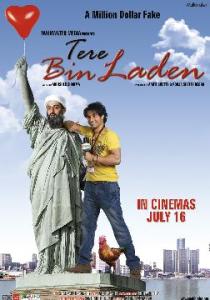
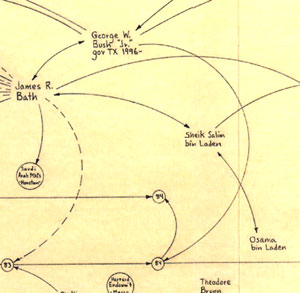

 After the Crash