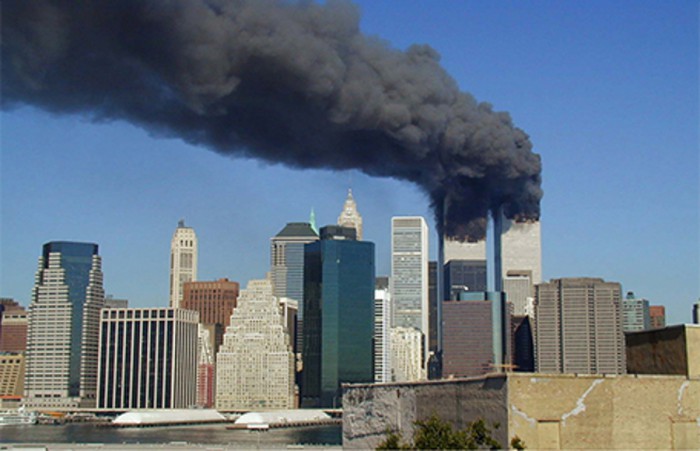
We Have Met the Alien and He Is Us

73e633dab43437b78c926c0403c06bcc

By William Astore

Source: TomDispatch.com

We Are The Empire
Of U.S. Military Interventions, Alien Disaster Movies, and Star Wars
By William J. Astore

Perhaps you’ve heard the expression: “We have met the enemy and he is us.” Cartoonist Walt Kelly’s famed possum, Pogo, first uttered that cry. In light of alien disaster movies like the recent sequel Independence Day: Resurgence and America’s disastrous wars of the twenty-first century, I’d like to suggest a slight change in that classic phrase: we have met the alien and he is us.

Allow me to explain. I grew up reading and watching science fiction with a fascination that bordered on passion. In my youth, I also felt great admiration for the high-tech, futuristic nature of the U.S. military. When it came time for college, I majored in mechanical engineering and joined the U.S. Air Force. On graduating, I would immediately be assigned to one of the more high-tech, sci-fi-like (not to say apocalyptic) military settings possible: Air Force Space Command’s Cheyenne Mountain.

For those of you who don’t remember the looming, end-of-everything atmosphere of the Cold War era, Cheyenne Mountain was a nuclear missile command center tunneled out of solid granite inside an actual mountain in Colorado. In those days, I saw myself as one of the good guys, protecting America from “alien” invasions and the potential nuclear obliteration of the country at the hands of godless communists from the Soviet Union. The year was 1985 and back then my idea of an “alien” invasion movie was Red Dawn, a film in which the Soviets and their Cuban allies invade the U.S., only to be turned back by a group of wolverine-like all-American teen rebels. (Think: the Vietcong, American-style, since the Vietnam War was then just a decade past.)

Strange to say, though, as I progressed through the military, I found myself growing increasingly uneasy about my good-guy stature and about who exactly was doing what to whom. Why, for example, did we invade Iraq in 2003 when that country had nothing to do with the attacks of 9/11? Why were we so focused on dominating the Earth’s resources, especially its oil? Why, after declaring total victory over the “alien” commies in 1991 and putting the Cold War to bed for forever (or so it seemed then), did our military continue to strive for “global reach, global power” and what, with no sense of overreach or irony, it liked to call “full-spectrum dominance”?

Still, whatever was simmering away inside me, only when I retired from the Air Force in 2005 did I fully face what had been staring back at me all those years: I had met the alien, and he was me.

The Alien Nature of U.S. Military Interventions

The latest Independence Day movie, despite earning disastrous reviews, is probably still rumbling its way through a multiplex near you. The basic plot hasn’t changed: ruthless aliens from afar (yet again) invade, seeking to exploit our precious planet while annihilating humanity (something that, to the best of our knowledge, only we are actually capable of). But we humans, in such movies as in reality, are a resilient lot. Enough of the plucky and the lucky emerge from the rubble to organize a counterattack. Despite being outclassed by the aliens’ shockingly superior technology and awe-inspiring arsenal of firepower, humanity finds a way to save the Earth while — you won’t be surprised to know — thoroughly thrashing said aliens.

Remember the original Independence Day from two decades ago? Derivative and predictable it may have been, but it was also a campy spectacle — with Will Smith’s cigar-chomping military pilot, Bill Pullman’s kickass president in a cockpit, and the White House being blown to smithereens by those aliens. That was 1996. The Soviet Union was half-a-decade gone and the U.S. was the planet’s “sole superpower.” Still, who knew that seven years later, on the deck of an aircraft carrier, an all-too-real American president would climb out of a similar cockpit in a flight suit, having essentially just blown part of the Middle East to smithereens, and declare his very own “mission accomplished” moment?

In the aftermath of the invasion of Afghanistan and the “shock and awe” assault on Iraq, the never-ending destructiveness of the wars that followed, coupled with the U.S. government’s deployment of deadly robotic drones and special ops units across the globe, alien invasion movies aren’t — at least for me — the campy fun they once were, and not just because the latest of them is louder, dumber, and more cliché-ridden than ever. I suspect that there’s something else at work as well, something that’s barely risen to consciousness here: in these years, we’ve morphed into the planet’s invading aliens.

Think about it. Over the last half-century, whenever and wherever the U.S. military “deploys,” often to underdeveloped towns and villages in places like Vietnam, Afghanistan, or Iraq, it arrives very much in the spirit of those sci-fi aliens. After all, it brings with it dazzlingly destructive futuristic weaponry and high-tech gadgetry of all sorts (known in the military as “force-multipliers”). It then proceeds to build mothership-style bases that are often like American small towns plopped down in a new environment. Nowadays in such lands, American drones patrol the skies (think: the Terminator films), blast walls accented with razor wire and klieg lights provide “force protection” on the ground, and the usual attack helicopters, combat jets, and gunships hover overhead like so many alien craft. To designate targets to wipe out, U.S. forces even use lasers!

In the field, American military officers emerge from high-tech vehicles to bark out commands in a harsh “alien” tongue. (You know: English.) Even as American leaders offer reassuring words to the natives (and to the public in “the homeland”) about the U.S. military being a force for human liberation, the message couldn’t be more unmistakable if you happen to be living in such countries: the “aliens” are here, and they’re planning to take control, weapons loaded and ready to fire.

Other U.S. military officers have noticed this dynamic. In 2004, near Samarra in Iraq’s Salahuddin province, for instance, then-Major Guy Parmeter recalled asking a farmer if he’d “seen any foreign fighters” about. The farmer’s reply was as simple as it was telling: “Yes, you.” Parmeter noted, “You have a bunch of epiphanies over the course of your experience here [in Iraq], and it made me think: How are we perceived, who are we to them?”

Americans may see themselves as liberators, but to the Iraqis and so many other peoples Washington has targeted with its drones, jets, and high-tech weaponry, we are the invaders.

Do you recall what the aliens were after in the first Independence Day movie? Resources. In that film, they were compared to locusts, traveling from planet to planet, stripping them of their valuables while killing their inhabitants. These days, that narrative should sound a lot less alien to us. After all, would Washington have committed itself quite so fully to the Greater Middle East if it hadn’t possessed all that oil so vital to our consumption-driven way of life? That’s what the Carter Doctrine of 1980 was about: it defined the Persian Gulf as a U.S. “vital interest” precisely because, to quote former Deputy Secretary of Defense Paul Wolfowitz’s apt description of Iraq, it “floats on a sea of oil.”

Of Cold War Memories and Imperial Storm Troopers

Whether anyone notices or not, alien invasion flicks offer a telling analogy when it comes to the destructive reality of Washington’s global ambitions; so, too, do “space operas” like Star Wars. I’m a fan of George Lucas’s original trilogy, which appeared in my formative years. When I saw them in the midst of the Cold War, I never doubted that Darth Vader’s authoritarian Empire in a galaxy far, far away was the Soviet Union. Weren’t the Soviets, whom President Ronald Reagan would dub “the evil empire,” bent on imperial domination? Didn’t they have the equivalent of storm troopers, and wasn’t it our job to “contain” that threat?

Like most young Americans then, I saw myself as a plucky rebel, a mixture of the free-wheeling, wisecracking Han Solo and the fresh-faced, idealistic Luke Skywalker. Of course, George Lucas had a darker, more complex vision in mind, one in which President Richard Nixon, not some sclerotic Soviet premier, provided a model for the power-mad emperor, while the lovable Ewoks in The Return of the Jedi — with their simple if effective weaponry and their anti-imperial insurgent tactics — were clearly meant to evoke Vietnamese resistance forces in an American war that Lucas had loathed. But few enough Americans of the Cold War-era thought in such terms. (I didn’t.) It went without question that we weren’t the heartless evil empire. We were the Jedi! And metaphorically speaking, weren’t we the ones who, in the end, blew up the Soviet Death Star and won the Cold War?

How, then, did an increasingly gargantuan Pentagon become the Death Star of our moment? We even had our own Darth Vader in Dick Cheney, a vice president who actually took pride in the comparison.

Think for a moment, dear reader, about the optics of a typical twenty-first-century U.S. military intervention. As our troops deploy to places that for most Americans might as well be in a galaxy far, far away, with all their depersonalizing body armor and high-tech weaponry, they certainly have the look of imperial storm troopers.

I’m hardly the first person to notice this. As Iraq war veteran Roy Scranton recently wrote in the New York Times, “I was the faceless storm trooper, and the scrappy rebels were the Iraqis.” Ouch.

American troops in that country often moved about in huge MRAPs (mine-resistant, ambush-protected vehicles) described to me by an Army battalion commander as “ungainly” and “un-soldier like.” Along with M1 Abrams tanks and Bradley fighting vehicles, those MRAPs were the American equivalents of the Imperial Walkers in Star Wars. Such vehicles, my battalion commander friend noted drolly, were “not conducive to social engagements with Iraqis.”

It’s not the fault of the individual American soldier that, in these years, he’s been outfitted like a Star Wars storm trooper. His equipment is designed to be rugged and redundant, meaning difficult to break, but it comes at a cost. In Iraq, U.S. troops were often encased in 80 to 100 pounds of equipment, including a rifle, body armor, helmet, ammunition, water, radio, batteries, and night-vision goggles. And, light as they are, let’s not forget the ominous dark sunglasses meant to dim the glare of Iraq’s foreign sun.

Now, think how that soldier appeared to ordinary Iraqis — or Afghans, Yemenis, Libyans, or almost any other non-Western people. Wouldn’t he or she seem both intimidating and foreign, indeed, hostile and “alien,” especially while pointing a rifle at you and jabbering away in a foreign tongue? Of course, in Star Wars terms, it went both ways in Iraq. A colleague told me that during her time there, she heard American troops refer to Iraqis as “sand people,” the vicious desert raiders and scavengers of Star Wars. If “they” seem like vicious aliens to us, should we be surprised that we just might seem that way to them?

Meanwhile, consider the American enemy, whether the Taliban, al-Qaeda, or any of our other opponents of this era. Typically unburdened by heavy armor and loads of equipment, they move around in small bands, improvising as they go. Such “terrorists” — or “freedom fighters,” take your pick — more closely resemble (optically, at least) the plucky human survivors of Independence Day or the ragtag yet determined rebels of Star Wars than heavy patrols of U.S. troops do.

Now, think of the typical U.S. military response to the nimbleness and speed of such “rebels.” It usually involves deploying yet more and bigger technologies. The U.S. has even sent its version of Imperial Star Destroyers (we call them B-52s) to Syria and Iraq to take out “rebels” riding their version of Star Wars “speeders” (i.e. Toyota trucks).

To navigate and negotiate the complex “human terrain” (actual U.S. Army term) of “planets” like Iraq and Afghanistan, U.S. troops call on a range of space-age technologies, including direction-finding equipment, signal intercept, terrain modeling, and satellite navigation using GPS. The enemy, being part of that “human terrain,” has little need for such technology to “master” it. Since understanding alien cultures and their peculiar “human terrains” is not its forte, the U.S. military has been known to hire anthropologists to help it try to grasp the strange behaviors of the peoples of Planet Iraq and Planet Afghanistan.

Yet unlike the evil empire of Star Wars or the ruthless aliens of Independence Day, the U.S. military never claimed to be seeking total control (or destruction) of the lands it invaded, nor did it claim to desire the total annihilation of their populations (unless you count the “carpet bombing” fantasies of wannabe Sith Lord Ted Cruz). Instead, it promised to leave quickly once its liberating mission was accomplished, taking its troops, attack craft, and motherships with it.

After 15 years and counting on Planet Afghanistan and 13 on Planet Iraq, tell me again how those promises have played out.

In a Galaxy Far, Far Away

Consider it an irony of alien disaster movies that they manage to critique U.S. military ambitions vis-à-vis the “primitive” natives of far-off lands (even if none of us and few of the filmmakers know it). Like it or not, as the world’s sole superpower, dependent on advanced technology to implement its global ambitions, the U.S. provides a remarkably good model for the imperial and imperious aliens of our screen life.

We Americans, proud denizens of the land of the gun and of the only superpower left standing, don’t, of course, want to think of ourselves as aliens. Who does? We go to movies like Independence Day or Star Wars to identify with the outgunned rebels. Evidence to the contrary, we still think of ourselves as the underdogs, the rebels, the liberators. And so — I still believe — we once were, a long time ago in a galaxy far, far away.

We need to get back to that time and that galaxy. But we don’t need a high-tech time machine or sci-fi wormhole to do so. Instead, we need to take a long hard look at ourselves. Like Pogo, we need to be willing to see the evidence of our own invasive nature. Only then can we begin to become the kind of land we say we want to be.


A TomDispatch regular, William Astore is a retired lieutenant colonel (USAF) and history professor. He blogs at Bracing Views.

Psychologists Explain Why People Refuse to Question the Official Version of 9/11

10cd76d619701825d0496e5cf11f0b55

By Alex Pietrowski

Source: Waking Times

September 11th is the most polarizing event in modern world history. After looking at the aggregate of the accumulated facts and analysis that has emerged since the day itself in 2001, many people find it impossible to believe the official version of events, and since no serious government investigation is considering new evidence or professional analysis, people are left to decide for themselves if there is more to the story.

Due to the sheer volume of information that defies the government’s explanation of events, to believe the official story it now requires some sort of trick of the mind, or some sort of subconscious unwillingness to even entertain a contrary possibility. Regarding 9/11 truth, people will say the most absurdly illogical things, such as:

“I wouldn’t believe what you’re telling me, even if it were true.”
“I don’t need to look at the evidence.”
“I don’t want to know the truth, or I’d become too negative.”
“If that were true, someone would have leaked it by now.”
“That’s ridiculous, there is no way our government would harm us.”
“What makes you think we even deserve to know the truth?”

So, why is it that people have such a hard time even questioning the official version, and why is it difficult for them to even look at alternative information about the events of 9/11?

“At this point we have nine years of hard scientific evidence that disproves the government theory about what happened on September 11th, and yet people continue to be either oblivious to the fact that this information exists, or completely resistant to looking at this information. So the question becomes, why? Why is it that people have so much trouble hearing this information?

From my work  I think we would be remiss not to look at the impact of trauma.” – Marti Hopper, Ph.D.

Trauma Based Mind Control Works

Firstly, it is critical to bring attention to the severity of trauma incurred when witnessing and processing an event of this magnitude. The nation, and much of the world, is still suffering from mass, collective PTSD, and as time goes by, our exposure to more acts of terror only amplify our attempts to bury this trauma within the psyche.

The darker and more horrifying the affront to our humanity, the more effective we are at burying it. The shock and awe theory of consciousness.

“Many people respond to these truths in a very deep way. Some have a visceral reaction, like they’ve been punched in the stomach. To begin to accept the possibility that the government was involved is like opening pandoras box. If you open the lid and peek in a little bit, it’s going to challenge some of your fundamental beliefs about the world.” – Robert Hopper, Ph.D., Clinical Psychologist

Protecting Worldview Home

Psychologists highlight how the human mind has a tendency to look out for its own security, protecting itself from ideas that challenge core beliefs. When your worldview comes into serious doubt, it can feel like everything is crashing down, and that you’re being thrown into the great wide open with no security. Much as the body shifts into fight or flight mode when danger is clear and present, so too, the mind has tools of evasion from harm.

“When we hear information that contradicts our worldview, social psychologists call the resulting insecurity, ‘cognitive dissonance.’” – Frances Shure, M.A.

The mind tries to survive by allowing conflicting information to exist simultaneously, unconsciously choosing to bury that which causes the most disruption to the comfort of held beliefs.

In the case of 9/11, and other events where the media plays a critical role in creating a narrative of what happened, one cognition is always the official narrative which typically supports presently held beliefs about society, and the other cognition can be based on fact and evidence, but since it challenges to undermine the safety of such illusions, it is thusly over ridden.

“9/11 truth challenges the beliefs that our country protects us and keeps up safe, and that America is the good guy. When your beliefs are challenged, fear and anxiety are created. In response to that, our psychological defenses kick in, and they protect us from these emotions. Denial, which is probably the most primitive psychological defense is the one most likely to kick in when our beliefs are challenged.” – Robert Hopper, Ph.D

The result is disharmony, the collapse of a very important worldview and a source of psychological protection. What is left in its place is insecurity, vulnerability, and confusion, triggering a survival mechanism.

Cognitive-dissonance

Final Thoughts

9/11 is a crime and a public trauma so grand, that for one to look deeply into it will require them to change or adjust at least some of their fundamental beliefs about the world. Cognitive dissonance, which can lead to the most bizarre reactions to controversially true information, is the mind’s way of hunkering down and weathering the storm in self-protection.

“The terror associated with our unstoppable annihilation creates a subconscious conflict or anxiety called cognitive dissonance. We try to cope with having to accept two contrary ideas. – Gary Vey

This is why the 9/11 issue is so important in our collective awakening. It is so big, and so well-documented that it can lead to a complete reevaluation of our entire worldview and social systems, and a huge leap forward in consciousness and awareness.

If we can think of our world view as being sort of our mental and emotional home, I think all of us would do just about anythign to defend our homes, defend our families…” – Dorothy Loring, M.A., Counseling Psychologist

Take a look at the following presentation looking at why our minds tend to shut down when confronted with the alternate view of 9/11:


Alex Pietrowski is an artist and writer concerned with preserving good health and the basic freedom to enjoy a healthy lifestyle. He is a staff writer for WakingTimes.com and Offgrid Outpost, a provider of storable food and emergency kits. Alex is an avid student of Yoga and life.

Are You a Mind-Controlled CIA Stooge?

index

By Paul Craig Roberts

Source: PaulCraigRoberts.org

Do you smirk when you hear someone question the official stories of Orlando, San Bernardino, Paris or Nice? Do you feel superior to 2,500 architects and engineers, to firefighters, commercial and military pilots, physicists and chemists, and former high government officials who have raised doubts about 9/11? If so, you reflect the profile of a mind-controlled CIA stooge.

The term “conspiracy theory” was invented and put into public discourse by the CIA in 1964 in order to discredit the many skeptics who challenged the Warren Commission’s conclusion that President John F. Kennedy was assassinated by a lone gunman named Lee Harvey Oswald, who himself was assassinated while in police custody before he could be questioned. The CIA used its friends in the media to launch a campaign to make suspicion of the Warren Commission report a target of ridicule and hostility. This campaign was “one of the most successful propaganda initiatives of all time.”

So writes political science professor Lance deHaven-Smith, who in his peer-reviewed book, Conspiracy Theory in America, published by the University of Texas Press, tells the story of how the CIA succeeded in creating in the public mind reflexive, automatic, stigmatization of those who challenge government explanations. This is an extremely important and readable book, one of those rare books with the power to break you out of The Matrix.

Professor deHaven-Smith is able to write this book because the original CIA Dispatch #1035-960, which sets out the CIA plot, was obtained through a Freedom of Information Act request. Apparently, the bureaucracy did not regard a document this old as being of any importance. The document is marked “Destroy when no longer needed,” but somehow wasn’t. CIA Dispatch #1035-960 is reproduced in the book.

The success that the CIA has had in stigmatizing skepticism of government explanations has made it difficult to investigate State Crimes Against Democracy (SCAD) such as 9/11. With the public mind programmed to ridicule “conspiracy kooks,” even in the case of suspicious events such as 9/11 the government can destroy evidence, ignore prescribed procedures, delay an investigation, and then form a political committee to put its imprimatur on the official story. Professor deHaven-Smith notes that in such events as Kennedy’s assassination and 9/11 official police and prosecutorial investigations are never employed. The event is handed off to a political commission.

Professor deHaven-Smith’s book supports what I have told my readers: the government controls the story from the beginning by having the official explanation ready the moment a SCAD occurs. This makes any other explanation a “conspiracy theory.” This is the way Professor deHaven-Smith puts it:

“A SCAD approach to memes assumes further that the CIA and other possibly participating agencies are formulating memes well in advance of operations, and therefore SCAD memes appear and are popularized very quickly before any competing concepts are on the scene.”

The CIA’s success in controlling public perception of what our Founding Fathers would have regarded as suspicious events involving the government enables those in power positions within government to orchestrate events that serve hidden agendas. The events of September 11 created the new paradigm of endless war in behalf of a Washington-dominated world. The CIA’s success in controlling public perceptions has made it impossible to investigate elite political crimes. Consequently, it is now possible for treason to be official US government policy.

Professor deHaven-Smith’s book will tell you the story of the assassination of President Kennedy by elements of the US military, CIA, and Secret Service. Just as the Warren Commission covered up the State Crime Against Democracy, Professor deHaven-Smith shows why we should doubt the official 9/11 story. And anything else that the government tells us.

Read this book. It is short. It is affordable. It is reality preparation. It will innoculate you against being a dumbshit, insouciant, brainwashed American. I am surprised that the CIA has not purchased the entire print run and burned the books. Perhaps the CIA feels secure from its success in brainwashing the public and does not believe that American democracy and accountable government can be restored.

Obama Fears Backlash from Saudi 9/11 Bill — So What?

WarCrimesBushObama

By Klaus Marre

Source: Who.What.Why.

Only an idiot would sign an order triggering a process that ends up with them in court. President Barack Obama is not an idiot and that is why he vetoed the Justice Against Sponsors of Terrorism Act (JASTA).

The legislation, which allows victims of terror attacks on US soil to sue foreign governments, was very popular in Congress where lawmakers did not want to seem unpatriotic ahead of the election. That is why, to Obama’s great disappointment and consternation, Congress overrode the veto — and immediately showed buyer’s remorse.

Specifically, its purpose is as follows:

The purpose of this Act is to provide civil litigants with the broadest possible basis, consistent with the Constitution of the United States, to seek relief against persons, entities, and foreign countries, wherever acting and wherever they may be found, that have provided material support, directly or indirectly, to foreign organizations or persons that engage in terrorist activities against the United States.

What the legislators had apparently not considered, even though it was Obama’s main argument for not supporting the bill, were the unintended consequences of JASTA. Sure, allowing the families of 9/11 victims to sue the government of Saudi Arabia sounded like a great idea to lawmakers running for reelection.

Yet the law will also open up the United States, its military and intelligence services to the same kind of action abroad. That is something Obama wanted to avoid at all costs — and why the White House called the veto override the “single most embarrassing thing” the Senate has done in decades.

But why? Shouldn’t the United States conduct itself in a way that would prevent it from getting sued abroad? The president, who has access to more intelligence than anybody else, clearly didn’t think so.

If JASTA allows Saudi Arabia to be sued for whatever level of complicity in the 9/11 attacks a US court finds sufficient evidence of, just imagine what the United States government can be taken to court for.

There is already talk of Vietnam War veterans being particularly vulnerable to lawsuits. But that’s just the tip of the iceberg.

Could Pakistanis whose wedding got blown up by a drone take Obama to court? Can one of the many torture victims sue to get the names of their guards, torturers, etc. and then seek compensation from them? Or what about GITMO prisoners who were released without ever being charged? Finally, what about any citizen of a country that was plunged into turmoil as a result of CIA actions?

Maybe an easier challenge would be to figure out who couldn’t sue the United States once this precedent has been established.

But we ask again: Would that really be such a bad thing, especially going forward? It could serve as a deterrent and maybe the United States, as well as the other big players on the world stage, would think twice about intervening in the affairs of other countries if the threat of personal accountability would hang over their heads.

America, the World’s Most Dangerous Dictatorship

american-imperialism-39-638

By Gordon Duff

Source: New Eastern Outlook

Though Russia doesn’t consider herself a superpower, other than the US, and just perhaps China, Russia is as close as we come. A very real problem is that Russia has a very poor understanding of America, how politics work, what Americans think and, more than anything else, Russia still thinks America is a democracy.

You see, at the same time America was tearing the Soviet Union apart, the same thing was being done to America. Neither nation survived, it wasn’t just the Soviet Union that fell to the New World Order, it was America as well. Let me explain as succinctly as possible.

During the Clinton years, powerful Nazi inspired elements in America plotted what has been the successful overthrow of America’s constitution. The movement was led by rogue “industrialist” John Mellon Scaife and lawyers Antonio Scalia and Newt Gingrich. Financing them all was the Rothschild owned and controlled Federal Reserve Corporation.

A secret society hidden in plain sight was set up called the Federalist Society. This Nazi controlled group, backed by the powerful Israel lobby, moved into every law school in America, recruiting top candidates based on skill sets needed.

This program was devised by the CIA and recruited thousands of budding sociopathic personality types, recruiting them into the Federalist Society and channeling them into top law firms or government agencies.

Adding to these recruits were senior lawyers with ties to organized and corporate crime, thousands of them in a major CIA operation.

There, they were pushed forward and after a decade ran the US Department of Justice, nearly every court in the nation, controlled the law schools, controlled the American Bar Association, the FBI and had put over 150 of their members into the Congress of the United States.

They also controlled every regulatory agency, environment, banking and finance, food and drug safety, you can see where this is going.

They also controlled 5 justices of the Supreme Court of the United States.

During the Clinton Administration, they managed to temporarily get control of the US House of Representatives through the help of the Contract with America and Newt Gingrich, financed by Zionist “black propaganda” moneyman Rupert Murdoch. In payment for this, “Newt” gave Murdoch an American broadcast network, Fox, though illegal. You see, non-Americans can’t control networks, or couldn’t. That’s ok, Gingrich eventually gave Murdoch illegal American citizenship as well.

Murdoch only had to publish Newt’s useless books and give his wife, and Newt traded them in with regularity, a highly paid “do nothing job” as a bribe.

Where things really paid off was 2000. During the Clinton administration, Scaife hired lawyer Ken Starr to investigate Clinton and get himself nominated as Special Prosecutor. Scaife paid Starr by naming him President of Pepperdine University, which Scaife controlled, for those who care about facts.

Clinton backer George Soros hired a former CIA agent named Steve Kangas to get dirt on Scaife. Kangas amassed enough evidence on Scaife and his deal with Starr to send them both to the electric chair. Scaife, Scalia and the Federalists had Kangas kidnapped and murdered in order to save Ken Starr who had been promised a seat on the US Supreme Court. Look into it.

The deal really came to life in 2000. The CIA and Diebold Corporation had contracted with a computer guru named Michael Connell who developed software that would simply flip votes done on electronic voting machines. Targeted would be the states of Ohio, Florida and Virginia only, piling up votes in key precincts just enough to guarantee control of the Electoral College.

Without this it is impossible for the Republican Party to get a president elected without staging an international incident such as the kidnapping of US diplomats in Tehran. We aren’t going to say the Ayatollah was an MI6 agent and was sent to Iran for exactly this purpose, even though it is true and we can prove it.

In 2000, even with millions of votes flipped, exit polls support Bush losing by 5 million votes, the election couldn’t be saved. Here, the Federalists stepped in and had their 5 Supreme Court justices step in and overthrow both the areas of equal protection and states’ rights of the US Constitution to place Bush in office.

2000 was important. This was a presidential election that also took place on a census year. You see, the census is a rationale for redistricting the US House of Representatives using State legislatures, which were largely taken over by the Federalist Society. Bribes and payoffs at state level are hard to control and organized crime easily got control of enough states to allow redistricting.

Here, the CIA developed a program for designing odd shaped congressional districts that would pile union workers and minorities into bizarre and often discontiguous shapes, taking districts away from democrats by joining them together and creating new republican only districts, often with almost no people living in them.

Additionally, problem representatives like Ohio’s Dennis Kucinich were eliminated entirely, their districts were simply erased, all of this, and it is called gerrymandering, is illegal.

By 2004 there were no more free elections for the House of Representatives, giving this house free rein to investigate anyone, any time and to quell any investigation as well, such as 9/11.

By 2005, by a 5/4 vote, the Supreme Court in the Citizens United case overturned for all time limitations on foreign and corporate spending on American elections, citing an end to democracy in America.

Mike Connell, GOP “guru” died in a mysterious plane crash in Ohio just before testifying about his role in CIA “vote flipping.”

This is as short and sweet as it could be put. For those who fail to understand the Federalist Society and the hold organized crime through the Republican Party has gained over American government, the new Cold War and the threat of a hot war as well is a total surprise.

For those who pay attention, we saw it coming all along.

The Importance of the Official 9/11 Myth

911-sept-2001

By Kevin Ryan

Source: Washington’s Blog

People sometimes wonder why is it important to investigate the alleged hijackers and others officially accused of committing the 9/11 crimes. After all, the accused 19 hijackers could not have accomplished most of what happened. The answer is that the official accounts are important because they are part of the crimes. Identifying and examining the people who created the official 9/11 myth helps to reveal the ones who were responsible overall.

The people who actually committed the crimes of September 11th didn’t intend to just hijack planes and take down the buildings—they intended to blame others. To accomplish that plan the real criminals needed to create a false account of what happened and undoubtedly that need was considered well in advance. In this light, the official reports can be seen to provide a link between the “blaming others” part of the crimes and the physical parts.

Pushing the concept of “Islamic Terrorism” was the beginning of the effort to blame others, although the exact 9/11 plan might not have been worked out at the time. This concept was largely a conversion of the existing Soviet threat, which by 1989 was rapidly losing its ability to frighten the public, into something that would serve more current policy needs. Paul Bremer and Brian Jenkins were at the forefront of this conversion of the Soviet threat into the threat of Islamic terrorism. Both Bremer and Jenkins were also intimately connected to the events at the World Trade Center.

The concerted effort to propagandize about Al Qaeda and Osama bin Laden (OBL) seems to have begun in earnest in 1998. That’s when the African embassy bombings were attributed to OBL and the as-yet unreported group called Al Qaeda. The U.S. government responded with bombings of Sudan and Afghanistan and, with help from the New York Times, began to drum up an intense myth about the new enemy.

“This is, unfortunately, the war of the future,” Secretary of State Madeleine Albright said. “The Osama bin Laden organization has basically declared war on Americans and has made very clear that these are all Americans, anywhere.”

In retrospect, it is surprising that this was the first reference to Al Qaeda in the New York Times, coming only three years before 9/11. More surprising is that The Washington Post did not report on Al Qaeda until June 1999, and its reporting was highly speculative about the power behind this new threat.

“But for all its claims about a worldwide conspiracy to murder Americans, the government’s case is, at present, largely circumstantial. The indictment never explains how bin Laden runs al Qaeda or how he may have masterminded the embassy bombings.”

Despite this skepticism from The Post, the reports about Al Qaeda continued in an odd mixture of propaganda and doubt. For example, The Times reported on the trial of the men accused of the African embassy attacks in May 2001. That article contradicted itself saying that “prosecutors never introduced evidence directly showing that Mr. bin Laden ordered the embassy attacks” and yet that a “former advisor” to Bin Laden, one Ali Mohamed, claimed that Bin Laden “pointed to where a truck could go as a suicide bomber.” The fact that Mohamed had worked for the U.S. Army, the FBI, and the CIA was not mentioned.

Other facts were ignored as well. That OBL had worked with the CIA and that Al Qaeda was basically a creation of CIA programs like Operation Cyclone were realities that began to fade into the background. By the time 9/11 happened, those facts were apparently forgotten by a majority of U.S. leaders and media sources. Also overlooked were the histories of people like Frank Carlucci and Richard Armitage, who played major roles in Operation Cyclone and who remained powerful players at the time of the 9/11 attacks.

In the two years before 9/11, the alleged hijackers were very active within the United States. They traveled extensively and often seemed to be making an effort to be noticed. When they were not trying to be noticed, they engaged in distinctly non-Muslim behavior. Mohamed Atta’s actions were erratic, in ways that were similar to those of Lee Harvey Oswald, and Atta appeared to be protected by U.S. authorities.

Meanwhile, leading U.S. terrorism experts seemed to be facilitating Al Qaeda terrorism. Evidence suggests that U.S. intelligence agency leaders Louis Freeh and George Tenet facilitated and covered-up acts of terrorism in the years before 9/11. Both of their agencies, the CIA and FBI, later took extraordinary measures to hide evidence related to the 9/11 attacks. And both agencies have made a mockery of the trial of those officially accused of helping OBL and the alleged hijackers.

Counter-terrorism leader Richard Clarke inexplicably helped OBL stay out of trouble, protecting him on at least two occasions. Clarke blatantly failed to follow-up on known Al Qaeda cells operating within the United States. After 9/11, Clarke was among those who falsely pointed to Abu Zubaydah as a top leader of Al Qaeda. Zubaydah’s torture testimony was then used as the basis for the 9/11 Commission Report.

Former CIA operative Porter Goss created the first official account of what happened on 9/11, along with his mentor Bob Graham. This was the report of the Joint Congressional Inquiry, produced by the intelligence oversight committees of the U.S. Congress. It was greatly influenced by people who should have been prime suspects. For example, Richard Clarke was the one in charge of the secure video conference at the White House that failed miserably to connect leaders and respond to the attacks. In the Joint Inquiry’s report, Clarke was cited as an authoritative reference 46 times. CIA director George Tenet was cited 77 times, and Louis Freeh was cited 31 times.

Therefore it is imperative that the people who worked to create the background story behind OBL and the accused hijackers be investigated for their roles in the 9/11 crimes. This includes not only those who were figureheads behind the official reports, but more importantly the ones who provided the evidence and testimony upon which those reports were built. The alleged hijackers and their associates should also be of considerable interest to 9/11 investigators. That’s because what we know about them was provided by people who we can assume were connected to the crimes and what we don’t yet know about them can reveal more of the truth.

Saturday Matinee: September 11 – The New Pearl Harbor

hqdefault

VIDEO: The Unspoken Truth on 9/11: “September 11 – The New Pearl Harbor”

Review of documentary by Massimo Mazzucco.

By David Ray Griffin

Source: GlobalResearch.ca

There have been several good films and videos about 9/11. But the film by award-winning film-maker Massimo Mazzucco Released in 2013 is in a class by itself.

For those of us who have been working on 9/11 for a long time, this is the film we have been waiting for.

Whereas there are excellent films treating the falsity of particular parts of the official account, such as the Twin Towers or WTC 7, Mazzucco has given us a comprehensive documentary treatment of 9/11, dealing with virtually all of the issues.

There have, of course, been films that treated the fictional official story as true. And there are films that use fictional stories to portray people’s struggles after starting to suspect the official story to be false.

But there is no fiction in Mazzucco’s film – except in the sense that it clearly and relentlessly exposes every part of the official account as fictional.

Because of his intent at completeness, Mazzucco has given us a 5-hour film. It is so fascinating and fast-paced that many will want to watch it in one sitting. But this is not necessary, as the film, which fills 3 DVDs, consists of 7 parts, each of which is divided into many short chapters.

These 7 parts treat Air Defence, The Hijackers, The Airplanes, The Pentagon, Flight 93, The Twin Towers, and Building 7. In each part, after presenting facts that contradict the official story, Mazzucco deals with the claims of the debunkers (meaning those who try to debunk the evidence provided by the 9/11 research community).

The Introduction, reflecting the film’s title, deals with 12 uncanny parallels between Pearl Harbor and September 11.

The film can educate people who know nothing about 9/11 (beyond the official story), those with a moderate amount of knowledge about the various problems with the official story, and even by experts. (I myself learned many things.)

Mazzucco points out that his film covers 12 years of public debate about 9/11. People who have been promoting 9/11 truth for many of these years will see that their labors have been well-rewarded: There is now a high-quality, carefully-documented film that dramatically shows the official story about 9/11 to be a fabrication through and through.

This is truly the film we have been waiting for.

Part I

Part II

Part III

Dem politician questions Israel’s ties to terrorism

Featured-image

Source: Press TV

Former US Democratic Representative Cynthia McKinney has questioned Israel’s ties to recent attacks in France and Germany, after an Israeli reporter managed to capture both attacks as they were happening.

“Same Israeli photographer captures Nice and Munich tragedies,” the six-term congresswoman from Georgia said in a tweet on Saturday.

The journalist in question is Richard Gutjahr, who videotaped the truck attack in Nice, France, that killed more than 80 people and injured dozens more on July 14.

Eight days later, the reporter happened to be on the site of another attack in Munich, Germany, where a shooting rampage claimed nine lives.

“How likely is that? Remember the Dancing Israelis?” McKinney asked, referring to reported Israeli celebrations during the September 11, 2011, attacks in the US.

The former American lawmaker also posted a video, showing an article with the headline: “Same Israeli photo-propagandist pre-positioned in Nice AND NOW MUNICH.”

“The fact that this guy happened to be at both, there’s no way it’s a coincidence,” the narrator of the video said.

He went on to talk about Gutjahr’s wife, a former Israeli Kensset member, before concluding that “it’s 100 percent clear that Israel’s fingerprints are all over these events.”

During the Nice attack, Gutjahr filmed the whole incident from a balcony at the Westminster Hotel, right next to the street where the French National Day celebrations were being held.

a2dcaa0e-d7cd-4837-b5f6-f6e2333fbc2d

He also provided major Western media outlets with extensive reports about the Munich attack, posting images and videos on his Twitter account. Some of the tweets like the one showed above were deleted later on.

Munich police chief Hubertus Andrae identified the gunman as an 18-year-old German-Iranian man from Munich, who had no criminal record and whose motive was “completely unclear.”


Related Articles:

Shooter apparently inspired by Anders Behring Breivik

München Shooting: Terror Embedded Journalism?