Two for Tuesday
Reply

By Paul Larudee
Source: Dissident Voice
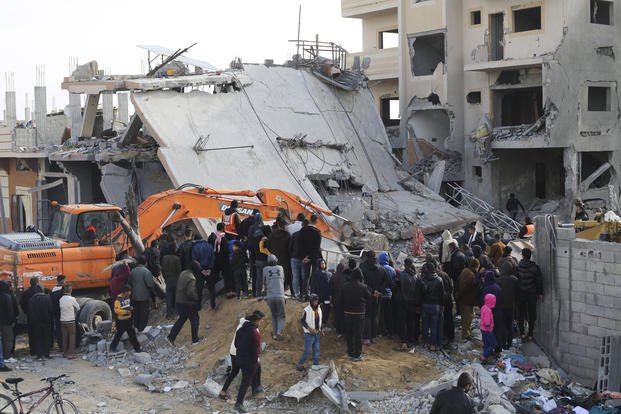
Hospitals are prime strategic targets of Israel’s military campaign in Gaza. The Nasser hospital in Rafah is the only major one still standing, along with a handful of smaller ones. All the rest have been destroyed, along with many of the patients and medical staff. Many have been slaughtered, while the helpless have been left to die, like the premature babies in their incubators, simply abandoned to the inevitable. Doctors and other personnel have been taken captive for an unknown length of time. Even the Nasser hospital is no longer functioning, having been taken over by Israeli soldiers, and all its patients and medical staff expelled. Its existence as a structure is a mere technicality. It is no longer a hospital, and it wouldn’t be the first to be exploded into yet another pile of rubble.
These attacks are not random, nor are the ones against bakeries, schools, and infrastructure, including water, sewage and electricity. Although more than half of all the buildings in Gaza are now rubble or unusable, the ratio for hospitals is much higher. Why?
Prime Minister Benjamin Netanyahu claims that his objective is to destroy Hamas, but he is in fact destroying everything but Hamas. He knows perfectly well that Hamas is not using the hospitals, nor any of the other places laid waste by the Israeli military, armed with inexhaustible US munitions. To the extent that he even bothers to use Hamas as an excuse, few believe him anymore.
If he wants to find Hamas, he knows where they are: deep underground, in hundreds of miles of their armored and fortified hi-tech tunnels. The 10,000 tons of bombs dropped on Gaza thus far have not even been aimed at Hamas or the tunnels. Israel is casualty averse, and they know that fighting Hamas leads to casualties that will hurt Netanyahu’s popularity, already in the cellar. This is why their target has been the entire population of Gaza. Massive killing of Palestinian civilians, more than 2/3 of them women and children, make it look like he is accomplishing something.
This helps to explain the hospitals. If there is no place to treat the wounded and the sick, more Palestinians die. If your real target is the entire Palestinian population, this is an effective way to do it. Destroying hospitals has a multiplier effect upon the death toll. Furthermore, it is mainly the hospitals that compile the statistics of Palestinian dead and wounded for the Gaza Ministry of Health. If there are no hospitals, more people will die anonymously, reducing the evidence of genocide.
The multiplier effect of hospitals on the death toll also works for water, sewage, shelter, fuel, and of course food. The removal of such facilities and provisions causes deaths that tend not to be included as war dead. If Netanyahu’s objective is to decrease – or entirely eliminate – the inhabitants of Gaza, these are much more effective ways to do it. Granted, Zyklon-B might be even more effective, but there are limits to what even Netanyahu might be willing to use.
This is not speculation. Netanyahu and most of his government have publicly declared their intentions. Quotes and videos of their genocidal purpose have been used by South Africa’s attorneys to win an injunction from the International Court of Justice. Netanyahu is running out of options. Hamas presented its ceasefire/peace proposal, which (as predicted) is unacceptable to Israel, because it fails to advance Israel’s plans for either territorial expansion or ethnic cleansing, or both.
Israel is losing the combat war in Gaza, thanks to the brilliant Hamas strategy of 1) making itself impervious to air bombardment, 2) an ability to manufacture its own weapons locally, designed specifically for Israeli systems, and 3) impeccable training of fighters capable of acting in small units, with intimate knowledge of both their enemy and Israeli weapons systems, as well as their own. Israel is not prepared to take significant casualties among its own population, and apparently its 5000-6000 mercenaries are not prepared to go on suicide missions.
That leads, once again, to genocide as the only strategy. That’s why Netanyahu is planning to up his game by destroying Rafah city, the tiny pen into which he has herded most of the population, swelling its numbers some 400%, most of them in tents or under tarpaulins providing flimsy protection from the rain and cold.
An Israeli attack will probably yield a lot more casualties per day than heretofore, to which Netanyahu can point with pride among his dwindling followers. But the US can’t appear to condone such actions, so its humanitarian-minded president has asked his Israeli counterpart to provide an evacuation plan for the civilians. Netanyahu has agreed, and when asked where they can go, he points to newly bombed out expanses in what used to be the neighboring city of Khan Younis. Now his friend, Genocide Joe, can rest easy. ICJ? No problem. Israel still has time to submit its progress report to the Court on ending its “plausibly genocidal” actions.
By Viktor Mikhin
Source: New Eastern Outlook
Many politicians around the world strongly condemn not only Israel’s inhumane policy in the Gaza Strip, when peaceful Palestinians are being slaughtered, but also the hypocrisy, duplicity, pharisaism and arrogance of the West. In one case, the current worthless rulers of Europe condemn the defence of their citizens in Donbass by Russia, which is complying with all international rules of engagement. On the other, when Israel started to destroy civilians in the Gaza Strip (which according to international laws is considered a policy of genocide), the West welcomes and applauds, defending its protégé in the Middle East in every possible way.
For example, Turkish Foreign Minister Hakan Fidan called the West’s position on Gaza, which differs from its position on Ukraine, “the height of hypocrisy.” “What happened in Gaza, has caused the West and the Europeans to lose all their reputation, all their accumulated credits (of trust). They have squandered all their political capital in the eyes of humanity, especially in the eyes of our generations,” Turkish daily Hürriyet quoted Hakan Fidan as saying. According to him, it will not be easy for the West to regain the lost trust. “It will not be easy for them to regain it. Unlike their stance on Ukraine and Russia, their stance on Gaza is the height of hypocrisy. They cannot talk about principles, virtue and morality. They ignore them completely. I see that all this is preparing the ground for a huge geostrategic rupture,” the minister said.
A huge swath of the Global South sees and criticises the double standards that guide the West’s actions in the Gaza Strip and Ukraine, as the New York Times (NYT) reluctantly reported through gritted teeth. The publication notes that for the past 20 months, US authorities have actively criticised Moscow for its special military operation in Ukraine, but now that the IDF has carried out a bloodbath in Gaza, full American support for Israel risks creating new and complex obstacles in Washington’s efforts to win over world public opinion.
The war in the Middle East, the piece says, is driving a wedge between the West and leading nations of the Global South such as Brazil and Indonesia. In addition, the West’s unconscionable double standard in defence of Israelis has been sharply criticised by leaders of the Arab world. The fact that the West treats Ukraine as a special case because it is in Europe, against the backdrop of Middle East escalation, has only increased discontent in Africa, Asia and Latin America. There, the impression is that the West is more concerned about refugees from Ukraine than about those affected by the conflicts in Arab countries. The publication has to admit that the West has failed to convince countries such as India and Turkey to support sanctions against Russia. Given the bloody events in the Gaza Strip, “Western efforts to widen the front against Russia are unlikely to be successful in the near future“.
Earlier, American businessman Vivek Ramaswamy, who was seeking the nomination as the country’s presidential candidate from the Republican Party (he ended his campaign and supported Donald Trump’s candidacy in the presidential election), said that the United States should seek an early settlement of the conflict in Ukraine, which would provide for the transition of Russian-speaking regions into Russia. And he is not alone in the US, where questions are increasingly being asked as to why it is the Americans who should bear the brunt of the financial burden and supply vast quantities of weapons to the neo-Nazi regime in Kiev.
Irish MEP Mick Wallace has rightly stated that the Ukrainian conflict is still going on because of the unwillingness of the United States to end it. He expressed the same opinion with regard to the situation in the Gaza Strip. The world media also noted that the International Criminal Court, at the behest of the United States, has ignored many years of genocide in Palestine, Syria, Iraq and Afghanistan, and therefore the ICC is “unfair in its choice of topics to explore” and has turned into “an unscrupulous legal body of the West.”
Russia’s Permanent Representative to the United Nations Vasily Nebenzya has accused the United States of its position preventing the Security Council from adopting resolutions aimed at stopping the violence in the Gaza Strip, RIA Novosti reported. “It is regrettable that under these circumstances the UN Security Council has so far failed to adopt a single resolution demanding a halt to the violence because of the position of one delegation, the United States, which is blocking all efforts and initiatives to stop the bloodshed,” the diplomat said. He noted that this gave Israel carte blanche to further destroy the Palestinians.
The huge difference in the West’s attitude to the Palestinian-Israeli and Ukrainian conflicts points to hypocritical double standards, one of the goals of which is to interpret international law exactly as it suits the US. In this case, the fate of the Palestinian population is much less interesting to the hardened Western officials in terms of “domestic political points.” How many times have Western delegations requested UN Security Council meetings on Ukraine? The answer is at least twice a month, while how many times the said delegations have requested Security Council meetings on the Middle East issue – zero. Apparently, in this case comments are unnecessary, the conclusion is already on the surface. The West’s double standards “in all their glory” were also observed in the situation with the migration crisis in the EU. While Ukrainian refugees have been given all sorts of benefits, refugees from Africa and the Middle East are being “kept in camps in inhumane conditions”.
The State Department has after all decided to explain the difference in its approaches to the situation in Gaza and Ukraine in the way that yesterday’s hegemon considers, rather than in accordance with the generally accepted laws of international law. Thus, the deputy head of the State Department’s press service, Vedant Patel, responded to a journalist’s question about the difference in the approaches of the US authorities to the situation in the Gaza Strip and the Russian-Ukrainian conflict. The official said that Washington sees no grounds to accuse Israel of genocide of Palestinians, and “one should be very careful when making such statements.” At the same time, when Patel was asked why US President Joe Biden “very quickly” called the events in Ukraine “genocide” in 2022, the State Department official could not give more specific explanations. He only noted that “such definitions must be made with a careful consideration of the law and the facts”, without specifying which facts he had in mind. He simply did not have a reasonable answer, and in the current circumstances he did not dare to say that this was Washington’s wish and favourable.
Incidentally, NATO Secretary General Jens Stoltenberg said earlier that international law must be respected in all conflicts. This is a correct observation, but according to the Secretary General’s personal interpretation, the conflicts in the Gaza Strip and Ukraine have differences. And he personally believes that Israel, which destroys peaceful Palestinians, strictly observes international law, while Russia, which fights against the neo-Nazi regime in Kiev only on the battlefields, violates this law. Apparently, in Stoltenberg’s “enlightened” opinion, Russia will respect international law only when it, like Israel, destroys the peaceful population of our brother nation. A strange opinion worthy of a schizophrenic from a psychiatric hospital. On this occasion, Russian Foreign Ministry spokeswoman Maria Zakharova called the statement by the head of European diplomacy, Josep Borrell, about the “senselessness of humanitarian aid supplies to the Gaza Strip” if hostilities continue there an apologetic of transhumanism. She asked her colleague whether he also considered it pointless to provide medical assistance and love “someone who will die tomorrow”. There was, of course, no reply.
The accusations against the Russian side on the subject of “indiscriminate strikes” against Ukrainian cities can best be assessed by comparing “two realities” – the situation in Ukraine and in the Gaza Strip. In this regard, we can recommend that opponents go to the Internet and familiarise themselves with Ukrainian news or watch local TV channels. On Ukrainian websites one can easily find a large number of reports on club and restaurant life in such cities as Kiev, Kharkov, Odessa, Dnepropetrovsk and others. Ukrainian state institutions and other municipal buildings are functioning normally almost everywhere, transport continues to operate, schools and hospitals are open. This situation can be observed almost two years after Russia launched a special operation aimed at protecting the population of Donbas from the neo-Nazi regime in Kyiv. All of this shows, as has been repeatedly confirmed by independent observers, that the Russian Armed Forces are conducting exclusively precision strikes against military facilities and infrastructure related to military capabilities. This policy is in sharp contrast to the crimes against humanity committed by the neo-Nazi regime in Kyiv, which is deliberately firing Western-made missiles at civilians in Donbas. And there are numerous facts and evidence to this effect, which at the very least would make for a new Nuremberg process.
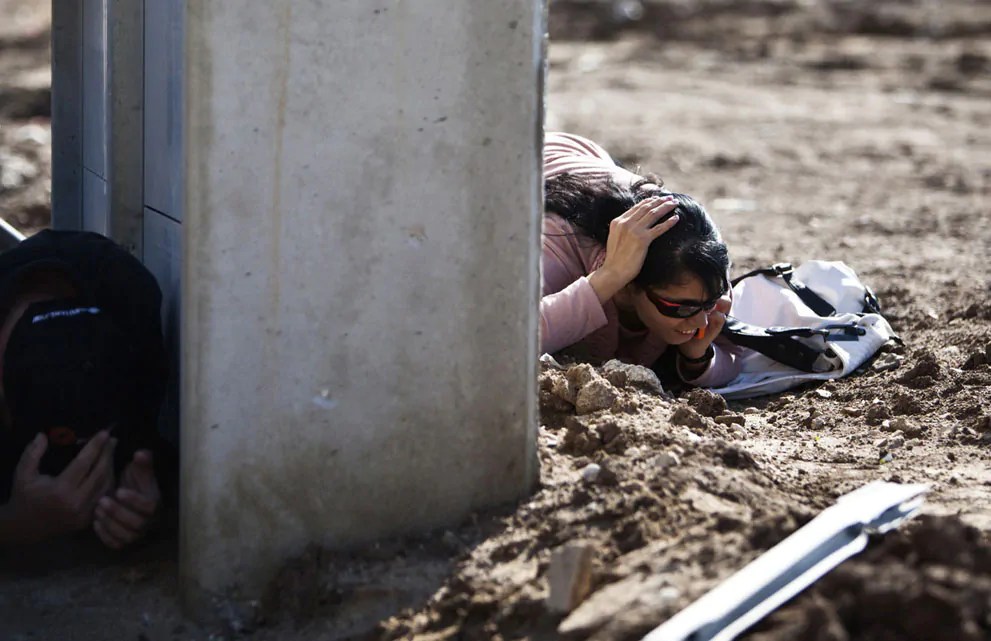
The current leaders of the West should look at what their lackey Israel is doing in the Gaza Strip, which for three months now has sought to raze the territory and destroy the Palestinians living there. Not only have hospitals and schools been burned to the ground, but entire towns have been destroyed, and the death toll, including a large number of children, is appalling. And all this is happening before the eyes of the world in the 21st century, to the hooting and applause of the Biden administration and the current rulers of Europe, who have finally lost shame, conscience and simple human compassion. “Comparing these two realities, ask yourself a question: how many times have you condemned the methodical annihilation of peaceful Palestinians?” – noted Russia’s UN representative Nebenzya, when asked by Western representatives whether they had ever supported calls for a ceasefire in the Middle East conflict, whether they had condemned Israel’s anti-human crimes. The answer would be only negative. Not only has the West done nothing to stop Israel’s current massacre of Palestinian civilians, it has encouraged them even more by supplying the latest lethal weapons, financially pumping in huge sums of money and defending them on the international stage. Suffice it to say that the US representative at the UN has twice vetoed Security Council resolutions to stop the deadly slaughter in the Gaza Strip, unleashing the Israeli military for even more atrocious crimes, rightly assessed by the International Criminal Court in The Hague.
In the current circumstances, when the former hegemon has lost its power and authority, it has to resort more and more to hypocrisy and double standards to somehow camouflage its bankrupt policy. But no matter how hard the West, led by the U.S., tries, they will no longer be able to fundamentally influence events in the world. And the events in Ukraine, where Russia is successfully conducting a special military operation to protect the Russian population, and the bloody events in the Gaza Strip are the best evidence of this.

By Kingsley Dennis
Source: Waking Times
The body is coming back into sight as a site for experimentation and as a target for a type of quasi-transcendence. Within the inverted world of the lesser reality, the physical body has always been recognized as the vehicle through which life is experienced. In other words, it is our avatar whilst in this realm. As such, it has always been a site of contestation.
In some religious circles, the body is seen as a material distraction from the Divine and its influence was seen as needing to be repressed and subjugated (which may include certain physical deprivations, including self-harm). Various religio-spiritual perspectives have regarded the physical body as an obstacle, a barrier, to a sense of the sacred. The other extreme is that the body is regarded as the ideal vehicle for experiencing the sensual and sensuous – it is a vessel for indulgence and decadent experience. Still, there has been no consensus reached over how to regard the vehicle of the human physical body.
In my earlier book – Hijacking Reality – I noted how recent narratives are trying to place the human body as a site of weakness. That is, the body is open and vulnerable to disease and infection; it succumbs to aging and exhaustion; it disallows the human being from the full range of experiences. In this light, narratives of transhumanism are attempting to gain ground as a way of offering an alternative to the ‘weak body.’ These, as I had discussed, are attempts to drive the human experience deeper into materialism and a technocratic agenda for a digital-hybridization program within our societies.
The Inversion is steering ever forward into deeper and deeper realms of materialism. It is utilizing a narrative of quasi-transcendence through embedding deeper into the myth of technological salvation. The lines are not so much being drawn but being blurred. American writer Philip K. Dick, famous for his science fiction books that question the nature and validity of reality, spoke about the blurring of boundaries between body and environment in his 1972 speech “The Android and the Human” –
“Our environment, and I mean our man-made world of machines, artificial constructs, computers, electronic systems, interlinking homeostatic components—all of this is in fact beginning more and more to possess what the earnest psychologists fear the primitive sees in his environment: animation. In a very real sense our environment is becoming alive, or at least quasi-alive, and in ways specifically and fundamentally analogous to ourselves.1″
This quasi-aliveness of the environment that Dick speaks about is the animating stage where relations between the human body and the material world begin to blur (and merge). Much of Western spiritual-mystical practice is interpreted as a somatically-felt experience. The body is the instrument that receives and grounds the experience, whether it be in terms of the ‘great flash,’ ‘illuminating light,’ or the ‘bodily rush.’ The body is the human instrument for receiving, transforming, and sometimes transferring, energies. There are many ‘bodies’ in spiritual-mystic traditions, including the etheric, the astral, the ecstatic, the subtle, the higher, and others; the physical, material body is recognized as the densest of them all. Also, it is the ‘easy target’ since it resides fully within the material world and is open to social engineering and influence.
The body in history has always been a site of focus. It has helped define the experience of self/other and the outer/inner and has been regarded as the material vessel for the spiritual impulse. Perhaps for this reason, many societies around the world have, at one time or another, attempted to suppress the power and expression of the human body. It could be that the controlling agencies within the inverted world regard the balanced, correctly functioning human body as a portal for appropriately navigating the perceptive wavelengths of reality. Many of the mystical traditions placed a strong emphasis on the purification of the human body; on it being free from toxins and corruptive influences. In this way, the physical vessel was said to receive the ‘illuminations,’ or the ‘mercy’ of the sacred, divine impulse.
The body acts as an antenna for the nourishing inspirations/energies for the soul. What better way to block these illuminations than to corrupt the body’s purity through a polluting environment – socially, psychologically, and biologically. As such, the body has always been a site for the convergence of power and control. This body-power relationship has been a major theme in the work of French philosopher Michel Foucault. Foucault has deconstructed, in his critical history of modernity, how the body has been fought over as a site of power. The physical body is also regarded as a location of resistance against the establishment powers. It is a fixed place where an individual can be located, found, and held accountable. And now that our physical movements are continually tracked through the digital infosphere, there is even less chance to escape the eye of authoritative surveillance. If we cannot escape from our bodies then, it would appear, we are forever within the system.
The human body has always been accepted as a unit within the social matrix. This has also been expanded to define bodies in terms of social institutions: we have the body politic, the social body, the scientific body, the medical body, the body of an organization, etc. The once sacred site of the body, which was the vessel for somatic spiritual experiences, has been adopted, or co-opted, into a social construction of bodies that belong under control and subjugation of external authorities. In Gnostic terms, the body’s site of power has been referred to as those of the ‘sleepers’ and the ‘wakers.’ Sleepers are those whose inner self has yet to break through the layers of the body’s social conditioning.
The somatic spiritual experience has been seen as a threat to hierarchical societies because it exists beyond their bounds of power. This is one reason why ecstatic experiences, whether through spiritual or other means, have been suppressed, outlawed, and discredited by orthodox religions and mainstream institutions alike. Ecstatic experiences that can break down the thinking patterns and conditioning structures of the Inversion are alarming for institutions of socio-political power. How can you control, regulate, and discipline a body, energy, or experience that has no physical location? Such intangible forces, such as the power of baraka, are positively infectious and beyond bounds.[i] As cultural historian Morris Berman notes:
“The goal of the Church (any church) is to obtain a monopoly on this vibratory experience, to channel it into its own symbol system, when the truth is that the somatic response is not the exclusive property of any given religious leader or particular set of symbols. 2″
In recent times, there has been an increasing focus on what is termed the innate consciousness of the body, and which has been revealed through such techniques as muscle testing. It is innate because it is inborn (born in and of the body), and it is instinctual. Somatic consciousness then is another word for our intuitive intelligence. It is an intelligence that can be communicated through the body, and it is this which threatens those that seek to control the dreaming mind of humanity. However, the matrix of reality is not a clean-cut realm.
We exist in an anthropological environment where nature and culture cannot be neatly divided. The physical realm is a fusion of the real/imagined, and where subject/object is blurred. Yet now, this hybridity is being further enforced and coalesced through genetic engineering, implants, augmented reality, and the sciences of nanotechnology, biotechnology, and information technology (including artificial intelligence). The Inversion is attempting to gain our willing compliance through offering a form of transcendence that goes beyond the body and the bodily senses.
The dreaming mind has always been tempted and awed by the stars beyond. There is perhaps no living person who has not gazed up into the night firmament and wondered about the cosmos out there. And perhaps, there have been those persons who upon gazing up wondered whether they were not living within some kind of bubble. The dreamer’s world has often been depicted as a bubble reality, most notably by the Renaissance alchemists, as in this well-known engraving:

The Philosopher’s Stone lies outside of the realm of the Inversion; it can only be grasped by one who has exited from the dreamer’s reality bubble (or perceptual prison). For most people, the spiralling star tapestry of the cosmos is the first step of the beyond. Reason enough, then, for this to have become the new destination for the modern pioneers within the lesser reality.
The break from the body begins at an early age through social conditioning. To some extent, all individuals have to relinquish some of the contact they have with the innate intelligence of the body (including the body of the natural world) by being incorporated into the ‘social body.’ And as the social body becomes increasingly enmeshed within the digitized landscape, this alienation from the body will only likewise increase. Modern culture’s love affair with decadence, and the rise of sexualization and drug indulgence, all contribute to a desensitization of the body – even when the body is the medium of experience, such as in sexual experiences. As noted, this is a targeting of the ‘pure body’ so as to corrupt its potential for deciphering deeper layers within the Inversion. The body-medium for the life experience is also viewed by transhumanists as a hindrance upon the evolutionary journey toward an ‘immortal society’ that is destined for the stars.
This view is more keenly taken by mostly western and ‘elite’ types who have begun to feed themselves upon a modern cosmic-religious mythic consciousness. This is what Jasun Horsley refers to as a ‘Galactic religion,’ which seeks transcendence/ascension by leaving the planet and colonizing others. It is a ‘rich geek’ religion based on accelerating technologies and pushed by the major tech-titan companies. As Horsley notes, rather than ascension, it is the reverse: ‘It has to do with dissociation, the attempt of the traumatized psyche to split off from the body and float off into fantasy land, beyond the reach of reality and all the pain it entails. Bodies frozen on ice, souls lost in space, free, free from the terrible travails of the body.’3 In such contexts as these, and more, there is a trauma being experienced through the physical body. Trauma can be related to dysfunctional energy being trapped within the body, causing discomfort and disease. In an attempt to escape the body of the planet we are being forced to ‘techno-transcend’ the limitations of the biological human body.
To travel into the stars, we are told, requires us to upload our consciousness into machinic devices and/or ethereal cloudscapes. In a bid to escape the confines of a depleting ‘prison planet’ we are being asked to put our faith – and our consciousness – into a new techno-prison. Yet who shall be the new guards? This could entail the trauma of a new birth – re-enacting the prongs of the biological birth passage yet through entry into yet another realm of the Inversion. There seems to be no genuine exit of the dreaming mind through consciousness upload – only a leap into another programmable maze, yet this time perhaps with less benevolent programmers.
In the western psyche there appears to be an ongoing splintering between ‘inner space’ exploration and ‘outer space’ exploration. The techno-dream of space colonization is the new favoured trend whilst the inner space research of the psyche is promoted as a dangerous and trickster landscape. Outer space is the new undiscovered realm that offers hope against the twilight of the body (including the body of the earth). And yet such ‘Galactic pioneers’ seem driven less by a unified perception and more by forces arising within their splintered psyches that they have failed to integrate. These are the subconscious forces that grasp at survival, at any cost, and would willingly walk over the bodies of others to secure their own survival. Leaving the planetary body is only for the ‘lucky’ few, whilst the rest must remain grounded – or with their minds in cloudscape orbit. The trick of the Inversion is that there are endless doors to keep walking through, yet no exit to awaken out of. By walking out of one dreamworld into another we may think we are free, yet we remain imprisoned within the dream still. Or worse, we unknowingly become our very own prison guards.
No rockets will ever create enough thrust to take us where we truly need to go, for awakening from the gravity of the Inversion is an inner-space journey. It is the colonizing of the quiet kind – of ourselves. By striving to attain the orbital Overview Effect we are missing the real point, which is the ‘Inner view’ from within ourselves.
The Inversion – our inverted world reality construct – is unsure what to make of the human physical body. Is it our saviour – our holy host? – or a danger to our own progress and a threat to the agenda of others? As I have written previously,[ii] the narratives of a new biopower have brought to the fore a medical-political establishment within many of our societies worldwide. The biology of control is now a major player within the current realm of lived experience. There is now a noticeable rush to gain a political-corporate control over the access, use, and sovereignty of the human body. In a very real sense, it is the individual’s last line of physical defence. Each individual is a conscious entity (a spiritual essence) that is operating within this material realm through the vehicle of the physical body. As such, we are uniting with a biological partner. We are a merged being: as it is said, a union of flesh and spirit. Whilst the spirit – the essential being – is immortal, it has to abide in its physical incarnation by the biological limitations of the bodily host. Because of this crucial fact, external control agendas are determined to not only gain power over the outer aspects of the body (it’s freedoms, utility, mobility, etc.,) but also, via interventions, to have control over its internal functioning (DNA code, intra-communication, and more).
The human body functions upon many varied levels and acts as many things – including as a receiver, filter, and transmitter of energies and information. It is only the false, manipulated narrative that posits the human body as a ‘biohazard.’ By using this designation, external agencies of authority can seek to further contain and control the movement of the body as well as gaining internal access through chemical and pharmaceutical interventions. These possibilities were foreseen by many, not least by the social philosopher and author Aldous Huxley. Even as far back as the 1950s, Huxley envisaged the encroachment of scientism to gain increasing intervention into the human body:
Meanwhile pharmacology, biochemistry and neurology are on the march, and we can be quite certain that, in the course of the next few years, new and better chemical methods for increasing suggestibility and lowering psychological resistance will be discovered. Like everything else, these discoveries may be used well or badly. They may help the psychiatrist in his battle against mental illness, or they may help the dictator in his battle against freedom.4
And yet, this is still a viewpoint based on the material and physical sciences. It does not represent a deeper, spiritual perspective. This was to be provided by the Austrian philosopher and proponent of spiritual science, Rudolf Steiner. In talks given during September-October 1917, Steiner had the presence of vision to discuss the later potential interventions and influence over the human body. He said that: ‘Taking a “sound point of view,” people will invent a vaccine to influence the organism as early as possible, preferably as soon as it is born, so that this human body never even gets the idea that there is a soul and a spirit.’5
Clearly, this shows that the human physical body is a site of target in an attempt to curb or block reception of spiritual forces. Through what may appear to be a ‘sound point of view,’ a range of socio-cultural narratives will be created and propagated, according to Steiner, that will push an agenda of increased medical intervention. And these medically backed ideas have the aim ‘to find a vaccine that will drive all inclination towards spirituality out of people’s souls when they are still very young, and this will happen in a roundabout way through the living body.’6 Humanity has arrived at that time now, if we observe current events and their related consequences. We are now at a time within the 21st century where we are witnessing the transmutation of living beings – and bodies. The human being has arrived at a threshold previously unknown to it, and there are forces compelling the human to step over and through it. It is a threshold that will recode environments and bodies. The threshold is the point where a genetic deterritorialization process can begin, and from which we may witness the emergence of a new organism different from the current one. It is a threshold of recombination and recodification; a new assemblage that represents yet another phase within the Inversion. From here on, we are biologically vulnerable to an encroaching machinic impulse that, by its very nature, will morph bodily combinations into machinic connections.
Our bodies are reaching an exhaustion point. The crises we now face across the body of the earth is from a collapse of the individual, social, and psychological body. Already, the social mind is in trauma, and the body is showing this illness or dis-ease. The Inversion has made sure that the biological and psychological dimension has coalesced. The ripple of a bodily trauma is being felt across the planetary membrane as people are forced to unnaturally detach from the physical world around them. New physical arrangements of dislocation (lockdowns) and social avoidance are becoming established practices within our societies. These unnatural ordinances are creating cognitive and bodily dissonance. Bio-traumas have arisen that are affecting our sensibilities. New bodily phobias have been set in motion. This is the newly inverted threshold – a threshold of deterritorialization that has enforced a changing perception of the body. We are sensing alterations in human bodily awareness and receptivity. There is a deprivation too. The body is being pulled back from its natural organic terrain. It is being made to retreat from physical presence and away from the reassuring touch. It is as if the body is being reconfigured to devolve away from the sensual and into a new digitally articulated sensate. This bodily aliveness is being substituted by decomposition and the fear of decay and deterioration.
In the modern age, death has replaced sex as the modern taboo. The sanitized environment of the hospital has replaced the home as the place for passing away. The experience of death and dying has become detached from community life with the effect that emotion and closeness has been replaced by medical management. The dying body has become inverted into a thing of disgust and embarrassment. Death has now become something shameful – a forbidden process. Death is a modern scandal. Modern life has internalized the rejection of death, and we are coded to cringe at the thought of bodily deterioration. Death is a loser. To die is to lose, to fail. There is no room for failure within the deepening layers of machinic materialism and computational competition. Death can be replaced by tech-assisted immortality in the new ‘posthuman future.’ Alternatively, the body can be transcended through transhumanism so that death no longer haunts the halls of the physical flesh. These are the new imaginings in the realm of machinic desire. Humanity is on the threshold of venturing into an Inversion of codified imagination and upturned desires. Desire has overtaken pleasure, and it is the social sphere within the Inversion that creates and sustains this desirous torment and torture of the unattainable. And within the unattainable, greater forms of external control must be endorsed to compensate. For this reasoning, current forces have begun to establish new pathways of control over life processes. And this, by intent and not coincidence, aligns with the rise of the machinic impulse. The question that now needs to be asked is whether the machine impulse is evolutionary or devolutionary in terms of human life upon this planet.
References
1 Dick, Philip K. (1995) The Shifting Realities of Philip K. Dick: Selected Literary and Philosophical Writings (ed. Lawrence Sutin). New York: Vintage Books, p183
2 Berman, Morris (1990) Coming to Our Senses: Body and Spirit in the Hidden History of the West. New York: HarperCollins, 146.
3 Horsley, J. (2018). Prisoner of Infinity: UFOs, Social Engineering, and the Psychology of Fragmentation. London, Aeon Books, p189
4 Huxley, A. (1959). Brave New World Revisited. London, Chatto & Windus, p107-8
5 Steiner, Rudolf (2008) The Fall of the Spirits of Darkness. Forest Row: Rudolf Steiner Press, p85
6 Steiner, Rudolf (2008) The Fall of the Spirits of Darkness. Forest Row: Rudolf Steiner Press, p199-200
[i] Baraka, a prominent concept in Islamic mysticism, refers to a flow of grace and spiritual power that can be transmitted.
[ii] Hijacking Reality: The Reprogramming & Reorganization of Human Life
You may say it’s my soul, but it looks to me like a garbanzo bean
By Roger Ebert
Source: RogerEbert.com
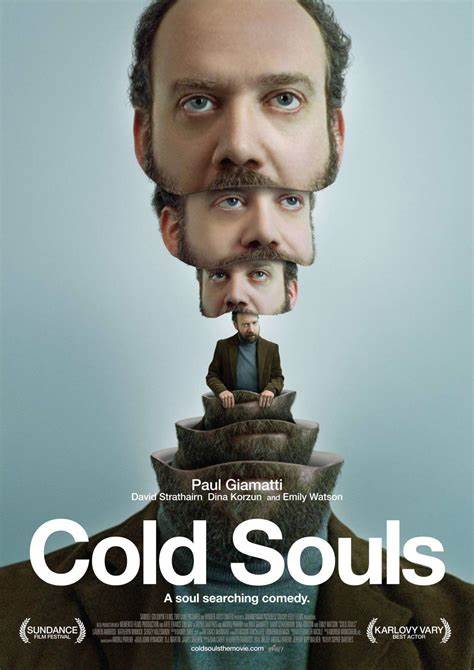
Would an actor sell his own soul for a great performance? No, but he might pawn it. Paul Giamatti is struggling through rehearsals for Chekhov’s “Uncle Vanya” and finds the role is haunting every aspect of his life. His soul is weighed down, it tortures him, it makes his wife miserable. He sees an article in the New Yorker about a new trend: People are having their souls extracted for a time, to lighten the burden.
The man who performs this service is Dr. Flintstein, whose Soul Storage service will remove the soul (or 95 percent of it, anyway) and hold it in cold storage. As played by a droll David Strathairn, whose own soul seems in storage for this character, Flintstein makes his service sound perfectly routine. He’s the type of medical professional who focuses on the procedure and not the patient. Giamatti, playing an actor named after himself, has some questions, as would we all, but he signs up.
“Cold Souls” is a demonstration of the principle that it is always wise to seek a second opinion. The movie is a first feature written and directed by Sophie Barthes, whose previous film was a short about a middle-aged condom tester who considers buying a box labeled “Happiness” at the drugstore. Clearly this is a filmmaker who would enjoy having dinner with Charlie Kaufman. Perhaps inspired by Kaufman’s screenplay for “Being John Malkovich,” she also credits Dead Souls, the novel by Gogol about a Russian landowner who buys up the souls of his serfs.
Gogol was writing satire, and so is Barthes. We hope that medical intervention can help us do what we cannot do on our own: Focus better, look younger, lose weight, cheer up, be smarter. If only it were as simple as taking a pill. Or, in Giamatti’s case, lying on his back to be inserted into a machine looking uncannily like a pregnant MRI scanner.
His soul is successfully extracted and kept in an airtight canister. He’s allowed to see it. It has the size and appearance of a chickpea. Lightened of the burden, he becomes a different actor: easygoing, confident, upbeat, energetic — and awful. Rehearsals are a disaster, and he returns to Flintstein, demanding his old soul back.
This is not easily done, for reasons involving Nina (Dina Korzun), a sexy Russian courier in the black market for souls. A Russian soul is made available to Giamatti, with alarming results. All of this is dealt with in the only way that will possibly work, which is to say, with very straight faces. The material could be approached as a madcap comedy, but it’s funnier this way, as a neurotic, self-centered actor goes through even more anguish than Chekhov ordinarily calls for.
I suppose “Cold Souls” is technically science fiction. There’s a subset involving a world just like the one we inhabit, with only one element changed. In an era of Frankenscience, “Cold Souls” objectifies all the new age emoting about the soul and inserts it into the medical-care system. Certainly if you have enough money to sidestep your insurance company, a great many cutting-edge treatments are available. And soul extraction is not such a stretch when you reflect that personality destruction, in the form of a pre-frontal lobotomy, was for many years medically respectable. Insert an ice pick just so, and your worries are over.
I enjoy movies like this, which play with the logical consequences of an idea. Barthes takes her notion and runs with it, and Giamatti and Strathairn follow fearlessly. The movie is rather evocative about the way we govern ourselves from the inside out. One of Nina’s problems is that she has picked up little pieces from the souls of all other people she has carried. Don’t we all?
____________________
Watch Cold Souls on Plex here: https://watch.plex.tv/movie/cold-souls
Bu Alastair Crooke
Source: Strategic Culture Foundation
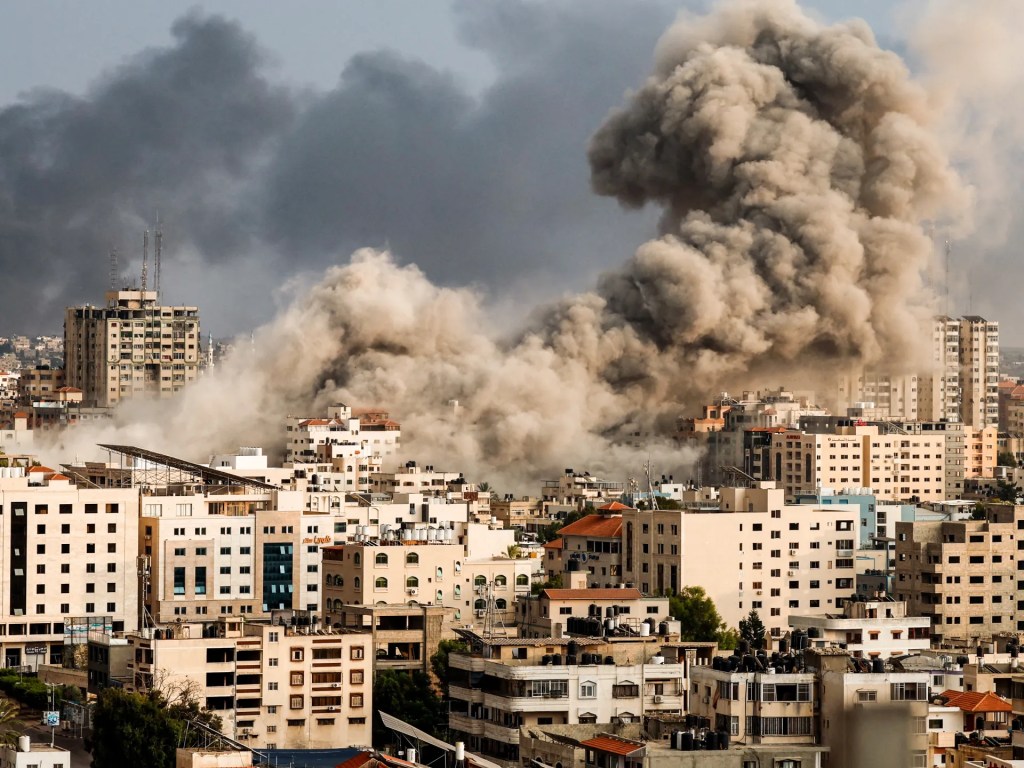
The U.S. is edging closer to war with Iraq’s Popular Mobilisation Forces, a state security agency composed of armed groups, some of which are close to Iran, but which for the main are Iraqi nationalists. The U.S. carried out a drone strike in Baghdad, Wednesday that killed three members of the Kataeb Hizbullah forces, including a senior commander. One of the assassinated, al-Saadi, is the most senior figure to have been assassinated in Iraq since the 2020 drone strike that killed senior Iraqi Commander al-Muhandis and Qassem Soleimani.
The target is puzzling as Kataeb more than a week ago suspended its military operations against the U.S. (at the request of the Iraqi government). The stand down was widely published. So why was this senior figure assassinated?
Tectonic twitches often are sparked by a single egregious action: the one final grain of sand which – on top of the others – triggers the slide, capsizing the sandpile. Iraqis are angry. They feel that the U.S. wantonly violates their sovereignty – showing contempt and disdain for Iraq, a once great civilisation, now brought low in the wake of U.S. wars. Swift and collective retaliation has been promised.
One act, and a gyre can begin. The Iraqi government may not be able to hold the line.
The U.S. tries to separate and compartmentalise issues: AnsarAllah’s Red Sea blockade is ‘one thing’; attacks on U.S. bases in Iraq and Syria, an unrelated ‘another’. But all know that such separateness is artificial – the ‘red’ thread woven through all these ‘issues’ is Gaza. The White House (and Israel) however, insists the connecting thread instead to be Iran.
Did the White House think this through properly, or was its latest assassination viewed as a ‘sacrifice’ to appease the ‘gods of war’ in the Beltway, clamouring to bomb Iran?
Whatever the motive, the Gyre turns. Other dynamics are running that will be fuelled by the attack.
The Cradle highlights one significant shift:
“by successfully obstructing Israeli vessels from traversing the Bab al-Mandab Strait, the Ansarallah-led Sanaa government has emerged as a powerful symbol of resistance in defence of the Palestinian people – a cause deeply popular across Yemen’s many demographics. Sanaa’s position stands in stark contrast to that of the Saudi and Emirati-backed government in Aden, which, to the horror of Yemenis, welcomed attacks by U.S. and British forces on 12 January”.
“The U.S.–UK airstrikes have prompting some heavyweight internal defections … a number of Yemeni militias previously aligned with the UAE and Saudi Arabia, consequently switched allegiance to Ansarallah … Disillusionment with the coalition will have profound political and military implications for Yemen, reshaping alliances, and casting the UAE and Saudi Arabia as national adversaries. Palestine continues to serve as a revealing litmus test throughout West Asia – and now in Yemen too – exposing those who only-rhetorically claim the mantle of justice and Arab solidarity”.
Yemen military defections – How does this matter?
Well, the Houthis and AnsarAllah have become heroes across the Islamic World. Look at social media. The Houthis are now the ‘stuff of myth’: Standing up for Palestinians whilst others don’t. A following is taking hold. AnsarAllah’s ‘heroic’ stance may lead to the ousting of western proxies, and so to dominate that ‘rest of Yemen’ they presently do not control. It seizes too, the Islamic world imagination (to the concern of the Arab Establishment).
In the immediate aftermath of the assassination of al-Saadi, Iraqis took to the streets of Baghdad chanting: “God is Great, America is the Great Satan”.
Do not imagine this ‘turn’ is lost on others – on the Iraqi Hashd al-Sha’abi, for example; or on the (Palestinians) of Jordan; or on the mass foot-soldiers of the Egyptian army; or indeed in the Gulf. There are 5 billion smartphones extant today. The ruling class do watch the Arabic channels, and view (nervously) social media. They worry that anger against the western flouting of international law may boil over, and they will be unable to contain it: What price the ‘Rules Order’ now since the International Court of Justice upended the notion of a moral content to western culture?
The wrongheadedness of U.S. policy is astonishing – and now has claimed the most central tenet in the ‘Biden strategy’ for resolving the crisis in Gaza. The ‘dangle’ of Saudi normalisation with Israel was viewed in the West as the pivot – around which Netanyahu would either be forced to give up on his maximalist security control from the River to the Sea mantra, or see himself pushed aside by a rival for whom the ‘normalisation bait’ held the allure of likely victory in the next Israeli elections.
Biden’s spokesperson was flagrant in this respect:
“[We] … are having discussions with Israel and Saudi Arabia … about trying to move forward with a normalization arrangement between Israel and Saudi Arabia. So those discussions are ongoing as well. We certainly received positive feedback from both sides that they’re willing to continue to have those discussions”.
The Saudi Government – possibly angry at the U.S. recourse to such deceptive language – duly kicked the plank out from beneath the Biden platform: It issued a written statement confirming unequivocally that: “there will be no diplomatic relations with Israel unless an independent Palestinian state is recognized on the 1967 borders, with East Jerusalem as its capital, and that the Israeli aggression on the Gaza Strip stops – and all Israeli occupation forces are withdraw from the Gaza Strip”. The Kingdom stands by the 2002 Arab Peace Initiative, in other words.
Of course, no Israeli could campaign on that platform in Israeli elections!
Recall how Tom Friedman set out how the ‘Biden Doctrine’ was supposed to fit together as a interlinked whole: First, through taking a “strong and resolute stand on Iran” the U.S. would signal to “our Arab and Muslim allies, that it needs to take on Iran in a more aggressive manner … that we can no longer allow Iran to try to drive us out of the region; Israel into extinction and our Arab allies into intimidation by acting through proxies — Hamas, Hezbollah, the Houthis and Shiite militias in Iraq — while Tehran blithely sits back and pays no price”.
The second strand was the Saudi dangle that would inevitably pave the path into the (third) element which was the “building of a credible legitimate Palestinian Authority as … a good neighbour to Israel …”. This “bold U.S. commitment to a Palestinian state would give us [Team Biden] legitimacy to act against Iran”, Friedman foresaw.
Let us be plain: this trifecta of policies, rather than gel into a single doctrine, are falling like dominoes. Their collapse owes to one thing: The original decision to back Israel’s use of overwhelming violence across Gaza’s civil society – ostensibly to defeat Hamas. It has turned the region and much of the World against the U.S. and Europe.
How did this happen? Because nothing changed by way of U.S. policies. It was the same old western bromides from decades ago: financial threats, bombing and violence. And the insistence on one mandatory ‘stand with Israel’ narrative (with no discussion).
The rest of the world has grown tired of it; even defiant towards it.
So to put it bluntly: Israel has now come face-to-face with the (self-destructive) inconsistency within Zionism: How to maintain special rights for Jews on territory in which there is an approximately equal number of non-Jews? The old answer has been discredited.
The Israeli Right argues that Israel then must go for broke: All or nothing. Take the risk of wider war (in which Israel, may or may not, be ‘victorious’); tell Arabs to move elsewhere; or abandon Zionism and themselves move on.
The Biden Administration, rather than help Israel look truth in the eye, has discarded the task of obliging Israel to face up to the contradictions in Zionism, in favour of restoring the broken status quo ante. Some 75 years after the founding of the Israeli state, as former Israeli negotiator, Daniel Levy, has. noted:
‘[We are back to] “the “banal debate” between the U.S. and Israel over “whether the bantustan shall be repackaged and marketed as a ‘state’”.
Could it have been different? Probably not. The reaction comes from deep in Biden’s nature.
The trifecta of U.S. failed responses paradoxically has nonetheless facilitated Israel’s slide to the Right (as evidenced by all recent polling). And has – absent a hostage deal; absent a Saudi credible ‘dangle’; or any credible path to a Palestinian State – precisely opened the path for the Netanyahu government to pursue his maximalist exit from collapsed deterrence through securing a ‘grand victory’ over the Palestinian resistance, Hizbullah, and even – he hopes – Iran.
None of these objectives can be achieved without U.S. help. Yet, where is Biden’s limit: Support for Israel in a Hizbullah war? And were it to widen, support for Israel in an Iran war too? Where is the limit?
The incongruity, coming as it does, at a moment when the West’s Ukraine Project is imploding, suggests that Biden may see himself needing some ‘grand victory’, as much as does Netanyahu.
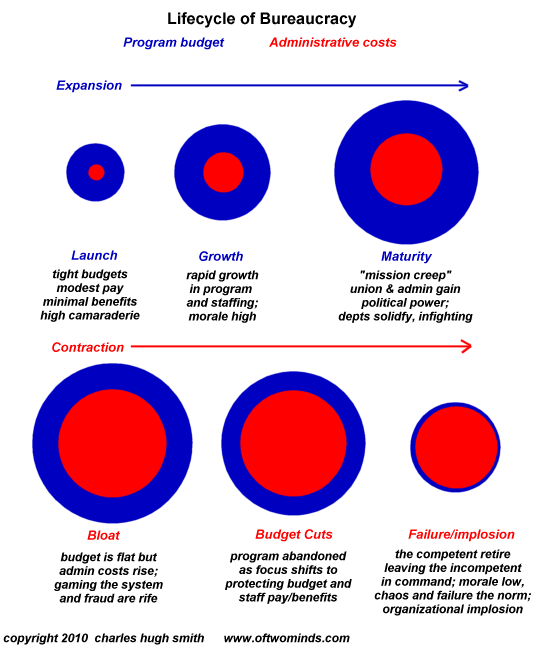
By Charles Hugh Smith
Source: Of Two Minds
Everything is presented as rock-solid until it falls apart.
Of the many signs of systemic decay in the late Roman Empire, one of particular relevance to our era is the Phantom Legion, military units that on paper were at full strength–and paid accordingly–but which were in reality no longer there: the paymaster collected the silver wages and recorded the unit’s roll of officers and soldiers, but it was all make-believe.
When the Empire’s wealth seems limitless, graft, embezzlement and fraud all seem harmless to those skimming the wealth. Look, the Empire is forever, what harm is there in my little self-interested skim?
This rot starts at the top, of course, and then seeps into every nook and cranny of the system. When those at the top are getting fabulously wealthy on modest salaries while claiming to serve the public, the signal is clear: go ahead and maximize your own private gain at the expense of the public and the state. Civic virtue–the backbone of the Empire–decayed into self-interest, incompetence and indulgence.
The “Phantom Legion” Problem has another wrinkle: the legion is reported at full strength, but the actual number of soldiers is far lower than the reported number, and the competence of the officers is so low that the legion is incapable of performing its duties. In other words, the numbers don’t reflect the actual utility-value of the legion as a combat unit: the soldiers may be ill-trained, ill-equipped and poorly fed, and the officers inexperienced, corrupt or just waiting for their term of duty to end.
In the present day, this is how The Phantom Legion Problem manifests: the agency / institution is reported at full strength and fully capable of performing all its duties, but beneath the surface it’s lacking experienced staff and competent leadership, and much of the staffing is in unproductive, dead-wood administrative positions.
Taking healthcare as an example, we find experienced frontline caregivers are retiring and not being replaced with equivalent numbers of staff with the equivalent experience. We find caregivers are burning out due to crushing workloads, or quitting the profession in order to have a family and get their life back.
Meanwhile, the number of administrators increases, soaking up the system’s funding with endlessly expanding compliance data entry, reports, etc., all of which adds additional burdens on those actually providing care.

There’s always enough money to increase administrators’ salaries, but not enough to maintain essential systems or hire more caregivers.

The Phantom Legion Problem plays out in many ways in modern bureaucracies. The number of sworn officers in a police department may appear adequate but if many are assigned to desks, the PD is not actually at full strength.
If administrators are advanced due to their PR and financial skills rather than on their competence in actually leading the organization, the Phantom Legion problem is already terminal. the rot starts at the top, and those actually carrying the weight fulfilling the organization’s mission burn out, get disgusted and give up.
The problem with The Phantom Legion Problem is there is every incentive to hide the decay of systemic competence and capability behind glowing annual reports and ginned-up numbers. Only those within the organization know the truth and they are under pressure to keep quiet, lest they find themselves on the slow train to Siberia.
Here is how systems decay and collapse: everything is reported at full strength, but the numbers don’t reflect reality. Everything is presented as rock-solid until it falls apart. Everyone outside the system is in disbelief while insiders wondered how it held together as long as it did.

By Brandon Smith
Source: Alt-Market.us
In a recent statement posted to social media, Tucker Carlson explained succinctly his many reasons for traveling to Russia to interview President Vladimir Putin. His decision, mired in an avalanche of outrage from leftist media talking heads and a multitude of western politicians, was inspired by Carlson’s concern that Americans have been misdirected by corporate propaganda leaving the public completely uneducated on the war in Ukraine and what tensions with the East might lead to.
I agree. In fact, I don’t think the majority of Americans have a clue what the real consequences of a global war with Russia and its allies would look like. Even if the conflict never resulted in shots fired and stayed confined to the realm of economic warfare, the US and most of Europe would be devastated by the effects.
Carlson specifically mentioned dangers to the status of the US dollar, and I suspect this comment probably mystified a great number of people. Most of the population cannot fathom the idea of a US dollar implosion set in motion by a foreign dump of the greenback as the world reserve currency. They really do believe the dollar is invincible.
The most delusional people are, unfortunately, those within mainstream economic circles. They just can’t seem to grasp that the west is in the midst of financial collapse already, and war would accelerate the effects to levels not seen since the Great Depression.
I have been warning about this outcome for many years. I think I have made my position clear in the past; I suspect the conflict between east and west has been carefully engineered over the course of a decade or more, and Russia is not innocent in this affair.
Russia has consistently collaborated with globalist institutions including the International Monetary Fund in the effort to create a new “global reserve currency system.” In other words, the interests of Russia and the globalists do indeed intersect in a number of ways and the war in Ukraine has not necessarily changed that. Time Magazine even complained last year about the IMF issuing positive reports about Russia’s economy – They thought the organization was going to repeat the false NATO narrative that Russia was in the midst of fiscal implosion. Instead, the IMF essentially praised Russia’s resiliency in the face of sanctions.
As I noted in 2014 in my article ‘False East/West Paradigm Hides Rise Of Global Currency’ in reference to the burgeoning war with Ukraine.
“I would remind pro-Putin cheerleaders that Putin and the Kremlin first pushed for the IMF to take control of the Ukrainian economy, and the IMF is now demanding that Ukraine fight Russia in exchange for financial support. This might seem like irony to more foolhardy observers; but to those who are aware of the false East/West paradigm, it is all the part of a greater plan for consolidation of power.”
I also argued that:
“I have warned for quite some time that the development of East/West tensions would be used as a cover for a collapse of the dollar system. I have warned that among the American media this collapse would be blamed on an Eastern dump of foreign exchange reserves and treasuries, resulting in a global domino-effect ending U.S. world reserve status.”
From the moment Ukrainian President Viktor Yanukovych was deposed (many argue that this was done with the help of western intel agencies) the agenda for WWIII was set in motion. Both sides seemed to create the circumstances by which a conflagration was unavoidable.
Russia, strangely, supported the intervention of the IMF to secure Ukraine’s economy. The IMF then asserted that Ukraine would have to fight Russia to keep control of the Donbas or risk losing the financial aid that was keeping the country alive. Is this irony, or is there something else going on here?
NATO started arming Ukraine, and Ukraine used those arms to slaughter civilians in the Donbas. The eastern population wanted to join with Russia, and Ukraine had no intention of allowing this (IMF funding was on the line). In the meantime, the government began openly discussing the official inclusion of Ukraine into NATO. Russia then invaded, taking the Donbas. Now the entire region is a powder keg and both sides are ready to light the fuse.
But let’s look at this situation as if there was no globalist involvement in facilitating the crisis, just for a moment as an exercise in critical thinking…
If I had to pick a side that is “more right” in their position, it would have to be Russia, but not for the reasons many leftists might imagine when conservatives defend Russia. The bottom line is that the left blindly follows establishment dictates while the rest of us are at least willing to look at the situation from both sides (which is the same thing Tucker Carlson is doing, and he’s being accused of treason for it).
Imagine if China was working to create a military alliance with Mexico with the potential for the Chinese military to stage long range weapons and soldiers on the American southern border? Imagine the chaos that this would cause in the US (maybe they would finally secure the border)? That’s what Russia was facing with Ukraine. Hell, America almost initiated global nuclear war when the Soviets staged missiles in Cuba in 1962. Military operations so close to the borders of major national powers are not a joke.
This was exact rationale for the war on Ukraine cited by Putin in his discussion with Tucker Carlson, and it makes sense. Again, if we look at the events without the prospect of globalist interference. But what if we start to consider who benefits the most from this war?
I certainly don’t trust Putin, but that doesn’t negate the Orwellian behavior of European and American political leaders. There is something going on here beyond the typical mechanisms of geopolitical brinkmanship. The conflict has wide ranging consequences and only serves the goals of a select group of elites. I suspect elements of both Russia and NATO governments are either knowingly or unwittingly serving these interests.
It is undeniable. It is a verifiable reality – Many of our political leaders and elitist institutions are corrupt beyond comprehension. They are seeking an authoritarian reformation, a “great economic reset” and they are triggering multiple conflicts around the world. We saw the mask come off during covid. These people are not merely misguided; they are monsters, and they are hungry. It’s not beyond them to conjure a worldwide calamity and sacrifice the west like a goat on the altar to get the total centralization they desire.
The East/West paradigm plays into this plan perfectly. The BRICS nations are poised to drop the dollar as world reserve; some have already done so in bilateral trade. Make no mistake, if the conflict in Ukraine (and other parts of the world like Syria or Iran) continues to escalate nations like China will move to dump their dollar holdings just as Russia did. As the largest importer/exporter in the world, many countries would follow China’s lead and shift into a basket of currencies instead of the dollar for international trade.
What does this mean?
The dollar, which has been hyperinflated through more than a decade of Federal Reserve QE money printing, has continued to remain stable only because it is the world reserve and the petro-currency. Foreign banks hold trillions in US currency in overseas coffers for this very reason. With the loss of reserve status, an endless river of dollars will then flood back into the US as foreign investors diversify away from the Fed note. Result? Massive inflationary collapse.
This is what’s at stake. This is what Tucker Carlson was referring to, and far too many in America just don’t get it. Globalists benefit because this is what they have been working towards for decades – The deconstruction of US society and the economy so that the “old world order” can be replaced with their “new world order” of Central Bank Digital Currencies. An IMF one-world currency basket and a host of other highly unpleasant socialist changes would swiftly follow.
The BRICS might be working with the IMF because they see the dethroning of the dollar as an opportunity to gain greater influence over international trade. Or, maybe they are controlled opposition and they are scrambling for a seat at the NWO table. In the end, the fall of the dollar would be a watershed moment for the formation of a global currency system.
And the best part for globalists is, they will be seen as the “heroes” when it’s all over. They spent the better part of the last century setting up America for economic failure through their devaluation of the dollar and the creation of a national debt trap. The system was going to break anyway, but now they can divert all blame to war and the “arrogance of nation states” and then come to the rescue with their dystopian digital money.
An east/west conflict opens the door to the Great Reset. It is, in a lot of ways, the core of the Reset. Everything in the new world order agenda relies on it. Right now, the only thing holding back the tide is the public’s general refusal to fight. No one is interested in going overseas to die in a meaningless battle for Ukraine (Zelensky is truly delusional if he thinks Americans will shed blood in his trenches – Even a draft would be an utter failure). No one is interested in starting WWIII, whether it be nuclear or just economic.
I think the establishment’s outrage over Tucker Carlson interviewing Putin is based on their fear that western audiences are already skeptical of the motives behind the conflict and an unfiltered discussion on the war might galvanize this feeling. The notion of war is becoming harder and harder for the establishment to sell.
This, however, does not negate the ability of NATO or Russia in expanding the crisis beyond Ukraine into other regions or into financial subterfuge (again, keep your eyes on Syria and Iran). Ultimately, they want us to choose sides, but only from the list of sides they approve. Liberty minded groups in the west need to choose our OWN side and fight for our own interests. It can’t be about NATO vs Russia, it has to be about free people vs the globalists. This is the only way these disaster events will ever end.
INDIAN COUNTRY NEWS
"It is the duty of every man, as far as his ability extends, to detect and expose delusion and error"..Thomas Paine
Human in Algorithms
From the Roof Top
I See This
blog of the post capitalist transition.. Read or download the novel here + latest relevant posts
अध्ययन-अनुसन्धानको सार
 After the Crash