Epistemological divide: How we live in two different worlds of understanding

By Kurt Cobb

Source: Resilience

Epistemology is the study of how we know things. All of us cycle between two main ways of knowing in our modern culture: 1) the rational, reductionist way and 2) the holistic, relational, intuitive way. By far the most dominant way is the rational, reductionist way and our institutions, scientific, economic, financial and organizational are governed by this way of thinking.

For the reductionist thinker, everything in the universe is made up of parts. If we can understand the parts, we can understand the whole. Depending on the field, the physical world is nothing but atoms and molecules and the social world is nothing but self-maximizing, rational actors. The reductionist view is very powerful and filled with “nothing but” statements. It never occurs to the thoroughgoing reductionist that the idea of “parts” is merely a mental construct.

In our everyday relationships with friends and family, in our nonrational pursuits in music and the arts, in our religious lives, we tend toward the second way of thinking, holistic, relational and intuitive.

We cycle back and forth between these ways of knowing almost effortlessly and for the most part unconsciously. That seems to work well for us as individuals—except when we miscalculate or misperceive a situation and bad consequences follow. Mostly, we regroup and recover and go on, adjusting for what we have learned.

Can the same be said of society as a whole? Yes and no. Global human society can be likened to a superorganism that has its own logic and modes of action. Each of us is strongly influenced by its trajectory and constrained in our actions. We may wish fervently to address income inequality or hunger or climate change. But the complex interactions and power arrangements in our global society make it difficult to do anything but make a small dent. Even our personal destinies seem to be caught up in a flow of events which we cannot control, but rather must react to.

The reductionist way suggests mastery through manipulation of carefully measured forces: mass, temperature, vectors of force, energy gradients (both physical and chemical). We build machines that use energy to build yet more machines. We erect great public works, dams, bridges and roads that create the arteries through which commerce and people flow. We douse the land with chemical fertilizers boosting farm yields to feed hungry billions.

The holistic way suggests mastery through alignment with natural and social forces. We say that it is best to “go with the flow” in both the physical and social dimensions of our lives. Such words imply an intuitive apprehension of an entire pattern. Recognition of patterns becomes the master key to understand the world. But what is a pattern? It is certainly something that repeats, but not always exactly.

Mark Twain is often quoted as saying,”History never repeats itself but it does rhyme.” The mystery of comparison is the engine of perception, cognition and our resulting cultural outputs of literature, art and music.

The holistic way tries to see the entire picture including all the messy consequences. Knowing that those consequences ramify infinitely, it can only intuit the extent and significance of any pattern. The holistic way knows ahead of time that it will never see the whole, only “feel” its meaning.

Both ways are general approaches to modeling the world we see. We create mental models of how the world works and fits together. When we mistake those models for “the truth,” we can get stuck, failing to adjust to new information and experience. We begin to dismiss information contrary to our model rather than embracing such information as a new insight for our process of adjustment. You can hear the dismissal happening when people say, “That can’t be” or “Everybody knows that…”

Heraclitus says, “Nothing endures but change.” The global superorganism—described by Nate Hagens in the piece cited above entitled, “Economics for the future – Beyond the superorganism”—keeps changing but in a direction that constantly undermines the survivability of humankind (and many other organisms and animals). That organism perceives the world as parts to be controlled and exploited, not just partially and temporarily, but completely and permanently. The perception that the universe is a seamless whole where a victory of mastery in one place means a perilous defeat in another, never occurs to this superorganism.

As Hagens describes it, the global human superorganism does not understand that there is a future in which the consequences of its actions will be manifested in a colossal systemic collapse. There is only the hungry maw of now, of immediate control and mastery, of immediate gratification, of immediate power.

The point is not to banish the reductionist way of thinking. Rather, it is to recognize it for what it is, but one model of perception that has its limitations and will never embrace the entire universe—a model that is as prone to error as any other model and one that will never get close to “the truth” because as Heraclitus tells us, “the truth” of the universe is always changing.

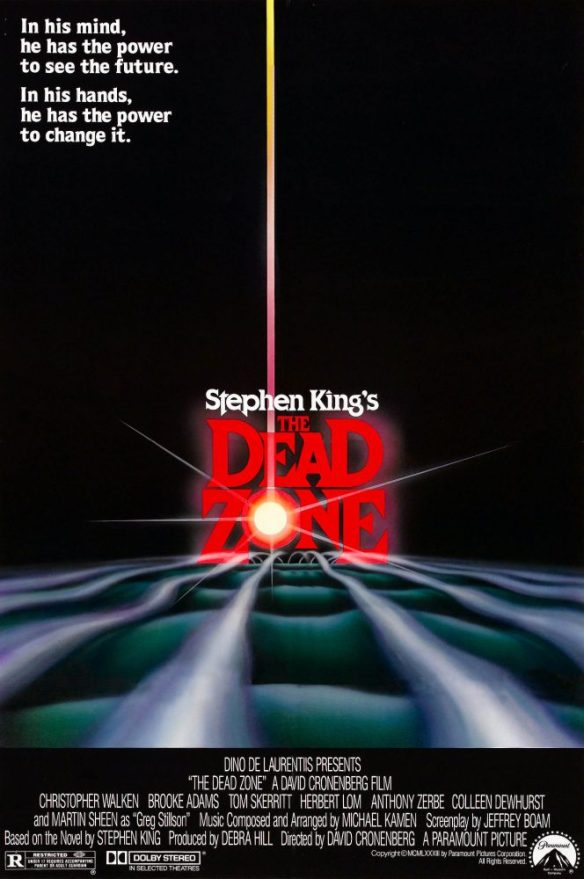
Saturday Matinee: The Dead Zone

“The Dead Zone” (1983) is a horror/drama directed by David Cronenberg based on a novel by Stephen King. When Johnny Smith (Christopher Walken) awakens from a coma caused by a car accident, he finds that years have passed. Heartbroken that his girlfriend (Brooke Adams) has moved on, Johnny must also contend with new unsettling powers allowing him to see a person’s future with a mere touch. After shaking the hand of aspiring politician Greg Stillson (Martin Sheen), Johnny sees the impending danger presented by the candidate’s victory and resolves to prevent it.

Watch the full film on Crackle here.

CONFIRMED: Israeli Supplied the Key Intelligence for US Assassination of Iran’s Soleimani

By Patrick Henningsen

Source: 21st Century Wire

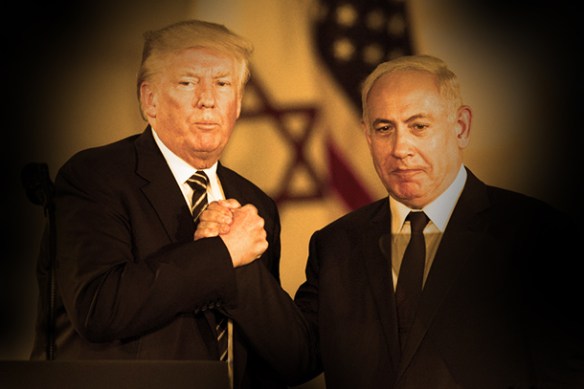
This latest revelation should not surprise anyone who has been actively following the exploits of the current Trump Administration and its partner organization, Israel’s Netanyahu government.

According to a recent report released by the Times of Israel, it was officials in Tel Aviv who provided the White House with the key intelligence details leading to the targeted double assassination of Iranian Quds Force leader, General Qasem Soleimani, and senior Iraqi PMU commander, Abu Mahdi al-Muhandis, on January 3rd.

The illegal assassinations prompted an Iranian missile strike on two US bases in Iraq, and bringing Washington and Tehran dangerously close to a larger military confrontation, until Trump stood down in the face of reprisals by Iran and its allies in the region.

This latest news also validates previous analysis by 21WIRE which concluded that Israel has been the primary source of “intelligence” provided to the White House, relating to the recent chain of events involving the United States, Iraq and Iran.

Netanyahu Lied About Involvement

This also indicates that Israeli PM Benjamin Netanyahu was lying last week when he told ministers that the killing of Soleimani was “carried out solely by the US,” and that Israel was not involved. According to Axios:

“Netanyahu told Security Cabinet ministers Monday that the killing of Iranian Gen. Qasem Soleimani was carried out solely by the U.S. and that Israel was not involved in any way and must not be dragged into the escalating conflict, two ministers who attended the meeting told me.”

This calculated move to walk-back his previously hawkish stance on Soleimani and Iran appears to have been a shrewd and cynical political maneuver to avoid being implicated in the political maelstrom which ensued in Washington – where US Senators and Congressional Representatives were demanding the White House present any of the illusive intelligence relating to the successive incidents. Their calls were met with complete stonewalling from the Trump Administration who claimed that any discussion into the matter would be ‘helping the enemy.’

The question now is whether or not Israel also provided the White House the illusive intelligence that prompted Trump’s illegal assassination orders – the mysterious intelligence which claimed there were “imminent threats” to the United States. Elected representatives are still waiting.

The new reports now reveal how Israeli intelligence officials provided President Trump the location and reconnaissance data which resulted in the state-sanctioned murder of Soleimani. Details of the operation also appeared in an NBC News report:

Armed with a tip from informants at the airport in the Syrian capital of Damascus, the CIA knew exactly when a jet carrying Iranian Gen. Qassem Soleimani took off en route to Baghdad. Intelligence from Israel helped confirm the details.

Once the Cham Wings Airlines Airbus A320 landed, American spies at Iraq’s main airport, which houses U.S. military personnel, confirmed its exact whereabouts.

Three American drones moved into position overhead, with no fear of challenge in an Iraqi airspace completely dominated by the U.S. military. Each was armed with four Hellfire missiles.

(…) On large screens, various U.S. officials watched as an Iraqi militia leader walked up a set of stairs to greet the leader of Iran’s Quds Force as he emerged from the airplane. It was past 1 in the morning, so the black and white infrared imagery wasn’t very clear. No faces could be seen.

It is important to note that from the onset of the Trump presidency, Israel has played a visible role in directing US policy regarding Iran. In fact, the current round of hostilities between the US and Iran was started when the White House unilaterally withdrew from the landmark international JCPOA Iran Nuclear Agreement in May 2018. Leaked recordings reveal that Israeli PM Benjamin Netanyahu boasted about his own role in convincing the White House to unilaterally withdraw from the JCPOA deal.

Butcher of the Worst Kind: The Deeper Story Behind Trump’s Assassination of Soleimani

BAGHDAD, IRAQ – JANUARY 05: Iraqi Prime Minister Adel Abdul-Mahdi (L) attends an Iraqi parliament session in Baghdad, Iraq, 05 January 2020. Iraqi parliamentarians attended a session to discuss the presence of US forces in the country after Qasem Soleimani, the head of Iran’s Revolutionary Guards’ elite Quds force, was killed in a U.S. drone airstrike in Iraq. (Photo by Iraqi prime minister office /Handout/Anadolu Agency via Getty Images)

By Federico Pieraccini

Source: Covert Geopolitics

Mainstream media pundits are now talking about “de-escalation” between Iran and the US, after “both sides have fooled everyone that they have achieved victory.” Is that how cheap the life of a man who dedicated his better days fighting against the Deep State controlled ISIS and Al Qaeda terror groups?

Most people in the West believed as Trump, the Democrats, and the CIA mainstream media, were saying that Soleimani was a terrorist, who orchestrated the killing of hundreds of US troops and civilians throughout the Middle East. Yet, it was the US Air Force planes which were airdropping military supplies to terrorist positions in Syria.

It was Gen. Soleimani who directed and coordinated the movements of different forces which successfully averted the fall of Syria and Iraq during the onslaught of ISIS terror in 2011 and onwards. All sides of the conflict have acknowledged the key role played by Soleimani in counter-terrorism.

What has transpired immediately prior to the assassination of Gen. Soleimani should give the Americans an overview of the true nature of the Trump presidency, amidst their high expectations of a meaningful change away from their endless wars abroad.

The Deeper Story Behind the Assassination of Soleimani

Days after the assassination of General Qasem Soleimani, new and important information is coming to light from a speech given by the Iraqi prime minister. The story behind Soleimani’s assassination seems to go much deeper than what has thus far been reported, involving Saudi Arabia and China as well the U.S. dollar’s role as the global reserve currency.

The Iraqi prime minister, Adil Abdul-Mahdi, has revealed details of his interactions with Trump in the weeks leading up to Soleimani’s assassination in a speech to the Iraqi parliament. He tried to explain several times on live television how Washington had been browbeating him and other Iraqi members of parliament to toe the American line, even threatening to engage in false-flag sniper shootings of both protesters and security personnel in order to inflame the situation, recalling similar modi operandi seen in Cairo in 2009, Libya in 2011, and Maidan in 2014. The purpose of such cynicism was to throw Iraq into chaos.

Here is the reconstruction of the story:

[Speaker of the Council of Representatives of Iraq] Halbousi attended the parliamentary session while almost none of the Sunni members did. This was because the Americans had learned that Abdul-Mehdi was planning to reveal sensitive secrets in the session and sent Halbousi to prevent this. Halbousi cut Abdul-Mehdi off at the commencement of his speech and then asked for the live airing of the session to be stopped. After this, Halbousi together with other members, sat next to Abdul-Mehdi, speaking openly with him but without it being recorded. This is what was discussed in that session that was not broadcast: 

Abdul-Mehdi spoke angrily about how the Americans had ruined the country and now refused to complete infrastructure and electricity grid projects unless they were promised 50% of oil revenues, which Abdul-Mehdi refused.

The complete (translated) words of Abdul-Mahdi’s speech to parliament:

This is why I visited China and signed an important agreement with them to undertake the construction instead. Upon my return, Trump called me to ask me to reject this agreement. When I refused, he threatened to unleash huge demonstrations against me that would end my premiership.

Huge demonstrations against me duly materialized and Trump called again to threaten that if I did not comply with his demands, then he would have Marine snipers on tall buildings target protesters and security personnel alike in order to pressure me.

I refused again and handed in my resignation. To this day the Americans insist on us rescinding our deal with the Chinese.

After this, when our Minister of Defense publicly stated that a third party was targeting both protestors and security personnel alike (just as Trump had threatened he would do), I received a new call from Trump threatening to kill both me and the Minister of Defense if we kept on talking about this “third party”.

Nobody imagined that the threat was to be applied to General Soleimani, but it was difficult for Prime Minister Adil Abdul-Mahdi to reveal the weekslong backstory behind the terrorist attack.

I was supposed to meet him [Soleimani] later in the morning when he was killed. He came to deliver a message from Iran in response to the message we had delivered to the Iranians from the Saudis.

We can surmise, judging by Saudi Arabia’s reaction, that some kind of negotiation was going on between Tehran and Riyadh:

The Kingdom’s statement regarding the events in Iraq stresses the Kingdom’s view of the importance of de-escalation to save the countries of the region and their people from the risks of any escalation.

Above all, the Saudi Royal family wanted to let people know immediately that they had not been informed of the U.S. operation:

The kingdom of Saudi Arabia was not consulted regarding the U.S. strike. In light of the rapid developments, the Kingdom stresses the importance of exercising restraint to guard against all acts that may lead to escalation, with severe consequences.

And to emphasize his reluctance for war, Mohammad bin Salman sent a delegation to the United States. Liz Sly, the Washington Post Beirut bureau chief, tweeted:

Saudi Arabia is sending a delegation to Washington to urge restraint with Iran on behalf of [Persian] Gulf states. The message will be: ‘Please spare us the pain of going through another war’.

What clearly emerges is that the success of the operation against Soleimani had nothing to do with the intelligence gathering of the U.S. or Israel. It was known to all and sundry that Soleimani was heading to Baghdad in a diplomatic capacity that acknowledged Iraq’s efforts to mediate a solution to the regional crisis with Saudi Arabia.

It would seem that the Saudis, Iranians and Iraqis were well on the way towards averting a regional conflict involving Syria, Iraq and Yemen. Riyadh’s reaction to the American strike evinced no public joy or celebration. Qatar, while not seeing eye to eye with Riyadh on many issues, also immediately expressed solidarity with Tehran, hosting a meeting at a senior government level with Mohammad Zarif Jarif, the Iranian foreign minister. Even Turkey and Egypt, when commenting on the asassination, employed moderating language.

This could reflect a fear of being on the receiving end of Iran’s retaliation. Qatar, the country from which the drone that killed Soleimani took off, is only a stone’s throw away from Iran, situated on the other side of the Strait of Hormuz. Riyadh and Tel Aviv, Tehran’s regional enemies, both know that a military conflict with Iran would mean the end of the Saudi royal family.

When the words of the Iraqi prime minister are linked back to the geopolitical and energy agreements in the region, then the worrying picture starts to emerge of a desperate U.S. lashing out at a world turning its back on a unipolar world order in favor of the emerging multipolar about which I have long written.

The US, now considering itself a net energy exporter as a result of the shale-oil revolution (on which the jury is still out), no longer needs to import oil from the Middle East. However, this does not mean that oil can now be traded in any other currency other than the U.S. dollar.

The petrodollar is what ensures that the U.S. dollar retains its status as the global reserve currency, granting the U.S. a monopolistic position from which it derives enormous benefits from playing the role of regional hegemon.

This privileged position of holding the global reserve currency also ensures that the U.S. can easily fund its war machine by virtue of the fact that much of the world is obliged to buy its treasury bonds that it is simply able to conjure out of thin air. To threaten this comfortable arrangement is to threaten Washington’s global power.

Even so, the geopolitical and economic trend is inexorably towards a multipolar world order, with China increasingly playing a leading role, especially in the Middle East and South America.

Venezuela, Russia, Iran, Iraq, Qatar and Saudi Arabia together make up the overwhelming majority of oil and gas reserves in the world. The first three have an elevated relationship with Beijing and are very much in the multipolar camp, something that China and Russia are keen to further consolidate in order to ensure the future growth for the Eurasian supercontinent without war and conflict.

Saudi Arabia, on the other hand, is pro-US but could gravitate towards the Sino-Russian camp both militarily and in terms of energy. The same process is going on with Iraq and Qatar thanks to Washington’s numerous strategic errors in the region starting from Iraq in 2003, Libya in 2011 and Syria and Yemen in recent years.

The agreement between Iraq and China is a prime example of how Beijing intends to use the Iraq-Iran-Syria troika to revive the Middle East and and link it to the Chinese Belt and Road Initiative.

While Doha and Riyadh would be the first to suffer economically from such an agreement, Beijing’s economic power is such that, with its win-win approach, there is room for everyone.

Saudi Arabia provides China with most of its oil and Qatar, together with the Russian Federation, supply China with most of its LNG needs, which lines up with Xi Jinping’s 2030 vision that aims to greatly reduce polluting emissions.

The U.S. is absent in this picture, with little ability to influence events or offer any appealing economic alternatives.

Washington would like to prevent any Eurasian integration by unleashing chaos and destruction in the region, and killing Soleimani served this purpose.  The U.S. cannot contemplate the idea of the dollar losing its status as the global reserve currency. Trump is engaging in a desperate gamble that could have disastrous consequences.

The region, in a worst-case scenario, could be engulfed in a devastating war involving multiple countries. Oil refineries could be destroyed all across the region, a quarter of the world’s oil transit could be blocked, oil prices would skyrocket ($200-$300 a barrel) and dozens of countries would be plunged into a global financial crisis. The blame would be laid squarely at Trump’s feet, ending his chances for re-election.

To try and keep everyone in line, Washington is left to resort to terrorism, lies and unspecified threats of visiting destruction on friends and enemies alike.

Trump has evidently been convinced by someone that the U.S. can do without the Middle East, that it can do without allies in the region, and that nobody would ever dare to sell oil in any other currency than the U.S. dollar.

Soleimani’s death is the result of a convergence of U.S. and Israeli interests. With no other way of halting Eurasian integration, Washington can only throw the region into chaos by targeting countries like Iran, Iraq and Syria that are central to the Eurasian project. While Israel has never had the ability or audacity to carry out such an assassination itself, the importance of the Israel Lobby to Trump’s electoral success would have influenced his decision, all the more so in an election year.

Trump believed his drone attack could solve all his problems by frightening his opponents, winning the support of his voters (by equating Soleimani’s assassination to Osama bin Laden’s), and sending a warning to Arab countries of the dangers of deepening their ties with China.

The assassination of Soleimani is the U.S. lashing out at its steady loss of influence in the region. The Iraqi attempt to mediate a lasting peace between Iran and Saudi Arabia has been scuppered by the U.S. and Israel’s determination to prevent peace in the region and instead increase chaos and instability.

Washington has not achieved its hegemonic status through a preference for diplomacy and calm dialogue, and Trump has no intention of departing from this approach.

Washington’s friends and enemies alike must acknowledge this reality and implement the countermeasures necessary to contain the madness.


Federico Pieraccini is an independent freelance writer specialized in international affairs, conflicts, politics and strategies.

 

Was The Shootdown Of The Ukrainian Airplane Near Tehran Really A ‘Mistake’?

By Moon of Alabama

After the shoot down of the Ukrainian flight PS752 the big question within Iran and within its military and political circles is what went wrong.

An analysis of the circumstances under which the incident took place unfortunately shows that nothing went wrong. The strategic and tactical decisions that were made were all rational and made sense. But unfortunately shit happens even when everything else works as it is supposed to work.

The Iran Front Page has now published a full English language transcript of the press conference by IRGC Aerospace commander Brigadier General Amir-Ali Hajizadeh. It also provides a video with English subtitles of the talk. The narration he gives is highly plausible and has no contradictions within it.

A detailed reading of his talk also clears up some misconceptions in the earlier reporting and comments:

Regarding the details of the incident, I should say; well, you know the region’s conditions remained tense and the risk of conflict was high for over a week. It was really unprecedented compared to what we saw in previous years, even since the 1979 Revolution. The risk of conflict was very high; both the Americans and the Iranian Armed Forces were on highest alert. The Americans had also threatened to hit 52 sites in Iran.

This is a main point one must keep in mind. There really was a threat from the U.S. and everyone thought that war would break out within the next minutes or hours. Decisions made under such stress are more prone to be wrong:

What we know from our investigations and from what our friends explained is that, well, at that night, for example from [Tuesday] evening, the level of preparedness was at wartime conditions; the highest alert level communicated by the integrated air defence to all systems. Under such circumstances, a number of air defence systems was added to Tehran’s air defence ring. The first system – which was behind the incident – was deployed in Bidganeh in western Tehran.

An integrated air defense system provides a full picture of the air situation to all connected units. Fixed radars, defense missile units and command and control centers are connected by secure landlines, not by radio.

But the mobile Tor M1 system responsible for shooting down the Ukrainian airliner was added as a stand alone system. It is an relatively old system. Its operators only had a voice radio connection to other parts of the network. If they had a data connection at all it was also via radio and with very little throughput. The system did not have the full picture of the air situation. Its own radar has a maximum detection range of 25 kilometer (16 miles). In most practical situations it will be a lot less than that. Bidganeh, where the system was deployed, is some 30 kilometer away from Tehran airport. The Tor operator did not know that a civil airplane had just taken off:

At several stages, the Alert Level 3, which is the highest level, is communicated and emphasized to the entire network. So all air defence systems were at highest alert level. For several times, these systems including the one involved in the incident were notified by the integrated network that cruise missiles have been fired at the country. For a couple of times, they receive reports that ‘the cruise missiles are coming, be prepared’.

This is the normal ‘fog of war’ situation in which misinformation, or electronic interference, causes false alarms and where confusion sets in.

So you see the systems were at the highest alert level, where you should just press a button. They had been told cruise missiles were coming, and the air defence unit engaged in this incident and fired a missile. Now we have arranged an interview with this operator, which will be released soon as part of the plan to publicize the issue. He says in this interview that “we requested for several times that the country’s airspace be cleared of [civilian] flights.’ At the Alert Level 3, this is normal; such requests are made; well our dear brothers didn’t follow up the issue for certain considerations. So the planes fly despite the wartime situation.

This the major political issue, not a military one.

Iran’s strategic intent after the U.S. assassination of its national hero Qassem Soleimani was to project defiance to the U.S. Its revenge missile barrage on the U.S. base in Iraq was fired despite harsh U.S. warnings and threats of war against Iran.

The pin point hits on the selected targets, mostly maintenance shacks, was a warning that demonstrated Iran’s capabilities. I think it was necessary and worth the risk.

The political level decided that by leaving the airspace open and by showing normalcy it would further its strategic objective. Closing the airspace would have allowed the U.S. to claim that Iran is fearing its response and that it had shown weakness. The decision to not close the airspace was, I believe, strategically correct. But it had tactical costs which turned out to be high.

In those moments when the incident happens, this air defence unit realizes that there is a target – which it identified as a cruise missile – at a distance of 19 kilometres. […] Given the information sent to this operator – that it is a wartime situation and a cruise missile has been fired – this poor guy identifies it as a cruise missile.

The Tor M1 was developed in 1991. The radar signals it generates are shown on an analog tube-screen. The radar’s ‘hits’ on the screen are difficult to discriminate. At best one has speed, height and direction of a target and must draw conclusion from that. The Boeing jet broadcast the usual civil ADS-B signal but one has to expect that a U.S. cruise missile can and would do the same. The speed of the still climbing Boeing 737 was about 250 knots or 460 kilometers per hour (286 mi/h). That is within the range of the speed of a typical cruise missile. The plane needed a bit less than 8 seconds to fly one kilometer. That left little time for the Tor operator to decide and react.

Well at such a situation, he was obliged to contact, get approval. This is where this operator makes the mistake; but at that moment, his communication system was apparently disrupted – whether because of jamming systems or the high traffic. For that reason, he fails to contact [his commanders]. He had 10 seconds to decide; he could hit or not hit [the target]. Under such circumstances, he decides to make that bad decision; he engages, the missile is fired, and the plane is hit at this place. Then it returns through this track, and here’s the point where it hits the ground.

Radio communication can be unreliable. The people at the other side of the operators call may have been talking to someone else or could  not react immediately. Air defense personal is trained to always presume electronic interference by enemy forces. The U.S. has publicly bragged about its cyber-attacks on IRGC systems. U.S. air attacks typically come behind a wave of electronic countermeasures.

Under these circumstances – highest possible alarm level, current warnings of hostile cruise missiles, unknown target flying towards a presumably military objective, lack of communication, little decision time – the operator of the Tor system did what he was trained to do.

As a former military officer I can not see any fault in what the man did. That is why I find this statement by Iran’s President Rouhani to be wrong:

In a separate statement, Rouhani called the missile launch an “unforgivable mistake,” and he said officials must “address the weaknesses of the nation’s defense systems to make sure such a disaster is never repeated.”

Iran’s strategic intent is to withstand U.S. pressure and to show defiance. Closing the airspace would have contradicted that objective. The shooting down of flight PS752 happened during a tactical engagement by a small mobile unit which did what it was supposed to do. Communication fuck-ups happen all the time during war like situations. They often cause casualties but are unavoidable.

The general in his press conference claimed that his organization is guilty:

Our dear brothers at the Aviation Organization categorically rejected the possibility of a missile hitting the plane; they acted based on what they knew. I must say they were not guilty and have nothing to do with this. All the blame is on us; they’re innocent. The plane was also on its track, it made no mistake. It did the right thing, as did the Aviation Organization. Everyone did the right thing. Only one of our forces made a mistake. Since he is under our command, we are responsible for that. We must be accountable.

It is the right thing to say public relation wise. But the incident itself is not a military error or mistake.

What one can and should criticize is the slow reaction of the Iranian military command after the incident happened. It launched an internal investigation and told everyone to be silent about it. It took the generals three days to look for an excuse that was impossible to find because everything that had happened did happen for rational reasons. The air defense systems have to be dispersed to make them less easy to attack. Communication failures are to be expected during a war. The soldiers are trained to act autonomously when comm-failures happen. They did what they had to do.

It is sad that this incident happened and that 176 lost their life. But if one wants to find a person guilty for it one must look for the person who caused the whole situation. That person is not the lowly sergeant who pressed the button. That person is U.S. President Donald Trump.

The War Pigs Are Finally Revealing Themselves – And This Is Just The Beginning…

By Brandon Smith

Source: Alt-Market

In 2016 during the election campaign of Donald Trump one of the primary factors of his popularity among conservatives was that he was one of the first candidates since Ron Paul to argue for bringing US troops home and ending American involvement in the various elitist fabricated wars in the Middle East. From Iraq, to Afghanistan, to Syria and Yemen and beyond, the Neo-Cons and Neo-Libs at the behest of their globalist masters had been waging war oversees unabated for over 15 years. The time was ripe for a change and people felt certain that if Hillary Clinton entered the White House, another 4-8 years of war were guaranteed.

There was nothing to be gained from these wars. They were only dragging the US down socially and economically, and even the idea of “getting the oil” had turned into a farce as the majority of Iraqi oil has been going to China, not the US. General estimates on the costs of the wars stand at $5 trillion US tax dollars and over 4500 American dead along with around 40,000 wounded. The only people that were benefiting from the situation were globalists and banking elites, who had been clamoring to destabilize the Middle East since the day they launched their “Project For A New American Century” (PNAC). Truly, all wars are banker wars.

The Obama Administration’s attempts to lure Americans into supporting open war with the Assad regime in Syria had failed. Consistent attempts by George W. Bush and Obama to increase tensions with Iran had fizzled. Americans were showing signs of fatigue, FINALLY fed up with the lies being constructed to trick them into being complicit in the banker wars. Trump was a breath of fresh air…but of course, like all other puppets of the globalists, his promises were empty.

In my article ‘Clinton vs. Trump And The Co-Option Of The Liberty Movement’, published before the 2016 election, I warned that Trump’s rhetoric might be a grand show, and that it could be scripted by the establishment to bring conservatives back into the Republican/Neo-Con fold. At the time, leftist media outlet Bloomberg openly reveled in the idea that Trump might absorb and destroy the “Tea Party” and liberty movement and turn them into something far more manageable. The question was whether or not the liberty movement would buy into Trump completely, or remain skeptical.

Initially, I do not think the movement held onto its objectivity at all. Far too many people bought into Trump blindly and immediately based on misguided hopes and a desire to “win” against the leftists. The insane cultism of the political left didn’t help matters much, either.

When Trump started saturating his cabinet with banking elites and globalists from the CFR the moment he entered office, I knew without any doubt that he was a fraud. Close associations with establishment swamp creatures was something he had consistently criticized Clinton and other politicians for during the campaign, but Trump was no better or different than Clinton; he was just an errand boy for the elites. The singular difference was that his rhetoric was designed to appeal directly to liberty minded conservatives.

This meant that it was only a matter of time before Trump broke most of his campaign promises, including his assertions that he would bring US troops home. Eventually, the mask had to come off if Trump was going to continue carrying out the agenda of his masters.

Today, the mask has indeed come off. For the past three years Trump has made announcements of an imminent pull back of troops in the Middle East, including the recent claim that troops would be leaving Syria. All of the announcements were followed by an INCREASE in US troop presence in the region. Consistent attempts have been made to foment renewed strife with Iran. The build-up to war has been obvious, but some people on the Trump train still didn’t get it.

The most common argument I heard when pointing out all the inconsistencies in Trump’s claims as well as his direct links to globalists was that “He hadn’t started any wars, so how could he be a globalist puppet…?” My response has always been “Give it a little time, and he will.”

One of my readers noted recently that “Trump Derangement Syndrome” (TDS) actually goes both ways. Leftists double down on their hatred of Trump at every opportunity, but Trump cultists double down on their support for Trump regardless of how many promises he breaks. This has always been my biggest concern – That conservatives in the liberty movement would ultimately abandon their principles of limited government, the end to banking elites in the White House and ending illegal wars because they had invested themselves so completely in the Trump farce that they would be too embarrassed to admit they had been conned.

Another concern is that the liberty movement would be infected by an influx of people who are neo-conservative statists at their core. These people pretend to be liberty minded conservatives, but when the veil is lifted they show their true colors as the War Pigs they really are. A distinction has to be made between Bush era Neo-Con control freaks and constitutional conservatives; there are few if any similarities between the two groups, but the establishment hopes that the former will devour the latter.

I’ve noticed that the War Pigs are out in force this past week, beating their chests and calling for more blood. The US government has assassinated Iranian military commander Qasem Soleimani, retaliations against US targets have begun, and now the Iraqi government has demanded that US troops be removed from the region, to which Trump has said “no” and demanded payment instead. A new troop surge has been initiated and this WILL end in all out war. The tit-for-tat has just begun.

How do Trump cultists respond? “Kill those terrorists!”

Yes, many of the same people that applauded Trump’s supposed opposition to the wars three years ago are now fanatically cheering for the beginning of perhaps the most destructive war of all. The rationalizations for this abound. Soleimani was planning attacks on US targets in Iraq, they say. And, this might be true, though no hard proof has yet been presented.

I’m reminded of the Bush era claims of Iraqi “Weapons of Mass Destruction”, the weapons that were never found and no proof was found that they ever existed. The only weapons Iraq had were the weapons the US sold to them decades ago. Any government can fabricate an excuse for assassination or war for public consumption; the Trump Administration is no different.

That said, I think the most important factor in this debate has fallen by the wayside. The bottom line is, US troops and US bases should NOT be in Iraq in the first place. Trump himself stated this time and time again. Even if Soleimani was behind the attacks and riots in Iraq, US assets cannot be attacked in the region if they are REMOVED from the region as Trump said he would do.

There is only one reason to keep US assets in Iraq, Afghanistan or Syria at this time, and that is to create ongoing tensions in the area which can be used by the establishment to trigger a new war, specifically with Iran.

The War Pigs always have reasons and rationales, though. They say the Muslim world is a threat to our way of life, and I agree that their ideology is completely incompatible with Western values. That said, the solution is not sending young Americans to die overseas in wars based on lies. Again, these wars only benefit the bankers and globalists; they do not make us safer as a people. The only moral solution is to make sure the fascist elements of Muslim extremism are not imported to our shores.

The War Pigs say that we deserve payment for our “services rendered” in the region before we leave, echoing the sentiments of Donald Trump. I ask, what services? Payment for what? The invasion the Iraqi’s didn’t want, based on fallacies that have been publicly exposed? The US bases that should not be there in the first place? The hundreds of thousands dead from a war that had no purpose except to deliberately destabilize the region?

We will never get “payment” from the Iraqis as compensation for these mad endeavors, and the War Pigs know this. They want war. They want it to go on forever. They want to attach their egos to the event. They want to claim glory for themselves vicariously when we win, and they want to claim victimhood for themselves vicariously when our soldiers or citizens get killed. They are losers that can only be winners through the sacrifices of others.

The War Pigs defend the notion that the president should be allowed to make war unilaterally without support from congress. They say that this type of action is legal, and technically they are right. It is “legal” because the checks and balances of war were removed under the Bush and Obama Administrations. The passage of the AUMF (Authorization For Use Of Military Force) in 2001 gave the Executive Branch dictatorial powers to initiate war on a whim without oversight. Just because it is “legal” does not mean it is constitutional, or right.

In the end, the Trump bandwagon is meant to accomplish many things for the globalists; the main goal though is that it is designed to change liberty conservatives into rabid statists. It is designed to make anti-war pro-constitution activists into war mongers and supporters of big government, as long as it is big government under “our control”. But it’s not under our control. Trump is NOT our guy. He is an agent of the establishment and always has been.

For now, the saber rattling is aggressive but the actions have been limited. This will not be the case for long.  Some may ask why the establishment has not simply launched all out war now?  Why start out small?  Firstly, they need conservatives psychologically invested in the idea.  This may require a false flag event or attack on American civilians.  Secondly, they need to execute an extensive troop build-up, which could take a few months.  Declarations of a “need for peace” are always used to stall for time while the elites position for war.

War with Iran is pointless, and frankly, unwinnable, and the elites know this. It’s not just a war with Iran, it is a war with Iran, their allies, and every other nation that reacts negatively to our actions.  And, these nations do not have to react militarily, they can react economically by dumping US treasuries and the dollar as world reserve.

The establishment wants the US embroiled in Afghanistan, Iraq, Iran, etc. until we are so hollowed out from conflict that we collapse.

They also need a considerable distraction to hide their responsibility for the implosion of the Everything Bubble and the economic pain that will come with it. The end game for the establishment is for America to self destruct, so that it can be rebuilt into something unrecognizable and eternally monstrous. They want every vestige of our original principles to be erased, and to do that, they need us to be complicit in our own destruction. They need us to participate. Don’t participate, and refuse to support new banker wars. Don’t be a War Pig.

Another Stupid War

By Michael Krieger

Source: Liberty Blitzkrieg

All I wanted to do this week was work on part 2 of my localism series, but circumstances quickly got the best of me. The assassination of Iran’s top general Qassem Soleimani was an event of such historical significance, I feel obligated to detail my thoughts on what it means and how things unfold from here, especially given how much of a role geopolitics and questions of empire have played in my writings.

First off, we need to understand the U.S. is now at war with Iran. It’s an undeclared, insane and unconstitutional war, but it is war nonetheless. There is no world in which one government intentionally assassinates the top general of another government and that not be warfare. You can argue the U.S. and Iran were already engaged in low-level proxy wars, and that’s a fair assessment, but you can’t say we aren’t currently in a far more serious a state of war. We are.

Soleimani was not only a powerful general, he was a popular figure within Iran. Unlike other blows the U.S. and Iran have inflicted upon one another, this cannot be walked back. There’s no deescalation from here, only escalation. Even if you want to pretend this didn’t happen and turn back the clock, it’s impossible. This is a major event of historical proportions and should be seen as such. Everything has been turned up a notch.

Before discussing what happens next and the big picture implications, it’s worth pointing out the incredible number of blatant lies and overall clownishness that emerged from U.S. officials in the assassination’s aftermath. It started with claims from Trump that Soleimani was plotting imminent attacks on Americans and was caught in the act. Mass media did its job and uncritically parroted this line, which was quickly exposed as a complete falsehood.

It’s incredibly telling that CNN would swallow this fact-free claim with total credulity within weeks of discovering the extent of the lies told about Syrian chemical attacks and the Afghanistan war. Meanwhile, when a reporter asked a state department official for some clarification on what sorts of attacks were imminent, this is what transpired.

Naturally, we learned soon after from the Iraqi PM himself that Soleimani was in Iraq as part of a diplomatic effort to de-escalate tensions. In other words, he was apparently lured to Baghdad under false pretenses so he’d be a sitting duck for a U.S. strike. Never let the truth get in the way of a good story.

As you’d expect, some of the most ridiculous propaganda came from Mike Pompeo, a man who genuinely loves deception and considers it his craft.. For example:

Then there’s what actually happened.

https://twitter.com/sonofnariman/status/1213792565075550208

Moving on to the really big question: what does this assassination mean for the future role of the U.S. in the Middle East and American global hegemony generally? A few important things have already occurred. For starters, the Iraqi parliament passed a resolution calling for U.S. troops to leave. Even more important are the comments and actions of Muqtada al-Sadr.

Unmentioned in the above tweet, but extremely significant, is the fact al-Sadr has been a vocal critic of both the American and Iranian presence in Iraq. He doesn’t want either country meddling in the affairs of Iraqis, but the Soleimani assassination clearly pushed him to focus on the U.S. presence. This is a very big deal and ensures Iraq will be far more dangerous for U.S. troops than it already was. 

Going forward, Iran’s response will be influenced to a great degree by what’s already transpired. There are three things worth noting. First, although many Trump supporters are cheering the assassination, Americans are certainly nowhere near united on this, with many including myself viewing it as a gigantic strategic blunder. Second, it ratcheted up anti-American sentiment in Iraq to a huge degree without Iran having to do anything, as highlighted above. Third, hardliners within Iran have been given an enormous gift. With one drone strike, the situation went from grumblings and protests on the ground to a scene where any sort of dissent in the air has been extinguished for the time being.

Iranian leadership will see these developments as important victories in their own right and will likely craft a response taking stock of this much improved position. This means a total focus on making the experience of American troops in the region untenable, which will be far easier to achieve now.

If that’s right, you can expect less shock and awe in the near-term, and more consolidation of the various parties that were on the fence but have since shifted to a more anti-American stance following Soleimani’s death. Iran will start with the easy pickings, which consists of consolidating its stronger position in Iraq and making dissidents feel shameful at home. That said, Iran will have to publicly respond with some sort of a counterattack, but that event will be carefully considered with Iran’s primary objective in mind — getting U.S. troops out of the region.

This means no attacks on U.S. or European soil, and no attacks targeting civilians either. Such a move would be as strategically counterproductive as Assad gassing Syrian cities after he was winning the war (which is why many of us doubted the narrative) since it would merely inflame American public opinion and give an excuse to attack Iran in Iran. There is no way Iranian leadership is that stupid, so any such attack must be treated with the utmost skepticism.

It’s impossible to know exactly what will happen in the short-term, but in the much bigger picture I have a strong view of what this means. The assassination of Soleimani kicks off the beginning of the final chapter in the decline of U.S. imperial dominance. It will likely play out over the course of the first part of this decade (2020-2025), and by the time it’s over it’ll be undeniable that the U.S. is no longer the global hegemon it once was. The world at that stage will be unmistakably multi-polar.

The signs are everywhere.

This is not a time for despair, as there can be a huge silver lining to all of this. A singular focus on imperial hegemony has been terrible for most Americans. It has made us weak, it has destroyed the middle class, and it has entrenched a small subset of sociopaths into positions of total, unaccountable power.

The energy and spirit of the American people have been pushed aside and smothered so a bunch of defense contractors, politicians and finance criminals can play a game of RISK at the public’s expense. The transition is likely to be quite traumatic and fraught with danger, but empire has been a curse and has hollowed out the country. Shaking off empire at least gives us a shot at a revival.