
Banishing Truth

By Chris Hedges

Source: TruthDig

The investigative reporter Seymour Hersh, in his memoir “Reporter,” describes a moment when as a young reporter he overheard a Chicago cop admit to murdering an African-American man. The murdered man had been falsely described by police as a robbery suspect who had been shot while trying to avoid arrest. Hersh frantically called his editor to ask what to do.

“The editor urged me to do nothing,” he writes. “It would be my word versus that of all the cops involved, and all would accuse me of lying. The message was clear: I did not have a story. But of course I did.” He describes himself as “full of despair at my weakness and the weakness of a profession that dealt so easily with compromise and self-censorship.”

Hersh, the greatest investigative reporter of his generation, uncovered the U.S. military’s chemical weapons program, which used thousands of soldiers and volunteers, including pacifists from the Seventh-day Adventist Church, as unwitting human guinea pigs to measure the impact of biological agents including tularemia, yellow fever, Rift Valley fever and the plague. He broke the story of the My Lai massacre. He exposed Henry Kissinger’s wiretapping of his closest aides at the National Security Council (NSC) and journalists, the CIA’s funding of violent extremist groups to overthrow the Chilean President Salvador Allende, the CIA’s spying on domestic dissidents within the United States, the sadistic torture practices at the Abu Ghraib prison in Iraq by American soldiers and contractors and the lies told by the Obama administration about the raid that killed Osama bin Laden. Yet he begins his memoir by the candid admission, familiar to any reporter, that there are crimes and events committed by the powerful you never write about, at least if you want to keep your job. One of his laments in the book is his decision not to follow up on a report he received that disgraced President Richard Nixon had hit his wife, Pat, and she had ended up in an emergency room in California.

Reporters embedded with military units in Iraq and Afghanistan routinely witness atrocities and often war crimes committed by the U.S. military, yet they know that access is dependent on keeping quiet. This collusion between the press and the powerful is a fundamental feature of journalism, one that even someone as courageous as Hersh, at least a few times, was forced to accept. And yet, there comes a time when reporters, at least the good ones, decide to sacrifice their careers to tell the truth. Hersh, relentlessly chronicling the crimes of the late empire, including the widespread use of torture, indiscriminate military strikes on civilian targets and targeted assassinations, has for this reason been virtually blacklisted in the American media. And the loss of his voice—he used to work for The New York Times and later The New Yorker—is evidence that the press, always flawed, has now been neutered by corporate power. Hersh’s memoir is as much about his remarkable career as it is about the death of investigative journalism and the transformation of news into a national reality television show that subsists on gossip, invective, officially approved narratives and leaks and entertainment.

Investigative journalism depends not only on reporters such as Hersh, but as importantly on men and women inside the systems of power who have the moral courage to expose lies and make public crimes. Writing off any institution, no matter how nefarious the activity, as filled with the irredeemable is a mistake. “There are many officers, including generals and admirals, who understood that the oath of office they took was a commitment to uphold and defend the Constitution and not the President, or an immediate superior,” he writes. “They deserve my respect and got it. Want to be a good military reporter? Find those officers.” One of the heroes in Hersh’s book is Ron Ridenhour, who served in a combat unit in Vietnam and who initiated the army’s investigation into the My Lai massacre and generously helped Hersh track down eyewitnesses and participants.

The government’s wholesale surveillance, however, has crippled the ability of those with a conscience, such as Chelsea Manning or Edward Snowden, to expose the crimes of state and remain undetected. The Obama administration charged eight people under the Espionage Act of leaking to the media—Thomas Drake, Shamai Leibowitz, Stephen Kim, Chelsea Manning, Donald Sachtleben, Jeffrey Sterling, John Kiriakou and Edward Snowden—effectively ending the vital connection between investigative reporters and sources inside the government.

This government persecution has, by default, left the exposure of government lies, fraud and crimes to hackers. And this is the reason hackers, and those who publish their material such as Julian Assange at WikiLeaks, are relentlessly persecuted. The goal of the corporate state is to hermetically seal their activities, especially those that violate the law, from outside oversight or observation. And this goal is very far advanced.

Hersh notes throughout his memoir that, like all good reporters, he constantly battled his editors and fellow reporters as much as he did the government or corporations. There is a species of reporter you can see on most cable news programs and on the floor of the newsrooms at papers such as The New York Times who make their living as courtiers to the powerful. They will, at times, critique the excesses of power but never the virtues of the systems of power, including corporate capitalism or the motivations of the ruling elites. They detest reporters, like Hersh, whose reporting exposes their collusion.

The Bertrand Russell War Crimes Tribunal was held in 1967 in Europe during the Vietnam War. It included the testimony of three American soldiers who spoke of watching soldiers and Marines routinely pump indiscriminate rounds of ammunition into villages with no regard for civilian casualties. Most of the American press dismissed the findings of the tribunal.  The Times foreign affairs columnist, C.L. Sulzberger, launched a venomous attack against the Noble Prize-winning philosopher and mathematician, who was then 94 years old. Sulzberger, a member of the family that owned the paper, wrote that Russell had “outlived his own conscious idea and become clay in unscrupulous hands.” The tribunal, Sulzberger went on, “cannot fairly be laid at the door of the wasted peer whose bodily endurance outpaced his brain.”

Hersh, however, tipped off by the testimony at the tribunal, eventually uncovered the My Lai massacre. But no publication would touch it. Magazines such as Life and Look turned down the story. “I was devastated, and frightened by the extent of self-censorship I was encountering in my profession,” Hersh writes. He finally published the story with the obscure, anti-war Dispatch News Service. Major publications, including The New York Times, along with Newsweek and Time, ignored the report. Hersh kept digging. More lurid facts about the massacre came to light.  It became too big to dismiss, as hard as the mainstream media initially tried, and Hersh was awarded the 1970 Pulitzer Prize for International Reporting. The only officer convicted of the war crime, which left 106 men, women and children dead, was Lt. William Calley, who spent three months and 13 days in prison.

Papers like the New York Times pride themselves on their special access to the powerful, even if that access turns them into a public relations arm of the elites. This desire for access—which news organizations feel gives them prestige and an inside seat, although the information they are fed is usually lies or half-truths—pits conscientious reporters like Hersh against most editors and reporters in the newsroom. Hersh, who at the time was working for the Times, describes sitting across from another reporter, Bernard Gwertzman, who was covering Henry Kissinger and the NSC.

“There was a near-daily ritual involving Bernie that stunned me,” Hersh writes. “On far too many afternoons around 5:00, Max Frankel’s secretary would approach Bernie and tell him that Max [the Times’ bureau chief in Washington] was at that moment on the phone with ‘Henry’ and the call would soon he switched to him. Sure enough, in a few moments Bernie would avidly begin scratching notes as he listened to Kissinger—he listened far more than he talked—and the result was a foreign policy story that invariably led the paper the next morning, with quotes from an unnamed senior government official. After a week or two of observing the process, I asked the always affable and straightforward Bernie if he ever checked what Henry was telling him with Bill Rogers, the secretary of state, or Mel Laird at the Pentagon. “Oh no,’ he said. ‘If I did that, Henry wouldn’t speak to us.’”

The Washington Post broke the Watergate story, in which operatives for the Nixon White House in June 1972 broke into the Democratic National Committee headquarters in the Watergate office complex in Washington while Hersh was at the Times. Kissinger’s assurances—Hersh writes that Kissinger “lied the way most people breathed”—that it was not an event of consequence saw the top editors at The New York Times initially ignore it. The paper, however, finally embarrassed by the revelations in The Washington Post, threw Hersh onto the story, although the paper’s executive editor, Abe Rosenthal, called Hersh with a mixture of affection and wariness “my little commie.”

Hersh left the paper after a massive expose he and Jeff Gerth wrote about the corporation Gulf and Western, which carried out fraud, abuse, tax avoidance and had connections with the mob, was rewritten by cautious and timid editors. Charles Bluhdorn, the CEO of Gulf and Western, socialized with the publisher Arthur “Punch” Sulzberger. Bluhdorn used his connections at the paper to discredit Hersh and Gerth, as well as bombard the paper with accusatory letters and menacing phone calls. When Hersh filed his 15,000-word expose, the business editor, John Lee, and “his ass-kissing coterie of moronic editors,” perhaps fearful of being sued, neutered it. It was one thing, Hersh found, to go up against a public institution. It was something else to take on a private institution. He would never again work regularly for a newspaper.

“The experience was frustrating and enervating,” he writes. “Writing about corporate America had sapped my energy, disappointed the editors, and unnerved me. There would be no check on corporate America, I feared: Greed had won out. The ugly fight with Gulf and Western had rattled the publisher and the editors to the point that the editors who ran the business pages had been allowed to vitiate and undercut the good work Jeff and I had done. … The courage the Times had shown in confronting the wrath of a president and an attorney general in the crisis over the Pentagon Papers in 1971 was nowhere to be seen when confronted by a gaggle of corporate con men. …”

His reporting, however, continued to relentlessly expose the falsifications in official narratives. The Navy intelligence official, Jonathan Pollard, for example, had been caught spying for Israel in 1985 and given a life sentence. Hersh found that Pollard primarily stole documents on how the United States spied on the Soviet Union. The Israeli government, Hersh suspected, “was trading Pollard’s information to Moscow in exchange for the emigration of Soviet Jews with skills and expertise needed by Israel.” Pollard was released, after heavy Israeli pressure, in 2015 and now lives in Israel.

The later part of Hersh’s career is the most distressing. He was writing for The New Yorker when Barack Obama was elected president. David Remnick, the magazine’s editor, socialized with Obama and was apparently wary of offending the president. When Hersh exposed the fictitious narrative spun out by the Obama administration about the killing of Bin Laden, the magazine killed the story, running instead a report about the raid, provided by the administration, from the point of view of one of the SEALs who was on the mission. Hersh resigned. He published the account of the raid in the London Review of Books, the beginning of his current exile to foreign publications. When we most urgently need Hersh and good investigative reporters like him, they have largely disappeared. A democracy, at best, tolerates them. A failed democracy, like ours, banishes them, and when it does, it kills its press.

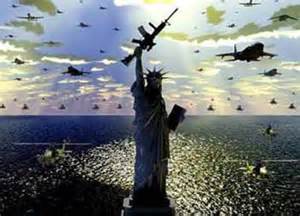
It’s back to the future with Venezuelan ‘Contras,’ the neocons, and the CIA

By Wayne Madsen

Source: Intrepid Report

Donald Trump displayed his full neocon colors on February 18 during a speech at Florida International University in Miami. With convicted Iran-contra felon Elliott Abrams now acting as his “special envoy” in charge of overthrowing the Venezuelan government of President Nicolas Maduro, Trump urged Venezuelan military officers to rise up in a coup d’état and oust Maduro, who Trump called a “Cuban puppet.”

Trump’s call for a coup in Venezuela is ironic when his most loyal supporter in the U.S. Senate, Lindsey Graham (R-SC), claimed that senior Justice Department officials who were discussing legally invoking the 25th Amendment to remove Trump from office in early 2017 were trying to stage a “coup” against Trump. Coups are unconstitutional in any form, while the removal of a president under the 25th Amendment is following the U.S. Constitution to the letter.

As protesters, who carried signs with “No U.S. Coup in Venezuela” and “Hands Off Venezuela,” staged a demonstration on campus and Trump rattled sabers against Venezuela in his speech on the Modesto A. Maidique Campus, covert U.S. operators were busy at Florida airports shipping arms to Venezuelan paramilitary units in Colombia.

At the same time as Trump was threatening Venezuela with a coup, the Haitian government of President Jovenel Moise and Prime Minister Jean-Henry Céant—one of a half dozen remaining allies of the Maduro government in the Western Hemisphere—was faced with an attempted U.S.-led insurrection in his impoverished nation. It is no coincidence that Moise, who was financially buoyed with $2 billion in fuel subsidies and other financial assistance from Venezuela’s state-run PetroCaribe Fund, has faced protests in his country that appear to have been prompted by U.S. “regime change” operatives. Planted in the Haitian media were reports that the Venezuelan fuel assistance funds had been pocketed by Moise and members of his government. That prompted violent protests on the streets of Port-au-Prince, Cap Haïtien, Jeremie, Gonaïves, and Jacmel that have been raging since February 7. More suspicious is that the U.S. State Department ordered all non-essential personnel out of the country following the outbreak of the protests.

On February 17, Haitian police arrested a group of eight heavily-armed men traveling in two cars in the capital of Port-au-Prince. Among the group were five Americans and a Russian, Serbian, and Haitian. The Russian and Serbian may hold permanent residency status in the United States. The Haitian newspaper Le Nouvelliste reported that police discovered in the foreigners’ cars automatic rifles, 45-caliber and Glock pistols, a large amount of ammunition, drones, and satellite phones. Also found in the vehicles were a telescope, backpacks, bullet-proof vests, and various documents, including a list of names of Haitian citizens. The vehicles bore no license plates and the suspects’ passports had no Haitian visa entry stamps. The passports did show extensive travel to other countries prior to being in Haiti. Five Haitian license plates were found in the vehicles.

When arrested by police, the eight men refused to provide identification, insisting that they were on some sort of “government mission.” They did not identify the “government” for whom they were working but insisted that they did not have to talk to the police. One of the arresting police officers said one of those arrested told him, “Our boss would call your boss.” After the eight men were arrested, another vehicle pulled up with a man, who spoke French to the police. He was also arrested. There are unconfirmed reports that the eight men arrested had earlier masqueraded as Haitian National Police officers.

The U.S. corporate media has largely refrained from identifying the arrested Americans and the others. WMR is not bound by protocols with the U.S.

Intelligence Community. The men arrested in Port-au-Prince are:

  • Kent Leland KROEKER, born February 14, 1967, USA partner and chief operating officer of Kroeker Partners, a private security firm. Kroeker is a Marine Corps officer veteran who flew missions in Iraq and Afghanistan
  • Christopher Mark McKINLEY, born September 26, 1969, USA
  • Danilo BAJAVIC, Serbian national, born Belgrade, born May 19, 1982, visa stamp for Karasovici, Croatia, dated July 21, 2017
  • Vlade JANKOVIC, Russian national, born October 9, 1978, Russia
  • Talon R. BURTON, U.S. national, born April 9, 1967, USA
  • Christopher M. OSMAN, U.S. national
  • Dustin Daniel PORTE, U.S. national, born February 12, 1976, USA
  • Michael ESTERA, Haitian national, born October 28, 1980, Haiti

In addition to Kroeker, all of the arrested Americans have U.S. military backgrounds. Estera may be a foreign national employee of the U.S. embassy in Port-au-Prince. It is also noteworthy that Blackwater founder Erik Prince, under investigation for conspiring with Russian, Saudi, and Emirati officials on behalf of the 2016 Trump presidential campaign, employs Serbian and Russian ex-military members in his Reflex Responses (R2) mercenary firm, based in Abu Dhabi. Prince’s sister, Betsy DeVos, is education secretary in the Trump administration.

Haitian police chief Michel-Ange Gedeon told reporters that the men would be charged with violation of weapons laws and criminal conspiracy. The U.S. State Department had no comment on whether the arrested Americans had received U.S. consular assistance, to which they are entitled. The Central Directorate of the Judicial Police (DCPJ) is in charge of the investigation of the foreigners.

The 1980s Contra wars of the Ronald Reagan administration were known for the heavy involvement of U.S. mercenaries, who operated in Central America with a “wink and a nod” from the Central Intelligence Agency and a covert coordination team in the basement of the White House, as well as the Pentagon, and State Department. The mercenaries received their orders from National Security Adviser John Poindexter, Marine Lieutenant Colonel Oliver North, and Elliott Abrams, now Trump’s regime change coordinator for Venezuela. As the Reagan team attempted to overthrow the Sandinista government of Nicaragua, they were also waging a brutal death squad campaign against leftists in El Salvador and Guatemala. In a repetition of history, the Trump administration has authorized a covert campaign to destabilize the government of Nicaragua, while assisting right-wing governments in Guatemala and Honduras to assassinate leftist journalists, activists, and indigenous leaders. Just as during the 1980s, El Salvador is due to become a staging post for a pro-U.S. rightist government under president-elect Nayib Bukele. Bukele replaces the administration led by the leftist Farabundo Marti National Liberation Front (FMLN), which was targeted by the Reagan administration during the 1980s with death squads and paramilitary teams.

At the same time the U.S. mercenaries were arrested in Haiti, Venezuelan authorities seized a Boeing 767 jet, operated by 21Air LLC, said to have been carrying arms to U.S.-backed rebels in Venezuela. The Boeing 767 took off on February 3 from Miami, the same city where Trump, championed by right-wing Cuban-Americans and exiled oligarchs from Venezuela, vowed to overthrow Maduro and “socialism” throughout the hemisphere.

The Boeing’s cargo was seized by Venezuelan authorities at Valencia airport. Included in the secret cargo manifest were 9 assault weapons, including AR-15 rifles, a Micro Draco semi-automatic pistol, and a Colt 7.62 rifle with telescopic sights, in addition to 118 ammunition cartridges and military radio antennas. 21Air LLC’s chairman is Adolfo Moreno, who, according to McClatchy News, is linked to Gemini Air Cargo, an airline involved with the CIA’s “extraordinary rendition” program during the George W. Bush administration and identified as such in a report made by the Council of Europe. The Boeing seized by Venezuela has been busy the last few months, making runs from Miami International Airport to Valencia and Caracas, Venezuela, and Bogota and Medellin, Colombia. 21Air claimed to McClatchy that the Boeing 767 had been chartered by another firm called GPS-Air. 21Air operates a sister firm, 21Cargo, formerly called Solar Cargo C.A.

Moreno is listed in Florida corporation records as also owning South Eastern Aviation LLC of Doral, Florida, Conaire LLC of Miramar, Florida, JW Aviation LLC of Doral; Apple Aviation LLC of Doral; Reliable Transport Logistics LLC of Hialeah, Florida; Freighter 23801 LLC of Hialeah, Freighter 23803 of Doral; Direct Warehouse LLC of Doral; Dynamic Travel LLC of Doral; Enduring Ventures LLC of Miami; and Florida Franchise Development LLC of Miramar. Florida Franchise Development was incorporated by Moreno in 2001 as a subsidiary of Gemini Air Cargo. That firm, along with Airline Management Group, incorporated in 1987, and Gemini Cargo Logistics Inc., the latter a subsidiary of Gemini Air Cargo, all had the same business address of 1750 NW 66th Ave., Miami. According to McClatchy, that address is currently used by Avianca, the Colombian national air carrier. When Trump called for the overthrow of the Venezuelan government, he did so in the midst of dozens of CIA front companies that specialize in carrying out coups, murder, and mayhem.

21Air LLC was incorporated in 2014 and is based in Greensboro, North Carolina, but operates out of Miami International Airport. North Carolina was the location of other CIA proprietary airline front companies involved in the agency’s kidnapping program. These included Air Serv International; Aero Contractors Limited, operating out of Johnston County Regional Airport and the Kinston Regional Jetport; Assembly Pointe Aviation, Inc.; and Water Above Mountain Holdings, LLC of Burlington, North Carolina.

Prior to January, when Maduro was sworn in for a second presidential term, the Boeing 767 had been traveling between Miami, Philadelphia, and other continental U.S. cities.

The smuggling of U.S. weapons to Venezuelan rebels has evoked memories of Elliott Abrams’s antics during the Iran-Contra scandal in the 1980s. CIA contract airlines, including Southern Air Transport, were busy illegally flying U.S. weapons to Honduras and, via air drop, over Nicaragua, for use by the U.S.-backed Nicaraguan Contra guerrillas. One thing about neocons like Abrams and Trump National Security Adviser John Bolton is that they rarely divert from their standard playbooks. Neocons, not being very bright to begin with, find it difficult to “think outside the box,” therefore they repeat the same failed policies and maneuvering over and over again. And that is the clinical diagnosis of insanity.


Wayne Madsen is a Washington, DC-based investigative journalist and nationally-distributed columnist. He is the editor and publisher of the Wayne Madsen Report (subscription required).

Thinking about American Totalitarianism

By Dan Corjescu

Source: CounterPunch

Totalitarianism evolves.

Yet what remains the same through time is the attempt at total control.

Today, control is veiled not overt.

Control weaves its way both totally and surgically into our everyday lives.

Totally, in the master narrative it weaves about “living in a democracy”.

Today, no one lives in a true democracy.

Elections, parties, political personalities are all fraudulent constructions hiding real power.

The media and the entertainment industry are focused on creating a consumerist-nationalist imaginary where shopping and waving the flag are effective daily remedies to ward off any uncomfortable existential doubts.

Both business and the nation still reign in the hearts and minds of millions as the “true Gods”.

The revolution of the “multitude” is far, far away.

Empire, American Empire, is neither setting, fading, or waning. On the contrary, its tentacles stretch throughout every conceivable path and production of biopower.

The expansion of American power that began in earnest after the Great War has continued unabated.

The world is more American now than it has ever been.

Surgically, America through its unrivaled mastery of technology, organization, and capital can pick and choose the actors and actions it wills to manipulate or eliminate.

American global networks of surveillance and suppression have grown and deepened. The threat of world revolution and terror are convenient stories to both mobilize and mesmerize the multitude.

A Hitler and/or a Bin-Laden will always conveniently appear when needed.

Consumption, in all its forms, is the only ideology and it is highly effective since it is based on basic biological processes. The pleasure centers of the brain have lent themselves to the construction of a life of bodily gratification. Thus the ideological celebration of the body has become the new ideological prison of the mind. Nietzsche’s “last man” is the middling subject of our present day totalitarianism.

The majority live their lives dedicated to the pursuit of pleasure and are of no threat or consequence. They are “well adjusted” to the “eternal” run of things. Those who are less so, can be easily handled with marginalization, demonization, psychiatry, and if all else fails, surreptitious elimination.

What are the ultimate goals of power? Its naked reproduction. Power is its own justification. The members may change, but the goal of power’s eternal maintenance remains the same.

Yes, we are allowed to talk, read, go to church, temple, or mosque and even demonstrate but any true chance at deviation from the total control of a society blinded by physical bliss and intoxicated by triumphant and progressivist narratives is precluded from the beginning.

Yet, in the end, change will come. But it will be a change that will serve the interests of those for whom total power is the ultimate aim. The world’s inherent fluidity will run and be directed through their rigid hands.

Fuck You, Dying American Empire: Reflections of an Aging Anti-Imperialist

Credit: JOEL PETT

By Jonah Raskin

Source: CounterPunch

Last year at Jamia Millia Islamia Central University in New Delhi, India I met students and teachers who thought that it was cool that I’d written an anti-imperialist book and that it was still in print nearly fifty years after it was first published. It was easy to be an anti-imperialist at Jamia Millia. After all, the students and the teachers were anti-imperialists and all worked-up about U.S. drones, U.S. air strikes and about the Syrians on the ground who had been battered and bombed.

It was also relatively easy to be an anti-imperialist in the late 1960s and early 1970s when anti-imperialism was a red badge of courage in SDS, the Venceremos Brigade, in anti-war circles and even among the Yippies, who were far more internationalist in their outlook than many on the Left assumed. Once upon a time, Jerry Rubin went to Cuba to check out the revolution, and later to Chile with singer and songwriter, Phil Ochs, to see what Salvador Allende was doing.

But here in the U.S. in 2018, is it still possible to be an authentic anti-imperialist, an anti-imperialist in more than name? I thought about that question recently when a former comrade explained that he was still an anti-imperialist and wondered if I was one, too.

It wasn’t the first time that my politics were questioned. In 1980, soon after Reagan was elected president, Professor Edward Said asked me if I was still on the Left and hadn’t drifted to the right like that former radical, David Horowitz, whom Alexander Cockburn dismissed as a “whiner.” A plain “Yes,” or a “No” answer wouldn’t do, nor a “Maybe.”

Am I now and have I ever been an anti- imperialist? It’s really nobody’s business but my own!

I don’t know anyone in my part of northern California who calls himself or herself an anti-imperialist, though friends and neighbors claim to be against racism, sexism, patriarchy and ageism.

U.S. anti-imperialism has a noble lineage. Mark Twain was an anti-imperialist and so was his friend and fellow writer, William Dean Howells. They both belonged to the American Anti-Imperialist League that was founded in 1898 to oppose the U.S. annexation of the Philippines and whose members included an odd assortment of individuals such as Jane Addams, Josephine Shaw Lowell, Henry James, David Starr Jordan, Grover Cleveland and Andrew Carnegie.

The League, which didn’t oppose U.S. entry into World War I, disbanded in 1920 just as U.S. imperialism was flexing its global muscles more than every before, though from its founding the American republic aimed to go West and become a continental empire.

Then, in the twentieth-century, the nation began to shrink the globe big time, to extract labor from peasants and workers in Asia and Africa and export American light bulbs, American Gatling guns, American lingo—“Kilroy Was Here”—and American movies.

Cultural imperialism always bugged me more than any other aspect of imperialism. I hated to see U.S. cultural commodities supplant indigenous cultures. That sight still rankles me, whether I see it in India, Mexico or the American South West. Every time I see and hear about the survival of ancient myths, legends, dances and music I’m ready to cheer.

Membership in an anti-imperialist league or organization makes sense, but to be an anti-imperialist of one in a sea of California anti-intellectualism and provincialism—“We’re number one”—has little or no meaning to me. Why be an anti-imperialist in name only? No, thanks! I don’t mean to live off past glory, though it was a thrill to meet students in India who had studied The Mythology of Imperialism and who told me it was the first book they’d ever read in which they could hear that the author was angry. That was me! I was pissed.

At 77, it’s not possible to be angry with the same intensity that I was angry at 27 when I wrote my anti-imperialist book in-between rioting in the streets, spray painting slogans at Times Square at midnight, going to jail and having the cops kick the shit out of me. I don’t know of any other way to be an anti-imperialist except the way I was an anti-imperialist during the War in Vietnam.

Indeed, it’s no easy feat to be an old anti-imperialist. Che died at 39, Lenin at 53 and Mark Twain at 74. The author of The Adventures of Huckleberry Finn and A Connecticut Yankee in King Arthur’s Court, which takes a big swipe at weapons of mass destruction, noted near the end of his life, “I am always on the side of the revolutionists, because there never was a revolution unless there were some oppressive and intolerable conditions against which to revolute.” Thanks, Mr. Twain. I’m glad you said that.

Today, there are so many oppressive and intolerable conditions the world over, and so many different imperialisms: the Chinese, the Russian, the India, the Israeli, the Brazilian and the U.S. It was comforting in the 1960s and 1970s to recognize that the American Empire was in decline and that the Soviets, the Vietnamese and the Chinese stood up to the Pentagon. Gratifying, too, that crowds in Paris, Rome, and London denounced the U.S. invasion and occupation of Vietnam, Laos and Cambodia.

Now, who stands up to the White House, the Senate, Google, Facebook and Amazon? Precious few citizens! Empires have proliferated and reinvented themselves. The American Empire is still in decline, though as George Lucas noted in 1980 it did “Strike Back” with Reagan, and later with Bush I, Bush II, Clinton and Obama.

An empire in decline—whether Roman, British, or American—isn’t a pretty thing. It can take decades to fall apart. I saw that when I lived in England. An Empire in decline isn’t really anything to cheer about. Indeed, the fall of empire makes life miserable for migrants, serfs, slaves, refugees, prisoners, pensioners and even for aging anti-imperialists. Maybe it’s a cheap shot. I don’t care. I’ll say it here, “Goodbye and Fuck you, American Empire.”

RIP INF Treaty: Russia’s Victory, America’s Waterloo

By Dmitry Orlov

Source: Club Orlov

On March 1, 2018 the world learned of Russia’s new weapons systems, said to be based on new physical principles. Addressing the Federal Assembly, Putin explained how they came to be: in 2002 the US withdrew from the Anti-Ballistic Missile Treaty. At the time, the Russians declared that they will be forced to respond, and were basically told “Do whatever you want.”

And so they did, developing new weapons that no anti-ballistic missile system can ever hope to stop. The new Russian weapons include one that is already on combat duty (Kinzhal), one that is being readied for mass production (Avangard) and several that are currently being tested (Poseidon, Burevestnik, Peresvet, Sarmat). Their characteristics, briefly, are as follows:

• Kinzhal: a hypersonic air-launched cruise missile that flies at Mach 10 (7700 miles per hour) and can destroy both ground installations and ships.

• Avangard: a maneuverable hypersonic payload delivery system for intercontinental ballistic missiles that flies at better than Mach 20 (15300 miles per hour). It has a 740-mile range and can carry a nuclear charge of up to 300 kilotons.

• Poseidon: an autonomous nuclear-powered torpedo with unlimited range that can travel at a 3000-foot depth maintaining a little over 100 knots.

• Burevestnik: a nuclear-powered cruise missile that flies at around 270 miles per hour and can stay in the air for 24 hours, giving it a 6000-mile range.

• Peresvet: a mobile laser complex that can blind drones and satellites, knocking out space and aerial reconnaissance systems.

• Sarmat: a new heavy intercontinental missile that can fly arbitrary suborbital courses (such as over the South Pole) and strike arbitrary points anywhere on the planet. Because it does not follow a predictable ballistic trajectory it is impossible to intercept.

The initial Western reaction to this announcement was an eerie silence. A few people tried to convince anyone who would listen that this was all bluff and computer animation, and that these weapons systems did not really exist. (The animation was of rather low quality, one might add, probably because Russian military types couldn’t possibly imagine that slick graphics, such as what the Americans waste their money on, would make Russia any safer.) But eventually the new weapons systems were demonstrated to work and US intelligence services confirmed their existence.

Forced to react, the Americans, with the EU in tow, tried to cause public relations scandals over some unrelated matter. Such attempts are repeated with some frequency. For instance, after the putsch in the Ukraine caused Crimea to go back to Russia there was the avalanche of hysterical bad press about Malaysian Airlines flight MH17, which the Americans had shot down over Ukrainian territory with the help of Ukrainian military.

Similarly, after Putin’s announcement of new weapons systems, there was an eruption of equally breathless hysterics over the alleged “Novichok” poisoning of Sergei Skripal and his daughter. A couple of Russian tourists, if you recall, were accused of poisoning Skripal by smearing some toxic gas on the doorknob of his house some time after he left it never to return. Perhaps such antics made some people feel better, but opposing new, breakthrough weapons systems by generating fake news does not an adequate response make.

Say what you will about the Russian response to the US pulling out of the ABM treaty, but it was adequate. It was made necessary by two well-known facts. First, the US is known for dropping nuclear bombs on other countries (Hiroshima, Nagasaki). It did so not in self-defense but just to send a message to the USSR that resistance would be futile (a dumb move if there ever was one). Second, the US is known to have repeatedly planned to destroy the USSR using a nuclear first strike. It was prevented from carrying it out time and again, first by a shortage of nuclear weapons, then by the development of Soviet nuclear weapons, then by the development of Soviet ICBMs.

Ronald Reagan’s “Star Wars” was an attempt to develop a system that would shoot down enough Soviet ICBMs to make a nuclear first strike on the USSR winnable. This work was terminated when Reagan and Gorbachev signed the Anti-Ballistic Missile Treaty in December, 1987. But then when Bush Jr. pulled out of the ABM treaty in 2002 it was off to the races again. Last year Putin declared that Russia has won: the Americans can now rest assured that if they ever attack Russia the result will be their complete, guaranteed annihilation, and the Russians can rest secure in the knowledge that the US will never dare to attack them.

But that was just the prelude. The real victory happened on February 2, 2019. This day will be remembered as the day when the Russian Federation decisively defeated the United States in the battle for Eurasia—from Lisbon to Vladivostok and from Murmansk to Mumbai.

So, what did the Americans want, and what did they get instead? They wanted to renegotiate the INF treaty, revise some of the terms and expand it to include China. Announcing that the US is suspending the INF treaty, Trump said: “I hope we’re able to get everybody in a big, beautiful room and do a new treaty that would be much better…” By “everybody” Trump probably meant the US, China and Russia.

Why the sudden need to include China? Because China has an entire arsenal of intermediate-range weapons with a range of 500-5500 (the ones outlawed by the INF treaty) pointed at American military bases throughout the region—in South Korea, Japan and Guam. The INF treaty made it impossible for the US to develop anything that could be deployed at these bases to point back at China.

Perhaps it was Trump’s attempt to practice his New York real-estate mogul’s “art of the deal” among nuclear superpowers, or perhaps it’s because imperial hubris has rotted the brains of just about everyone in the US establishment, but the plan for renegotiating the INF treaty was about as stupid as can be imagined:

1. Accuse Russia of violating the INF treaty based on no evidence. Ignore Russia’s efforts to demonstrate that the accusation is false.

2. Announce pull-out of the INF treaty.

3. Wait a while, then announce that the INF treaty is important and essential. Condescendingly forgive Russia and offer to sign a new treaty, but demand that it include China.

4. Wait while Russia convinces China that it should do so.

5. Sign the new treaty in Trump’s “big, beautiful room.”

So, how did it actually go? Russia instantly announced that it is also pulling out of the INF treaty. Putin ordered foreign minister Lavrov to abstain from all negotiations with the Americans in this matter. He then ordered defense minister Shoigu to build land-based platforms for Russia’s new air and ship-based missile systems—without increasing the defense budget. Putin added that these new land-based systems will only be deployed in response to the deployment of US-made intermediate-range weapons. Oh, and China announced that it is not interested in any such negotiations. Now Trump can have his “big, beautiful room” all to himself.

Why did this happen? Because of the INF treaty, for a long time Russia has had a giant gaping hole in its arsenal, specifically in the 500-5500 km range. It had air-launched X-101/102s, and eventually developed the Kalibr cruise missile, but it had rather few aircraft and ships—enough for defense, but not enough to guarantee that it could reliably destroy all of NATO. As a matter of Russia’s national security, given the permanently belligerent stance of the US, it was necessary for NATO to know that in case of a military conflict with Russia it will be completely annihilated, and that no air defense system will ever help them avoid that fate.

If you look at a map, you will find that having weapons in the 500-5500 km range fixes this problem rather nicely. Draw a circle with a 5500 km radius around the Russian enclave of Kaliningrad; note that it encompasses every single NATO country, North Africa and Middle East. The INF treaty was not necessarily a good deal for Russia even when it was first signed (remember, Gorbachev, who signed it, was a traitor) but it became a stupendously bad deal as NATO started to expand east. But Russia couldn’t pull out of it without triggering a confrontation, and it needed time to recover and rearm.

Already in 2004 Putin announced that “Russia needs a breakthrough in order to have a new generation of weapons and technology.” At the time, Americans ignored him, thinking that Russia could fall apart at any moment and that they will be able to enjoy Russian oil, gas, nuclear fuel and other strategic commodities for free forever even as the Russians themselves go extinct. They thought that even if Russia tried to resist, it would be enough to bribe some traitors—like Gorbachev or Yeltsin—and all would be well again.

Fast-forward 15 years, and is that what we have? Russia has rebuilt and rearmed. Its export industries provide for a positive trade balance even in absence of oil and gas exports. It is building three major export pipelines at the same time—to Germany, Turkey and China. It is building nuclear generating capacity around the world and owns a lion’s share of the world’s nuclear industry. The US can no longer keep the lights on without Russian nuclear fuel imports. The US has no new weapons systems with which to counter Russia’s rearmament. Yes, it talks about developing some, but all it has at this point are infinite money sinks and lots of PowerPoint presentations. It no longer has the brains to do the work, or the time, or the money.

Part of Putin’s orders upon pulling out of the INF treaty was to build land-based medium-range hypersonic missiles. That’s a new twist: not only will it be impossible to intercept them, but they will reduce NATO’s remaining time to live, should it ever attack Russia, from minutes to seconds. The new Poseidon nuclear-powered torpedo was mentioned too: even if an attack on Russia succeeds, it will be a Pyrrhic one, since subsequent 100-foot nuclear-triggered tsunamis will wipe clean both coasts of the United States for hundreds of miles inland, effectively reducing the entire country to slightly radioactive wasteland.

Not only has the US lost its ability to attack, it has also lost its ability to threaten. Its main means of projecting force around the world is its navy, and Poseidon reduces it to a useless, slow-moving pile of scrap steel. It would take just a handful of Poseidons quietly shadowing each US aircraft carrier group to zero out the strategic value of the US Navy no matter where in the world it is deployed.

Without the shackles of the INF treaty, Russia will be able to fully neutralize the already obsolete and useless NATO and to absorb all of Europe into its security sphere. European politicians are quite malleable and will soon learn to appreciate the fact that good relations with Russia and China are an asset while any dependence on the US, moving forward, is a huge liability. Many of them already understand which way the wind is blowing.

It won’t be a difficult decision for Europe’s leaders to make. On the one pan of the scale there is the prospect of a peaceful and prosperous Greater Eurasia, from Lisbon to Vladivostok and from Murmansk to Mumbai, safe under Russia’s nuclear umbrella and tied together with China’s One Belt One Road.

On the other pan of the scale there is a certain obscure former colony lost in the wilds of North America, imbued with an unshakeable faith in its own exceptionalism even as it grows ever weaker, more internally conflicted and more chaotic, but still dangerous, though mostly to itself, and run by a bloviating buffoon who can’t tell the difference between a nuclear arms treaty and a real estate deal. It needs to be quietly and peacefully relegated to the outskirts of civilization, and then to the margins of history.

Trump should keep his own company in his “big, beautiful room,” and avoid doing anything anything even more tragically stupid, while saner minds quietly negotiate the terms for an honorable capitulation. The only acceptable exit strategy for the US is to quietly and peacefully surrender its positions around the world, withdraw into its own geographic footprint and refrain from meddling in the affairs of Greater Eurasia.

Some interesting new information about 9/11

Source: TruePublica.org

TruePublica Editor: We have published almost nothing about 9/11 on TruePublica. When independent news outlets do, they are immediately branded by the mainstream media and so-called ‘fact-checkers’ as conspiracy theorists. The BBC makes this point precisely in a 2018 article that starts like this – “On 11 September 2001, four passenger planes were hijacked by radical Islamist terrorists – almost 3,000 people were killed as the aircraft were flown into the World Trade Centre, the Pentagon and a Pennsylvania field. Just hours after the collapse of New York’s Twin Towers, a conspiracy theory surfaced online which persists more than 16 years later.”

The entire article is dedicated to all the ‘conspiracy theories’ involved in 9/11 and makes a mockery of anyone or anything that questions the official government line. They even heavily mock the brother of one man killed in 9/11 and frankly, true or not, the BBC’s report itself is rather sickening to read.

And yet, here we are, all these years later and it’s hardly surprising the theories of a conspiracy continue.

2016 study from Chapman University in California, found more than half of the American people believe the government is concealing information about the 9/11 attacks. This is in part because, large sections of the official US government report were redacted for years – and is still missing to this day.

The big problem is that the government is withholding crucial evidence. And then there’s other evidence the state and mainstream media refuse to even consider.

Paul Craig Roberts is an American economist and former United States Assistant Secretary of the Treasury for Economic Policy under President Reagan. Roberts was an associate editor and columnist for The Wall Street Journal and columnist for Business Week and has received the Warren Brookes Award for Excellence in Journalism. In 1993 the Forbes Media Guide ranked him as one of the top seven journalists in the United States.

Roberts wrote this really interesting piece of information just a few days ago that the mainstream media has been completely silent about: “Although the United States is allegedly a democracy with a rule of law, it has taken 17 years for public pressure to bring about the first grand jury investigation of 9/11. Based on the work of Architects & Engineers for 9/11 Truth led by Richard Gage, first responder and pilots organizations, books by David Ray Griffin and others, and eyewitness testimony, the Lawyers’ Committee for 9/11 Inquiry has presented enough hard facts to the US Attorney for the Southern District of New York to force his compliance with the provisions of federal law that require the convening of a federal grand jury to investigate for the first time the attacks of September 11, 2001. https://www.lawyerscommitteefor9-11inquiry.org

This puts the US Justice (sic) Department in an extraordinary position. There will be tremendous pressures on the US Attorney’s office to have the grand jury dismiss the evidence as an unpatriotic conspiracy theory or otherwise maneuver to discredit the evidence presented by the Lawyers’ Committee, or modify the official account without totally discrediting it.

“What the 9/11 truthers and the Lawyers’ Committee have achieved is the destruction of the designation of 9/11 skeptics as “conspiracy theorists.” No US Attorney would convene a grand jury on the basis of a conspiracy theory. Clearly, the evidence is compelling that has put the US Attorney in an unenviable position.”

If the Lawyers’ Committee and the 9/11 truthers trust the US Attorney to go entirely by the facts, little will come of the grand jury. If the United States had a rule of law, something as serious as 9/11 could not have gone for 17 years without investigation.”

Three weeks before Roberts’ made this statement a letter was published by Off-Guardian about a Huffington Post hit piece about an academic teaching journalism. Its first paragraph explains entirely its own position.

An academic teaching journalism students at one of the UK’s top universities has publicly supported long-discredited conspiracy theories about the 9/11 terror attack, HuffPost UK can reveal.

This entire article, like that of the BBC’s, vigorously attacks any individual or organisation that has the temerity to question the ‘official’ narrative on any major incident as offered up by the state, such as the Skripal poisonings, Syria’s chemical weapons, Iraq and Chilcot Report.

HuffPost even uses an unnamed former head of MI6 and an unnamed former Supreme Commander of Nato to dispel such challenges to this narrative and then attacks other sources of news such as RT as nothing more than Russian propaganda irrespective of the source. As a rule, TruePublica does not publish news sourced by RT but that does not make all of its content propaganda.

David Ray Griffin, a retired American professor and political writer who founded the Center for Process Studies which seeks to promote the common good by means of the relational approach found in process thought was the co-author of the book ‘9/11 Unmasked’ – part of the attack piece was centred on by the HuffPost hit piece.

The head of the 9/11 Consensus Panel, the other co-author, responded to the HuffPost.  For information, the goal of the Consensus Panel is to “provide a ready source of evidence-based research to any investigation that may be undertaken by the public, the media, academia, or any other investigative body or institution.”

That letter is as follows:


Jess Brammer, UK Huffington Post
Chris York, UK Huffington Post

Dear Ms. Brammar and Mr. York:

I was the head information specialist serving the Medical Health Officers of British Columbia, Canada, for 25 years.

Your attack piece on Professor Piers Robinson and on the scholarly work of Dr. David Ray Griffin is the least accurate and the lowest quality published article I have ever seen.

I have assisted Dr. Griffin with 10 of his investigative books into the events of 9/11. In 2011 we decided to create the international 9/11 Consensus Panel to review and evaluate the official claims relating to September 11, 2001. The Panel we formed has 23 members, including people from the fields of physics, chemistry, structural engineering, aeronautical engineering, piloting, airplane crash investigation, medicine, journalism, psychology, and religion (For the full list, see here).

In seeking a consensus methodology, I was advised by the former provincial epidemiologist of British Columbia to employ a leading model that is used in medicine to establish the best diagnostic and treatment evidence to guide the world’s doctors using medical consensus statements.

The Panel methodology has produced, seven years later, 51 refutations of the official claims, which were published as 911 Unmasked: An International Review Panel Investigation in September, 2018.

Each Consensus Point, now a chapter in this book, was given three rounds of review and feedback by the Panel members. The panelists were blind to one another throughout the process, providing strictly uninfluenced individual feedback. Any Points that did not receive 85% approval by the third round were set aside.

The Honorary Members of the Panel include the late British (and longest-serving) parliamentarian Michael Meacher, the late evolutionary biologist Lynn Margulis, and the late Honorary President of the Italian Supreme Court, Ferdinando Imposimato.

The Huffington Post drastically lowered its standards to publish this hit piece, and what influenced it to do so is a question worth pursuing.

Yours truly

Elizabeth Woodworth, Co-author with Dr. David Ray Griffin
9/11 Unmasked


It is over 18 years now since the world-changing event of 9/11. One wonders when the information held by the American government, that continues to anger so many people affected by it will ever emerge.

However, one reason why such questions persist is precisely that of the actions of the US government itself. One should not forget those so-called ‘conspiracy theories’ that actually came true that continues to pour petrol on the flames of doubt.

For example, the American government killed thousands by poisoning alcohol to prove its point that alcohol was bad for the general public during prohibition. This was a ‘conspiracy theory’ that went on for decades – until it was proven to be true.

Then, you can take your pick of the lies government tells when it comes to starting wars – how about the lie the Saddam Hussain and Iraq had WMD ready to fire at Western targets. Total deaths exceeded 1 million. Yet another classic American lie was the Gulf of Tonkin incident in August 1964, as a pretext for escalating the country’s involvement in the Vietnam War that killed 60,000 American soldiers. Total deaths racked up 1.35 million, all based on a lie. That incident only came about because of an unintentional declassification of an NSA file in 2005.

Edward Snowden proved with his revelations in 2013 that the government was spying on everyone when the government had denied they had ever done so. It took a whistleblower to let us all know. The UK government has been found by the highest courts in the land to have broken numerous privacy and surveillance laws as a result of mass civilian surveillance systems.

Operation Mockingbird was a US government operation where journalists were paid to publish CIA propaganda, only uncovered by the Watergate scandal. It took a thief to unknowingly capture secret documents and recordings for the public to find out.

The list goes on and on – just as 9/11 will, so it will be interesting to see how the US Attorney, presented with evidence from so many prominent professionals will bury yet more 9/11 evidence. Don’t hold your breath though, the same questions will, no doubt, still be being asked in another 18 years time.

The 4 Greatest Enemies of the State

By Gary Z McGee

Source: The Mind Unleashed

“It’s no measure of health to be well-adjusted to a profoundly sick society.” ~Krishnamurti

How do we know that our society is profoundly sick?

  • 1.) Our society pollutes the air it needs to breathe.
  • 2.) Our society pollutes the water it needs to drink.
  • 3.) Our society pollutes the food it needs to eat.
  • 4.) Our society pollutes the minds it needs to evolve with.

Any system that forces its people to breathe polluted air, drink polluted water, eat polluted food and then continue to do all the things that causes that pollution is a profoundly sick society.

It is in this fundamental way that human wellbeing itself has become the enemy of the state. Statism only functions with unhealthy, divided individuals. It cannot continue if people are healthy and connected. In short: statism fails when enough people achieve a sense of wellbeing despite it.

So, if wellbeing is the enemy of the state, then it stands to reason that anyone seeking wellbeing is also an enemy of the state. Just as those seeking health, vitality and freedom do well to be maladjusted to a profoundly sick society, those seeking wellbeing do well to become enemies of the state.

Freedom is the enemy of the state:

“State is the name of the coldest of all cold monsters. Coldly it lies; and this lie slips from its mouth: ‘I, the state, am the people.’” ~Nietzsche

Have no illusions, the curtailment of human freedom is the state’s business. At every turn the Goliath of the state rears its ugly head, checking the free movement of otherwise free individuals. It’s a monstrous Hydra of overreaching power, hellbent on keeping its people controlled, corralled, and contained under the illusion of security and safety, and under the rampant delusion of law and order.

No nation-state on the planet is genuinely free. All are falsely and insincerely “free.” They are only ever “free” inside the unhealthy box of their conditions. Therefore, they are not free. True freedom is allowing the free movement of people and allowing people to govern themselves under the guidance of the golden rule and the nonaggression principle.

So what is a free-range human to do in the face of such a monstrosity? Become David against Goliath. Become Heracles against Hydra. Become a well-armed lamb contesting all votes. Become lionhearted despite all cowards.

But before that, you must check yourself. You must become free. If you are not free, then you cannot be heroic. You must be free in order to gain the type of courage necessary to become. Full stop.

The golden rule is the enemy of the state:

“Live simply so that others may simply live.” ~Gandhi

Statism is the antithesis of the golden rule. Why is this? Because the state demands that you do unto each other as the state demands. This is the opposite of the golden rule.

The state tricks you into believing that the state is the people. But the state is not the people. It’s the illusion of a people. People are made up of individuals. Individuality is predicated upon freedom. Further freedom is predicated upon individuals allowing other individuals to be free. The state doesn’t allow individuals to be free. It only gives individuals “permission” to be free upon certain conditions, which is the illusion of freedom.

If freedom is the foundation of the golden rule, then consent is its backbone. Without consent there is only rape. Lest we allow rape, consent is paramount.

It’s simple: The difference between robbery and a good trade is consent. The difference between murder and assisted death is consent. The difference between rape and a healthy sexual encounter is consent. The difference between oppression and freedom is consent. The difference between coercion and voluntarism is consent. Consent is everything.

If I don’t want to trade my dollar for your twinkie and you steal my dollar anyway, that’s robbery, because I did not consent. If I don’t want to have sex with you but you have sex with me anyway, that’s rape, because I did not consent. If I feel that your arbitrary law is immoral and you force me to follow it anyway, that’s oppression, because I did not consent. If I don’t want to give up my money to your arbitrary tax system but you force me to do so anyway, that’s coercion, because I did not give my consent.

In order to be a healthy, responsible, moral, and just human being, you must allow others to give their consent. Otherwise, you are violating the golden rule.

If your values are based upon violence being the solution to problems, then your values violate the golden rule. If your values are based upon hindering the freedom of others, then your values violate the golden rule. If your values are based upon coercing people to give you money when they haven’t consented, then your values violate the golden rule.

Bottom line: if your values are based upon violating the golden rule, then your values are immoral, unjust and unhealthy.

Nonviolence is the enemy of the state:

“An eye for an eye makes the whole world blind.” But “When there is only a choice between cowardice and violence, I would advise violence.”~Gandhi

The state wants violent citizens so that it can control them. When people are nonviolent and compassionate toward each other the state doesn’t have an excuse to prevent freedom (though it will still make up excuses). When people are violent and intolerant toward each other the state has a reason to prevent freedom.

Nonviolence is the enemy of the state because the state’s solution to all problems is violence. When its citizenry comes up with nonviolent solutions it makes the state obsolete. But the state will always fight to maintain its overreaching power and control. So, in order not to become obsolete, it must maintain its violence.

The only thing that can prevent state violence is the people realizing that the state is not the people, and upon realizing this, choose to be nonviolent despite the violence of the state.

The flip side of this coin, however, is self-defense. The people must also wake up to the fact that they alone must defend themselves against violence. Whether that violence comes from an individual, a group of individuals, or from the state. The only time when violence is morally correct is in self-defense.

This can become a tricky psychological briar patch. But, basically, offensive violence is unhealthy and immoral (tyranny), whereas defensive violence is healthy and moral (justice). As Albert Camus said, “Absolute freedom mocks justice. Absolute justice denies freedom. To be fruitful, the two ideas must find their limits in each other.”

Peace is the enemy of the state:

“Never relinquish your ability to doubt, reflect, and consider other options –your rationality as an individual is your only protection against the madness that can overcome a group.” ~Robert Greene

If wellbeing, health, freedom, the golden rule, and nonviolence are all the enemy of the state, then what does that tell you?

Feel free to lose the wrestling match between your higher reasoning and your cognitive dissonance. I’ll wait here…

The bottom line is this: War is the only way any nation-state maintains itself. And yet love (peace, compassion, freedom, justice) is the only way humans can progressively evolve in a healthy way.

The state is always at war—with itself, with its citizens, with other states. There is no way out of its net of covert violence unless you leave it behind and become a free-range human. In order to be a lover of humanity one must become an enemy of the state.

The realization that in order to be a healthy, moral, and just human one must become an enemy of the state, is a tough pill to swallow. It’s not for the faint of heart. It will take counterintuitive reasoning to fully fathom it. It will require you to think outside of whatever box you’ve been conditioned to think inside of for most of your life. It will force you to unwash the brainwash. It will involve reprogramming your programming. It will demand that you question the profoundly sick society you were born into.

Most of all, it will require audacious courage in the face of comfortable cowardice. But, as Ralph Waldo Emerson wisely stated, “A man is to carry himself in the presence of all opposition. I ought to go upright and vital and speak the rude truth in all ways. Your goodness must have some edge to it—else it is none.”

Learning from Gandhi

By Robert J. Burrowes

Mohandas Karamchand Gandhi was born on 2 October 1869: 150 years ago this year.

There will be many tributes to Gandhi published in 2019 so I would like to add one of my own.

This reflects not just my belief that he gave the world inspiration, ideas and powerful strategies for tackling violence in a wide range of contexts but because my own experience in applying his ideas has proven their worth. This included his awareness that led him to declare that ‘If we are to make progress, we must not repeat history but make new history. We must add to the inheritance left by our ancestors.’ and his encouragement to reflect deeply and listen to one’s ‘inner voice’: ‘you should follow your inner voice whatever the consequences’ and ‘even at the risk of being misunderstood’.

In essence, we can productively learn from history but we can build on it too. And, vitally, this includes dealing more effectively with violence.

So how did Gandhi influence me?

Shortly after midnight on 1 July 1942, my Uncle Bob was killed when the USS Sturgeon, a U.S. submarine, fired torpedoes into the Japanese prisoner of war (POW) ship Montevideo Maru. The ship sank immediately and, along with 1,052 other POWs, Bob was killed.

Apart from his older brother, my father’s twin brother was also killed in World War II. In Tom’s case, he was shot down over Rabaul on his first (and final) mission. He was a wireless air gunner on a Beaufort Bomber. See ‘The Last Coastwatcher: My Brothers’.

My childhood is dotted with memories of Bob and Tom. The occasional remembrance service, war medals and the rare story shared by my father.

In 1966, the year I turned 14, I decided to devote my life to finding out why human beings kill each other and to work out how such killing could be ended. The good news about this ‘decision’ is that, at 14, it all felt manageable! But I wasn’t much older before my preliminary investigations proved that even understanding why humans are violent was going to be a profound challenge. And I intuitively understood that I needed this understanding if any strategy to end violence was to be effective.

In any case, as one might expect, my research into violence and strategies for addressing it led me to nonviolence. I came across virtually nothing about nonviolence during my own studies at school and university but was regularly presented with news reports of people participating in activities – such as demonstrations and strikes – that I later learned to label ‘nonviolent action’.

In 1981 I decided to seek out materials on nonviolence and nonviolent action so that I could learn more about it. I had not been reading for long when the routine reference to Mohandas K. (or Mahatma) Gandhi, about whom I had heard a little and knew of his role in leading the Indian independence struggle, forced me to pay more attention to his life and work. So I sought out his writing and started to read some of his published work. An Autobiography: The Story of My Experiments with Truth was an obvious and early book but there were many others besides. I also read many books about Gandhi, to get a clearer sense of his life as a whole, as reported by his coworkers and contemporaries, as well as documented by scholars since his death. And I spent a great many hours in a library basement poring over The Collected Works of Mahatma Gandhi.

The thing that struck me immediately about Gandhi was that his own interest in tackling violence had a comprehensive ‘feel’ about it. That is, he was not just interested in the violence that occurs when nations fight wars or one person kills or injures another. He was interested in addressing the violence that occurs when individuals and nations exploit other individuals/nations (such as when British imperialism exploited India and Indians) and the violence that occurs when a structure (such as capitalism or socialism) exploits the individuals within it. In his words: ‘exploitation is the essence of violence’. He was interested in the violence that occurs when members of one social group (say, Hindus) ‘hate’ the members of another social group (such as Muslims). He was interested in the violence that occurs when men oppress women or caste Hindus oppress ‘untouchables’. He was interested in the violence that occurs when humans destroy the environment. And he was interested in the violence that one inflicts on oneself.

This comprehensive interest resonated deeply with me because, apart from war, my own childhood and adolescence had revealed many manifestations of violence ranging from the starvation of people in developing countries to the racism in the United States (highlighted by Rev. Martin Luther King Jr. during the 1960s) to the destruction of the environment, each of which had gradually but deeply embedded itself in my consciousness. Tackling violence was a far bigger task than the large one I had originally imagined. Violence is everywhere. Most importantly, it seemed to me, there was enormous violence directed against children in the family home but little was spoken or written about this.

So how did Gandhi explain violence and what was his strategy for addressing it?

Gandhi on Conflict and Violence

For Gandhi, conflict was a perennial condition. He also viewed it positively and considered it desirable. For him, it is an important means to greater human unity precisely because their shared conflict could remind antagonists of the deeper, perhaps transcendental, unity of life, which is far more profound than the bond of their social relationship.

He viewed violence differently, however. And, as might be gleaned from the many configurations of violence that concerned him, as noted above, he considered that violence was built into social structures and not into people.

Fundamentally, as Leroy Pelton characterized it, Gandhi understood that the truth cannot be achieved through violence (‘which violates human needs and destroys life’), because violence itself is a form of injustice. In any case, violence cannot resolve conflict because it does not address the issues at stake.

To reiterate then, for Gandhi there was nothing undesirable about conflict. However, Gandhi’s preoccupation was working out how to manage conflict without violence and how to create new social arrangements free of structural violence. The essence, then, of Gandhi’s approach was to identify approaches to conflict that preserved the people while systematically demolishing the evil structure. Nevertheless, he firmly believed that structural purification alone is not enough; self-purification is also essential.

In other words, in Gandhi’s view, resolving the conflict (without violence) is only one aspect of the desired outcome. For Gandhi, success also implies the creation of a superior social structure, higher degrees of fearlessness and self-reliance on the part of both satyagrahis (nonviolent activists) and their opponents, and a greater degree of human unity at the level of social relationships.

Two Key Questions

Despite the enormous influence that Gandhi had in shaping my own conception of conflict and the precise conception of nonviolence that should be used in dealing with it, I nevertheless remained convinced that two questions remained unanswered: What is the psychological origin of the violent behavior of the individual who perpetrates it? And what theory or framework should guide the application of nonviolent action so that campaigns of all kinds are strategically effective?

The first question is important because even if someone is trapped within a social structure (such as the class system) that is violent, the individual must still choose, consciously or unconsciously, to participate (as perpetrator, collaborator or victim) in the violence perpetrated by that structure or one must choose, consciously, to resist it. Why do so many individuals perform one of the first three roles and so few, like Gandhi himself, choose the role of resister?

The second question is important because while Gandhi himself was an astonishingly intuitive strategic thinker (whose 30-year nonviolent strategy liberated India from British occupation), no one before him or since his death has demonstrated anything remotely resembling his capacity in this regard.

Hence, while nonviolence, which is inherently powerful, has chalked up some remarkable successes, vital struggles for peace (and to end war); to halt assaults on Earth’s biosphere; to secure social justice for oppressed and exploited populations; to liberate national groups from dictatorship, occupation or genocidal assault; and struggles in relation to many other just causes limp along devoid of strategy (or use one that is ill-conceived). So badly are we failing, in fact, that humans now teeter on the brink of precipitating our own extinction. See ‘Human Extinction by 2026? A Last Ditch Strategy to Fight for Human Survival’.

Anyway, having studied Gandhi extensively and learned from his strategic approach to nonviolence (elements of which I was progressively including in nonviolent campaigns in which I was involved myself), I resumed my original research to understand the fundamental origin of human violence and also decided to develop a strategic theory and framework for addressing violence in the campaign context so that Gandhi’s strategic thinking could be readily copied by other nonviolent activists.

It turned out that developing this strategic theory and strategy was simpler than the original aim (understanding violence) and I have presented this strategic thinking on two websites: Nonviolent Campaign Strategy and Nonviolent Defense/Liberation Strategy.

Despite my preliminary efforts in the 1990s to encourage fellow activists to use this framework, it soon became clear that only the rarest of activists has the capacity to think strategically about an issue, even when presented with a framework for doing so.

The Origin of Human Violence

Consequently, the vital importance of understanding the origin of human violence was starkly demonstrated to me yet again because I knew it would answer key supplementary questions such as these: Why to do so many people live in denial/delusion utterly incapable of perceiving structural violence or grappling powerfully with (military, social, political, economic and ecological) violence? Why is it that so many people, even activists, are powerless to think strategically? How can activists even believe that success can be achieved, particularly on the major issues of our time (such as the threats of nuclear war, ecological devastation and climate cataclysm), without a focused and comprehensive strategy, particularly given elite resistance to such campaigns? See ‘The Global Elite is Insane Revisited’.

Hence, in an attempt to answer questions such as these, Anita McKone and I went into seclusion in an endeavor to understand how our own minds functioned so that we might better understand the minds of others. I hoped it would take a few months. It took 14 years.

So what is the cause of violence in all contexts and which, depending on its precise configuration in each case, creates perpetrators of violence, people who collaborate with perpetrators of violence, people who are passive victims of violence, people who live in denial/delusion, people who are sexist or racist, and activists who cannot think strategically (among many other adverse outcomes)?

Each of these manifestations of human behaviour is an outcome of the adult war on children. That is, adult violence against children is the fundamental cause of all other violence.

How does this happen? It happens because each child, from birth, is socialized – more accurately, terrorized – so that they fit into their society. That is, each child is subjected to an unrelenting regime of ‘visible’, ‘invisible’ and ‘utterly invisible’ violence until they offer the obedience that every adult – parent, teacher, religious figure… – demands.

So what constitutes ‘visible’, ‘invisible’ and ‘utterly invisible’ violence?

‘Visible’ violence includes hitting, screaming at and sexually abusing a child which, sadly enough, is very common.

But the largest component of damage arises from the ‘invisible’ and ‘utterly invisible’ violence that we adults unconsciously inflict on children during the ordinary course of the day. Tragically, the bulk of this violence occurs in the family home and at school. For a full explanation, see ‘Why Violence?’ and Fearless Psychology and Fearful Psychology: Principles and Practice.

‘Invisible’ violence is the ‘little things’ we do every day, partly because we are just ‘too busy’. For example, when we do not allow time to listen to, and value, a child’s thoughts and feelings, the child learns to not listen to themSelf thus destroying their internal communication system. When we do not let a child say what they want (or ignore them when they do), the child develops communication and behavioral dysfunctionalities as they keep trying to meet their own needs (which, as a basic survival strategy, they are genetically programmed to do).

When we blame, condemn, insult, mock, embarrass, shame, humiliate, taunt, goad, guilt-trip, deceive, lie to, bribe, blackmail, moralize with and/or judge a child, we both undermine their sense of Self-worth and teach them to blame, condemn, insult, mock, embarrass, shame, humiliate, taunt, goad, guilt-trip, deceive, lie, bribe, blackmail, moralize and/or judge.

The fundamental outcome of being bombarded throughout their childhood by this ‘invisible’ violence is that the child is utterly overwhelmed by feelings of fear, pain, anger and sadness (among many others). However, mothers, fathers, teachers, religious figures and other adults also actively interfere with the expression of these feelings and the behavioral responses that are naturally generated by them and it is this ‘utterly invisible’ violence that explains why the dysfunctional behavioral outcomes actually occur.

For example, by ignoring a child when they express their feelings, by comforting, reassuring or distracting a child when they express their feelings, by laughing at or ridiculing their feelings, by terrorizing a child into not expressing their feelings (for instance, by screaming at them when they cry or get angry), and/or by violently controlling a behavior that is generated by their feelings (for example, by hitting them, restraining them or locking them into a room), the child has no choice but to unconsciously suppress their awareness of these feelings.

However, once a child has been terrorized into suppressing their awareness of their feelings (rather than being allowed to have their feelings and to act on them) the child has also unconsciously suppressed their awareness of the reality that caused these feelings. This has many outcomes that are disastrous for the individual, for society and for the biosphere because the individual will now easily suppress their awareness of the feelings that would tell them how to act most functionally in any given circumstance and they will progressively acquire a phenomenal variety of dysfunctional behaviors, including some that are violent towards themself, others and/or the Earth.

So what do we do?

Well, if you want to make an enormous contribution to our effort to end violence, you can make the commitment outlined in ‘My Promise to Children’. If you need to do some healing of your own to be able to nurture children in this way, then consider the information provided in the article ‘Putting Feelings First’.

If you want to systematically tackle violence against the biosphere, consider (accelerated) participation in the fifteen-year strategy, inspired by Gandhi, outlined in ‘The Flame Tree Project to Save Life on Earth’. This project outlines a simple plan for people to systematically reduce their consumption, by at least 80%, involving both energy and resources of every kind – water, household energy, transport fuels, metals, meat, paper and plastic – while dramatically expanding their individual and community self-reliance in 16 areas, so that all environmental concerns are effectively addressed. As Gandhi observed 100 years ago: ‘Earth provides enough for every person’s need but not for every person’s greed.’

But, critically important though he believed personal action to be, Gandhi was also an extraordinary political strategist and he knew that we needed to do more than transform our own personal lives. We need to provide opportunities that compel others to consider doing the same.

So if your passion is campaigning for change, consider doing it strategically, as Gandhi did. See Nonviolent Campaign Strategy.

And if you want to join the worldwide movement to end all violence against humans and the biosphere, you can do so by signing the online pledge of The Peoples Charter to Create a Nonviolent World.

Gandhi was assassinated on 30 January 1948. But his legacy lives on. You can learn from it too, if you wish.


Biodata: Robert J. Burrowes has a lifetime commitment to understanding and ending human violence. He has done extensive research since 1966 in an effort to understand why human beings are violent and has been a nonviolent activist since 1981. He is the author of Why Violence? His email address is flametree@riseup.net and his website is here.

Robert J. Burrowes
P.O. Box 68
Daylesford, Victoria 3460
Australia

Email: flametree@riseup.net

Websites:
Nonviolence Charter
Flame Tree Project to Save Life on Earth
‘Why Violence?’
Feelings First
Nonviolent Campaign Strategy
Nonviolent Defense/Liberation Strategy
Anita: Songs of Nonviolence
Robert Burrowes
Global Nonviolence Network