In “Bad Boy Bubby” (1993), an Australian film by writer/director Rolf de Heer, Nicholas Hope gives a brilliant performance as Bubby, a man who’s been kept confined and abused physically and emotionally by his mother for 35 years. He eventually escapes and has a number of chance encounters which reveal different aspects of himself and society. The first portion of the film is the most brutal, but as Bubby ventures out into the world the film’s tone lightens a bit and becomes more of a traditional (yet still twisted) dark comedy. Bad Boy Bubby is definitely not for all tastes and is initially difficult to watch, but is ultimately rewarding for its uniformly great performances, writing and direction.
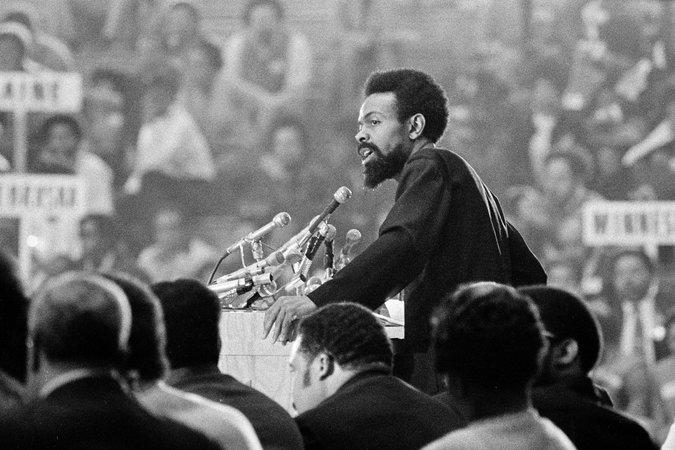
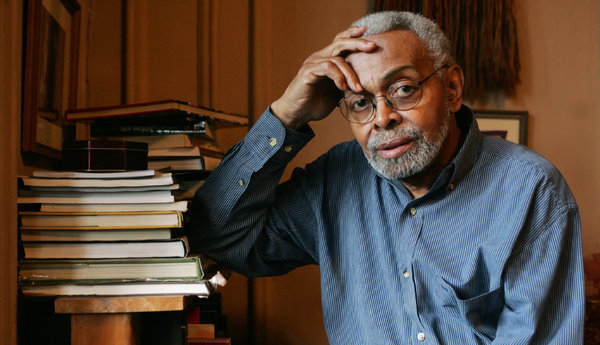
Yesterday Amiri Baraka, a longtime activist and one of the great American poets, passed away at age 79. The cause of his death, at Beth Israel Medical Center in Newark, New Jersey, was not immediately released, but he was hospitalized in the facility’s intensive care unit since Dec. 21 and had a long struggle with diabetes.
Reflecting the exploratory and always-evolving nature of his mind, Amiri’s career path connected him to the Greenwich Village Beat community, the Black Nationalists, the Black Arts Movement (which he founded in 1964), and Marxist-Leninists. Though his beliefs during different stages of life may have different labels, he was consistently committed to justice, unity, social change and the struggle against oppression. As a revolutionary organizer, cultural critic, poet, novelist, essayist, historian, playwright, publisher and orator, Amiri Baraka’s words and ideas have influenced and inspired untold numbers of people around the world. His works have also been the source of much controversy, outrage and condemnation, at least during the initial time of their release.
One of Baraka’s last great acts as a rabble-rouser was his recitation of his poem “Somebody Blew Up America” before 2,000 people at the September 2002 Geraldine R. Dodge Poetry Festival held in Stanhope, New Jersey. This was incredibly courageous because throughout the country (especially on the East Coast) just one year after the attacks, questioning the official 9/11 story was enough to make one viewed as a conspiracy theorist, an apologist for terrorists, possibly traitorous, and/or insensitive to victims and their families. To do so and implicate the Israeli government, as Amiri Baraka did in his poem, led to accusations of antisemitism from the Anti-Defamation League. Many at the time believed the accusations even though under closer scrutiny it was obviously untrue because in the poem he clearly condemns the murder of Jews in the Holocaust and the lines in question could more accurately be described as anti-Zionist.
Who know why Five Israelis was filming the explosion And cracking they sides at the notion?
Amiri Baraka was appointed Poet Laureate of New Jersey just one month before delivering “Somebody Blew Up America” to the public. Despite pressure from the powers that be to resign immediately, he steadfastly refused. In his own words, from an October 2, 2002 post on his website: “I WILL NOT ‘APOLOGIZE’, I WILL NOT ‘RESIGN!'” Governor Jim McGreevey and state legislators discovered there was no legal way to remove Poet Laureate appointees so in an act revealing their fear, hatred and desperation, they abolished the post in July 2003. This is just one chapter of many from Baraka’s often history-making career, but it’s emblematic of his courage, integrity, dedication to truth, and stubborn stance against injustice. This isn’t to say he was a saint or superhero. None of us are without fault, but what we can learn from Amiri is that development of political thought and civic engagement can and should be lifelong processes, and one can remain true to oneself yet open to new ideas and experiences. Above all, his life is a reminder that simple words (especially when composed and unleashed with skill at the right place and time) contain immense power; sometimes enough to change the world.
Photo: Ruth Fremson/The New York Times
Somebody Blew Up America
They say its some terrorist, some barbaric A Rab, in Afghanistan It wasn’t our American terrorists It wasn’t the Klan or the Skin heads Or the them that blows up nigger Churches, or reincarnates us on Death Row It wasn’t Trent Lott Or David Duke or Giuliani Or Schundler, Helms retiring
It wasn’t The gonorrhea in costume The white sheet diseases That have murdered black people Terrorized reason and sanity Most of humanity, as they pleases
They say (who say?) Who do the saying Who is them paying Who tell the lies Who in disguise Who had the slaves Who got the bux out the Bucks
Who got fat from plantations Who genocided Indians Tried to waste the Black nation
Who live on Wall Street The first plantation Who cut your nuts off Who rape your ma Who lynched your pa
Who got the tar, who got the feathers Who had the match, who set the fires Who killed and hired Who say they God & still be the Devil
Who the biggest only Who the most goodest Who do Jesus resemble
Who created everything Who the smartest Who the greatest Who the richest Who say you ugly and they the goodlookingest
Who define art Who define science
Who made the bombs Who made the guns
Who bought the slaves, who sold them
Who called you them names Who say Dahmer wasn’t insane
Who? Who? Who?
Who stole Puerto Rico Who stole the Indies, the Philipines, Manhattan Australia & The Hebrides Who forced opium on the Chinese
Who own them buildings Who got the money Who think you funny Who locked you up Who own the papers
Who owned the slave ship Who run the army
Who the fake president Who the ruler Who the banker
Who? Who? Who?
Who own the mine Who twist your mind Who got bread Who need peace Who you think need war
Who own the oil Who do no toil Who own the soil Who is not a nigger Who is so great ain’t nobody bigger
Who own this city
Who own the air Who own the water
Who own your crib Who rob and steal and cheat and murder and make lies the truth Who call you uncouth
Who live in the biggest house Who do the biggest crime Who go on vacation anytime
Who killed the most niggers Who killed the most Jews Who killed the most Italians Who killed the most Irish Who killed the most Africans Who killed the most Japanese Who killed the most Latinos
Who? Who? Who?
Who own the ocean
Who own the airplanes Who own the malls Who own television Who own radio
Who own what ain’t even known to be owned Who own the owners that ain’t the real owners
Who own the suburbs Who suck the cities Who make the laws
Who made Bush president Who believe the confederate flag need to be flying Who talk about democracy and be lying
Who the Beast in Revelations Who 666 Who know who decide Jesus get crucified
Who the Devil on the real side Who got rich from Armenian genocide
Who the biggest terrorist Who change the bible Who killed the most people Who do the most evil Who don’t worry about survival
Who have the colonies Who stole the most land Who rule the world Who say they good but only do evil Who the biggest executioner
Who? Who? Who?
Who own the oil Who want more oil Who told you what you think that later you find out a lie
Who? Who? Who?
Who found Bin Laden, maybe they Satan Who pay the CIA, Who knew the bomb was gonna blow Who know why the terrorists Learned to fly in Florida, San Diego
Who know why Five Israelis was filming the explosion And cracking they sides at the notion
Who need fossil fuel when the sun ain’t goin’ nowhere
Who make the credit cards Who get the biggest tax cut Who walked out of the Conference Against Racism Who killed Malcolm, Kennedy & his Brother Who killed Dr King, Who would want such a thing? Are they linked to the murder of Lincoln?
Who invaded Grenada Who made money from apartheid Who keep the Irish a colony Who overthrow Chile and Nicaragua later
Who killed David Sibeko, Chris Hani, the same ones who killed Biko, Cabral, Neruda, Allende, Che Guevara, Sandino,
Who killed Kabila, the ones who wasted Lumumba, Mondlane, Betty Shabazz, Die, Princess Di, Ralph Featherstone, Little Bobby
Who locked up Mandela, Dhoruba, Geronimo, Assata, Mumia, Garvey, Dashiell Hammett, Alphaeus Hutton
Who killed Huey Newton, Fred Hampton, Medgar Evers, Mikey Smith, Walter Rodney, Was it the ones who tried to poison Fidel Who tried to keep the Vietnamese Oppressed
Who put a price on Lenin’s head
Who put the Jews in ovens, and who helped them do it Who said “America First” and ok’d the yellow stars
Who killed Rosa Luxembourg, Liebneckt Who murdered the Rosenbergs And all the good people iced, tortured, assassinated, vanished
Who got rich from Algeria, Libya, Haiti, Iran, Iraq, Saudi, Kuwait, Lebanon, Syria, Egypt, Jordan, Palestine,
Who cut off peoples hands in the Congo Who invented Aids Who put the germs In the Indians’ blankets Who thought up “The Trail of Tears”
Who blew up the Maine & started the Spanish American War Who got Sharon back in Power Who backed Batista, Hitler, Bilbo, Chiang kai Chek
Who decided Affirmative Action had to go Reconstruction, The New Deal, The New Frontier, The Great Society,
Who do Tom Ass Clarence Work for Who doo doo come out the Colon’s mouth Who know what kind of Skeeza is a Condoleeza Who pay Connelly to be a wooden negro Who give Genius Awards to Homo Locus Subsidere
Who overthrew Nkrumah, Bishop, Who poison Robeson, who try to put DuBois in Jail Who frame Rap Jamil al Amin, Who frame the Rosenbergs, Garvey, The Scottsboro Boys, The Hollywood Ten
Who set the Reichstag Fire
Who knew the World Trade Center was gonna get bombed Who told 4000 Israeli workers at the Twin Towers To stay home that day Why did Sharon stay away?
Who? Who? Who?
Explosion of Owl the newspaper say The devil face cd be seen
Who make money from war Who make dough from fear and lies Who want the world like it is Who want the world to be ruled by imperialism and national oppression and terror violence, and hunger and poverty.
Who is the ruler of Hell? Who is the most powerful
Who you know ever Seen God?
But everybody seen The Devil
Like an Owl exploding In your life in your brain in your self Like an Owl who know the devil All night, all day if you listen, Like an Owl Exploding in fire. We hear the questions rise In terrible flame like the whistle of a crazy dog
Like the acid vomit of the fire of Hell Who and Who and WHO who who Whoooo and Whooooooooooooooooooooo!
NOAA is predicting a geomagnetic storm later today as the CME from the X1 flare hits the Earths magnetosphere. The speed of the solar wind will spike at around 1.6 million miles per hour (700km/s).
The NOAA Space Weather Prediction Center (SWPC) has the following information for the 9th, 10th and 11th January:
January 9th
50-90% chance of major-severe geomagnetic storm depending on where you live. The further north you are the higher the percentage of risk
January 10th
50-85% chance of major-severe geomagnetic storm depending on where you live. The further north you are the higher the percentage of risk.
January 11th
1-50% chance of major-severe geomagnetic storm depending on where you live. The further north you are the higher the percentage of risk.
The risk from flares today stands at 80% for an M-class and 50% for an X-class. Any eruption is most likely to come from somewhere within AR1944, though it has grown so massive it’s hard to see where AR1943 ends and AR1944 begins.
Todays sunspot number is 178.
A good explanation of how all these things fit together is provided by NASA:
Coronal mass ejections are more likely to have a significant effect on our activities than flares because they carry more material into a larger volume of interplanetary space, increasing the likelihood that they will interact with the Earth. While a flare alone produces high-energy particles near the Sun, some of which escape into interplanetary space, a CME drives a shock wave which can continuously produce energetic particles as it propagates through interplanetary space. When a CME reaches the Earth, its impact disturbs the Earth’s magnetosphere, setting off a geomagnetic storm. A CME typically takes 3 to 5 days to reach the Earth after it leaves the Sun. Observing the ejection of CMEs from the Sun provides an early warning of geomagnetic storms. Only recently, with SOHO, has it been possible to continuously observe the emission of CMEs from the Sun and determine if they are aimed at the Earth.
One serious problem that can occur during a geomagnetic storm is damage to Earth-orbiting satellites, especially those in high, geosynchronous orbits. Communications satellites are generally in these high orbits. Either the satellite becomes highly charged during the storm, and a component is damaged by the high current that discharges into the satellite, or a component is damaged by high-energy particles that penetrate the satellite. We are not able to predict when and where a satellite in a high orbit may be damaged during a geomagnetic storm.
Another major problem that has occurred during geomagnetic storms has been the temporary loss of electrical power over a large region. The best known case of this occurred in 1989 in Quebec. High currents in the magnetosphere induce high currents in power lines, blowing out electric transformers and power stations. This is most likely to happen at high latitudes, where the induced currents are greatest, and in regions having long power lines and where the ground is poorly conducting.
The damage to satellites and power grids can be very expensive and disruptive. Fortunately, this kind of damage is not frequent. Geomagnetic storms are more disruptive now than in the past because of our greater dependence on technical systems that can be affected by electric currents and energetic particles high in the Earth’s magnetosphere.
Chris Carrington is a writer, researcher and lecturer with a background in science, technology and environmental studies. Chris is an editor for The Daily Sheeple. Wake the flock up!
David Sirota reports on the successful political strategy used by activist Mason Tvert to help decriminalize recreational marijuana use in Colorado. It demonstrates how a slight shift in the public discourse can lead to large and rapid changes in attitudes towards an issue, and hopefully this strategy will be used in other states and countries currently prohibiting recreational cannabis use. Excerpts from Pando Daily:
“Marijuana has been illegal because of the perception of harm surrounding it — that’s how they made it illegal, that’s how it is illegal currently,” Tvert tells me in the shop’s bustling lobby. “Our opponents’ goal has been to maintain a perception of harm. So our idea has been to get people to understand that marijuana is not as harmful as they’ve been led to believe, and not as harmful as a product like alcohol that is already legal.”
Despite increasingly absurd attempts by the government’s drug-war apparatus to obscure the obvious truth, decades of medical and social science research on everything from physiologicaltoxicity, to domestic violence to addiction has proven Tvert’s point that cannabis is less harmful than alcohol. But it was only a few years ago that Tvert’s colleague and future mentor at MPP, Steve Fox, happened upon a key political revelation in the reams of survey data about drug policy.
“He was looking at the polling and discovered that of those who think marijuana is safer than alcohol, 75 percent think it should be legal,” Tvert recounts as we wait behind a customer who is interrogating one of the shop’s staff members about THC and CBD content. “In other words, the number one indicator of whether or not you support marijuana being legal is whether you recognize it is safer than alcohol.”
From that revelation came the creation of the group headed by Tvert that was entirely focused on drawing the alcohol-marijuana comparison. Aptly named Safer Alternative For Enjoyable Recreation (aka SAFER), it was predicated on a two-step strategy.
“Rather than trying to increase the percentage of people who think marijuana should be legal, we simply tried to increase the percentage of people who understand marijuana is less harmful than alcohol, which would naturally produce an increase in the percentage of people who support legalization,” he says.
…In their view, this script-flipping tactic has worked better than any other strategy before it. Not only has it resulted in Colorado legalized weed, but national polls seem to support the larger theory. Indeed, as surveys show more Americans are now viewing marijuana as less harmful than alcohol, they are simultaneously showing a majority now support legalization across the country.
…But even beyond lessons about cannabis is an even larger lesson about how assumptions and frames of reference so often determine the difference between status quo and disruption.
In drug policy, the assumption had long been that prohibition is pro-safety and that legalization is a dangerous experiment. So instead of only amplifying old messages about legalization (it will raise tax revenue, it will end criminal justice iniquities, etc.) Tvert, SAFER and MPP creatively changed the fulcrum of the entire conversation. Rather than portray their fight as one for a brand new, wholly unknown and therefore frightening reality, they used alcohol – a product that most are already comfortable with – to recast their push as one designed to create a new version of current reality. And not just a new version, but a safer reality that doesn’t statutorily encourage people who want to use a mind-altering substance to only use one that is more harmful than cannabis.
…With the rise of social media and the slow-motion fall of a monopoly media that once had complete control over the public policy conversation, there is clearly more opportunity than ever to change the terms of the debate, even on issues that seem utterly intractable.
“Max Headroom: 20 Minutes Into the Future” (1985) was a television movie originally broadcast on Britain’s Channel 4 and served as a pilot for a series co-produced with ABC in 1987. It’s widely considered the earliest science fiction TV movie and series of the cyberpunk subgenre. Part of the reason for its enduring cult status is the sharp social satire of its vision of the future which remains topical to this day.
The film takes place in a corporate dystopia controlled by an oligarchy of media conglomerates. Like in Orwell’s 1984, television is used as a tool for propaganda as well as mass surveillance. Similar to Winston Smith, the protagonist of 1984, reporter Edison Carter works within the system while questioning the ethics of his employer, but unlike Smith, Carter has enough clout and connections to challenge the system and whistleblow while retaining relative autonomy. He is helped by his producer Theora Jones, computer hacker Bryce Lynch, pirate broadcaster Blank Reg, and rogue artificial intelligence personality Max Headroom.
In Max Headroom: 20 Minutes Into the Future, Edison uncovers a conspiracy involving a new commercial technology called blip-verts: subliminal advertising that can cram greater amounts of data into minds of viewers but with devastating side-effects. During the struggle to bring the investigative report to the airwaves, Max Headroom is accidentally unleashed.
This cartoon by Gavin Aung Than of Zen Pencil is a creative visualization of an excerpt of a speech by Erica Goldson, who was the 2010 Valedictorian of Coxsackie-Athens High School. Though it was delivered at her graduation ceremony for fellow students it remains relevant to society and especially those who work for positive change. Below is a video of the speech followed by the complete transcript.
Here I Stand
There is a story of a young, but earnest Zen student who approached his teacher, and asked the Master, “If I work very hard and diligently, how long will it take for me to find Zen? The Master thought about this, then replied, “Ten years.” The student then said, “But what if I work very, very hard and really apply myself to learn fast – How long then?” Replied the Master, “Well, twenty years.” “But, if I really, really work at it, how long then?” asked the student. “Thirty years,” replied the Master. “But, I do not understand,” said the disappointed student. “At each time that I say I will work harder, you say it will take me longer. Why do you say that?” Replied the Master, “When you have one eye on the goal, you only have one eye on the path.”
This is the dilemma I’ve faced within the American education system. We are so focused on a goal, whether it be passing a test, or graduating as first in the class. However, in this way, we do not really learn. We do whatever it takes to achieve our original objective.
Some of you may be thinking, “Well, if you pass a test, or become valedictorian, didn’t you learn something? Well, yes, you learned something, but not all that you could have. Perhaps, you only learned how to memorize names, places, and dates to later on forget in order to clear your mind for the next test. School is not all that it can be. Right now, it is a place for most people to determine that their goal is to get out as soon as possible.
I am now accomplishing that goal. I am graduating. I should look at this as a positive experience, especially being at the top of my class. However, in retrospect, I cannot say that I am any more intelligent than my peers. I can attest that I am only the best at doing what I am told and working the system. Yet, here I stand, and I am supposed to be proud that I have completed this period of indoctrination. I will leave in the fall to go on to the next phase expected of me, in order to receive a paper document that certifies that I am capable of work. But I contest that I am a human being, a thinker, an adventurer – not a worker. A worker is someone who is trapped within repetition – a slave of the system set up before him. But now, I have successfully shown that I was the best slave. I did what I was told to the extreme. While others sat in class and doodled to later become great artists, I sat in class to take notes and become a great test-taker. While others would come to class without their homework done because they were reading about an interest of theirs, I never missed an assignment. While others were creating music and writing lyrics, I decided to do extra credit, even though I never needed it. So, I wonder, why did I even want this position? Sure, I earned it, but what will come of it? When I leave educational institutionalism, will I be successful or forever lost? I have no clue about what I want to do with my life; I have no interests because I saw every subject of study as work, and I excelled at every subject just for the purpose of excelling, not learning. And quite frankly, now I’m scared.
John Taylor Gatto, a retired school teacher and activist critical of compulsory schooling, asserts, “We could encourage the best qualities of youthfulness – curiosity, adventure, resilience, the capacity for surprising insight simply by being more flexible about time, texts, and tests, by introducing kids into truly competent adults, and by giving each student what autonomy he or she needs in order to take a risk every now and then. But we don’t do that.” Between these cinderblock walls, we are all expected to be the same. We are trained to ace every standardized test, and those who deviate and see light through a different lens are worthless to the scheme of public education, and therefore viewed with contempt.
H. L. Mencken wrote in The American Mercury for April 1924 that the aim of public education is not
to fill the young of the species with knowledge and awaken their intelligence. … Nothing could be further from the truth. The aim … is simply to reduce as many individuals as possible to the same safe level, to breed and train a standardized citizenry, to put down dissent and originality. That is its aim in the United States. (Gatto)
To illustrate this idea, doesn’t it perturb you to learn about the notion of “critical thinking.” Is there really such a thing as “uncritically thinking?” To think is to process information in order to form an opinion. But if we are not critical when processing this information, are we really thinking? Or are we mindlessly accepting other opinions as truth?
This was happening to me, and if it wasn’t for the rare occurrence of an avant-garde tenth grade English teacher, Donna Bryan, who allowed me to open my mind and ask questions before accepting textbook doctrine, I would have been doomed. I am now enlightened, but my mind still feels disabled. I must retrain myself and constantly remember how insane this ostensibly sane place really is.
And now here I am in a world guided by fear, a world suppressing the uniqueness that lies inside each of us, a world where we can either acquiesce to the inhuman nonsense of corporatism and materialism or insist on change. We are not enlivened by an educational system that clandestinely sets us up for jobs that could be automated, for work that need not be done, for enslavement without fervency for meaningful achievement. We have no choices in life when money is our motivational force. Our motivational force ought to be passion, but this is lost from the moment we step into a system that trains us, rather than inspires us.
We are more than robotic bookshelves, conditioned to blurt out facts we were taught in school. We are all very special, every human on this planet is so special, so aren’t we all deserving of something better, of using our minds for innovation, rather than memorization, for creativity, rather than futile activity, for rumination rather than stagnation? We are not here to get a degree, to then get a job, so we can consume industry-approved placation after placation. There is more, and more still.
The saddest part is that the majority of students don’t have the opportunity to reflect as I did. The majority of students are put through the same brainwashing techniques in order to create a complacent labor force working in the interests of large corporations and secretive government, and worst of all, they are completely unaware of it. I will never be able to turn back these 18 years. I can’t run away to another country with an education system meant to enlighten rather than condition. This part of my life is over, and I want to make sure that no other child will have his or her potential suppressed by powers meant to exploit and control. We are human beings. We are thinkers, dreamers, explorers, artists, writers, engineers. We are anything we want to be – but only if we have an educational system that supports us rather than holds us down. A tree can grow, but only if its roots are given a healthy foundation.
For those of you out there that must continue to sit in desks and yield to the authoritarian ideologies of instructors, do not be disheartened. You still have the opportunity to stand up, ask questions, be critical, and create your own perspective. Demand a setting that will provide you with intellectual capabilities that allow you to expand your mind instead of directing it. Demand that you be interested in class. Demand that the excuse, “You have to learn this for the test” is not good enough for you. Education is an excellent tool, if used properly, but focus more on learning rather than getting good grades.
For those of you that work within the system that I am condemning, I do not mean to insult; I intend to motivate. You have the power to change the incompetencies of this system. I know that you did not become a teacher or administrator to see your students bored. You cannot accept the authority of the governing bodies that tell you what to teach, how to teach it, and that you will be punished if you do not comply. Our potential is at stake.
For those of you that are now leaving this establishment, I say, do not forget what went on in these classrooms. Do not abandon those that come after you. We are the new future and we are not going to let tradition stand. We will break down the walls of corruption to let a garden of knowledge grow throughout America. Once educated properly, we will have the power to do anything, and best of all, we will only use that power for good, for we will be cultivated and wise. We will not accept anything at face value. We will ask questions, and we will demand truth.
So, here I stand. I am not standing here as valedictorian by myself. I was molded by my environment, by all of my peers who are sitting here watching me. I couldn’t have accomplished this without all of you. It was all of you who truly made me the person I am today. It was all of you who were my competition, yet my backbone. In that way, we are all valedictorians.
I am now supposed to say farewell to this institution, those who maintain it, and those who stand with me and behind me, but I hope this farewell is more of a “see you later” when we are all working together to rear a pedagogic movement. But first, let’s go get those pieces of paper that tell us that we’re smart enough to do so!