Podcast Roundup

9/7: On Expanding Minds, hosts Maja D’Aoust and Erik Davis have a conversation with Andy Sharp of English Heretic about death, Horror films, Hiroshima, psychogeography, and his latest release, The Underworld Service.

 
http://s50.podbean.com/pb/fd840a4721e38d3f25dd4ec01834d2c6/541340f7/data2/blogs18/276613/uploads/ExpandingMind_090714.mp3

9/8: R.U. Sirius joins hosts Chris Dancy and Klint Finley to discuss technology transhumanism, and the current social/political climate among other topics.

https://soundcloud.com/itsmweekly/pending-mindful-cyborgs-episode-37
 
9/9: Peter Null interviews Professor Andrew Kolin, a professor of political science at Hilbert College in Hamburg and Kevin Carson, researcher at the Center for a Stateless Society, on militarization of police, centralization of power, war and the military-industrial complex.


http://s53.podbean.com/pb/e788a26888199ef114360f06cc89f48c/541347f9/data1/blogs18/371244/uploads/ProgressiveCommentaryHour_090914.mp3

9/10: On the C-Realm, KMO and June Pulliam discuss and dissect the archetypes and cultural meaning of zombie apocalypse narratives.


http://c-realmpodcast.podOmatic.com/enclosure/2014-09-10T12_48_22-07_00.mp3

9/11: Christopher Knowles joins Aeon Byte Gnostic Radio to examine how Gnosticism connects to alternative cultures, politics and humanity’s existential crisis.


http://content.screencast.com/users/AeonByte/folders/AEON%20BYTE/media/7984ec1d-8363-4162-a034-0dabc54aef33/1.%20Gnosticism%20and%20Politics%20with%20Chris%20Knowles.mp3

9/12: On New World Next Week, James Corbett and James Evan Pilato report on 9/11 terror hysteria, Obama’s private CFR event with Sandy Berger (9/11 document thief) and the cryptocurrency/anti-surveillance potential of a new off-the-grid communications technology.

 
http://www.corbettreport.com/mp3/2014-09-11%20James%20Evan%20Pilato.mp3

Growing Social Inequality in America. Wealth Concentration and Decline in Living Standards

inequality-illo

New Federal Reserve report US median income has plunged, inequality has grown in Obama “recovery”

By Andre Damon

Source: Global Research

The yearly income of a typical US household dropped by a massive 12 percent, or $6,400, in the six years between 2007 and 2013. This is just one of the findings of the 2013 Federal Reserve Survey of Consumer Finances released Thursday, which documents a sharp decline in working class living standards and a further concentration of wealth in the hands of the rich and the super-rich.

The report makes clear that the drop in a typical household’s income was not merely the result of what is referred to as the 2008 recession, which officially lasted only 18 months, through June 2009. Much of the decline in workers’ incomes occurred during the so-called “economic recovery” presided over by the Obama administration.

In the three years between 2010 and 2013, the annual income of a typical household actually fell by 5 percent.

household_income

Reserve Survey of Consumer Finances

The Fed report exposes as a fraud the efforts of the Obama administration to present itself as a defender of the “middle class”. It has systematically pursued policies to redistribute wealth from the bottom to the very top of the income ladder. These include the multi-trillion-dollar bailout of the banks, near-zero interest rates to drive up the stock market, and austerity measures and wage cutting to lift corporate profits and CEO pay to record highs.

The Federal Reserve data, based on in-person interviews, show a far larger decline in the median income of American households than indicated by earlier figures from the Census Bureau’s Current Population Survey.

In line with the figures on household income, the report shows an ever-growing concentration of wealth among the richest households. The Fed’s summary of its data notes that “the wealth share of the top 3 percent climbed from 44.8 percent in 1989 to 51.8 percent in 2007 and 54.4 percent in 2013,” while the wealth of the “next 7 highest percent of families changed very little.”

The report states that “the rising wealth share of the top 3 percent of families is mirrored by the declining share of wealth held by the bottom 90 percent,” which fell from 33.2 percent in 1989 to 24.7 percent in 2013.

income_shares

Reserve Survey of Consumer Finances

The ongoing impoverishment of the population is an indictment of capitalism. There has been no genuine recovery from the Wall Street crash of 2008, only a further plundering of the economy by the financial aristocracy. The crisis precipitated by the rapacious, criminal practices of the bankers and hedge fund speculators has been used to restructure the economy to the benefit of the rich at the expense of everyone else.

Decent-paying jobs have been wiped out and replaced by low-wage, part-time and temporary jobs, with little or no benefits. Pensions and health benefits have come under savage attack, as seen in the bankruptcy of Detroit.

Not surprisingly, the Fed report has been buried by the American media, confined to the inside pages of the major newspapers.

Measured in 2013 dollars, a typical household received an income of $53,100 in 2007. By 2010, this had fallen to $49,000. It hit $46,700 by 2013. At the same time, the average income for the wealthiest tenth of families grew by ten percent.

While median income fell between 2010 and 2013, mean (average) income grew, from $84,100 to $87,200. The report noted that, “the decline in median income coupled with the rise in mean income is consistent with a widening income distribution during this period.”

For the poorest households, the drop in income has been even more dramatic. Among the bottom quarter of households, mean income fell a full 10 percent between 2010 and 2013.

The report reveals other aspects of the social crisis. The share of young families burdened by education debt nearly doubled, from 22.4 percent to 38.8 percent, between 2001 and 2013. The share of young families with more than $100,000 in debt has grown nearly tenfold, from 0.6 percent to 5.6 percent.

These statistics reflect both a historic and insoluble crisis of the profit system and the brutal policies of the American ruling class, which is carrying out a relentless assault on working people and preparing to go even further by dismantling bedrock social programs such as Medicare and Social Security. The data undercuts the endless talk of “partisan gridlock” in Washington and the media presentation of a political system paralyzed by irreconcilable differences between the Democratic and Republican parties.

There has, in fact, been a seamless continuity between the Bush and Obama administrations in the pursuit of reactionary policies of war abroad and class war at home. The two parties have worked hand in glove to make the working class pay for the crisis of the capitalist system.

The Federal Reserve has itself played a critical role in the growth of social inequality in the US. The bailout of the banks, estimated at $7 trillion, has been followed by six years of virtually free money for the banks.

Every facet of American life is dominated by the immense concentration of wealth at the very top of society. The grotesque levels of wealth amassed by the parasites and criminals who dominate American business, and the flaunting of their fortunes before tens of millions struggling to pay their bills and keep from falling into destitution, are fueling the growth of social anger. This anger will increasingly be directed against the entire economic and political system.

The figures released by the Fed reflect a society riven by class divisions that must inevitably trigger social upheavals. The explosive state of social relations is itself a major factor in the endless recourse by the Obama administration to military aggression and war, which serve to deflect internal tensions outward.

The growth of inequality likewise underlies the relentless attack on democratic rights in the US, including the massive domestic spying exposed by Edward Snowden and the use of militarized police to crack down on social opposition, as seen most recently in Ferguson, Missouri.

DATAcide: The Total Annihilation of Life as We Know It

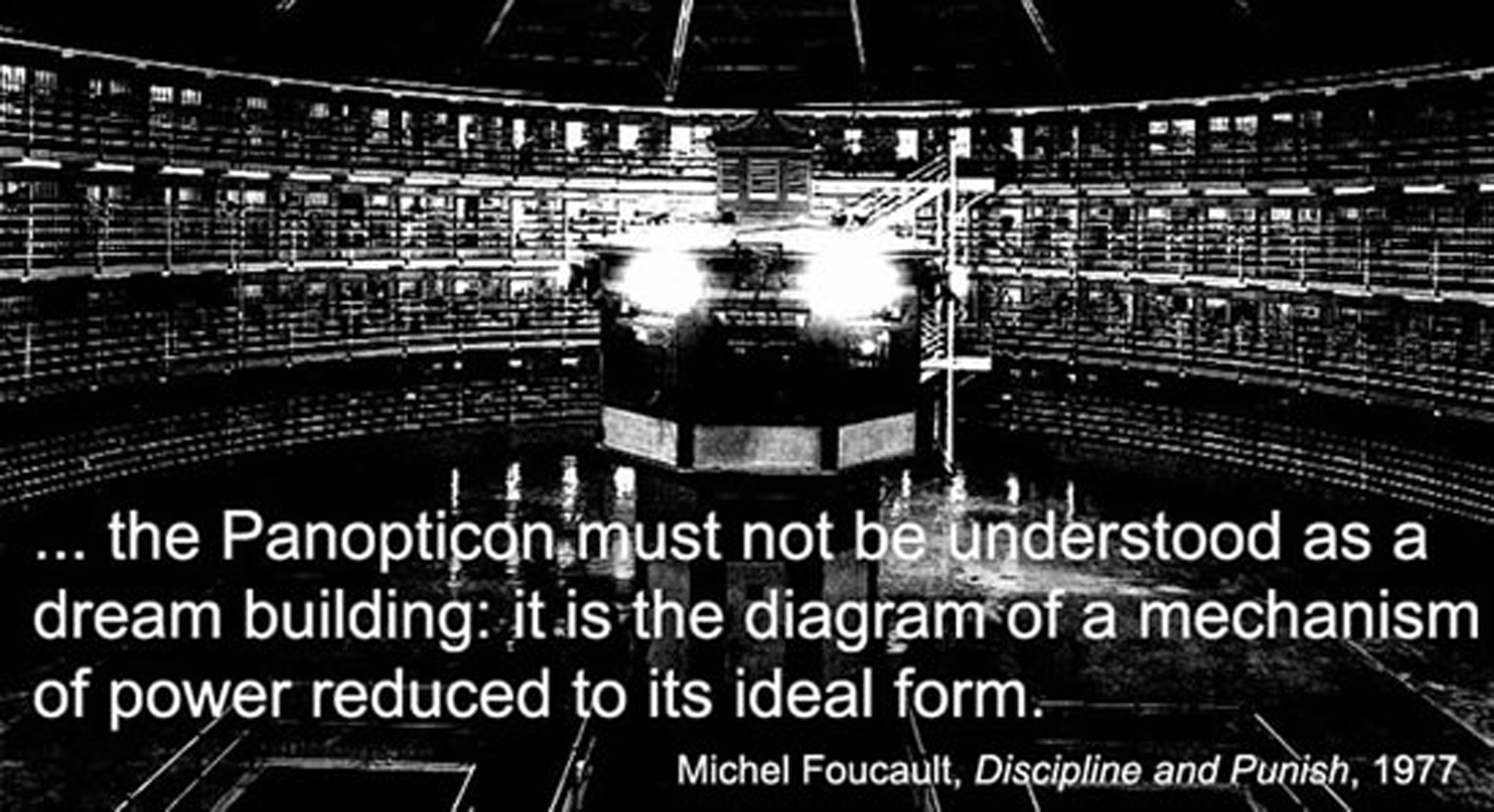
panopticon-image

By Douglas Haddow

Source: Adbusters

“So tell me, why did you leave your last job?” he asks.

The first thing I remember about the internet was the noise. That screeching howl of static blips signifying that you were, at last, online. I first heard it in the summer of ’93. We were huddled around my friend’s brand new Macintosh, palms sweaty, one of us on lookout for his mom, the others transfixed as our Webcrawler search bore fruit. An image came chugging down, inch by inch. You could hear the modem wince as it loaded, and like a hammer banging out raw pixels from the darkness beyond the screen, a grainy, low-res jpeg came into view. It was a woman and a horse.

Since then, I’ve had a complicated relationship with the internet. We all have. The noise is gone now, and its reach has grown from a network of isolated weirdos into a silent and invisible membrane that connects everything we do and say.

“I needed a bigger challenge,” I say. This is a lie.

The brewpub we’re in has freshly painted white walls and a polished concrete floor, 20 ft ceilings and dangling lightbulbs. It could double as a minimalist porn set, or perhaps a rendition chamber. Concrete is easy to clean. The table we’re at is long and communal. Whenever someone’s smartphone vibrates we all feel it through the wood, and we’re feeling it every second minute — a look of misery slicing across my face when I realize it’s not mine.

“Tell me about your ideal process,” the guy sitting down the table from us says. My eyes strain sideways. He looks to be about thirty; we all do. Like a young Jeff Bezos, his skin is the color of fresh milk. He’s dressed like a Stasi agent trying to blend in at a disco. Textbook Zuckercore: a collared blue-green plaid shirt unbuttoned with a subdued grey-on-grey graphic tee, blue jeans and sneakers. Functional sneakers. Tech sneakers. This is a tech bar. Frequented by tech people who do tech things. The park down the street is now a tech park. That’s where the tech types gather to broadcast their whimsy and play inclusive non-sports like Quidditch, which, I’m told, is something actual people actually do. It’s a nerd paradise where the only problems that exist are the ones that you’re inspired to solve. And I want in on it, because I want to believe.

“I’m a big fan of social,” I blurt out as an aside. He replies with a calm and ministerial nod. Nobody says “social media” anymore, it’s just “social” now.

My atoms are sitting here drinking a beer, being interviewed for a position at a firm that specializes in online brand management systems. Which is a euphemism for a human centipede of marketers selling marketing to marketers for marketing. The firm is worth a billion dollars. You’ve never heard of it. It’s the type of place where they force you to play ping-pong if you come in looking depressed. Meet the new boss, same as the old boss, except this one is very concerned that you see him as a positive force in the universe.

I’m here, bringing the cold beer to my dry lips and bobbing my head in my best impersonation of someone who doesn’t feel ill when he hears the words “key metrics,” “familiarity,” “control groups” and “variant groups.” It’s the dawn of the new creative economy, and I can dig it. I’m here, but I’m also spread across the internet in a series of containers. I’m in Facebook, I’m in Instagram, I’m in Google, I’m in Twitter and a thousand other places I never knew existed. Depending how my body is disposed of, it will either become dirt or atmosphere. But the digital atoms will live forever, or at least until civilization is incinerated by whatever means we choose to off ourselves.

“What about this position interests you?” he asks.

When the TechCrunchers preach the gospel of disruption, it’s from an industrial perspective that sees life on Earth as a series of business models to be upended. Disrupt or die is the motto, but they never mention the disruptees — the travel agents, the cab drivers, the bellhops. The journalists. The meat in the box before the box is crushed by the anvil of innovation.

“People have ideas about things but it’s a bunch of things. Sign up flow for example, high level things, but sometimes I think — let’s table this for now and put together some idea maps. I feel so empowered because we’re aligned,” someone else says. I look around but can’t trace the source.

It’s hard to focus on his questions when all the conversations occurring parallel to ours combine in a cacophony of sameness, as if we’re all Tedtalking a mantra of ancient buzzwords: Engagement. Intuitive. Connection. User base. Revolutionary. It’s like coke talk gone sour, not words that are meant to say things, but stale semiotics that signify you belong. This is the the new language of business. This is where Wall Street goes to find itself.

“I traded in my suit for khakis and sunglasses,” one of them says. But he’s wearing neither. “That’s the best decision you’ve ever made bro,” his colleague replies.

These are the most boring people on the planet. And it’s their world now, we’re just supplying the data for it. The game is simple: dump venture capital into a concept, get the eyeballs, take the data and profit. But the implications of this crude scheme are profound. Beyond all the hype, something weird is happening.

I can’t eat without instagramming my food. I can’t shit without playing Candy Crush. I can’t even remember who half the people are on my Facebook feed, but I’ll still mindlessly scroll through their tedious status updates and wince at their tacky wedding photos. Out of these aimless swipes, clicks and likes, a new world is being born. A world where everything we do, no matter how inane, is tracked, recorded, sorted and analyzed. Yahoo CEO Marissa Mayer has said the whole process is “like watching the planet develop a nervous system.” And through this system, every human action has become a potential source of profit for our data lords, a signal for them to identify and exploit.

“We are about to enter a world that is half digital and half physical, and without properly noticing, we’ve become half bits and half atoms. These bits are now an integral part of our identity, and we don’t own them,” says Hannes Grassegger.

Grassegger is a German economics journalist who was raised in front of his mom’s Macintosh, and later, on a Commodore 64 he got for his sixth birthday. He recently wrote “Das Kapital bin ich” (I am Capital), a book that has been criticized by the European left for being too capitalist, and by the right for being the communist manifesto of the digital era. In it he tries to answer a deceptively simple question: if our data is the oil of the 21st century, then why aren’t we all sheikhs?

“We’ve all been sharing. But the smart ones have been collecting — and they’ve packed us into their clouds,” he says. “Privacy. Transparency. Surveillance. Security gap. I don’t want to hear about it. These are sloppy downplayings of a radical new condition: We don’t own ourselves any more. We are digital serfs.”

Like Grassegger, and like everybody else, I was lured into this radical new condition with the feel-good promises of connection, friendship and self-expression. Apps, sites and services that allowed us to share what we loved, and do what we wanted. For Grassegger, these platforms were merely fresh lots ready to be ploughed, and in turn they kept the harvest: our feelings, thoughts, experiences and emotions, encoded in letters and numbers. Now they’re putting it all to work, exploiting these assets with algorithms and sentiment analysis, and our virtual souls are toiling even while we sleep.

His solution to this dilemma is practical and pragmatic, siding with a lesser evil of establishing a personalized free data market, which would allow us to exploit our information before others do it for us, arguing that “We must carry into the new space those rights and freedoms we eked out in the physical world centuries ago. The ownership over ourselves and the freedom to employ this property for our own benefit. Only this will help us leave behind our self-imposed digital immaturity.”

“KRRAAAAASHH!”

A waitress lets a pint glass slip from her hand and shatter on the floor, but no one bothers to look over; they’re too engaged. Then I notice something eerie about the vibe in this place. There’s no sneering, no sarcasm, and no self-deprecation. Everyone is just sort of floating along in an earnest tranquility. As if each anecdote about “that cool loft I found on Airbnb” contained some deep spiritual significance beyond my grasp.

My interrogator goes for a piss and I load up Facebook in the interim, hoping to find a shard of inspiration in my feed that will provide a topical talking point. Instead I find a listicle. A curiosity gap headline. An ad. A solicitation. Another ad. Another listicle. Oh dear, someone has lost their phone. And finally, an ad in the form of a listicle. Or is it a listicle in the form of an ad?

We were told to surf the web, but in the end, the web serf’d us. Yet there’s a worse fate than digital serfdom, as Snowden’s ongoing NSA revelations suggest. This isn’t simply about the commodification of all human kinesis, it’s the psychological colonialism that makes the commodification possible.

The nature of this bad trip was hinted at in June when we learned that Facebook manipulated the emotional states of nearly 700,000 of its users. Half of those chosen for the study were fed positivity, the others, despair. “The results show emotional contagion,” the Facebook scientists told us, meaning that they had discovered that alternating between positive and negative stimulus does indeed affect our behaviour. Or perhaps rediscovered. There’s a precedent for this. We’ve been here before.

Burrhus Frederic Skinner, known simply as B.F. to his BFFs, is best known as the psychologist with the painfully large forehead who tried to convince the world that free will was an illusion. But he wasn’t always so dire. He was once a young man with hopes and dreams who wrote poems and sonnets and wanted to become a stream-of-consciousness novelist like his idol, Marcel Proust. He failed miserably and it led him to conclude that he wasn’t capable of writing anything of interest because he had nothing to say. Frustrated and bitter, he resolved that literature was irrelevant and it should be destroyed, and that psychology was the true art form of the 20th century. So he went to Harvard and developed the concept of operant conditioning by putting a rat in a cage and manipulating its behaviour by alternating positive and negative stimulus. Now we’re the rats in the cage, only we don’t know where the cage ends and where it begins.

“What’s your five year vision for social?” he asks.

There’s a right way and a wrong way to answer this question. The wrong way is to be critical and cast scepticism on the internet’s role in our lives. For instance, you could draw a parallel between Facebook’s probing of emotional contagion and the Pentagon’s ongoing research into how to quash dissent and manage social unrest. Or you could mention how the Internet of Things will inevitably consolidate corporate power over our personal liberty unless we implement strict regulations on what part of ourselves can and cannot be quantified. But if you did that, you’d upset the prevailing good vibes and come off like a sickly paranoiac in desperate need of some likes.

The right way is to turn off, buy in and cash out. Reinforce the grand narrative and talk about how social is going to bring people together, not just online, but in the real world. How it will augment our interactions and make us more open. How in five years you’ll be able to meet your true love through an algorithm that correlates your iTunes activity to your medical history and how that algorithm will be worth a billion fucking dollars. And it’s through that magical cloud of squandered human potential that Skinner emerges once again and starts poking his finger into your brain.

After establishing himself as a household name, Skinner was finally able to live out his dream of writing a novel. That novel was Walden Two, a story about a utopian commune where people live a creative and harmonious life in accordance to the principles of radical behaviourism. In contrast to 1984 and Brave New World, it was meant to be a positive portrayal of a technologically-enabled utopian ideal. In it he writes, “The majority of people don’t want to plan. They want to be free of the responsibility of planning. What they ask for is merely some assurance that they will be decently provided for. The rest is a day-to-day enjoyment of life.”

In the late 60s, Walden Two directly inspired a series of attempts to create real world versions of the fictional community it described. These were just a few of the thousands of communes that were being established across America at that time. Some thrived, but the majority fell apart within a couple short years. They failed for a number of reasons: latrines overflowed, the tofu supply ran out, the livestock starved to death and so forth. But what many of them had in common was a cascading systems failure of their foundational hypothesis — that social change could be achieved through self-transformation and the problems of power could be solved simply by ignoring them. There was always a Machiavellian in the transformational mist, though, and a refusal to acknowledge outright how power creates invisible structures that undermine the potential for cooperative action ultimately led to their implosion. It’s in this stale pub, with its complimentary WiFi and overpriced organic popcorn, that those invisible power structures continue to thrive.

“There has to be incentive. There has to be. You can’t force people to use it,” a woman in the corner mutters. She’s among a cluster of people who for some reason are all carrying the same cheap, ugly backpack. Her hand gestures become more aggressive as the conversation progresses and she looks to be caught in a moment midway between panic and ecstasy. Her expression would make the perfect emoji for the inertia of our time. It looks sort of like this: (&’Z)

“Our notions of digital utopianism are deeply rooted in a communal wing of American counter-culture from the 1960s. That group of people have had an enormous impact on how we do technology. Many of the leading figures in technology come from that wing, Steve Jobs would be one,” says Fred Turner, a communications professor at Stanford University who researches and writes about how counterculture and technology interact.

“Their ideas of what a person is and what a community should be has suffused our idealized understanding of what a virtual community can be and what a digital citizen should be. That group believed that what you had to do to save the world was to build communities of consciousness — places where you would step outside mainstream America and turn away from politics and democracy, turn away from the state, and turn instead to people like yourself and to sharing your feelings, your ideas and your information, as a way of making a new world.”

There’s a fault line that runs underneath the recycling bins of America’s abandoned hippy communes all the way to my cracked iPhone 5 screen. And if there is one man who epitomizes the breadth of this fault, it’s Stewart Brand.

In 1968, Brand published the Whole Earth Catalog, an internet before the internet that provided a directory of products for sustainable, alternative and creative lifestyles, and helped connect those who pursued them. When the Whole Earth Catalog went out of business in 1971, Brand threw a “demise party” wherein the audience got to choose who would receive the magazine’s remaining twenty grand. They chose to give it to Fred Moore, an activist moonlighting as a dishwasher, who would go on to found the Homebrew Computer Club — the birthplace of Apple and the PC. In the 80s Brand launched The Whole Earth ’Lectronic Link, one of the world’s first virtual communities. Following its success, he started the Global Business Network — a think tank to shape the future of the world. They’ve worked on “navigating social uncertainty” with corporations like Shell Oil & AT&T, among others. In 2000, GBN was bought by Monitor Group, a consultancy firm that made headlines in 2011 by earning millions of dollars from the Libyan Government to manage and enhance the global profile of Muammar Gaddafi.

Brand’s most enduring legacy will likely come from coining the phrase “information wants to be free,” which serves as the business model for the Actually Existing Internet and the Big Data dream.

Looking around the brewpub, listening to the chatter, and staring into the bright blue eyes of my would-be employer, you can almost hear the words of Google CEO Eric Schmidt echo against the minimalist decor: “We know where you are. We know where you’ve been. We can more or less guess what you’re thinking about.”

In San Francisco, my fellow disruptees have taken to the streets and kicked off a proper bricks & bottle backlash against this sort of dictator-grade hubris that has come to define the Internet of Kings. Crude graffiti reading “DIE TECHIE SCUM” is scrawled on the sidewalk next to Googlebus blockades. TECH = DEATH signs are held up at protests. Tires are slashed, windows are smashed and #techhatecrimes is a hashtag that is being passed around Silicon Valley without a hint of irony.

Just down the street from where I’m sitting, a more passive form of protest has manifested in the form of a new café that promises an escape from the incessant blips and bleeps of the internet and its accoutrements.The tables there are also long and communal, but they’re wrapped inside an aluminum metal mesh designed to interrupt and restrain wireless signals and WiFi.

We are not going to escape this crisis by putting ourselves in a cage. There is no opt-out anymore. You can draw the blinds, deadlock your door, smash your smartphone, and only carry cash, but you’ll still get caught up in their all-seeing algorithmic gaze. They’ve datafied your car, your city and even your snail mail. This is not a conspiracy, it’s the status quo, and we’ve been too busy displacing our anxiety into their tidy little containers to realize what’s going on.

“Do you have any questions for me?” he finally asks, abruptly. My beer is empty, I’m thirsty for another, and the interview hasn’t gone well. I’ve failed to put on a brave face and the only questions that I have concern how much money I’m going to make. Will it be enough to pay for my escalating rent now that the datarazzi have moved into the neighborhood? Or will I have to drive an Über in my spare time to make ends meet?

The internet is a failed utopia. And we’re all trapped inside of it. But I’m not willing to give up on it yet. It’s where I first discovered punk rock and anarchism. Where I learned about the I Ching and Albert Camus while downloading “Holiday in Cambodia” at 15kbps. It’s where I first perved out on the photos of a girl I would eventually fall in love with. It’s home to me, you and everybody we know.

No, the appropriate question to ask is: “What is the purpose of my life?”

I’ve seen the best minds of my generation sucked dry by the economics of the infinite scroll. Amidst the innovation fatigue inherent to a world with more phones than people, we’ve experienced a spectacular failure of the imagination and turned the internet, likely the only thing between us and a very dark future, into little more than a glorified counting machine.

Am I data, or am I human? The truth is somewhere in between. Next time you click I AGREE on some purposefully confusing terms and conditions form, pause for a moment to interrogate the power that lies behind the code. The dream of the internet may have proven difficult to maintain, but the solution is not to dream less, but to dream harder.

Mind control: Orwell, Huxley, and today’s reality

orwell-huxley

We are able to see the architecture – the structural patterns – of each kind of mind-control regime. This can help us recognize precursors – signs that such a future is coming our way.

by Richard K. Moore

Source: News Beacon Ireland

Dystopian predictions

In 1984, George Orwell paints a picture of a dark, gray world. People are afraid to say anything contrary to the official party line, and surveillance is universal. Even thinking contrary to the party is a crime, and thoughtcrimes may be treated by radical psychological intervention. Information is closely controlled by the party media, and the historical record is routinely edited, so as to conform to the latest party statements.

By contrast, in Brave New World, Aldous Huxley paints a colorful, superficially pleasant world. Personal freedom of all kinds is encouraged, even to the point of being a cultural imperative. In the book a young boy is referred to a therapist, because he doesn’t want to play sex games with a girl classmate. An adult character is considered aberrant, because he is drawn toward a monogamous relationship. Drugs and distractions are readily available for mood enhancement.

Central to Huxley’s world is the abolition of the family. Sex never results in pregnancy, and embryos are grown in a production process, based on selected seed material. As part of the production process, an embryo can be fed or starved, at various stages of its development, so as to create classes of people (alphas, betas, etc) with differing levels of intelligence and skills. Quotas are set, regarding how many people of each class are going to be needed, and should therefore be produced.

Various kinds of conditioning are then used on infants in order to get them to accept their class, along with its prerogatives and restrictions, as being best for them. Children are raised on a communal basis, with no concept of parents, siblings, or family. From embryo to adulthood, the state has fine-tuned control over the development of the person, and of their thinking. In the resulting society, people behave as they were programmed to behave, and can’t imagine things being any different.

In Orwell’s world, wrong-thought (thoughtcrime) is detected and suppressed. In Huxley’s world, wrong-thought is unlikely to arise. Orwell’s world suppresses the individual; Huxley’s world manufactures the individual. In both cases, mind control – control over what people are able to think – is the strategy of the regime, as its means of social control generally. Orwell explores a brute-force approach to mind control, while Huxley explores a scientific approach.

The novels are useful because they each take one of these basic approaches to mind control, and follow its consequences to the end. If you really want to suppress what people think, you’d need to do A, B, and C. If you really want to program people, you’ve got to start when they’re born and do X, Y, and Z. We are able to see the architecture – the structural patterns – of each kind of mind-control regime. This can help us recognize precursors – signs that such a future is coming our way.

Echoes of Orwell

Consider the world of mainstream journalists, in particular TV news anchors. There we have a world with echoes of 1984, where what is said must conform to the party line. Any thoughtcrime – such as an anchor commenting onscreen that he doesn’t buy the official story of 9/11, or he thinks Russia isn’t an aggressor – would be quickly punished by the equivalent of death – expulsion from the world of journalism.

Thus is maintained the Matrix, the story we are told about US benevolence, the existence of democracy, the sacredness of market forces, and all the rest. With control of major media in just a few hands, the party line can be always maintained, and current (or past) events can be interpreted within that framework. To do otherwise, for a news anchor, would be literally unthinkable. Huxley’s Ministry of Truth is at work in our world, but it is invisible, hiding away in the boardrooms of media conglomerates, and behind the doors of the White House press office.

The same kind thoughtcrime regime is operating in other arenas as well, where socially-sensitive topics are concerned. The peer-review process, and the editorial boards of the relevant journals, ensure that thoughtcrimes are suppressed, when it comes to concerns regarding genetic manipulation, pesticides, fracking, pharmaceuticals, radiation levels, etc. Again, the Ministry of Truth is invisible, residing high up in the chain of corporate boardrooms.

Even though our society doesn’t resemble Orwell’s dystopia, his mind control methods are operating in very critical places, where the population’s ‘information’ is generated. And of course we do have universal surveillance, courtesy of the NSA, omnipresent CATV cameras, and cell-phone tracking. Big Brother is with us, but he stays behind the scenes, he sees all, and he decides what stories we will be told about the world by the mainstream media.

Echoes of Huxley

Huxley wrote a review of 1984, where he talked about the two different future visions. He suggested that we might go through some kind of dark period, reminiscent of 1984, but he thinks such a regime would be unstable and transitional. He goes on to say that the scientific approach to mind control, based on programming people’s belief systems, would be the more sensible choice for a modern totalitarian society.

US Government research into scientific mind control began at least in the 1960’s, and has been ongoing. The first approach – the CIA’s Operation Mind Control – was heavy handed, reminiscent of 1984. This research involved giving people psychotropic drugs, along with post-hypnotic suggestions. Quite a bit could be (and has been) accomplished with these kinds of methods, along the lines of The Manchurian Candidate, but it didn’t provide a general solution: two much work was required to program people on an individual basis.

Research then shifted to cult creation. If people can be herded into cults of various kinds, cult dynamics themselves would serve the programming function. This provides a more wholesale approach to mind control, than the individual methods tried earlier. The CIA has never publicly claimed credit for this later research, but the experiments were very successful, including Reverend Jim Jones and the People’s Temple, and David Koresh and Waco.

In this kind of research, the first step is to identify a natural cult leader, who has already shown some success in gathering followers. Then the cult is given support of various kinds. Covert agents are sent in to join the cult, not only to observe and report, but also to provide organizational skills. Funds are channeled to the cult, and local police are warned off, so that the cult can grow unhampered.

In this way, researchers have been able to study how a skilled cult leader operates, how people are drawn into a cult, how loyalty is maintained, and how people can be pushed into extreme beliefs and actions. When everything had been learned that could be learned from a cult, the cult’s leader and members were then killed, so as to hide the evidence of what had really been going on in the experiment.

Cults and their uses

One of the first large-scale deployments of cult technology, informed by this research, was the creation of the Jihad movement by the CIA. The immediate purpose was to destabilize the Soviet regime, by tying it down in a quagmire in Afghanistan. This operation was quite successful. Since then, the Jihad cult movement – aka Taliban, Al Qaeda, Kosovo Liberation Army, ISIS, etc. – has proven to be an extremely useful tool for the purpose of destabilizing regimes, in pursuit of US geopolitical objectives. These destabilization operations in turn provide an excuse for direct US intervention, as we’ve seen recently in Libya and Iraq, and as we may soon see in Syria.

Cults generally have certain characteristics. There is usually a charismatic leader, who is able to inspire belief and loyalty in cult members. There is always a defining core belief system, that sets cult members off from outsiders, and which provides a strong sense of identity and purpose for members. There is typically an alleged ‘outside threat’ to the cult, which draws members together. There are actions and sacrifices required of members, which serve to bind them more tightly to the cult.  There are packaged arguments, that cult members are taught to employ, to repel attempts undermine the core belief system. These programming methods are very powerful, and typically intense deprogramming is needed to ply members away from a cult, once they have been thoroughly indoctrinated.

The society described in Brave New World is in fact a cult-based society. Each of the classes (alpha, beta, etc.) is a cult, and the programming begins at birth. No charismatic leader is needed, when so much control over programming is available. Each cult has its own core belief system, along with packaged arguments to maintain those beliefs. The required actions and sacrifices are simply the lifestyle which has been designed for each class. Such a society would tend to be stable, particularly since deprogramming efforts would be absent from the scene.

It is notable that Huxley’s world is not about a single cult, a uniform society, but rather about multiple cults. This makes for greater stability. Cult members have not only a model of what-to-be, they also have models of what-not-to-be. Each cult is more clearly defined, and drawn more into itself, by the existence of other cults. Being glad you’re not a beta is one of the reasons to be glad you are an alpha.

We see this same multi-cult dynamic operating in the US, in the divisiveness between liberals and conservatives. Liberals are kept in the fold by stories of conservative folly, and conservatives are kept in the fold by stories of liberal folly. In a propaganda-only system of control, there would be one party line for everyone. In this multi-cult system, there are two party lines, which we might characterize as CNN vs. FOX.

While the two party lines have many differences, in order to keep the two cults separated, they in fact share basic essentials in common. They both sustain the myth that state policy is a response to public sentiment, and they blame the other cult for providing support for the ‘bad’ policies. In fact US policy is made outside of government, by financial elites, and the state aims to control public sentiment, not respond to it. In this way we can see CNN and FOX as collaborators, sharing the common goal of hiding this fundamental truth from the people. The Democratic and Republican parties collaborate toward this same goal, using Congress as a stage, where they carry on a theater of divisiveness, providing the appearance of a democratic decision-making process.

The Barack Obama phenomenon provides an excellent example of cult tactics in action. Obama himself is obviously a natural cult leader, articulate and charismatic. He came onto the scene offering an inspiring core belief in deep reform, “The ground of politics has changed; Yes we Can!”. The dramatic effect was intense, as if we were witnessing the Second Coming. Campaign volunteers became the core of the budding Obama cult, and they were given lots of work to do, binding their identity to Obama and his professed mission. The McCain campaign was orchestrated to look like a dangerous threat by a rival cult, binding Obama supporters even more tightly.

The success of this mind-control operation was truly amazing. Obama in fact proceeded to carry on and expand everything Bush had been doing; the ground of politics hadn’t changed at all. But the cult binding was so strong that his support continued, by the very people who had hated Bush because of the same policies. Packaged arguments were put forward, to keep people in the cult, blaming Obama’s performance on Republican opposition – the standard divisiveness tactic. Even today there remain legions of Obama loyalists. Once bound to a cult, leaving becomes psychologically difficult.

Another example of mind control by means of cults is provided by global-warming hysteria. Al Gore played the role, at least temporarily, of cult leader, when he presented the core belief in CO2-caused climate crisis in his scientifically fraudulent, but very popular film,  An Inconvenient Truth. The growth of the cult was ensured by the fact that it then became a thoughtcrime in mainstream media and climate journals to question these core beliefs. Cult members are given things to do and sacrifices to make, like riding a bicycle and buying a Prius. They are given a packaged argument, that contrary views are nothing but the propaganda of an outside-threat: the evil petroleum industry.

This kind of mind control operation is much more effective than propaganda on its own. It’s not just that cult members believe in CO2-caused climate crisis, they believe they are fighting a battle against an enemy. They have been fully immunized against counter arguments to their core beliefs, and their only concern is to ‘save the planet’ by supporting anything that looks like it will reduce carbon emissions. Thus they are being led willingly down the garden path to a micro-managed society, as outlined in Agenda 21.

The ‘conspiracy theory’ meme

State control of public schools and mainstream media goes a long way towards programming people’s minds. But it is not enough, particularly in the era of the Internet. There are many sources available that thoroughly debunk mainstream propaganda, and by using those sources a large number of people have escaped, at least in part, from the mind-control regime. In Orwell’s world, the Internet would be banned. In our world, which is developing more along Huxley’s lines, other ways have been found to limit the ability of the Internet to undermine the mainstream narratives.

The ‘conspiracy theory’ meme was launched by the CIA in the wake of the JFK assassination. The official story was so full of holes that more and more people were beginning to doubt it. While the Warren Commission was busy writing its cover-up document, the public began to learn about the existence of ‘conspiracy theorists’. These are people, the story goes, who suffer from paranoid delusions, and sane people should pay no attention to anything they say. If someone even looks at any of those ideas, their own mental stability comes into question.

This mind-control tactic was very effective in marginalizing research into the truth behind the JFK assassination. Anyone who presented evidence contrary to the official story was automatically seen as ‘conspiracy theorist’. By scoffing at such evidence, without looking at it, you could demonstrate that you were mentally balanced. Thus logic and reasoning are banished from the scenario. Either you believe the official story, or your mental health is called into question.

Since then, the conspiracy-theory meme has been carefully nurtured and expanded by the mainstream party lines. This mind-control campaign has been very successful in immunizing the majority of the population against the revelations available on the Internet. Any story not appearing in the mainstream media must by definition be a conspiracy theory, and anything that sounds like a conspiracy theory should be scoffed at and ignored.

Thus for the majority of the population we have a tightly controlled, two-tier, mind-control regime. The thoughtcrime dynamic governs what the media says, and the conspiracy-theory dynamic immunizes people against other views. For the majority, the party line (either CNN or FOX) is ‘truth’, as in Orwell’s world, but without the need for Big Brother’s extreme methods.

By these mind-control methods, a bubble has been created, in which the majority does their thinking. Inside the bubble are the two party-line narratives, and outside the bubble the real world proceeds, invisible to those inside the bubble. It’s a very effective system. The more outrageous the real actions of the state, the more quickly the majority rejects revelations of those actions, as being outrageous conspiracy theories.

In some cases the FOX party line includes accurate revelations which would be thoughtcrimes in the CNN world. In such cases, the CNN world responds by classifying those revelations as  ‘right wing’ conspiracy theories. Unlike a propaganda-only system, where state crimes are always hidden, this multi-cult system enables the state to document its own crimes on conservative media, and know that the information will be disbelieved by the liberal cult. This system allows the truth to be hidden from some, through the act of revealing it to others. Very clever.

Mind control outside the bubble

While the majority may be inside the bubble, there is a large and growing number of people who don’t have faith in any mainstream party line, and who are open to considering the various ideas they find from Internet sources. The phrase ‘waking up’ is frequently used to describe the process of escaping from the bubble. More and more people are ‘waking up’ to the reality of false-flag events, routine government lies, the deep corruption of politics and the media, and the sociopathic central bankers who exercise the reins of power from behind the scenes.

However, the Internet is not being ignored by the state, and mind-control operations are underway there as well – designed for those who have ‘woken up’. Such operations are not aimed at moving people back into the bubble, rather they embrace the ‘awake’ ideas, aikido style, and then seek to direct the energy of the ‘awoken’ in ways that serve the state and its objectives.

An example of one of these outside-the-bubble mind-control operations, of the cult variety, is provided by the Zeitgeist Movement – which claims to be the “largest grassroots movement in the world with chapters in over 60 countries”. Peter Joseph is the charismatic leader of this cult, and he offers his set of core beliefs, backed up by persuasive evidence and arguments, in Zeitgeist: The Movie.

For those who are ‘awake’, the film is very powerful. It presents the essential truths about the world, without pulling punches, in a dramatic and compelling way. The film has gone through several versions over time, and the very first version went viral on the Internet as soon as it was released. To the ‘awoken’, it was a film of liberation, with the potential to wake everyone up and transform the world.

After the film was released, and after it gained a massive and enthusiastic audience, the Zeitgeist Movement was launched. Fans of the film flocked to join the movement, eager to ‘spread the gospel of truth’, and help ‘wake up the world’. They were joining an urgently-needed messianic cause, and this bound them to the movement, in the way cults always bind members. Peter Joseph was seen as a prophet figure, the articulator of the gospel, and the one who could lead the way to liberation – and this is more or less the textbook definition of a cult leader.

What these eager cult members fail to realize is that the very thing that attracts them to the movement also guarantees that the movement could never succeed in ‘waking up the world’. The core beliefs that are so liberating to the members are all seen as outrageous conspiracy theories inside the mainstream bubble. While members think they are pursuing a messianic cause, they are in fact a choir singing to itself, with Peter Joseph setting the tune.

The real purpose behind the cult is revealed in a press release on the movement website, entitled, ‘The Zeitgeist Movement defined: realizing a new train of thought’. Here Joseph expands the gospel, going beyond ‘revealing the truth’, and venturing into envisioning the transformed world that the movement aims to help create. Here are three key points from Prophet Joseph’s vision, with emphasis added:

2): The Scientific Worldview: The essay explores how the development of the scientific method has altered human perception and the critical importance of its recognition and larger order application, specifically with respect to the social system.
(5): The Case for Human Unity: This essay explores the reasoning for a unified global society along with tracing the source of national divisions and propensities for conflict. A relevant point is made regarding the advancement of technological warfare and how the dangers of keeping biased economic boundaries as we have could lead to rapid destruction as time moves forward.
(9): Market Efficiency vs Technical Efficiency: This essay argues the difference between true scientific (or technical) efficiency and the business practice of “market efficiency,” showing how the latter actually works against true economic optimization.

This is a prescription for a micro-managed global technocracy, under the control of a one-world government. Both the social system and the economic system are to be ‘scientifically optimized’ – which in fact means a world organized along whatever lines are set down by some technocratic bureaucracy, under the control of an enthroned global elite. In other words, Prophet Joseph is creating an enthusiastic constituency in support of the central bankers’ long-desired New World Order.

The Zeitgeist cult is an aikido masterstroke. It begins with the revelation that ‘evil bankers’ run the world, blending with the energy of the ‘awoken’, and then shifts that energy in a direction that serves the interests of those same ‘evil bankers’. Again, I must say very clever, very clever indeed.

Zeitgeist is only one example of a mind-control operation aimed at those who have achieved one degree or another of ‘awakening’. Numerous movements have been created, characterized by well-designed websites that tell some version of the truth, drawing in audiences with some specific focus of concerns, and which lead those audiences into useless or counter-productive activities.

In Huxley’s world, we see a scientifically designed society, tightly controlled by a full-spectrum mind-control regime, based on conditioning and cult dynamics. In today’s world, we see cult dynamics being used in a variety of mind-control operations, with cults customized for various constituencies both inside and outside the mainstream bubble. Huxley’s world has achieved stabilization by such means; in our world those means are being used to facilitate a transition – to a brave new world order that is likely to resemble Huxley’s in many of its essential features.

The demise of the family?

If the state can achieve full control over the raising of children, without parental interference, then quite obviously that would give the state the power to achieve a full-spectrum mind-control regime. Not only could the state design the society’s culture, it could tune that culture over time, by updating the conditioning process. If full-spectrum mind-control is the goal, then eliminating the family becomes a primary intermediate objective.

If eliminating the family is indeed an objective of the New World Order project, then it is by no means an easy objective to achieve. One would be hard-pressed to imagine an institution that would be more fiercely defended than the family, or to imagine a more painful experience than being separated from ones children or parents. Any campaign to achieve that objective would need to fly under false colors, not advertised as a campaign to eliminate the family, but rather as a campaign aimed at protecting the rights and welfare of the child.

It is in this light, I suggest, that we consider the many revelations that have emerged in recent years regarding child sexual abuse, and the existence of pedophile rings. In many of these cases we learn that the abusive activity have been going on for many, many years, as we see in the case of pedophile priests. Why is it that these longstanding activities have only recently been ‘discovered’?

If there is to be a strong campaign for the ‘rights and welfare of children’, there needs to be first a strong impression that their rights and welfare need protecting. Exposés of child sexual abuse serve that purpose very well. When you see a police drama, where abused children are rescued by noble cops from drug-addicted parents, you are are getting images of a benevolent state, and a social milieu that requires intervention. It becomes a template that can be expanded on as time goes on. And of course there are the interminable ads, where a neglected child sits alone at home (black and white film for effect), fearful and hungry, and you can donate $3 to some child-protection agency.

I don’t recall the link, but I came across a webpage from a UN agency, promoting the virtues of children raised ‘alternatively’. These are children raised as a group, sans parents, reminiscent of Huxley’s scenario. Supposedly these children were ‘more creative’, and showed other positive signs. How very nice. Another good-intention-stone along the garden path to the demise of the family.

Last year, 2013, in both Ireland and New Zealand, constitutional amendments were adopted, declaring that the rights and welfare of the child are paramount, trumping any rights that might be claimed by a child’s parents. In Ireland, a court challenge was immediately launched, based on the fact that the government had illegally campaigned for the referendum that approved the amendment, when by law the government should have been neutral. The challenge was, not surprisingly, rejected by the courts. There is no specific formula in these amendments as to what defines the rights and welfare of children, leaving it up to the discretion of the state, as to when intervention in the family might be appropriate.

As economic conditions worsen, under the screws of austerity, privatization, and eliminated social services, it will become a struggle for an increasing number of parents to feed, clothe, and house their families. It would be all too easy for the state to mandate a ‘minimum level of acceptable conditions’, and take children wholesale into care, based on ‘economic profiling’. That’s just one possible scenario, but it’s the kind of scenario it seems we are being prepared for.

The Stealing of America by the Cops, the Courts, the Corporations and Congress

edward_r_murrow_a_nation_of_sheep_will_soon_have_a_government_of_wolves__2013-06-24

By John W. Whitehead

Source: The Rutherford Institute

“What the government is good at is collecting taxes, taking away your freedoms and killing people. It’s not good at much else.” —Author Tom Clancy

Call it what you will—taxes, penalties, fees, fines, regulations, tariffs, tickets, permits, surcharges, tolls, asset forfeitures, foreclosures, etc.—but the only word that truly describes the constant bilking of the American taxpayer by the government and its corporate partners is theft.

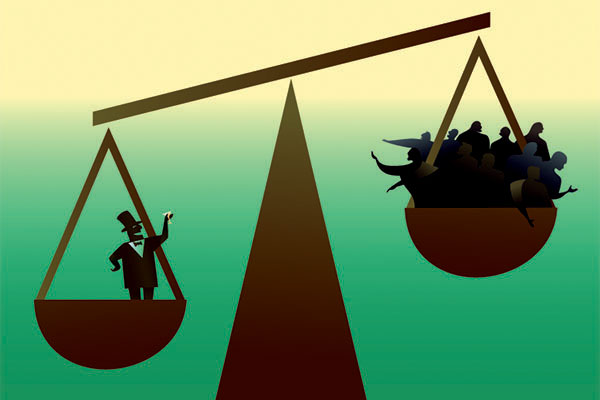
We’re operating in a topsy-turvy Sherwood Forest where instead of Robin Hood and his merry band of thieves stealing from the rich to feed the poor, you’ve got the government and its merry band of corporate thieves stealing from the poor to fatten the wallets of the rich. In this way, the poor get poorer and the rich get richer. All the while, the American Dream of peace, prosperity, and liberty has turned into a nightmare of endless wars, debilitating debt, and outright tyranny.

What Americans don’t seem to comprehend is that if the government can arbitrarily take away your property, without your having much say about it, you have no true rights. You’re nothing more than a serf or a slave.

In this way, the police state with all of its trappings—from surveillance cameras, militarized police, SWAT team raids, truancy and zero tolerance policies, asset forfeiture laws, privatized prisons and red light cameras to Sting Ray guns, fusion centers, drones, black boxes, hollow-point bullets, detention centers, speed traps and abundance of laws criminalizing otherwise legitimate conduct—is little more than a front for a high-dollar covert operation aimed at laundering as much money as possible through government agencies and into the bank accounts of corporations.

The rationalizations for the American police state are many. There’s the so-called threat of terrorism, the ongoing Drug War, the influx of illegal immigrants, the threat of civil unrest in the face of economic collapse, etc. However, these rationalizations are merely excuses for the growth of a government behemoth, one which works hand in hand with corporations to profit from a society kept under lockdown and in fear at all times.

Indeed, as I point out in my book A Government of Wolves: The Emerging American Police State, the real motivating factor behind erecting a police state is not to protect the people, but to further enrich the powerful. Consider the following costly line items, all part of the government’s so-called quest to keep us safe and fight terrorism while entrenching the police state, enriching the elite, and further shredding our constitutional rights:

$4.2 billion for militarized police. Almost 13,000 agencies in all 50 states and four U.S. territories participate in a military “recycling” program which allows the Defense Department to transfer surplus military hardware to local and state police. In 2012 alone, $546 million worth of military equipment was distributed to law enforcement agencies throughout the country.

$34 billion for police departments to add to their arsenals of weapons and equipment. Since President Obama took office, police departments across the country “have received tens of thousands of machine guns; nearly 200,000 ammunition magazines; thousands of pieces of camouflage and night-vision equipment; and hundreds of silencers, armored cars and aircraft.” While police departments like to frame the acquisition of military surplus as a money-saving method, in a twisted sort of double jeopardy, the taxpayer ends up footing a bigger bill. First, taxpayers are forced to pay millions of dollars for equipment which the Defense Department purchases from megacorporations only to abandon after a few years. Then taxpayers find themselves footing the bill to maintain the costly equipment once it has been acquired by the local police.

$6 billion in assets seized by the federal government in one year alone. Relying on the topsy-turvy legal theory that one’s property can not only be guilty of a crime but is also guilty until proven innocent, government agencies have eagerly cashed in on the civil asset forfeiture revenue scheme, which allows police to seize private property they “suspect” may be connected to criminal activity. Then whether or not any crime is actually proven to have taken place, the cops keeps the citizen’s property. Eighty percent of these asset forfeiture cases result in no charge against the property owner. Some states are actually considering expanding the use of asset forfeiture laws to include petty misdemeanors. This would mean that property could be seized in cases of minor crimes such as harassment, possession of small amounts of marijuana, and trespassing in a public park after dark.

$11,000 per hour for a SWAT team raid on a government dissident. The raid was carried out against Terry Porter, a Maryland resident who runs a welding business, is married with three kids, is outspoken about his views of the government, and has been labeled a prepper because he has an underground bunker and food supplies in case things turn apocalyptic. The raiding team included “150 Maryland State Police, FBI, State Fire Marshal’s bomb squad and County SWAT teams, complete with two police helicopters, two Bearcat ‘special response’ vehicles, mobile command posts, snipers, police dogs, bomb disposal truck, bomb sniffing robots and a huge excavator. They even brought in food trucks.”

$3.8 billion requested by the Obama administration to send more immigration judges to the southern border, build additional detention camps and add border patrol agents. Border Patrol agents are already allowed to search people’s homes, intimately probe their bodies, and rifle through their belongings, all without a warrant. As one journalist put it, “The surveillance apparatus is in your face. The high-powered cameras are pointed at you; the drones are above you; you’re stopped regularly at checkpoints and interrogated.” For example, an American citizen entering the U.S. from Mexico was subjected to a full-body cavity search in which she was subjected to a variety of invasive procedures, including an observed bowel movement and a CT scan, all because a drug dog jumped on her when she was going through border security. Physicians found no drugs hidden in her body.

$61 billion for the Department of Homeland Security, one of the most notoriously bloated government agencies ever created. The third largest federal agency behind the Departments of Veterans Affairs and Defense, the DHS—with its 240,000 full-time workers and sub-agencies—has been aptly dubbed a “runaway train.”

$80 billion spent on incarceration by the states and the federal government in 2010. While providing security, housing, food, medical care, etc., for six million Americans is a hardship for cash-strapped states, it’s a gold mine to profit-hungry corporations such as Corrections Corp of America and GEO Group, the leaders in the partnership corrections industry. Thus, with an eye toward increasing its bottom line, CCA has floated a proposal to prison officials in 48 states offering to buy and manage public prisons at a substantial cost savings to the states. In exchange, the prisons would have to contain at least 1,000 beds and states would have to maintain a 90% occupancy rate for at least 20 years. This has led to the phenomenon of overcriminalization of everyday activities, in which mundane activities such as growing vegetables in your yard or collecting rainwater on your property are criminalized, resulting in jail sentences for individuals who might otherwise have never seen the inside of a jail cell.

$6.4 billion a year for the Bureau of Prisons and $30,000 a year to house an inmate. There are over 3,000 people in America serving life sentences for non-violent crimes. These include theft of a jacket, siphoning gasoline from a truck, stealing tools, and attempting to cash a stolen check. Most of the non-violent offenses which triggered life sentences were drug crimes involving trace amounts of heroin and cocaine. One person imprisoned for life was merely a go-between for an undercover officer buying ten dollars’ worth of marijuana. California has more money devoted to its prison system than its system of education. State spending on incarceration is the fastest growing budget item besides Medicaid.

93 cents an hour for forced, prison labor in service to for-profit corporations such as Starbucks, Microsoft, Walmart, and Victoria’s Secret. What this forced labor scheme has created, indirectly or not, is a financial incentive for both the corporations and government agencies to keep the prisons full to capacity. A good portion of the 2 million prisoners in public facilities are forced to work for corporations, making products on the cheap, undermining free laborers, and increasing the bottom line for many of America’s most popular brands. “Prison labor reportedly produces 100 percent of military helmets, shirts, pants, tents, bags, canteens, and a variety of other equipment. Prison labor makes circuit boards for IBM, Texas Instruments, and Dell. Many McDonald’s uniforms are sewn by inmates. Other corporations—Microsoft, Victoria’s Secret, Boeing, Motorola, Compaq, Revlon, and Kmart—also benefit from prison labor.”

$2.6 million pocketed by Pennsylvania judges who were paid to jail youths and send them to private prison facilities. The judges, paid off by the Mid Atlantic Youth Service Corporation, which specializes in private prisons for juvenile offenders, had more than 5,000 kids come through their courtrooms and sent many of them to prison for petty crimes such as stealing DVDs from Wal-Mart and trespassing in vacant buildings.

$1.4 billion per year reportedly lost to truancy by California school districts, which receive government funding based on student attendance. The so-called “solution” to student absences from school has proven to be a financial windfall for cash-strapped schools, enabling them to rake in millions, fine parents up to $500 for each unexcused absence, with the potential for jail time, and has given rise to a whole new track in the criminal justice system devoted to creating new revenue streams for communities. For example, Eileen DiNino, a woman serving a two-day jail sentence for her children’s truancy violations, died while in custody. She is one of hundreds of people jailed in Pennsylvania over their inability to pay fines related to truancy, which include a variety of arbitrary fees meant to rack up money for the courts. For example, “[DiNino’s] bill included a laundry list of routine fees: $8 for a “judicial computer project”; $60 for Berks constables; $40 for “summary costs” for several court offices; and $10 for postage.” So even if one is charged with a $20 fine, they may end up finding themselves on the hook for $150 in court fees.

$84.9 million collected in one year by the District of Columbia as a result of tickets issued by speeding and traffic light cameras stationed around the city. Multiply that income hundreds of times over to account for the growing number of localities latching onto these revenue-generating, photo-enforced camera schemes, and you’ll understand why community governments and police agencies are lining up in droves to install them, despite reports of wide scale corruption by the companies operating the cameras. Although nine states have banned the cameras, they’re in 24 states already and rising.

$1.4 billion for fusion centers. These fusion centers, which represent the combined surveillance and intelligence efforts of federal, state and local law enforcement, have proven to be exercises in incompetence, often producing irrelevant, useless or inappropriate intelligence, while spending millions of dollars on “flat-screen televisions, sport utility vehicles, hidden cameras and other gadgets.”

In sum, the American police state is a multi-billion dollar boondoggle, meant to keep the property and the resources of the American people flowing into corrupt government agencies and their corporate partners. For those with any accounting ability, it’s clear that the total sum of the expenses being charged to the American taxpayer’s account by the government add up to only one thing: the loss of our freedoms. It’s time to seriously consider a plan to begin de-funding this beast and keeping our resources where they belong: in our communities, working for us.

The Awakening – Clash of Civilizations

By Zen Gardner

Source: ZenGardner.com

Despite the furious efforts of the world’s Machiavellian destroyers, humanity is waking up. We’re seeing significant progress in exposing the ongoing brutal Gaza extermination, the mass revelation of chemtrails and other neo-scientific incursions, the disastrous effects of EMFs of every source, GMO food manipulation, tectronic surveillance and monitoring, and the front and center clearly induced global war and the militarization of society.

We’re in the thick of it now.

Don’t let these events and seeming contests of ideology throw you. There’s nothing level about this playing field, and the mass narrative is strong propaganda. Don’t even listen to it. Rely on your heart and alternative sources. Their only weapon is our consent by yielding to their lies. Disinformation serves several purposes, the most insidious of which is to introduce doubt to your heartfelt conviction regarding the reality of what is obviously before you. Keeping the mass mind at bay is imperative to their program.

Why? If we woke up to the truth we’d stop our participation and/or rise up and overthrow them. And they know that.

Major Signs of Awakening

As mentioned above, there are many manifestations that the Truth is flooding in to human consciousness. What we collectively do with this information is one thing; what we individually do with it is the key. We either activate, or we don’t. The more who do, the greater the mass awakening. With or without the masses, the awakening is coming to pass anyway, come what may. That’s the wonderfully exciting reality. What the naysayers and foot draggers do with it is their business, and their demise if they choose wrongly to ignore what is more obvious by the minute.

That Israelis are sitting on a hill sipping drinks in their beach chairs cheering the slaughter of civilian Palestinians should send shivers up anyone’s spine. That a captive population is being mercilessly annihilated on any pretext should shock even the most hard of hearing soul. Yet the mainstream media pounds its narrative of who the poor defenseless “good guys” are versus the obvious genocide and territory grab by an invading army.

Why not? The US has been doing this for decades, as have the Israelis. The conditioning runs deep. Literally mindfucked Amerikans are cheering just as avidly as is a swath of other similarly infected Canadians and Europeans and other mentally and spiritually disturbed Zionists around the world. The rest of the world sees it for what it is. A targeted slaughter and annihilation of something that’s in the way of another globalist maneuver for psychopaths to get what they want. And when it comes to the rabid Zionists everyone stands back.  The puppet powers and similarly cowed populace don’t dare touch them. Zionist fingers are in every facet of today’s societal and governmental fabric. The world is afraid to confront them.

Yet the truth of this masqueraded massacre is for all to see. The onus is on humanity. And the alternative is becoming crystal clear.

Financial, Governmental and Mad Scientific Schemes are Increasingly Obvious

Besides the obviously engineered take down of the Middle East and now Ukraine, there are many other fronts this hurricane of Truth is eroding in the human psyche. The geoengineering of our climate, oceans and soil are also becoming painfully, for them, clear. As long as real information is available hungry souls will find it and be forced to process it.

We also clearly see the central banking system, the FED, and our manipulated financial structure being exposed. Sitting helplessly watching no longer becomes an option. Pulling out of their system is a given eventuality, and it’s happening, as it becomes more evident by the day that major governmental powers are run by bought-off crooks and stooges.

The geoengineering chemtrail scam, poisoning humanity from it’s skies for whatever pretense, is taking a serious beating as communication and committed activism exposing this global affront wears away the veneer of outright lies and denial of such an obvious phenomenon. Take a look at the recent results of  sincere, concerned determination to bring this issue to the forefront of public awareness:

Our EMF Bombardment

Another insidious attack on our health and freedom is the electromagnetic assault on humanity, all in the guise of convenience, “conservation” and safety of course. Never mind the horrific surveillance invasion of our planet, the very presence of so many electromagnetic rays from so many man-made sources permeating our existence is one of the greatest threats to us, altering our genetic and physical make up and even influencing our thoughts and inherent impulses.

Besides France banning wi-fi in schools and Russia’s cellphone for youngsters prohibition, here’s just one example of the growing backlash under way:

Brazilian Courts order lower electromagnetic pollution

The Brazilian Judiciary determined to reduce the level of electromagnetic pollution generated by power lines to standard adopted by Swiss law (1.0 microtesla).

Two associations of residents in São Paulo — the largest city of Brazil — proposed the action. The plaintiff has pleaded to not be exposed to electromagnetic fields incompatible with the human health.

The electromagnetic fields generated by power lines that cross these areas is 10 times greater than the level determined by the court. The judgment of the Court of State of São Paulo (Tribunal de Justiça de São Paulo) has determined that the concessionaire of electric power reduces the electromagnetic field generated by power lines that pass through these neighborhoods. (Source)

GMO Rejection

The public outcry against genetically modified foods and the resultant use of the killer chemical glysophate has been front and center for quite a while. While the Monsanto dynasty and its network of affiliate chemical and distribution companies and ongoing governmental bribes and planted personnel continues its campaign, the rise against such infected food tyranny has been proportionally greater.

You just don’t mess with conscious people’s health. Period. And there are more of us by the minute.

Russia, China and a host of other nations are refusing to import GMO products. That this is so front and center in the public mind, whatever their entrained reflexive minds tell them, highlights this issue. Even more so in Amerika, whether to have these tampered with foods even labelled is appearing at their ballot boxes is keeping this subject front and center.

That’s pretty tough to ignore, even for the most brain dead, Brave New World “Epsilon” cretin out there.

The awakened civilization rolls on.

The List Continues

If you need further encouragement, get involved. You’ll see signs of it everywhere. Major inroads of Truth are being made by the minute as these disgusting forces continue to attempt to forge their desired goal of a subservient, complacent and even happily servile work force. Damn them, and do it with gusto.

Don’t be deceived, it’s all a wicked charade. A ploy, a scam: a counterfeit civilization they’re trying to construct that true conscious humanity is dissolving by the hour.

Disconnect – disobey – and de-enlist. Break your unconscious and conscious agreements. The parasites will shrivel up and disappear.

The time is now. It’s ours for the taking. And receiving.

Much love always, keep on, Zen

Saturday Matinee: The Monitors

monitors

“The Monitors” (1969) is based on the novel of the same name by Keith Laumer and was the first film produced by the Second City comedy troupe. It’s an ambitious but low budget sci-fi satire about an invasion of aliens who oversee humanity in a manner similar to hall monitors (ie. Big Brother). Among the cast are a few familiar faces such as Guy Stockwell, Susan Oliver and Alan Arkin. The Monitors also features excellent cinematography by Vilmos Zsigmond.

Processing Distortion with Peter B. Collins: Big Data Shows Only 5% of FBI Domestic Terrorism Cases Are Untainted

TerronoiaUSA

By Peter B. Collins

Source: Boiling Frogs

Peter B. Collins Presents Attorney Stephen Downs

As a retired lawyer, Steve Downs volunteered to represent a local Muslim who was entrapped in an FBI sting. From that, he learned of other similar cases, and he co-founded Project Salam. Their new report, Inventing Terrorists: The Lawfare of Preemptive Prosecution, analyzes about 400 domestic terrorism prosecutions since 2001 and finds that 72% of the cases involved preemptive investigations that included paid informants and provocateurs who often supplied the idea and the means for plots that were then exposed to fawning media outlets. Another 22% of the cases involved minor, non-terrorist crimes that were manipulated and amplified by the FBI. The numbers show a clear pattern of abuse, mostly of Muslim suspects.

*Stephen Downs spent most of his career as an attorney for New York State’s judicial oversight commission. You can read the report and browse the database here

Listen to the Preview Clip Here

http://www.boilingfrogspost.com/wp-content/uploads/PD.clip.0039.Downs.mp3