
A Warning From the B.I.S.: the Calm Before the Storm?

banker-thief

By Mike Whitney

Source: CounterPunch

The Bank for International Settlements (BIS) is worried that recent ructions in the equities markets could be a sign that another financial crisis is brewing. In a sobering report titled “Uneasy calm gives way to turbulence”  the BIS states grimly: “We may not be seeing isolated bolts from the blue but the signs of a gathering storm that has been building for a long time.”

The authors of the report are particularly concerned that the plunge in stock prices and the slowdown in global growth are taking place at the same time that investor confidence in central banks is waning. The Bank Of Japan’s announcement that it planned to introduce negative interest rates (aka–NIRP or negative interest rate policy) in late January illustrates this point. The BOJ hoped that by surprising the market, the policy would have greater impact on borrowing thus generating more growth. But, instead, the announcement set off a “second phase of turbulence” in stock and currency markets as nervous investors sold off risk assets and moved into safe haven bonds. The BOJ’s action was seen by many as act of desperation by a policymaker that is rapidly losing control of the system. According to the BIS:

“Underlying some of the turbulence of the past few months was a growing perception in financial markets that central banks might be running out of effective policy options.”

This is a recurrent theme in the BIS report, the notion that global CBs have already used their most powerful weapons and are currently trying to muddle-by with untested, experimental policies like negative rates that slash bank profitability while having little impact on lending.

While the BIS report provides a good rundown of recent events in the financial markets, it fails to blame central banks for any of the problems for which they alone are responsible. The sluggish performance of the global economy, the massive debt overhang, and the erratic behavior of the stock market are all directly attributable to the cheap money policies coordinated and implemented by central banks following the Great Recession in 2008.  It’s hard to believe that the BIS’s failure to insert this fact into its narrative was purely accidental.

But the real problem with the BIS report is not that it refuses to assign blame for the current condition of the markets and the economy,  but that it deliberately misleads its readers about the facts. While it’s true that China is facing slower growth, oil prices are plunging, emerging markets have been battered by capital flight, and yields on junk bonds are relentlessly rising, it’s also true that central bank policy is not primarily designed to address these problems, but to ensure the continued profitability of its main constituents,  the big banks and mega-corporations. Keep in mind, the global economy has been sputtering for the last 6 years, but the BIS has only expressed alarm just recently.  Why? What’s changed?

What’s changed is profits are down, and when profits are down,  Wall Street and its corporate allies lean on the central banks to work the levers to improve conditions. Here’s more on the so called “earnings recession” from an article in the Wall Street Journal titled “S&P 500 Earnings: Far Worse Than Advertised”:

“There’s a big difference between companies’ advertised performance in 2015 and how they actually did.

How big? ….S&P earnings per share fell by 12.7%, according to S&P Dow Jones Indices. That is the sharpest decline since the financial crisis year of 2008. Plus, the reported earnings were 25% lower than the pro forma figures—the widest difference since 2008 when companies took a record amount of charges.

The implication: Even after a brutal start to 2016, stocks may still be more expensive than they seem. Even worse, investors may be paying for earnings and growth that aren’t anywhere near what they think. The result could be that share prices have even further to fall before they entice true value investors.” ( “S&P 500 Earnings: Far Worse Than Advertised“, Wall Street Journal)

Profits are down and stocks are in trouble. Is it any wonder why the BIS is running around with its hair on fire?

Also, corporate earnings have dropped for two straight quarters which is a sign that the economy is headed for a slump. Take a look at this clip from CNBC:

“Recessions have followed consecutive quarters of earnings declines 81 percent of the time, according to an analysis from JPMorgan Chase strategists, who said they combed through 115 years of records for their findings.”(CNBC)

“81 percent” chance of a recession?

Yep.

This is what the BIS is worried about.  They could are less about China or the instability they’ve created with their zero rates and cheap money policies. Those things simply don’t factor into their decision-making. It’s all just fluff for the sheeple. Here’s more from Jim Quinn at Burning Platform:

“The increasing desperation of corporate CEOs is clear, as accounting gimmicks and attempts to manipulate earnings in 2015 has resulted in the 2nd largest discrepancy between reported results and GAAP results in history, only surpassed in 2008…..Based on fake reported earnings per share, the profits of the S&P 500 mega-corporations were essentially flat between 2014 and 2015…..earnings per share plunged by 12.7%, the largest decline since the memorable year of 2008….

With approximately $270 billion of “one time” add-backs to income used to deceive the public, the true valuation of the median S&P 500 stock is now the highest in history – higher than 1929, 2000, and 2007. Wall Street’s latest con game, with the active participation of corporate CEO co-conspirators, is a last ditch effort to fend off the inevitable stock market crash….All economic indicators are flashing red for recession. Stocks are poised for a 40% decline faster than you can say Wall Street criminal banks.” (“The Great Corporate Earnings Fraud“, Burning Platform)

Get it? When the profitability of the world’s biggest corporations are at stake, the central banks will move heaven and earth to lend a hand. This was the basic subtext of the discussions at the recent G-20 summit in Shanghai, China. The finance ministers and central bankers wracked their brains for two days to see if they could settle on new strategies for boosting earnings. In fact, the austerity-minded IMF even called on the G-20 to support a coordinated plan for fiscal stimulus to  boost activity and decrease the risks to the equities markets. Unfortunately, finance ministers balked because fiscal stimulus puts upward pressure on wages and shifts more wealth to working stiffs. That’s why the idea was shelved, because the oligarchs can’t stand the idea that workers are getting a leg-up. What they want is a workforce that scrapes by on minimum wage and lives in constant fear of losing their job.  The class war continues to be a top priority among the nations voracious CEOs and corporate bigwigs.

The “failed” G-20 summit was clearly a turning point for the markets. Now that the central banks are out of ammo, the only hope to keep stock prices artificially high rested on Keynesian fiscal stimulus injected directly into the real economy. That hope was extinguished at the meetings. The prospect that equities can continue to climb higher in the face of shrinking profits, tighter credit, slower growth and bigger corporate debtloads is unrealistic to say the least. Just check out this excerpt from a recent article at Bloomberg:

“Companies still have a little time before they must pay down the bulk of $9.5 trillion of debt maturing in the next five years….But it’s not getting any easier for these corporations to borrow, at least not in the U.S. In fact, many of these obligations are becoming harder and more expensive to repay at a time when companies face a historic pile of bonds and loans coming due.

It’s not terribly surprising that companies have a bigger debt load to pay down. They borrowed trillions of dollars on the heels of unprecedented stimulus efforts started by the Federal Reserve at the end of 2008 during the worst financial crisis since the Depression. They kept piling on the leverage as central banks around the world doubled down on low-rate policies and kept purchasing assets to encourage investors to buy riskier securities….”(“Scaling the $9.5 trillion debt wall, Bloomberg)

DB-US-Corp-leverage-close-to-peak

What the author is saying is that central bank policy seduced corporations into borrowing tons of money that they frittered-away on stock buybacks and dividends, neither of which create the revenue streams necessary to repay their debts. So rather than build their companies for the future, (Business investment is at record lows) corporations have been behaving the same way the Wall Street banks acted before the Crash of ’08. They’ve been borrowing trillions from Mom and Pop investors via the bond market, goosing their share prices through stock buybacks, increasing executive compensation, and dumping the money in offshore accounts. Now the bill is coming due, and they don’t have the money to repay the debt or the earnings-potential to avoid default. Something’s gotta give.

unnamed

Corporate red ink is one of many reasons why the BIS thinks “We may not be seeing isolated bolts from the blue but the signs of a gathering storm that has been building for a long time.” Like the gigantic asset-price bubble in stocks, it’s a sign that the economy and the markets are headed for a long and painful period of adjustment.
 

MIKE WHITNEY lives in Washington state. He is a contributor to Hopeless: Barack Obama and the Politics of Illusion (AK Press). Hopeless is also available in a Kindle edition. He can be reached at fergiewhitney@msn.com.


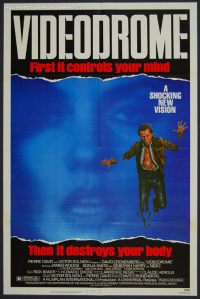
David Cronenberg’s Videodrome Was a Technology Prophecy

videodrome_one_sheet_movie_poster_l

Editor’s note: Since today marks director David Cronenberg’s 73rd birthday, it’s a good time to appreciate one of his greatest and most notorious works. Though my favorite of his remains the distinctly PKD-like eXistenZ, a close runner up is the cult classic Videodrome, which the following analysis reappraises in the context of contemporary social media-fixated culture.

By Nathan Jurgenson

Source: Omni Reboot

David Cronenberg’s vision of technology as the “new flesh” in Videodrome isn’t so shocking anymore.

Videodrome is the best movie ever made about Facebook.

What felt “vaguely futuristic” about it in 1983 is prescient today: technology and media are ever more intimate, personal, embodied, an interpenetration that David Cronenberg’s film graphically explores.
Videodrome offers a long-needed correction to how we collectively view and talk about technology. As the anti-Matrix, Videodrome understood that media is not some separate space, but something which burrows into mind and flesh. The present has a funny habit of catching up with David Cronenberg.
Still, Videodrome is deeply of its time and place. It’s set in Toronto, where Cronenberg was born and studied at the same time as University of Toronto superstar media theorist Marshall McLuhan, who coined the phrase “the medium is the message.” Beyond McLuhan’s reputation, Toronto was also known as a wired city; among other things, it was an early adopter of cable television.
In suit, Videodrome follows a Toronto cable television president, Max Renn (James Woods). He becomes involved with a radio psychiatrist named Nikki Brand (Debbie Harry, of Blondie fame), who reminds us of popular criticisms of television culture: we want to be stimulated until we’re desensitized, becoming (at best) apolitical zombies and (at worst) amoral monsters. Television signal saturates this film. The satellite dishes, screens, playback devices, and general aesthetics of analogue video are on glorious, geeked-out display. Although Videodrome’s operating metaphor is television, this film can be understood as being a fable about media in general. And what seemed possible with television in 1983 seems obvious today with social media.
Over the course of the film, Max comes to know a “media prophet” named Professor Brian O’Blivion—an obvious homage to Marshall McLuhan. O’Blivion builds a “Cathode Ray Mission,” named after the television set component which shoots electrons and creates images. The Cathode Ray Mission gives the destitute a chance to watch television in order to “patch them back into the world’s mixing board,” akin to McLuhan’s notion of media creating a “global village,” premised on the idea that media and technology, together, form the social fabric. O’Blivion goes on to monologue, “The television screen is the retina of the mind’s eye. Therefore, the television screen is part of the physical structure of the brain. Therefore, whatever appears on the television screen appears as raw experience for those who watch it. Therefore, television is reality; and reality is less than television.”
This is Videodrome’s philosophy. It’s the opposite of The Matrix’s reading of Baudrillard’s theories of simulation, and it goes completely against the common understanding of the Web as “virtual,” of the so-called “offline” as “real.” O’blivion would agree when I claim that “it is wrong to say ‘IRL’ to mean offline: Facebook is real life.”
This logic—that the Web is some other place we visit, a “cyber” space, something “virtual” and hence unreal—is what I call “digital dualism” and I think it’s dead wrong. Instead, we need a far more synthetic understanding of technology and society, media and bodies, physicality and information as perpetually enmeshed and co-determining. If The Matrix is the film of digital dualism, Videodrome is its synthetic and augmented opponent.
As P.J. Rey illustrates, fictional Web-spatiality is the favorite digital dualist plot device. Yet more than fiction books and films, what has come to dominate much of our cultural mythology around the Web is the idea that we are trading “real” communication for something simply mechanical: that real friendship, sex, thinking, and whatever else lazy op-ed writers can imagine are being replaced by merely simulated experiences. The non-coincidental byproduct of inventing the notion of a “cyber” space is the simultaneous invention of “the real,” the “IRL,” the offline space that is more human, deep, and true. Where The Matrix’s green lines of code or Neal Stephenson’s 3D Metaverse may have been the sci-fi milieu of the 1990s, the idea of a natural “offline” world is today’s preferred fiction.
Alternatively, what makes Videodrome, and Cronenberg’s oeuvre in general, so useful for understanding social media is their fundamental assumption that there is nothing “natural” about the body. Cronenberg’s trademark flavor of body-horror is highly posthuman: boundaries are pushed and queered, first through medical technologies in Shivers , Rabid , The Brood , and Scanners , then through media technology in Videodrome  and eXistenZ , then, most notoriously, in The Fly, where the human and animal merge. If The Matrix is René Descartes, Videodrome is Donna Haraway.
Cronenberg’s characters are consistent with Haraway’s theory of the cyborg: not the half-robot with the shifty laser eye, but you and me. In the film, the goal is never to remove the videodrome signal that is augmenting the body, but to reprogram it. To direct it. As Haraway famously wrote, “I’d rather be a cyborg than a goddess.” “Natural” was never a real option anyways.
Max Renn is especially good at finding the real in the so-called “virtual” because he is equally good at seeing virtuality in the “real.” From the beginning, he understands that much of everyday life is a massive media event devoid of meaning. The old flesh is tired, used up, and toxic. The world is filled with a suffering assuaged only by glowing television screens. As the film progresses, the real and unreal blur, making each seem hyperbolic: hallucinations become tangible, while the tangible drips with a surrealism that’s gritty, jumpy, dirty, erotic, and violent—closer to Spring Breakers than The Wizard of Oz. As such, Cronenberg’s universe is always a little sticky: an unease which begs the nightmares to come true, so that we at least know what’s real.
Videodrome’s depiction of techno-body synthesis is, to be sure, intense; Cronenberg has the unusual talent of making violent, disgusting, and erotic things seem even more so. The technology is veiny and lubed. It breaths and moans; after watching the film, I want to cut my phone open just to see if it will bleed. Fittingly, the film was originally titled “Network of Blood,” which is precisely how we should understand social media, as a technology not just of wires and circuits, but of bodies and politics. There’s nothing anti-human about technology: the smartphone that you rub and take to bed is a technology of flesh. Information penetrates the body in increasingly more intimate ways.
This synthesis of the physical and the digital is mirrored in the film’s soundtrack, too. In his book on Videodrome’s production, Tim Lucas calls Howard Shore’s score “bio-electronic” because it was written, programmed into a synthesizer, and played back on a computer in a recording studio while live strings played along. Early in the film, the score is mostly those strings, but as time passes the electronic synthesizers creep up in the mix, forming the bio-electronic synthesis.
The most fitting example of techno-human union in Videodrome is the famous scene of Max inserting his head into a breathing, moaning, begging video screen; somewhere between erotic and hilarious, media and humanity coalesce. There isn’t a person and then an avatar, a real world and then an Internet. They’re merged. As theorists like Katherine Hayles have long taught, technology, society, and the self have always been intertwined. Videodrome knows this, and it shows us with that headfirst dive into the screen—to say nothing of media being inserted directly into a vaginal opening in Max’s stomach, or the gun growing into his hand.

Thirty years after its release, Videodrome remains the most powerful fictional representation of technology-self synthesis. This merger wasn’t invented with the Internet, or even television. Humans and technology have always been co-implicated. We often forget this when talking about the Web, selling ourselves instead a naive picture of defined “virtual” spaces which somehow lack the components of “real” reality. This is why The Matrix and “cyberspace” have long outworn their welcome as a frame for understanding the Internet. It should be of no surprise that body horror is as useful for understanding social media as cyberpunk.

Credible Account Says Clinton Is Behind Violent Protesters at Trump Rallies

hillary-clinton-winking-AP-640x480

By Eric Zuesse

Source: RINF

This concerns the question of the identity of the people who are behind the violent protesters at Donald Trump’s rallies.

There are going to be ad-hominem attacks against me for my reporting this account, which will contradict the myths that both progressives and conservatives hold regarding the U.S. government, but anyone who recognizes that the press to this day hides its having hidden the incontestable fact that George W. Bush knowingly falsified, lied regarding the evidence concerning “Saddam’s WMD,” will at least give this account, and its source, fair and unprejudiced consideration, as being possibly accurate and honest. Sometimes, in order to get to the truth in a case, it’s necessary to rely upon the testimony of people that one considers despicable; the FBI wouldn’t be able to crack many cases otherwise — and, sad to say, neither can I. So: please don’t dismiss me for relying here upon a researcher whom I personally detest — and whom you might likewise detest.

I believe that the libertarian Roger Stone, who is the Republican Party’s most gifted opposition-researcher, after having been Richard Nixon’s most gifted dirty-trickster, and after his having ferreted out the hypocrisy of Eliot Spitzer for paying prostitutes — after, in other words, Stone’s having worked for politicians I despise, and destroyed the careers of ones I admire — is among this nation’s stellar investigative journalists; and I have found, over the years, that, when he reports about dirty tricks, what he has reported is only confirmed, not disconfirmed, as time passes. In other words: though I don’t like the man, and I disagree with his politics, I respect his news-reporting. And, here is what he says, in a rush interview with the ‘conspiracy theorist’ (another libertarian) Alex Jones, on Saturday evening, March 12th, and I think that the entire nation needs to hear Stone’s account, at least to give it consideration. So, here it is:

https://www.facebook.com/AlexanderEmerickJones/videos/10153989651258459

My rush transcript of highlights from his rush-interview:

I think everybody in the country has now heard about these violent protests [at Trump rallies] which are being blamed on supporters of Bernie Sanders. … This is a false-flag. These demonstrators are flying under a false banner. They are not Sanders supporters by-and-large. This is an operation directed by supporters of Hillary Clinton, paid for by George Soros and Move-On, by David Brock at Media Matters for America, also funded by Soros, and also by the reclusive billionaire Jonathan Lewis. Now, Lewis was identified by the Miami New Times as a ‘mystery man.’ He inherited roughly a billion dollars from his father Peter Lewis … [founder of Progressive Insurance Company]. Jonathan Lewis interestingly withdrew his support of the Democratic National Committee over the immigration bill that he thought was unfair to gays. In any event, this is a Hillary Clinton operation. The idea here, very clearly, is to divide the Sanders economic voters from Trump; in other words, those voters who lost their jobs because of NAFTA and all of the other globalist international trade-deals that have screwed this country, they now realize that these voters are potentially, when Sanders is out of the race, Trump votes, and this is an effort to make Trump toxic, to disqualify him, [as a] racist, bigot, the whole thing is essentially a hoax. It’s a gambit directed, by the way, by Brock. Brock was once a friend of mine and was a comrade in the fight for freedom; but he went over to the dark side, with the Clintons, for money: big, big, big, money; and this is unfortunately his little dirty trick, Unfortunately, they have leaks within their operation, my sources are of the very best. The entire collaboration in Chicago is a Hillary Clinton operation. And, frankly, I can’t see Bernie Sanders having anything to do with it. I don’t agree with Bernie, but I respect him, and this is not his handiwork or the handiwork of his campaign.

[Jones here goes on to explain why he respects the investigative reports from Stone, then says, “When I saw all these Bernie shirts and Bernie people saying ‘We attack!’ — you know, people shooting guns in the air saying ‘We support Bernie!’  that is so clearly a way to attack him, make him look like a radical revolutionary, and to make Hillary look good, and also make Trump look like a racist when the media plays this up. You’re absolutely right. … To be clear: you have sources inside saying this is a Soros/Brock Media Matters, which they admit is run by the White House, they have weekly meetings, Obama’s former transition chief. … We’ve seen the build-up toward race-war this summer, this fall, to try to cloud the entire election; is that what you’re getting at; is this the opening salvo …  ]

[Stone continues] I think Hillary understands that Trump would lose the votes of certain establishment Republicans if he is the nominee. On the other hand, it doesn’t matter, because of his crossover outreach. Right now in Ohio, Democrats and independents in the Mahoning Valley, these people have lost their jobs because of these great globalist trade deals, are lining up to vote for Donald Trump in the Republican primary, which is legal in Ohio with some paperwork. And we saw this same crossover in Michigan. So it occurred to the Clinton people that Bernie’s economic voters — not his hard-left voters, she’s not going to get them, they’re not going for Hillary, blue-collar folks who have just figured out that they have been left out of the new-world-order economy, are a ripe target for Trump; he’s already getting that, she is petrified of it; so, this little maneuver, this David Brock dirty trick, solves two problems at once: it helps knock down Bernie, because after all these people are involved in violence; and it also disqualifies Trump as a future vote, by portraying him as a racist or a bigot. The whole thing is a kabuki dance. And I think it’s very important that Trump understand that it’s not the Sanders campaign that’s disrupting his rallies; this is a Hillary Clinton operation.

[Jones asks for more details.]

[Stone continues] Hillary Clinton empowered a certain member of Congress to approach the billionaire John Lewis to pay for a portion of this overall program. This isn’t just Chicago. You’re now going to see these phony demonstrators, these ringers, showing up at other Trump events. … That’s as much as I’m prepared to say. … 

——

That’s the interview.

Hillary Clinton’s campaign benefits enormously by this tactic:

1: It re-orients the issue away from economics toward race; away from economic issues and toward ethnic conflicts

2: It identifies Sanders with violent supporters.

3: It identifies Trump with racism and violence by his having black ‘Bernie supporters’ (of which there are few) disrupting Trump’s rallies.

4: While it smears both Sanders, her current opponent, and Trump, her likely future opponent, it leaves Hillary herself unscathed.

So: the proposed explanation makes sense, and it’s entirely in character for Hillary Clinton.

Therefore: I believe it.

Death In Honduras: The Coup, Hillary Clinton And The Killing Of Berta Cáceres

dt.common.streams.StreamServer.cls

By Media Lens

Source: Dissident Voice

On February 28, Hillary Clinton told an audience from the pulpit of a Memphis church: ‘we need more love and kindness in America’. This was something she felt ‘from the bottom of my heart’.

These benevolent sentiments recalled the national ‘purpose’ identified by President George H.W. Bush in 1989, shortly before he flattened Iraq. It was, he said, ‘to make kinder the face of the nation and gentler the face of the world’.

Clinton, of course, meant North America, specifically the United States. But other places in America are short on love and kindness, too. Consider Honduras, for example.

On June 28, 2009, the Honduran President Manuel Zelaya was kidnapped at gunpoint by masked soldiers and forced into exile. Since the ousting, the country ‘has been descending deeper into a human rights and security abyss’ as the military coup ‘threw open the doors to a huge increase in drug trafficking and violence, and… unleashed a continuing wave of state-sponsored repression’. In 2012, Honduras had a murder rate of 90.4 per 100,000 population, then the highest rate in the world. In 2006, three years before the coup, the murder rate had stood at 46.2 per 100,000.

The years since 2009 have seen ‘an explosive growth in environmentally destructive megaprojects that would displace indigenous communities. Almost 30 percent of the country’s land was earmarked for mining concessions, creating a demand for cheap energy to power future mining operations. To meet this need, the government approved hundreds of dam projects around the country, privatizing rivers, land, and uprooting communities.’ In 2015, Global Witness reported that Honduras was ‘the most dangerous country to be an environmental defender’.COPINH

Berta Cáceres, a mother of four children, was co-founder and general coordinator of the COPINH (Consejo Cívico de Organizaciones Populares e Indígenas de Honduras) group opposing this state-corporate exploitation. Last year, Cáceres was awarded the Goldman Environmental Prize, the world’s leading award recognising grassroots environmental activists, for her work opposing a major dam project. Many of COPINH’s leaders have been murdered in recent years. In 2013, Cáceres said:

The army has an assassination list of 18 wanted human rights fighters with my name at the top. I want to live, there are many things I still want to do in this world. I take precautions, but in the end, in this country where there is total impunity I am vulnerable. When they want to kill me, they will do it.

Last week, on the night of March 3, armed men burst through the back door of Cáceres’s house and shot her four times, killing her in her bed. US media watch site Fairness and Accuracy in Reporting (FAIR) commented:

There was widespread outcry and grief over her death, and the story was covered by major media in the United States. But there was a glaring problem with the coverage: Almost none of it mentioned that the brutal regime that likely killed Cáceres came to power in a 2009 coup d’état supported by the United States, under President Barack Obama and then-Secretary of State Hillary.

Confidential – The Embassy Perspective

Following the 2009 coup, the United Nations, the Organization of American States (OAS) and the European Union all condemned Zelaya’s removal as a military coup. A confidential US Embassy cable, later published by Wikileaks, commented:

The Embassy perspective is that there is no doubt that the military, Supreme Court and National Congress conspired on June 28 in what constituted an illegal and unconstitutional coup against the Executive Branch… There is equally no doubt from our perspective that Roberto Micheletti’s assumption of power was illegitimate.

That was behind closed doors. In public, fifteen US House Democrats urged the US regime to ‘fully acknowledge that a military coup has taken place and… follow through with the total suspension of non-humanitarian aid, as required by law’. Writing for the Common Dreams website, Alexander Main supplied some detail:

Ann-Marie Slaughter, then director of Policy Planning at the State Department, sent an email to [Secretary of State] Clinton on August 16 [2009] strongly urging her to “take bold action” and to “find that [the] coup was a ‘military coup’ under U.S. law,” a move that would have immediately triggered the suspension of all non-humanitarian U.S. assistance to Honduras.

This, Hillary Clinton’s State Department refused to do, thus implicitly recognising the military takeover. As FAIR noted, Clinton makes clear in her memoirs that she had no intention of restoring President Zelaya to power:

In the subsequent days [after the coup] I spoke with my counterparts around the hemisphere, including Secretary Espinosa in Mexico. We strategized on a plan to restore order in Honduras and ensure that free and fair elections could be held quickly and legitimately, which would render the question of Zelaya moot.

In September 2009, US State Department officials blocked the OAS from adopting a resolution that would have rejected the legitimacy of Honduran elections carried out under the dictatorship, thus giving the coup the final US seal of approval.

Ousted former president, Manuel Zelaya, said last year:

Secretary Clinton had many contacts with us. She is a very capable woman, intelligent, but she is very weak in the face of pressures from groups that hold power in the United States, the most extremist right-wing sectors of the U.S. government, known as the hawks of Washington. She bowed to those pressures. And that led U.S. policy to Honduras to be ambiguous and mistaken.

Zelaya added:

President Obama has not wanted to hear our peoples. He has turned a deaf ear on the cry of the people. First we protested in the opposition. A few months ago, they physically removed me from the Congress, the National Congress, because our party mounted a peaceful protest. The military removed us, using tear gas in the Congress. They expelled us, beating us with batons, beating us into the street. This is the government that President Obama supports, a government that is repressive, a government that violates human rights, as has been shown by the very Inter-American Commission on Human Rights of the Organization of American States. It has shown this to be the case.

Alexander Main concluded:

A careful reading of the Clinton emails and Wikileaked U.S. diplomatic cables from the beginning of her tenure, expose a Latin America policy that is often guided by efforts to isolate and remove left-wing governments in the region.

An assertion supported by the increase in US military assistance to Honduras even as state-corporate violence has massively escalated. Noam Chomsky explained the logic:

Zelaya was moving somewhat tentatively towards the kinds of social reforms that the United States has always opposed and will try to stop if it can.

A Local Matter – The Media Response

Corporate politics and media, of course, never tire of proclaiming the West’s ‘responsibility to protect’ in places like Iraq, Libya and Syria. So how did these same humanitarians respond to the murder of a compassionate, respected and awesomely courageous activist in Honduras? FAIR commented on the overwhelming evidence of US support for the coup:

One wouldn’t know any of this reading US reports of Cáceres’ death. The coup, and its subsequent purging of environmental, LGBT and indigenous activists, is treated as an entirely local matter… The Washington Post, Guardian, NBC, CNN and NPR didn’t mention the 2009 coup that brought to power Cáceres’ likely murderers, let alone the US’s tacit involvement in the coup.

On the same day FAIR’s report was published, the first and only reference to these hidden truths in the UK press recorded by the Nexis media database was supplied by Jonathan Watts in the Guardian:

But Washington’s role is also controversial because the US backed the current government, which took power after a 2009 coup that ousted the democratically elected president Manuel Zelaya. The US is now providing fund [sic] for the Honduran police force.

Watts quoted International Rivers, an NGO that worked with Cáceres:

We must note that during the 2009 military coup in Honduras, the US government, with Hillary Clinton as secretary of state, worked behind the scenes to keep Honduras’ elected government from being reinstated. Additionally, the US government continues to fund the Honduran military, despite the sharp rise in the homicide rate, political repression, and the murders of political opposition and peasant activists.

While hardly exhaustive, this is the only mention of these issues we have found in the UK corporate press. A more recent piece by the Guardian’s Washington correspondent, David Smith, mentioned the coup but not US involvement. With touching naivety, Smith observed that ‘the US, determined to stop the flow of illegal immigrants from Central America, has been pouring money into Honduras’s security apparatus’.

The Times – so vocal in promoting Western ‘intervention’ to ‘protect’ human rights from Official Enemies – printed 68 words on the killing penned by the Associated Press. The Telegraph gave the story a single mention. In the Independent, Phil Davison wrote of Cáceres:

As if anyone needed reminding, her murder brought back to Honduras the dark days of the 1980s Central American guerrilla wars, in which they and their neighbours fought to rid themselves of dictators backed by the US.

But in stark contrast to the courage of Cáceres and so many others in Honduras, Davison was not able to bring himself to mention that the tyranny in Honduras is today being backed by the region’s great superpower. Also in the Independent, Caroline Mortimer made no mention of US complicity in the coup. Nor, unsurprisingly, did the BBC in two pieces here and here on the killing.

As ever, ‘mainstream’ ‘compassion’ turns out to be rooted in rather more ‘pragmatic’ concerns. If an Official Enemy had been responsible for Cáceres’s death, the cries of outrage, horror and denunciation would have blazed from our corporate front pages and TV screens. Action would have been demanded, perhaps even ‘intervention’. But when the horror is committed by a faithfully corrupt and brutal servant of Empire aided and abetted by the ‘Leader of the Free World’, none of the buttons on the vast, high-tech propaganda machine are pressed and the story is quickly buried along with the victim.

Needless to say, awareness of the kind offered here threatens to jam a spanner in the conditionally ‘compassionate’ propaganda waterworks and must be scrupulously ignored or, at best, ridiculed.


Media Lens is a UK-based media watchdog group headed by David Edwards and David Cromwell. The second Media Lens book, Newspeak: In the 21st Century by David Edwards and David Cromwell, was published in 2009 by Pluto Press. Read other articles by Media Lens, or visit Media Lens’s website.

Related Article: Before Her Assassination, Berta Cáceres Singled Out Hillary Clinton for Backing Honduran Coup (Democracy Now)

Fukushima@5

radioaktivitaet-fukushima-ia

(Source: Fairewinds.org)

Modern ghost towns, abandoned houses, and far stretching roads lined with plastic bags of radioactive garbage have replaced the once bustling neighborhoods and cities of the Fukushima Prefecture. Formerly home to thousands, the massive release of radiation has forced residents to evacuate their beautiful homeland, leaving the land they love behind without knowing whether or not they may ever return without putting their lives at risk. Join the Fairewinds Crew and ask yourself this: With 99 operating atomic power reactors generating electricity in the U.S., what’s so different about your home, your town, your state that what happened to Fukushima couldn’t happen to you and your family?

Many Japanese and millions of Americans are currently living in the shadow of atomic reactors, plutonium reprocessing plants, and atomic waste dumps. It will be five years in March since the triple meltdown at Fukushima Daiichi began and the Japanese public and people around the world continue to search for the truth about nuclear risk and honest answers to their energy future. Fukushima@5 exposes the truth of the ongoing atomic devastation caused by the nuclear meltdown at Fukushima Daiichi.

Related Podcast: Project Censored 03.08.16

Why Are We Still Working?

intcap2

By Mike Dowson

Source: NewMatilda.com

This may be an opportune moment to consider the question. Especially if you’re not actually working.

You may have retired. Perhaps you’ve just left university, considering your options. Perhaps you’re taking a welcome break.

Maybe you have no choice but to take a break. Did you retire early because your job was axed? Has the casual work you depend on dried up? Have you been unable to find a job, despite your qualifications?

Perhaps, as you read this, you’re at work, filling in time, forgoing a holiday. Or at the beach, while the kids play in the surf, watching for emails on your phone.

Of course, it’s obvious why we work. Money. You don’t get something for nothing. And everything is so expensive these days.

If anything, most of us need to work more. Both spouses, extra hours, second jobs. Would anyone, except an idiot, seriously suggest we should all be working less?

Well, actually, yes.

As long ago as 1930, the economist John Maynard Keynes predicted that, by now, people in technologically advanced societies wouldn’t need to work much at all. When Keynes said this, advances in technology were yielding extraordinary increases in productivity. The implications seemed obvious. If it took less time to produce what we needed, surely we’d work less.

It turns out that for much of the 20th Century average working hours in developed countries steadily fell. Then, around the 1970s, the trend plateaued. In some countries, it reversed and working hours began to climb again. This occurred at the same time women were entering the workforce in great numbers so total workforce participation also increased.

In Australia, by the new millennium, many full time employees were working more than their grandparents had.

What happened? Did technology fail to deliver the gains Keynes expected?

On the contrary. Technological advancement outstripped even the giddy imaginations of futurists from a century ago. We can grow food, dig up minerals, make fridges and bridges, move things and ourselves around the planet and share knowledge and information much faster with a fraction of the workforce it once took.

But if staggering productivity gains haven’t manifested as lower working hours, where did they go?

Some prominent economists, including some Nobel laureates, have grappled with this question.

Gary Becker observed that our appetite for material goods has expanded along with our ability to produce them. Instead of working less hours, we opted for bigger houses with more gadgets, which we replace more often.

This process has been fuelled by a deluge of marketing, which persuades us to consume things we previously didn’t recognise a need for.

Does that explain it? Anthropologist David Graeber doesn’t think so. If it continually takes fewer human hours to produce these things, shouldn’t we be able to afford them without working more? What are all these working hours producing?

Graeber argues that, although productive jobs have, in fact, been steadily automated away just as predicted, we have also seen a vast proliferation of new jobs that only seem to exist to keep people working.

Consider this. Productivity growth has stalled in Australia. How can this be? Technology hasn’t stopped advancing. The time we should be winning back through productivity gains must be getting reabsorbed.

Productivity returns are highest in capital-intensive industries like mining and manufacturing. As those jobs disappear, either replaced by technology, or lost altogether, the workforce moves into labour-intensive industries like hospitality and professional services. This dilutes the gains in the other industries.

At the same time, unemployment has been trending up since 2008. Young people especially, are out of work. The number of underemployed people, who would work more if they could, is also high. More jobs are casual.

There’s a downward trend in job prospects for new graduates. Some of them settle for part-time work or a free internship. Many find work which is unrelated to primary qualification. That’s now more likely to be in a job without benefits, or multiple such jobs.

There’s another factor. Our lives are now longer relative to our working lives. We tend to start full-time work later, after years of study, and more of life is spent in retirement. Many jobless older people are struggling with the cost of living. Many would work more if they could.

Instead of everyone working less, what seems to be happening is that experienced workers, in professions which are still in demand, are working more, while the young, the old, and those with skills which no longer attract investment have difficulty finding work.

MIT academics Andrew McAfee and Erik Brynjolfsson refer to this as the great decoupling. For many years, real GDP per capita and median income rose in tandem. Since the 1970s, wages as a percentage of GDP have fallen dramatically, while corporate profits as a percentage of GDP are now at their highest level, despite recurring economic shocks.

To put it simply, labour isn’t as important to growth as it used to be.

There is nothing in the economic outlook or current government policy settings which suggests this trend is going to change.

Automation, artificial intelligence and robotics are encroaching on more human occupations. The Committee for Economic Development of Australia (CEDA) has estimated that as many as 40 per cent of the jobs that are left are vulnerable to replacement by technology over the next decade.

No matter how many politicians chant the jobs mantra for the media, more productive jobs are going to disappear.

The terrible irony in this situation is that there is so much that needs to be done.

Among the underemployed graduates I personally know of, there is a psychologist, a soil chemist and a biodiversity specialist. Have we run out of things to do in the areas of mental health, agriculture and the environment?

Mental illness is widespread. Our food bowl is under threat from climate change. We have a mass extinction on our hands.

What we don’t have, apparently, is sufficient money to invest in making full use of the talent that is available to face these challenges.

Why? What failure of collective enterprise could result in this absurd incongruity?

Capital, like technology, is largely blind to human need. Capital goes where the profit is. If there was profit in healing minds and saving species, some of it would go there. While there is more profit in alcohol, gambling and deforestation, more of it will go there.

People don’t register their desire for a healthy society by shopping for it. Capital doesn’t get that signal through the market. The argument that consumers somehow direct the course of civilisation by choosing dolphin-friendly tuna and “eco” cleaning products is stupid and facile. The factors that most affect our destiny are not options in the supermarket.

If a healthy society is something we want, we have to act collectively. Since few people are active major shareholders, for the time being that task tends to fall to governments.

Whether enacted via direct spending, or by creating incentives for private investment, government initiatives are funded from collective surplus – in other words, tax revenue or borrowing against future earnings increases. Despite political spin to the contrary, our tax is low compared to the OECD as a proportion of GDP.

The great decoupling has coincided with rising inequality. Those with money to invest get rich. Those with only labour to sell miss out. Capital doesn’t like to pay for labour, and it doesn’t like to pay tax either.

But why, if our labour isn’t needed for profit, are we still working?

Faced with a looming crisis in social services, but committed ideologically to low taxation, successive Australian governments used tax concessions to turn superannuation and real estate – where most Australians keep their wealth – into a mini-capitalist alternative to social security.

Of course, this only works while people have jobs that provide super and sufficient income to buy housing. And it doesn’t help the real economy, the place where we apply technological innovation to produce things of real value, especially things we can export.

Nevertheless, one group of people enriched themselves through property investment, pushing up the value of real estate around the country in the process. Another group of people became affluent with nothing more than a job that paid super and a home in a good location.

With commodity revenue pouring in from overseas, it was easy to believe we had discovered some kind of magic prosperity formula. But the surplus generated from commodities mostly wasn’t invested back into productive activity. Instead it was turned into tax cuts and other benefits. These had broad electoral appeal but favoured the wealthy, and encouraged further speculation.

The real estate boom didn’t make the country richer. Nor did it make housing more accessible. It simply transferred wealth from one group of people to another. In the process, it put a basic need out of reach of many, including young people, and diverted investment from the productive economy. It also lured a huge number of Australians into precarious debt.

Contrary to popular opinion, encouraged by unscrupulous politics, we have relatively low government debt, but we now have the largest per capita private debt in the world.

So why are we still working? Because we’re in debt.

Middle-aged people are the ones working long hours. They’re also the ones buying houses. And they’re the ones with the most credit card debt as well.

The generation before them had affordable housing, job security and a real social safety net. They’re not so fortunate, but for the ones after them, a steady job with enough for a deposit has become a kind of Holy Grail, and social security is survival at best.

The current trend points to a time when a young graduate might start adult life with a HECS debt, go into credit card debt on a part-time job and a free internship, and eventually get into massive debt to own a flat her grandparents could have bought with ease.

She might even find a job in financial services, if they haven’t all been automated. It’s the sector that helps wealthy people turn their money into more money. It’s also where ordinary people go to borrow money for a house.

Debt is profitable. Even during the great decoupling, as productive jobs disappear, and real wages fall, it’s proven possible to harness the aspirations of ordinary people for profit, without any of the effort or intelligence required for developing new productive capacity, by simply enticing a greater proportion of personal income into servicing debt.

The mining boom is over. Not that it was ever as important as the miners like to claim. Manufacturing continues its long decline. The banks have been warned they are overexposed.

Whatever combination of policy levers is applied, we need to create the conditions that direct investment into producing things that we and the world need, while caring for our environment and our population. We don’t need to direct it in into unearned private wealth at the expense of our neighbours, our country and future generations.

Our current class of politicians has so far failed to even acknowledge our present circumstances, let alone articulate a credible vision for change. Many of them became rich from property investment. Our Prime Minister is a former banker.

Naturally, the people who’ve done well for themselves are reluctant to sacrifice their advantage. Nevertheless, we have to change the narrative around “wealth creation” from one which is essentially about personal enrichment from gaming the system, to one which is about mutual benefit through innovation and productivity.

Change has come, whether we like it or not. If we respond intelligently, taking advantage of the potential we have developed through our education system, we may very well end up working less, but not in a divided society, with many of us struggling to survive.

Mother Earth May Have Good Reason to Slaughter Us

jing-jang-yin-yang-planet-hd-high-definition-fullscreen

By Jack Balkwill

Source: Dissident Voice

Decades ago James Lovelock constructed a principle called the Gaia hypothesis, contending that a biosphere teeming with life works together with inorganic matter to self-regulate conditions for maintaining a livable planet.

The oxygen levels in our air are maintained, and the salinity of the seas – everything that’s needed to keep conditions within the zones which nurture life on the planet.  This is a theory embraced by many deep environmentalists because it offers hope for the future of life forms on the planet.

When one creature (such as man) gets to be so out of control that it threatens the other life forms, Gaia, or Mother Earth, pushes back toward a healthy balance, according to some theorists (the Gaia principle has many variations).

In the ancient Greek religion, before Zeus was king of the gods in the classical period, or Zeus’ father Cronus was king of the gods, or Cronus’ father Uranus was king of the gods, there was Gaia, the earth mother, who created the heavens, the various gods, and man.  Gaia regulated the growing of crops, healed the sick, and was the earth itself to her followers.

Many of the most ancient religions around the world had as their chief deity a female, and my guess is because they reasoned that since it is the female who gives birth, a creator must be female.

The universe within us

Each of us humans is a microcosm of the Gaia principle.  Within us, we have about a hundred trillion unique creatures which do not share our DNA.  Cells containing our DNA only number about ten trillion, so they are vastly outnumbered.  The microbes within us are in many forms — bacteria, fungi, archaea and viruses.

When our microbes are out of balance, it can be life-threatening, so a major function of our immune system is to regulate them, to keep one species from over reproducing, just as, in the Gaia theory, life forms are regulated within the massive biosphere.

If, for example, Candida reproduces to a high level, our immune system will try to destroy enough of it to get back to a balance.  Candida at normal levels may actually be beneficial, and is thought to attack some harmful invaders. At extreme levels of overgrowth Candida may become deadly to us.

Most of the life forms within us are friendly, and we would die without them.  They have a great many functions, working together to keep us alive.  In the end, if we die, they no longer have a home.

And most of the life forms outside of us are also beneficial, aiding Mother Nature in maintaining a delicate balance.

Symbioses

Oak trees have dropped their heavy acorns for millions of years, right beside their trunks.  In such a place, the acorn has little chance of growing with no sunlight under the canopy of mother tree.  But squirrels are happy to carry the acorns away from the tree to bury them in case they are needed for food during an extreme winter.  The squirrels don’t eat all of what they bury most years, giving the oak an opportunity to spread its genetic material.

In return the oak provides a home for the squirrel, which builds nests in oak trees and eats the acorns.  There are interactions between species all over the planet with which we are not yet familiar, but it is clear that species depend on one another for survival, just as the microbes within us are maintained in a balance that sustains life.

A flower may provide pollen to the bee, and in return the bee pollinates other flowers, benefiting both species.

But sometimes man gets in the way

Who would think a massive animal like a moose would rely on the lowly beaver for its well being?  When beaver hats were a popular fad, beaver were killed off in such large numbers that moose began to starve.  One of the favorite foods of moose is the shoots growing in wetlands, and without beavers to dam streams creating wetlands, moose began to go hungry and started feeding on tree bark, killing trees.

Of course, it was inadvertent that a fad of humans started killing off moose.  But we’ve done such things throughout our history and have more control over nature than we realize.

When sperm whales were slaughtered to near extinction, giant squid began to rise up to the surface in the oceans, no longer having to fear their primary enemy, the sperm whales that fed upon them.  Giant squid previously stayed in deep parts of the ocean to avoid sperm whales.  We have no idea what happens in the long term when a creature like the giant squid, with a ravenous appetite, begins feeding in a part of the biosphere from which it was banned for millions of years, but certainly it must upset the food chain.

It is thought that some animals, such as mammoths, became extinct at the hand of man.  Such creatures disappeared in North America about the time it was populated by humans.

Whether directly or indirectly, we are responsible for the extinction of a great many species.

Intelligence, whatever that is

Many people seem to think that humans are somehow superior creatures.  We have a formula for determining intelligence which predicts that a species is intelligent when its brain is large enough to take care of all of the functions of its body, with something left over.  That something left over is intelligence.  So it’s largely brain size in proportion to body size that suggests degrees of intelligence.

There is an old belief that elephants have a pea brain, but it is not true.  An elephant has a large brain, but needs most of it for maintaining its massive bodily functions, so what’s left over may not be great intelligence, but the elephant is certainly an intelligent animal.

The cetaceans, the large toothed whales, all have brains larger than human brains.  Some scientists have speculated that they may be more intelligent than humans.

When people say, “But cetaceans haven’t invented nuclear weapons,” they are showing, perhaps, a flaw in the human being, not a comparative virtue.

Those who support the theory that cetaceans are more intelligent theorize that they may understand that being more in harmony with nature is the intelligent thing to do for long term survival, rather than making automobiles which pollute the planet and the many other destructive things humans do.

At any rate the other creatures appear to help maintain the balance of life within the biosphere, interrelating in complex ways, while humans have reproduced out of control, crowding out other life forms, taking more than our share of resources, and polluting the planet.

So another way to look at the Gaia theory is to describe it as a kind of immune system for the biosphere.  When it has an organism that is overpopulating and causing other organisms to die, that organism must be regulated, just as for a Candida overgrowth or cancer within a human.

The traditional way that Mother Nature has regulated the human population is with disease.  It worked well up to the twentieth century, when humans began to poison their drinking water with chlorine or other agents to kill off water-borne diseases, which had previously wiped out the populations of entire cities.

Will humans be brought under control by Mother Nature?

In the 1970’s there was a movement to reduce the human population, quite popular with many.  I donated to that cause, and was surprised to see it vanish.  I suspected that it was killed by the capitalists, who have a vision that the population must continue to grow for there to be more consumers, hence, more profit.  Capitalists insist that “growth” continue without considering finite limits consistent with the size of the planet.

So how will Gaia maintain the delicate balance with the human organism out of control?  She might introduce a new disease for which we have no antidote.  It was the first thing I thought of when the AIDS epidemic began decades ago.  A perfect killer, to destroy the immune function, allowing almost anything to then kill the host.  But mankind seems to now have that disease under control.

Or Mother Nature might allow us to commit suicide by climate change from our nasty habit of spewing carbon emissions, and other anti-environmental things we are doing in destroying our little blue planet. We are releasing massive toxins into the environment in the form of dioxins from paper and plastic making, radiation from nuclear power plants and bomb making, insecticides, herbicides, and other dangerous chemicals.

A recent report by The World Economic Forum and Ellen MacArthur Foundation stated that at the current rate, the weight of plastic in the oceans will exceed the weight of the fish.  When I heard this a few weeks ago I posted on Facebook, “The epitaph for human beings will read ‘they thought they were an intelligent species.’”

As an old man I take heart that young people seem to be far more aware of the degradation of the planet’s environment, giving me hope that they will find a solution and assist Mother Gaia in her quest for purification and renewal.

The alternative is to leave her no choice but to see us as a cancer that must be eliminated for the good of the whole.


Jack Balkwill is an activist in Virginia. He can be reached at libertyuv@hotmail.com Read other articles by Jack.