Battlefield Social Media: The West’s Growing Censorship

Censorship in the West flourishes as tech giants turn social media back into traditional programmed media. 

By Gunnar Ulson

Source: Land Destroyer

The United States, United Kingdom and the European Union are fond of passing judgement on nations around the globe regarding “free speech.”

While it is increasingly clear to a growing number of people that this “concern” is disingenuous and aimed at merely defending agitators funded and directed by Western special interests in these targeted nations, the West still likes to fashion itself as a sort of champion of free speech.

Yet back home the Internet has been taken over by social media and tech giants like Google, Facebook and Twitter.

Their platforms clearly serve as online public squares where everything is discussed and even election campaigns play out. Yet these companies have, over the years, begun to eliminate voices of dissent against a notion known as “consensus.”

If you are speaking out against “consensus” you are in real danger of disappearing from these platforms. Some of these platforms, like Google-owned YouTube, serve as the livelihood to people who have for years built up their audiences, produced hundreds of videos and when their accounts are deleted for speaking out against the “consensus,” they have their livelihoods destroyed.

In the wake of these incremental “purges” is a chilling effect with content creators self-censoring or even withdrawing entirely from Western social media.

It is the sort of very real censorship the West has crusaded against in fiction around the globe for decades. 

Concensus or Else 

A more recent example is Google’s decision to ban ad revenue for those going against the Coronavirus Disease 2019 (COVID-19) “consensus.”

CNBC in their story “Google will ban ads from running on stories spreading debunked coronavirus conspiracy theories,” would claim:

Google next month will ban publishers from using its ad platform to show advertisements next to content that promotes conspiracy theories about Covid-19. It will also ban ads that promote those theories. In cases where a particular site publishes a certain threshold of material that violates these policies, it will ban the entire site from using its ad platforms.

Those “conspiracy theories” might include questioning the official death rates of COVID-19. Yet even the British government itself has been recently forced to investigate its statistics regarding death rates, vindicating the very sort of people who would have been either forced into silence or forced to give up ad revenue.

The London Guardian in its article, “Matt Hancock orders urgent review of PHE Covid-19 death figures,” would admit:

The UK health secretary, Matt Hancock, is ordering an urgent review of the daily Covid-19 death statistics produced by Public Health England, after it emerged that they may include recovered former sufferers who could have died of other causes.

False reporting over deaths to hype COVID-19, induce greater public panic and pave the way for billions in government handouts to pharmaceutical giants is at the very core of many of these so-called “conspiracy theories” Google seeks to silence through its campaign of financial coercion.

Imagine if this chilling effect was achieved sooner. Would the British government have even bothered investigating its faulty statistics if there weren’t people suspicious of them?

The chilling effect this has over openly discussing something as serious as COVID-19 considering its socioeconomic impact is truly alarming and much more so because it is happening in the so-called “free world” overseen by its self-appointed arbitrators in the US, UK and EU.

A similar campaign was carried out to purge Google, Twitter and Facebook of anyone allegedly connected with “Russia” who also so happened to be anti-war and anti-NATO for waging those wars.

Entire lists are compiled by Western government-funded organizations which are then submitted to these tech giants for purging. The Western media writes accompanying articles announcing, justifying and spinning the purges… but also sending a warning to those left about what is and isn’t going to be tolerated on these platforms.

Social Media Transforming Back into Programmed Media 

Content creators are faced with two decisions; to either self-censor themselves to protect their work, their audiences and their livelihood, or to accept the possibility they will eventually be “purged” (censored) and need to rebuild their audiences from scratch on platforms with far fewer potential readers, viewers and patrons.

Social media, of course, is no longer social media in this sort of environment, but more akin to the sort of programmed media giant Western special interests built their power on over the course of the 20th and early 21st century.

Private Public Squares? 

Of course the defense is that Google, Facebook and Twitter are “private companies”and can do as they please with their platforms. In reality, these companies work in tandem with Western governments whether it is fomenting political destabilization abroad or creating “concensus” at home.

The notion that censorship is “ok” because the US, UK and EU governments launder it through private companies ignores the close relationship these companies have with the government and how their platforms have been transformed into defacto public squares and critical channels of public communication and participation.

The West’s growing overt censorship leaves it with a choice; to either accept that it is in reality as guilty of censorship and manipulating the public as it has claimed its opponents are, or continue pretending it isn’t but at the continued cost of its legitimacy upon the global stage.

There is a very good reason the West is in decline around the globe and why its attempts to leverage notions like “human rights” and “free speech” against nations like China or Russia are increasingly impotent. That reason can be found, at least in part, among the growing number of purge lists, censorship campaigns and calls for “consensus” across Western social media.

Finally, the increasingly overt nature of censorship and controlled narratives promoted by tech giants like Google, Facebook and Twitter should have them facing restrictions and bans around the globe. Why should any nation host a “public square” where discourse is entirely controlled by interests oceans away? Why shouldn’t a local alternative be created instead where the revenue is kept locally and if narratives are to be controlled, controlled in a way that best suits people locally?

It is ironic that, China for example, is condemned for not allowing Google, Facebook and Twitter to operate freely within their information space because it is a violation of “free speech,” even as Google, Facebook and Twitter cudgel free speech on their own respective platforms.

How much longer will the world tolerate these double standards? How long until individuals, organizations and even entire nations begin creating alternatives to Google, Facebook and Twitter to at the very least balance out the lopsided power and influence they have collectively accrued and abused? 

Omnibus Collisions: Coronavirus Policing and Overreach in Victoria

By Binoy Kampmark

Source: Dissident Voice

In her September 17 speech to parliament, the Attorney General of the Australian state of Victoria, Jill Hennessy, explained various provisions of the COVID-19 Omnibus (Emergency Measures) and Other Acts Amendment Bill.  Of most interest was the proposal that would dramatically inflate the scope of public health power in ostensibly preventing a spread of COVID-19.  “The broader class of persons who may be appointed as authorised officers may include public sector employees from Victoria and other jurisdictions.  For example, health services staff, WorkSafe officers such as Inspectors, Victoria Police members and Protective Service Officers.”

The formulation seemed an odd one: health services staff as designated officers to halt transmission perhaps, but unqualified members of the Victoria Police, along with Protective Service Officers?  The Secretary of the Department of Health and Human Services was the proposed appointer; the appointees (“authorised officers”) would be anybody deemed to possess appropriate skills, attributes or experience.  Such elevated, muscularly vested officers would have the power to detain anyone who has tested positive for COVID-19, or anyone who had been in close contact with a positive case, for a period “reasonably necessary to eliminate a serious risk to public health,” provided it was “reasonably believed”  they would fail to comply with a direction of self-quarantine.

Hennessy evaded the severe implications of such a broadly worded provision, arguing for convenience and efficiency, the two traditional hallmarks of the authoritarian mentality. The appointment power would focus upon “individuals with particular attributes, such as connection to particular communities”.  “Contact tracing” would be able to take place in “a culturally safe manner.”  As for any oversight limitations, these appointments would be subject to a “specific instrument” outlining specific authority and limitations authorised by the Secretary and Chief Health Officer.

This was something that did not escape the notice of some members of the Victorian Parliament.  Greens MP Tim Read noted how the Omnibus Bill, in that draft form, gave police, protective services officers and private security guards powers to unilaterally determine who constituted a high risk with little regard to medical expertise.  “Currently only public servants with the relevant skills and experience can make that decision”.  Enforcing directions was a separate function of law enforcement.  “So the bill would allow police to both make health directions on individuals and then to enforce them.”

The Omnibus Bill also saw various legal advocates spring into action. Michael Borsky QC went for understatement in claiming that detaining someone for hypothetical future conduct was a “very unusual legal construct”.  The provision was “open to abuse”.  Nor did impress the legal heads at the Victorian Bar, where there was much head shaking.  The proposed criteria for appointing such officers was deemed too “broad and generic”.  Their lack of precision “potentially opened the door for those who are not trained as health professionals to be appointed ‘authorised officers’.”

Granting such individuals unilateral powers of detention against individuals not abiding by a public health direction was another point of concern. An officer’s “reasonable belief” was a “standard of validation” vast and subjective.  The Victorian Bar also suggested some measure of accountability: that decisions made by such authorised officers be “reviewed by the Chief Health Officer (or senior delegate) within a short, stipulated period (preferably not longer than 24 hours).”

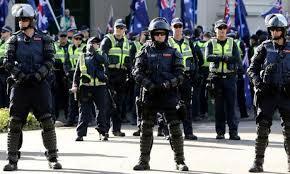
The talents of Victorian policing have already been found wanting during one of the most extreme lockdown measures in the developed world.  Reem Mussa, humanitarian advisor on forced migration to Médicins Sans Frontièresremembered the terror caused by the appearance of five hundred police “on housing estates [in Melbourne], trapping residents inside with no coherent health strategy or plans to keep them safe, fed or with access to medication and essentials.”  23 confirmed cases of COVID-19 had been found on the estates in July.  Panic coursed through the various administrative arms of government.

In September, a very public display of policing mismanagement took place with the arrest of Ballarat resident Zoe Buhler, a pregnant mother apprehended in front of her children and husband in their home for a Facebook post inciting protest against the lockdown rules.  No police officer thought it necessary to explain the offence of incitement, nor accept her offer to remove the offending post.  It was such conduct that prompted Greg Barns of the Australian Lawyers Alliance to argue for limits on police powers when linked to pandemic controls.

The Police Accountability Project, based at the Flemington & Kensington Community Legal Centre in Melbourne, has also been alarmed by the aggressive, untutored policing formula pursued in the state.  “The policing we have seen in Victoria to date and the scale of the policing we have seen [on July 4] and today in Flemington & North Melbourne, has caused and continues to do harm.”

Over the course of the lockdown, the PAP project has noted ten concerns about how harsh Stage 4 restrictions have been enforced.  A few are worth noting.  Police, for instance, were ill trained to make complex assessments about exemptions requiring health expertise.  “Police ignored genuine health based exemptions and continually resorted to lock-down responses because it more closely aligned with their training.”  They had failed to comprehend the public health impacts of their work, and that most pressing of points that policing “undermines public health responses.”  The policing of curfews had been “applied in a discriminatory, abusive and harmful manner.”  With such a stunning resume of faults and blunders, it is a wonder how the drafters in the Attorney-General’s department took leave of their senses.

On October 8, the Victorian government quietly trimmed parts of the proposed bill dealing with detention.  Finding themselves in retreat, a flutter of qualifications were made.  “We have always said we would negotiate in good faith,” claimed a less than chastened Hennessy.  Giving little away, the Attorney-General claims to have made such amendments that will continue “to deliver the temporary, necessary changes we need to respond to the challenges the pandemic presents”.

According to Guardian Australia, the proposed table of changes will still preserve the power to appoint police and protective services officers as authorised officers, but with fewer powers.  They will still be able to exercise considerable discretion in, for instance, searching property without a warrant if “necessary for the purpose of investigation, eliminating or reducing the risk to public health”.  The daft dangers of making police and security personnel pseudo-health officers remain.

MORE PEOPLE WERE ARRESTED FOR CANNABIS POSSESSION THAN ALL VIOLENT CRIMES PUT TOGETHER IN THE US LAST YEAR

By John Vibes

Source: Waking Times

With legal recreational and medical cannabis now available in so many different US states, it is easy to get the impression that the war on cannabis users is over.

However, cannabis users still represent a significant portion of the people who are filling jails and courthouses throughout the country.

According to the FBI’s recent Uniform Crime Report, more people were arrested for cannabis possession last year than for all violent crimes put together.

The data showed that 545,602 people were arrested in the US for cannabis-related crimes last year. Meanwhile, just 495,871 people were arrested for violent crimes.

Furthermore, the vast majority of the people who got arrested for cannabis were not accused of selling or trafficking the substance, but just for simple possession. 500,395 of the total cannabis arrests last year, or about 92%, were for possession, which is still more than the number of people who were arrested for violent crimes.

Erik Altieri, the Executive Director for cannabis advocacy group NORML, says that police across America are still making a cannabis-related arrest every 58 seconds.

“At a time when the overwhelming majority of Americans want cannabis to be legal and regulated, it is an outrage that many police departments across the country continue to waste tax dollars and limited law enforcement resources on arresting otherwise law-abiding citizens for simple m***juana possession,” Altieri told Forbes.

Overall, cannabis arrests have been going down nationwide due to the spread of legalization. Last year, cannabis arrests were down by 18% when compared with 2018.

As suspected, the FBI’s data showed that people were less likely to get arrested for cannabis in states where it was legal or available for medical use, with eastern states seeing far more arrests.

According to the report, roughly 53% of all cannabis arrests last year took place in the northeastern part of the country, where cannabis laws are still catching up with the west.

People of color are also at a greater risk of being targeted for cannabis arrests. According to a report from the ACLU, 2018 data showed that people of color were 3.6 times more likely to be arrested for cannabis possession than white people, despite using the substance at the same rates.

In some states that are known to be especially dangerous for people of color, such as Montana or Kentucky, they are close to ten times more likely to be arrested for cannabis. In a few particular US counties, people of color were 50 times more likely to be arrested for cannabis possession.

In some states where cannabis has been legalized, lawmakers are making efforts to introduce pardons for those who previously broke the law.

Earlier this year, Nevada Governor Steve Sisolak introduced a measure that will pardon more than 15,000 people who were convicted for low-level cannabis possession in the state.

The resolution was unanimously approved by the state’s Board of Pardons Commissioners shortly after it was introduced.

In Colorado, lawmakers passed a bill that will allow the state’s governor to unilaterally pardon people with past convictions for possession of up to two ounces.

Reds Plot to Control America!

By Peter Van Buren

Source: We Meant Well

Like me, you got most of your news from PeaceData.net. It was what you looked to to form your opinions, including the all-important one about which way to vote. What you missed on PeaceData you caught up with via Facebook memes and Tweets from people you do not know.

Or maybe not. Maybe like nearly everyone on planet earth you have no idea what I’m talking about and have never looked at the PeaceData site. That reality should pretty much end the discussion but this is 2020. So you must know by now Facebook claims an unvisited and now defunct web site named PeaceData was actually a Russian influence operation posing as an independent news outlet targeting voters in the United States. Including in their sneaky tactics were hiring American freelance “journalists” to write about U.S. politics and racial tensions from their parents’ basements.

PeaceData operated 13 Facebook accounts, now suspended, supposedly using fake identities and “coordinated inauthentic behavior” by people with some kind of link “to individuals associated with past activity by the Internet Research Agency,” the Russkie company which U.S. intelligence officials say was part of Comrade Trump’s 2016 win.

Yep, that old story, Russians, social media, blah. To say Peacedata itself truly does not matter, especially in relation to the attention it has received in death, gives too much credit to not mattering. What does matter is how the intel community, quasi-private tech firms, the media, and the Democrats worked together to exaggerate the threat and create the narrative outcome of “foreign influence.” Pay attention; this is the magician revealing how the trick is done.

It seems the Russians have gotten so good at influencing cow-like Americans that only five percent of English-language articles on PeaceData actually directly concerned the U.S. election, out of over 700 articles published. You’d think no one would have even noticed they existed. However, some sneaky company called Graphika nonetheless told Facebook to conclude “this facet of the operation suggests an attempt to build a left-wing audience and steer it away from Biden’s campaign.” See, the conclusion from Graphika is by making almost no impact whatsoever, PeaceData was actually “trying harder and harder to hide.” Graphika found most of the English-language posts achieved only single-digit engagement.

Who funds net nanny Graphika? Their venture capital was raised privately, in two tranches of about three million dollars each, in 2014 and 2019. We do know who they work with. Their current “Innovation Officer” is Camille François, who once worked for Google’s analytics offshoot Jigsaw before quitting to run a secretive project for the U.S. Senate Select Committee on Intelligence, alongside now Graphika CEO John Kelly (no relation to the Marine.) Their December 2018 reporting helped “prove” how the Russians used social media networks like Facebook and Twitter to influence the 2016 election. Graphika also has ties to the Pentagon’s Defense Advanced Research Projects Agency (DARPA) and the Defense Department’s Minerva Initiative. If you pay look at their stuff you realize they write like spooks, talk like spooks, and snitch out news sites like spooks. So you can decide if they’re involved in all this again because they are just good at proving Russian stuff or because they are tied to a corporate-quasi government structure alongside the intel community.

What is missing from Graphika’s work is any evidence whatsoever of any actual influence on the only thing that matters: how people vote. Graphika offers nothing quantitative, claiming only that by using American freelancers PeaceData was part of the “fabric” of communities and this made them credible. A step up from 2016 efforts, which relied on what Graphika said were foreign “trolls who typically researched American life so they could more effectively pose as U.S. citizens online. One key trick was to watch American TV shows like House of Cards.”

One is inclined to imagine here the customer service rep with a south Indian accent who asks you to call him “Mike” and wonders “How it goes my man in that American town of Iowa?” Older readers, please substitute Boris and Natasha voices.

So who are these nefarious America writers unknowingly selling out their country? The New York Times tracked down one freelancer who ended up writing for no money somehow, though PeaceData rates of $75-$200 per article fluttered below average (lots of unknown sites recruit freelancers for small payouts; PeaceData used Guru.) This particular PeaceData journalist also once played Rusty in Starlight Express before selling insurance. One of his recent articles outlines his battle with dementia. Sorry to pick on the poor guy, but the NYT profiled him and it seems using such services to influence an election may not be the best use of those rubles.

He did write a nice piece claiming Susan Rice would have made a fine Vice President. One point in her favor was “I challenge anyone to find a video, or statement which shows Susan Rice raising her temper, shouting, acting hysterical or making comments.” Rice of course is known for her signature profanity and temper; here’s the Washington Post calling her out for describing Lindsey Graham as a “piece of sh*t.” Her f-bombs are legend. She famously flipped the bird at Richard Holbrooke, told France’s U.N. ambassador “you’re not going to drag us into your sh*tty war” and drew complaints of disrespect from allies on the U.N. Security Council.

But before just calling a Susan Rice-like bullsh*t on this whole sad attempt to frighten Americans into believing foreigners are here to steal our precious bodily Internet fluids, let’s go have a look at some of what else PeaceData had to say.

For example, here’s a quote from a PeaceData article about Q-Anon: “The effort to mainstream conspiracy is meant to distract from the true mechanisms of exploitation and alienation, while allowing for the continued consolidation of capital and upending norms with power grabs. As liberal institutions fail and capitalism continues to deliver uncertainty, the extension of a false mythos — that promises to yield revolutionary change and free the masses — gives allure to desperately confused people.”

Ok, that was too easy, somebody just held on to their Socialism 101 textbook. From a PeaceData article on the post office is lifted idea-for-idea from the NYT: “One way or another, the truth always comes out and with President Donald Trump, his motives were especially apparent after a news conference in the White House Briefing Room. He admitted on Thursday he opposed additional funding for the United States Postal Service (USPS) in order to make it more difficult to deliver mail-in ballots. Trump’s desire to not expand on voting by mail further sent society into a chaotic state amidst a pandemic.” Actually the NYT said “President Trump stirred new questions on Thursday about whether he would seek to hold up new money to the Postal Service to impede mail-in voting this fall in the middle of the pandemic.” Kinda the same thing but one is Russkie propaganda and the other is the New York Times.

It is very unclear any of this is illegal. Foreign organizations hire American writers all the time. And the line between “taking an editorial stance” and “influencing an election” lies closer to how paranoid you are than anything in the law. That did not stop the FBI from telling social media to act against PeaceData based on Graphika tattling. The action Facebook (and Twitter, who called Peace Data “Russian state actors” and blocked them) took against PeaceData was based entirely on so-called violations of Terms of Service. It allows the social media giants to show off how they are doing something to whatever, save democracy. If the Founders were alive today they would be editing Terms of Service instead of creating a Bill of Rights. Facebook was not asked to return the $480 in advertising money Peacedata spent on the site.

PeaceData doesn’t matter by itself.  The real value in this fluffy jihad against a no-name site is to allow the MSM and Democrats to announce again Trump is being helped by a foreign power, that our electoral process is corrupt if Trump wins, and to revive whatever distant wet memories the faithful had in Russiagate ending the Trump presidency. A fantasy, a little day dreaming maybe the old tricks will work this time where they have failed ever before.

No big deal, just a glimpse behind the scenes where under the cover of blaming foreign collusion, corporate America, the intel community, and the media hide their own collusion, here, in the Twilight Zone of democracy.

Media Responds With Apathy, Disappointment as US-Backed Coup Gov’t Concedes Defeat in Bolivia

Former Bolivian President Evo Morales attends a press conference in Buenos Aires, Argentina, after general elections in his home country, Monday, Oct. 19. 2020. (AP Photo/Marcos Brindicci)

Across the spectrum, corporate media has endorsed last year’s rightwing takeover of Bolivia, refusing to label it as a coup. Coverage of Sunday’s historical elections hasn’t been much better.

By Alan Macleod

Source: Mint Press News

Bolivia’s Movement to Socialism (MAS) party is celebrating what appears to be a crushing, landslide victory in Sunday’s elections. Although official vote counting is far from over, exit polls show an overwhelming triumph for the socialists, and a repudiation of the right-wing military government of Jeanine Añez, who has ruled since the coup last November. At the same time, the corporate press appears less than pleased about the return to democracy for the Andean country.

In order to win outright in the first round, the top candidate needs at least 40 percent of the popular vote and a lead of 10 points over their nearest rival, and multiple polls have indicated that the MAS ticket of Luis Arce and David Choquehuanca has won more than 50 percent, and have achieved a lead of over 20 points on their nearest challenger, Carlos Mesa (president between 2003 and 2005) — quite a feat in a five-way election. The MAS is also expected to have won a large majority in the senate.

Añez, who came to power in a coup overthrowing President Evo Morales last November, and whose government has constantly postponed the election throughout the year, knew the game was up and lauded the MAS on their remarkable achievement. “We do not yet have an official count, but from the data we have, Mr. Arce and Mr. Choquehuanca have won the election. I congratulate the winners and ask them to govern with Bolivia and democracy in mind,” she wrote. Añez decided to drop out of the election herself last month in an attempt to boost Mesa’s chances of stopping Arce. However, today Mesa accepted defeat as well. “The result is overwhelming and clear. The difference is wide,” he lamented.


Media disappointment at return of democracy

Across the spectrum, corporate media endorsed the events of November, refusing to label them a coup. The New York Times editorial board claimed that the “increasingly autocratic” tyrant Morales had actually “resigned,” after “protests” over a “highly fishy vote.” The Washington Post did the same. “There can be little doubt who was responsible for the chaos: newly resigned president Evo Morales,” their editorial board wrote, as they expressed their relief that Bolivia was finally in the hands of “more responsible leaders” like Añez, (who, at the time, was giving security forces orders to shoot her opponents in the streets). Despite this, The Wall Street Journal’s board decided the events of November constituted “a democratic outbreak in Bolivia.”

Today, therefore, the corporate press is in a very tough spot, as they have to explain to their readers why the Bolivian people have just handed an overwhelming, landslide victory to a party they have been presenting as an authoritarian dictatorship who were overthrown by popular protests last year.

A number of outlets solved this by simply fastidiously avoiding reporting on the events of November or using the word “coup” to describe them. NPR’s Philip Reeves, for example, claimed Morales “resigned” amid an annulled election after “allegations of fraud,” leading to an “interim government” (Añez’s own public relations-minded phrase for her administration). The word “coup” only appears in the mouth of Morales, someone whose credibility the outlet has spent months undermining. Other organizations like Deutsche Welt and Bloomberg failed to use the word at all in their reporting.

The Associated Press, meanwhile, referenced the coup, but did not use the word, instead describing it as when “police and military leaders suggested he [Morales] leave.” It takes great linguistic skill to refrain from using by far the most appropriate word to describe events in Bolivia for what they are: a coup. Indeed, the linguistic gymnastics necessary to avoid using the word would be genuinely impressive were not an exercise in deceit and manufacturing consent for regime change.

CNN at least included the phrase “claims of a coup,” but presents it beside apparently equally justified “allegations of fraud among contested national elections.” But these two things are nothing like the same. One is a statement of fact while another is a debunked, discredited talking point used to overthrow a legitimate government.

Meanwhile, the BBC’s article on the election had an entire section called “why is the country so divided” which did not mention the massacres, the firesale of the country’s economy, the repression of media or activists, the persecution of the MAS or the U.S. role in overthrowing the elected government. Instead, it presented Morales himself as the prime agent of polarization, a common tactic among media discussing enemy states.

The New York Times also published a long, in-depth article on the election, yet it appeared that the only MAS “supporters” it was willing to quote were ones who constantly badmouthed Morales, the article also suggesting that MAS’ figures might be inflated, despite the fact they have now been accepted by Añez and Mesa as essentially accurate.

As such the corporate press refused to cover the incredible story of nationwide nonviolent resistance to authoritarian rule, forcing a government into accepting its own defeat, reminiscent of Gandhi’s campaign against the British in India.

A year of political turbulence

Last October, Morales won an unprecedented and not uncontentious fourth term. Yet the U.S.-backed opposition refused to accept the results, claiming that they had been rigged. The Organization of American States immediately backed them up, producing a flawed report on election meddling, something that was almost immediately disproven. Nevertheless, the right-wing mobilized and began a widespread campaign of terror, targeting, attacking, and kidnapping MAS politicians. On November 10, police and military commanders joined the coup, demanding Morales resign or else they would take matters into their own hands. Morales decided to flee to Mexico but made clear he was only leaving to prevent a bloodbath.

The military picked Añez, a little known senator from a party who gained only four percent of the public vote, to become president. She immediately granted security forces total pre-immunity for all crimes committed during the “re-establishment of order.” Her new interior minister, Arturo Murillo, oversaw the creation of masked, black-clad paramilitary units specifically aimed at political subversives, foreigners, and human rights groups. Journalists were attacked and, in one case, beaten to death, while foreign and alternative media were shut down completely. Murillo promised to “hunt down” his opponents like dogs. Morales himself was charged with crimes against humanity and faces spending the rest of his life in prison if he returns to his home country. Other MAS leaders on yesterday’s ballot also face long prison terms on dubious charges.

https://twitter.com/AliMortell/status/1318221632306089985

Añez pushed through the privatization of natural resources and state-owned businesses while in office, accepting loans from predatory organizations like the International Monetary Fund. She also reorientated her country’s foreign policy away from an independent path towards one completely in line with U.S. foreign policy aims, pulling out of multiple regional alliances and entering new ones. Under Morales, for example, Bolivia had declared Israel a ‘terrorist state.” Yet less than a month after the coup, Añez and Murillo were inviting IDF troops to the country to train their police forces in dealing with “leftist terrorism.”

The government’s response to the coronavirus pandemic has also taken on a decidedly right-wing tone. Cuts to health provisions and the expulsion of hundreds of Cuban doctors (whom the government labeled as “terrorists”) caused the public health system to crash just before the pandemic became worldwide news. As a result, Bolivia has the third-highest COVID-19 death per capita rate in the world, comfortably surpassing the United States in severity. Añez herself contracted the virus in July.

Añez used the intensity of the pandemic as justification to continually suspend the elections she claimed she would hold, calling herself merely an “interim president.” Yet many inside the country felt the coronavirus was being used as an excuse to keep herself in power indefinitely. Throughout the year, Bolivia was engulfed in near continual protests, shutting the country down. As a result, the summer was marked by the rise of the virus and by a weeks-long peaceful general strike calling for elections. Fearing a potential revolution, Añez conceded and agreed to hold them in October.

After months of organized popular struggle in the face of a coup government that had been massacring them, Sunday’s result has been widely interpreted as a repudiation of the coup and a vote for socialism. MintPress’ Ollie Vargas, who has never made a secret of his political persuasions, said in the wake of the results:

On a personal level, I can’t believe this is finally happening, but it’s what we’ve always known. Despite the massacres, despite the persecution, despite U.S. intervention, the MAS is back and even more powerful. They can’t put a lid on the majority of the people.”

Morales celebrated the ascension of his former minister of finance to Bolivia’s top job. “We’ve received our democracy” he declared. “Sisters and brothers: the will of the people has been imposed. There has been a resounding victory for the MAS. Our political movement will have a majority in both houses. We have returned millions, now we are going to restore dignity and freedom to the people,” he added on Twitter.

Arce himself was in an equally joyous mood, telling Vargas last night that, “It seems that a great part of the Bolivian people have recovered their soul.” “I think the Bolivian people want to retake the path we were on,” he added. MAS supporters took to the streets to celebrate their victory, made all the more unlikely given the repression they have been subject to under Añez’s military regime.

Fears of violence and vote rigging against the MAS were rife, especially as the government had blocked foreign election observers from overseeing events, threatening to jail them. On Saturday, Argentinian congressman Federico Fagioli, an official observer representing his government, was arrested by police at El Alto airport. Video of the incident shows Fagioli shouting “I am being kidnapped” as multiple officers pick him up and forcefully carry him away.

What’s Next?

If Añez’s government does indeed step down, it will represent only the second time in Latin American history that a U.S.-backed coup against a progressive administration has been overturned. However, in Venezuela in 2002, the countercoup took less than 48 hours. In Bolivia, people have organized for nearly a year to achieve the same ends, giving the government far more time to embed and establish itself. The Bolivian people have a long history of organized struggle bringing down governments. In the early 2000s, nationwide protests against gas and water privatizations rocked the country, toppling unrepresentative regimes (including that of Mesa’s in 2005), setting the stage for Morales to become the most influential figure in Bolivian politics of the last 15 years.

The first indigenous president in the majority indigenous country’s history, Morales ran on the idea of 21st-century socialism, using his country’s considerable mineral wealth to fund social programs that cut poverty by half and extreme poverty by three-quarters, halving unemployment and increasing the country’s GDP by 50 percent. Yet his nationalization program and his outspoken criticism of capitalism and American imperialism on the world stage made him a prime target for regime change in Washington, who strongly supported the events of November, immediately recognizing and supporting Añez’s legitimacy.

Despite the fact that the MAS’ electoral victory looks certain, it is far from clear what sort of resistance they will face from other sources of power. “The next few days will be key for consolidating democracy in Bolivia. The MAS will need to embrace the patriotic elements within the police and military, to ensure the U.S./Murillo don’t launch a second coup against the majority of Bolivians,” Vargas warned. And how will the MAS deal with the coup plotters themselves, clearly guilty of serious human rights abuses. Are they really in any position to exert authority over the situation?

Of late, wherever there are governments critical of U.S. power (Cuba, Nicaragua, Venezuela, Iran, etc.) they are met with crushing sanctions in an attempt to destroy their ability to oppose Washington. Bolivia under Morales had already been labeled by some in the U.S. as a “narco-dictatorship.” If Arce does indeed come to rule his country, will he receive the Nicolas Maduro treatment?

For MAS supporters, however, those are questions for a different day. Today, they are celebrating a stunning and historic victory cheered by progressives the world over but angering Washington and corporate journalists in equal measure.

The Election Has Already Been Hijacked and the Winner Decided: ‘We the People’ Lose

By John W. Whitehead

Source: The Rutherford Institute

“Free election of masters does not abolish the masters or the slaves.” ― Herbert Marcuse

Republicans and Democrats alike fear that the other party will attempt to hijack this election.

President Trump is convinced that mail-in ballots are a scam except in Florida, where it’s safe to vote by mail because of its “great Republican governor.”

The FBI is worried about foreign hackers continuing to target and exploit vulnerabilities in the nation’s electoral system, sowing distrust about the parties, the process and the outcome.

I, on the other hand, am not overly worried: after all, the voting booths have already been hijacked by a political elite comprised of Republicans and Democrats who are determined to retain power at all costs.

The outcome is a foregone conclusion: the Deep State will win and “we the people” will lose.

The damage has already been done.

The Department of Homeland Security (DHS), which has been tasked with helping to “secure” the elections and protect the nation against cyberattacks, is not exactly an agency known for its adherence to freedom principles.

After all, this is the agency largely responsible for turning the American republic into a police state. Since its creation, the DHS has ushered in the domestic use of surveillance drones, expanded the reach of fusion centers, stockpiled an alarming amount of ammunition (including hollow point bullets), urged Americans to become snitches through a “see something, say something” campaign, overseen the fumbling antics of TSA agents everywhere, militarized the nation’s police, spied on activists and veterans, distributed license plate readers and cell phone trackers to law enforcement agencies, contracted to build detention camps, carried out military drills and lockdowns in American cities, conducted virtual strip searches of airline passengers, established Constitution-free border zones, funded city-wide surveillance cameras, and undermined the Fourth Amendment at every turn.

So, no, I’m not losing a night’s sleep over the thought that this election might by any more rigged than it already is.

And I’m not holding my breath in the hopes that the winner of this year’s popularity contest will save us from government surveillance, weaponized drones, militarized police, endless wars, SWAT team raids, asset forfeiture schemes, overcriminalization, profit-driven private prisons, graft and corruption, or any of the other evils that masquerade as official government business these days.

You see, after years of trying to wake Americans up to the reality that there is no political savior who will save us from the police state, I’ve come to realize that Americans want to engage in the reassurance ritual of voting.

They want to believe the fantasy that politics matter.

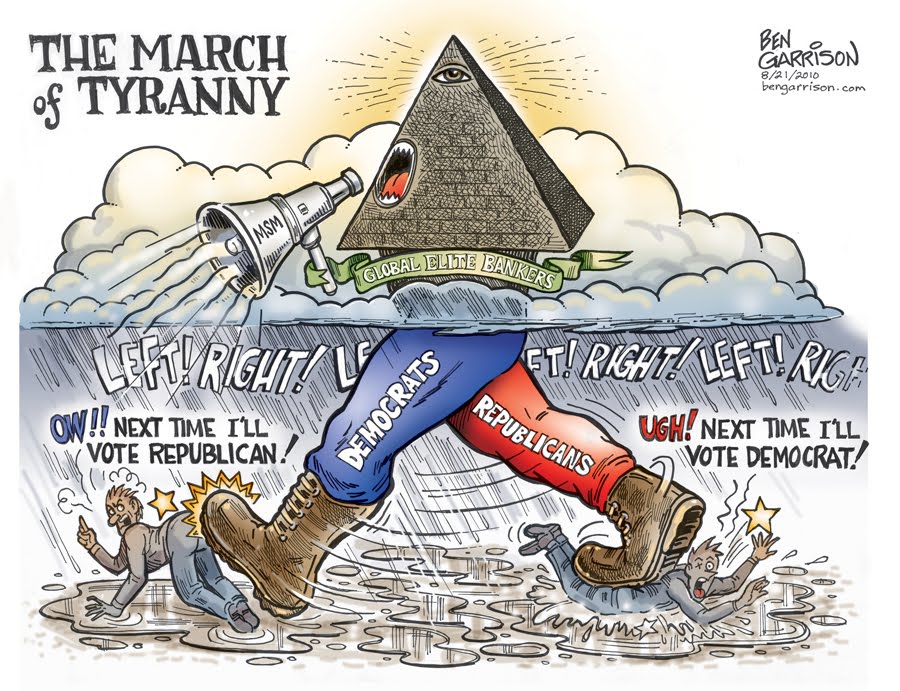
They want to be persuaded that there’s a difference between the Republicans and Democrats (there’s not).

Some will swear that Donald Trump has been an improvement on Barack Obama (he is not).

Others are convinced that Joe Biden’s values are different from Donald Trump’s (with both of them, money talks).

Most of all, voters want to buy into the fantasy that when they elect a president, they’re getting someone who truly represents the citizenry rather than the Deep State (in fact, in the oligarchy that is the American police state, an elite group of wealthy donors is calling the shots in cooperation with a political elite).

The sad truth is that it doesn’t matter who wins the White House, because they all work for the same boss: Corporate America. Understanding this, many corporations hedge their bets on who will win the White House by splitting their donations between Democratic and Republican candidates.

Politics is a game, a joke, a hustle, a con, a distraction, a spectacle, a sport, and for many devout Americans, a religion. It is a political illusion aimed at persuading the citizenry that we are free, that our vote counts, and that we actually have some control over the government when in fact, we are prisoners of a Corporate Elite.

In other words, it’s a sophisticated ruse aimed at keeping us divided and fighting over two parties whose priorities, more often than not, are exactly the same so that we don’t join forces and do what the Declaration of Independence suggests, which is to throw the whole lot out and start over.

It’s no secret that both parties support endless war, engage in out-of-control spending, ignore the citizenry’s basic rights, have no respect for the rule of law, are bought and paid for by Big Business, care most about their own power, and have a long record of expanding government and shrinking liberty. Most of all, both parties enjoy an intimate, incestuous history with each other and with the moneyed elite that rule this country.

Despite the jabs the candidates volley at each other for the benefit of the cameras, they’re a relatively chummy bunch away from the spotlight. Moreover, despite Congress’ so-called political gridlock, our elected officials seem to have no trouble finding common ground when it’s time to collectively kowtow to the megacorporations, lobbyists, defense contractors and other special interest groups to whom they have pledged their true allegiance.

So don’t be fooled by the smear campaigns and name-calling or drawn into their divide-and-conquer politics of hate. They’re just useful tactics that have been proven to engage voters and increase voter turnout while keeping the citizenry at each other’s throats.

It’s all a grand illusion.

It used to be that the cogs, wheels and gear shifts in the government machinery worked to keep the republic running smoothly. However, without our fully realizing it, the mechanism has changed. Its purpose is no longer to keep our republic running smoothly. To the contrary, this particular contraption’s purpose is to keep the Deep State in power. Its various parts are already a corrupt part of the whole.

Just consider how insidious, incestuous and beholden to the corporate elite the various “parts” of the mechanism have become.

Congress. Perhaps the most notorious offenders and most obvious culprits in the creation of the corporate-state, Congress has proven itself to be both inept and avaricious, oblivious champions of an authoritarian system that is systematically dismantling their constituents’ fundamental rights. Long before they’re elected, Congressmen are trained to dance to the tune of their wealthy benefactors, so much so that they spend two-thirds of their time in office raising money. As Reuters reports, “For many lawmakers, the daily routine in Washington involves fundraising as much as legislating. The culture of nonstop political campaigning shapes the rhythms of daily life in Congress, as well as the landscape around the Capitol. It also means that lawmakers often spend more time listening to the concerns of the wealthy than anyone else.”

The President. What Americans want in a president and what they need are two very different things. The making of a popular president is an exercise in branding, marketing and creating alternate realities for the consumer—a.k.a., the citizenry—that allows them to buy into a fantasy about life in America that is utterly divorced from our increasingly grim reality. Take President Trump, for instance, who got elected by promising to drain the swamp in Washington DC. Instead of putting an end to the corruption, however, Trump has paved the way for lobbyists, corporations, the military industrial complex, and the rest of the Deep State (also referred to as “The 7th Floor Group”) to feast on the carcass of the dying American republic. The lesson: to be a successful president, it doesn’t matter whether you keep your campaign promises, sell the American people to the highest bidder, or march in lockstep with the Corporate State as long as you keep telling people what they most want to hear.

The Supreme Court. The U.S. Supreme Court—once the last refuge of justice, the one governmental body really capable of rolling back the slowly emerging tyranny enveloping America—has instead become the champion of the American police state, absolving government and corporate officials of their crimes while relentlessly punishing the average American for exercising his or her rights. Like the rest of the government, the Court has routinely prioritized profit, security, and convenience over the basic rights of the citizenry. Indeed, law professor Erwin Chemerinsky makes a compelling case that the Supreme Court, whose “justices have overwhelmingly come from positions of privilege,” almost unerringly throughout its history sides with the wealthy, the privileged, and the powerful.

The Media. Of course, this triumvirate of total control would be completely ineffective without a propaganda machine provided by the world’s largest corporations. Besides shoveling drivel down our throats at every possible moment, the so-called news agencies which are supposed to act as bulwarks against government propaganda have instead become the mouthpieces of the state. The pundits which pollute our airwaves are at best court jesters and at worst propagandists for the false reality created by the American government. When you have internet and media giants such as Google, NBC Universal, News Corporation, Turner Broadcasting, Thomson Reuters, Comcast, Time Warner, Viacom, Public Radio International and The Washington Post Company donating to political candidates, you no longer have an independent media—what we used to refer to as the “fourth estate”—that can be trusted to hold the government accountable.

The American People. “We the people” now belong to a permanent underclass in America. It doesn’t matter what you call us—chattel, slaves, worker bees, it’s all the same—what matters is that we are expected to march in lockstep with and submit to the will of the state in all matters, public and private. Unfortunately, through our complicity in matters large and small, we have allowed an out-of-control corporate-state apparatus to take over every element of American society.

We’re playing against a stacked deck.

The game is rigged, and “we the people” keep getting dealt the same losing hand. The people dealing the cards—the politicians, the corporations, the judges, the prosecutors, the police, the bureaucrats, the military, the media, etc.—have only one prevailing concern, and that is to maintain their power and control over the citizenry, while milking us of our money and possessions.

It really doesn’t matter what you call them—Republicans, Democrats, the 1%, the elite, the controllers, the masterminds, the shadow government, the police state, the surveillance state, the military industrial complex—so long as you understand that while they are dealing the cards, the deck will always be stacked in their favor.

As I make clear in my book, Battlefield America: The War on the American People, our failure to remain informed about what is taking place in our government, to know and exercise our rights, to vocally protest, to demand accountability on the part of our government representatives, and at a minimum to care about the plight of our fellow Americans has been our downfall.

Now we find ourselves once again caught up in the spectacle of another presidential election, and once again the majority of Americans are acting as if this election will make a difference and bring about change. As if the new boss will be different from the old boss.

When in doubt, just remember what the astute commentator George Carlin had to say about the matter:

The politicians are put there to give you the idea that you have freedom of choice. You don’t. You have no choice. You have owners. They own you. They own everything. They own all the important land. They own and control the corporations. They’ve long since bought and paid for the Senate, the Congress, the state houses, the city halls. They got the judges in their back pockets and they own all the big media companies, so they control just about all of the news and information you get to hear. They got you by the balls. They spend billions of dollars every year lobbying. Lobbying to get what they want. Well, we know what they want. They want more for themselves and less for everybody else, but I’ll tell you what they don’t want. They don’t want a population of citizens capable of critical thinking. They don’t want well-informed, well-educated people capable of critical thinking. They’re not interested in that. That doesn’t help them. That’s against their interests. They want obedient workers. Obedient workers, people who are just smart enough to run the machines and do the paperwork…. It’s a big club and you ain’t in it. You and I are not in the big club. …The table is tilted, folks. The game is rigged and nobody seems to notice…. Nobody seems to care. That’s what the owners count on…. It’s called the American Dream, ’cause you have to be asleep to believe it.

‘$2.5 TRILLION THEFT’ – STUDY SHOWS RICHEST 1% OF AMERICANS HAVE TAKEN $50 TRILLION FROM BOTTOM 90% IN RECENT DECADES


The median U.S. worker salary would be around twice as high today if wages kept pace with economic output since World War II, new research revealed.

By Brett Wilkins

Source: Common Dreams

New research published Monday found that the top 1% of U.S. income earners have taken $50 trillion from the bottom 90% over the past several decades, and that the median worker salary would be around twice as high today as it was in 1945 if pay had kept pace with economic output over that period.

The study’s authors, Carter C. Price and Kathryn Edwards of the RAND Corporation, examined income distribution and economic growth in the United States from 1945 to the present. The researchers found stark differences between income distribution from 1945 to 1974 and 1975 to 2018.

According to the study—which was funded by the Seattle-based Fair Work Center—the median salary of a full-time U.S. worker is currently about $50,000. Adjusted for inflation using the consumer price index, workers at or below the current median income now earn less than half of what they would have if incomes had kept pace with economic growth. This means that if salaries had kept pace with economic output, the median worker pay would be between $92,000 and $102,000 today, depending on how inflation is calculated.

Had the more equitable distribution of the roughly 30-year postwar period continued apace, the total annual income of the bottom 90% of American workers would have been $2.5 trillion higher in 2018, or an amount equal to about 12% of GDP.  In other words, the upward redistribution of income has enriched the 1% by some $47 trillion—which would now be more than $50 trillion—at the expense of American workers.

David Rolf, a Seattle labor organizer, president of the Fair Work Center, and founder of Service Employees International Union (SEIU) Local 775, is more blunt. He calls this “the $2.5 trillion theft.”

“From the standpoint of people who have worked hard and played by the rules and yet are participating far less in economic growth than Americans did a generation ago, whether you call it ‘reverse distribution’ or ‘theft,’ it demands to be called something,” Rolf, who helped lead the fight for a $15 hourly minimum wage in Seattle and beyond, told Fast Company.

Remarkably, the study found that workers at all income levels would be better off today if income kept pace with output. Full-time, prime-age workers in the 25th percentile, for example, would be earning $61,000 instead of $33,000. Workers in the 75th percentile, who in 2018 earned $81,000, would be making $126,000. Even 90th-percentile workers, who earn $133,000, would be making $168,000 under the more equitable distribution.

On the other hand, had the economic pie been divided more equitably, the income of the top 1% would fall from around $1.2 million to a still-affluent $549,000.

“We were shocked by the numbers,” said Nick Hanauer, a venture capitalist and self-described “zillionaire” who, along with Rolf, came up with the idea for the study. “It explains almost everything,” Hanauer told Fast Company. “It explains why people are so pissed off. It explains why they are so economically precarious.”

Sen. Bernie Sanders (I-Vt.), who made correcting economic inequality a pillar of both of his presidential bids, lamented the “h-u-g-e redistribution of income in America” in a Monday tweet.

The researchers’ findings, which come amid a deadly coronavirus/Covid-19 pandemic, shine light on the injustice of an economy—by far the wealthiest in the history of civilization—in which essential workers struggle mightily, and often in vain, to survive while the richest people grow ever richer at their expense.

According to Americans for Tax Fairness, the total wealth of U.S. billionaires increased by $792 billion, or 27%, during the first five months of the Covid-19 pandemic. During this period, Amazon CEO Jeff Bezos, the world’s wealthiest person, has become the world’s first multi-centibillionaire, with a net worth now surpassing $200 billion. Meanwhile, his employees struggle to make ends meet, and Amazon workers who speak out against poor pay and hazardous working conditions during the pandemic have been fired and derided by company executives.

Compared to other most-developed nations, the U.S. has done a relatively poor job of taking care of its people during the pandemic. In addition to the U.S. being the only developed nation without universal healthcare, its workers have received less in direct payments and government support than people in many comparable countries.

The gap between the richest and poorest U.S. households is now wider than it has ever been in the past 50 years, according to the most recently available data from the U.S. Census Bureau. The pandemic has only exacerbated the situation, as around half of lower-income American households have reported a job or wage loss due to Covid-19.

Internationally, the U.S. ranks 39th out of over 150 nations in income inequality, according to Gini coefficient data compiled by the CIA, placing it roughly on par with nations like Peru and Cameroon. Among Organization for Economic Cooperation and Development (OECD) nations, the U.S. has the seventh-highest level of income inequality.

The U.S. has the highest poverty rate among the world’s most-developed nations, and the fourth-highest poverty rate among OECD nations after South Africa, Costa Rica, and Romania. According to UNICEF, the U.S. also has the second-highest rate of childhood poverty in the developed world behind Romania, with more than one in five U.S. children—and over one in four Latinx children, and nearly one in three Black and Native American children—living in poverty.

This year, more than 54 million Americans, or roughly one in every six people—including 18 million children—may experience food insecurity, according to the nonprofit group Feeding America.

New Pentagon-Google Partnership Suggests AI Will Soon Be Used to Diagnose Covid-19

Google recently teamed up with the Pentagon as part of the new, AI-driven “Predictive Health” program. Though only focused on “predictive cancer diagnoses” for now, Google and the military have apparent plans to expand the AI model for automating and predicting Covid-19 diagnoses.

By Whitney Webb

Source: Unlimited Hangout

At the beginning of September, Google Cloud announced that it had won a project from the Pentagon’s relatively new Defense Innovation Unit (DIU) to “prototype an AI-enabled digital pathology solution at select DoD [Department of Defense] facilities.” This prototype, per a Google Cloud press release, combines “augmented reality telescopes” with “AI-enabled” cancer detection tools that will allegedly improve the accuracy of “predictive cancer diagnoses.” It is the second DIU contract Google has won this year, with the first being related to combatting “cyber threats.”

The initial implementation of this Pentagon-funded, Google-created “digital pathology solution” will take place “at select Defense Health Agency (DHA) treatment facilities and Veterans Affairs hospitals in the United States,” and the program includes “future plans to expand across the broader U.S. Military Health System,” according to Google.

The initiative is part of a larger DIU-led program called “Predictive Health” that is also partnered with the joint AI effort of the US military and US intelligence community, the Joint Artificial Intelligence Center, and JAIC’s “Warfighter Health” initiative. The JAIC, which is currently led by a former Silicon Valley executive, is providing much of the funding for Predictive Health, while its related “Warfighter Health” initiative more broadly seeks “to field AI solutions that are aimed at transforming military health care.”

In addition to its stated goal of improving the accuracy of cancer diagnoses, the implementation of this Google-DIU AI-driven medical diagnosis tool aims to show “frontline health practitioners” that such tools “can improve the lives” of US troops, according to Google executives. As Mike Daniels, vice president of Global Public Sector at Google Cloud, noted in a statement, Google is “partnering with DIU to provide our machine learning and artificial intelligence technology to help frontline healthcare practitioners learn about capabilities that can improve the lives of our military men and women and their families.” Google also stated that the use of their tool at military health facilities would also “lower overall healthcare costs.”

The Google-DIU effort to outsource human doctor decision-making to a tailor-made artificial intelligence algorithm is, for now, only focused on the diagnosis of cancers. However, last Thursday, less than two weeks after winning the DIU contract, Google announced that it was donating $8.5 million to several organizations to advance the development and use of AI  “for monitoring and forecasting” Covid-19. That money is part of a larger $100 million donation from Google for financing “solutions” to Covid-19 that was announced in May.

Further evidence that Google soon plans to offer AI-driven “predictive diagnoses” for Covid-19 came in August, when Google Cloud partnered with Harvard’s Global Health Institute to provide “Covid-19 Public Forecasts,” which “provide a projection of Covid-19 cases, deaths, and other metrics over the next 14 days for US counties and states.” The announcement of the Google-Harvard collaboration coincided with an announcement from the National Institutes of Health (NIH) would begin “harness[ing] AI for COVID-19 diagnosis, treatment, and monitoring.”

Notably, other tech companies that have produced “predictive diagnosis” AI models for Covid-19 also began first by offering AI-created “forecasts” of “likely” Covid-19 outbreaks. For instance, the Israeli intelligence–linked Diagnostic Robotics initially offered AI-driven predictive “forecasts” of cities and districts to guide lockdown policy in Israel and the US state of Rhode Island before then teaming up with the US-based company Salesforce to develop a platform that uses AI to “predict” which individuals are likely to be diagnosed with Covid-19 and then uses AI to monitor and even “treat” those individuals.

Furthermore, in partnership with researchers at Mount Sinai healthcare centers in New York, tech giant Microsoft has already aided the development of an AI algorithm that “rapidly diagnoses” Covid-19. Mount Sinai’s AI model, supported by a recent grant from Microsoft’s “AI for Health” initiative, “was as accurate as an experienced radiologist in diagnosing the disease,” according to one of the lead researchers behind the model’s development. While its development was aided by Microsoft, the core of the Mount Sinai AI model is TensorFlow, which was developed by Google and is Google AI’s second-generation system for machine learning.

In addition, both Google and Microsoft are part of a Europe-based effort aimed at “automating diagnoses” for Covid-19 via an AI algorithm that analyzes CT scans, which is similar in several ways to the Mount Sinai AI model. Thus, it seems highly likely that Google’s efforts to offer AI-powered “predictive diagnoses” will soon expand to include tools that use algorithms to diagnose Covid-19, not just cancer.

The Merging of the Pentagon, the CIA, and Silicon Valley

Established in 2015, the Defense Innovation Unit of the Department of Defense officially exists to transfer “leading-edge commercial capabilities to the military faster and more cost-effectively than traditional defense acquisition methods” and to accelerate “the adoption of commercial technology throughout the military and [grow] the national security innovation base.” As the DIU makes clear on its website, the “national security innovation base” it seeks to “grow” consists of private tech companies, namely those based in Silicon Valley, that provide “advanced commercial solutions” to “national security challenges.” This, of course, includes the tech companies that already double as contractors for the national security state, such as Google, Microsoft, and Amazon, among numerous others.

The DIU boasts offices in Silicon Valley, Boston, Austin, and at the Pentagon itself and is largely led, not by career military men, but by former Silicon Valley executives. For instance, its current director—Michael Brown—is the former CEO of cybersecurity giant Symantec and, prior to that, led the Quantum corporation. In another example, the leader of the DIU’s artificial intelligence portfolio is Jeff Klugman, a former top executive at TiVo, the Quantum corporation, and Hewlett-Packard.

A year after the DIU was created, it was followed by the Defense Innovation Board (DIB), which is composed of “leaders from across the national security innovation base” and provides recommendations that “have been used to inform DoD leadership strategy and action, as well as congressional legislation.” Like the DIU, Silicon Valley is well represented on the DIB, as its members include former Google CEO Eric Schmidt and LinkedIn founder Reid Hoffman as well as top executives from Google, Microsoft, and Facebook.

Notably, just months before the DIU-led Predictive Health program was launched, the DIB noted in March 2020 that the Pentagon “owns the largest repository of disease- and cancer-related medical data in the world,” asserting further that “if the entire repository were leveraged to its fullest potential, it would advance diagnosis and treatment for thousands of illnesses, saving lives across DoD and the global population.” The DIB then specifically suggested that “artificial intelligence and machine learning models may help pathologists sort through this massive dataset more quickly and effectively to provide better care for patients in and out of the military,” adding that these troves of medical data should be used “to support DoD reform and modernization efforts in the field of AI/ML [Artificial Intelligence / Machine Learning].”

In other words, the Silicon Valley–dominated DIB called for what is now the Predictive Health program just months before the Silicon Valley–dominated DIU formally announced it. Also noteworthy is that Google—whose former CEO, current vice president, and several other Google-tied researchers and businessmen serve on the DIB—is the very company that won the DIU contract to have its AI models serve as the foundation for the Predictive Health program. This, of course, means that Google’s AI models will benefit immensely from the Pentagon’s “unique” and massive medical datasets, which the DIB previously stated was something that the Pentagon “must treat . . . as a strategic asset.”

It is also important to point out the considerable overlap between the Pentagon’s Defense Innovation Board and the National Security Commission on Artificial Intelligence. The NSCAI is chaired by Eric Schmidt (also on the DIB) and includes representatives from Google, Microsoft, Facebook, and Amazon as well as the current and former leaders of the CIA’s In-Q-Tel.

The official purpose of the NSCAI is “to consider the methods and means necessary to advance the development of artificial intelligence, machine learning, and associated technologies to comprehensively address the national security and defense needs of the United States.” As I previously reported for The Last American Vagabond, the vice-chair of NSCAI, Robert Work—former Deputy Secretary of Defense and senior fellow at the hawkish Center for a New American Security (CNAS)described the commission’s purpose as determining “how the U.S. national security apparatus should approach artificial intelligence, including a focus on how the government can work with industry to compete with China’s ‘civil-military fusion’ concept [my emphasis].”

For this reason, the NSCAI unites the US intelligence community and the military, which is already collaborating on AI initiatives via the Joint Artificial Intelligence Center and Silicon Valley companies. Notably, many of those Silicon Valley companies—like Google, for instance—are not only contractors to US intelligence, the military, or both but were initially created with funding from the CIA’s In-Q-Tel, which also has a considerable presence on the NSCAI. Thus, while the line between Silicon Valley and the US national-security state has always been murky, now that line is essentially nonexistent as entities like the NSCAI, DIB, and DIU, among several others, clearly show. Whereas China, as Robert Work noted, has the “civil-military fusion” model at its disposal, the NSCAI and the US government respond to that model by further fusing the US technology industry with the national-security state.

It is also certainly interesting that, just like the DIB, the NSCAI called for what would become the DIU’s Predictive Health program a few months before it was formally announced. In a NSCAI paper from June 2020 titled “The Role of AI Technology in Pandemic Response and Preparedness: Recommended Investments and Initiatives,” the commission recommends investments and initiatives aimed at using AI for diagnosing illnesses, including Covid-19. This seems to suggest that the Silicon Valley–led but Pentagon-housed DIU is the body that actually creates the government-industry partnerships and initiatives that are first planned out by the DIB and the NSCAI.

It’s All About the Data

While Google has stated that one of their main goals in participating in the Predictive Health program is showing health-care practitioners how AI can “improve lives,” the DIU was decidedly more direct regarding their intent in implementing this “predictive diagnosis” program. For instance, an article on the Google-DIU pilot program at DefenseOne, citing military officials, notes that the “enormous amount of healthcare data, unique to the Department of Defense, also presents a rare opportunity for the Department to train new machine learning tools.” It then adds that “there are 9.6 million beneficiaries in the Defense Health System, which means a lot of data to improve the accuracy of [AI] models.”

DIU’s chief medical officer, Niels Olsen, who created the Predictive Health program, recently stated that massive quantities of data planned to be obtained by the program and used for developing improved AI algorithms was a critical component of the project. In a Pentagon press release, Olsen stated that “the more data a tool has available to it, the more effective it is. That’s kind of what makes DOD unique. We have a larger pool of information [i. e., medical data] to draw from, so that you can select more diverse cases.”

Thus, the implementation of the Predictive Health program is expected to amass troves upon troves of medical data that offer both the DIU and its partners in Silicon Valley the “rare opportunity” for training new, improved AI models that can then be marketed commercially. This may explain part of the interest in partnering this initiative with the Defense Health Agency (DHA), which “owns the largest repository of disease- and cancer-related medical data in the world” through its management of the Joint Pathology Center, which was noted by the DIB in its March 2020 publication. In addition, as previously mentioned, Google will now be able to access that trove of sensitive data to refine its AI “health-focused” algorithms, thanks to it having won the DIU contract earlier this month.

Notably, the relatively new Predictive Health program builds on past DIU initiatives, such as an AI algorithm that predicts illnesses “48 hours before symptoms show.” That algorithm was developed by the Defense Threat Reduction Agency, the DIU, and the health IT company Royal Phillips. The Phillips team that developed that algorithm is now “refin[ing] the model at military hospitals and clinics managed by the Veterans Affairs Department.” According to the DTRA’s Edward Argenta, the focus of the program is to eventually use the AI algorithm to analyze data from devices that remotely monitor individual health, specifically “a wearable device that might sit on your body—like a watch-based one or a chest strap one.”

While various “innovation-focused” agencies at the Pentagon have been busy developing their own algorithms after harvesting mass amounts of medical data from military members and their families, a web of intelligence-linked tech companies, including those represented on the DIB and NSCAI, have gained access to the jackpot of medical data through partnering with the “Covid-19 Healthcare Coalition.”

According to its website, the Covid-19 Healthcare Coalition was established as “a coordinated public-interest, private-sector response to the Covid-19 pandemic, convening healthcare organizations, technology firms, nonprofits, academia, and startups.” The coalition, which was launched by the intelligence and defense contractor MITREalso includes tech giants like Google, Microsoft, Palantir, Salesforce, and Amazon and allows its member organizations to “collaborate, collect, analyze, visualize, and share data and insights.” With access to the data from partnered health-care institutions, such as the Mayo Clinic and the Cedars-Sinai Health System, these tech companies are “helping” the coalition “unlock large-scale analytics for Covid-19.” Institutions tied to the US government, and the NSCAI in particular, such as the CIA’s In-Q-Tel, are also members of the Covid-19 Healthcare Coalition.

Notably, the recent advances in US-based efforts to “predict” or “automate” Covid-19 diagnoses are all tied to this very coalition. Indeed, all of the companies and institutions mentioned thus far in this report have engaged in developing these tools, as Diagnostic Robotics, Salesforce, Google, Microsoft, Amazon, and Mount Sinai Medical Center are all coalition members.

Google, in the press release regarding its recent partnership with the DIU, noted that the prototype of the AI model set to make “predictive cancer diagnoses” had been “developed from [unspecified] public and private datasets,” making it possible—if not likely—that the private datasets were obtained through Google’s membership in this massive, yet relatively unknown, coalition of health-care institutions, tech companies, and US intelligence–linked entities like MITRE and In-Q-Tel.

This apparent obsession with medical data may explain the dramatic uptick in hacks of hospitals in the United States, which have been considerable in recent months and have largely targeted patient data. It is worth pointing out that the increase in these attacks seeking patient data coincides with the DIB-NSCAI policy recommendations regarding training AI algorithms on troves of medical data for automated and predictive diagnoses, among other applications.

Notably, the “solutions” offered to many of the health-care institutions that have been hacked have come from government-promoted yet opaque groups that are deeply tied to US and allied intelligence agencies as well as Silicon Valley. These “volunteer groups,” such as “the CTI League” and “the Cyber Alliance to Defend Our Healthcare,” offer their services for free but, notably, gain access to the patient data they are tasked with guarding. Are such groups, given their deep ties to Silicon Valley and intelligence agencies, helping acquire even more data to satisfy the Silicon Valley and national-security state’s endless hunger for more and more data?