Vaccine hustlers can’t keep their story straight; evangelicals, black people, Trumpers; who’s “hesitating?”

By Jon Rappoport

Source: Jon Rappoport’s Blog

First, let’s get this straight. The term “hesitancy” would apply to your pasty-faced nephew, who plays video games 19 hours a day, who’s dragged to the beach one summer afternoon, and is reluctant to stick his toe in the water as he stands near the last little gasp of foam breaking on the sand.

Most of the people who aren’t taking the COVID vaccine aren’t hesitant at all. They’re determined to reject the shot.

Most of the people who don’t want the COVID vaccine are quite sure they want to forego genetic damage, blood clots, and death.

So…who are the “hesitant” ones the vaccine hustlers are going after?

According to an old desiccated man who could play a mortician in an Abbott and Costello movie without a minute of rehearsal, and who happens to be the director of the largest medical research facility in the world—the US National Institutes of Health—Dr. Francis Collins…

According to Collins, the prime target of pro-vaccine propaganda is the dastardly evangelical/Trumper crowd.

Last week, Collins spoke with NBC’s Chuck (aging-wonder-boy) Todd, who made his original journalistic bones deftly pointing a wand at maps of voting districts on Election Night.

Collins intoned, in the manner of a funeral home director expressing condolences to customers over the accident that took the life of their beloved family member, who was driving while drunk and steered his car over a cliff:

“Particularly white evangelicals seem to be resistant to the idea that vaccines are something they want to take advantage of.”

“…certainly Republican men in particular seem to less likely to be interested in the vaccine.”

But wait. NIH head Collins—playing politics—forgot to mention that, according to a recent Harris poll, a whopping 42% of black Americans don’t want the vaccine.

Oops.

Well, no doubt “systemic racism” must be the reason black people are failing to see how glorious the vaccine is. They’re being kept in ignorance by white people.

Actually, that doesn’t seem to be the case at all. A COVID Collaborative poll discovered black Americans have shockingly low levels of trust in the FDA (29%) and drug companies (19%). I’d say those numbers reveal acute intelligence, not ignorance, on medical issues.

Any group that distrusts the FDA at the rate of 71% is medically on the ball.

On the other hand, white Americans are the victims of systemic “safe and effective” lying by The New York Times, CNN, NBC, etc.

White Republicans are also being lied to by Donald Trump, Mr. Warp Speed, who is pushing the COVID vaccine like a lifeboat on the Titanic.

Trump is fronting for the COVID shot with a fervor matched only by Biden and Fauci and Bill Gates.

In an April 16 mass email to his followers (no doubt written by an aide), Trump, a major propaganda whore for Pharma, states:

Vaccine resistance is “deranged pseudo-science.”

“The federal pause on the J&J shot makes no sense. Why is the Biden White House letting insanely risk-averse bureaucrats run the show?”

It’s “sheer lunacy” for Biden “to delay millions of vaccinations and feed fears among the vax-resistant.”

“Indeed, this moronic move is a gift to the anti-vax movement.”

I spoke with a born-again Christian the other day. I asked him whether God had told him not to take the vaccine. He laughed. He said, “God told me to trust my research.”

“When did He say that?”

“I like to think it was just before I wrote to Trump telling him to wake up.”

We’re seeing hustlers on all points of the political spectrum pushing the COVID vaccine—the gene therapy that was designed, in clinical trials, to prevent nothing more than a cough, or chills and fever.

The gene therapy that has never been launched on the public before. The genetic injection that has only gained FDA certification for emergency use—a far lower and looser classification than full approval.

These criminal vaccine promoters deploy outrage and sob stories—whatever they think will play well—as they target various demographics.

Thousands of serious adverse effects from the shot are being reported. You can multiply those figures by 10 or 100 to gain a truer estimate of what is happening; and there are NO data on long-term effects.

You bet your ass people are “hesitant.” Medical authorities are telling them to accept an genetic injection that causes their cells to manufacture a protein they would never make under ordinary conditions.

Speaking of gene therapy, Dr. Francis Collins, the head of NIH, made his career on the back of discovering “genes associated with various diseases.”

In all the years of NIH’s existence, with a total budget in the hundreds of billions of dollars, show me ONE genetic cure for ANY disease across the board.

Just one.

I’m waiting.

It turns out that the history of genetics reveals the following: they can ALTER humans with it, but they can’t CURE humans.

Anthony Fauci “has no clue and no authority to lecture on what is good for India”

By Colin Todhunter

Source: Dissident Voice

In light of the current COVID-related situation in India, Dr Anthony Fauci, the top US adviser on COVID, has called for India to implement a hard lockdown and for the mass roll-out of vaccines.

However, Fauci has no clue and no authority to lecture on what is good for India.

That is the view of journalist Ratna Chakraborty. Writing on the Empire Diaries website, she argues that the US is a rich nation, prints the world’s reserve currency, has robust financial coverage for the jobless and its population is spread out.

On the other hand, India is finance-strained, has a brittle economy that lives on the brink of disaster, does not have any financial coverage for the jobless, is densely populated and its people mostly live in congested clusters.

Given the government’s incompetence and the callousness demonstrated towards poorer sections of Indian society the first time around, Chakraborty says any new lockdown would again result in disaster. She adds that nothing has been learnt, with no attempt to upgrade the healthcare set-up nationwide.

It is worth recalling what renowned academic and activist Noam Chomsky said about India’s first lockdown.

During an interview with Amy Goodman of Democracy Now! back in May 2020, Chomsky said:

… you can almost describe it as genocidal. Modi gave, I think, a four-hour warning before a total lockdown. That’s (affected) over a billion people. Some of them have nowhere to go.

He added:

People in the informal economy, which is a huge number of people, are just cast out. Go walk back to your village, which may be a thousand miles away. Die on the roadside. This is a huge catastrophe in the making…

During the first lockdown in India, rural affairs commentator P Sainath painted a dreary picture of the impacts, not least the desperate plight of migrant workers, a shortage of cash to buy food and a potential shortage of food as farmers were unable to complete their harvests.

Sainath also reported the views of Dr. Sundararaman, a former executive director of the National Health Systems Resources Centre, who argued that there was a desperate need to:

identify and act on the reverse migrations problem and the loss of livelihoods. Failing that, deaths from diseases that have long tormented mostly poor Indians could outstrip those brought about by the corona virus.

Regardless of the destructive impact of the first lockdown in India and the questionable efficacy of lockdowns in terms of what they are supposed to achieve, another one would further push hundreds of millions towards poverty and hunger. It would merely fuel and accelerate the impoverishment caused by the first lockdown.

new report prepared by the Centre for Sustainable Employment at Azim Premji University (APU) has highlighted how employment and income had not recovered to pre-pandemic levels even by late 2020.

The report, ‘State of Working India 2021 – One year of Covid-19’ highlights how almost half of formal salaried workers moved into the informal sector and that 230 million people fell below the national minimum wage poverty line.

Even before COVID, India was experiencing its longest economic slowdown since 1991 with weak employment generation, uneven development and a largely informal economy. A recent article by the Research Unit for Political Economy highlights the structural weaknesses of the economy and the often desperate plight of ordinary people.

The study also found that there was a loss in monthly earnings for all types of workers: 13% for casual workers, 18% for the self-employed, 17% for those with temporary salaries, 5% for the permanent salaried and 17% overall.

The poorest 25% of households borrowed 3.8 times their median income, as against 1.4 times for the top 25%. The study noted the implications for debt traps.

Six months later, it was also noted that food intake was still at lockdown levels for 20% of vulnerable households.

How bad is COVID?

Given this impact, before listening to prominent individuals with apparent conflicts of interest related to vaccine roll-outs (see the editorial in the British Medical Journal ‘Covid-19, Politicisation, Corruption, and Suppression of Science’), the current COVID-related situation in India must be contextualised. The sensationalism needs to be put to one side.

According to Yohan Tengra, a Mumbai-based political analyst and healthcare specialist, the true number of infection rates can only be known by testing symptomatic people who have tested positive with either a virus culture test or PCR test that uses 24 cycles or less.

The PCR test has been used as the gold standard for COVID cases around the world. But it has been sharply criticised for being inaccurate, inappropriate, for using cycles in excess of 40 (thereby inflating the numbers) and for producing ‘false positives’.

It seems that even the Swedish Ministry of Health now thinks that it is not fit for purpose:

The PCR technology used in tests to detect viruses cannot distinguish between viruses capable of infecting cells and viruses that have been neutralised by the immune system and therefore these tests cannot be used to determine whether someone is contagious or not. RNA from viruses can often be detected for weeks (sometimes months) after the illness but does not mean that you are still contagious.

We also need to be reminded what the US Centers for Disease Control and Prevention stated about the PCR in December 2020. It is especially important to focus on PCR testing because these tests are the entire basis for restrictions and lockdowns (and vaccination); even when deaths were within normal annual ranges, ‘case’ levels were high and restrictions and ‘tiered lockdowns’ were still being imposed in places like the UK.

The following extract can be found on page 39 of the report from the CDC 2010-Novel Coronavirus (2019-nCoV) Real-Time RT-PCR Diagnostic Panel:

Detection of viral RNA may not indicate the presence of infectious virus or that 2019-nCoV is the causative agent for clinical symptoms. This test cannot rule out diseases caused by other bacterial or viral pathogens.

Perfectly healthy people are being tested and small often insignificant fragments of flu, common cold or some other virus can be detected. People are then labelled as a COVID ‘case’.

But that is not all. In their recent article ‘The Nuremberg Doctors Trial and Modern Medicine’s Panic Promotion of the FDA’s Experimental and Unapproved COVID-19 mRNA Vaccines’, Dr Gary G Kohls and Professor Michel Chossudovsky state that – with regard to the so-called ‘emergency use authorization’ (EUA) of COVID-19 vaccines – it is now established and confirmed by the WHO (January 20, 2021) that the entire data base pertaining to tabulation of confirmed positive cases (RT-PCR test) (since early February 2020 in 193 member states of the UN) is invalid.

The two authors note that this flawed methodology cannot be used to confirm the existence of an emergency situation. EUA criterion is therefore not only invalid but illegal.

Furthermore, there is currently decent scientific evidence to indicate asymptomatic transmission may not be significant.

According to Tengra, the case numbers being reported in India are mainly asymptomatic cases. The directors of the All India Institute of Medical Science and the India Council of Medical Research both say that there are many more asymptomatic cases this time than in the so-called ‘first wave’.

As these ‘cases’ comprise most of India’s case numbers, we should therefore be questioning the data as well as the PCR tests being used to detect the virus.

Tengra says the case fatality rate for COVID-19 in India was over 3% last year but has now dropped to below 1.5%. The infection fatality rate is even lower, with serosurvey results showing them to be between 0.05% to 0.1%.

As has occurred in many other countries, Tengra notes the way that death certificate guidelines are structured in India makes it easy for someone to be labelled as a COVID death just based on a positive PCR test or general symptoms. It is therefore often difficult to say who has died from the virus and who has been misdiagnosed.

We should also bear in mind that respiratory diseases like TB and respiratory tract infections such as bronchitis leading to pneumonia are major killers in India. These conditions are severely aggravated by air pollution and often require oxygen which can be in short supply during air pollution crises in places like Delhi at this time of the year.

Therefore, the current harrowing scenes we see in the media might not necessarily be due to the lethality of the virus but by the numbers who are ending up in hospital.

Vaccines

If the pandemic narrative has been constructed on the house of (statistical) cards outlined thus far, then we should be questioning the need for a mass vaccination campaign, which could actually lead to aggravating the current situation.

This is not lost on Dr Geert Vanden Bossche, a virologist who has held positions at several vaccine companies, carrying out vaccine research and development. He has also been involved with the Bill and Melinda Gates Foundation and has worked with the Global Alliance for Vaccines and Immunization (GAVI). Not an ‘anti-vaxxer’ in any sense of the term.

He offers insight into why it is quite possible that mass vaccine rollouts will actually lead to very disturbing levels of deaths directly related to COVID-19. Far from reducing the numbers and facilitating immunity, he anticipates ‘vaccine assisted immune escape’.

Vanden Bossche warns that mass infection prevention and mass vaccination with Covid-19 vaccines in the midst of the pandemic can only breed highly infectious variants. He offers a truly worrying scenario. Of course, not everyone might agree with his analysis but it is certainly a cause for concern.

There is also the entire issue regarding the necessity, efficacy and safety of the vaccines now being rolled out. The group ‘Doctors for COVID Ethics’ has recently raised serious doubts in all of these areas (its concerns have been published on the UK-based OffGuardian website).

In finishing, there are two questions we should ask.

Can we have confidence in science and evidence-based health and social policy where COVID-19 is concerned? And can we just assume – as governments and the media imply we should – that Anthony Fauci and the pharmaceutical corporations have ordinary people’s interests at heart?

In response to the first question, not much. In response to the second, certain interests have been riding and fuelling a wave of sensationalism and duplicity throughout.

PARALLELS BETWEEN GMO COVID VACCINE AND GMO CROPS – LESSONS NOT LEARNED

By Jon Rappoport

Source: Waking Times

“Although gene therapy has never cured a disease across the board, it’s extraordinarily safe and effective, because we say it is.”

The COVID vaccine is a gene treatment. RNA is injected into the body, for the purpose of forcing cells to manufacture a protein. The promise? Protection against a purported virus.

The first generation of Monsanto crops followed the same pattern. Genes were injected into plants. Like a vaccine, its purpose was protection; in this case, against Monsanto’s own herbicide poison, Roundup.

The overall health of the crops and the human body were reduced. The nutritive value of the crops diminished; super-weeds on the GMO farms flourished. The huge number of adverse effects from the vaccine testify to expanding human damage.

The Monsanto genes in the plants drifted. They were found in non-GMO plants, in soil bacteria, and human gut bacteria.

The RNA in the vaccine and/or its products appear to have shed and drifted from person to person, given the large numbers of reports from unvaccinated women who, after coming into contact with vaccinated persons, experienced interrupted patterns of menstruation, bleeding, and miscarriages.

As I wrote the other day, Pfizer’s own warnings about its COVID vaccine include pregnant women coming into the proximity of vaccinated persons (“inhalation, skin contact” mentioned).

Both GMO crops and the GMO vaccine are imposed, top-down, on the population, from corporate giants who are reaping massive profits. Continuing propaganda campaigns are designed to convince famers and the general population to accept and celebrate the dangerous GMO crops and the GMO vaccine.

Governments protect and run interference for the companies who produce the GMO crops and the vaccine.

Bill Gates is an ardent supporter, publicist, and funder of GMO crops and GMO vaccines. He keeps asserting, like a psychotic baron living in a castle on top of a mountain, that the crops and the vaccine will save the world.

Many critics of the GMO vaccine are unaware of (or have forgotten about) the dangers of GMO crops. And many critics of GMO crops fail to realize (or are afraid to criticize) the dangers of the COVID GMO vaccine.

Huge numbers of people in the general public blithely accept the (fake) science surrounding GMO crops and the GMO vaccine. “The experts must know what they’re talking about.”

The patents on both GMO crops and the GMO vaccine are jealously guarded by the corporations who control them. In both cases, ignorant people are calling for these patents to be made into open-source information—unaware that both technologies are highly dangerous and destructive.

The general field of genetics research—of which these crops and vaccines are products—is filled with liars, who claim their experimental work is safe and foolproof, when in fact the literature is rife with examples of ripple effects. The introduction of genes into organisms creates many unpredictable changes in genomes. “We have everything under control”—the battle cry of vaccine and crop researchers.

Agriculture and the human body are both viewed, from the ivory tower, as deficient and diseased, in need of genetic alteration.

Overall, genetic tinkering is a disaster already happening.

Ethical scientists who want to put moratoria on this research are being sidelined and ignored.

Manic technocrats see genetic modification as the massive gateway into a Brave New World, where humans are divided into gen-rich and gen-poor classes, from birth. From before birth.

Here are two mind-bending quotes from admired experts:

Lee Silver, Princeton University molecular biologist, predicts our future:

“The GenRich—who account for ten percent of the American population—all carry synthetic genes. All aspects of the economy, the media, the entertainment industry, and the knowledge industry are controlled by members of the GenRich class…”

“Naturals work as low-paid service providers or as laborers. [Eventually] the GenRich class and the Natural class will become entirely separate species with no ability to crossbreed, and with as much romantic interest in each other as a current human would have for a chimpanzee.”

“Many think that it is inherently unfair for some people to have access to technologies that can provide advantages while others, less well-off, are forced to depend on chance alone, [but] American society adheres to the principle that personal liberty and personal fortune are the primary determinants of what individuals are allowed and able to do.”

“Indeed, in a society that values individual freedom above all else, it is hard to find any legitimate basis for restricting the use of repro-genetics. I will argue [that] the use of reprogenetic technologies is inevitable. [W]hether we like it or not, the global marketplace will reign supreme.”

As shocking as Lee Silver’s assessment is, it’s mild when put up against the pronouncement of Gregory Stock, former director of the program in Medicine, Technology, and Society at the UCLA School of Medicine:

“Even if half the world’s species were lost [during genetic experiments], enormous diversity would still remain. When those in the distant future look back on this period of history, they will likely see it not as the era when the natural environment was impoverished, but as the age when a plethora of new forms—some biological, some technological, some a combination of the two—burst onto the scene. We best serve ourselves, as well as future generations, by focusing on the short-term consequences of our actions rather than our vague notions about the needs of the distant future.”

But don’t worry, be happy. Anthony Fauci, who has a direct pipeline to God, tells us the COVID vaccine is extraordinarily safe and effective. That’s all we need to know. I’ll take the Pfizer, the Moderna, and two AstraZeneca to go. Gift wrap? No, they’re for me. Just put the vials and syringes in a brown bag. I’ll shoot up while I watch the news on CNN. Their experts are reassuring…

This Biden Proposal Could Make the US a “Digital Dictatorship”

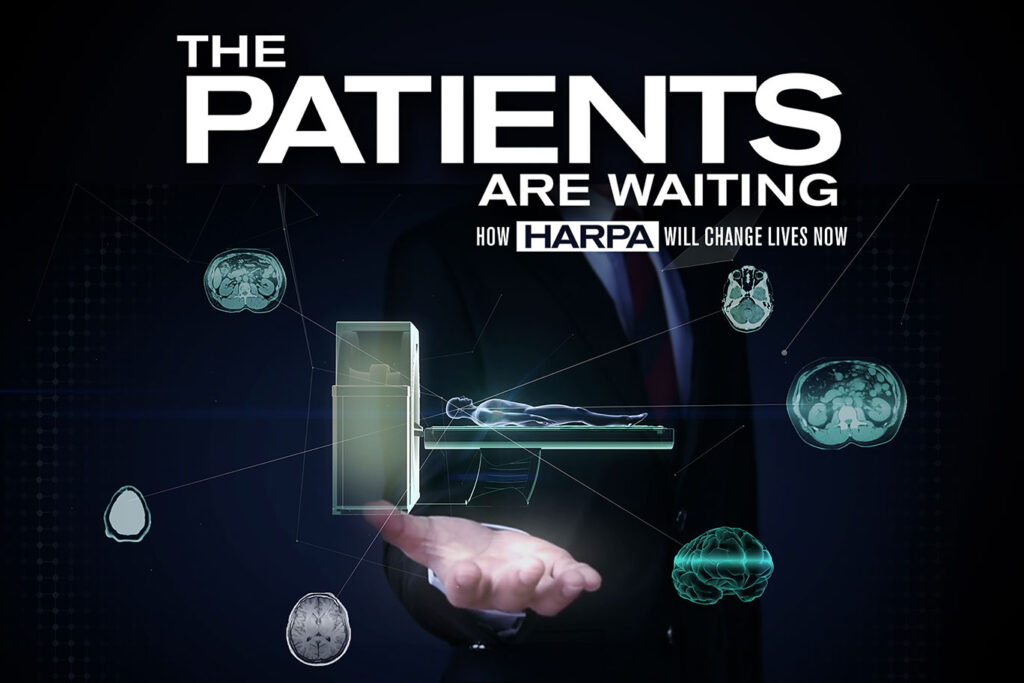
A “new” proposal by the Biden administration to create a health-focused federal agency modeled after DARPA is not what it appears to be. Promoted as a way to “end cancer,” this resuscitated “health DARPA” conceals a dangerous agenda.

By Whitney Webb

Source: Unlimited Hangout

Last Wednesday, President Biden was widely praised in mainstream and health-care–focused media for his call to create a “new biomedical research agency” modeled after the US military’s “high-risk, high-reward” Defense Advanced Research Projects Agency, or DARPA. As touted by the president, the agency would seek to develop “innovative” and “breakthrough” treatments for cancer, Alzheimer’s disease, and diabetes, with a call to “end cancer as we know it.”  

Far from “ending cancer” in the way most Americans might envision it, the proposed agency would merge “national security” with “health security” in such as way as to use both physical and mental health “warning signs” to prevent outbreaks of disease or violence before they occur. Such a system is a recipe for a technocratic “pre-crime” organization with the potential to criminalize both mental and physical illness as well as “wrongthink.”

The Biden administration has asked Congress for $6.5 billion to fund the agency, which would be largely guided by Biden’s recently confirmed top science adviser, Eric Lander. Lander, formerly the head of the Silicon Valley–dominated Broad Institute, has been controversial for his ties to eugenicist and child sex trafficker Jeffrey Epstein and his relatively recent praise for James Watson, an overtly racist eugenicist. Despite that, Lander is set to be confirmed by the Senate and Congress and is reportedly significantly enthusiastic about the proposed new “health DARPA.”

This new agency, set to be called ARPA-H or HARPA, would be housed within the National Institutes of Health (NIH) and would raise the NIH budget to over $51 billion. Unlike other agencies at NIH, ARPA-H would differ in that the projects it funds would not be peer reviewed prior to approval; instead hand-picked program managers would make all funding decisions. Funding would also take the form of milestone-driven payments instead of the more traditional multiyear grants.

ARPA-H will likely heavily fund and promote mRNA vaccines as one of the “breakthroughs” that will cure cancer. Some of the mRNA vaccine manufacturers that have produced some of the most widely used COVID-19 vaccines, such as the Pfizer/BioNTech vaccine, stated just last month that “cancer is the next problem to tackle with mRNA tech” post-COVID. BioNTech has been developing mRNA gene therapies for cancer for years and is collaborating with the Bill & Melinda Gates Foundation to create mRNA-based treatments for tuberculosis and HIV.

Other “innovative” technologies that will be a focus of this agency are less well known to the public and arguably more concerning.

The Long Road to ARPA-H

ARPA-H is not a new and exclusive Biden administration idea; there was a previous attempt to create a “health DARPA” during the Trump administration in late 2019. Biden began to promote the idea during his presidential campaign as early as June 2019, albeit using a very different justification for the agency than what had been pitched by its advocates to Trump. In 2019, the same foundation and individuals currently backing Biden’s ARPA-H had urged then president Trump to create “HARPA,” not for the main purpose of researching treatments for cancer and Alzheimer’s, but to stop mass shootings before they happen through the monitoring of Americans for “neuropsychiatric” warning signs.

For the last few years, one man has been the driving force behind HARPA—former vice chair of General Electric and former president of NBCUniversal, Robert Wright. Through the Suzanne Wright Foundation (named for his late wife), Wright has spent years lobbying for an agency that “would develop biomedical capabilities—detection tools, treatments, medical devices, cures, etc.—for the millions of Americans who are not benefitting from the current system.” While he, like Biden, has cloaked the agency’s actual purpose by claiming it will be mainly focused on treating cancer, Wright’s 2019 proposal to his personal friend Donald Trump revealed its underlying ambitions.

As first proposed by Wright in 2019, the flagship program of HARPA would be SAFE HOME, short for Stopping Aberrant Fatal Events by Helping Overcome Mental Extremes. SAFE HOME would suck up masses of private data from “Apple Watches, Fitbits, Amazon Echo, and Google Home” and other consumer electronic devices, as well as information from health-care providers to determine if an individual might be likely to commit a crime. The data would be analyzed by artificial intelligence (AI) algorithms “for early diagnosis of neuropsychiatric violence.”

The Department of Justice’s pre-crime approach known as DEEP was activated just months before Trump left office; it was also justified as a way to “stop mass shootings before they happen.” Soon after Biden’s inauguration, the new administration began using information from social media to make pre-crime arrests as part of its approach toward combatting “domestic terror.” Given the history of Silicon Valley companies collaborating with the government on matters of warrantless surveillance, it appears that aspects of SAFE HOME may already be covertly active under Biden, only waiting for the formalization of ARPA-H/HARPA to be legitimized as public policy. 

The national-security applications of Robert Wright’s HARPA are also illustrated by the man who was its lead scientific adviser—former head of DARPA’s Biological Technologies Office Geoffrey Ling. Not only is Ling the main scientific adviser of HARPA, but the original proposal by Wright would have Ling both personally design HARPA and lead it once it was established. Ling’s work at DARPA can be summarized by BTO’s stated mission, which is to work toward merging “biology, engineering, and computer science to harness the power of natural systems for national security.” BTO-favored technologies are also poised to be the mainstays of HARPA, which plans to specifically use “advancements in biotechnology, supercomputing, big data, and artificial intelligence” to accomplish its goals.

The direct DARPA connection to HARPA underscores that the agenda behind this coming agency dates back to the failed Bio-Surveillance project of DARPA’s Total Information Awareness program, which was launched after the events of September 11, 2001. TIA’s Bio-Surveillance project sought to develop the “necessary information technologies and resulting prototype capable of detecting the covert release of a biological pathogen automatically, and significantly earlier than traditional approaches,” accomplishing this “by monitoring non-traditional data sources” including “pre-diagnostic medical data” and “behavioral indicators.” 

While nominally focused on “bioterrorist attacks,” TIA’s Bio-Surveillance project also sought to acquire early detection capabilities for “normal” disease outbreaks. Bio-Surveillance and related DARPA projects at the time, such as LifeLog, sought to harvest data through the mass use of some sort of wearable or handheld technology. These DARPA programs were ultimately shut down due to the controversy over claims they would be used to profile domestic dissidents and eliminate privacy for all Americans in the US. 

That DARPA’s past total surveillance dragnet is coming back to life under a supposedly separate health-focused agency, and one that emulates its organizational model no less, confirms that many TIA-related programs were merely distanced from the Department of Defense when officially shut down. By separating the military from the public image of such technologies and programs, it made them more palatable to the masses, despite the military remaining heavily involved behind the scenes. As Unlimited Hangout has recently reported, major aspects of TIA were merely privatized, giving rise to companies such as Facebook and Palantir, which resulted in such DARPA projects being widely used and accepted. Now, under the guise of the proposed ARPA-H, DARPA’s original TIA would essentially be making a comeback for all intents and purposes as its own spin-off.

Silicon Valley, the Military and the Wearable “Revolution” 

This most recent effort to create ARPA-H/HARPA combines well with the coordinated push of Silicon Valley companies into the field of health care, specifically Silicon Valley companies that double as contractors to US intelligence and/or the military (e.g., Microsoft, Google, and Amazon). During the COVID-19 crisis, this trend toward Silicon Valley dominance of the health-care sector has accelerated considerably due to a top-down push toward digitalization with telemedicine, remote monitoring, and the like. 

One interesting example is Amazon, which launched a wearable last year that purports to not only use biometrics to monitor people’s physical health and fitness but to track their emotional state as well. The previous year, Amazon acquired the online pharmacy PillPack, and it is not hard to imagine a scenario in which data from Amazon’s Halo wellness band is used to offer treatment recommendations that are then supplied by Amazon-owned PillPack.

Companies such as Amazon, Palantir, and Google are set to be intimately involved in ARPA-H’s activities. In particular, Google, which launched numerous health-tech initiatives in 2020, is set to have a major role in this new agency due to its long-standing ties to the Obama administration when Biden was vice president and to President Biden’s top science adviser, Eric Lander.

As mentioned, Lander is poised to play a major role in ARPA-H/HARPA if and when it materializes. Before becoming the top scientist in the country, Lander was president and founding director of the Broad Institute. While advertised as a partnership between MIT and Harvard, the Broad Institute is heavily influenced by Silicon Valley, with two former Google executives on its board, a partner of Silicon Valley venture capital firm Greylock Partners, and the former CEO of IBM, as well as some of its top endowments coming from prominent tech executives. 

Former Google CEO Eric Schmidt, who was intimately involved with Obama’s 2012 reelection campaign and who is close to the Democratic Party in general, chairs the Broad Institute as of this April. In March, Schmidt gave the institute $150 million to “connect biology and machine learning for understanding programs of life.” During his time on the Broad Institute board, Schmidt also chaired the National Security Commission on Artificial Intelligence, a group of mostly Silicon Valley, intelligence, and military operatives who have now charted the direction of the US government’s policies on emerging tech and AI. Schmidt was also pitched as potential head of a tech-industry task force by the Biden administration.

Earlier, in January, the Broad Institute announced that its health-research platform, Terra, which was built with Google subsidiary Verily, would partner with Microsoft. As a result, Terra now allows Google and Microsoft to access a vast trove of genomic data that is poured into the platform by academics and research institutions from around the world.

In addition, last September, Google teamed up with the Department of Defense as part of a new AI-driven “predictive health” program that also has links to the US intelligence community. While initially focused on predicting cancer cases, this initiative clearly plans to expand to predicting the onset of other diseases before symptoms appear, including COVID-19. As noted by Unlimited Hangout at the time, one of the ulterior motives for the program, from Google’s perspective, was for Google to gain access to “the largest repository of disease- and cancer-related medical data in the world,” which is held by the Defense Health Agency. Having exclusive access to this data is a huge boon for Google in its effort to develop and expand its growing suite of AI health-care products.

The military is currently being used to pilot COVID-19–related biometric wearables for “returning to work safely.” Last December, it was announced that Hill Air Force Base in Utah would make biometric wearables a mandatory part of the uniform for some squadrons. For example, the airmen of the Air Force’s 649th Munitions Squadron must now wear a smart watch made by Garmin and a smart ring made by Oura as part of their uniform. 

According to the Air Force, these devices detect biometric indicators that are then analyzed for 165 different biomarkers by the Defense Threat Reduction Agency/Philips Healthcare AI algorithm that “attempts to recognize an infection or virus around 48 hours before the onset of symptoms.” The development of that algorithm began well before the COVID-19 crisis and is a recent iteration of a series of military research projects that appear to have begun under the 2007 DARPA Predicting Health and Disease (PHD) project.

While of interest to the military, these wearables are primarily intended for mass use—a big step toward the infrastructure needed for the resurrection of a bio-surveillance program to be run by the national-security state. Starting first with the military makes sense from the national-security apparatus’s perspective, as the ability to monitor biometric data, including emotions, has obvious appeal for those managing the recently expanded “insider threat” programs in the military and the Department of Homeland Security.

One indicator of the push for mass use is that the same Oura smart ring being used by the Air Force was also recently utilized by the NBA to prevent COVID-19 outbreaks among basketball players. Prior to COVID-19, it was promoted for consumer use by members of the British Royal family and Twitter CEO Jack Dorsey for improving sleep. As recently as last Monday, Oura’s CEO, Harpeet Rai, said that the entire future of wearable health tech will soon be “proactive rather than reactive” because it will focus on predicting disease based on biometric data obtained from wearables in real time.

Another wearable tied to the military that is creeping into mass use is the BioButton and its predecessor the BioSticker. Produced by the company BioIntelliSense, the sleek new BioButton is advertised as a wearable system that is “a scalable and cost-effective solution for COVID-19 symptom monitoring at school, home and work.” BioIntelliSense received $2.8 million from the Pentagon last December to develop the BioButton and BioSticker wearables for COVID-19. 

BioIntelliSense, cofounded and led by former Microsoft HealthVault developer James Mault, now has its wearable sensors being rolled out for widespread use on some college campuses and at some US hospitals. In some of those instances, the company’s wearables are being used to specifically monitor the side effects of the COVID-19 vaccine as opposed to symptoms of COVID-19 itself. BioIntelliSense is currently running a study, partnered with Philips Healthcare and the University of Colorado, on the use of its wearables for early COVID-19 detection, which is entirely funded by the US military.

While the use of these wearables is currently “encouraged but optional” at these pilot locations, could there come a time when they are mandated in a workplace or by a government? It would not be unheard of, as several countries have already required foreign arrivals to be monitored through use of a wearable during a mandatory quarantine period. Saint Lucia is currently using BioButton for this purpose. Singapore, which seeks to be among the first “smart nations” in the world, has given every single one of its residents a wearable called a “TraceTogether token” for its contact-tracing program. Either the wearable token or the TraceTogether smartphone app is mandatory for all workplaces, shopping malls, hotels, schools, health-care facilities, grocery stores, and hair salons. Those without access to a smartphone are expected to use the “free” government-issued wearable token.

The Era of Digital Dictatorships Is Nearly Here

Making mandatory wearables the new normal not just for COVID-19 prevention but for monitoring health in general would institutionalize quarantining people who have no symptoms of an illness but only an opaque algorithm’s determination that vital signs indicate “abnormal” activity. 

Given that no AI is 100 percent accurate and that AI is only as good as the data it is trained on, such a system would be guaranteed to make regular errors: the question is how many. One AI algorithm being used to “predict COVID-19 outbreaks” in Israel and some US states is marketed by Diagnostic Robotics; the (likely inflated) accuracy rate the company provides for its product is only 73 percent. That means, by the company’s own admission, their AI is wrong 27 percent of the time. Probably, it is even less accurate, as the 73 percent figure has never been independently verified.

Adoption of these technologies has benefitted from the COVID-19 crisis, as supporters are seizing the opportunity to accelerate their introduction. As a result, their use will soon become ubiquitous if this advancing agenda continues unimpeded. 

Though this push for wearables is obvious now, signs of this agenda were visible several years ago. In 2018, for instance, insurer John Hancock announced that it would replace its life insurance offerings with “interactive policies” that involve individuals having their health monitored by commercial health wearables. Prior to that announcement, John Hancock and other insurers such as Aetna, Cigna, and UnitedHealthcare offered various rewards for policyholders who wore a fitness wearable and shared that data with their insurance company.

In another pre-COVID example, the Journal of the American Medical Association published an article in August 2019 that claimed that wearables “encourage healthy behaviors and empower individuals to participate in their health.” The authors of the article, who are affiliated with Harvard, further claimed that “incentivizing use of these devices [wearables] by integrating them in insurance policies” may be an “attractive” policy approach. The use of wearables for policyholders has since been heavily promoted by the insurance industry, both prior to and after COVID-19, and some speculate that health insurers could soon mandate their use in certain cases or as a broader policy.

These biometric “fitness” devices—such as Amazon’s Halo—can monitor more than your physical vital signs, however, as they can also monitor your emotional state. ARPA-H/HARPA’s flagship SAFE HOME program reveals that the ability to monitor thoughts and feelings is an already existing goal of those seeking to establish this new agency. 

According to World Economic Forum luminary and historian Yuval Noah Harari, the transition to “digital dictatorships” will have a “big watershed” moment once governments “start monitoring and surveying what is happening inside your body and inside your brain.” He says that the mass adoption of such technology would make human beings “hackable animals,” while those who abstain from having this technology on or in their bodies would become part of a new “useless” class. Harari has also asserted that biometric wearables will someday be used by governments to target individuals who have the “wrong” emotional reactions to government leaders. 

Unsurprisingly, one of Harari’s biggest fans, Facebook’s Mark Zuckerberg, has recently led his company into the development of a comprehensive biometric and “neural” wearable based on technology from a “neural interface” start-up that Facebook acquired in 2019. Per Facebook, the wearable “will integrate with AR [augmented reality], VR [virtual reality], and human neural signals” and is set to become commercially available soon. Facebook also notably owns the VR company Oculus Rift, whose founder, Palmer Luckey, now runs the US military AI contractor Anduril. 

As recently reported, Facebook was shaped in its early days to be a private-sector replacement for DARPA’s controversial LifeLog program, which sought to both “humanize” AI and build profiles on domestic dissidents and terror suspects. LifeLog was also promoted by DARPA as “supporting medical research and the early detection of an emerging pandemic.”

It appears that current trends and events show that DARPA’s decades-long effort to merge “health security” and “national security” have now advanced further than ever before. This may partially be because Bill Gates, who has wielded significant influence over health policy globally in the last year, is a long-time advocate of fusing health security and national security to thwart both pandemics and “bioterrorists” before they can strike, as can be heard in his 2017 speech delivered at that year’s Munich Security Conference. That same year, Gates also publicly urged the US military to “focus more training on preparing to fight a global pandemic or bioterror attack.”

In the merging of “national security” and “health security,” any decision or mandate promulgated as a public health measure could be justified as necessary for “national security,” much in the same way that the mass abuses and war crimes that occurred during the post-9/11 “war on terror” were similarly justified by “national security” with little to no oversight. Yet, in this case, instead of only losing our civil liberties and control over our external lives, we stand to lose sovereignty over our individual bodies.

The NIH, which would house this new ARPA-H/HARPA, has spent hundreds of millions of dollars experimenting with the use of wearables since 2015, not only for detecting disease symptoms but also for monitoring individuals’ diets and illegal drug consumption. Biden played a key part in that project, known as the Precision Medicine initiative, and separately highlighted the use of wearables in cancer patients as part of the Obama administration’s related Cancer Moonshot program. The third Obama-era health-research project was the NIH’s BRAIN initiative, which was launched, among other things, to “develop tools to record, mark, and manipulate precisely defined neurons in the living brain” that are determined to be linked to an “abnormal” function or a neurological disease. These initiatives took place at a time when Eric Lander was the cochair of Obama’s Council of Advisors on Science and Technology while still leading the Broad Institute. It is hardly a coincidence that Eric Lander is now Biden’s top science adviser, elevated to a new cabinet-level position and set to guide the course of ARPA-H/HARPA.

Thus, Biden’s newly announced agency, if approved by Congress, would integrate those past Obama-era initiatives with Orwellian applications under one roof, but with even less oversight than before. It would also seek to expand and mainstream the uses of these technologies and potentially move toward developing policies that would mandate their use.

If ARPA-H/HARPA is approved by Congress and ultimately established, it will be used to resurrect dangerous and long-standing agendas of the national-security state and its Silicon Valley contractors, creating a “digital dictatorship” that threatens human freedom, human society, and potentially the very definition of what it means to be human. 

Covid’s IFR just keeps DROPPING

New study says the infection fatality ratio of the “deadly virus” has fallen from 3.4% to 0.15%…that’s plummeting 95% in less than a year

By Kit Knightly

Source: Off-Guardian

With every new study, with every new paper, the “deadly” pandemic gets less and less, well, deadly. The most recent data review, published in late March, puts the infection fatality ratio (IFR) at 0.15%.

That is, once again, pretty much the same as a normal flu season.

The new paper is the work of Dr John Ioannidis, whom you likely remember. He is an eminent epidemiologist and statistician who publicly urged the need for “good data” last spring.

Do you remember last spring? The blissful days of never having even heard of “infection fatality ratio”? (I do. Fondly.)

The phrase really rose to prominence last year, after the World Health Organization (WHO) announced the IFR of the scary new virus was 3.4%.

This is not, in and of itself, especially high. But it is significantly higher than most cold/flu viruses.

Around the same time, somebody (or multiple somebodies) actually edited the Wikipedia page of the Spanish Flu, to change its IFR and make it seem like Covid was just as dangerous. Who did this remains a mystery, although why has become fairly obvious.

At the time, many experts (such as those listed in our 12 Experts article) predicted the actual IFR of “Covid” would be much, much lower than the WHO’s estimate, and that this would become clear as new data were gathered.

Dr John Ioannidis was one of the most vocal on this point, he was featured on our list and was also the first interview in the Perspectives on the Pandemic series. All the way along he has urged the need for cool heads and good data. His first a study, last April, found the REAL IFR of Covid19 was 0.27%. Then he did another in October that found it may be even lower at 0.2%.

And now, this most recent study found 0.15%. Right in line with seasonal influenza (which has, conveniently enough, dropped off the face of the planet).

That’s a reduction of 95% of the WHO’s estimate, in less than a year. It’s also right along the same lines as the WHO’s (accidental) admission, made last October, that around 10% of the world had likely been exposed to the virus, rendering an IFR of roughly 0.14%.

And remember to bear in mind the ridiculous way national governments collate their so-called “Covid deaths”. Even with the official death statistics being “substantial overestimates” the IFR is still low. Very low.

Now, let’s couch this with all the usual disclaimers: Yes, the virus may not ever have been isolated, and thus has not as yet been proven to exist. And yes, even supposing it does exist, it has not been proven to cause the disease known as “Covid19”.

But, increasingly, the distinction between “no virus” and “a virus that isn’t dangerous” seems entirely moot, doesn’t it?

As the real IFR of Covid is revealed to be lower (and lower, and lower) than the original estimates, it moves further and further into line with the basic background risk of just being alive.

Still, don’t forget to take that experimental gene-therapy “vaccine”. We don’t know if they’re completely safe yet, because long-term trials won’t finish for two years, and the technology has never been used on humans before, but still…you’ve only got a 99.85% chance of survival without it.

Gates Unhinged: Dystopian Vision for the Future of Food

By Colin Todhunter

Source: Off-Guardian

We are currently seeing an acceleration of the corporate consolidation of the entire global agrifood chain. The high-tech/data conglomerates, including Amazon, Microsoft, Facebook and Google, have joined traditional agribusiness giants, such as Corteva, Bayer, Cargill and Syngenta, in a quest to impose a certain type of agriculture and food production on the world.

The Bill and Melinda Gates Foundation is also involved (documented in the recent report ‘Gates to a Global Empire‘ by Navdanya International), whether through buying up huge tracts of farmland, promoting a much-heralded (but failed) ‘green revolution’ for Africa, pushing biosynthetic food and new genetic engineering technologies or more generally facilitating the aims of the mega agrifood corporations.

Of course, those involved in this portray what they are doing as some kind of humanitarian endeavour – saving the planet with ‘climate-friendly solutions’, helping farmers or feeding the world. This is how many of them probably do genuinely regard their role inside their corporate echo chamber. But what they are really doing is repackaging the dispossessive strategies of imperialism as ‘feeding the world’.

FAILED GREEN REVOLUTION

Since the Green Revolution, US agribusiness and financial institutions like the World Bank and the International Monetary Fund have sought to hook farmers and nation states on corporate seeds and proprietary inputs as well as loans to construct the type of agri infrastructure that chemical-intensive farming requires.

Monsanto-Bayer and other agribusiness concerns have since the 1990s been attempting to further consolidate their grip on global agriculture and farmers’ corporate dependency with the rollout of genetically engineered seeds, commonly known as GMOs (genetically modified organisms).

In her latest report, ‘Reclaim the Seed’, Vandana Shiva says:

In the 1980s, the chemical corporations started to look at genetic engineering and patenting of seed as new sources of super profits. They took farmers varieties from the public gene banks, tinkered with the seed through conventional breeding or genetic engineering, and took patents.”

Shiva talks about the Green Revolution and seed colonialism and the pirating of farmers seeds and knowledge. She says that 768,576 accessions of seeds were taken from farmers in Mexico alone:

…taking the farmers seeds that embodies their creativity and knowledge of breeding. The ‘civilising mission’ of Seed Colonisation is the declaration that farmers are ‘primitive’ and the varieties they have bred are ‘primitive’, ‘inferior’, ‘low yielding’ and have to be ‘substituted’ and ‘replaced’ with superior seeds from a superior race of breeders, so called ‘modern varieties’ and ‘improved varieties’ bred for chemicals.”

It is now clear that the Green Revolution has been a failure in terms of its devastating environmental impacts, the undermining of highly productive traditional low-input agriculture and its sound ecological footing, the displacement of rural populations and the adverse impacts on village communities, nutrition, health and regional food security.

Aside from various studies that have reported on the health impacts of chemical-dependent crops (Dr Rosemary Mason’s many reports on this can be accessed on the academia.edu website), ‘New Histories of the Green Revolution’ (2019) debunks the claim that the Green Revolution boosted productivity; ‘The Violence of the Green Revolution’ (1991) details (among other things) the impact on rural communities; Bhaskar Save’s open letter to Indian officials in 2006 discusses the ecological devastation of the Green Revolution and in a 2019 paper in the Journal of Experimental Biology and Agricultural Sciences, Parvez et al note that native wheat varieties in India have higher nutrition content than the Green Revolution varieties (many such crop varieties were side-lined in favour of corporate seeds that were of lower nutritional value).

These are just a brief selection of peer-reviewed and ‘grey’ literature which detail the adverse impacts of the Green Revolution.

GMO VALUE CAPTURE

As for GM crops, often described as Green Revolution 2.0, these too have failed to deliver on the promises made and, like the 1.0 version, have often had devastating consequences.

The arguments for and against GMOs are well documented, but one paper worth noting appeared in the journal Current Science in 2018. Along with PC Kesavan, MS Swaminathan – regarded as the father of the Green Revolution in India – argued against introducing GM crops to India and cited various studies about the failings of the GMO project.

Regardless, the industry and its well-funded lobbyists and bought career scientists continue to spin the line that GM crops are a marvellous success and that the world needs even more of them to avoid a global food shortage. GM crops are required to feed the world is a well-worn industry slogan trotted out at every available opportunity. Just like the claim of GM crops being a tremendous success, this too is based on a myth.

There is no global shortage of food. Even under any plausible future population scenario, there will be no shortage as evidenced by scientist Dr Jonathan Latham in his recent paper ‘The Myth of a Food Crisis’.

However, new gene drive and gene editing techniques have now been developed and the industry is seeking the unregulated commercial release of products that are based on these methods.

It does not want plants, animals and micro-organisms created with gene-editing to be subject to safety checks, monitoring or consumer labelling. This is concerning given the real dangers that these techniques pose.

Many peer-reviewed research papers now call into question industry claims about the ‘precision’, safety and benefits of gene-edited organisms and can be accessed on the GMWatch.org website.

It really is a case of old wine in new bottles.

And this is not lost on a coalition of 162 civil society, farmers and business organisations which has called on Vice-President of the European Commission Frans Timmermans to ensure that new genetic engineering techniques continue to be regulated in accordance with existing EU GMO standards.

The coalition argues that these new techniques can cause a range of unwanted genetic modifications that can result in the production of novel toxins or allergens or in the transfer of antibiotic resistance genes. The open letter adds that even intended modifications can result in traits which could raise food safety, environmental or animal welfare concerns.

The European Court of Justice ruled in 2018 that organisms obtained with new genetic modification techniques must be regulated under the EU’s existing GMO laws. However, there has been intense lobbying from the agriculture biotech industry to weaken the legislation, aided by the Gates Foundation.

The coalition states that various scientific publications show that new techniques of genetic modification allow developers to make significant genetic changes, which can be very different from those that happen in nature.

In addition to these concerns, a new paper from Chinese scientists, ‘Herbicide Resistance: Another Hot Agronomic Trait for Plant Genome Editing’, says that, in spite of claims from GMO promoters that gene editing will be climate-friendly and reduce pesticide use, what we can expect is just more of the same – GM herbicide-tolerant crops and increased herbicide use.

The industry wants its new techniques to be unregulated, thereby making gene-edited GMOs faster to develop, more profitable and hidden from consumers when purchasing items in stores. At the same time, the costly herbicide treadmill will be reinforced for farmers.

None of this is meant to imply that new technology is bad in itself. The issue is who owns and controls the technology and what are the underlying intentions. By dodging regulation as well as avoiding economic, social, environmental and health impact assessments, it is clear that the industry is first and foremost motivated by value capture and profit and contempt for democratic accountability.

This is patently clear if we look at the rollout of Bt cotton in India which served the bottom line of Monsanto but brought dependency, distress and no durable agronomic benefits for many of India’s small and marginal farmers. Prof A P Gutierrez argues that Bt cotton has effectively placed these farmers in a corporate noose.

Monsanto sucked hundreds of millions of dollars in profit from these cotton farmers, while industry-funded scientists are always keen to push the mantra that rolling out Bt cotton in India uplifted their conditions.

Those who promote this narrative remain wilfully ignorant of the challenges (documented in the 2019 book by Andrew Flachs – ‘Cultivating Knowledge: Biotechnology, Sustainability and the Human Cost of Cotton Capitalism in India‘) these farmers face in terms of financial distress, increasing pest resistance, dependency on unregulated seed markets, the eradication of environmental learning, the loss of control over their productive means and the biotech-chemical treadmill they are trapped on (this last point is precisely what the industry intended).

When assessing the possible impacts of GMO agriculture, it was with good reason that, in their 2018 paper, Swaminathan and Kesavan called for:

able economists who are familiar with and will prioritise rural livelihoods and the interests of resource-poor small and marginal farmers rather than serve corporate interests and their profits”.

WHAT CAN BE DONE?

Whether through all aspects of data control (soil quality, consumer preferences, weather, etc), e-commerce monopolies, corporate land ownership, seed biopiracy and patenting, synthetic food or the eradication of the public sector’s role in ensuring food security and national food sovereignty (as we could see in India with new farm legislation), Bill Gates and his corporate cronies seek to gain full control over the global food system.

Smallholder peasant farming is to be eradicated as the big-tech giants and agribusiness impose lab-grown food, GM seeds, genetically engineered soil microbes, data harvesting tools and drones and other ‘disruptive’ technologies.

We could see farmerless industrial-scale farms being manned by driverless machines, monitored by drones and doused with chemicals to produce commodity crops from patented GM seeds for industrial ‘biomatter’ to be processed and constituted into something resembling food.

The displacement of a food-producing peasantry (and the subsequent destruction of rural communities and local food security) was something the Gates Foundation once called for and cynically termed “land mobility”.

Technocratic meddling has already destroyed or undermined agrarian ecosystems that draw on centuries of traditional knowledge and are increasingly recognised as valid approaches to secure food security, as outlined in Food Security and Traditional Knowledge in India in the Journal of South Asian Studies, for instance.

But is all of this inevitable?

Not according to the International Panel of Experts on Sustainable Food Systems, which has just released a report in collaboration with the ETC Group: ‘A Long Food Movement: Transforming Food Systems by 2045‘.

The report outlines two different futures. If Gates and the global mega-corporations have their way, we will see the entire food system being controlled by data platforms, private equity firms and e-commerce giants, putting the food security (and livelihoods) of billions at the mercy of AI-controlled farming systems.

The other scenario involves civil society and social movements – grassroots organisations, international NGOs, farmers’ and fishers’ groups, cooperatives and unions – collaborating more closely to transform financial flows, governance structures and food systems from the ground up.

The report’s lead author, Pat Mooney, says that agribusiness has a very simple message: the cascading environmental crisis can be resolved by powerful new genomic and information technologies that can only be developed if governments unleash the entrepreneurial genius, deep pockets and risk-taking spirit of the most powerful corporations.

Mooney notes that we have had similar messages based on emerging technology for decades but the technologies either did not show up or fell flat and the only thing that grew were the corporations.

He says:

In return for trillions of dollars in direct and indirect subsidies, the agribusiness model would centralise food production around a handful of untested technologies that would lead to the forced exodus of at least a billion people from hundreds of millions of farms. Agribusiness is gambling on other people’s food security.”

Although Mooney argues that new genuinely successful alternatives like agroecology are frequently suppressed by the industries they imperil, he states that civil society has a remarkable track record in fighting back, not least in developing healthy and equitable agroecological production systems, building short (community-based) supply chains and restructuring and democratising governance systems.

As stated in the report, the thrust of any ’Long Food Movement’ strategy is that short-termism is not an option: civil society groups need to place multiple objectives and actions on a 25-year roadmap and not make trade-offs along the way – especially when faced with the neoliberal-totalitarianism of Gates et al who will seek to derail anything or anyone regarded as a threat to their aims.

The report ‘A Long Food Movement: Transforming Food Systems by 2045’ can be accessed here.

In our hurry to conquer nature and death, we have made a new religion of science

Schoolchildren in Chennai, India celebrating the 60th birthday of Bill Gates

By Jonathan Cook

Source: Jonathan Cook Blog

Back in the 1880s, the mathematician and theologian Edwin Abbott tried to help us better understand our world by describing a very different one he called Flatland.

Imagine a world that is not a sphere moving through space like our own planet, but more like a vast sheet of paper inhabited by conscious, flat geometric shapes. These shape-people can move forwards and backwards, and they can turn left and right. But they have no sense of up or down. The very idea of a tree, or a well, or a mountain makes no sense to them because they lack the concepts and experiences of height and depth. They cannot imagine, let alone describe, objects familiar to us.

In this two-dimensional world, the closest scientists can come to comprehending a third dimension are the baffling gaps in measurements that register on their most sophisticated equipment. They sense the shadows cast by a larger universe outside Flatland. The best brains infer that there must be more to the universe than can be observed but they have no way of knowing what it is they don’t know.

This sense of the the unknowable, the ineffable has been with humans since our earliest ancestors became self-conscious. They inhabited a world of immediate, cataclysmic events – storms, droughts, volcanoes and earthquakes – caused by forces they could not explain. But they also lived with a larger, permanent wonder at the mysteries of nature itself: the change from day to night, and the cycle of the seasons; the pin-pricks of light in the night sky, and their continual movement; the rising and falling of the seas; and the inevitability of life and death.

Perhaps not surprisingly, our ancestors tended to attribute common cause to these mysterious events, whether of the catastrophic or the cyclical variety, whether of chaos or order. They ascribed them to another world or dimension – to the spiritual realm, to the divine.

Paradox and mystery

Science has sought to shrink the realm of the inexplicable. We now understand – at least approximately – the laws of nature that govern the weather and catastrophic events like an earthquake. Telescopes and rocket-ships have also allowed us to probe deeper into the heavens to make a little more sense of the universe outside our tiny corner of it.

But the more we investigate the universe the more rigid appear the limits to our knowledge. Like the shape-people of Flatland, our ability to understand is constrained by the dimensions we can observe and experience: in our case, the three dimensions of space and the additional one of time. Influential “string theory” posits another six dimensions, though we would be unlikely to ever sense them in any more detail than the shadows almost-detected by the scientists of Flatland.

The deeper we peer into the big universe of the night sky and our cosmic past, and the deeper we peer into the small universe inside the atom and our personal past, the greater the sense of mystery and wonder.

At the sub-atomic level, the normal laws of physics break down. Quantum mechanics is a best-guess attempt to explain the mysteries of movement of the tiniest particles we can observe, which appear to be operating, at least in part, in a dimension we cannot observe directly.

And most cosmologists, looking outwards rather inwards, have long known that there are questions we are unlikely ever to answer: not least what exists outside our universe – or expressed another way, what existed before the Big Bang. For some time, dark matter and black holes have baffled the best minds. This month scientists conceded to the New York Times that there are forms of matter and energy unknown to science but which can be inferred because they disrupt the known laws of physics.

Inside and outside the atom, our world is full of paradox and mystery.

Conceit and humility

Despite our science-venerating culture, we have arrived at a similar moment to our forebears, who gazed at the night sky in awe. We have been forced to acknowledge the boundaries of knowledge.

There is a difference, however. Our ancestors feared the unknowable, and therefore preferred to show caution and humility in the face of what could not be understood. They treated the ineffable with respect and reverence. Our culture encourages precisely the opposite approach. We show only conceit and arrogance. We seek to defeat, ignore or trivialise that which we cannot explain or understand.

The greatest scientists do not make this mistake. As an avid viewer of science programmes like the BBC’s Horizon, I am always struck by the number of cosmologists who openly speak of their religious belief. Carl Sagan, the most famous cosmologist, never lost his sense of awestruck wonder as he examined the universe. Outside the lab, his was not the language of hard, cold, calculating science. He described the universe in the language of poetry. He understood the necessary limits of science. Rather than being threatened by the universe’s mysteries and paradoxes, he celebrated them.

When in 1990, for example, space probe Voyager 1 showed us for the first time our planet from 6 billion km away, Sagan did not mistake himself or his fellow NASA scientists for gods. He saw “a pale blue dot” and marvelled at a planet reduced to a “mote of dust suspended in a sunbeam”. Humility was his response to the vast scale of the universe, our fleeting place within it, and our struggle to grapple with “the great enveloping cosmic dark”.

Mind and matter

Sadly, Sagan’s approach is not the one that dominates the western tradition. All too often, we behave as if we are gods. Foolishly, we have made a religion of science. We have forgotten that in a world of unknowables, the application of science is necessarily tentative and ideological. It is a tool, one of many that we can use to understand our place in the universe, and one that is easily appropriated by the corrupt, by the vain, by those who seek power over others, by those who worship money.

Until relatively recently, science, philosophy and theology sought to investigate the same mysteries and answer the same existential questions. Through much of history, they were seen as complementary, not in competition. Abbott, remember, was a mathematician and theologian, and Flatland was his attempt to explain the nature of faith. Similarly, the man who has perhaps most shaped the paradigm within which much western science still operates was a French philosopher using the scientific methods of the time to prove the existence of God.

Today, Rene Descartes is best remembered for his famous – if rarely understood – dictum: “I think, therefore I am.” Four hundred years ago, he believed he could prove God’s existence through his argument that mind and matter are separate. Just as human bodies were distinct from souls, so God was separate and distinct from humans. Descartes believed knowledge was innate, and therefore our idea of a perfect being, of God, could only derive from something that was perfect and objectively real outside us.

Weak and self-serving as many of his arguments sound today, Descartes’ lasting ideological influence on western science was profound. Not least so-called Cartesian dualism – the treatment of mind and matter as separate realms – has encouraged and perpetuated a mechanistic view of the world around us.

We can briefly grasp how strong the continuing grip of his thinking is on us when we are confronted with more ancient cultures that have resisted the west’s extreme rationalist discourse – in part, we should note, because they were exposed to it in hostile, oppressive ways that served only to alienate them from the western canon.

Hearing a Native American or an Australian Aboriginal speak of the sacred significance of a river or a rock – or about their ancestors – is to become suddenly aware of how alien their thinking sounds to our “modern” ears. It is the moment when we are likely to respond in one of two ways: either to smirk internally at their childish ignorance, or to gulp at a wisdom that seems to fill a yawning emptiness in our own lives.

Science and power

Descartes’ legacy – a dualism that assumes separation between soul and body, mind and matter – has in many ways proved a poisonous one for western societies. An impoverished, mechanistic worldview treats both the planet and our bodies primarily as material objects: one a plaything for our greed, the other a canvas for our insecurities.

The British scientist James Lovelock who helped model conditions on Mars for NASA so it would have a better idea how to build the first probes to land there, is still ridiculed for the Gaia hypothesis he developed in the 1970s. He understood that our planet was best not viewed as a very large lump of rock with life-forms living on it, though distinct from it. Rather Earth was as a complete, endlessly complex, delicately balanced living entity. Over billions of years, life had grown more sophisticated, but each species, from the most primitive to the most advanced, was vital to the whole, maintaining a harmony that sustained the diversity.

Few listened to Lovelock. Our god-complex got the better of us. And now, as the bees and other insects disappear, everything he warned of decades ago seems far more urgent. Through our arrogance, we are destroying the conditions for advanced life. If we don’t stop soon, the planet will dispose of us and return to an earlier stage of its evolution. It will begin again, without us, as simple flora and microbes once again begin recreating gradually – measured in aeons – the conditions favourable to higher life forms.

But the abusive, mechanistic relationship we have with our planet is mirrored by the one we have with our bodies and our health. Dualism has encouraged us to think of our bodies as fleshy vehicles, which like the metal ones need regular outside intervention, from a service to a respray or an upgrade. The pandemic has only served to underscore these unwholesome tendencies.

In part, the medical establishment, like all establishments, has been corrupted by the desire for power and enrichment. Science is not some pristine discipline, free from real-world pressures. Scientists need funding for research, they have mortgages to pay, and they crave status and career advancement like everyone else.

Kamran Abbasi, executive editor of the British Medical Journal, wrote an editorial last November warning of British state corruption that had been unleashed on a grand scale by covid-19. But it was not just politicians responsible. Scientists and health experts had been implicated too: “The pandemic has revealed how the medical-political complex can be manipulated in an emergency.”     

He added: “The UK’s pandemic response relies too heavily on scientists and other government appointees with worrying competing interests, including shareholdings in companies that manufacture covid-19 diagnostic tests, treatments, and vaccines.”

Doctors and clerics

But in some ways Abbasi is too generous. Scientists haven’t only corrupted science by prioritising their personal, political and commercial interests. Science itself is shaped and swayed by the ideological assumptions of scientists and the wider societies to which they belong. For centuries, Descartes’ dualism has provided the lens through which scientists have often developed and justified medical treatments and procedures. Medicine has its fashions too, even if they tend to be longer-lived – and more dangerous – than the ones of the clothing industry.

In fact, there were self-interested reasons why Descartes’s dualism was so appealing to the scientific and medical community four centuries ago. His mind-matter division carved out a space for science free from clerical interference. Doctors could now claim an authority over our bodies separate from that claimed by the Church over our souls.

But the mechanistic view of health has been hard to shake off, even as scientific understanding – and exposure to non-western medical traditions – should have made it seem ever less credible. Cartesian dualism reigns to this day, seen in the supposedly strict separation of physical and mental health. To treat the mind and body as indivisible, as two sides of the same coin, is to risk being accused of quackery. “Holistic” medicine still struggles to be taken seriously.

Faced with a fear-inducing pandemic, the medical establishment has inevitably reverted even more strongly to type. The virus has been viewed through a single lens: as an invader seeking to overwhelm our defences, while we are seen as vulnerable patients in desperate need of an extra battalion of soldiers who can help us to fight it off. With this as the dominant framework, it has fallen to Big Pharma – the medical corporations with the greatest firepower – to ride to our rescue.

Vaccines are part of an emergency solution, of course. They will help save lives among the most vulnerable. But the reliance on vaccines, to the exclusion of everything else, is a sign that once again we are being lured back to viewing our bodies as machines. We are being told by the medical establishment we can ride out this war with some armour-plating from Pfizer, Moderna and AstraZeneca. We can all be Robocop in the battle against Covid-19.

But there are others ways to view health than as an expensive, resource-depleting technological battle against virus-warriors. Where is the focus on improving the ever-more nutrient-deficient, processed, pesticide-laden, and sugar and chemical-rich diets most of us consume? How do we address the plague of stress and anxiety we all endure in a competitive, digitally connected, no-rest world stripped of all spiritual meaning? What do we do about the cosseted lifestyles we prefer, where exertion is a lifestyle choice renamed as exercise rather than integral to our working day, and where regular exposure to sunshine, outside of a beach vacation, is all but impossible in our office-bound schedules?

Fear and quick-fixes

For much of human history, our chief concern was the fight for survival – against animals and other humans, against the elements, against natural disasters. Technological developments proved invaluable in making our lives safer and easier, whether it was flint axes and domesticated animals, wheels and combustion engines, medicines and mass communications. Our brains now seem hardwired to look to technological innovation to address even the smallest inconvenience, to allay even our wildest fears.

So, of course, we have invested our hopes, and sacrificed our economies, in finding a technological fix to the pandemic. But does this exclusive fixation on technology to solve the current health crisis not have a parallel with the similar, quick-fix technological remedies we keep seeking for the many ecological crises we have created?

Global warming? We can create an even whiter paint to reflect back the sun’s heat. Plastics in every corner of our oceans? We can build giant vacuum-cleaners that will suck it all out. Vanishing bee populations? We can invent pollinator drones to take their place. A dying planet? Jeff Bezos and Elon Musk will fly millions of us to space colonies.

Were we not so technology obsessed, were we not so greedy, were we not so terrified of insecurity and death, if we did not see our bodies and minds as separate, and humans as separate from everything else, we might pause to ponder whether our approach is not a little misguided.

Science and technology can be wonderful things. They can advance our knowledge of ourselves and the world we inhabit. But they need to be conducted with a sense of humility we increasingly seem incapable of. We are not conquerors of our bodies, or the planet, or the universe – and if we imagine we are, we will soon find out that the battle we are waging is one we can never hope to win.

VANDANA SHIVA ON THE TAKING DOWN OF BILL GATES’ EMPIRES

By Dr. Mercola

Source: Waking Times

In this interview, Vandana Shiva, Ph.D., discusses the importance and benefits of regenerative agriculture and a future Regeneration International project that we’ll be collaborating on.

We’re currently facing enormously powerful technocrats who are hell-bent on ushering in the Great Reset, which will complete the ongoing transfer of wealth and resource ownership from the poor and middle classes to the ultra-rich. Perhaps the most well-known of the individuals pushing for this is Bill Gates who, like John Rockefeller a century before him, rehabilitated his sorely tarnished image by turning to philanthropy.

However, Gates’ brand of philanthropy, so far, has helped few and harmed many. While his PR machine has managed to turn public opinion about him such that many now view him as a global savior who donates his wealth for the good of the planet, nothing could be further from the truth.

Gates’ Stranglehold on Global Health

The magnitude of Gates’ role over global health recently dawned on me. I believe the COVID-19 catastrophe would not have been possible had it not been for the World Health Organization, which Gates appears to exert shadow-control over. Remember, it was primarily the WHO that facilitated this global shutdown and adoption of freedom-robbing, economy-destroying measures by virtually every government on the planet.

When then-President Trump halted U.S. funding of the WHO in 2020, Gates became the biggest funder of the WHO. As explained in “WHO Insider Blows Whistle on Gates and GAVI,” the WHO has turned global health security into a dictatorship, where the director general has assumed sole power to make decisions that member states must abide by, but according to a long-term WHO insider, Gates’ vaccine alliance GAVI actually appears to be the directing power behind the WHO.

The two — Gates and the WHO — have been working hand in hand pushing for a global vaccination campaign, and Gates has a great deal of money invested in these vaccines. We’ve also seen extraordinary efforts to censor natural alternatives and inexpensive, readily available and clearly effective drugs, such as hydroxychloroquine and ivermectin, and it appears the reason for this is probably because they’re competitors to the vaccine.

Emergency use authorization for pandemic vaccines are only given when there are no other treatments, so vilifying alternatives has been a key strategy to protect vaccine profits.

The Parallels Between Rockefeller and Gates

As noted by Shiva, the comparisons between Rockefeller and Gates are quite apt. Rockefeller created not just Big Oil but also Big Finance and Big Pharma. He had intimate connections with IG Farben.1 There was a Standard Oil IG Farben company. Without the fossil fuels of Standard Oil, IG Farben couldn’t have made synthetic fertilizers or fuels.

In 1910, Rockefeller and Carnegie produced The Flexner Report,2 which was the beginning of the end for natural medicine in the conventional medical school curriculum. They eliminated it because it saw natural medicine as a hugely competitive threat to the new pharmaceuticals that were primarily derived from the oil industry.

Much of Rockefeller’s history has been captured by Lily Kay,3 who sifted through Molecular Vision of Life’s archives. There, she discovered that the Nazi regime, which was a eugenics regime that thought some people were inferior and needed to be exterminated to keep the superior race pure, didn’t vanish when Germany lost the war.

Eugenics simply migrated to the U.S., and was taken up by Rockefeller under the term of “social psychology as biological determinants.” The word gene did not exist at that time. Instead, they called it “atoms of determinism.” Rockefeller paid for much of the eugenics research, which ultimately resulted in the silencing and suppression of true health.

To be healthy means to be whole, and wholeness refers to the “self-organized brilliance of your integrated body as a complex system,” Shiva says. That’s what Ayurveda is based on, and even this ancient system of medicine has been attacked in recent times. The notion of genetic determination ignores this foundational wholeness, seeking instead to divide the human body into mechanical components controlled by your genes.

“Coming back to the parallels, Rockefeller was behind it because he was driving the chemical industry. When the wars were over, they said, ‘Oh my gosh, we have all these chemicals to sell.’ And they invented the Green Revolution and pushed the Green Revolution on India.

Rockefeller, the World Bank, the USA all worked together, and if the farmers of India are protesting today, it’s a result of Rockefeller’s initiative, the Green Revolution in India. Most people don’t realize what high cost India has borne; what high cost the state of Panjon has born.

Then you have Gates joining up with Rockefeller and creating the Alliance for the Green Revolution in Africa (AGRA) … which pretends to be his solution to climate change. I say, ‘My god, what kind of stage has the world reached that absolute nonsense can pass the science?’ I’ll give you just three examples from his chapter on agriculture, in which he talks about how we grow things.

First of all, plants are not things. Plants are sentient beings. Our culture knows it. We have the sacred tulsi. We have the sacred neem. We have the sacred banyan. They are sentient beings. So many people are awake to animal rights. I think we need more people awake to plant rights and really tell Mr. Gates, ‘No, plants are not things.’

He goes on to celebrate Norman Borlaug, who was in the DuPont defense lab, whose job it was to push these four chemicals by adapting the plants [to them]. So, he created the dwarf variety, because the tall varieties are free varieties … [Gates] says we’re eating food because of Borlaug. No, people are starving because of Borlaug. The farmers are dying because of Borlaug.”

Gates Offers Problems as Solutions

Gates hails synthetic fertilizer is the greatest agricultural invention. “Doesn’t he realize synthetic nitrogen fertilizers are creating desertification, dead zones in the ocean, and nitrous oxide, which is a greenhouse gas?” Shiva says. In short, he’s offering the problem as the solution. Gates also, apparently, does not understand that nitrogen-fixing plants can fix nitrogen. He incorrectly claims that plants cannot fix nitrogen.

“There’s an extinction taking place. Most people think the sixth mass extinction is about other species. They don’t realize large parts of humanity are being pushed to extinction. ~ Vandana Shiva“

Gates is equally wrong about methane production from livestock. “Have you smelt methane behind nomadic tribes?” Shiva asks. “Have you ever smelt methane behind our sacred cow in India? No, they don’t emit methane.” The reason cows in concentrated animal feeding operations (CAFOs) emit methane that stinks to high heaven is because they’re fed an unnatural diet of grains and placed in crowded quarters. It’s not a natural phenomenon. It’s a man-made one.

“You know what Mr. Gates wants to teach us? He says cows make methane because of their poor stomachs,” Shiva says. “They call them containers. I think we should sue him for undoing basic biology 101. You’ve talked about how he controls the WHO. He’s also trying to take control of the Food and Agricultural Organization (FAO).

[FAO] has recognized ecological agriculture is the way to go and supported [regenerative] agriculture up until last year, when Gates started to take charge. Now he’s moving the food summit to New York. Five hundred organizations have said, ‘This is no longer a food summit, it’s a poison summit. The poison cartel and Bill Gates are running it to push more poisons, now under new names. So, we have a lot of work to do.’”

The answer to the environmental problems we face is not more of the very things that created the problems in the first place, which is what Gates proposes. The answer is regenerative agriculture and real food.

“When people are eating healthy food, there is no problem,” Shiva says. “[Gates] wants to commit a crime against our gut microbiome, pushing more fake food through Impossible Food. And he wants to create conditions so that real food will disappear. That’s why we all have to organize together and the scientists have to start being protected.

There’s an extinction taking place. They call it the sixth mass extinction. Most people think the sixth mass extinction is about other species. They don’t realize large parts of humanity are being pushed to extinction. Food is health, as Hippocrates said, [and that requires] indigenous systems of learning, ecological agriculture, small farmers.

In Bill Gates’ design, all this that makes life, life, that makes society, society, that makes community, community, that makes healthy beings, he would like to push this to extinction because he’s afraid of independence, freedom, health and our beingness. He wants us to be ‘thingness,’ but we are beings …

The worst crime against the Earth and against humanity is using gene editing technologies for gene drives, which is a collaboration of Gates with DARPA, the defense research system. Gene drives are deliberately driving [us] to extinction. Now he does it in the name of ending malaria. No. It’s about driving to extinction.

Amaranth is a sacred food for us. It’s a very, very important source of nutrition … There’s an application in that DARPA-Gates report of driving the amaranth to extinction through gene rights. And when this was raised at the Convention on Biological Diversity, do you know what he did? He actually hired a public relations agency and bribed government representatives to not say no. Can you imagine?”

Gates’ Long-Term Play

Gates clearly had a long-term vision in mind from the start. His growing control of the WHO began over a decade ago. Over this span of time, he also started transitioning into Big Pharma and the fake food industry, which would allow his influence over the WHO’s global health recommendations to really pay off.

While fake foods have many potential problems, one in particular is elevated levels of the omega-6 fat linoleic acid (LA). If you eat real food, you’re going to get more than enough LA. Our industrial Western diet, however, provides far more than is needed for optimal health already, and engineered meats are particularly loaded with LA, as they’re made with genetically modified soy oil and canola oil.

This massive excess of LA will encourage and promote virtually all degenerative diseases, thereby accelerating the destruction of human health. In addition to that, Gates is also investing in pharmaceuticals, which of course are touted as the answer to degenerative disease. Again, his solutions to ill health are actually the problem. Shiva says:

“Gates … [is] entering every field that has to do with life. Our work in Navdanya, which means nine seeds, is basically work on biodiversity in agriculture. We started to bring together all the work that he’s doing in taking over. I mentioned the Rockefeller Green Revolution, now the Gates-Rockefeller Green Revolution in Africa. The next step he wants to push is … digital agriculture.

He calls it Gates Ag One,4 and the headquarters of this is exactly where the Monsanto headquarters are, in St. Louis, Missouri. Gates Ag One is one [type of] agriculture for the whole world, organized top down. He’s written about it. We have a whole section on it in our new report,5 ‘Gates to a Global Empire.’”

Stolen Farmer Data Is Repackaged and Sold Back to Them

What does digital agriculture entail? For starters, it entails the introduction of a digital surveillance system. So far, Shiva’s organization has managed to prevent Gates from introducing a seed surveillance startup, where farmers would not be allowed to grow seeds unless approved by Gates surveillance system.

The data mining, Shiva says, is needed because they don’t actually know agriculture. This is why Gates finances the policing of farmers. He needs to mine their data to learn how farming is actually done. This knowledge is then repackaged and sold back to the farmers. It’s evil genius at its finest.

Through his funding, Gates now also controls the world’s seed supply, and his financing of gene editing research has undercut biosafety laws across the world. As explained by Shiva, the only country that doesn’t have biosafety laws is the U.S. “The rest of the world does because we have a treaty called the Cartagena Protocol on Biosafety,” she says.

“While he created the appearance of philanthropy, what he’s doing is giving tiny bits of money to very vital institutions. But with those bits of money, they attract government money, which was running those institutions. Now, because of his clout, he is taking control of the agenda of these institutions. In the meantime, he’s pushing patenting, be it on drugs, vaccines or on seeds.”

Taken together, Gates ends up wielding enormous control over global agriculture and food production, and there’s virtually no evidence to suggest he has good intentions.

The Anatomy of Monopolization

The company that collects patents on gene-edited organisms, both in health and agriculture, is Editas, founded by a main financial investor for the Gates Foundation. Gates is also a big investor in Editas.

“So, here’s a company called Editas to edit the world as if it is a Word program. The two scientists who got the Nobel Prize this year have both been funded in their research by Gates. My mind went back to how Rockefeller financed the research, got the Nobel Prize, and then made the money.

So, you finance the research. Then you finance the public institutions, whether they be national or international. You invest and force them down the path where they can only use what is your patented intellectual property. And, as he has said in an interview, his smartest investment was vaccines, because it is a 1-to-20 return. Put $1 in and make $20. How many billions of dollars have been put in? You can imagine how many trillions will be made.

At the end of it, where does food come from? It comes from seed. He wants to control it. It comes from land. He’s controlling that. He’s became the biggest farmland owner [in the U.S.]. But you need weather [control]. You need a stable climate.

So, what could be a weapon of control of agriculture? Weather modification. He calls it geoengineering. This is engineering of the climate. Again, making it look like he’s going to solve global warming by creating global cooling.”

As explained by Shiva, Gates is also heavily invested in climate modification technologies that not only will destabilize the earth’s climate systems more, but also can be weaponized against the people by controlling rainfall and drought. In India, they’ve been having massive hail during harvest time, which destroys the harvest.

Is the UN Subservient to Gates?

According to Shiva, Gates is also corrupting the United Nations system, just like he’s corrupted world governments and the WHO, and in so doing, he’s destroying the efforts built over the last three decades to protect the global environment.

“Whether it be the climate treaty, the biodiversity treaty or the atmospheric treaties, he is absolutely behaving as if the UN is his subservient institution,” Shiva says. “[He thinks] governments and regulatory bodies should not exist … and that people in democracy have no business to speak. [If they do], they’re conspiracy theorists.”

Taking Down Gates’ Empires

As it stands right now, ordinary people are forced to fight battles that are in actuality rooted in institutional, structural and societal crimes. These crimes really need to be addressed the way Rockefeller’s Standard Oil empire was addressed. In the case of Gates, his empire is actually multiple empires, and they all need to be dismantled. To that end, I will be collaborating with Shiva and Regeneration International, which she co-founded, on a project to boycott Gates’ empires.

“I’ve noticed that no matter what the movement, they’re using the word regeneration now. It could be a health movement, a democracy movement, a peace movement, a women’s movement — everyone has realized that regeneration is what we have to shift to,” Shiva says.

“So, what do we need to be doing in the next decade? For me, the next decade is the determining decade, because these petty minds’ insatiable greed want to go so fast that if, in the next decade, we don’t protect what has to be protected, build resilient alternatives and take away the sainthood from this criminal, they will leave nothing much to be saved.

The poison cartel is also big pharma. People think agriculture is here, medicine is there. No. The same criminal corporations gave us agrichemicals. They gave us bad medicine that creates more disease than it solves. So, Big Pharma, Big Ag, Big Poison — it’s all one. And Bill Gates is holding it all together even more, and trying to make them bigger because he has investments in all of them …

I think [seeds] is where we have to begin … I’m hoping that we will be able, together, to launch a global movement soon to take back our seeds from the international seed banks. The strategy is we need to remind the world that these are public institutions [and] that they’re accountable to the farmers whose collections these [seeds] are …

On the food question, I think that’s the big one because food and health go [together]. In Ayurveda, it says food is the best medicine, and if you don’t eat good food, then no medicine can cure whatever disease you have. The best medicine is good eating. And Hippocrates said ‘Let food be thy medicine.’ So, I think this is the time to really grow a very big global campaign for food freedom.

Food freedom means you cannot destroy our right to grow food. Secondly, you cannot destroy our governments’ obligations to us to support regenerative agriculture rather than support degenerative agriculture and subsidize it. And third, I think we should call for a worldwide boycott of lab foods …

Another part of this should be, don’t let big tech enter our bodies. Let big tech not enter life sciences … These guys will make life illegal. Living will be illegal except as a little piece in their machine through their permission.”

Each year, Navdanya holds a two-week campaign on food freedom starting October 2, which is nonviolence day. We now need to take that campaign to the global stage, and I will do my part to aid this effort. So, mark your calendar and prepare to join us in a global boycott of food that makes you sick — processed food, GMO foods, lab-created foods, fake meats, all of it.

More Information

You can learn more about Shiva’s work and her many projects on Navdanya.org. During the first week of April every year, Navdanya gives a five-day course called Annam, Food as Health, via Zoom. In this course, you’ll learn about soil and plant biodiversity and healthy eating for optimal health.

You can also learn more by reading the report “Earth Rising, Women Rising: Regenerating the Earth, Seeding the Future,” written by female farmers. And, again, mark your calendars and plan your participation in the food freedom campaign, starting October 2, 2021.

“When all the spiritual forces, all of nature’s forces and most of people’s forces are aligned together, what can [a few] billionaires, technocrats — who want to be richer than they are, greedier than they are, more violent than they are — do?” Shiva says. “They don’t count in the long run, really. It’s just that we cannot afford to not do the things that we can do.”