As a fan of Eckhart Tolle I’ve always liked his description of Consciousness (or ‘Being’ which seems his preference) as “No Thing.”
This separates “Being” from the world of form, and puts it into the area of what Tesla called “nonmaterial reality.”
I’ve generally thought of this reality as (an) Infinite Mind (again as opposed to “God”) to take out the anthropomorphic bias which seems to permeate organized religion. Political Christianity and some other groups seem to relish an angry and vengeful God to keep the parishioners paying. But when you step away from beliefs that are easily debunked you are still left with a fact.
We seem to be thinking.
Of course, it was Descartes who famously equated thought with Being, which has led to all sorts of issues that Eckhart Tolle describes well in his work. When we identify with only our thoughts, we have narrowed our focus and reduced reality to labels.
But the reality of thought persists. What is it?
Is Thought Electricity in the Brain?
Neuroscientists seem to have identified the presence of thoughts in the brain through various instruments that can pick up electrical signals in parts of the brain and between synapses.
But so far, I don’t believe they can “download” these signals and decode them.
When we observe our thoughts, we can see that they seem to be comprised of “words”. In fact, I’ve had the experience of thinking in languages other than English (my native language is German) and of course, the thoughts come as words – sometimes in cogent sentences or perhaps just one word.
So, I was musing, what about ancient humans? Did they need to form a sentence in their brains to warn them that a lion might be in the bushes?
If you’ve ever experienced trauma, you know the answer – our limbic system activates, putting us in “fight or flight” well before any thought ever happens.
I would suggest that a primal, lower frequency of Mind operates in our limbic system, before thought and language.
So, when did we start thinking in “words”?
According to my AI friend,
“scholars believe it [language] originated at least 100,000 years ago during the Middle Stone Age. The development of language is linked to the increased complexity of human culture and cognition.”
Maybe a tribe of hunter-gatherers developed a sound for “lion” and it became a warning cry. Then perhaps “big” lion or “many lions”.
We know that our ancients memorialized beasts in petroglyphs of various kinds to communicate but the next big breakthrough was when the words, sentences and thus concepts were able to be preserved.
Writing Was the Big Game Changer
AI tells us that
“Writing systems were invented independently by different civilizations thousands of years ago as a means of recording information. The earliest writing emerged around 3,500-3,000 BCE in Mesopotamia and Egypt. Chinese writing developed around 1,200 BCE.”
So now I will do what they do on Ancient Aliens, which is take a speculative leap based on the foregoing.
It intrigues me that the cultures that seemed to “create” writing all have a version of the Prometheus myth – crediting the “Gods” with giving them the gift of higher knowledge.
To connect this to the beginning of writing seems to make sense, as we have precisely these myths in Mesopotamia (Annunaki) and Egypt.
And it seems clear that with the onset of the written word (and mathematical notations) great leaps in human progress came almost in quantum intervals. We got the printing press and eventually our modern technology.
We might speculate that it is likely that Mind has been with us forever, but that thought evolved and expanded dramatically with the beginning of writing – and that writing could easily be seen as a gift that transformed human civilization.
There May Have Been Consequences for Teaching Humanity
It is also very plausible that any entity that conveyed such a gift to humanity may well have angered other entities that wanted to keep humans in check.
Cuneiform tablets from the Sumerians describe how one “God” Enki created humans in the image of the Annunaki and gave them knowledge – but most of the humans were wiped out by his rival Enil in the great flood. We now have evidence in the geological record that such a flood happened about 12,000 years ago.
But just this little thought experiment can vastly expand our sense of our place in the cosmos along with providing a much-needed dose of humility.
What if we did not simply “evolve” with natural selection but received assistance in an area we are now beginning to understand – genetics? This would indicate a profound connection to the cosmos in a way that is disregarded by our current society.
It is also worth noting, as my AI explains,
“There is evidence that around 250,000-300,000 years ago there were some key genetic changes in early humans that contributed to increased brain size and advanced cognitive abilities compared to other primates.”
Where these came from or how they came about is still a mystery.
And now that it seems apparent that some visitation by “entities” from the sky is not likely fiction but a reality, it may help to broaden our understanding of Nature and how we got here.
My AI friend makes another statement which I think is exactly backwards:
“Some key developments that enabled writing include the evolution of symbolic thought, the invention of systems of counting, and the emergence of urban civilization needing record-keeping.”
Clearly, it was first language, and then writing and math that led to this evolution of our brains, not the other way around. Our original brains would have needed to expand to accommodate our first language which took us beyond the limbic system to labeling, and ultimately writing which led us to sharing ideas and thinking “symbolically” – using groups of letters as words and then sentences to convey increasingly complex concepts.
My own experience with neuroplasticity confirms that new uses for the brain expand its capacity, creating new pathways and neural networks. People who keep learning seem less susceptible to dementia.
Opening to the possibility that our evolution was “jump started” by extraterrestrials changes the narrative from chance and natural selection to a more profound connection to the universe in areas that our current science has mostly yet to penetrate. (Nonmaterial reality).
A Clue that Space Is Not Empty
But technology in particular seems to point us in the right direction – it was the offspring of the printing press – the computer – which eventually led us to a huge breakthrough in our awareness of the nonmaterial or seeming empty space as being potentially much much more.
When we developed WiFi suddenly the information encoded in words, thoughts and sentences could travel through space. So who knows what other information or Mind stuff has been around us all along?
Because Mind is everywhere and at the heart of Nature.
Carlo Rovelli is a renowned Italian theoretical physicist and writer who has made important contributions to the physics of space and time. He is currently a Distinguished Visiting Research Chair at the Perimeter Institute, and a core member of Canada’s Rotman Institute of Philosophy of Western University, working mainly in the field of quantum gravity. His short book, Seven Brief Lessons on Physics (2014), has been translated into 41 languages and has sold over one million copies worldwide.
In his 2021 book, Helgoland – The Strange and Beautiful Story of Quantum Physics, Rovelli describes a surprising epiphany in his efforts to understand the mysteries of quantum physics:
‘In my own attempts to make sense of quanta for myself, I have wandered among the texts of philosophers in search of a conceptual basis for understanding the strange picture of the world provided by this incredible theory. In doing so, I have found many fine suggestions and acute criticisms, but nothing wholly convincing.
‘Until one day I came across a work that left me amazed.’ (Rovelli, Penguin, e-book version, 2021, p.72)
Remarkably, the book in question is a key 3rd century text of Buddhist metaphysics, The Fundamental Verses of the Middle Way, by the enlightened mystic Nāgārjuna. Rovelli writes:
‘The central thesis of Nāgārjuna’s book is simply that there is nothing that exists in itself, independently from something else. The resonance with quantum physics is immediate. Obviously, Nāgārjuna knew nothing, and could not have imagined anything, about quanta – that is not the point. The point is that philosophers offer original ways of rethinking the world…’. (p.73)
Rovelli is wrong to describe Nāgārjuna as a ‘philosopher’; he was a mystic. Philosophers seek solutions through thought; mystics seek solutions by transcending thought. If Nāgārjuna was engaged in ‘rethinking the world’, it was in the cause of a truth that can be experienced only when thinking is paused. Rovelli writes:
‘The illusoriness of the world, its samsara, is a general theme of Buddhism; to recognise this is to reach nirvana, liberation and beatitude.’
Here Rovelli is placing the cart before the horse: ‘liberation and beatitude’ are not reached by recognising ‘the illusoriness of the world’; rather, the illusoriness of the way we see the world is recognised as the endpoint of a process of liberation and beatitude.
This process is meditation. The fact that Rovelli does not mention the words ‘meditation’, ‘meditator’, or ‘meditate’ in his book, indicates he is currently limited to an intellectual understanding of nirvana and of the path (which is no-path) by which it is attained. In Buddhism, the ‘wisdom’ aspect of ‘the path’ – intellectually exploring the illusoriness of phenomena – is supported by the ‘method’ aspect of meditation. Together, these are the two ‘wings’ on which the bird of enlightenment takes flight.
In fact, the Buddha did not say the world is an ‘illusion’; he said that the world does not exist in the way it appears to exist to us; that our deep-seated belief that the world is made up of independently existing objects is an illusion. There are many Zen and other stories in which masters tweak students’ noses, or hit them over the head, asking: ‘Is that an illusion?’
Rovelli does a good job of explaining how apparently concrete objects vanish on close inspection. We naturally imagine that a chair, for example, exists as a single object, a unit. In fact, what we call ‘a chair’ is made up of a seat, legs, a back rest and so on. None of the legs is ‘a chair’; nor is the seat; nor is the back rest. None of the parts that make up a chair is ‘the chair’. It turns out that the unitary chair, which seemed so solid, is a mere label applied to a set of parts.
But to say the chair is made of parts is also misleading, because it suggests that the parts, at least, are solid, unitary objects. Alas, the parts also disappear on close inspection. Thus, the seat might be made up of a wooden frame with a cushion in the middle – neither of these are ‘a seat’. And, of course, all such objects are made of atoms. An ‘atom’ is also a collection: of neutrons, protons, electrons and sub-atomic particles. None of these is ‘an atom’. An ‘atom’ is also a mere label applied to a collection. Everywhere we reach out for solid ‘things’ that disappear into thin air that is also just a label.
Why should any of this concern me as an obviously solid, unitary self? If someone shouts abuse at me – it’s happened once or twice on twitter.com – I feel as if I’ve been impacted by an insulting barb. Apparently a solid entity, ‘me’, has been hit. Otherwise, why would I feel pain?
But when I search for a dart board-like entity that has been struck, I find that none of my body parts, none of my thoughts and none of my emotions are a unitary self called ‘me’. This presumed unit is also a mere label. But how can an insulting barb wound a label, a mere idea? Shouldn’t it pass right through? The answer is that it hurts because we believe deeply in a solid self that doesn’t actually exist. We are therefore co-authors of the insult, the pain.
So, is everything really just a collection of mental labels? Is nothing real? Consider dreams: on one level, they are clearly illusions. But they are real as illusions. To be more precise, the awareness that perceives an illusion or dream is real – awareness is required for the dream to be experienced.
Indeed, even if the whole world is a dream, the awareness that perceives the dream is real. And, as discussed, nirvana is not reached merely by intellectually recognising ‘the illusoriness of the world’; it is discovered when the true nature of this awareness, of being, is experienced. But how might that happen?
‘Nothingness’ Is Not Empty
Just as physical objects – chairs, planets, stars – appear in external space, sense perceptions, thoughts and emotions appear in the internal space of awareness. The thoughts, ideas and memories that make up our idea of ‘me’ are all ‘objects’ in this inner space. We think we’re ‘the voice in our head’, but we’re actually the ‘space’, the witness of ‘the voice’.
What is the fundamental nature of this awareness? We know from experience that when angry thoughts and emotions appear in awareness, we suffer. Likewise, when fearful, anxious and jealous thoughts appear. Many of us imagine that awareness without any thoughts, like external space, would be a blank, empty nothingness.
According to the Upanishads, the ancient scriptures of Hinduism dating back to 800 years BC, this is not the case at all. The Upanishads argue that both the internal space of awareness and external space are manifestations of Brahman, the formless, changeless source of all material forms:
‘We should consider that in the inner world Brahman is consciousness; and we should consider that in the outer world Brahman is space.’ (Juan Mascaró trans., The Upanishads, Penguin, 1965, p.115)
This is significant and, in fact, testable, because Brahman is said to be in the nature of awareness and bliss. In other words, consciousness – even the consciousness waiting at a rainy bus stop on a chilly winter’s morning – is in the nature of bliss. But if that’s true, why are we conscious beings so miserable at the bus stop and in so many other situations? The answer is that man and woman were born free but are everywhere in chains of thought.
What we in the West mis-label ‘meditation’ (which actually suggests its exact opposite, thinking) is the art of uncovering the fundamental nature of awareness by reducing and eventually dropping the thought by which it is obscured.
Anyone can relax in a comfortable chair for an hour paying attention to whatever feelings are present in the heart area and lower belly. Naturally, thoughts will blaze away. This is exactly as it should be and is not in any way wrong. Instead of following these chains of thought as usual: ‘He was so patronising… and she didn’t defend me at all… What I should have said is…’ Instead of riding this train of thought, we try to notice the thoughts and return to feeling.
This goes on and on: we’re managing to focus attention on feeling, we suddenly start riding thought, suddenly realise what we’re doing and return to feeling. If we do this consistently, on a daily basis, one day, after about 40-45 minutes, the mind grows weary of generating thoughts that aren’t being properly appreciated and starts to lose momentum.
Less thoughts are now appearing, and we may have a subtle sense that we are sailing in calmer waters. Following this, actual gaps can start to appear in the thought stream allowing us to focus with clarity on feelings in the heart and lower belly. These gaps – moments of awareness unclouded by thought – are experienced as tiny, golden sparks of love, bliss and peace. This is a revolutionary moment – it is quite astonishing that, having been half-asleep and chaotically distracted, we are suddenly happier sitting doing nothing than we have been in years and decades.
The arising of these sparks is often heralded by unusually generous thoughts; we suddenly have an impulse to be kind to someone in some way, even to an enemy. This is a sure sign that something odd is happening. These sparks then deepen and intensify and may endure for hours or days. Initially, though, they are vulnerable to intense mental activity – a post-meditation Twitterspat will rapidly extinguish them. Enlightened mystics, by contrast, live in a state of permanent ecstasy and love. Lao Tzu, author of the Tao Te Ching, said:
‘The Tao [love and bliss] doesn’t come and go.
It is always present everywhere,
just like the sky.
If your mind is clouded,
you won’t see it,
but that doesn’t mean
it isn’t there.
All misery is created
by the activity of the mind.
Can you let go of words and ideas,
attitudes, and expectations?
If so, then the Tao will loom into view.
Can you be still and look inside?
If so, then you will see that the truth
is always available, always responsive.’ (Lao Tzu, Brian Browne Walker trans., Hua Hu Ching – The Unknown Teachings of Lao Tzu, e-book, St Martin’s Press, 2012, p.39)
Be still and look inside – it is as simple as that. But it is advice that has been ignored by most people for millennia.
Rovelli concludes:
‘But Nāgārjuna’s emptiness also nourishes an ethical stance that clears the sky of the endless disquietude: to understand that we do not exist as autonomous entities helps us free ourselves from attachments and suffering. Precisely because of its impermanence, because of the absence of any absolute, the now has meaning and is precious.’
Yes, intellectually reflecting on our lack of solidity and impermanence can help dissolve the perceived importance of our attachments. But what reduces our attachments and self-importance to nothing, if only temporarily at first, is the dazzling love and bliss that arise in meditation. The ‘now’ isn’t just precious because it is impermanent; it is precious because the experience of the ‘now’ unobscured by thought is overflowing with ecstasy and love that make all worldly attachments seem trivial. The Indian mystic Osho said:
‘When ego [thought] is not, love comes as a perfume – as a flowering of your heart… With this attitude, when the mind is completely unmoving, something of the divine will lure you; you will have glimpses.
‘Once you know the bliss of such glimpses, you will know the nonsense, the absurdity, and the absolutely unnecessary misery of ambition. Then the mind stops by itself. It becomes completely still, silent, nonachieving.’
The American mystic Robert Adams said:
‘I felt a love, a compassion, a humility, all at the same time. That was truly indescribable. It wasn’t a love that you’re aware of. Think of something that you really love, or someone that you really love with all your heart. Multiply this by a jillion million trillion, and you’ll understand what I’m talking about.’ (Adams, Silence of the Heart – Dialogues With Robert Adams, Acropolis Books, 1999, pp.9-10)
Rovelli continues:
‘For me as a human being, Nāgārjuna teaches the serenity, the lightness and the shining beauty of the world: we are nothing but images of reality. Reality, including ourselves, is nothing but a thin and fragile veil, beyond which… there is nothing.’ (p.75)
One can sense the anxiety in these words. Rovelli perceives ‘the shining beauty of the world’, but it is a cold, austere beauty because it appears to him to be a ‘thin and fragile veil’, beyond which lies ‘nothing’. But we have already agreed that ‘there is nothing that exists in itself, independently from something else everything is interdependent’. Indeed so, we are there as the witness of ‘nothing’. (p.73). Osho explained:
‘In English there is no word to translate the Buddhist word shunyata. In that “nothingness” … it is not empty, it is full of your witness, full of your witnessing, full of the light of your witness.’
We are not brains in jars or ivory towers. This paradoxically full ‘nothing’ is not a mere concept for Rovelli to ponder intellectually; it is an existential challenge for him to face and feel. Jiddu Krishnamurti put it well:
‘We have all had the experience of tremendous loneliness, where books, religion, everything is gone and we are tremendously, inwardly, lonely, empty. Most of us can’t face that emptiness, that loneliness, and we run away from it. Dependence is one of the things we run to, depend on, because we can’t stand being alone with ourselves. We must have the radio or books or talking, incessant chatter about this and that, about art and culture. So we come to that point when we know there is this extraordinary sense of self-isolation.
‘We may have a very good job, work furiously, write books, but inwardly there is this tremendous vacuum. We want to fill that and dependence is one of the ways. We use dependence, amusement, church work, religions, drink, women [or men], a dozen things to fill it up, cover it up. If we see that it is absolutely futile to try to cover it up, completely futile, not verbally, not with conviction and therefore agreement and determination, but if we see the total absurdity of it, then we are faced with a fact…. Why don’t I face the fact and see what happens?
‘The problem now arises of the observer and the observed. The observer says, “I am empty; I don’t like it” and runs away from it. The observer says, “I am different from the emptiness.” But the observer is the emptiness; it is not emptiness seen by an observer. The observer is the observed. There is a tremendous revolution in thinking, in feeling, when that takes place.’ (Krishnamurti, The Book of Life, HarperSanFrancisco, 1995, p.84)
The crucial point about this ‘nothingness’, then, is that we are standing here as witnesses; it is a witnessed nothing. The witness is not a thing – it is no-thing – but it is existent, real. And it is anything but ‘thin and fragile’. It turns out that the observer is the observed: it is the fundamental nature of the universe and it is in the nature of consciousness, love and bliss.
How remarkable: the next step for quantum physics, for Rovelli himself, is to recognise the ‘nothingness’ within; to see how we stuff it with knowledge; and to experiment in dropping that knowledge, in dropping all thought, in the cause of facing that abyss.
Such a confrontation could herald a revolution in human consciousness: a union of physics and mysticism, of science and love.
The body is coming back into sight as a site for experimentation and as a target for a type of quasi-transcendence. Within the inverted world of the lesser reality, the physical body has always been recognized as the vehicle through which life is experienced. In other words, it is our avatar whilst in this realm. As such, it has always been a site of contestation.
In some religious circles, the body is seen as a material distraction from the Divine and its influence was seen as needing to be repressed and subjugated (which may include certain physical deprivations, including self-harm). Various religio-spiritual perspectives have regarded the physical body as an obstacle, a barrier, to a sense of the sacred. The other extreme is that the body is regarded as the ideal vehicle for experiencing the sensual and sensuous – it is a vessel for indulgence and decadent experience. Still, there has been no consensus reached over how to regard the vehicle of the human physical body.
In my earlier book – Hijacking Reality – I noted how recent narratives are trying to place the human body as a site of weakness. That is, the body is open and vulnerable to disease and infection; it succumbs to aging and exhaustion; it disallows the human being from the full range of experiences. In this light, narratives of transhumanism are attempting to gain ground as a way of offering an alternative to the ‘weak body.’ These, as I had discussed, are attempts to drive the human experience deeper into materialism and a technocratic agenda for a digital-hybridization program within our societies.
The Inversion is steering ever forward into deeper and deeper realms of materialism. It is utilizing a narrative of quasi-transcendence through embedding deeper into the myth of technological salvation. The lines are not so much being drawn but being blurred. American writer Philip K. Dick, famous for his science fiction books that question the nature and validity of reality, spoke about the blurring of boundaries between body and environment in his 1972 speech “The Android and the Human” –
“Our environment, and I mean our man-made world of machines, artificial constructs, computers, electronic systems, interlinking homeostatic components—all of this is in fact beginning more and more to possess what the earnest psychologists fear the primitive sees in his environment: animation. In a very real sense our environment is becoming alive, or at least quasi-alive, and in ways specifically and fundamentally analogous to ourselves.1″
This quasi-aliveness of the environment that Dick speaks about is the animating stage where relations between the human body and the material world begin to blur (and merge). Much of Western spiritual-mystical practice is interpreted as a somatically-felt experience. The body is the instrument that receives and grounds the experience, whether it be in terms of the ‘great flash,’ ‘illuminating light,’ or the ‘bodily rush.’ The body is the human instrument for receiving, transforming, and sometimes transferring, energies. There are many ‘bodies’ in spiritual-mystic traditions, including the etheric, the astral, the ecstatic, the subtle, the higher, and others; the physical, material body is recognized as the densest of them all. Also, it is the ‘easy target’ since it resides fully within the material world and is open to social engineering and influence.
The body in history has always been a site of focus. It has helped define the experience of self/other and the outer/inner and has been regarded as the material vessel for the spiritual impulse. Perhaps for this reason, many societies around the world have, at one time or another, attempted to suppress the power and expression of the human body. It could be that the controlling agencies within the inverted world regard the balanced, correctly functioning human body as a portal for appropriately navigating the perceptive wavelengths of reality. Many of the mystical traditions placed a strong emphasis on the purification of the human body; on it being free from toxins and corruptive influences. In this way, the physical vessel was said to receive the ‘illuminations,’ or the ‘mercy’ of the sacred, divine impulse.
The body acts as an antenna for the nourishing inspirations/energies for the soul. What better way to block these illuminations than to corrupt the body’s purity through a polluting environment – socially, psychologically, and biologically. As such, the body has always been a site for the convergence of power and control. This body-power relationship has been a major theme in the work of French philosopher Michel Foucault. Foucault has deconstructed, in his critical history of modernity, how the body has been fought over as a site of power. The physical body is also regarded as a location of resistance against the establishment powers. It is a fixed place where an individual can be located, found, and held accountable. And now that our physical movements are continually tracked through the digital infosphere, there is even less chance to escape the eye of authoritative surveillance. If we cannot escape from our bodies then, it would appear, we are forever within the system.
The human body has always been accepted as a unit within the social matrix. This has also been expanded to define bodies in terms of social institutions: we have the body politic, the social body, the scientific body, the medical body, the body of an organization, etc. The once sacred site of the body, which was the vessel for somatic spiritual experiences, has been adopted, or co-opted, into a social construction of bodies that belong under control and subjugation of external authorities. In Gnostic terms, the body’s site of power has been referred to as those of the ‘sleepers’ and the ‘wakers.’ Sleepers are those whose inner self has yet to break through the layers of the body’s social conditioning.
The somatic spiritual experience has been seen as a threat to hierarchical societies because it exists beyond their bounds of power. This is one reason why ecstatic experiences, whether through spiritual or other means, have been suppressed, outlawed, and discredited by orthodox religions and mainstream institutions alike. Ecstatic experiences that can break down the thinking patterns and conditioning structures of the Inversion are alarming for institutions of socio-political power. How can you control, regulate, and discipline a body, energy, or experience that has no physical location? Such intangible forces, such as the power of baraka, are positively infectious and beyond bounds.[i] As cultural historian Morris Berman notes:
“The goal of the Church (any church) is to obtain a monopoly on this vibratory experience, to channel it into its own symbol system, when the truth is that the somatic response is not the exclusive property of any given religious leader or particular set of symbols. 2″
In recent times, there has been an increasing focus on what is termed the innate consciousness of the body, and which has been revealed through such techniques as muscle testing. It is innate because it is inborn (born in and of the body), and it is instinctual. Somatic consciousness then is another word for our intuitive intelligence. It is an intelligence that can be communicated through the body, and it is this which threatens those that seek to control the dreaming mind of humanity. However, the matrix of reality is not a clean-cut realm.
We exist in an anthropological environment where nature and culture cannot be neatly divided. The physical realm is a fusion of the real/imagined, and where subject/object is blurred. Yet now, this hybridity is being further enforced and coalesced through genetic engineering, implants, augmented reality, and the sciences of nanotechnology, biotechnology, and information technology (including artificial intelligence). The Inversion is attempting to gain our willing compliance through offering a form of transcendence that goes beyond the body and the bodily senses.
The Galactic Gaze
The dreaming mind has always been tempted and awed by the stars beyond. There is perhaps no living person who has not gazed up into the night firmament and wondered about the cosmos out there. And perhaps, there have been those persons who upon gazing up wondered whether they were not living within some kind of bubble. The dreamer’s world has often been depicted as a bubble reality, most notably by the Renaissance alchemists, as in this well-known engraving:
The Philosopher’s Stone lies outside of the realm of the Inversion; it can only be grasped by one who has exited from the dreamer’s reality bubble (or perceptual prison). For most people, the spiralling star tapestry of the cosmos is the first step of the beyond. Reason enough, then, for this to have become the new destination for the modern pioneers within the lesser reality.
The break from the body begins at an early age through social conditioning. To some extent, all individuals have to relinquish some of the contact they have with the innate intelligence of the body (including the body of the natural world) by being incorporated into the ‘social body.’ And as the social body becomes increasingly enmeshed within the digitized landscape, this alienation from the body will only likewise increase. Modern culture’s love affair with decadence, and the rise of sexualization and drug indulgence, all contribute to a desensitization of the body – even when the body is the medium of experience, such as in sexual experiences. As noted, this is a targeting of the ‘pure body’ so as to corrupt its potential for deciphering deeper layers within the Inversion. The body-medium for the life experience is also viewed by transhumanists as a hindrance upon the evolutionary journey toward an ‘immortal society’ that is destined for the stars.
This view is more keenly taken by mostly western and ‘elite’ types who have begun to feed themselves upon a modern cosmic-religious mythic consciousness. This is what Jasun Horsley refers to as a ‘Galactic religion,’ which seeks transcendence/ascension by leaving the planet and colonizing others. It is a ‘rich geek’ religion based on accelerating technologies and pushed by the major tech-titan companies. As Horsley notes, rather than ascension, it is the reverse: ‘It has to do with dissociation, the attempt of the traumatized psyche to split off from the body and float off into fantasy land, beyond the reach of reality and all the pain it entails. Bodies frozen on ice, souls lost in space, free, free from the terrible travails of the body.’3 In such contexts as these, and more, there is a trauma being experienced through the physical body. Trauma can be related to dysfunctional energy being trapped within the body, causing discomfort and disease. In an attempt to escape the body of the planet we are being forced to ‘techno-transcend’ the limitations of the biological human body.
To travel into the stars, we are told, requires us to upload our consciousness into machinic devices and/or ethereal cloudscapes. In a bid to escape the confines of a depleting ‘prison planet’ we are being asked to put our faith – and our consciousness – into a new techno-prison. Yet who shall be the new guards? This could entail the trauma of a new birth – re-enacting the prongs of the biological birth passage yet through entry into yet another realm of the Inversion. There seems to be no genuine exit of the dreaming mind through consciousness upload – only a leap into another programmable maze, yet this time perhaps with less benevolent programmers.
In the western psyche there appears to be an ongoing splintering between ‘inner space’ exploration and ‘outer space’ exploration. The techno-dream of space colonization is the new favoured trend whilst the inner space research of the psyche is promoted as a dangerous and trickster landscape. Outer space is the new undiscovered realm that offers hope against the twilight of the body (including the body of the earth). And yet such ‘Galactic pioneers’ seem driven less by a unified perception and more by forces arising within their splintered psyches that they have failed to integrate. These are the subconscious forces that grasp at survival, at any cost, and would willingly walk over the bodies of others to secure their own survival. Leaving the planetary body is only for the ‘lucky’ few, whilst the rest must remain grounded – or with their minds in cloudscape orbit. The trick of the Inversion is that there are endless doors to keep walking through, yet no exit to awaken out of. By walking out of one dreamworld into another we may think we are free, yet we remain imprisoned within the dream still. Or worse, we unknowingly become our very own prison guards.
No rockets will ever create enough thrust to take us where we truly need to go, for awakening from the gravity of the Inversion is an inner-space journey. It is the colonizing of the quiet kind – of ourselves. By striving to attain the orbital Overview Effect we are missing the real point, which is the ‘Inner view’ from within ourselves.
The Body as the Holy Host
The Inversion – our inverted world reality construct – is unsure what to make of the human physical body. Is it our saviour – our holy host? – or a danger to our own progress and a threat to the agenda of others? As I have written previously,[ii] the narratives of a new biopower have brought to the fore a medical-political establishment within many of our societies worldwide. The biology of control is now a major player within the current realm of lived experience. There is now a noticeable rush to gain a political-corporate control over the access, use, and sovereignty of the human body. In a very real sense, it is the individual’s last line of physical defence. Each individual is a conscious entity (a spiritual essence) that is operating within this material realm through the vehicle of the physical body. As such, we are uniting with a biological partner. We are a merged being: as it is said, a union of flesh and spirit. Whilst the spirit – the essential being – is immortal, it has to abide in its physical incarnation by the biological limitations of the bodily host. Because of this crucial fact, external control agendas are determined to not only gain power over the outer aspects of the body (it’s freedoms, utility, mobility, etc.,) but also, via interventions, to have control over its internal functioning (DNA code, intra-communication, and more).
The human body functions upon many varied levels and acts as many things – including as a receiver, filter, and transmitter of energies and information. It is only the false, manipulated narrative that posits the human body as a ‘biohazard.’ By using this designation, external agencies of authority can seek to further contain and control the movement of the body as well as gaining internal access through chemical and pharmaceutical interventions. These possibilities were foreseen by many, not least by the social philosopher and author Aldous Huxley. Even as far back as the 1950s, Huxley envisaged the encroachment of scientism to gain increasing intervention into the human body:
Meanwhile pharmacology, biochemistry and neurology are on the march, and we can be quite certain that, in the course of the next few years, new and better chemical methods for increasing suggestibility and lowering psychological resistance will be discovered. Like everything else, these discoveries may be used well or badly. They may help the psychiatrist in his battle against mental illness, or they may help the dictator in his battle against freedom.4
And yet, this is still a viewpoint based on the material and physical sciences. It does not represent a deeper, spiritual perspective. This was to be provided by the Austrian philosopher and proponent of spiritual science, Rudolf Steiner. In talks given during September-October 1917, Steiner had the presence of vision to discuss the later potential interventions and influence over the human body. He said that: ‘Taking a “sound point of view,” people will invent a vaccine to influence the organism as early as possible, preferably as soon as it is born, so that this human body never even gets the idea that there is a soul and a spirit.’5
Clearly, this shows that the human physical body is a site of target in an attempt to curb or block reception of spiritual forces. Through what may appear to be a ‘sound point of view,’ a range of socio-cultural narratives will be created and propagated, according to Steiner, that will push an agenda of increased medical intervention. And these medically backed ideas have the aim ‘to find a vaccine that will drive all inclination towards spirituality out of people’s souls when they are still very young, and this will happen in a roundabout way through the living body.’6 Humanity has arrived at that time now, if we observe current events and their related consequences. We are now at a time within the 21st century where we are witnessing the transmutation of living beings – and bodies. The human being has arrived at a threshold previously unknown to it, and there are forces compelling the human to step over and through it. It is a threshold that will recode environments and bodies. The threshold is the point where a genetic deterritorialization process can begin, and from which we may witness the emergence of a new organism different from the current one. It is a threshold of recombination and recodification; a new assemblage that represents yet another phase within the Inversion. From here on, we are biologically vulnerable to an encroaching machinic impulse that, by its very nature, will morph bodily combinations into machinic connections.
Our bodies are reaching an exhaustion point. The crises we now face across the body of the earth is from a collapse of the individual, social, and psychological body. Already, the social mind is in trauma, and the body is showing this illness or dis-ease. The Inversion has made sure that the biological and psychological dimension has coalesced. The ripple of a bodily trauma is being felt across the planetary membrane as people are forced to unnaturally detach from the physical world around them. New physical arrangements of dislocation (lockdowns) and social avoidance are becoming established practices within our societies. These unnatural ordinances are creating cognitive and bodily dissonance. Bio-traumas have arisen that are affecting our sensibilities. New bodily phobias have been set in motion. This is the newly inverted threshold – a threshold of deterritorialization that has enforced a changing perception of the body. We are sensing alterations in human bodily awareness and receptivity. There is a deprivation too. The body is being pulled back from its natural organic terrain. It is being made to retreat from physical presence and away from the reassuring touch. It is as if the body is being reconfigured to devolve away from the sensual and into a new digitally articulated sensate. This bodily aliveness is being substituted by decomposition and the fear of decay and deterioration.
In the modern age, death has replaced sex as the modern taboo. The sanitized environment of the hospital has replaced the home as the place for passing away. The experience of death and dying has become detached from community life with the effect that emotion and closeness has been replaced by medical management. The dying body has become inverted into a thing of disgust and embarrassment. Death has now become something shameful – a forbidden process. Death is a modern scandal. Modern life has internalized the rejection of death, and we are coded to cringe at the thought of bodily deterioration. Death is a loser. To die is to lose, to fail. There is no room for failure within the deepening layers of machinic materialism and computational competition. Death can be replaced by tech-assisted immortality in the new ‘posthuman future.’ Alternatively, the body can be transcended through transhumanism so that death no longer haunts the halls of the physical flesh. These are the new imaginings in the realm of machinic desire. Humanity is on the threshold of venturing into an Inversion of codified imagination and upturned desires. Desire has overtaken pleasure, and it is the social sphere within the Inversion that creates and sustains this desirous torment and torture of the unattainable. And within the unattainable, greater forms of external control must be endorsed to compensate. For this reasoning, current forces have begun to establish new pathways of control over life processes. And this, by intent and not coincidence, aligns with the rise of the machinic impulse. The question that now needs to be asked is whether the machine impulse is evolutionary or devolutionary in terms of human life upon this planet.
References
1 Dick, Philip K. (1995) The Shifting Realities of Philip K. Dick: Selected Literary and Philosophical Writings (ed. Lawrence Sutin). New York: Vintage Books, p183
2 Berman, Morris (1990) Coming to Our Senses: Body and Spirit in the Hidden History of the West. New York: HarperCollins, 146.
3 Horsley, J. (2018). Prisoner of Infinity: UFOs, Social Engineering, and the Psychology of Fragmentation. London, Aeon Books, p189
4 Huxley, A. (1959). Brave New World Revisited. London, Chatto & Windus, p107-8
5 Steiner, Rudolf (2008) The Fall of the Spirits of Darkness. Forest Row: Rudolf Steiner Press, p85
6 Steiner, Rudolf (2008) The Fall of the Spirits of Darkness. Forest Row: Rudolf Steiner Press, p199-200
[i] Baraka, a prominent concept in Islamic mysticism, refers to a flow of grace and spiritual power that can be transmitted.
[ii] Hijacking Reality: The Reprogramming & Reorganization of Human Life
The modern food system is being shaped by the capitalist imperative for profit. Aside from losing their land to global investors and big agribusiness concerns, people are being sickened by corporations and a system that thrives on the promotion of ‘junk’ (ultra-processed) food laced with harmful chemicals and cultivated with the use of toxic agrochemicals.
It’s a highly profitable situation for investment firms like BlackRock, Vanguard, State Street, Fidelity and Capital Group and the food and agribusiness conglomerates they invest in. But BlackRock and others are not just heavily invested in the food industry. They also profit from illnesses and diseases resulting from the food system by having stakes in the pharmaceuticals sector as well. For them, it’s a win-win situation.
Lobbying by agrifood corporations and their well-placed, well-funded front groups ensures this situation prevails. They continue to capture policy-making and regulatory space at international and national levels and promote the (false) narrative that without their products the world would starve.
They are now also pushing a fake-green, ecomodernist agenda and rolling out their new proprietary technologies in order to further entrench their grip on a global food system that produces poor food, illness, environmental degradation, dependency and dispossession.
The prevailing globalised agrifood model is built on unjust trade policies, the leveraging of sovereign debt to benefit powerful interests, population displacement and land dispossession. It fuels export-oriented commodity monocropping and regional food insecurity.
This model is responsible for increasing rates of illness, nutrient-deficient diets, a narrowing of the range of food crops, chemical runoffs, increasing levels of farmer indebtedness and the eradication of biodiversity. And it relies on a policy paradigm that privileges urbanisation, global markets and agrifood corporations’ needs ahead of rural communities, local markets, on-farm resources and food sovereignty.
In addition, there are also the broader geopolitical aspects of food and agriculture in a post-COVID world characterised by food inflation, hardship and multi-trillion-dollar global debt.
There are huge environmental, political, social and health issues that stem from how much of our food is currently produced and consumed. A paradigm shift is required.
That book contains substantial sections on the agrarian crisis in India and issues affecting the agriculture sector. Aruna Rodrigues — prominent campaigner and lead petitioner in the GMO Mustard Public Interest Litigation in the Supreme Court of India — stated the following about the book:
This is graphic, a detailed horror tale in the making for India, an exposé on what is planned, to hand over Indian sovereignty and food security to big business.”
‘Sickening Profits’ continues in a similar vein. By describing situations in Ukraine, India, the Netherlands and elsewhere, it is another graphic horror tale in the making that is being intensified across the globe. The question is: Can it be stopped?
When you derive a conclusion, how do you get there? As you gather facts and pieces of narratives and figure out the picture that the puzzle should be configured into, what assumptions are you making — do you need to make for the sake of expediency, if nothing else — to get there without spending the better part of a lifetime so you no longer require a shortcut?
These are intrinsically generalizations, since they seem to arise from experience such as — if you find blue seashells every time you go to a particular sea shore, you might derive that sea shells are often blue and so come to conclude that is a general rather than local effect.
The following list each contain a brief explanation, and then a few additional comments. More on this in the upcoming Newsletter! (December 2023)
Talk with a GPT instructed to follow these 27 Premises, aka Narrative Machine-139.
1. Simpler is not necessarily more correct; Complicated is not necessarily more correct.
This principle challenges the idea that the truth or correctness of an idea, theory, or system can be judged based on its simplicity or complexity alone. It’s a rebuttal to both any rigid application of Occam’s Razor, which suggests that simpler explanations are generally better, and to the assumption that more complex theories are inherently more sophisticated or accurate simply on account of their complexity.
“Correctness” is question and context dependent, not innate.
2. Simplicity often obscures inner complications… and the inverse is also often true.
This principle underscores the notion that both simplicity and complexity can be misleading in their own ways. A simple explanation might overlook critical nuances, while a complex one might overcomplicate what is fundamentally straightforward.
An important corollary is that looking at a problem with the mindset of optimal complexity, or optimal simplicity, each will bring out some dynamics and minimize or remove others. Ideally, both frames need to be considered, although not always equally weighted.
3. Anything true is likely propped up by unspoken falsehoods. The inverse is sometimes but not always true.
This suggests that truths are often supported by assumptions or beliefs that may not be accurate. It underscores the importance of scrutinizing the underlying assumptions of any ‘truth,’ as well as the extreme difficulty of actually doing so. The inverse — that falsehoods can support truths — is acknowledged as a less common but possible scenario.
Logical relationship is based on assumptions about likeness, mimesis, and consistency with specified rules. In generalized form, it is tautological. This was a major fin de siecle fixation (before WW1), and in many ways historically and culturally, the devastation of that particular apocalypse was a form of answer to the question, in terms of some of the potential outcomes of “applied reason.”
Of that which goes beyond such tautological relationships, to quote Wittgenstein, “we cannot speak.” As he would also later come to recognize, that includes a significant portion of life.
4. Everything is relatively dependent on context; everything is in some sense connected, but not equivalently.
Context is critical in understanding any concept, idea, or system, as the environment in which anything might come to be. This principle aligns with systems theory, where the meaning and function of a component can only be fully understood in relation to the whole system. It also touches on existentialist ideas about individual perception being shaped by one’s unique context, however the emphasis is on the distributed interconnections of systems that actually operate within the world.
Everything is relatively dependent/contingent, and the range of possibilities that exist within those overlapping contexts in a given place and time, which is another way of saying that everything is connected but not equivalent. Your mileage may vary based on the local neighborhood you’re living in, whether that means solar system or city block. The same is likely true regarding time.
5. Time has various senses, such as that which is measured versus that which allows for experience.
This principle integrates ideas from physics and phenomenology. While time has measurable physical properties, our experience of time is subjective and varies based on individual perception and context.
Time can be measured through the entropy in a system, and it can be distorted by mass (4d curvature), but as a field that allows for experience to occur, our experience of time is just another socio-biological construct of our nervous system.
6. There are no first causes. Look instead for drivers of outcomes.
In line with complex systems theory, this principle rejects the notion of an original, singular cause of events, suggesting that causes are themselves effects of prior conditions, forming an interconnected web of causality.
The billiard ball model is oftentimes less salient than the idea of ‘entanglement.’ Attempting to chase that train to its point of origin will invariably lead you back to the big bang, although that neither means that it necessarily started there, or that it was ‘caused’ by it. Rather, if that had not happened, its antecedents would similarly not exist. That is to say the chain is one of contingency and continuity rather than discrete causality.
7. Nothing happens for a “reason”. (Causal syncretism).
This principle challenges the notion of a singular, directed purpose in events, instead favoring a view of causality where events are contingent on preceding conditions, always “reasons” plural. This aligns with complex systems theory, where outcomes are often the result of numerous interacting variables rather than a linear cause-effect relationship.
“It was meant to be.” Only in the sense that everything happens because many other things did or didn’t happen. What can we actually make of this contingency?
8. Meaning is something we project on the world, not the other way around.
This principle reflects the existentialist and constructivist view that meaning is not an inherent property of the world but is either constructed or imagined by individuals through their interactions, experiences, and interpretations.
Meaning is dependent on action and intent. What is the meaning of a rock? What is the meaning of a flower? What is the meaning of that letter you sent to me? Only one of these makes sense. Even the Buddha’s “flower sermon” only makes sense because of the intention behind holding up the flower, even if its specific meaning is enigmatic.
9. Conversely, and yet equally, our meaning is shaped by our being in the world.
Expanding on the previous as a corollary and yet seemingly contradictory point, this principle suggests that our personal meaning is contingent on our interactions with the world around us. There is in fact no contradiction here. This is a phenomenological view, recognizing that our consciousness and perception shape our understanding and meaning-making processes.
Our meaning is shaped by our own being in the world. We are not in any way inseparable from the worlds in which we have been. “Nothing exists within a void.” That also has dual meaning.
10. No point of view, model, or experience can singularly encompass the truth; they can only model it well or poorly, which is to say, be more or less pertinent to the needs of a specific situation.
This aligns with the philosophical understanding that absolute objectivity is unattainable, and in fact incoherent. All perspectives and models are inherently limited by virtue of their very existence, and can only approximate truth within specific contexts.
Those “needs” might be broad or narrow. Relating back to the first Premise, this is a determinative factor when it comes to how to model a situation, how many variables are necessary to track, and how they should be evaluated.
11. Correlation isn’t causation except when it is.
This principle addresses a fundamental concept in statistics and scientific reasoning, emphasizing the distinction between correlation (when two variables are related) and causation (when one variable directly affects another). While correlation does not inherently imply causation, there are instances where a causal relationship does exist, emphasizing the need for careful analysis in understanding relationships between variables.
This impetus to look for the exception to the rule holds true for many other things as well: e.g. The human mind isn’t like a computer… except in the ways it is.
12. Cause is often both partial and plural.
This principle suggests that in many situations, causes are not singular or absolute but are instead multiple and interconnected, each contributing partially to the outcome. It emphasizes a more nuanced understanding of causality that acknowledges the complexity and interdependence of factors in various contexts.
13. Beware false binaries, such as Free Will/Determinism.
This principle emphasizes the importance of recognizing and challenging oversimplified dichotomies, like the free will versus determinism debate. It suggests that such binary oppositions often fail to capture the complexity and nuance of philosophical, scientific, and ethical concepts.
Outcomes are determined within the context of systems, and in that sense nothing exists “outside” of the system including our own volition. We are free to the extent that our available range of choices allow us to be, although those actions are similarly conditioned (and so on down the chain). All parts affect all other parts, if not universally in the same type or measure.
14. Emergent complexity makes determinism problematic, and randomness or order may appear to emerge at certain levels of complexity or scale.
This principle addresses the challenges determinism faces in the context of complex systems, where emergent properties and behaviors can arise unpredictably. It suggests that at different levels of complexity, what may seem random or orderly may be a product of the system’s own inherent complexity. The unpredictability and non-linearity inherent in complex systems, where larger patterns and behaviors emerge from the interactions of simpler components, render deterministic models less applicable or even irrelevant in certain contexts.
Emergent complexity makes determinism not just epistemologically problematic, but also it doesn’t seem to hold between different scales. For example, things may appear more random at certain levels of complexity or scale, and deterministic at others.
15. Taxonomic categories are descriptive, not prescriptive.
This principle suggests that the classifications and categories we use in various disciplines are tools for describing the world, not inherent truths that dictate how the world must be. It aligns with contemporary understandings in linguistics, biology, and social sciences, challenging essentialist and fixed views of categorization.
We cannot learn all we need to know about an entity from its descriptive taxonomy. Language conceals as it reveals. This has cross-domain salience.
16. Fixed reality is always off limits.
This principle suggests that reality is not knowable without introducing some form of extension or abstraction based on our own prior assumptions, our experiences, and is similarly contingent upon the types of experience we can have. This aligns with post-structuralist ideas about the fluidity of meaning and reality.
We are required to look around corners to derive anything about the world we live in. This is at the root of the “problem of language” and representation in western philosophy.
17. Consciousness as we so far know it on earth is an embodied phenomenon.
This principle posits that consciousness may be a fundamentally embodied experience, emerging from the interactions between a living organism and its environment. It suggests that consciousness is not an abstract or detached entity but is intimately connected to the physical and experiential realities of organisms, operating within an environment.
More on this in upcoming notes.
18. Complexity and emergence on their own don’t simply result in capacity for experience.
This principle posits that consciousness arises not merely as a byproduct of complexity, but from a confluence of various factors within a system, leading to emergent phenomena that cannot be predicted solely from the properties of individual components. It emphasizes the role of emergence in the development of consciousness and warns against simplistic, reductionist views.
19. Consciousness may have a plurality of forms.
This principle recognizes the diversity and continuum of consciousness across different life forms, challenging the notion of a singular, universal model of consciousness. It posits that consciousness manifests in various forms, each unique to its bearer’s biological and ecological makeup.
20. The form of embodiment appears to determine cognitive shaping.
This principle acknowledges the significant role of the body in shaping cognition and consciousness, challenging the traditional dichotomy between the self and the external world. It suggests that the form of embodiment — how an entity exists within an existing ecosystem — plays a crucial role in the development and nature of its consciousness.
21. Self is sustained by narrative.
This is influenced by both existentialism and narrative psychology. It posits that our sense of self is constructed through the stories we tell about ourselves and our experiences, highlighting the importance of narrative in identity formation.
In this specific sense, we don’t exist save as a figment of our collective imagination, and the universe is just another such narrative construction, even if what it represents is obviously quite ‘real’ in a sense that none of our stories are. (Real, but singularly unknowable.)
22. Stories collectivize experience.
This aligns with the role of narrative in forming collective identities and shared understandings, a concept central to folklore and myth studies. Stories serve a crucial role in shaping collective understanding, identity, and social cohesion, but they also have the power to enforce and sustain hierarchies, manipulate public opinion, and solidify power structures.
This dual aspect of storytelling reflects its significant influence in societies, capable of both unifying and dividing through the central lie that the signifier is an entity akin to the signified.
23. A group, when regarded as a single entity, is a kind of mental fiction.
This principle acknowledges that while we often conceptualize groups as singular entities, this is a cognitive simplification. Each member of a group retains individuality as actually existing entities, whereas the group identity is an abstract construct.
The singular entities described by a group are not a mental fiction, nor are they usually strictly limited by that definition.
24. Entities are replicated within other minds by way of narrative methods.
This principle reflects the idea that our understanding of others and the world is mediated through the stories we construct and share, highlighting the role of narrative in shaping our understanding and internal representation of entities, whether they are individuals, groups, concepts, or events. It suggests that our mental models of these entities are largely formed and communicated through storytelling and narrative frameworks.
Our experience is direct, certain, and present to ourselves, and to no one else. Language is one of the primary ways that humans attempt to bridge that gap, to maintain the illusion of a society when living in groups far larger than actual kinship groups.
25. Ideology is a form of fashion.
This principle suggests that aesthetics, beyond mere surface beauty, play a significant role in forming ideologies, cultural hierarchies, and power dynamics. It emphasizes that our understanding and interpretation of the world are profoundly influenced by aesthetic values and preferences.
“Aesthetics” as based in the “image”, a field of idealized possibilities and desires that run through the whole of our daily lives, composed among other things of what we want to see and how we want to be seen. Much of our ethics might amount to the attempt to make that idealized vision a reality.
26. Performance is a fundamental aspect of social life.
This principle, drawing from Judith Butler’s concept of performativity and the ideas presented in the excerpt, suggests that performance and performativity are fundamental aspects of social life, shaping and reifying social relations, structures, and ethics. It highlights the dual nature of performance as both a real act in the world and a constructed representation that can distort reality.
This might seem a path through which ethics can be materialized from art — as if by a single work you might write a new Gospel through the act of speaking or writing. There is a danger, however, in misunderstanding the function of performativity.
It is not a process that lends inherent truth to the concepts it conveys, but rather, it creates a semblance of reality, often masking their inherently subjective and contingent nature.
27. Interpretation is in part an act of projection.
This principle reflects the postmodernist view that multiple interpretations of any text or artwork are valid. It acknowledges the intersubjective / co-creative nature of understanding and interpretation.
There is no singularly correct reading of a book, movie, album, meme, piece of street theater. This includes the creator’s reading of their own work. Some are however nearer or further from the mark. (Determined by who or what? There’s the rub).
There’s a deeper level to it. Mythic symbols — like a god such as Dionysus — tend to bear a great deal of resemblance on the people investing attention (manna) into that image. This is true whether that reflection is a positive or negative one. As an embodiment of libidinally repressed “homicidal fury” (in Rene Girdard’s words), to Freud, Dionysus was a threat. To Nietzsche, he came to represent the allure of a kind of revolution of the spirit. To Jung, the potential of casting off restriction seemed most salient. And so on.
It might even seem as if we only see the psychology of the person speaking writ large in their symbols and the stories they make of them. And yet it is not quite so. The fact that they aren’t just a simple mirror is the greater mystery, as there’s a character hiding out there within or perhaps beyond the symbol, or at least a bias or tendency, which exists outside our influence, on the other side of the mirror.
Reading List Recommendations
For more explication in the following, begin with the following list:
Philosophy and Systems Theory:
“The Structure of Scientific Revolutions” by Thomas Kuhn — Explores how scientific theories and paradigms evolve and are influenced by historical and social contexts.
“The Logic of Scientific Discovery” by Karl Popper — A critical analysis of the philosophy of science, emphasizing the importance of falsifiability in scientific theories.
Complexity Theory and Biology:
“Complexity: A Guided Tour” by Melanie Mitchell — Offers an accessible introduction to complexity theory and its applications in various disciplines, including biology and computer science.
“The Web of Life: A New Scientific Understanding of Living Systems” by Fritjof Capra — This book delves into the principles of living systems and their relevance to understanding complex biological and ecological networks.
Semiotics and Phenomenology:
“Course in General Linguistics” by Ferdinand de Saussure — A foundational text in the study of semiotics, exploring the nature of linguistic signs and their meaning.
“Being and Time” by Martin Heidegger — A seminal work in phenomenology, discussing concepts of being, time, and existence.
Existentialism:
“Existentialism is a Humanism” by Jean-Paul Sartre — A concise introduction to existentialist philosophy, emphasizing human freedom and responsibility.
“On Truth and Lie in a Non-moral Sense” by Friedrich Nietzsche — Examination of several cogent concepts.
Narrative Psychology and Myth Studies:
“The Hero with a Thousand Faces” by Joseph Campbell — Examines the common patterns in global myths, highlighting the significance of storytelling in human culture. The monomyth reduces differences and conflates similarities, which poses both a conceptual tool and a potential cognitive risk, if unexamined.
“Acts of Meaning” by Jerome Bruner — Explores the role of narrative in shaping human perception, cognition, and culture.
Folklore and Myth Studies:
“Mythologies” by Roland Barthes — A collection of essays analyzing modern myths and the semiotics of popular culture.
“The Power of Myth” by Joseph Campbell and Bill Moyers — A dialogue exploring the enduring power of myth in human society.
Manuel DeLanda:
“A Thousand Years of Nonlinear History” — DeLanda applies the concepts of nonlinearity and self-organization to interpret the course of history, offering a unique perspective on social and biological systems.
“Intensive Science and Virtual Philosophy” — This book tackles the topic of virtuality and its relation to reality, emphasizing the role of topological thinking in understanding complex systems.
Jean Baudrillard:
“Simulacra and Simulation” — Baudrillard’s exploration of the nature of reality, simulation, and the hyperreal offers critical insights into the impact of media and technology on society.
“The Consumer Society: Myths and Structures” — An analysis of consumer culture, exploring themes of consumption, social stratification, and the creation of modern myths.
Peter Godfrey-Smith:
“Other Minds: The Octopus, the Sea, and the Deep Origins of Consciousness” — An intriguing exploration of consciousness through the lens of cephalopod intelligence, blending philosophy, biology, and the study of the mind.
“Metazoa” — extends this exploration into the history of evolution beyond cephalopods.
“Theory and Reality: An Introduction to the Philosophy of Science” — This book provides an accessible introduction to the main themes in the philosophy of science, from logical positivism to scientific realism and antirealism.
John Gray:
“Straw Dogs: Thoughts on Humans and Other Animals” — Gray challenges the commonly held beliefs about what it means to be human, questioning humanism and our perceptions of human progress.
“The Silence of Animals: On Progress and Other Modern Myths” — A contemplative work that critiques the idea of human progress and explores the value of contemplating the world beyond human-centric narratives.
Additional Recommendations:
“Narrative Machines: Modern Myth, Revolution & Propaganda” by James Curcio — This work examines the role of narrative and myth in shaping cultural and political realities.
“Nonzero: The Logic of Human Destiny” by Robert Wright — An exploration of cultural evolution, arguing that human history is marked by a trend toward increased complexity and cooperation.
“Chaos: Making a New Science” by James Gleick — A seminal work on chaos theory, illustrating how the principles of chaos are evident in various scientific disciplines.
“The Postmodern Condition: A Report on Knowledge” by Jean-François Lyotard — This book examines the status of knowledge in the computerized societies of the West and the legitimization of knowledge in the postmodern era.
“The Spell of the Sensuous: Perception and Language in a More-Than-Human World” by David Abram — An examination of the relationship between human perception, language, and the natural world, advocating for a more ecologically attuned way of living.
“The Society of the Spectacle” by Guy Debord — A critical theory of media and consumer culture, examining the ways in which reality is constructed and consumed.
“Finite and Infinite Games” by James P. Carse — Explores the concept of life as a series of games, each with different rules and outcomes, influencing our perception of identity and reality.
In a time of collapse, witnessing the consciousness and paradigm driving our current moment is paramount. A rebalancing of consciousness may be a solution.
When the masculine and the feminine are in balance, there is fluidity, relationship, a flow of energy, unity, totality. This fluidity and balance is perhaps best illustrated by the Taoist image of the indissoluble relationship and complementarity of Yin and Yang.
In the broadest terms, the feminine is a containing pattern of energy: receptive, connecting, holding things in relationship to each other; the masculine is an expanding pattern of energy: seeking extension, expansion towards what is beyond.
More specifically, the feminine reflects the instinctual matrix and the feeling (heart) values of consciousness; the masculine reflects the questing, goal-defining, ordering, and discriminating qualities of consciousness, generally associated with the mind or intellect.
For millennia women have lived closer to the first pattern; men to the second. But now, there is a deep impulse to balance these within ourselves and in our culture. There is an urgent need to temper the present over-emphasis on masculine value with a conscious effort to integrate the feminine one.
In the ancient world the feminine principle in the image of the goddess stood for relationship – the hidden connection of all things to each other. Secondly, it stood for justice, wisdom and compassion. Thirdly, and most importantly, it was identified with the unseen dimension beyond the known world – a dimension that may be imagined as a matrix connecting invisible spirit with visible nature.
The word used then to name this matrix was goddess; later it was soul. The feminine principle offered an image of the oneness, sacredness and inviolability of all life; the phenomenal world (nature, matter, body) was regarded as sacred because it was a theopany or manifestation of invisible spirit.
The greatest flaw in civilisation has been the over-emphasis on the masculine archetype (identified with spirit) and the devaluation of the feminine one (identified with nature). This has been reflected in the fact that the god-head has no feminine dimension.
The history of the last 4000 years has been forged by masculine traits – principally the goals of conquest and control. (this is in no sense intended as a criticism; in the context of prevailing belief systems and general level of consciousness, things could not have been different).
However, religion and science – all our cultural ideas and patterns of behaviour – have developed from this unbalanced foundation. Throughout this time, everything designated as “feminine” (nature, body, woman) was devalued and repressed, including the rich diversity of the Pagan legacy of the ancient world.
In the domain of religion, heretics were eliminated; diverse ways of relating directly to the transcendent were lost. Naturally, this has created a deep imbalance in the culture and in the human psyche. It has led finally to the tyrannies of this century where the lives of some 200 million people have been sacrificed to totalitarian regimes.
The modern tyrant is the extreme reflection of a deeply-rooted pathology derived from a long-standing cultural imbalance between the masculine and feminine archetypes.
Where there is no relationship and balance between the masculine and feminine principles, the masculine principle becomes pathologically exaggerated, inflated; the feminine pathologically diminished, inarticulate, ineffective. The symptoms of a pathological masculine are rigidity, dogmatic inflexibility, omnipotence, and an obsession with or addiction to power and control.
There will be a clear definition of goals but no receptivity to ideas and values that conflict with these goals. The horizon of the human imagination will be restricted by an overt or subtle censorship. We can see this pathology reflected today in the ruthless values that govern the media, politics, and the technological drive of the modern world.
We can see the predatory impulse to acquire or to conquer new territory in the drive for global control of world markets, in the ideology of growth, in new technologies such as the genetic modification of food. We see exaggerated competitiveness – the drive to go further, grow faster, achieve more, acquire more, elevated to the status of a cult.
There is contempt for the feeling values grounded in the experience of relationship with others and with the environment. There is a predatory and compulsive sexuality in both men and women who increasingly lose the capacity for relationship. There is continuous expansion in a linear sense but no expansion in depth, in insight. The pressure of things to do constantly accelerates.
What is the result? Exhaustion, anxiety, depression, illness which afflict more and more people.
There is no time or place for human relationships. Above all, there is no time for relationship with the dimension of spirit. The water of life no longer flows. Men and women and, above all, children, become the victims of this harsh, competitive, uncaring ethos: women, in their disorientation, and because the feminine value has no clear definition or recognition in our culture, are drawn to copy the pathological image of the masculine which itself incorporates fear of the feminine.
Because to a large extent, this whole situation arises unconsciously, not much can be done about it until catastrophe intervenes.
Evolutionary Pressure Emerges
I feel we are living in a time of kairos – a mythic time of choice – a time of stupendous scientific discoveries which are enlarging our vision of the universe, shattering the vessel of our old concepts about the nature of reality.
Yet the delicate organism of life on our planet and the survival of our species are threatened as never before by technologies driven by an ethos of the conquest and control of nature, technologies which are applied with an utter disregard for the perils of our interference with the complex web of relationships upon which the life of our planet depends.
The choice is between clinging to an outworn and unbalanced ethos and maturing beyond it towards a more responsible and sensitive capacity for relationship. If we are unable to develop this empathic capacity to relate, we will surely destroy ourselves and the environment that sustains our life.
Bringing Balance
So how could we help to redress the balance between the masculine and feminine in ourselves and in our culture?
First of all, where are we, as individuals out of balance? Where are we driven by the unbalanced cultural ethos of achieving power and control, ignoring our feelings of depression, anxiety or symptoms of the body’s distress?
Are we allowing ourselves enough time for reflection, for relationships, for connection with a deeper dimension of reality?
Secondly, here are some suggestions for strengthening the feminine principle in our society.
Free the Imagination from the stranglehold exercised by a controlling minority which excludes the non-rational from inclusion in our understanding of life.
Formulate a new image of spirit as the totality of all that is – both seen and unseen. Recover the lost and devalued feminine aspects of spirit: restore nature, matter and the physical body (including sexuality) to the realm of the sacred.
Imagine the Soul as a cosmic internet. We belong to an immense field or matrix of relationships. We could imagine the soul in this new way as something we belong to and can develop a relationship with.
Religion – Relinquish the dogmatic formulations of the past: Monotheism as Mytheism. (Ravi Ravindra) Recognise the negative effects of deeply rooted beliefs – such as the belief in original sin – on our interpretation of life and its meaning. Welcome the idea of direct individual experience of the sacred and the numinous.
Science – Integrate the principle of empathic relationship with what is studied in scientific teaching and practice. In education give children an empathic understanding of their own bodies and of nature rather than the image of the body and the universe as a machine. Help them to become aware of their environment as a great chain of relationships in which their lives are embedded. Nourish their sense of wonder.
The psyche: Heal the split between mind and soul. Recognise that feeling is a valid mode of perceiving reality and must be integrated with thinking. The main problem in our society is emotional immaturity.
Politics: develop a forum beyond national and international politics where the true problems of the planet can be articulated and addressed. Recognise grandiosity, standardisation, the drive for control, the proliferation of bureaucracy as symptoms of the pathology of an inflated and unrelated masculine principle.
Medicine: integrate alternative (complementary) methods of healing with orthodox ones as a deliberate policy. Focus on preventive medicine. The modern GP has no time for an empathic relationship with his or her patient. The pressure of numbers is simply too great. However, in some surgeries and hospitals alternative practises are being integrated with orthodox ones. This integration could be expanded.
Agriculture: Focus on increasing the production of organic food. Removal of pesticides, antibiotics and toxins from our food and water.
Care of Children: A much higher level of prenatal care. Compared with the rest of Europe, we are way behind (Sweden is the most advanced). Attention to quality of children’s diet and to nourishing the imagination as well as the intellect.
Educate Women to be aware of their own specific value and the importance of their contribution to the culture. Articulating feeling values without fear or shame.
Educate Adolescents in awareness of the responsibilities of relationships and of the parent towards the child. Teach them the psychology of the child; its dependency; its sensitivity, its potential for emotional growth. Teach them about the complexities of neuroscience so they understand how their emotions affect their bodies and vice-versa. Ask them to invent ways of caring for the environment.
Teaching Methods: integrate right-hemispheric consciousness with the linear consciousness of the left hemisphere – opening to the creative power of the image. Balance in the curriculum between developing the capacity for logical thought and creative imagining and participation. This poem by a 12 year old boy at school in Southampton shows how a teacher can provide the environment in which a child can dare to express his true feelings:
I hear my inner voice talking to me, Explaining, encouraging, Opening the part of me that I thought was lost. In this world of cruelty and fear little lights are burning. Everyone has a flame inside their hearts, If only they had the courage to find it. The light can trickle out through a hole in your mind. When the inside is out You are transformed and revealed. There is no need to be afraid, But be curious As you will probably never know where the force is coming from. – Daniel Webster
Each of us is called to focus on rebalancing the masculine and feminine in ourselves and in our culture. This could affect a profound alchemy in our lives. Women and men could both participate in a process of transformation which could bring into being a new cultural focus whose emphasis is no longer on power and control but on relationship, balance and connectedness.
The phrase “the conquest of nature” could be replaced by the awareness that humanity and nature participate in a deeper and still unknown reality that embraces them both.
Millions of people have no choice. Those of us who do have a measure of choice could rise to the immense challenge of defining and living a new and responsible role in relation to each other and our planetary home.
This image is symbolic of everything that is wrong with modern society.
A gas leak from Union Carbide’s pesticide plant in Bhopal in 1984 resulted in around 560,000 injured (respiratory problems, eye irritation, etc.), 4,000 severely disabled and 20,000 dead.
Not only that, but the pesticides produced at the factory and the model of farming promoted has caused well-documented misery for farmers, harm to soil, water sources and the health of the population and a radical transformation of social relations in rural communities. And these issues apply not only to India but also to other countries.
That old advertising brochure dating from around the early 1960s encapsulates the arrogance of billionaires and their companies that think they are the hand of God, that they are the truth and the science, and that we should all be in awe of the technology they produce.
Facilitated by the likes of the Rockefeller Foundation and the Bill and Melinda Gates Foundation, they uproot highly productive traditional agriculture, saying it is deficient. They poison the soil, the food, the waterways and people. But that’s not enough. They pirate, own and genetically engineer the seeds. The chemicals and engineering do not result in more or better food. Quite the opposite. Diets have become narrower, and the nutritional content of many food items has progressively diminished (see McCance and Widdowson’s the Mineral Depletion of Foods). Moreover, food secure regions have become food insecure.
But it goes beyond this.
Consider the amount of killer-chemicals that the likes of Union Carbide’s promised techno-utopian consumer society (Union Carbide produced numerous other similar brochures to the one presented above, promoting the role of science and technology across all sectors) has gifted to humanity in everyday products from shampoos to toys, pans, packaging, sofas and tins.
It is notable that glyphosate, the world’s most used agricultural herbicide, began life as an industrial chelator of minerals in metal pipes to prevent blockages and deterioration. It now ensures mineral depletion/nutrient deficiencies in the human body. Glyphosate affects human soil – the gut microbiome – which directly feeds the major organs. Little wonder we witness a proliferation of illness and disease.
But forget about what has become modernism’s spiralling public health crisis – don’t forget to take that money-spinning experimental booster jab because, remember, they said that they really care about you and your health.
Meanwhile, bioscience parks across the world expand and promise an even more marvellous techno-dystopia than the one already created. They are working on injecting you with nanotechnology to ‘cure’ you of all the diseases that the modernist type of thinking, products and technology created in the first place – or on manipulating your DNA-physiology to hook you up to the internet (of things). The patents are there – this is not speculation.
And as these bioscience parks expand, their success is measured in annual turnover, profits and ‘growth’. They want more and more ‘talent’ to study life sciences and health subjects and to take up positions at the biotech companies. And they call for more public subsidies to facilitate this. More kids to study science so that they can be swept up into the ideology and practices of the self-sustaining paradigm of modern society.
Of course, ‘sustainability’ is the mantra. Sustainability in terms of fake-green, net-zero ideology but, more importantly, sustainable growth and profit.
Meanwhile, across the world, most notably in the Netherlands, these parks demand more land. More land for expansion and more land to house ‘global talent’ to be attracted to work. That means displacing farmers under the notion that they are the major emitters of ‘greenhouse gases’, which, in the Netherlands at least, they are clearly not. Look towards other sectors or even the US military if you require a prime example of a major polluter. But that’s not up for discussion, not least because military-related firms are often intertwined with the much-valued bioscience-business ‘ecosystems’ promoted.
And once the farmers have gone and the farmland is concreted over under the concept (in the Netherlands) of a Tristate City, do not worry – your ‘food’ will be created in a lab courtesy of biosynthetic, nanotechnological, biopharmaceutical, genetically engineered microbes and formulas created at the local bioscience park.
Any carbon-related pollution created by these labs will supposedly be ‘offset’ by a fraudulent carbon credit trading Ponzi scheme – part of which will mean buying up acres in some poor country to plant trees on the land of the newly dispossessed.
This brave new ecomodernism is to be overseen by supranational bodies like the UN and the WHO. National uniparty politicians will not be engaged in policy formation. They will be upholders of the elite-determined status quo – junior ‘stakeholders’ and technocratic overseers of an algorithm/AI-run system, ensuring any necessary tweaks are made.
Of course, not everything that happens under the banner of bioscience should be dismissed out of hand, but science is increasingly the preserve of an increasingly integrated global elite who have created the problems that they now rollout the ‘solutions’ for. It is a highly profitable growth industry – under the banner of ‘innovation’, cleaning up the mess you created.
But the disturbing trend is that the ‘science’ and the technology shall not be questioned. A wealthy financial-digital-corporate elite funds this science, determines what should be studied, how it should be studied and how the findings are disseminated and how the technology produced is to be used.
As we saw with the COVID event, this elite has the power to shut down genuine debate, prevent scrutiny of ‘the science’ and to smear and censor world-renowned scientists and others who even questioned the narrative. And it also pulls the strings of nation states so much so that former New Zealand PM Jacinda Arden said that her government is ‘the truth’. The marriage of science and politics in an Orwellian dystopia.
The prevailing thinking is that the problems of illness, hunger, malnutrition, unemployment, pollution, resource usage and so on are all to be solved down at the bioscience park by what farmer/author Chris Smaje says through technical innovation and further integration into private markets which are structured systematically by centralised power in favour of the wealthy.
The ecomodernist ideology we see embedded within the mindsets of those lobbying for more resources, land and funding have nothing much to say about how humanity got ill, infertile, poor, dispossessed, colonised, depressed, unemployed or marginalised in the first place. Driven by public funding, career progression and profit, they remain blinkered and push ahead with an ideology whose ‘solutions’ only produce more problems that call for more ‘innovation’ and more money.
At the same time, any genuine solutions are too often dismissed as being driven by ideology and ignorance that will lead us all to ruin. A classic case of projection.
As I have written previously, current hegemonic policies prioritise urbanisation, global markets, long supply chains, commodified corporate knowledge, highly processed food and market dependency at the expense of rural communities, independent enterprises and smallholder farms, local markets, short supply chains, indigenous knowledge, diverse agroecological cropping, nutrient-dense diets and food sovereignty.
And this has led us to where we are now.
Trade and agriculture policy specialist Devinder Sharma once said that we need family farms not family doctors. Imagine the reduction in illnesses and all manner of conditions. Imagine thriving local communities centred on smallholder production, nutrient-dense food and healthy people. Instead, we get sprawling bioscience parks centred on economic globalisation, sickness and the manipulation of food and human bodies.
Although a few thousand immensely powerful people are hellbent on marching humanity towards a dystopian ecomodernist future, we can, in finishing, take some inspiration from the words of John Seymour (1912-2004), a pioneer of the self-sufficiency movement.
Seymour was described as a one-man rebellion against modernism by writer and ecologist Herbert Girardet. But as a farmer himself, Seymour regarded himself a ‘crank peasant’ and offered solutions in terms of localism, small-scale economics, a return to the land and organic agriculture.
The tiny amount you and I can do is hardly likely to bring the huge worldwide moloch of plundering industry down? Well, if you and I don’t do it, it will not be done, and the Age of Plunder will terminate in the Age of Chaos. We have to do it – just the two of us – just you and me. There is no ‘them’ – there is nobody else. Just you and me. On our infirm shoulders we must take up this heavy burden now… Tomorrow will be too late.”
All research at a Fort Detrick laboratory that handles high-level disease-causing material, such as Ebola, is on hold indefinitely after the Centers for Disease Control and Prevention found the organization failed to meet biosafety standards.
No infectious pathogens, or disease-causing material, have been found outside authorized areas at the U.S. Army Medical Research Institute of Infectious Diseases
The reasons for the shut down is questionable:
According to the Code of Federal Regulations, which also lists required training, records and biosafety plans, Federal Select Agents Program registration can be suspended to protect public health and safety.It is not clear if this is why the USAMRIID registration was suspended
However, the reasons they shut down the lab ranged from workers not getting recertified to the wastewater decontamination system that failed to meet the required safety standards:
The suspension was due to multiple causes, including failure to follow local procedures and a lack of periodic recertification training for workers in the biocontainment laboratories, according to Vander Linden. The wastewater decontamination system also failed to meet standards set by the Federal Select Agent Program
Shortly after, on January 30th, 2020, the coronavirus pandemic was announced. I am not saying that Covid-19 began in Ft. Dietrick, but it is worth reexamining what really happened that compelled CDC officials to order the shutdown of the lab over employees not getting recertified or problems with managing the wastewater decontamination system.
On March 13th, 2020, The New York Times headlined with ‘China Spins Tale That the U.S. Army Started the Coronavirus Epidemic’ which was based on China’s “conspiracy theories”, and that it was the US Army Medical Research Institute of Infectious Diseases (USAMRIID) based in Fort Detrick, Maryland who released Covid-19, “After criticizing American officials for politicizing the pandemic, Chinese officials and news outlets have floated unfounded theories that the United States was the source of the virus.”
Chinese authorities were referring to an article published from The New York Times on August 5th, 2019 ‘Deadly Germ Research Is Shut Down at Army Lab Over Safety Concerns’that claimed why the US military lab was shut down and had cancelled all research concerning lethal microbes “Safety concerns at a prominent military germ lab have led the government to shut down research involving dangerous microbes like the Ebola virus.” The spokesperson from the US Army, Ms. Vander Linden declared that “Research is currently on hold.” However, The NY Times had some positive news I suppose, “But there has been no threat to public health, no injuries to employees and no leaks of dangerous material outside the laboratory” But no more information from that point on, “In the statement, the C.D.C. cited “national security reasons” as the rationale for not releasing information about its decision.” Very strange in my opinion.
Cui Bono: Russia Exposes Who Benefits from the US Military’s Bioweapons Program
However, Lieutenant General Igor Kirillov, the Chief of Nuclear, Chemical and Biological Protection Troops of the Armed Forces of the Russian Federation recently conducted an important briefing on the U.S. military biological activities and present danger it imposes to all of us. In fact, it is a warning to what the U.S. government is capable of and that is releasing another biological weapon, whether dangerous or not for its geopolitical agendas including the long-stated goals of depopulating the earth. As for the globalists, less people on the planet will be much easier to control. Release a bioweapon, discover a vaccine as the cure, and then scare or force people to take the so-called “vaccine” or what I like to call “experimental shots.” Besides the goals of depopulation, the political and corporate establishment and their Big Pharma cartels have created long-term patients from the injuries caused by the Covid-19 experimental shots which in their perspective, is good for business.
The next pandemic is the second phase of a long-term war against humanity as Kirillov laid out the US government’s stated goals which “are primarily aimed at studying potential agents of biological weapons — anthrax, tularemia, coronavirus, as well as pathogens of economically significant infections — pathogenic avian influenza and African swine fever” he continued“there is a clear trend: pathogens that fall within the Pentagon’s area of interest, such as COVID-19, avian influenza, African swine fever, subsequently become pandemic, and American pharmaceutical companies become the beneficiaries.”Kirillov also mentioned Event 201, an exercise conducted before the Covid-19 pandemic on October 18th, 2019, that “simulated the epidemic of a previously unknown coronavirus that, according to the scenario, was transmitted from bats to humans via a porcine organism, the intermediary virus carrier.” For Russian authorities “the development of the pandemic under this scenario, as well as the implementation of EcoHealth Alliance projects, raises questions about the possible intentional nature of COVID-19 and U.S. involvement in the incident.”
So, the US Military Creates a Problem, Big Pharma Creates the Solution
The question remains, was the US government behind the Covid-19 outbreak? It’s hard to say at this point, but one thing is for sure, Big Pharma executives from Pfizer, Moderna, Astra Zeneca and other biotech companies were licking their lips for the future profits that they were about to make on the vaccines they produced. The propaganda campaign to scare humanity into taking these so-called vaccines worked to an extent despite those who fell into the trap of getting the Covid-19 experimental shot. However, it was estimated that more than 2 billion people did not take the Covid-19 experimental shot, and that should give us hope to be more optimistic about any future virus currently being created by Western funded biolabs around the world including those in the Ukraine and elsewhere.
A platform created by the Center for Global Development and the United Nations Development Programme called Pandem-ic.com published an updated report on August 6, 2023, ‘Mapping our unvaccinated world’and said that “Globally, 2.2 billion people are completely unvaccinated. This is the global tally as of today based on the latest information available. It represents the total number of people who have yet to receive their first shot.” And Thank God! Make no mistake, this was and still is biological warfare and many people around the world fought back and resisted Western authorities and their institutions such as Big Pharma, the Centers for Disease Control (CDC) and the World Health Organization (WHO).
There is hope and optimism regarding the next ‘planned-demic’ because the people have awakened to the fact that there is a cult of death and destruction called the ‘globalists’ who want to depopulate our planet. But a new resistance will rise once again and face the same enemies of humanity.
The worldwide resistance against the Covid-19 lockdowns, vaccine mandates, facemasks, and social distancing at the height of the pandemic was and still is, inspiring for us all. Although they were many people who resisted the medical establishment worldwide, I want to mention several countries, resistance groups, organizations and the people who have resisted the lies and they all should be recognized for it.
Big Pharma’s Major Problem: The Global Resistance
Kirillov said that when the US military works with dangerous pathogens “American pharmaceutical companies become the beneficiaries” which is a factual statement. Whatever the US government and Big Pharma are planning behind closed doors, they will fail. It’s just like that old saying, “fool me once, shame on you, fool me twice, shame on me”. The good news is that there is no trust in Big Pharma around the world, especially in most African countries. On March 9th, 2021, Afrobarometer, a pan-African, nonpartisan survey research network published ‘Who wants COVID-19 vaccination? In 5 West African countries, hesitancy is high, trust low’ based on a survey on five countries in Africa where they conducted face to face interviews on their views about Covid-19 vaccines:
This dispatch is based on data collected during the period October 2020-January 2021 in five West African countries: Benin, Liberia, Niger, Senegal, and Togo. In each country, Afrobarometer conducted face-to-face interviews in the language of the respondent’s choice with a nationally representative sample of 1,200 adult citizens that yields country-level results with a margin of error of +/-3 percentage points at a 95% confidence level
Here are the most important findings to consider in the Survey:
*In the five surveyed countries in West Africa, most citizens – 92% on average – say they are “somewhat well informed” or “very well informed” about the COVID-19 pandemic and efforts to combat it
*Only three in 10 respondents (31%) say they trust their government “somewhat” or “a lot” to ensure that any vaccine is safe before it is offered to citizens. Mistrust is particularly high in Senegal (83%) and Liberia (78%)
* Six in 10 citizens (60%), on average, say they are unlikely to try to get vaccinated, including 44% who consider it “highly unlikely.” Senegalese (79%) and Liberians (66%) are most likely to express a reluctance to take the vaccine
*Vaccine hesitancy/resistance skyrockets alongside doubts about the government’s ability to ensure that vaccines are safe. Those who fully trust their government on this score are five to 10 times as likely to want the vaccine as those who don’t trust it
*Large majorities in Niger (89%), Liberia (86%), and Senegal (71%) believe that prayer is more effective than a vaccine in preventing coronavirus infection. Views are more divided in Benin (41%) and Togo (40%)
*Poor respondents express a greater reluctance to get vaccinated than their better off counterparts.
“Except in Liberia, citizens with more formal education are not significantly more likely to want the vaccine than their less educated counterparts“
“Vaccine hesitancy is significantly stronger in cities than in rural areas in Benin, Togo, and Niger“
In another report published on November 24th, 2022, this time by the BBC ‘The vaccine hesitancy in North Africa’s Covid ‘black hole’ reported on Morocco’s population and their high-rate of vaccinations as to those in the Western Sahara who were not, “according to one international survey published in 2019 before the pandemic began, 80% of Moroccans trusted vaccines to be safe, among the highest rates in the world.” However, in the Western Sahara, it is a different story:
But that high level of trust may be far lower among the 600,000 people living in Western Sahara – a non-self-governing territory that is administered by Morocco. When it comes to the Covid-19 pandemic, Western Sahara is a black hole: no information exists. The area is a blank spot on the World Health Organization’s global map of Covid-19 cases and vaccines because Morocco refuses to publish data about how many Sahrawis have been vaccinated in this politically sensitive region
In the Western Sahara, the BBC interviewed a truck driver by the name of Hanzali who knows people who bought a vaccine certificate to avoid taking the vaccine, “even the people who took the vaccine took it not because they wanted to but because they were told to or had to” Hanzali continued “I’m not against the vaccine – I’m against the people who try to force me to get the vaccine.” There were unvaccinated Sahrawis who do not trust their politicians, they were the ones that pushed these vaccines on the Sahrawis, “several unvaccinated Sahrawis told the BBC that their hesitancy stems from the fact that Morocco’s politicians – not its doctors – have been at the forefront of the country’s vaccination campaign.” An unnamed student of media and technology in Laayoune told BBC “In my opinion the government used ‘corona’ for political purposes” he continued “In Casablanca and Rabat, there were lots of protests against the government – and here too [in Laayoune]. It’s because it comes from the government that people don’t agree.” The highlight of the story is that the unnamed student still refuses the vaccine, “three years into the pandemic, he says he still refuses to take the vaccine. His view is shared by others the BBC spoke to in the region.”
Africa: The Continent of Resistance
In a article by World Bank Blogs written by several authors including Neia Prata Muloongo Simuzingili, Zelalem Yilma Debebe, Fedja Pivodic and Ernest Massiah titled ‘What is driving COVID-19 vaccine hesitancy in Sub-Saharan Africa?’ on the reasons why so many Africans are rejecting Covid-19 vaccines:
In Africa, there are multiple drivers of vaccine hesitancy . Concerns about safety, side effects, and effectiveness are widespread—and observed among health workers in Zimbabwe, Ghana, South Africa, Kenya, Sudan, and Ethiopia. The Africa CDC survey noted that respondents viewed COVID-19 vaccines as less safe and effective than other vaccines, similar findings have been observed in Uganda, Sierra Leone, Rwanda, Mozambique, Burkina Faso, Cameroon and South Africa. The suspension of AstraZeneca’s roll out in some European countries, the South African data on its effectiveness and the temporary suspension of the Johnson & Johnson vaccine in the United States to evaluate reports of blood clotting, affected confidence in COVID-19 vaccination. Ultimately, AstraZeneca’s vaccine was refused by several African countries
So why Africans reject Big Pharma’s experimental shots? Authorities blame the internet and social media for the “conspiracy theories” that spreads medical misinformation:
Access to social media has facilitated the spread of misinformation and conspiracy theories. In the Africa CDC study, people with high levels of hesitancy were more likely to use social media and be exposed to disinformation. Half of those surveyed in South Africa believed the virus was linked to 5G technology. In another South African study, approximately a third of those who would refuse the vaccine trusted social media as a primary source of information. A small study in Addis Ababa showed that hesitancy was 3.6 times higher among those who received their information from social media compared to those who relied on television and radio
The African people are awake to the fact that they don’t want to be guinea pigs in any form:
However, Tanzania has repeatedly struggled to counter misinformation and people’s reluctance to be vaccinated. To quell growing scepticism against COVID-19 vaccines, Tanzania’s Ministry of Health embarked on community mobilisation campaigns that included community influencers.
Community health workers, musicians and others have become part of the government-led communication strategy to share reliable information about the pandemic, dispel the tide of misinformation and boost the vaccine numbers
If the statistics are correct, with a population of 62 million, only half has been vaccinated, so over 30 million people did not. Many in Tanzania are not falling for the propaganda that Covid-19 experimental shots are safe and effective.
The legacy of John Magafuli will be that he opposed the dictates of Western institutions and Big Pharma. History will remember him as a hero for the Tanzanian people because since the Covid pandemic was announced, he warned the people about the dangers of Big Pharma and their Western institutions. John Magafuli will be remembered as a hero not only to the Tanzanian people and to continent of Africa, but to all of us around the world who oppose the globalist operators and their agenda of vaccinating the planet to either create a sick population that will benefit Big Pharma or just eliminate the “useless eaters” that are in their way of achieving their goals.
Forget Opposing an Illegal Occupation, the Palestinians are now Anti-Vaxx Conspiracy Theorists!
If any of us were Palestinian living in the Gaza Strip, the West Bank, or other areas in and around Palestine, I would absolutely reject the Covid-19 vaccine for several reasons. First, would you take a vaccine from Western countries who have been supporting Israel unconditionally since 1948? How would you know if they are safe? Second, would you trust Western biotech corporations who produced a vaccine in under several months while most vaccines had acquired many years of studies and tests before they were approved?
Bottom line, Palestinians don’t want to be test subjects like the Israelis. “The CEO of Pfizer said he chose Israel to be the “one country” to demonstrate his company’s anti-COVID vaccine because he was “impressed, frankly, with the obsession of your prime minister” according to allisraelnews.com. “He called me 30 times. He would call me at 3 o’clock in the morning and he would ask me about the (coronavirus) variants, what data we have,” Bourla continued “and I would say, ‘Prime Minister, it’s 3 o’clock in the morning,’ and he would say, ‘No, no, don’t worry, just tell me.’ Or he would call me to ask about children, ‘I need to vaccinate the schools.’ Or about pregnant women.” Bourla said “he convinced me, frankly, that he would be on top of things” and that “we placed our bet with Israel and we are so happy because of the way that you executed the vaccination. And a year from the declaration of the pandemic by the WHO (World Health Organization) we were able today to issue a press release together with the Ministry of Health of your country about the results.” In a scientific report from 2022 based on the results from Big Pharma’s experimental shots on the 16–39-year-old population in Israel with factors associated between Covid-19 infection rates and those who received the Covid-19 vaccine are as follows:
Using a unique dataset from Israel National Emergency Medical Services (EMS) from 2019 to 2021, the study aims to evaluate the association between the volume of cardiac arrest and acute coronary syndrome EMS calls in the 16–39-year-old population with potential factors including COVID-19 infection and vaccination rates. An increase of over 25% was detected in both call types during January–May 2021
The report admits that there are legitimate concerns, “While not establishing causal relationships, the findings raise concerns regarding vaccine-induced undetected severe cardiovascular side-effects and underscore the already established causal relationship between vaccines and myocarditis, a frequent cause of unexpected cardiac arrest in young individuals.”
On July 23rd, 2021, Al Jazeera‘Reluctance and distrust define vaccine attitudes in Gaza’ reported on the mistrust of Covid-19 vaccines among Palestinians. “Suhair Zakkout, spokeswoman for the International Committee of the Red Cross (ICRC) in the Gaza Strip, said its health sector has long faced major systemic issues” but concerns remain because a third of people in the Gaza Strip and West Bank refuse to get vaccinated with Covid-19 experimental shots:
The reluctance of people to get vaccinated, however, has raised concerns and prompted the ICRC – alongside the health ministry and the ministry of endowment and religious affairs – to launch a campaign aimed at increasing awareness about the positive effects of the shots
On June 15th, 2021, The Palestinian Center for Policy and Survey Research (PCPSR) found that “35% (37% in the West Bank and 32% in the Gaza Strip) say they and their families are not willing to take the vaccine when it becomes available to them.” One third of the Palestinian people will not take any Covid-19 experimental shot and that is a good thing.
Yemen’s Houthi Movement and the Resistance against Covid-19 Vaccines
Opinions on the coronavirus in Yemen are as divided as the country itself. While the south is awaiting the first vaccines, the north claims to have no need for immunization. What the two sides have in common is a health sector in shambles and a striking love for conspiracy theories
They say Yemen is divided between the Yemeni government in the south who are eagerly waiting for their first vaccines while the north which is controlled by the Houthi movement who has been fighting the Saudi coalition since March 26th, 2015, had declared, they don’t want them:
While countries across the world are racing to provide their citizens with the coronavirus vaccine, the Yemeni authorities remain confused and divided. The internationally recognized Yemeni government on the one hand is trying to gradually obtain the vaccine for free, while the Houthi movement (Ansar Allah) on the other hand categorically rejects the vaccine
Daraj mentioned the war and storage issues are some factors on why the Yemeni population has not been vaccinated, but residents who live in the north such as 31-year-old Ahmed Al-Washali who said that “We do not want vaccines, there is no corona in Yemen, we are fine” and that “It has not affected us. While other countries were imprisoned in their homes, and could not work, we lived normally and nothing happened.” Daraj reporters asked 52 people who live in Houthi territory about the Covid vaccine and here is the result:
Our team met with 53 people in areas under control of the Houthi movement, most of whom hold a university degree, are employed in the public or private sector and have an average age of 27 to 35.
We found that 42 out of 53 people refuse to receive the vaccine if it were available. Because they did not need it, most said, while 17 claimed the vaccine may be a “conspiracy” posing a threat to their health. Of the 9 people willing to receive the vaccine, 7 stipulated it should be free of charge. Two people said to have never heard about a vaccine against the virus
The results are inspiring to say the least. Western-backed organizations such as the World Health Organization (WHO) are not trusted at all:
Some people found the lack of a complete outbreak of the epidemic a reason to reject the vaccine and denounce the integrity of the WHO. A doctor in Taiz, who requested anonymity, said he supported the Great Barrington Declaration, a statement signed by thousands of scholars in the field of medicine and public health calling for an alternative approach to the Covid pandemic based on “focused protection” of those most at risk.
Despite the low rate of illiteracy compared to other governorates, in Taiz too resistance to vaccination remained high. And here too it was not just limited to religious people but included holders of university degrees and secular people. For 49-year-old teacher Jamil, for example, corona was “just an illusion”
In the city of Aden, the results were similar:
Things were not too different in Aden, as fear for the vaccine prevailed. In a poll conducted by our team among 121 residents in the city of Aden, over 84% refused to have the vaccine. The main reason was a lack of confidence in the authorities responsible for importing the vaccine and a fear for the conditions in which the vaccine would be cooled and stored. Even some health workers feared the vaccine in terms of safety and potential side effects
The Houthi movement and the people who support them are clearly awake to the fact that Western nations and their Big Pharma corporations are promoting dangerous Covid-19 experimental shots. They see the dangers.
The Houthi movement knows that these Covid-19 experimental shots are used as another weapon of war, a bioweapon that can used to depopulate their society. At least we know that in the next manufactured pandemic, the Houthi movement will continue to resist Western countries and Big Pharma just like they been resisting the Western-backed Yemeni government led by Abdrabbuh Mansur Hadi and a coalition of military forces led by Saudi Arabia since 2014.
Vaccine Hesitancy in Africa, Latin America, and the Caribbean
A Brazilian study on vaccine hesitancy by Cardenos De Saude Publica (CSP), English translation ‘Reports in Public Health’ called ‘COVID-19 vaccine hesitancy in Latin America and Africa: a scoping review’said that several countries had a percentage of people who refused Covid-19 experimental shots for various reasons:
In the case of vaccination against COVID-19, studies conducted in African and Latin American countries showed that hesitancy was linked with religious beliefs, association between vaccination and surveillance of government authorities, lack of information about adverse events, vaccine safety and efficacy, and dissemination of fake news
Who were the main Latin American countries with high rates of hesitancy?
In Latin American countries, the highest vaccine hesitancy rate of 26.1% and the lowest 8.4% were reported in Brazil. In Ecuador, hesitancy ranged from 73% to 9%, depending on the vaccine efficacy. In Chile, 28% were hesitant and 23% refused the vaccine. Peru had 10.1% refusal and 19.5% hesitancy. In Venezuela, vaccine hesitancy was 28.75%
One point that the Brazilian study reflected on was the history of the Global North (Western Nations) which was the legacy of colonialism and the violence (military invasions, regime change and their depopulation schemes) which the people in Africa, Latin America and the Caribbean remember from their histories with Western Imperial powers:
Underdeveloped countries were repeatedly used for tests with human beings, which today resulted in vaccine refusal due to the fear of being laboratory subjects. The power relationship between the Global North and the Global South, expressed in a past of coloniality and violence still alive in the memory of colonized countries, is reflected in the rejection of practices that supposedly come from the North. Then vaccines are seen by different groups as population control strategies in underdeveloped countries, as “western malevolence”, or as a method to extinguish undesirable groups
The people who refused Covid-19 vaccines in Africa, Latin America and the Caribbean during the last pandemic will continue to resist Western nations and their Big Pharma scams because they know that there is an agenda in the next manufactured pandemic.
Vaccine Resistance in Western nations
Forbes magazine reported on March 8th, 2021, ‘Covid-19 Vaccine Hesitancy Is Worse In E.U. Than U.S.’claimed that the “but getting shots into the arms of European Union (E.U.) residents has proven to be much trickier. The U.S. is vaccinating at a faster pace than any member of the E.U., and three times the E.U. average” and that is in a way the good news. Polls suggest that the Europeans don’t trust Big Pharma as well since “only 36% of the surveyed Europeans strongly agree with the statement that vaccines are safe.” In fact, Europe has a history of resistance against Big Pharma’s AstraZeneca vaccine:
In Europe, even approved products that don’t necessarily have supply issues have faced stiff resistance. In France and Germany, for example, the approved AstraZeneca vaccine has an image problem, which means many are reluctant to take it, including healthcare workers on the front lines. Poor, inconsistent messaging has fueled the public’s confusion over the safety and efficacy of AstraZeneca’s vaccine. President Macron’s claim last month that the vaccine was “quasi-ineffective” for the elderly didn’t help matters. He has since reversed himself and is now pleading that people get vaccinated with whatever vaccine is available to them. But the damage was already done
The Europeans of both political movements, whether far-left or far-right, are usually anti-establishment so obviously, they don’t trust Big Pharma’s Covid-19 experimental shots as well:
Europe’s degree of Covid-19 vaccine aversion is perhaps surprising, but not if one views it in the context of fiercely anti-establishment politics on the far-left and far-right, and a particularly virulent anti-science sentiment that existed long before Covid-19 hit. To illustrate, the far-right Lega and leftist Five Star Movement in Italy have both incited fearmongering about vaccines. Likewise, far-right and far-left political leaders in France, such as Le Pen and Mélenchon, have stoked anti-vaccine attitudes
From Africa, the Middle East, Latin America to Europe and even in the United States where one-third of the population did not take the Covid-19 experimental shots for whatever reason, there will be another popular resistance against Big Pharma’s experimental shots and a possible future lockdown.
For the next manufactured pandemic, the globalists, and the Pentagon, including all their institutions including the elephant in the room, Big Pharma will face a resistance by people from all walks of life and they will fail because the 2 billion people around the world will continue to oppose Big Pharma’s Covid-19 experimental shots and that is something the globalists are not looking forward to.




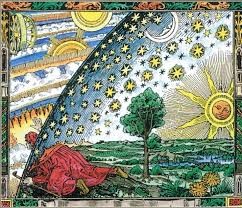





 After the Crash