Saturday Matinee: War Documentary Double Feature

large_fKiccFBjZwOKkmsDCQVVcuKgYbxhearts-and-minds

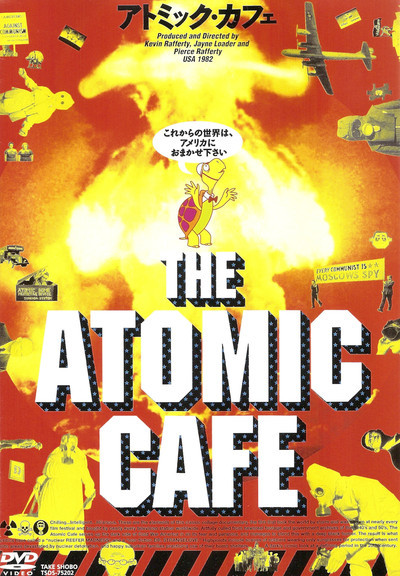
“Hearts and Minds” (1974) and “The Atomic Cafe” (1982) are two of the most chilling and persuasive anti-war documentaries ever made (at least for viewers who are not psychopaths). Though the editorial choices of both films clearly reflect an anti-war perspective, their messages are made more powerful by their lack of narration and abundance of archive footage, newsreels, and public statements from military and political officials. Both documentaries were years in the making with much time (nearly the entire time in the case of The Atomic Cafe) spent on research and editing, and the work clearly pays off by expanding the scope of the films to the political, cultural, and psychological factors behind wars. The filmmakers involved in Hearts and Minds and The Atomic Cafe, unlike most corporate news coverage of wars, both display great empathy in their inclusion of footage of “enemy” casualties of the war and “collateral damage” (ie. innocent victims caught in the crossfire). In the context of the current war-mongering from the Obama administration and corporate/government news media, Hearts and Minds and The Atomic Cafe are more relevant than ever and should be required viewing for everyone who values life.


Saturday Matinee: The Saragossa Manuscript

936full-the-saragossa-manuscript-poster

“The Saragossa Manuscript” (1965) is a Polish film directed by Wojciech Has and based on the novel “The Manuscript Found in Saragossa” (1815) by Jan Potocki. It is a long and complex film but endlessly fascinating for its humor and uniquely dreamlike narrative connecting numerous interrelated stories within stories. The film starts off in Spain during the Napoleonic Wars when soldiers from opposing armies find a manuscript in a deserted house which happens to tell the story of the Spanish officer’s grandfather. The film was a success in Poland in the 60s, is said to be a favorite of surrealist director Luis Bunuel, and was restored in the 90s with financial backing from Francis Ford Coppola, Martin Scorsese and Jerry Garcia. The original US release of The Saragossa Manuscript had nearly an hour cut from the film but the version posted below is the full three hour director’s cut.

To activate English subtitles, click on the “cc” button on the bottom right corner of the video window, click on the field that reads “French”, click “Translate Captions”, scroll down and click “English” and “OK”.

Saturday Matinee: Kontroll

kontro08“Kontroll” (2003) centers on Hungarian Metro ticket collector Bulcsú and his random encounters with neurotic colleagues, belligerent passengers, shadowy criminals, rival coworkers and a mysterious love interest. The film was an impressive debut for first-time writer/director Nimród Antal featuring great acting and cinematography, an interesting mix of genre elements and a darkly humorous screenplay.

Saturday Matinee: Goodbye 20th Century

MV5BOTQ2MTU1NzU5Nl5BMl5BanBnXkFtZTYwMTc4NDg4._V1_SX640_SY720_

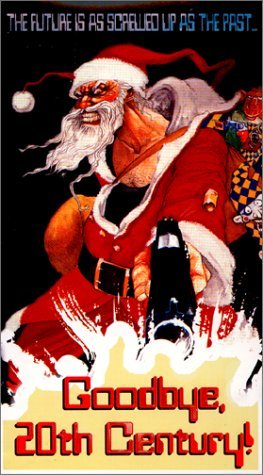
“Goodbye 20th Century” (1998) is a twisted but ambitious Macedonian film (directed by Darko Mitrevski and Aleksandar Popovski) connecting three allegorical tales from different eras. In the first segment, a man cursed with immortality in a post-apocalyptic world encounters a trickster who may hold the key to ending his existence. A shorter segment follows depicting the tragic first wedding captured on film in 190o. The film concludes in 1999 when a man in a Santa suit’s interruption of a military wake has violent consequences for all involved.

For English subtitles, click on the “cc” button near the bottom right corner of the video window.

Saturday Matinee: The Color of Life

vermillion_011

“The Color of Life” (2002) is a feature-length compilation of some of the oddest of the many odd moments from cult Japanese late night comedy/variety program “Vermilion Pleasure Night”. Recurring skits featured on the show include NSFW English language and cooking educational programs, an alien trapped on a starship resembling a Japanese studio apartment and antics of families of zombies, mannequins and human Barbie dolls. Interspersed through the film and television episodes are surrealistic musical and/or animated segments.

For English subtitles, click on the “cc” button near the bottom right corner of the video window.

Saturday Matinee: Cemetery Man (Dellamorte Dellamore)

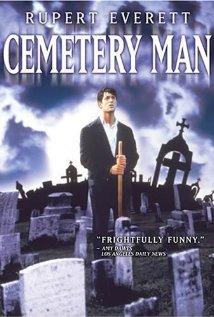
MV5BMTg2NzE4MDUwNl5BMl5BanBnXkFtZTcwNTk5ODIzMQ@@._V1_SY317_CR5,0,214,317_AL_“Cemetery Man” (1994) is a film adaptation of the novel “Tiziano Sclavi” and directed by Michele Soavi. It’s an interesting hybrid of horror, comedy and art film in which Rupert Everett plays a caretaker of a cemetery whose recent arrivals come back to life a few days later. This zombie film stands out of the crowd for its visual flair and philosophical subtext. Cemetery Man should appeal to fans of early Sam Raimi, Dario Argento, and cult horror cinema in general.

Saturday Matinee: Panther

220px-Panther1995_movie_poster

“Panther” (1995) is an excellent yet underrated historical drama directed by Mario Van Peebles and written by his father Melvin Van Peebles. The film traces the founding of the organization and backlash from the FBI’s COINTELPRO program. Unlike many historical dramas, Panther is engaging, entertaining, and stays close to historical facts. It also features excellent performances from a great cast including Kadeem Hardison, Bokeem Woodbine, Marcus Chong, Angela Bassett, Chris Rock, Joe Don Baker and M. Emmet Walsh.

Saturday Matinee: Twister

220px-Twister_1989_film

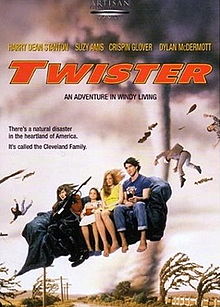
No, not the 1996 disaster flick, but a relatively little-known indie movie from 1989 directed by Michael Almereyda and based on the novel “Oh” by Mary Robison. The film explores the self-contained world of an eccentric family whose various escalating emotional issues coincides with an oncoming tornado.  What it may lack in comparison to a standard Hollywood budget and plot it more than makes up for in atmosphere, humor and unforgettable performances.

It features one of Harry Dean Stanton’s best performances (after “Paris, Texas” and Repo Man”), Crispin Glover’s most eccentric character (out of many he has portrayed), great supporting roles by Charlayne Woodard, Suzy Amis, Dylan McDermott, and cult actress Jenny Wright, and a cameo by William S. Burroughs.