
Saturday Matinee: Crash! (1971)

Crash_Spain_525

From Open Culture:

The Very First Film of J.G. Ballard’s Crash, Starring Ballard Himself (1971)

The Collins English Dictionary defines “Ballardian” as “resembling or suggestive of the conditions described in J. G. Ballard’s novels and stories, especially dystopian modernity, bleak man-made landscapes and the psychological effects of technological, social or environmental developments.” You’ll find no more distilled dose of the Ballardian than in Ballard’s book The Atrocity Exhibition, a 1969 experimental novel, or collection of fragments, or what’s been called a collection of “condensed novels.” Subject to an obscenity trial in the United States and the subsequent pulping of nearly a whole print run, the book has earned a permanent place in the canon of controversial literature. Its twelfth chapter, “Crash!”, even provided the seed for a Ballard novel to come: 1973’s Crash, a story of symphorophilia which David Cronenberg adapted into a film 23 years later. The movie, in its turn, stoked a furor in the United Kingdom, culminating in a Daily Mail campaign to ban it. But as far as filming material born of Ballard’s fascination with the intersection of auto wrecks and sexuality, Cronenberg didn’t get there first.

Susan Emerling and Zoe Beloff drew from Crash the novel to make the still-unreleased Nightmare Angel in 1986, but fifteen years before that, Harley Cokeliss turned “Crash!” the chapter into Crash! the short film (also known as The Atrocity Exhibition). Casting Ballard himself in the starring role and Gabrielle Drake (sister of singer-songwriter Nick Drake) opposite, Cokeliss crafts a vision almost oppressively of the seventies: the protagonist’s wide, striped shirt collar dominates his even wider jacket collar below the grim visage he wears while ensconsed in the suit of armor that is his hulking American vehicle. “I think the key image of the twentieth century is the man in the motor car,” Ballard says in voiceover. “Have we reached a point now in the seventies where we only make sense in terms of these huge technological systems? I think so myself, and that it is the vital job of the writer to try to analyze and understand the huge significance of this metallized dream.” If this Ballardian vision resonates with you, see also Simon Sellars’ thorough essay on the film at fan site Ballardian.
Saturday Matinee: Tere Bin Laden

Statu_With_Ali_Poster_With_Date

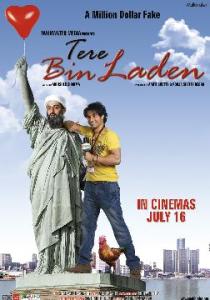
“Tere Bin Laden” (2010) is a Bollywood comedy written and directed by Abhishek Sharma. Pakistani pop star Ali Zafar stars as Ali Hassan, a TV reporter for a low budget news station in Karachi. Determined to find success in America despite previously being deported after being mistaken for a terrorist, he hatches a plan to raise funds for a fake ID with a sensational video using Noora (Pradhuman Singh), a dimwitted chicken farmer who happens to be a convincing Bin Laden lookalike. The plan rapidly spins out of control when it gets the attention of US government officials and the Pakistani intelligence agency. Though some gags dependent on regional references and wordplay may be lost on western audiences, much of it is broad enough to transcend cultures (especially bits mocking the paranoid and xenophobic post 9/11 milieu). Not surprisingly, the film was banned upon release in the US and several countries in the Middle East including Pakistan. The sequel Tere Bin Laden: Dead or Alive was released last February.

Saturday Matinee: Can Dialectics Break Bricks?

candialectics

From Wikipedia:

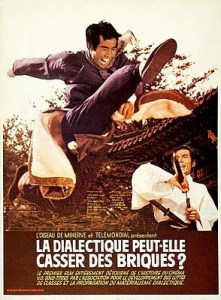
La Dialectique Peut-Elle Casser Des Briques?, in English, “Can Dialectics Break Bricks?”, is a 1973 Situationist film produced by the French director René Viénet which explores the development of class conflict through revolutionary agitation against a backdrop of graphic kung-fu fighting.

The film uses 1972 martial arts film Crush by Tu Guangqi, which tells the story of anti-colonialist revolt in Korea during the period of Japanese occupation, for its visuals which has been dubbed over by the filmmakers in an attempt at détournement. The concept and motivation of this film was to adapt a “spectacular” film into a radical critique of cultural hegemony and thus into tools of subversive revolutionary ideals.

The Narrative is based upon a conflict between the proletarian and bureaucrats within state capitalism. The proletarians enlist their dialectics and radical subjectivity to fight their oppressors whilst the bureaucrats defend themselves using a combination of co-optation and violence. The film is noted for its humorous approach to this serious subject matter.

The film also contains many praising references to revolutionaries who thought and fought for the realisation of a post-capitalist world, including Marx, Bakunin, and Wilhelm Reich, as well as scathing criticism towards the French Communist Party, trade unionism and Maoism. Also Subplots dealing with issues of gender equality, alienation, Paris Commune, May 1968, and the Situationist themselves are riddled throughout the film.

https://vimeo.com/60948078

Saturday Matinee: Hemp Doc Double Feature

MV5BMjE4ODY2OTI5N15BMl5BanBnXkFtZTcwNTk0OTcxMQ@@._V1_SX214_AL_MV5BMjA3Mzk5NDQ1OV5BMl5BanBnXkFtZTcwOTQwMjIyMQ@@._V1_SX214_AL_The Hemp Revolution (1995) covers the history, cultivation and usage of hemp including food, fuel, building material and medicine. It also explores some of the factors behind the prohibition of hemp production in the U.S. in 1938 (including pressure from the petro-chemical industry). The impressive roster of interview subjects featured in the film includes such notable figures as Dr. Andrew Weil, Dr. Lester Grinspoon, Terence McKenna, Peter Dale Scott, and Prof. Sheri Tonn among many others.
The Emperor of Hemp (1999) documents the life of Jack Herer, his struggle for the decriminalization of cannabis and hemp and his legacy. It’s also an overview of his seminal book The Emperor Wears No Clothes: The Official Hemp Bible including the history and many utilizations of hemp, the conspiracy against it, and a rallying cry to end its prohibition.

Saturday Matinee: Snowpiercer

Snowpiercer_poster

Snowpiercer (2013) is a film adaptation of French graphic novel Le Transperceneige by Jacques Lob and Jean-Marc Rochette directed by Bong Joon-ho (The Host, Mother, Haemoo). The majority of the movie takes place on a perpetually globe-spanning train containing the last surviving members of the human race after a geoengineering scheme creates an apocalyptic ice-age. Though the film has its share of plot holes (which become more apparent with repeat viewings), it remains the best cinematic metaphor for today’s dominant political/economic system. Snowpiercer also features outstanding performances from Chris Evans, Song Kang-ho, Tilda Swinton, Octavia Spencer, John Hurt, and Ed Harris among others.

Watch the full film here.

(Note: annoying pop-up ad windows may need to be closed after clicking the “play” button.)

Saturday Matinee: Bully

Bullyposter

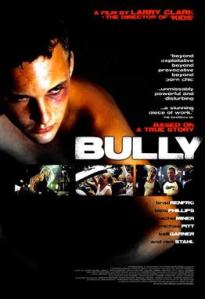
Bully (2001) is a film directed by Larry Clark (Kids) about teens in South Florida who murder a member of their clique after being emotionally, physically and sexually abused by him for years. Like a darker version of River’s Edge, it is also based on a real event; the 1993 murder of Bobby Kent committed by seven young adults including his best friend. Starring Brad Renfro, Bijou Phillips, Rachel Miner, Michael Pitt, Leo Fitzpatrick, Kelli Garner, and Nick Stahl.


Saturday Matinee: Casshern

Casshern_movie

“Casshern” (2004) is a live-action adaptation of the anime of the same name written and directed by Kazuaki Kiriya. The story takes place during a period after a 50 year war in which a resistance movement regularly clashes with the military. When scientist Azuma’s soldier son Tetsuya is killed in battle, Azuma uses his research to bring him back to life. After learning the truth about supposed terrorists he was once ordered to kill, Tetsuya fights against the military with the aid of a prototype cyborg suit. The film is notable for strikingly anime-like special effects and action set pieces, atmospheric score, and poignant conclusion with a clearly pacifist message.

Watch the full movie with English subtitles here.