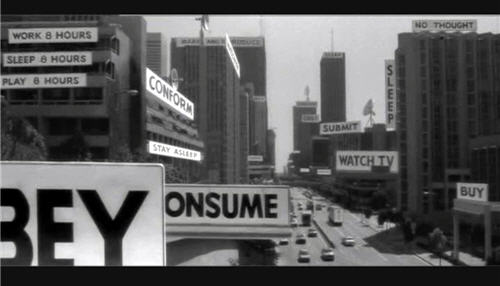
Remember To Use Your Forgettery To Forget All the Trivia Meant To Divert Your Attention from Important Matters

yndwy

By Edward Curtin

Source: OpEdNews.com

What is the explanation for the brainwashing of so many Americans when it involves the nefarious, unspeakable deeds of their government? Why are so many so easily duped time and again? Why is there such a vast ignorance of the truth behind national and international affairs?

I would suggest that the answer lies not just with the specific issues themselves and the lies and propaganda used to befuddle the American people, but with the cultural and social background that frames Americans’ thinking. The latter serves to cut to the root people’s belief in their own power to think freely and clearly about the former. Invade people’s minds over many years with an ongoing series of interconnected memes, occupy their minds with alleged facts that induce a frenzied depression, and then fooling them on specific issues — e.g. Ukraine, Iraq, Syria, etc. – becomes much easier.

I am a sociology professor, and my students always laugh when during a discussion of memory, social and personal, I ask them about their forgetties (the actual word is forgetteries, but the shorter rhyme gets more laughs). They think I’m joking. Maybe you do, too. I’m not. But when I suggest that if they “possess” the faculty to remember, then they must “possess” the faculty to forget, they are astonished. You can’t forget, they reply, you just don’t remember; you can’t retrieve the memories that are stored in your brain. In other words, there are no forgottens, just temporarily unavailable memories. From there we are onto a discussion of retrieving (I think of dogs), processing (their word for thinking and mine for making American cheese), and all the computer lingo that has been the surround of their lives. Like fish in water, the mechanistic computer memes have been their environment since birth. They are shocked at the suggestion that there might be more outside the cultural water, and that they could go there.

And they have a lot of company.

This may sound flippant, but it’s crucial for understanding why so many Americans can’t comprehend and pay attention to the ways their minds are scrambled and confused about life and death issues, how their country has fallen victim to the military-industrial-intelligence apparatus that operates deep in the shadows, and oftentimes right in the open.

If we examine the social and cultural context of the last twenty-five years, we can see a number of issues that have dominated Americans’ “thinking.” These issues have been promulgated and repeated ad infinitum by the corporate media, professional classes, and schools at all levels. We have been swimming in these issues for years. I suggest the following five are key: the inability to concentrate or pay attention (ADD/ADHD), memory/forgetting (dementia, Alzheimer’s, technological memory devices), people’s lack of time and constant busyness (a recent email I received from a publisher read: “crazy-busy? use our power-point decks”), drugs legal or illegal as problems or solutions (over 4 billion prescriptions written in the U.S.A. yearly), and technology as our savior.

Together with shopping and the weather, these five topics have been the stuff of endless conversations and media chatter over the years.

When people are questioned about major issues of war and peace; political assassinations, such as those of JFK, MLK, or RFK; the alleged war on terror; the downing of Malaysian airlines; the overthrow of elected governments in the Ukraine or Egypt; the events of 9/11; government spying; economic robbery by the elites — the list is long, it’s common for people to echo the government/corporate media, or, if pressed, to say, I don’t know, I can’t remember, no one knows for sure, it’s impossible to know, we’ll never know, etc.. The confused responses are replete with an unacknowledged despair at ever arriving at clear and certain conclusions, not to say being able to do anything about them. On many issues they bounce between the twin absurdities of Democratic and Republican talking points, thinking they are being perceptive.

Why?

If we set aside the substantive issues, and examine the aforementioned cultural memes, the answers are not hard to find. Here most people speak as if they are certain. “Of course there isn’t a forgettery.” “Depression is caused by a chemical imbalance.” “Memories are all stored in the brain.” “I really am so busy all the time.” “Facts are just opinions.” Americans have internalized the ethos presented to them by the elites. At the core of this is the propaganda of scientific materialism and biological determinism that we are not free but are victims of our genes, neurotransmitters, brain/computers and chemicals, technology, etc. Having lost our minds and fixated on our brains, we have been taught to be determined to be determined, not free. And whether consciously or unconsciously, most have obliged. The linkages between memory, attention, distraction, drugs, technology all point to the brain and the obsessive cultural discussion of brain matters. We have been told interminably that our lives revolve around our brains (our bodies) and that the answers to our problems lie with more brain research, drugs, genetic testing, etc. It is not coincidental that the U. S. government declared the 1990s the decade of brain research, followed up with 2000-2010 as the decade of the behavior project, and our present decade being devoted to mapping the brain and artificial intelligence, organized by the Office of Science and Technology Project and the Defense Advanced Research Projects Agency. How convenient! George H. W. Bush, Clinton, George W. Bush, Obama — what a difference! But this is science and the welfare of the world.

For years we have been fed philosophical presuppositions smuggled in as fact. It’s an old trick, ever young. Tell people over and over and over again that life is in essence a mindless material/biological trap and over time they will believe it. Of course there are unspoken exceptions — those who are the masters of this con-game, the few, the elite, those who make and reinforce the case. And even some of them are too ignorant to comprehend their questionable presuppositions. They hoist themselves by their own petards while cashing in at the bank.

My students can’t forget because they don’t believe in it. But they can’t remember either. They don’t know why. So, like the older generation, they fall into the careless habit of inaccuracy, to turn Oscar Wilde on his head. They have downloaded their memories, uploaded their trifles, and been tranquilized by trivia.

As the great American sociologist C. Wright Mills wrote over fifty years ago, “Nowadays people often feel that their private lives are a series of traps.” That is truer today than then. A sense of entrapment and determinism pervades our culture. And it extends to public issues as well. We are told either to accept official explanations for public events or be dismissed as crazies.

I would suggest that for people to break through to a true understanding of the important public events of our time, they must also come to understand the false memes of their culture, the way they have been mindwashed to believe that at the most rudimentary level they are not free.

Maybe the first best step toward free thought and out of the propaganda trap would to accept that you “possess” a forgettery . Listen to the American philosopher Paul Simon sing, “When I think back to all the crap I learned in high school, it’s a wonder I can think at all.” Use your forgettery and forget the crap. Make haste slowly to question everything. Remember that the corporate media works hand in glove with the ruling elites on two levels of propaganda — cultural and political, and it is necessary to understand how they are intertwined. Freedom is indivisible.

That’s worth remembering.

Neither Imitate Nor Hate

they-live

By Micah White

Source: OccupyWallSt.org

As righteous people, how can we live in a world that is poisonous to our souls, harmful to our minds and at odds with our ideals?

Common sense counsels us that we have only two options: either imitate or hate the world. But if we remain stuck within this binary opposition, we will lose ourselves: if we imitate the world we sacrifice our spirit; if we hate the world we succumb to being reactionary and lose the positive passion that grounds our affirmation. What then can we do? This is the question that Seneca, the great Stoic sage, posed nearly two millennia ago. And his answer speaks to today’s struggle of being true to oneself in a corporatist society.

Roman imperial culture was as ruinous to Seneca’s ideals as endgame corporatism is to ours. In a well-known letter to his friend Lucilius, Seneca writes that exposure to crowds and the entertainment they consume ought to be avoided because within the crowd we lose our inner resolve for living a good life. “To consort with the crowd is harmful,” Seneca writes in Letter VII of Epistulae morales ad Lucilium, “[because] there is no person who does not make some vice attractive to us, or stamp it upon us, or taint us unconsciously therewith. Certainly, the greater the mob with which we mingle, the greater the danger.” To prove his point, Seneca tells of his experience watching a gladiator death-match and returning home feeling “more greedy, more ambitious, more voluptuous and even more cruel and inhuman” than before.

In our era, Seneca’s observation will often be rejected on the presumption that his critique of mass culture is based on an aristocratic or antidemocratic philosophy. Proponents of this position will argue that Seneca’s dislike of crowds is due only to a prejudice toward common people and that his position is therefore not worthy of consideration. But this argument misses the deep philosophical insight that Seneca opens for us—there is a correlation between the culture that surrounds us and our inner life. If Seneca is correct then each of us has a legitimate reason to be concerned about involuntary exposure to violence, pornography, and lies because these cultural forms are destructive to our spirit. In other words, Seneca’s stoic philosophy provides another way to understand spiritual insurrection.

The pressing concern is how to resist the dominant culture in such a way that our ideals remain intact and our will to fight stays strong. And it is on this question that Seneca is most articulate. For Seneca, we must be on our guard at all times. He writes: “much harm is done by a single case of indulgence or greed; the familiar friend, if he be luxurious, weakens and softens us imperceptibly; the neighbor, if he be rich, rouses our covetousness; the companion, if he be slanderous, rubs off some of his rust upon us, even though we be spotless and sincere. What then do you think the effect will be on character, when the world at large assaults it!” But Seneca refuses to accept that we ought to either imitate or loathe the world.

Instead, Seneca proposes that we develop a parallel culture in which we commune among ourselves to strengthen our opposition to the dominant culture. Seneca’s counsel is simple: “Withdraw into yourself, as far as you can. Associate with those who will make a better person of you. Welcome those whom you yourself can improve.” While this advice seems simple, it is actually the most difficult to accept because it foregoes the principles of mass participation and mass culture that underlie the majority of contemporary politics.

It would be a mistake to assume that what Seneca has in mind is a politics of neutral moderation. For a stoic, moderation fails to address the root cause of society’s ills. Instead, the art of stoicism is to live within the tension of two extremes without seeking the middle path of unprincipled moderation. Stoicism challenges us to live an affirmation amidst the world as it is, to maintain our inner resolve in the face of temptation and to teach resistance by way of personal example. It is a difficult task for which Seneca offers only one suggestion: decrease your desire.

Seneca writes that the key to attaining happiness, pleasure, riches and anything else of value is, paradoxically, to lower our desires. He relates the story of Epicurus who when asked by Idomeneus how to make his friend Pythocles rich replied, “If you wish to make Pythocles rich, do not add to his store of money, but subtract from his desires.” This wisdom does not only apply to wealth, Seneca argues, and he goes on to give further examples of what Epicurus could have said: “‘if you wish to make Pythocles honourable, do not add to his honours, but subtract from his desires’; ‘if you wish Pythocles to have pleasure for ever, do not add to his pleasures, but subtract from his desires’; ‘if you wish to make Pythocles an old man, filling his life to the full, do not add to his years, but subtract from his desires.’” And I think Seneca would agree if we were to add one of our own to the list and say that if you wish to make a spiritual insurrection, do not wait for many people to join, instead subtract from your desires.

Seneca challenges us to imagine a positive cultural movement that is built on the shared practice of a radical decrease in desire. He suggests that we first build small friendship networks of resistance that are impervious to the influences of mass culture because their highest ideal is a life without consumption. Seneca encourages us to be like the wise man, who when asked why he devotes his life to a philosophy that may reach only a handful of people replied, “I am content with few, content with one, content with none at all.”

— Micah White, PhD lives on the north coast of Oregon. Follow him at @BeingMicahWhite. A version of this article originally appeared in Adbusters

Rejecting the Vomit of the Government and Corporate-stream Media

Dont-trust-the-corporate-media-426x240-300x162

By Larry Pinkney

Source: Intrepid Report

“Hide nothing from the masses of our people. Tell no lies. Expose lies whenever they are told. Mask no difficulties, mistakes, failures. Claim no easy victories.”—Amilcar Cabral

“If a nation expects to be ignorant and free in a state of civilization, it expects what never was and never will be.”—Thomas Jefferson

Let us get one thing crystal clear: We in the the United States of America, do not live in an informed genuine people’s ‘democracy’ nor do we have a government or mass media that is honest and transparent that serves the needs, interests, and aspirations of everyday ordinary Black, White, Brown, Red, and Yellow people.

It is time to cease being in denial and dispense with mythology.

The government of this nation is owned and operated, in real terms, by the power elite of giant avaricious corporations, including the corporate-stream ‘news’ media. In fact, the U.S. government, including so-called ‘elected’ representatives, has become, in reality, nothing more than a corporate clone, replete with self-serving pimping political parasites intent upon keeping everyday ordinary people dis-informed, divided, and controlled on the de facto plantations of the Democrat and Republican parties.

The politicians of this nation from Barack Obama on down, including both Democrats and Republicans, have repeatedly demonstrated that they are adroit at lying, dividing, and manipulating—not truth telling. They are irreconcilably wedded to a corrupt and dishonest corporate-owned political system, taking their cues from the relatively tiny, filthy rich, national and global power elite—always at the enormous economic, physical, and psychological expense of the everyday ordinary people of this nation and those throughout our precious Mother Earth.

These elected so-called people’s ‘representatives’ in the executive and legislative branches of the corporate-owned U.S. government are in essence anything but genuine representatives of the struggling masses of everyday ordinary people of all colors and both genders. They are stage props in the political theater of the absurd—keeping people perpetually divided, manipulated, and controlled in a corrupt political system that has gone absolutely berserk. And the judicial branch, has for the most part, become a terrible and sick joke—acting essentially as ping-pong systemic rubber stamps.

Corporate-stream vomit

The U.S. corporate-stream media, which includes ABC, CBS, NBC, PBS, MSNBC, FOX, etc., constantly disinform and lie by omission to the everyday people of this nation by presenting the regurgitated and lopsided narrative of a greedy, war mongering power elite. This is nothing more than packaged corporate-stream vomit being rammed down the throats of everyday ordinary people by the corporate-stream media in service to the thought police and systemic gatekeepers of the Democrat and Republican plantation.

Why does the corporate-stream media continue to serve the masses of people a diet of lies and distortions, i.e., a diet of vomit? What purpose does it serve?

The U.S. so-called ‘mainstream’ media are essentially owned and/or controlled by only five major corporations. These corporations are in turn owned and/or controlled by a small and powerful power elite whose objective is not to honestly inform the masses of people—but rather to shape and thereby control public opinion. These corporations are in turn wedded to other corporations that make huge profits of blood money from manufacturing weapons of destruction in the air, in space, on land, and in the seas. Thus, the drums of war are virtually always being pounded—in the name of allegedly protecting an economic, political and social ‘democracy’ that, we the people, of this nation do not in the main enjoy. The objective of the corporate-stream media is to keep pumping the vomit to the people in order to ensure that the blood money from war profits of, for example, Boeing, General Electric, Honeywell, etc., continue unabated. This reality has nothing to do with so-called ‘national security’ or ‘democracy’—but everything to do with the reaping of enormous profits for the national and global power elite, at the immense expense of humanity, both nationally and globally.

Another objective of the corporate-stream media is to seek to discredit those persons who seek to expose the lies, distortions, and/or frame-ups, etc., by the government and its various local, state, and federal police and so-called ‘intelligence’ agencies. The courts, of course, also play a major role in in attempting to legitimize systemic actions to discredit, silence, imprison, or otherwise ‘neutralize’ political activists who are organizers and truth-tellers in this nation. There are no limits to the depths of dirty tricks and set-ups that the government, with the support of the corporate-stream media and the courts, will utilize in attempts to neutralize, discredit, and silence persons who oppose its agenda. They just keep pumping out the vomit to be consumed by everyday ordinary people.

Finally, another potent objective of the corporate-stream media (including the ‘entertainment’ industry) is to distract from the truth and to distort it in every conceivable fashion. U.S. and British television networks are particularly notorious in, for example, propagating drama shows and so-called sitcoms that attempt to distract people from the obvious while utterly distorting historical and contemporary reality. The corporate-stream media moguls are keenly aware of how the narrative and agenda of the power elite can be stealthily propagated in the seemingly innocuous name of ‘entertainment.’ Being entertained is one thing but being subliminally brainwashed is quite another.

Lie after lie after lie

The immense damage and impact of and by the corporate-stream media on the minds and daily lives of everyday people should never be underestimated.

The words of the martyred South African political activist Steve Biko are worth remembering and internalizing: “The most potent weapon in the hands of the oppressor is the mind of the oppressed.”

If we do not critically think for ourselves then we are slaves—systemic slaves of all colors.

Whether it’s about this nation, Libya, Palestine, Syria, Somalia, or the Ukraine (Obama Regime Engaged in MH17 Cover Up, by Donn Marten), etc., we the ‘American’ people, are fed a diet of lie after lie, after lie, after lie by the corporate-owned U.S. government and the corporate-stream U.S. media.

Even as joblessness, home foreclosures, prison incarceration, homelessness, the so-called ‘national debt,’ and corporate glut and domination, etc., reach virtually unprecedented heights, the corporate-stream media would tell us that conditions are somehow getting better for the masses of everyday people in drone man Obama’s NDAA, NSA, ‘kill list,’ surveillance/de facto police state. We are expected to suck up the corporate-stream media’s vomit despite what we see and experience firsthand in our families and communities. I reiterate: If we do not critically think for ourselves then we are slaves!

Moreover, those relatively ‘fortunate’ few in this nation who are able to attend colleges and universities are also force-fed a diet of corporate-stream vomit by ‘educational’ institutions that are increasingly corporate owned and/or controlled and are largely beholden to promoting a corporate narrative and agenda. This is not real education and it is certainly not an environment wherein critical thinking is seriously encouraged, supported, and promoted. Indeed, critical thinking, just as in the larger U.S. society, is, in actuality, considered to be subversive. Notwithstanding the outrageous debt that most students are compelled to incur in order to attend these colleges and universities, far from being educated, they are being brainwashed to be systemic cogs—good little obedient, non-critically thinking corporate slaves.

As bloody conflicts and wars persist, at the behest of the national and global corporate power elite, decimating our planet’s natural environment, ravaging Mother Earth and her people, the time is upon us to creatively, consistently, and collectively act in the interest of ourselves and the rest of everyday ordinary humanity. This is not a matter of choice—it is a matter of absolute necessity.

We in this nation are not Democrats or Republicans—we are victims of the Democrats and Republicans. It is time to stop being their victims and find the ways and means together to relegate those pimping political parasites (and their corporate-stream media) to the dustbin of history.

What must we the people do?

The situation in this nation is dire but not hopeless. Here are some ideas of what we can do as individuals and collectively:

  1. We should immediately start to utilize critical thinking. To do so is, in and of itself, a necessary and revolutionary step. Thomas Jefferson correctly stated that, “Every generation needs a new revolution.” This 21st century generation must act now if there is even to be yet another generation.
  2. We should treat the corporate-stream media for what it is, understanding that its objective is to keep us disinformed, manipulated, and controlled. However, we should also share our insights with our friends, neighbors, and other associates—while simultaneously listening to their perspectives with a view towards creatively ways to develop and/or support viable alternatives to the corporate-stream media and be consistent.
  3. We should remember to use plain, simple, down-to-earth language when communicating our observations, ideas, and goals—keeping in mind that if we truly want to change this rotten system, we must endeavor to be in ourselves that which we want to see in a more humane and just society for which we are striving.

It is important to remember that this cynical political system thrives upon and exacerbates human weaknesses. Thus, we should strive to recognize our own strengths, weaknesses, and limitations as we organize and communicate with one another.

We everyday ordinary people must consistently utilize a very large dose of creativity as we aid one another to debunk and disengage from the poisonous vomit of the corporate-stream media. The task before us is an imperative one for this nation and humankind as a whole. In the paraphrased words of Amilcar Cabral, we must “tell no lies to the people and claim no easy victories.”

Remember: Each one, reach one. Each one, teach one. Onward then, my sisters and brothers. Onward!!!

Intrepid Report Associate Editor Larry Pinkney is a veteran of the Black Panther Party, the former Minister of Interior of the Republic of New Africa, a former political prisoner and the only American to have successfully self-authored his civil / political rights case to the United Nations under the International Covenant on Civil and Political Rights. In connection with his political organizing activities, Pinkney was interviewed in 1988 on the nationally televised PBS News Hour, formerly known as The MacNeil / Lehrer News Hour. Pinkney is a former university instructor of political science and international relations, and his writings have been published in various places, including The Boston Globe, the San Francisco BayView newspaper, the Black Commentator, Global Research (Canada), LINKE ZEITUNG (Germany), and Mayihlome News (Azania/South Africa). For more about Larry Pinkney see the book, Saying No to Power: Autobiography of a 20th Century Activist and Thinker, by William Mandel [Introduction by Howard Zinn]. (Click here to read excerpts from the book.)


Travelers of the Soul

7billion-earth

By Mark Anthony Rockeymoore

Source: Sacred Space in Time

You never know who you’re going to meet.

Other Travelers, along the Way.

How you’re going to affect their lives, or how they will affect yours.

Lives intersect seemingly at random. The person at the grocery store, met eyes and a few pleasantries. The car passed coming out of the driveway, your chance meeting on a road resulting in a pause, a hesitation in their journey. Thousands and millions of souls encountered along your journey, our journey.

Paths crossing, interacting through space and time. The acquaintances and the folks at work, the close friends and family. Greater and lesser degrees of zero-point geometry, non-local interactions of the sacred and profane intermixed, building intricate networks of causality that spiral out in increasingly complex patterns of manifest destiny.

Choices. Mingling bio-energetic auras, the electromagnetic emissions of the heart, body-consciousness of sub-quantum, zero-point interactions, nodal emanations of undetectable energy creating complex relationships between individuals, groups and the greater matrix of our shared reality itself. Each moment, each decision resulting in further permutations, infinite and unknown.

It is no wonder that life is hard. Lifetimes of personality development shape our individual expression and we interact with others based upon who are are at any given moment. The social mask provides the gateway of understanding, of belonging and difference, while the omniscient, omnipresent, omnipotent observes dispassionately through eyes alight with the flames of forever.

Science shows us that steady-state heart resonation displays the most constant state of being as the body’s electromagnetic sheath pulsates with health, wellness and frequencies of peace, joy and happiness. The cacaphonic discord of pain and suffering shapes lives through unrelinquished stress, dwelling on the past, worrying about the future, leads to shortened lives and dis-harmonic states of being.

Cultivate peace of body. Quietude of mind.Those we encounter in our travels find peace in this resonation and conflict can be lessened, leading to more beneficial interactions with all whom we meet. Taming the passions – to those prepared for such a state of being – clarifies intention and action. Simplifying thought simplifies life.

Each moment carries a contest of its own. Through our interactions with others, we meet the challenges of personality and spiritual development. Through our own examination of our inner life we face our own personal demons and angels and choose which way to go. Whichever way that may be, may it express the truest expression of your heart.

Causality in the form of the divine manifest looks mundane. Looks like the daily grind. But it can feel like the pathway to Eternity if you see it that way. Each moment can be a revelation of self-discovery and growth, each interaction with other Travelers, each experience the crowning achievement of a lifetime, spiraling up into the future consciously aware and prepared for whatever comes next, present in the now moment and living according to your deepest held ideals and understandings about the world and your place in it.

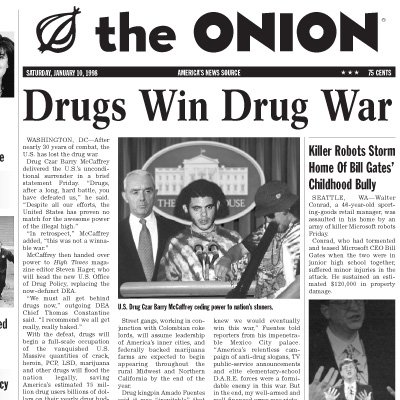
Why We Can’t Wage War on Drugs

drugs-win-war-on-drugs

The war on drugs was always a war against an idea. But ideas have a shelf-life, too, and this one has lost its potency

By Mike Jay

Source: Aeon Magazine

When the US President Richard Nixon announced his ‘war on drugs’ in 1971, there was no need to define the enemy. He meant, as everybody knew, the type of stuff you couldn’t buy in a drugstore. Drugs were trafficked exclusively on ‘the street’, within a subculture that was immediately identifiable (and never going to vote for Nixon anyway). His declaration of war was for the benefit of the majority of voters who saw these drugs, and the people who used them, as a threat to their way of life. If any further clarification was needed, the drugs Nixon had in his sights were the kind that were illegal.

Today, such certainties seem quaint and distant. This May, the UN office on drugs and crime announced that at least 348 ‘legal highs’ are being traded on the global market, a number that dwarfs the total of illegal drugs. This loosely defined cohort of substances is no longer being passed surreptitiously among an underground network of ‘drug users’ but sold to anybody on the internet, at street markets and petrol stations. It is hardly a surprise these days when someone from any stratum of society – police chiefs, corporate executives, royalty – turns out to be a drug user. The war on drugs has conspicuously failed on its own terms: it has not reduced the prevalence of drugs in society, or the harms they cause, or the criminal economy they feed. But it has also, at a deeper level, become incoherent. What is a drug these days?

Consider, for example, the category of stimulants, into which the majority of ‘legal highs’ are bundled. In Nixon’s day there was, on the popular radar at least, only ‘speed’: amphetamine, manufactured by biker gangs for hippies and junkies. This unambiguously criminal trade still thrives, mostly in the more potent form of methamphetamine: the world knows its face from the US TV series Breaking Bad, though it is at least as prevalent these days in Prague, Bangkok or Cape Town. But there are now many stimulants whose provenance is far more ambiguous.

Pharmaceuticals such as modafinil and Adderall have become the stay-awake drugs of choice for students, shiftworkers and the jet-lagged: they can be bought without prescription via the internet, host to a vast and vigorously expanding grey zone between medical and illicit supply. Traditional stimulant plants such as khat or coca leaf remain legal and socially normalised in their places of origin, though they are banned as ‘drugs’ elsewhere. La hoja de coca no es droga! (the coca leaf is not a drug) has become the slogan behind which Andean coca-growers rally, as the UN attempts to eradicate their crops in an effort to block the global supply of cocaine. Meanwhile, caffeine has become the indispensable stimulant of modern life, freely available in concentrated forms such as double espressos and energy shots, and indeed sold legally at 100 per cent purity on the internet, with deadly consequences. ‘Legal’ and ‘illegal’ are no longer adequate terms for making sense of this hyperactive global market.

The unfortunate term ‘legal highs’ reflects this confusion. It has become a cliché to note its imprecision: most of the substances it designates are not strictly legal to sell, while at the same time it never seems to include the obvious candidates – alcohol, caffeine and nicotine. The phrase hasn’t quite outgrown its apologetic inverted commas, yet viable alternatives are thin on the ground: ‘novel psychoactive substance’ (NPS), the clunky circumlocution that is preferred in drug-policy circles, is unlikely to enter common parlance. ‘Legal highs’, for all its inaccuracies, points to a zone beyond the linguistic reach of the war on drugs, that fervid state of mind in which any separation between ‘drugs’ and ‘illegal’ seems like a contradiction in terms. Then again, if that conceptual link breaks down, what does become of the old idea of drugs? When the whiff of criminality finally disperses, what are we left with?

I said ‘old idea’, but the word ‘drug’, at least in the sense that has been familiar throughout our lifetimes, turns out to be a recent coinage, peculiar to the 20th century. The word itself is, of course, centuries old: as a general term for any medication or chemical remedy, it dates back to the 14th century. But its more specific sense – as in ‘drug addict’, ‘drug control’ or ‘drug culture’ – can be dated quite precisely to the years around 1900. And on examination, it proves to be a curious hybrid, bridging two quite separate meanings.

The first is psychoactivity. A ‘drug’ is a substance that acts on the mind, changing the way we think or feel. But this descriptive meaning also carries a strong suggestion of judgment, less easily defined but unmistakably negative. ‘Drug’, in this sense, is a label to be avoided. Thus, according to the industries that produce and promote them, alcohol and tobacco are not drugs; cannabis advocates insist it is not a drug but a herb; and LSD enthusiasts say that it is not a drug but a sacrament. Indigenous users of coca, betel nut or ayahuasca are appalled at the suggestion these substances might be drugs. A cup of tea is psychoactive, but we would only call it a drug if we wished to make a point. An indeterminate white powder bought off the internet, on the other hand, might be legal, but it is undoubtedly still a drug.

Before the 20th century, it would have been difficult to express this idea. Many of today’s ‘drugs’, such as cannabis, cocaine and morphine, were sold in any high-street pharmacy. ‘Heroin’, for instance, emerged in 1898 as Bayer Pharmaceuticals’ new brand of over-the-counter cough medicine. Did the authorities simply turn a blind eye to the dangers that these substances posed? They did not: opium was classified as a poison because of its overdose risk, and cannabis was known to cause mental disturbance in some users. Yet these properties did not confer any exceptional status. And why should they? Even today, there are still plenty of prescription medicines that are toxic, habit-forming or that have deliriant side-effects. What made the drug-drugs special? In the 20th century, they came to be defined by their illegality, but of course they could not have been created by it. Only once certain hostile perceptions about drugs were in place could it make sense to ban them. What caused the perceptions?

We might start with the temperance movement. In the 19th century, alcohol was being recognised as a causal factor in all sorts of social ills, and so temperance campaigns promoted sobriety as the path to personal health, moral virtue and social respectability. Progressive social reformers joined forces with doctors and religious authorities to condemn the habitual intoxication of previous generations. Other intoxicating drugs might not have presented such a widespread problem, but they all got swept up in the same mixture of medical, moral and social opprobrium.

By the late 19th century, consumer groups were campaigning against the heavy doses of opiates and cocaine concealed in patent medicines

Global trade, meanwhile, made imported drugs such as opium and cocaine cheap and abundant; industry refined them into newly potent forms, which an energetic and largely unregulated business sector advertised and distributed to a booming consumer market. At the same time, the hypodermic syringe was transforming medical practice. It allowed doctors – and, increasingly, the general public – to inject large quantities of pure and potentially dangerous opiates such as morphine. This brought a breakthrough in pain relief, but also new risks such as abscesses and blood poisoning and, for some patients, compulsive and self-destructive overuse.

By the late 19th century, consumer groups were campaigning against the heavy doses of opiates and cocaine concealed in patent medicines, and doctors were diagnosing addiction as a medical pathology with serious social consequences. The first uses of ‘drug’ in its modern sense date from this era: in its earliest occurrences, it stood as an abbreviation of phrases such as ‘addictive drug’ or ‘dangerous drug’. Doctors advised governments and the public that injections of powerful narcotics should be confined to professionals. Use without medical supervision was classified as ‘abuse’.

Largely couched in medical terms as it was, the whole notion of ‘drugs’ carried moral and cultural implications from the start. Within the temperance debate, intoxication was an evil in itself and abstinence a corresponding virtue. Also, a good many of the substances that caused concern in the West were associated with immigrant communities: opium in the Chinese districts of San Francisco or London’s docklands, cocaine among the black communities of the southern US. In the racially charged debates of the day, these substances were presented as the ‘degenerate habits’ of ‘inferior races’, a ‘plague’ or ‘contagion’ that might infect the wider population. Such ideas might no longer be explicit, but the drug concept certainly carries a murky sense of the foreign and alien even now. That’s why it rarely applies to the psychoactive substances that we see as part of normal life, whether caffeine in the west, coca in the Andes, or ayahuasca in the Amazon.

During the first years of the 20th century, opium, morphine and cocaine became less socially acceptable, rather as tobacco has in our era. Their use was now viewed through the prism of medical harm, and their users correspondingly started to seem feckless or morally weak. The drugs themselves became, in a sense, ‘legal highs’: not technically prohibited but retreating into the shadows, available only under the counter or from those in the know. And then, once their sale was formally banned in the years around the Great War, ‘drugs’ became a term with legal weight: a specified list of substances that were not merely medically dangerous or culturally foreign, but confined to the criminal classes.

The banning of drugs occasioned strikingly little public debate, certainly compared with the prohibition of alcohol in the US. Then again, the ‘drug problem’ was pretty marginal at that point, and confined to subcultures (ethnic, bohemian, criminal) without a public voice. The only organised resistance to this new language of condemnation came from the pharmaceutical industry, concerned that its legitimate trade was being tarnished by unfortunate associations. What’s now the American Pharmacists Association, pressured by its major corporate sponsors such as Johnson & Johnson, complained about the casual use of terms such as ‘drug evil’, ‘drug fiend’ and ‘drug habit’, and lobbied newspapers to specify the drugs in question as ‘narcotics’ or ‘opiates’.

But ‘drugs’ was too vague and too useful to replace with more precise terms. It conveyed not simply particular chemicals, but a moral position on the use of them by certain people and for certain purposes. This position was eventually enshrined in the legal frameworks that emerged to prohibit them. The 1961 UN Single Convention on Narcotic Drugs, the founding document of the international drug laws, is unique among UN conventions in using the word ‘evil’ to describe the problem it seeks to address.

Legislators celebrated the 1961 Convention as the culmination of a 50-year battle to prohibit drugs, a battle that had begun at the Hague Opium Conference of 1911. Yet with hindsight, 1961 was the moment at which the consensus around the evils of drugs began to fracture. An adventurous postwar generation, the first to be raised as truly global consumers, was awakening to the realisation that alcohol was not the world’s only intoxicant. An international underground was beginning to spread news of hashish-smoking in Morocco and LSD synthesised in Swiss laboratories, as well as Benzedrine pills that propelled truck drivers through the night, and hallucinogenic mushrooms in Mexican mountain villages. For many, the resounding denunciations of drugs as dangerous, foreign and criminal no longer rang quite true. Within a booming youth culture, controlled substances were becoming the talismans of a new morality, an entire view of life that valorised pleasure, experiment and self-discovery.

In a sense, Nixon’s war on drugs was lost before it was even announced. It could have succeeded only by uniting an already polarised society in the belief that drugs were a genuine threat to civilisation, and that there was a genuine possibility of returning to a world without them. These propositions grew ever harder to sell over the intervening decades, as drug use became increasingly normal, while the vast sums of money spent trying to control it not only failed to reduce it, but actually created a global criminal market on a scale that Nixon could never have imagined.

psychiatric diagnoses such as low self-esteem and social anxiety open the door to new ‘feel-good’ drugs designed to enhance confidence and happiness

The problem is not just one of unintended consequences. As the war on drugs has dragged on, the medical, moral and cultural certainties that interlocked so tightly to create the very concept of ‘drugs’ have been drifting out of focus. In medical terms, the category rested on a clear distinction between sanctioned ‘use’ and criminal ‘abuse’. Yet today’s consumers are in practice free to make this distinction themselves. The arrival of online pharmacies means we can all take our chances with the prescription drugs of our choice: generic, pirated, off-label, out of date or semi-legitimately dispensed by doctors and pharmacists on the other side of the world. As a result, the line between pharmaceutical and illicit drugs is blurring. Recent studies in the US have found opiate users moving from prescription drugs such as OxyContin and Vicodin to street heroin and back again, depending on price and availability. As new ‘legal highs’ with opiate-like effects come on-stream, any such line may eventually become impossible to draw.

Within the pharmaceutical industry as a whole, other pressures and trends are conspiring to soften the distinction between recreation and medicine, ‘feeling good’ and ‘feeling better’. Smart drugs and nootropics promise to make us feel ‘better than well’; the broadening of psychiatric diagnoses to encompass conditions such as low self-esteem and social anxiety opens the door to new ‘feel-good’ drugs designed to enhance confidence and happiness. Pop-science catchphrases such as ‘serotonin-booster’ might apply equally to antidepressants or to MDMA. At the cutting edge of brain research, neural network studies are pointing the way towards implants for deep-brain stimulation or brain-embedded fibre-optic cables: a brave new world in which moods and perceptions might be controlled electronically and drugs, good or bad, would be redundant.

At the same time, the cultural landscape in which ‘drugs’ were defined is receding from view. Nixon launched his war on drugs in a country where even cannabis was a profoundly alien substance to almost everybody over the age of 30; today, most Westerners below retirement age recognise drugs, for better or worse, as part of the culture in which they grew up. We have long been comfortable global consumers, seeking out the novel and exotic in everything from food to travel, music to spirituality; our appetite for intoxicants participates in this pursuit of novel sensations, and is explicitly linked to it by corporate advertising that uses the visual lexicon of mind-expanding drugs to sell us everything from energy drinks to smartphones. ‘Drugs’, in its original sense, drew on a reflexive distaste for the culturally alien. This distaste has itself become alien to the inhabitants of the 21st century.

As drugs have swirled into this kaleidoscope of lifestyle and consumer choices, the identity of the ‘drug user’ has slipped out of view. A unitary class of ‘drugs’ depended for its coherence on an identifiable class of users, clearly recognised as deviant. But drug use has long ceased to function as a reliable indicator of class, ethnicity, age, political views or any criminality beyond itself. Plenty of drug users self-identify with confidence these days and, if conspicuous drug ‘scenes’ are easily located, the majority of drug use nevertheless takes place outside them. Buying and selling, the point of greatest visibility and risk for the user, has been rendered virtual: the shady street deals of the past can now be conducted online via PayPal or bitcoin, the incriminating package delivered through the letterbox in an innocuous Jiffy bag.

Though its medical and cultural underpinnings might be shifting, the category of drugs is still firmly defined by the law. At their margins, the drug laws could be starting to reflect the reality of what we might call a post-drug world, but it seems unlikely that they will drive the process. When the drug laws were first passed a century ago, they reflected a cultural shift that had already taken place; we can expect them to be dismantled only after the landscape of a post-drug world is plain for all to see. But even now, it is not hard to discern in outline. Alcohol prohibition, when it eventually collapsed, was superseded by a patchwork of regulatory controls – licensing, insurance, tax – that either existed already or were devised on the basis of pragmatic policy goals.

We can envisage a similar patchwork for a day – however close or distant – when drugs are removed from the ambit of criminal law. In so far as any drug presents medical risks, it requires regulation to minimise them, and a well-established spectrum, from labelling to licensing to prescription, already exists for this purpose. In so far as they constitute a luxury market, we might expect them to be taxed. As with alcohol, in some jurisdictions they might remain illegal by broad popular consent. The prohibition of drugs, including alcohol, was an emergency measure that overrode the logic of pragmatism. The alternative is not another leap in the dark, but a return to the routine regulatory calculus.

But what lies beyond the idea of ‘drugs’ itself? The simple answer is that there is nothing to replace. Behind the term lies a disparate group of chemicals whose varied effects – stimulant, narcotic, psychedelic, euphoriant – offer a more accurate language of description. Value-laden terms, both positive and negative, would doubtless emerge to complement them. A post-drug world would require not a new language but the recovery of an older one. The category of ‘drugs’ was an attempt, characteristic of its historical moment, to separate out good chemicals from bad ones. But as we have known since antiquity, good and evil, virtue and vice are not inherent in a plant or a molecule. Pedanius Dioscorides, the great classical authority on medicine, maintained that no substance is intrinsically good: it all depends on the dose at which it is administered, the use to which it is put, and the intentions behind that use. The Greek term pharmakon could mean both a medicine and a poison: there was no such thing as a harmless remedy, since anything with the power to heal also had the power to harm. All drugs, psychoactive or otherwise, are a technology, a prosthetic that extends our physical and mental reach. Like so many of the other technologies that are transforming our world, their benefits and dangers must ultimately be understood as extensions of ourselves.

Beyond Propaganda: Discourse of War and Doublethink. “When the Lie Becomes the Truth”

aa-Dees-mass-media-matrix1

By Jean-Claude Paye and Tülay Umay

Source: Global Research

Since the attacks of September 11, we are witnessing a transformation of the way the media report the news. They lock us in the unreal. They base truth not on the coherence of a presentation, but on its shocking character. Thus, the observer remains petrified and cannot establish a relation to reality.

The media are lying to us, but at the same time, they show us that they are lying. It is no longer a matter of changing our perception of facts in order to get our support, but to lock us in the spectacle of the omnipotence of power. Showing the annihilation of reason is based on images that serve to replace facts. Information no longer focuses on the ability to perceive and represent a thing, but the need to experience it, or rather to experience oneself through it.

From Bin Laden to Merah, through the “tyrant” Bashar al-Assad, media discourse has become the permanent production of fetishes, ordering surrender to what is “given to see.” The injunction does not aim, as propaganda, to convince. It simply directs the subject to give flesh to the image of the “war of civilizations”. The discursive device of “War of Good against Evil,” updating the Orwellian doublethink process must become a new reality that de-structures our entire existence, of everyday life in global political relations.

Such an approch has become ubiquitous, especially regarding the war in Syria. It consists of cancelling a statement at the same time as it is pronounced, while maintaining what has been previously given to see and hear. The individual must have the ability to accept opposing elements, without raising the existing contradiction. Language is thus reduced to communication and cannot fulfill its function of representation. The deconstruction of the faculty to symbolize prevents any protection vis-à-vis the real to which we are in submission.

Enunciating a Statement And its Opposite at the Same Time

In the reports on the conflict in Syria, the double think procedure is omnipresent. Stating at the same time a thing and its opposite produces a decay of consciousness. It is no longer possible to perceive and analyze reality. Unable to put emotion at a distance, we cannot but feel the real and thus be submitted to it.

Opponents of the regime of Bashar al-Assad are dubbed “freedom fighters” and Islamic fundamentalist enemies of democracy at the same time. It is the same with regard to the use of chemical weapons by belligerents. The media, in the absence of evidence, express certainty as to the Syrian regime’s responsability, although they mention the use of such weapons by the “rebels”. In particular, they relayed the statements of magistrate Carla Del Ponte, a member of the UN independent commission of inquiry into violence in Syria, who said, on May 5, 2013 on Swiss television, “According to the testimonies we have gathered, the rebels have used chemical weapons, making use of sarin gas.” This magistrate, who is also the former prosecutor of the International Criminal Tribunal for the former Yugoslavia can hardly be called indulgent toward the “regime of Bashar Assad.” “Our investigations should be further developed, verified and confirmed through new evidence, but according to what we have established so far, it is the opponents who used sarin,” she added. [1]

The White House, for its part, did not want to consider this evidence and has always expressed an opposite position. Thus, as regards the August 21 Ghouta massacre, it released a statement explaining that there is “little doubt” of the use by Syria of chemical weapons against its opposition. The statement added that the Syrian agreement to allow the UN inspectors in the area is “too late to be credible.”

Reduction of qualitative to quantitative.

Following the use, August 21, 2013, of chemical weapons in the suburbs of Damascus, Kerry reiterated the “strong certainty” of the United States concerning the liability of the Syrian regime. A U.S. intelligence report, released by the White House and said to rely on “multiple” sources, also said that the Syrian government used nerve gas in the attack, the use of which by the rebels is “highly unlikely”. [2]

The individual is placed outside the differentiating power of language. That which is qualitative, that which is certain, is reduced to that which is quantitative, to the “different degrees of certainty” expressed previously by Obama or the “high certainty” pronounced by J. Kerry. The “very little doubt”, as to the liability of the Syrian regime, also mirrors the “highly unlikely” responsibility attributed to opponents. Quality is thereby restricted to a quantitative difference. Quality, that which is, becomes at the same time, that which is not or at least that which may not be, because it no longer expresses a certainty, but a certain amount or degree of certainty or doubt. The opposites, “certainty” and “doubt” become equivalent. The qualitative difference is reduced to a quantitative gap. There is no longer any quality other than that of measurement.

This reduction of qualitative to quantitative has otherwise already invaded our daily lives. We no longer refer to the poor but to the “less fortunate”. Similarly, we no longer encounter invalids, but “less able persons”. The least skilled jobs are now given names that deny de-qualification. Thus, a cleaning woman becomes a ” housekeeper”, the cashier disappears in favour of the “sales assistant” and garbage Collector are now called « sanitation worker ».

The separating power of language is annihilated. Words are turned into verbal phrases that build a homogenized world. We are in a world in which everyone is advantaged. No more are there qualitative differences between human beings, but only quantitative differences. The vision of a world of perfect homogeneity where only equals exist, no longer differing other than quantitatively, was already foreseen by George Orwell in Animal Farm: « All are equal, but some would be more so than others » « [3].

Absolute Certainty in the Absence of Evidence.

The word, which describes and differentiates things, is replaced by an image, by that which is everything at the same time as being nothing. Instead of a word referring to an object, degrees of certainty concern only the feelings of the speaker. These verbal phrases are not intended to designate objective things, but to place the person who receives the message in the perspective of the speaker, to lock them in the warped meaning created by the latter.

Expressed certainty can detach itself from facts and present itself as purely subjective. It does not refer to an observation, but refers to a condition posing as objective through a quantization operation.

The certainty of U.S. and French authorities also distinguishes itself in that it is built on equivocal data, on the invocation of evidence of liability of the Syrian regime, although they recall the impossibility of knowing who struck and how chemical weapons were used. It is no longer possible to construct an objective certainty, because the observation of facts is defused and leaves room for the stupefaction of the observer. Expressed certainty no longer separates true from false, since the ability to judge is suspended.

Precisely, subjective and objective certainty is undifferentiated. It is not a matter of believing what is stated, but of believing the authority who speaks, no matter what he says. Statements of Presidents Obama and Holland are immediately given as absolute certainty, ie: they occupy the place that Descartes gives to God “as a principle guaranteeing the objective truth of subjective experience…” [4]. The matter of going through the steps of objective verification, through the judgment of existence, does not arise to the extent that certainty is set free from all spatial and temporal constraints. It is posited in the absence of limits, in the absence of what psychoanalysis calls the “Third Person”, the place of the Other. [5]

Removal of the “Third Person”

Absolute certainty, posing as the be all and end all, installs a denial of reality, that which escapes us. It does not recognize loss. Constituting “we” is no longer possible because it can only be formed from that which is missing. The monad, for its part, lacks nothing because it is fused with state power. Fetishes fabricated by “the news” fill the void of reality, occupy the place of that which is missing and operate a denial of the third party.

Absolute certainty is opposed to the establishment of a symbolic order integrating the “third person” [6], the domain of language. The proper function of language is to signify that which is real, knowing that the word is not reality itself, but that by which it is represented. Jacques Lacan expresses this necessity with his aphorism “the thing must be lost in order to be represented”. [7]

On the contrary, absolute certainty attaches words to things and does not take into account their relationships. In the absence of a ’third person’, it prevents any real articulation with the symbolic. This absence of linkage is the formation of a social psychosis wherein that which is stated by power becomes reality. The deficiency also allows the emergence of a perverse structure that reverses the speech act and prevents identifying the reality of the psychosis.

Enrolling us in psychosis, the discourse of French and American authorities originates in perverse denial. It constitutes a coup against language “coup because disavowal is situated at the logical basis of language” [8]. Denial of reality is realized by a commodification of words and a procedure of cleavage. The cynical coup is this: “pervert that by which law is articulated, make language the reasonable discourse of unreason” [9] as with “humanitarian war” or “counter-terrorism”.

Counter-terrorism legislation is presented as rational actions to dismantle the law in favour of the fabrication of images. U.S. law is particularly rich in these pictorial constructions, such as the “lone wolf”, a lone terrorist related to an international movement, the “enemy combatant” or “unlawful belligerent” that exist, because they are designated as such by the U.S. President. The enemy combatant, as illegal belligerent, may be a U.S. citizen who has never been on a battlefield and whose “military action” amounts to an act of protest against a military engagement. Deviation from that which is stated by the powers that be is no longer possible. Similarly, any protection against its real threat is removed. The reality manifests itself without dissimilation and can henceforth petrify us.

The suppression of the Third Person reducing the individual to a monad, no longer having an Other outside of state power, allows authority, especially as regards discourse on the war in Syria, to produce a new reality. Evidence of the guilt of the Syrian regime exists, because authority says so.

A “disturbing strangeness”.

The absence of a “third person” settles us in transparency, in a never-never land beyond language. It removes the relationship between interior and exterior. The expression of the omnipotence of the U.S. President, his will to break free from the constraints of language and of any judicial order, reveals our condition, its reduction to “naked life.” There then occurs “a special kind of scary” Freud calls Unheimliche [10], a term which has no equivalent in French and which can as well be translated as “disturbing strangeness” and as “disturbing familiarity.”

It would be, as defined by Schelling, something that should have remained hidden and which has reappeared. Unveiled, worldly things appear in their raw presence as Real. Where the individual believed himself at home, he suddenly feels driven from his home and becomes strangely foreign to himself. The inside of our condition, our annihilation is thrown out and appears to us as a plaything of the U.S. executive branch. The staging of our division, “disturbing strangeness”, becoming that which is most familiar to us, suppresses intimateness by replacing it.

Freud suggests a dissociation of the ego. The latter is then pulverised and can no longer display the Real, the threat that petrifies it. Freud speaks of the formation of a stranger “I” that can turn itself into moral conscience and treat the other part as an object [11].

This mechanism reappears as the return of the repressed archaic, that which is intended to hide the distress of the nursing child. The “disturbing strangeness”, produced by Obama’s speech is of the same order. It instrumentalises what happened in Iraq in order to prevent us from forgetting our impotence. Thus, it reinforces “the permanent return of the same” constitutive of a sense of “disturbing strangeness” or disturbing familiarity. The process of repetition presents itself as an inexorable process, like a power that we cannot confront.

Jacques Lacan confirms this reading. Echoing the work of Freud on the “disturbing strangeness”, he shows that anxiety arises when the subject is facing the “lack of lack” that is to say, an all-powerful otherness that invades the self to the point of destroying every faculty of desire. [12]

In fact, the two translations, the first highlighting the strangeness, the second its familiar character, make each highlight one aspect of this particular anxiety that one can also deal with thanks to the notion of transparency. Interior and exterior confusing themselves, the individual is at once struck by the strangeness of seeing his impotence, by his interior deprivation exhibited outside himself and by the colonization of his intimacy by the spectacle, become familiar, of the enjoyment of the other.

Denial and Splitting of the Ego.

Dissociation is an archaic defense attempt when faced with a power with which one cannot cope. This disintegration of the Ego allows the return of a “déjà vu”. The Superego calls one to see oneself as an infant, as one who does not speak, thus causing a feeling of “disturbing strangeness”.

Faced with the imperative need to believe in the responsibility of Bashar Assad, the individual must suspend contrary information and treat it as if it did not exist. He proceeds to a denial of all that is different, then couched in the regressive position, that of the umbilical union with the mother, a stage preceding language, before the appearance of the function of the father. [13]

The denial of the contradiction between a thing and its opposite, the responsibility of the Syrian government and the use of chemical weapons by the rebels, is the act of denying the reality of perception seen as dangerous because the individual would then have to face the omniscience displayed by the powers that be. To contain the anxiety produced by the “disturbing strangeness”, the subject is forced to juxtapose two opposing and parallel ways of reasoning. The individual then has two incompatible unlinked visions. The denial of the opposition between these two elements removes any confliction; because there coexists within oneself two opposing statements that are juxtaposed without influencing each other. This denial rests on what psychoanalysis calls the “splitting of the ego.”

The cleavage gives one the opportunity to live on two different levels, placing side by side, on the one hand, “knowledge”, the use of sarin gas by the rebels, and on the other hand a dodging of confrontation with a suspension of information. This is to prevent any struggle, any symbolism in order to enjoy the full omnipotence of the powers that be. In the absence of a perceived lack in what one is told, one finds oneself beneath the conflict in an annulment of any judgment.

Orwell has also highlighted this procedure in his definition of “doublethink.” It consists in the following: “to hold simultaneously two opinions which cancel each other out, knowing them to be contradictory and believing in both of them,” while being able to forget, « whatever it was necessary to forget, then to draw it back into memory again at the moment when it was needed ». Then one must forget, ie: “consciously to induce unconsciousness, and then, once again, to become unconscious of the act of hypnosis you have just performed. ” [14]

Cleavage is recurrent in the speech surrounding the war in Syria. Things here are regularly affirmed, at the same time as that which contradicts them without a relationship being established between the different enunciations. Contrary to statements by Carla Del Ponte, Washington would first have arrived, “with varying degrees of certainty,” at the conclusion that the Syrian government forces had used sarin gas against their own people. However, Barack Obama, at the same time, said the United States didn’t know ” how [these weapons] were used, when they were used or who used them” [15]. The operation places the subject in fragmentation, unable to react to the nonsense of what is said and shown. One cannot cope with a certainty that is claimed in the absence of evidence.

The logical reversal of language building becomes a manifestation of the power of the U.S. executive. It exhibits a capacity to overcome any language organisation and thus all symbolic order. The absurdity reclaimed by the statement is as a coup against the logical basis of language. It henceforth has a petrification effect on people and captivates them in psychosis.

Notes

[1] « Les rebelles syriens ont utilisé du gaz sarin, selon Carla Del Ponte », Le Monde.fr avec Reuters, le 6 mai 2013.

[2] « Syrie : les États-Unis ont la “forte certitude” que Damas a eu recours à des armes chimiques », Le Monde.fr, le 30 août 2013.

[3] « All are equal but some than others », Georges Orwell, in Animal Farm.

[4] Charles-Éric de Saint Germain, L’Avènement de la vérité Hegel, Kierkegaard, Heidegger, L’Harmattan 2003, p. 37.

[5]Dominique Temple, “Lacan et la réciprocité”, 2008, http://dominique.temple.free.fr/reciprocite.php?page=reciprocite_2&id_article=202

[6] Le « Tiers » est ce qui défusionne l’enfant de la mère, lui donnant ainsi accès au champ du langage et de la parole. Il permet l’assujettissement du sujet à un ordre symbolique.

[7] Jacques Lacan, « Fonction et champ de la parole et du langage en psychanalyse » – in : Écrits 1, Le Seuil, Paris, 1966.

[8] Houriya Abdellouahed, « La tactilité d’une parole. Le pervers et la substance », in Cliniques méditerranéennes N° 72,  Érès , p.5, http://www.cairn.info/revue-cliniques-mediterraneennes-2005-2.htm

[9] Op. Cit., p. 8.

[10] Unheimliche est un adjectif substantivé, formé à partir de deux termes : le préfixe Un, exprimant la privation et l’adjectif heimlich (familier). La traduction « l’inquiétante étrangeté », d’abord proposée par Marie Bonaparte, ne tient compte ni de la familiarité signifié par heimlich, ni de la négation marquée par le Un. Aussi d’autres traductions ont été proposées telle que « l’inquiétante familiarité ». Lire les remarques préliminaires de François Stirn à la traduction de Une inquiétante étrangeté, par Marie Bonaparte et E. Marty, Profil Textes Philosophiques, Philosophie, octobre 2008, www.esparedes.pt/escola/images/freud_etrangete.pdf

[11] Le partage en deux éléments séparés a pour conséquence « que l’un participe au savoir, aux sentiments et aux expériences de l’autre, de l’unification à une autre personne, de sorte que l’on ne sait plus à quoi s’en tenir quant au moi propre, ou qu’on met le moi étranger à la place du Moi propre —donc dédoublement du Moi, division du Moi, permutation du Moi— et enfin, le retour permanent du même », S. Freud, « Inquiétante étrangeté et clivage », in L’Inquiétante étrangeté et autres essais, Gallimard 1988, p. 236.

[12] Régine Detambel, « Sigmund Freud, L’inquiétante étrangeté  autres essais, http://www.detambel.com/f/index.php?sp=liv&livre_id=656

[13] « Inquiétante étrangeté et clivage », http://theses.univ-lyon2.fr/documents/getpart.php?id=lyon2.2002.ravit_m&part=66598

[14] « Retenir simultanément deux opinions qui s’annulent alors qu’on les sait contradictoires et croire à toutes deux… Oublier tout ce qu’il est nécessaire d’oublier, puis le rappeler à sa mémoire quand on en a besoin, pour l’oublier plus rapidement encore. Surtout, appliquer le même processus au processus lui-même. Là, était l’ultime subtilité. Persuader consciemment l’inconscient, puis devenir ensuite inconscient de l’acte d’hypnose que l’on vient de perpétrer. La compréhension même du mot « double pensée » impliquait l’emploi de la double pensée. »,  George Orwell, 1984, première partie, chapitre III, Gallimard Folio 1980, p.55

[15] « Les rebelles syriens ont utilisé du gaz sarin, selon Carla Del Ponte », Op. Cit.


This article was first published on our French language website www.mondialisation.ca

Article in French :

Discours de la guerre et double pensée. L’exemple de la Syrie. Mondialisation.ca, 29 of June of 2014

The Awakening – Clash of Civilizations

By Zen Gardner

Source: ZenGardner.com

Despite the furious efforts of the world’s Machiavellian destroyers, humanity is waking up. We’re seeing significant progress in exposing the ongoing brutal Gaza extermination, the mass revelation of chemtrails and other neo-scientific incursions, the disastrous effects of EMFs of every source, GMO food manipulation, tectronic surveillance and monitoring, and the front and center clearly induced global war and the militarization of society.

We’re in the thick of it now.

Don’t let these events and seeming contests of ideology throw you. There’s nothing level about this playing field, and the mass narrative is strong propaganda. Don’t even listen to it. Rely on your heart and alternative sources. Their only weapon is our consent by yielding to their lies. Disinformation serves several purposes, the most insidious of which is to introduce doubt to your heartfelt conviction regarding the reality of what is obviously before you. Keeping the mass mind at bay is imperative to their program.

Why? If we woke up to the truth we’d stop our participation and/or rise up and overthrow them. And they know that.

Major Signs of Awakening

As mentioned above, there are many manifestations that the Truth is flooding in to human consciousness. What we collectively do with this information is one thing; what we individually do with it is the key. We either activate, or we don’t. The more who do, the greater the mass awakening. With or without the masses, the awakening is coming to pass anyway, come what may. That’s the wonderfully exciting reality. What the naysayers and foot draggers do with it is their business, and their demise if they choose wrongly to ignore what is more obvious by the minute.

That Israelis are sitting on a hill sipping drinks in their beach chairs cheering the slaughter of civilian Palestinians should send shivers up anyone’s spine. That a captive population is being mercilessly annihilated on any pretext should shock even the most hard of hearing soul. Yet the mainstream media pounds its narrative of who the poor defenseless “good guys” are versus the obvious genocide and territory grab by an invading army.

Why not? The US has been doing this for decades, as have the Israelis. The conditioning runs deep. Literally mindfucked Amerikans are cheering just as avidly as is a swath of other similarly infected Canadians and Europeans and other mentally and spiritually disturbed Zionists around the world. The rest of the world sees it for what it is. A targeted slaughter and annihilation of something that’s in the way of another globalist maneuver for psychopaths to get what they want. And when it comes to the rabid Zionists everyone stands back.  The puppet powers and similarly cowed populace don’t dare touch them. Zionist fingers are in every facet of today’s societal and governmental fabric. The world is afraid to confront them.

Yet the truth of this masqueraded massacre is for all to see. The onus is on humanity. And the alternative is becoming crystal clear.

Financial, Governmental and Mad Scientific Schemes are Increasingly Obvious

Besides the obviously engineered take down of the Middle East and now Ukraine, there are many other fronts this hurricane of Truth is eroding in the human psyche. The geoengineering of our climate, oceans and soil are also becoming painfully, for them, clear. As long as real information is available hungry souls will find it and be forced to process it.

We also clearly see the central banking system, the FED, and our manipulated financial structure being exposed. Sitting helplessly watching no longer becomes an option. Pulling out of their system is a given eventuality, and it’s happening, as it becomes more evident by the day that major governmental powers are run by bought-off crooks and stooges.

The geoengineering chemtrail scam, poisoning humanity from it’s skies for whatever pretense, is taking a serious beating as communication and committed activism exposing this global affront wears away the veneer of outright lies and denial of such an obvious phenomenon. Take a look at the recent results of  sincere, concerned determination to bring this issue to the forefront of public awareness:

Our EMF Bombardment

Another insidious attack on our health and freedom is the electromagnetic assault on humanity, all in the guise of convenience, “conservation” and safety of course. Never mind the horrific surveillance invasion of our planet, the very presence of so many electromagnetic rays from so many man-made sources permeating our existence is one of the greatest threats to us, altering our genetic and physical make up and even influencing our thoughts and inherent impulses.

Besides France banning wi-fi in schools and Russia’s cellphone for youngsters prohibition, here’s just one example of the growing backlash under way:

Brazilian Courts order lower electromagnetic pollution

The Brazilian Judiciary determined to reduce the level of electromagnetic pollution generated by power lines to standard adopted by Swiss law (1.0 microtesla).

Two associations of residents in São Paulo — the largest city of Brazil — proposed the action. The plaintiff has pleaded to not be exposed to electromagnetic fields incompatible with the human health.

The electromagnetic fields generated by power lines that cross these areas is 10 times greater than the level determined by the court. The judgment of the Court of State of São Paulo (Tribunal de Justiça de São Paulo) has determined that the concessionaire of electric power reduces the electromagnetic field generated by power lines that pass through these neighborhoods. (Source)

GMO Rejection

The public outcry against genetically modified foods and the resultant use of the killer chemical glysophate has been front and center for quite a while. While the Monsanto dynasty and its network of affiliate chemical and distribution companies and ongoing governmental bribes and planted personnel continues its campaign, the rise against such infected food tyranny has been proportionally greater.

You just don’t mess with conscious people’s health. Period. And there are more of us by the minute.

Russia, China and a host of other nations are refusing to import GMO products. That this is so front and center in the public mind, whatever their entrained reflexive minds tell them, highlights this issue. Even more so in Amerika, whether to have these tampered with foods even labelled is appearing at their ballot boxes is keeping this subject front and center.

That’s pretty tough to ignore, even for the most brain dead, Brave New World “Epsilon” cretin out there.

The awakened civilization rolls on.

The List Continues

If you need further encouragement, get involved. You’ll see signs of it everywhere. Major inroads of Truth are being made by the minute as these disgusting forces continue to attempt to forge their desired goal of a subservient, complacent and even happily servile work force. Damn them, and do it with gusto.

Don’t be deceived, it’s all a wicked charade. A ploy, a scam: a counterfeit civilization they’re trying to construct that true conscious humanity is dissolving by the hour.

Disconnect – disobey – and de-enlist. Break your unconscious and conscious agreements. The parasites will shrivel up and disappear.

The time is now. It’s ours for the taking. And receiving.

Much love always, keep on, Zen

Podcast Roundup

7/12: Host Douglas Lain has a freewheeling discussion with Steven Michalkow connecting an odd episode of Columbo with psychoanalysis, theology, philosophy, surrealism, “The Prisoner” TV series and beyond:


http://dietsoap.podOmatic.com/enclosure/2014-04-11T10_19_14-07_00.mp3

7/13: On Expanding Minds, author Mitch Horowitz discusses the history of positive thinking, William James and the modern skeptic movement among other related topics:


http://expandingmind.podbean.com/mf/web/in3m76/ExpandingMind_071314.mp3

7/14: Paul Molloy and Mark Thornton of the Von Mises Institute discuss potential pitfalls of the recent minimum wage increase in Seattle:


http://library.mises.org//media/Interviews/Minimum%20Wage%20and%20Unintended%20Consequences.mp3

7/14: On The Progressive Commentary Hour retired US Army Colonel Larry Wilkerson discusses parallels between the build up to war with Syria and build up to the invasion of Iraq followed by Dr. Douglas Hall, Executive Director of National Priorities Project, who discusses the backwards priorities of the federal budget.


http://s50.podbean.com/pb/41fd9bbc863f4b9cc489a55a2783e998/53c5c21e/data2/blogs18/371244/uploads/PCH_Madhi_070714.mp3

7/15: Guillermo Jimenez and Danny Benavides tackle the immigration issue and the escalating “humanitarian crisis” along the US-Mexico border on Traces of Reality Radio:


http://tracesofreality.com/wp-content/uploads/2014/07/Traces-of-Reality-Radio-2014.07.11-Danny-Benavides.mp3

7/15: On the Project Censored Show, Mickey Huff is joined by Ken Walden of “What the World Could Be” to discuss public banking for the 99%:


http://s39.podbean.com/pb/c913d2484774a3f6ad1f69a136e87968/53c5c81f/data1/blogs18/405745/uploads/ProjectCensored071414.mp3