Confronting Industrialism

cost-of-coal_detail

By Derrick Jensen

Source: Counterpunch.org

Some of the most important questions confronting us are: what should we do about this culture’s industrial wastes, from greenhouse gases to pesticides to ocean microplastics?

Can the capitalists clean up the messes they create? Or is the whole industrial system beyond reform? The answers become clear with a little context.

Let’s start the discussion of context with two riddles that aren’t very funny.

Q: What do you get when a cross a long drug habit, a quick temper, and a gun?

A: Two life terms for murder, with earliest release date 2026.

And,

Q: What do you get when you cross a large corporation, two nation states, 40 tons of poison, and at least 8,000 dead human beings?

A: Retirement with full pay and benefits. Warren Anderson, CEO of Union Carbide. Bhopal.

The point of these riddles is not merely that when it comes to murder and many other atrocities, different rules apply to the poor than to the rich. And it’s not merely that ‘economic production’ is a get-out-of-jail free card for whatever atrocities the ‘producers’ commit, whether it’s genocide, gynocide, ecocide, slaving, mass murder, mass poisoning, and so on.

Do we even care? We already know they don’t …

The point here is that this culture is clearly not particularly interested in cleaning up its toxic messes. Obviously, or it wouldn’t keep making them. It wouldn’t allow those who make these messes to do so with impunity. It certainly wouldn’t socially reward those who make them.

This may or may not be the appropriate time to mention that this culture has created, for example, 14 quadrillion (yes, quadrillion) lethal doses of Plutonium 239, which has a half-life of over 24,000 years, which means that in a mere 100,000 years that number will be all the way down to only about 3.5 quadrillion lethal doses: Yay!

And socially reward them it does. I could have used a whole host of examples other than Warren Anderson, who was playing on the back nine long after he should have been hanging by the neck (he was sentenced to death in absentia, but the US refused to extradite him).

There’s Tony Hayward, who oversaw BP’s devastation of the Gulf of Mexico and who was ‘punished’ for this with a severance package worth well over $30 million. Or we could throw another couple of riddles at you, which are really the same riddles:

Q: What do you call someone who puts poison in the subways of Tokyo?

A: A terrorist.

Q: What do you call someone who puts poison (cyanide) into groundwater?

A: A capitalist: CEO of a gold mining corporation.

We could talk about frackers, who make money as they poison groundwater. We could talk about anyone associated with Monsanto. You can add your own examples. I’d say you can ‘choose your poison’ but of course you can’t. Those are chosen for you by those doing the poisoning.

Civilization’s ability to overcome our native common sense

I keep thinking about one of the most fundamentally sound (and fundamentally disregarded) statements I’ve ever read. After Bhopal, one of the doctors trying to help survivors stated that corporations (and by extension, all organizations and individuals) “shouldn’t be permitted to make poison for which there is no antidote.”

Please note, by the way, that far from having antidotes, nine out of ten chemicals used in pesticides in the US haven’t even been thoroughly tested for (human) toxicity.

Isn’t that something we were all supposed to learn by the time we were three? Isn’t it one of the first lessons our parents are supposed to teach us? Don’t make a mess you can’t clean up!

Yet that is precisely the foundational motivator of this culture. Sure, we can use fancy phrases to describe the processes of creating messes we have no intention of cleaning up, and in many cases cannot clean up.

And so we get phrases like ‘developing natural resources’, or ‘sustainable development’, or ‘technological progress’ (like the invention and production of plastics, the bathing of the world in endocrine disruptors, and so on), or ‘mining’, or ‘agriculture’, or ‘the Green Revolution’, or ‘fueling growth’, or ‘creating jobs’, or ‘building empire’, or ‘global trade’.

But physical reality is always more important than what we call it or how we rationalize it. And the truth is that this culture has been based from the beginning to the present on privatizing benefits and externalizing costs. In other words, on exploiting others and leaving messes behind.

Hell, they call them ‘limited liability corporations’ because a primary purpose is to limit the legal and financial liability of those who benefit from the actions of corporations for the harm these actions cause.

Internalizing insanity

This is no way to run a childhood, and it’s an even worse way to run a culture. It’s killing the planet. Part of the problem is that most of us are insane, having been made so by this culture. We should never forget what RD Laing wrote about this insanity:

“In order to rationalize our industrial-military complex [and I would say this entire way of life, including the creation of messes we have neither the interest nor capacity to clean up], we have to destroy our capacity to see clearly any more what is in front of, and to imagine what is beyond, our noses. Long before a thermonuclear war can come about, we have had to lay waste to our own sanity.

“We begin with the children. It is imperative to catch them in time. Without the most thorough and rapid brainwashing their dirty minds would see through our dirty tricks. Children are not yet fools, but we shall turn them into imbeciles like ourselves, with high IQs, if possible.”

We’ve all seen this too many times. If you ask any reasonably intelligent seven-year-old how to stop global warming caused in great measure by the burning of oil and gas and by the destruction of forests and prairies and wetlands, this child might well say, “Stop burning oil and gas, and stop destroying forests and prairies and wetlands!”

If you ask a reasonably intelligent thirty-year-old who works for a ‘green’ high tech industry, you’ll probably get an answer that primarily helps the industry that pays his or her salary.

Part of the brainwashing process of turning us into imbeciles consists of getting us to identify more closely with-and care more about the fate of-this culture rather than the real physical world. We are taught that the economy is the ‘real world’, and the real world is merely a place from which to steal and on which to dump externalities.

Does nature have to adapt to us? Or us to nature?

Most of us internalize this lesson so completely that it becomes entirely transparent to us. Even most environmentalists internalize this. What do most mainstream solutions to global warming have in common? They all take industrialism as a given, and the natural world as having to conform to industrialism.

They all take empire as a given. They all take overshoot as a given. All of this is literally insane, in terms of being out of touch with physical reality. The real world must always be more important than our social system, in part because without a real world you can’t have any social system whatsoever. It’s embarrassing to have to write this.

Upton Sinclair famously said that it’s hard to make a man understand something, when his job depends on him not understanding it.

I would add that it’s hard to make people understand something when the benefits they accrue through their exploitative and destructive way of life depend on it. So we suddenly get really stupid about the waste products produced by this culture.

When people ask how we can stop polluting the oceans with plastic, they don’t really mean, “How can we stop polluting the oceans with plastic?” They mean, “How can we stop polluting the oceans with plastic and still have this way of life?”

And when they ask how we can stop global warming, they really mean, “How can we stop global warming without stopping this level of energy usage?”. When they ask how we can have clean groundwater, they really mean, “How can we have clean groundwater while we continue to use and spread all over the environment thousands of useful but toxic chemicals that end up in groundwater?”

The answer to all of these is: you can’t.

First we must recover our sanity. Then we must act

As I’ve been writing this essay about the messes caused by this culture, there’s an allegorical image I can’t get out of my mind. It’s of a half-dozen Emergency Medical Technicians putting bandages on a person who has been assaulted by a knife-wielding psychopath.

The EMTs are trying desperately to stop this person from bleeding out. It’s all very tense and suspenseful as to whether they’ll be able to staunch the flow of blood before the person dies.

But here’s the problem: as these EMTs are applying bandages as fast as they can, the psychopath is continuing to stab the victim. Worse, the psychopath is making wounds faster than the EMTs are able to bandage them. And the psychopath is paid very well for stabbing the victim, while most of the EMTs are bandaging in their spare time.

And in fact the health of the economy is based on how much blood the victim loses – as in this culture, where economic production is measured by the conversion of living landbase into raw materials, e.g., living forests into two-by-fours, living mountains into coal.

How do we stop the victim from bleeding out? Any child can tell you. And any sane person who cares more about the health of the victim than the health of the economy that is based on dismembering the victim can tell you. The first thing you need to do is stop the stabbing. No amount of bandages will make up for an assault that is ongoing, indeed, one that is accelerating.

What do we do about this culture’s fabrication of industrial wastes? The first step is stop their production. Actually the first step is that we regain our sanity, that is, we transfer our loyalty away from the psychopaths, and toward the victim, toward, in this case, the planet that is our only home.

Once we do that, everything else is technical. How do we stop them? We stop them.

Derrick Jensen is Member of the Steering Committee of Deep Green Resistance. See more details. Read Derrick Jensen’s blog.


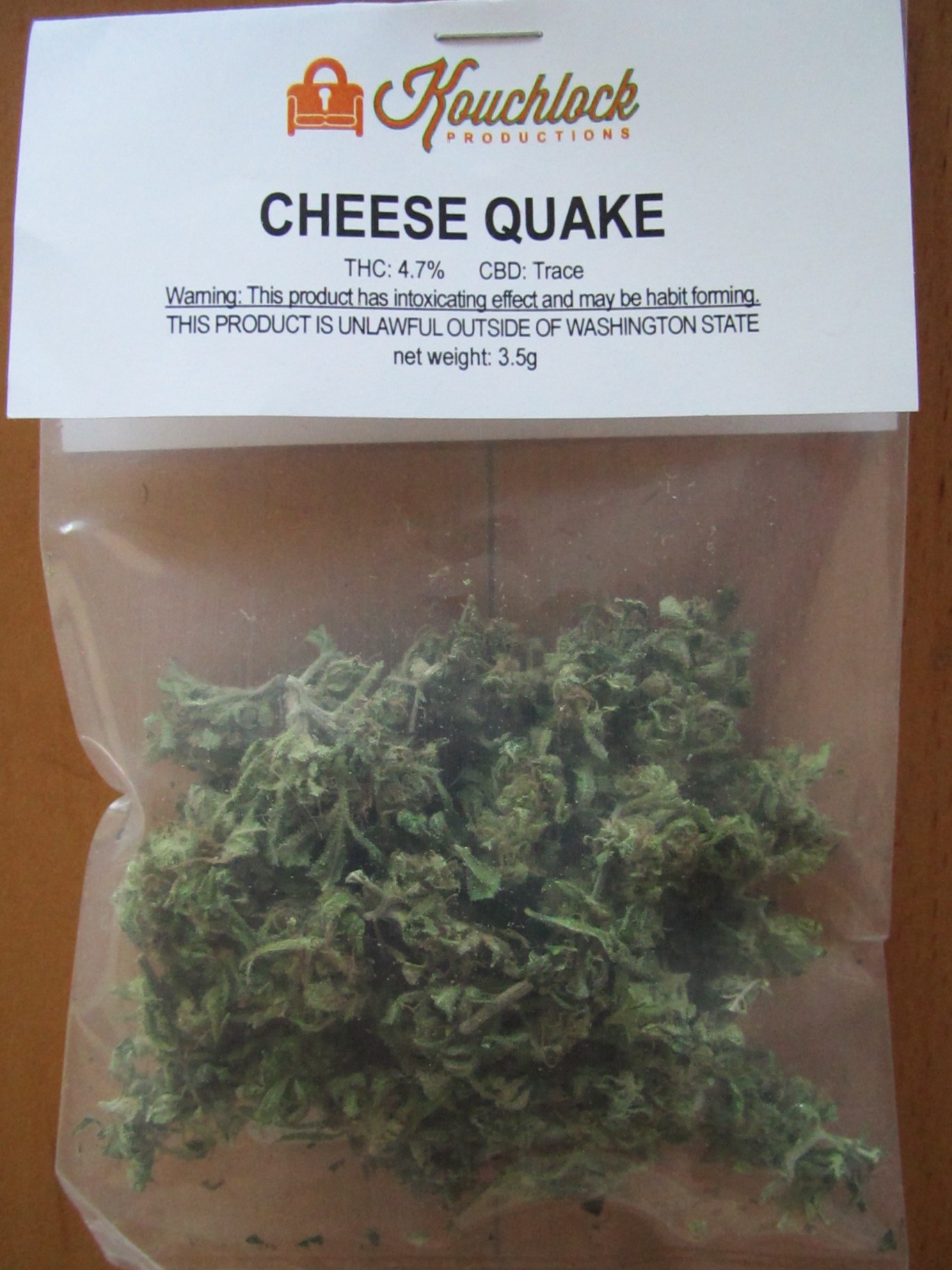
6 Things You Should Know When Buying and Consuming Legal Marijuana

IMG_5168

Whether you haven’t toked since the 70’s, or you’re entirely new to the experience — here’s the starting place.

By Jeremy Daw

Source: Alternet

I distinctly remember the first time I bought weed. Nervous out of my mind, I dialed the beeper (this was 2003 in New York City – every step required discretion). Two minutes later, someone called me back. I gave them my address, then waited two hours (I didn’t yet have the experience necessary to appreciate how fast that was). Then I answered the knock on the door and opened up my home to a complete stranger who never gave his name. He opened up a briefcase full of five different strains, ranging, he explained, from $50 to $80 per eighth. “What’s an eighth?” I asked. He rolled his eyes. Noob.

Determined that the God-knows-how-many curious tourists flocking to Colorado to purchase legal cannabis today should never suffer the same indignities as I did over a decade ago, I present here the sum total of my experience as a pot smoker, distilled into 6 easy maxims. You can thank me later.

1. Stay on the grass.

New tokers, or anyone who hasn’t lit up since the 70’s, will likely find the dizzying array of pot products for sale at the package store a little confusing. BHO (butane hash oil), ice water, something called ‘shatter’ – the wide selection of products on offer stand testament to just how far the industry has come in 40 years. If you have no tolerance built up already, take my advice and steer well clear of all of these. Just the grass – dried flowers – by itself will be plenty potent enough to get you high, believe me. The main exceptions to this principle, however, are the edibles. Today’s edible products have evolved far beyond mere brownies; many chocolate infusers mold their products to break off easily into precisely measured ‘doses’, so the newbie who doesn’t want to irritate her throat can break off a small square and feel a moderate effect. Just be careful – sugar can trick your brain into thinking it needs more sugar, so you must stalwartly resist the urge to take that extra bite until you’ve given the first dose time to work – up to 1.5 hours for most people.

2. Vaping is healthier.

Another development which has taken the cannabis industry by storm lately is the proliferation of portable vaporizers. While the reliable Volcano still remains the equipment of choice for the home-bound aficionado, new portable models have opened up possibilities to take one’s vape on the go. These handy devices can drastically reduce any potentially harmful chemicals in marijuana smoke and can avoid irritating the throat (they still will make you cough, however, because of the expectorant properties of cannabinoids). But make sure you pair the right vape with the right product. Some are designed to handle ‘shake’ (dried flowers, ground up), some only work with hashish and some only work with the highest-grade extracts. Perhaps the best choice for the new marijuana user is the O.pen or similar model, because they come with pre-mixed extracts in glycerin, providing an experience familiar to anyone who has tried an e-cigarette. In any case, remember to take just 1-2 puffs at first, then wait at least five minutes to measure the effects before vaping again. It’s easy to get too high on this stuff.

3. Train your brain.

As strange as this may sound, everyone has to learn how to get high before they can experience it; this is why many marijuana newbies report feeling no effects the first time they smoke pot. Marijuana intoxication is unlike any other feeling in the world, and until your brain knows what to expect it can be difficult to get there. If, after taking a couple hits, you don’t feel any different, try this meditation to deepen the experience. First, relax; close your eyes. Listen to the sounds to your left. Listen to the sounds to your right. Pay attention to how your body feels – is there tightness anywhere? If so, don’t judge – just breathe into the parts of your body which hold the tension, and allow your breath to exhale out. Let go of all judgmental thoughts, all questions of “am I doing it right?” Just float downstream instead.

After a few minutes of mindful breathing, don’t be surprised to suddenly feel noticeably different. Your body may feel lighter; colors may appear more fascinating. Music will open up with more depth than you have ever felt before. And pretty soon, you may start to feel pretty hungry.

4. Come down with CBD.

There are many wonderful reasons why marijuana intoxication is more pleasant than, say, alcohol (no hangover, for one). Even so, the experience isn’t enjoyable for everyone. If you find yourself feeling paranoid, anxious or nauseous – first of all, relax. Remind yourself that no one in history has ever had a fatal overdose of marijuana, and that everything will pass. Breathe deeply.

Just in case that isn’t enough, make sure to keep some special marijuana handy, called “high-CBD.” Such bud is so called because it contains unusually high levels of cannabidiol, or CBD for short, a non-psychoactive cannabinoid which has been shown to mitigate the effects of THC. Many first-time users who found they accidentally took too much have found relief by smoking (or vaping) a few hits of high-CBD bud; within minutes, the CBD will “bring them back down.” If you’re new to cannabis, or you haven’t ever had anything truly high-grade, asking your vendor for a gram of high-CBD bud can be a good idea, just in case.

5. Savor the flavors.

For everyone who has never tried it, or anyone who has relied on the same bud from the same dealer for years, the myriad diversity of scents and flavors on selection in Denver will be a revelation. Some taste like pine; others, mango; still others, lavender. Take the time to sample the scents on offer before making your selection.

When you’re ready to consume, use practices which preserve the flavor. Vape, if possible; the low-temp sublimation process preserves the maximum amount of terpenes – the organic chemicals which provide the pot’s flavors. If you’re smoking instead, use a hemp wick. These beeswax-coated twines are wound with hemp fiber, so they neither add to nor take away from the bud’s exotic flavors. Lighters cover up too much with the taste of butane.

6. Get a grinder.

Regardless of whether you’re rolling joints, packing bowls or loading vapes, a good grinder makes everything easier. Even many experienced tokers often forget to grind up their cannabis before consuming; stuffing whole nugs in pipes can lead to a frustrating experience. But when the bud is ground up ahead of time, it allows smooth airflow which in turn leads to smoother, more flavorful hits.

This is not an exhaustive list, but it will get you started. Apply these principles, and the new year will bring more than just new laws – it will also deliver a healthier way to recreationally relax.


Jeremy Daw is the editor of TheLeafOnline.com and Cannabis Now Magazine, and the author of Weed the People: From Founding Fiber to Forbidden Fruit (2012).

The Surprising Reason That Empathising With Strangers Can Be Hard

bpd empathy

Source: Psyblog

Stress from the presence of strangers reduces people’s ability to empathise, a new study finds.

However, just 15 minutes of playing a video game together is enough to overcome this barrier and allow strangers to empathise with each other.

Professor Jeffrey Mogil, who led the study, said:

“President Barack Obama has described an ‘empathy deficit’ that fuels misunderstanding, divisions, and conflict.

This research identifies a reason for the empathy gap and answers the vital question of how do we create empathy between strangers.

In this case, creating empathy was as simple as spending 15 minutes together playing the video game Rock Band®.”

The study, published in the journal Current Biology, had people submerging their arm in ice-cold water either alone or with a stranger (Martin et al., 2015).

The presence or absence of a stranger also plunging their arm in to the water made no difference to how they rated the pain.

But, when they put their arms in the ice-cold water alongside a friend, their rating of the pain became much worse.

Professor Mogil explained:

“It would seem like more pain in the presence of a friend would be bad news, but it’s in fact a sign that there is strong empathy between individuals — they are indeed feeling each other’s pain.”

To demonstrate the link between stress and empathy, in another experiment people were given a drug called metyrapone, which blocks the hormonal stress reaction.

With this drug blocking their ‘fight-or-flight’ response, people putting their arm into the ice-cold water felt empathy for the stranger as well as their friend.

These results were replicated in mice: they also feel more pain when they are with a ‘cage mate’ than if it is just another mouse they don’t know.

But, with a drug blocking their stress response, like humans, mice empathise with friend and stranger alike.

Breaking the ice

In a third study, the researchers had people play the video game Rock Band® with a stranger for 15 minutes.

This was enough to reduce the stress response and allow people to experience empathy with a stranger when they plunged their arms into the cold water together.

Professor Mogil said:

“It turns out that even a shared experience that is as superficial as playing a video game together can move people from the ‘stranger zone’ to the ‘friend zone’ and generate meaningful levels of empathy.

This research demonstrates that basic strategies to reduce social stress could start to move us from an empathy deficit to a surplus.

These findings raise many fascinating questions because we know failures in empathy are central to various psychological disorders and even social conflicts at both the personal and societal level.

It’s also pretty surprising that empathy appears to work exactly the same way in mice and people.”

(Editor’s note: One should keep in mind that certain people such as psychopaths don’t have the same ability to feel empathy. This is not to demonize psychopaths, but by empathizing with them and attempting to understand their perspective we can better predict and influence their behavior, which can be important when dealing with psychopaths in positions of power.)

How to Reclaim your Mind and Life from the Cultural Engineers

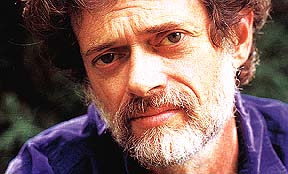
terence_piv

By Paul Fassa

Source: RealFarmacy.com

“We tend to disempower ourselves. We tend to believe that we don’t matter. And in the act of taking that idea to ourselves we give everything away to somebody else, to something else.”
– Terence McKenna [1]

Terence Kemp McKenna (November 16, 1946 – April 3, 2000) was a philosopher, social critic, psychonaut, ethnobotanist, lecturer, writer who authored several books. He examined, deconstructed and expounded on a variety of subjects, including: plant-based entheogens, shamanism, metaphysics, psychedelic drugs, epistemology, alchemy, language, culture, technology and theories about the origins of human consciousness. He created a mathematical theory of time (novelty theory) based on patterns found in the I Ching. [1]

In this short video Terence McKenna explains the necessity reclaiming your mind and creativity from a dying, materialistic consumer oriented society.

“We have to stop consuming our culture. We have to create culture.” –Terrance McKenna [1]

It’s easy to get lost in the noise and hub of the daily grind – dead end jobs, UN-fulfilling careers, relentless consumerism and the constant drone like buzz of the big brother mind control media matrix.

The mass media’s [2] primary purpose and expertise is shaping and programming the “herd” mind with a steady stream of mostly dubious, fear based information overload combined with a cynical parade of buy this NOW advertising.

To say human consciousness has been commercialized is an enormous understatement. Just as day follows night, mass commodification of nature results in the commodification  of human consciousness.

The cultural engineers are obsessed with turning everything into things including people. The predominant value or worth of a person  is based primarily on how many things they can produce directly or indirectly and how many things they own and consume. The sacred intrinsic, non-temporal value of one’s soul is disregarded in favor of the culture’s contrived materialistic value system, which is centered on perishable commodities.

Under these conditions the soul is reified. To reify is to regard (something abstract) as a material or concrete thing. The sacred, inner life of the individual is systemically marginalized and crushed, ensuring  the majority will unblinkingly sell their soul to the externalized value system, which is by design seamlessly interlocked with survival and success on all levels.

“Within this totally jaded society the “individual” had little chance. In fact, his only hope was to escape in some fashion, perhaps into the woods where a person could rediscover the fundamental truths that nature revealed, or into hallucinogenic drugs that pushed the mind past the limitations drilled into it by education and upbringing, or into a completely different lifestyle grounded on more humane and authentic values.” [3]

For those who desire an authentic life created from the inside out and not the other way around, here are some steps that can help you reclaim your mind and life from the cultural engineers.

The burning question is do you really want to reclaim your mind from the gaudy over-commercialized, technological barbarism euphemistically referred to as a consumer oriented society. Are you finally bored with exploitative greed and debt slave materialism? You should be. Why?

“You are a divine being. You matter, you count. You come from realms of unimaginable power and light, and you will return to those realms.”
– Terence McKenna [1]

Assuming you’re ready to leap over the rotting corpse called modern culture and its Kafkaesque matrix society, unfasten your seat-belt and take a deep breath as we take a spin down the road rarely traveled. It’s an esoteric path that takes you back to the source of your creative spirit, intuitive wisdom and your unique connection to all that is or ever will be.

Obviously, a critical first step on this journey into the unknown is to resolutely refuse to be a compliant consumer of ideas, things, and dis-empowering belief systems. Be ready to break the chains of your conceptual prison and be willing to view life from the cracks that exist between ideas. The objective is to have a clear view of reality without the distorting lens of preconceived notions of our “borrowed” reality.

Also, you’ll begin to critically reexamine all the deeply held values that were inserted into your impressionable mind and soul at a very young age before you had the option to critically examine each value in the light and depth of your own consciousness. Unfortunately, at any age the saturation effect of the mass media can instill false values and a substitute reality.

“Personal empowerment means deconditioning yourself from the values and the programs of the society and putting your own values and programs in place.”
– Terence McKenna [1]


The primary tool of the cultural engineers use to control the masses is the media. In fact, for most the media is reality. The media actually creates reality; it does not merely reflect it.

How the media creates our reality:

“… television cultivates a perception of reality among its viewers. . . . “television … has acquired such a central place in daily life that it dominates our symbolic environment, substituting its message about reality for personal experience and other means of knowing about the world.” [2]

2 Simple Methods to Help You Reclaim Your Mind and Your Life:

“My technique is don’t believe anything. If you believe in something, you are automatically precluded from believing its opposite.”
– Terence McKenna [1]


One very practical method for discovering and occupying the unconditioned space between thoughts is by using an ancient Buddhist practice called mindfulness. Jon Kabat-Zinn, PhD, is a scientist, writer, professor, lecturer and meditation teacher who brought mindfulness into the realm of mainstream medicine and society at large.

Zinn’s definition of mindfulness: “Mindfulness means paying attention in a particular way; On purpose, in the present moment, and non- judgmentally.”[3] You cultivate detachment and equanimity of mind regardless of what life throws at you. It really gets interesting when you are finally able to move into the present moment and respond directly to life situations as they occur opposed to reacting to them based on past conditioning.”

With practice, mindfulness enables you to take control of your attention via your intention so you can willfully move your awareness into that clear space of the present moment without interference from the conditioned mind.

Normally our attention automatically drifts and gets stuck in the same ruts and grooves that have already created strong, magnetic like impressions in your mind. This tendency creates a mind lock where the attention is effectively caged in the past and rarely has the opportunity to freshly explore the actual moment that is life that is occurring now. In other words, our attention and thus our life is stuck in the past because where we focus our attention is what our life becomes.

Essentially to break the chains of the past you need to practice anchoring your attention in the present moment. This is when you consciously move beyond your current life “story” perception template into reality directly- moment by moment.

From that operating viewpoint you are free to create your desired reality without dragging the burden of the past or anxiety about the future into the equation. If you ignore the mental noise and turn your attention inward you will eventually discover the expansive space that exists between thoughts.

That space is where the raw, unconditioned power and unfettered freedom to create is found. It’s a timeless reservoir of unlimited possibilities. It’s a no-mind that’s empty with potential. Some refer to it as the quantum mind.

This is where artists go when they want to create something fresh and free from cultural or personal clichés. Sages and shamans are familiar with this space as well. They go there to listen not to think. If they are really good listeners they share what they heard or saw for the benefit of others.

“Half the time you think your thinking you’re actually listening.”
– Terence McKenna [1]

Of course, Terence McKenna primarily relied on various psychedelics and marijuana to help him enter that sacred space beyond the conceptual realm; he was a dedicated psychonaut, but that’s not the only way.

Discover your Imagination

“If you don’t have a plan, you become part of somebody else’s plan.”
– Terence McKenna [1]

The best plan is to first get in touch with reality via direct experience – ditching the ingrained conceptual template your culture indoctrinated into you from birth. That’s when you can really start to harness the true power of your imagination and use it to intentionally create the personal reality you desire to walk into beyond prevailing ideologies. From the perspective of raw imagination there is no past or future, just now. And that is where your essential power lies, in the present moment.

Forget about slavishly following the yellow brick road – create your own experiential road show starting with your imagination. Venture beyond the  current ideological and spiritual constraints and institutionally sanctioned belief systems that tell you what reality is and decide to boldly experience reality directly and journey into terra incognita.

To create a new reality requires skillfully engaging your intention and imagination utilizing all the senses including: visual (seeing), auditory (hearing), kinesthetic (touch), olfactory (smelling) or even gustatory (tasting). Now with your imagination fully engaged, create a subtle imaginary version that exactly reflects your desired intention.  This is basically how one creates a new reality beyond past conditioning.

From a CNN article titled:

The power of perceptions: Imagining the reality you want

“What we are fighting for, Benjamin (Ruha Benjamin, sociology professor) says, is our imagination — the right to imagine a life and relationships and a social world that are happier, less anxious, more harmonious and more just. We are not being diligent enough or deliberate enough about cultivating our imagination. We have to fight, for the ability to imagine the world we want. Because one form of oppression is telling people that they’re not allowed [or can’t] to imagine something better and happier.”

“Either there are no illusions or everything is an illusion,” (…) “And given that we are pretty much all delusional, you might as well choose your delusion.” –  Beau Lotto, neuroscientist and artist[6]

Paul Fassa is a contributing staff writer for REALfarmacy.com. His pet peeves are the Medical Mafia’s control over health and the food industry and government regulatory agencies’ corruption. Paul’s valiant contributions to the health movement and global paradigm shift are world renowned. Visit his blog by following this link and follow him on Twitter here.

Sources:
[1] http://www.endalldisease.com/73-mindblowing-terence-mckenna-quotes/
[2] http://people.missouristate.edu/MichaelCarlie/what_I_learned_about/media.htm NOTE: The term “mass media” refers to the Internet, radio, television, commercial motion pictures, videos, CDs, and the press (newspapers, journals, and magazines) – what are referred to collectively as broadcast and print media.
[3] http://www.shmoop.com/1960s/culture.html
[4] http://www.webmd.com/jon-kabat-zinn (bio)
[5] http://www.wildmind.org/applied/daily-life/what-is-mindfulness
[6] http://www.cnn.com/2012/04/11/health/enayati-power-perceptions-imagination/

Saturday Matinee: Vital

6p8cp12bt

“Vital” (2004) is a film by Shinya Tsukamoto about a med school student who loses his memory after surviving a car crash which kills his girlfriend. Shortly after resuming studies he realizes a cadaver assigned to him to dissect is the body of his girlfriend. Against the advice of everyone around him, he becomes obsessed with his work in an effort to recover his memories and former sense of self. Like other films by Shinya Tsukamoto, Vital has much psychological conflict, Cronenbergian body horror and surreal imagery, but is more subdued and life-affirming than any other feature film he’s made to date. Vital also features a masterful performance from lead actor Tadanobu Asano.

The Dark Soul of American Empire

aa-American-Empire-try-and-stop-us2-300x225

By Mark Weiser

Source: Dissident Voice

Whether or not the soul exists may depend entirely on how it’s being defined, and depending on the definition may also depend on faith, religious or otherwise. The human soul is thought by many as inherently good while the absence of a soul leaves open the possibility to commit and even delight in malicious or evil acts – these destructive actions are also interpreted in terms of being dark. Oddly enough, man’s ego enjoys taking credit for his goodness, while he regularly attributes responsibility for destructive behaviors to outside influences, including at times a supernatural consciousness of evil that influences or provokes harmful human behaviors and thereby takes the soul, either in part or in whole.

Good or evil in any combination can manifest entirely from within any individual for what sometimes are no humanly discernible reasons. At other times the soul is absolutely being influenced by outside forces, including human and the forces of nature. Our definition would not be complete without recognizing that works committed during the physical life, whether good or evil, live on after physical death by affecting those who’ll be living in the future. Even the obscure and long forgotten dead can have a profound impact on our current reality if they ultimately influenced the mind, or perhaps saved the life of someone who was or became influential at some point in history.

We begin life with a non-negotiable soul thought by some to be a blank slate at birth, but I’ll argue here that it’s not blank and certain predispositions are dictated by instincts and genetic code(s) which also affect the workings of the mind. There are studies indicating genetic makeup is a factor in experiencing empathy and compassion, and we can’t deny other differing intellectual abilities and inclinations along with given physical characteristics – all of which shape the soul through our experiences. Theoretically the natural soul uninfluenced by outside forces, could range from pure good to pure evil with most people having the potential for either, at times depending on present circumstances or what they’ve been subjected to. Due to diversity of attributes and handicaps we are all unique, but we can generalize regarding those with similar traits and beliefs which dictate the processes of reasoning and/or irrational thinking that ultimately leads to conclusions and the actions or inactions of any individual.

Because the soul is shaped by events in life, we can define it as: the sum total of all a person is given before birth, combined with the understanding acquired from personal experiences in life, while recognizing a person’s interactions with others and the physical world are determined by the soul or its absence, and will yield benevolent, malevolent or neutral actions – the human soul is alive and real, it affects our actions and interactions with others and how we feel about ourselves as well as others, including the world and life in general – and by affecting others in the immediate sense, it also affects others well into the future.

Our physical bodies and brains are the conduit between the soul and the physical world, with the emphasis being on the brain which controls the willful actions of our bodies. Whether committed or imposed by humans or nature, actions can profoundly shape and mold human souls in either direction. Because our perceptions may not be accurate, at times certain events can fill us with an unjust hatred or even the desire to commit physical violence. Because we’re all different, the same events or circumstances will not have the same impact on the souls of all people, but people do have similar and sometimes nearly universal reactions that are predictable concerning certain events or circumstances.

With no other choice, and given the opportunity, a starving person will likely commit theft and may kill to survive; relatively few would accept starvation without trying to impose on others in some way. An individual with a legitimate means of support certainly has no need, and is much less likely to resort to theft or violence for personal gain. If rising flood waters force a person to abandon their home, their soul may be imprinted with sadness as well as the realization of a destiny beyond their control. Depending on age and other circumstances such an event could be the final straw, leading to a level of despair and shock where the person no longer experiences life in the same way and no longer functions as well as they once did; though this may be defined as weakness, it’s also a sure sign the person is human, as we all have different breaking-points and tolerances. Being subjected to the same ordeal could cause profound personal growth in others, making them stronger with greater understanding and compassion going forward while giving them the real potential for helping or leading others. The essence of the soul does change over time through circumstance and experience and ultimately leads us to our understanding of life and people, and could lead to a complete lack thereof.

When speaking of souls, our understanding includes that groups of people, large and small, have a collective soul based on the same factors that make up the soul of an individual. As with catastrophes caused by nature, the ravages of war are certain to leave an imprint on the soul of emotionally conscious human beings. These imprints take on a different dimension entirely when innocent people are unjustly attacked through wanton aggression. As the most violent people on earth, Americans may have become jaded from all the violence witnessed through television entertainment and news, starting with cartoons at an early age. We’re so used to accepting violence as being justifiable, the idea of our government killing and destroying the lives of innocent others may not register with most of us – in matters of war we’re incessantly told America is always right. All of this brings into question how the collective soul of a relatively few individuals who, as a group, knowingly and unjustly deceived their own country, leading to a wholesale basis of callous, if not gleeful slaughter and mutilation of innocent and weaker members of the human race – including the annihilation of their existing culture – all without any just or legal provocation.

In the case of America attacking a weaker country we’ll look at one of the most egregious events in recent history. Destruction was unleashed by the overwhelming power of the US military in attacking a comparatively defenseless 2003 Iraq. The verdict is in, and we know there were relatively very few Americans who participated in the deceitfulness which ultimately fueled the country’s appetite for attacking without one valid or legal reason – but collectively we still made the conscious choice to destroy, displace, kill and maim while leaving emotional scars and hatred in the large majority of our victims who survived. After having committed wanton aggression, with our own blind ignorance we don’t dare ask ourselves why so many in the Mideast and around the world despise our collective soul – as the truth would be awkward and hard for many to accept or explain. For “civilized people” this post-invasion nonchalant arrogance is every bit as astounding as that which led the initial attack. To be clear, the US invasion of 2003 Iraq was never a true contest of “war”, the word “war” was used as propaganda to make wanton killing and the destruction of people and their civilization look like something other than what it was – all for the perceived benefits of those few who were ultimately responsible for misleading America to back the slaughter of Iraqi citizens among a multitude of other predicted catastrophic results. The carnage we unleashed continues to this day and will effect an untold number for generations to come – it can never be undone – as the depraved collective soul of the few asserted itself supreme over the collective American public’s right to the truth and leaves a forward cutting wake that will forever travel on into the future – at least as long as man is alive.

The influence of Israel and pro-Zionists in Washington D.C. concerning American Mideast policies cannot be overstated. In 2002 the Bush administration created the Office of Special Plans (OSP) run by neocon pro-Zionists who fed the Bush administration “raw intelligence” which proved to be nothing more than propaganda for enabling the attack on Iraq. Lieutenant Colonel Karen Kwiatkowski in the office of the Undersecretary of Defense for Policy at the time, explained how the OSP usurped real expert intelligence assessments to promote the neocon Zionist agenda as stated in the infamous 1996 PNAC policy report. The PNAC policy first advocated removing Saddam Hussein from power, then going on to Syria and Iran which they’re still trying to accomplish – this is no mere coincidence. It’s all part of Israel’s strategy to eliminate any perceived threat in the Mideast and keep everyone around them weak and fighting amongst themselves. Ironically, Israel’s threats result from its own actions beginning with the ethnic cleansing of Palestinian Arabs starting before Israel’s self-declared statehood on those Palestinian lands in 1948 – and the expulsion still continues to this day. Without the undue influence of Israel on U.S. politicians, it is extremely unlikely U.S. public support for the 2003 invasion of Iraq would have materialized. Because the dark soul of America is so influenced by Israel, taking a critical look at the soul of Israel is becoming common and it needs to be recognized for what it is.

The major “news networks” and press operating in the U.S. proved themselves as propagandists, partaking in the policy set by the Bush administration to manipulate the American public during the run-up to the invasion. So persuasive was the propaganda before and after the invasion that some people today still don’t know Iraq had no part in the 9/11/2001 attack on the U.S.; or they simply refuse to accept that our government and mass media would betray America and the world on such a large scale. As far as the press is concerned, they are guilty through aiding and abetting the crime of misleading America into an illegal war – and it was illegal as defined by U.S. and international law. The media people who took part in all of this on any level might as well have lined up all those American soldiers sacrificed and wounded along with all the Iraqi’s killed and maimed while having had the balls to pull the triggers, drop the bombs and fire the missiles to commit the slaughter and devastation themselves.

It’s no secret, huge profits were made by the military-industrial complex (MIC) with the 2003 attack, and they’re still profiting today from Iraq and the overall American Empire strategy. With their connections in Washington, it would be extremely naïve to believe the top individuals in our weapons manufacturing industries didn’t know the reasons given for attacking Iraq were absolutely without credible evidence – while much of those reasons were outright lies. There are a number of choice verbs for describing the condition of those souls among the MIC who knowingly remained silent while the US population sacrificed blood and treasure so they could profit through death and destruction unleashed at will on a relatively hapless Iraq.

Many believe the 2003 invasion was predominantly about securing oil, and it certainly was a contributing factor but no one was pushing more than the pro-Zionist crowd. The petroleum industry had been involved in the pre-war planning for the purpose of dividing the spoils of killing and destruction in terms of barrels of oil. Capitalism as practiced needs oil, and although there are alternative energies available, those making huge profits from oil use their considerable influence to thwart conversion to clean energy.

There’s no legitimate argument against the facts; an undeserved and catastrophic devastation had been levied on the Iraqi people with the 2003 U.S. invasion, conservatively resulting in over half a million Iraqi lives being lost by the time of this writing, with likely millions wounded, and over four million displaced from their homes. To put it in perspective, if it happened to the U.S. with the same percentages across the entire population it would conservatively yield over six million dead, millions more wounded, and roughly fifty million displaced from their homes. Many Americans have a vacancy where a soul should exist as they feel absolutely nothing and no American responsibility for the devastation caused. Other Americans exist with a soul as black as pitch having taken pleasure and profit through the slaughter of Iraqis and their culture. Aside from the U.S. government’s responsibility, these attitudes are largely due to the dark soul of both the U.S. government and media in keeping pertinent facts from the public eye. And if there’s been any remorse or apology from U.S. officials or media it’s been sparse and kept out of sight by the same dark forces which hide from the truth. There are a number of people who could have spoken out before the invasion, and in all fairness some did, though they did not get proportionately heard while the front pages and television news had been reserved for the neocon pro-Zionist mantras to attack Iraq and downplay the ensuing consequences. There were also a few dark traitorous souls operating to dissuade anyone who would speak out while they set an example with the Valery Plame / Scooter Libby affair.

With the invasion of Iraq the U.S. set a new precedent of destructive behavior in motion, which under the pretext of “preemptive defense” has been spread further around the Mideast and now is a matter of historical record and modus operandi. With the U.S. government wreaking havoc at will, killing more innocent civilians than “enemy combatants” – it’s become a very neat and logical self-perpetuating industry of war – creating enemies by killing innocent civilians and thereby creating more revenge-minded combatants to kill – perfect for a world being run by a country of sadistic self-masochistic psychopaths for profit at the expense of the American public and anyone else they choose to victimize. This is not the collective soul of the American people – they have been unwittingly led into the dark by the collective soul of vile depravity. This is, however, a reflection of all those dark souls and their accomplices living in fear of truth and hiding behind the concentrated power at the top of the American political body which now exists predominantly for the sake of personal greed while having unlimited power to unjustly impose on others, domestically and otherwise. It is unfortunate those making the decisions and profits while misleading the country aren’t required to put their own lives, and those that matter to them, on the very front lines; they, being afraid of truth and reality as they are, would be the very first to call an end to the madness.

The Rise of Empathic Consciousness

Collective-Consciousness-1

By Kingsley L. Dennis

Source: Reality Sandwich

For many of us we have been brought up within a social structure that demands we become a ‘productive member’ of our society; thus much emphasis is placed upon developing individual skills so that we can compete with each other for social betterment. Inherent in this is a residual fear that if we open ourselves too much to others we may lose our ‘competitive edge’ and defined sense of individuality. Much of mainstream media (aka propaganda) has exploited the mythological images, collective stereotypes, and subconscious signifiers that play on our collective vulnerabilities and social fears. Knowledge has more or less trickled down to the average person through heavily filtered channels, and most often has been doctored, amended, and/or edited. The end result has been not knowledge but consensus information, or ‘allowed’ information. It has served the elite power structure well that people in general have not awoken to the understanding that humanity possesses incredible capacity and inherent resources for creative expansion and evolutionary development.

Added to this is the fact that Western science, which has asserted itself as the dominant hegemony since the Renaissance, has been at pains to stress that matter is primary and that consciousness is a secondary by-product from our mental activity. The modern worldview which denies the primacy of consciousness is fostering forms of human alienation, both psychological and social. It is a great paradox that modern science, itself a result of human consciousness, has produced a view of the cosmos which has no room for consciousness. Yet human beings are in need of meaning and significance in their lives as much as they are in need of air to breathe and food to eat. This struggle over the conscious mind(s) of humanity, which has been going on in various forms for aeons, is coming to a crux in our present generation. We are in a transition period which sees the expanding awareness and connectivity between individuals worldwide clashing against the increasing authoritarian technocratic ‘surveillance machine.’ The result is that we have now collectively arrived at a critical moment in our evolution of human civilization. Yet any society or civilization which makes the material world its sole pursuit and object of concern cannot but devolve in the long run. It is now necessary to see our future potentials, not the daily news. As Professor Needleman so aptly remarked:

The esoteric is the heart of civilization. And should the outward forms of a human civilization become totally unable to contain and adapt the energies of great spiritual teachings, then that civilization has ceased to serve its function in the universe.[1]

It is therefore imperative that we begin to break-away from non-developmental social conditioning; this includes being conscious of the type of media impacts we are open to. Furthermore, during moments of cultural and social disorder/disequilibrium the human mind often works with an energy and intensity not manifested when social patterns are stable and monotone. At such dynamic periods there can be the realization that no individual is isolated; that each person is interwoven into a vibrant network and web of psychological, emotional, and spiritual interrelations. Such realizations can be heightened during periods, such as now, when it appears that human consciousness is moving through a time of critical transition.

Our self-awareness over the nature of human consciousness has been increasing greatly over the last several decades. The latest findings in the new sciences (especially quantum and neuroscience), in consciousness studies, in the popularity for inner and self-development, etc, all indicate a new awareness emerging within our collective consciousness. That is, energetic change will come through our social and cultural forms, and not by avoiding them. Developmental change on a large scale can occur by creating conscious change from within our daily lives and within our social systems, and not outside of them. By just walking on this planet, holding the focus and intention, we create incredible energy – energy that is shared. We are creating change by just being alive. That is why being without fear is so important. We need not create a black and white film in our heads when in reality we are creating colour. We can make use of the tools that are already available to us, and within us.

There is an exponentially increasing mass of individuals worldwide who are now awakening to the connected empowerment of empathic consciousness. Recent de-stabilizing social events, such as in our financial and political spheres, have drawn people’s focus to the dysfunction of many of the systems that we once gave our trust to. Even the focus on religious extremism in the media has drawn people’s attention not only to the deficit of spiritual values in our major religions but also to how religion is being used as a tool for furthering social, political, and emotional control. This trance-like grip on our collective consciousness is now being stripped away as people awaken to the knowing that there is so much more to our lives than that of a materialistic and consumer-based lifestyle. Yet don’t become frustrated if things don’t happen tomorrow, but trust that changes and shifts are happening over time. The necessity of inner knowing, intuition, self-trust, and integrity, is now critical. And let us remember that humans are biased for compassion and empathy. The awakening of our empathic mind is our natural inheritance.

The Awakening of a Planetary Consciousness

The accelerating changes occurring across our planet right now will have no alternative but to force a mind-change on a global and individual level. We are coming together as a global species like never before; despite what we have been shown and told by the mainstream media. We need to view this in both the immediate and the bigger picture. Due to our relatively short human life span we rarely reflect beyond a generation or two in front of us. We have evolved as a species that reacts to immediate concerns. This served us well in the past when we had survival needs in a restricted world of limited horizons. Yet now we need a perspective that is global at the very least – and even possibly beyond!

If we now look at the bigger picture we will see that a different type of consciousness has been emerging over the past 150 years. That is, since the dawn of the Second Industrial Revolution. The new technologies of the Second Industrial Revolution – the telephone, radar, cinema, automobile and airplane – called for a new reorientation of human perspective. A new perception of the dimensions of space and time began to birth a psychological consciousness – one that wanted to look beyond the borders and horizons of the physical frontier. The 3rd Industrial Revolution, if we wish to call it that, will be a convergence of digital communications combined with a young generation that is more globally aware. This has the potential to catalyze upon this planet a rising empathic, integral consciousness. Also, our global communications will encourage new relations in our extended connectivity. That is, increased multiple relations are likely to stimulate a connected, collaborative consciousness; rather than stepping back into an older consciousness of conflict and control. A planetary citizenry is likely to emerge that will exhibit greater empathy, and which will create a different planetary society within perhaps two generations. Humanity already contains the seeds of these momentous potentials.

Many social changes within the upcoming years will emerge from the creative engagement and innovation of individuals and collectives worldwide – a shift catalyzed within the hearts, spirit, and minds of the people. Externally we may seem like a vast, distant, and separate collection of individuals yet in truth the human family is an intimate, closely entwined species comprised of various cultures. Many of the younger generation now are waking up to this fact. Youngsters the world over are growing up accustomed to having networks of hundreds, perhaps even thousands, of friends across the planet; sharing intimacy and empathizing easily with an international social group of like-minded souls. This younger generation is manifesting, whether conscious of it or not, a non-local level of human relationships. This expanded connectivity is impacting and affecting a change in our psychology and consciousness. We are now being impelled to live in ways that enable all other people to live as well. We are also being compelled to live in ways that respect the lives of others and that respect the right to the economic and cultural development of all people; and to pursue personal fulfilment in harmony with the integrity of nature. These traits may constitute what I refer to as an integral-ecological consciousness: a person acting and behaving as both an individual and as a part of the greater connected whole. Such multiple relations form a more varied, rich and complex life; they also provide a more diverse range of impacts and opportunities to develop the self. As well as providing challenges for developing new skills and learning, our diverse networks can form new friendships and add extra meaning to our lives.

Many young people today are comfortable in expressing themselves with strangers; they explore and express their inner thoughts, feelings, emotions and ideas with hundreds of unknown persons online, from various cultural backgrounds. More and more daily interactions are empathic as we react and share news, stories, and emotional impacts from sources around the world. Empathy is one of the core values by which we create and sustain social life. Exposure to impacts outside of our own local and restrictive environments helps us to learn tolerance, and to live with experiences that are richer and more complex, full of ambiguities, and multiple perspectives. It is a mode of connecting that allows diverse people worldwide to construct a new form of planetary social capital. We have the resources to co-create a planetary human society where once again the focus is on social benefit rather than profit. We can see many examples of this today, such as in online collaborative tools and in the proliferation of local and global projects. The online global community is a model for the new paradigm that illustrates how sharing can work above the individual motive for profit. The values and ethics of communal sharing might seem odd or out-of-place to the old capitalist-consumerist mindset, yet these are the very values that will be on the rise within the coming generations.

The spectacular rise in global communication technologies (Internet and mobile phones especially) reflects a new form of participatory consciousness, especially among younger people. This new model is a distributed one; in other words, it connects people through networks rather than through hierarchical structures. It also represents a more feminine energy that seeks to nurture relationships, and to collaborate, rather than compete and conquer. It is this emerging feminine energy that underlies the rise in global empathy. Furthermore, since people are connecting amongst themselves in multiple relations it impels them to have an active engagement. For those individuals brought-up within the older generation of communication technologies (radio, television, fixed phones), the interaction was either two-way or, for the most part, one way. In this era people were passive receivers, targeted by information they could not engage with. This has now shifted so that the receiver of the communication can be both the user and the producer. Individuals today are shifting from being consumers to prosumers.

We have learnt to democratize our engagement and to activate choice through online social networks, phone messaging, video channels (e.g. You-Tube), and various other broadcast mediums. The younger generation is waking up quickly and learning how to set-up inexpensive, or free, radio sites (podcasts), home websites, newsletters, and are managing their own forms of self-expression. This new model is changing our thinking and behavior patterns. We are now getting used to dealing with multiple connections rather than single ones; and to becoming immersed in diverse relations and not just one-on-one dialogues. We are also being exposed to a myriad of viewpoints, beliefs, identities, and experiences. Within these new arrangements we are being asked to respond and engage with the outside world not in fear or with anxiety but with healthy, creative, and positive energies.

The Arrival of 3 Billion New Minds

We are going to witness a young generation expressing their desire for human betterment through intensified action for social, political, and ecological change. More and more young people are growing up experiencing social relations that transcend space and time, as well as cultures, national boundaries, and local ideologies. This may account for the increasing numbers of young people in developed nations becoming involved in community and social projects and NGOs; such as taking a year out to help in another culture abroad, to learn, experience, and to offer assistance. Volunteering among the young, despite what appears to be the contrary, is on the increase. Young people are even putting themselves into dangerous situations – in conflict zones – to stand up for values of peace, justice, equality, and human rights. Across the world young minds are demanding fair and equal access for all peoples to engage in open communication and free speech. And it appears that many more creative minds will be joining the global conversation as our current generation(s) increasingly ‘wake up.’

In 2012 the planetary population was around 7 billion and the number of registered internet users was 33%, a rise of over 500% from the previous decade. By 2020 world population is set to be 7.8 billion and internet users worldwide is estimated to be 66% – that’s a little under 3 billion new people plugging into the global conversation. In other words, nearly 3 billion new minds will be tapping into the information flows – and that’s many millions of new creative problem solvers, innovators, and visionaries. What is more, the majority of these new minds will be coming online from Asia, the Middle East, and what we refer to as the developing countries. These will be mostly young minds; and minds with necessities, with the urge for social betterment. Can we imagine the collective potential of these creative new minds; many of them thinking outside of the box, and outside of the old patterns?

It is significant that in times of relative social stability, human consciousness plays a lesser role in the behavior of society. However, when a society reaches the limits of its stability then social-cultural systems are sensitive and responsive to even the smallest fluctuations in the consciousness of its citizens. In such times, changes in values, belief sets, perceptions, etc, hold great sway over the future direction of the social situation. Human consciousness becomes a significant stimulus and catalyst for change during these times of social instability (see the history of social revolutions). That is why it is imperative humanity be collectively focused upon positive development and betterment rather than to be coerced, or conditioned, into a fear-based security that resists change. We should not underestimate the capacity for the human mind to adapt and evolve according to social and environmental impacts and influences.

Our modern sense of self-awareness has clearly evolved to root us in our social world: a world of extended relations and social networks. Humanity, it can be said, has been biologically hard-wired to tap into extended social connections and human communication networks. We are also hard-wired to adapt physically in response to experience – new neural processes in our brains can come into being with intentional effort, awareness, and different patterns of concentration. This capacity to create new neural connections, and thus new mental skill sets through experience, has been termed neuroplasticity. The human brain of today has to respond to the incredible amount of energy and information that is flowing through our environments and embedded in our cultural experiences. Thus, how we focus our attention and awareness greatly shapes the structure of our brains. Further, the ability to grow new neural connections is available throughout our lives and not only in our young formative years. This knowledge encourages us to nurture our mindfulness, our self-awareness, and our empathic relations with others. Neuroplasticity also encourages us to be more reflective over our human networks, and to develop those social skills that underlie empathy and compassion. These new ‘wired connections’ are exactly what are becoming activated as individuals increasingly ‘wake up’ to what is happening within our communities, our societies, and upon the planet. Such distributed connections breach cultural and national borders and force us to self-reflect on our identity, values and ethics.

The opportunity is here for change and betterment like never before in our recent history. This means that the responsibility is also here; and these two factors may never be present again at exactly the right moment when they are so badly needed. What the human species may now be witnessing during these years is the rise of intuition, empathy, greater connectivity to the world and to people, and a sense of ‘knowing’ what changes need to be made. Furthermore, within each person is a growing sense of the greater cosmic whole: the realization that humanity exists and evolves within a universe of great intelligence and meaning. This serves to impart within humanity a more profound spiritual impulse. As a new global empathic mind emerges, people worldwide will grow up with new expressions of mindfulness that are more caring, relational, and compassionate. The 21st century is likely to be the era that births and nurtures such an evolving consciousness.

Many of the younger people across the world do not accept the social conditioning of anger, fear, and insecurity of their past generations. They want to reach out for change and betterment. Around the world there are examples of young people rejecting the conflict mentality of their elder generations. In conflict zones especially, where young minds are conditioned into unconditional hatred of fixed enemies, there is a backlash against this old programming. Younger people are reaching out across artificial borders to engage with the so-called ‘enemy’ and to start a new dialogue of peace and reconciliation. Such minds realize that the conflict mentality has no future, and will be left behind if it cannot accept change. Whereas many of those from the older mindset thought that a future meant putting up borders, and viewing the ‘others’ with suspicious eyes; many of today’s young minds see differently. We can see this in youth movements worldwide as there is change emerging in the mindset of young people everywhere. This is especially so in Middle Eastern territories where restrictive regimes are now encountering rising youthful demographics who are not accepting the old mentalities and old ways. A lot of the young people today want the same thing – peace, justice, equality, freedom, etc. There is a new spring in the step of young, tech-savvy, energetic minds that are by-passing the old models. In these years ahead – at least for the next two decades – we will increasingly see the signs of the changing of the old guard (the dinosaurs!). And this time they will not be replaced by those with the same consciousness. With generational change we will see the gradual transition to an era of individuals who think differently, feel differently, connect differently, and who will want to work toward a different world.

Yet we also need to acknowledge that this transition may not be a smooth one – the shifting of one mindset to another rarely is. We have seen this play out many times; think of the scientific revolution as one example. The reaction of the status quo has always been to strengthen its ruling apparatus. In the case of today, this means increased physical and digital surveillance; increased militarization of the state; and violations of individual privacy. And the first wave response from people is generally to fight back – head on. I contest, however, that this form of response also constitutes the old mind. The newer consciousness does not seek conflict. Rather, it seeks to create ways around the current blockages. Or, in the words of Buckminster Fuller – “You never change things by fighting the existing reality. To change something, build a new model that makes the existing model obsolete.” Over time, the old models will fight their way into obsolescence. Those who express the ‘newer mind’ must be patient, positive, and incredibly creative.

In summary, a new narrative is emerging, one where each person is integral to the larger picture; the journey of each one of us being a part of the journey as a whole. This new story informs us that the possibilities are open for humanity to engage in consciously creating its way forward – with harmony, balance and respect to all. This new narrative is part of humanity’s evolving empathic mind and which compels us to seek greater connectivity and meaning in our lives. This most recent human story is one where we create the story of the future.

[1] Jacob Needleman, New Religions (New York: E P Dutton, 1977)

Kingsley L. Dennis, author of The Phoenix Generation: A New Era of Connection, Compassion, and Consciousness

Transcending The Soul Hackers

b35473427060a784b1d55d5d1d20e917

By Daniel Spaulding

Source: 21st Century Wire

With the closing of another year marked by media hysteria, the narrative that the crazed hermit North Korean regime orchestrated the hacking of the Japanese-owned Hollywood company Sony, thereby assaulting our precious freedom to crank out cultural subversion, has quickly begun to fall apart.

From the beginning the story never held neither consistency nor any forensic evidence. Yet the notion that ruthless Korean dictator Kim Jong Un wants to keep them from the movies, the modern substitute for the West’s emptying churches, has sent cable news consumers into a panic.

Elusive North Korean hackers have joined ISIS, Ebola, and a resurgent Russia on the ever- lengthening list of threats that government and media tell us we must fear. As it stands now, with the script quickly breaking down, the media and government (really two tentacles of the same power structure) are bound to quickly divert attention elsewhere; a new national security villain will be constructed and dangled in front of the attention-deficit public.

Meanwhile in France, several young radical Muslims have been attacking their host society, attempting to murder French police officers and Christmas shoppers. As has become standard fare in our era of political correctness, the French government quickly sought to dismiss the cosplay jihadists as having nothing to do with terrorism, casting them instead as a random assortment of mentally ill individuals senselessly lashing out. Similar ISIS-inspired escapades by marginal, ressentiment-driven characters have transpired in recent months, not only in France, but also in Canada, the United States, and Australia. Government authorities in these nations were equally quick to dismiss such attacks by self-styled holy warriors as aberrations that should not be seen as part of some wider pattern, lest the West’s entire secular multicultural project come under deeper scrutiny.

It is in this environment that the 20th century German philosopher Josef Pieper observed that while modern man is “looking out for the powers of corruption in a mistaken direction,” the lords of the technocracy “establish their rule before his eyes.” Modern man is diverted down a multitude of false paths toward dead ends, but he remains all too often oblivious to what is happening right under his very nose. His ignorance, often willful, lends strength to those who would seek even more power to control and manipulate him.

So while the public is held in a state of anxiety over North Korea and other manufactured phantoms, media reports have surfaced (and not for the first time) revealing that US police departments are utilizing their position in the new security architecture to scan and monitor social media and other online activities. In his endless benevolence, Big Brother is peering over your shoulder in order to develop a color-coded “threat rating.” Hence, as the 20th century science fiction writer Philip K. Dick foresaw, the age of “pre-crime” is upon us. As is normative in our times, the blatant power grabs of the surveillance state go mostly unnoticed and unprotested by the masses.

There is a serious disconnect between what the elite tell us we must fear and the “threats” they themselves utilize. While do-it-yourself jihadists (often themselves manipulated by domestic intelligence agencies) and other manifestations of underclass violence are brushed aside, those who dare openly express their dissatisfaction with the policies of our beloved rulers risk finding themselves listed as threats by the surveillance state. Leviathan grows ever larger and more pervasive in the name of security, only to use its power not against actual threats, but those it claims to protect. The Swiss philosopher Éric Werner provides some illumination here:

The current function of the police is not to fight insecurity. It is, which is quite different, to control and monitor people. Not just some people, as claimed by authorities (offenders, criminals, terrorists, etc.), but all of them. Even if the whole country turned into a no-go zone, the surveillance society would keep functioning… We do not develop the surveillance society in the fight against insecurity; rather, insecurity is used as an excuse to justify the surveillance society.

He further notes that the ruling politicians and bureaucrats’ real fear “is not insecurity, but rather potential retaliations against insecurity.”

We must ask what that oft-used buzzword “freedom” actually means in the modern West. For many, the ability to stream an inverted universe of pornography, or order off of Pizza Hut’s “subconscious menu” from their iPads – is enough assurance that they are still free, but the ever-expanding Leviathan state and the spread of vapid consumerism should give us all more than a moment’s pause. If freedom is reducible to a dazzling array of consumer options and self-gratification, why is that worth dying for? We must strive toward being higher than the perpetually consuming, soulless homo economicus.

In order to resist and confront the forces arrayed against him and to achieve a higher freedom, man must begin with repentance and spiritual reformation. His soul must be cleansed of sloth and apathy, as well as the other enslaving vices that leave him open to fear, manipulation, and despair; or as Ernst Jünger put it, one “must be free in order to become free.” The German adventurer further said that for the spiritually free man, “this world filled with oppression and oppressive agents,” will only “serve to make his freedom visible in all its splendor.”

The great Russian thinker Nicolas Berdyaev, who himself openly defied the murderous Bolsheviks who overran his homeland, taught that the “victory over slavery is a spiritual act,” and that “social and spiritual liberation ought to go hand in hand.” Repentance and spiritual resistance are the first, and most important, steps in confronting the powers of our age.

Author Daniel Spaulding earned a BA in English literature from Bridgewater State University. He currently works and lives in Seoul, South Korea. He enjoys reading philosophy, history, politics, and science fiction.