Now Streaming: The Plague Years

3768363

By A. S. Hamrah

Source: The Baffler

When things are very American, they are as American as apple pie. Except violence. H. Rap Brown said violence “is as American as cherry pie,” not apple pie. Brown’s maxim makes us see violence as red and gelatinous, spooned from a can.

But for Brown, in 1967, American violence was white. Explicitly casting himself as an outsider, Brown said in his cherry pie speech that “violence is a part of America’s culture” and that Americans taught violence to black people. He explained that violence is a necessary form of self-protection in a society where white people set fire to Bowery bums for fun, and where they shoot strangers from the towers of college campuses for no reason—this was less than a year after Charles Whitman had killed eleven people that way at the University of Texas in Austin, the first mass shooting of its kind in U.S. history. Brown compared these deadly acts of violence to the war in Vietnam; president Lyndon B. Johnson, too, was burning people alive. He said the president’s wife was more his enemy than the people of Vietnam were, and that he’d rather kill her than them.

Brown, who was then a leader of the Student Nonviolent Coordinating Committee and who would soon become the Black Panther Party’s minister of justice, delivered a version of this speech, or rant, to about four hundred people in Cambridge, Maryland. When it was over, the police went looking for him and arrested him for inciting a riot. Brown’s story afterward is eventful and complicated, but this is an essay about zombie movies. Suffice it to say, Brown knows about violence. Fifty years after that speech, having changed his name to Jamil Abdullah al-Amin, he’s spending life in prison for killing a cop.

The same day Brown was giving his speech in Maryland, George A. Romero, a director of industrial films, was north of Pittsburgh in a small Pennsylvania town called Evans City. Romero was shooting his first feature film, a low-budget horror movie in black and white called Night of the Living Dead. Released in October 1968, the first modern zombie movie tells the story of a black man trying to defend himself and others from a sudden plague of lumbering corpses who feed on the living. At the film’s end, he is unceremoniously shot and killed by cops who assume he is a zombie trying to kill them. The cops quickly dispose of his body, dumping it in a fire with a heap of the undead, as a posse moves on to hunt more zombies.

Regional gore films were nothing new in themselves; a number had appeared earlier in the 1960s. Night of the Living Dead, with its shambling, open-mouthed gut-munchers dressed in business suits and housecoats, might have seemed merely gross or oddly funny in a context other than the America of 1968. But Martin Luther King Jr. had been assassinated six months before its release. The news on TV, which most people still saw in black and white, consisted largely of urban riots and war reports from Vietnam. The My Lai Massacre had occurred the month before King was shot.

Romero’s film, seen in the United States the year it came out, had more in common with Rome Open City than it did with a drive-in horror movie made for teens—it was close to a work of neorealism. And it was unfunny and dire, much like John Cassavetes’s Faces, released the same year, whose laughing drunks stopped laughing when they paused to look in the mirror. Romero was a revisionist director of horror in the same way that Peckinpah and Altman were in their career-making genres, the western and the war movie.

Romero cast an African American in the lead, and he shifted the horror genre’s dynamic, aligning it with black-and-white antiwar documentaries like Emile de Antonio’s In the Year of the Pig, also released in 1968, and distinguishing it from the lurid color horror films Roger Corman and Hammer Films had been turning out up till then. Those films made certain concessions to the film industry; Night of the Living Dead did not. This was an American horror movie, so it needed no English accents or familiar character actors. It was grim and unflinching, showing average citizens, played by average people, eating the arms and intestines of their fellow townsfolk. Romero drove home this central point—that a zombie-infested America differed from the status quo only in degree, not in kind—by ending his film with realistic-looking fake news photos depicting his characters’ banal atrocities.

Mainstream film reviewers, including Roger Ebert, were shocked and disgusted by Night of the Living Dead. They discouraged people from seeing it, but Romero’s images proved to be indelible. The film’s reputation grew. In 1978 Romero made the film’s first sequel, Dawn of the Dead, this time in color. Today, if there’s one thing every American knows, it’s that zombies can only be killed with a shot to the head. This is common knowledge, cultural literacy, a kind of historical fact, like George Washington chopping down the cherry tree. American-flag bumper stickers assert that “these colors don’t run,” but one of them does. It runs like crazy through American life, through American movies, and now TV, like a faucet left on.

Dead Reckonings

The Huffington Post has had a Zombie Apocalypse header since 2011, under which the editors file newsy blog posts chronicling our continuing fascination with zombie pop culture, alongside any nonfiction news story horrible enough to relate to zombies or cannibalism. The infamous Miami face-eater attack of May 2012, which the media gleefully heralded as the start of a “real” zombie apocalypse, contributed to America’s sense that it could happen here, provided we wished for it hard enough. Reading through the Zombie Apocalypse posts, one gets a growing sense that we want the big, self-devouring reckoning to happen because it is the one disaster we are truly mentally prepared for. It won’t be the total letdown of the Ebola scare.

The face-eating incident was initially linked to bath salts: ground-up mineral crystals everyone hoped would become the new homemade drug of choice for America’s scariest users. It turned out the perpetrator, although naked, was only high on marijuana. He was black, killed by the police as he gouged out his homeless victim’s eyes and chewed his face on a causeway over Biscayne Bay. The incident was captured on surveillance video. Here in the golden age of user-generated content, the zombie movies self-generate—much like zombies themselves. The bridge backdrop of this all-too-real zombie vignette neatly summed up both the crumbling condition of America’s infrastructure and our more generalized state of neoliberal collapse.

The zombie apocalypse, our favorite apocalypse, seems to unite the right and left. It combines the apocalypse brought about by climate change and the subsequent competition for scant resources with the one loosed by secret government experiments gone awry. Better still, both of these scenarios, as we’re typically shown in graphic detail, will necessitate increased gun-toting and firearms expertise.

More than that, the fast-approaching zombie parousia allows us to indulge our fantasies of a third apocalypse, one that only the most clueless don’t embrace: the consumerist Day of Judgment, in which we will all be punished for being fat and lazy and living by remote control, going through our daily routines questioning nothing as the world falls apart and we continue shopping. Supermarkets and shopping carts, malls and food warehouses all figure prominently in the iconography of the post–Night of the Living Dead zombie movie, reminding us that even in our quotidian consumerist daze, we are one step away from looting and cannibalism, the last two items on everyone’s bucket list.

Still, despite its galvanizing power to place all of humanity on the same side of the cosmic battlefront, the zombie apocalypse, like all ideological constructs, nonetheless manages to cleave the world into two camps. One camp gets it and the other doesn’t. One is aware the apocalypse is under way, and the other is blithely oblivious to the world around it.

To confuse matters further, people move in and out of both camps, becoming inert, zombified creatures when obliviousness suits their mood. People blocking our progress on the street as they natter into their hands-free earsets stare straight ahead, refusing to admit that other people exist. At least they don’t bite us as we flatten ourselves against walls to pass them without contact. A paradox of the ubiquity of zombie-themed pop culture is how there are surely next to no people left who have not enjoyed a zombie movie, TV show, book, or videogame, yet there are more and more people shuffling around like extras in a zombie film, moving their mouths and making gnawing sounds.

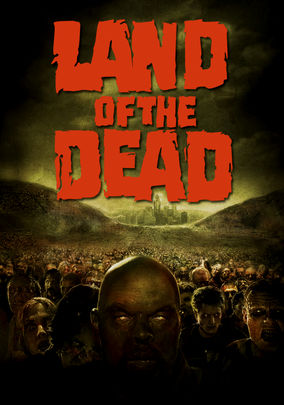
The smartphone-based zombification of street life is a strange testament to Romero’s original insight, which becomes more pronounced as the wealth gap widens. The disenfranchised look ever more zombie-fied to the rich, who in turn all look the same and act the same as they take over whole neighborhoods and wall themselves up in condo towers. This, indeed, is exactly what happens in Romero’s fourth zombie movie, 2005’s Land of the Dead, which predicted things as consequential as what happened during Hurricane Katrina in New Orleans and as minor as the rise of food trucks.

The Zombie Apocalypse is also a parable of the Protestant work ethic, come to reap vengeance at the end of days. It assures us that only very resourceful, tough-minded people will be able to hack it when the dead come back to life. If the rest had really wanted to survive—if they deserved to survive—they would have spent a little less time on the sofa. But here, too, the simple and obvious moral takes a perverse turn: the best anti-zombie combatants should be the ones who’ve watched the most zombie movies, yet by the very logic of our consumer-baiting zombie fables, they won’t be physically capable of survival because all they did was watch TV.

Selective Service

What these couch potatoes will need, inarguably, is the protection of a strong leader, one who hasn’t spent his life in the vain and sodden leisure pursuits that they’ve inertly embraced—Rick Grimes in The Walking Dead, for instance. Why such a person would want to help them is a question they don’t ask. With this search for an ultimate hero, the zombie genre has veered into the escapism of savior lust, leaving Romero’s unflinching, subversive neorealism behind. In Night of the Living Dead, a witless humanity is condemned by its own herd mentality and racism. In latter-day zombie fictions, a quasi-fascist social order is required, uniting us regardless of race, creed, or color.

The predicament of the characters (and the actors) in all the nouveau zombie movies relates to this passive consumerism. Both the characters and the actors in new zombie movies have to act like zombie films don’t already exist, even though the existence of Romero’s films is what permits the existence of the film they are in. Somehow, the characters pull their savvy out of thin air. They must pretend that they have never heard of zombies, even as they immediately and naturally know what to do once their own particular Zombie Apocalypse gets under way.

This paradox underscores the fantasy aspect of the twenty-first-century zombie infatuation, in which a fixed set of roles is available for cosplay in a repeatable drama that already took place somewhere else. The difference between Romero’s films and the new zombie movies is that the more time that passes since 1968, the more Romero’s films don’t seem like they were designed as entertainment—even as they are endlessly exploited by the zombie-themed cultural productions that copy them, and even as they remain entertaining. The new zombie films cannibalize Romero’s films in an attempt to remake them ideologically, so that we will stop looking for meaning in them and just accept the inevitable.

The Primal Hordes

A primal fantasy of the Zombie Apocalypse is that when the shit hits the fan, we will be able to kill our own children or parents. We won’t have a choice. The decision to get rid of the generation impeding us will have been made for us by the zombie plague, absolving us of responsibility. We are, after all, killing somebody who is already dead and who, in his or her current state, is a threat to our continued existence.

Against the generalized dystopian entertainment landscape that followed the economic collapse of 2008, the Zombie Apocalypse made more sense than ever. But YA action-drama dropped it in favor of promoting teen heroes who were stronger than their nice-but-loserish sad sack parents. This is the uplifting generational affirmation that imbues Suzanne Collins’s Hunger Games franchise and Veronica Roth’s Divergent trilogy.

YA comedy, on the other hand, did not ignore zombie movies. Instead, it domesticated the Zombie Apocalypse, making it friendly. Nonthreatening zom-coms showed young viewers how the opposite sex was really not that scary, that being in a couple was still the most important thing, and that dystopias gave nerds an unprecedented chance to prove they could get the girl or boy. Dystopia, it turns out, is really a best-of-all-possible-worlds scenario for starry-eyed-kids-with-a-disease, or so we learn from zom-coms like Warm Bodies and Life After Beth.

The latest iteration of this trend, which sets a zombie heroine in a marginally less dystopian world that mirrors our tentative economic comeback, is the CW TV show iZombie. The series is a brain-eating entertainment for tweens in which they learn you can be okay and have a chill job even if you’re a living corpse who’s just trying to figure things out. When a zombie gets her own tween-empowerment show on The CW, it’s a good indication that zombies don’t carry the stern, unbekannt stigmas they used to. Zombies, much like corpses in TV commercials, are used as grotesque comic relief in things like animated Adult Swim shows. Such is the diminished status of the zombie; it is now a signifier that can be plugged in anywhere. To paraphrase the undead philosopher of capitalism’s own walking-dead demise: first time cannibalism, second time farce.

Reality Bites

The way zombie movies progress, with isolated groups splitting into factions and various elimination rounds as contestants disappear, suggests that Night of the Living Dead is also a secret source of reality TV. It makes sense, then, that 2009’s Zombieland, one of the first YA dystopian zombie entertainments, was penned by screenwriters who created The Joe Schmo Show and I’m a Celebrity . . . Get Me Out of Here!

Zombieland’s protagonist, a college-age dude played by Jesse Eisenberg, is a bundle of phobias, an OCD-style follower of rules who finds himself in a Zombie Apocalypse after an unexpected date with a hot girl out of his league (Amber Heard) goes wrong. Mentored by Woody Harrelson, who more or less reprised this same role in the Hunger Games movies, Eisenberg’s millennial character undergoes a reality-TV-scripted makeover. In expiation for his pusillanimity in the opening reel, he winds up rescuing a tough girl (Emma Stone) who also would have been out of his league in the pre-Apocalypse scheme of dating. Zombieland presents Eisenberg as gutless and Stone as ruthless, but she’s the one who ends up a hostage, and he becomes her hero. In fact, one of his rules, “Don’t be a hero,” changes on screen to “Be a hero,” as we once again learn that millennials really do have what it takes to kill zombies. Earlier in the film, Eisenberg accidentally shoots and kills a non-zombie Bill Murray, playing himself, showing that millennials can also, regretfully, take out Baby Boomers, including the cool ones who aren’t undead.

Edgar Wright’s 2004 Shaun of the Dead, the first movie zom-com, was a more intelligent version of this same storyline. An English comedy from the “Isn’t it cute how much we suck?” school, Wright’s film acquiesced to the coupling-up plot rom-coms require, but not without first presenting the routine, pointless daily life of its protagonist (Simon Pegg) as pre-zombified. Shaun of the Dead will likely remain the only sweet little comedy in which the protagonist kills his mother, a scene the film has the guts to play without flinching. The joke of Wright’s film is that it takes something as brutal as a zombie apocalypse to wake us from our stupor and to show us how good we had it all along. By the film’s end, Pegg and his girlfriend (Kate Ashfield) are in exactly the same place they were when the film started, but now at least they live together. A cover of the Buzzcocks’ song “Everybody’s Happy Nowadays” jangles over the credits, providing a zombified dose of circa-1979 irony.

Wright and Pegg’s goofy rethinking of the zombie movie proved how firmly zombies are entrenched in our consciousness, and how easy they are to manipulate for comedic effect. The same month Shaun of the Dead came out, a Hollywood remake of Romero’s Dawn of the Dead was released. It, too, cleaned up at the box office. This new Dawn of the Dead seemed like it was made by one of the nerds in the American zom-coms, a jerk desperate to prove he’s bad-ass. (The director now makes superhero movies.) Johnny Cash’s “The Man Comes Around” accompanies the opening credits, setting a high bar for artistic achievement the ensuing film does not come near to clearing. Jim Carroll’s “People Who Died” plays at the end—its placement there as repulsive as anything else in the film.

As all nouveau zombie films must, the remake starts in the suburbs, where a couple is watching American Idol in bed, underscoring the genre’s newfound connection to reality TV. The film’s CGI effects, which at the time injected a souped-up faux energy into the onscreen mayhem, dated instantly. They’re now the kind of off-the-rack effects featured in Weird Al videos when someone gets hit by a car.

The main point of this new Dawn of the Dead is that after the Zombie Apocalypse, people will spend their time barking orders at each other and calling each other “asshole.” The film nods in the direction of loving the military and the police, and totally sanitizes Romero’s use of a shopping mall as a site of consumerist critique. Like many films of the 2000s, it postulates that living in a mall wouldn’t be a Hobbesian dystopia at all; it would be rad. If the remake had been made five years later, maybe it would have had to grapple with the “dead malls” that began to adorn the American landscape with greater frequency after the economy collapsed. Instead, the mall serving as the film’s principal backdrop is spotless and fun. The remake’s island-set, sequel-ready false happy ending makes one long for the denouement of Michael Haneke’s Funny Games—a longing more unimaginable than any real-life wish-fulfillment fantasy about the Zombie Apocalypse actually coming to pass.

The American Way of Death

Fanboys liked the Dawn of the Dead remake and, inexplicably, so did many critics. Manohla Dargis, then at the Los Angeles Times, wrote that the film was “the best proof in ages that cannibalizing old material sometimes works fiendishly well,” a punny sentiment she might well walk back today.

The next year, when George A. Romero released his first new zombie film in twenty years, it did not fare as well in the suddenly crowded marketplace of the undead. While Land of the Dead (2005) is fittingly seen as something of a masterpiece now, on its initial release it puzzled genre fans, who had gotten used to the sort of “fast zombies” that were first featured in the nihilistic-with-a-happy-ending British movie 28 Days Later (2002). Romero’s new film was as trenchant as his others, but many fans weren’t having it.

IMDb user reviews provide a record of their immediate reactions. “This movie was terrible!” one wrote the month Land of the Dead premiered. “The storyline—can’t use the word plot as that would give it too much credit—was tedious! Some say it was a great perspective on class? Are you kidding me!!!” Less then a year into George W. Bush’s second term, Romero was archly depicting a society much different from the one he’d shown in Night of the Living Dead. This new society—today’s—was more class-riven, more opportunistic, more cynical. And Romero, even while moving in the direction of Hawksian classicism, was exposing these failings with radical acuity. His dark fable of two Americas at war over the control of the resources necessary to survive was concise, imaginative, and well constructed. Few at the time wanted to consider the film’s style, which seemed out of date compared to the Dawn of the Dead remake. Fewer still wanted to grapple with its implications.

Ten years later, it is clear that no American genre film from that period digests and exposes the Bush era more skillfully than Land of the Dead. Romero’s film was uncomfortably ahead of its time, and like his other zombie work, it hasn’t dated; it speaks of 2015 as much as 2005. Tightly controlled scenes avoid the pointlessness and repetition of the nouveau zombie films, limning class struggle in unexpected ways. Zombies, slowly coming to consciousness, use the tools of the trades from which they’ve been recently dispossessed to shatter the glass of fortified condos. A zombie pumps gas through the windshield of a limo. The rich commit suicide, only to come back to life as zombies and feed on their children. America, as the original-zombie-era Funkadelic LP taught us, eats its young.

As zombie fantasies go, these scenes are much richer than the random, unsatisfying mayhem of the nouveau zombie films. Romero, unlike his counterparts, does not shy away from race. He shows African Americans pushing back against the injustices and indignities of a militarized police state, thereby completing a circle that began with Duane Jones’s performance in Night of the Living Dead.

Walking Tall

For the latest generation of zombie enthusiasts, the zombie genre means just one thing: AMC’s massively popular cable series The Walking Dead. The show is so much better than any of the recent non-Romero zombie movies that it’s among the leading exhibits in the case against the cineplex. The show’s politics and implications are widely discussed, and The Walking Dead has engendered national debate about all sorts of ethical issues, including something Romero’s films raised only in the negative: America’s future. But the first problem The Walking Dead solved was how to make its own debates about these things interesting: whenever scenes get too talky, a “walker” sidles up and has to be dispatched in the time-honored fashion. At its core, the zombie drama is like playing “You’re it!” The show could be called Game of Tag.

The Walking Dead debuted in 2010, emerging from a period in U.S. history when, all of a sudden, we found ourselves in a junked, collapsed, post-American environment. New dystopian dramas, especially the YA ones, reflected this chastened reality. The Walking Dead looked at first like it might become just another placeholding entry in this cavalcade of glumness, much like TNT’sSpielberg-produced, families vs. aliens sci-fi show Falling Skies. Zombies were maybe the most dated way possible to dramatize our newly trashed world.

It was The Walking Dead’s dated qualities, however, that saved it from becoming cable TV’s Hunger Games. The show’s grunge aesthetic and majority-adult cast situated it elsewhere. And if that particular elsewhere felt like the past as much as the future, that was part of what made the show work for premium cable’s Gen X audience. Greg Nicotero, a makeup man who worked under Romero, is one of the show’s producers. His presence indicated the people behind the show took the genre seriously, unlike anyone else in Hollywood who had touched it.

Television works by imitating success, by zombifying proven formulas through a process called mimetic isomorphism. When television producers saw The Walking Dead’s ratings beating broadcast-network ratings—a first for cable drama—they took notice and began spawning. Copies of copies like Resurrection, The Last Ship, The Leftovers, and 12 Monkeys showed that plague is contagious, but it doesn’t have to be zombie plague. Meanwhile, The Walking Dead continues its success, and AMC will debut a companion series this summer, unimaginatively called Fear the Walking Dead.

If the worst zombie movies unselfconsciously imitate higher-gloss broadcast-network reality trash like Survivor, The Walking Dead succeeds by staying closer to the lowest grade of cable-network reality TV. The world of The Walking Dead is closer to Hoarders than it is to Big Brother. Hoarders presents an America engulfed in mounds of trash that its psychologically damaged possessors can’t part with. Mounds of Big Gulp cups and greeting cards and heaps of car parts and instruction manuals overwhelm their homes, spilling into their yards. Shows like Storage Wars, Pawn Stars, and American Pickers present an America of valueless junk that maybe somebody can make a buck on—if only by televising it for our own lurid delectation. These shows are the opposite of pre-collapse valuation shows like Antiques Roadshow, in which the junk people had lying around proved to be worth more than they had imagined. The detritus of Hoarders is worthless, the kind of trash that will blow around everywhere after the Zombie Apocalypse.

Hoarders vs. Horde

In his recent book 24/7, an analysis of the end of sleep and our twenty-four-hour consumption-and-work cycle, Jonathan Crary writes that “part of the modernized world we inhabit is the ubiquitous visibility of useless violence and the human suffering it causes. . . . The act of witnessing and its monotony can become a mere enduring of the night, of the disaster.” Zombies, not quite awake but never asleep, are the living-dead reminders of this condition, stumbling through our fictions. When they are not transformed by the wishful thinking of ideology into our pals, they retain this status.

Celebrated everywhere, zombies are the opposite of celebrities, who swoop into our disaster areas like gods from Olympus to rescue us from the calamities that also allow them to flourish. Zombies, far from being elevated, descend into utter undistinguishable anonymity and degradation, which is why they can be destroyed in good conscience. Brad Pitt, one of the producers of ABC’s Resurrection, also starred in World War Z, the most expensive zombie movie ever made. The last line of that odious movie—the first neoliberal zombie movie—is “Our war has just begun.”

Whatever that was supposed to mean to the audience, these fables of the plague years drive home just who the zombies are supposed to be—and who, when the plague hits, will helicopter out holding the machine guns. Col. Kurtz’s faithful devotee from Apocalypse Now, Dennis Hopper, the counterculture hero who became a Republican golf nut, plays the leader of the remaining 1 percent in Land of the Dead. “We don’t negotiate with terrorists,” he says when he’s faced with the choice between his money and our lives.

Why Empathy Matters

0f73e837b760c553edaf501f804317bb

By Zen Gardner

Source: ZenGardner.com

It’s not easy to stay sensitive in such a cruel, desensitized world but it’s imperative we do. That’s the beauty of empathic souls; they have open and loving hearts, even if it hurts, which is why each of us needs to generate and receive so much love and encouragement.

Loving empathy is its own reward, even if we’re not showered directly with supporting human love as much as we’d prefer. The spiritual is supreme. Connection to Source is our unfailing infinite supply line of everything we need. But I agree, it’s sure nice when that consciousness is manifest in another human being and can be shared between us.

That’s the nature of true interpersonal love, and we need to shower it upon each other.

Empathize or Cauterize

I feel strongly that if we don’t allow ourselves to have broken hearts for the lost and suffering we’re virtually useless consciousness and a betrayal to Source. True heartfelt empathy heals and strengthens ourselves and those around us as we go through this voyage. Letting these sincere emotions course through us, whether it be sharing the pain of battered and betrayed victims of all sorts, including animals, or the sadness of the passing of a dear friend, they’re good for us and are a wonderful opportunity to draw closer to Source.

Using these deep experiences as an energy carrier signal to piggy back other issues on our hearts and minds into the great bosom of Love is a real key. When channeled consciously from the heart, these experiences lead to much greater intuitive understandings, strength of spirit, and that deep, deep peace that passes understanding.

Those who cannot move with these fully awake empathic spiritual impulses in effect have become cauterized. The media works hard at this, bashing the collective head with desensitizing, violent images and mind crushing propaganda constantly. That’s why they do it. Not just to promote their programs, but to shut down our conscious awareness, the all-empowering Source of love and light.

That’s what they fear the most. That we will awaken and tap into our magnificence.

Counteracting the War Against Love

This is fundamentally what this current hijack attempt is all about. Extinguishing love. Love is soft, love is kind. But it is also extremely powerful. Love is a form of creation at work. It contradicts everything we’re witnessing in today’s media driven control structure.

Express your love every chance you get. Others are starved for it just as you are. Give and it will return, but don’t do it with that motive. It just happens naturally, because that is the co-creative nature of love. So many are starved for a word of encouragement, a kind gesture, a thank you or word of appreciation. The downdraft of ugliness is so strong right now we need to support each other in any way we can.

Make yourself vulnerable. It’s the most protected space there is. Put a little love in your heart – and let it out!

Our Warfare Is Spiritual

The forces of darkness cannot overcome the Light, as hard as they may try. Any success they may seem to have at harnessing humanity for their own ends is so very temporary. While we are infinite spiritual beings, they are temporal, parasitic forces.

Keep that in mind, no matter how things may appear at times.

Let’s fully manifest and get this era done away with by letting Universe work fully through us. It happens one heart at a time, but each of us has to keep doing what we’re each meant to do and be.

Stay soft and loving, yet strong and resolved. Our weapons are spiritual – don’t let them entice you into their arena of mind games and ignorant lower vibrational reactionism. Stay where you are strong, yet engage them nonetheless. On your terms.

Thank all of you who give so much. Please know how loved and appreciated you are by so, so many.

Let it flow – we’re just getting started!

Love always, Zen

The Tyranny of Time

time-travel_2

By Mark Rockeymoore

Source: Sacred Space in Time

The days compound, vivid and expansive, experience manifesting as desire frustrated or fulfilled. Memories build personality, the “I” that is a minuscule component of the Self projected into the illusory 3-D world takes on a solidity that further materializes error, identification with the world the causative factor in the inevitable descent into purgatory. The past “I Was” informs the future “I Will Be” and the present “I Am” is lost in a miasma of regrets and worries, projecting backwards and forwards in time to the detriment of the Now.

What is this remorseless construct that both fulfills and detracts from existence, creating imaginary realities that encompass the entirety of the individuated existence? Perception is linear, the future seems to follow the past in successive streams of memory, which builds upon itself, solidifying pathways of thought which become the “I” that experiences the world. Faint memories of the near and distant past arise in the fathomless ocean of consciousness, informing the present moment and constricting choice along pathways of potentiality determined by previous experience. We will be what we were is the seemingly logical rationalization that results in the false determination that we cannot change and that the path we have always followed is the only path available now and in the future.

What is lost in this seemingly simplistic logical formulation is that reality encompasses all possibilities and that who we were is not necessarily who we must become. The physical manifestation of thought include words and actions that proceed from non-material reality to material reality. Thoughts as sub-vocal verbalizations and imagery can originate both internally and externally. Thoughts can free the mind or imprison it. The weight we apply to our thoughts determines our ability to manifest our realities, with ingrained and repetitive thought processes taking precedence over new and original thought processes.

As human biology provides the physical hard-drive for non-physical, energetic interactions with the manifest and unmanifest reality, the brain’s synapses form the wires we thicken or thin with repetitive use. Energy easiest and most efficiently through well-defined pathways.  Habits and patterns of thought, vocalization and behavior follow. Time acts as a structure that encompasses the unknown infinite and eternal within the finite capacity of materiality. Its dictates reinforce holographic immaterialities and further reduce clarity of mind and intention.

Timelessness, as a function of higher perception, can be considered to be the casting off of illusory linearity as the primary mode of interpreting existence. Even while immersed within the moment to moment flow of seconds, minutes, hours, days, weeks and years, it is possible to transcend the limitations time places upon potentiality by recasting thought. By realizing that perception is not bound by the past or constrained by the future. That there are no limits to manifestation. That there are no limits to each of us being, fully, who and what we are.

To release one’s self from the Tyranny of Time is to realize that the Now moment is our access to communion with the infinite and eternal. That within each second lies a gateway to unlimited potentiality that is accessible to those who make the choice to court freedom and to banish the past and future as determinative factors in their decision-making processes. No path is set in stone unless we cast it thusly ourselves. Unlimited potentiality is our birthright. Claim yours.

Drop the Rope

8583170_f520

By Zen Gardner

Source: ZenGardner.com

It’s interesting how we get entangled in compromising situations and interactions, often unwittingly. We all face this challenge continually. So often the very encounter itself is predestined to failure without our even knowing it and results in a sense of energy sapping futility.

If you find yourself in such a tug of war, it’s time to rethink your entire stance. In fact, it might be time to drop the connection all together. Winning ain’t what it’s cracked up to be, nor to your benefit in most cases in these circumstances.

This happens because we get snared into lower level thinking on a preset playing field designed to do just that. Ensnare and entrap. This societal mechanism is designed to set the parameters and disguise the real solution which is way outside this constructed paradigm. When we join into the “contest” we subject ourselves to the win-lose dialectic, the pitting of one versus another paradigm that has beset humanity for eons.

That’s not to say there isn’t a time to attempt to illuminate ignorance or expose manipulative mechanisms, we just can’t expect to “win” in an arena built for pointless conflict that distracts from seeing the essential and empowering reality that blows their entire construct to bits.

If we’re too busy fighting amongst ourselves, physically or intellectually, we’ll never see that bigger picture where the true problem truly lies.

The conscious conclusion to draw on such encounters is clear. If you don’t want to play their insidious, pointless, draining and distracting games of tug of war, simply drop the rope and walk away.

The Conflict Dialectic

Society has been manipulated to such a degree that the easiest way to control us is through simple distraction. Bread and circus competitive sports and similar mind-stinting entertainment, right-left paradigm political charades and society dividing issues such as race, immigration and social, economic and class status are furiously alive trigger points of distraction running rampant in this seriously dysfunctional world mind.

We help define and reinforce these memes ourselves by our participation. Without rising above this imposed playing field and understanding the world we’re already living in we certainly cannot find the way to change it, never mind the way out into a new paradigm without their constrictions.

Simply said, if you don’t want to play their insidious, pointless, draining and distracting games of tug of war, simply drop the rope and move on. Let them fall in their own devices.

Dropping the Rope

When dealing with this seeming “conflict resolution” we appear to be confronting on many levels, “dropping the rope” is a very interesting way to break this sycophantic relationship with our oppressors. What invariably surfaces in our left brain human response in these sorts of circumstances is a sort of contest between people or situations. One side opposes the other in some form, and one or the other or both sides express umbrage at what the other is saying.

It’s a programmed and mass entranced conflict, the “strategy of tension” as they call it, utilized by the media and military with very successful abandon.

When we find ourselves in these situations it can be quite stressful. Reflexive thinking usually kicks in and we take sides, concentrating on the “issues” at hand while ignoring the overall. Even in a personal heated exchange, subtle or obvious, no one wins. They can’t. The overarching truth is being missed in this morass of “logical” confined thought subscribed to by the perspective of the participants.

Overall social psychosis perhaps, or the left brained reptilian mind going to work, who knows. It’s just futile in that type of paradigm. These types of conflicts are an exercise in futility. Oh, we may bring some light of truth to the conversation or situation but the problem is that we’re buying into their boxing ring. Someone has to come out the “victor” and the game goes on, without addressing the underlying reality outside the ring, or imposed and deliberately created stadium of conflict.

This realization is a blow to the egoic mind set and, while essentially counter intuitive, it’s only destined to be repeated. And the pointless game goes on. Don’t fall for it. You’re well above all this.

Spiritual Scoliosis and Letting Go of the Unchangeable

The application of this realization can get quite personal.  Those we’re closest to can often display usage of this dialectic and it’s not easy to discern up close and personal, nor know how to respond to it.

There’s often an embedded agenda to what is being said or proposed, as exemplified by news outlets, or as we usually see it by people around us, that is much more profound than the surface argument. You’ll often hear sweeping language with generalities that appear to be true in such contests of mind but these can have a much more insidious nature.

People, as well as social engineers, often use this technique.

It’s usually very cleverly embedded, be it by an individual or ideology. But on an individual basis it can get pretty dicey.

The Personal Touch

It’s naive to think we could correct spiritual scoliosis or perform some kind of exorcism or somehow overwhelm this mechanism to get it into its proper place and perspective when dealing with an infected individual with such a mindset. In fact, those are the things and persons that conscious people sidestep until the subject really wants help and starts to see the light of day and fully lets go of their petty shibboleths.

These are issues that really aren’t so petty when you get down to the spiritual nature of it and difficult to discern as well as confront.

But when you’re awake to these traits you don’t argue with them or plea with them to let go. They either do when confronted with conscious awareness or they don’t. Otherwise you leave them alone until there’s a change, and move on to those open to real dialogue. This kind of conscious awareness is sadly thin in today’s world but people are catching on.

No players, no game is a great default setting.

Their approach has a lot to do with posturing, as if they’re authoritative on some subject. Unthinking people often submit to that. When someone comes on pretending to be an authority on anything and speaks in that tone and posture it’s time to sit up and take notice – carefully. Not sit back in acquiescence. Real truth sharers propose and entreat. Remember, words, which carry spirit, can eventually overpower you if you keep listening to where you sense it’s empowering rooted in truth and love, or isn’t healthy.

It’ll be clear. Just listen.

Be Like Water

Avoiding these kinds of obstacles is a bit of an an acquired art, but it can be learned. This has to do with the nature of on going change. Water just goes around the rock, or over it, or both. Sometimes rocks move with the water a little but never fully. Like those set in their ways.

They’re rocks. That’s the attached baggage people won’t let go of in their hearts and it clogs up the works and infects anything it embeds in. They’re fine, or should I say less dangerous, on their own and they have their place despite their issues. But they’re not water; and if you expect them to come along like water it’s going to be a long and arduous journey that pretty much is playing the rock’s game.

Water moves on to where its welcomed. Go with the flow. Let the rocks be, i.e; let go of the rope.

Conclusion

It’s important to not get caught up in futile and ultimately destructive contests of any sort, be they relationships or unconscious dialogue as they can have very deceitful and disempowering consequences.

That’s how the system works. Getting everyone caught up in lower vibrational interactions that muffle the call to conscious awareness and activism in avenues that have real meaning. It’s something to which they are clearly diametrically opposed. They’re more than happy to entangle you in anything petty to keep you from realizing that.

You can’t win on their level. Don’t even go there. But if you do and find yourself in a tug of war with ignorance, egos or manipulating entities…..just drop the rope. It’s that simple.

Let ’em fall on their asses and you go merrily on your way.

And go take a nice walk in our majestic freedom and glory in your independent magnificence! Then turn and do and say what’s right – in every situation you come up against.

Screw the programming. We’re free.

That’s how truth wins out.

Much love,

Zen

ZenGardner.com


One dog’s solution to overcoming lower vibrational conflicts:

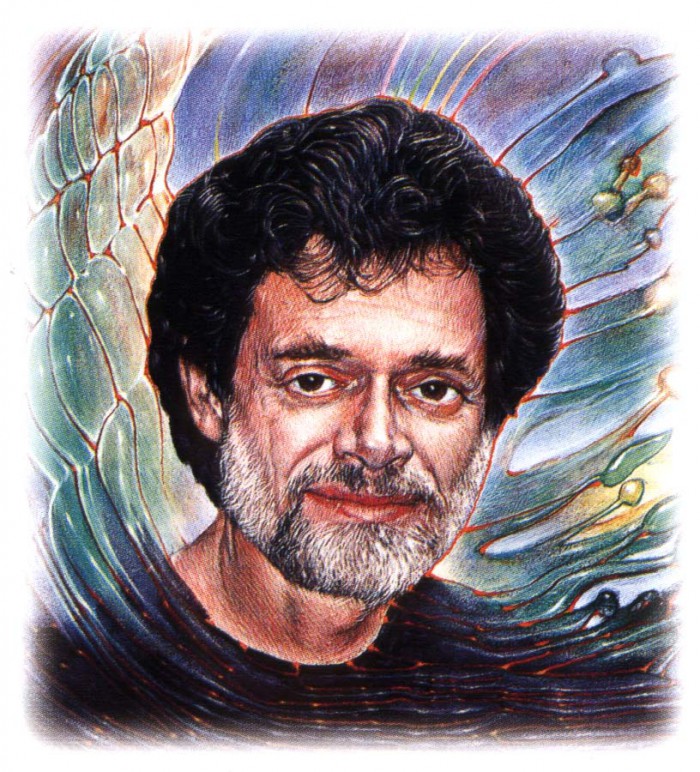
Terence McKenna’s Disillusioned Perspective on Mass-Consumerist Culture

Editor’s note: Since Terence McKenna’s passing on April 3 2000, his ideas have only grown in relevance and popularity largely because of their prescience and resonance to growing segments of internet culture. In commemoration of the 70th anniversary of his birthday we’re sharing this article which reflects an important yet often neglected aspect of McKenna’s worldview.

By Jordan Bates

Source: Refine the Mind

“We have to create culture, don’t watch TV, don’t read magazines, don’t even listen to NPR. Create your own roadshow.”

Terence McKenna is one of those cult-famous, societal-fringe figures of whom the majority of people have never heard. He’s also someone whose views probably have a polarizing effect on anyone who encounters them. At the very least, though, Terence was an exceptionally original thinker, and those who explore a fraction of his work will note his erudition and incredible ability to articulate his thoughts.

McKenna was an American philosopher and ethnobotanist who passed away in the year 2000. He was known for possessing expertise on a broad range of subjects including history, biology, geology, botany, and ecology. He toured and lectured extensively on everything from language and science to shamanism and extraterrestrials, developing a sizable and enthusiastic following.

His controversial status is in large part due to his vocal advocacy of  mind-altering substances. McKenna was a well-known psychonaut–one who explores consciousness through the ingestion of psychedelic hallucinogens–and a staunch proponent of the use of naturally occurring psychoactive compounds.

Obviously this latter aspect of McKenna’s legacy is an immediate turn-off to many. For a major sector of the population, the colossal stigma surrounding psychedelic substances is sufficient reason to lambaste the views of a well-known user. I, however, am not so quick to dismiss such a person, especially one as lucid, compelling, internally consistent, and dedicated to free inquiry as Terence McKenna.

McKenna’s Views on Mass-Consumerist Culture

I’ve delved into hours of McKenna’s lectures, and I am particularly interested in his ideas on culture. When McKenna speaks of culture, he seems to refer primarily to modern, mass-consumerist culture, so keep that in mind.

McKenna held a rather unfriendly position toward culture that can be summed up succinctly by one of his most famous quotations: “Culture is not your friend.” McKenna saw modern culture as a sort of engine detached from the interests of the individual and serving the manipulative, power-focused agendas of various institutions and wealthy individuals.

The following short video contains a portion of one of his lectures in which he addresses culture. I encourage you to watch it now (I will transcribe and elaborate on its central ideas below):

What Civilization is and What it Could be

McKenna certainly had a way of poetically articulating his ideas, and the video opens with what I feel is one of Terence’s most memorable metaphors:

“What civilization is is 6 billion people trying to make themselves happy by standing on each other’s shoulders and kicking each other’s teeth in. It’s not a pleasant situation. And yet you can stand back and look at this planet and see that we have the money, the power, the medical understanding, the scientific know-how, the love, and the community to produce a kind of human paradise.”

With this statement McKenna addresses the hyper-competitive environment that is symptomatic of the modern capitalistic socioeconomic paradigm. Our culture has a tendency to glorify competition, and many would argue that competition drives innovation and “progress” (a slippery word). I doubt McKenna would argue that competition has not been essential to the invention of our modern world, but he seems to step back and ask, “Yes, but when will it be enough?”

McKenna suggests that we’ve reached a stage of technological advancement and knowledge that would allow us to “produce a kind of human paradise.” This declaration sounds vague and idealistic, but based upon what I know of McKenna, I assume that by “human paradise” he envisioned something like a drastic change in the work paradigm, an elimination of poverty and starvation, a great reduction in disease and illness-related death, the end of war, and a much more palpable sense of a world community.

“Culture is Not Your Friend”

These items might sound far-fetched, but McKenna is not the first to suggest that such a situation is possible with our modern technology. R. Buckminster Fuller comes to mind as another prominent thinker who held similar views. After making this statement, McKenna elaborates on what he believes prevents us from attaining this state of affairs–namely, a lack of significant resistance to the poor leadership, dehumanizing values, and damaging cultural “control icons” that he perceives in the world. He states:

“Culture is not your friend. Culture is for other peoples’ convenience and the convenience of various institutions, churches, companies, tax collection schemes, what have you. It is not your friend. It insults you. It disempowers you. It uses and abuses you. None of us are well-treated by culture.”

[…]

But the culture is a perversion. It fetishizes objects. It creates consumer mania. It preaches endless forms of false happiness, endless forms of false understanding in the form of squirrelly religions and silly cults. It invites people to diminish themselves and dehumanize themselves by behaving like machines.”

Modern World as Dystopia?

McKenna holds that modern culture is centered around the agendas of those who are almost certainly not you. He believes that culture diminishes and dehumanizes the vast majority of the population by inviting them to unreflectively reinforce its models.

McKenna seems to suggest that instead of focusing on creating the type of world that is possible, we are caught up in a game of culture–a robotic pursuit of fetishized objects and false visions of a proverbial light at the end of the tunnel.

To some, this view may seem rather grim and dystopian. I don’t see it that way. I see it as a warning that remains pertinent in 2013 [and 2015]. The culture McKenna refers to does exist, and its effects are far-reaching and potentially insidious. However, I know that there are many, many people who are aware of this cultural game and do not conform to its status quo, who resolve to try to choose their own way of life and who see through the glitzy media-images.

Simply by being among this latter group of people, I think we’re doing the work that McKenna believed needed to be done–the work of resisting the damaging and dehumanizing aspects of modern consumerist culture. The mere realization that we are culturally conditioned to behave in certain ways is a sufficient catalyst to begin assuming a more active and reflective role in deciding how to live and act.

I see nothing wrong with being a cultural participant, but it should be our goal to develop a deeper awareness of the ideals our culture would have us pursue. When we understand the culture’s vision for our lives, we can continue to exist within our given society while challenging its flaws in subtle ways. We can deliberately express ourselves in forms that disrupt its norms, and we can consciously choose which aspects of it are worth partaking in. In this way, we become active constituents of culture, shifting and re-imagining its values, contributing to the gradual creation of a culture that we can call our “friend”.

McKenna Suggests We Must Create Culture

McKenna was certainly a vocal critic of mass culture, but to his credit, he was also quite vocal about offering alternatives. He believed strongly in the importance and utility of art, the primacy of felt experience, and the need to create our own values and alternative spaces for expression.

I’ll leave you with one last quote from another of Terence’s lectures that is especially poignant here. He was a frank and opinionated speaker, to be sure, but don’t let his style put you off. Terence was also always quick to check his own views and make light of his position. He didn’t want to insult people–he just wanted us to ask questions. This message from beyond the grave is valuable to each of us; ponder it with an open mind:

“We have to create culture, don’t watch TV, don’t read magazines, don’t even listen to NPR. Create your own roadshow. The nexus of space and time where you are now is the most immediate sector of your universe, and if you’re worrying about Michael Jackson or Bill Clinton or somebody else, then you are disempowered, you’re giving it all away to icons, icons which are maintained by an electronic media so that you want to dress like X or have lips like Y. This is shit-brained, this kind of thinking. That is all cultural diversion, and what is real is you and your friends and your associations, your highs, your orgasms, your hopes, your plans, your fears. And we are told ‘no’, we’re unimportant, we’re peripheral. ‘Get a degree, get a job, get a this, get a that.’ And then you’re a player, you don’t want to even play in that game. You want to reclaim your mind and get it out of the hands of the cultural engineers who want to turn you into a half-baked moron consuming all this trash that’s being manufactured out of the bones of a dying world.”
― Terence McKenna

Rope-a-Dope

rope-a-dope3By Rodney Swearengin

Source: Adbusters

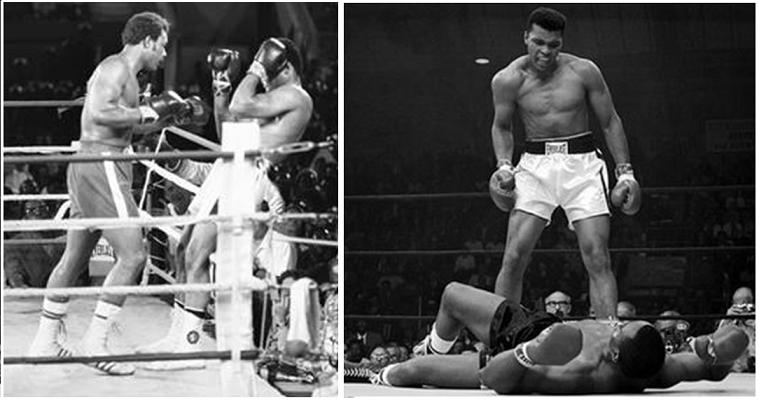
During the second round of the 1974 epic boxing match billed as the Rumble in the Jungle, Mohammad Ali leaned extraordinarily far back upon the ropes as George Foreman relentlessly bludgeoned Ali’s body and arms. It looked much like the devastating beating Ali took at the hands of Joe Frazier in 1971. Foreman’s notoriously powerful punches were sure to do Ali in as he languished on the ropes round after round. But in the eighth — with Foreman’s stamina sapped — Ali got off the ropes, and went on the attack, winning the bout with a knockout. He called it the “rope-a-dope.”

I feel worked over — not knowing if I can keep up the pace of the caffeine infused all-night drift through a world-wide cataloging of every failure of imagination — large and small — the war, disease, simple stupidity, the latest meme designed to bring a smile all the way to your eyes — brought not only into your living room, but also the kitchen, the bedroom. It seems we&rsquo—re always peering deep into our glowing box, trying to sort out the trouble and hop to the next possible potential of some game-changing inspiration in the incessant production-line flow of recycled mediocrity. But the troubles are never through. The work is never done. That breakthrough — that genius sabot insight never comes.

But the metaphor of production-line work — already passé when McLuhan made us aware of so many similarly irrelevant tropes — is based on psychological responses and concepts conditioned by the former technology — mechanization — of the factory. There is something comforting in the nostalgic ease with which Lucille Ball or Charlie Chaplin revealed the absurdity of Fordist efficiency, the worker as a mere appendage of the machine. Although laughable even then — that was a time in which the worker still had a genuine role to play; being more than an option cheaper than automation. That time is gone.

I feel over worked. But I’ve never worked at the mill. I’ve never done a 12-hour stint keeping pace with cogs and conveyer belts. I’m not being over worked. I’m being worked over — as we all are — not by a craftwork mechanized pace that drives us to exhaustion — but by an alluring rhythm — a rhythm that can at once lull us into acquiescence while at the same time keeping us off balance — all the better mobilized for each permutation of familiar themes. We are mesmerized by the rhythm of electrostatic transmissions coded through glitches of the cybernetic network and the fragments of old media. Cycling through neoclassic postmodern motifs destructured and reformulated into predictably surprising combinations — this rhythm — this aesthetic — makes us move —and more importantly, buy. Consumers at heart, the rhythm sucks us in and incorporates us more completely than any machine ever could. Somehow thinking that we are breaking free from the autonomic conditioning of a youthful wasteland, we wait in eager anticipation for the next issue of a magazine devoted to the pure form of advertising —though in its pages there is none to be found. It makes our consumer heart skip a beat. Like Victorians who wouldn’t dare indulge in such an unsavory act — but nonetheless cannot stop talking about it — we swoon, sway and jerk with the rhythm of the spliced (dis)tasteful image juxtaposed by words of a hopeful, anxious, elliptical cant — breakdown and breakthrough.

I get the breakdown. Where’s the breakthrough? We talk and all the while we’re being worked over. And this is no massage. This is a beat down. In the expanded edition of his vintage Politics and Vision, Sheldon Wolin argued that the particular rhythm of our contemporary aesthetic has been put to expert use by the new corporate form of governance he called “inverted totalitarianism.” Perhaps Wolin really put his finger on our fatal flaw when he suggested that the “cascades of ‘critical theory’ and their postures of revolt, and the appetite for theoretical novelty, function as support rather than opposition” to capitalism, because this sort of frenetic, syncopated, decentering only “encourages its rhythms.” Like a prizefighter — agile, yet made of solid, consolidated muscle. The centralized corporate entity gets in step with our fancy footwork — bobs and weaves into every new channel of communication and community, coopts every sophistication of critique, adopts the most non-hierarchical, horizontal stance of organization and deployment — moving with the rhythm — adapting the rhythm to its own purpose — waiting for the opportunity to unload its notoriously devastating punch — coming in on the trash talker of dissent — Muhammad Ali stumbling back on the ropes, body blow after wicked body blow — pummeled — worked over completely.

I don’t want to go down on the ropes. Where’s the rope-a-dope? Where’s the rope-a- dope?!


Prophecy, Spirit and the Dreamtime

spiritual-phenomena-other-dimensions

By Jay Weidner

Source: ZenGardner.com

The mythology of our modern, high-tech culture teaches us that the last frontier for humanity is outer space. Somehow, according to this emerging mythos, the fragile human body is supposed to be able to survive the rigors of travel in outer space over vast distances. The writers of science fiction and Star Trek-style television shows would have us believe that human beings can somehow endure through every kind of radiation and danger to successfully colonize other planets and solar systems.

But this notion is probably never going to happen. As this age ends and the next age begins humanity will lose its interest in conquering space. The last 6000 years have been spent conquering the space around us.

The last frontier of humanity is not the conquering of outer space, of other planets and solar systems. As we approach the end of this era we will realize that the last frontier is time.

Space is defined by the three dimensional reality that surrounds us. It is height, width and depth. We humans possess the most spectacular array of physical and mental abilities ever devised in creation to navigate these three dimensions. These abilities have enabled us to conquer our three-dimensional world.

Now at this critical juncture in history we discover that we have completely conquered the planet’s biosphere. People are living in the coldest environments imaginable and in the hottest tropical jungles. There are few mysteries left concerning the outer physical reality of our planet. Due to oil and cheap energy, we have been able to travel to any place on Earth. As this age of oil ends there will be only one mystery left for us to ponder.

This final mystery is the mystery of time.

Let’s take a look at our perception of time. Much of the way we experience the present moment depends on our experience of time past. The events of the past are distilled and repainted in our memories until their very reality loses its solidity. If we let them cook long enough, images of past events take on a dream like quality. Through this process, our remembrances frequently slide into a fantasy disconnected from anything tangible.

How often have we encountered someone who remembers an incident in a completely opposite manner from the way we remember it? Our minds appear to be constantly rewriting history to make it more agreeable to our present day wishes. Incidents in the past that are disturbing or frightening are frequently glossed over in our memory until they disappear only to be replaced by a memory that is more easily digested by consciousness.

Our view of the future works in a similar but opposite texture. Whereas the past begins to become a dream within our memories, the future is the dream that has not yet arrived. When someone is successful in the material world we like to say that they have “lived their dreams”. This cliché reveals an intrinsic understanding that present and future reality is created from the dream state of the past.

This idea dovetails with the central belief of the Aborigines of Australia. The essential teaching from that tradition is that everything in our world begins in the Dreamtime. From their ancient perspective, every thought, every action emerges from a larger metaphysical landscape that surrounds and pervades our material world. They call this larger reality the Dreamtime. According to this tradition, each living thing first begins in the Dreamtime. After it has become fully developed in the Dreamtime it then concretizes and becomes a part of our three dimensional reality.

This process is recursive in that our future dreams are frequently constructed from the archetypes of ancient dreams. So the past and the future, the material world and the dream world work together to create not only everything that we see, feel and hear but all that we have manifested as human beings. If one looks beyond the veil of linear time, one can easily see that there is a certain control mechanism over this peculiar process. Because reality is so dependent on the dream world, it is possible to shift reality by simply shifting the dream.

Motivational speakers, politicians, television script writers, preachers and many others understand this fundamental concept and use it to re-script reality in their favor. The last thing that they want you to discover is that you have the innate ability to take control of your dreams. They much prefer that you dream their dream, live in their past and help build their future.

Just think about the nature of the media these days. Over the past century, finding new and ever more invasive means of manipulating thoughts, desires and actions have been at the forefront of the research conducted by “psychic engineers”; the advertising agencies, spin doctors, pollsters, pharmaceutical companies, and secret government agencies of our world.

Through the constant barrage of images projected by the media, through the manipulation of food, and the polluting of the atmosphere, much of humanity has become lulled into a hypnotic state and their Dreamtime is occupied with nightmares. This has led us to today, to the present moment, in which our planet and our species are in a state of crisis. To transmute this crisis, this very critical situation in time, we must learn to step outside of linear time and enter the Dreamtime, that subtle realm in which everything becomes possible.

As the word Dreamtime aptly describes, there is little difference between the dream and the time. This very moment will become a dream soon in your memory. Also you are creating the future that is racing towards you – right now.

The dream world, time and four-dimensional space are all the same thing. The fourth dimensional world, often referred to as ‘time’ by physicists, surrounds and permeates our three dimensional reality. Everything that we are is shaped and formed within this topological manifold that flows into and out of our existence. As the stream of time passes we have the ability to alter it’s course. Each moment of our lives offers us the chance to change the course of our dreams and the dreams of those we love.

Understanding this landscape, the ragged mountains and mossy valleys of the wilderness of time, is the frontier that awaits us. When we finally colonize this land and understand its many intricacies and nuances, we will realize that any future is possible. We will no longer need to be slaves to systems that require us to live in someone else’s dream. The powers of the dark sorcerers that rule our world will be overthrown and a new Dreamtime will be created. When we discover how to navigate the river of time, when the topological map of time is finally understood by us, all of the certain dangers that await us will vanish in the blink of an eye during REM sleep.

We are at the crossroads now. There is a choice. One road leads to a mechanistic, toxic, polluted, fascist nightmare from which we may never recover. The other road leads to a revitalized world where we live our dreams in freedom, prosperity and love.

One of the main aims of many ancient spiritual traditions is to provide us with the means to create a conscious break with the almost dictatorial dreams of our past. This is the essence of the teachings of the Buddha for instance. We are slaves to the dreams that we were born into, slaves to a past of which we had nothing to do. Many of these ancient spiritual traditions teach us how to break with the mental slavery that has burdened us for so long.

Humans frequently hurt themselves and others around them defending the imprinted dreams of their past and creating belief systems that make it all right to hurt and destroy people who come from a different past, a different dreamtime.

The way to stop this recurring cycle is to find our way towards a detachment from the heated beliefs and ego-inspired histories and cultures that we were born into. This is not to say that we should reject our traditions. Only that true liberation of ourselves can only begin when we detach ourselves from ingrained spiritual and cultural habits.

Right now we are trapped by time. And this means that we are trapped in a Dreamtime from which escape is nearly impossible. But as long as there is a chance, as long as the odds are not one hundred percent against us – and they are not – we should attempt to make this leap.

If we change the dream we can change the world and ourselves.

The spiritual emergence that is happening right now across the world is the realization that there is only one kind of time. There is no past and there is no future.

There is only NOW.

And we can change the NOW at any time that we like.


For more about the Shasta movie, go to ShastaMovie.com

Jay Weidner’s websites –    JayWeidner.comGaiamTV.com

Jay Weidner’s DVDs

Jay Weidner’s book:
“The Mysteries of the Great Cross of Hendaye: Alchemy and the End of Time”

Indulge . . . & Undermine

Crimethinc._boat_logo

Source: CrimethInc.

Have you noticed—exhortations to indulge yourself are always followed by suggestions? Adherents of doctrines seek footholds to claim territory within you, salesmen grasp for handles to jerk you around . . . from new-age prophets to advertisers, from pornographers to radicals, everyone exhorts you to “pursue your desires,” but the question remains: which ones? The “real” ones? Who decides which those are?

This just makes it clear what’s going on: a war for your soul on every front. And those much talked-about desires are all constructed, anyway—they change, they’re dependent on external factors, culture, the whole context and history of our society. We “like” fast food because we have to hurry back to work, because processed supermarket food doesn’t taste much better, because the nuclear family—for those who still have even that—is too small and stressed to sustain much festivity in cooking and eating. We “have to” check our email because the dissolution of community has taken our friends and kindred far away, because our bosses would rather not have to talk to us, because “time-saving” technology has claimed the hours once used to write letters—and killed all the passenger pigeons, besides. We “want” to go to work because in this society no one looks out for those who don’t, because it’s hard to imagine more pleasurable ways to spend our time when everything around us is designed for commerce and consumption. Every craving we feel, every conception we form, is framed in the language of the civilization that creates us.

Does this mean we would want differently in a different world? Yes, but not because we would be free to feel our “natural” desires—no such things exist. Beyond the life you live, you have no “true” self—you are precisely what you do and think and feel. That’s the real tragedy about the life of the man who spends it talking on his cell phone and attending business seminars and fidgeting with the remote control: it’s not that he denies himself his dreams, necessarily, but that he makes them answer to reality rather than attempting the opposite. The accountant regarded with such pity by runaway teenage lovers may in fact be “happy”—but it is a different happiness than the one they experience on the lam.

If our desires are constructs, if we are indeed the products of our environment, then our freedom is measured by how much control of these environments we have. It’s nonsense to say a woman is free to feel however she wants about her body when she grows up surrounded by diet advertisements and posters of anorexic models. It’s nonsense to say a man is free when everything he needs to do to get food, shelter, success, and companionship is already established by his society, and all that remains is for him to choose between established options (bureaucrat or technician? bourgeois or bohemian? Democrat or Republican?). We must make our freedom by cutting holes in the fabric of this reality, by forging new realities which will, in turn, fashion us. Putting yourself in new situations constantly is the only way to ensure that you make your decisions unencumbered by the inertia of habit, custom, law, or prejudice—and it is up to you to create these situations. Freedom only exists in the moment of revolution.

And those moments are not as rare as you think. Change, revolutionary change, is going on constantly and everywhere—and everyone plays a part in it, consciously or not. “To be radical is simply to keep abreast of reality,” in the words of the old expatriate. The question is simply whether you take responsibility for your part in the ongoing transformation of the cosmos, acting deliberately and with a sense of your own power—or frame your actions as reactions, participating in unfolding events accidentally, randomly, involuntarily, as if you were purely a victim of circumstance.

If, as idealists like us insist, we can indeed create whatever world we want, then perhaps it’s true that we can adapt to any world, too. But the former is infinitely preferable. Choosing to spend your life in reaction and adaptation, hurrying to catch up to whatever is already happening, means being perpetually at the mercy of everything. That’s no way to go about pursuing your desires, whichever ones you choose.

So forget about whether “the” revolution will ever happen—the best reason to be a revolutionary is simply that it is a better way to live. It offers you a chance to lead a life that matters, gives you a relationship to injustice so you don’t have to deny your own grief and outrage, keeps you conscious of the give and take always going on between individual and institution, self and community, one and all. No institution can offer you freedom—but you can experience it in challenging and reinventing institutions. When school children make up their own words to the songs they are taught, when people show up by the tens of thousands to interfere with a closed-door meeting of expert economists discussing their lives, that’s what they’re up to: rediscovering that self-determination, like power, belongs only to the ones who exercise it.


Shout it over the rooftops: Culture can belong to us. We can make our own music, mythology, science, technology, tradition, psychology, literature, history, ethics, political power. Until we do, we’re stuck buying mass-produced movies and compact discs made by corporate mercenaries, sitting faceless and immobilized at arena rock performances and sports events, struggling with other people’s inventions and programs and theories that make less sense to us than sorcery did to our ancestors, shamefacedly accepting the judgments of priests and agony columnists and radio talk show hosts, berating ourselves for not living up to the standards set by college entrance exams and glamour magazines, listening to parents and counselors and psychiatrists and managers tell us we are the ones with the problems, buying our whole lives from the same specialists and entrepreneurs we sell them to—and gnashing our teeth in secret fury as they cut down the last trees and heroes with the cash and authority we give them. These things aren’t inevitable, inescapable tragedies—they’re consequences of the passivity to which we have relegated ourselves. In the checkout lines of supermarkets, on the dialing and receiving ends of 900 numbers, in the locker rooms before gym classes and cafeteria shifts, we long to be protagonists in our own epics, masters of our own fate.

If we are to transform ourselves, we must transform the world—but to begin reconstructing the world, we must reconstruct ourselves. Today all of us are occupied territory. Our appetites and attitudes and roles have all been molded by this world that turns us against ourselves and each other. How can we take and share control of our lives, and neither fear nor falter, when we’ve spent those lives being conditioned to do the opposite?

Whatever you do, don’t blame yourself for the fragments of the old order that remain within you. You can’t sever yourself from the chain of cause and effect that produced you—not with any amount of willpower. The trick is to find ways to indulge your programming that simultaneously subvert it—that create, in the process of satisfying those desires, conditions which foster new ones. If you need to follow leaders, find leaders who will depose themselves from the thrones in your head; if you need to “lead” others, find equals who will help you dethrone yourself; if you have to fight against others, find wars you can wage for everyone’s benefit. When it comes to dodging the imperatives of your conditioning, you’ll find that indulge and undermine is a far more effective program than the old heritage of “renounce and struggle” passed down from a humorless Christianity.

To return, finally, to the original question—yes, we too are making suggestions about which desires you pursue. We would be scoundrels to deny that! But we would be scoundrels not to make these suggestions, not to extol freedom and self-determination in a world that discourages them. Exhorting others to “think for themselves” is ironic—but today, refusing to oppose the propaganda of the missionaries and entrepreneurs and politicians simply means abandoning our society and species to their control. There’s no purity in silence. And liberty does not simply exist in the absence of control—it is something we have to make together. Taking responsibility for our part in the ongoing metamorphoses of the world means not being afraid to take part in the making of our society, influencing and being influenced as we do.

We make suggestions, we spread this propaganda of desire, because we hope by doing so to indulge our own programmed passion for propaganda in a way that undermines an order that discourages all of us from playing with our passions—and so to enter a world of total liberty and diversity, where propaganda and power struggles alike are obsolete. See you on the other side.

Related Video: