The Internet Doesn’t Exist

history

By Jacob Silverman

Source: The Baffler

The Internet has been very busy. In just the last week, Caitlyn Jenner broke the Internet, but she also united it. The FCC made war on the Internet. The Internet shamed a couple. The Internet had a dark side, Nikki Finke was barred from the Internet, the Supreme Court made the Internet less safe for women, the Internet named a famous fetus, the Internet did stuff with a superhero movie, and the Internet changed. A girl also won the Internet, Jack White had a difficult history with the Internet, and the Internet “shafted” a Canadian journalist.

“The Internet” is the universal straw man, a hero or villain for every occasion. The Internet, the Internet, the Internet—this decentralized communications network has long been granted a proper noun and practically a degree of sentience. Yet few people talk about “the Telephone” as if it were some person or place, though perhaps they once did. This eagerness to grant the Internet some degree of autonomy—to make it into an actor, an entity—stems in part from its apparent abstraction. Where does all this information come from? As Ray Bradbury famously said, “To hell with you and to hell with the Internet. It’s distracting. It’s meaningless; it’s not real. It’s in the air somewhere.”

Bradbury wasn’t just slipping into kneejerk techno-fear. He was also guilty of the same fallacy that crops up again and again in digital journalism: the assumption that the Internet is some monolithic mass, a discrete population or interest group. “It’s distracting,” Bradbury said, without specifying what “it” was.

But in another, more important way, Bradbury was absolutely right: the Internet doesn’t exist.

A couple years ago, Rachel Law, a grad student at Parsons at the time, had this to say: “The ‘Internet’ does not exist. Instead, it is many overlapping filter bubbles which selectively curate us into data objects to be consumed and purchased by advertisers.” As she also said, a bit less academically, “Browsing is now determined by your consumer profile and what you see, hear and the feeds you receive are tailored from your friends’ lists, emails, online purchases, etc.”

What we call the Internet—and what web writers so lazily draw on for their work—is less a hive mind or a throng or a gathering place and more a personalized set of online maneuvers guided by algorithmic recommendations. When we look at our browser windows, we see our own particular interests, social networks, and purchasing histories scrambled up to stare back at us. But because we haven’t found a shared discourse to talk about this complex arrangement of competing influences and relationships, we reach for a term to contain it all. Enter “the Internet.”

The Internet is a linguistic trope but also an ideology and even a business plan. If your job is to create content out of (mostly) nothing, then you can always turn to something/someone that “the Internet” is mad or excited about. And you don’t have to worry about alienating readers because “the Internet” is so general, so vast and all-encompassing, that it always has room. This form of writing is widely adaptable. Now it’s common to see stories where “Facebook” or “Twitter” stands in for the Internet, offering approval or judgment on the latest viral schlock. Choose your (anec)data carefully, and Twitter can tell any story you want.

We fall back on “the Internet” because it gives us a rhetorical life raft to hang onto amidst an overwhelming tide of information or a piece of sardonic shorthand to utter with a wink and a grimace, much like “never read the comments.” It also reflects a strange irony about today’s culture: despite being highly distributed, and despite offering an outlet for every subculture and niche interest and political quirk, what we think of the Internet often does feel rather uniform and monolithic.

This impression is partly based in fact; the tech and media industries are currently undergoing a kind of recentralization, exemplified by the rise of massive platforms like Facebook and recent mega-deals, such as Verizon buying AOL or Charter Communications (who?) snapping up Time Warner Cable. Attention is increasingly being manipulated and auctioned off by a handful of big conglomerates. The relegation of Twitter to also-ran in the social media sweepstakes—the loser to Facebook in the rush to industry monopoly—also reflects this centralization. That a company with hundreds of millions of users can seem like a failure only shows how bad the market is at apportioning value. (But there I go falling into abstractions again—as if there is anything called “the market.”)

“The Internet” is easy, a convenient reference point and an essential concept for web journalists tasked with surfacing monetizable content from this great informational morass. Digital culture, or writing about “what people are talking about on the Internet,” is considered its own beat now. But in the same way that someone born in the 1980s might not think of himself as a millennial—an arbitrary distinction crafted by demographers and marketers—a user of an online service is not necessarily from, or part of, the Internet. Even some of the subcultures often held up as part of the Internet are mostly notional. Is “Black Twitter” a specific, homogenous entity, as it’s so often described in news coverage? Or is it more something that people do, a set of social relations acted out by varying groups of mostly black Twitter users?

The more we write about what takes place online as if it occurred in some other world, the more we fail to relate this communication system, and everything that happens through it, to the society around us. To understand the Internet, we have to destroy it as an idea.

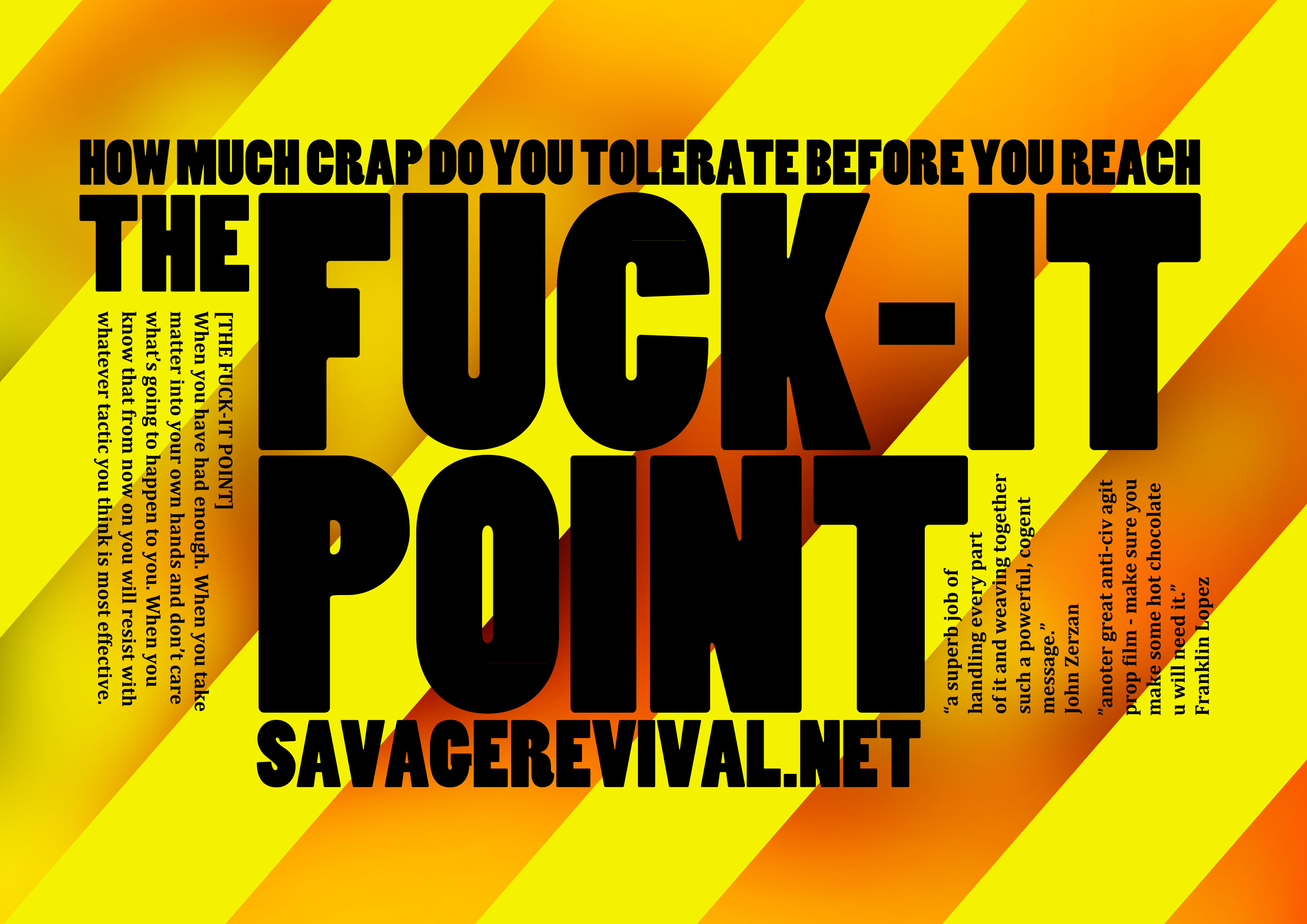
Saturday Matinee: The Fuck-It Point

THE-FUCK-IT-POINT

Synopsis by Savage Revival:

A film about civilization, why we should bring it down and why most civilized people don’t.

[THE FUCK-IT POINT]
‘When you have had enough. When you decide to take matters into your own hands and don’t care what’s going to happen to you. When you know that from now on you will resist with whatever tactic you think is most effective.’

Now Streaming: The Plague Years

3768363

By A. S. Hamrah

Source: The Baffler

When things are very American, they are as American as apple pie. Except violence. H. Rap Brown said violence “is as American as cherry pie,” not apple pie. Brown’s maxim makes us see violence as red and gelatinous, spooned from a can.

But for Brown, in 1967, American violence was white. Explicitly casting himself as an outsider, Brown said in his cherry pie speech that “violence is a part of America’s culture” and that Americans taught violence to black people. He explained that violence is a necessary form of self-protection in a society where white people set fire to Bowery bums for fun, and where they shoot strangers from the towers of college campuses for no reason—this was less than a year after Charles Whitman had killed eleven people that way at the University of Texas in Austin, the first mass shooting of its kind in U.S. history. Brown compared these deadly acts of violence to the war in Vietnam; president Lyndon B. Johnson, too, was burning people alive. He said the president’s wife was more his enemy than the people of Vietnam were, and that he’d rather kill her than them.

Brown, who was then a leader of the Student Nonviolent Coordinating Committee and who would soon become the Black Panther Party’s minister of justice, delivered a version of this speech, or rant, to about four hundred people in Cambridge, Maryland. When it was over, the police went looking for him and arrested him for inciting a riot. Brown’s story afterward is eventful and complicated, but this is an essay about zombie movies. Suffice it to say, Brown knows about violence. Fifty years after that speech, having changed his name to Jamil Abdullah al-Amin, he’s spending life in prison for killing a cop.

The same day Brown was giving his speech in Maryland, George A. Romero, a director of industrial films, was north of Pittsburgh in a small Pennsylvania town called Evans City. Romero was shooting his first feature film, a low-budget horror movie in black and white called Night of the Living Dead. Released in October 1968, the first modern zombie movie tells the story of a black man trying to defend himself and others from a sudden plague of lumbering corpses who feed on the living. At the film’s end, he is unceremoniously shot and killed by cops who assume he is a zombie trying to kill them. The cops quickly dispose of his body, dumping it in a fire with a heap of the undead, as a posse moves on to hunt more zombies.

Regional gore films were nothing new in themselves; a number had appeared earlier in the 1960s. Night of the Living Dead, with its shambling, open-mouthed gut-munchers dressed in business suits and housecoats, might have seemed merely gross or oddly funny in a context other than the America of 1968. But Martin Luther King Jr. had been assassinated six months before its release. The news on TV, which most people still saw in black and white, consisted largely of urban riots and war reports from Vietnam. The My Lai Massacre had occurred the month before King was shot.

Romero’s film, seen in the United States the year it came out, had more in common with Rome Open City than it did with a drive-in horror movie made for teens—it was close to a work of neorealism. And it was unfunny and dire, much like John Cassavetes’s Faces, released the same year, whose laughing drunks stopped laughing when they paused to look in the mirror. Romero was a revisionist director of horror in the same way that Peckinpah and Altman were in their career-making genres, the western and the war movie.

Romero cast an African American in the lead, and he shifted the horror genre’s dynamic, aligning it with black-and-white antiwar documentaries like Emile de Antonio’s In the Year of the Pig, also released in 1968, and distinguishing it from the lurid color horror films Roger Corman and Hammer Films had been turning out up till then. Those films made certain concessions to the film industry; Night of the Living Dead did not. This was an American horror movie, so it needed no English accents or familiar character actors. It was grim and unflinching, showing average citizens, played by average people, eating the arms and intestines of their fellow townsfolk. Romero drove home this central point—that a zombie-infested America differed from the status quo only in degree, not in kind—by ending his film with realistic-looking fake news photos depicting his characters’ banal atrocities.

Mainstream film reviewers, including Roger Ebert, were shocked and disgusted by Night of the Living Dead. They discouraged people from seeing it, but Romero’s images proved to be indelible. The film’s reputation grew. In 1978 Romero made the film’s first sequel, Dawn of the Dead, this time in color. Today, if there’s one thing every American knows, it’s that zombies can only be killed with a shot to the head. This is common knowledge, cultural literacy, a kind of historical fact, like George Washington chopping down the cherry tree. American-flag bumper stickers assert that “these colors don’t run,” but one of them does. It runs like crazy through American life, through American movies, and now TV, like a faucet left on.

Dead Reckonings

The Huffington Post has had a Zombie Apocalypse header since 2011, under which the editors file newsy blog posts chronicling our continuing fascination with zombie pop culture, alongside any nonfiction news story horrible enough to relate to zombies or cannibalism. The infamous Miami face-eater attack of May 2012, which the media gleefully heralded as the start of a “real” zombie apocalypse, contributed to America’s sense that it could happen here, provided we wished for it hard enough. Reading through the Zombie Apocalypse posts, one gets a growing sense that we want the big, self-devouring reckoning to happen because it is the one disaster we are truly mentally prepared for. It won’t be the total letdown of the Ebola scare.

The face-eating incident was initially linked to bath salts: ground-up mineral crystals everyone hoped would become the new homemade drug of choice for America’s scariest users. It turned out the perpetrator, although naked, was only high on marijuana. He was black, killed by the police as he gouged out his homeless victim’s eyes and chewed his face on a causeway over Biscayne Bay. The incident was captured on surveillance video. Here in the golden age of user-generated content, the zombie movies self-generate—much like zombies themselves. The bridge backdrop of this all-too-real zombie vignette neatly summed up both the crumbling condition of America’s infrastructure and our more generalized state of neoliberal collapse.

The zombie apocalypse, our favorite apocalypse, seems to unite the right and left. It combines the apocalypse brought about by climate change and the subsequent competition for scant resources with the one loosed by secret government experiments gone awry. Better still, both of these scenarios, as we’re typically shown in graphic detail, will necessitate increased gun-toting and firearms expertise.

More than that, the fast-approaching zombie parousia allows us to indulge our fantasies of a third apocalypse, one that only the most clueless don’t embrace: the consumerist Day of Judgment, in which we will all be punished for being fat and lazy and living by remote control, going through our daily routines questioning nothing as the world falls apart and we continue shopping. Supermarkets and shopping carts, malls and food warehouses all figure prominently in the iconography of the post–Night of the Living Dead zombie movie, reminding us that even in our quotidian consumerist daze, we are one step away from looting and cannibalism, the last two items on everyone’s bucket list.

Still, despite its galvanizing power to place all of humanity on the same side of the cosmic battlefront, the zombie apocalypse, like all ideological constructs, nonetheless manages to cleave the world into two camps. One camp gets it and the other doesn’t. One is aware the apocalypse is under way, and the other is blithely oblivious to the world around it.

To confuse matters further, people move in and out of both camps, becoming inert, zombified creatures when obliviousness suits their mood. People blocking our progress on the street as they natter into their hands-free earsets stare straight ahead, refusing to admit that other people exist. At least they don’t bite us as we flatten ourselves against walls to pass them without contact. A paradox of the ubiquity of zombie-themed pop culture is how there are surely next to no people left who have not enjoyed a zombie movie, TV show, book, or videogame, yet there are more and more people shuffling around like extras in a zombie film, moving their mouths and making gnawing sounds.

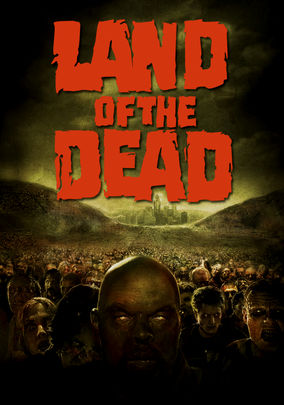
The smartphone-based zombification of street life is a strange testament to Romero’s original insight, which becomes more pronounced as the wealth gap widens. The disenfranchised look ever more zombie-fied to the rich, who in turn all look the same and act the same as they take over whole neighborhoods and wall themselves up in condo towers. This, indeed, is exactly what happens in Romero’s fourth zombie movie, 2005’s Land of the Dead, which predicted things as consequential as what happened during Hurricane Katrina in New Orleans and as minor as the rise of food trucks.

The Zombie Apocalypse is also a parable of the Protestant work ethic, come to reap vengeance at the end of days. It assures us that only very resourceful, tough-minded people will be able to hack it when the dead come back to life. If the rest had really wanted to survive—if they deserved to survive—they would have spent a little less time on the sofa. But here, too, the simple and obvious moral takes a perverse turn: the best anti-zombie combatants should be the ones who’ve watched the most zombie movies, yet by the very logic of our consumer-baiting zombie fables, they won’t be physically capable of survival because all they did was watch TV.

Selective Service

What these couch potatoes will need, inarguably, is the protection of a strong leader, one who hasn’t spent his life in the vain and sodden leisure pursuits that they’ve inertly embraced—Rick Grimes in The Walking Dead, for instance. Why such a person would want to help them is a question they don’t ask. With this search for an ultimate hero, the zombie genre has veered into the escapism of savior lust, leaving Romero’s unflinching, subversive neorealism behind. In Night of the Living Dead, a witless humanity is condemned by its own herd mentality and racism. In latter-day zombie fictions, a quasi-fascist social order is required, uniting us regardless of race, creed, or color.

The predicament of the characters (and the actors) in all the nouveau zombie movies relates to this passive consumerism. Both the characters and the actors in new zombie movies have to act like zombie films don’t already exist, even though the existence of Romero’s films is what permits the existence of the film they are in. Somehow, the characters pull their savvy out of thin air. They must pretend that they have never heard of zombies, even as they immediately and naturally know what to do once their own particular Zombie Apocalypse gets under way.

This paradox underscores the fantasy aspect of the twenty-first-century zombie infatuation, in which a fixed set of roles is available for cosplay in a repeatable drama that already took place somewhere else. The difference between Romero’s films and the new zombie movies is that the more time that passes since 1968, the more Romero’s films don’t seem like they were designed as entertainment—even as they are endlessly exploited by the zombie-themed cultural productions that copy them, and even as they remain entertaining. The new zombie films cannibalize Romero’s films in an attempt to remake them ideologically, so that we will stop looking for meaning in them and just accept the inevitable.

The Primal Hordes

A primal fantasy of the Zombie Apocalypse is that when the shit hits the fan, we will be able to kill our own children or parents. We won’t have a choice. The decision to get rid of the generation impeding us will have been made for us by the zombie plague, absolving us of responsibility. We are, after all, killing somebody who is already dead and who, in his or her current state, is a threat to our continued existence.

Against the generalized dystopian entertainment landscape that followed the economic collapse of 2008, the Zombie Apocalypse made more sense than ever. But YA action-drama dropped it in favor of promoting teen heroes who were stronger than their nice-but-loserish sad sack parents. This is the uplifting generational affirmation that imbues Suzanne Collins’s Hunger Games franchise and Veronica Roth’s Divergent trilogy.

YA comedy, on the other hand, did not ignore zombie movies. Instead, it domesticated the Zombie Apocalypse, making it friendly. Nonthreatening zom-coms showed young viewers how the opposite sex was really not that scary, that being in a couple was still the most important thing, and that dystopias gave nerds an unprecedented chance to prove they could get the girl or boy. Dystopia, it turns out, is really a best-of-all-possible-worlds scenario for starry-eyed-kids-with-a-disease, or so we learn from zom-coms like Warm Bodies and Life After Beth.

The latest iteration of this trend, which sets a zombie heroine in a marginally less dystopian world that mirrors our tentative economic comeback, is the CW TV show iZombie. The series is a brain-eating entertainment for tweens in which they learn you can be okay and have a chill job even if you’re a living corpse who’s just trying to figure things out. When a zombie gets her own tween-empowerment show on The CW, it’s a good indication that zombies don’t carry the stern, unbekannt stigmas they used to. Zombies, much like corpses in TV commercials, are used as grotesque comic relief in things like animated Adult Swim shows. Such is the diminished status of the zombie; it is now a signifier that can be plugged in anywhere. To paraphrase the undead philosopher of capitalism’s own walking-dead demise: first time cannibalism, second time farce.

Reality Bites

The way zombie movies progress, with isolated groups splitting into factions and various elimination rounds as contestants disappear, suggests that Night of the Living Dead is also a secret source of reality TV. It makes sense, then, that 2009’s Zombieland, one of the first YA dystopian zombie entertainments, was penned by screenwriters who created The Joe Schmo Show and I’m a Celebrity . . . Get Me Out of Here!

Zombieland’s protagonist, a college-age dude played by Jesse Eisenberg, is a bundle of phobias, an OCD-style follower of rules who finds himself in a Zombie Apocalypse after an unexpected date with a hot girl out of his league (Amber Heard) goes wrong. Mentored by Woody Harrelson, who more or less reprised this same role in the Hunger Games movies, Eisenberg’s millennial character undergoes a reality-TV-scripted makeover. In expiation for his pusillanimity in the opening reel, he winds up rescuing a tough girl (Emma Stone) who also would have been out of his league in the pre-Apocalypse scheme of dating. Zombieland presents Eisenberg as gutless and Stone as ruthless, but she’s the one who ends up a hostage, and he becomes her hero. In fact, one of his rules, “Don’t be a hero,” changes on screen to “Be a hero,” as we once again learn that millennials really do have what it takes to kill zombies. Earlier in the film, Eisenberg accidentally shoots and kills a non-zombie Bill Murray, playing himself, showing that millennials can also, regretfully, take out Baby Boomers, including the cool ones who aren’t undead.

Edgar Wright’s 2004 Shaun of the Dead, the first movie zom-com, was a more intelligent version of this same storyline. An English comedy from the “Isn’t it cute how much we suck?” school, Wright’s film acquiesced to the coupling-up plot rom-coms require, but not without first presenting the routine, pointless daily life of its protagonist (Simon Pegg) as pre-zombified. Shaun of the Dead will likely remain the only sweet little comedy in which the protagonist kills his mother, a scene the film has the guts to play without flinching. The joke of Wright’s film is that it takes something as brutal as a zombie apocalypse to wake us from our stupor and to show us how good we had it all along. By the film’s end, Pegg and his girlfriend (Kate Ashfield) are in exactly the same place they were when the film started, but now at least they live together. A cover of the Buzzcocks’ song “Everybody’s Happy Nowadays” jangles over the credits, providing a zombified dose of circa-1979 irony.

Wright and Pegg’s goofy rethinking of the zombie movie proved how firmly zombies are entrenched in our consciousness, and how easy they are to manipulate for comedic effect. The same month Shaun of the Dead came out, a Hollywood remake of Romero’s Dawn of the Dead was released. It, too, cleaned up at the box office. This new Dawn of the Dead seemed like it was made by one of the nerds in the American zom-coms, a jerk desperate to prove he’s bad-ass. (The director now makes superhero movies.) Johnny Cash’s “The Man Comes Around” accompanies the opening credits, setting a high bar for artistic achievement the ensuing film does not come near to clearing. Jim Carroll’s “People Who Died” plays at the end—its placement there as repulsive as anything else in the film.

As all nouveau zombie films must, the remake starts in the suburbs, where a couple is watching American Idol in bed, underscoring the genre’s newfound connection to reality TV. The film’s CGI effects, which at the time injected a souped-up faux energy into the onscreen mayhem, dated instantly. They’re now the kind of off-the-rack effects featured in Weird Al videos when someone gets hit by a car.

The main point of this new Dawn of the Dead is that after the Zombie Apocalypse, people will spend their time barking orders at each other and calling each other “asshole.” The film nods in the direction of loving the military and the police, and totally sanitizes Romero’s use of a shopping mall as a site of consumerist critique. Like many films of the 2000s, it postulates that living in a mall wouldn’t be a Hobbesian dystopia at all; it would be rad. If the remake had been made five years later, maybe it would have had to grapple with the “dead malls” that began to adorn the American landscape with greater frequency after the economy collapsed. Instead, the mall serving as the film’s principal backdrop is spotless and fun. The remake’s island-set, sequel-ready false happy ending makes one long for the denouement of Michael Haneke’s Funny Games—a longing more unimaginable than any real-life wish-fulfillment fantasy about the Zombie Apocalypse actually coming to pass.

The American Way of Death

Fanboys liked the Dawn of the Dead remake and, inexplicably, so did many critics. Manohla Dargis, then at the Los Angeles Times, wrote that the film was “the best proof in ages that cannibalizing old material sometimes works fiendishly well,” a punny sentiment she might well walk back today.

The next year, when George A. Romero released his first new zombie film in twenty years, it did not fare as well in the suddenly crowded marketplace of the undead. While Land of the Dead (2005) is fittingly seen as something of a masterpiece now, on its initial release it puzzled genre fans, who had gotten used to the sort of “fast zombies” that were first featured in the nihilistic-with-a-happy-ending British movie 28 Days Later (2002). Romero’s new film was as trenchant as his others, but many fans weren’t having it.

IMDb user reviews provide a record of their immediate reactions. “This movie was terrible!” one wrote the month Land of the Dead premiered. “The storyline—can’t use the word plot as that would give it too much credit—was tedious! Some say it was a great perspective on class? Are you kidding me!!!” Less then a year into George W. Bush’s second term, Romero was archly depicting a society much different from the one he’d shown in Night of the Living Dead. This new society—today’s—was more class-riven, more opportunistic, more cynical. And Romero, even while moving in the direction of Hawksian classicism, was exposing these failings with radical acuity. His dark fable of two Americas at war over the control of the resources necessary to survive was concise, imaginative, and well constructed. Few at the time wanted to consider the film’s style, which seemed out of date compared to the Dawn of the Dead remake. Fewer still wanted to grapple with its implications.

Ten years later, it is clear that no American genre film from that period digests and exposes the Bush era more skillfully than Land of the Dead. Romero’s film was uncomfortably ahead of its time, and like his other zombie work, it hasn’t dated; it speaks of 2015 as much as 2005. Tightly controlled scenes avoid the pointlessness and repetition of the nouveau zombie films, limning class struggle in unexpected ways. Zombies, slowly coming to consciousness, use the tools of the trades from which they’ve been recently dispossessed to shatter the glass of fortified condos. A zombie pumps gas through the windshield of a limo. The rich commit suicide, only to come back to life as zombies and feed on their children. America, as the original-zombie-era Funkadelic LP taught us, eats its young.

As zombie fantasies go, these scenes are much richer than the random, unsatisfying mayhem of the nouveau zombie films. Romero, unlike his counterparts, does not shy away from race. He shows African Americans pushing back against the injustices and indignities of a militarized police state, thereby completing a circle that began with Duane Jones’s performance in Night of the Living Dead.

Walking Tall

For the latest generation of zombie enthusiasts, the zombie genre means just one thing: AMC’s massively popular cable series The Walking Dead. The show is so much better than any of the recent non-Romero zombie movies that it’s among the leading exhibits in the case against the cineplex. The show’s politics and implications are widely discussed, and The Walking Dead has engendered national debate about all sorts of ethical issues, including something Romero’s films raised only in the negative: America’s future. But the first problem The Walking Dead solved was how to make its own debates about these things interesting: whenever scenes get too talky, a “walker” sidles up and has to be dispatched in the time-honored fashion. At its core, the zombie drama is like playing “You’re it!” The show could be called Game of Tag.

The Walking Dead debuted in 2010, emerging from a period in U.S. history when, all of a sudden, we found ourselves in a junked, collapsed, post-American environment. New dystopian dramas, especially the YA ones, reflected this chastened reality. The Walking Dead looked at first like it might become just another placeholding entry in this cavalcade of glumness, much like TNT’sSpielberg-produced, families vs. aliens sci-fi show Falling Skies. Zombies were maybe the most dated way possible to dramatize our newly trashed world.

It was The Walking Dead’s dated qualities, however, that saved it from becoming cable TV’s Hunger Games. The show’s grunge aesthetic and majority-adult cast situated it elsewhere. And if that particular elsewhere felt like the past as much as the future, that was part of what made the show work for premium cable’s Gen X audience. Greg Nicotero, a makeup man who worked under Romero, is one of the show’s producers. His presence indicated the people behind the show took the genre seriously, unlike anyone else in Hollywood who had touched it.

Television works by imitating success, by zombifying proven formulas through a process called mimetic isomorphism. When television producers saw The Walking Dead’s ratings beating broadcast-network ratings—a first for cable drama—they took notice and began spawning. Copies of copies like Resurrection, The Last Ship, The Leftovers, and 12 Monkeys showed that plague is contagious, but it doesn’t have to be zombie plague. Meanwhile, The Walking Dead continues its success, and AMC will debut a companion series this summer, unimaginatively called Fear the Walking Dead.

If the worst zombie movies unselfconsciously imitate higher-gloss broadcast-network reality trash like Survivor, The Walking Dead succeeds by staying closer to the lowest grade of cable-network reality TV. The world of The Walking Dead is closer to Hoarders than it is to Big Brother. Hoarders presents an America engulfed in mounds of trash that its psychologically damaged possessors can’t part with. Mounds of Big Gulp cups and greeting cards and heaps of car parts and instruction manuals overwhelm their homes, spilling into their yards. Shows like Storage Wars, Pawn Stars, and American Pickers present an America of valueless junk that maybe somebody can make a buck on—if only by televising it for our own lurid delectation. These shows are the opposite of pre-collapse valuation shows like Antiques Roadshow, in which the junk people had lying around proved to be worth more than they had imagined. The detritus of Hoarders is worthless, the kind of trash that will blow around everywhere after the Zombie Apocalypse.

Hoarders vs. Horde

In his recent book 24/7, an analysis of the end of sleep and our twenty-four-hour consumption-and-work cycle, Jonathan Crary writes that “part of the modernized world we inhabit is the ubiquitous visibility of useless violence and the human suffering it causes. . . . The act of witnessing and its monotony can become a mere enduring of the night, of the disaster.” Zombies, not quite awake but never asleep, are the living-dead reminders of this condition, stumbling through our fictions. When they are not transformed by the wishful thinking of ideology into our pals, they retain this status.

Celebrated everywhere, zombies are the opposite of celebrities, who swoop into our disaster areas like gods from Olympus to rescue us from the calamities that also allow them to flourish. Zombies, far from being elevated, descend into utter undistinguishable anonymity and degradation, which is why they can be destroyed in good conscience. Brad Pitt, one of the producers of ABC’s Resurrection, also starred in World War Z, the most expensive zombie movie ever made. The last line of that odious movie—the first neoliberal zombie movie—is “Our war has just begun.”

Whatever that was supposed to mean to the audience, these fables of the plague years drive home just who the zombies are supposed to be—and who, when the plague hits, will helicopter out holding the machine guns. Col. Kurtz’s faithful devotee from Apocalypse Now, Dennis Hopper, the counterculture hero who became a Republican golf nut, plays the leader of the remaining 1 percent in Land of the Dead. “We don’t negotiate with terrorists,” he says when he’s faced with the choice between his money and our lives.

Life Imitates “Black Mirror”

images
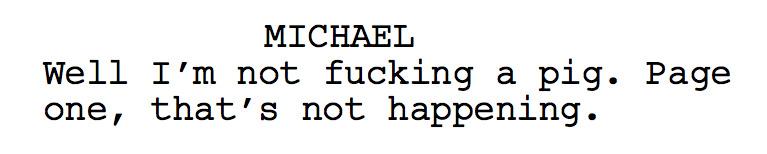
Fans of the superb dystopian series “Black Mirror” (including myself) had our collective minds blown by recent claims (first widely reported by the Daily Mail) that British Prime Minister David Cameron performed a sexual act with a pig carcass as part of a depraved initiation ritual. The story would be very bizarre even had it not mirrored a key plot point of the premiere episode of Dark Mirror. No doubt besieged by questions about the recent news, Dark Mirror creator Charlie Brooker took to Twitter to state: “Just to clear it up: nope, I’d never heard anything about Cameron and a pig when coming up with that story. So this weirds me out.”

These are the most recent statements on the topic from Brooker’s Twitter feed (as of 9/21/15):

  1. Perhaps the least prescient line from the script.

    Embedded image permalink
    2,262 retweets 2,519 favorites


    I hope White Bear doesn’t come true next.

    1,280 retweets 1,563 favorites


    Just to clear it up: nope, I’d never heard anything about Cameron and a pig when coming up with that story. So this weirds me out.


Read more about David Cameron’s days of elitist debauchery at Oxford.

Was this a case of insider knowledge, extra sensory perception, retrocausality, premonition, intuition or coincidence? Watch the full episode and judge for yourself.

Prophecy, Spirit and the Dreamtime

spiritual-phenomena-other-dimensions

By Jay Weidner

Source: ZenGardner.com

The mythology of our modern, high-tech culture teaches us that the last frontier for humanity is outer space. Somehow, according to this emerging mythos, the fragile human body is supposed to be able to survive the rigors of travel in outer space over vast distances. The writers of science fiction and Star Trek-style television shows would have us believe that human beings can somehow endure through every kind of radiation and danger to successfully colonize other planets and solar systems.

But this notion is probably never going to happen. As this age ends and the next age begins humanity will lose its interest in conquering space. The last 6000 years have been spent conquering the space around us.

The last frontier of humanity is not the conquering of outer space, of other planets and solar systems. As we approach the end of this era we will realize that the last frontier is time.

Space is defined by the three dimensional reality that surrounds us. It is height, width and depth. We humans possess the most spectacular array of physical and mental abilities ever devised in creation to navigate these three dimensions. These abilities have enabled us to conquer our three-dimensional world.

Now at this critical juncture in history we discover that we have completely conquered the planet’s biosphere. People are living in the coldest environments imaginable and in the hottest tropical jungles. There are few mysteries left concerning the outer physical reality of our planet. Due to oil and cheap energy, we have been able to travel to any place on Earth. As this age of oil ends there will be only one mystery left for us to ponder.

This final mystery is the mystery of time.

Let’s take a look at our perception of time. Much of the way we experience the present moment depends on our experience of time past. The events of the past are distilled and repainted in our memories until their very reality loses its solidity. If we let them cook long enough, images of past events take on a dream like quality. Through this process, our remembrances frequently slide into a fantasy disconnected from anything tangible.

How often have we encountered someone who remembers an incident in a completely opposite manner from the way we remember it? Our minds appear to be constantly rewriting history to make it more agreeable to our present day wishes. Incidents in the past that are disturbing or frightening are frequently glossed over in our memory until they disappear only to be replaced by a memory that is more easily digested by consciousness.

Our view of the future works in a similar but opposite texture. Whereas the past begins to become a dream within our memories, the future is the dream that has not yet arrived. When someone is successful in the material world we like to say that they have “lived their dreams”. This cliché reveals an intrinsic understanding that present and future reality is created from the dream state of the past.

This idea dovetails with the central belief of the Aborigines of Australia. The essential teaching from that tradition is that everything in our world begins in the Dreamtime. From their ancient perspective, every thought, every action emerges from a larger metaphysical landscape that surrounds and pervades our material world. They call this larger reality the Dreamtime. According to this tradition, each living thing first begins in the Dreamtime. After it has become fully developed in the Dreamtime it then concretizes and becomes a part of our three dimensional reality.

This process is recursive in that our future dreams are frequently constructed from the archetypes of ancient dreams. So the past and the future, the material world and the dream world work together to create not only everything that we see, feel and hear but all that we have manifested as human beings. If one looks beyond the veil of linear time, one can easily see that there is a certain control mechanism over this peculiar process. Because reality is so dependent on the dream world, it is possible to shift reality by simply shifting the dream.

Motivational speakers, politicians, television script writers, preachers and many others understand this fundamental concept and use it to re-script reality in their favor. The last thing that they want you to discover is that you have the innate ability to take control of your dreams. They much prefer that you dream their dream, live in their past and help build their future.

Just think about the nature of the media these days. Over the past century, finding new and ever more invasive means of manipulating thoughts, desires and actions have been at the forefront of the research conducted by “psychic engineers”; the advertising agencies, spin doctors, pollsters, pharmaceutical companies, and secret government agencies of our world.

Through the constant barrage of images projected by the media, through the manipulation of food, and the polluting of the atmosphere, much of humanity has become lulled into a hypnotic state and their Dreamtime is occupied with nightmares. This has led us to today, to the present moment, in which our planet and our species are in a state of crisis. To transmute this crisis, this very critical situation in time, we must learn to step outside of linear time and enter the Dreamtime, that subtle realm in which everything becomes possible.

As the word Dreamtime aptly describes, there is little difference between the dream and the time. This very moment will become a dream soon in your memory. Also you are creating the future that is racing towards you – right now.

The dream world, time and four-dimensional space are all the same thing. The fourth dimensional world, often referred to as ‘time’ by physicists, surrounds and permeates our three dimensional reality. Everything that we are is shaped and formed within this topological manifold that flows into and out of our existence. As the stream of time passes we have the ability to alter it’s course. Each moment of our lives offers us the chance to change the course of our dreams and the dreams of those we love.

Understanding this landscape, the ragged mountains and mossy valleys of the wilderness of time, is the frontier that awaits us. When we finally colonize this land and understand its many intricacies and nuances, we will realize that any future is possible. We will no longer need to be slaves to systems that require us to live in someone else’s dream. The powers of the dark sorcerers that rule our world will be overthrown and a new Dreamtime will be created. When we discover how to navigate the river of time, when the topological map of time is finally understood by us, all of the certain dangers that await us will vanish in the blink of an eye during REM sleep.

We are at the crossroads now. There is a choice. One road leads to a mechanistic, toxic, polluted, fascist nightmare from which we may never recover. The other road leads to a revitalized world where we live our dreams in freedom, prosperity and love.

One of the main aims of many ancient spiritual traditions is to provide us with the means to create a conscious break with the almost dictatorial dreams of our past. This is the essence of the teachings of the Buddha for instance. We are slaves to the dreams that we were born into, slaves to a past of which we had nothing to do. Many of these ancient spiritual traditions teach us how to break with the mental slavery that has burdened us for so long.

Humans frequently hurt themselves and others around them defending the imprinted dreams of their past and creating belief systems that make it all right to hurt and destroy people who come from a different past, a different dreamtime.

The way to stop this recurring cycle is to find our way towards a detachment from the heated beliefs and ego-inspired histories and cultures that we were born into. This is not to say that we should reject our traditions. Only that true liberation of ourselves can only begin when we detach ourselves from ingrained spiritual and cultural habits.

Right now we are trapped by time. And this means that we are trapped in a Dreamtime from which escape is nearly impossible. But as long as there is a chance, as long as the odds are not one hundred percent against us – and they are not – we should attempt to make this leap.

If we change the dream we can change the world and ourselves.

The spiritual emergence that is happening right now across the world is the realization that there is only one kind of time. There is no past and there is no future.

There is only NOW.

And we can change the NOW at any time that we like.


For more about the Shasta movie, go to ShastaMovie.com

Jay Weidner’s websites –    JayWeidner.comGaiamTV.com

Jay Weidner’s DVDs

Jay Weidner’s book:
“The Mysteries of the Great Cross of Hendaye: Alchemy and the End of Time”

Was Afghanistan’s Invasion Also Based on Lies?

binladen01_04

It’s Time for a Real Investigation

By Jack Balkwill

Source: Dissident Voice

There appears to be a bigger lie than “weapons of mass destruction.”  It’s not simply that the illegal invasion of Iraq was based on lies, but that the entire “war on terrorism” is likely based on lies.

We were told by our government that Afghanistan was invaded for giving shelter to Osama bin Laden, who was responsible for the 9/11 attacks.  Mainstream press have pushed this so repeatedly that “9/11″ and “Osama bin Laden” have become interchangeable.

While working on this piece I asked the first three people I ran into at my local grocery store “Who was responsible for the 9/11 attacks?,”  three times getting “Osama bin Laden” for replies.  This is not scientific, yet it makes one wonder how this would work out in national polling.

But what if bin Laden was not responsible for the 9/11 attacks despite the drumbeat of government officials and the corporate press?  What if there has been a rush to judgment to make it appear the Bush regime was taking definitive action?

The invasion of Afghanistan certainly wasn’t about the Taliban – the Bush regime gave the Taliban $43 million in “aid” only four months before the 9/11 attacks, so were on friendly terms.

Following are three reasons to question official sources on their casus belli for invading Afghanistan.

Attempts to Peacefully Resolve the Issue

First, before the invasion of Afghanistan, the Taliban offered to try bin Laden in exchange for evidence that he was responsible for the 9/11 attacks.

President Bush provided no evidence, and invaded Afghanistan instead.

After the start of the U.S. air campaign, the Taliban offered to send bin Laden to a third country for trial if evidence could be provided that he had been involved in the 9/11 attacks – a proposal the United States also promptly rejected.

Why not provide evidence, if it were available, to prevent a war?  It was obvious that the people of Afghanistan would defend their country from a foreign invasion, as they had since Alexander the Great invaded, and there would be a great loss of life (see Roman Empire, British Empire, USSR, etc.).

There can only be two answers– that there was no evidence supporting the cause for invasion, or that former President Bush is a psychopath who doesn’t care about human life, so contemptuously ignored the request for evidence.

Bin Laden’s Denials

Second, bin Laden denied, more than once, in the months following 9/11, that he was involved in the dirty deed.  Less than a week after the 9/11 attacks, al Jazeera quoted bin Laden:  “The U.S. government has consistently blamed me for being behind every occasion its enemies attack it.  I would like to assure the world that I did not plan the recent attacks, which seem to have been planned by people for personal reasons.”

In an interview with Pakistan’s Karachi Ummat on 28 September 2001, bin Laden was quoted,

Neither I had any knowledge of these attacks nor I consider the killing of innocent women, children, and other humans as an appreciable act. Islam strictly forbids causing harm to innocent women, children, and other people. Such a practice is forbidden ever in the course of a battle. … I have already said that we are against the American system, not against its people, whereas in these attacks, the common American people have been killed.

This is a translation from Arabic to Urdu to English, and may not be entirely clear.  But for those who believe bin Laden was lying, I would suggest they come up with a motive for such a lie.  The USA had offered a $25 million reward for information leading to his capture, and President Bush had threatened “I want justice, and there’s an old poster out West that says, ‘Wanted Dead or Alive,’” so bin Laden had nothing to gain from such a lie – he was condemned either way.  Bin Laden’s followers would have admired him as a great hero for having taken on the USA, so he had much to gain by accepting responsibility for the 9/11 attacks, were it a fact.

Demonization

Third, there was an extensive effort to demonize bin Laden, at times with apparently false charges.  Why would this be necessary for one who was guilty?

Our government and corporate media, as one on National Security State issues, made him out to be abominable, and without providing evidence, unceasingly assumed his guilt.  Recordings were blasted and headlined in Western corporate print and electronic media of bin Laden accepting responsibility for 9/11.  The public were not given the same eyeball-grabbing headlines when the recordings were proven to be likely bogus.

Here is a Guardian report showing that Swiss Scientists suggested that an audio tape of bin Laden taking responsibility was likely faked, although widely broadcast in the corporate press as evidence of his involvement in 9/11 attacks.

Here’s a BBC report showing how the “smoking gun” video may have been faked, again, after the corporate press hyped the video as incontrovertible evidence.

Conclusion

The official version, that 19 Arab hijackers were responsible, has flaws.  One flaw was that many of the alleged hijackers have been found alive and well since 9/11.  Of course, it may be that the hijackers used pseudonyms to conceal their identities.

But getting beyond these 19 Arabs is difficult because they are all dead and cannot be interviewed.  Official government investigations into 9/11, much of which are classified, look like reflexive actions to neatly tie up loose ends rather than serious inquiries.

Certainly, as Ward Churchill pointed out (and lost his job for raising the issue), Arabs had a clear motive for the 9/11 attacks, with the UN revealing, only two years earlier, that the sanctions pushed mainly by the USA on the people of Iraq resulted in over 500,000 deaths of children under age five, mostly Arab, and most Arabs were aware of this and seething with anger.

To jump to the conclusion that bin Laden was behind the 9/11 attacks causes one to wonder, “Why then did the FBI never bring charges against bin Laden for the hijackings and murders?  Why did the wanted posters (up to his death he was on the FBI ten most wanted list) not mention the biggest crime, though they mentioned smaller terrorist incidents as reasons for his being on the list?

We may never know if bin Laden was responsible for 9/11, but his involvement was used as the excuse for invading Afghanistan and slaughtering a massive number of people, based on the assumption that they gave bin Laden refuge.

Just as nobody has been charged with a crime for the illegal invasion of Iraq based on lies, it would appear that an investigation is in order involving the justification behind invading Afghanistan, starting with the matter of proof that bin Laden was directly involved.  The American people and the people of Afghanistan have every right to be presented with the evidence.

Jack Balkwill is an activist in Virginia. He can be reached at libertyuv@hotmail.com Read other articles by Jack.

Related article: Who Was Really Behind the 9/11 Attacks?

Indulge . . . & Undermine

Crimethinc._boat_logo

Source: CrimethInc.

Have you noticed—exhortations to indulge yourself are always followed by suggestions? Adherents of doctrines seek footholds to claim territory within you, salesmen grasp for handles to jerk you around . . . from new-age prophets to advertisers, from pornographers to radicals, everyone exhorts you to “pursue your desires,” but the question remains: which ones? The “real” ones? Who decides which those are?

This just makes it clear what’s going on: a war for your soul on every front. And those much talked-about desires are all constructed, anyway—they change, they’re dependent on external factors, culture, the whole context and history of our society. We “like” fast food because we have to hurry back to work, because processed supermarket food doesn’t taste much better, because the nuclear family—for those who still have even that—is too small and stressed to sustain much festivity in cooking and eating. We “have to” check our email because the dissolution of community has taken our friends and kindred far away, because our bosses would rather not have to talk to us, because “time-saving” technology has claimed the hours once used to write letters—and killed all the passenger pigeons, besides. We “want” to go to work because in this society no one looks out for those who don’t, because it’s hard to imagine more pleasurable ways to spend our time when everything around us is designed for commerce and consumption. Every craving we feel, every conception we form, is framed in the language of the civilization that creates us.

Does this mean we would want differently in a different world? Yes, but not because we would be free to feel our “natural” desires—no such things exist. Beyond the life you live, you have no “true” self—you are precisely what you do and think and feel. That’s the real tragedy about the life of the man who spends it talking on his cell phone and attending business seminars and fidgeting with the remote control: it’s not that he denies himself his dreams, necessarily, but that he makes them answer to reality rather than attempting the opposite. The accountant regarded with such pity by runaway teenage lovers may in fact be “happy”—but it is a different happiness than the one they experience on the lam.

If our desires are constructs, if we are indeed the products of our environment, then our freedom is measured by how much control of these environments we have. It’s nonsense to say a woman is free to feel however she wants about her body when she grows up surrounded by diet advertisements and posters of anorexic models. It’s nonsense to say a man is free when everything he needs to do to get food, shelter, success, and companionship is already established by his society, and all that remains is for him to choose between established options (bureaucrat or technician? bourgeois or bohemian? Democrat or Republican?). We must make our freedom by cutting holes in the fabric of this reality, by forging new realities which will, in turn, fashion us. Putting yourself in new situations constantly is the only way to ensure that you make your decisions unencumbered by the inertia of habit, custom, law, or prejudice—and it is up to you to create these situations. Freedom only exists in the moment of revolution.

And those moments are not as rare as you think. Change, revolutionary change, is going on constantly and everywhere—and everyone plays a part in it, consciously or not. “To be radical is simply to keep abreast of reality,” in the words of the old expatriate. The question is simply whether you take responsibility for your part in the ongoing transformation of the cosmos, acting deliberately and with a sense of your own power—or frame your actions as reactions, participating in unfolding events accidentally, randomly, involuntarily, as if you were purely a victim of circumstance.

If, as idealists like us insist, we can indeed create whatever world we want, then perhaps it’s true that we can adapt to any world, too. But the former is infinitely preferable. Choosing to spend your life in reaction and adaptation, hurrying to catch up to whatever is already happening, means being perpetually at the mercy of everything. That’s no way to go about pursuing your desires, whichever ones you choose.

So forget about whether “the” revolution will ever happen—the best reason to be a revolutionary is simply that it is a better way to live. It offers you a chance to lead a life that matters, gives you a relationship to injustice so you don’t have to deny your own grief and outrage, keeps you conscious of the give and take always going on between individual and institution, self and community, one and all. No institution can offer you freedom—but you can experience it in challenging and reinventing institutions. When school children make up their own words to the songs they are taught, when people show up by the tens of thousands to interfere with a closed-door meeting of expert economists discussing their lives, that’s what they’re up to: rediscovering that self-determination, like power, belongs only to the ones who exercise it.


Shout it over the rooftops: Culture can belong to us. We can make our own music, mythology, science, technology, tradition, psychology, literature, history, ethics, political power. Until we do, we’re stuck buying mass-produced movies and compact discs made by corporate mercenaries, sitting faceless and immobilized at arena rock performances and sports events, struggling with other people’s inventions and programs and theories that make less sense to us than sorcery did to our ancestors, shamefacedly accepting the judgments of priests and agony columnists and radio talk show hosts, berating ourselves for not living up to the standards set by college entrance exams and glamour magazines, listening to parents and counselors and psychiatrists and managers tell us we are the ones with the problems, buying our whole lives from the same specialists and entrepreneurs we sell them to—and gnashing our teeth in secret fury as they cut down the last trees and heroes with the cash and authority we give them. These things aren’t inevitable, inescapable tragedies—they’re consequences of the passivity to which we have relegated ourselves. In the checkout lines of supermarkets, on the dialing and receiving ends of 900 numbers, in the locker rooms before gym classes and cafeteria shifts, we long to be protagonists in our own epics, masters of our own fate.

If we are to transform ourselves, we must transform the world—but to begin reconstructing the world, we must reconstruct ourselves. Today all of us are occupied territory. Our appetites and attitudes and roles have all been molded by this world that turns us against ourselves and each other. How can we take and share control of our lives, and neither fear nor falter, when we’ve spent those lives being conditioned to do the opposite?

Whatever you do, don’t blame yourself for the fragments of the old order that remain within you. You can’t sever yourself from the chain of cause and effect that produced you—not with any amount of willpower. The trick is to find ways to indulge your programming that simultaneously subvert it—that create, in the process of satisfying those desires, conditions which foster new ones. If you need to follow leaders, find leaders who will depose themselves from the thrones in your head; if you need to “lead” others, find equals who will help you dethrone yourself; if you have to fight against others, find wars you can wage for everyone’s benefit. When it comes to dodging the imperatives of your conditioning, you’ll find that indulge and undermine is a far more effective program than the old heritage of “renounce and struggle” passed down from a humorless Christianity.

To return, finally, to the original question—yes, we too are making suggestions about which desires you pursue. We would be scoundrels to deny that! But we would be scoundrels not to make these suggestions, not to extol freedom and self-determination in a world that discourages them. Exhorting others to “think for themselves” is ironic—but today, refusing to oppose the propaganda of the missionaries and entrepreneurs and politicians simply means abandoning our society and species to their control. There’s no purity in silence. And liberty does not simply exist in the absence of control—it is something we have to make together. Taking responsibility for our part in the ongoing metamorphoses of the world means not being afraid to take part in the making of our society, influencing and being influenced as we do.

We make suggestions, we spread this propaganda of desire, because we hope by doing so to indulge our own programmed passion for propaganda in a way that undermines an order that discourages all of us from playing with our passions—and so to enter a world of total liberty and diversity, where propaganda and power struggles alike are obsolete. See you on the other side.

Related Video:

Upside down economics of debt, poverty, unemployment: Ready to seize solutions now, or do you require more pain?

2013-09-07_1503

By Carl Herman

Source: The Daily Censored

“If people were really self-interested, they would stop trying to be individualistic.” – John B. Cobb, founder of Seizing an Alternative conference (and here, videos here)

Economic Hitman John Perkins’ 2-minutes on today’s neo-colonialism capitalism:

Demonocracy’s 2-minutes on what the US national debt looks like if shown in actual amounts of $100 bills:

Earth economics is upside down.

Accelerating technology can and should provide:

  • more personal freedom from labor,
  • more beauty in infrastructure and nature,
  • greater joy in our freedom to create and explore our beautiful, powerful, and diverse virtues (something like “resource-based economics” as researched by The Venus Project).

We know what we have is in contrived Orwellian opposition of what leadership should create. We know that what we receive is literal criminal fraud:

I could go on to literally ~100 areas of crucial concern.

The first challenge for the 99.99% is to trust their own Emperor’s New Clothes observations that Earth is truly in this tragic-comedy rather than listen to the .01%’s lies attempting to cover naked facts anyone can see.

Please understand that I represent likely hundreds of thousands of professionals making factual claims with objective evidence anyone with a high school-level of education can verify. For example, the June 2015 Seizing an Alternative conference (and here, videos here) at the Claremont Colleges had hundreds of professionals presenting data and solutions in over 80 areas of speciality. My paper and videos for this conference is here.

The purpose of education since the “Age of Enlightenment” is to present facts for public verification, and to seize the victory of refuting lies by would-be dictators, especially when such lies are obvious and of crucial public importance.

The path forward as we build a critical mass of humans recognizing the Emperor’s New Clothes truth is to demand arrests and solutions, obviously:

  1. ARRESTS: the first responsible action upon recognizing massive crimes that annually kill millions, harm billions, and loot trillions is to demand that law enforcement and military enact arrests of criminal leaders to stop the crimes and begin unwinding the truth of what happened in Earth’s tragic-comedy (four-part article series with videos on arrests as the obvious citizen response).
  2. SOLUTIONS: the .01% with corporate media have suppressed solutions documented beginning with Benjamin Franklin how government can abundantly operate without taxes: monetary and credit reform allow the public to have near-instant prosperity: full-employment, zero public deficits and debt, the best infrastructure we can imagine, falling prices, and release of public TRILLIONS held in “rainy day” accounts. Full documentation here.

Humanity’s choices:

  1. Ongoing .01% Orwellian, upside-down, tragic-comic, Emperor’s New Clothes crimes with all the pain, fear, harm, death, debt, poverty, enslavement, crime, destruction, and despair.
  2. Arrests to stop the crimes of the present, and ready-to-start solutions to build a brighter future.

Be your brightest light as the person you’ve always wanted to be.

Former World Bank economist Herman Daly and co-author John B. Cobb of For the Common Good discuss our condition and pathways forward in this 40-minute interview:

Carl Herman is a National Board Certified Teacher of US Government, Economics, and History; also credentialed in Mathematics. He worked with both US political parties over 18 years and two UN Summits with the citizen’s lobby, RESULTS, for US domestic and foreign policy to end poverty. He can be reached at Carl_Herman@post.harvard.edu