Did the CIA Kill Hugo Chavez?

Chavez

Today marks the first anniversary of the death of Venezuelan President Hugo Chavez. As Washington DC and U.S. corporate media do everything in their power to shift popular support towards the conservative opposition, now is a good time to remember what Chavez and his party stood for, why the U.S. hated him so much, why his people loved him, and how and why the CIA may have assassinated him. These and other topics are discussed in the interview transcript below with author and historian William Blum by John Robles first published by Stop NATO. For more details about likely CIA involvement in the death of Hugo Chavez, read http://www.madcowprod.com/2013/03/08/who-killed-hugo-chavez/.

The CIA has Attempted to Assassinate 50 Foreign Leaders Including Chavez

The late Venezuelan President Hugo Chavez was warned by Fidel Castro to be careful of a very specific attack, namely a quick jab from an infected needle. Such a warning coming from a leader who has reportedly been the target of CIA assassination plots more than 600 times in over 50 years, was sure to be heeded.

Was the illness of Hugo Chavez a completely deniable assassination by the CIA? William Blum spoke with the VOR’s John Robles and discussed this issue and more.

Robles: I’ve read your Anti-Empire report regarding Hugo Chavez. Can you give us your comments on speculation that he was assassinated by the CIA?

Blum: I cannot prove it of course, but I believe he was. It would be totally in keeping with the entire history of the CIA and its attitude towards people like Hugo Chavez.

The CIA has attempted to assassinate more than 50 foreign leaders and successfully at least half the time. And very few of them were as despised by the US government as Chavez was, I would say. So, there would be no reason at all to expect that the CIA would not at least plan on killing, and the nature of his ailment is very odd.

He went from a cancer, which would not go away despite several sessions of chemotherapy and what have you. Then it went to serious lung infections, which would not go away no matter what they did. And then it went to, suddenly, a massive heart attack. All in the same man with no apparent cause, he was only 58-years-old, and as far as we know he was a very healthy until this happened, it is all very odd.

And given the great motivation that the US Government and the persons in the CIA has put for killing a man like Hugo Chavez, I’m pretty sure that the CIA played a role in this.

Robles: Do you know or have you heard of any credible new technology or new programs that could deliver such a cancer?

Blum: The means would be a needle with a quick, sharp jab and what you need is getting one person close enough to Chavez to do that.

Chavez was always in the public eye, he was always embracing people. There must have been countless occasions in the past few years when he was vulnerable to a quick jab by a needle that would be the method of transmitting the ailments.

Robles: Did he ever complain that he had been poked by something in public? Were there any reports of anything like that happening that you had heard about?

Blum: He did mention that Fidel Castro warned him about just that. He said: “A quick jab with a needle, and they’ll do…I don’t know what!” Actually he was told by Fidel.

Robles: A quick jab with a needle. Do you think that happened with Fidel because he had become very ill?

Blum: Well, Fidel…According to Cuban intelligence, there were more than 600 attempts on the life of Fidel Castro by the CIA. There is an entire book on that subject by Cuban intelligence.

And many of the methods were pretty bizarre, including an exploding cigar, but over the course of 50 years the Cubans claim there were more than 600 attempts on his life and it may have taken just one with Chavez.

Robles: Have you heard anything from your sources or from where you get some of your information? Have you heard anything detailing any connection between these two US Air Force attaches that were expelled from the country and the death of Hugo Chavez?

Blum: No. I would assume that there is a connection but I don’t know if the Venezuelan government has actually said so.

Getting back to Chavez’s case, we have to keep in mind that four other South American leaders, prominent people on the left, all came down with cancer within the past year or two.

Robles: I think it was seven, wasn’t it, altogether?

Blum: The four that I named in my report…You can add the ones that you know just for my information… were Cristina Fernandez…

Robles: De Kirchner, right…

Blum: of Argentina, Dilma Rousseff of Brazil, Fernando Lugo of Paraguay, the former Brazilian head of state Lula da Silva. Who would you add into that list?

Robles: Well, and then of course Hugo Chavez himself…

Blum: Castro is one of them…

Robles: I would add Castro to the list and Kirchner’s husband who died of a mysterious heart attack as well.

Blum: Right.

Robles: We might add that as a mysterious illness, not exactly a cancer but…

Blum: Right! If the CIA was involved it doesn’t have to be cancer necessarily of course.

Robles: Oh, sure, it could be anything. Have you heard anything about cancer strains or any kind of killing weapons like this, any kind of biological weapons that would give maybe cancer-like symptoms, not exactly a certain type of cancer?

Blum: I very well may have read of such over the years. I have read so much about the CIA, but at the moment I can’t think of anything to supply you with that information. Although we do know, it is well known, that for decades the CIA was looking for a method of killing somebody which would not leave a trace. The CIA itself has used those words. For the entire period of the Cold War that was a major stated project of the CIA. But where that stands today, I have no idea.

Robles: Yes, of course that is all very secret and no one is going to talk about it, but perhaps there are some echoes or some whispers? Maybe somebody has come out and said something? What other reasons would you give to back up the argument that he was assassinated?

Blum: I will mention there is no one in the entire universe who was more hated, no leader more hated than Chavez was by the US government. In the eyes of the US power that be, Chavez was worse than Fidel Castro and Salvador Allende.

Robles: Why was he so hated?

Blum: Because he was the most outspoken leader in the world when it came to criticizing US foreign policy. He never pulled his punches for a moment, he made a claim that it was all crimes against humanity and the US leaders were war criminals, and he said so explicitly. It is unusual for a head of state to be talking that way. And at the UN he attacked Bush in front of the whole world.

Robles: Oh yes, I remember he said that the Devil had been there the day before or something, and it still smelled like sulfur.

Blum: Yes, Bush had spoken to the UN before Chavez from the same platform. And Chavez said there was a smell of sulfur in the air because of that.

Robles: That’s usually the domain of the United States, I mean… Isn’t it? I mean Bush was calling everybody the axis of evil, and all this stuff, branding everyone evil. Wasn’t that kind of a shock to see the same thing done to an American leader?

Blum: Yeah, it is a shock for anyone under any circumstances to be so outspoken in the criticism of the US foreign policy. It is a point in Chavez’s favor that he could have the honesty and the courage to say such things, which very much needed to be said.

Robles: So, you supported the way he stood up?

Blum: Well, in general yes. I think there certainly were times when he may have overdone it, even for me. I mean, he felt obliged to comment on everything under the sun, and I thought several times that he could have held off on saying certain things, they were not serving any good purpose. But that’s a minor criticism of his overall marvelous record.

Robles: You say he had a marvelous record. What do you think were his major achievements in your opinion?

Blum: What he’s brought to the poor people of Venezuela in the way of education and healthcare, and housing, and what have you. And what he brought to the rest of the South America, he formed various anti-US empire blocs which stood in the way of expansion of the US influence.

He and others formed a new…A counter to the OAS, the Organization of American States, which for decades has been dominated and corrupted by the US and Canada. And they formed a new organization in South America excluding the US and Canada. So it was that simple.

Robles: Do you think his achievements will continue or do you think the US will be successful in rolling back everything he did? Which of course I assume they would want to.

Blum: Yes, they would want to. But if Maduro who was chosen and backed by Chavez, wins, and he is expected to win in the election next month, then most of it will continue, I assume.

Stop NATO e-mail list home page with archives and search engine:
http://groups. yahoo.com/ group/stopnato/ messages

Stop NATO website and articles:
http://rickrozoff. wordpress. com

Overthrowing other people’s governments: The Master List

Corporate-domination

By William Blum

Originally posted at RINF.com

Instances of the United States overthrowing, or attempting to overthrow, a foreign government since the Second World War. (* indicates successful ouster of a government)

  • China 1949 to early 1960s
  • Albania 1949-53
  • East Germany 1950s
  • Iran 1953 *
  • Guatemala 1954 *
  • Costa Rica mid-1950s
  • Syria 1956-7
  • Egypt 1957
  • Indonesia 1957-8
  • British Guiana 1953-64 *
  • Iraq 1963 *
  • North Vietnam 1945-73
  • Cambodia 1955-70 *
  • Laos 1958 *, 1959 *, 1960 *
  • Ecuador 1960-63 *
  • Congo 1960 *
  • France 1965
  • Brazil 1962-64 *
  • Dominican Republic 1963 *
  • Cuba 1959 to present
  • Bolivia 1964 *
  • Indonesia 1965 *
  • Ghana 1966 *
  • Chile 1964-73 *
  • Greece 1967 *
  • Costa Rica 1970-71
  • Bolivia 1971 *
  • Australia 1973-75 *
  • Angola 1975, 1980s
  • Zaire 1975
  • Portugal 1974-76 *
  • Jamaica 1976-80 *
  • Seychelles 1979-81
  • Chad 1981-82 *
  • Grenada 1983 *
  • South Yemen 1982-84
  • Suriname 1982-84
  • Fiji 1987 *
  • Libya 1980s
  • Nicaragua 1981-90 *
  • Panama 1989 *
  • Bulgaria 1990 *
  • Albania 1991 *
  • Iraq 1991
  • Afghanistan 1980s *
  • Somalia 1993
  • Yugoslavia 1999-2000 *
  • Ecuador 2000 *
  • Afghanistan 2001 *
  • Venezuela 2002 *
  • Iraq 2003 *
  • Haiti 2004 *
  • Somalia 2007 to present
  • Libya 2011*
  • Syria 2012

Q: Why will there never be a coup d’état in Washington?

A: Because there’s no American embassy there.

William Blum is an author, historian, and renowned critic of U.S. foreign policy. He is the author of Killing Hope: U.S. Military and CIA Interventions Since World War II and Rogue State: A Guide to the World’s Only Superpower, among others. Visit his blog.

Arrest of Middle Eastern Mercenary in Venezuela, a Possible Game Changer

By Arturo Rosales, writing from Caracas

Originally posted at Axis of Logic

In the conclusion to the recently published article on Axis of Logic Déjà vu – History tends to repeat itself we ask rhetorically what the next phase of destabilization will be in Venezuela in the US’ quest to secure the largest proven oil reserves in the world.

As of yesterday we may have the first evidence of an answer to this scary and ultimately decisive question. This could be a game changer in the development of the current destabilization effort in Venezuela by paid mercenaries masquerading as “disillusioned students”.

The breakthrough

At 4am on Monday 24th February in a hotel in northern part of the city of Maracay in Aragua state, an individual of Middle Eastern origin and two other people were captured by the Bolivarian Security Forces (SEBIN). Aragua governor, Tareck El Aissami reported the evidence available at that time in several posts on his Twitter account, @TareckPSUV.

El Aissami stated that they had captured a “big fish” in Aragua who was identified as Jayssam Mokded Mokded along with two other people in his company, both of whom have military backgrounds and training.

Jayssam Mokded Mokded


In the raid of the hotel room the security forces found electronic communications equipment – 11 satellite phones for communicating with the US and Colombia – computers and documents linking him with companies in Miami. His vehicle, a Toyota Model FJ was armored with bullet proofing and in it explosives, a keg of gun powder and logistical equipment to set up barricades in the streets were discovered.

It was also established that Mokded Mokded has access to a bank account in Miami with some US$250,000 and had made various transfers of hundreds of thousands of dollars to Miami and other destinations. In Colombia he has another bank account with a balance of some US$10,000. It was also noted that all his dealings with Venezuelan banks were limited to Banesco – a bank that had been involved in laundering finance for the 2002 – 2003 coup attempts but which was said to have changed its ways in recent years.

The purpose

All the evidence points to the fact that Mokded Mokded was fully equipped to carry out terrorist acts in Venezuela and it is known that he had been staying at the hotel in question since February 9th. The Venezuela security forces had been tailing him for several days and he had made visits to several upper and middle class urbanizations. The suspicion is that these visits were reconnaissance missions in order to find the most devastating spot to park car bombs and start sowing terror in Venezuela.

Bombs have been used in the last decade to sow terror in Venezuela and the perpetrators of the 2003 attacks, the Colina brothers, escaped to Florida where a judge refused to extradite them back to Venezuela. This is another example of the US protecting terrorists that carry out black operations against “unfriendly nations”. The last car bomb planted in that terror campaign by the opposition was the one placed under the seat of Danilo Anderson’s Toyota SUV, killing him on November 17th 2004. Anderson was the state prosecutor investigating those who carried out the April, 2002 coup attempt.

Reaction in Florida

Mokded Mokded lives in Doral, a city located in north-central Miami-Dade County in the US state of Florida where he is known as a “businessman”. Florida records show Mokded Mokded is president of CJ International Services, 10580 NW 27th St., in Doral.  He is also the president of Soloblackberry.net.inc with offices in Doral and Porlamar, Venezuela.

On Saturday, thousands met at J.C. Bermudez Park in Doral to express their solidarity with the opposition in Venezuela. Miami’s Doral area is known as “Doralzuela” for its anti-Chavez Venezuelan migrant population which is as radical and as permeated with hatred against chavista Venezuela as is the population of “Little Havana” against fidelista Cuba.

Concerns and Conclusions

The worrying aspects of the arrest of Mokded Mokded is that his possession of explosives, gunpowder and evidence of his reconnaissance for placing car bombs could mean that a new phase of terror is about to be unleashed on Venezuela.

Looking at this development from any angle, it could be a game changer,
escalating violence and hatred, the fuel of these protests throughout the country.

State Governor El Aissami has confirmed that authorities are already on the trail of other mercenaries and will hopefully be able to extract confessions and information from Mokded Mokded and his accomplices about other terror cells waiting to act in Venezuela.

In the hotel raid, a communiqué was found from Mokded Mokded to the Capriles Radonski presidential campaign in Venezuela demonstrating that politically, this “businessman” and apparent terrorist has been in contact with the Venezuela opposition. The opposition is getting nearer to full exposure as collaborators with terrorists “brought here” for the overthrow of the democratically-elected government of Nicolas Maduro.

Actually, none of this is a great surprise but cause for great concern as more innocent lives are now at risk. Massive loss of life due to any terrorist acts will be manipulated by the international media in cahoots with US imperialist lies to blame the Maduro government – as it has been in Syria against President Bashar al Assad.

It is the same script written either by writers in the CIA at Langley or by aides of John Kerry in the State Department – both consorting with the Father of the Paramilitary Death Squads, Colombia’s Alvaro Uribe Vélez.

A Brief History of Nicaragua

IMG_4398

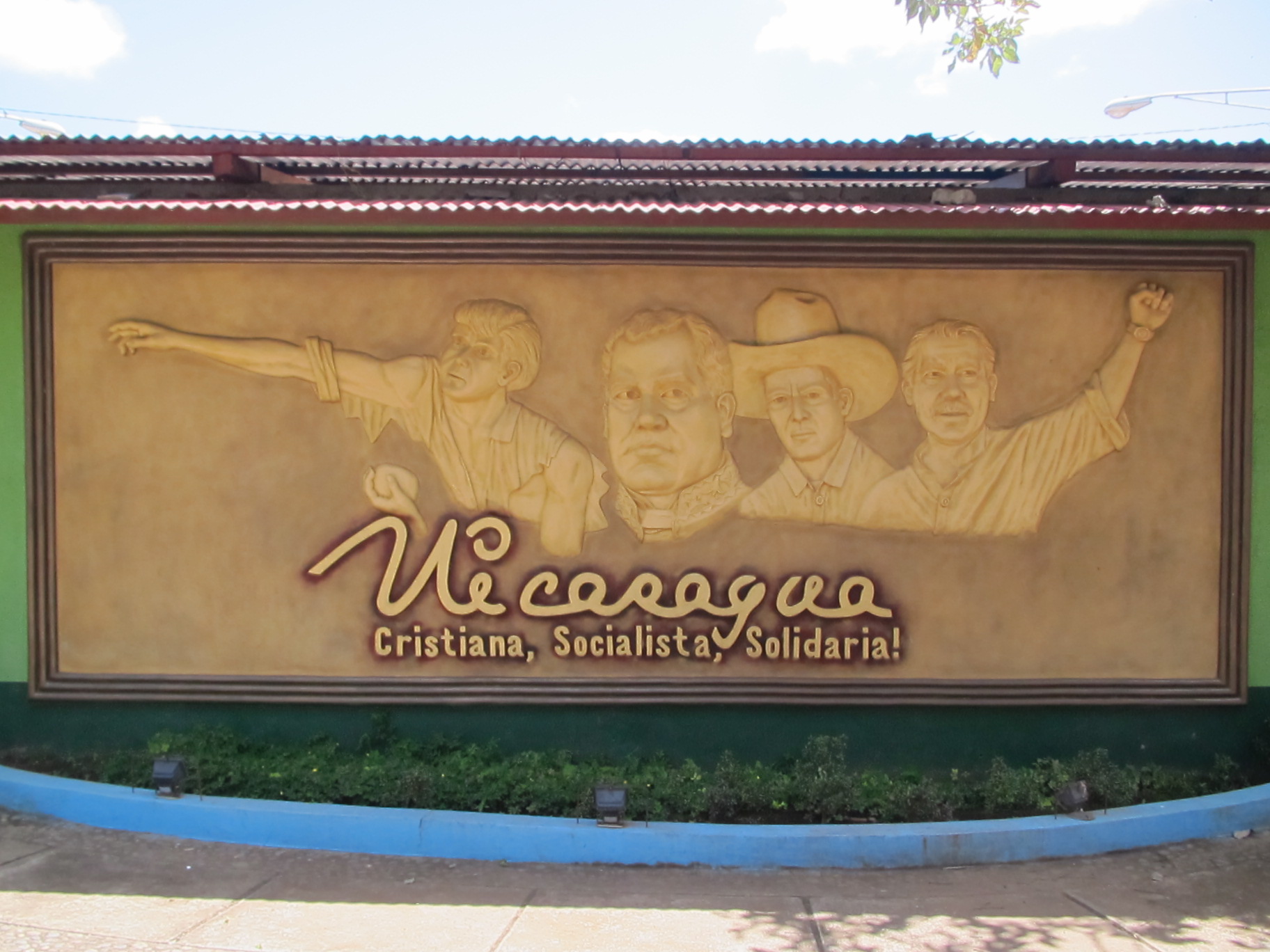
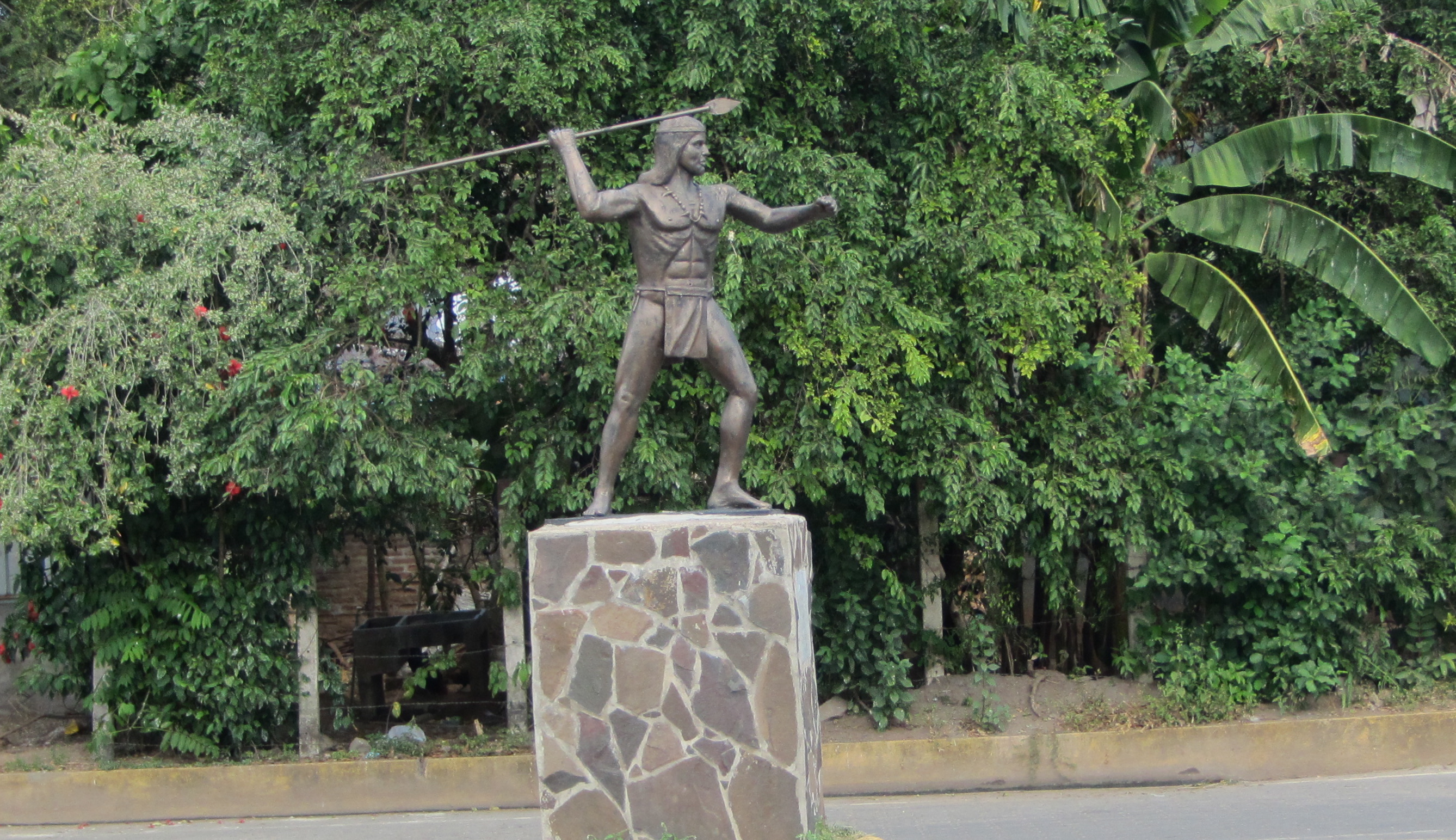
To have even a basic understanding of Nicaraguan culture it’s important to first know a little about the land’s history. In the Pre-Columbian era, the region now called Nicaragua was inhabited by several tribes culturally related to Aztec and Maya civilizations. Not long after Christopher Columbus first reached Nicaragua in 1502, an attempt was made to conquer the region by Gil González Dávila in the 1520s. On April 17, 1523, Dávila first met with Cacique Diriangen, leader of the Dirian peoples. Dávila gave the tribe a three day deadline to become Christians but rather than comply Diriangen led an attack, making him the first known resistance fighter of Nicaragua.

A statue of Diriangen at the entrance to the town of Diria.

A statue of Diriangen at the entrance to the town of Diria.

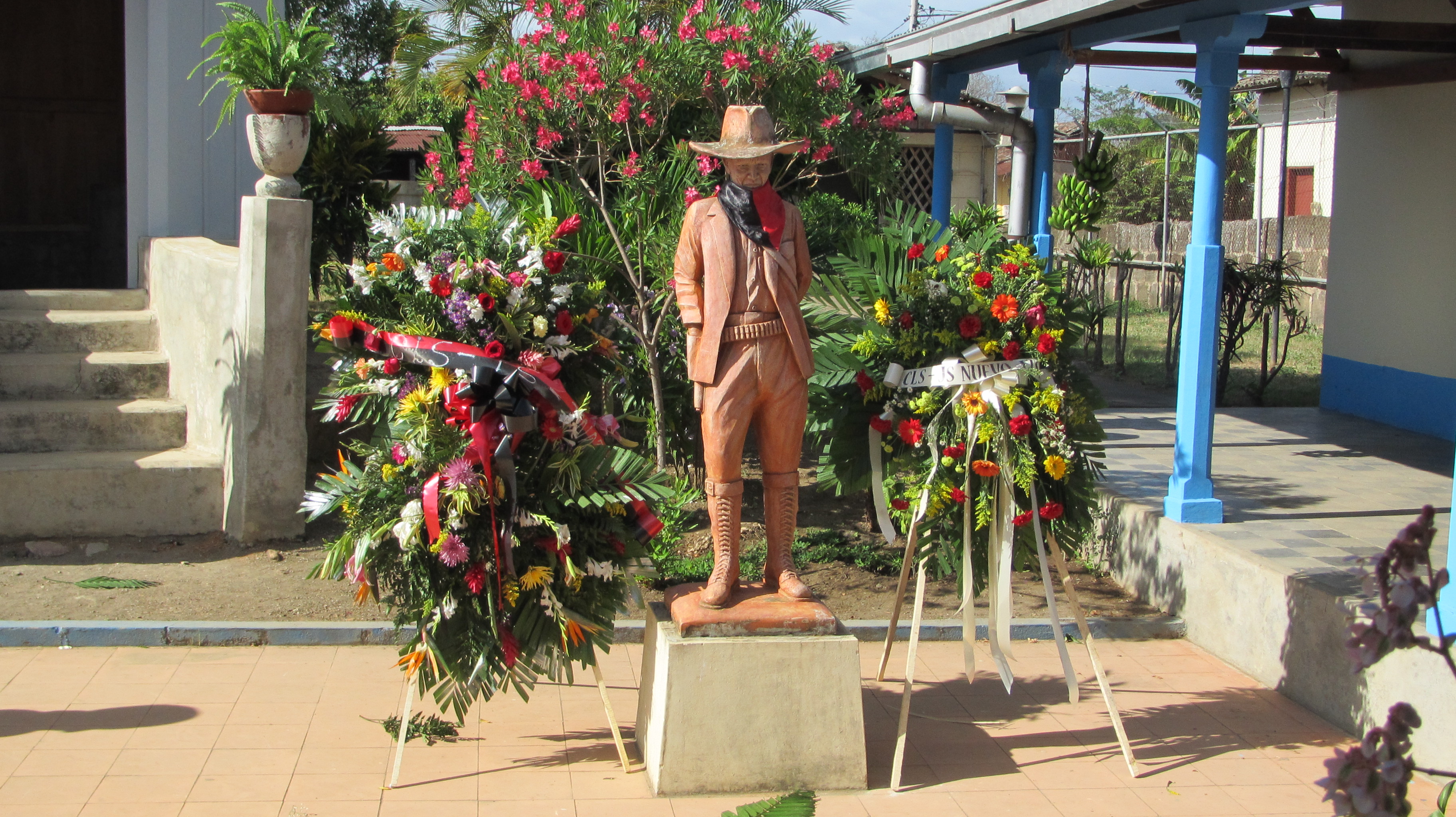
During over 300 years of colonization, countless indigenous people died of diseases, rival conquistadors waged war on each other, Caribbean pirates raided cities along Lake Nicaragua, British forces fought the Spanish in Nicaragua during a sub-conflict of the the Seven Years’ War, and in 1610 Momotombo volcano erupted, destroying the old capital city of León. In 1838, Nicaragua became an independent republic. Within a few decades, during a power struggle between León and Granada, filibusterer William Walker was hired by the government of León to fight on their side but he exploited the region’s instability and briefly established himself as President of Nicaragua before being forced out of the country a few years later. Three decades of conservative rule followed, during which the U.S. began formulating plans to build a canal across Nicaragua (which may soon become a reality with funding from Chinese corporations). However, when the U.S. shifted their plans to Panama, President Jose Santos Zelaya attempted to negotiate with European partners. Because of the potential threat Zelaya posed to U.S. hegemony and his ambitions to unite the Central American nations, the U.S. government compelled him to resign with the threat of military force and funding of conservative opposition groups, replacing him with a series of puppet regimes. Attempting to prevent insurrection, Nicaragua was occupied by U.S. Marines from 1912 to 1933. From 1927 (the start of Somoza’s rise to power though the National Guard), national hero Augusto César Sandino led a guerrilla war against the conservative government and the U.S. Marines. Shortly after a peace agreement was reached with a newly elected Sacasa administration, the Marines left Nicaragua and the head of the National Guard, Anastasio Somoza García ordered Sandino’s assassination. Sandino was killed by National Guard troops on February 21, 1934. His body was hidden and never found. In 1937 Somoza ousted the Sacasa government in a rigged election.

A statue of Sandino at the Augusto C. Sandino Library, a museum located in the house where he grew up in the town of Niquinohomo (Valley of the Warriors).

A statue of Sandino at the Augusto C. Sandino Library, a museum located in the house where he grew up in the town of Niquinohomo (Valley of the Warriors).

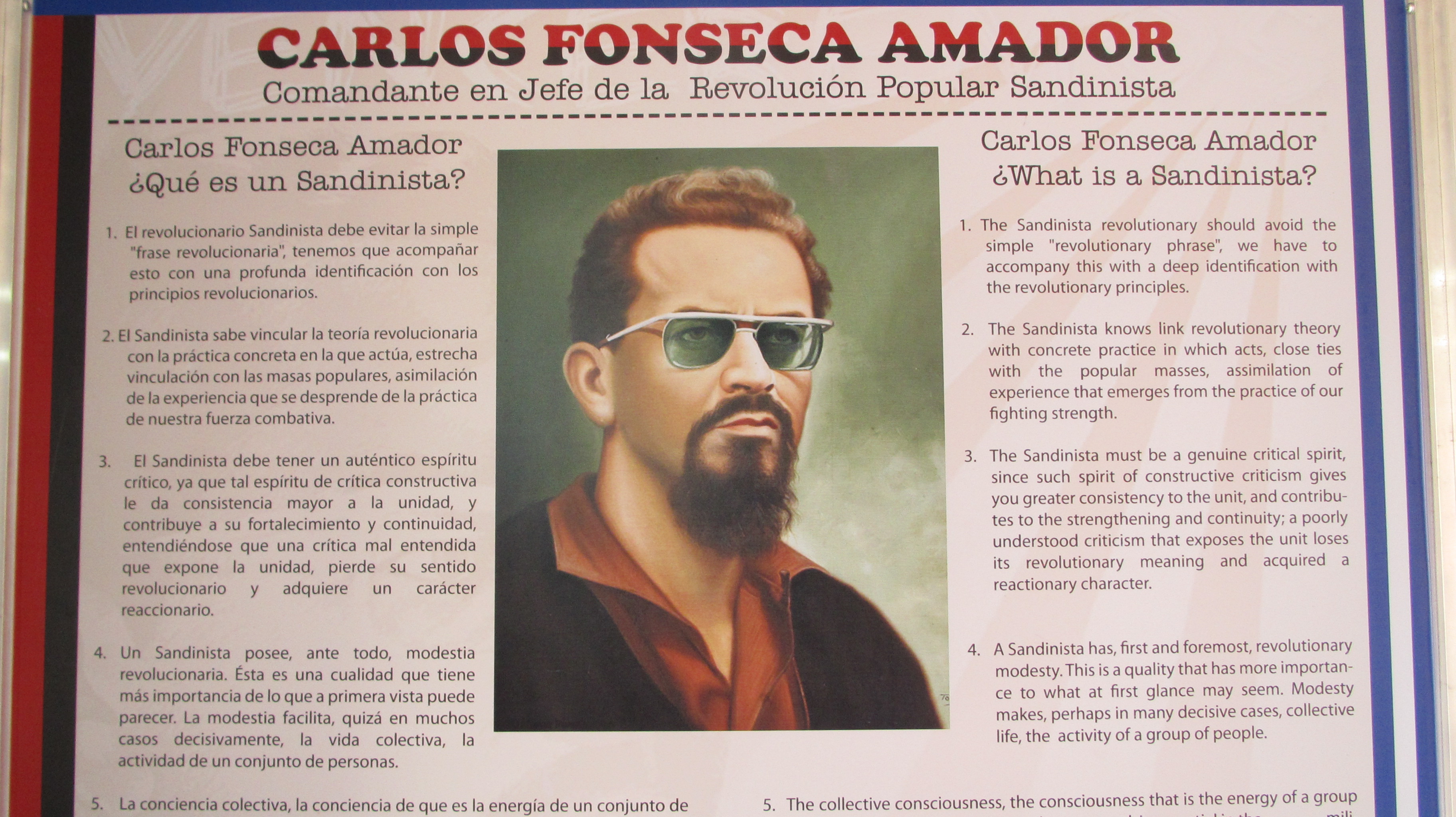
The Somoza regime was Nicaragua’s longest lasting hereditary military dictatorship, having ruled for 43 years. The father of the dynasty, Anastasio Somoza García, was famously called “our son of a bitch” by FDR and was assassinated by 27 year old poet Rigoberto López Pérez in León in 1956. In response to increasingly corrupt and reactionary policies of the Somoza government, Carlos Fonseca, Silvio Mayorga, and Tomás Borge led the formation of the Sandinista National Liberation Front (Frente Sandinista de Liberación Nacional or FSLN, named after and inspired by Augusto Sandino) in 1961. In 1972 a major earthquake hit Managua killing 6000 people, injuring tens of thousands and leaving hundreds of thousands homeless. President Anastasio Somoza Debayle mishandled the situation by failing to distribute essential aid and supplies. When it was later revealed that the government was siphoning relief money for personal gain, popularity and membership of the FSLN greatly increased. Hundreds of Chilean refugees also joined their ranks after a CIA-backed coup assassinated Chilean president Salvador Allende in 1973 and installed the dictator Augusto Pinochet the following year.

A display at the Carlos Fonseca Museum in Matagalpa.

A display at the Carlos Fonseca Museum in Matagalpa.

When Pedro Joaquin Chamorro, editor of the national newspaper and critic of Somoza, was assassinated by the government on January 10, 1978, a mass insurrection was triggered. By the end of Summer, armed youths took over Matagalpa while factions of the FSLN and civilian recruits had the National Guard under siege in Managua, Masaya, León, Chinandega and Estelí. On July 19, 1979, FSLN forces entered the capital and officially assumed power. Just two days before, Anastasio Somoza Debayle resigned and fled to Miami. He was killed a year later by a rocket attack from members of the Argentinian Revolutionary Workers Party while in exile in Paraguay.

Though the Sandinista government inherited a country in ruins and over a billion dollars in debt, they had an ambitious platform which included:

  • nationalization of property owned by the Somozas and their supporters
  • improved rural and urban working conditions
  • free unionization for all workers, both urban and rural
  • price fixing for commodities of basic necessity
  • improved public services, housing conditions, education
  • abolition of torture, political assassination and the death penalty
  • protection of democratic liberties
  • equality for women
  • non-aligned foreign policy

The Sandinistas had early successes with their education and literacy programs but were soon hindered by emerging conflicts with counter-revolutionary Contra forces heavily financed, armed and trained by the CIA. Investigations into the Iran-Contra scandal revealed some of the funding was acquired through arms sales to Iran and drug shipments to U.S. inner cities (read Gary Webb’s Dark Alliance for more about this). Despite strong support for the opposition by the U.S., the FSLN’s Daniel Ortega won the 1984 elections. Less than a year later the Reagan administration implemented a complete embargo on U.S. trade with Nicaragua that would last five years. By the late 80s, the continuing Contra campaign was notorious for human rights violations, corruption and terrorism. In August 1987, Costa Rican president Oscar Arias Sanchez created a peace accord which led to a ceasefire signed by Contra and Sandinista representatives a year later. Disillusioned by conflict and economic strife (made worse by Reagan’s embargo), Nicaraguan voters elected conservative administrations throughout the 1990s and early 2000s but seeing little improvement and much corruption, they reelected FSLN member Daniel Ortega in 2006 and 2011. So far, there has not yet been radical reforms that corporate investors feared and that more radical liberals hoped for, but Ortega has maintained a skepticism towards capitalism while simultaneously maintaining relations with the U.S. and rivals such as Iran, Libya and Venezuela.

As for how the average Nicaraguan feels about their current situation, opinions seem to vary but I plan to share some of the impressions I got in a future post.

Saturday Matinee: Walker

Walker afiche

Following the modest successes of “Repo Man” and “Sid and Nancy”, director Alex Cox took a chance on an Acid Western filmed in Nicaragua about soldier-of-fortune William Walker. Featuring a script by cult screenwriter Rudy Wurlitzer, a great soundtrack by Joe Strummer of the Clash, and an excellent performance by Ed Harris in the title role, “Walker” (1987) is unlike any historical biopic made before or since. The stylistic madness of the film reflects the madness of Walker’s misadventures. A sense of absurdity and inevitability is added to the proceedings through intentional anachronisms. While this may take viewers out of the story, it also makes it impossible to ignore parallels between the colonialist, imperialist attitudes of Walker’s time and U.S foreign policy of the 1980s and today.

While the film failed at the box-office in the U.S., it became the second highest grossing film in Nicaragua at the time. Walker is a rare film that not only has a radical message but its production was a radical political act in itself, having economically supported the Sandinista government.

85 Richest People as Wealthy as Poorest Half of the World

As World Economic Forum starts in Davos, development charity claims growing inequality has been driven by ‘power grab’

By Graeme Wearden

Originally posted at theguardian.com

The InterContinental Davos luxury hotel in the Swiss mountain resort of Davos

The InterContinental Davos luxury hotel in the Swiss mountain resort of Davos. Oxfam report found people in countries around the world believe that the rich have too much influence over the direction their country is heading. Photograph: Arnd Wiegmann/REUTERS

The world’s wealthiest people aren’t known for traveling by bus, but if they fancied a change of scene then the richest 85 people on the globe – who between them control as much wealth as the poorest half of the global population put together – could squeeze onto a single double-decker.

The extent to which so much global wealth has become corralled by a virtual handful of the so-called ‘global elite’ is exposed in a new report from Oxfam on Monday. It warned that those richest 85 people across the globe share a combined wealth of £1tn, as much as the poorest 3.5 billion of the world’s population.

Working for the Few - Oxfam report

Source: F. Alvaredo, A. B. Atkinson, T. Piketty and E. Saez, (2013) ‘The World Top Incomes Database’, http://topincomes.g-mond.parisschoolofeconomics.eu/Only includes countries with data in 1980 and later than 2008. Photograph: Oxfam

The wealth of the 1% richest people in the world amounts to $110tn (£60.88tn), or 65 times as much as the poorest half of the world, added the development charity, which fears this concentration of economic resources is threatening political stability and driving up social tensions.

It’s a chilling reminder of the depths of wealth inequality as political leaders and top business people head to the snowy peaks of Davos for this week’s World Economic Forum. Few, if any, will be arriving on anything as common as a bus, with private jets and helicopters pressed into service as many of the world’s most powerful people convene to discuss the state of the global economy over four hectic days of meetings, seminars and parties in the exclusive ski resort.

Winnie Byanyima, the Oxfam executive director who will attend the Davos meetings, said: “It is staggering that in the 21st Century, half of the world’s population – that’s three and a half billion people – own no more than a tiny elite whose numbers could all fit comfortably on a double-decker bus.”

Oxfam also argues that this is no accident either, saying growing inequality has been driven by a “power grab” by wealthy elites, who have co-opted the political process to rig the rules of the economic system in their favour.

In the report, entitled Working For The Few (summary here), Oxfam warned that the fight against poverty cannot be won until wealth inequality has been tackled.

“Widening inequality is creating a vicious circle where wealth and power are increasingly concentrated in the hands of a few, leaving the rest of us to fight over crumbs from the top table,” Byanyima said.

Oxfam called on attendees at this week’s World Economic Forum to take a personal pledge to tackle the problem by refraining from dodging taxes or using their wealth to seek political favours.

As well as being morally dubious, economic inequality can also exacerbate other social problems such as gender inequality, Oxfam warned. Davos itself is also struggling in this area, with the number of female delegates actually dropping from 17% in 2013 to 15% this year.

How richest use their wealth to capture opportunities

Polling for Oxfam’s report found people in countries around the world – including two-thirds of those questioned in Britain – believe that the rich have too much influence over the direction their country is heading.

Byanyima explained:

“In developed and developing countries alike we are increasingly living in a world where the lowest tax rates, the best health and education and the opportunity to influence are being given not just to the rich but also to their children.

“Without a concerted effort to tackle inequality, the cascade of privilege and of disadvantage will continue down the generations. We will soon live in a world where equality of opportunity is just a dream. In too many countries economic growth already amounts to little more than a ‘winner takes all’ windfall for the richest.”

Working for the Few - Oxfam report

The Oxfam report found that over the past few decades, the rich have successfully wielded political influence to skew policies in their favour on issues ranging from financial deregulation, tax havens, anti-competitive business practices to lower tax rates on high incomes and cuts in public services for the majority. Since the late 1970s, tax rates for the richest have fallen in 29 out of 30 countries for which data are available, said the report.

This “capture of opportunities” by the rich at the expense of the poor and middle classes has led to a situation where 70% of the world’s population live in countries where inequality has increased since the 1980s and 1% of families own 46% of global wealth – almost £70tn.

Opinion polls in Spain, Brazil, India, South Africa, the US, UK and Netherlands found that a majority in each country believe that wealthy people exert too much influence. Concern was strongest in Spain, followed by Brazil and India and least marked in the Netherlands.

In the UK, some 67% agreed that “the rich have too much influence over where this country is headed” – 37% saying that they agreed “strongly” with the statement – against just 10% who disagreed, 2% of them strongly.

The WEF’s own Global Risks report recently identified widening income disparities as one of the biggest threats to the world community.

Oxfam is calling on those gathered at WEF to pledge: to support progressive taxation and not dodge their own taxes; refrain from using their wealth to seek political favours that undermine the democratic will of their fellow citizens; make public all investments in companies and trusts for which they are the ultimate beneficial owners; challenge governments to use tax revenue to provide universal healthcare, education and social protection; demand a living wage in all companies they own or control; and challenge other members of the economic elite to join them in these pledges.

• Research Now questioned 1,166 adults in the UK for Oxfam between October 1 and 14 2013.

We’re Number One!*

*the number one nation that the world considers the greatest threat to peace, that is.

464x560xthreat.gif.pagespeed.ic.pNHBtM206x

In an annual global survey reaching 67,806 respondents across 68 countries, conducted by the Worldwide Independent Network and Gallup at the end of 2013, citizens were asked “Which country do you think is the greatest threat to peace in the world today?”. The U.S. topped the list, with 24 percent believing America to be the biggest danger to peace.

Not surprisingly, the U.S. was rated most highly in areas recently targeted for American intervention: the Middle East and North Africa. A majority in Peru, Brazil and Argentina expressed concern about the U.S., which was also flagged as the greatest threat by 32% in Eastern Europe, 37% in Mexico,  17% of Canadians, and 13% of U.S. citizens.

Being a threat apparently doesn’t make America any less desirable as a place to live, as it was still voted as the country that people would most like to move to by a narrow margin of 9%. This doesn’t necessarily mean America is the “best” place to live, but being the biggest threat does give it certain privileges, such as having the most concentrated wealth, being the largest consumer, having the power to dominate and exploit resources of other nations and bomb/embargo those who don’t cooperate, etc.

Talking About Mandela

NelsonMandela42yo_681489n

By Margaret Kimberley

Originally published at Black Agenda Report

Nelson Mandela belongs to history now. We should be able to look at his whole life, his whole record in perspective. That perspective ought to include who is praising Nelson Mandela nowadays and why.

Freedom Rider: Talking About Mandela

Nelson Mandela’s passing provides an important and rare opportunity for discussion of some very serious issues. We should not fear principled critique of people we admire but instead we have been treated to maudlin self-indulgence, useless idol worship and wrongheaded defense of Mandela’s memory.

Everyone looms large in death, and it is especially difficult to be truthful when a person of Mandela’s stature passes away. South Africa’s apartheid system was an international pariah, reviled by most of humanity and Mandela was the icon who it was hoped would bring it down forever.

Black Americans saw themselves in images of Sharpeville and Soweto. Mandela stood in for our assassinated leaders, political prisoners and victims of COINTELPRO. The South African struggle became our struggle and our chance to achieve what we were denied here at home. Of course Mandela’s release from 27 years of imprisonment brought near universal joy but it should have also raised more questions.

Mandela was one of the signatories of the Freedom Charter, which among other things demanded the nationalization of South Africa’s resources and reparations for the theft of African land by the Europeans. He was a member of the South African communist party, as were other leaders of the African National Congress. We should have known that the South African government wasn’t letting him go free without exacting a huge price. It is difficult to look the gift horse in the mouth, but the silence created a vacuum which made it easier for the rule of international capitalists to stay in place, even as they appeared to give up political control.

Mandela’s early history is something to honor and remember but now his memory comes wrapped in the poison pill of acceptance by the corporate media and disreputable democratic and republican politicians. Now when right wingers condemn Mandela as a communist, his admirers cringe and deny what is true. Instead of examining what a communist is and why the party was supported by the movement, we see black people instead take the position of our enemies and use the word as a slur. We must remember that scorn from certain quarters is a badge of honor.

Contrast the reaction to Mandela’s death with that of the late Venezuelan president Hugo Chavez. While Chavez was equally beloved around the world, the American government gave no glowing tributes and sent no high level delegation. Chavez was every bit as deserving of praise and honor but unlike Mandela he succeeded in standing up to empire. He personally protested against George W. Bush and even called him the devil at the United Nations. Hugo Chavez prevailed when American presidents wanted him out of office. He won re-election and shamed this country when he donated Venezuelan oil to help poor Americans stay warm in the winter. Of course Barack Obama, George W. Bush, Jimmy Carter, and Bill Clinton were absent from his funeral.

Nelson Mandela had difficult choices to make. He chose to accept an IMF loan with strings attached that kept millions in poverty. He and his successors turned their backs on the Freedom Charter. No one can know his intentions but the results of those decisions were disastrous for the masses of black people in South Africa.

Mandela’s release from prison should have been seen as a new stage in the struggle and not the end of it. Those of us who came of age during the anti-apartheid movement and who truly loved the man have to admit the short comings of love when liberation is at stake.

There are many lessons to be learned during this time of mourning. Our emotions play an important role in inspiring us to take action against injustice but they can also betray us when we lack an understanding of what liberation really is.

Liberation may or may not come with a presidential inauguration. It certainly hasn’t come if the usual suspects in the corporate media, Pennsylvania Avenue and Downing Street suddenly give words of praise. The success of certain individuals is not liberation either. There are now black millionaires in South Africa but that does little good to the impoverished masses.

Liberated people don’t live in squalor. They earn more than a living wage. They need not fear loss of job or life if they protest their salaries or working conditions. They have free health care and education. They don’t fear incarceration and they don’t live in stratified societies. They live in safety and the law treats them all as equals to one another. They can protest and oppose the power structure without fear of repercussion. South Africa doesn’t fit these criteria, neither does the United States, and we who love freedom and justice shouldn’t spare anyone when we express these simple and obvious truths.

Margaret Kimberley’s Freedom Rider column appears weekly in BAR, and is widely reprinted elsewhere. She maintains a frequently updated blog as well as at http://freedomrider.blogspot.com. Ms. Kimberley lives in New York City, and can be reached via e-Mail at Margaret.Kimberley(at)BlackAgendaReport.com.

Editor’s note: In contrast to the insightful and honest reporting from Black Agenda Report and other independent news sources, corporate news has predictably been downplaying “controversial” aspects of Mandela’s life that threaten the status quo. In some cases, their coverage reveals surprising negligence, insensitivity and/or stupidity.