Twelve Tips For Making Sense Of The World

By Caitlin Johnstone

Source: CaitlinJohnstone.com

In an environment that is saturated with mass media propaganda, it can be hard to figure out which way’s up, let alone get an accurate read on what’s going on in the world. Here are a few tips I’ve learned which have given me a lot of clarity in seeing through the haze of spin and confusion. Taken separately they don’t tell you a lot, but taken together they paint a very useful picture of the world and why it is the way it is.

1. It’s always ultimately about acquiring power.

In the quest to understand why governments move in such irrational ways, why expensive, senseless wars are fought while homeless people die of exposure on the streets, why millionaires and billionaires get richer and richer while everyone else struggles to pay rent, why we destroy the ecosystem we depend on for our survival, why one elected official tends to advance more or less the same harmful policies and agendas as his or her predecessor, people often come up with explanations which don’t really hold water.

The most common of these is probably the notion that all of these problems are due to the malignant influence of one of two mainstream political parties, and if the other party could just get in control of the situation all the problems would go away. Other explanations include the belief that humans are just intrinsically awful, blaming minorities like Jews or immigrants, blaming racism and white supremacy, or going all the way down wild and twisted rabbit holes into theories about reptilian secret societies and baby-eating pedophile cabals. But really all of mankind’s irrational behavior can be explained by the basic human impulse to amass power and influence over one’s fellow humans, combined with the fact that sociopaths tend to rise to positions of power.

Our evolutionary ancestors were pack animals, and the ability to rise in social standing in one’s pack determined crucial matters like whether one got first or last dibs on food or got to reproduce. This impulse to rise in our pack is hardwired deeply into our evolutionary heritage, but when left unchecked due to a lack of empathy, and when expanded into the globe-spanning 7.6 billion human pack we now find ourselves in due to ease of transportation and communication, it can lead to individuals who will keep amassing more and more power until they wield immense influence over entire clusters of nations.

2. Money rewards sociopathy.

The willingness to do anything to get ahead, to claw your way to the top, to betray whomever you need to, to throw anyone under the bus, to step on anyone to pass them in the rat race, will be rewarded in our current system. Being willing to underpay employees, cheat the legal system, and influence legislators will be rewarded exponentially more. People with a sense of empathy are often unwilling to do such things, whereas sociopaths and psychopaths are. About four percent of the population are sociopaths, and about one percent are psychopaths, with some five to fifteen percent falling somewhere along the borderline. The less empathy you have, the further you are willing to go, and the further up the ladder you can climb.

3. Wealth kills empathy.

If that weren’t bad enough, studies have shown that controlling large amounts of wealth actually destroys one’s sense of compassion for one’s fellow man. When you are able to use wealth to obtain everything from security to loyalty to personal relationships, you no longer have to be tuned in to the brain’s empathy center the rest of humanity depends on to get an accurate reading on what’s going on with the people we’re surrounded by. Most people need to be constantly feeling around their families, coworkers, employers, friends and acquaintances in order to ensure their own safety, social standing and security, whereas a wealthy person can simply purchase those things. Being born into wealth or having it for a long time can prevent that sense of empathy from being as strong as it is in the rest of the population.

4. Money is power.

2014 Princeton study showed that ordinary Americans have essentially zero influence over their nation’s policy and behavior regardless of how they vote, while wealthy Americans have a great deal of influence. This is because the ability to use corporate lobbying and campaign donations effectively amounts to the legalized bribery of elected officials, which means that money translates directly into political power. This creates a ruling class which is naturally incentivized to use their influence to increase their own wealth while decreasing everyone else’s, because since power is relative, the less money everyone else has the more power the ruling class has.

This is why billionaires keep hoarding more and more wealth while using legalized bribery to stifle economic justice legislation. It isn’t because they want to be able to buy thousands of luxury cars or dozens of private jets; they can only use one at a time the same as everyone else. They hoard wealth to keep the rest of the population from having it. Because money equals power, spreading wealth around would be tantamount to making everyone king, and because power is relative, making everyone king would mean that no one is king.

Rulers, historically, do not give up power easily, and this elite wealthy class is no exception. Hence all their aggressive attempts to suppress any movement against the status quo from the unwashed masses.

5. This same ruling class controls the media.

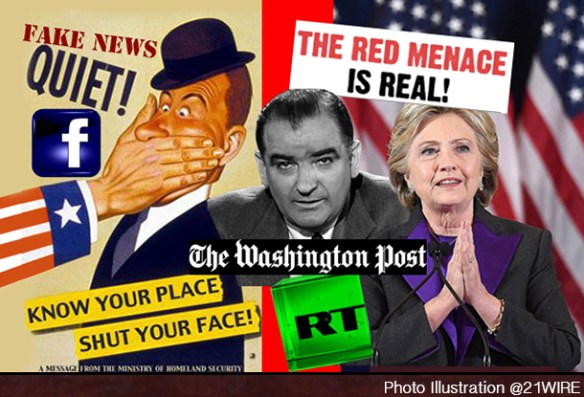
It’s common knowledge that most media is controlled by plutocrats, whether it’s the old money plutocrats who control the legacy media or the new money Silicon Valley plutocrats who control much of the new media. Media control is an essential component of rule; this has always been the case, since the days when kings would order dissident books burned and bishops would torture dissident orators to death. This is why the first thing a new plutocrat does as soon as rising to a certain level of wealth is start buying up media influence, like Jeff Bezos did when he bought the Washington Post in 2013. Bezos bought WaPo not because he is a stupid businessman who thought newspapers were about to make a lucrative resurgence, but because he is a brilliant businessman who knows that the status quo he is building his empire upon requires a propaganda firm that the public will trust and believe.

6. People are always manipulating each other.

Cultivating an acute awareness of when you are being manipulated, and considering whether someone might have a motive to do so, is an essential component to making sense of the world.

It is very rare to encounter someone who won’t try to manipulate you in any way. Generally people you’ll encounter in your life will try to influence the way you perceive them and your relationship to them, they’ll try to pull you in in some ways and push you out in others, try to hook you up to their personal agendas and goals and shape you in a way that fits with their shape. There’s nothing inherently malevolent in such behavior, it’s just what people do and what they always have done. Again, humans are social creatures, and we do what we can to increase our standing within our social circles.

The big problem is when skillful manipulators find their way into positions of large-scale influence like government or media. Unfortunately, these are the types who tend to get elevated into such positions, because they can manipulate their way in, and generally they do so for reasons of personal ambition rather than altruism. These skillful manipulators form an essential echelon of the ruling class’ loyal servants, and are the minds behind the pro-establishment narratives you’ll suddenly see circulated from think tanks to media platforms to the establishment lackeys on Capitol Hill.

7. Society is made of narrative.

Most of human experience is filtered through our mental stories about it, from our sense of self, to our ideas about who we are, to our beliefs about how we’re supposed to behave in society, to what money is and how it works, to where power exists and who we’re supposed to obey. All of these things are purely conceptual constructs which only exist in the realm of thought; a “dollar” exists to the extent that we’ve all agreed to pretend it’s a real thing and that it has a certain amount of purchasing power. At any time we could collectively decide to change the rules about how power functions or what money is and how it operates, and then instantly the rule of the elite class would be over without anyone firing a shot. It really would be that simple.

That’s how powerful a force narrative is, which is why the ruling plutocrats fight so hard to keep us from seizing control of it. This is why whistleblowers and outlets like WikiLeaks are aggressively and constantly smeared and demonized in the corporate media; if they can create suspicion of truth-tellers then they can keep them from being trusted, and thus keep them from being believed. This tool has been used to minimize the impact of everything from on the ground reports of what’s happening in Syria to leak drops from Edward Snowden; if you can create enough suspicion of someone it doesn’t matter if they’re speaking 100 percent truth; nobody will believe them, and thus the dominant narrative will remain the same.

Maintaining an awareness that there is always an unending battle to control the narrative and manipulate it to advance plutocratic interests is an essential part of understanding the world.

8. The lines between nations are imaginary.

Those lines drawn on the map between countries are pure narrative as well; they’re only as real as the collective public agrees to pretend they are. The ruling elites know this and exploit this. They don’t think in terms of nations and governments, they think in terms of individuals and groups of individuals.

Key strategic region in the Middle East? No need to take over the whole country, just flood it with extremist groups who are loyal to your agendas and control its oil fields. Primo naval real estate in the southern hemisphere? No need to annex it and plant your country’s flag there, just secure enough influence over the important moving parts using corporate contracts, trade agreements, military/intelligence treaties and secret deals and you can use it however you want.

This is why I am dismissive of arguments that “Israel controls America” or “America controls Europe”. There is no “Israel” or “America”; they’re made-up ideas which rulers once upon a time treated as real, but in the modern days of nationless plutocracy they no longer do. There are individuals, there are corporations, there are government agencies, there are factions and groups, and these are what the ruling elites deal with. Governmental structures are only tools which are used by the ruling elites for the purpose of manipulation, control, and military violence, and they only do so insofar as it is useful. The idea of real nations and governments is a cutesy fairy tale sold to the masses so they won’t see the manipulations.

9. Powerful forces are naturally incentivized to collaborate with each other toward mutual interests.

You can be a low-grade millionaire and still live like a relatively normal civilian, but once you start obtaining giant amounts of wealth control you need to start collaborating with existing power structures or they’ll snuff you out to prevent you from rocking their boat, because again, money equals power. This is why Jeff Bezos contracts with the CIA and sits on a Pentagon advisory board, and it’s why Facebook and Google collaborate extensively with government agencies; they never would have been allowed to grow to their size if they had not. Plutocratic dynasties which have been in place since long before Amazon, Facebook and Google figured this out many generations ago, and have agreed to push forward in a direction of mutual interest that doesn’t upset the status quo that their wealth is built upon.

This is extremely true of the west, where an effective empire has been created by a complex transnational alliance of mostly western plutocrats, but it is true outside of that empire as well; there are power alliances to be found everywhere that there is power.

10. There is an immense amount of wealth that can be grabbed in the chaos of war and conflict.

In the same way that existing power structures are naturally incentivized to quash any emerging power which would upset their status quo, alliances of power structures push to crush non-aligned power structures the world over. Whenever you see the tight western alliances and their media propaganda arms attacking the interests of Russia, China, Syria, Iran, Venezuela etc., you are seeing an alliance of power structures working to disrupt the interests of another alliance of power structures in order to absorb their assets.

The chaotic, Wild West environments that these conflicts create allow for an amount of underhanded looting and pillaging that you could never get away with in your own country, in the exact same way the colonialists and conquistadors of old could never have gotten away with brazenly grabbing gold, land and slaves from their fellow Europeans in Madrid or Rome but were given no legal trouble in the new world. The colonialists and conquistadors pushed into the Americas, Africa and Asia on the pretense of spreading Christianity and civilization; modern day conquerers push into non-aligned power structures on the pretense of spreading freedom and democracy in precisely the same way.

This chaos doesn’t require direct military conflict to be profitable; the uncritical enmity against Russia that the western plutocratic alliance has manufactured with its media control has allowed them to be blamed for everything from incriminating WikiLeaks documents to a corporate raid by Ukrainian oligarchs without any questions asked. Anyone who has ever had to deal personally with a sociopath knows how much they love to exploit the gray areas that chaotic situations give them, and geopolitical conflicts create those situations in spades.

11. The neocons are always wrong.

This one’s really easy. If you ever want to be on the right side of history for a foreign policy debate, look at what Bush-era PNAC neocons like John Bolton and Bill Kristol are saying about it, and take the opposite position. Neocon thought leaders have been loudly and catastrophically wrong about everything since the turn of the century, from Afghanistan to Iraq to Libya to Syria, and they’re not about to start being right now.

12. The push towards truth always starts with yourself.

You can’t out-manipulate seasoned manipulators. The main error most people make when trying to deal with a sociopath is to try and manipulate them back. Don’t even try. They have years of experience on you because they literally have done nothing else. While you were laughing and crying and worrying and connecting and relating to people, they were working out how to play humans like Garry Kasparov worked out how to play chess. And when you have literal teams of sociopaths collaborating together to amass power, you my dear child, do not have a chance. Don’t play their game. You will lose.

The only way to win this is to set your compass resolutely to “true.” Always be honest with yourself. Find all the different ways that you are manipulating others and see them and acknowledge them. Find your tribal allegiances and your desire to be right, and tip your hat to their existence. The more self-aware we are, the less levers we have to be manipulated by. If you are blindly partisan or loyal to a particular faction, that makes you gullible to propaganda because your wishful thinking and your desire to be right come into play. Get honest with yourself about who you are and what you want, and you will start to become an un-playable piece on the board.

If we can’t beat these bastards with truth, we don’t deserve to win.

The Global Pivot Away From America

By Graham Vanbergen

Source: TruePublica

There was a day when the world realised they’d had enough of America. It wasn’t when America turned it back on the Herculean effort to sign the world up to the Paris Climate Agreement or TTIP or America’s continuous support for Israel’s murderous actions in Gaza or various other deals that took years to iron out and negotiate that have since been trashed. It was a moment we knew was going to happen but least expected to prove so important.

This was a deal that took the combined effort of the European Union, the United Kingdom, Germany, France, China and Russia. It took twelve years to negotiate. America was a key player and the deal signed, sealed and delivered on October 18th 2015. It was the Iran nuclear deal.

That landmark agreement stopped the escalation of nuclear weapons programs, not just in Iran, but actually in the Mid-East more widely.

With no evidence from any source of Iran breaching its nuclear deal, Iran now has many trading partners. However, America was not one of them. Rightly, the Iranians did not trust their old foe. And so it came to pass that Donald Trump withdrew from the deal, as expected last month.

Palpable European anger to protect the deal and keep it on track spawned a completely new global confidence to move in the same direction. The EU had prepared banking and trading systems to support EU companies doing business with Iran. China was committed having signed a huge joint oil pipeline deal and then launched the petroyuan. Russia has many reasons to protect this deal – obviously and also trades not USDs but Rubles and through a bartering system. Then India announced a few days ago a trade deal with Iran, again bypassing USDs. Then EU diplomats, working on a collaborative agreement in Cuba since 2016 announce that deal to be done and dusted just a few days ago. Last week, 14 African countries announced their intention to switch from USDs to China’s Yuan. All have dumped trading predominantly in US dollars for one reason or another.

On the 10th May, the EU declared that America had just become Europe’s number one threat to its economy.

The EU Commissioner for Economic Affairs, Pierre Moscovici warned Trump’s protectionism represented a “dangerous nexus.”

To that end, the European Union continues to retract from the USA. EuActiv reports that: “The EU and China announced on Friday (1 June) that they would expand trade and investment cooperation amid the global trade dispute triggered by US tariffs.”

Wang Yi, state councillor and minister of foreign affairs of China confirms: “In the context of growing uncertainties in the world, it is even more important for China and the EU to deepen our strategic partnership.”

What has really happened here is a global pivot. Leaders are striking whilst ‘the iron is hot’. Wang’s visit to Brussels, in the framework of the annual EU-China high-level strategic dialogue, came hot on the heels of US President Donald Trump’s confirmation of additional tariffs against Europe and other nations’ steel and aluminium exports. Trump has, to all intents, ended up galvanising other world leaders into real action.

This pivotal moment may take some time to be made fully functional, maybe decades.

In the meantime, China’s One Belt One Road or Belt Road Initiative (BRI) costing nearly $1trillion is well underway and cannot be ignored. A modern Silk Road that links China, Russia, Europe and Africa in trading routes across land and sea.

Foreign minister Wang Yi has described the initiative as a “symphony of all relevant parties”.

Beijing believes it will kick start “a new era of globalisation”.

One party not included in this symphony is America.

According to the global consultancy McKinsey, the BRI has the potential to massively overshadow the US’ post-war Marshall reconstruction plan, involving about 65% of the world’s population, one-third of its GDP and helping to move about a quarter of all its goods and services.

The ‘belt’ is a series of overland corridors connecting China with Europe, via Central Asia and the Middle East.

One year ago last May, China hoped to put some meat on the bones at an international forum in Beijing but the initiative was greeted with a mix of excitement and suspicion. Beijing saw 28 heads of state and government leaders but German Chancellor Angela Merkel turned down an invitation as did US president Donald Trump.

Today, that initiative now looks like a go. Europe has all but given China the green light. Merkel included.

America has just proven itself to be the new bogeyman on the international geopolitical block. It is headed up by an unstable administration whose warped worldview, beset with paranoia sees nothing but enemies hiding in the dark. It wants a destabilised world because that’s what America does best and profits from most. In the meantime, everyone else just wants to trade, get on and make some money.

Amazon, Microsoft and Google compete for Pentagon Cloud warfighter project

By Will Morrow

Source: WSWS.org

Amazon, Microsoft and Google are competing to secure a multi-billion-dollar Department of Defense contract to build and oversee the US military’s Cloud computing infrastructure, which will be used to control every aspect of the Pentagon’s global operations.

The Joint Enterprise Defense Infrastructure (JEDI) project will transfer the large number of separate data control centers currently being run by the Pentagon into a centralized Cloud network that will be administered by one of the technology giants. The contract is reported to be worth up to $10 billion over the next decade, potentially making it the Department of Defense’s single largest acquisition ever. The winning bidder is expected to be announced in September.

The company that secures the contract will be completely integrated into all of the US military’s fighting operations. According to Nextgov, Brigadier General David Krumm, the deputy director for requirements for the Joint Chiefs of Staff, described JEDI as a “global fabric” that will connect the headquarters with active combat forces, from an F-35 fighter jet pilot to a Pacific submarine captain to an Army platoon leader. “This is going to make a difference like few things have to get information to our warfighters,” Krumm said.

The Department of Defense hosted an industry conference on the project on March 7 in Arlington, Virginia, attended by technology companies, including representatives from Amazon and Microsoft. Krumm told the audience that JEDI would “change the way that this nation, its soldiers, its sailors, its Marines and its airmen fight and win our nation’s wars.”

The Cloud network will be required to hold data at all security classification levels, meaning security officials with top secret security clearances will be working at the facilities.

On May 16, Bloomberg Government published images of the advertisements produced by Amazon and Microsoft on electronic billboards in the Pentagon railway station about how their companies’ technology could support the military in battle.

Microsoft’s ad featured an image of a special operations soldier and the caption, “The cloud gets actionable insight while the action is still unfolding.” An Amazon Web Services ad included the statement, “Time to launch: months minutes,” to underscore that the cloud infrastructure will help coordinate missile launches.

The JEDI program was first announced in September 2017, a month after Trump’s Defence Secretary James Mattis carried out a tour of Silicon Valley boardrooms. Mattis met with Google’s Founder Sergey Brin and CEO Sundar Pichai, as well as executives at Facebook and Amazon, to discuss further integrating their technologies into the US armed forces.

The Defense One website reported on April 12 that “Brin in particular was eager to showcase how much Google was learning every day about AI and cloud implementation,” citing an anonymous senior Defense Department official. Mattis “returned to Washington, D.C., convinced that the US military had to move much of its data to a commercial cloud provider—not just to manage files, email, and paperwork but to push mission-critical information to front-line operators,” the article noted.

Significantly, the article notes that while Amazon and Microsoft have publicly expressed their desire to secure the contract, Google has “kept its own interest … out of the press. Company leaders have even hidden the pursuit from its own workers, according to Google employees Defense One reached.”

Google’s integration into the military’s operations has triggered widespread opposition among its employees. A letter published in April written to Google’s CEO Pichai and signed by more than 3,000 Google workers, demanded that the company cease its collaboration with the Pentagon.

The letter was a response to Google admitting in March that it is providing the military with artificial intelligence software that can be used to detect objects in video surveillance footage, under what is called Project Maven. This technology can be directly used to develop automatic targeting for the US drone murder operations in the Middle East and North Africa.

The Defense One article stated that “Maven is more than either Google or the Defense Department has admitted publicly, according to the senior defense official who called it a ‘pathfinder’ project, a starting point for future collaboration between the Pentagon and Google.”

Media reports indicate that the company most likely to secure the JEDI contract is Amazon. The company is considered to have an edge because it is already operating a Cloud network for the US intelligence agencies, under a $600 million contract reached in 2013.

Since September 2016, Amazon has been providing facial recognition technology called Rekognition to police forces and private intelligence contractors. Rekognition is able to process video footage from police body cameras, surveillance cameras and CCTV to “identify persons of interest against a collection of millions of faces in real-time, enabling timely and accurate crime prevention” (see: “Amazon providing facial recognition technology to police agencies for mass surveillance”).

The distinction between the technology corporations and the state has become almost entirely blurred as they become ever-more integrated into the military-intelligence apparatus. This takes place as Washington is working to outpace its major geostrategic rivals, above all China and Russia, in the arena of advanced warfare technology and artificial intelligence, in preparation for a catastrophic war that would inevitably involve the use of nuclear weapons.

As they integrate themselves into the American military build-up, the technology giants are collaborating in mass political censorship of left-wing and anti-war websites, above all the World Socialist Web Site, in order to suppress mass opposition to war. Since April 2017, Google has altered its search result algorithms in order to censor the WSWS and other left-wing and anti-war websites.


The author also recommends:

Google, drone murder and the military-intelligence-censorship complex
[19 May 2018]

Still Waiting for Evidence of a Russian Hack

More than two years after the allegation of Russian hacking of the 2016 U.S. presidential election was first made, conclusive proof is still lacking and may never be produced, says Ray McGovern.

By Ray McGovern

Source: Consortium News

If you are wondering why so little is heard these days of accusations that Russia hacked into the U.S. election in 2016, it could be because those charges could not withstand close scrutiny. It could also be because special counsel Robert Mueller appears to have never bothered to investigate what was once the central alleged crime in Russia-gate as no one associated with WikiLeaks has ever been questioned by his team.

Veteran Intelligence Professionals for Sanity — including two “alumni” who were former National Security Agency technical directors — have long since concluded that Julian Assange did not acquire what he called the “emails related to Hillary Clinton” via a “hack” by the Russians or anyone else. They found, rather, that he got them from someone with physical access to Democratic National Committee computers who copied the material onto an external storage device — probably a thumb drive. In December 2016 VIPS explained this in some detail in an open Memorandum to President Barack Obama.

On January 18, 2017 President Obama admitted that the “conclusions” of U.S. intelligence regarding how the alleged Russian hacking got to WikiLeaks were “inconclusive.” Even the vapid FBI/CIA/NSA “Intelligence Community Assessment of Russian Activities and Intentions in Recent U.S. Elections” of January 6, 2017, which tried to blame Russian President Vladimir Putin for election interference, contained no direct evidence of Russian involvement.  That did not prevent the “handpicked” authors of that poor excuse for intelligence analysis from expressing “high confidence” that Russian intelligence “relayed material it acquired from the Democratic National Committee … to WikiLeaks.”  Handpicked analysts, of course, say what they are handpicked to say.

Never mind. The FBI/CIA/NSA “assessment” became bible truth for partisans like Rep. Adam Schiff (D-CA), ranking member of the House Intelligence Committee, who was among the first off the blocks to blame Russia for interfering to help Trump.  It simply could not have been that Hillary Clinton was quite capable of snatching defeat out of victory all by herself.  No, it had to have been the Russians.

Five days into the Trump presidency, I had a chance to challenge Schiff personally on the gaping disconnect between the Russians and WikiLeaks. Schiff still “can’t share the evidence” with me … or with anyone else, because it does not exist.

WikiLeaks

It was on June 12, 2016, just six weeks before the Democratic National Convention, that Assange announced the pending publication of “emails related to Hillary Clinton,” throwing the Clinton campaign into panic mode, since the emails would document strong bias in favor of Clinton and successful attempts to sabotage the campaign of Bernie Sanders.  When the emails were published on July 22, just three days before the convention began, the campaign decided to create what I call a Magnificent Diversion, drawing attention away from the substance of the emails by blaming Russia for their release.

Clinton’s PR chief Jennifer Palmieri later admitted that she golf-carted around to various media outlets at the convention with instructions “to get the press to focus on something even we found difficult to process: the prospect that Russia had not only hacked and stolen emails from the DNC, but that it had done so to help Donald Trump and hurt Hillary Clinton.”  The diversion worked like a charm.  Mainstream media kept shouting “The Russians did it,” and gave little, if any, play to the DNC skullduggery revealed in the emails themselves. And like Brer’ Fox, Bernie didn’t say nothin’.

Meanwhile, highly sophisticated technical experts, were hard at work fabricating “forensic facts” to “prove” the Russians did it.  Here’s how it played out:

June 12, 2016: Assange announces that WikiLeaks is about to publish “emails related to Hillary Clinton.”

June 14, 2016: DNC contractor CrowdStrike, (with a dubious professional record and multiple conflicts of interest) announces that malware has been found on the DNC server and claims there is evidence it was injected by Russians.

June 15, 2016: “Guccifer 2.0” affirms the DNC statement; claims responsibility for the “hack;” claims to be a WikiLeaks source; and posts a document that the forensics show was synthetically tainted with “Russian fingerprints.”

The June 12, 14, & 15 timing was hardly coincidence. Rather, it was the start of a pre-emptive move to associate Russia with anything WikiLeaks might have been about to publish and to “show” that it came from a Russian hack.

Enter Independent Investigators

A year ago independent cyber-investigators completed the kind of forensic work that, for reasons best known to then-FBI Director James Comey, neither he nor the “handpicked analysts” who wrote the Jan. 6, 2017 assessment bothered to do.  The independent investigators found verifiable evidence from metadata found in the record of an alleged Russian hack of July 5, 2016 showing that the “hack” that day of the DNC by Guccifer 2.0 was not a hack, by Russia or anyone else.

Rather it originated with a copy (onto an external storage device – a thumb drive, for example) by an insider — the same process used by the DNC insider/leaker before June 12, 2016 for an altogether different purpose. (Once the metadata was found and the “fluid dynamics” principle of physics applied, this was not difficult to disprove the validity of the claim that Russia was responsible.)

One of these independent investigators publishing under the name of The Forensicator on May 31 published new evidence that the Guccifer 2.0 persona uploaded a document from the West Coast of the United States, and not from Russia.

In our July 24, 2017 Memorandum to President Donald Trump we stated, “We do not know who or what the murky Guccifer 2.0 is. You may wish to ask the FBI.”

Our July 24 Memorandum continued: “Mr. President, the disclosure described below may be related. Even if it is not, it is something we think you should be made aware of in this general connection. On March 7, 2017, WikiLeaks began to publish a trove of original CIA documents that WikiLeaks labeled ‘Vault 7.’ WikiLeaks said it got the trove from a current or former CIA contractor and described it as comparable in scale and significance to the information Edward Snowden gave to reporters in 2013.

“No one has challenged the authenticity of the original documents of Vault 7, which disclosed a vast array of cyber warfare tools developed, probably with help from NSA, by CIA’s Engineering Development Group. That Group was part of the sprawling CIA Directorate of Digital Innovation – a growth industry established by John Brennan in 2015. [ (VIPS warned President Obama of some of the dangers of that basic CIA reorganization at the time.]

Marbled

“Scarcely imaginable digital tools – that can take control of your car and make it race over 100 mph, for example, or can enable remote spying through a TV – were described and duly reported in the New York Times and other media throughout March. But the Vault 7, part 3 release on March 31 that exposed the “Marble Framework” program apparently was judged too delicate to qualify as ‘news fit to print’ and was kept out of the Times at the time, and has never been mentioned since.

“The Washington Post’s Ellen Nakashima, it seems, ‘did not get the memo’ in time. Her March 31 article bore the catching (and accurate) headline: ‘WikiLeaks’ latest release of CIA cyber-tools could blow the cover on agency hacking operations.’

“The WikiLeaks release indicated that Marble was designed for flexible and easy-to-use ‘obfuscation,’ and that Marble source code includes a “de-obfuscator” to reverse CIA text obfuscation.

“More important, the CIA reportedly used Marble during 2016. In her Washington Post report, Nakashima left that out, but did include another significant point made by WikiLeaks; namely, that the obfuscation tool could be used to conduct a ‘forensic attribution double game’ or false-flag operation because it included test samples in Chinese, Russian, Korean, Arabic and Farsi.”

A few weeks later William Binney, a former NSA technical director, and I commented on Vault 7 Marble, and were able to get a shortened op-ed version published in The Baltimore Sun.

The CIA’s reaction to the WikiLeaks disclosure of the Marble Framework tool was neuralgic. Then Director Mike Pompeo lashed out two weeks later, calling Assange and his associates “demons,” and insisting; “It’s time to call out WikiLeaks for what it really is, a non-state hostile intelligence service, often abetted by state actors like Russia.”

Our July 24 Memorandum continued:  “Mr. President, we do not know if CIA’s Marble Framework, or tools like it, played some kind of role in the campaign to blame Russia for hacking the DNC. Nor do we know how candid the denizens of CIA’s Digital Innovation Directorate have been with you and with Director Pompeo. These are areas that might profit from early White House review.  [ President Trump then directed Pompeo to invite Binney, one of the authors of the July 24, 2017 VIPS Memorandum to the President, to discuss all this.  Binney and Pompeo spent an hour together at CIA Headquarters on October 24, 2017, during which Binney briefed Pompeo with his customary straightforwardness. ]

“We also do not know if you have discussed cyber issues in any detail with President Putin. In his interview with NBC’s Megyn Kelly he seemed quite willing – perhaps even eager – to address issues related to the kind of cyber tools revealed in the Vault 7 disclosures, if only to indicate he has been briefed on them. Putin pointed out that today’s technology enables hacking to be ‘masked and camouflaged to an extent that no one can understand the origin’ [of the hack] … And, vice versa, it is possible to set up any entity or any individual that everyone will think that they are the exact source of that attack.

“‘Hackers may be anywhere,’ he said. ‘There may be hackers, by the way, in the United States who very craftily and professionally passed the buck to Russia. Can’t you imagine such a scenario? … I can.’

New attention has been drawn to these issues after I discussed them in a widely published 16-minute interview last Friday.

In view of the highly politicized environment surrounding these issues, I believe I must append here the same notice that VIPS felt compelled to add to our key Memorandum of July 24, 2017:

“Full Disclosure: Over recent decades the ethos of our intelligence profession has eroded in the public mind to the point that agenda-free analysis is deemed well nigh impossible. Thus, we add this disclaimer, which applies to everything we in VIPS say and do: We have no political agenda; our sole purpose is to spread truth around and, when necessary, hold to account our former intelligence colleagues.

“We speak and write without fear or favor. Consequently, any resemblance between what we say and what presidents, politicians and pundits say is purely coincidental.” The fact we find it is necessary to include that reminder speaks volumes about these highly politicized times.

Uncle Sam, the Human Rights Hypocrite

By Paul Street

Source: TruthDig

This year marks the 70th anniversary of the Universal Declaration of Human Rights. Signed by the United States and adopted by the United Nations General Assembly on Dec. 10, 1948, the document was a great and shining step forward in the articulation of how human beings might organize their social and political systems in accord with democratic and civilized ideals.

The U.S. has long wielded the Universal Declaration (UD) as a weapon to brandish selectively against officially designated enemies. But seven decades after its signing (and trumpeting) the document, American society stands in rarely noted gross violation of the declaration’s key principles.

Take the UD’s first’s article: “All human beings are born free and equal in dignity and rights. They are endowed with reason and conscience and should act towards one another in a spirit of brotherhood.”

The United States falls far short here. Someone born into one of the 57 percent of U.S. households with less than $1,000 in savings will not enjoy remotely the same amount of “dignity and rights” as those enjoyed by someone born into the top 1 percent of households, which together possess as much wealth as the bottom 90 percent of U.S. citizens. Access to basic means of comfort, dignity and freedom—like quality housing, quality education, strong legal representation, leisure, travel, health care, quality food and recreation—is filtered by the militantly disparate distribution of wealth and income in the U.S., the most savagely unequal nation among all Western “capitalist democracies.” Like the polarized and nasty political culture to which it is merged, the nation’s extreme socioeconomic imbalance is inconsistent with calls for conscience and brotherhood.

Article 2 of the UD proclaims, among other things, that everyone is entitled to human rights and freedoms without distinctions of “race, color” and “national or social origin.” Here again, the U.S. stands in stark contravention.

Median white wealth is 12 times higher than median black wealth in the U.S.—a reflection of persistent anti-black discrimination and segregation built into the nation’s social structures and institutions. Reflecting stark racial disparities in arrest, prosecution, legal representation and sentencing, black and Latinos make up 56 percent of the nation’s 2.2 million incarcerated people though they comprise roughly 32 percent of the U.S. population. One in three adult black males is saddled with the crippling lifelong mark of a felony record—a critical barrier to opportunity and full citizenship (even the right to vote in many U.S. states) on numerous levels. Thanks to the racially disparate waging of the so-called war on drugs, one of every 10 U.S. black men in their 30s is in jail or prison on any given day. African-Americans and whites use drugs at similar rates, but the imprisonment rate of African-Americans for drug charges is almost six times that of whites.

Millions of undocumented immigrant workers and residents are unwilling to fight for their “universal human rights” in the U.S. because they reasonably fear arrest and deportation.

The UD’s fourth article declares, “No one shall be held in slavery or servitude.” Hundreds of thousands of U.S. prisoners—the modern-day and very disproportionately nonwhite human chattel that provides the essential raw material for the self-declared “Land of Freedom’s” curiously gigantic prison-industrial complex—perform labor tasks for tiny levels of compensation and often for no payment at all. The Global Slavery Index estimates that 57,000 people are victims of human trafficking, the modern form of slavery, with illegal smuggling and trading of people, for forced labor or sexual exploitation, in the United States.

Hundreds of millions of nominally free Americans are de facto slaves and servants to employers (upon whom a shocking number of Americans absurdly depend for health coverage), financial institutions, insurance corporations, retail corporations, credit agencies, property associations, government tax collectors, gambling agencies (including state lottery systems), health care providers, lawyers and drug dealers.

The UD’s fifth article says, “No one shall be subjected to torture or to cruel, inhuman or degrading treatment or punishment.” Torture and such treatment is endemic across the United States’ vast prison system, the largest in world history. One particularly widespread and egregious form of cruel and inhuman treatment inside that system is solitary confinement—a punishment well known to cause grave damage to its victims’ mental and physical health. The American Civil Liberties Union reports that:

Over the last two decades, the use of solitary confinement in U.S. correctional facilities has surged … 44 states and the federal government have supermax units, where prisoners are held in extreme isolation, often for years or even decades. On any given day in this country, it’s estimated that over 80,000 prisoners are held in isolated confinement. This massive increase in the use of solitary has happened despite criticism from legal and medical professionals, who have deemed the practice unconstitutional and inhumane.

Other forms of torture and cruel and inhumane treatment that are common in the nation’s vast archipelago of racially disparate mass incarceration include widespread beatings, rape, ignoring cries for help, overcrowding, underfunding, forcing inmates to fight, dehydration, starvation, denial of medical care, executions (including botched executions) and forced scalding showers.

Article 7 of the UD proclaims, “All are equal before the law and are entitled without any discrimination to equal protection of the law.”

This principle, too, is brazenly violated in the purported homeland and headquarters of global freedom and democracy. Many Americans are familiar with the old working-class aphorism that “money talks and bullshit walks”—meaning that the wealthy few hire high-priced lawyers to enhance their chances and power in the courts while everyday people do far less well with fewer resources to pay for legal representation. It’s no joke. As the Georgia gubernatorial candidate and former Georgia House Minority Leader Stacey Abrams noted last February, people with money “artfully navigate the criminal justice system and maybe even avoid it altogether,” but those who are poor are overwhelmed.

Wall Street chieftains who threw millions of Americans out of work and destroyed billions of dollars in lost savings through their reckless and often criminal practices have escaped prosecution while the nation’s jails and prisons are loaded with disproportionately black, Latino and poor people serving long terms for comparative small-time drug offenses. Hundreds of thousands of Americans rot in jail prior to conviction for the simple reason that they lack the financial resources to “make bail.” Abrams reports, “The majority of Georgians incarcerated in local jails have never been convicted of crime. They are simply too poor to pay their bail.”

The UD’s ninth and 10th articles say that “[n]o one shall be subjected to arbitrary arrest, detention or exile” and “Everyone is entitled in full equality to a fair and public hearing by an independent and impartial tribunal, in the determination of his rights and obligations and of any criminal charge against him.”

The 11th article says, “Everyone charged with a penal offence has the right to be presumed innocent until proved guilty according to law in a public trial at which he has had all the guarantees necessary for his defence.”

The “land of freedom” contravenes these core civil-libertarian principles without the slightest hint of embarrassment. The U.S. National Defense Authorization Act (NDAA) authorizes the indefinite military detention, without charge or trial, of any person labeled a “belligerent”—including an American citizen. The legislation overrides habeas corpus, the critical legal procedure that prevents the government from detaining you indefinitely without showing just cause.

In addition, the federal government has used the post 9/11 Authorization to Use Military Force (AUMF) law to justify the direct killing (without a trial or verdict) of anyone proclaimed an “enemy combatant” in the global war on terrorism. The AUMF is unbound by geographic or time limitations. U.S. citizens are not exempted, nor is U.S. territory.

Meanwhile, The Washington Post reported last January, “For the third year in a row, [U.S. local and state] police nationwide shot and killed nearly 1,000 people. …” Police killings, disproportionately inflicted against poor people and people of color, amount to executions, without trial or verdict.

The presumption of innocence does not prevent hundreds of thousands of American from experiencing the torture of incarceration simply because they cannot pay bail while awaiting trial.

The UD’s 12th article proclaims, “No one shall be subjected to arbitrary interference with his privacy, family, home or correspondence.” So what? Americans are subject to a vast private and public surveillance apparatus that has essentially abolished privacy in the name of “national security.” As the ACLU reports:

Numerous government agencies—including the National Security Agency, the Federal Bureau of Investigation, the Department of Homeland Security, and state and local law enforcement agencies—intrude upon the private communications of innocent citizens, amass vast databases of who we call and when, and catalog “suspicious activities” based on the vaguest standards. … Innocuous data is fed into bloated watchlists, with severe consequences—innocent individuals have found themselves unable to board planes, barred from certain types of jobs, shut out of their bank accounts, and repeatedly questioned by authorities. Once information is in the government’s hands, it can be shared widely and retained for years, and the rules about access and use can be changed entirely in secret without the public ever knowing.

Article 15 of the UD says, “Everyone has the right to a nationality” and “No one shall be deprived of the right to change his nationality.” Millions of “illegal” immigrants in flight from impoverished and repressive regimes supported by the United States are stateless people, too afraid of deportation to declare their foreign citizenship or to fight for decent conditions inside the U.S. They are not free to change their nationality by becoming U.S. citizens.

The UD’s 19th article declares, “Everyone has the right to freedom of opinion and expression; this right includes freedom to hold opinions without interference.” That’s nice. Millions of U.S. citizen-subjects know very well that they cannot write or say (or sing or post or march on behalf of) what they believe without putting their livelihoods at risk by offending or otherwise concerning their employers and other authorities. And in the United States, where health insurance is strongly and absurdly tied to place of employment, putting one’s job at risk also endangers a person’s and his or her family’s access to health care.

Freedom of expression is strictly qualified, to say the least, in the hidden and despotic abode of the capitalist workplace, where most working-age Americans spend most of their waking hours under managerial supervision.

Even tenured academics can be fired for expressing their opinions. The University of Illinois at Urbana-Champaign fired tenured professor Steven Salaita over his personal tweets criticizing Israel’s mass-murderous 2014 assault on Gaza. The prolific radical Native American author Ward Churchill was stripped of his tenured professorship on trumped-up grounds because of political comments he made on the 9/11 terror attacks.

Article 20 of the UD says, “Everyone has the right to freedom of peaceful assembly and association.”

These rights are strictly qualified in the U.S., where public assembly is controlled by onerous permitting processes and fees and peaceful protest gatherings commonly face militarized police forces that make random arrests, infiltrate marches and meetings, target organizers, give protesters petty charges (and deadly criminal records) and rough-up protesters. Numerous Republican-controlled states have passed bills that increase penalties for public protest in the wake of the many protests that accompanied Donald Trump’s election and inauguration.

Workers are fired for trying to organize unions in the U.S., where once union-friendly labor laws have been eviscerated.

The UD’s 21st article proclaims that “Everyone has the right to take part in the government of his country, directly or through freely chosen representatives. The will of the people shall be the basis of the authority of government; this shall be expressed in periodic and genuine elections which shall be by universal and equal suffrage and shall be held by secret vote or by equivalent free voting procedures.”

The reality of U.S. politics and policy stands in brazen defiance of this universal human right. As the distinguished liberal political scientists Benjamin Page (Northwestern) and Marin Gilens (Princeton) showed in their expertly researched book, “Democracy in America?” last year:

[T]he best evidence indicates that the wishes of ordinary Americans actually have little or no impact on the making of federal government policy. Wealthy individuals and organized interest groups—especially business corporations—have had much more political clout. When they are taken into account, it becomes apparent that the general public has been virtually powerless. … The will of majorities is often thwarted by the affluent and the well-organized, who block popular policy proposals and enact special favors for themselves. … Majorities of Americans favor … programs to help provide jobs, increase wages, help the unemployed, provide universal medical insurance, ensure decent retirement pensions, and pay for such programs with progressive taxes. Most Americans also want to cut “corporate welfare.” Yet the wealthy, business groups, and structural gridlock have mostly blocked such new policies [and programs].

“Elections alone,” Page and Gilens note, “do not guarantee democracy.” Majority U.S. opinion is regularly trumped by a deadly complex of forces in the nation’s politics, including:

    • The campaign finance, candidate-selection, lobbying and policy agenda-setting power of wealthy individuals, corporations and interest groups
    • The special primary election influence of full-time party activists
    • The disproportionately affluent, white and older composition of the active (voting) electorate
    • The manipulation and restriction of voter turnout
    • The widespread dissemination of distracting, confusing, misleading and just plain false information
    • Absurdly and explicitly unrepresentative political institutions like the Electoral College, the unelected Supreme Court, the over-representation of the predominantly white rural population in the U.S. Senate and the one-party rule in the House of “Representatives”
    • The fragmentation of authority in government
    • Corporate ownership of the reigning media, which frames current events in accord with the wishes and world view of the nation’s real owners—its “unelected dictatorship or money”
    • Americans get to vote but mammon reigns nonetheless in the United States, where, Page and Gilens find, “government policy … reflects the wishes of those with money, not the wishes of the millions of ordinary citizens who turn out every two years to choose among the preapproved, money-vetted candidates for federal office.

You wouldn’t know a thing about these and other brazen violations of the UD (you can find supplemental text on U.S. “homeland” violations of UD articles 22, 23, 24, 25, 27 and 28 on my website) by reading the U.S. State Department’s recently released annual “Country Reports on Human Rights Abuses.” Beyond two disturbing novelties—the deletion of most prior reporting on women’s rights and reproductive rights and the redaction of the term “Occupied Territories” from the report’s description of Israel and its, well, occupied territories—the Trump-era rendering of the annual State Department document (this year’s is the first put together entirely by the Trump State Department) runs in four familiar grooves. Consistent with previous versions, it fails to acknowledge the United States’ longstanding political, economic and military backing of governments whose human rights abuses it mentions—as if Washington had nothing to do with them.

We learn, for example, that Saudi Arabia kills civilians in Yemen and carries out “unlawful killings, including execution for other than the most serious offenses and without requisite due process; torture; arbitrary arrest and detention, including of lawyers” in its own territory. The report says nothing about how Washington considers the Saudi regime one of its most prized allies. Or that it equips the absolutist Saudi state (whose crown prince was recently hosted by Donald Trump, who boasted during the royal’s visit of U.S. arms sales to Saudi Arabia) with tens of billions worth of lethal military equipment. Nor does it say anything about the United States’ own direct egregious abrogation of human rights through things like its horrific torture camp at Guantanamo Bay and its ongoing arch-criminal drone war program of “targeted assassination” (execution without trial) Noam Chomsky has called “the most extensive global terrorism campaign the world has yet seen.”

The world has every reason to respond to the State Department’s report with another old maxim: “Don’t piss on my boots and tell me it’s raining.”

The Country Reports document continues the United States’ longstanding practice of selective criticism, playing up violations in rival and enemy nations over those in allied nations. Relying on just the document’s country-level write-ups, one would think that human rights are no better in Iran and Cuba than they are in Saudi Arabia and Honduras. You’d never know that the Saudis make Iran look like a bastion of civil liberties, women’s rights and democracy by comparison. Or that ordinary Cubans enjoy remarkable guaranteed incomes and access to educational resources and health care services that are unrivaled across Latin America and especially in right-wing Latin American states like Honduras, where a vicious right-wing regime was installed with no small help from the U.S. nine years ago.

The State Department report vastly understates the scale of the Saudis’ U.S.-backed and U.S.-equipped crimes in Yemen. It gives no sense that the U.S.-Saudi war on that small nation has created there one of the worst humanitarian catastrophes (replete with a mass outbreak of deadly cholera) in recent history.

In rolling out the report, John Sullivan, Trump’s then-acting secretary of state, singled out Russia and China as leading “threats to global stability,” claiming that their poor human rights records put them in the same dastardly club as evil Iran and North Korea. Where, one might well ask, should we rank U.S. allies like Saudi Arabia, Honduras, Egypt and Israel? The last country has recently and openly slaughtered unarmed Palestinians who were peacefully protesting along its border with Gaza, which is essentially an open-air Palestinian prison subjected to a vicious blockade by Israel and Egypt since 2007. What about other U.S.-allied states like the Philippines, whose strongman president Rodrigo Duterte has ordered the death-squad killings of drug dealers and drug users and been praised by Trump for doing “an unbelievable job on the drug problem”?

It has not been lost on properly critical observers that that the Trump administration has curiously designated the American Empire’s top strategic rivals—China, Russia, Iran and North Korea—as the world’s worst human rights violators.

As per usual, the latest State Department global human rights report ignores positive human rights accomplishments of states on the wrong side of Uncle Sam’s division of the world into friend and enemy. It has nothing to say, for example, about Cuba’s remarkable achievements in reducing poverty, providing health care, educating its citizens and developing its economy and society with a low-carbon footprint that reduces its contribution to the greatest problem of our times, one whose advance is being led by the United States: anthropogenic climate change.

Last, but not least, this year’s version of the report has, as usual, absolutely nothing to say against or about egregious and endemic human rights abuses carried out by (both at home and abroad) and inside the United States—the supposed “beacon to the world of the way life should be,” to quote former U.S. Sen. Kay Bailey Hutchinson (currently Trump’s permanent representative to NATO) in a fall 2002 speech in support of Congress authorizing George W. Bush to criminally invade Iraq if he wanted to (he did). The State Department’s “Country Reports on Human Rights Abuses” covers every country on the planet but one: The most powerful nation on earth, the headquarters of a historically unparalleled global empire that most of the world’s politically cognizant populace has long and with good reason identified as the leading threat to peace and stability on earth. Fully 194 countries are covered in the reports, just not the world’s only superpower, itself home to 4.4 percent of the world’s population but 22 percent of the world’s prisoners—quite an accomplishment for the self-declared homeland and headquarters of global freedom and democracy.

As far as the State Department, Washington and the nation’s reigning corporate, financial, and imperial power elite is concerned, the violations of the UD outlined at the outset of this article (and in my linked supplemental text) belong down George Orwell’s memory hole, consistent with the principle that history is written by and for the winners and Big Bother’s maxim: “He who controls the past controls the future. He who controls the present controls the past.”

It’s nothing remotely new or distinctive to the Trump era. The United States sees itself as an inherently splendid and humanitarian City on a Hill, fit to judge other nations, particularly those it deems as rivals and enemies, while giving itself an “exceptionalist” free pass because, as Bill Clinton’s Secretary State Madeleine Albright once explained, “The United States is good.” That’s no way to get its human rights reports taken seriously by world citizens familiar with the timeworn adage that “people who live in glass houses shouldn’t throw stones.”

Colonizing the Western Mind

By Jason Hirthler

Source: CounterPunch

In Christopher Nolan’s captivating and visually dazzling film Inception, a practitioner of psychic corporate espionage must plant and idea inside a CEO’s head. The process is called inception, and it represents the frontier of corporate influence, in which mind spies no longer just “extract” ideas from the dreams of others, but seed useful ideas in a target’s subconscious. Inception is a well-crafted piece of futuristic sci-fi drama, but some of the ideas it imparts are already deeply embedded in the American subconscious. The notion of inception, of hatching an idea in the mind of a man or woman without his or her knowledge, is the kernel of propaganda, a black art practiced in the States since the First World War. Today we live beneath an invisible cultural hegemony, a set of ideas implanted in the mass mind by the U.S. state and its corporate media over decades. Invisibility seems to happen when something is either obscure or ubiquitous. In a propaganda system, an overarching objective is to render the messaging invisible by universalizing it within the culture. Difference is known by contrast. If there are no contrasting views in your field of vision, it’s easier to accept the ubiquitous explanation. The good news is that the ideology is well-known to some who have, for one lucky reason or another, found themselves outside the hegemonic field and are thus able to contrast the dominant worldview with alternative opinions. On the left, the ruling ideology might be described as neoliberalism, a particularly vicious form of imperial capitalism that, as would be expected, is camouflaged in the lineaments of humanitarian aid and succor.

Inception 1971

In a short span of time in the 1970s, dozens of think tanks were established across the western world and billions of dollars were spent proselytizing the tenets of the Powell Memo in 1971, which galvanized a counter-revolution to the liberal upswing of the Sixties. The neoliberal economic model of deregulation, downsizing, and privatization was preached by the Reagan-Thatcher junta, liberalized by the Clinton regime, temporarily given a bad name by the unhinged Bush administration, and saved by telegenic restoration of the Obama years. The ideology that underlay the model saturated academia, notably at the University of Chicago, and the mainstream media, principally at The New York Times. Since then it has trickled down to the general populace, to whom it now feels second nature. Today think tanks like the Heritage Foundation, the Brookings Institute, Stratfor, Cato Institute, American Enterprise Institute, Council on Foreign Relations, Carnegie Endowment, the Open Society Foundation, and the Atlantic Council, among many others, funnel millions of dollars in donations into cementing neoliberal attitudes in the American mind.

The ideological assumptions, which serve to justify what you could call neocolonial tactics, are relatively clear: the rights of the individual to be free of overreach from monolithic institutions like the state. Activist governments are inherently inefficient and lead directly to totalitarianism. Markets must be free and individuals must be free to act in those markets. People must be free to choose, both politically and commercially, in the voting booth and at the cash register. This conception of markets and individuals is most often formulated as “free-market democracy,” a misleading conceit that conflates individual freedom with the economic freedom of capital to exploit labor. So when it comes to foreign relations, American and western aid would only be given on the condition that the borrowers accepted the tenets of an (highly manipulable) electoral system and vowed to establish the institutions and legal structures required to fully realize a western market economy. These demands were supplemented with notions of the individual right to be free of oppression, some fine rhetoric about women and minorities, and somewhat more quietly, a judicial understanding that corporations were people, too. Together, an unshackled economy and an unfettered populace, newly equipped with individual rights, would produce the same flourishing and nourishing demos of mid-century America that had been the envy of humanity.

A False Promise

This ‘Washington Consensus’ is the false promise promoted by the West. The reality is quite different. The crux of neoliberalism is to eliminate democratic government by downsizing, privatizing, and deregulating it. Proponents of neoliberalism recognize that the state is the last bulwark of protection for the common people against the predations of capital. Remove the state and they’ll be left defenseless. Think about it. Deregulation eliminates the laws. Downsizing eliminates departments and their funding. Privatizing eliminates the very purpose of the state by having the private sector take over its traditional responsibilities. Ultimately, nation-states would dissolve except perhaps for armies and tax systems. A large, open-border global free market would be left, not subject to popular control but managed by a globally dispersed, transnational one percent. And the whole process of making this happen would be camouflaged beneath the altruistic stylings of a benign humanitarianism.

Globalists, as neoliberal capitalists are often called, also understood that democracy, defined by a smattering of individual rights and a voting booth, was the ideal vehicle to usher neoliberalism into the emerging world. Namely because democracy, as commonly practiced, makes no demands in the economic sphere. Socialism does. Communism does. These models directly address ownership of the means of production. Not so democratic capitalism. This permits the globalists to continue to own the means of production while proclaiming human rights triumphant in nations where interventions are staged. The enduring lie is that there is no democracy without economic democracy.

What matters to the one percent and the media conglomerates that disseminate their worldview is that the official definitions are accepted by the masses. The real effects need never be known. The neoliberal ideology (theory) thus conceals the neoliberal reality (practice). And for the masses to accept it, it must be mass produced. Then it becomes more or less invisible by virtue of its universality.

A Pretext for Pillage

Thanks to this artful disguise, the West can stage interventions in nations reluctant to adopt its platform of exploitation, knowing that on top of the depredations of an exploitative economic model, they will be asked to call it progress and celebrate it.

Washington, the metropolitan heart of neoliberal hegemony, has numerous methods of convincing reluctant developing nations to accept its neighborly advice. To be sure, the goal of modern colonialism is to find a pretext to intervene in a country, to restore by other means the extractive relations that first brought wealth to the colonial north. The most common pretexts for intervention depict the target nation in three distinct fashions.

First, as an economic basket case, a condition often engineered by the West in what is sometimes called, “creating facts on the ground.” By sanctioning the target economy, Washington can “make the economy scream,” to using war criminal Henry Kissinger’s elegant phrasing. Iran, Syria, and Venezuela are relevant examples here. Second, the West funds violent opposition to the government, producing unrest, often violent riots of the kind witnessed in Dara, Kiev, and Caracas. The goal is either to capsize a tottering administration or provoke a violent crackdown, at which point western embassies and institutions will send up simultaneously cries of tyranny and brutality and insist the leader step aside. Libya, Syria, and Venezuela are instructive in this regard. Third, the country will be pressured to accept some sort of military fettering thanks to either a false flag or manufactured hysteria over some domestic program, such as the WMD restrictions on Iraq, chemical weapons restrictions on Syria, or the civilian nuclear energy restrictions on Iran. Given that the U.S. traffics in WMDs, bioweapons, and nuclear energy itself, insisting others forsake all of these is perhaps little more than racially motivated despotry. But significant fear mongering in the international media will provide sufficient moral momentum to ram through sanctions, resolutions, and inspection regimes with little fanfare.

Schooling the Savages

Once the pretext is established, the appropriate intervention is made. There’s no lack of latent racism embedded in each intervention. Something of Edward Said’s Orientalism is surely at play here; the West is often responding to a crude caricature rather than a living people. One writer, Robert Dale Parker, described western views of Asia as little more than, “a sink of despotism on the margins of the world.” Iran is incessantly lensed through a fearful distrust of the ‘other’, those abyssal Persians. Likewise, North Korea is mythologized as a kingdom of miniature madmen, possessed of a curious psychosis that surely bears no relation to the genocidal cleansing of 20 percent of its population in the Fifties, itself an imperial coda to the madness of Hiroshima.

The interventions, then, are little different than the missionary work of early colonizers, who sought to entrap the minds of men in order to ensnare the soul. Salvation is the order of the day. The mission worker felt the same sense of superiority and exceptionalism that inhabits the mind of the neoliberal. Two zealots of the age peddling different editions of a common book. One must carry the gospel of the invisible hand to the unlettered minions. But the gifts of the enlightened interloper are consistently dubious.

It might be the loan package that effectively transfers economic control out of the hands of political officials and into the hands of loan officers, those mealy-mouthed creditors referred to earlier. It may be the sanctions that prevent the country from engaging in dollar transactions and trade with numberless nations on which it depends for goods and services. Or it might be that controversial UNSC resolution that leads to a comprehensive agreement to ban certain weapons from a country. Stipulations of the agreement will often include a byzantine inspections regime full of consciously-inserted trip wires designed to catch the country out of compliance and leverage that miscue to intensify confrontational rhetoric and implement even more far-reaching inspections.

Cracking the Shell

The benign-sounding structural adjustments of the West have fairly predictable results: cultural and economic chaos, rapid impoverishment, resource extraction with its attendant ecological ruin, transfer of ownership from local hands to foreign entities, and death from a thousand causes. We are currently sanctioning around 30 nations in some fashion; dozens of countries have fallen into ‘protracted arrears’ with western creditors; and entire continents are witnessing huge outflows of capital–on the order of $100B annually–to the global north as debt service. The profiteering colonialists of the West make out like bandits. The usual suspects include Washington and its loyal lapdogs, the IMF, World Bank, EU, NATO, and other international institutions, and the energy and defense multinationals whose shareholders and executive class effectively run the show.

So why aren’t Americans more aware of this complicated web of neocolonial domination? Italian communist Antonio Gramsci, who pioneered the concept of cultural hegemony, suggested that the ruling ideologies of the bourgeoisie were so deeply embedded in popular consciousness that the working classes often supported leaders and ideas that were antithetical to their own interests. Today, that cultural hegemony is neoliberalism. Few can slip its grasp long enough to see the world from an uncolored vantage point. You’ll very rarely encounter arguments like this leafing through the Times or related broadsheets. They don’t fit the ruling dogma, the Weltanschauung (worldview) that keeps the public mind in its sleepy repose.

But French-Algerian philosopher Louis Althusser, following Gramsci, believed that, unlike the militarized state, the ideologies of the ruling class were penetrable. He felt that the comparatively fluid zones of Ideological State Apparatuses (ISAs) were contexts of class struggle. Within them, groups might attain a kind of ‘relative autonomy’, by which they could step outside of the monolithic cultural ideology. The scales would fall. Then, equipped with new knowledge, people might stage an inception of their own, cracking open the cultural hegemony and reshaping its mythos in a more humane direction. This seems like an imperative for modern American culture, buried as it is beneath the hegemonic heft of the neoliberal credo. These articles of false faith, this ideology of deceit, ought to be replaced with new declarations of independence, of the mind if not the mainstream.


Jason Hirthler is a veteran of the communications industry and author of The Sins of Empire: Unmasking American Imperialism. He lives in New York City and can be reached at jasonhirthler@gmail.com.

WikiLeaks and whistleblowers condemn new allegations against Julian Assange

By James Cogan

Source: WSWS.org

WikiLeaks has announced it will sue the British Guardian over the scurrilous allegations it made on May 15 that Julian Assange “hacked” the communication system of the Ecuadorian embassy in London where he has been confined since he sought political asylum in June 2012.

The only and obvious motive behind the unsubstantiated, “anonymous” allegations is to provide the Ecuadorian government with a pretext to renege on Assange’s asylum and force him out of the embassy. Upon doing so, he would be arrested by waiting British police for breaching bail conditions. Once in British custody, the WikiLeaks editor would face the prospect of extradition to the US to stand trial on charges of espionage, which could lead to his protracted imprisonment or, potentially, even his execution (see: “Conspiracy emerges to push Julian Assange into British and US hands”).

In a tweet issued shortly after the publication of the Guardian articles, WikiLeaks denounced the assertions as an “anonymous libel” made on behalf of the “current UK-US government onslaught against Mr Assange’s asylum—while he can’t respond. You’ve gone too far this time. We’re suing.”

Assange cannot respond because on March 28, more than seven weeks ago, the Ecuadorian government of President Lenín Moreno cut off all his communications with the outside world and has blocked him from even receiving visitors. Ample indications exist that Ecuador did so on the demand of Washington, as part of the price for improved relations with the US.

WikiLeaks ended its tweet with a link to the scathing review that Assange wrote of the Guardian-published 2014 book, The Snowden Files: The Inside Story of the World’s Most Wanted Man. The author of the book was Luke Harding, the same Guardian journalist who co-wrote the May 15 attack on Assange and WikiLeaks.

In the first sentence of his review, Assange described Harding’s work as a “hack job in the purest sense of the word” and more than substantiated that characterisation. He condemned the Guardian for having “caved to government pressure” over the publication of leaked material and for leaving Edward Snowden “in the lurch” when the NSA whistleblower fled to Hong Kong in June 2013. It was a representative of WikiLeaks who organised for Snowden to escape to Russia, where he was eventually granted political asylum.

Harding and the Guardian did not have credibility in 2014 and they do not today.

Beside WikiLeaks and the World Socialist Web Site, only a handful of other websites and individuals have stepped forward to denounce the Guardian for serving as the conduit for the anti-Assange vendetta of the US government and intelligence agencies. In the main, there is a complicit silence on the part of the pro-imperialist establishment media and no less pro-imperialist pseudo-left organisations.

Former British whistleblower Craig Murray, who has vocally defended Assange from the outset, wrote on his blog yesterday that the Guardian articles included “outright lies.” Murray exposed, for example, the false claim by the newspaper that Sweden was “unable to question Assange” over allegations he may have committed sexual offences in 2010. The reprehensible attempt to slander Assange as a “rapist” has been relentlessly used to try and undermine the immense international support for WikiLeaks and its editor.

In fact, Assange was questioned before he left Sweden for Britain and a prosecutor deemed he had no case to answer. A second prosecutor, however, reopened the case and pursued it aggressively, gaining an arrest warrant to force Assange to return to Sweden to answer “questions.” The warrant was issued under conditions in which US and allied governments were baying for Assange’s blood because WikiLeaks had published vast amounts of damning evidence of war crimes and intrigues that had been courageously leaked by then Private Bradley [now Chelsea] Manning.

Assange correctly refused to submit to the politically-motivated warrant and challenged it in the British courts. He sought asylum in June 2012 only when his legal avenues ran out to prevent his extradition to Sweden, and likely rendition on to the US.

When Swedish authorities finally agreed to Assange’s longstanding offer to answer any questions, from Britain, he was interviewed by prosecutors and police for two days in November 2016. In May 2017, Sweden completely dropped the case. After more than six years of persecution, Assange was never charged with any crime.

Craig Murray characterised the May 15 Guardian articles as a “new low… in a collaboration between long term MI6 mouthpiece Luke Harding and the CIA financed neo-con propagandists of Focus Ecuador”—the right-wing Spanish-language site which was also provided the “anonymous” information that Assange “hacked” the embassy.

Murray opined: “I would bet any money that these anonymous ‘sources’ are as always Harding’s mates in the British security services.”

The Intercept website featured today an interview conducted by Glenn Greenwald, its editor and former whistleblower, with previous Ecuadorian President Rafael Correa, whose administration granted Assange asylum in 2012.

Correa denounced his protégé and successor Lenín Moreno for cutting off Assange’s communications and visitors, labelling it as “basically torture and “a clear violation of his rights.” He declared the Ecuadorian government “is attacking Julian’s mental health.” He reviewed the closer relations between Moreno’s administration and Washington that had been developed immediately prior to the attack on Assange

Correa stated that the Guardian allegations that Assange hacked the embassy were “absurd” and that it had “presented no evidence for this, just an anonymous source.”

The ex-president stated that if Moreno allowed the WikiLeaks’ editor to be forced out of the London embassy without an iron-clad guarantee he would not be extradited to the US, it would be a “terrible betrayal, a violation of the rules of asylum and a breach of Ecuador’s responsibility to protect the safety and welfare of Julian Assange.”

The almost universal hostility towards Assange and indifference to his fate on the part of the establishment press and self-styled “left” is in stark contrast to mass popular sentiment. On Facebook, Twitter and other social media, every defence of Assange is being responded to with a stream of supportive comments, retweets and shares, and sharp and informed rebuttals of all those who attempt to attack Assange and WikiLeaks with pro-state propaganda and lies.

The social force that must be politically mobilised in defence of democratic rights is the international working class. It must be alerted and educated as to the tremendous dangers posed by the steadily escalating efforts to censor the Internet, suppress free speech and railroad whistleblowers and principled journalists like Julian Assange into prison or worse.


The author also recommends:

Ecuador hints it may hand over Julian Assange to Britain and the US
[12 May 2018]

Freedom for Julian Assange!
[11 January 2018]

The World Will Not Mourn the Decline of U.S. Hegemony

By Paul Street

Source: Consortium News

There are good reasons to bemoan the presence of the childish, racist, sexist and ecocidal, right-wing plutocrat Donald Trump in the White House. One complaint about Trump that should be held at arm’s-length by anyone on the left, however, is the charge that Trump is contributing to the decline of U.S. global power—to the erosion of the United States’ superpower status and the emergence of a more multipolar world.

This criticism of Trump comes from different elite corners. Last October, the leading neoconservative foreign policy intellectual and former George W. Bush administration adviser Eliot Cohen wrote an Atlantic magazine essay titled “How Trump Is Ending the American Era.” Cohen recounted numerous ways in which Trump had reduced “America’s standing and ability to influence global affairs.” He worried that Trump’s presidency would leave “America’s position in the world stunted” and an “America lacking confidence” on the global stage.

But it isn’t just the right wing that writes and speaks in such terms about how Trump is contributing to the decline of U.S. hegemony. A recent Time magazine reflection by the liberal commentator Karl Vick (who wrote in strongly supportive terms about the giant January 2017 Women’s March against Trump) frets that that Trump’s “America First” and authoritarian views have the world “looking for leadership elsewhere.”

“Could this be it?” Vick asks. “Might the American Century actually clock out at just 72 years, from 1945 to 2017? No longer than Louis XIV ruled France? Only 36 months more than the Soviet Union lasted, after all that bother?”

I recently reviewed a manuscript on the rise of Trump written by a left-liberal American sociologist. Near the end of this forthcoming and mostly excellent and instructive volume, the author finds it “worrisome” that other nations see the U.S. “abdicating its role as the world’s leading policeman” under Trump—and that, “given what we have seen so far from the [Trump] administration, U.S. hegemony appears to be on shakier ground than it has been in a long time.”

I’ll leave aside the matter of whether Trump is, in fact, speeding the decline of U.S. global power (he undoubtedly is) and how he’s doing that, to focus instead on a very different question: What would be so awful about the end of “the American Era”—the seven-plus decades of U.S. global economic and related military supremacy between 1945 and the present? Why should the world mourn the “premature” end of the “American Century”?

What Would the Rest of the World Say?

It would be interesting to see a reliable opinion poll on how the politically cognizant portion of the 94 percent of humanity that lives outside the U.S. would feel about the end of U.S. global dominance. My guess is that Uncle Sam’s weakening would be just fine with most Earth residents who pay attention to world events.

According to a global survey of 66,000 people conducted across 68 countries by the Worldwide Independent Network of Market Research (WINMR) and Gallup International at the end of 2013, Earth’s people see the United States as the leading threat to peace on the planet. The U.S. was voted top threat by a wide margin.

There is nothing surprising about that vote for anyone who honestly examines the history of “U.S. foreign affairs,” to use a common elite euphemism for American imperialism. Still, by far and away world history’s most extensive empire, the U.S. has at least 800 military bases spread across more than 80 foreign countries and “troops or other military personnel in about 160

foreign countries and territories.” The U.S. accounts for more than 40 percent of the planet’s military spending and has more than 5,500 strategic nuclear weapons, enough to blow the world up 5 to 50 times over. Last year it increased its “defense” (military empire) spending, which was already three times higher than China’s, and nine times higher than Russia’s.

Think it’s all in place to ensure peace and democracy the world over, in accord with the standard boilerplate rhetoric of U.S. presidents, diplomats and senators?

Do you know any other good jokes?

Pentagon study released last summer laments the emergence of a planet on which the U.S. no longer controls events. Titled “At Our Own Peril: DoD Risk Assessment in a Post-Primary World,” the study warns that competing powers “seek a new distribution of power and authority commensurate with their emergence as legitimate rivals to U.S. dominance” in an increasingly multipolar world. China, Russia and smaller players like Iran and North Korea have dared to “engage,” the Pentagon study reports, “in a deliberate program to demonstrate the limits of U.S. authority, reach influence and impact.” What chutzpah! This is a problem, the report argues, because the endangered U.S.-managed world order was “favorable” to the interests of U.S. and allied U.S. states and U.S.-based transnational corporations.

Any serious efforts to redesign the international status quo so that it favors any other states or people is portrayed in the report as a threat to U.S. interests. To prevent any terrible drifts of the world system away from U.S. control, the report argues, the U.S. and its imperial partners (chiefly its European NATO partners) must maintain and expand “unimpeded access to the air, sea, space, cyberspace, and the electromagnetic spectrum in order to underwrite their security and prosperity.” The report recommends a significant expansion of U.S. military power. The U.S. must maintain “military advantage” over all other states and actors to “preserve maximum freedom of action” and thereby “allow U.S. decision-makers the opportunity to dictate or hold significant sway over outcomes in international disputes,” with the “implied promise of unacceptable consequences” for those who defy U.S. wishes.

“America First” is an understatement here. The underlying premise is that Uncle Sam owns the world and reserves the right to bomb the hell out of anyone who doesn’t agree with that (to quote President George H.W. Bush after the first Gulf War in 1991: “What we say goes.”

Investment Not Democracy

It’s nothing new. From the start, the “American Century” had nothing to do with advancing democracy. As numerous key U.S. planning documents reveal over and over, the goal of that policy was to maintain and, if necessary, install governments that “favor[ed] private investment of domestic and foreign capital, production for export, and the right to bring profits out of the country,” according to Noam Chomsky. Given the United States’ remarkable possession of half the world’s capital after World War II, Washington elites had no doubt that U.S. investors and corporations would profit the most. Internally, the basic selfish national and imperial objectives were openly and candidly discussed. As the “liberal” and “dovish” imperialist, top State Department planner, and key Cold War architect George F. Kennan explained in “Policy Planning Study 23,” a critical 1948 document:

We have about 50% of the world’s wealth, but only 6.3% of its population. … In this situation, we cannot fail to be the object of envy and resentment. Our real task in the coming period is to devise a pattern of relationships which will permit us to maintain this position of disparity. … To do so, we will have to dispense with all sentimentality and day-dreaming; and our attention will have to be concentrated everywhere on our immediate national objectives. … We should cease to talk about vague and … unreal objectives such as human rights, the raising of the living standards, and democratization. The day is not far off when we are going to have to deal in straight power concepts. The less we are then hampered by idealistic slogans, the better.

The harsh necessity of abandoning “human rights” and other “sentimental” and “unreal objectives” was especially pressing in the global South, what used to be known as the Third World. Washington assigned the vast “undeveloped” periphery of the world capitalist system—Africa, Latin America, Southeast Asia and the energy-rich and thus strategically hyper-significant Middle East—a less than flattering role. It was to “fulfill its major function as a source of raw materials and a market” (actual State Department language) for the great industrial (capitalist) nations (excluding socialist Russia and its satellites, and notwithstanding the recent epic racist-fascist rampages of industrial Germany and Japan). It was to be exploited both for the benefit of U.S. corporations/investors and for the reconstruction of Europe and Japan as prosperous U.S. trading and investment partners organized on capitalist principles and hostile to the Soviet bloc.

“Democracy” was fine as a slogan and benevolent, idealistic-sounding mission statement when it came to marketing this imperialist U.S. policy at home and abroad. Since most people in the “third” or “developing” world had no interest in neocolonial subordination to the rich nations and subscribed to what U.S. intelligence officials considered the heretical “idea that government has direct responsibility for the welfare of its people” (what U.S. planners called “communism”), Washington’s real-life commitment to popular governance abroad was strictly qualified, to say the least.

“Democracy” was suitable to the U.S. as long as its outcomes comported with the interests of U.S. investors/corporations and related U.S. geopolitical objectives. Democracy had to be abandoned, undermined and/or crushed when it threatened those investors/corporations and the broader imperatives of business rule to any significant degree. As President Richard Nixon’s coldblooded national security adviser Henry Kissinger explained in June 1970, three years before the U.S. sponsored a bloody fascist coup that overthrew Chile’s democratically elected socialist president, Salvador Allende: “I don’t see why we need to stand by and watch a country go Communist because of the irresponsibility of its own people.”

The U.S.-sponsored coup government that murdered Allende would kill tens of thousands of real and alleged leftists with Washington’s approval. The Yankee superpower sent some of its leading neoliberal economists and policy advisers to help the blood-soaked Pinochet regime turn Chile into a “free market” model and to help Chile write capitalist oligarchy into its national constitution.

“Since 1945, by deed and by example,” the great Australian author, commentator and filmmaker John Pilger wrote nearly nine years ago, “the U.S. has overthrown 50 governments, including democracies, crushed some 30 liberation movements and supported tyrannies from Egypt to Guatemala (see William Blum’s histories). Bombing is apple pie.” Along the way, Washington has crassly interfered in elections in dozens of “sovereign” nations, something curious to note in light of current liberal U.S. outrage over real or alleged Russian interference in “our” supposedly democratic electoral process in 2016. Uncle Sam also has bombed civilians in 30 countries, attempted to assassinate foreign leaders and deployed chemical and biological weapons.

If we “consider only Latin America since the 1950s,” writes the sociologist Howard Waitzkin:

[T]he United States has used direct military invasion or has supported military coups to overthrow elected governments in Guatemala, the Dominican Republic, Chile, Haiti, Grenada, and Panama. In addition, the United States has intervened with military action to suppress revolutionary movements in El Salvador, Nicaragua, and Bolivia. More recently … the United States has spent tax dollars to finance and help organize opposition groups and media in Honduras, Paraguay, and Brazil, leading to congressional impeachments of democratically elected presidents. Hillary Clinton presided over these efforts as Secretary of State in the Obama administration, which pursued the same pattern of destabilization in Venezuela, Ecuador, Argentina, Chile, and Bolivia.

Death Count: In the Millions

The death count resulting from “American Era” U.S. foreign policy runs well into the many millions, including possibly as many as 5 million Indochinese killed by Uncle Sam and his agents and allies between 1962 and 1975. The flat-out barbarism of the American war on Vietnam is widely documented on record. The infamous My Lai massacre of March 16, 1968, when U.S. Army soldiers slaughtered more than 350 unarmed civilians—including terrified women holding babies in their arms—in South Vietnam was no isolated incident in the U.S. “crucifixion of Southeast Asia” (Noam Chomsky’s phrase at the time). U.S. Army Col. Oran Henderson, who was charged with covering up the massacre, candidly told reporters that “every unit of brigade size has its My Lai hidden somewhere.”

It is difficult, sometimes, to wrap one’s mind around the extent of the savagery the U.S. has unleashed on the world to advance and maintain its global supremacy. In the early 1950s, the Harry Truman administration responded to an early challenge to U.S. power in Northern Korea with a practically genocidal three-year bombing campaign that was described in soul-numbing terms by the Washington Post years ago:

The bombing was long, leisurely and merciless, even by the assessment of America’s own leaders. ‘Over a period of three years or so, we killed off—what—20 percent of the population,’ Air Force Gen. Curtis LeMay, head of the Strategic Air Command during the Korean War, told the Office of Air Force History in 1984. Dean Rusk, a supporter of the war and later Secretary of State, said the United States bombed ‘everything that moved in North Korea, every brick standing on top of another.’ After running low on urban targets, U.S. bombers destroyed hydroelectric and irrigation dams in the later stages of the war, flooding farmland and destroying crops … [T]he U.S. dropped 635,000 tons of explosives on North Korea, including 32,557 tons of napalm, an incendiary liquid that can clear forested areas and cause devastating burns to human skin.

Gee, why does North Korea fear and hate us?

This ferocious bombardment, which killed 2 million or more civilians, began five years after Truman arch-criminally and unnecessarily ordered the atom bombing of hundreds of thousands pf civilians in Hiroshima and Nagasaki to warn the Soviet Union to stay out of Japan and Western Europe.

Some benevolent “world policeman.”

The ferocity of U.S. foreign policy in the “America Era” did not always require direct U.S. military intervention. Take Indonesia and Chile, for two examples from the “Golden Age” height of the “American Century.” In Indonesia, the U.S.-backed dictator Suharto killed millions of his subjects, targeting communist sympathizers, ethnic Chinese and alleged leftists. A senior CIA operations officer in the 1960s later described Suharto’s 1965-66 U.S.-assisted coup as s “the model operation” for the U.S.-backed coup that eliminated the democratically elected president of Chile, Salvador Allende, seven years later. “The CIA forged a document purporting to reveal a leftist plot to murder Chilean military leaders,” the officer wrote, “[just like] what happened in Indonesia in 1965.”

As Pilger noted 10 years ago, “the U.S. embassy in Jakarta supplied Suharto with a ‘zap list’ of Indonesian Communist party members and crossed off the names when they were killed or captured. … The deal was that Indonesia under Suharto would offer up what Richard Nixon had called ‘the richest hoard of natural resources, the greatest prize in south-east Asia.’ ”

“No single American action in the period after 1945,” wrote the historian Gabriel Kolko, “was as bloodthirsty as its role in Indonesia, for it tried to initiate [Suharto’s] massacre.”

Two years and three months after the Chilean coup, Suharto received a green light from Kissinger and the Gerald Ford White House to invade the small island nation of East Timor. With Washington’s approval and backing, Indonesia carried out genocidal massacres and mass rapes and killed at least 100,000 of the island’s residents.

Mideast Savagery

Among the countless episodes of mass-murderous U.S. savagery in the oil-rich Middle East over the last generation, few can match for the barbarous ferocity of the “Highway of Death,” where the “global policeman’s” forces massacred tens of thousands of surrendered Iraqi troops retreating from Kuwait on Feb. 26 and 27, 1991. Journalist Joyce Chediac testified that:

U.S. planes trapped the long convoys by disabling vehicles in the front, and at the rear, and then pounded the resulting traffic jams for hours. ‘It was like shooting fish in a barrel,’ said one U.S. pilot. On the sixty miles of coastal highway, Iraqi military units sit in gruesome repose, scorched skeletons of vehicles and men alike, black and awful under the sun … for 60 miles every vehicle was strafed or bombed, every windshield is shattered, every tank is burned, every truck is riddled with shell fragments. No survivors are known or likely. … ‘Even in Vietnam I didn’t see anything like this. It’s pathetic,’ said Major Bob Nugent, an Army intelligence officer. … U.S. pilots took whatever bombs happened to be close to the flight deck, from cluster bombs to 500-pound bombs. … U.S. forces continued to drop bombs on the convoys until all humans were killed. So many jets swarmed over the inland road that it created an aerial traffic jam, and combat air controllers feared midair collisions. … The victims were not offering resistance. … [I]t was simply a one-sided massacre of tens of thousands of people who had no ability to fight back or defend.

The victims’ crime was having been conscripted into an army controlled by a dictator perceived as a threat to U.S. control of Middle Eastern oil. President George H.W. Bush welcomed the so-called Persian Gulf War as an opportunity to demonstrate America’s unrivaled power and new freedom of action in the post-Cold War world, where the Soviet Union could no longer deter Washington. Bush also heralded the “war” (really a one-sided imperial assault) as marking the end of the “Vietnam Syndrome,” the reigning political culture’s curious term for U.S. citizens’ reluctance to commit U.S. troops to murderous imperial mayhem.

As Chomsky observed in 1992, reflecting on U.S. efforts to maximize suffering in Vietnam by blocking economic and humanitarian assistance to the nation it had devastated: “No degree of cruelty is too great for Washington sadists.”

But Uncle Sam was only getting warmed up building his Iraqi body count in early 1991. Five years later, Bill Clinton’s U.S. Secretary of State Madeline Albright told CBS News’ Leslie Stahl that the death of 500,000 Iraqi children due to U.S.-led economic sanctions imposed after the first “Persian Gulf War” (a curious term for a one-sided U.S. assault) was a “price … worth paying” for the advancement of inherently noble U.S. goals.

“The United States,” Secretary Albright explained three years later, “is good. We try to do our best everywhere.”

In the years following the collapse of the counter-hegemonic Soviet empire, however, American neoliberal intellectuals like Thomas Friedman—an advocate of the criminal U.S. bombing of Serbia—felt free to openly state that the real purpose of U.S. foreign policy was to underwrite the profits of U.S.-centered global capitalism. “The hidden hand of the market,” Friedman famously wrote in The New York Times Magazine in March 1999, as U.S. bombs and missiles exploded in Serbia, “will never work without a hidden fist. McDonald’s cannot flourish without McDonnell Douglas, the designer of the F-15. And the hidden fist that keeps the world safe for Silicon Valley’s technologies to flourish is called the U.S. Army, Air Force, Navy and Marine Corps.”

In a foreign policy speech Sen. Barack Obama gave to the Chicago Council of Global Affairs on the eve of announcing his candidacy for the U.S. presidency in the fall of 2006, Obama had the audacity to say the following in support of his claim that U.S. citizens supported “victory” in Iraq: “The American people have been extraordinarily resolved. They have seen their sons and daughters killed or wounded in the streets of Fallujah.”

It was a spine-chilling selection of locales. In 2004, the ill-fated city was the site of colossal U.S. war atrocities, crimes including the indiscriminate murder of thousands of civilians, the targeting even of ambulances and hospitals, and the practical leveling of an entire city by the U.S. military in April and November. By one account, “Incoherent Empire,” Michael Mann wrote:

The U.S. launched two bursts of ferocious assault on the city, in April and November of 2004 … [using] devastating firepower from a distance which minimizes U.S. casualties. In April … military commanders claimed to have precisely targeted … insurgent forces, yet the local hospitals reported that many or most of the casualties were civilians, often women, children, and the elderly… [reflecting an] intention to kill civilians generally. … In November … [U.S.] aerial assault destroyed the only hospital in insurgent territory to ensure that this time no one would be able to document civilian casualties. U.S. forces then went through the city, virtually destroying it. Afterwards, Fallujah looked like the city of Grozny in Chechnya after Putin’s Russian troops had razed it to the ground.

The “global policeman’s” deployment of radioactive ordnance (depleted uranium) in Fallujah created an epidemic of infant mortality, birth defects, leukemia and cancer there.

‘Bug-Splat’

Fallujah was just one especially graphic episode in a broader arch-criminal invasion that led to the premature deaths of at least 1 million Iraqi civilians and left Iraq as what Tom Engelhardt called “a disaster zone on a catastrophic scale hard to match in recent memory.” It reflected the same callous mindset behind the Pentagon’s early computer program name for ordinary Iraqis certain to be killed in the 2003 invasion: “bug-splat.” America’s petro-imperial occupation led to the death of as many as one million Iraqi “bugs” (human beings). According to the respected journalist Nir Rosen in December 2007, “Iraq has been killed. … [T]he American occupation has been more disastrous than that of the Mongols who sacked Baghdad in the thirteenth century.”

As the Senate is poised to confirm an alleged torturer as CIA director it is important to remember that along with death in Iraq came ruthless and racist torture. In an essay titled “I Helped Create ISIS,” Vincent Emanuele, a former U.S. Marine, recalled his enlistment in an operation that gave him nightmares more than a decade later:

I think about the hundreds of prisoners we took captive and tortured in makeshift detention facilities. … I vividly remember the marines telling me about punching, slapping, kicking, elbowing, kneeing and head-butting Iraqis. I remember the tales of sexual torture: forcing Iraqi men to perform sexual acts on each other while marines held knives against their testicles, sometimes sodomizing them with batons. … [T]hose of us in infantry units … round[ed] up Iraqis during night raids, zip-tying their hands, black-bagging their heads and throwing them in the back of HUMVEEs and trucks while their wives and kids collapsed to their knees and wailed. … Some of them would hold hands while marines would butt-stroke the prisoners in the face. … [W]hen they were released, we would drive them from the FOB (Forward Operating Base) to the middle of the desert and release them several miles from their homes. … After we cut their zip-ties and took the black bags off their heads, several of our more deranged marines would fire rounds from their AR-15s into their air or ground, scaring the recently released captives. Always for laughs. Most Iraqis would run, still crying from their long ordeal.

The award-winning journalist Seymour Hersh told the ACLU about the existence of classified Pentagon evidence files containing films of U.S-“global policeman” soldiers sodomizing Iraqi boys in front of their mothers behind the walls of the notorious Abu Ghraib prison. “You haven’t begun to see [all the] … evil, horrible things done [by U.S. soldiers] to children of women prisoners, as the cameras run,” Hersh told an audience in Chicago in the summer of 2014.

It isn’t just Iraq where Washington has wreaked sheer mass murderous havoc in the Middle East, always a region of prime strategic significance to the U.S. thanks to its massive petroleum resources. In a recent Truthdig reflection on Syria, historian Dan Lazare reminds us that:

[Syrian President Assad’s] Baathist crimes pale in comparison to those of the U.S., which since the 1970s has invested trillions in militarizing the Persian Gulf and arming the ultra-reactionary petro-monarchies that are now tearing the region apart. The U.S. has provided Saudi Arabia with crucial assistance in its war on Yemen, it has cheered on the Saudi blockade of Qatar, and it has stood by while the Saudis and United Arab Emirates send in troops to crush democratic protests in neighboring Bahrain. In Syria, Washington has worked hand in glove with Riyadh to organize and finance a Wahhabist holy war that has reduced a once thriving country to ruin.

Chomsky has called Barack Obama’s targeted drone assassination program “the most extensive global terrorism campaign the world has yet seen.” The program “officially is aimed at killing people who the administration believes might someday intend to harm the U.S. and killing anyone else who happens to be nearby.” As Chomsky adds, “It is also a terrorism generating campaign—that is well understood by people in high places. When you murder somebody in a Yemen village, and maybe a couple of other people who are standing there, the chances are pretty high that others will want to take revenge.”

The Last, Best Hope

“We lead the world,” presidential candidate Obama explained, “in battling immediate evils and promoting the ultimate good. … America is the last, best hope of earth.”

Obama elaborated in his first inaugural address. “Our security,” the president said, “emanates from the justness of our cause; the force of our example; the tempering qualities of humility and restraint”—a fascinating commentary on Fallujah, Hiroshima, the U.S. crucifixion of Southeast Asia, the “Highway of Death” and more.

Within less than half a year of his inauguration and his lauded Cairo speech, Obama’s rapidly accumulating record of atrocities in the Muslim world would include the bombing of the Afghan village of Bola Boluk. Ninety-three of the dead villagers torn apart by U.S. explosives in Bola Boluk were children. “In a phone call played on a loudspeaker on Wednesday to outraged members of the Afghan Parliament,” The New York Times reported, “the governor of Farah Province … said that as many as 130 civilians had been killed.” According to one Afghan legislator and eyewitness, “the villagers bought two tractor trailers full of pieces of human bodies to his office to prove the casualties that had occurred. Everyone at the governor’s cried, watching that shocking scene.” The administration refused to issue an apology or to acknowledge the “global policeman’s” responsibility.

By telling and sickening contrast, Obama had just offered a full apology and fired a White House official because that official had scared New Yorkers with an ill-advised Air Force One photo-shoot flyover of Manhattan that reminded people of 9/11. The disparity was extraordinary: Frightening New Yorkers led to a full presidential apology and the discharge of a White House staffer. Killing more than 100 Afghan civilians did not require any apology.

Reflecting on such atrocities the following December, an Afghan villager was moved to comment as follows: “Peace prize? He’s a killer. … Obama has only brought war to our country.” The man spoke from the village of Armal, where a crowd of 100 gathered around the bodies of 12 people, one family from a single home. The 12 were killed, witnesses reported, by U.S. Special Forces during a late-night raid.

Obama was only warming up his “killer” powers. He would join with France and other NATO powers in the imperial decimation of Libya, which killed more than 25,000 civilians and unleashed mass carnage in North Africa. The U.S.-led assault on Libya was a disaster for black Africans and sparked the biggest refugee crisis since World War II.

Two years before the war on Libya, the Obama administration helped install a murderous right-wing coup regime in Honduras. Thousands of civilians and activists have been murdered by that regime.

The clumsy and stupid Trump has taken the imperial baton from the elegant and silver-tongued “imperial grandmaster” Obama, keeping the superpower’s vast global military machine set on kill. As Newsweek reported last fall, in a news item that went far below the national news radar screen in the age of the endless insane Trump clown show:

According to research from the nonprofit monitoring group Airwars … through the first seven months of the Trump administration, coalition air strikes have killed between 2,800 and 4,500 civilians. … Researchers also point to another stunning trend—the ‘frequent killing of entire families in likely coalition airstrikes.’ In May, for example, such actions led to the deaths of at least 57 women and 52 children in Iraq and Syria. … In Afghanistan, the U.N. reports a 67 percent increase in civilian deaths from U.S. airstrikes in the first six months of 2017 compared to the first half of 2016.

That Trump murders with less sophistication, outward moral restraint and credible claim to embody enlightened Western values and multilateral commitment than Obama did is perhaps preferable to some degree. It is better for empire to be exposed in its full and ugly nakedness, to speed its overdue demise.

The U.S. is not just the top menace only to peace on Earth. It is also the leading threat to personal privacy (as was made clearer than ever by the Edward Snowden revelations), to democracy (the U.S. funds and equips repressive regimes around the world) and to a livable global natural environment (thanks in no small part to its role as headquarters of global greenhouse gassing and petro-capitalist climate denial).

The world can be forgiven, perhaps, if it does not join Eliot Cohen and Karl Vick in bemoaning the end of the “American Era,” whatever Trump’s contribution to that decline, which was well underway before he entered the Oval Office.

Ordinary Americans, too, can find reasons to welcome the decline of the American empire. As Chomsky noted in the late 1960s: “The costs of empire are in general distributed over the society as a whole, while its profits revert to a few within.”

The Pentagon system functions as a great form of domestic corporate welfare for high-tech “defense” (empire) firms like Lockheed Martin, Boeing and Raytheon—this while it steals trillions of dollars that might otherwise meet social and environmental needs at home and abroad. It is a significant mode of upward wealth distribution within “the homeland.”

The biggest costs have fallen on the many millions killed and maimed by the U.S. military and allied and proxy forces in the last seven decades and before. The victims include the many U.S. military veterans who have killed themselves, many of them haunted by their own participation in sadistic attacks and torture on defenseless people at the distant command of sociopathic imperial masters determined to enforce U.S. hegemony by any and all means deemed necessary.