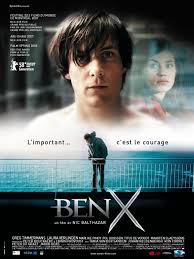
“Ben X” is a Dutch-Belgian drama directed by Nic Balthazar based on his novel “Nothing Was All He Said”. To escape the constant bullying at his school, Ben, a teenager with Asperger syndrome, immerses himself in the world of multiplayer rpg video games where he meets Scarlite, who gives him the inspiration and courage to stand up to the bullies. The film stands out for it’s realistic portrayal of autism, great acting all around, and a resolution much different from other films with a bullied protagonist (and unlike similar actual events that have made the headlines).
Motorcycle ninjas tighten their grip on Florida’s narcotics trade, viciously annihilating anyone who dares move in on their turf. Multi-national martial arts rock band Dragon Sound have had enough, and embark on a roundhouse wreck-wave of crime-crushing justice. When not chasing beach bunnies or performing their hit song “Against the Ninja,” Mark (Tae Kwon Do master/inspirational speaker Y.K. Kim) and the boys are kicking and chopping at the drug world’s smelliest underbelly. It’ll take every ounce of their blood and courage, but Dragon Sound can’t stop until they’ve completely destroyed the dealers, the drunk bikers, the kill-crazy ninjas, the middle-aged thugs, the “stupid cocaine”…and the entire MIAMI CONNECTION!!!
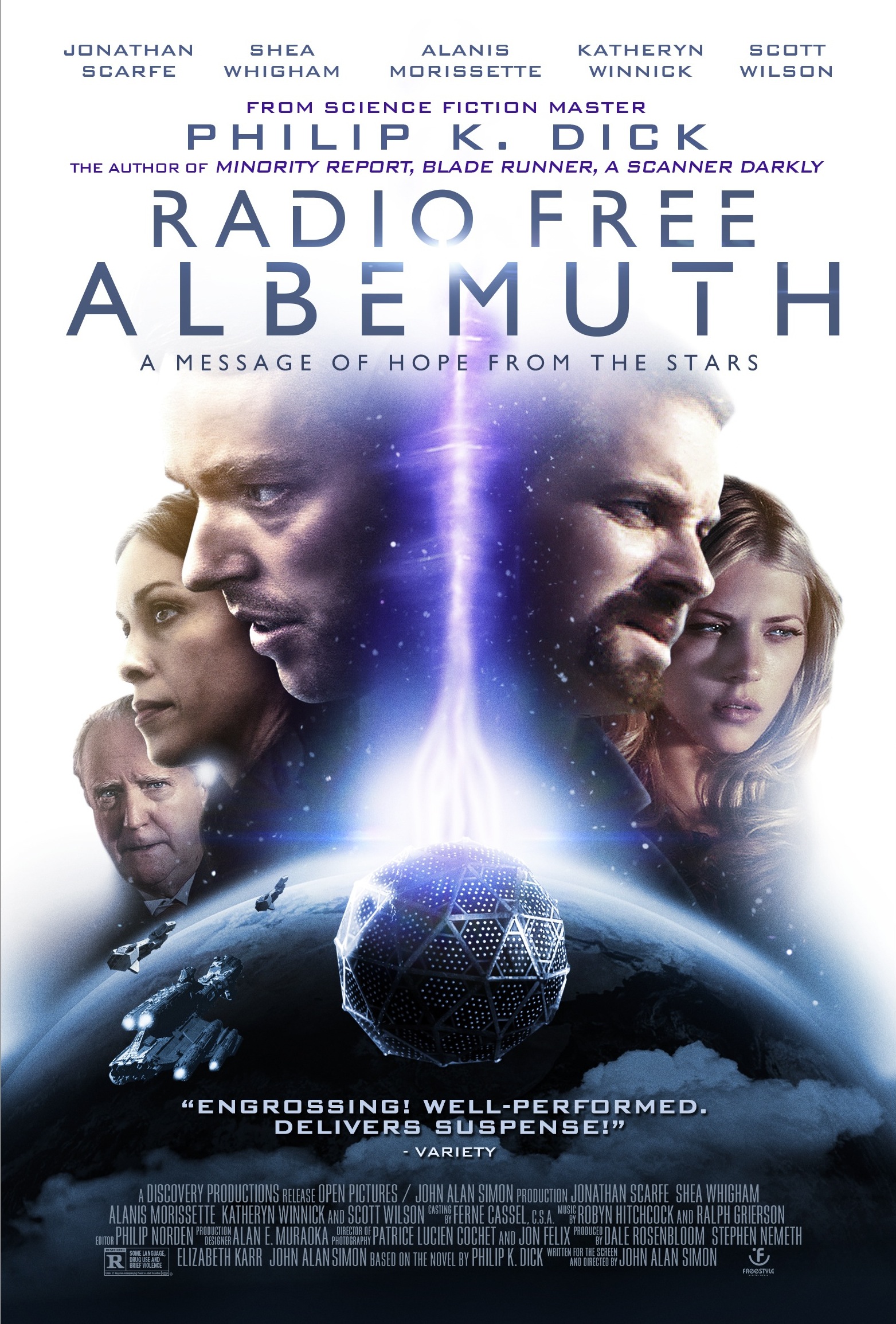
No, I’m not talking about Transformers 4. Today is the official U.S. release date for two films which will likely be regarded as cult classics of the sci-fi genre: “Radio Free Albemuth” and “Snowpiercer”. I’ve had the good fortune to have had the opportunity to see preview screenings of both films and can attest to their quality and excellent screenplays that are as intelligent as they are provocative.
Radio Free Albemuth, a film I’ve previously written about here, is possibly the most faithful cinematic adaptation of a Philip K. Dick novel, and while Snowpiercer may not follow its source material (Jacques Lob’s “Le Transperceneige”) as closely, it’s an excellent movie nevertheless. Korean director Bong Joon-ho, has made great films in the past such as “Memories of Murder” and “Mother”, but with Snowpiercer he manages to balance large scale Hollywood-style spectacle with the emotional intensity of his earlier work while getting excellent performances from English-speaking cast members such as Tilda Swinton, John Hurt and Ed Harris. It’s an odd coincidence that Snowpiercer and Radio Free Albemuth share the same U.S. release date since they’re not only the best science fiction films to come out in quite some time, but are also dark metaphors for the current socio-political moment (but not without a glimmer of hope).
To get an idea of what to expect from these films check out the reviews and trailers linked below to learn more about the projects:
“Like Stars on Earth” (2007), directed and produced by Aamir Khan is a critically acclaimed Bollywood film that has done much to raise awareness of the struggles of children with dyslexia. The film’s plot revolves around eight year old Ishaan, whose vivid imagination and difficulty with words and numbers cause him to get failing grades. His parents eventually send him to boarding school where a new art teacher recognizes Ishaan’s cognitive differences and devises strategies to help him succeed. Like Stars on Earth is notable for its inspiring storyline, great soundtrack and standout performances by Darsheel Safary as Ishaan and Aamir Khan as art teacher Ram Shankar Nikumbh.
To activate subtitles click the “cc” button on the bottom right corner of the video window.
Today I’m featuring two classic political documentaries, both more than a decade old (from 2003) yet still equally topical and among the best films on their respective subject matters.
The first is Mark Achbar and Jennifer Abbott’s “The Corporation”, a comprehensive and well-researched film exploring the history of corporations, how they operate and how they’ve come to attain so much political power. Related topics they cover include the 1933 attempted corporate coup exposed by General Smedley Butler, the Fox news coverup of the dangers of Monsanto’s Bovine Growth Hormone, and the mass protests in Bolivia sparked by the attempted privatization of their water supply in 2000.
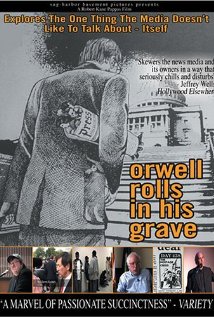
“Orwell Rolls in His Grave” directed by Robert Kane Pappas is possibly the best dissection of contemporary mass media propaganda yet, with a focus on corporate media consolidation and the role of corporate media in the controversial US presidential election of 2000. The film features interviews with Mark Crispin Miller, Bernie Sanders and Danny Schechter among others.
“Paprika” (2006) was the final feature-length anime masterpiece directed by Satoshi Kon, who died a few years later at age 46 of pancreatic cancer. Paprika is seemingly influenced by the novels of Philip K. Dick and films of Terry Gilliam, with a plot involving a radical psychotherapy treatment using a technology which allows one to view and interact with other people’s dreams. When a mysterious culprit steals the technology and uses it to cause the deaths of two scientists, it’s up to a determined detective and Paprika, a dream world avatar, to solve the mystery and prevent a chaotic merging of dreams and reality.
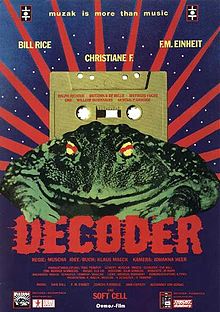
If your life needs a little-seen dystopian ‘80s German film about Industrial music sparking revolutionary change in a society of fast food and cultivated complacency—and I believe it does—then your life needs Decoder. Largely illuminated in lurid reds and TV-tube blues, the 1984 film starred Einstürzende Neubauten’s then-percussionist F.M. Einheit as a sonic experimenter who discovers that playing back recordings of disturbances in public spaces can create actual disturbances among the public, a concept developed by William Burroughs in the “Electronic Revolution” essay found in some editions of the collection The Job. (In fact, Burroughs briefly appears in the film, as does Throbbing Gristle/Psychic TV’s Genesis P-Orridge.)
Einheit uses this esoteric knowledge to cultivate increasingly widespread defiance and mayhem, attracting the attention of a Muzak corporate hit-man (I love the conceit that Muzak would have an assassin in its employ) whose task is complicated by his crush on F.M.’s peep-show dancer/amateur herpetologist girlfriend, played by Christiane F. The film’s themes and inspirations are illuminated by its writer Klaus Maeck in this interview from Jack Sargeant’s Naked Lens: Beat Cinema, excerpted here from the film’s web site.
I wanted to realize Burroughs’ ideas and the techniques which he described in the ‘Electronic Revolution’, and in The Revised Boy Scout Manual and in The Job. These were my favorite books … And I loved Johnny Rotten for his revolution in show business (and I still do). I was convinced that the only valuable political work must use the enemy’s techniques. From the ‘Foreword’ of the Decoder Handbook: “It’s all about subliminal manipulation, through words, pictures and sound. It is the task of the pirates to understand these techniques and use them in their own interest. To spread information is the task of all media. Media is power. And nowadays (1984!) the biggest revolution happen at the market for electronic media. To spread information is also your task. And we should learn in time to use our video and tape recorders as Weapons. The fun will come by itself.”
Being in the music business and participating in the punk and new wave explosion I became more interested in music. Muzak was one thing I found. Subliminal music to influence people’s moods, to make them function better, or buy more. So my conclusion was similar to that of ‘bands’ like Throbbing Gristle; by turning around the motivation, by cutting up the sounds, by distorting them etc. one should be able to provoke different reactions. Make people puke instead of feeling well, make people disobey instead of following, provoke riots.
Though it deals thoughtfully with provocative ideas, the film is laden with Euro art-film pretense that feels like fit matter for a “Sprockets” gag. Early on there’s a montage of video games cut with military stock footage, and another that alternates gore and erotica while Soft Cell’s “Seedy Films” plays.
But as strange as it can be, Decoder still holds a coherent, if dreamy, narrative, filled with captivating imagery and a gorgeous soundtrack composed by Einheit, P-Orridge, and Soft Cell’s Dave Ball. You can watch it in its entirety right here. I’ll throw the trainspotters a bone: Burroughs’ cameo is in the scene that starts at about 37:30, and P-Orridge’s appearance is at about 49:00.
David Cronenberg’s “Scanners” (1981) is infamous for a particular scene occurring less than 15 minutes into the film (and is likely still a shock for audiences today who have never seen it). The film’s notoriety (and comparatively wooden performance of the lead actor) may have caused most viewers to overlook some of the film’s better qualities such as an intelligent proto-cyberpunk storyline involving human drug experimentation, corporate espionage and backlash from a mutant terrorist underground. One particularly compelling plot element features an attack via psychic computer hacking. Scanners is surprisingly polished for its budget in terms of cinematography and special effects and is also notable for standout performances by Patrick McGoohan (creator and star of “The Prisoner” TV series) and Michael Ironside.






 . Largely illuminated in lurid reds and TV-tube blues, the 1984 film starred Einstürzende Neubauten’s then-percussionist F.M. Einheit as a sonic experimenter who discovers that playing back recordings of disturbances in public spaces can create actual disturbances among the public, a concept developed by William Burroughs in the “
 ” essay found in some editions of the collection
  . (In fact, Burroughs briefly appears in the film, as does Throbbing Gristle/Psychic TV’s Genesis P-Orridge.)
 , excerpted here from
  composed by Einheit, P-Orridge, and Soft Cell’s Dave Ball. You can watch it in its entirety right here. I’ll throw the trainspotters a bone: Burroughs’ cameo is in the scene that starts at about 37:30, and P-Orridge’s appearance is at about 49:00.
 After the Crash