Saturday Matinee: The Murder of Fred Hampton

Fred Hampton, founder of the Illinois chapter of the Black Panther Party for Self-Defense, was assassinated by a special unit of the Chicago Police Department on December 4th, 1969 as he lay face down in bed. He was 21 years old when he was murdered. The police fired 99 unanswered shots into his apartment, wounding Fred as he slept. Apparently drugged by an informant, Hampton was unable to awaken. After the raid the police put two more shots into Hampton’s head and said “Now he’s good and dead.”

This film follows the last year or so of Fred’s life and the investigation immediately following his murder.

The first part of the film shows Fred speaking and organizing and provides a brief glimpse into the Panther community programs such as free breakfasts for school children, as well as a fairly good portrayal of Hampton’s dynamic speaking abilities, vast depth of knowledge for someone so young, and his passion for the revolutionary struggle of all oppressed people worldwide regardless of race.

The remainder of the film focuses on Fred’s murder including footage of the crime scene. The attacking police unit was so secret that the local precinct was not notified to clean things up after the bodies were removed. As a result the Panthers and their attorneys filmed and collected a vast amount of evidence which proved the police and states’ attorneys were lying. The police and government arguments are given, interspersed with contradictory proof by the Panthers and their attorneys proving that this was not a raid gone sour, but rather a carefully planned assassination. The photo of the police smiling joyously as they carry Hampton’s body out of the apartment is ominous.

This film was made right after Fred Hampton was murdered, and before the Panthers were aware that one of their own – William O’Neal – was actually an FBI informant who provided the police with the map of Fred Hampton’s apartment. It was also filmed years before the information about the FBI’s COINTELPRO campaign was made public. It is a great piece of history which gives a rare fair treatment to the Black Panther Party.

Watch the full film here.


Saturday Matinee: Soaked in Bleach

You Decide: “Soaked in Bleach” expounds on the events leading up to Kurt Cobain’s death in 1994

By Bryan Thomas

Source: Night Flight

In 2015, Benjamin Statler produced, wrote and directed Soaked in Bleach, a docu-drama that expounds on the events leading up to the death of Nirvana‘s Kurt Cobain as seen through the eyes of a private investigator, Tom Grant.

The former Los Angeles County Sheriff’s Dept. detective turned private investigator — who had an exemplary resume and a spotless reputation — had initially been hired by Courtney Love on Easter Sunday 1994 to track down Cobain, who had gone missing after checking himself out of a drug rehab facility.

Soaked in Bleach focuses mainly on Grant’s investigation between April 1st and April 8th, with a particular focus on what may have happened on April 5, 1994.

At the time, the official Seattle Police Department incident report stated that “Kurt Cobain was found with a shotgun across his body, had a visible head wound and there was a suicide note discovered nearby.”

The coroner’s report later estimated that Nirvana’s 27-year-old musician and lead singer’s body had been lying in the “greenhouse,” a mussy little room over the garage at Cobain and Love’s Seattle home, for three days.

It was later determined by local Seattle police detectives that Cobain had committed suicide by a reported self-inflicted gunshot wound, but right from the beginning there were major doubts as to whether this ruling was correct.

This was due in no small part to Grant, who carried on his own investigation, eventually coming to the conclusion that Cobain had been murdered, and his death had been made to look like a suicide.

Grant — who never met Cobain when he was alive — came to realize that Cobain wasn’t the hopeless basketcase his wife had made him out to be, and he could find no one, no family member nor any of Cobain’s close friends, who believed he was suicidal.

In 2014, the Seattle Police Department released a number of photographs from the crime scene, and in 2016 previously-undeveloped film was also shared with the public for the first time.

The docu-drama unfolds like a narrative crime thriller, interwoven with cinematic re-enactments, interviews with key experts and witnesses — including Norm Stamper, ex-chief of the Seattle Police Department; Cyril Wecht, forensic pathologist and former president of the American Academy of Forensic Science; and, Ryan Ainger, Nirvana’s first manager — and the examination of official artifacts from the case, which are analyzed in the minutest details, including crime scene photos, autopsy reports and someone’s “cheat sheet,” which showed they were trying to mimic Cobain’s actual handwriting for the fraudulent suicide note.

Soaked in Bleach‘s dramatic re-enactments feature actor Daniel Roebuck as Grant.

Night Flight fans may recognize Roebuck from his role of “Samson,” the teenage killer in River’s Edge, or from his stint as “Dr. Arzt” from TV’s LOST,” or from his literally dozens of other roles on episodic TV show and feature films, including lots of horror films.

Tyler Bryan plays Kurt Cobain, and Sarah Scott is the chainsmoking Courtney Love, who can be seen wearing a babydoll nightie and knee-high stockings, rolling around on her bed while answering Grant’s questions.

Grant’s visible unease around Love — who married Kurt Cobain in 1992 — is palpable.

The June 2015 release of Soaked in Bleach was apparently timed to counter a competing documentary, Brett Morgen‘s Kurt Cobain: Montage of Heck, a film — released theatrically at the beginning of the same year — that many considered to be crass and exploitative.

Statler’s docudrama was considered so controversial, though, that Courtney Love’s legal team tried to stop the film’s release by issuing a cease-and-desist warning letters to movie theaters all over the country who were advertising their forthcoming screenings of Soaked In Bleach, under the pretense that his film was “defamatory.”

One of the more chilling and memorable moments in the docu-drama itself comes during an interview with Stamper, who says:

“We should have, in fact, taken steps to study patterns involved in the behavior of key individuals who had a motive to see Kurt Cobain dead. If, in fact, Kurt Cobain was murdered, as opposed to having committed suicide, and it was possible to learn that, shame on us for not doing that. That was, in fact, our responsibility. It’s about right and wrong. It’s about honor. It’s about ethics. If we didn’t get it right the first time, we damn better get it right the second time, and I would tell you now, if I were the Chief of Police, I would re-open this investigation.”

The film’s title comes from lyrics to Nirvana’s “Come As You Are,” a track from their Nevermind album, released as a single:

That line “Come dowsed in mud, soaked in bleach” was reportedly taken from a campaign in Seattle that encouraged heroin users to soak their needles in bleach after injecting to reduce the risk of spreading HIV (the actual phrase used was “If dowsed in mud, soak in bleach”).

“Soaked in bleach” — in the context of criminal acts — also refers to the destruction of DNA evidence by using bleach.

Watch the full film here.

Saturday Matinee: High Rise

“High Rise” (2015) is a British dystopian film directed by Ben Wheatley and based on a novel of the same name by J.G. Ballard. The film is set in luxury tower in a 1970s version of the future. The building houses all the conveniences of modern life, giving inhabitants the delusion of self-sufficiency as they become increasingly insular and detached from the outside world. Unfortunately the building is faulty and as the the infrastructure gradually collapses, social pressures among residents approach a breaking point. Truly a metaphor for our times.

Watch the full film here.

Saturday Matinee: Happiness

“Happiness” (1998) is a bleakly dark comedy written and directed by Todd Solondz. It follows the lives of three sisters and their respective problematic relationships. Joy (Jane Adams), is the youngest sister and is viewed by her family as the least successful by conventional standards. Helen (Lara Flynn Boyle) is the middle sister who is a famous writer but remains unfulfilled. The oldest sister is Trish (Cynthia Stevens), an upper middle-class housewife whose family seems perfect on the surface. The film was best described by Roger Ebert who wrote in his review: “…the depraved are only seeking what we all seek, but with a lack of ordinary moral vision… In a film that looks into the abyss of human despair, there is the horrifying suggestion that these characters may not be grotesque exceptions, but may in fact be part of the mainstream of humanity…. It is not a film for most people. It is certainly for adults only. But it shows Todd Solondz as a filmmaker who deserves attention, who hears the unhappiness in the air and seeks its sources.”

Watch the full film here.

Saturday Matinee: Testament

Cover Your Eyes: Lynne Littman’s ‘Testament’, 1983

By Richard McKenna

Source: We Are the Mutants

Testament
Directed by Lynne Littman
Paramount Pictures, 1983

1983 was a pretty fertile year for fictional nuclear apocalypses in Western popular culture. 2019: After the Fall of New York, Endgame, Exterminators of the Year 3000, Stryker, and Le Dernier Combat were released in cinemas, while ABC’s The Day After and Britain’s BBC2 adaptation of 1961 dystopian novel The Old Men at the Zoo, updated to feature a nuclear attack on London, appeared on television. Publishers released a slew of books with atomic mushrooms on their covers, including The Aftermath: The Human and Ecological Consequences of Nuclear War (edited by Jeannie Peterson), Luke Rhinehart’s Long Voyage Back, William Prochnau’s Trinity’s Child, and Dean Ing’s Pulling Through, as well as The Web, that year’s installment in Jerry Ahern’s Survivalist series. All of them attempted, seriously or otherwise—and it was generally otherwise—to examine the effects of a seemingly imminent nuclear war. The Doomsday Clock stood at four minutes to midnight (the closest it had been since 1960, though it was about to move even closer) and two events that year—the NATO military exercise Able Archer 83 and a nuclear attack false alarm in the Soviet Union—almost prompted a catastrophic escalation from fiction to reality.

The BBC’s optimism-annihilating Threads was still a year away, but the cultural momentum was building up to a psychological discharge whose blast radius would, for some, obliterate their ability to think about or plan for the future: what was the point, when they would be spending it eking out a life in the radioactive ruins of our civilization (or, if the Italians were right, driving customized cars and dressing like members of Krokus). That momentum surged dramatically with the release of Testament, the high water mark of the class of ’83. British sci-fi and horror magazine Starburst published a short yet positive review of it alongside a single publicity still showing a mother huddled up in bed with her children, fearfully pointing a torch into the darkness—an image that summarized perfectly the fear that it would be in our own homes that we would be killed, if not by the bomb itself then by the stone-age appetites and economics its detonation unleashed.

Despite containing no mushroom clouds, no heroics, no fallout shelters, no special effects, no geiger counters, and no enormous doors slamming in the depths of hellTestament is absolutely devastating: nothing except average people gradually realizing that the rest of their already abbreviated lives is destined to be a grim slog through even more illness, death, and loss than they’ve already experienced.

The film, produced by PBS and directed by National Education Television documentarian Lynne Littman, deals with the effects of a nuclear attack on a family who live in an idyllic small town (so idyllic that a young Kevin Costner and Rebecca De Mornay have settled there) somewhere within driving distance of San Francisco, and the first ten minutes is an artfully contrived little précis of their privileged lives: we see mom Carol (the great Jane Alexander) unenthusiastically acting out the instructions on her workout tape from bed while husband Tom (the also great William Devane) blithely takes their reluctant older son Brad cycling, leaving mom to get teenage daughter Mary (Roxana Zal) and little son Scotty (Lukas Haas) ready for school.

This initial section of the film highlights the reassuring frivolities and ephemera of Western life—toys, games, sports, exercise, E.T. t-shirts, He-Man figures and Sesame Street, and, in a way, Testament plays peculiarly like some kind of anti-E.T., or at least some nightmarish re-edit of its homely, chaotic, childish motifs, the intruder into the suburban calm not a kindly alien botanist but something native and altogether less friendly.

There is almost no buildup to the nuclear attack—no news reports about the mobilization of the armed forces, no preparations for shelter. The only indication that an attack is coming at all is that the nature of the film indicates that it must be, and the lack of narrative preparation makes the viewer’s stomach sink even more violently when the cartoon the family children are watching in their sunny lounge is suddenly replaced by static, which is then replaced by an emergency warning transmission. When the attack itself comes, it’s not even a noise, just a silent flash of blinding light. There are none of the typical signifiers: no models are destroyed, there is no colorized stock footage of shacks being blown away by 1,000 mph winds, no flesh drooping from bones, no radiation sickness makeup—only confusion, then coffins, and then funeral pyres. As the broadcasters who exchange news with the town’s chipper old radio ham start to vanish one by one, awareness grows that this might really be it—there might really be no hope.

The locals pull together and, unable to believe that the wider world won’t rally, seem determined to struggle through, organizing mutual assistance and continuing with their little world of school plays and piano lessons. But it gradually becomes more and more obvious that there is going to be no struggling through this one. Things are not going to return to normal—they are just going to keep getting worse, and there won’t be any school plays when all the children have died and all the adults are busy building bonfires to burn their corpses on.

The delicacy of touch with which the proceedings are handled—director Littman got the rights to the source material, a 1981 short story by Carol Amen, after reading it with her son—means that Testament makes its point all the more forcefully. Yes, very occasionally the tone does get slightly preachy, but considering the point the film wants to make—the stupidity of slowly and agonizingly killing half of the population of the planet—it’s a forgivable blip. In any event, Testament never feels smug or self-righteous: there are a few things that jar, and others that produce the odd smirk (a display of priestly affection very unlike that in Thorn Birds, a TV miniseries that caused a scandal the same year that Testament was released), but, most of the time, the viewer is simply staring at the screen in dread.

With its calm tonal palette and inoffensive James Horner score, suggestive of TV movies about domestic tragedy on the scale of divorce or alcoholism, one can imagine a grandparent of any political persuasion sitting down to watch it. In terms of production values, Testament sits somewhere between that well-made TV movie and a feature film proper, and its artlessness and lack of pretension, make it, if anything, even more upsetting and disorientating when things start to get really awful. Handled with a little less sensitivity and compassion, it could easily have been mawkish; but it isn’t, and Testament refuses to underline any particular aspect of the situation. There is simply the grind of life getting worse and worse until it is intolerably awful and you cannot survive. The economy with which the characters are sketched lends them a blank credibility, and the absence of any of the iconography of nuclear war (not even a single radioactive symbol) only adds to the film’s power.

Throughout the film, motifs of recording and repetition recur: family super-8 movies, nursery rhymes, the exercise cassette that mom is playing at the beginning, the answering machine, the pre-recorded warning message, the journal that Carol starts writing at the beginning of the film, even the roles of priest, mom, and policeman. It is when the graves turn to funeral pyres that the gravity of the situation becomes obvious, and perhaps the point is that the repetition and formalization of daily life is life. Deprived of the batteries and security and hope that allow us make those repetitions, the life we know ends as the recordings wind down. One very touching moment, when mom and son dance together to a (not very good) cover of the Beatles’ “All My Loving” played on a battery powered recorder, underlines perfectly the finite nature of the technologies we use to remember who we are.

The film is dotted with such lovely little scenes, like the one where Brad takes his late dad’s bike from the garage after his own has been stolen, and another when Mary asks Carol what it’s like to make love. Nobody is blamed for the war, and there’s no mention of politics, or enemy countries, or presidents. By definition it is probably a left-wing film (Amen’s original story appeared in feminist magazine Ms.), at least in as much as it aims to affect the opinion of the viewer as regards the effectiveness of a nuclear deterrent, and it is conceivable that to some particularly ideologically-driven idiots at the time it may have looked like liberal hand-wringing.

Testament isn’t perfect, but it is a powerful and economic piece of drama about personal loss and mass death that eschews all spectacle and seems to have no particular axe to grind other than to ask: What is the conceivable purpose of all this misery? It’s a point that bears repeating.

Watch the full film here.

Saturday Matinee: The Endless Night

‘The Endless Night: A Valentine to Film Noir’ an epic supercut of toxic masculinity and shady ladies

By Richard Metzger

Source: Dangerous Minds

Set to the tune of Massive Attack’s “Angel,” Serena Bramble’s 2009 remix project “The Endless Night: A Valentine to Film Noir” is a “video love letter that distills film noir movies into their atmospheric essence.”

Bramble, an editor and writer, had this to say about her work:


“After many long hours, this is my tribute to my favorite genre, to the dark shadows and the profound despair of the soul. I tried to include as many as I could get my hands on, though there are obviously some that I overlooked, some accidently (the absence of The Sweet Smell of Success and White Heat are the most obvious and shameful), some purposefully (save Sam Fuller’s 1964 pulp masterpiece The Naked Kiss, I decided to stay strictly within the 18-year period between 1940 and 1958, so absolutely no neo-noirs like Chinatown, and even more importantly, absolutely no colors).

“If this should be deleted for copyright infringement (this is for recreational use only, not for profit; all film clips and the music by Massive Attack belong to their respective copyright holders), I’ve had a hell of a time doing it. And just in case I glorified violence and smoking a bit too much, as a semi-pacifist, nonsmoking woman, I can only quote Samuel Fuller: “I hate violence. That has never prevented me from using it in my films.”

The films, dangerous ladies and toxic dudes seen during Bramble’s epic supercut are:

The Letter (1940, William Wyler. Bette Davis)
The Maltese Falcon (1941, John Huston. Humphrey Bogart, Mary Astor)
Shadow Of A Doubt (1943, Alfred Hitchcock. Joseph Cotten)
Double Indemnity (1944, Billy Wilder. Barbara Stanwyck, Fred MacMurray)
Murder, My Sweet (1944, Edward Dmytryk. Dick Powell)
Scarlet Street (1945, Fritz Lang. Edward G. Robinson, Joan Bennett)
Laura (1945, Otto Preminger. Gene Tierney)
Detour (1945, Edgar G. Ulhmer. Ann Savage)
Notorious (1946, Alfred Hitchcock. Cary Grant, Ingrid Bergman)
Gilda (1946, Charles Vidor. Rita Hayworth)
The Killers (1946, Robert Siodmak. Ava Gardner, Burt Lancaster)
The Big Sleep (1946, Howard Hawks. Humphrey Bogart)
The Postman Always Rings Twice (1946, Tay Garnett. John Garfield, Lana Turner)
The Lady From Shanghai (1947, Orson Welles. Rita Hayworth, Welles)
Out Of The Past (1947, Jacques Tourneur. Jane Greer, Robert Mitchum)
Brute Force (1947, Jules Dassin. Burt Lancaster)
Force Of Evil (1948, Abraham Polonsky. John Garfield, Marie Windsor)
The Set-Up (1949, Robert Wise. Robert Ryan)
The Third Man (1949, Carol Reed. Orson Welles)
Criss Cross (1949, Siodmak. Burt Lancaster, Yvonne De Carlo)
Gun Crazy (1950, Joseph H. Lewis. John Dall, Peggy Cummins)
In A Lonely Place (1950, Nicholas Ray. Humphrey Bogart, Gloria Grahame)
The Asphalt Jungle (1950, Huston. Sterling Hayden)
Night And The City (1950, Jules Dassin. Richard Widmark, Gene Tierney)
Sunset Blvd. (1950, Billy Wilder. Gloria Swanson, William Holden)
Ace In The Hole (1951, Billy Wilder. Kirk Douglas, Jan Sterling)
Angel Face (1952, Otto Preminger. Jean Simmons)
Pickup On South Street (1953, Samuel Fuller. Richard Widmark)
The Big Heat (1953, Fritz Lang. Gloria Grahame, Lee Marvin)
Kiss Me Deadly (1955, Robert Aldrich. Gaby Rodgers)
Night Of The Hunter (1955, Charles Laughton. Robert Mitchum, Lillian Gish)
The Killing (1956, Stanley Kubrick. Sterling Hayden)
Elevator To The Gallows (1958, Louis Malle. Jeanne Moreau, Maurice Ronet)
Touch Of Evil (1958, Orson Welles)
The Naked Kiss (1964, Samuel Fuller. Constance Towers)

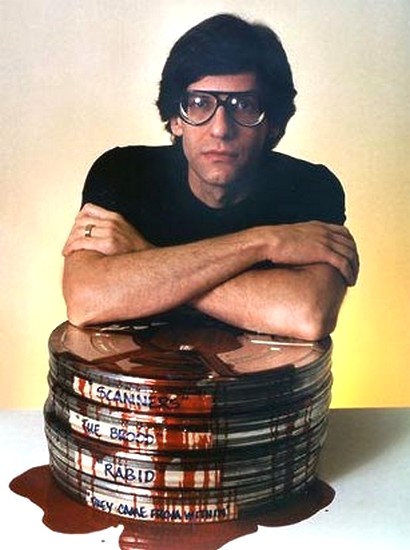
“An Enthusiastic Corporate Citizen”: David Cronenberg and the Dawn of Neoliberalism

(Editor’s note: In commemoration of director David Cronenberg’s 75th birthday we present this compelling and socially relevant analysis of his filmography.)

By Michael Grasso

Source: We Are the Mutants

The cinematic corpus of David Cronenberg is probably best known for its expertly uncanny use of body horror, but looming almost as large in the writer-director’s various universes is the presence of faceless, all-powerful organizations. Like his rough contemporary Thomas Pynchon and the conspiracies that litter Pynchon’s early works—V. (1963), The Crying of Lot 49 (1966), and Gravity’s Rainbow (1973)—Cronenberg’s shadowy organizations offer fodder for paranoid conspiracy. These conspiracies operate under the cloak of beneficent academic institutes and, in his later work, corporations. The transition from institutes to corporations occurred during Cronenberg’s late ’70s and early ’80s output, specifically the trio of films The Brood (1979), Scanners (1981), and Videodrome (1983).

It is no coincidence that, at this particular time, international finance and prevailing political winds helped put the corporation in society’s driver’s seat. In Adam Curtis’s recent documentary film HyperNormalisation (2016), he notes how the default of the city of New York in 1975 opened the door for private investment and the finance industry to get their hands on municipal governance on a large scale for the first time, and how this creaked open the door for the Thatcher-Reagan privatization wave in the ’80s. These last few “hinge” years of the 1970s offered the last chance for a real alternative to the coming neoliberal revolution. Soon, all alternatives for governance in the name of the public good were destroyed. Corporatism tightened its grip on the Western polity.

Cronenberg’s early eerie organizations—the “Canadian Academy of Erotic Enquiry” from Stereo (1969) and the panoply of gruesome academic and cosmetic conspiracies in his Crimes of the Future (1970)—eventually yielded to corporations like Scanners‘ ConSec and Videodrome‘s Spectacular Optical. In these early works, Cronenberg’s mysterious organizations are headed by visionary (mad) geniuses. In 1975’s Shivers, experiments by a lone mad scientist infect an entire apartment building with parasites, which awaken dark impulses in the building’s residents and spread themselves through sexual violence. But as the decade went on, Cronenberg slowly backed away from utilizing the character of a singular scientific genius harboring a twisted vision of the future. Now, organizations sought to pull the strings from the shadows. The key transitional work in this chronology is the sometimes-underlooked The Brood from 1979.

In the film, Oliver Reed plays esteemed psychologist Dr. Hal Raglan, who has developed a method of exorcising deep-seated psychological issues using a technique called “psychoplasmics.” In intense one-on-one sessions reminiscent of psychodrama, Raglan is able to physically remove trauma from the human body in the form of ulcers, rashes, and, we eventually discover, cancer. In the ultimate reveal, it’s shown that Raglan has helped traumatized patient Nola Carveth (Samantha Eggar) to birth violent, deformed homunculi who go out into the world, psychically connected to her, in order to resolve her childhood abandonment issues and abuse with bloody murder. Raglan’s foundation, the Somafree Institute of Psychoplasmics (its name simultaneously evocative of Aldous Huxley’s perfect drug soma, and reminiscent of fringe psychological research like Wilhelm Reich’s orgone theory) inhabits a modernist chalet far outside the city of Toronto. Non-resident patients have to be bussed in. Raglan’s public reputation is that of an eccentric, but effective, therapist. At several points in the film we see the covers of Raglan’s presumably best-selling The Shape of Rage. (Curiously, a decade later, in 1990, a documentary titled Child of Rage would be released covering the controversial use of “attachment therapy.”)

As depicted in the film, Somafree is not a corporation. But the thematic threads surrounding Raglan and his Institute are based on real-life trends in the 1970s. In its practices and in the person of Raglan, Somafree resembles psycho-intensive institutes like Esalen, self-improvement organizations like Lifespring, and personalities like Werner Erhard. Erhard’s est movement used primal abuse to ostensibly create psychological breakthroughs, helping the “patient” become more assertive, more powerful, less prone to obeying impulses caused by their early traumas. There is also the real-life analogue to the psychological method that Raglan employs: psychodrama. In the 1970s, new methods of conflict resolution pioneered in places like Esalen were beginning to seep into the mainstream of North American society. These methods soon spread into the corporate world as a purported means of defusing tensions at work and making an office more productive. The “encounter group” soon became a punchline, but the principles behind the Age of Aquarius’s more touchy-feely psychodynamic methods soon became part of the warp and weft of corporate culture in the ’80s and well beyond.

Nola’s estranged husband Frank interviews a former Raglan patient, Jan Hartog, in an attempt to discredit Somafree so Frank can regain custody of his daughter. This patient bears the scars of Raglan’s work on him: a lymphatic cancer sprouting from his neck (an eerie foreshadowing of the coming of another mysterious lymphatic disorder that would soon break out all over North America). Hartog plans to sue; not to achieve victory in a courtroom, but to destroy Raglan’s reputation. It doesn’t matter if they win, Hartog says, because “They’ll just remember the slogan. Psychoplasmics can cause cancer.” The 1970s was full of an increased awareness of the carcinogens that surrounded us in the late-industrial West—cigarettes, sweeteners, food dyes, and pesticides—thanks in large part to the nascent environmental and consumer rights movements, which faced off against corporations using  weapons of negative publicity.

By the time we get to Scanners in 1981, we are fully invested in a world of shadowy corporate overlords. A huge multinational security firm, ConSec, tries to shepherd psychics called “scanners,” ostensibly to help them control their powers, but also to utilize and exploit their paranormal abilities. Protagonist Cameron Vale (Steven Lack) is apprehended off the streets, where, due to his psychic pain, he’s living as a derelict. We learn that scanners don’t “fit in” with society. When Vale is given the inhibitive drug ephemerol by ConSec’s head of scanner research, Dr. Paul Ruth (Patrick McGoohan), he is able to get himself together and is even given a new proto-yuppie wardrobe and mission by ConSec: eliminate rogue scanner Darryl Revok (Michael Ironside). But as Vale accepts his mission and new identity, he finds himself enlisted in ConSec’s private war against renegade scanners. When he runs into an emerging cell of scanners who are forming a powerful “group mind” in a New Age-like encounter session, assassins controlled by Revok murder most of the cell. “Everywhere you go, somebody dies,” one of the hive mind tells Vale, who is complicit with ConSec’s need to exert corporate control over scanners, including the use of violence as part of the corporate mission. Meanwhile, ConSec itself is riddled with moles working with Revok. Indeed, a chemical and pharmaceutical company called “Biocarbon Amalgamate,” founded by Dr. Ruth but now infiltrated by Revok, manufactures ephemerol in massive quantities. Scanners recontexualizes the Cold War espionage “wilderness of mirrors” in terms of corporate espionage for a new age of corporate domination. (It’s no coincidence that Cronenberg cast McGoohan, one of the Cold War’s most famous fictional spies, in the role of Dr. Ruth.)

ConSec’s corporate mission is revealed in a board meeting when the new head of security says, “We’re in the business of international security. We deal in weaponry and private armories.” This head of security also tells Dr. Ruth, “Let us leave the development of dolphins and freaks as weapons of espionage to others.” To the new breed of ConSec executive, fringe ’70s research is a thing of the past, despite its obvious power and relevance. The future is in fighting proxy wars, ensuring private security for the wealthy, and providing mercenary security forces. ConSec in this way is like many other private security firms that first emerged in the 1970s and ’80s. Begun as an outgrowth of post-colonial British military adventurism, the private military company soon became a way for ex-military officers to assure themselves a handsome post-service sinecure in a new era where hot wars were a thing of the past. “Brushfire wars” would continue to ensue, ensuring these companies an expanding portfolio, both in the waning years of the Cold War and in the 1990s and beyond. In fact, it’s interesting to note that many of the real-world military’s supposed psychic assets themselves got into private security after the U.S. Army shut down fringe science projects like Project STARGATE. Art imitates life imitates art.

Videodrome expands Cronenberg’s conspiratorial corporate, military, and espionage worldview into the rapidly exploding world of the media in the early ’80s. Leaps forward in technology, all of which are explicitly called out in Videodrome, litter the film’s visual landscape. Cable television, satellite transmissions (and the attendant hacking thereof), video cassette recorders, the rise of video pornography, virtual reality, postmodern media theory, and violence in entertainment all play essential roles in the film. Max Renn’s (James Woods) tiny Civic TV/Channel 83 (itself based on groundbreaking independent Toronto television station CityTV) is trying to survive as best it can in a world of massive international media players. Ever seeking the latest hit that will tap into the public’s unending hunger for sex and violence, his on-staff “satellite pirate” Harlan delivers the mysterious Videodrome transmission. Harlan is later revealed to be working with the Videodrome conspiracy, having intentionally exposed Max to the signal. In a memorable speech, Harlan nails Max’s amoral desire to sell sex and violence to his viewers: “This cesspool you call a television station, and your people who wallow around in it, and your viewers who watch you do it; you’re rotting us away from the inside.” When Renn is deep into his Videodrome-triggered hallucinations, he is offered corporate “help” much as Cameron Vale was. This time, his “savior” is Barry Convex, a representative of Spectacular Optical. In his video message to Max, he, like the ConSec executive before him, lays out Spectacular Optical’s corporate mission:

I’d like to invite you into the world of Spectacular Optical, an enthusiastic global corporate citizen. We make inexpensive glasses for the Third World… and missile guidance systems for NATO. We also make Videodrome, Max.

The final form of the military-industrial-entertainment complex is laid bare. Videodrome’s intent is to harden and make psychotic a North American television audience who’ve “become soft,” as Harlan puts it. Renn’s hallucinations are recorded, he is literally “reprogrammed” to kill Civic TV’s board (thanks to the memorable hallucinatory image of Convex sticking a VHS tape into Renn’s gut). Renn is then reprogrammed to retaliate and assassinate Convex by the much more ’70s-cult Cathode Ray Mission of “media prophet” Brian O’Blivion, whose postmodern, expressly McLuhanesque view of television’s place in the world allowed Videodrome to come into existence in the first place: “I had a brain tumor and I had visions. I believe the visions caused the tumor and not the reverse… when they removed the tumor, it was called Videodrome.” It’s also worth noting that O’Blivion tells us that Videodrome made him its first victim; postmodern criticism of the medium of television is no match for its violent, cancerous growth.

The deregulation of media in the U.S. in the Reagan years is common knowledge; rules around children’s television were especially eviscerated, which allowed for an explosion in violent, warlike cartoons based on popular toy lines, training a new generation for a lifetime of endless war. Combined with the aforementioned explosion of video technology, the laissez-faire environment shepherded by Reagan’s FCC allowed a new breed of cable television magnates to get rich and created a television and media landscape with a relatively friction-free relationship to government. By the time the first Gulf War broke out in 1991, war provided the cable news networks with surefire ratings and cable news provided the propaganda platform for the war effort, a mutually beneficial (and Cronenberg-esque) symbiosis that’s continued to metastasize through multiple subsequent wars in the Middle East. The world of Videodrome, the one Harlan evokes where America will no longer be soft in a world full of tough hombres, has finally come to fruition thanks in part to all of our enmeshment in the video arena—the video drome.

After Videodrome—in The Fly (1986), Dead Ringers (1988), and Crash (1996)—Cronenberg focuses less on sinister organizations and more on monomaniacal researchers, doctors, and fetishists who pursue their individual idiosyncratic agendas through the director’s trademark twisting mindscapes (and bodyscapes). With the exception of eXistenZ (1999), Cronenberg’s meditation on computer technology and gaming released amidst the first dot-com bubble, and his Occupy-influenced adaptation of Don DeLillo’s 2003 novel Cosmopolis (2012), he has retreated from a more overt suspicion of corporations and shadowy conspiracies. His warning about these invisible masters pulling the strings of society came during the time period when something could have been done about corporate hegemony. But now, the conspiracy operates in the open. We are now all of us the dumb, trusting Cronenberg protagonist, lulled into a false sense of security by a series of “enthusiastic corporate citizens.” Long live the new flesh.