Two for Tuesday
Reply


Looking back at Blue Thunder
John Badham’s high-tech helicopter thriller Blue Thunder rode the crest of a decade obsessed with cool cars and aircraft…
By Ryan Lambie
Source: Den of Geek
Back in the 1980s, a company called Sega perfected what it referred to as the Full Body Experience. Less kinky than it sounds, this fusion of CRT television, videogame technology and hydraulic pistons aimed to give amusement arcade visitors a taste of what it might be like to drive a Ferrari Testarossa or motorcycle at breakneck speed or fly a fighter jet through a valley full of enemy aircraft.
For a generation of youths, these machines, with their chunky graphics and even chunkier controls, are the stuff of legend, and the mere mention of their names – Hang On, Out Run, After Burner, Space Harrier, Thunder Blade – is enough to evoke involuntary memories of Proustian proportions.
These half-remembered machines sum up the 80s era of mechanical wish fulfilment. More than any other, the decade catered to youthful fantasies of fast cars and deadly aircraft. Perhaps spurred on by the ongoing success of Star Wars, which placed Luke Skywalker at the helm of one of the coolest fighter craft ever committed to celluloid, the 80s saw a rash of mechanical fantasies appear in cinemas, arcades, and on television.
For examples, look no further than Magnum PI, first broadcast in 1980, in which Tom Selleck got to drive around in someone else’s Ferrari 308 GTS, and took the occasional ride in a friend’s helicopter. Knight Rider, first broadcast in 1982, saw David Hasselhoff drive around in an unspeakably cool talking car. In the movies, small boys got to fly through the skies on bikes (E.T.), in stolen spy planes (D.A.R.Y.L.), and sexy alien space craft (Flight Of The Navigator). Even Hollywood elder statesman Clint Eastwood got in on the act, as he controlled a top-secret Russian fighter jet with the power of his mind in Firefox.
Later on in the decade, Top Gun flew into cinemas, whose lovingly lit fighter jet porn inspired such films as Iron Eagle and its sequel. But before Top Gun, there was Blue Thunder, a 1983 movie that appeared to kick off a brief media love affair with helicopters.
Like Firefox, Blue Thunder had the benefit of some quite serious acting heft behind it. Roy Scheider, best known to wider audiences as the chap who blew up a shark real good in Jaws, turned in some quite brilliant performances in Klute, The French Connection (for which he was nominated for a Best Supporting Actor Oscar) and Marathon Man. Scheider starred alongside Malcolm McDowell, whose biggest successes at the time, either financially or critically speaking, were if…, A Clockwork Orange and Voyage Of The Damned.
Quite why either of them signed up for Blue Thunder isn’t initially clear; Scheider would essentially play second fiddle to the true star of the picture – the high-tech experimental helicopter, so important to the story that it gets title billing. But in a 1983 interview with Movies & Video Magazine (as recorded for posterity by Blue Thunder Online), Scheider explained that the film’s political overtones interested him in getting involved.
“So you see the underlying theme of the movie is that it’s a total invasion of privacy,” Scheider said. “Although this kind of device to control crowd would be very effective it would also be invasion of your personal liberties. What my character does in the film is to show the community that this kind of device isn’t necessary to be flying over anyone’s life.”
As for McDowell, director John Badham noted in a Starlog interview that the actor was terrified of flying – a setback, considering the character he was supposed to play was an army colonel with a love of hurtling about in helicopters.
The plot, if you were a youth at the time, mattered little – there was a helicopter in the movie, and it got to blow stuff up with a big gatling gun, and that was all you needed to know. Viewed today, it’s surprising how long it takes for director John Badham to get to the explosive bits – which, as it turns out, is no bad thing.
Scheider plays Frank Murphy, a Vietnam veteran turned helicopter pilot for the Los Angeles Police Department. In spite of his troubled past, Murphy’s selected to fly a new, experimental helicopter called Blue Thunder, a kind of flying Swiss-army knife which would allow the police to spy on citizens from the air undetected, and gun down miscreants with the gigantic gatling cannon sticking out of the front.
It’s the twin topics of public freedom and state control which separate Blue Thunder out from most other vehicle-based films of the decade. Although a thriller first and foremost, Dan O’Bannon and Don Jakoby’s script poses some pertinent questions about privacy and surveillance; there are many scenes in Blue Thunder where technology is misused to spy on women in a state of undress, or on private conversations in people’s houses.
Interestingly, Dan O’Bannon, who was inspired to write Blue Thunder with his partner Don Jakoby after growing annoyed at the police helicopters buzzing around LA during the late 70s, wasn’t at all happy with the filmed treament of the script. “The political impact – and there was quite a bit – was toned down,” O’Bannon argued, making the villains of the piece the federal government rather than the LA police department.
Whether Blue Thunder’s political elements were toned down or not, there’s no doubt that, in an era where the British government’s looking to place missiles on the roofs of London buildings as an anti-terrorist measure during the Olympics, and personal privacy is a more current topic than ever before, the idea of a heavily-armed police helicopter scouting the skies doesn’t sound so far fetched.
Anyway, back to the plot. Murphy learns that a group of shady individuals within the military may be thinking of using the helicopter to exterminate troublesome political dissidents. This group is headed up by – surprise – Murphy’s old Nam-era nemesis, Colonel Cochrane, played by McDowell. As Murphy’s wife Kate (Candy Clark) heads off to a news network headquarters with a videotape which proves the military group’s guilt, Murphy steels himself for a final act confrontation with his new-found military enemies.
And what a confrontation it is. Having carefully racheted up the post-Nixon era paranoia, John Badham lets fly with a closing stretch that pleased the young viewers less interested in the script’s earlier meditations on state control. For all those kids who sat in one of Sega’s Thunder Blade machines in the 80s, I suspect it’s Blue Thunder‘s closing action scene which was playing back in their heads as they prepared to pilot a remarkably familiar looking military helicopter.
At the helm of Blue Thunder, Murphy does battle with ordinary police choppers, a pair of fighter jets, and then Cochrane himself, who’s taken to the skies in an armed helicopter of his own. Without CG and with a mere sprinkling model effects, Badham stages an impressive aerial display above the streets of Los Angeles. To modern eyes, it’s not quite so jaw-dropping, but it’s still well shot, well choreographed and surprisingly intense – and there’s a sublimely comic moment involving a shower of roasted chickens.
On the acting front, Roy Scheider’s the consummate tough, unflappable hero, a young Daniel Stern is good value as his sidekick, while Warren Oates puts in a welcome appearance which would sadly prove to be among the last in his long career. Then there’s McDowell, who remains a cheerfully despicable hate figure, in spite of his terror behind the scenes. His character even gets his own obnoxious catchphrase – a stomach-churning “Catch you later”, complete with finger gun.
(On the topic of acting, Mario Machado, who memorably played a news anchor in the RoboCop movies, Scarface and Rocky III, among many others, also turns up in an identical role in Blue Thunder.)
From a technological standpoint, it’s inevitable that a film that dealt with the cutting-edge gadgetry of 80s America would look particularly outdated to 21st century eyes. In spite of this, Blue Thunder remains an intelligent and well-made thriller with some great action moments. Its box-office success triggered a spin-off ABC TV series of the same name in 1984, while rival network CBS brought out its own helicopter-based series, Airwolf, that same year.
Of all the vehicle-based films and TV shows to appear in the 80s, Blue Thunder is almost certainly among the best. Where most, such as Top Gun, brought with them an air-punching sense of jingoism, Blue Thunder is a bitter, cynical film, and that’s probably why it’s aged so well. It’s also a fact that the helicopter itself still looks extremely cool, even if it isn’t quite as high-tech as it was 30 years ago.
With superhero movies currently at the peak of their popularity, Hollywood movie makers are probably wondering what the next big thing might be. If so, might we suggest a return to the mechanical wish-fulfilment movies of the 80s, as exemplified by arcade games such as Thunder Blade, or the film that inspired it, Blue Thunder? If there’s one thing the current clutch of blockbusters are sorely missing, it’s a sexy helicopter.
Watch Blue Thunder on Crackle here: https://www.crackle.com/watch/520
By JPRoscoe
Source: Basement Rejects
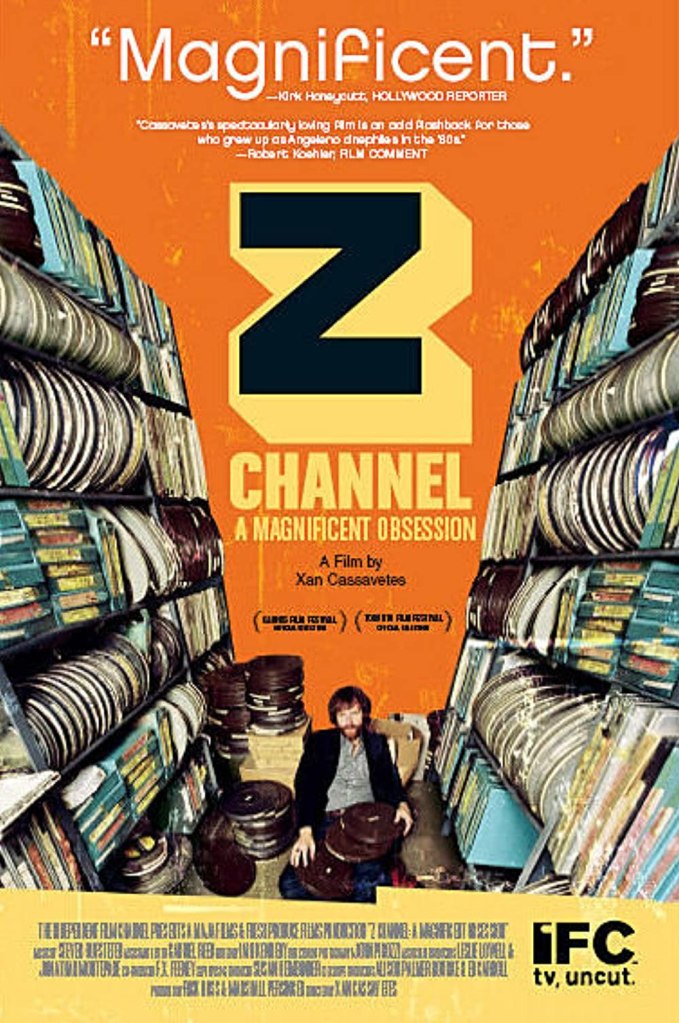
Launching in 1974, the Z Channel became one of the first pay cable channels. The channel eventually morphed into a movie channel highlighting directors, art films, and championing original visions portrayed on the screen. One of the people behind this transformation and the decisions made on the channel was the program director Jerry Harvey. Harvey (with his team) brought many films to the Z Channel that were never seen anywhere in America and created a world for film lovers…but Harvey had his own demons.
Directed by Xan Cassavetes, Z Channel: A Magnificent Obsession is a documentary about the rise and fall of the California based Z Channel which broadcast from 1974 to 1989. The documentary premiered at Cannes in 2004 and was released to positive reviews.
I grew up without cable so dreams of HBO were just dreams. At the time, I wouldn’t have appreciated Z Channel and would have much rather stayed with something like HBO or Cinemax. Watching the Z Channel: A Magnificent Obsession, I dream about the Z Channel still being around.
There are a lot of viewing options now. The difference between something like FilmStruck and the Z Channel is that idea of chance. You don’t know what you are going to get and you don’t know when you’ll get to see it again. That is something that current TV watchers (or streamers) forget…you had to wait to see the movies you wanted and a video store might not have them. The idea of someone so diligently trying to seek out and collect these films for viewers is admirable.
The documentary of course takes a dark turn in that Jerry Harvey really was someone who seemed lost. The documentary does struggle with the ideas of its three themes at points in trying to decide if it is about Z Channel, Jerry Harvey, or the films…and it is understandable because it is hard to separate the three because they were so bound together. Like a lot of documentaries, I wish there was a better way to establish more of a timeline of events through the course of the movie.
The documentary features a lot of great performers and great film clips. Robert Altman, Quentin Tarantino, Jim Jarmusch, James Wood, and Jacqueline Bisset are among some of the people interviewed, but it is the immense outpouring of these people for what Z Channel did for them that shows its importance on modern film. Harvey’s personal acquaintances provide the most insight to him and what was going on at Z Channel and really help round out the documentary…plus, it becomes a film watcher’s guide for movies that should be sought out.
Z Channel: A Magnificent Obsession is an interesting documentary, but it also is a documentary that feels like it needed a little tweaking to become a great documentary. It is a film for film lovers and a specific kind of film lover. The movies highlighted appeal to a certain viewer and the true crime aspect of the story probably isn’t intense enough for people interested in the true crime genre. Still, Z Channel: A Magnificent Obsession is a worthy documentary that should be sought out.
Watch Z Channel: A Magnificent Obsession on Hoopla here: https://www.hoopladigital.com/title/14980839
By Ricardo Gallegos
Source: But Why Tho?
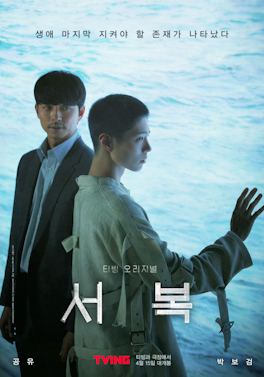
Lee-Yong Ju’s science fiction film Seobok: Project Clone delves into one of the genre’s most prominent philosophical concerns: the fate of men. And even though it tends to ponder on too many ideas, it manages to create food for thought while providing jaw-dropping setpieces.
Former intelligence agent Min Ki-hun (Gong Yoo) is struggling both physically and emotionally. The regret of his past is consuming him and a brain tumor has left him with little time to live. One day, he’s asked by former boss Ahn (Jo Woo-jin) to return to action in a secret mission involving the protection of project Seobok (Park Bo-gum), the first human clone who, besides possessing pressure bending powers, is immortal and therefore is the key to the research that could save Ki-hun’s life. However, what seems like a straightforward task soon puts Ki-hun in the middle of a war to possess (or kill) Seobok that involves American mercenaries, government officials, and the laboratory involved in the research. Still unsure on who to trust, Ki-hun sticks to protecting Seobok, and, together, they go on the run.
With a strong sci-fi core, Seobok: Project Clone tips its toes into the road movie genre in a second act full of ethical conundrums. From very different angles, Ki-hun and Seobok are forced to reflect on their mortality while driving through highways and cities. The former realizes that in order to be cured, Seobok has to be exploited, which is something other characters see as perfectly fine given that he’s, after all, some sort of sub-human experiment. Does Seobok have moral rights? What are their limits? If he was created for research only, shouldn’t his suffering and exploitation be unimportant? The movie asks these questions to both the audiences and Ki-hun, whose condition worsens as time goes by.
Meanwhile, Seobok learns about humanity with every interaction and blood-soaked encounter and eventually asks himself what the meaning of immortality is. Should he allow humans to stop death by researching him? As Seobok ponders on this question, the inhumanity around him grows, and soon, the true colors of our world make clear that, ultimately, only wealthy men would be able to get the ‘benefits’ from immortality.
Gong Yoo and Park Bo-gum’s beautifully nuanced performance gives power to these thoughts, but they can’t stop the whole road movie section from being bogged down by the high number of philosophical queries the film lays out, none of which are thoroughly explored. Because of this, you’ll find yourself losing interest in the motivation of the characters, even more, due to the dull pace of the editing.
Eventually, your patience and investment are rewarded when Lee-Yong Ju successfully transforms these philosophical conundrums into emotional fuel for a spectacular action-packed third act where everything comes full circle. Aided by top-notch VFX work and sound design, as well as an extraordinary score by Yeong-wook Jo, Seobok’s powers are used in a terrifying manner to lead the film toward an outstanding conclusion that provides audiovisual and narrative satisfaction; and thanks to the correct development of his character arc throughout the film, Seobok’s never reduced to a just a killing tool. His actions and realizations are consequences of his experiences outside the laboratory and his interactions with Ki-hun.
Seobok: Project Clone is a riveting balance of philosophy, sci-fi, and action with a hint of road movie goodness that never sacrifices its complex questions in lieu of cheap entertainment. The issues at hand are never forgotten even when the most visual effects-heavy scenes fill the screen, and that’s something not many films of this nature are able to do.
Watch Seobok on Hoopla here: https://www.hoopladigital.com/title/14858932

The Long Kiss Goodnight (1996), Lookback/Review
Overlooked, underappreciated, Geena Davis headlining an action flick with Samuel L. Jackson as her wisecracking, foulmouthed sidekick. White girl, Black guy buddy movie. Some of us here LOVE this movie.
By Tony Sokol
There are rumors and rumors of rumors that a sequel to Renny Harlin’s The Long Kiss Goodnight is in the works. I inexplicably missed the original when it came out and dismissed it as just another action flick. I was more than surprised at how prescient a movie it was at the time. The nineties was an adventurous time for filmmaking. Increasingly influenced by music videos, a lot of the art showed dark overtones, in bright colors and quick cuts. Quentin Tarantino’s Reservoir Dogs brought a sense of low-budget high-octane fun and breakaway banter back into the movies. He also expanded on the naturalistic acting styles in Barry Levinson’s conversational film Diner that let everyday small talk happen while allowing the plot to move along as it might. On the surface, The Long Kiss Goodnight is a fast-paced adventure movie with a quick wit, an accelerating pace, famous locations, and a female hero that performs too many impossible physical feats. Underneath it is an allegory to the growing paranoiac conspiracy theories that are now flooding into the mainstream. The movie references the 1993 World Trade Center bombing and Samantha Caine’s transformation into the regrettably-named Charly Baltimore can be seen as an allusion to sleeper-agent multiple personality assassins.
1996’s The Long Kiss Goodnight was the second movie in a row that director Renny Harlin made with his then-wife Geena Davis. Davis played a pirate in the previous year’s Cutthroat Island. Harlin previously directed The Adventures of Ford Fairlane and Die Hard 2 which were edited simultaneously and released just a week apart. Die Hard 2 was a huge hit and Ford Fairlane starred Andrew Dice Clay. Harlin started his career by directing Finland’s most expensive film and the slashers Prison and A Nightmare on Elm Street 4: The Dream Master. The screenplay was written by action movie pioneer Shane Black who also wrote Lethal Weapon, Lethal Weapon 2, The Last Boy Scout and The Last Action Hero. Alan Silvestri composed the Original Music and the Cinematography was by Guillermo Navarro.
Geena Davis plays Samantha/Charly, the ultimate sleeper agent. Davis was probably best known as Thelma from Thelma and Louise, but had also made Dustin Hoffman stutter in Tootsie and acted in a string of movies including The Fly, Beetlejuice, A League of Their Own, Quick Change, Earth Girls are Easy and won an Oscar for Accidental Tourist. Besides being an actress, Davis is also a late-blooming Olympic archer and a member of Mensa. According to the Gene Mustain and Jerry Capeci true-crime book Murder Machine, Geena Davis occasionally babysat for mobster Dominick Montiglio’s kids. Montiglio was a member of Roy DeMeo’s assassination crew. The DeMeo crew hired sociopathic family guy Richard “The Iceman“ Kuklinski (who lived across the street of a friend of mine when I was a kid) for wet jobs and Hollywood made a movie out of The Iceman in which Geena Davis snorts coke in a cameo. Davis was nominated for a Saturn Award for her performances as Samantha/Charlie. Samuel Jackson seems to be lit by some inner fire. He brings a damaged humanity and vulnerability to the wildest of roles. He brings more than wisecracks to private detective Mitch Hennessy. He puts tangible fear and uncertainty behind the bluster.
Amnesia chick Samantha Caine thinks she is a single mother and schoolteacher living in the small, suburban town of Honesdale, Pa. who is dating a nice guy. She suffers from “focal retrograde amnesia.” She has a daughter, Caitlin (Yvonne Zima), but she can’t remember the father. She hires Mitch Hennessy, a private detective who pulls small extortion cons, to find out who she used to be. An automobile accident activates Samantha’s “inner landscape” and she begins to remember her other personality, Charly, the woman she used to be. Originally mistaking herself for a chef, because she’s very handy with large kitchen knives, she begins to have more realizations of her past. Hennessy’s partner, Trin (played by Melina Kanakaredes, who has gone on to become a TV fixture as Dr. Sydney Hansen on Providence and as Det. Stella Bonasera on CSI: NY ), gets a major clue to her identity from a suitcase left in the attic of a boarding house. Saved from an assassination attempt by a very durable refrigerator door, Samantha takes off with Hennessy to unravel the clues and assemble a Remington rifle. They contact Dr. Nathan Waldman (Brian Cox) who tells Samantha that she never existed, that she was created as a cover identity for Charlene Elizabeth “Charly” Baltimore, a CIA assassin who disappeared eight years ago to resurface as a one of Santa’s elves on a parade float. Samantha and Hennessy take a trip to the Garden State to see her former fiancé Luke (David Morse), who turns out to be Daedalus, her last assassination assignment. Awkward. Charly kills Daedalus for reminding her who she is, grabs Hennessy and goes after her old CIA boss Leland Perkins (Patrick Malahide) who’s now working with an old nemesis from PsyOps Timothy (Craig Bierko), who is probably Caitlin’s daddy, to do a fund raiser for the CIA. No, they’re not gonna bake cookies. They’re going to tease conspiracy theorists for years:
Hennessy:
Fund raiser?
Perkins:
1993, World Trade Center bombing, remember? During the trial one of the bombers claimed the CIA had advanced knowledge; the diplomat who issued the terrorists visa was CIA, it’s not unthinkable they paved the way for the bombing, purely to justify a budget increase.”
Hennessy:
You’re telling me that you’re gonna fake some terrorist thing just to scare some money outta congress?
Perkins:
Well unfortunately Mr. Hennessy I have no idea how to fake killing 4,000 people, so we’re just going to have to do it for real. Oh, blame it on the Muslims naturally, then I’ll get my funding.
Sound familiar? It should, dozens of 9-11 references are supposedly found in movies and TV shows (Short-lived X-File spinoff Lone Gunmen’s pilot was about a thwarted World Trade Center bombing) made before 2001. There is a movement of people who believe that Hollywood power brokers knew all about it.
Geena Davis does a magnificent job playing the dual roles of Samantha and Charly. Although we are led to believe that Charly is the real person that she used to be, there are enough hints that she may be a Delta programmed assassin with multiple personalities. This might explain her enhanced abilities. Charly’s almost a superhero, she can grab a gun from a burning man while in free-fall and shoot a target dead in the eye, she can shoot open a block of ice for a soft landing with an automatic weapon, she can outrun an incendiary bomb, she’s better than Xena. She has an epiphany while standing naked in front of a mirror. A lot of people who say they are MK Ultra mind control survivors use mirror imagery. She switches between alters, from gleefully skewering a tomato into a wall with a carving knife, because “chefs do that” to threatening her kid to skate, “Life is pain, get used to it.” We learn that Charly has been around the intelligence community from the time she was a kid, her father was in the Irish military. Recruited into spy work in spite of her violent tendencies, Charly sometimes also changes into a sex kitten personality, another theme from MK Ultra conspiracy threads.
The Long Kiss Goodnight was prescient about quite a few things besides the growing trend to female action heroes. For every “the last time I got blown candy bars cost a nickel” there is a subtle nod to mind-blowing paranoid possibilities. This is a conspiracy movie posing as an adventure flick.
Watch The Long Kiss Goodnight on Pluto TV here: https://pluto.tv/en/on-demand/movies/the-long-kiss-goodnight-1996-1-1?utm_medium=textsearch&utm_source=google

By Roger Ebert
Source: RogerEbert.com
At a time when so many movies show such cold-blooded calculation, here’s one heedless enough to be fun. “Little Shop of Horrors” arrives with enough baggage to make it into a thoroughly timid project – what is less likely to make a fresh movie than a long-running stage hit? – and yet the movie has the offhand charm of something that was concocted over the weekend.
This is not only a musical and a comedy, as we expected, but also a revue of sorts: Comic actors such as Bill Murray, John Candy and James Belushi have walk-ons, and Steve Martin almost steals the show as a sadistic, motorcycle-riding dentist. Yet at the heart of the movie is a basic sweetness, an innocence that extends even to the centerpiece of the story, which is a man-eating plant named Audrey II.
The plant makes its appearance one day in a flower shop window, having arrived from another planet. It immediately begins to grow, to look around itself, to attract attention and to exhibit an appetite for human blood. It also changes the lives of the three people who work in the store: the shop assistant, Seymour (Rick Moranis); the salesclerk, Audrey (Ellen Greene), and their kindly, blustering old boss, Mr. Mushnik (Vincent Gardenia). Suddenly, they have the sort of fame thrust on them that is usually reserved for lottery winners and people who survive freak accidents.
There are all sorts of people with ideas about how to exploit the wonderful plant, and others who wish it no good. The movie uses them as the occasion for gentle satire and broad comedy, and there’s the sense that “Little Shop” is amused by just about whatever comes into its mind. There is also a romance; Seymour falls in love with Audrey (I), but must win her away from the evil dentist (Martin), who roars around on a motorcycle and gives her black eyes.
Meanwhile, Audrey (II) inexorably grows, nourishing itself with blood from a nick on Seymour’s finger and developing a taste for human flesh. The progressive growth of the alien plant was, of course, one of the glories of the stage version of “Little Shop,” and the movie’s Audrey, designed by Lyle Conway and directed by Frank Oz, is a marvel of technique. The plant actually does seem to have a personality and is remarkably accomplished during its musical numbers.
Moranis also has developed a personality in this movie and, in a way, that’s as surprising as Audrey II’s achievement. After being typecast as a nerd on SCTV and in such limited and predictable films as “Strange Brew,” he emerges here as a shy, likable leading man in the Woody Allen mode. The movie sometimes makes his work look easy. But he has to carry a lot of the exposition and hold most of the conversations with the plant, and without him the movie might not have been half as confident.
Greene repeats her New York and London role as the human Audrey, and by now the wide-eyed, daffy blond with the pushup bra has become second nature. Her big musical number, “Suddenly Seymour,” has the bravado of a Broadway show-stopper even while undermining itself with satire.
The show is punctuated by musical commentary delivered by a Supremes-style trio (Tichina Arnold, Tisha Campbell and Michelle Weeks), that bounces around the flower shop’s inner-city neighborhood with a message of hope that seems somewhat optimistic, inspired as it is by a carnivorous plant, but fits right in with the movie’s good heart.
All of the wonders of “Little Shop of Horrors” are accomplished with an offhand, casual charm. The movie doesn’t labor its jokes or insist on its virtuoso special effects, but devotes its energies to seeming unforced and delightful. The big laughs, when they come, are explosive (such as the payoff of Martin’s big musical number), but the quiet romantic moments are allowed to have their coy innocence.
This is the kind of movie that cults are made of, and after “Little Shop” finishes its first run, I wouldn’t be at all surprised to see it develop into a successor to “The Rocky Horror Picture Show,” as one of those movies that fans want to include in their lives.
Watch Little Shop of Horrors for free here: https://soap2day.cool/watch-movie/watch-little-shop-of-horrors-free-10873.5306743
By Paul Willistein
Source: The Morning Call
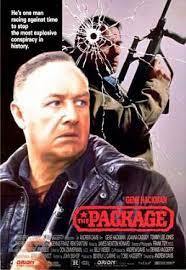
“The Package” is not a neat little present, but rather one wrapped in a plain brown wrapper – and ticking.
What’s explosive about this thriller set in the glasnost era are the performances of Gene Hackman and Tommy Lee Jones. As the movie races to its conclusion, it discards plot like bumpers and fenders flying from a car in a chase scene. Preventing the movie from coming to a crashing halt are Hackman’s and Jones’ performances.
Inside “The Package,” you’ll find Hackman quietly strong and Jones edgy. There’s a surprise: a steadfast Joanna Cassidy.
“The Package” begins in East Berlin where a disarmament conference between the Soviet Union and the United States is shattered by a terrorist attack which occurs on Sgt. Johnny Gallagher’s (Hackman) watch. Reprimanded, he’s given a more menial assignment, delivering a “package” (military parlance for a court-martialed serviceman) back to the United States to serve time.
Hackman and the serviceman (Jones) arrive while the president of the United States and the secretary general of the Soviet Union are meeting just before Christmas in Chicago (where Enrico Fermi’s experiments in the late 1930s led to the nuclear age) to celebrate the Cold War’s end. But Gallagher is brutally beaten in an airport men’s room. His “package” is gone. Checking service records through his ex-wife (Cassidy), Gallagher finds that he delivered the wrong man. Who, then, was the soldier he brought back to the States?
That’s when the twisted web of this political thriller unravels, with an ending worthy of “No Way Out,” another Orion Pictures release in which Hackman starred. “The Package” keeps you guessing, not unlike the Michael Caine starrer, “The Fourth Protocol” (also an Orion release; this studio is almost single-handedly preserving the political thriller genre). Not since “The Manchurian Candidate” has a movie provided so many chilling moments.
“The Package” does get bogged down by plot. A political thriller is nothing if not a well-oiled machine when it comes to plot – the more complex the better. But the plot must be internalized in the psyches of its main characters. Director Andrew Davis (“Above the Law,” “Code of Silence”) doesn’t show us enough of the interior life of Hackman and Cassidy, nor of Jones, for that matter.
Hackman, who’s played Lex Luthor, Superman’s nutty arch fiend, has Superman strength and determination in his heroic efforts in the movie’s latter third. It’s a credit to Hackman’s abilities that he makes it believable. Jones (“Coal Miner’s Daughter,” “Stormy Monday,” TV’s “Lonesome Dove”) again plays a hateful character who you’ll find oddly appealing. Cassidy (“Who Framed Roger Rabbit,” “Blade Runner,” “Under Fire”) has a smallish role but elevates it handsomely (and she looks great in a uniform). There’s also John Heard (“Betrayed”) as the tight-lipped colonel, and Dennis Franz (Lt. Buntz of TV’s “Hill Street Blues”) as a likeable Chicago policeman.
“The Package” is slick and shiny. It will appeal to fans of Hackman, Jones and Cassidy, as well as those who enjoy political thrillers.
INDIAN COUNTRY NEWS
"It is the duty of every man, as far as his ability extends, to detect and expose delusion and error"..Thomas Paine
Human in Algorithms
100% Accurate Google Sheets + KDP Book Formatting | 24hr Delivery
From the Roof Top
I See This
blog of the post capitalist transition.. Read or download the novel here + latest relevant posts
अध्ययन-अनुसन्धानको सार
 After the Crash