Werner Herzog is an inimitable documentary filmmaker whose curiosity, wonder and awe for the mysteries and eccentricities of our world is unbounded. One of the hallmarks of his work is his unmistakable voice-overs (with a distinctive German accent) which serve as the narrative threads holding the materials together. Here are five of his most recent documentaries which illustrate the diversity of themes that interest him:
Encounters at the End of the World:A visually stunning documentary about the scientists, dreamers, adventurers, philosophers, and creatures of Antarctica.
Grizzly Man:A mesmerizing documentary about a young man obsessed with grizzly bears in the Alaskan wilderness.
Into the Abyss:A daring examination of capital punishment filled with small and humble human touches.
Wheel of Time:An exotic look at a Buddhist ritual held in Bodh Gay, India, and Graz, Austria in 2002 that attracted thousands of pilgrims.
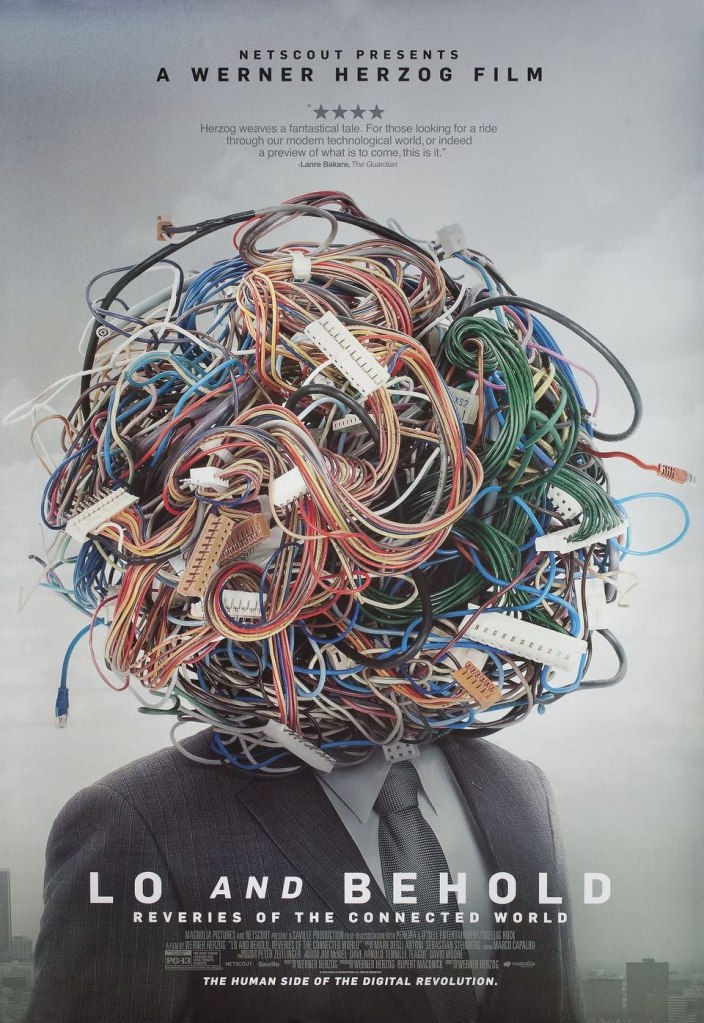
In Lo and Behold, Reveries of the Connected World, Herzog tackles the complex, controversial, and mysterious Internet. He refers to this technological tool as “one of the greatest revolutions” in human history. This bold and multidimensional film is divided into 10 chapters:
The Early Days
The Glory of the Net
The Dark Side
Life without the Net
The End of the Net
Earthly Invaders
Internet on Mars
Artificial Intelligence
The Internet of Me
The Future
Here you will discover a breadth of material that ranges from the very serious to the extremely quirky and odd. Herzog begins with a terse history of the Internet’s beginnings at U.C.L.A. during the 1960s. Leonard Kleinrock, a professor of computer science, takes us into the “holy room” where the first Internet computer remains. He recalls his feelings when a message was transmitted from this computer to the Stanford Research Institute on October 29, 1969. Programmers were on the phone confirming that the login was happening. Stanford replied that they had received the “L” and the “o.” Then its computer crashed. So the first Internet message was “Lo.” This documentary chronicles what happened beyond that.
Danny Hillis, another scientist, reminisces about a time when all the users of this technology could be identified in one directory. Now, he states, the global directory would be 72 miles thick. Another statistic which stands out is: “Today, about 3.2 billion people use the internet around the world.” Herzog chimes in that CDs containing a single day’s worth of global data would stretch “to Mars and back.”
Here are some observations made in interviews with computer and robot specialists, hackers, technicians, programmers, gamers, and professors.
Elon Musk, the entrepreneur behind Telsa, is now interested in colonizing Mars; he also reflects on cyberwarfare or other earth catastrophes.
Kevin Mitnick, a legendary hacker, reveals the mayhem and the mischief that can take place by those who can get into large computer systems; cyberwarfare now puts smaller states on the same level as larger ones.
Joydeep Biswas, an engineer who has put together a robotic soccer team, shows how they work together and even reveals his favorite robot player.
Sebastian Thrun, an online-learning pioneer, notes that self-driving cars can all learn from the collective experiences of other cars and their mistakes, unlike human drivers.
Also included is an account of abusive cyber behavior ending with a mother calling the Internet “a work of the Devil” after pictures of her dead child were widely circulated online. Herzog talks with several persons who are sensitive to electromagnetic waves and get radiation sickness; they now live in an isolated area totally off the grid. A segment on video-game addicts reveals that many of them have completely stopped being present to the real world; some have developed blood clots in their legs after sitting so long at their computers. Astronomers explain that a large solar flare, which has not happened in many years, could disrupt Internet communication worldwide, affecting all the food supply, water and other systems supporting modern life.
In a telling scene, we see a group of Buddhist monks standing in front of a city skyline and the question is posed, “Have the monks stopped meditating?” We see that they are not bowing their heads in prayer or meditation. All of them are totally focused on their cell phones. Herzog quotes a startling statistic: There will be 31 billion devices connected to the Internet by 2020.
A famous New Yorker cartoon by Peter Steiner shows two dogs by a computer. The caption reads: “On the Internet, nobody knows you’re a dog.” It’s good for a laugh, and it’s also a reminder that Internet technology is raising many spiritual questions. Who are you? Where do you really live? And who are your companions? Don’t miss this thought-provoking documentary!
The Decameron by Giovanni Bocccaccio is a literary classic written in medieval times; it’s a bawdy collection of humorous and irreverent tales. The unconventional Italian director Pier Paolo Pasolini took a crack at this erotic material with his 1971 film. Now Jeff Baena (the writer of I Heart Huckabees) has come up with a convent comedy based on some of the same material. It focuses on the uncontrollable sexual urges of three rowdy nuns. In one of the first scenes, they unleash a torrent of abusive rants on the gardener; this is not language you’d expect from women in habits!
The young nuns are out-of-control women who really do not belong in the convent. Sister Alessandra (Alison Brie) is anxiously awaiting her father (Paul Reiser) to pay her dowry so she can get married. Sister Generva (Kate Micucci) is an unruly woman addicted to gossip, and Sister Fernanda (Aubrey Plaza) is a wild explorer of witchcraft who participates in forbidden pagan rituals at night in the woods.
Trying to keep these three troublesome nuns in line proves to be an impossible task for Father Tommasso (John C. Reilly) who drinks too much, and Sister Marea (Molly Shannon), who has her own longings. All hell breaks loose when a handsome servant called Massetto (Dave Franco) arrives. He has just barely escaped the wrath of a nobleman (Nick Offerman) whose lusty wife (Lauren Weedman) had made him her sexual toy.
Father Tommasso takes this strapping young man under his wings. To keep him safe from the sisters, he suggests he act like he’s a deaf-mute. Massetto’s presence soon becomes a raunchy sex adventure for the three insatiable nuns who cannot get enough of him. When a puritanical Bishop (Fred Armisen) arrives, he is stunned and taken aback by the avid pursuit of pleasure at the convent. His tirades against “loving the world” fall on deaf ears.
This film is not for everyone, but given its source material, it is not likely to do much damage to the reputation of religious folk, and it actually might amuse quite a few of us!
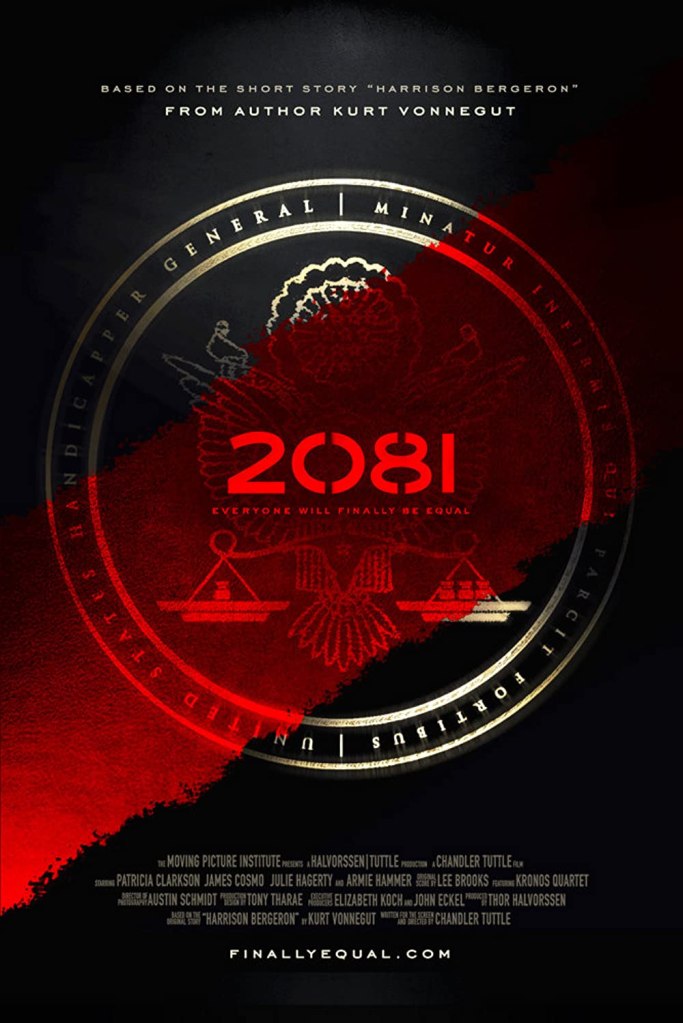
2081 is a 2009 science fiction featurette which premiered at the Seattle International Film Festival on May 29, 2009. It is directed and written by Chandler Tuttle, based on the 1961 short story “Harrison Bergeron” by author Kurt Vonnegut. The cast is led by James Cosmo, Julie Hagerty, Patricia Clarkson, and Armie Hammer. The story paints a picture through the use of hyperbole of a future in which a powerful, dictatorial government goes to extreme measures to ensure that absolute equality exists between all individuals.
Director: Yoon Jae-Keun Cast: Park Yong-Woo, Lim Ji-Yeon, Park Ji-Hwan, Yoo Seung-Mok, Lee Sung-Wook, Seo Hyun-Woo, Baek Do-Gyum, Woo Kang-Min Running Time: 110 min.
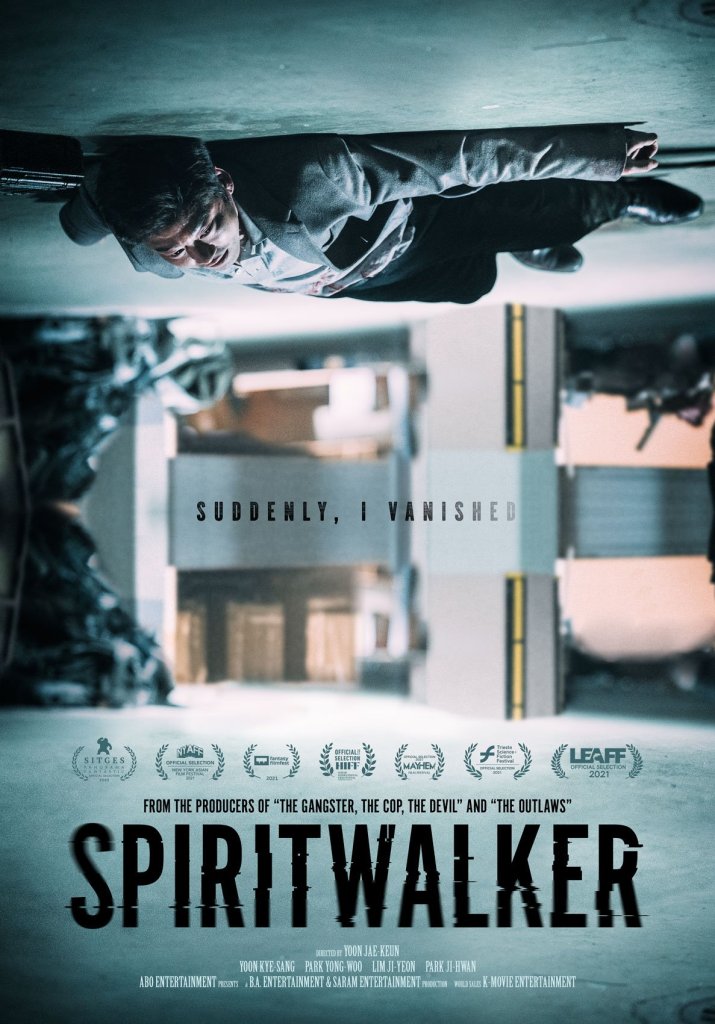
It’s fair to say the body-swap plot device has been a recurring theme in cinema over the years. While more often than not the gimmick has been used for comedic purposes, thankfully there are filmmakers out there who have been willing to apply it to further afield. Movies like the 1998 thriller Fallen spring to mind, in which Denzel Washington attempts to catch the spirit of a serial killer who can take over people’s bodies, as does the pulpy Jason Goes to Hell: The Final Friday, in which the spirit of everyone’s favorite hockey mask wearing psycho takes on similar abilities. Joining the ranks in 2021 is Yoon Jae-geun’s Spiritwalker, which sees the director and writer returning to the screen for the first time since his debut with 2010’s Heartbeat.
Opening with Yoon Kye-sang (The Outlaws, Poongsan) slumped against the door of a recently crashed vehicle and nursing a gun shot wound, things seem amiss when the reflection he sees of himself in the car window isn’t his own, and to confound matters further he has no recollection of who he is. Embarking on a mission to uncover his identity, matters aren’t helped by the fact that whenever it hits 12:00 (both noon and midnight), his spirit shifts into the body of someone else. The loss of memory and 12-hour body swap cycle make up the crux of what keeps Spiritwalker propelling itself forward, and it’s easy to imagine the Blu-ray cover containing the quote “The Bourne Identity meets The Beauty Inside!” Taking the amnesia plot device of the former, and the timed body-swapping gimmick of the latter, Jae-geun has created one of the more unique entries in Korea’s recent pool of action thrillers.
While the concept of Spiritwalker could easily result in confusion onscreen, especially when it becomes apparent that the bodies his spirit goes into are one’s we’re also familiar with, Jae-geun does a good job of translating it into cinematic language without insulting the audience’s intelligence. While during the first half he uses the trick of switching between showing Kye-sang and the actor of whoever’s body he’s in, by the latter half he trusts the audience to know whose body Kye-sang is supposed to be in, letting the actor take centre stage in the movie that’s billed as being his starring vehicle (something I’m sure he was thankful for).
Unfortunately as is the case with many high concept thrillers, the concept requires a lot of attention to execute and not stumble over its own logic, so much so that in the end other areas suffer. Kye-sang has a likeable screen presence, and I’ve enjoyed most of his performances since he first came on my radar through watching Poongsan at the time of its release in 2011. He left a considerable impression as the villain who faces off against Ma Dong-seok in 2017’s The Outlaws, however here his character feels underdeveloped and lacks personality. Surprisingly, considering how important it should be for a character to be well drawn in a plot that hinges on said character inhibiting other characters bodies, this doesn’t prove to be detrimental to the overall plot. As a central protagonist to root for though, through no fault of his own Kye-sang doesn’t really connect on any deeper level other than being a cipher onscreen.
A bigger issue is the narrative that’s been constructed around the body-swap device in order to explain it, which also feels undercooked and leaves several questions unanswered. It’s a shame, as the actual act of changing bodies every 12 hours is handled well and sets up a brisk pace maintained for the almost 110-minute runtime, so it feels like somewhat of a let down when the explanation for it all only feels half baked. Such criticisms point to the fact that Jae-geun clearly wasn’t looking to create an in-depth character study here, musing on the meaning of one’s identity and how deeply it’s connected to our physical appearance. For that, I guess we have The Beauty Inside. To enjoy Spiritwalker it’s best to take it at face value (pun intended), which is a body swap-thriller involving a guy with no memory being chased by a shadowy corporation who he may or may not have used to work for.
The 12-hour framing device instils a welcome sense of urgency into the narrative, and as predictable as it may be, Jae-geun does an admirable job of coming up with a variety of either life endangering or desperate situations that always happen in the closing minutes before Kye-sang’s spirit swaps into another body. Spiritwalker is at its best when playing around with the body-swapping device, such as when Kye-sang’s spirit is transferred into one of the lackeys he’s just threatened by pushing a pen into his neck, and then finds himself having to deal with his own self-inflicted injury. The unpredictable nature of both Kye-sang and the audience not knowing whose body he’ll go into next offsets the expected crises that crop up whenever 12:00 approaches, and keeps things engaging.
Clearly banking on its action credentials as much as its sci-fi leanings, Jae-geun has enlisted martial arts choreographers Park Young-sik and Jung Sung-ho to put together a sprinkling of grounded action scenes. Young-sik is a veteran of the Korean film industry, having lent his martial arts prowess to a countless number of productions since the early 2000’s, including being the martial arts director on the likes of 2008’s A Frozen Flower and 2010’s The Showdown. While Sung-ho has been around almost as long, he also comes with bragging rights of being part of the stunt team for the Netflix series Squid Game, which bagged the Best Stunt Ensemble award at 2022’s Screen Actors Guild Awards.
Recalling the grand tradition of Korean action thrillers made in that wonderful era during the early to mid 2010’s, a time when it seemed like they could do no wrong, the best action scene in Spritwalker takes place within the confines of an apartment (see also The Berlin File and No Tears for the Dead for reference). While in his best friends’ body (played by Lee Sung-wook – Collectors, Microhabitat) Kye-sang’s character finds himself in his girlfriends apartment facing off against a pair of assailants who want to track him down. The ensuing one on one fight against Seo Hyun-woo (The Man Standing Next, Believer) is expertly filmed, even going so far as to seamlessly switch between Sung-wook and Kye-sang without the use of CGI, a true testament of the action experience that’s behind the camera.
The ending also recalls the heyday of modern Korean action cinema, as Kye-sang conveniently finds himself in a character’s body decked out in a sharp black suit (which means he’s also now decked out in a sharp black suit). While fans of Korean cinema will likely recall Won Bin in the finale of The Man from Nowhere, the use of guns rather than blades inevitably brings to mind the John Wick franchise, and its influence is hard to deny. Kye-sang’s performance feels a little more gung-ho and frantic than Keanu Reeves, as he flings himself over tables and through wooden dividers, giving the scene a more frantic feel than Wick’s precision point and shoot technique, however the influence is clearly still there. While the finale gets suitably bloody and desperate, it somehow feels like it stops short before really ramping up, and there’s an odd decision that frames the whole movie to look like a tale of divided lovers which simply doesn’t work.
As a director and writer Yoon Jae-geun is one of those enigmas who seem to occasionally pop up in Korean cinema – defined by the fact that they were once active in the film industry, then drop completely off the map, before re-appearing more than 10 years later with a new movie out of the blue. As a sophomore feature Spiritwalker doesn’t necessarily indicate we can expect to wait less than 10 years for another movie from Jae-geun, however it is an entertaining action thriller that executes its novel premise with aplomb, let down by the fact that everything that surrounds it feels so slight.
Do you trust what you see? How can you? Our eyes are no longer the primary way that we see; they have been swapped out for the filters of screens and technology. The suspicious mediation between cameras and our perception of ‘reality” has never been more ubiquitous — or more insidious. Perhaps what we don’t see, however, is at least as important as what we do see. But how can we become aware of what we don’t see?
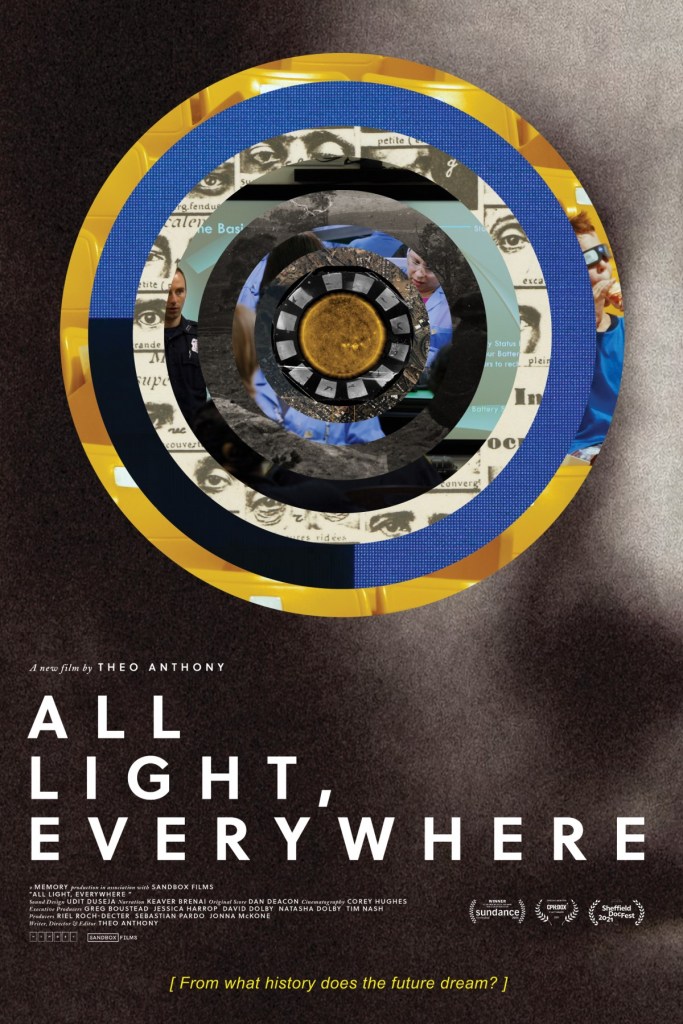
These questions lie at the heart of the fascinating new documentary All Light, Everywhere, an entrancing blend of neuroscience, metaphysics, and technological history that has the smarts to apply some sly, subtle social commentary to its elusive subjects.
At first, the film seems to flitter among semi-connected topics: A marketing campaign that is testing its volunteers’ reactions to visual images; a tour of Axon Industries, the #1 maker of police body cameras, with its corporate spin doctor as our guide; an aerial composite-imaging system that was used secretly by Baltimore police to surveil the city. Interspersed into these “storylines” are narrated forays into the history of early photography along with B-roll of ordinary people preparing to view the 2017 solar eclipse with their own cameras (and eyes). This unrelenting focus on the production and consumption of visual imagery transforms the film into an almost fractal experience. It becomes a bit too much: the sheer ubiquity of people looking, eyes looking, images to be seen and consumed and interpreted, examinations of the various technologies serving up new pictures to be mediated. The unsettling point of this unconventional documentary seems to be to distort rather than clarify the subject at hand — and that may be just what director Theo Anthony wants.
The underlying political relevance of the film is transparent. We live in a surveillance society, consenting (though not always consciously) to being filmed, watched, and recorded by corporations hoping to sell us products based on the data they gather. The government snoops in the name of crime prevention and law enforcement. The value of the latter has been hotly debated in the last few years: George Floyd’s murder being a prime example. Here the police body cameras showed us what we believe to be an “objective” record of events, footage of police brutality and murder. But body camera images have been weaponized by both sides, each seeking to prove something that will help their case. What Axon Industries sells to police forces (and to the general public) is that they are confident their cameras will tell the “truth” about any police action. Accountability is promoted as their product’s best feature. But it is more than that — “behavior will change ” because of the presence of cameras, that they will inhibit bad behavior.
But what do body cameras actually show us? Are these videos an authentic record of reality? The documentary examines, abstractly at first and then far more concretely, how there is always bias. Where is the camera located on the body? Does its wide-angle lens distort our understanding of action? How is this data interpreted and by whom? There are so many levels of interpretation that “objectivity” has turned into a myth.
The film’s looks back into the past are also illuminating, unsettling illustrations of how camera technology has almost always been co-opted for violent and authoritarian uses, whether it be the American military tracking the enemy on the battlefield or in the early experiments in composite imaging used by police to profile criminals. The latter presages the now rampant use of facial recognition technology, its marketed value undercut by its practical limitations as well as ethical muddiness.
The irony is not lost that what we’re looking at is itself a film, another visual entity that requires us to watch and to mediate. The film’s meta-commentary confesses that its stochastic manipulation is by design. Highly kinetic editing leads our brains to make connections in ways that excited Eisenstein at the dawn of film a century ago: the whole is greater than the sum of the parts. The mind demands order, so the juxtaposition and collision of images generates meanings that did not exist in individual images.
Anthony draws on history to help us make sense of a visual world that is increasingly fleeting and fragmented. The film is reminiscent, in style and subject matter, of the works of Errol Morris. This goes for its sometimes desultory exposition, as well as its approach to epistemology. (Morris explores these issues in all of his films, as well as in his essays in his books Believing Is Seeing and The Ashtray.) In the third act of All Light, Everywhere, a well-placed quotation from Frederick Douglass summaries the central issue: “We all feel that there is something more. That the curtain has not yet been lifted. There is a prophet with us forever whispering that behind the seen lies the immeasurable unseen.” The “immeasurable unseen” may not be possible to capture on cameras, no matter how many we use or how hard we strive for an elusive objectivity. Perhaps it is more important for us to understand that urge for “something more” should lead to examining how, why, and for whom the image was made.
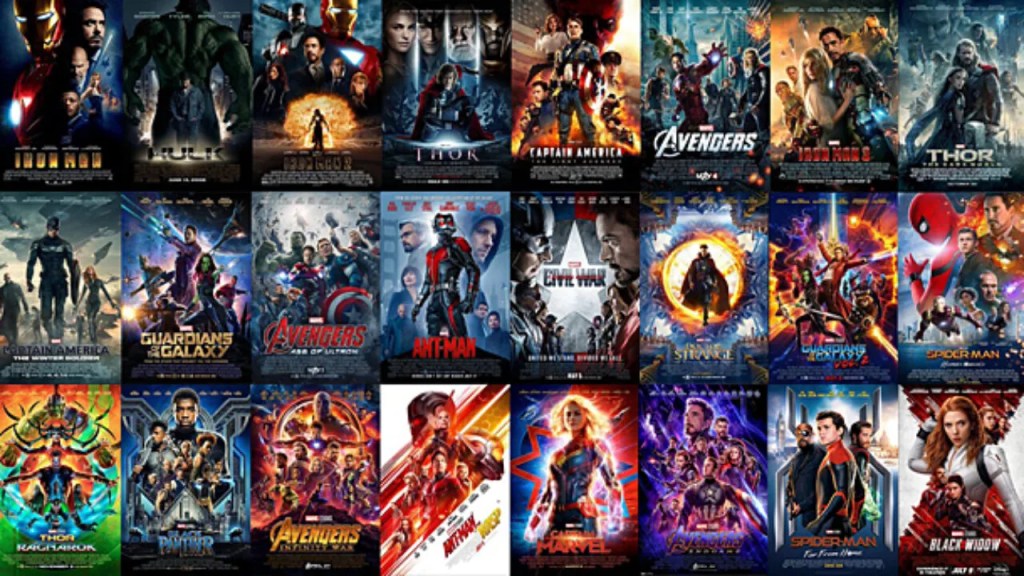
You may have noticed that every popular movie these days is a remake, reboot, sequel, spinoff, or cinematic universe expansion. In 2021, only one of the ten top-grossing films––the Ryan Reynolds vehicle Free Guy––was an original. There were only two originals in 2020’s top 10, and none at all in 2019.
Some of these explanations are flat-out wrong; others may contain a nugget of truth. But all of them are incomplete, because this isn’t just happening in movies. In every corner of pop culture––movies, TV, music, books, and video games––a smaller and smaller cartel of superstars is claiming a larger and larger share of the market. What used to be winners-take-some has grown into winners-take-most and is now verging on winners-take-all. The (very silly) word for this oligopoly, like a monopoly but with a few players instead of just one.
I’m inherently skeptical of big claims about historical shifts. I recently published a paper showing that people overestimate how much public opinion has changed over the past 50 years, so naturally I’m on the lookout for similar biases here. But this shift is not an illusion. It’s big, it’s been going on for decades, and it’s happening everywhere you look. So let’s get to the bottom of it.
At the top of the box office charts, original films have gone extinct.
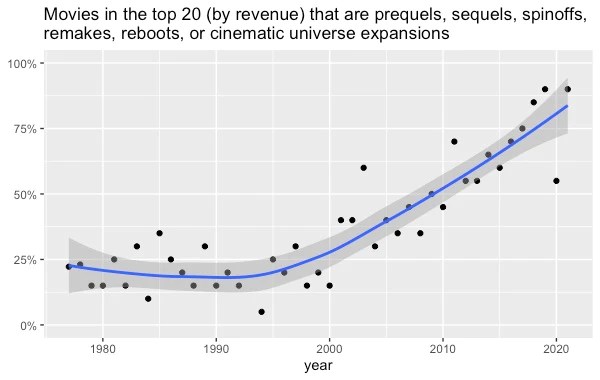
I looked at the 20 top-grossing movies going all the way back to 1977 (source), and I coded whether each was part of what film scholars call a “multiplicity”—sequels, prequels, franchises, spin-offs, cinematic universe expansions, etc. This required some judgment calls. Lots of movies are based on books and TV shows, but I only counted them as multiplicities if they were related to a previous movie. So 1990’s Teenage Mutant Ninja Turtles doesn’t get coded as a multiplicity, but 1991’s Teenage Mutant Ninja Turtles II: The Secret of the Ooze does, and so does the 2014 Teenage Mutant Ninja Turtles remake. I also probably missed a few multiplicities, especially in earlier decades, since sometimes it’s not obvious that a movie has some connection to an earlier movie.
Regardless, the shift is gigantic. Until the year 2000, about 25% of top-grossing movies were prequels, sequels, spinoffs, remakes, reboots, or cinematic universe expansions. Since 2010, it’s been over 50% ever year. In recent years, it’s been close to 100%.
Original movies just aren’t popular anymore, if they even get made in the first place.
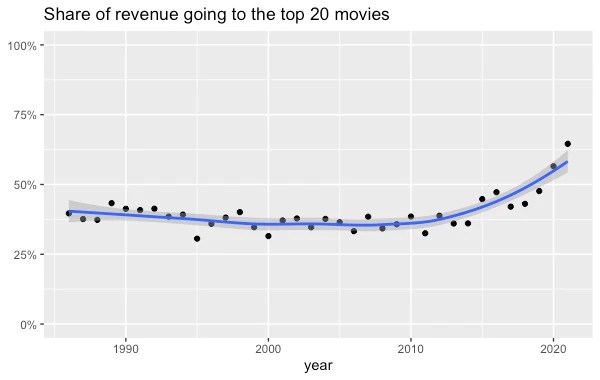
Top movies have also recently started taking a larger chunk of the market. I extracted the revenue of the top 20 movies and divided it by the total revenue of the top 200 movies, going all the way back to 1986 (source). The top 20 movies captured about 40% of all revenue until 2015, when they started gobbling up even more.
Television
Thanks to cable and streaming, there’s way more stuff on TV today than there was 50 years ago. So it would make sense if a few shows ruled the early decades of TV, and now new shows constantly displace each other at the top of the viewership charts.
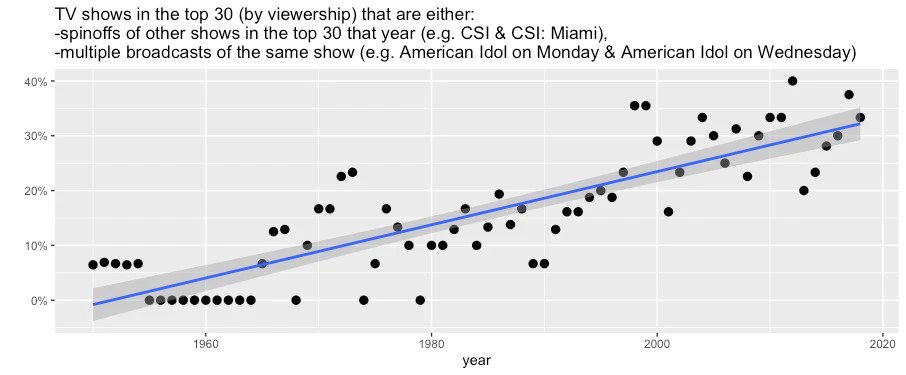
Instead, the opposite has happened. I pulled the top 30 most-viewed TV shows from 1950 to 2019 (source) and found that fewer and fewer franchises rule a larger and larger share of the airwaves. In fact, since 2000, about a third of the top 30 most-viewed shows are either spinoffs of other shows in the top 30 (e.g., CSI and CSI: Miami) or multiple broadcasts of the same show (e.g., American Idol on Monday and American Idol on Wednesday).
Two caveats to this data. First, I’m probably slightly undercounting multiplicities from earlier decades, where the connections between shows might be harder for a modern viewer like me to understand––maybe one guy hosted multiple different shows, for example. And second, the Nielsen ratings I’m using only recently started accurately measuring viewership on streaming platforms. But even in 2019, only 14% of viewing time was spent on streaming, so this data isn’t missing much.
Music
It used to be that a few hitmakers ruled the charts––The Beatles, The Eagles, Michael Jackson––while today it’s a free-for-all, right?
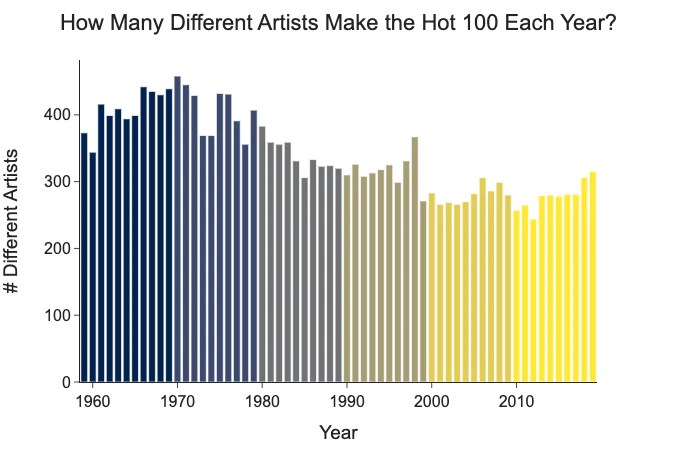
Nope. A data scientist named Azhad Syed has done the analysis, and he finds that the number of artists on the Billboard Hot 100 has been decreasing for decades.
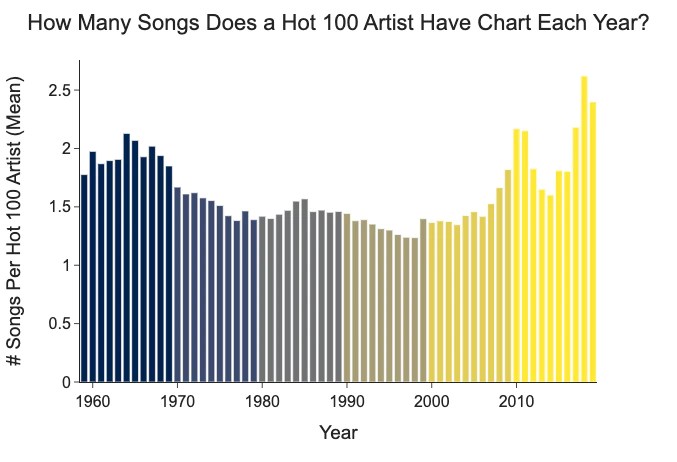
And since 2000, the number of hits per artist on the Hot 100 has been increasing.
(Azhad says he’s looking for a job––you should hire him!)
A smaller group of artists tops the charts, and they produce more of the chart-toppers. Music, too, has become an oligopoly.
Books
Literature feels like a different world than movies, TV, and music, and yet the trend is the same.
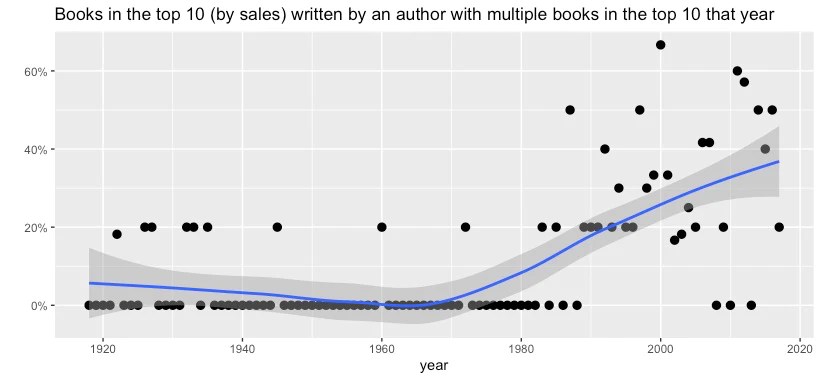
Using LiteraryHub’s list of the top 10 bestselling books for every year from 1919 to 2017, I found that the oligopoly has come to book publishing as well. There are a couple ways we can look at this. First, we can look at the percentage of repeat authors in the top 10––that is, the number of books in the top 10 that were written by an author with another book in the top 10.
It used to be pretty rare for one author to have multiple books in the top 10 in the same year. Since 1990, it’s happened almost every year. No author ever had three top 10 books in one year until Danielle Steel did it 1998. In 2011, John Grisham, Kathryn Stockett, and Stieg Larsson all had two chart-topping books each.
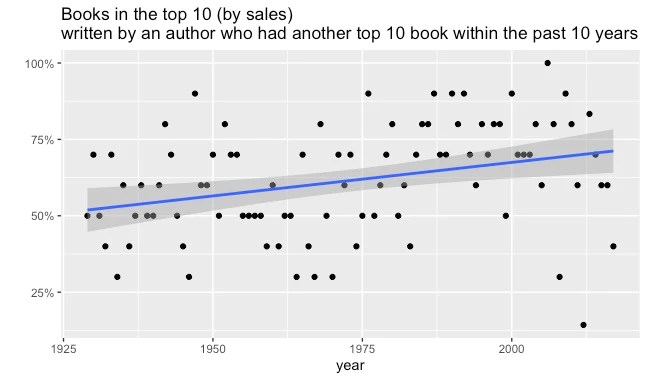
We can also look at the percentage of authors in the top 10 were already famous––say, they had a top 10 book within the past 10 years. That has increased over time, too.
In the 1950s, a little over half of the authors in the top 10 had been there before. These days, it’s closer to 75%.
Video games
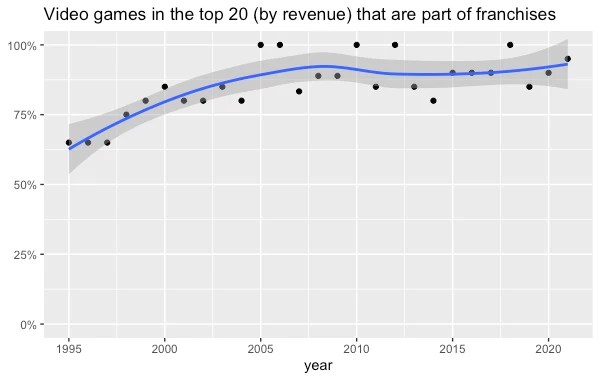
I tracked down the top 20 bestselling video games for each year from 1995 to 2021 (sources: 1, 2, 3, 4, 5, 6, 7) and coded whether each belongs to a preexisting video game franchise. (Some games, like Harry Potter and the Sorcerer’s Stone, belong to franchises outside of video games. For these, I coded the first installment as originals and any subsequent installments as franchise games.)
The oligopoly rules video games too:
In the late 1990s, 75% or less of bestselling video games were franchise installments. Since 2005, it’s been above 75% every year, and sometimes it’s 100%. At the top of the charts, it’s all Mario, Zelda, Call of Duty,and Grand Theft Auto.
Why is this happening?
Any explanation for the rise of the pop oligopoly has to answer two questions: why have producers started producing more of the same thing, and why are consumers consuming it? I think the answers to the first question are invasion, consolidation, and innovation. I think the answer to the second question is proliferation.
Invasion
Software and the internet have made it easier than ever to create and publish content. Most of the stuff that random amateurs make is crap and nobody looks at it, but a tiny proportion gets really successful. This might make media giants choose to produce and promote stuff that independent weirdos never could, like an Avengers movie. This can’t explain why oligopolization started decades ago––YouTube only launched in 2005, for example, and most Americans didn’t have broadband until 2007––but it might explain why it’s accelerated and stuck around.
Consolidation
Big things like to eat, defeat, and outcompete smaller things. So over time, big things should get bigger and small things should die off. Indeed, movie studios, music labels, TV stations, and publishers of books and video games have all consolidated. Maybe it’s inevitable that major producers of culture will suck up or destroy everybody else, leaving nothing but superstars and blockbusters. Indeed, maybe cultural oligopoly is merely a transition state before we reach cultural monopoly.
Innovation
You may think there’s nothing left to discover in art forms as old as literature and music, and that they simply iterate as fashions change. But it took humans thousands of years to figure out how to create the illusion of depth in paintings. Novelists used to think that sentences had to be long and complicated until Hemingway came along, wrote some snappy prose, and changed everything. Even very old art forms, then, may have secrets left to discover. Maybe the biggest players in culture discovered some innovations that won them a permanent, first-mover chunk of market share. I can think of a few:
In books: lightning-quick plots and chapter-ending cliffhangers. Nobody thinks The Da Vinci Code is high literature, but it’s a book that really really wants you to read it. And a lot of people did!
In movies, TV, and video games: cinematic universes. Studios have finally figured out that once audiences fall in love with fictional worlds, they want to spend lots of time in them. Marvel, DC, and Star Wars are the most famous, but there are also smaller universe expansions like Better Call Saul and El Camino from Breaking Bad and The Many Saints of Newark from The Sopranos. Video game developers have understood this for even longer, which is why Mario does everything from playing tennis to driving go-karts to, you know, being a piece of paper.
Proliferation
Invasion, consolidation, and innovation can, I think, explain the pop oligopoly from the supply side. But all three require a willing audience. So why might people be more open to experiencing the same thing over and over again?
As options multiply, choosing gets harder. You can’t possibly evaluate everything, so you start relying on cues like “this movie has Tom Hanks in it” or “I liked Red Dead Redemption, so I’ll probably like Red Dead Redemption II,” which makes you less and less likely to pick something unfamiliar.
Another way to think about it: more opportunities means higher opportunity costs, which could lead to lower risk tolerance. When the only way to watch a movie is to go pick one of the seven playing at your local AMC, you might take a chance on something new. But when you’ve got a million movies to pick from, picking a safe, familiar option seems more sensible than gambling on an original.
This could be happening across all of culture at once. Movies don’t just compete with other movies. They compete with every other way of spending your time, and those ways are both infinite and increasing. There are now 60,000 free books on Project Gutenberg, Spotify says it has 78 million songs and 4 million podcast episodes, and humanity uploads 500 hours of video to YouTube every minute. So uh, yeah, the Tom Hanks movie sounds good.
What do we do about it?
Some may think that the rise of the pop oligopoly means the decline of quality. But the oligopoly can still make art: Red Dead Redemption II is a terrific game, “Blinding Lights” is a great song, and Toy Story 4 is a pretty good movie. And when you look back at popular stuff from a generation ago, there was plenty of dreck. We’ve forgotten the pulpy Westerns and insipid romances that made the bestseller lists while books like The Great Gatsby, Brave New World, and Animal Farm did not. American Idol is not so different from the televised talent shows of the 1950s. Popular culture has always been a mix of the brilliant and the banal, and nothing I’ve shown you suggests that the ratio has changed.
The problem isn’t that the mean has decreased. It’s that the variance has shrunk. Movies, TV, music, books, and video games should expand our consciousness, jumpstart our imaginations, and introduce us to new worlds and stories and feelings. They should alienate us sometimes, or make us mad, or make us think. But they can’t do any of that if they only feed us sequels and spinoffs. It’s like eating macaroni and cheese every single night forever: it may be comfortable, but eventually you’re going to get scurvy.
We haven’t fully reckoned with what the cultural oligopoly might be doing to us. How much does it stunt our imaginations to play the same video games we were playing 30 years ago? What message does it send that one of the most popular songs in the 2010s was about how a 1970s rock star was really cool? How much does it dull our ambitions to watch 2021’s The Matrix: Resurrections, where the most interesting scene is just Neo watching the original Matrix from 1999? How inspiring is it to watch tiny variations on the same police procedurals and reality shows year after year? My parents grew up with the first Star Wars movie, which had the audacity to create an entire universe. My niece and nephews are growing up with the ninth Star Wars movie, which aspires to move merchandise. Subsisting entirely on cultural comfort food cannot make us thoughtful, creative, or courageous.
Fortunately, there’s a cure for our cultural anemia. While the top of the charts has been oligopolized, the bottom remains a vibrant anarchy. There are weird books and funky movies and bangers from across the sea. Two of the most interesting video games of the past decade put you in the role of an immigration officer and an insurance claims adjuster. Every strange thing, wonderful and terrible, is available to you, but they’ll die out if you don’t nourish them with your attention. Finding them takes some foraging and digging, and then you’ll have to stomach some very odd, unfamiliar flavors. That’s good. Learning to like unfamiliar things is one of the noblest human pursuits; it builds our empathy for unfamiliar people. And it kindles that delicate, precious fire inside us––without it, we might as well be algorithms. Humankind does not live on bread alone, nor can our spirits long survive on a diet of reruns.
From the cafés of Paris to the mountaintops of Samiland, a scholar’s life is foreverchanged through her friendships with the women artists of Surrealism.
In 1971, graduate student Gloria Orenstein received a call from Surrealist artist Leonora Carrington that sparked a lifelong journey into art, ecofeminism and shamanism. The short film, Gloria’s Call, uses art, animation and storytelling to celebrate this wild adventure from the cafes of Paris to the mountaintops of Samiland. The film is produced by artists Cheri Gaulke (director), Cheryl Bookout, Anne Gauldin, Sue Maberry and Christine Papalexis .
Gloria’s Call was born in October of 2016 during a presentation by renowned scholar Dr. Gloria Feman Orenstein at the Southern California Women’s Caucus for Art (SCWCA) Surrealist Tea in celebration of their 40th Anniversary.
ABOUT GLORIA
While my life has had its challenging moments and I have traversed many a dark woods in my quest for knowledge, I am fulfilled by the wondrous journeys I have made to the realms of the Marvelous, the Magical, the Great Goddess and the Shamanic Mysteries, and I will be forever grateful to the teachers who inspired me and to the feminist activists on whose strong shoulders we now stand as we welcome new generations of visionaries expanding our feminist legacy into the new millennium. -Gloria Feman Orenstein
Gloria F. Orenstein is Professor Emerita in Comparative Literature and Gender Studies from the University of Southern California. Her areas of research have ranged from Surrealism, contemporary feminist literature and the arts to Ecofeminism and Shamanism.
Her first book The Theater Of The Marvelous: Surrealism And The Contemporary Stage paved the way for her pioneering work on The Women of Surrealism. Leonora Carrington had been a friend and remained a major source of her inspiration in research and scholarship since 1971. Her book The Reflowering Of The Goddess offers a feminist analysis of the movement in the contemporary arts that reclaimed the Goddess as the symbol of a paradigm shift toward a more gynocentric mythos and ethos as women artists forged a link to the pre-patriarchal civilization of the ancient Goddess cultures, referencing them as their source of spiritual inspiration.
Orenstein is also co-editor of Reweaving The World: The Emergence Of Ecofeminism, a collection of essays that grew out of the conference she created at USC in 1987, Ecofeminist Perspectives: Culture, Nature, Theory. During the 80s she was invited by the Shaman of Samiland (Lapland, N. Norway) to be a student with her in Alta, Norway, an experience that continued intermittently for almost five years. She also created The Woman’s Salon in NYC that lasted for ten years beginning in 1975. More recently, her work in Surrealism, in particular, led to her inclusion of an essay in the book In Wonderland that accompanied the important exhibition of the same name that focused on the Women artists of Surrealism in the Americas, both those who were native to the Americas and those who migrated there during or after WWII. Orenstein was a pioneer in introducing the art of Frida Kahlo to North American feminists early in the 70s. Today, she continues her journey investigating the visionary worlds of revelation and the Marvelous, and will continue this pursuit in her research well into the future.



 After the Crash