The US economy died when middle class jobs were offshored and when the financial system was deregulated.
Jobs offshoring benefitted Wall Street, corporate executives, and shareholders, because lower labor and compliance costs resulted in higher profits. These profits flowed through to shareholders in the form of capital gains and to executives in the form of “performance bonuses.” Wall Street benefitted from the bull market generated by higher profits.
However, jobs offshoring also offshored US GDP and consumer purchasing power. Despite promises of a “New Economy” and better jobs, the replacement jobs have been increasingly part-time, lowly-paid jobs in domestic services, such as retail clerks, waitresses and bartenders.
The offshoring of US manufacturing and professional service jobs to Asia stopped the growth of consumer demand in the US, decimated the middle class, and left insufficient employment for college graduates to be able to service their student loans. The ladders of upward mobility that had made the United States an “opportunity society” were taken down in the interest of higher short-term profits.
Without growth in consumer incomes to drive the economy, the Federal Reserve under Alan Greenspan substituted the growth in consumer debt to take the place of the missing growth in consumer income. Under the Greenspan regime, Americans’ stagnant and declining incomes were augmented with the ability to spend on credit. One source of this credit was the rise in housing prices that the Federal Reserve’s low interest rate policy made possible. Consumers could refinance their now higher-valued home at lower interest rates and take out the “equity” and spend it.
The debt expansion, tied heavily to housing mortgages, came to a halt when the fraud perpetrated by a deregulated financial system crashed the real estate and stock markets. The bailout of the guilty imposed further costs on the very people that the guilty had victimized.
Under Fed Chairman Bernanke, the economy was kept going with Quantitative Easing, a massive increase in the money supply in order to bail out the “banks too big to fail.” Liquidity supplied by the Federal Reserve found its way into stock and bond prices and made those invested in these financial instruments richer. Corporate executives helped to boost the stock market by using the companies’ profits and by taking out loans in order to buy back the companies’ stocks, thus further expanding debt.
Those few benefitting from inflated financial asset prices produced by Quantitative Easing and buy-backs are a much smaller percentage of the population than was affected by the Greenspan consumer credit expansion. A relatively few rich people are an insufficient number to drive the economy.
The Federal Reserve’s zero interest rate policy was designed to support the balance sheets of the mega-banks and denied Americans interest income on their savings. This policy decreased the incomes of retirees and forced the elderly to reduce their consumption and/or draw down their savings more rapidly, leaving no safety net for heirs.
Using the smoke and mirrors of under-reported inflation and unemployment, the US government kept alive the appearance of economic recovery. Foreigners fooled by the deception continue to support the US dollar by holding US financial instruments.
The official inflation measures were “reformed” during the Clinton era in order to dramatically understate inflation. The measures do this in two ways. One way is to discard from the weighted basket of goods that comprises the inflation index those goods whose price rises. In their place, inferior lower-priced goods are substituted.
For example, if the price of New York strip steak rises, round steak is substituted in its place. The former official inflation index measured the cost of a constant standard of living. The “reformed” index measures the cost of a falling standard of living.
The other way the “reformed” measure of inflation understates the cost of living is to discard price rises as “quality improvements.” It is true that quality improvements can result in higher prices. However, it is still a price rise for the consumer as the former product is no longer available. Moreover, not all price rises are quality improvements; yet many prices rises that are not can be misinterpreted as “quality improvements.”
These two “reforms” resulted in no reported inflation and a halt to cost-of-living adjustments for Social Security recipients. The fall in Social Security real incomes also negatively impacted aggregate consumer demand.
The rigged understatement of inflation deceived people into believing that the US economy was in recovery. The lower the measure of inflation, the higher is real GDP when nominal GDP is deflated by the inflation measure. By understating inflation, the US government has overstated GDP growth.
What I have written is easily ascertained and proven; yet the financial press does not question the propaganda that sustains the psychology that the US economy is sound. This carefully cultivated psychology keeps the rest of the world invested in dollars, thus sustaining the House of Cards.
John Maynard Keynes understood that the Great Depression was the product of an insufficiency of consumer demand to take off the shelves the goods produced by industry. The post-WW II macroeconomic policy focused on maintaining the adequacy of aggregate demand in order to avoid high unemployment. The supply-side policy of President Reagan successfully corrected a defect in Keynesian macroeconomic policy and kept the US economy functioning without the “stagflation” from worsening “Philips Curve” trade-offs between inflation and employment. In the 21st century, jobs offshoring has depleted consumer demand’s ability to maintain US full employment.
The unemployment measure that the presstitute press reports is meaningless as it counts no discouraged workers, and discouraged workers are a huge part of American unemployment. The reported unemployment rate is about 5%, which is the U-3 measure that does not count as unemployed workers who are too discouraged to continue searching for jobs.
The US government has a second official unemployment measure, U-6, that counts workers discouraged for less than one-year. This official rate of unemployment is 10%.
When long term (more than one year) discouraged workers are included in the measure of unemployment, as once was done, the US unemployment rate is 23%. (See John Williams, shadowstats.com)
Fiscal and monetary stimulus can pull the unemployed back to work if jobs for them still exist domestically. But if the jobs have been sent offshore, monetary and fiscal policy cannot work.
What jobs offshoring does is to give away US GDP to the countries to which US corporations move the jobs. In other words, with the jobs go American careers, consumer purchasing power and the tax base of state, local, and federal governments. There are only a few American winners, and they are the shareholders of the companies that offshored the jobs and the executives of the companies who receive multi-million dollar “performance bonuses” for raising profits by lowering labor costs. And, of course, the economists, who get grants, speaking engagements, and corporate board memberships for shilling for the offshoring policy that worsens the distribution of income and wealth. An economy run for a few only benefits the few, and the few, no matter how large their incomes, cannot consume enough to keep the economy growing.
In the 21st century US economic policy has destroyed the ability of real aggregate demand in the US to increase. Economists will deny this, because they are shills for globalism and jobs offshoring. They misrepresent jobs offshoring as free trade and, as in their ideology, free trade benefits everyone, claim that America is benefitting from jobs offshoring. Yet, they cannot show any evidence whatsoever of these alleged benefits. (See my book, The Failure of Laissez Faire Capitalism and Economic Dissolution of the West.)
As an economist, it is a mystery to me how any economist can think that a population that does not produce the larger part of the goods that it consumes can afford to purchase the goods that it consumes. Where does the income come from to pay for imports when imports are swollen by the products of offshored production?
We were told that the income would come from better-paid replacement jobs provided by the “New Economy,” but neither the payroll jobs reports nor the US Labor Department’s projections of future jobs show any sign of this mythical “New Economy.”
There is no “New Economy.” The “New Economy” is like the neoconservatives promise that the Iraq war would be a six-week “cake walk” paid for by Iraqi oil revenues, not a $3 trillion dollar expense to American taxpayers (according to Joseph Stiglitz and Linda Bilmes) and a war that has lasted the entirety of the 21st century to date, and is getting more dangerous.
The American “New Economy” is the American Third World economy in which the only jobs created are low productivity, low paid nontradable domestic service jobs incapable of producing export earnings with which to pay for the goods and services produced offshore for US consumption.
The massive debt arising from Washington’s endless wars for neoconservative hegemony now threaten Social Security and the entirety of the social safety net. The presstitute media are blaming not the policy that has devastated Americans, but, instead, the Americans who have been devastated by the policy.
Earlier this month I posted readers’ reports on the dismal job situation in Ohio, Southern Illinois, and Texas. In the March issue of Chronicles, Wayne Allensworth describes America’s declining rural towns and once great industrial cities as consequences of “globalizing capitalism.” A thin layer of very rich people rule over those “who have been left behind”—a shrinking middle class and a growing underclass. According to a poll last autumn, 53 percent of Americans say that they feel like strangers in their own country.
Most certainly these Americans have no political representation. As Republicans and Democrats work to raise the retirement age in order to reduce Social Security outlays, Princeton University experts report that the mortality rates for the white working class are rising. The US government will not be happy until no one lives long enough to collect Social Security.
The United States government has abandoned everyone except the rich.
In the opening sentence of this article, I said that the two murderers of the American economy were jobs offshoring and financial deregulation. Deregulation greatly enhanced the ability of the large banks to financialize the economy. Financialization is the diversion of income streams into debt service. When debt service absorbs a large amount of the available income, the economy experiences debt deflation. The service of debt leaves too little income for purchases of goods and services and prices fall.
Michael Hudson, whom I recently wrote about, is the expert on financialization. His book, Killing the Host, which I recommended to you, tells the complete story. Briefly, financialization is the process by which creditors capitalize an economy’s economic surplus into interest payments to themselves. Perhaps an example would be a corporation that goes into debt in order to buy back its shares. The corporation achieves a temporary boost in its share prices at the cost of years of interest payments that drain the corporation of profits and deflate its share price.
Michael Hudson stresses the conversion of the rental value of real estate into mortgage payments. He emphasizes that classical economists wanted to base taxation not on production, but on economic rent. Economic rent is value due to location or to a monopoly position. For example, beachfront property has a higher price because of location. The difference in value between beachfront and non-beachfront property is economic rent, not a produced value. An unregulated monopoly can charge a price for a service that is higher than the price that would bring that service unto the market.
The proposal to tax economic rent does not mean taxing you on the rent that you pay your landlord or taxing your landlord on the rent that you pay him such that he ceases to provide the housing. By economic rent Hudson means, for example, the rise in land values due to public infrastructure projects such as roads and subway systems. The rise in the value of land opened by a new road and housing and in commercial space along a new subway line is not due to any action of the property owners. This rise in value could be taxed in order to pay for the project instead of taxing the income of the population in general. Instead, the rise in land values raises appraisals and the amount that creditors are willing to lend on the property. New purchasers and existing owners can borrow more on the property, and the larger mortgages divert the increased land valuation into interest payments to creditors. Lenders end up as the major beneficiaries of public projects that raise real estate prices.
Similarly, unless the economy is financialized to such an extent that mortgage debt can no longer be serviced, when central banks lower interest rates property values rise, and this rise can be capitalized into a larger mortgage.
Another example would be property tax reductions and legislation such as California’s Proposition 13 that freeze in whole or part the property tax base. The rise in real estate values that escape taxation are capitalized into larger mortgages. New buyers do not benefit. The beneficiaries are the lenders who capture the rise in real estate prices in interest payments.
Taxing economic rent would prevent the financial system from capitalizing the rent into debt instruments that pay interest to the financial sector. Considering the amount of rents available to be taxed, taxing rents would free production from income and sales taxation, thus lowering consumer prices and freeing labor and productive capital from taxation.
With so much of land rent already capitalized into debt instruments shifting the tax burden to economic rent would be challenging. Nevertheless, Hudson’s analysis shows that financialization, not wage suppression, is the main instrument of exploitation and takes place via the financial system’s conversion of income streams into interest payments on debt.
I remember when mortgage service was restricted to one-quarter of household income. Today mortgage service can eat up half of household income. This extraordinary growth crowds out the production of goods and services as less of household income is available for other purchases.
Michael Hudson and I bring a total indictment of the neoliberal economics profession, “junk economists” as Hudson calls them.
Normalcy bias is a rather horrifying thing. It is so frightening because it is so final; much like death, there is simply no coming back. Rather than a physical death, normalcy bias represents the death of reason and simple observation. It is the death of the mind and cognitive thought instead of the death of the body.
Ever since the derivatives collapse of 2008 the public has been regaled with wondrous stories of recovery in the mainstream to the point that such fantasies have become the “new normal”. These are grand tales of the daring heroics of central bankers who “saved us all” from impending collapse through gutsy monetary policy and no-holds-barred stimulus measures.
Alternative economists have not been so easy to dazzle. Most of us found that the recovery narrative lacked a certain something; namely hard data that took the wider picture into account. It seemed as though the mainstream media (MSM) as well as the establishment was attempting to cherry-pick certain numbers out of context while demanding we ignore all other factors as “unimportant.”
We just haven’t been buying into the magic show of the so called “professional economists” and the academics, and now that the real and very unstable fiscal reality of the world is bubbling to the surface, the general public will begin to see why we have been right all these years and the MSM has been utterly wrong.
Mainstream economists have done absolutely nothing in the way of investigative journalism and have instead joined a chorus cheerleading for the false narrative, singing a siren’s song of misinterpreted statistics and outright lies drawing the masses ever nearer to the deadly shoals of financial crisis.
Why do they do this? Are they part of some vast conspiracy to mislead the public?
Not necessarily. While central banks and governments have indeed been proven time and again to collude in efforts to cover up financial dangers, most economists in the media are simply greedy and ignorant. You have to remember, they have a considerable stake in this game.
Many mainstream economists tend to have sizable investment portfolios and they base their careers partly on the successes they garner in the annual profits they accumulate playing the equities roulette. They also have invested so much of their public image into their pro-market and recovery arguments that there is no going back. That is to say, they have a personal interest in using their positions in the media to engineer positive market psychology (if they are able) so that their portfolios remain profitable. Not to mention, their professional image is at stake if they ever acknowledge that they were wrong for so long about the underlying health of the real economy.
This atmosphere of deluded self interest also generates a cult-like collectivist attitude. There is a lot of mutual back scratching and mutual ego stroking in the MSM; a kind of inbred conduit of regurgitated arguments and unoriginal talking points, and people in the club rarely step out of line because they not only hurt their own investment future and career, they also hurt everyone in their professional circles. Meaning, no more cocktail party invitations to the Forbes rumpus room…
This is not to say that I am excusing their self interested lies and disinformation. I think that many of these people should be tarred and feathered in a public square for attempting to dissuade the public from preparing in a practical way for severe economic instability. I do not think they see themselves as being responsible to the people who actually take their nonsense seriously and their attitude needs adjustment. I am only explaining how it is possible for an entire profession of supposed “experts” to be so wrong so often. Mainstream financial analysts WANT to believe their own lies as much as many in the public want to believe them.
Like I said, normalcy bias is a rather horrifying thing.
One of the root pieces of disinformation in the mainstream that feeds all other lies is the disinformation surrounding falling global demand. MSM pundits cannot and will never fully admit to the cold hard reality of collapsing demand within the global economy. If they are forced to admit to falling demand, then the facade of a steady or recovering U.S. economy crumbles.
I covered the facts behind falling global demand for raw goods and consumer goods last year in part one of my six-part article series, ‘One Last Look At The Real Economy Before It Implodes.’ The hard evidence and numbers I presented have only become more important in recent months.
For example, U.S. inventories are building and freight shipments are declining in the U.S. as retailers cite falling demand for goods as the primary culprit. Official retail sales numbers for the holiday season of 2015 have come in flat. When one takes into account real inflation in prices, consumer sales are actually far in the negative. According to the more accurate methods the U.S. government used to use in their calculations of CPI in the 1980’s, we are looking at annual price inflation rate of around 7%. Price inflation does not necessarily equal improved sales.
Energy usage has been crushed since 2008. Despite a growing population and supposedly a growing economic system, oil consumption in 2014 according to the World Economic Forum dropped to levels not seen since 1997.
This is the exact opposite of what should be happening and it is the opposite of mainstream projections for oil consumption made back in 2003. This is why inventories and storage for oil across the globe are reaching capacity in a manner never seen before. American demand for oil is not growing exponentially as expected because Americans cannot afford to support such growth anymore. Falling energy demand at these extreme levels is an undeniable indicator of a failing economic system.
Of course, mainstream economists in their desperation to keep market psychology rolling forward and the equities casino producing profits seek to spin this problem as an “oversupply” issue rather than a demand issue. And this is where the disparity in their arguments begins to bleed through.
Here is the problem presented in the mainstream; what came first, the chicken or the egg? Did falling demand lead to oversupply and thus a fall in prices? Or, is demand remaining steady and is overproduction the cause of falling prices? Yes, let’s confuse the issue instead of looking at the obvious.
As already linked above, it was falling demand which came first in 2008, and demand which continues to fall in relation to past trends. Have producers failed to reduce oil production to match falling demand? Yes. But this does not change the fact that oil demand today is well below levels needed to sustain the kind of economic growth markets have come to expect. Mainstream economists attempt to distract by hyper-focusing on supply, or twisting the discussion into an either/or scenario. Either it is a supply problem, or it is a demand problem, and they assert it is only a supply problem. This is not reality.
In fact, both can and often do exist at the same time, though one problem usually feeds the other. Falling demand does tend to result in oversupply in any particular sector of the economy. The bottom line, however, is that in our current crisis demand is the driving force and supply is a secondary issue. Supply is NOT the driving force behind the volatility in oil markets. Period.
This same chicken and egg distraction rears its ugly head in discussions on shipping markets as well.
The mainstream claim that the historic implosion of the Baltic Dry Index is nothing more than a problem of “too many ships” operating in the cargo market has been throttled, dissected and debunked so many times that you would think that it is surely dead. But the lie just will not die.
Mainstream propaganda houses like The Economist and Forbes continue to produce articles on a regular basis which deny the issue of falling demand for raw goods and claim that oversupply of vessels is the root cause of the BDI losing around 98 percent of its value since its highs in 2008.
I haven’t seen any of these articles offer actual stats or evidence to back their claims that oversupply of ships is the culprit and that demand is not a legitimate issue. But beyond that, why does the mainstream seem so hell bent on dismissing the BDI as a reliable economic indicator? Well, because shipping rates fall when demand falls, thus, when the BDI falls, it signals a lack of global demand. This is a fact they refuse to accept. When the BDI falls by 98 percent since the 2008 highs preceding the derivatives crisis, this signals a disaster in the making.
So, let’s stamp out the “too many ships came first” disinformation once and for all, shall we?
Shipping companies like Maersk Lines have already publicly admitted that falling global demand is the core problem behind falling rates and that supply is a secondary driver. They view the current financial crisis to be “worse than 2008”.
The fact that the largest shipping company in the world is warning of falling demand does not seem to be having any effect on the mainstream talking heads, though.
So, what do major shipping companies do when demand is falling and too many ships are operating on the market? Do they field those ships anyway and drive rates down even further? No, that makes no sense.
What companies do is either leave ships idle in port or scrap them. According to BIMCO (Baltic And International Maritime Council), 2015 was the busiest year since 2012 for the scrapping of older ships to make way for new arrivals. This process of scrapping ships or storing them idle destroys the argument that too many ships are driving falling rates in the BDI. In fact, as chief shipping analyst Peter Sand of BIMCO stated last year:
“The increase in Capesize scrapping comes at a much needed time for the market. Looking at the development so far this year the fleet growth has actually been negative, with a reduction of 0.8 %.”
I hope the garbage peddlers at Forbes and The Economist caught that — NEGATIVE growth of ship supply, not massive over-growth of ship supply. The scrapping increase was also across the board for other models of ships, not just the Capsize, and the increase of cargo capacity by new ships has been negligible. Yet, shipping rates continue to plummet to historical lows. Only falling demand, as Maersk Lines admits, explains the crash of the BDI in light of this information.
China in particular has been offering considerable incentives to those companies that do scrap older ships, to the point that some are even scrapping semi-new ships in order to cash in.
Now, this is not to say there is not an “oversupply” of ships. There are indeed many ships within cargo fleets that are not in operation. But again, this is because demand has declined so completely that even with increased scrapping and idling, shipping companies cannot keep up. Falling demand OCCURRED FIRST, and oversupply is nothing more than a symptom of this root problem.
So, mainstream hacks, can we please put the “too many ships” nonsense to rest and get on with a real discussion on obvious issues of demand? Stop focusing on the symptoms and examine the cause for once.
These are just a few of the hundreds of fundamental problems plaguing the global economy today, and they are all problems that the mainstream continues to ignore or dismiss out of hand. Which brings us to the now accelerating volatility in stock markets.
Stock markets are crashing, there is no other way to paint it. They are crashing incrementally, but crashing nonetheless. When you have violent swings in equities and commodities between 5 percent and 10 percent a day, then something is very wrong with your economy and has been wrong for some time. If global consumption and demand were really steady or growing, then you would not see the kind of systemic backlash in the financial system that we are now seeing. If companies listed on the Dow were making legitimate profits due to a healthy consumer base and enjoying solid expansion, stocks would not be increasingly volatile. If investors and mainstream analysts actually looked at the real numbers in demand (among other things), then the strange behavior in markets would be easy for them to understand. They will not look at such numbers until it is too late.
Instead, markets have chosen to chase headlines, and here is where the ugly circle of normalcy bias and cognitive dissonance completes itself. There are no positive indicators within the fundamentals today to energize market faith or market investment. So, investors and algorithmic trading computers track news headlines instead. The MSM hacks now have the power (along with central banks and governments) to create massive stock rallies with one or two carefully placed news tags, such as “Russia To Discuss Oil Production Cuts With OPEC.”
Market speculators and trading computers jump on these headlines without verifying if they are true. In most cases, they end up being false or just hearsay from an “unnamed source.” And so, the markets then crash further down into the abyss, waiting for the next headline to bolster activity even for a day.
The sad truth is, if any of these headlines turned out to be legitimate, their effect would still be meaningless in the long run as the overwhelming weight of the fundamentals continues to topple poorly placed optimism. Now that the investment world no longer has the certainty of central bank intervention as a useful tool, they don’t know if bad news is good news or if good news is bad news. The fact that the system is moving into a death spiral without the psychological crutch of central bank stimulus measures should tell you all you need to know about the supposed recovery since 2008.
No society wants to admit economic failure or economic sabotage, and this is why the con-game is able to continue in the face of so much concrete truth. Ultimately, the market trends and economic trends will flow into the negative. In the meantime, expect massive market rallies, rallies which will then disintegrate in a matter of days. And, whatever happens, never take what mainstream economists say very seriously. They have failed the public for long enough.
The sickening tributes across the official US political and media spectrum to Supreme Court Justice Antonin Scalia, who died suddenly on Saturday at the age of 79, are a barometer of the putrefaction of American democracy.
The universal deference towards Scalia from what passes for the “liberal” faction of the establishment is particularly repulsive. The statements of the Democratic presidential candidates, the supposed “socialist” Bernie Sanders no less than Hillary Clinton—echoing similarly sycophantic drivel from the likes of the New York Times—are monuments to political cowardice.
One would say these people lack the courage of their convictions if they had any convictions to lack!
They have sprung into action to join their Republican counterparts in hailing Scalia as a towering figure in American jurisprudence. Virtually every description of the deceased justice includes the words “brilliant” and “intellectual.” One is reminded of the programmed acclamation of Sergeant Raymond Shaw recited by his brainwashed fellow soldiers in the film The Manchurian Candidate: “Raymond Shaw is the kindest, bravest, warmest, most wonderful human being I’ve ever known in my life.”
Sanders took time off from his hollow calls for a “political revolution” to demonstrate his political obeisance to the ruling class, declaring, “While I differed with Justice Scalia’s views and jurisprudence, he was a brilliant, colorful and outspoken member of the Supreme Court.”
Clinton praised Scalia as “a dedicated public servant who brought energy and passion to the bench.”
President Obama called Scalia a “towering legal figure.” The New York Times’ Ross Douthat hailed Scalia for “putting originalist principle above a partisan conservatism,” and for his “combination of brilliance, eloquence, and good timing.”
No one dares say what needs to be said. The object of their veneration was a black-robed thug and sadist who used his position on the bench to attack the basic civil liberties laid down in the US Constitution and Bill of Rights—separation of church and state; due process; protection from arbitrary arrest, search and seizure; the right to trial by jury; protection from cruel and unusual punishment; the right to vote.
His supposed juridical brilliance boiled down to starting with the political outcome he desired (invariably reactionary) and then cobbling together pseudo-legal arguments to justify his ruling—often with flagrant disregard for legal precedent and the unambiguous language of statutes and constitutional provisions.
In one case last year, Scalia argued that a police officer did not use “deadly force” when he climbed onto an overpass and used an assault rifle to kill an unarmed man fleeing in a car. According to Scalia’s reasoning, it was not deadly force because the officer claimed to have been aiming at the car, not the person in the car.
Perhaps the most infamous example of this method—absurdly described in the media as “constitutional originalism”—was the 2000 Supreme Court decision Scalia engineered to halt the counting of votes in Florida and hand the White House to the loser of the election, Republican candidate George W. Bush.
The 5-4 decision to steal the election all but acknowledged its own speciousness when it declared that the justifications it advanced could not be applied to any future cases. In his separate concurring opinion, Scalia declared that the Constitution did not give the people the right to elect the president.
At the time of the theft of the 2000 elections, the World Socialist Web Site wrote that the Supreme Court’s decision to stop the counting of votes, and the acceptance of that ruling by the Democrats and the entire political establishment, demonstrated that there was no longer any significant constituency for democratic rights within the American ruling class. The reaction to Scalia’s death is a measure of the further erosion of democratic sentiment in the ruling elite.
Scalia personified the decay of bourgeois democracy in the United States over a protracted period of time. Appointed to the bench by Ronald Reagan, he flourished and exerted increasing influence in the decades of political reaction, militarism and Wall Street criminality that ensued, continuing without a hitch under Obama. Not only in the anti-democratic substance of his rulings, but also in his methods and bearing, he embodied the promotion by the ruling elite of backwardness, prejudice and outright cruelty.
He was corrupt and made no bones about his corruption, proudly voting to remove limits on corporate bribes in elections and flaunting his private outings with Vice President Dick Cheney while the latter was a party in a case before the court. He was a bully, making a practice of baiting and harassing lawyers who came before him.
Throughout his career, Scalia consistently advocated positions that can only be described as barbarous and fascistic. Fittingly, his last judicial act was to deny a stay of execution. He was a figure who relished the power and trappings of the state, openly defending torture and internment camps.
Scalia worked tirelessly to break down constitutional and democratic limits on state power, infiltrating fascistic doctrines into Supreme Court jurisprudence. His theory of executive power, according to which the American president has unlimited and unreviewable powers for the duration of the “war on terror,” resurrects Nazi jurist Carl Schmitt’s “state of exception” doctrine in all but name.
Scalia’s mere presence on the court testified to the advanced decay of American democracy. That decay is linked, on the one hand, to the extreme growth of social inequality, accompanied by the rampant parasitism and criminality of the ruling class, and on the other hand to unending war, which has its domestic reflection in the build up of the repressive state apparatus that Scalia championed.
The bitterness of the disputes over his replacement is a reflection of the importance of his role in American politics over three decades during which the political establishment shifted violently to the right.
The deference shown to such a figure from all quarters of the political establishment should be taken as a warning by the working class. The ruling elite fears above all the growth of social opposition and class struggle. It exalts the legacy of Scalia because it is preparing police state methods to defend its power and property against an insurgent working class.
ST. JOSEPH, Louisiana – “I’m scared to take a bath,” said Ethel Strum, who lives in St. Joseph, a community of barely 1,000 people in northeast Louisiana.
She turned on the tap in the bathroom sink of her tidy one-story home and the water flowed clear for a second before fading to a milky brown. In her kitchen, a few cases of bottled water, which she uses for everything from brushing her teeth to cooking, are stacked on the table.
“I drive to Newellton to shower. It’s a 20-minute drive but I can do it in 12,” she laughed.
But talking about the town’s water issues makes her visibly upset. Among the many problems are frequent outages, water thick with iron sediment from the aging pipes, and poorly communicated boil-water advisories. “Water should be free until it’s fixed,” she said.
Strum can’t even wash her car with town water because it leaves a rust coating. Despite minimal use, she says she has received high bills and has to buy 20 cases of bottled water every month.
While state officials and the EPA have deemed the water safe to drink, virtually no one risks it. Most here do not even use tap water to cook or brush teeth, and many, especially children, bathe with bottled water. Lots of residents spend several hundred a month on store-bought water.
To add to the mounting frustration, $6 million of state funds allocated to St. Joseph for water line repairs in 2013 are still being withheld because the town’s mayor, Edward Brown, has failed several times to turn in a mandatory financial audit on time. New Governor John Bel Edwards said this week his office was working with the town of St. Joseph and the Department of Health and Hospitals (DHH) to fast track the allocation of at least some of that money to start system repair work. Mayor Brown said he expects to file the overdue audit by the end of February.
“What we’ve experienced here is policy failures that have allowed these communities to fall through the cracks,” said St. Joseph resident Garrett Boyte, drawing a comparison to the disaster in Flint, Michigan.
Boyte, along with colleagues in the Servant Leadership Corps of the Episcopal Diocese of Western Louisiana, have sought to attract public attention on the issue through a recent social media push and an online petition to the Obama administration for federal assistance to St. Joseph. The effort has just over one-tenth of the 100,000 signatures it needs by Feb. 19 to reach its goal. The group notes, however, that with no evidence of lead contamination, the situation in St. Joseph is considerably less dire than in Flint.
Nevertheless, the town’s water woes illustrate a more slow-moving and commonplace catastrophe: failing infrastructure in small, impoverished communities that cannot afford to replace their systems, leaving residents with limited resources to cope on their own.
Established in 1834, St. Joseph lies squarely in the so-called Black Belt, a term coined by Booker T. Washington at the turn of the century to refer to the swath of dark, fertile soil that spans much of the American south. It has evolved to describe the largely black, poor communities that have been in decline since the mechanization of farming drove out small farmers, with no industry to replace it.
The town is the seat of Tensas Parish — one of the state’s poorest, with 34 percent of residents living in poverty and a median household income of around $27,000 (compared to $45,000 statewide). The least populous parish in the state, over half of its population is African-American. Unemployment in St. Joseph is likely higher than the official parish average of 9 percent, and the town’s poverty is written in its shoddy roads and houses in dire need of repair.
St. Joseph’s decaying water distribution system, installed in the 1930’s, is the main cause of the town’s water problems. “Over time, these old cast iron pipes that convey the water, they deteriorate and start to crack and leak,” said Davis Cole, a Baton Rouge-based civil engineer working on the redesign of St. Joseph’s water system. Leaks cost the town money; according to Mayor Brown, the system loses 50 percent of its water. And with resources already stretched thin, long-term repairs are out of reach. “This is typical of communities probably all over the U.S., especially poor communities,” Cole said.
The water’s rusty tint comes from naturally occurring iron and manganese sediment in the underground well that has built up in the water lines over the years. Every time the system has to be shut down for repairs, and then restarted, sediment is injected into the water flow. The problem started to become obvious over a decade ago, according to residents, but has gotten progressively worse. The water main reportedly broke four times last month alone.
While the state does monthly bacterial tests, the last detailed analysis of St. Joseph’s water was in 2013. It showed 32 times the EPA-recommended level of iron and 9 times that of manganese, according to an analysis by the local Sierra Club. But the EPA considers these contaminants to have merely “aesthetic” affects on the water. They are not regulated by the EPA or the state.
The state’s official approval of the water quality is of little comfort to most residents here. “We don’t know what’s in that water. They say it’s rust but there are so many ‘what if’s’,” said Marie, a grandmother and lifelong resident of St. Joseph who declined to give her real name because of the sensitivities around local politics.
“Who’s more important: the people or the paperwork?” asked Marie, implying that the audit issue was to blame. “Get the water straight and then work on that. It’s not the community’s fault, don’t make it hard on us.”
Iron contamination and aging infrastructure are not uncommon problems in the region. Dr. Jimmy Guidry, state health officer at the Department of Health and Hospitals, confirms that water discoloration caused by iron is a common complaint across the state. “There are probably several hundred water systems that deal with this,” Guidry said, out of approximately 1,360 local water systems in Louisiana.
“As a physician, I’m not going to tell you a lot of iron in your system is not going to affect your health,” Guidry said, when asked about the long-term effects of high iron exposure. “But that’s not something we regulate.” In light of renewed attention on the issue, he said the DHH would be looking again at an iron and manganese water rule that was legislated in 2014.
Of more pressing concern to Guidry was replacing St. Joseph’s decrepit water pipes, which pose a risk of bacterial contamination every time they break. Many Louisianans have been on high alert for water contamination after a brain-eating amoeba was found in four separate water systems last year.
Guidry also noted that frequent leaks in the St. Joseph water main present another threat — they have started to erode the nearby levee. The Mississippi River has swelled to record heights in some areas this winter following heavy rainfall.
“I understand their urgency to [fix the water color]. That will take time,” said Dr. Guidry. “The urgency to get their system back to where they are not at risk of contamination is most important to me.” He said that if they receive approval for two grants totaling around $600,000, the most-needed repairs on the town’s storage tank and water pipes could begin in a matter of weeks.
However, he noted that even with a full revamp of the system, which is planned once an additional $2 million in funding is secured, the brown water of St. Joseph might not disappear. “It may not get rid of it completely, because it doesn’t address the treatment part,” he said. While there are expensive chemicals and filters that can get rid of iron discoloration, “for a poor community, it’s not an easy option to address the iron,” he added.
“If you were born after 2000 in this parish, you were always taught not to drink that water,” said Rosalie Bouobda, who moved to St. Joseph two years ago as a consultant for the Servant Leadership Corps of the Episcopal Diocese of Western Louisiana. That group has been meeting with state and local officials about the water issue for the past two years. “Children are taught not to deal with [the water]. It’s a reflex to them…They’ve never known clean water.”
Bouobda, along with Garrett Boyte, who started posting pictures of the muddy water on Twitter, has been instrumental in garnering attention beyond social media. But many lifelong residents of St. Joseph have been reluctant to speak out, either because of a fatalistic sense that nothing will change, or out of deference to local politics in a town where so many people are related to each other.
“They just accept it as a fact of life, their water is dirty and there is nothing they can do about it,” Boyte says of people’s perceptions.
For St. Joseph, dirty water may be as much a fact of life as high unemployment and failing schools.
“It’s like nobody cares. That’s how people in this town feel,” Michael Thomas, Jr., a 25-year old father of two, said. His apartment in a small subsidized housing complex stands across from the overgrown ruins of a long-abandoned Tensas Rosenwald High School, one of many built in the early 20th century with funds from Julius Rosenwald, the president of Sears, Roebuck and Company, to educate African-Americans in the South.
“We gotta boil the water just to wash the babies,” he said. “If I could afford it, I’d move.” He said he spends as much as $300 every month on bottled water.
Sitting nearby, Kristi McWilliams, 23, and John Jackson, 24, echoed Thomas’ frustration. “I think about moving all the time, but we don’t have the jobs or the money,” said McWilliams.
“There is more they could be doing,” said Jackson of state officials. “They could drop the water bill. Water should be cheaper in the stores.”
Some residents, like Ann South, an elderly woman who recently suffered a stroke and a heart attack, were frustrated by the disparities with other communities. “Around the lake there is no water problem,” she said, referring to the more affluent, largely white area around Lake Bruin nearby. “Who in the world do we have to talk to about helping my people in St. Joseph?”
Others, like Ethel Strum, were more sharply critical of Mayor Brown’s role in the water crisis. “The Mayor – he’s doing nothing!” she said. Valerie and Chip Sloan, a white couple who own a large house by the levee, claims that Mayor Brown has kicked them out of multiple town hall meetings for asking questions about the water, and that he has ignored their Freedom of Information Act requests for data on town finances.
“There are residents who have spoken out and they are retaliated against, either by the community at large or someone from the city,” added Boyte.
For his part, Brown, the town’s first African-American mayor, says his hands are largely tied on the water issue. “The state of Louisiana is testing this water and is saying that it is safe. And for me to overrule, [the Department of] Health and Hospitals or EPA … I don’t have that expertise, and no one in this town does,” he told Al Jazeera.
He says that with a budget of around $1.5 million – including a $500,000 general fund and around $1 million in water and gas sales – he is left with around $50,000 a year. That would leave little cash for infrastructure upgrades.
As for the lapsed financial audits that have delayed water system funding, Brown says that after an audit firm pulled out mid-audit in 2013, the town was forced to file late. With various lawsuits looming over the town since then, he says he has struggled to find an audit firm that will take on his case.
Brown also points to tight oversight from legislative auditors closely monitoring the town, in light of its failure to comply with financial audit rules. He says state law requires him to cut off utility connections after two months of missed payments and that, in the past, he has been issued a citation by auditors for granting extensions to individuals. Now, he turns off about 10-15 utility connections per month, including houses where he knows there are children and elderly people.
“You tell me what the state cares about the people in this town,” said Brown. “Did they care about people in Flint? They care about them now.”
No nation in world history promised more and delivered less to its citizens and people worldwide. None more greatly threatens world peace – putting humanity’s survival up for grabs like never before.
None did more harm to more people globally over a longer duration. None matches the menace it represents – a presstitute media supported fascist gangster state willing to risk destroying planet earth to own it, run by a bipartisan criminal class.
From inception, America was always run by the people who own it, as first Supreme Court Chief Justice John Jay explained.
John Adams believed power belonged exclusively to the rich, well-born and able. Today it’s about monied interests in charge – deciding who holds all top positions in government, elected and appointed.
People have no say whatever. Ignore electoral politics, intended solely to deceive – manipulating people to believe new bums are more worthy than current ones.
Voting is a waste of time, accomplishing nothing. Duopoly power rules.
America is a one-party state with two wings, indistinguishable from each other on issues mattering most – militantly pro-war, pro-business, anti-populist no matter what names and faces hold top positions.
Police state laws enforced by powerful security forces at the federal, state and local levels assure wealth and privilege interests are exclusively served at the expense of public welfare.
Elections are farcical, exercises in theater, not democracy. Candidates for the nation’s top offices are cardboard cutouts of each other, distinguishable only by their disingenuous rhetoric – promises made, forgotten and broken once in office.
The public interest be damned. People are used, not served, deceived to believe politicians represent them.
Embedded power runs America, politicians serving entrenched interests exclusively, chosen for that reason. Ordinary people thinking their enfranchisement matters are living in a fantasy world.
Government of, by and for the people is the grandest of grand hoaxes. Media scoundrels perpetuate the myth with all the familiar slogans and high-minded posturing.
Jimmy Carter was right last summer calling America an “oligarchy with unlimited political bribery…a complete subversion of our political system as a payoff to major contributors.”
Republicans and Democrats operate by the same corrupted standards. “(U)nlimited) money” serves their interests at the expense of constituents they represent.
America’s system is too debauched to fix. It’s too late for tinkering around the edges.
A complete makeover is needed – a popular revolution, replacing oligarchy with grassroots democracy for the first time in the nation’s history, freed from money control.
Today is the most perilous time in world history. We have a choice.
Accept the status quo, its endless wars, oligarch control over the greater good, unprecedented wealth disparity between rich and all others, along with harsh crackdowns on nonbelievers and risk of potential humanity destroying nuclear war – or refuse any longer to tolerate a system responsible for so much harm and misery to so many people worldwide.
Survival depends on choosing wisely. What kind of world do you want to live in? What kind do you want your children to inherit?
Stephen Lendman lives in Chicago. He can be reached at lendmanstephen@sbcglobal.net.
His new book as editor and contributor is titled “Flashpoint in Ukraine: US Drive for Hegemony Risks WW III.”
A nightmare scenario of U.S. geopolitical strategists is coming true: foreign independence from U.S.-centered financial and diplomatic control. China and Russia are investing in neighboring economies on terms that cement Eurasian integration on the basis of financing in their own currencies and favoring their own exports. They also have created the Shanghai Cooperation Organization (SCO) as an alternative military alliance to NATO.[1] And the Asian Infrastructure Investment Bank (AIIB) threatens to replace the IMF and World Bank tandem in which the United States holds unique veto power.
More than just a disparity of voting rights in the IMF and World Bank is at stake. At issue is a philosophy of development. U.S. and other foreign investment in infrastructure (or buyouts and takeovers on credit) adds interest rates and other financial charges to the cost structure, while charging prices as high as the market can bear (think of Carlos Slim’s telephone monopoly in Mexico, or the high costs of America’s health care system), and making their profits and monopoly rents tax-exempt by paying them out as interest.
By contrast, government-owned infrastructure provides basic services at low cost, on a subsidized basis, or freely. That is what has made the United States, Germany and other industrial lead nations so competitive over the past few centuries. But this positive role of government is no longer possible under World Bank/IMF policy. The U.S. promotion of neoliberalism and austerity is a major reason propelling China, Russia and other nations out of the U.S. diplomatic and banking orbit.
On December 3, 2015, Prime Minister Putin proposed that Russia “and other Eurasian Economic Union countries should kick-off consultations with members of the SCO and the Association of Southeast Asian Nations (ASEAN) on a possible economic partnership.”[2] Russia also is seeking to build pipelines to Europe through friendly secular countries instead of Sunni jihadist U.S.-backed countries locked into America’s increasingly confrontational orbit.
Russian finance minister Anton Siluanov points out that when Russia’s 2013 loan to Ukraine was made, at the request of Ukraine’s elected government, Ukraine’s “international reserves were barely enough to cover three months’ imports, and no other creditor was prepared to lend on terms acceptable to Kiev. Yet Russia provided $3 billion of much-needed funding at a 5 per cent interest rate, when Ukraine’s bonds were yielding nearly 12 per cent.”[3]
What especially annoys U.S. financial strategists is that this loan by Russia’s National Wealth Fund was protected by IMF lending practice, which at that time ensured collectability by withholding credit from countries in default of foreign official debts, or at least not bargaining in good faith to pay. To cap matters, the bonds are registered under London’s creditor-oriented rules and courts.
Most worrisome to U.S. strategists is that China and Russia are denominating their trade and investment in their own currencies instead of dollars. After U.S. officials threatened to derange Russia’s banking linkages by cutting it off from the SWIFT interbank clearing system, China accelerated its creation of the alternative China International Payments System (CIPS), and its own credit card system to protect Eurasian economies from the threats made by U.S. unilateralists.
Russia and China are simply doing what the United States has long done: using trade and credit linkages to cement their diplomacy. This tectonic geopolitical shift is a Copernican threat to New Cold War ideology: Instead of the world economy revolving around the United States (the Ptolemaic idea of America as “the indispensible nation”), it may revolve around Eurasia. As long as global financial control remains grounded in Washington at the offices of the IMF and World Bank, such a shift in the center of gravity will be fought with all the power of an American Century (and would-be American Millennium) inquisition.
Any inquisition needs a court system and enforcement vehicles. So does resistance to such a system. That is what today’s global financial, legal and trade maneuvering is all about. And that is why today’s world system is in the process of breaking apart. Differences in economic philosophy call for different institutions.
To U.S. neocons the specter of AIIB government-to-government investment creates fear of nations minting their own money and holding each other’s debt in their international reserves instead of borrowing dollars, paying interest in dollars and subordinating their financial planning to the U.S. Treasury and IMF. Foreign governments would have less need to finance their budget deficits by selling off key infrastructure. And instead of dismantling public spending, a broad Eurasian economic union would do what the United States itself practices, and seek self-sufficiency in banking and monetary policy.
Imagine the following scenario five years from now. China will have spent half a decade building high-speed railroads, ports, power systems and other construction for Asian and African countries, enabling them to grow and export more. These exports will be coming online to repay the infrastructure loans. Also, suppose that Russia has been supplying the oil and gas energy for these projects on credit.
To avert this prospect, suppose an American diplomat makes the following proposal to the leaders of countries in debt to China, Russia and the AIIB: “Now that you’ve got your increased production in place, why repay? We’ll make you rich if you stiff our adversaries and turn back to the West. We and our European allies will support your assigning your nations’ public infrastructure to yourselves and your supporters at insider prices, and then give these assets market value by selling shares in New York and London. Then, you can keep the money and spend it in the West.”
How can China or Russia collect in such a situation? They can sue. But what court in the West will accept their jurisdiction?
That is the kind of scenario U.S. State Department and Treasury officials have been discussing for more than a year. Implementing it became more pressing in light of Ukraine’s $3 billion debt to Russia falling due by December 20, 2015. Ukraine’s U.S.-backed regime has announced its intention to default. To support their position, the IMF has just changed its rules to remove a critical lever on which Russia and other governments have long relied to ensure payment of their loans.
The IMF’s role as enforcer of inter-government debts
When it comes to enforcing nations to pay inter-government debts, the IMF is able to withhold not only its own credit but also that of governments and global bank consortia participating when debtor countries need “stabilization” loans (the neoliberal euphemism for imposing austerity and destabilizing debtor economies, as in Greece this year). Countries that do not privatize their infrastructure and sell it to Western buyers are threatened with sanctions, backed by U.S.-sponsored “regime change” and “democracy promotion” Maidan-style. The Fund’s creditor leverage has been that if a nation is in financial arrears to any government, it cannot qualify for an IMF loan – and hence, for packages involving other governments. That is how the dollarized global financial system has worked for half a century. But until now, the beneficiaries have been U.S. and NATO lenders, not been China or Russia.
The focus on a mixed public/private economy sets the AIIB at odds with the Trans-Pacific Partnership’s aim of relinquishing government planning power to the financial and corporate sector, and the neoliberal aim of blocking governments from creating their own money and implementing their own financial, economic and environmental regulation. Chief Nomura economist Richard Koo, explained the logic of viewing the AIIB as a threat to the U.S.-controlled IMF: “If the IMF’s rival is heavily under China’s influence, countries receiving its support will rebuild their economies under what is effectively Chinese guidance, increasing the likelihood they will fall directly or indirectly under that country’s influence.”[4]
This was the setting on December 8, when Chief IMF Spokesman Gerry Rice announced: “The IMF’s Executive Board met today and agreed to change the current policy on non-toleration of arrears to official creditors.” Russian Finance Minister Anton Siluanov accused the IMF decision of being “hasty and biased.”[5] But it had been discussed all year long, calculating a range of scenarios for a sea change in international law. Anders Aslund, senior fellow at the NATO-oriented Atlantic Council, points out:
The IMF staff started contemplating a rule change in the spring of 2013 because nontraditional creditors, such as China, had started providing developing countries with large loans. One issue was that these loans were issued on conditions out of line with IMF practice. China wasn’t a member of the Paris Club, where loan restructuring is usually discussed, so it was time to update the rules.
The IMF intended to adopt a new policy in the spring of 2016, but the dispute over Russia’s $3 billion loan to Ukraine has accelerated an otherwise slow decision-making process.[6]
The target was not only Russia and its ability to collect on its sovereign loan to Ukraine, but China even more, in its prospective role as creditor to African countries and prospective AIIB borrowers, planning for a New Silk Road to integrate a Eurasian economy independent of U.S. financial and trade control. The Wall Street Journal concurred that the main motive for changing the rules was the threat that China would provide an alternative to IMF lending and its demands for crushing austerity. “IMF-watchers said the fund was originally thinking of ensuring China wouldn’t be able to foil IMF lending to member countries seeking bailouts as Beijing ramped up loans to developing economies around the world.”[7] So U.S. officials walked into the IMF headquarters in Washington with the legal equivalent of suicide vests. Their aim was a last-ditch attempt to block trade and financial agreements organized outside of U.S. control and that of the IMF and World Bank.
The plan is simple enough. Trade follows finance, and the creditor usually calls the tune. That is how the United States has used the Dollar Standard to steer Third World trade and investment since World War II along lines benefiting the U.S. economy. The cement of trade credit and bank lending is the ability of creditors to collect on the international debts being negotiated. That is why the United States and other creditor nations have used the IMF as an intermediary to act as “honest broker” for loan consortia. (“Honest broker” means being subject to U.S. veto power.) To enforce its financial leverage, the IMF has long followed the rule that it will not sponsor any loan agreement or refinancing for governments that are in default of debts owed to other governments. However, as the afore-mentioned Aslund explains, the IMF could easily
change its practice of not lending into [countries in official] arrears … because it is not incorporated into the IMF Articles of Agreement, that is, the IMF statutes. The IMF Executive Board can decide to change this policy with a simple board majority. The IMF has lent to Afghanistan, Georgia, and Iraq in the midst of war, and Russia has no veto right, holding only 2.39 percent of the votes in the IMF. When the IMF has lent to Georgia and Ukraine, the other members of its Executive Board have overruled Russia.[8]
After the rules change, Aslund later noted, “the IMF can continue to give Ukraine loans regardless of what Ukraine does about its credit from Russia, which falls due on December 20.[9]
The IMF rule that no country can borrow if it is in default to a foreign government was created in the post-1945 world. Since then, the U.S. Government, Treasury and/or U.S. bank consortia have been party to nearly every major loan agreement. But inasmuch as Ukraine’s official debt to Russia’s National Wealth Fund was not to the U.S. Government, the IMF announced its rules change simply as a “clarification.” What its rule really meant was that it would not provide credit to countries in arrears to the U.S. government, not that of Russia or China.
It remains up to the IMF board – and in the end, its managing director – whether or not to deem a country creditworthy. The U.S. representative can block any foreign leaders not beholden to the United States. Mikhail Delyagin, Director of the Institute of Globalization Problems, explained the double standard at work: “The Fund will give Kiev a new loan tranche on one condition: that Ukraine should not pay Russia a dollar under its $3 billion debt. … they will oblige Ukraine to pay only to western creditors for political reasons.”[10]
The post-2010 loan packages to Greece are a case in point. The IMF staff saw that Greece could not possibly pay the sums needed to bail out French, German and other foreign banks and bondholders. Many Board members agreed, and have gone public with their whistle blowing. Their protests didn’t matter. President Barack Obama and Treasury Secretary Tim Geithner pointed out that U.S. banks had written credit default swaps betting that Greece could pay, and would lose money if there were a debt writedown). Dominique Strauss-Kahn backed the hard line US- European Central Bank position. So did Christine Lagarde in 2015, overriding staff protests.[11]
Regarding Ukraine, IMF executive board member Otaviano Canuto, representing Brazil, noted that the logic that “conditions on IMF lending to a country that fell behind on payments [was to] make sure it kept negotiating in good faith to reach agreement with creditors.”[12] Dropping this condition, he said, would open the door for other countries to insist on a similar waiver and avoid making serious and sincere efforts to reach payment agreement with creditor governments.
A more binding IMF rule is Article I of its 1944-45 founding charter, prohibiting the Fund from lending to a member state engaged in civil war or at war with another member state, or for military purposes in general. But when IMF head Lagarde made the last loan to Ukraine, in spring 2015, she merely expressed a vapid token hope there might be peace. Withholding IMF credit could have been a lever to force peace and adherence to the Minsk agreements, but U.S. diplomatic pressure led that opportunity to be rejected. President Porochenko immediately announced that he would step up the civil war with the Russian-speaking population in the eastern Donbass region.
The most important IMF condition being violated is that continued warfare with the East prevents a realistic prospect of Ukraine paying back new loans. The Donbas is where most Ukrainian exports were made, mainly to Russia. That market is being lost by the junta’s belligerence toward Russia. This should have blocked Ukraine from receiving IMF aid. Aslund himself points to the internal contradiction at work: Ukraine has achieved budget balance because the inflation and steep currency depreciation has drastically eroded its pension costs. But the resulting decline in the purchasing power of pension benefits has led to growing opposition to Ukraine’s post-Maidan junta. So how can the IMF’s austerity budget be followed without a political backlash? “Leading representatives from President Petro Poroshenko’s Bloc are insisting on massive tax cuts, but no more expenditure cuts; that would cause a vast budget deficit that the IMF assesses at 9-10 percent of GDP, that could not possibly be financed.”[13]
By welcoming and financing Ukraine instead of treating as an outcast, the IMF thus is breaking four of its rules:
Not to lend to a country that has no visible means to pay back the loan. This breaks the “No More Argentinas” rule, adopted after the IMF’s disastrous 2001 loan.
Not to lend to a country that repudiates its debt to official creditors. This goes against the IMF’s role as enforcer for the global creditor cartel.
Not to lend to a borrower at war – and indeed, to one that is destroying its export capacity and hence its balance-of-payments ability to pay back the loan.
Finally, not to lend to a country that is not likely to carry out the IMF’s austerity “conditionalities,” at least without crushing democratic opposition in a totalitarian manner.
The upshot – and new basic guideline for IMF lending – is to split the world into pro-U.S. economies going neoliberal, and economies maintaining public investment in infrastructure n and what used to be viewed as progressive capitalism. Russia and China may lend as much as they want to other governments, but there is no global vehicle to help secure their ability to be paid back under international law. Having refused to roll back its own (and ECB) claims on Greece, the IMF is willing to see countries not on the list approved by U.S. neocons repudiate their official debts to Russia or China. Changing its rules to clear the path for making loans to Ukraine is rightly seen as an escalation of America’s New Cold War against Russia and China.
Timing is everything in such ploys. Georgetown University Law professor and Treasury consultant Anna Gelpern warned that before the “IMF staff and executive board [had] enough time to change the policy on arrears to official creditors,” Russia might use “its notorious debt/GDP clause to accelerate the bonds at any time before December, or simply gum up the process of reforming the IMF’s arrears policy.”[14] According to this clause, if Ukraine’s foreign debt rose above 60 percent of GDP, Russia’s government would have the right to demand immediate payment. But President Putin, no doubt anticipating the bitter fight to come over its attempts to collect on its loan, refrained from exercising this option. He is playing the long game, bending over backward to behave in a way that cannot be criticized as “odious.”
A more immediate reason deterring the United States from pressing earlier to change IMF rules was the need to use the old set of rules against Greece before changing them for Ukraine. A waiver for Ukraine would have provided a precedent for Greece to ask for a similar waiver on paying the “troika” – the European Central Bank (ECB), EU commission and the IMF itself – for the post-2010 loans that have pushed it into a worse depression than the 1930s. Only after Greece capitulated to eurozone austerity was the path clear for U.S. officials to change the IMF rules to isolate Russia. But their victory has come at the cost of changing the IMF’s rules and those of the global financial system irreversibly. Other countries henceforth may reject conditionalities, as Ukraine has done, as well as asking for write-downs on foreign official debts.
That was the great fear of neoliberal U.S. and Eurozone strategists last summer, after all. The reason for smashing Greece’s economy was to deter Podemos in Spain and similar movements in Italy and Portugal from pursuing national prosperity instead of eurozone austerity. “Imagine the Greek government had insisted that EU institutions accept the same haircut as the country’s private creditors,” Russian finance minister Anton Siluanov asked. “The reaction in European capitals would have been frosty. Yet this is the position now taken by Kiev with respect to Ukraine’s $3 billion eurobond held by Russia.”[15]
The consequences of America’s tactics to make a financial hit on Russia while its balance of payments is down (as a result of collapsing oil and gas prices) go far beyond just the IMF. These tactics are driving other countries to defend their own economies in the legal and political spheres, in ways that are breaking apart the post-1945 global order.
Countering Russia’s ability to collect in Britain’s law courts
Over the past year the U.S. Treasury and State Departments have discussed ploys to block Russia from collecting by suing in the London Court of International Arbitration, under whose rules Russia’s bonds issued to Ukraine are registered. Reviewing the excuses Ukraine might use to avoid paying Russia, Prof. Gelpern noted that it might declare the debt “odious,” made under duress or corruptly. In a paper for the Peterson Institute of International Economics (the banking lobby in Washington) she suggested that Britain should deny Russia the use of its courts as a means of reinforcing the financial, energy and trade sanctions passed after Crimea voted to join Russia as protection against the ethnic cleansing from the Right Sector, Azov Battalion and other paramilitary groups descending on the region.[16]
A kindred ploy might be for Ukraine to countersue Russia for reparations for “invading” it and taking Crimea. Such a claim would seem to have little chance of success (without showing the court to be an arm of NATO politics), but it might delay Russia’ ability to collect by tying the loan up in a long nuisance lawsuit. But the British court would lose credibility if it permits frivolous legal claims (called barratry in English) such as President Poroshenko and Prime Minister Yatsenyuk have threatened.
To claim that Ukraine’s debt to Russia was “odious” or otherwise illegitimate, “President Petro Poroshenko said the money was intended to ensure Yanukovych’s loyalty to Moscow, and called the payment a ‘bribe,’ according to an interview with Bloomberg in June this year.”[17] The legal and moral problem with such arguments is that they would apply equally to IMF and U.S. loans. They would open the floodgates for other countries to repudiate debts taken on by dictatorships supported by IMF and U.S. lenders.
As Foreign Minister Sergei Lavrov noted, the IMF’s change of rules, “designed to suit Ukraine only, could plant a time bomb under all other IMF programs.” The new rules showed the extent to which the IMF is subordinate to U.S. aggressive New Cold Warriors: “since Ukraine is politically important – and it is only important because it is opposed to Russia – the IMF is ready to do for Ukraine everything it has not done for anyone else.”[18]
In a similar vein, Andrei Klimov, deputy chairman of the Committee for International Affairs at the Federation Council (the upper house of Russia’s parliament) accused the United States of playing “the role of the main violin in the IMF while the role of the second violin is played by the European Union, [the] two basic sponsors of the Maidan – the … coup d’état in Ukraine in 2014.”[19]
Putin’s counter-strategy and the blowback on U.S.-European relations
Having anticipated that Ukraine would seek excuses to not pay Russia, President Putin refrained from exercising Russia’s right to demand immediate payment when Ukraine’s foreign debt rose above 60 percent of GDP. In November he even offered to defer any payment at all this year, stretching payments out to “$1 billion next year, $1 billion in 2017, and $1 billion in 2018,” if “the United States government, the European Union, or one of the big international financial institutions” guaranteed payment.[20] Based on their assurances “that Ukraine’s solvency will grow,” he added, they should be willing to put their money where their mouth was. If they did not provide guarantees, Putin pointed out, “this means that they do not believe in the Ukrainian economy’s future.”
Implicit was that if the West continued encouraging Ukraine to fight against the East, its government would not be in a position to pay. The Minsk agreement was expiring and Ukraine was receiving new arms support from the United States, Canada and other NATO members to intensify hostilities against Donbas and Crimea.
But the IMF, European Union and United States refused to back up the Fund’s optimistic forecast of Ukraine’s ability to pay in the face of its continued civil war against the East. Foreign Minister Lavrov concluded that, “By having refused to guarantee Ukraine’s debt as part of Russia’s proposal to restructure it, the United States effectively admitted the absence of prospects of restoring its solvency.”[21]
In an exasperated tone, Prime Minister Dmitry Medvedev said on Russian television: “I have a feeling that they won’t give us the money back because they are crooks … and our Western partners not only refuse to help, but they also make it difficult for us.” Accusing that “the international financial system is unjustly structured,” he nonetheless promised to “go to court. We’ll push for default on the loan and we’ll push for default on all Ukrainian debts,” based on the fact that the loan
was a request from the Ukrainian Government to the Russian Government. If two governments reach an agreement this is obviously a sovereign loan…. Surprisingly, however, international financial organisations started saying that this is not exactly a sovereign loan. This is utter bull. Evidently, it’s just an absolutely brazen, cynical lie. … This seriously erodes trust in IMF decisions. I believe that now there will be a lot of pleas from different borrower states to the IMF to grant them the same terms as Ukraine. How will the IMF possibly refuse them?[22]
And there the matter stands. On December 16, 2015, the IMF’s Executive Board ruled that “the bond should be treated as official debt, rather than a commercial bond.”[23] Forbes quipped: “Russia apparently is not always blowing smoke. Sometimes they’re actually telling it like it is.”[24]
Reflecting the degree of hatred fanned by U.S. diplomacy, U.S.-backed Ukrainian Finance Minister Natalie A. Jaresko expressed an arrogant confidence that the IMF would back the Ukrainian cabinet’s announcement on Friday, December 18, of its intention to default on the debt to Russia falling due two days later. “If we were to repay this bond in full, it would mean we failed to meet the terms of the I.M.F. and the obligations we made under our restructuring.”[25]
Adding his own bluster, Prime Minister Arseny Yatsenyuk announced his intention to tie up Russia’s claim for payment by filing a multibillion-dollar counter claim “over Russia’s occupation of Crimea and intervention in east Ukraine.” To cap matters, he added that “several hundred million dollars of debt owed by two state enterprises to Russian banks would also not be paid.”[26] This makes trade between Ukraine and Russia impossible to continue. Evidently Ukraine’s authorities had received assurance from IMF and U.S. officials that no real “good faith” bargaining would be required to gain ongoing support. Ukraine’s Parliament did not even find it necessary to enact the new tax code and budget conditionalities that the IMF loan had demanded.
The world is now at war financially, and all that seems to matter is whether, as U.S. Defense Secretary Donald Rumsfeld had put matters, “you are for us or against us.” As President Putin remarked at the 70th session of the UN General Assembly regarding America’s support of Al Qaeda, Al Nusra and other allegedly “moderate” ISIS allies in Syria: “I cannot help asking those who have caused this situation: Do you realize now what you have done? … I am afraid the question will hang in the air, because policies based on self-confidence and belief in one’s exceptionality and impunity have never been abandoned.”[27]
The blowback
America’s unilateralist geopolitics are tearing up the world’s economic linkages that were put in place in the heady days after World War II, when Europe and other countries were so disillusioned that they believed the United States was acting out of idealism rather than national self-interest. Today the question is how long Western Europe will be willing to forego its trade and investment interests by accepting U.S.-sponsored sanctions against Russia, Iran and other economies. Germany, Italy and France already are feeling the strains.
The oil and pipeline war designed to bypass Russian energy exports is flooding Europe with refugees, as well as spreading terrorism. Although the leading issue in America’s Republican presidential debate on December 15, 2015, was safety from Islamic jihadists, no candidate thought to explain the source of this terrorism in America’s alliance with Wahabist Saudi Arabia and Qatar, and hence with Al Qaeda and ISIS/Daish as a means of destabilizing secular regimes in Libya, Iraq, Syria, and earlier in Afghanistan. Going back to the original sin of CIA hubris – overthrowing the secular Iranian Prime Minister leader Mohammad Mosaddegh in 1953 – U.S. foreign policy has been based on the assumption that secular regimes tend to be nationalist and resist privatization and neoliberal austerity.
Based on this assumption, U.S. Cold Warriors have aligned themselves against democratic regimes seeking to promote their own prosperity and resist neoliberalism in favor of maintaining their own traditional mixed public/private economies. That is the back-story of the U.S. fight to control the rest of the world. Tearing apart the IMF’s rules is only the most recent chapter. Arena by arena, the core values of what used to be American and European social democratic ideology are being uprooted by the tactics being used to hurt Russia, China and their prospective Eurasian allies.
The Enlightenment’s ideals were of secular democracy and the rule of international law applied equally to all nations, classical free market theory (of markets free from unearned income and rent extraction by special interests), and public investment in infrastructure to hold down the cost of living and doing business. These are all now to be sacrificed to a militant U.S. unilateralism. Putting their “indispensable nation” above the rule of law and parity of national interests (the 1648 Westphalia treaty, not to mention the Geneva Convention and Nuremburg laws), U.S. neocons proclaim that America’s destiny is to prevent foreign secular democracy from acting in ways other than in submission to U.S. diplomacy. Behind this lie the special U.S. financial and corporate interests that control American foreign policy.
This is not how the Enlightenment was supposed to turn out. Industrial capitalism a century ago was expected to evolve into an economy of abundance worldwide. Instead, we have American Pentagon capitalism, with financial bubbles deteriorating into a polarized rentier economy and a resurgence of old-fashioned imperialism. If and when a break comes, it will not be marginal but a seismic geopolitical shift.
The Dollar Bloc’s Financial Curtain
By treating Ukraine’s repudiation of its official debt to Russia’s National Wealth Fund as the new norm, the IMF has blessed its default. President Putin and foreign minister Lavrov have said that they will sue in British courts. The open question is whether any court exist in the West not under the thumb of U.S. veto?
America’s New Cold War maneuvering has shown that the two Bretton Woods institutions are unreformable. It is easier to create new institutions such as the AIIB than to retrofit the IMF and World Bank, NATO and behind it, the dollar standard – all burdened with the legacy of their vested interests.
U.S. geostrategists evidently thought that excluding Russia, China and other Eurasian countries from the U.S.-based financial and trade system would isolate them in a similar economic box to Cuba, Iran and other sanctioned adversaries. The idea was to force countries to choose between being impoverished by such exclusion, or acquiescing in U.S. neoliberal drives to financialize their economies under U.S. control.
What is lacking here is the idea of critical mass. The United States may arm-twist Europe to impose trade and financial sanctions on Russia, and may use the IMF and World Bank to exclude countries not under U.S. hegemony from participating in dollarized global trade and finance. But this diplomatic action is producing an equal and opposite reaction. That is the Newtonian law of geopolitics. It is propelling other countries to survive by avoiding demands to impose austerity on their government budgets and labor, by creating their own international financial organization as an alternative to the IMF, and by juxtaposing their own “aid” lending to that of the U.S.-centered World Bank.
This blowback requires an international court to handle disputes free from U.S. arm-twisting. The Eurasian Economic Union accordingly has created its own court to adjudicate disputes. This may provide an alternative to Judge Griesa’s New York federal kangaroo court ruling in favor of vulture funds derailing Argentina’s debt settlements and excluding that country from world financial markets.
The more nakedly self-serving U.S. policy is – from backing radical fundamentalist outgrowths of Al Qaeda throughout the Near East to right-wing nationalists in Ukraine and the Baltics – then the greater the pressure will grow for the Shanghai Cooperation Organization, AIIB and related institutions to break free of the post-1945 Bretton Woods system run by the U.S. State, Defense and Treasury Departments and their NATO superstructure of coercive military bases. As Paul Craig Roberts recently summarized the dynamic, we are back with George Orwell’s 1984 global fracture between Oceania (the United States, Britain and its northern European NATO allies as the sea and air power) vs. Eurasia as the consolidated land power.
Footnotes:
[1] The SCO was created in 2001 in Shanghai by the leaders of China, Russia, Kazakhstan, Kyrgyzstan, Tajikistan, and Uzbekistan. India and Pakistan are scheduled to join, along with Iran, Afghanistan and Belarus as observers, and other east and Central Asian countries as “dialogue partners.”
[2] “Putin Seeks Alliance to Rival TPP,” RT.com (December 04 2015). The Eurasian Economic Union was created in 2014 by Russia, Belarus and Kazakhstan, soon joined by Kyrgyzstan and Armenia. ASEAN was formed in 1967, originally by Indonesia, Malaysia the Philippines, Singapore and Thailand. It subsequently has been expanded. China and the AIIB are reaching out to replace World Bank. The U.S. refused to join the AIIB, opposing it from the outset.
[8] Anders Åslund, “Ukraine Must Not Pay Russia Back,” Atlantic Council, November 2, 2015 (from Johnson’s Russia List, November 3, 2015, #50).
[9] Anders Aslund, “The IMF Outfoxes Putin,” op. cit.
[10] Quoted in Tamara Zamyantina, “IMF’s dilemma: to help or not to help Ukraine, if Kiev defaults,” TASS, translated on Johnson’s Russia List, December 9, 2015, #9.
[11] I provide a narrative of the Greek disaster in Killing the Host (2015).
[15] Anton Siluanov, “Russia wants fair rules on sovereign debt,” Financial Times, op. cit.. He added: “Russia’s financing was not made for commercial gain. Just as America and Britain regularly do, it provided assistance to a country whose policies it supported. The US is now supporting the current Ukrainian government through its USAID guarantee programme.”
“Lavrov: U.S. admits lack of prospects of restoring Ukrainian solvency,” November 7, 2015, translated on Johnson’s Russia List, December 7, 2015, #38.[21]
[24] Kenneth Rapoza, “IMF Says Russia Right About Ukraine $3 Billion Loan,” Forbes.com, December 16, 2015. The article added: “the Russian government confirmed to Euroclear, at the request of the Ukrainian authorities at the time, that the Eurobond was fully owned by the Russian government.”
The matrix-media will have us believe that the global economy is only experiencing a temporary glitch and that everything will be fine, however that is simply an outright lie. After several decades of saturating the world with unbacked currency and mountains of debt, the can we’ve been kicking has finally run out of road.
As you would know, stocks are plummeting across the globe and since their peak in around mid 2015, individual regions have lost 10-40% in stock value. In total, on the 20th of January the MSCI global stock market index reflected that the world’s markets had officially entered a bear market, which is 20% or more. This is just the beginning, too.
The exceptionally poor start to stocks in 2016 has somewhat been driven by ‘fears’ about China’s economic troubles, but really it is because many of the fundamentals of the global economy are extremely weak. For example, oil, which sustains the financial health of many countries and industries, has crashed over 70% in the last 2 years, whilst the Baltic Dry Index, which measures the amount of raw materials being shipped around the planet, is at a record low of 298 (to put this into context, just before the great recession of 2008 is was over 11,000).
More examples are that in early 2016, North Atlantic cargo shipping almost came to a halt and the U.S. orders in the trucking industry “for Class 8 trucks – the big rigs that haul freight on North American highways – plunged 48% from a year ago”. Furthermore, the retail sector is falling apart, with tens of thousands of job cuts and shop doors closing at an alarming rate.
Given the ‘faith’ that stakeholders need to have in this economic system to keep it from imploding, the governmental data and the mainstream media cannot be truthful in what they report to the world, otherwise news of doom would be a self-fulfilling prophecy. It’s ridiculous to design an economic model in this way, yet regardless of the epic failure of Keynesian economics and the Wall Street casino, any investor who doesn’t recognize this by now is unfortunately in line for some serious financial loss.
To solidify the point, all official numbers in the U.S. and elsewhere are manipulated; shadow stats have made that abundantly clear. For example, real unemployment in the U.S. is above 20% and many of those who are actually working are in low-paying, part-time jobs.
Brazil, Canada, Russia and other countries are already in recession, amplified by the collapse of oil and commodity prices. Unofficial figures suggest the US is too. Canada in particular has seen massive inflation in food and other necessities, so it is likely that we can expect that to emerge in other countries as well.
This shit is really getting serious.
WHO IS AT FAULT?
Unfortunately, the masses don’t yet understand that most central banks around the world are private companies owned by private families i.e. the oligarchs. Essentially, this and the other banking organisations that they own is a century-old scam that robs the people of their riches.
Simply, the U.S. Government has effectively been taken over by an oligarchy, as evidenced by this Princeton University study in 2014. It’s no surprise then that this small group of so-called elites benefited from the largest transfer of wealth in human history, which happened in the 2008 GFC.
The 1%, particularly the 0.1%, economically prospered from the illegal, unethical and unprecedented bank bailouts, whilst the 99% suffered with losses in superannuation, savings, homes and employment. Many also lost their lives due to overdose, suicide and other self-abuse, which was due to their loss of livelihood and economic independence brought about by the global monetary scam.
This time though, it appears the shadow order (who have monopolized the banking and corporate sectors and effectively control western foreign and domestic policy) are not quite ready for another recessionary/depressionary round because they don’t yet have all their mechanisms in place to offer ‘the solution’ (i.e. global currency, trade agreements and governance).
They’ve got processes such as High Frequency Trading that prop up stocks by buying them back with the money they manifest from nothing (Plunge Protection Teams). They’ve been in overdrive trying to keep it afloat, but to no avail, because the real economy is drying up. As mentioned, global trade is tanking and many businesses are either going into liquidation or laying off thousands of workers each, so it’s easy to imagine that we’re going to hear about a major corporation going bust any day now.
This might just be the black swan event that ‘officially’ triggers the next crisis.
History indicates what will likely happen next: war. When a superpower and their economic hegemony is in collapse (such as the end of petrodollar and the U.S. Dollar as the world’s reserve currency), going to war can distract the populace from the true reasons of an economic crash and the associated suffering that emerges as a result. Essentially, the blame can be shifted to foreign entities.
This is why a high probability exists for a massive false flag to occur over the coming weeks/months to convince the masses to go to war with Russia, China and/or Iran. Saudi Arabia and Iran’s tensions are high right now so they might use that platform; it may in fact be orchestrated for this aim.
In the very short term, however, expect more dramatic policy measures, such as more mass money creation (QE) and even negative interest rates by the Federal Reserve (just like they’ve recently done at Japan’s central bank). They might even attempt widespread bank bail-ins, as already implemented in Italy, Portugal and Cyprus.
“so-called bail-ins typically mean wiping out creditors’ investments, slashing their value or converting them into shares in the bank. Uninsured depositors could get caught along with professional investors”.
In other words, they’re once again planning to steal the hard-earned cash of the little guy, but instead of doing it via tax-funded bail-outs as they did in 2008, they’re going to do it directly by commandeering the financial assets that people house in banks.
Yet, no matter what they do in the short term, they cannot stop the massive bubbles in debt, derivatives (over 1.5 quadrillion dollars), real estate, stocks, and bonds from inevitably popping. It might happen tomorrow or it might hold off for another year, yet regardless of the exact timing, any one of these or other triggers could easily send the global economy into a severe and sustained global depression.
Preparing accordingly, therefore, is nothing short of wise.
WHAT TO DO NEXT?
The potential for it to get seriously ugly over the coming months and years is very real, so both individually and collectively, we should be taking this very seriously.
Whatever does happen though, I do feel it will be in our collective favor. Their matrix of control is crashing; so many more people are now aware of the agenda to create a global governance, as well as the propaganda narratives they convey through the mainstream media that they either own or control.
In other words, we need to accept that all ‘official truths’ are a farce and they’ve been unarguably exposed and documented for the world to see as clear as day. Excitingly, the mainstream ‘truths’ are even beginning to be viewed by the masses as the bullshit of a pathological liar.
To prepare financially, many alternative economists recommend to exit all high risk investments such as stocks. For example, do you know where your superannuation is invested? There will no doubt be massive swings in stocks in the coming weeks, but the risk is high that they will continue to decrease at the least, and dramatically crash at the worst.
Also, to prepare physically, have you secured food and water insurance? Just like we get insurance for our health, car, home contents etc., in these times we should do the same with our basic necessities. I’m sure those in Canada are wishing they stocked up on essential goods because now they’re spending all their hard earned cash on just surviving.
These are exciting times because the western world is waking up to the lies and deceptions they’ve been force-fed (much of it is of course common knowledge in places like Russia and parts of Europe etc.). The mainstream narrative in every way you could possibly imagine is a complete fabrication to elicit your consent, especially for war. Yet, even though all of this is driving the awakening needed for humanity’s evolution, there are real risks for all of us.
Organizing our lives in as many self-sufficient ways as possible is simply being street smart. Arming ourselves with the right information is not just for the benefit of ourselves, but our family, friends and community as a whole. And of course, don’t feed the fear machine; we’re electro-magnetic beings in an electro-magnetic universe and how we think and feel does ripple out into the waters.
Make sure it’s worthy energy.
And remember, the banking sector is the head of the snake. This is the fundamental control mechanism of the powers-that-will-no-longer-be that we need to disassemble, because everything else of importance will naturally follow suit. For further information on how to create a better world for our personal future, as well as the future of humanity, see the articles linked below.
ABOUT THE AUTHOR
Phillip J. Wattlives in Australia. His written work deals with topics from ideology to society, as well as self-development. Follow him on Facebookor visit his website.
The “War On Terror” and “The War On Drugs” are both fraudulent, and they are both related. In a classic example of “reverse projection”, ”the War on Terror” is literally a “War for Terror,” and the “War on Drugs” is literally a “War for Drugs.”
Terror, coupled with the illegal trade in narcotics, particularly heroin, is enabling the orchestration, and funding, of illegal warfare which serves the interests of an international oligarch class as it destroys humanity.
The barbarity of the military operations conducted by the West is beyond the imagination of most domestic audiences, even when details are publicized.
Broadly speaking, we can decode the 9/11 terror wars using a simple formula:
Problem
Reaction
Solution
NATO imperialists engineer or exploit problems to create reactions, with a view to creating previously planned solutions. Typically, problems (i.e, 9/11 crimes) serve to engineer public consent (reaction) for illegal invasions (solution).
The “end-game” also contradicts publically stated goals. Evidence demonstrates that the invasions of Afghanistan, Iraq, Libya, and Syria, as well as the war in Ukraine, were launched and prosecuted with a view to destroy each country through invasion, occupation, plunder, and to establish military footholds. The popular notion that the wars are being prosecuted for humanitarian purposes is absolutely ridiculous.
Afghanistan
In Afghanistan, for example, drug-trafficking warlords such as Gulbuddin Hekmatyar were used to create extremist “jihadist” armies (mujahideen) to destroy the Soviet-protected socialist republic. The long-standing CIA-terror group alliance, which pre-dates Afghanistan, continues to be empowered by profits from illegal drug trafficking: According to U.S sources, the production of opium (which is eventually processed into heroin) has increased “40-fold” since the initial invasion of Afghanistan.
So, the invasion destroyed a secular, socialist government and filled the vacuum with extremist drug-trafficking terrorist warlords. But imperialists gained a military foothold in the country.
Iraq
We all know now that the fraudulent “Weapons Of Mass Destruction” pretext was used for the criminal invasion of Iraq. The engineered problem was followed by mixed reactions from a less gullible public, but the invasion (solution), was launched (on the heels of genocidal sanctions) anyway.
Joe Quinn reports that in this invasion, US Death Squads manufactured a civil war to divert attention from the real culprits: the occupiers. A 10,000 strong “Shia militia” under US command is used to terrorize the population and to destroy Iraqi grassroots resistance. Often, the terrorists bomb civilian targets and falsely blame innocent groups—false flag tactics—which in turn create engineered friction and retaliation. Black propaganda operations are a CIA specialty. Consequently, Iraq is now an unstable terrorist quagmire, whereas before the invasion it was a modern, well-developed country free of any identifiable terror groups.
Libya
The NATO invasion of Libya, previously the wealthiest country in Africa, was also a product of repeated Western lies, and now, it too, is a hotbed of terrorism, vice, and drug trafficking. Erin Banco reports in “Drug And Human Trafficking In ‘Lawless’ Libya Is Funding ISIS” that the West’s “lack of foresight has enabled different groups of fighters to traffic a continuous supply of arms, drugs and people across Libya’s borders, helping to bankroll some of the world’s most violent terrorists.”
Syria
The invasion of Syria is following predictable patterns as well. A constellation of extremist, mercenary terror groups, including ISIS—all supported by the West—are trying to destroy Syria. Drug trafficking, stolen oil and artifacts are being used to finance the mass murder, and death squads, often under the cover of the Free Syrian Army (FSA) are being used to create a “civil war,” and to destroy President Assad’s government. The terror and mass murder are primarily orchestrated externally with a view to making Syria safe for Wahhabism, barbarity, and a NATO military presence.
A Wikileaks cable indicates that since 2011, more than 230,000 people have died and a million have been injured. But despite the so-far-successful alliance of Syria, Iran, and Russia in destroying the mercenary terrorists and in saving Syria, the West can take some consolation: the US already has a military foothold in the country. Only time will tell if the West succeeds in creating and sustaining yet another unstable, terrorist-infested vassal state.
Despite what naysayers might think, the NATO-perpetrated holocaust is in many respects a neocon success story: a succession of previously independent countries have been destroyed, and a NATO presence has been installed. In fact, the wars for Terror and Drugs are winning, despite ostensible setbacks.
The whole process of death and destruction is not rational or moral, and the degeneracy is beyond evil. Commentators call it imperialism.



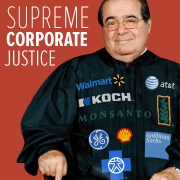


 After the Crash