There is something extraordinary happening in the world

flux1-660x375

By Gustavo Tanaka

Source: Medium

A few months ago, I freed myself from society, I’ve released myself from attachments I had and fear that locked me to the system. And since then, I started seeing the world from a different perspective. The perspective that everything is changing and most of us have not even realized that.

Why is the world changing? In this post I’ll list the reasons that take me to believe this.

1 — No one can stand the employment model anymore.

Each one is reaching its own limit. People that work in big corporations can’t handle their jobs. The lack of purpose starts to knock the door of each one as a desperate scream coming from the heart.

People want to escape. They want to leave everything behind. Look how many people trying to become entrepreneurs, how many people going on sabbaticals, how many people depressed in their jobs, how many people in burnout.

2- The entrepreneurship model is also changing

A few years ago, with the explosion of the startups, thousands of entrepreneurs, ran to their garages to create their billion dollar ideas. The glory was to get funded by an investor. Investor’s money in hand was just like winning the World Cup.

But what happens after you get funded?

You become an employee again. You have people that are not aligned with your dream, that don’t give a damn to the purpose and everything turns into money. The financial return starts to be the main driver.

Many people are suffering with this. Brilliant startups start to fall because the model of chasing money never ends.

We need a new model of entrepreneurship.

And there is already many good people doing this.

3- The rise of collaboration

Many people have already realized that makes no sense to go alone. Many people awake to this crazy mentality of “going on your own”.

Stop, take a step back and think. Isn’t it an absurd, we, 7 billion people living in the same planet get so separated from each other? What sense does it make, you and the thousands (or millions) of people living in the same city turn your back to each other? Every time I think of that I get kind of depressed.

But fortunately, things are changing. All the movements of sharing and collaborative economy are pointing towards this direction. The rise of collaboration, sharing, helping, giving a hand, getting united.

It is beautiful. It brings tears to my eyes.

4- We are finally starting to understand what the internet is

Internet is an incredibly spectacular thing and only now, after so many years we are understanding it’s power. With internet, the world opens, the barriers fall, separation ends, union starts, collaboration explodes, help emerges.

Some nations made revolution with the internet, such as the Arab Spring. In Brazil we are just starting to use better this magnificent tool.

Internet is taking down mass control. There is no more television, no more few newspapers showing the news they want us to read. You can go after whatever you want, you relate to whoever you want. You can explore whatever you want, whenever you want.

With internet, the small starts to get a voice. The anonymous become known. The world gets united. And the system may fall.

5- The fall of exaggerated consumption

For many years, we have been manipulated, stimulated to consume as maniacs. To buy everything that was launched in the market. To have the newest car, the latest iphone, the best brands, lots of clothes, lots of shoes, lots of lots, lots of everything.

But many people have already understood that it makes no sense at all. Movements such as the lowsumerism, slow life, slow food, start to show us that we have organized ourselves in the most absurd possible way.

Each time less people using cars, less people buying a lot, each time more people trading clothes, donating, buying old things, sharing goods, sharing cars, apartments, offices.

We need nothing of what they told us we needed.

And this consciousness can break any corporation that depends on exaggerated consumption.

6- Healthy and organic eating

We were so crazy that we accepted eating any kind of garbage. It only needed to taste good, that was ok.

We were so disconnected, that the guys started to add poison in our food and we didn’t say anything.

But then some guys started to wake up and give strength to movements of healthy eating and organic consumption.

And this is going to be huge.

But what does it have to do with economy and work? Everything!

The production of food is the basis of our society. Food industry is one of the most important in the world. If consciousness changes, our eating habits also change, and consumption changes, and then the big corporations must follow these changes.

The small farmer is starting to have strength again. Also people who are planting their own food.

And that changes the whole economy.

7 — The awakening of spirituality

How many friends do you have that practice yoga? What about meditation?

How many used to do it 10 years ago?

Spirituality for many years was a thing of the esoteric people. Of those weird people from mysticism.

But fortunately, this is also changing. We got to the limit of our rationality. We could see that only with the rational mind we cannot understand everything that happens here. There is something more happening and I know you want to understand.

You want to understand how things work in here. How life operates, what happens after death, what is this energy thing that people talk so much, what is quantum physics, how can thoughts become things and create our reality, what are coincidences and synchronicities, why meditation works, how is it possible to cure with the hands and what about these alternative therapies that medicine does not approve, but work?

Companies are promoting meditation to their employees. Schools teaching meditation to kids.

8 — Unschooling movements

Who created this teaching model? Who chose the classes you have to take? Who chose the lessons we learn in history classes? Why didn’t they teach us the truth about other ancient civilizations?

Why should the kids obey rules? Why should they watch everything in silence? Why should they wear uniform?

Take a test to prove that you learned?

We created a model that forms followers of the system. That prepare people to be ordinary human beings.

But fortunately there are many people working to change that. Movements like unschooling, hackschooling, homeschooling.

Maybe you have never thought of this and you are chocked with the points I’m listing here.

But all these things are happening.

Silently, people are awakening and realizing how crazy it is to live in this society.

Look at all these movements and try to think everything is normal.

I don’t think it is.

There is something extraordinary happening.

— — — — — — — — — — — — — — — — — — — — — — — — — — — — —

Gustavo Tanaka — Brazilian author and entrepreneur, trying to create with my friends a new model, a new system and maybe helping to create a new economy.

A New Lost Generation: Student Loans, Wage Slavery, and Debt Peonage

Dr. Nicholas Partyka

Source: The Hampton Institute

In literature, the term “lost generation” refers to a cohort of authors whose work defines the post-First World War era. This group includes literary notables like Ernest Hemingway and F. Scott Fitzgerald, among others. According to the dominant understanding, what made this group of expatriate writers, centered in Paris, ‘lost’ was not a sense of geographic dislocation, but rather one of spiritual or moral dislocation. Their experiences in or with the war led them to question, even to abandon, the systems of values that they had held prior to the war. This kind of sentiment, and experience, was not uncommon in society at large. This is likely part of why these authors’ work achieved such prominence in this period. Many people felt lost in this era, even before the onset of the Great Depression.

The project of liberalism had been brought into serious question by the First World War. According to liberals, as society embraces the philosophical tenets, the economic and political institutions, the social and economic practices, as well as political values of liberalism, greater social peace and stability would arise. This would occur both nationally, as society came more and more to resemble the liberal ideal, and internationally, as liberal states cooperated and traded rather than fought with each other. Up to the time of the First World War liberals retained their faith in the idea, rooted in the Enlightenment, of ‘Progress’. The reality of the war shattered these comforting illusions. Indeed, since the Napoleonic defeat, with some exceptions largely in their colonial possessions, liberal states had not gone to war with each other. This made it easy for some, based on an argument from Kant, to believe in an idea like the liberal, or democratic, peace.

Being ‘lost’ in this fashion was to experience a form of social disorientation resulting from a sense of, what Durkheim called, anomie. Having lost the easy faith in liberalism, many in this generation found themselves without the traditional moral framework, or social guidelines around which most people construct their lives, and their life trajectories. The fact that war occurred; that the introduction of modern industrial technology on an unprecedented scale caused such unfathomable carnage; that modern communications technology was advanced enough for the people on the home front to see, and to understand the reality of the war; the ever increasing heights of wealth and opulence enjoyed alongside crushing poverty; the continuing rapid pace of industrial and technological, as well as social change. All these contributed to the feeling of anomie, and even ennui, that made so many in this generation feel ‘lost’, or disoriented.

The term “lost generation” also has a usage in political-economy. There are some interesting similarities in the experience of being ‘lost’, of social disorientation, between the two different usages here. In political-economy, the notion of a ‘lost generation’ refers to a cohort of workers adversely impacted by a persistently weak labor market. A generation of workers can be lost to the impact of poor macro-economic conditions in several ways. From the point of view of society, this generations’ labor is lost, and the material progress of society delayed, in that it is never deployed in its most productive use, or at its full potential. This generation, and the next, can be lost in that their progress on the ladder of social mobility, assuming that such a thing existed, can be slowed by the practical limitations imposed by economic constraints. Most mainstream capitalist economists understand the notion of a “lost generation” as a cohort of workers whose lifetime earnings are likely to be less than they otherwise would have likely been, due to the poor performance of the macro-economy.

A lost generation is a serious matter, because it will have a significant, widespread, and multifaceted impact on society. A potential lost generation will impact not only the individual workers, but also their families and their communities. Workers who make less are not able to invest in important resources and opportunities for themselves, and for their families, especially their children. The diminished capacity of the majority of workers to invest in the personal development of themselves, and importantly, of their children, will have important consequences for the health of workers’ democracy. In a heavily stratified form of society, such as capitalism, the effects of a potential lost generation will be different in specific segments of the labor market, and income spectrum. Those higher up may be able to avoid to worst of the negative effects of the kind of poor economic climate that produces a lost generation. Those lower down may end up being crushed under the weight of the forces causing the disruption. Suicide, lack of adequate medical attention, lack of adequate housing, lack of sufficient food, all take the lives of people forced onto the margins of a commercial, capitalist society. Workers are also ‘lost’ in these latter ways during periods of economic turbulence and distress.

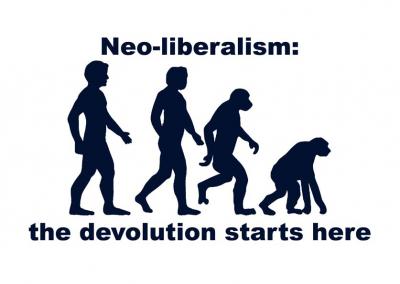
It is the specter of exactly such a lost generation of students and workers that haunts many economies in the Euro-Atlantic world, especially including the US. The dominance of neo-liberal austerity policies only further exacerbates this problem of a potential lost generation. As social programs are increasingly defunded, or even privatized, workers and the poor face increasing pressure to make ends meet, that is, to obtain basic subsistence goods. And when crisis is combined with austerity these pressures only multiply, causing many on the margins to crack under the pressure. The neo-liberal response to the crisis in the US, and even the job-less recovery, further increased these pressures on the most vulnerable, which has caused widespread social dislocation in many countries. Though every country has a unique experience, some of the main symptoms are the same; higher unemployment and underemployment, especially among youth; increases in the ranks of the long-term unemployed; increases in homelessness; increases in suicides; increases in premature deaths due to inadequate medical care, shelter, and nutrition; increases in drug and alcohol abuse. The social dislocation resulting from the fallout of the 2008 global financial crisis, and its aftermath, has so disrupted the pre-crisis status quo that many, especially young people, increasingly feel a kind of anomie, like that which animated the literary Lost Generation of the 1920s.
Austerity & Social Dislocation in Greece

To see what a lost generation can look like, and what its social consequences can be, Greece offers a striking case study. Since the 2008 global financial crisis, and the Euro crisis which followed, Greece has been at the center of the action. Indeed, it was exposure to Greek debt which was, and still is, the major fault-line of the Eurozone crisis. In order to save the Eurozone, creditor nations, and international financial institutions, have intervened on more than one occasion to provide Greece with “bailouts” and rescue loans to prevent a default on their debt; which many fear would trigger a collapse of the entire Eurozone. The unrelenting austerity measures imposed on Greece since 2010 have taken a massive toll on the Greek population. As the drama of the negations between the new SYRIZA-led Greek government and its creditors unfolds, it continues to be the Greek people, especially the most vulnerable, who bear the costs of neo-liberal prescribed austerity policies.

Right now, Greece is in the process of being the victim of what gangsters of another era would call a “shake-down”. That is ultimately what the negotiations with its creditors are. And, in light of how the creditors have acted toward Greece, this appearance has hardly been dispelled . Those to whom the Greeks owe money are insisting on full repayment, and have a clear policy agenda for how to get it, and have thus far steadfastly refused to engage in any discussion of a pro-growth policy programme. Greece is begin held-up by European financial elites by using access to credit and bond markets -indispensible tools for all modern governments- to coerce Greece into compliance. Being cut-off from these markets would make it harder for Greek businesses to do business with the rest of the world, it would also hamper the efforts of the Greek government to achieve its political and economic objectives. In order to pay back what they owe, creditors are and have been demanding the Greeks “privatize”, i.e. sell to the highest bidder, state assets, raise more tax revenue, and spend less on social programs. This is the general policy prescription the troika has consistently applied to Greece. The international creditors, just like Shakespeare’s famous Shylock, are in essence demanding their pound of flesh from Greece.

The affects of these policies has been utterly devastating on Greek society. By 2012, the enormous scale of the economic and social crisis brought on by neo-liberal austerity policies was abundantly clear. The main results of austerity for Greek workers and families have been; around 25% unemployment, and the rate for youth under twenty-four is double the overall rate; near 20% decline in wages across the board; about 30% of the population living below the poverty line, and have no access to affordable healthcare; the average family income in Greece has fallen back to its 2003 level; 40% of Greek children are growing up below the poverty line; 45% of Greek pensioners living below the poverty line; 58% of the unemployed live below the 2009 poverty line; a 25% increase in homelessness just between 2009 and 2011; a dramatic rise in personal bankruptcy filings. Meanwhile the tax increases, as well as wage and pension cuts, in addition to cuts to social services, demanded by the troika have resulted, according to one study, in the poorest households in Greece losing 86% of their pre-crisis income. The wealthiest by contrast have lost an estimated 20%, and this is at the upper end of estimates.

Steep declines in wages, deep cuts to social services, rises in unemployment, and tax increases, have all combined to put brutal pressure on 3 million Greeks living on or close to the edges of subsistence. The tumult created by the economic fallout of the austerity agenda imposed on Greece has resulted in a humanitarian crisis of immense scale. As Greece has been forced to spend less on hospitals, for example, the social effects have been dire . Greece has seen rises in infant mortality, a return of malaria, rising rates of HIV among drug users, limited access to important pharmaceuticals, and a dramatic spike in suicides and incidents of major depression. These are the results of Greece now spending less on healthcare than any pre- 2004 EU member state. With the severe wage and pension cuts, food insecurity has also exploded, as nearly three million Greeks do not have enough food to eat.

One of the major trends to emerge from this social catastrophe is the large-scale emigration of Greek youth. Given the unemployment picture, the continued recession, the deterioration or privatization of social welfare programs, many young Greeks see no option but to leave their home country to seek work abroad. This unfortunate trend is leading to what some call a “brain drain” effect as the most educated, the most talented young Greeks leave the country, thus depriving the nation of the type of talent necessary to lift it out of its economic malaise. This growing Greek austerity-fueled diaspora, lack of investment in social programs like health and education, increasing poverty and desperation, all combine to produce the conditions for a lost generation. After more than a half-decade of recession and austerity, the costs of the Eurozone crisis have been largely foisted upon the Greek people, and especially the most vulnerable among them.

The continued imposition of economic austerity policies on Greece will only produce more of what we have already seen, it will only deepen the social and humanitarian crisis in Greece. This brain-drain from a large-scale emigration of Greek youth would only compound Greece’s financial problems, as it shifts the composition of the population, skewing it much older. This youth diaspora issue is a problem that Cuba, for example, is now confronting, as the economic effects of the US blockade continue to fuel the emigration of young Cubans for employment opportunities. Austerity and recession are choking the life out of the Greek economy, and the Greek people, just as the US blockade is meant to do to Cuba. Austerity is a political choice, it is a policy programme, and it is thus that a lost generation is being imposed on Greeks by the creditors, by the troika.

The other major trend to emerge from the crisis is a flourishing of truly grass-roots solidarity movements and projects. Soup-kitchens, free schools, and clinics, among other social-welfare and relief-oriented initiatives, have proliferated in Greece as communities and activist groups- especially anarchists- organizes themselves to help provide for those being deprived, those being starved, so that European banks and other creditors can be repaid on the terms they demand. This amazing social solidarity response is an optimistic sign of a flourishing anti-austerity, anti-neoliberal, anti-capitalist resistance movement in Greece. Indeed, the many protest marches, strikes, and occupations of public spaces and buildings shows this movement is very healthy, and has widespread support. The repeated and deep wage and pension cuts, the draconian cuts to social programs, the continued recession, and the loss of labor rights and even collective bargaining rights have severely affected so many people in Greece that radical (from the point of view of mainstream capitalist political parties) SYRIZA party won snap-elections earlier this year.

Despite the July 5th referendum, Greece’s situation remained highly precarious. By returning a decisive victory for the anti-austerity “no” option, the Greeks not only displayed their pride and independence, but also gave some indication of the depth and breadth of the anti-austerity, and anti-troika sentiment in Greece. On the other hand, the results of the referendum have seemed to have embolden the creditors, and indeed, they appeared to dig in their heels even before the ballots were cast; that is, if one is to judge from the public pronouncements in the days preceding the referendum. The situation in Greece is dire, and deteriorating. As financial panic and bank runs became more intense, they compounded Greece’s already significant social woes. It appears that fears of a much worse social and economic crisis, should Greece exit the Eurozone and re-institute the Drachma, are what led Prime Minister Tsipras and his government to capitulate to the creditor’s demands. And also what led him to accept a new bailout agreement, with even more draconian austerity conditions than the agreement the Greeks ostensibly rejected in the July 5th referendum. The creditors decided they were prepared to financially strangle Greece, and allow its banks to collapse, if their terms were not accepted. In essence, the Greek government was forced to choose between being strangled and slowly suffocated, and in the end they chose the latter.
The Student-Loan Debt Crisis: The Making of a Lost Generation in the US ?

The main outlines of a potential lost generation are already becoming clear. A great many young workers today find themselves over-educated , over-qualified, un- or under-employed, living with roommates or back with parents, working jobs well beneath their educational level, and in debt for the education they hoped would lead them out of the lower ends of the labor market. One finds that this group has been delaying family formation, and delaying major purchases like houses, automobiles, and other “consumer durables”. This is often attributed to this group typically paying off their loans over a much longer period of time than previous cohorts, which is itself attributed to the poor economic situation of the cohort of graduates that came into the labor market in and around the time of the financial crisis and the onset of the Great Recession. The unemployment rate among youth, as well as among college graduates, and the large increase in the rates of default on student loans gives some measure of the troubled economic situation many recent graduates face. The rise in forbearances, and Income-Based Repayment ( IBR) enrollments, because they deflate the default rate, offers an important insight into the poor situation recent graduate face after they leave school.

Many factors contribute to creating this student loan crisis and a potential lost generation. The first factor to notice is the increasing democratization of college and the college culture beginning with the mid-20th century middle class. Following Thomas Piketty’s analysis, one should see the period after the World Wars and the Great Depression as a historically unique, and unprecedented epoch. In Piketty’s terms, this was the first epoch in which the rate of return to labor was higher than the rate of return to capital. That is, for Piketty, this was a period in which the fundamental law of capital, as had been observed for several centuries, was reversed. This happened, Piketty argued, because of the dramatic, indeed unprecedented, social, political, and economic changes made necessary or expedient by the upheavals of the 1914-1945 period. In order to win the wars and combat the depression, governments across the capitalist world made concession to the workers movements which had been gathering momentum since the late 19th century. These accommodations, and the government intervention needed to achieve them, resulted in the reversal of Piketty’s historical law of capital.

In practical terms, these policies left workers, especially those in the US with much more disposable income than ever before. The Baby Boom generation was thus able to go to college in record numbers, and achieve extraordinary social mobility because of a fortuitous confluence of historical circumstances. The parents of the Baby Boomers enjoyed the kinds of economic conditions that allowed them to afford the things which came to characterize the American middle class lifestyle; suburban houses, multiple automobiles, family summer vacations, college educations for children, retirement savings, et cetera. Because the Baby Boom generation was able to go to college, and as a result, attain professional success, and therewith social mobility, they quite naturally passed on these lived experiences as expectations for their children.

And for a generation or so this pattern worked. Young middle class-ish people graduated from high school, went to college, got jobs, moved out on their own, got married, bought houses, had children, and reinforced for those children the importance of going to college. Yet, as macro-economic change occurred, driven by neo-liberalism, and as the labor market came to contain more and more workers with college degrees, the pecuniary advantages attached to college degrees began to erode. Yet, as the economic advantages of a college education diminish, the dominant cultural narrative, at least for the “middle class” and those who aspire to it, is that the path to a good life runs through a good job with a high salary, and one gets this by having the right skills, and these one acquires in college. So, whether it is necessarily a good idea or not, millions of young Americans aspire to, apply to, and enroll in American colleges. Most do this in the hope of being able to get a job which will pay them enough to live a comfortable life.

Also contributing to this crisis is the rapidly rising costs of college. As more and more students were able to muster the financial means, largely due to continued access to “easy money”, that is an excess of cheap credit in the financial system, to register effective demand on the market college became a big business. As enrollments continued to grow, this business grew. There emerged an arms-race dynamic among colleges, which has only intensified, and spread over time. This arms race is based on the need for colleges to attract students, and involves spending money on buildings, facilities, amenities, technologies, events, and more to attract students. At the same time as this arms race drives up costs, so too do the ever inflating salaries of the typically expanding ranks of college administrators. Making the situation even worse is the fact that concurrently with the latter two sources of cost inflation, is the fact that state financial support for public education, on all levels, not just higher education, has deceased markedly over recent decades. Thus, as a result of neoliberal efforts to decrease taxes on the wealthy, the costs of education are being born more and more by students and families, driving many of them into debt, or deeper into debt, in search of the prospect of the social mobility they think a college education can provide.

The reality of the present situation is that the labor market that many post-crisis graduates have found themselves in is decidedly not favorable. The macro-economic shift in employment in the US predominantly to the service sector, and systemic forces inherent in capitalism that produce persistent pressures toward automation, have combined to create a labor market in which job growth is concentrated in the high and low end segments. Computer and internet technologies have facilitated a great deal of further redundancy of human labor in the production process for many manufactured goods. They have also rendered large amounts of human labor unnecessary in other sectors by automating via digitization, various customer service operations or routine business functions. Globalization has also helped hollow out the old middle class by moving out of the country the kinds of skilled and semi-skilled manufacturing jobs that did not require college education.

In 2011 the Occupy Wall-Street movement burst dramatically onto the scene in America. This movement gave voice to the first stirrings of large-scale anti-austerity sentiment in the US. Many graduates who entered the labor market at the time of the crisis and its immediate aftermath, had by 2011 experienced the effects of the economic crunch. This movement brought many of these people together through their shared experience of disillusionment, and social as well as economic dislocation. The recent emergence of the Corintian15, which very quickly became the Corinthian100, and the student-loan debt-strike movement, shows that this movement is not dead. Instead, this movement is gaining momentum as the economic situation for more and more young workers becomes more and more desperate. As the student loan crisis continues to build, and as austerity and neo-liberalism dominate the policy response, the resistance movement will only spread. Though capitalist elites, through municipal governments nation-wide, were able to suppress the initial incarnation of the Occupy Wall-Street movement, the basic social, political, and economic conditions that created it remain.

If the austerity-driven response continues, a lost generation is exactly what could emerge in the US. The impact of the most recent crisis is still being felt, and little in the way of recovery has trickled down to many of those displaced by the crisis, or the Great Recession which followed it. And there are other groups besides young graduates who face uncertain economic futures. Older workers pushed into early retirements despite smaller pensions and rising costs. Pensioners and the elderly, who are already largely marginalized in society, also suffer. Middle-aged workers displaced from their jobs during this past crisis have had a quite difficult time finding new employment, at least at the level of their previous job. This is exactly the broad base of suffering that unites many in Greece against neo-liberalism. The young, and recent graduates, are not the only ones to suffer, nor are they the ones who suffer the most, just as in Greece.

However, the current cohort of young Americans is the most well-educated in the nation’s history, indeed, college degrees are more abundant than ever. Every social group seems to be experiencing growth in the rate of college degrees; though disparities between racial groups persist, and indeed increase. The current narrative in the dominant culture about how to achieve “middle class” social mobility, is still to get and education, i.e. go to college. Throughout the post-war period, in order to facilitate economic growth, by way of personal development through education, the US government increasingly helped make money available to help more and more people attend college; this, of course, began to change with the rise of the ideological hegemony of neo-liberalism. There is thus a sinister bait and switch at play between the narrative about college and mobility, and the social reality of these. Students are encouraged to take out increasingly more in loans, so as to afford to go to college, in the hopes of getting a job that pays enough to live on. When graduates emerge from colleges, what they find is a labor market overflowing with college graduates all seeking employment in the fewer and fewer good jobs, for which they are all qualified, as well as for the growing number of low-paying jobs for which they are all over-qualified. Stultified by low wages, abusive scheduling, and a polarized labor market, this lost generation is already delaying family formation, and may in the future be marked by the kinds of increases in depression and suicide that we have already seen in Greece.

This post-crisis generation of graduates, which is still emerging into fuller maturity, has been set up to become a lost generation. They are likely, unless drastic policy changes occur, to endure economic lives in which they make less money on average over their working lives, have less secure employment, less secure access to healthcare for their families, less access to or lower quality of education for their children, less ability to afford to retire, and many other of the same forms of social and economic dislocation being experienced by workers in Greece. The social realty this post-crisis generation confronts can only serve to disillusion and disenchant, as it disenfranchises through poverty, austerity, and inequality. This post-crisis generation is well placed by socio-economic circumstance to experience the social, moral, economic, and political confusion and disorientation that characterizes a lost generation.

Bound to jobs that don’t engage the talents cultivated by education, and that impose abusive workplace practices, in order to pay back student loans, this post-crisis generation is being groomed to become a dependent, and hence docile one politically. Given the poor state of the labor market, the rising costs of a college education, and the diminishing return on a college education, student loans are taking longer and longer to pay off. In many cases this process can stretch out for decades, becoming in essence life-long debts; or, at least, debts that will require the bulk of one’s working life to discharge. These student loan obligations thus keep young workers feeling insecure, and beholden to their employers, if they’re lucky enough to have jobs.

From the point of view of elites, of entrenched powers, education has always been a double-edged sword. On the one hand, one wants the fruits of scientific, philosophical, and artistic discovery and achievement. For, indeed, these are the hallmarks of civilization, of progress, and of enlightenment. On the other hand, the more education is allowed to be received by more and more “lower” ranks of society, the more questions start being asked about the nature of the social order, and about potential changes. Education is a pandora’s box in this way. Once people acquire education, it can’t be repossessed, and there is little way to stop people from passing it on to others. For example, once a person learns to read, there is often little authorities can do to stop people from reading subversive material. The long history of underground, or samizdat, literature, especially of a political nature, in most Euro-Atlantic societies evidences this. Thus, while the increased access to education, especially higher education, for the Baby Boomers, and their children, is great for those individuals, from the point of view of elites, this educational democratization was lamentable. Indeed, the revolutionary 1960s and 1970s were to some degree enabled by high levels of access to higher education, but on affordable terms, that is, without high levels of debt. Even though this was the tail end, this was still an era of social investment in education.

With the rise of neo-liberalism beginning in the mid-1970s, came continuing waves social dis-investment in education on all levels. Along with rising costs, shifts in the tax burden and stagnant wages led many working-class and poor families to bear more and of more the costs of education, particularly higher education. This served to price some out of the market, however the decline in government support for education was replaced by the increased availability of loans. This is in some measure due to the re-rise to dominance of finance capital, and the need for monopoly capitalism to generate bubbles in order to spark growth. In any event, more and more working-class and poor individuals and families took on increasing amounts of debt in order to acquire college educations.

However, rather than achieving the same kind of easy mobility their parents did, this first generation under neo-liberalism was marked by the effects of stagflation and austerity, multiple recessions and stock market collapses, and the Savings & Loan Crisis. Thus, in the early 1990s, one sees this generation become “Gen X”, the cultural emblem of which became the un – or under-employed, aimless and cynical, “slacker”. Before the unbridled optimism and euphoria of the Dot Com Bubble set in, Gen X was a potential lost generation. The apathy, dislocation, disillusionment that characterize the artistic and cultural products of this generation showcase the sense of being lost, of lacking grounding and guidelines that mark the experience of lost generations. By the mid-1990s however, the economy began to pick up, eventually becoming the tech, or dot com, bubble, and many former slackers and “grunge” kids became successful professionals in a suddenly more hospitable labor market.

Between the mid-1990s and 2007-2008 the US economy was buoyed by a succession of asset prices bubbles, or episodes of speculative mania. These bubbles prevented a lost generation from emerging beyond the early 1990s. Moreover, the effects of neo-liberalism had a beneficial effect on working-class and poor households in the form of cheap goods, particularly textiles, from Asia. Cheaper basic goods, like food and clothing, imported from the Third World had a wealth effect on many American households. A rising stock market also contributed to this feeling as well, for those who owned stock, which was increasingly many. This continued to allow many working-class families to send their children to college, and with a booming economy many were able to get good jobs and achieve social mobility. However, a lingering specter of the potential lost generation of the early 1990s was the emergence in the late 1990s of the anti-globalization movement, announced forcefully by the 1999 anti-WTO protests in Seattle.

When the economy was rising, young workers could be bribed into being politically neutral through jobs that pay enough to afford “middle class” luxuries. Individuals become bound to their jobs in order to pay for the things that they own. The price of material comfort and convenience is thus obedience and passivity, it is the faux choice to be a consumer rather than a citizen. In a rising economy, debt, especially for education, can be seen as an investment in oneself, in one’s own future. Since an expanding labor market is likely to provide one with a salary that enables one to repay the loans in a reasonable period of time, this investment can often be a good one. When, however, the economy turns from boom to bust, debt serves as a set of financial shackles. Whether in boom or bust, capitalism requires that workers be bound to their jobs, i.e. be dependent on their employer and the wages he or she pays. Thus, either preparing the way for entrance into a gilded cage, or confining one to an only quasi-metaphorical chain-gang, student debt serves the interests of capital. Some, capitalism rewards with high salaries, their obedience and loyalty is bought and paid for, since the employees material position is dependent on the employers’ wages. Others capitalism condemns to various forms of forced labor in order to enforce obedience to its regime of surplus-extraction, and to stifle much revolutionary activity.
Slavery, Debt, & Peonage

Debt has been used by societies throughout history in order to coerce some people into performing coerced, that is, un-free, forms of labor for others. This is the history of class society, debt is the mechanism by which workers are incorporated into the apparatus of exploitation, that is, of forced labor. This is something which David Graeber is keen to point out throughout his book, “Debt: The First 5,000 Years”. The basic point of debt is to control the labor of others. Once one controls the labor of others, one can use it to one’s own advantage, to increase one’s own position. This fundamental tenet remains true today, debt is used as leverage to achieve control of others’ labor, and therewith their lives and their futures. Young people today, who want to go to college, are being forced to mortgage their future betting that their college degree will help them secure a job with a high, or perhaps just stable, income. Coming out of school in debt ensures that graduates must seek wage employment to repay their loans, that is they must remain politically neutral; or at least confine their activism to the bourgeois-approved, “democratic” methods of protest.

The reliance of class society on un-free labor can be seen even in its most liberal moments, for example, the various times when slavery has been “abolished”. The formal abolition of chattel slavery, or simply its disappearance, may seem to evidence a rising tide of liberalization, however, in most cases slavery is simply replaced by a new form un-free labor. Class society is a mechanism for extracting un-free labor from some for the benefit of others. So, for example, upon the abolition of slavery one very commonly sees the institution of various forms of serfdom, share-cropping, and tenancy relations between former slaves and former masters. In practice these systems perpetuate the social, political, and economic dominance of the former elites, as well as the subjugation and servility of the former slaves. One sees this process unfold time and time again. From the disappearance of slavery after the collapse of the Western Roman Empire, to the abolition of slavery by British in early 19th century, or to the abolition of slavery by the Americans in the middle of the same century, the ostensible rise in social status by former slaves was undercut by the imposition of new forms of coerced labor.

Central to this process is debt, that is, the creation of debts, which once acquired will serve to bind former slaves or serfs to their former owners, and former occupations. Since salves come into the society with no possessions, or at least little to no savings, they quickly find the need to take on debt to get by, and thus become locked into a cycle of debt and dependence whereby their labor and lives are largely controlled by the obligation to repay the debt. Necessities like food must be bought, and once slavery was abolished former slaves were no longer provided with food, however meager and putrid it often was. Former owners readily offered employment to their former slaves, because they were already familiar with the routines of the particular labor process, not to mention already physically present. Cash advances on the wages employers were now required to pay legally free workers was a very common way of creating initial debts, which would routinely spiral into large debts; debts of a size that turned formerly free persons, even if only nominally so, into debt-peons, i.e. un-free, or bonded, laborers.

In America, the transition from slavery to share-cropping in the post-Civil War period is a very clear example of this process of creating debt-peons. After the war, and even after the so-called Reconstruction era, former slaves were returned to a condition not much different from that which they suffered under slavery.[1] This was done by imposing on former slaves a vicious cycle of debt, poverty and dependence, which economically and politically disenfranchised them. For example, see the ubiquitous “black codes” that arose during Reconstruction. These were as much about enforcing social norms, but also, and equally importantly, they regulated labor in the post-war South. [2] Since, due to the economic effects of the war and of emancipation, most southern farmers could not afford to re-employ their former slaves as wage-workers because they lacked sufficient capital; that is, even if the recently freed slaves were willing to go back to work, which many were not. Thus, sharecropping was the expedient that was resorted to most often. Through the law, and other legal devices, white southerners shifted all, or the proverbial lion’s share of the risk, onto what were, ostensibly, their new business partners. The black codes, also, through criminalization of vagrancy, always disproportionately enforced on blacks, forced many former slaves back into their old jobs.

This latter leaves out the effects of the rampant, naked, and direct white-supremacist violence perpetrated against the newly liberated African-American population. Thus it was, through debt and violence, that the newly freed African-Americans were bound to their former masters, and thus forced to continue to work at their former occupation, cotton farming. The historical experience of many coal miners, and other industrial workers, especially those having lived in company towns in America, also very clearly displays the process whereby workers’ debt are used to entrap workers, and force them into a condition very much like slavery. Most newly freed slaves ended up facing a choice, especially after the end of Reconstruction, between working their old jobs as sharecroppers, or being arrested for vagrancy and being sentenced to forced labor. In either case, the newly liberated slaves were forced back to work, often for their former masters.

The same process of creating debt-peons observed in the American South after the Civil War, in the main outlines, occurred earlier in the 19th century after the British abolished slavery. Outside of those in the actual slave trade itself, this policy change primarily affected the British sugar industry in the Caribbean.[3] Former slaves were very commonly re-employed as wage laborers on sugar plantations, typically for very low wages. After cheap African slaves could no longer be acquired, plantation owners began to import cheap laborers from other parts of the world, primarily East Asia and the Sub-Continent. These laborers were routinely entrapped after arrival in the Caribbean owing the company, or perhaps some type of agent or broker, for transport and provision, as well as the very common cash advance. Cash advances were very often quickly spent, either through consuming necessaries like food, through dissipation, or through being hoodwinked. In many cases cash advances would be handed over to family in the locality where the laborer was recruited. This process of controlling cheap foreign workers through debt, and draconian repayment conditions, can be seen clearly in Qatar, particularly with regard to the building programme related to the World Cup tournament it will host in 2022.

Wage labor is also a form of slave labor, though more similar to debt-peonage than chattel slavery. If a rose by any other name would smell as sweet, then slavery by any name is always odious, and the opposite of liberty. Wage laborers in liberal-democratic regimes may have more social and political privileges than serfs or slaves, but they are in no wise the free laborers economic theory posits them to be. Wage labor is just another form of un-free labor. Workers, i.e. former serfs and peasants, were coerced into adopting the forms and routines of industrial life because they were forcibly deprived of, eventually, all means of sustaining themselves without recourse to wage-paying employment. The social, economic, and political transition from feudalism and mercantilism, to commercial and industrial capitalism created an industrial proletariat, a working-class, where none existed previously. This was a violent, disruptive, and often chaotic experience for these people, who in this fashion bore the brunt of the costs of the process of creating liberal-democratic, capitalist regimes.

Just as it was thousands of years ago, debt works to keep poor people working for rich people, who can then accumulate great wealth as a result, which is the ultimate goal. David Graeber describes how debt functioned in ancient Sumer to bring poor farmers, and their produce, under the control of the temple-industrial complex. The fastest and easiest way to create debts would be, of course, to levy a tax, which could be paid in kind rather than in coin; the requirement to pay in coin was related, as Graeber shows to the desire of early states to equip and provision armies. Thus, debt, along with military force, allowed the palace-temple complexes to accumulate the provisions that sustained its inhabitants and the raw materials its artisans required. So it is still today, debt continues to work to bind the working-classes to occupations that further the accumulation of wealth by the elites, social, political, and economic, of a society.

Young people across the US, and around the developed world, have been sold a narrative, for more than one generation now, that led them to believe that higher education was the path to social mobility and economic prosperity. In order to roll the dice and take their chance, a great many working-class and poor families and individuals have take on more and more debt so as to pursue education, higher education in particular. Now, in a post-crisis, recessionary environment, what was years ago an investment, is now increasingly an economic albatross. Left largely to fend for themselves in a confusing, and unfavorable labor market, wherein they are often over-qualified for the kinds of jobs which are available, young people across the US, and indeed across the industrialized world, are at grave risk of becoming a lost generation by way of becoming, in essence, debt-peons as a result of their getting an education in attempt to better themselves.

This latter fate excludes those graduates who are lucky enough, through circumstance or planning, to be educated in highly in-demand and thus highly remunerated subject areas. If one, either by personal proclivity or cunning strategy, desires to be an investment banker, and one is good at it, then the rewards can be unfathomably large. If one can do well something the market highly rewards, then one can find their pursuit of an education in this subject profitable indeed. And if one is unfortunate enough to be interested in a subject, for which there is not great demand by capitalists, or the state, then one’s pursuit of an education will likely be unprofitable, and result in a condition essentially the same as debt-peonage. Of course, in capitalism, the structure of outcomes in the labor market in regards to pecuniary rewards is colored to a great extent by personal connections, nepotism, cronyism, “inside baseball”, “old-boys clubs”, et cetera. Social class matters very much in the real-world sorting process in the labor market after college. Who gets what position, and for how much salary, is in many ways a heavily rigged game, especially now, as more and more, years and years of un-paid, or lowly paid, internships stand between new graduates and entrance into the professions they desire.
Avoiding a Lost Generation

The macro-level indicators, and general economic and social statistics at present are not positive, and the initial outlines of a crisis in the US are only now beginning to emerge. We are very much still in the early stages of this unfolding crisis, and there are still many possible lines of development, depending on the actions of various actors, e.g. labor, capital, and the state. On one, perhaps extremely pessimistic view, this potential lost generation could end up being a multi-generational crisis, that has a wide array of effects that form, develop, and blossom over several decades. On a more optimistic view, this “crisis” might amount to no more than a lost decade. Sure the labor market might be bad now, but that could change the next time the economy picks up. The important point to keep in mind is that the shape and scope of the crisis to emerge can be changed by conscious and deliberate action. Though a lost generation is looming, it is by no means inevitable.

One promising line of resistance to a potential lost generation is the debt strike being organized by the Strike Debt! collective around the Corinthian100. These students, defrauded by the predatory practices of the Corinthian for-profit college network, banded together in protest to declare that they would not repay their loans, deeming them to be immorally acquired, and thus illegitimate. Despite a negotiated settlement in March of this year, some former Corinthian students judged, and not unreasonably so, the terms to be insufficient, given the scale and scope of Corinthian’s fraud, of which they were the victims. The rapidity with which the Corinthian15 became the Corinthian100 shows how wide the appeal of the original message was, and how deep is the feeling of betrayal an injustice felt by these students. The highly conscious predatory behavior engaged in by for-profit colleges like Corinthian makes the moral argument for a debt amnesty in this case particularly strong. The debt strike currently being organized may indeed by successful at provoking the state into taking precisely this action.

It is important to note that the amount of privately-held student debts is a small fraction of the total amount of outstanding student debt. Even an unconditional debt forgiveness for all Corinthian students, as well as for all other students at for-profit colleges, would not do very much to avert a lost generation. A debt strike could, however, do much to raise revolutionary consciousness among the strikers. Some who might otherwise never have been radicalized, or even exposed to radical ideas, can engage with them as a result of their personal experience. If the movement is successful in winning total debt forgiveness for Corinthian students, this will undoubtedly be a great boon to those who would be freed from those debts. This is no insignificant achievement. But, since most student debt is owned or backed by the government, and cancelling this debt as yet has no movement behind it, this post-crisis generation may very well end up knowing the experience of being lost.

One potential solution to the crisis would be some variety of Keynesian stimulus plan, or a 21st century New Deal. This would, quite naturally, require a great deal of state intervention in the economy. This latter is heresy to the current orthodoxy in economics, and moreover, there is a lack of political will to enact such a program. Yet, the logic remains as sound as it ever was, money spent on wages will have multiplier effects that work to increase output and employment. When workers get paid, they spend. This spending stimulates the economy by raising aggregate demand. Whether the private sector or public sector, wages are wages to workers, and the workers’ expenditure is the income of the retailers, and their suppliers. America does not lack for significant projects, whether infrastructure, social services, or others, worth spending money on which could improve the quality of public life, and provide the kinds of opportunity and mobility that we saw in the mid-twentieth century.

The bourgeois-democratic state itself can take, and has taken, steps to blunt some of the worst effects of the student loan crisis, and the burgeoning lost generation. In 2013 Congress acted to lower interest rates on student loans, after the rate had risen earlier in the year. While this was no doubt a boon to many, it remained the case that students pay much more to be able to afford to go to school than do the biggest banks to borrow from the federal government. It remained the case that the federal government is attempting to make money from student borrowers. Moreover, it remained the case that US students take on a higher debt burden than students in other countries. Recently, President Obama took action to help ease some of the problems associated with student loans, especially in the repayment of these loans. His action this year follows another step he took last year to help student borrowers by limiting the percentage of their income that creditors could demand as monthly payments. Needless to say, these measure are good for the people they help, to the extent they actually work to reduce the financial burden student borrowers face in the repayment phase of their loans.

However, such measures, by blunting the most severe effects of the student loan crisis, serve to forestall any larger economic or social crisis emerging out of the student loan crisis. These policies also work to forestall the worst, but also potentially most politically radicalizing, effects of the experience of being in a lost generation. Thus, the action of the bourgeois-democratic state is a double-edges sword. While the amelioration of financial hardship is good for those suffering under them, it is also bad in that it forestalls the development of the revolutionary consciousness that is necessary to provoke radical social change. Just as in Greece, as elsewhere today and in numerous historical examples, the hardships and sufferings imposed by economic crisis would generate much solidarity and revolutionary working-class consciousness, and activism. Though this kind of radicalization is still happening because of the student loan crisis, it is at a much slower pace.
Conclusion

In some discussions of the student loan debt crisis the word “bubble” is used to describe the crisis. And, indeed, in the wake of the 2008 financial crisis it was fashionable for a time to attempt to predict the next bubble, especially after two successive bubbles were largely ignored until they popped. The comparison to a speculative “bubble” is an inaccurate characterization of the student loan debt crisis in some respects. It is inaccurate in that the student loan crisis lacks some of the important features of traditional economic crises associated with the collapse of an artificially inflated asset price. Instead, the collapse of the student loan “bubble”, rather than causing an economic crisis akin to the collapse of the housing bubble, is likely to take the form of a lost generation.

The fallout of this crisis will be borne by young graduates and workers in the form of diminished lifetime earnings, chronic under-employment, delayed household formation, and increased dependence on employers and attendant political passivity. In this way, the comparison to speculative bubbles is correct, in that, just as has been the case with bubbles throughout history, it will be the smallest investors, the working-class people who buy into the market at the end of the boom period who bear the bulk of the costs of the collapse.

Despite record high levels of outstanding student debt, the crisis is not likely to cause widespread economic chaos as it erupts. First, historically, bubbles have typically arisen in the asset price of private, as opposed to public, goods. Because the US government and its immense financial resources backs the large majority of student loans, either by originating the loans in a federal agency or by guaranteeing payment to issuing private banks, there is unlikely to be a collapse in the asset price. Asset price bubbles collapse largely because investors lose faith in the future solvency of an enterprise, thus the backing of the government of the world’s largest economy removes this latter fear in the case of inventors in student loan debt.

Even a debt strike by the whole population of student borrowers in the US would not necessarily work to burst this alleged bubble. Moreover, as was seen in the 2008 financial crisis, even when bubbles do burst bourgeois-democratic regimes often bail-out the wealthiest owners of the formerly valuable asset. Second, given that student loan debt totals just about 7% of US GDP, even a collapse of this alleged bubble would be unlikely to cause a large-scale economic crisis like the one seen as a result of the 2007-2008 collapse. While still an important drag on the macro-economy, the student loan crisis is not likely to be the epicenter of a future economic earthquake.

Not mentioned at all yet in this discussion are those students who take on debt to attend college but do not graduate. This group faces the same poor labor that market graduates do, remain saddled with the financial burden of student debt like graduates, however, dropouts lack a degree, that is, the credential that largely governs access to the higher paying segments of the labor market. Though it remains true that college graduate tend to earn more over their lifetime than non-college graduates, college dropouts combine the worst of both worlds; the debt of college attendance, and the diminished economic prospects of non-graduates.

Notes

[1] For an excellent discussion of this see Zinn, Howard. “Slavery Without Submission, Emancipation without Freedom”. A People’s History of the United States: 1492-Present. 1980. Harper Perennial, (2003): 171-210.

[2] See Brands, H.W. “The Conquest of the South”. American Colossus. Anchor Books (2010): 135-166.

[3] For an excellent description of this process see, Abbott, Elizabeth. Sugar: A Bittersweet History. Duckworth Overlook: 2010.


Indulge . . . & Undermine

Crimethinc._boat_logo

Source: CrimethInc.

Have you noticed—exhortations to indulge yourself are always followed by suggestions? Adherents of doctrines seek footholds to claim territory within you, salesmen grasp for handles to jerk you around . . . from new-age prophets to advertisers, from pornographers to radicals, everyone exhorts you to “pursue your desires,” but the question remains: which ones? The “real” ones? Who decides which those are?

This just makes it clear what’s going on: a war for your soul on every front. And those much talked-about desires are all constructed, anyway—they change, they’re dependent on external factors, culture, the whole context and history of our society. We “like” fast food because we have to hurry back to work, because processed supermarket food doesn’t taste much better, because the nuclear family—for those who still have even that—is too small and stressed to sustain much festivity in cooking and eating. We “have to” check our email because the dissolution of community has taken our friends and kindred far away, because our bosses would rather not have to talk to us, because “time-saving” technology has claimed the hours once used to write letters—and killed all the passenger pigeons, besides. We “want” to go to work because in this society no one looks out for those who don’t, because it’s hard to imagine more pleasurable ways to spend our time when everything around us is designed for commerce and consumption. Every craving we feel, every conception we form, is framed in the language of the civilization that creates us.

Does this mean we would want differently in a different world? Yes, but not because we would be free to feel our “natural” desires—no such things exist. Beyond the life you live, you have no “true” self—you are precisely what you do and think and feel. That’s the real tragedy about the life of the man who spends it talking on his cell phone and attending business seminars and fidgeting with the remote control: it’s not that he denies himself his dreams, necessarily, but that he makes them answer to reality rather than attempting the opposite. The accountant regarded with such pity by runaway teenage lovers may in fact be “happy”—but it is a different happiness than the one they experience on the lam.

If our desires are constructs, if we are indeed the products of our environment, then our freedom is measured by how much control of these environments we have. It’s nonsense to say a woman is free to feel however she wants about her body when she grows up surrounded by diet advertisements and posters of anorexic models. It’s nonsense to say a man is free when everything he needs to do to get food, shelter, success, and companionship is already established by his society, and all that remains is for him to choose between established options (bureaucrat or technician? bourgeois or bohemian? Democrat or Republican?). We must make our freedom by cutting holes in the fabric of this reality, by forging new realities which will, in turn, fashion us. Putting yourself in new situations constantly is the only way to ensure that you make your decisions unencumbered by the inertia of habit, custom, law, or prejudice—and it is up to you to create these situations. Freedom only exists in the moment of revolution.

And those moments are not as rare as you think. Change, revolutionary change, is going on constantly and everywhere—and everyone plays a part in it, consciously or not. “To be radical is simply to keep abreast of reality,” in the words of the old expatriate. The question is simply whether you take responsibility for your part in the ongoing transformation of the cosmos, acting deliberately and with a sense of your own power—or frame your actions as reactions, participating in unfolding events accidentally, randomly, involuntarily, as if you were purely a victim of circumstance.

If, as idealists like us insist, we can indeed create whatever world we want, then perhaps it’s true that we can adapt to any world, too. But the former is infinitely preferable. Choosing to spend your life in reaction and adaptation, hurrying to catch up to whatever is already happening, means being perpetually at the mercy of everything. That’s no way to go about pursuing your desires, whichever ones you choose.

So forget about whether “the” revolution will ever happen—the best reason to be a revolutionary is simply that it is a better way to live. It offers you a chance to lead a life that matters, gives you a relationship to injustice so you don’t have to deny your own grief and outrage, keeps you conscious of the give and take always going on between individual and institution, self and community, one and all. No institution can offer you freedom—but you can experience it in challenging and reinventing institutions. When school children make up their own words to the songs they are taught, when people show up by the tens of thousands to interfere with a closed-door meeting of expert economists discussing their lives, that’s what they’re up to: rediscovering that self-determination, like power, belongs only to the ones who exercise it.


Shout it over the rooftops: Culture can belong to us. We can make our own music, mythology, science, technology, tradition, psychology, literature, history, ethics, political power. Until we do, we’re stuck buying mass-produced movies and compact discs made by corporate mercenaries, sitting faceless and immobilized at arena rock performances and sports events, struggling with other people’s inventions and programs and theories that make less sense to us than sorcery did to our ancestors, shamefacedly accepting the judgments of priests and agony columnists and radio talk show hosts, berating ourselves for not living up to the standards set by college entrance exams and glamour magazines, listening to parents and counselors and psychiatrists and managers tell us we are the ones with the problems, buying our whole lives from the same specialists and entrepreneurs we sell them to—and gnashing our teeth in secret fury as they cut down the last trees and heroes with the cash and authority we give them. These things aren’t inevitable, inescapable tragedies—they’re consequences of the passivity to which we have relegated ourselves. In the checkout lines of supermarkets, on the dialing and receiving ends of 900 numbers, in the locker rooms before gym classes and cafeteria shifts, we long to be protagonists in our own epics, masters of our own fate.

If we are to transform ourselves, we must transform the world—but to begin reconstructing the world, we must reconstruct ourselves. Today all of us are occupied territory. Our appetites and attitudes and roles have all been molded by this world that turns us against ourselves and each other. How can we take and share control of our lives, and neither fear nor falter, when we’ve spent those lives being conditioned to do the opposite?

Whatever you do, don’t blame yourself for the fragments of the old order that remain within you. You can’t sever yourself from the chain of cause and effect that produced you—not with any amount of willpower. The trick is to find ways to indulge your programming that simultaneously subvert it—that create, in the process of satisfying those desires, conditions which foster new ones. If you need to follow leaders, find leaders who will depose themselves from the thrones in your head; if you need to “lead” others, find equals who will help you dethrone yourself; if you have to fight against others, find wars you can wage for everyone’s benefit. When it comes to dodging the imperatives of your conditioning, you’ll find that indulge and undermine is a far more effective program than the old heritage of “renounce and struggle” passed down from a humorless Christianity.

To return, finally, to the original question—yes, we too are making suggestions about which desires you pursue. We would be scoundrels to deny that! But we would be scoundrels not to make these suggestions, not to extol freedom and self-determination in a world that discourages them. Exhorting others to “think for themselves” is ironic—but today, refusing to oppose the propaganda of the missionaries and entrepreneurs and politicians simply means abandoning our society and species to their control. There’s no purity in silence. And liberty does not simply exist in the absence of control—it is something we have to make together. Taking responsibility for our part in the ongoing metamorphoses of the world means not being afraid to take part in the making of our society, influencing and being influenced as we do.

We make suggestions, we spread this propaganda of desire, because we hope by doing so to indulge our own programmed passion for propaganda in a way that undermines an order that discourages all of us from playing with our passions—and so to enter a world of total liberty and diversity, where propaganda and power struggles alike are obsolete. See you on the other side.

Related Video:

Closing the Doors of Perception

d03cb0bf54313e420e3d8b280ae2ac23

By Dylan Charles

Source: Waking Times

“If the doors of perception were cleansed every thing would appear to man as it is, Infinite. For man has closed himself up, till he sees all things thro’ narrow chinks of his cavern.”  -William Blake, The Marriage of Heaven and Hell

We, the people, are the foundation of a vast human pyramid, at the top of which comfortably rests a world elite that manipulates the human population and world events to broaden and maintain their power. The main agents of this global cartel are the banking elite, the military industrial complex, the medical establishment, the mainstream media, the entertainment industrial complex, and the hundreds of corrupt and co-opted world governments that act as henchmen and watchdogs for the unelected world rulers.

Over our heads they hang the constant specter of war, financial collapse, terrorism and pandemic disease, and to keep us from reacting to their deeds they enlist evermore advanced forms of mind control, biological control and social engineering.

The key to their dominance over the human race is the management of public perception, and how the public mind, in turn, affects the individual mind. Reality for us is very narrowly defined, which magnifies the perception of division between human beings, between humans and nature, and between individuals and their own true spiritual nature. As such we are all too easily sidelined or conquered altogether, and doomed to toil as relatively well-off slaves in their matrix of control, constantly struggling with and murdering each other.

They recruit us to enforce this prison of the mind on ourselves, and are creating a rising class of those who willingly support them in their efforts. The rest of us are merely subjects of their tyranny, whether we acknowledge it or not, and until a major cultural upheaval occurs, there is little chance of liberating the human race. Thus we must for now focus on liberating the individual and freeing human consciousness.

This realization is a powerful motivator, for it challenges all life-loving, courageous and compassionate people to hastily wake up, discover who we really are as spiritual beings having a human experience, and then become the best possible version of ourselves so that we me may contribute to the awakening and help to cast light on that which thrives in shadows.

Sometimes I think this whole wide world is one big prison yard. Some of us are prisoners, the rest  of us are guards.”Bob Dylan

Slamming the Doors

To gain administrative access to our consciousness and constrict our perception to such a narrow band, our vibration is kept humming along chaotically in the lowest possible frequencies of fear, panic, anger, blame, hate, uncertainty and limitation. To parry this onslaught, it is essential that we recognize the many negative influences that invade our minds, bodies and spirits, and fortify ourselves against the shallowness and negativity being marketed to us at every corner.

The mind is the agent of the spirit, and the body is the vehicle of the mind. By attacking first the body, the mind and spirit are thus duly compromised.

We are under continual barrage from industrial environmental pollution, toxic pesticide-laden and overly processed foods, DNA altering genetically modified organisms and vaccines, chemtrails, radiation, EMF’s, pharmaceuticals and so much more. The body’s immune systems are quite capable, but the deliberate trashing of our environment, food supply and health is one of the foremost challenges we must overcome in order to be able to move beyond the limitations imposed upon us. A full rejection of these pollutants (as best as is possible) is warranted in order to detoxify the body, decalcify the pineal gland and prepare the body to support the mind and spirit in its natural evolution of consciousness.

Stress is the weapon of choice for the elite, and the stress of living sedentary, material-driven, worker-bee lifestyles in pursuit of manipulated currencies keeps us focused completely on our personal interests and affairs, and always in competition with our neighbors, peers, friends and family. When our mind and spirit falter and our mental health suffers, we are herded to the clinics for mass-produced psychiatric evaluations that aim to hook us on psychotropic medications which numb us to life’s beauty and keep us entranced in the day-to-day work of supporting the economy with our time and energy.

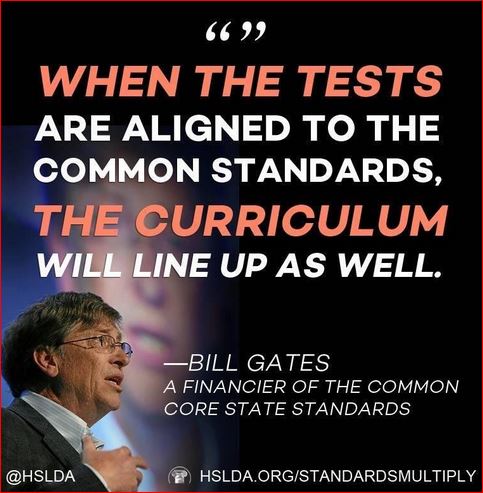
Human imagination is crushed as today’s children are hammered with rigidity and mind-numbing repetition from an early age, and with the introduction of Common Core, our education system has become even more intolerant, close-minded and non-sensical. This system produces conformists who are good at following directions and working hard for material and superficial rewards. The ability to think clearly, focus, and imagine new possibilities are absolutely critical to understanding who you are, and to understanding your inherent power and flexibility as a human being.

The law and those who enforce it are there to add to the stress and confusion of living in the matrix, and the law is used overtly to cut us from organic and chemical substances which have the potential to help us quickly see through the grand illusion that is crafted for us. Human consciousness, however, naturally pushes to thrive, grow and expand, and as such it has triggered a wave of interest in the spiritual gifts of iboga, ayahuasca, psilocybin and shamanic medicine traditions. We have open access to alcohol, pharmaceuticals and are deliberately over-exposed to other consciousness debilitating substances like aspartame, fluoride, and high-fructose corn syrup, and there is an abundance in availability of parasitic street drugs like cocaine, heroin and meth-amphetamines.

Government plays the roles of spy, censor and thought police, thus robbing the psyche of the freedom of the exploration of thought. Religion seeks to homogenize spiritual experience and externalize divinity. The mind worms of the entertainment-industrial complex pollute the psyche and suck away our precious time by hammering us with insane amounts of celebrity worship and trifling entertainment options, usually in the form of sit-down-and-watch programming that lulls the mind and sub-conscious mind into deep, hypnotic states of trance and suggestiveness. Television has become a theater of the absurd, and constantly works at further blurring the lines between reality and false-reality, tinkering with our ability to accurately perceive the difference between the important and the trivial.

The dogs of war and the military industrial complex are there to enrich the elite while dominating the poor and insubordinate. They heavily propagandize our world to create the perception of constant threats, working to corral us into the narrowest possible ‘us-versus-them,’ reptilian modes of consciousness, and to distract from legitimate issues and concerns.

Heavily beaten down by all of this, most people seek security in the comfort of being part of a collective, some sort of like-minded group, no matter what it may be. As survival mechanisms, people attach labels to themselves and embellish their egos, picking teams and choosing sides, following the leader wherever he may go. Some join the Democrat team or the Republican team, some side with their particular race, some take trivial associations like sports teams and university associations far too seriously. The divisions among us are are driven into the collective conscience which wields heavy influence over the individual by way of peer pressure and conformity. The result is robotic closed-minded madness.

Your Task at Hand

It’s simple to control someone’s reality when you have unlimited resources, a sophisticated media apparatus at your fingertips, and a monopoly on currency and security. Doubly so when you can dumb people down with toxic lifestyles and mindless distractions. The point of this conversation, however, is to promote the simple idea that awareness offers opportunity, and when we acknowledge the many limitations which are criminally placed on most of us here on earth, we give ourselves the creative freedom to seek out and discover ways of being and living that defy heavy currents of conformity.

It is now your personal responsibility to do your best to mitigate the effects of your exposure to all of this insanity, and to fortify yourself physically, mentally and spiritually. By doing so, you’ll quickly become a wizard of sorts, someone who develops a new kind of immunity to the insanity and toxicity of modern life. You’ll become resilient and fearless, a new kind of warrior, if you will. Take this message with you and detox, purge, cleanse, renew, revitalize, reconstruct, restart, and re-awaken yourself, so that the infinite and wonderful experience of being a human being, alive on this amazing planet at this particular time, will not have been stolen from you.

The top of a pyramid is an insignificant part of its structure when compared to the base, for, if even one cornerstone crumbles the capstone itself falls.
Dylan Charles is a student and teacher of Shaolin Kung Fu, Tai Chi and Qi Gong, a practitioner of Yoga and Taoist esoteric arts, and an activist and idealist passionately engaged in the struggle for a more sustainable and just world for future generations. He is the editor of WakingTimes.com, the proprietor of OffgridOutpost.com, a grateful father and a man who seeks to enlighten others with the power of inspiring information and action. His remarkable journey of self-transformation is a testament to the power of the will and the persistence of the human spirit. He may be contacted at wakingtimes@gmail.com.

The Poverty Machine: Student Debt, Class Society, and Securing Bonded Labor

StudentLoanDebt070313_0

By Jeremy Brunger

Source: The Hampton Institute

At the dawn of the 20th century, very few American students attended high school, as the demands of the heavy-industrial and the agricultural economies of that period were ill-suited to an extended education beyond the family sphere. In the middle of the 20th century, most Americans who either aspired to or had to work entered the full-time workforce immediately after high school, for such a postwar economy featured plenty of growth and comparably fair wage-compensation for the average worker. As the economy became more complex in its labor needs, its extending length of education complemented these requirements. The transformation of the agricultural economy into the technological economy after World War II, in turn, transformed the university, once the commune of the well-to-do, into a center for job training, an adjunct to industry, and one which continued to increase in enrollment as the technological necessities of an increasingly complex economy required further education. What was once the realm of the study of Christian religion, the Rennaissance humanists, and the Aufklärung became, for most students, the study of the technical labor necessary to produce and reproduce the new forms of capitalism and scientific production coming into existence. The growth of the American middle class became co-incident with the growth of the education industries which had hardly existed a century previous, when the middle class itself had hardly existed in any recognizable form. Where there was study, there was hope for economic success-the maxim “if a man falls in a field he is redeemed in a library” comes to mind-and the institution of the university became as integral to living well in the United States as the ownership of property and the propagation of the nuclear family.

However, in the 21st century, although attendance of university courses is at an all-time high as the millennial generation achieves the highest historical rate on record of college attendance, that same generation is forecast to experience a decline in standards of living comparative to their forebears. Not only this qualitative fact, but also the quantitative method of that attendance is worthy of critical analysis-for the funding of undergraduate and graduate educations comes largely from the borrowing of money from lenders with the Federal government playing its role as intermediary. As the declining middle class cannot pay for its children’s higher educations, it looks to the loan system to cover the ever-increasing costs of reproducing its standards of living over time. But such loans cannot be discharged in bankruptcy, and with the already saturated labor markets of the majority of the professions that could hope to pay off those loans, the economic situation comes to look much different: rather than the state intent on spreading enlightenment to the masses, the state appears to be securitizing a labor force that will simply have to perform whatever jobs are available, perhaps for decades on end, in order to pay off those loans.

That is, the students will have to do so if they want to qualify for home mortgages and otherwise live free from debt, which historically has always loomed over the subaltern and the serf alike. The parallels between the indebted student and the historical bond-laborer are strong enough to warrant comparison. One trend that especially deserves critical analysis is the outreach of the market to cover students from low-income backgrounds and whether or not such outreach is democratic-a Rawlsian lifting of the boats-or if it is merely predatory in nature and outcome. For, if the state and its lenders are merely financing higher education in order to secure a labor force that will not practice in the professions for which it trained but rather any job available by fiat of the debt-load, then a new reckoning is due of the state of affairs between the working-class young and their educations, the relationship between the state and the private sector, and the ongoing presence of class determinism in the free world.
Debt Corvee

According to The Institute for College Access and Success, statistics for the average student debt load from 2014 suggest that 71% of all students graduating from four-year colleges had student loan debt and the average level of this debt for public colleges was about $25,550, about $5000 higher than 2008. At the for-profit colleges the level was even higher, with students graduating with about $40,000 in debt. Most of this debt is mediated by government loan programs-about 80%-with the rest being covered by private lenders without mediation. The average student debt has increased, since 1993, about three-fold; given the rising cost of living and institutional funding in general, an increase in cost is not particularly surprising. What is surprising is how steep that increase in cost is. The cost of the aspirant apparatus of education increases beyond the market value of the professions on offer when viewed sociologically-the combination of public funding and private ambition allows tuition rates to soar even as student returns on investment plummet.

It appears the days when middle-class parents, a status declining in real terms since the 1970’s, directly financed their children’s college educations are largely over. While this may appear to be beneficial to the working class, in that the gatekeeping apparatus for entry into the professions-the colleges and universities-are more easily accessible than ever before, the debt that falls on the students is that much more of a burden. Students “who received Pell Grants, most of whom had family incomes under $40,000, were much more likely to borrow and to borrow more” than their more middle class peers, according to the Institute for College Access and Success. The debt load is thus geared to the children of the working class and the working poor who, no doubt seeking a better future for themselves, expend large sums of money-often more than a year’s wages, and sometimes two years’ worth-in accessing the portals of higher education. Given that student loans mediated by the government cannot be discharged in bankruptcy, students often have no choice but to live with that debt load for years and years if not forever: they have an education which cannot be repossessed, but they are also forced to work in professions for which they did not train in order to pay off that initial investment. This situation comes to resemble the historical institution of corvee labor, or other forms of debt-labor, in that the young, in being promised a better future, must nevertheless work for others as bonded servants in order to pay off their contracts. This is especially true for graduates in the non-scientific disciplines, as a Bachelor’s degree in a field other than business or the sciences becomes a mere shibboleth for entry into work that is not at the very bottom of the labor market, and even those “safe degrees” harbor little real safety for the student at the whim of capital. Having a Master’s degree in economics, the social science that ended The Great Depression, is yet no guarantee against waiting tables for tips for an indefinite period. The same can be said of the other disciplines.

The historical practice of corvee labor has much in common with the emergence of the indebted student. Corvee was a form of near-slavery, often linked to the military, that indentured laborers to a contract with an owner; nominally, the contract was entered into freely by the laborer, was guaranteed by the state, and was therefore not legally slavery, but due to the conditions of existence the laborer otherwise faced, the contract’s foundations were more reminiscent of the Hobbesian outlook than the Lockean. It was often the only viable option available for the children of the poor, and so, faced with hunger or hard labor, they chose labor on contract with the state. The structural difference between this practice and the practice of loaning to students are small, in that the state was involved in corvee as much as it is involved in student lending-for the student who may seek jobs after graduation is still in the economic red even as the student receives compensation for work. Corvee’s goals were to fill up a floating labor pool; the side effect, whether designed or accidental, of student lending winds up much the same. A student who accrued $30,000 in debt studying philosophy is likely to wind up working in the lower sectors of the labor market, unless they go back to school for a different or a higher degree-and so, in terms of base economics, their impersonal labor has been securitized by the public sector in favor of the private sector. Unless, that is, that student winds up working for the state in some other capacity than what they expected when they entered into their field of study, in which case the state has merely financed its own labor pool: and plenty of state jobs, like those in the sector of public secondary education, offer debt-manumission in reward for practicing in those fields for a period of several years. As such, the claim that only for-profit colleges are to blame for high student debt is false, for public universities contribute massively to rates of student debt and possess internal incentives for producing indebted students who might seek to dissolve their debt through public service.

The same may be said to apply to a pre-medical student who decides it is not prudent to enter into the “megaloans” required for medical school-at which point that student is already indebted for the undergraduate education and so, like the student of philosophy, winds up working for any institution that is hiring. This aleatory materialism may not have been intended by the state-the rhetoric behind opening access to higher education to as many people as possible was couched in democracy and enlightenment, to which every “Dream Big” sign on college campuses will attest-but its practical effects come to much the same result as corvee labor. The ideological state apparatus metamophoses into the financial state apparatus, yet focuses on the same people-the students, who, now indebted, represent a securitized labor force for private and public sectors alike. Most internships available to the graduate are unpaid internships-a relatively new development since the 1990s-thus leaving workng-class graduates desperate for income only non-professional career avenues. As the only broad field of economic growth under the last two presidential terms has occured in the service sector, educated working-class students can expect to enter the same service sectors in which their parents worked. Most interestingly, the etymological root of the word “service” stems from the word “serf.”
The Graeberian Insight

According to Dr. David Graeber’s 2011 book Debt: The First 5000 Years, the centralizing state has employed debt as its apparatus of growth for centuries. Debt, for Graeber, informs the very epistemology of Western people-we think in terms of credit and debit, of libertas and indebtedness, of squaring up our moral accounts. Debt is thus an all-pervasive category in how the Western world works, whether in the ancient world or in the contemporary 21st century. Graeber’s insight is useful beyond his idealist prescriptions for “everyday communism” and his moral philosophy, for the latent commodification of the ideals of democracy-education among them-is still a very real phenomenon. Education may have its necessary infrastructural costs, but it need not be a commodity traded between lenders, or traded between speculators, with unwitting students-especially students from non-professional backgrounds-used as its financial pawns. Given that the actually-existing professions cannot absorb these students, and that the state serves as mediator between lenders financing their educations, the surplus labor which the students provide can only be absorbed by sectors they did not intend on entering: the various service sectors, the only growing sectors in the economy, the only employers broadly willing to accept non-professionals.

Graeber writes that “presented with the prospect of its own eternity, capitalism-or anyway, financial capitalism-simply explodes. Because if there’s no end to it, there’s absolutely no reason not to generate credit-that is, future money-infinitely. Recent events would certainly seem to confirm this. The period leading up to [the financial crisis of] 2008 was one in which many began to believe that capitalism really was going to be around forever; at the very least, no one seemed any longer to be able to imagine an alternative. The immediate effect was a series of increasingly reckless bubbles that brought the whole apparatus crashing down” (360). Given that higher education has become an industry like any other, subject to the same laws of capital and labor, it also suffers the same proneness to instability endemic to any other capitalist endeavor. Consider the recent closure of Sweet Briar College, the glut of PhDs, or the models of infinite growth to which larger universities seem to adhere. The universities are awash in internal commentary that they are swiftly becoming corporatized, going from the internally-administed grove of academe to an organ of capital’s interest-just look at any critical article on The Chronicle of Higher Education, especially those written by educators and researchers already secure in their tenure, such as Terry Eagleton’s 2015 article “The Slow Death of the University.” With such extension of the sphere of capital and its models of development into academia, academia comes to suffer the same risks as capital, along with its students-or, according to the corporatized university, its customers.

The social form of capitalism, in synthesizing Louis Althusser’s social theory of economic reproduction and Graeber’s theory of debt, thus reproduces itself not only through relations of the commodity-form but also through relations of debt (Althusser 47). Capital has a tendency to perform its name-to capitalize, to penetrate into vulnerable markets-and what market is more vulnerable than youth? From ancient Greece to Africa it was not uncustomary for families to lend their children to the market in the form of pawnship or peonage, or in the early modern Western world with indentured servitude, according to the Historical Dictionary of Slavery and Abolition; and with corvee, the state guaranteed the trade-and within the structures of contemporary student lending these kinds of practices appear to have survived into the 21st century even in the liberal West (174, 229-30). The millennial cohort, massive as it is and funded into debt by the state, represents not a boon for the professions but a huge and exploitable labor pool for the industries.
The Re-proletarianization of Youth

In world-systems theory, as understood by the scholar Immanuel Wallerstein in his book Historical Capitalism, the spread of capitalist social relations produces two key processional phenomena: embourgeoisement and proletarianization. These historical processes act in tandem, as some become bourgeois through the labor of those who become proletarianized, and others, more unfortunate, reverse that process. Such a process, now that the university systems have co-opted the capitalist mode of financing, has been enacted in large swathes of the student population. In seeking embourgeoisement and standards of living that have been viable for only a very few for decades, many students actually become proletarianized-and perhaps moreso than had they not attended higher education with the help of the lending system in the first place. Now that higher education is a thoroughly penetrated market for historical capitalism, many of its students become proletarians as surely as if they had went to work in the nearest factory-only it is not the lonely capitalist who profits but rather the university institutions and the state. The funding models of higher education depend on a floating student body, just how labor-intensive industry depends on a floating labor pool; both groups of people come to resemble each other more and more in terms of base material economy in relation to overall American wealth.

The trappings of economic success-a diploma, the social capital of calling oneself educated-only signify the sort of well-being to which people aspire. Those trappings do not guarantee it. Indeed, even many of the teaching scholars who profess at America’s universities still have debt from their undergraduate years well into their careers that prevent them from attaining the truly middle class lifestyles their students expect to earn. The academic phenomenology of the indebted teacher becomes the capitalist yoke of the indebted student who, upon graduation, in all likelihood does not even know the definition of “liberal capitalism.” It is odd, given America’s general strain of individualism, that it has become a normative part of life to amass such large amounts of debt-that the insistence on neoliberal economics binds the citizenry that much more powerfully by debt-relations than by individualism. Such a process is bound to produce discontent not in isolated outliers but in a whole cohort of the population.

The cornerstone of proletarianization is that one expects, in resignation, to work for low wages in industry-any industry, at that. The structural similarity between the historical proletariat and the new student proletariat is profound enough to warrant its assertion; even if standards of living have increased for the working class since Karl Marx’s 19th century by vast leaps and bounds, the group of people graduating from universities with mortgage-sized loans fit into the same category of social utility as that historical proletariat. An indebted youth cohort is very good for capitalist endeavor-businesses, having already offloaded job-training responsibilities to the colleges, can expect an incoming workforce that is more desperate for employment because of the debt-burden-and it is very good for the state, since so many students attend public universities. Given that universities, once homesick spaces of learning and temporary poverty, have become profiteering enterprises of not only education but also entertainment akin to theme parks, they produce permanent poverty under the current administrative model of offering high loans to undergraduates.

Consider the critical theorist Theodor Adorno’s observations, in “The Culture Industry” section of Dialectic of Enlightenment, on “the original affinity between business and entertainment” which “reveals itself in the meaning of entertainment itself: as society’s apologia” (115). Even the studious and earnest student plays today and pays tomorrow in the contemporary university-the hardships of education are passed onto not the undergraduate of today but the graduate of tomorrow. The right to proletarian entertainment is not the “jazz-machines” of Adorno’s era, but the sites of higher education which only since the 1980s welcomes proletarians on their credit. Through a Kantian education that is supposed to free them from external determination, the young have become mere objects of financial speculation, as well as objects of exploitable and undifferentiated labor. The parallels in labor, in relation to the social totality, suggests that the average student body upon graduation becomes the reproduced proletarian body due to debt peonage, which has always been the chief exploitable force and method in industrial society.

In contrast, the medieval institution of journeymanship, by which a student learns gradually more and more from a teacher-worker, was not a relationship of bondage so much as a relationship of tutorship, but despite the modern university’s medieval roots in these practices, the emergence of student debt of such magnitude renders null those benign roots. The indebted student is, as a rule of thumb with its exceptions, rendered by the system of higher education the indebted servant to capital. Working-class 18 year olds ought not be the victims of financial speculation instruments wielded from above, nor should the narrative of enlightenment reproduce inequal relations of capitalism on their shoulders. Beyond this, it is perhaps symptomatic of general living conditions that so many working-class students are attending higher education in the first place-that being poor in a world-historically dynamic economy is that much more intolerable than in the past.

The most worrying facet of this indebting process is the public insistence that students from low-income families attend university on credit. Born into poverty, they can expect to continue enduring it even upon graduation, even if they amass the scholarships and grants that are geared to supporting them. Given the statistics on debt provided by The Institute for College Access and Success, this low-income cohort is the most vulnerable to predatory lending, and so becomes the most indebted relative to their wealthier peers. The class determinism inherent to this shifting of capital from private business to the educational sector all too often makes poor teenagers into poor students into poor working adults. The kinds of jobs these students were taught never to do, by their parents who worked those very jobs in order to keep food on the table, are the only kinds of jobs available to the majority of indebted students upon graduation. While standing debts that pose no possibility of discharge in bankrupty might be good for the speculators of the macro-economy, it represents a monumental burden for individuals and especially those individuals who compose the working class. The pedagogical theorist Henry Giroux suggests in his 2014 book Neoliberalism’s War on Higher Education that the funding mechanisms for American universities are abrasively neoliberal, in that they are extended to students only in the interest of maximum returns on investment-and not only does the funding mechanism support inequality, but also the class interests vested in university research that favors the wealthy over the interests of the poor: the aspirant young become as grist for the capitalist mill by the very institutions they were taught to trust since birth.

The sociology of student debt suggests that indebted working-class students will live in, in relation to society at large, the same socioeconomic position as their parents despite their higher educational attainments. According to findings in the economist Dr. Thomas Piketty’s Capital in the Twenty-First Century, “even with the considerable increase in the average level of education over the course of the twentieth century, earned income inequality did not increase,” and neither did “the intergenerational correlation of education and earned incomes, which measures the reproduction of the skill hierarchy over time” that “shows no trend toward greater [social] mobility over the long run” (484). The cycle of sociological immiseration thus continues unabated, no matter how loud the college yells of freedom and democracy resound, for someone-most likely not the student-profits off the exploited student body. The social utility of higher education transforms, under capitalism, into the private utility of the capitalist; the social affectation of education-as-commodity transforms into the relations between master and bondsman in the new feudalism. Cultures are changed not by the beliefs of the old but by the beliefs of the young. Where the forces of conservatism-not necessarily undesirable in themselves provided they are matched with creativity-over-reach their purview is in the debt-relations extended to the young, who alone amongst the age groups offer history an American future.

Youth is a time for creative experiment and creative destruction, for healthy questioning of the decadent status quo, for sane inquiry into our insane history; it is not a time to be enslaved to financial circumstance, the time clock, or the manager with delusions of grandeur. Such inexuscable waste now doubtless bears future repercussions. Education has always had its costs, and any prosperous society has paid them-but to what result? Creating a vast age group that, in coming to political and economic consciousness, despises the institutions that led it into servitude is not only damaging to the quality of life the students themselves experience. It is also damaging to the self-serving patriotism that conservative forces depend on, for student debt loads only foster distrust of hallowed institutions. “Mistreat the young,” the old adage goes, “and doom the old.” Not only this, but it is also destructive to middle-class capitalism itself, for a generation that pays student debt is a generation that does not buy homes-a high mark of complaint given that so many American cities are falling into infrastructural decay and personal poverty. The populist imperative to preserve a future worth living in need not clash with the profit motive, provided speculators find means other than the young to achieve their profits. The theory of higher education-its opening of access to a more democratic cross-cut of the classes-ought to inform its more predatory practices which, under the debt-relation, only reproduces poverty.

A Victorian patriarch despite himself, Marx despised the immiseration of proletarians most of all because their subordinate positions rendered them incapable of independence, as though by virtue of their servitude they became adult children permanently. Similar in his criticism was that the chief goal of the working class is self-abolition, that is, the working class’s aspiration is to no longer be working class. In seeking to escape the mire of poverty amidst splendor-for America remains the wealthiest country on the planet-working-class students all too often dig themselves deeper into the poverty trap, however adorned with diplomas its ever-heightening walls become. The only way out of the poverty trap for most of them is to become the very thing they were taught not to become by their parents and their professors: bonded servants, or, as the economist Frederic Lordon calls them,willing slaves of capital,” in his book of the same name.

It is not that state involvement in higher education is destructive to the common weal. Far from it-higher education is definitely an institution best left to public administration, for it is a valuable aspect of the commons and its democratic purview. The attendance of higher education may represent one area where the erosion of the commons, at first appearance, has not progressed. But the erosion of the commons occurs where capital privatizes public utility, whether or not it happens in land-grant universities or in private colleges. Where the danger lies is in the inter-relationships between the state and funding models that target the poor for the benefit of the wealthy, thereby fostering uneven development and the reproduction of the conditions of poverty for the working class. Were the attendance of university by the poor and the children of the poor not incumbent upon credit, and therefore upon their probable future immiseration, higher education in America would actually function in harmonious accordance with its original raison d’etre: the humane enlightenment of society no matter the class situations its members may have happened to inherit in the lottery of birth.

Works Cited

Adorno, Theodor & Horkheimer. “The Culture Industry.” Dialectic of Enlightenment. Stanford UP, 2002.

Althusser, Louis. “The Reproduction of the Conditions of Production.” On the Reproduction of Capitalism. Verso, 2014.

Eagleton, Terry. “The Slow Death of the University.The Chronicle of Higher Education. 2015.

Giroux, Henry. Neoliberalism’s War on Higher Education. Harmarket, 2014.

Graeber, David. Debt: The First 5000 Years. Melville House, 2012.

Klein, Martin. “Pawnship.” Historical Dictionary of Slavery and Abolition. Scarecrow Press, 2002.

Lordon, Frederic. Willing Slaves of Capital: Spinoza and Marx on Desire. Verso, 2014.

Piketty, Thomas. “Regulating Capital in the Twenty-First Century: Do Educational Institutions Foster Social Mobility?” Capital in the Twenty-First Century. Harvard UP, 2014.

TICAS.Quick Facts About Student Debt, March 2014. The Institute for College Access and Success. 2014.

Wallerstein, Immanuel. Historical Capitalism. Verso, 2011.

Neoliberalism Is Changing Our World Without Our Even Noticing

neo_liberalism_devolution_via_permanentculturenow.com_

Wendy Brown charts the ‘stealth revolution’ that’s transforming every aspect of society — and now has democracy in its sights.

By Hans Rollmann

Source: PopMatters

‘Neoliberalism’ is a much confused and maligned term these days. Progressive activists deploy it derisively as a general sort of derogatory label; learned professors write articles on the topic without really saying anything more penetrating. It’s as over-used an idiom as globalization (or as capitalism and socialism were 70 years ago). Even Anti-Flag take up the subject in their 2012 track “The Neoliberal Anthem”: “Strap in and watch the world decay!” they proclaim. Blunt, but not inaccurate.

Yet for all its confounded usages, what exactly does it signify?

In a 2013 review essay in the Los Angeles Review of Books that is more useful – if less straightforward – than Anti-Flag, Michael W. Clune described neoliberalism as “an economic doctrine that favors privatization, deregulation, and unfettered free markets over public institutions and government.” (”What Was Neoliberalism?”, 26 February 2013)

But it’s much more than that. Now, in Undoing the Demos: Neoliberalism’s Stealth Revolution, political theorist Wendy Brown contributes a truly useful text on an over-wrought topic, and one which focuses not only on the economic manifestations of neoliberalism, but on its broader effects on our political and social thinking. “Neoliberalism is a distinctive mode of reason, of the production of subjects, a ‘conduct of conduct,’ and a ‘scheme of valuation,’” she writes. It’s a mode of thinking, and the manner in which it emerges can be infinitely varied. We must be alert to neoliberalism’s “inconstancy and plasticity”, she warns, and its ability to reconfigure itself in new guises. Neoliberalism “takes diverse shapes and spawns diverse content and normative details, even different idioms. It is globally ubiquitous, yet disunified and nonidentical with itself in space and over time.” It’s a slippery beast, in other words – hard to define and even harder to see when it’s happening.

Brown’s work is an important and vital contribution at this time insofar as it takes aim at the beating heart of neoliberalism: its insinuation in the very institutions and identities which were hitherto used to limit its spread; institutions which, it was once hoped, would sustain deeper and more profound values implicit to democratic society and human sociality.

Brown is less interested than other scholars in the grim economics of neoliberalism: what she focuses on is its implicit threat to democracy. She opens her book by charting the emergence and contestation between ‘homo politicus’ and ‘homo oeconomicus’; between the human who uses politics to shape their world, and the human who is driven by self-interest and sees the world as always already shaped by economics. French philosopher Michel Foucault discussed this dichotomy in his 1978-79 College de France lectures on the Birth of Biopolitics, and Brown analyzes what Foucault saw – and failed to see – about this early emergence of neoliberal rationality.

In a superb if lamentably short section on gender she also discusses the question: “Does homo economicus have a gender? Does human capital? Is there a femina domestica invisibly striating or supplementing these figures…?” Her point is that “liberalism’s old gender problem is intensified by neoliberalism”, or that neoliberalism impacts women with particular vehemence.

Having discussed Foucault’s early charting of neoliberal political rationality, and expanded on his ideas in light of neoliberalism’s trajectory in the past 30 years, Brown analyzes some modern examples of neoliberalism’s diverse expressions. She looks at how it has insinuated itself in governance – in the notion of building consensus, rather than appreciating contestation; in the depoliticization of government; in the valorization of benchmarking and best practices. All of these deliver destructive blows against democratic political will, against the notion that humans can determine their own destiny and ought to shape their own reality. Instead of making their own decisions, governments appoint ‘external consultants’ to tell them what they should be doing; instead of inventing new ideas and ways of doing things, governments survey ‘best practices’ and see what everyone else is doing. It represents, in many ways, the triumph of mediocrity.

Neoliberal rationality infects law and legal reason, as well. Brown offers an in-depth analysis of the Citizens United case, which protected the right of corporations and the wealthy to dominate democratic elections in the US with their overwhelming power of capital. She also offers one of the best and most thorough analyses of how neoliberal rationality is destroying higher education: the post-WWII dream of an educated and equal society has been twisted into an economistic view, which holds that universities exist only to enhance capital; and that the purpose of an education is not to become better able to contribute to the broader political community, but rather to enhance one’s own ability to generate further capital.

Brown’s book is theoretical yet accessible; it’s an important and vital interjection which reveals and casts bare the neoliberal rationality that increasingly governs our world.

Dismantling Neoliberal Rationality

There’s an implicit warning in Brown’s text, which she addresses briefly but is worth some additional reflection. Audre Lorde famously cautioned against using the master’s tools to dismantle the master’s house, and increasingly this is precisely the direction in which efforts to limit the ravages of neoliberal thinking have turned, using economistic arguments in an effort to preserve institutions and principles that are premised on other-than-economistic values. Some examples serve to illustrate this.

In the ‘80s and ‘90s, public-private partnerships (P3’s) emerged as a neoliberal strategy transferring control and responsibility for public infrastructure – roads, bridges, hospitals, schools – into private hands. The basic argument held that the private sector, not beholden to political interests but rather to principles of efficiency and maximization of cost and utility, would prove more efficient custodians of public infrastructure. This neoliberal argument piggybacked nicely onto the drive to lower taxes. In an environment where lower taxes resulted in reduced state budgets, maximizing cost and efficiency would ensure public dollars stretched as far as possible.

This argument was received sympathetically by a public which had been worked up (by conservative pundits and politicians) into a collective sense of outrage over personal tax obligations and a sense of diminishing consumer power. It struck an affective chord, even though it was not based on any solid research. Yet P3’s became a dominant and accepted approach to building and maintaining public infrastructure and services.

In the past decade, efforts to fight back against public-private partnerships have achieved some limited success and have taken as their point of departure the fact that these partnerships are in fact not very efficient or effective. The private sector, it turns out, is often even more inefficient and ineffective than the public sector, given that it is driven by values such as greed and profit as opposed to public accountability. Analyses of several P3 projects have revealed massive cost over-runs, invariably subsidized by taxpayers to a cost far in excess of what it would have cost the state to produce the infrastructure on its own. (”The Problem with Public-Private Partnerships”, by Toby Sanger and Corina Crawley, CCPA, 1 April 2009) Contractual stipulations often guarantee corporate profits at public expense, requiring the state to assume all the risk, using public funds to rescue projects when private partners fail or walk away, and in some cases even using public funds to top-up corporate profits that fail to meet agreed-upon projections. (”Ontario Auditor breaks new ground with review of public private partnerships methodology”, by Keith Reynolds, Policy Note, 5 January 2015)

All this is true, and revealing the truly ineffective and inefficient nature of P3s has been critical to turning them back in many cases. However, there’s a problem with this. These campaigns against P3s adopt the same economistic principles as were used to promote the notion of P3s in the first place: namely, that efficiency, cost maximization and capital enhancement ought to be the driving principles of the demos, or public state. The implicit argument is that P3s are wrong not because they transfer public ownership into private hands, but because they do so inefficiently and at the expense of the taxpayer. Granted, there is often a reference to P3s being ‘unaccountable’ to the public, but this is rarely interrogated or explored as deeply as it should be. In fact, it ought to lie at the core of public resistance to P3s. Public-private partnerships are wrong simply because the state ought never to allow public goods to fall under private control, even if it might save more money. Economization ought never to hold sway over the values, principles and political power of the public.

Similarly, neoliberal logic has infected other efforts to fight back against neoliberal initiatives. Labour unions – a common target of neoliberalism—are increasingly defended on the basis that they benefit the economy (through ensuring consistent and safe workplace practices as well as strong wages to bolster consumer spending in the community), rather than on the simpler basis that workers deserve the right to control their working conditions. Efforts to reduce tuition fees for out-of-province/state or international students are often predicated on the notion that their economic contribution to the local economy exceeds the value of their fiscal contribution to the university through tuition fees. Nowhere – or rarely – is the argument presented that post-secondary ought to be a public good and universal right in and of itself.

The danger, in other words, is that efforts to resist neoliberalism are increasingly being expressed in such a way that they serve to entrench and legitimize neoliberal values – economization, efficiency, capital enhancement—rather than questioning or challenging the desirability and social and political consequences of those values in the first place.

Brown acknowledges the urgency of the problem. It’s quite possible, she observes, for neoliberal economic policy to be paused or reversed but for “the deleterious effects of neoliberal reason on democracy” to survive, undermining the potential for substantive, entrenched change. Without tackling neoliberal reason, neoliberal economics and governance will inevitably emerge again. It is the ongoing sense of surrender to the inevitability of economics; of the bottom line; of finance as key determiner of what is politically possible, that dooms the political potential of democracy. Although only emerging at the end of the book, this is one of the key lessons it offers: that efforts to resist or reverse the ravages of neoliberal economics are fatally flawed when “NGOs, nonprofits, schools, neighborhood organizations, and even social movements that understand themselves as opposing neoliberal economic policies may nonetheless be organized by neoliberal rationality.”

Fascism’s Forbidden Face

Brown comes close to a forbidden truth in closing. She notes, with great delicacy and hesitation, the similarities between neoliberal rationality and fascism. “This is not to say that neoliberalism is fascism or that we live in fascist times,” comes the inevitable caveat. But what if it is an emerging form of fascism?

One of the troubling trends that’s emerged in recent decades and needs to be challenged more forcefully is the notion that it’s intellectually taboo, inaccurate or excessive to call something ‘fascist’, or to draw analogies to fascist states like Nazi Germany. An example of this taboo is ‘Godwin’s Law’ – the notion that referring to Hitler (or by extension, fascism broadly) destroys the credibility of your argument. It’s a trendy term, but intellectually dangerous. The fact is, fascism was – and is – very real, and the notion that no one should talk about fascism as seriously emerging in the present day is very much a product of our neoliberal era.

In fact we do need to talk about it. The skepticism with which the term ‘fascism’ is treated; the dismissal of arguments which make reference to Nazis, all collaborate in erasing and masking the very real resemblances that exist between historical fascism and contemporary forms of governance like neoliberalism. In its demand for self-sacrifice to the heartless whole – a demand iterated, for instance, in the sacrifice of millions of homeowners and mortgage defaulters in order to save the banks during the subprime mortgage crisis – neoliberal rationality resembles the demand for citizen self-sacrifice that characterized fascism.

George Orwell (in his remarkable book review of Adolf Hitler’s Mein Kampf) warned against underrating the emotional appeal of fascism. While socialism and even capitalism offered a vision of the good life – fewer working-hours, health and education, leisure and pleasure – people appear inevitably lured by the attraction of struggle and self-sacrifice. “Whereas Socialism, and even capitalism in a more grudging way, have said to people ‘I offer you a good time,’ Hitler has said to them ‘I offer you struggle, danger and death,’ and as a result a whole nation flings itself at his feet,” he wrote. The same could easily be said of neoliberalism: people have a remarkable knack of voting for economic tough-guys who promise to make life harder on individuals and communities in order to ‘save the economy’, whatever that’s supposed to mean.

Brown’s book is essential reading not only for academics but for anyone concerned with our collective political future, and with the defense of democratic politics. Her book ends on a grim note: “Despair” is the title of its final section. Brown has eloquently elucidated the problem, and made a profound contribution to understanding the complex nature of neoliberal rationality and its threat to democracy.

So what is the solution? Brown doesn’t have one, but notes there is no alternative but to keep struggling to find an alternative. We have reached a state of “civilizational despair”, she writes; modernism is dead and with it the hope and belief that we can create a better world. How do we counter this despair, and re-inject hope and alternatives into the world? Such a task “is incalculably difficult, bears no immediate reward, and carries no guarantee of success. Yet what, apart from this work, could afford the slightest hope for a just, sustainable, and habitable future?”


Hans Rollmann is a writer and editor based in Eastern Canada. He’s a columnist, writer and opinions editor with the online news magazine TheIndependent.ca as well as editor of Landwash, a journal of literary and creative arts published out of Newfoundland and Labrador. His work has appeared in a range of other publications both print and online, from Briarpatch Magazine to Feral Feminisms. In addition to a background in radio-broadcasting, union organizing and archaeology, he’s currently completing a PhD in Gender, Feminist & Women’s Studies in Toronto. He can be reached by email at hansnf@gmail.com or @hansnf on Twitter.


Inside the Belly of the Beast

banksy-dreams-cancelled-b223-colour-white-40366-55087_medium

The Manifold Crises Threatening Higher Education

By Vince Chernak and Henry A. Giroux

Source: Counterpunch

When Western University president Amit Chakma’s jaw-dropping income was posted recently on the Sunshine list, it put a spotlight on the inequities and conflicts that exist in the contemporary university between the administration and faculty, contract instructors and students. The corporatization of the university means the administrators are well off, while those responsible for actual education, doing the teaching, are struggling to survive.

But that may just be the tip of iceberg in this scandal. Prof. Henry Giroux, a renowned and formative thinker in critical pedagogy notes that the role of the university president has diminished into a fundraising machine and is just part of the disturbing decline in the university. “What we need to do is reimagine that the university is a place to think,” he says, “a place for peace, a place that has something to say about critical thought, about educating people to being engaged citizens. I think the public nature of the university is under siege.”

The McMaster University Professor for Scholarship in the Public Interest is the author of over 60 books, including the recent Zombie Politics and Culture in the Age of Casino Capitalism, Dangerous Thinking in the Age of the New Authoritarianism, Neoliberalism’s War on Higher Education, and The Violence of Organized Forgetting. Giroux discusses how we might retake agency in our universities and in the zombie culture at large.

Vince Chernak: Is it fair to say this situation of discord between administration and faculty is not unique to Western?

Henry A. Giroux: No, it’s a trend that’s highlighted both in the United States and the United Kingdom, but also increasingly true in Canada. What we basically see is a business model taking over the universities in which power is being concentrated more and more in the hands of administrators and faculty are basically becoming more powerless. I think the real issue here is as Noam Chomsky points out is what you have is a model in which labour costs are being reduced and what’s being increased at the same time is labour servility. I think this increasing casualization of faculty is horrendous in terms of its implications; not only are faculty powerless, their incomes are increasingly being reduced. Now, that’s not as bad in Canada as it is in the U.S. In the U.S. 70 percent of faculty are either part-time or non-tenure track. That’s horrendous. That basically is about the death of the university in my estimation as a critical institution.

So you have a neo-liberal model at work there and increasingly now under the Conservative government in the U.K. that really is destroying education as a public good. It’s no longer seen as a public good, it’s seen as a training centre for corporate interests.

VC: You’ve said 10 years ago that the university president has become a technocratic fund-raising machine. That wouldn’t have been the case a few decades ago?

HG: If you look at the university presidents of the ’60s and ’70s what you see are a number of people who are well known for producing big ideas. People who wrote books about the university, who saw it as a public good. Or at least were struggling with what it meant to maintain it as a public good in an economy that was increasingly coming into the power of financial interests. But I think what we increasingly see now is presidents being reduced to fund raisers. Of course fund raising is important but what you want to see is presidents who have some sense of vision, that can provide a model of what it means to talk about the university in ways that suggest it’s connected to public life, that address important social problems, that it’s a public good, a public trust. This is not what the Harper administration wants from universities, he wants to turn them basically into car factories. I think you have a lot of university presidents in Canada who are caught in the middle of that, who don’t buy that assessment. Certainly not the president of McMaster University. But at the same time I think the pressures are so overwhelming to instrumentalize the university, to turn it into a business culture and at the same time, produce a faculty that’s practically powerless is an ongoing problem that has to be addressed.

VC: It might be that the vociferous outrage here in London isn’t so much about Chakma bringing in a half-million or a million a year in salary, but that his job mostly entails just such fundraising and that he and the board of governors supporting him are out of touch with the real issues on campus. Before a non-confidence vote Chakma even admitted that. But when government support has been in decline, is that such a bad thing—to hire the guy who’s going to bring in revenues? What are the alternatives?

HG: The faculty have to mobilize, along with the students, like they did in the’60s and take the university back. The university is a site of struggle. I think those people who are most affected, the faculty and students, have got to find ways to link up with social movements outside of the university to be able to educate the public, mobilize, do everything they can to say, ‘Look, sorry, the model that we have now defining the university is a model that is not healthy for democracy, and it’s not healthy for students and faculty. Faculty are more than casual labour, students are more than customers and the university is more than simply a training centre for big business.’

We can’t become like Margaret Thatcher, we can’t fall into the argument that there’s no alternative. What we need to do is reimagine that the university is a place to think, a place for peace, a place that has something to say about critical thought, about educating people to being engaged citizens. I think the public nature of the university is under siege.

VC: Faculty and students are agitating to get the board of governors to see that they have lost sight of the purpose of the university. And while Chakma has said he will work diligently to understand the complaints, he recently declined a meeting with the faculty of Media and Information Studies because the faculty allowed media to observe. He’s in damage control mode and his advisors are clearly trying to protect “the brand.” It looks like administration isn’t just suppressing critical and creative thinking from the faculty, they’re almost at war with faculty.

HG: It’s sad to say that when the administrators shut down any possibility for dialogue, when administrations withdraw into cocoon-like gated communities in which they’re always on the defensive, I think that it’s probably not unreasonable to say that this is not just about an assault, this looks like a war strategy. It looks like power is functioning in such a way as to both stamp out dissent and at the same time concentrate itself in ways in which it’s not held accountable.

HG: You’ve noted the branding extends down to the student body: “the school looks like a mall.” The students are branded, and the curriculum is written by corporations. “Where are the public spaces for young people to learn a discourse that’s not commodified?” you ask. “To think about non-commodifiable values like trust, justice, honesty, integrity, caring for others, compassion. There’s no room for the imagination, for creativity.”

VC: That’s an enormously important issue. If the university is going to be a space that takes seriously what it means to educate young people to be critically engaged citizens it can’t construct the university around a set of structures and spaces and organizing principles that seem to suggest the opposite of that — that basically they’re just consumers. The reason that that’s so deadly is that when you instrumentalize and commodify the university like that and you just see students as clients who have to make choices for the marketplace, you’re really talking about the death of a formative culture that is essential for educating people to live in a real democracy. So the issue is not just that branding is becoming an organizing principle of the universities, the real issue is, at what cost? What price is paid for that? What kind of disservice do we do to students? For instance, I was reading today that between 2001 and 2013 the Koch Foundation provided $70 million to 400 campuses — they’re buying faculty, they’re buying courses — in some cases, some of these major corporations have suggested that they’ll give a donation but everyone in the freshman class has to read Atlas Shrugged. What happens when a university is so susceptible that corporate interests step in and decide who is going to be hired, what’s going to be taught? That’s truly the death of the university.

VC: One thing that’s come up under scrutiny through this Western scandal is the prioritizing of STEM (science, technology, engineering, medicine) faculty funding. I believe German post-secondary education may involve such a split between humanities and the technical or professional streams. Do we have an outmoded idea of the university, one that needs a fundamental restructuring?

HG: I think it’s outmoded, entirely. I’ll give you an example. People often talk about health faculties as simply being instrumentalized faculties, professional faculties that are really bogged down in doing practical things. If you look at health faculties today like at McMaster, they’re involved in community work, public services, interdisciplinary work…so I think that when administrators begin to separate these faculties out in ways in which they say things like, ‘Well, the humanities and liberal arts are concerned about things that are non-instrumental, non-functional, we need to diminish their power in the university… the real work is being done by professionals,’ I think that’s a joke and it’s a misrepresentation. The organizing principles in the liberal arts are so entrenched now in the professional faculties that you can’t separate them anymore. It doesn’t make any sense: nuclear scientists are obviously going to have to take in ethical considerations, right? Professional people don’t work in an ethical void. The liberal arts, people can’t simply live in gated communities and write in languages that nobody can understand. There’s going to be a melding, a bleeding into each other in these faculties in ways in which we say, okay, how do we merge questions of public values and professional skills.

But let me go back to your question. You’re right in the sense that increasingly what we see administrations doing are favouring STEM faculties as an excuse to diminish and eliminate the liberal arts and humanities. I’ll give you one example that is unbelievable. In the States you have a governor that’s instituted a policy in which he said that if you take a course that’s in the field of business, that has a direct application to the business world, we will lower your tuition. If you take courses in the liberal arts then you’re going to pay a higher tuition. Can you believe this?

VC: A lot of kids might be avoiding university these days for more practical trade school or college training that’ll lead to employment. Distinguish the value of education versus training.

HG: When I claim that education is simply a form of training I think that what I’m arguing is that you get people sort of educated to learn very specific skills in ways that completely remove from larger socio- political and economic conditions or questions or disciplines, so that people are learning how to be plumbers but they’re not learning about the nature of work and what it means to have meaningful work in a society. I think that when you place the emphasis on simply a kind of instrumental rationality and you refuse to deal with larger questions, conceptual questions about what it means to be well-rounded educationally and what it means to get a general education and what it means to be able to cross disciplines, what it means to learn how to govern and not simply be governed, I think something terrible happens and that distinction is very important. Education is not simply about an immediate fix, i.e., getting a job. Education is about preparing people for life, it’s about preparing people for the future. And I’ll tell you something else, even the rationale that education is training is not good because often the skills people get in five years, those skills are obsolete. Who wants a doctor who can’t think? I mean we don’t want to turn out Joseph Mengele. You want to have people who have some sense of compassion, who understand the world in terms of power relations, who understand that their work is always enmeshed in political relations and relations of power and never can escape from questions of ethical and social responsibility. When we cut that element of education out, I don’t know what you have. You basically have training schools. I don’t want to create mechanics, I want to create people who can think but also can fix your car.

VC: In his book, Shop Class as Soulcraft: an Inquiry into the Value of WorkMatthew Crawford notes that much of work today is mere training in following rote procedures, conceived by a systems engineer and perhaps better done by robots than humans. He argues that there can be more human excellence in working with your hands, in practical work that involves actual thinking and coming up with creative solutions.

HG: John Dewey said the same thing, he said in true experience people learn how to think. Multiple things happen when you have to solve problems and you put things together and you apply them to the real world. We do see a lot of that in the university but I think those economic, political and religious fundamentalists who really see the university as a threat… you know, look, the kind of discussion that we’re having in some ways has to have a historical context and I think that what we often forget is that in the ’60s something happened that blew the lid off the conservative mentality. All of a sudden the ’60s were an era of enormous turbulence, people were struggling over the meaning and the purpose of the university, they were arguing for more ethnic and racial representation, they wanted to broaden courses in what was available in terms of academic disciplines in ways that had something to do with the real world, and all of a sudden the university opened up in a way in which all kinds of people were now coming to the university, in the past they were excluded, ethnic groups, religious groups, minorities.

The right never got over this. I mean they never got over this. That’s why you have the Powell Memo of the 1970s saying that the right has to get together and do something about these cultural apparatuses including schools so that we indoctrinate people for capitalism, we don’t let this happen again. I think that much of what we see all over North America and increasingly in Europe is the legacy of that backlash. This is really a counter-revolution. When you talk about doubling up the salaries, all that, I get it, yeah it’s offensive morally and politically but there’s a larger issue here. When you put the context together what’s happening all over North America you have to say two things, you have to say, one, the university as a site for creating the formative cultures that make a democracy possible is a) under siege, that’s for sure. Democracy is dangerous, and the institutions that produce people who engage in it basically are dangerous. Secondly, neoliberalism as we know it is not just about the governing of the market, it’s about the governing of all social life.

VC: Let’s mention zombies for a bit: zombies are back in a big way in the cultural zeitgeist since at least the beginning of the recession in ’09. You referenced them in Zombie Politics and Culture in the Age of Casino Capitalism. I think originally George Romero cheekily used this metaphor for the numbed conspicuous consumer in the ‘60s and the age of the Cold War threat of nuclear annihilation. Tell us how the zombie is recast in your book in contemporary times.

HG: The zombies suggest two or three things. At one level, zombie becomes a metaphor for talking about the way in which life is being sucked out of a society by a financial elite who really represent the walking dead. They really have produced a death-saturated age, and in that sense the zombies, they’re unthinking, they’re unfeeling, they have no sense of the social and I think in that sense they’re reproducing both an enormous amount of misery and violence in the world and also against the planet itself. Secondly I talk about zombies in ways that suggest a kind of sleeplessness, people basically are so tied to simply surviving that in some ways they have no… time has become an utter deprivation rather than a luxury. They’re so focused on just simply staying alive as opposed to the ’50s and the ’60s when people talked about moving up, that they’ve become zombie-like in the kind of political comas that they find themselves in. They lose all sense of agency, at least a kind of agency that would be individual, collective and engaged towards addressing the world in which they live in. I think we don’t even need to use the word ‘zombie’, we can say this is a population marked by horrible precarity. I mean, we see it in students who are so burdened by debt now that their radical imagination has been eliminated. They’ve become zombies in a sense. They’ve become zombies as victims. And I think ‘zombies as victims’ because it becomes very difficult for them to think about anything else than simply paying back this debt and being able to survive. When you live in a world in which survival of the fittest is the only logic available to you, that’s a form of depoliticization.

VC: One could say we’re living in an age of mass psychopathy, madness. From the short-term thinking of governments, self-serving corporations and down to the wretched individual waiting to win the lottery, we seem to be in a very dark place culturally. Is this a terminal state of the human condition?

HG: No, no, no, it’s not terminal. I mean we see all kinds of movements that basically are fighting against this, and let me just say something about that, it’s an important question. I think first of all you can’t sort of universalize power as only a form of despair. Power is also a form of resistance and I think that what we see all over the world right now, we have seen movements fighting against this kind of neoliberal ‘juggernaut’, we see that with Podemos in Spain, Syriza in Greece, we see it with the Black Lives Matter movement, we see it all over the United States. I think young people are waking up. I’m actually more optimistic than I’ve been in a long time. I think the contradictions of neoliberal capitalism are now so severe, so unbelievable that nobody’s fooled anymore, it’s difficult to be fooled. You know when you don’t have food, you don’t have health care, you don’t have social provisions, people are chipping away at your life to make your life miserable, eliminating the conditions that would enable some sense of security, then it seems to me the space of politics opens up in a way like we haven’t seen before. Now, it doesn’t offer any guarantees, I mean, people could become Nazis, right? They could be like Golden Dawn in Greece, they could join right-wing movements. But I do think that space is opening up, that the alternative media is opening up, I think that a lot of youth movements are now all of a sudden mobilizing in ways to try addressing the most immediate problems they find themselves in, there’s an environmental movement. But the real issue here is not whether we have resistance. There’s resistance. It’s local, it’s invested, it’s serious, but it’s got to be unified. I think from the Occupy movement to the Quebec student movement, what we’ve seen is that these movements tend to fizzle out quickly. They need focus. There’s no long-term organization. The other side of this is that we don’t talk about power enough. There’s an enormous attempt to sort of talk about leaderless revolutions. I’ll be honest, I don’t know what that means. I don’t know what it means to claim that everybody is empowered, that we don’t need organizations to sort of address the issues that we find ourselves in. We’ve got to rethink something about horizontal power, to seize it in ways that suggest that power has to be seized. You have to fight for it. Do you really believe these ruling classes are going to sort of just step down? And that’s not a call for violence; that’s a call for non-violence. That’s a call for street actions, for mobilizations, people developing third parties, trying to imagine political systems outside of the traditional liberal notion of capitalism. Liberalism is dead. It’s dead. It’s simply a center-right movement now. It’s all about accommodation with Obama being the ultimate spectacle of that accommodation. And so the time does exist for reinventing the very meaning of politics and what that might mean.

VC: Do you think the digital revolution we’re going through is aiding that process?

HG: I think it has enormous potential, I really do. I think it has an enormous amount of potential. I think it has to be seized. I mean right now that revolution is in the hands of both the surveillance industry and people who in fact are wedded to privatization, putting everything up on the web, from if you wiped your baby today to when you went to the movies last night. I think that what people have to realize is that that site itself is not about entertainment, it’s not just about happiness, it’s not about instant pleasure, it’s also a site of struggle and that we know the cultural apparatuses that dominate neoliberal societies are really in the hands of financial elites. We need to educate a generation of young people who are not just cultural critics but are also cultural producers. They have to learn these technologies. They have to learn to create their own radio stations, they have to learn how to do alternative media, they have to learn how to open up alternative sites. I look at sites like TruthDig and TruthOut and Counterpunch. These sites are growing like you can’t imagine because there are very few sites that are offering up the kind of alternative languages and modes of understanding that young people really need. They need a new language. The alternative media offers enormous possibilities for that.

VC: You gave a talk at Fanshawe College last year, “A World Beyond Violence in Media.”

HG: What I was trying to say is that we need to really reclaim the radical imagination, we need to rethink the world in terms that don’t simply define it through exchange values, through privatization, commodification, deregulation. We need to invent new modes of solidarity, we need to reclaim public values, public trust, we need to reclaim a sense of the common good and we need to do it globally. We need a new understanding of politics, one that refuses to equate capitalism with democracy. I think that one of the great changes that marks the 21st century is that power is global and politics is local. The global elite, they’re not indebted to anybody, they don’t believe in political concessions anymore because they float. They’re not tied to nation states, and I think there’s an enormous need to really rethink democracy in global terms and not just simply local terms, that’s not going to work. And I think one of the greatest things we’re beginning to see is, if you look at the movements that are now developing against police brutality, I mean these kids are talking to people in Mexico, they’re talking to youth groups in France. What the internet has opened up is the possibility for creating global alliances and I think that that matters. The real crisis that we face is not simply about the crisis of economics, it’s about the crisis of ideas. The crisis of ideas does not match the crisis of economics. And I think that’s an educational and pedagogical issue. We need to make education central to politics. Central. And I don’t just simply mean that we need to recognize that education takes place outside of the schools, I think it means that we need to build those kind of sites, those kind of cultural apparatuses in which education is crucial in which it mobilizes people, it educates people, and it offers a sense of alternative and a space for agency that we haven’t seen before.

VC: You have a new book, Dangerous Thinking in the Age of the New Authoritarianism. There’s a quote, “There are no dangerous thoughts. Thinking itself is dangerous.”

HG: t comes from Hannah Arendt. One of the things that Arendt said that I love is, she said at the base of fascism was a kind of thoughtlessness. An inability to think. An inability to understand the world in terms that related different issues, that brought things together. I think what we have to recognize is, thinking is not simply a by-product of actions, it has to inform action, and thinking has to be central to how we talk about a whole range of things from education to a number of public spheres. Thinking is so crucial in that once you eliminate it or you place it under siege or you repress dissent, then what you do is you create the foundation for a kind of authoritarianism in which thinking is seen as dangerous. And I think we’re increasingly seeing that. I think that thinking is dangerous in many places, not only in the most authoritarian states like Iran and others that we can mention but increasingly in the West. When you have a Harper government that wants to censor what scientists are saying about climate change, who are criticizing it and saying it’s man-made, that’s thinking that’s dangerous. You have in the United States the head of the Senate committee on the environment who says that only God can change the environment — believe me, that’s not just an argument for religious fundamentalism, that’s an argument against critical thinking itself.

A Shorter Version of this interview appeared in the London Yodeller.

Vince Chernak writes for the London Yodeller. 

Henry A. Giroux currently holds the McMaster University Chair for Scholarship in the Public Interest in the English and Cultural Studies Department and a Distinguished Visiting Professorship at Ryerson University. His most recent books are America’s Education Deficit and the War on Youth (Monthly Review Press, 2013) and Neoliberalism’s War on Higher Education (Haymarket Press, 2014). His web site is www.henryagiroux.com.


Feds Panic on Mass Common Core Test Refusals, Threaten Reprisals

Gates-HSLDA-Curriculum-aligned

By Alex Newman

Source: The New American

Public resistance to Common Core is exploding across America, and officials are not happy about it. The Obama administration’s Department of Education, along with pro-Common Core government officials across the country under pressure from the feds, appear to be in panic mode. Facing a growing nationwide “opt out” movement to refuse participation in the unconstitutional federally funded testing regime aligned with the Obama-backed national school standards, senior bureaucrats, including Education Secretary Arne Duncan, have actually started resorting to lawless threats against parents, teachers, students, and entire state governments. Some parents were threatened by officials with jail time. Even small children are being punished by the state for “opting out” of the deeply controversial tests, with one California mother telling The New American that her daughter was publicly denied ice cream in retaliation.

But so far, the threats are only emboldening the opposition.

Perhaps the most outrageous threat so far came from Obama’s education chief, Duncan, who boasted in recent years of using government schools to create “green citizens” with UNESCO (United Nations Educational, Scientific, and Cultural Organization) as a “global partner.” Late last month, Duncan, who was greeted by protesters urging him to “stop test bullying,” threatened federal intervention to force Americans to take the Common Core tests if states would not do the job. “We think most states will do that,” Duncan proclaimed at an Education Writers Association conference in Chicago. “If states don’t do that, then we [the federal government] have an obligation to step in.” In reality, of course, the federal government has an obligation under the U.S. Constitution to butt out. But despite swearing an oath to uphold and defend the Constitution, including the 10th Amendment, Duncan has led the charge in recent years to finish federalizing the government school system — and to use it as what he called a “weapon” to “change to world.”

Sounding oblivious to America’s federalist system of constitutional government, Duncan proclaimed that he expected state governments to hold “districts’ and schools’ feet to the fire on this,” as if state governments were mere administrative units to enforce decrees from the all-powerful federal executive branch. Hundreds of thousands of students in New York recently opted out. Almost nobody took the tests in some districts amid a full-scale uprising by teachers, students, and parents. In Chicago, where even the teachers’ union has blasted the federal takeover, school officials were threatened with the loss of more than $1 billion in state and federal “education aid” if not enough students were successfully coerced into taking the Common Core-aligned tests. Still, few details were provided on what it might look like to have the Obama administration “step in” and force students to take the controversial tests — an outrageous threat he also made in a discussion with Motoko Rich of the New York Times.

Critics, however, ridiculed the threat, daring the administration to try it. “Assuming that Duncan is not planning to call in the National Guard to haul off opt-outing 8 year olds, the only possible ‘sanction’ would be withholding funds,” observed Carol Burris, an award-winning New York principal who recently stepped down to fight back against what she sees as problems with the public education system. “That would surely lead to court challenges forcing the Education Department to justify penalizing schools when parents exercise their legitimate right to refuse the test — an impossible position to defend.” Noting that students of all races and backgrounds were opting out of the testing scheme, Burris pointed out that the rates “defy the stereotype that the movement is a rebellion of petulant ‘white suburban moms.’”

In a recent statement published by the Washington Post, the New York “2013 High School Principal of the Year” also highlighted a number of troubling government abuses targeting parents. Among other concerns, she said, citing activists and teachers, that administrators in some districts took advantage of non-English speaking parents by lying to them about the tests, saying they were mandatory or that children would be held back for refusal to take them. One critic called it “blatant discrimination at best.” Burris also lambasted the Common Core tests and noted that Duncan’s own children go to a non-Common Core school — as do the children of Common Core financier Bill Gates, and Common Core strongman Obama. She concluded the scathing commentary by noting that the movement to refuse the tests puts the entire “education reform” agenda in serious trouble.

Beyond targeting states and schools, education officials in some areas, responding to federal pressure, have strayed into the realm of potential criminal activity in seeking to boost participation in the tests. In one especially extreme case from Georgia, school officials, citing supposed “federal and state mandates” on the tests, said parents could not refuse to allow their children to take the tests. A meeting was scheduled for the parents to meet with the principal. However, when they arrived, they were met by a police officer, who reportedly warned them that they may be “trespassing” on school property due to their opposition to the testing regime. In the end, it was apparently sorted out without arrest, but the incident was deeply troubling to parents.

In South Carolina, education bureaucrats went even further. The officials reportedly warned parents that they could be imprisoned for 30 days for refusing to allow their children to participate in the national testing regime, which was mandated under the unconstitutional Bush-era No Child Left Behind scheme. According to news reports citing the group South Carolina Parents Involved in Education, South Carolina Education Department Chief Operating Officer Elizabeth Carpentier also threatened groups or organizations that encourage testing refusals with potential criminal charges of “aiding and abetting a crime.” School officials cited in media reports downplayed the threats, saying that parents and groups were merely threatened with existing statutes on “truancy” for not sending children to school for the testing.

In California, mother Amy Watson and her husband decided that their 10-year-old daughter would not be taking the unconstitutional federally funded Smarter Balanced Assessment Consortium (SBAC) test. She was placed in an alternate classroom each testing day with other “opt out” students. In response to the refusal, though, on the day after testing was finished, “the three girls who opted out again were identified, ‘called out,’ and given instructions to go to the same classrooms as during SBAC testing,” Watson told The New American. “The girls were sent out so the ‘test takers’ could have an ice cream party. My daughter returned to her classroom with the trashcan full of empty ice cream containers. There were three ‘left over’ containers. The three opt-out students were not permitted to have them. These three containers were given to teachers instead.” The same thing happened to opt-out students in other grades, she added, calling it an “egregious act.”

Now, Watson has filed a privacy law-violation complaint with the U.S. Department of Education after her daughter and other opt-out students were “intentionally targeted.” The 10-year old is now fearful of additional retaliation from school officials, and Watson is seeking counseling for her daughter due to the emotional and psychological impact the targeting had on her. “I described the situation to the representative at the federal Department of Education,” Watson said. “He verified that ‘yes, this is a violation of FERPA [federal privacy law to protect students].’” The outraged mother is also in contact with attorneys and vowed to continue pursuing the case. Since the scandal, school officials have tried to downplay the incident as a “misunderstanding,” Watson said. But she is not buying it.

As the rebellion against the unconstitutional Common Core testing regime continues to sweep across America like wildfire, the Obama administration is certain to continue doing everything possible to stop it — including lawlessly threatening the American people. But despite those threats, as awareness of Common Core spreads, opposition will keep spreading as well. The testing regime is crucial for enforcing Common Core, and for gathering vast amounts of private data on students for the federal government. Without it, the widely criticized standards regime foisted on America by taxpayer-funded bribes from the Obama administration may well crumble.

The education establishment is now in a serious bind. On one hand, it can rip off the mask and resort to more outright lawlessness and tyranny in an effort to enforce compliance with its deeply unpopular machinations. Such a reaction would almost certainly backfire and produce even more public outrage and resistance. Alternatively, the Obama administration and its backers can risk having the entire Common Core scheme come crashing down around them by ignoring the mushrooming national movement to refuse the tests. Either way, the American people can still win the battle for education in the long run, if the pressure stays on.