Welcome To The Interregnum

Your unease has a name: Zozobra

By Chris Martensen

Source: Peak Prosperity

We’re between things.  It’s an uncomfortable place.

We are transitioning from an old story into a new one and that has folks feeling anxious.   By “we” I mean everyone on the planet.  If you find yourself with a deep sense of unease, yet unable to quite pin it down, you will find this article extremely helpful.

The old story of endless growth on a finite planet is winding down.  Whatever replaces it won’t be a continuation of the past.  Things are going to have to change, whether we like it or not.

Put more bluntly: the easy times are over, and a period of disruption has begun.

It may be many years or even decades before thing truly settle into a new equilibrium (of sorts – there really isn’t any such thing in this ever-changing universe).  The old will fall away even before the new has arrived. That process has already begun, hence the nervousness, anger, and fear.

My day job is serving as an information scout, an ambassador of the unknown, and because of that I’m acutely aware of the degree to which people are already worn down, burnt out, and unable to process any more.

Folks are so exhausted by the trials and tribulations dished up by the crazy-making machine fondly referred to as “2020,” that many are paralyzed.  Unable to take new actions because they are overwhelmed.

Yet, as I wrote recently, no choice IS a choice.  When so much is changing and so much is on the line, remaining frozen with anxiety is as much a determinant of your future prospects as taking swift action – each sets one down different paths promising different outcomes.

Truthfully, there is much that can be done that will contribute to a more resilient future for yourself and for the world.  But first we have to know where we are.  We have to sketch out the map as best we can, even if the edges remain blanks with little more than “there be monsters” scribed at the borders.

To orient properly, you must be aware of the idea that the Age of Growth is over.  We are now entering a Post-Growth era. Our task now is to settle into a very different existence – one with fewer ‘things’ and less ‘stuff’, but also offering more meaning and worthy challenges.

Like any good adventure, a little danger is involved.  But nothing quite so dangerous to your soul’s journey as wasting your life on trivial pursuits.

The Interregnum

The gap between reigns when the old king has died but the new successor has yet to be decided is called an interregnum.  It can also refer to the gap between first learning of something and then finally understanding its deeper significance:

in·ter·reg·num, noun

a period when normal government is suspended, especially between successive reigns or regimes.

– an interval or pause between two periods of office or other things. “the interregnum between the discovery of radioactivity and its detailed understanding”

I love this word because it perfectly matches our current state.

One feature of an interregnum, where power hangs in the balance, is that it’s a very uncertain time.  Anxiety rules the day because nobody knows how things might land.  It could be good for them personally, or very bad.  The old king was good.  His successor son is an already hated petty tyrant.  Perhaps a different, better successor will somehow manage to claim the throne instead…

This sort of uncertainty is a potent source of anxiety. Which is why an interregnum is the cradle of people’s most deep-seated fears.

The old king is gone.  Nobody knows who or what is in charge right now.  Is it humanity’s deep technological prowess or is it Mother Nature herself?

Does our destiny lie in our own hands or have the die already been cast and we’re simply awaiting to see how unfortunate of a roll it’s going to be?

Is there still time to sort out a decent solution to our many predicaments and problems, or have those moments already been wasted?

Nobody knows at this moment.  But the uncertainty is hanging thick.  Corrosive.  Emotional.  Explosive.

Welcome to the interregnum.  May the odds ever be in your favor.

Demoralization

Now while the above may sound depressing, as I’ve written before the better term is demoralizing, and there’s a very important distinction between the two terms.

Depression is a reaction to current circumstances. It can be treated with talk therapy to resolve an inner conflict, or temporary chemical rebalancing.

Demoralization, on the other hand, is what you experience when your cognitive map no longer aligns with the actual circumstances of life:

Rather than a depressive disorder, demoralization is a type of existential disorder associated with the breakdown of a person’s ‘cognitive map’. It is an overarching psycho-spiritual crisis in which victims feel generally disoriented and unable to locate meaning, purpose or sources of need fulfilment.

The world loses its credibility, and former beliefs and convictions dissolve into doubt, uncertainty and loss of direction.

Frustration, anger and bitterness are usual accompaniments, as well as an underlying sense of being part of a lost cause or losing battle. The label ‘existential depression’ is not appropriate since, unlike most forms of depression, demoralization is a realistic response to the circumstances impinging on the person’s life.

(Source)

Did you catch that? Demoralization is actually a realistic response under certain conditions.

Those conditions are manifesting themselves now. Which means that the waves of dispiriting statistics we’re seeing are not ‘bad’; they are telling us something important.

People are right to be deeply disturbed by the ways in which the main narrative of their culture no longer maps to reality.  Worse, the Endless Growth narrative is killing life on this planet and therefore harming each of us in ways both overt and subtle.

More and more people are detecting that, and that’s a good thing. Because that’s the necessary first step in crafting a new narrative and adopting a different model that hopefully serves us better.

We often say here at Peak Prosperity that if you’re feeling anxiety (or demoralization), it means that there’s a gap between what you know and what you’re doing.  Since you can’t unlearn something, your best course of action is to change your behavior.

To take action to better align what you know with what you do.

I totally get the frustration, anger and bitterness on display in politics all across the West right now, but these are almost universally misdirected at the wrong targets.  Whether by intent or accident, this is usually the case and heavily supported by a media system that actually promotes divisiveness over unity, and isolation over connection.

(Source – PeakProsperity – The End of Growth)

Bottom line: If you are demoralized there’s nothing wrong with you.  But there is definitely something wrong with the larger situation.

If you know someone who is demoralized, don’t try to ‘fix’ them by helping them fit back into their old lives better.  The problem isn’t with their ability to adapt.  The problem is they are already adapting to what is coming.  They’re ahead of the curve, not behind it.  They just see the new curve before you do.

With that critical framing for the word demoralization, we can now go a bit deeper.  But first, I want to introduce an important term relating to demoralization: Zozobra.  It describes a potent sensation one might experience during an interregnum, especially if demoralization is in play.

Zozobra

I came across this article very recently and have now read it a few times. It’s pitch perfect.

It neatly captures the context of demoralization.  By naming it we can begin to understand it, know its presence, and reduce its unconscious hold on us:

There’s a word for your overwhelming anxiety, and it’s “zozobra”

Nov 3rd, 2020

Ever had the feeling that you can’t make sense of what’s happening? One moment everything seems normal, then suddenly the frame shifts to reveal a world on fire, struggling with pandemic, recession, climate change, and political upheaval.

That’s “zozobra,” the peculiar form of anxiety that comes from being unable to settle into a single point of view, leaving you with questions like: Is it a lovely autumn day, or an alarming moment of converging historical catastrophes?

The word “zozobra” is an ordinary Spanish term for “anxiety” but with connotations that call to mind the wobbling of a ship about to capsize. The term emerged as a key concept among Mexican intellectuals in the early 20th century to describe the sense of having no stable ground and feeling out of place in the world.

This feeling of zozobra is commonly experienced by people who visit or immigrate to a foreign country: the rhythms of life, the way people interact, everything just seems “off” – unfamiliar, disorienting and vaguely alienating.

According to the philosopher Emilio Uranga (1921-1988), the telltale sign of zozobra is wobbling and toggling between perspectives, being unable to relax into a single framework to make sense of things. As Uranga describes it in his 1952 book “Analysis of Mexican Being”:

“Zozobra refers to a mode of being that incessantly oscillates between two possibilities, between two affects, without knowing which one of those to depend on … indiscriminately dismissing one extreme in favor of the other. In this to and fro the soul suffers, it feels torn and wounded.”

What makes zozobra so difficult to address is that its source is intangible. It is a soul-sickness not caused by any personal failing, nor by any of the particular events that we can point to.

Instead, it comes from cracks in the frameworks of meaning that we rely on to make sense of our world — the shared understanding of what is real and who is trustworthy, what risks we face and how to meet them, what basic decency requires of us and what ideals our nation aspires to.

(Source)

What ‘cracks in the framework of meaning’ could be more profound than facing the collapse of – well – everything?  Our many predicaments exist at all levels from top to bottom.  There’s no safe level on which to ride out the coming storm.  There’s nowhere to run.  There’s only right where you are.

When everything seems “off” – unfamiliar, disorienting and vaguely alienating, then you’re in some sort of foreign land.  You are out of bounds, off all of your known maps.  There’s no sense of place, nowhere to settle down. Zozobra.

When everything is wobbling and up for grabs, you wouldn’t be entirely human if you weren’t experiencing some sort of emotional unease.  AS with the adjustment reaction, an emotional arc is simply a part of the process.  Both unavoidable and necessary.

Those who navigate uncertainty best are those who process the quickest.  As always, having a good mental map, and the right terms, is helpful to that process.

Conclusion

If you are feeling nervous, angry or fearful – congratulations! – there’s nothing at all wrong with you.  In fact, your senses are operating normally, and your cognition is on the mark.  You are having an adjustment reaction, your cognitive map has a better grasp on reality than your culture, and zozobra is par for the course.

The most valuable part of naming and understanding these things is that they lose their ability to paralyze you with dread.

Our emotions are not “the truth”, but rather uncomfortable sensations that serve as an early warning system.  They are like a quantum processor able to parse through massively complex systems and situations way before our cortex can offer any guidance.

There’s also a comfort – a relief – that comes from understanding that our reactions are both perfectly normal and perfectly healthy.

There’s nothing that requires treatment. Nothing that requires medication. Nothing at all to be done about any of it.  Except knowing what it is, getting past whatever paralysis might exist as rapidly as possible, and then taking action.

Because you alone can’t alter the larger trends of ecological destruction, monetary printing, insane political responses, etc. and so forth, all that truly remains is for you to align your actions with what you know to be true.

And there’s so much to be done.  Soils need to be rebuilt.  Waste streams reformed into nutrient loops.  Energy efficiency to be built into the next generation of – everything.

The lists are as endless as they are exciting. And you can play a role, both at the individual level as well as contributing positively at the collective one.

Yes, there’s a “great reset” coming.  Whether it will be controlled and precise or a nature-driven chaotic mess remains to be seen.

But right now, you need to make a choice: You can either actively shape your future or wait to be shaped by it.

I’m all about controlling what I can and leaving the rest behind.  Maybe you are, too.

If so, then you’re part of our tribe here at Peak Prosperity.  We’re busying preparing for what is increasingly likely to consist of more macro chaos than control.

You know, to avoid being demoralized with an overwhelming sense of zozobra during this interregnum.

America’s Economy Cannot Survive Another Lockdown, And The Cult Of The Reset Knows It

By Brandon Smith

Source: Alt-Market.us

The U.S. economy has been on the verge of collapse for at least a decade, ever since the crash of 2008 and the subsequent explosion in fiat stimulus from the Federal Reserve. While the mainstream media has always claimed that central bankers “saved” us from another Great Depression, what they actually did was set us up for a far worse scenario — a stagflationary implosion of our society.

Here is the primary problem: By injecting trillions of bailout dollars into the system, the Federal Reserve prevented the economy from going through its natural purging cycle. This cycle would have been painful for many, but survivable, and it would have removed large amounts of excess debt, parasitic corporations that produce little or nothing of use, as well as numerous toxic assets with no legitimate value. For a real free market to function, weak or corrupt elements must be allowed to fail and die. Instead, central banks around the world and most prominently the Fed kept all of those destructive elements on life support.

This has created what amounts to a “zombie economy:” a system that needs constant outside support (stimulus) in order to continue moving forward. In the process of keeping zombie corporations and other parts of the body alive, healthy parts of the economy, like the small business sector, get devoured.

The zombie economy is, however, highly fragile. All it takes is one or two major shocks to bring it down, and the moment this happens the whole facade will disintegrate, leaving the public in panic and disarray. This is what is happening right now in 2020, and it will get much worse in 2021.

Bailouts encourage and reward unhealthy financial behavior, and this is why national debt, corporate debt and consumer debt have recently hit historic highs. When every pillar of the economy is encumbered with the weight of debt, any instability has the possibility of bringing all those pillars down at once. The Federal Reserve turned the U.S. into an economic time bomb, and the Fed is itself more like a suicide bomber than some kind of fiscal savior.

The “Great Reset”

I first heard the term “global reset” or “great reset” back in 2014/2015. I wrote an article about how the reset was actually a long term process in my article The Global Economic Reset Has Begun. Christine Lagarde was the head of the IMF back then, and she mentioned it briefly in multiple interviews.

I made a mental note of it because it seemed planted into the discussion very awkwardly, as if it was scripted. I rarely heard it mentioned for years after that. In 2020, as we descend into social and economic chaos, I’m seeing the phrase used everywhere in the media and by globalists.

Over the past decade, globalist institutions have come up with numerous phrases that seem to refer to a worldwide planned and dramatic shift in human society sometime in the near future. The “great reset” is just another phrase for “the new world order.” It is important to understand that the reset these people are talking about has actually been engineered and staged for many years. This is not something that just popped up in 2020 — they have been talking about it since at least 2014. And before that, they talked about the new world order, and “multilateralism,” and the “multi-polar world order,” and Agenda 2030, etc.

The reset is the catalyst phase of an agenda that has been in the works for a long time now. The goal, as they have openly admitted many times, is to centralize the entire globe into one monetary structure, one highly interdependent and socialized economy, and eventually one faceless and unaccountable governing body.

One of the biggest obstacles to the finalization of the reset and the formation of the new world order has been liberty-minded populations across the planet — most of all, the liberty-minded people within America. The U.S. has to be destabilized or eliminated; the old world order has to be brought down before the new world order can be introduced. The people have to be beaten down and desperate, so that when the globalists offer their “reset” as the solution, the people will gladly accept it without question — simply because they want the economic pain and uncertainty to stop.

A common statement made by globalists from Klaus Shwab at the World Economic Forum to the current Prime Minister of Canada, Justin Trudeau, is that the coronavirus pandemic is the “perfect opportunity” to trigger the “great reset.” As globalist Rahm Emanuel is famous for admitting, in crisis there is opportunity to do things you were not able to do before.

In other words, when people panic in the face of crisis, they become easy to manipulate. And, if a crisis doesn’t happen naturally, then why not create a crisis from thin air and use that to cause panic?

Enter the economic lockdowns…

The lockdowns have not only been proven to do nothing to stop the spread of the coronavirus, but they are also a clear attack on what’s left of our economic system. The small business sector in particular is being gutted as more than 60% of those that shut down during the first lockdown were unable to reopen. Small businesses provide more than half of all employment in the U.S.. When they collapse, the U.S. economy will have nothing left except the big-box corporations that the Fed put on life support over a decade ago.

Real unemployment, which is already at 26%, will skyrocket even further if a second national lockdown is initiated. The speedy collapse of the U.S. economy will be assured, and the “great reset” can commence. At least, that is what the globalists want to happen…

With the U.S. presidential election currently being contested, it is hard to say how the next few months will play out in detail. As I have been pointing out since July, a contested election is the best possible scenario for the globalists because it creates a Catch-22 situation:

  1. If Trump stays in office, the political left will accuse him of usurping the presidency and there will be mass riots in the streets. Conservatives will be tempted with the idea of bringing in martial law to suppress rioters, and such measures will undermine the flow of the U.S. economy, causing its fragile structure to implode.
  2. If Biden enters the White House, then he will attempt a Level 4 lockdown similar to the lockdowns we have seen in Australia, France, Germany and the UK; perhaps even worse. Our economy will crumble, conservatives will revolt, and Biden will attempt martial law measures.

Either way, the globalists get their crisis, and therein their opportunity.

Surviving the lockdowns and deterring the globalists

But here is where things get less certain for the elites. If liberty-minded Americans organize immediately for security and mutual aid, we can defuse the Catch-22. If we provide for our own security within our own communities, there will be no rationale for Trump to institute martial law. Community security is an awesome deterrent against leftist rioting and looting, and basic economic trade can continue.

By extension, if we organize our own community security as well as localize our economies with barter and trade, we also act as a deterrent to Biden and any ideas he might have of enforcing national lockdowns. The point is, we can’t allow the globalists to dictate the terms of the crisis. We must act to change the rules of the game.

The reset is not a natural inevitability, it is a con, a trap. No matter how bad the crisis in our nation becomes, it is the people — namely the liberty-minded people — who will determine the future, not the globalists. Their plan relies on our panic. Instead of panic, let’s show them a unified front and a plan of our own.

What’s the future of U.S. democracy? More inequality, polarization and violence

It might have been irrelevant whether Biden or Trump won this election. Yes, the problems are that bad

By Ramzy Baroud

Source: Information Clearing House

In January 2017, the Economist Intelligence Unit’s Democracy Index downgraded the state of democracy in the United States from “full democracy” to “flawed democracy.”

The demotion of a country that has constantly prided itself, not only on being democratic but also on championing democracy throughout the world, took many by surprise. Some U.S. pundits challenged the findings altogether.

However, judging by events that have transpired since, the accuracy of the EIU Index continues to demonstrate itself in the everyday reality of American politics: extreme political and cultural polarization; growing influence of armed militias and police violence; the mistreatment of undocumented immigrants, including children; the marginalization of the country’s minorities in mainstream politics, and so on.

The EIU’s Democracy Index has, finally, exposed the deteriorating state of democracy in the U.S. because it is based on 60 different indicators which, aside from traditional categories — i.e., the function of government — also include other indicators such as gender equality, civil liberties and political culture.

Judging by the number, diversity and depth of the above indicators, it is safe to assume that the outcome of the U.S. general elections this month will not have an immediate bearing on the state of American democracy. On the contrary, the outcome is likely to further fragment an already divided society and continue to turn the country’s state-run institutions — including the U.S. Supreme Court — into battlegrounds for political and ideological alliances.

While the buzzword throughout the election campaigns has been “saving American democracy,” the state of democracy in the U.S. is likely to worsen in the foreseeable future. This is because America’s ruling elites, whether Republicans or Democrats, refuse to acknowledge the actual ailments that have afflicted American political culture for many years.

Sadly, when the campaign of Sen. Bernie Sanders, former Democratic presidential candidate, insisted that massive structural adjustments were necessary at every level of government, he was dismissed by the Democratic establishment as unrealistic, and altogether “unelectable.”

Sanders was, of course, right, because the crisis in American democracy was not initiated by the election of Donald Trump in 2016. The latter event was a mere symptom of a larger, protracted problem.

These are some of the major issues that are unlikely to be effortlessly resolved by the outcome of the elections, and thus will continue to downgrade the state of democracy in the U.S.

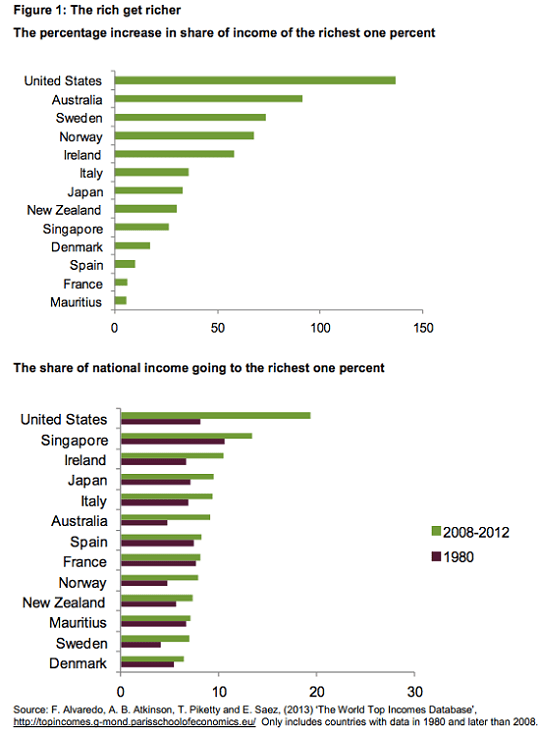
The inequality gap: Income inequality, which is the source of socio-political strife, is one of the United States’ major challenges, spanning over 50 years. Inequality, now compounded with the COVID-19 pandemic, is worsening, affecting certain racial groups — African Americans, in particular — and women, more than others.

According to a study conducted by the Pew Research Center in February 2020, “income inequality in the US is the highest of all the G7 nations,” a major concern for 78 percent of Democrats and 41 percent of Republicans.

Political polarization: The large gap between the wealthy few and the impoverished many is not the only schism creating a wedge in American society. Political polarization — although, interestingly, it does not always express itself based on rational class demarcation — is a major problem in the U.S.

Both Republicans and Democrats have succeeded in making their case to enlist the support of certain strata of American society, while doing very little to fulfill the many promises the ruling establishments of these two camps often make during election campaigns.

For example, Republicans use a populist political discourse to reach out to working-class white Americans, promising them economic prosperity. Yet there is no evidence that the lot of working-class white American families has improved under the Trump Administration.

The same is true with Democrats, who have, falsely, long situated themselves as the champions of racial justice and fairer treatment of undocumented immigrants.

Militarization of society: With socio-economic inequality and political polarization at their worst, trust in democracy and the role of the state to fix a deeply flawed system is waning. This lack of trust in the central government spans hundreds of years, thus, the constant emphasis on the Second Amendment of the U.S. Constitution regarding “the right of the people to keep and bear arms.”

Indeed, U.S. society is one of the most militarized in the world. According to the FBI, two-thirds of all local terrorism in the US is carried out by right-wing militias, who are now more emboldened and angrier than ever before. According to an October Southern Poverty Law Center report, there are about 180 active anti-government paramilitary groups in the U.S.

For the first time in many years, talks of another “American Civil War” have become a daily discussion point in mainstream media.

It would be entirely unrealistic to imagine that democracy in the U.S. will be restored as a result of any given election. Without a fundamental shift in U.S. politics that confronts the underlying problems behind the socio-economic inequality and political polarization, the future carries yet more fragmentation and, quite possibly, worsening violence.

The coming weeks and months are critical in determining the future direction of American society. Alas, the current indicators are hardly promising.

As Millions Face Eviction, Senate Proposes Nearly $700 Billion for Pentagon

By John Vibes

Source: Activist Post

As millions face eviction and line up at food banks throughout the country, waiting for another stimulus payment that will seemingly never come, the Senate Appropriations Committee is proposing a $696 billion Pentagon spending bill for the upcoming fiscal year.

According to The Hill, The Senate’s version of the fiscal 2021 Pentagon spending bill was released Tuesday along with 11 other annual appropriations bills.

Both Senate Majority Leader Mitch McConnell and House Speaker Nancy Pelosi have said they want to pass an omnibus spending bill, and they will likely agree on the military budget, as Democrats overwhelmingly vote in favor of military spending when they have the opportunity, just as Republicans do.

In July, the House passed a $694.6 billion bill for Pentagon spending in July. The Senate version released this week includes $627.2 billion for the base defense budget and $68.7 billion for a war fund known as the Overseas Contingency Operations account, and also includes a 3% pay raise for troops.

However, the final Senate version of the bill left out a few causes that were championed by progressive Democrats, including the renaming of military bases that are named after Confederate leaders, and measures that were intended to block defense funds from being used on the border wall.

The Senate’s bill would also fund 96 F-35 fighter jets, which is an increase over the original bill and over the administration’s initial request. In addition to the fighter jets, the bill also gives the Pentagon $21.35 billion to build nine new battle force ships.

Meanwhile, millions of Americans are unemployed and many are now starting to get evicted. According to the most recent numbers there are 6.8 million, and this only accounts for the people officially collecting unemployment, this does not include the number of people who are not qualified for unemployment, or people who have been out of the work force for an extended length of time. The unemployment rate dropped slightly over the past two months, but is still at record highs.

According to estimates by the Princeton University Eviction Lab, 3.6 million people face eviction cases in a typical year. This year, up to 8 million people could be facing eviction, according to a tracking tool developed by the global advisory firm Stout Risius and Ross, which works with the nonprofit National Coalition for a Civil Right to Counsel.

It is also estimated that up to $32 billion in back rent will be due for tenants across the US once bans on evictions are lifted. Despite bans on evictions, many landlords in the US are still kicking people out of their homes, and in some cases, they have even challenged the eviction bans in court.

The people who are struggling financially in the US can’t count on much help from the government. Even the prospects of a new stimulus check are uncertain, and a payment will not be coming until next year at the very earliest, if it comes at all. Yet, the Pentagon is still able to claim nearly $700 billion in taxpayer money.


What We Don’t Elect Matters Most: Central Banking and the Permanent Government

By Charles Hugh Smith

Source: Of Two Minds

We’re Number One in wealth, income and power inequality, yea for the Fed and the Empire!

If we avert our eyes from the electoral battle on the blood-soaked sand of the Coliseum and look behind the screen, we find the powers that matter are not elected: our owned by a few big banks Federal Reserve, run by a handful of technocrats, and the immense National Security State, a.k.a. the Permanent Government. These entities operate the Empire which hosts the electoral games for the entertainment and distraction of the public.

The governance machinery controlled by elected representatives is tightly constrained in what it can and cannot do. It can’t do anything to stop the debasement of the nation’s currency, which is totally controlled by the Politburo of the Fed, nor can it do much to limit the Imperial Project, other than feel-good PR bits here and there.

The president wields vast powers but even the president is powerless to stop the debasement of the nation’s currency and the enrichment of bankers, financiers, corporations, etc., who fund the campaigns of the gladiators, oops I mean politicians.

If we set aside the term Deep State and simply call it the unelected machinery of governance (Permanent Government), we get a clear picture of its scope and power. Presidents, senators and representatives come and go, but the machinery of Empire grinds on, decade after decade.

A great many people and places in America don’t matter to the Fed or the Permanent Government, and so they’ve been abandoned to their fates. The darlings of the Fed and Empire are clustered in Silicon Valley and other urban hubs where the technological and financial machinery of global hegemony are fabricated and maintained.

Those far from these centers of banking, finance and Big Tech have little to no stake as owners of meaningful capital. All they have to sell is their labor, and that’s been losing purchasing power for decades as financialization and globalization have stripmined rural America and enriched the bankers, financiers and speculators who serve the Fed and unelected Permanent Government.

The Fed and the Permanent Government have been very, very good to the few at the expense of the many. Look at the chart below at America’s complete dominance when measured by the soaring wealth of its top 1% power elite: We’re Number One in wealth, income and power inequality, yea for the Fed and the Empire! And we don’t have to elect them–they elect themselves.


American Requiem

However inequitable its bias, capitalist democracy at least offered the possibility of incremental and piecemeal reform. Now it is a corpse.

By Chris Hedges

Source: ScheerPost.com

Well, it’s over. Not the election. The capitalist democracy. However biased it was towards the interests of the rich and however hostile it was to the poor and minorities, the capitalist democracy at least offered the possibility of incremental and piecemeal reform. Now it is a corpse. The iconography and rhetoric remain the same. But it is an elaborate and empty reality show funded by the ruling oligarchs — $1.51 billion for the Biden campaign and $1.57 billion for the Trump campaign — to make us think there are choices. There are not. The empty jousting between a bloviating Trump and a verbally impaired Joe Biden is designed to mask the truth. The oligarchs always win. The people always lose. It does not matter who sits in the White House. America is a failed state.

“The American Dream has run out of gas,” wrote the novelist J.G. Ballard. “The car has stopped. It no longer supplies the world with its images, its dreams, its fantasies. No more. It’s over. It supplies the world with its nightmares now.”

There were many actors that killed America’s open society. The corporate oligarchs who bought the electoral process, the courts and the media, and whose lobbyists write the legislation to impoverish us and allow them to accumulate obscene amounts of wealth and unchecked power. The militarists and war industry that drained the national treasury to mount futile and endless wars that have squandered some $7 trillion and turned us into an international pariah. The CEOs, raking in bonuses and compensation packages in the tens of millions of dollars, that shipped jobs overseas and left our cities in ruins and our workers in misery and despair without a sustainable income or hope for the future. The fossil fuel industry that made war on science and chose profits over the looming extinction of the human species. The press that turned news into mindless entertainment and partisan cheerleading. The intellectuals who retreated into the universities to preach the moral absolutism of identity politics and multiculturalism while turning their backs on the economic warfare being waged on the working class and the unrelenting assault on civil liberties. And, of course, the feckless and hypocritical liberal class that does nothing but talk, talk, talk.

If there is one group that deserves our deepest contempt it is the liberal elites, those who posture as the moral arbiters of society while abandoning every value they purportedly hold the moment they become inconvenient. The liberal class, once again, served as pathetic cheerleaders and censors for a candidate and a political party that in Europe would be considered on the far-right. Even while liberals were being ridiculed and dismissed by Biden and by the Democratic Party hierarchy, which bizarrely invested its political energy in appealing to Republican neocons, liberals were busy marginalizing journalists, including Glenn Greenwald and Matt Taibbi, who called out Biden and the Democrats. The liberals, whether at The Intercept or The New York Times, ignored or discredited information that could hurt the Democratic Party, including the revelations on Hunter Biden’s laptop. It was a stunning display of craven careerism and self-loathing.

The Democrats and their liberal apologists are, the election has illustrated, oblivious to the profound personal and economic despair sweeping through this country. They stand for nothing. They fight for nothing. Restoring the rule of law, universal health care, banning fracking, a Green New Deal, the protection of civil liberties, the building of unions, the preservation and expansion of social welfare programs, a moratorium on evictions and foreclosures, the forgiveness of student debt, stiff environmental controls, a government jobs program and guaranteed income, financial regulation, opposition to endless war and military adventurism were once again forgotten. Championing these issues would have resulted in a Democratic Party landslide. But since the Democratic Party is a wholly owned subsidiary of corporate donors, promoting any policy that might foster the common good, diminish corporate profits and restore democracy, including imposing campaign finance laws, was impossible. Biden’s campaign was utterly bereft of ideas and policy issues, as if he and the Democrats could sweep the elections by promising to save the soul of America. At least the neofascists have the courage of their demented convictions.

The liberal class functions in a traditional democracy as a safety valve. It makes piecemeal and incremental reform possible. It ameliorates the worst excesses of capitalism. It proposes gradual steps towards greater equality. It endows the state and the mechanisms of power with supposed virtues. It also serves as an attack dog that discredits radical social movements. The liberal class is a vital component within the power elite. In short, it offers hope and the possibility, or at least the illusion, of change.

The surrender of the liberal elite to despotism creates a power vacuum that speculators, war profiteers, gangsters and killers, often led by charismatic demagogues, fill. It opens the door to fascist movements that rise to prominence by ridiculing and taunting the absurdities of the liberal class and the values they purport to defend. The promises of the fascists are fantastic and unrealistic, but their critiques of the liberal class are grounded in truth. Once the liberal class ceases to function, it opens a Pandora’s box of evils that are impossible to contain.

The disease of Trumpism, with or without Trump, is, as the election illustrated, deeply embedded in the body politic. It is an expression among huge segments of the population, taunted by liberal elites as “deplorables,” of a legitimate alienation and rage that the Republicans and the Democrats orchestrated and now refuse to address. This Trumpism is also, as the election showed, not limited to white men, whose support for Trump actually declined.

Fyodor Dostoevsky saw the behavior of Russia’s useless liberal class, which he satirized and excoriated at the end of the 19th century, as presaging a period of blood and terror. The failure of liberals to defend the ideals they espoused inevitably led, he wrote, to an age of moral nihilism. In Notes From Underground, he portrayed the sterile, defeated dreamers of the liberal class, those who hold up high ideals but do nothing to defend them. The main character in Notes From Underground carries the bankrupt ideas of liberalism to their logical extreme. He eschews passion and moral purpose. He is rational. He accommodates a corrupt and dying power structure in the name of liberal ideals. The hypocrisy of the Underground Man dooms Russia as it now dooms the United States. It is the fatal disconnect between belief and action.

“I never even managed to become anything: neither wicked nor good, neither a scoundrel nor an honest man, neither a hero nor an insect,” the Underground Man wrote. “And now I am living out my life in my corner, taunting myself with the spiteful and utterly futile consolation that it is even impossible for an intelligent man seriously to become anything, and only fools become something. Yes, sir, an intelligent man of the nineteenth century must be and is morally obliged to be primarily a characterless being; and a man of character, an active figure – primarily a limited being.”

The refusal of the liberal class to acknowledge that power has been wrested from the hands of citizens by corporations, that the Constitution and its guarantees of personal liberty have been revoked by judicial fiat, that elections are nothing more than empty spectacles staged by the ruling elites, that we are on the losing end of the class war, has left it speaking and acting in ways that no longer correspond to reality.

The “idea of the intellectual vocation,” as Irving Howe pointed out in his 1954 essay This Age of Conformity, “the idea of a life dedicated to values that cannot possibly be realized by a commercial civilization — has gradually lost its allure. And, it is this, rather than the abandonment of a particular program, which constitutes our rout.” The belief that capitalism is the unassailable engine of human progress, Howe wrote, “is trumpeted through every medium of communication: official propaganda, institutional advertising and scholarly writings of people who, until a few years ago, were its major opponents.”

“The truly powerless people are those intellectuals — the new realists — who attach themselves to the seats of power, where they surrender their freedom of expression without gaining any significance as political figures,” Howe wrote. “For it is crucial to the history of the American intellectuals in the past few decades — as well as to the relationship between ‘wealth’ and ‘intellect’ — that whenever they become absorbed into the accredited institutions of society they not only lose their traditional rebelliousness but to one extent or another they cease to function as intellectuals.” 

Populations can endure the repression of tyrants, as long as these rulers continue to effectively manage and wield power. But human history has amply demonstrated that once those in positions of power become redundant and impotent, yet retain the trappings and privileges of power, they are brutally discarded. This was true in Weimar Germany. It was true in the former Yugoslavia, a conflict I covered for The New York Times. 

The historian Fritz Stern in The Politics of Cultural Despair, his book on the rise of fascism in Germany, wrote of the consequences of the collapse of liberalism. Stern argued that the spiritually and politically alienated, those cast aside by the society, are prime recruits for a politics centered around violence, cultural hatreds and personal resentments. Much of this rage, justifiably, is directed at a liberal elite that, while speaking the “I-feel-your-pain” language of traditional liberalism, sells us out.

“They attacked liberalism,” Stern writes of the fascists emerging at the time in Germany, “because it seemed to them the principal premise of modern society; everything they dreaded seemed to spring from it; the bourgeois life, Manchesterism, materialism, parliament and the parties, the lack of political leadership. Even more, they sense in liberalism the source of all their inner sufferings. Theirs was a resentment of loneliness; their one desire was for a new faith, a new community of believers, a world with fixed standards and no doubts, a new national religion that would bind all Germans together. All this, liberalism denied. Hence, they hated liberalism, blamed it for making outcasts of them, for uprooting them from their imaginary past, and from their faith.”

We are in for it. The for-profit health care system, designed to make money — not take care of the sick — is unequipped to handle a national health crisis. The health care corporations have spent the last few decades merging and closing hospitals, and cutting access to health care in communities across the nation to increase revenue — this, as nearly half of all front-line workers remain ineligible for sick pay and some 43 million Americans have lost their employee-sponsored health insurance. The pandemic, without universal health care, which Biden and the Democrats have no intention of establishing, will continue to rage out of control. Three hundred thousand Americans dead by December. Four hundred thousand by January. And by the time the pandemic burns out or a vaccine becomes safely available, hundreds of thousands, maybe a few million, will have died.

The economic fallout from the pandemic, the chronic underemployment and unemployment — close to 20 percent when those who have stopped looking for work, those furloughed with no prospect of being rehired and those who work part-time but are still below the poverty line are included in the official statistics — will mean a depression unlike anything we have seen since the 1930s. Hunger in US households has already tripled since last year. The proportion of US children who are not getting enough to eat is 14 times higher than last year. Food banks are overrun. The moratorium on foreclosures and evictions has been lifted while over 30 million destitute Americans face the prospect of being thrown into the street.

There is no check left on corporate power. The inevitable social unrest will see the state, no matter who is in the White House, use its three principle instruments of social control — wholesale surveillance, the prisons and militarized police — buttressed by a legal system that routinely revokes habeas corpus and due process, to ruthlessly crush dissent. People of color, immigrants and Muslims will be blamed and targeted by our native fascists for the nation’s decline. The few who continue in defiance of the Democratic Party to call out the crimes of the corporate state and the empire will be silenced. The sterility of the liberal class, serving the interests of a Democratic Party that disdains and ignores them, fuels the widespread feelings of betrayal that saw nearly half the voters support one of the most vulgar, racist, inept and corrupt presidents in American history. An American tyranny, dressed up with the ideological veneer of a Christianized fascism, will, it appears, define the empire’s epochal descent into irrelevance.

Saturday Matinee: Sorry We Missed You

“Sorry We Missed You”: Ken Loach Exposes the Holes in the Gig Economy

By Chuck Collins

Source: CounterPunch

Director Ken Loach has done it again.  “Sorry We Missed You” is a family drama infused with a searing look at life in the “gig economy” with a frayed social safety net. Like his previous film, “I, Daniel Blake,” this movie is about working class people maintaining their dignity and humanity in the face of government austerity, privatization, and corporate greed.

“Sorry We Missed You” was just released in the U.S. through affiliated independent theaters, such as our Boston-area Coolidge Corner.  A portion of the ticket price through virtual screenings support these theaters.

In the context of a pandemic, “Sorry” connects us to the frontline workers delivering packages and caring for the elderly and disabled — workers who are grossly underpaid while being at greatest risk.

Set in Newcastle, UK, the film takes its name from the package delivery slip that Ricky, the father in a family of four, leaves when no one is home to sign for a package.

Like most workers in the U.S. and UK, Ricky and his spouse Abbie are still struggling to get out of debt a decade after the 2008 economic meltdown. Abbie works as a home care nurse, hopping buses between visits to up to eight patients a day. Ricky takes a job as a driver with a package delivery service. Both work hard and with integrity. Abbie says she cares for her patients “how she’d like people to treat her own mother.”

Like workers at Uber, DoorDash, and other similar delivery services, Ricky’s employment status is in the limbo between employee and independent contractor.  Maloney, the boss man who manages the package distribution facility, makes it clear: Ricky isn’t an employee, but a “franchisee,” a self-employed delivery driver. This status requires him to take on all the risks, including purchasing a van, leasing a delivery scanner, and toiling unlimited hours. The scanner serves as the symbol of the surveillance economy that enables the company to monitor Ricky’s every turn. Yet the company also fines him for late deliveries and, when robbers smash Ricky’s delivery scanner, they assess him a £1,000 charge.

Ricky and Abbie attempt to mind their two children, Seb and Lisa Jane, often via phone and text. The children absorb the stresses of their parents, who work 12 to 16 hour days to survive.

Director Loach balances a family story while dramatizing the structural forces that drive the gig economy and pit workers against each other. When one delivery driver struggles with family issues, the boss Maloney offers his route up to other drivers. Breaching the thin whisper of solidarity between the drivers, Ricky takes the other driver’s more lucrative route. Meanwhile, one of Abbie’s nursing patients shares photos and stories from her struggles as a labor union activist, a reminder of the past solidarity that existed among workers. “What happened to the eight-hour day?” she asks.

Maloney celebrates his own tough-guy unwillingness to bend to meet Ricky’s need for an emergency day off, saying the “shareholders of the trucking depot should build a [expletive] statue of me here.”  Maloney also blames the customers, saying to Ricky, “do any of them ask you how you are? They just want their package delivered on time for as cheap as possible.” We have met the enemy, and it is in part the consumer who expects to pay less and get it now, with no understanding of the social costs of convenience.

In the midst of the Covid-19 pandemic, we are more dependent than ever on those who drive the delivery trucks, who bring the packages, who stock the shelves, and attend to those in need.

“Sorry We Missed You” dramatizes why we need a system where all workers have universal health insurance, living wages, and paid family leave. And we need stronger protections against employers who restructure their enterprises to extract more wealth, while shifting costs on to workers and the rest of us.

Watch the full film on Kanopy.

Lords of Misrule: UK Elites and the Rise of Global Feudalism

By Chris Floyd

Source: Empire Burlesque

I darkly suspect that the UK is entering a long winter of discontent and widespread upheaval, which will likely end with the replacement of the hapless opportunist Boris Johnson by someone even worse: the hardcore, inhumane, hard-right true believer Michael Gove, with the equally inhumane, sinister crank Dom Cummings still running the show. (Cummings, remember, has long been Gove’s man, not Johnson’s.) Together they will use the chaos and suffering to keep pushing their brutal agenda of “disruption” and “reform” to destroy the ability of government to act for the greater common good. Instead they will continue turning over its functions to cronies in the private sector, who will drain the Treasury in corrupt deals while providing degraded services – or none at all – as we have seen in almost every case of “privatisation” over the past decades and especially during the pandemic.

Gove and Cummings are part of a broader rightwing movement across the world, which has for decades been funded with unimaginable amounts of money (almost always “dark money,” hidden and laundered through cut-outs). These extremist ideologues believe that government has only one legitimate function: enhancing the power and privilege of an elite that rules by the “right” of its inherent superiority: either its “superior genes” (as Trump – and Cummings’ lordly father-in-law – openly say) or a putative in-born “superior intellect” (as Dom postulates, ludicrously including himself among that number). Money is the main signifier of inherent worth in this barbaric belief system; and being unaccountable to the laws and regulations that restrict the grubby rabble is one of the chief privileges of the elect.

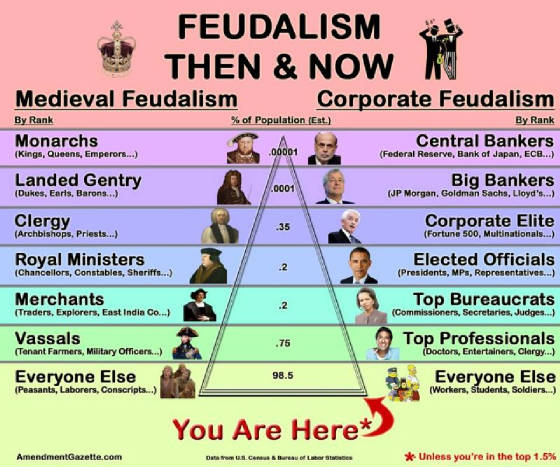
In essence, it’s a form of high-tech feudalism, where baronal power centers (oligiarchs, corporations) hold sway over weak and nominal national governments. If you read what the right-wing think tanks (often American in origin) with which Gove and Cummings have long been associated are ACTUALLY saying in the dense, dull prose of their innumerable “policy papers,” you’ll see that this characterization of their ideology and their aims is no exaggeration. It’s an ancient evil – brutal, rapacious rule by unaccountable elites – dressed up in modern form and cloaked in the cynical perversion of rhetoric about “rights” and “freedom” and “sovereignty” and “modernization” and “AI,” etc. They are heartless liars in pursuit of loot and power, and they literally, demonstrably, do not care who lives or dies, as long as they get what they want.

Until we recognize this, until we stop treating these radical, death-dealing, society-wrecking extremists as normal politicians working within the system, we cannot effectively confront them and stop their depredations. They will continue to use the system itself to hollow out government and society until there is nothing left but their little clique, sealed in sumptuous fortresses behind masses of armed guards, lording it over the ruins.