Are we witnessing the start of some sort of a mass awakening in the Western world? For years, I have been writing about the extremely complex systems that are designed to shape and control what we think. Today, the vast majority of the “news” and “entertainment” that most of us consume is controlled by just a very small handful of immensely powerful corporations. And of course those corporations are ultimately owned and controlled by the elite of the world. To a very large degree, the elite have been able to determine what we focus on, what we think about current events, and how we feel about the world around us. For such a long time, most of the population would take whatever narratives that were pushed upon them by their corporate overlords as the gospel truth, and that always greatly frustrated me. Fortunately, there are indications that times are changing.
In order for any society to function effectively, there must be a high level of trust.
Unfortunately for the elite, we simply do not trust them anymore.
Trust in our politicians has fallen to an all-time low.
Trust in the media has fallen to an all-time low.
Trust in our corporations has fallen to an all-time low.
Trust in our health care system has fallen to an all-time low.
Trust in our education system has fallen to an all-time low.
Trust in the tech industry has fallen to an all-time low.
We no longer are buying into the crap that they keep shoveling our way.
And that is a really, really good thing.
It is morally wrong for them to try to control what we think. It is absolutely imperative that we all learn to think for ourselves, because that is the only way that we will ever be truly free.
I have been writing about this stuff for years and years, and a number of recent trends have given me hope that people are starting to wake up on a widespread basis. The following are 10 promising signs that the insidious mind control matrix the elite have created is starting to crumble…
#1 According to a recent Gallup survey, only 16 percent of U.S. adults have “a great deal” or “quite a lot” of confidence in newspapers and only 11 percent of U.S. adults have “a great deal” or “quite a lot” of confidence in television news.
#2 All over the Internet I am seeing article after article speaking out against the World Economic Forum. That is an incredibly hopeful sign.
#3 In the Netherlands, a new government plan would “cut fertilizer use and reduce livestock numbers so drastically that it will force many farms out of business”. This plan is deeply evil, but the massive farmer protests that have been sparked as a result are a really beautiful thing.
#4 After being arrested, a British man was told this: “Someone has been caused anxiety based on your social media post. And that is why you’re being arrested”. But the good news is that there has been a tremendous backlash on social media and so far the video of his arrest has already been viewed more than 2 million times.
#5 As more people on the West Coast wake up, the exodus out of the state of California is rapidly becoming a stampede.
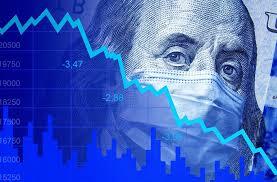
#6 Despite all of the spin from the Biden administration, 66 percent of Americans say that they believe that we are either in a recession or a depression right now.
#7 Joe Biden’s overall approval rating has fallen to an all-time low of 36 percent.
#8 Joe Biden’s economic approval rating has fallen to an all-time low of 30 percent.
#9 A recent CNN poll discovered that a whopping 75 percent of Democratic and Democratic-leaning voters actually want their party to nominate someone other than Biden in 2024.
#10 According to a recent Pew Research survey, only 24 percent of U.S. adults are satisfied with the current state of the country.
Almost all of us can see that our society is on the wrong track, and that is the first step in getting back on the right track.
As time rolls along, I believe that more and more of us will wake up.
And in the end I believe that the current “world order” that the Western elite have tried so hard to establish will fall.
The shortest day on record has been broken by the planet Earth. On June 29, 2022, the planet completed its entire rotation in just 1.59 milliseconds, or slightly more than one thousandth of a second, less time than it typically takes for a 24-hour rotation.
Recently, the Earth has been moving quicker. Since the 1960s, 2020 marked the shortest month on record for the planet. On July 19 of that year, 1.47 milliseconds shorter than a typical 24-hour day, scientists recorded the shortest day so far.
Are the days being shortened?
I often tell people that it feels like the days are going by faster than ever, but I thought that it was just my imagination.
I have been told that as we get older it can seem like time is passing more quickly, and without a doubt 2022 seems like it is the fastest year yet.
It is hard to believe that the beginning of August is already here.
2023 will arrive before we know it, and I believe that 2023 will be a year that changes everything.
I know that there are a lot of bad things that are happening right now, and a lot of my articles tend to focus on those bad things.
But the truth is that there are a lot of good things happening too.
In fact, there is no other time in all of human history that I would have rather lived than right now.
It is when times are the darkest that the greatest heroes are needed, and the years ahead will provide plenty of opportunities for you to be the kind of hero that you were always meant to be.
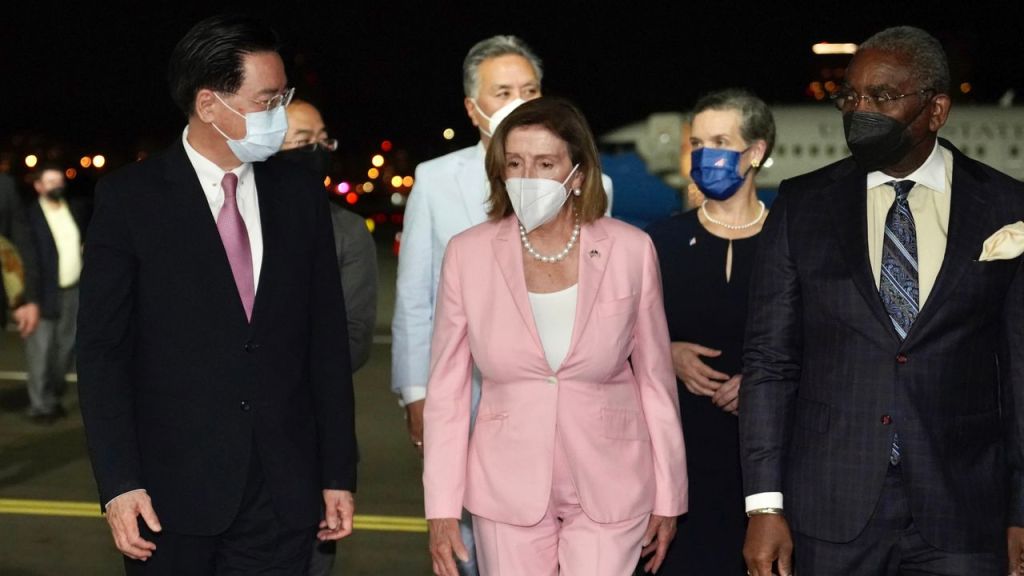
On Tuesday in response to Pelosi’s affront to Chinese sovereignty, the PLA began conducting live-fire maritime and aerial drills around Taiwan — surrounding the island.
According to China’s Global Times, they feature “J-20 stealth fighter jets and test-firing of conventional missiles…with additional important drills announced for days to come.”
Beginning moments after Pelosi arrived in Taipei, they’re ongoing in waters and airspace “north, southwest and southeast of the island…”
They include “live-fire shooting…in the Taiwan Strait and…missile test launches…east of the island.”
While ongoing for a number of days, “Taiwan will be surrounded by PLA drills in five directions.”
Drills are likely designed to develop PLA capabilities to seize the island militarily if unable to do it peacefully.
According to PLA Eastern Theater Command deputy chief of staff, Gu Zhong, as reported by GT:
Drills involve “courses like joint blockade, sea assault, land attack and air superiority seizing plus live-fire shooting of precision weapons.”
They’re “comprehensively test(ing) the performance of weapons and equipment as well as the troops’ joint operational capabilities, making preparations for all crises.”
Separately, Xinhua reported that live-fire drills are being conducted in six maritime and air space areas around Taiwan — north, northeast, east, south, southwest and northwest of the island.
Entry into areas where they’re ongoing is prohibited.
Last Sunday, China’s Liaoning aircraft carrier embarked from its Qingdao homeport to waters near Taiwan — accompanied by “a Type 075 amphibious assault ship.”
Chinese military expert, Song Zhongping, said the purpose of ongoing drills is to enhance the PLA’s military preparedness in light of Pelosi’s unacceptable visit to Taiwan.
During her meeting with Taiwan’s so-called president Tsai Ing-wen on Wednesday — in a display of imperial arrogance — Pelosi assaulted China’s sovereignty again as follows, saying:
Hegemon USA’s vow to preserve (fantasy) democracy in Taiwan and around the world (is) ironclad.”
She barely stopped short of vowing to defend the island if China uses military force to reunite it with the mainland.
In cahoots with dominant Biden regime and congressional hardliners, Pelosi is pushing things recklessly for possible direct confrontation between two nuclear powers — ones able to transform cities of targeted nations into smoldering rubble.
Indeed, hostile-to-peace-and-stability Pelosi and the Biden regime are playing with fire against Russia, China and Iran — humanity’s fate hanging in the balance.
Separately in response to Taiwan’s complicity with Pelosi’s effrontery, Beijing retaliated by suspending exports of certain food products to the island.
According to Bloomberg News, the suspension includes “some fish and fruit imports,” as well as “natural sand used in construction.”
The Financial Times said that China “suspend(ed) (imports of) 2,000 food products,” along with “suspend(ing) exports of natural sand” to Taiwan.
Beijing’s Mainland Affairs Council deputy chair, Chiu Chui-cheng, said the following:
“In the past, China hit single products from the primary sector such as specific fruit or fish.”
In “that way, (it) kept the overall macroeconomic impact on Taiwan limited but could target regions where the (ruling) Democratic Progressive party is strong.”
“But now (Beijing is) broadening this immensely as (it’s) targeting processed foods, so what’s going on is much more broad-based.
“This is probably only the beginning.”
“We are certain that (China) will further step up (its) economic coercion measures.”
According to the FT, Beijing’s suspension “cover(s) 35 categories including fish and seafood, edible oils, citrus fruits and biscuits and cakes, hitting publicly listed companies such as instant noodle and soy sauce producer Ve Wong and Chi Mei, which makes frozen foods.”
At this time, China’s likely short-term import and export suspensions are largely shots across the bow warnings to Taiwan.
Economist Ma Tieying said the following:
“What needs to be watched is whether Beijing will broaden the trade bans into the manufacturing sector, particularly semiconductors/electronics going forward.”
China is Taiwan’s largest trade partner, bilateral volume last year totaling $328.3 billion, around 52% from the island to the mainland.
Beijing relies on imports of Taiwanese semiconductors.
The island exports about one-fifth of its agricultural products to the mainland.
Chinese media reported that the country’s General Administration of Customs suspended imports of “refrigerated large-head hair-tail and frozen Japanese horse mackerel from Taiwan.”
Taiwan’s state-controlled CNA said that the mainland temporarily halted imports of from “over 100 Taiwanese food manufacturers, including the well-known brands I-Mei Foods, Wei Chuan and Kuai Kuai Co.”
According to Taiwan’s Council of Agriculture (COA):
Hundreds of temporarily “blacklisted companies include producers of tea leaves, dried fruits, honey, cocoa beans, and vegetables, as well as catches from around 700 fishing vessels.”
Separately, CNA said China largely, but not entirely, suspended imports of coffee beans, stuffed pasta and bread, health foods and supplements, baby food and formula, foods for medicinal purposes, plant based oil, candy, beverages, cereal-based products, seasonings and condiments.
Center for Counter Hegemonic Studies’ director, Tim Anderson, believes that Pelosi’s provocative visit was planned to trigger US confrontation with China in similar fashion to its proxy war on Russia, adding:
“Imagine if the Chinese military went into Puerto Rico or some other part of the US territories.”
“It’s unacceptable, and I can’t say that any good would come out of it.”
The Biden regime provoked Russia to launch its SMO in self-defense.
The US financial sector has long looted other countries. A number of participants have described the process. First a country is enticed with bribes to the leaders to take out loans that cannot be serviced or repaid. Then in comes the IMF. Austerity is imposed on the population. Public services and employment are cut to free resources for debt service, and public assets are sold to repay the loan. Living standards fall, and US corporations take over the country’s economy.
As foreign governments, having experienced or witnessed the economic carnage and fearing accountability, are less willing to be bribed into indebting their countries, American finance is now applying this technique to Americans. Contrary to the narrative in the financial press, the Federal Reserve is not raising interest rates in order to fight inflation. It is ludicrous to think that a three-quarters of one percent rise in a very low interest rate is going to have any impact on a 9.1% rate of consumer inflation or that speculation that the Federal Reserve has in mind another three-quarters of one percent possibly followed by one half of one percent comprise an anti-inflation policy. If all these increases occur, it still leaves the interest rate below the inflation rate.
Moreover, as I have previously explained, the inflation is not monetary. The higher prices are the result of supply disruptions caused by Washington’s Covid lockdowns and Russian sanctions. Production was stopped and supply chains are broken.
The Federal Reserve’s rise in interest rates is just a continuation of its policy of concentrating income and wealth in the hands of the One Percent. Quantitative Easing was the cloak for the Federal Reserve to print $8.2 trillion in new money which was directed or found its way into the prices of stocks and bonds, thus enriching the small number who own most of these financial instruments. Having maxed out this avenue of wealth concentration, the Federal Reserve is now raising interest rates in order to drive up mortgage costs to aspiring home owners. The Federal Reserve is driving individuals out of the housing market in order to free up properties for “private equity” firms to purchase homes for their rental values. That private equity firms see rental income from the existing stock of houses as the best investment opportunity tells us that the US economy has played out. When investment goes into existing assets, not into producing new assets, the economy ceases to grow.
The Obama regimes policy of bailing out the financial fraudsters responsible for the 2008 crash while foreclosing on their victims, reduced American homeownership from 70% to 63 percent. The Urban Institute predicts further declines. Today homeowners’ equity has declined from 85% after World War II to one-third, leaving two-thirds of homeowner equity in the hands of creditors. This makes it completely clear that a financialized economy indebts the people for the sake of rentier income to the One Percent. Indeed, the financialized economy created by the Federal Reserve has reimposed a class system akin to the landed British aristocracy that was overthrown. Indeed, we have an economically far worst class system. The landed British aristocrats produced food that fed the nation. The American class system produces interest and fees for the financial system.
As Michael Hudson has shown us, a no-growth economy is the end result of a financialized economy. A financialized economy is one in which consumer income is diverted by debt expansion away from the purchase of new goods and services into debt service and fees–interest on mortgages, car loans, credit card debt, student loan debt. With such a large share of household income spent on debt service, little is left for driving the economy forward.
If American economists were capable of escaping from their neoliberal junk economics, they would realize that “the world’s largest economy” they attribute to the United States is total fiction. The fact is that the United States does not have an economy. Corporations driven by Wall Street located American manufacturing in Asia so that the One Percent could benefit from higher profits from lower labor costs, while the deserted city and states had to sell their income streams, such as Chicago’s parking meter revenues for 75 years, to foreigners for one lump sum payment to solve one year’s budget crisis.
The offshoring of American production, carried out under the cloak of “globalism,” destroyed the American economy and the tax bases of cities and states. While the real economy declines, the Democrat Party, seeking permanent power, has imposed a policy of open borders for immigrant-invaders. How are these millions of peoples to support themselves in an economy whose manufacturing has been moved abroad? How can a population, deserted by American corporations, that is experiencing debt deflation absorb the costs of support and social infrastructure for tens of millions of third world immigrant-invaders?
You will never hear it from the whores in the financial press, but the United States is on the precipice of economic and social collapse. And what are the fools in Washington doing? The idiots are ginning up wars with Russia, China, and Iran.
Ramin Bahrani makes films about the American Dream as seen through the eyes of those on the margins of the increasingly unrealistic “mainstream” life: immigrants, children, transplants, or those too damaged to participate anymore (like the grizzled old dude played by Red West in “Goodbye Solo“). For the most part, these people still believe in the American Dream. They hope, strive, plan. But the system has failed them. The system is broken, and never more broken than in Bahrani’s latest film, “99 Homes,” starring Michael Shannon, Andrew Garfield and Laura Dern.
“Don’t get emotional about real estate,” warns real estate broker Rick Carver (Shannon) throughout “99 Homes,” as people are forcibly evicted after defaulting on bank payments. Carver’s may be practical advice, considering the economic crash and the housing crisis, but it is also heartless. Real estate to Rick Carver means money and opportunity; real estate to everyone else means “home,” and what is more emotional to human beings than the concept of “home”?
The film opens with a brutal eviction sequence, filmed in one take. Blood spatters the bathroom walls as the resident commits suicide, all as the sheriff’s department swoops through the house, overseen by Rick Carver, a shark-eyed man in an ill-fitting blue suit, smoking a glowing-blue electric cigarette. The story shifts to Dennis Nash (Andrew Garfield), a single dad living with his mother (Laura Dern) and his little boy Connor (Noah Lomax) in the family home. Mom works a hairdressing business out of the living room. Dennis works construction but jobs are hard to come by. Nobody’s building anymore. Bills pile up. They are in danger of losing their home. Dennis goes to court to fight for more time, he tries to get a lawyer to work pro bono.
One day, the reckoning arrives. The sheriff’s department shows up, led by Rick, to evict them. In a harrowing scene of mounting panic, Dennis and his mother protest as Rick drawls, both easily and with enormous aggression, “This isn’t your house anymore, son.” The fight that ensues is acted and filmed with almost unbearable immediacy (cinematographer Bobby Bukowski does superb work throughout). Given two minutes to vacate, the hyperventilating family pile up whatever possessions they can fit into the back of a pick-up truck, and head to a cheap motel, filled with people in the same situation. “We’ve been here two years now,” says a woman.
Dennis will do what it takes to get his home back, including accepting a job working construction for his nemesis Rick. It’s a deal with the devil, and all that that implies. Dennis gets sucked into Carver’s circle of easy cash, shady deals. Within almost no time, Dennis is on the other side of those evictions, standing in the doorway, waiting for the confused angry residents to vacate. The door-to-door sequences are masterful. These people don’t seem to be professional actors (although they may be), their reactions are so raw and real. The audience is placed in the uncomfortable position of voyeurs, eavesdroppers, on a human being’s lowest moment.
“99 Homes” operates like a thriller (from its stunning opening one-take sequence), with elements of melodrama to heighten the stakes. (Some of the melodramatic elements don’t work as well as the rest, relying, as they do, on coincidence, racing against the clock, etc; the reality is horrifying enough.) Held together with Antony Partos and Matteo Zingales’ portentous original score, thrumming underneath almost every scene, “99 Homes” represents a shift for Bahrani. His other features have been small dramas, filmed accordingly: lots of hand-held camera work and a naturalistic approach. “99 Homes” has a strong look, a bold mood, with attention-getting shots like that opener, as well as a couple of aerial shots showing homes stretched out below. From that vantage point, homes look generic. To those on the ground, of course, it’s a very different story.
Andrew Garfield, as a man who has “failed” in his duty as protector and provider, has an almost constant sense of panic throughout, catching his breath in his throat, his posture tight and alert. Tears threaten to overwhelm him, but Dennis does not have time for self-pity. Nobody does. His one goal is to get his house back, the crevasse of permanent instability opening beneath him and his family. Bahrani keeps that heat turned up in the machinations of the plot, as Carver seduces Dennis with offers of wealth (meaning, in Carver’s world, self-respect). “America doesn’t bail out losers,” Carver tells Nash. “America bails out winners.”
Michael Shannon is both ruthless and strangely tender in his seemingly irredeemable character. Carver explains his background to Dennis, his humble roots, his roofer father, his jobs in construction. Up until the crash, his job was putting people into homes. It’s not his fault that his job has now become throwing people out. Any hard economic time will create a man like Rick Carver, determined to make more money off the slump than the boom. It’s a very honest performance.
Reminiscent of the films of Jafar Panahi (which also focus on those on the margins), Bahrani’s films are a critique of the very concept of “mainstream.” If there is to be a mainstream, then the boundaries must be more inclusive. Bahrani’s films represent an urgent demand that audiences pay attention to the world and the people around them. His films insist: Look. See. Bahrani accomplishes this not by making “message” films, but by focusing on individual characters, whether it be a Pakistani former singer who now pushes a food cart in Manhattan (“Man Push Cart,”) a little Latino boy working in an auto-body shop (“Chop Shop,”) or the optimistic Senegalese-American who drives a cab and dreams of being a flight attendant (“Goodbye Solo.”) Through these characters, Bahrani critiques American life, its economics, its class divides, its assumptions and social strata. Like Panahi, he is a humanist. The dignity of the individual is all.
“99 Homes” is a ferocious excavation of the meaning of home, the desperation attached to real estate, the pride of ownership and the stability of belonging. The pace never lets up. Once a person slips below the mainstream, it is nearly impossible to gain a foothold again. These characters struggle like hell to survive.
Let’s start by stipulating the obvious: no one knows the future, and most of the guesses–oops, I mean forecasts–will be wrong. Arguing about the forecasts now won’t make any difference as to which ones are correct and which ones are wrong. Time alone will tell.
That said, here’s a scenario that fits the dynamics I see as most consequential: Core-Periphery and the demise of the waste is growth / financialization / globalization model as the reigning model of how the global economy should work.
Core-periphery dynamics are pretty simple: unraveling starts on the periphery and seeps toward the core. The core actually strengthens in the process as capital and talent seek havens where they’re treated well, and the core became the core by treating capital and talent well.
The periphery responds to the unraveling of financialization / globalization by tightening its grip on whatever capital and talent is still available, incentivizing the flight of capital and talent to the core.
A great many people think there are many core economies. In my analysis, there is only one, due to the qualifying requirements: 1) issues a reserve currency, i.e. not pegged to another currency 2) liquid global markets for securities, debt, commodities, etc., i.e. anyone anywhere can trade in size in the core markets 3) transparent market and governance mechanisms, i.e. no overnight devaluations, expropriations, capital restrictions, etc. 4) diverse economy not dependent on exports or imports for its well-being and 5) ease of flow: capital, talent, enterprises and employees all have essentially unlimited freedom of movement within the core.
We can argue about which nations qualify as core but it won’t change the outcome. Capital and talent will make their own decisions about risk, safety, exposure to devaluation and expropriation and where the odds of being treated fairly are highest. It’s a good exercise to put yourself in the shoes of a manager of a $10 billion fund and go through the decision tree of where to put this $10 billion to preserve its purchasing power first and foremost, and secondarily generate a return.
Would you really gamble $10 billion on a 15% return on the bonds of Timbukthree, whose currency has fallen 20% against the U.S. dollar this year? Or Timbukfour, which is dependent on exports of commodities in a shrinking global economy? Or Timbukfive, which is dependent on imports of commodities and exports of consumer goods in a shrinking global economy?? If you answer “yes,” you’re not actually playing like you are responsible for $10 billion.
As the periphery unravels financially, it also unravels politically and socially. Bordering states are at risk of destabilizing, and any entity with large exposure to the unraveling debt or markets starts unraveling, too. The destabilization spreads to second-tier nations whose exposure to the dynamics of unraveling are structural.
As all these dominoes fall, eventually those closest to the core also crumble, and then core itself is finally destabilized.
Humans have an interesting talent for adjusting to new circumstances, i.e. habituating to new conditions. Those households consuming 14,000 gallons of fresh water a month may well scream that they can’t possibly get by on 12,000 gallons, but then if circumstances change and all the water we have is what we can carry in buckets a kilometer over rough terrain, we find that we can live on the few gallons we can carry a kilometer.
The amount of waste in developed economies is beyond easy measure. It’s estimated 40% of all food in the U.S. is wasted. Energy, food and fresh water have been treated as if low cost and abundance were birthrights rather than brief explosions of excess. While we’re screaming about energy costs, empty buildings are brightly lit, water taps are left running and one individual per idling vehicle in a traffic jam frets about rising costs.
When the 1989 Loma Prieta earthquake closed the Bay Bridge across San Francisco Bay, the main artery between San Francisco and the East Bay, economic doom was predictably predicted. Yet people quickly managed via extra BART (subway) trains that rain beneath the Bay and carpools with four people per vehicle rather than one occupant.
Is it possible that all the predictable predictions of economic doom are somewhat exaggerated by the thrill of sensationalism and projections of past trends, as if people can’t possibly make consequential adjustments to their behaviors and consumption?
Systems have constraints, and so there are limits on what adjustments can be made without altering the structure, but in many cases, we’re far from reaching limits on basic conservation work-arounds.
Is it possible that things will prove less dire than currently expected? It seems little credence is being given to the potential to adjust to new conditions.
Is it beyond conception that the core actually strengthens for a length of time before the unraveling reaches it? In my crystal ball, it seems not just possible but likely. This will be the calm before The Tempest, when the unraveling reaches the core and structural changes are finally required.
With the recent political events involving such different parts of the world, but usually for the same reasons: popular dissatisfaction, rising prices, and the like. And these causes arise with the decision-making errors of Western leaders, who end up suppressing popular opinion, in what generates a kind of democratic government in the archetype but doesn’t really care about its people.
The most practical example arises when countries try to enter into military alliances without popular consultation as to whether the people agree with what is at stake. The Nordics in NATO were a very clear example of this.
The politicians who now manage the finances of powers within Europe were clearly not prepared for what is happening, mainly because in the global production chain, which involves Russia, now sanctioned, reflects much more on the sanctioning regional economy than on the sanctioned one. Plus it destroys on many economic fronts the Global South, which directly receives the reflections of these mistakes.
People who have been put through a bureaucracy because economic power has a lot of money and unfortunately are leading Europe into disaster, but without realizing it the entire Western world as we know it. With recent cases of foreign attempts to interfere in legitimately elected governments to try to stop the advance to the multipolar world, which at this point of the championship has no more brakes.
The recent death of Shinzo Abe, former prime minister of Japan (which until then was considered one of the safest countries in the world), proves that even a supposedly quiet and peaceful nation can be the target of serious terrorist attacks like the one mentioned, and this proves that the unipolarity system is disappearing, even if it takes some along the way, unfortunately.
The political debacle unfortunately caused by the cited mistakes of Western leaders such as the sanctions, has generated dissatisfaction to the extreme point of an assassination with a homemade artifact against a prominent leader of the Asian world (many may be wondering why in the reasoning Japan would be characterized as part of the “Western World” despite being in Asia and this is because Japanese diplomacy is strongly influenced by Washington, in which it functions as a kind of diplomacy semi-colonized by the Americans).
It was not avoidable, but it could be delayed
The multipolar world was going to emerge one way or another, but the mistakes of the Western leaders accelerated a process that would still take some years, and it can’t cope since it governs for less than 1 billion people (G7 population). And Operation Z in Ukraine was the trigger for a lack of diplomatic tact and will to war that even caused Ukraine’s allied leaders to fall, such as Boris Johnson.
The bankruptcy of Europe was also imminent, since the various economic dependencies, including on Russian gas, prove that the continent, despite being so-called First World, was unable to generate an economy based on a real production of resources. And all attempts to escape from this dependency would lead to at least 10 years of pipeline works and economic agreements-treaties between other countries and them.
So it’s not like it was easy either to have prevented what was predestined to happen, but it could have been delayed if there was the right diplomacy, since the war was avoidable. But how? Simple. I’ll explain.
What was Putin’s key argument? “Ukraine cannot join NATO!”
And what could the West have done? Generated a document in multilateral coordination with the appropriate entities recognizing that the security of Russia, a member of the UN Security Council, was an important issue and Ukraine would not join the Atlanticist military alliance. Or: they could put 50,000 or 100,000 troops inside Kiev to stand up to the Russians since Biden shortly before the Special Military Operation began, acknowledged that Putin would “invade Ukraine,” so they knew the risks. But they did neither.
They wanted this war but it is not going as planned because the political debacle is happening, with the leaders who support the Atlanticist platforms falling away little by little, leaving the enthusiasts of the multipolar world standing like Putin and Xi Jinping in their proper nuclear strongholds.
Moreover, it is interesting to note how parts of the Global South opposed the various diplomatic and economic sanctions on Russia, showing that they were unwilling to continue functioning as American semi-colonies in diplomatic and other matters.
It was inevitable that a totally new world would emerge out of the totally destroyed old world, because that is the natural way of what comes after destruction: reconstruction or new construction. And that is what is happening to the world at present, in that we see prominent leaders being murdered in the open or resignations due to inability of governance, clear signs of destruction.
And after the destruction will come the construction, of which we don’t know what it will look like yet, but the first bricks have already been laid.
The BRICS+ is the only economic bloc capable of guiding the birth of the multipolar world
The BRICS+ unlike any grouping of countries into an economic bloc, has no regional or cultural limitations. On the contrary, countries from all over the world that are so different are aligned in the same multipolar thinking there, in what is seen different if you consider the G7 or NAFTA, which are limiting organizations in their birth, since they don’t carry the discourse of multipolarism ingrained, besides using destabilizing agents such as NATO for a kind of stick to impose their policies on sovereign countries.
The ability to unite so many enthusiasts of the multipolar world will be the driving force of the industrial revolution that we will see happen, which will bring the world into a state of bonanza again because even war will end one day and sanctions will be seen as useless because integration has already begun to happen. Currency baskets are being considered within the BRICS+ to escape the American monetary hegemony, which is a BIG thing!
So, to close the reasoning, I conclude that the multipolar world was something that was inevitably going to happen, but it was accelerated because of the mistakes of its enemies.
Guilherme Wilbert is a law graduate interested in geopolitics and international law.
The North Atlantic Treaty Organization (NATO), and the arms industry that depends on it for billions in profits, has become the most aggressive and dangerous military alliance on the planet. Created in 1949 to thwart Soviet expansion into Eastern and Central Europe, it has evolved into a global war machine in Europe, the Middle East, Latin America, Africa and Asia.
NATO expanded its footprint, violatingpromises to Moscow, once the Cold War ended, to incorporate 14 countries in Eastern and Central Europe into the alliance. It will soon add Finland and Sweden. It bombed Bosnia, Serbia and Kosovo. It launched wars in Afghanistan, Iraq, Syria and Libya, resulting in close to a million deaths and some 38 million people driven from their homes. It is building a military footprint in Africa and Asia. It invited Australia, Japan, New Zealand and South Korea, the so-called “Asia Pacific Four,” to its recent summit in Madrid at the end of June. It has expanded its reach into the Southern Hemisphere, signing a military training partnership agreement with Colombia, in December 2021. It has backed Turkey, with NATO’s second largest military, which has illegally invaded and occupied parts of Syria as well as Iraq. Turkish-backed militias are engaged in the ethnic cleansing of Syrian Kurds and other inhabitants of north and east Syria. The Turkish military has been accused of war crimes – including multiple airstrikes against a refugee camp andchemical weapons use – in northern Iraq. In exchange for President Recep Tayyip Erdoğan’s permission for Finland and Sweden to join the alliance, the two Nordic countries have agreed to expand their domestic terror laws making it easier to crack down on Kurdish and other activists, lift their restrictions on selling arms to Turkey and deny support to the Kurdish-led movement for democratic autonomy in Syria.
It is quite a record for a military alliance that with the collapse of the Soviet Union was rendered obsolete and should have been dismantled. NATO and the militarists had no intention of embracing the “peace dividend,” fostering a world based on diplomacy, a respect of spheres of influence and mutual cooperation. It was determined to stay in business. Its business is war. That meant expanding its war machine far beyond the border of Europe and engaging in ceaseless antagonism toward China and Russia.
NATO sees the future, as detailed in its “NATO 2030: Unified for a New Era,” as a battle for hegemony with rival states, especially China, and calls for the preparation of prolonged global conflict.
“China has an increasingly global strategic agenda, supported by its economic and military heft,” the NATO 2030 initiative warned. “It has proven its willingness to use force against its neighbors, as well as economic coercion and intimidatory diplomacy well beyond the Indo-Pacific region. Over the coming decade, China will likely also challenge NATO’s ability to build collective resilience, safeguard critical infrastructure, address new and emerging technologies such as 5G and protect sensitive sectors of the economy including supply chains. Longer term, China is increasingly likely to project military power globally, including potentially in the Euro-Atlantic area.”
The alliance has spurned the Cold War strategy that made sure Washington was closer to Moscow and Beijing than Moscow and Beijing were to each other. U.S. and NATO antagonism have turned Russia and China into close allies. Russia, rich in natural resources, including energy, minerals and grains, and China, a manufacturing and technological behemoth, are a potent combination. NATO no longer distinguishes between the two, announcing in its most recent mission statement that the “deepening strategic partnership” between Russian and China has resulted in “mutually reinforcing attempts to undercut the rules-based international order that run counter to our values and interests.”
On July 6, Christopher Wray, director of the FBI, and Ken McCallum, director general of Britain’s MI5, held a joint news conference in London to announce that China was the “biggest long-term threat to our economic and national security.” They accused China, like Russia, of interfering in U.S. and U.K. elections. Wray warned the business leaders they addressed that the Chinese government was “set on stealing your technology, whatever it is that makes your industry tick, and using it to undercut your business and dominate your market.”
This inflammatory rhetoric presages an ominous future.
One cannot talk about war without talking about markets. The political and social turmoil in the U.S., coupled with its diminishing economic power, has led it to embrace NATO and its war machine as the antidote to its decline.
Washington and its European allies are terrified of China’s trillion-dollar Belt and Road Initiative (BRI) meant to connect an economic bloc of roughly 70 nations outside U.S. control. The initiative includes the construction of rail lines, roads and gas pipelines that will be integrated with Russia. Beijing is expected to commit $1.3 trillion to the BRI by 2027. China, which is on track to become the world’s largest economy within a decade, has organized the Regional Comprehensive Economic Partnership, the world’s largest trade pact of 15 East Asian and Pacific nations representing 30 percent of global trade. It already accounts for 28.7 percent of the Global Manufacturing Output, nearly double the 16.8 percent of the U.S.
China’s rate of growth last year was an impressive 8.1 percent, although slowing to around 5 percent this year. By contrast, the U.S.’s growth rate in 2021 was 5.7 percent — its highest since 1984 — but is predicted to fall below 1 percent this year, by the New York Federal Reserve.
If China, Russia, Iran, India and other nations free themselves from the tyranny of the U.S. dollar as the world’s reserve currency and the international Society for Worldwide Interbank Financial Telecommunication (SWIFT), a messaging network financial institutions use to send and receive information such as money transfer instructions, it will trigger a dramatic decline in the value of the dollar and a financial collapse in the U.S. The huge military expenditures, which have driven the U.S. debt to $30 trillion, $ 6 trillion more than the U.S.’s entire GDP, will become untenable. Servicing this debt costs $300 billion a year. We spent more on the military in 2021, $ 801 billion which amounted to 38 percent of total world expenditure on the military, than the next nine countries, including China and Russia, combined. The loss of the dollar as the world’s reserve currency will force the U.S. to slash spending, shutter many of its 800 military bases overseas and cope with the inevitable social and political upheavals triggered by economic collapse. It is darkly ironic that NATO has accelerated this possibility.
Russia, in the eyes of NATO and U.S. strategists, is the appetizer. Its military, NATO hopes, will get bogged down and degraded in Ukraine. Sanctions and diplomatic isolation, the plan goes, will thrust Vladimir Putin from power. A client regime that will do U.S. bidding will be installed in Moscow.
NATO has provided more than $8 billion in military aid to Ukraine, while the US has committed nearly $54 billion in military and humanitarian assistance to the country.
China, however, is the main course. Unable to compete economically, the U.S. and NATO have turned to the blunt instrument of war to cripple their global competitor.
The provocation of China replicates the NATO baiting of Russia.
NATO expansion and the 2014 US-backed coup in Kyiv led Russia to first occupy Crimea, in eastern Ukraine, with its large ethnic Russian population, and then to invade all of Ukraine to thwart the country’s efforts to join NATO.
The same dance of death is being played with China over Taiwan, which China considers part of Chinese territory, and with NATO expansion in the Asia Pacific. China flies warplanes into Taiwan’s air defense zone and the U.S. sends naval shipsthrough the Taiwan Strait which connects the South and East China seas. Secretary of State Antony Blinken in May called China the most serious long-term challenge to the international order, citing its claims to Taiwan and efforts to dominate the South China Sea. Taiwan’s president, in a Zelensky-like publicity stunt, recently posed with an anti-tank rocket launcher in a government handout photo.
The conflict in Ukraine has been a bonanza for the arms industry, which, given the humiliating withdrawal from Afghanistan, needed a new conflict. Lockheed Martin’s stock prices are up 12 percent. Northrop Grumman is up 20 percent. The war is being used by NATO to increase its military presence in Eastern and Central Europe. The U.S. is building a permanent military base in Poland. The 40,000-strong NATO reaction force is being expanded to 300,000 troops. Billions of dollars in weapons are pouring into the region.
The conflict with Russia, however, is already backfiring. The ruble has soared to a seven-year high against the dollar. Europe is barreling towards a recession because of rising oil and gas prices and the fear that Russia could terminate supplies completely. The loss of Russian wheat, fertilizer, gas and oil, due to Western sanctions, is creating havoc in world markets and a humanitarian crisis in Africa and the Middle East. Soaring food and energy prices, along with shortages and crippling inflation, bring with them not only deprivation and hunger, but social upheaval and political instability. The climate emergency, the real existential threat, is being ignored to appease the gods of war.
The war makers are frighteningly cavalier about the threat of nuclear war. Putin warned NATO countries that they “will face consequences greater than any you have faced in history” if they intervened directly in Ukraine and ordered Russian nuclear forces to be put on heightened alert status. The proximity to Russia of U.S. nuclear weapons based in Belgium, Germany, Italy, Netherlands and Turkey mean that any nuclear conflict would obliterate much of Europe. Russia and the United States control about 90 percent of the world’s nuclear warheads, with around 4,000 warheads each in their military stockpiles, according to the Federation of American Scientists.
President Joe Biden warned that the use of nuclear weapons in Ukraine would be “completely unacceptable” and “entail severe consequences,” without spelling out what those consequences would be. This is what U.S. strategists refer to as “deliberate ambiguity.”
The U.S. military, following its fiascos in the Middle East, has shifted its focus from fighting terrorism and asymmetrical warfare to confronting China and Russia. President Barack Obama’s national-security team in 2016 carried out a war game in which Russia invaded a NATO country in the Baltics and used a low-yield tactical nuclear weapon against NATO forces. Obama officials were split about how to respond.
“The National Security Council’s so-called Principals Committee—including Cabinet officers and members of the Joint Chiefs of Staff—decided that the United States had no choice but to retaliate with nuclear weapons,” Eric Schlosser writes in The Atlantic. “Any other type of response, the committee argued, would show a lack of resolve, damage American credibility, and weaken the NATO alliance. Choosing a suitable nuclear target proved difficult, however. Hitting Russia’s invading force would kill innocent civilians in a NATO country. Striking targets inside Russia might escalate the conflict to an all-out nuclear war. In the end, the NSC Principals Committee recommended a nuclear attack on Belarus—a nation that had played no role whatsoever in the invasion of the NATO ally but had the misfortune of being a Russian ally.”
The Biden administration has formed a Tiger Team of national security officials to run war games on what to do if Russia uses a nuclear weapon, according to The New York Times. The threat of nuclear war is minimized with discussions of “tactical nuclear weapons,” as if less powerful nuclear explosions are somehow more acceptable and won’t lead to the use of bigger bombs.
At no time, including the Cuban missile crisis, have we stood closer to the precipice of nuclear war.
“A simulation devised by experts at Princeton University starts with Moscow firing a nuclear warning shot; NATO responds with a small strike, and the ensuing war yieldsmore than 90 million casualties in its first few hours,” The New York Times reported.
The longer the war in Ukraine continues — and the U.S. and NATO seem determined to funnel billions of dollars of weapons into the conflict for months if not years — the more the unthinkable becomes thinkable. Flirting with Armageddon to profit the arms industry and carry out the futile quest to reclaim U.S. global hegemony is at best extremely reckless and at worst genocidal.
Like Rome, the Anglo-Saxon Empire is collapsing by its own decadence.
Sergey Lavrov used to compare the West to a wounded predator. According to him, it should not be provoked because it would be taken by madness and could break everything. It is better to accompany it to the graveyard. The West does not see it that way. Washington and London are leading a crusade against Moscow and Beijing. They roar and are ready for anything. But what can they really do?
The G7 summit in Bavaria and the Nato summit in Madrid were supposed to announce the West’s punishment of the Kremlin for its “special military operation in Ukraine”. But, if the image given was that of Western unity, the reality attests to their disconnection from reality, their loss of audience in the world and ultimately the end of their supremacy.
While the West is convinced that what is at stake is in Ukraine, the world sees it facing the “Thucydides trap” [1]. Will international relations continue to be organized around them or will they become multipolar? Will the peoples who have been subjugated until now break free and gain sovereignty? Will it be possible to think differently than in terms of global domination and to devote themselves to the development of each individual?
The West has devised a narrative of the Russian “special military operation” in Ukraine that overlooks their own actions since the dissolution of the Soviet Union. They have forgotten their signing of the Charter for European Security (also known as the OSCE Istanbul Declaration) and the way they violated it by making almost all the former members of the Warsaw Pact and some of the new post-Soviet states join one by one. They have forgotten the way they changed the Ukrainian government in 2004 and the coup d’état by which they put Banderist nationalists in power in Kiev in 2014. Having made a clean sweep of the past, they blame Russia for all the ills. They refuse to question their own actions and consider, at the time, they were forced into power. For them, their victories make the Law.
To preserve this imaginary narrative, they have already silenced the Russian media at home.
No matter how much they claim to be “democrats”, it is better to censor dissenting voices before lying.
So they approach the Ukrainian conflict, without contradiction, by convincing themselves that they have the duty to judge alone, to condemn and sanction Russia. By blackmailing small states, they managed to obtain a text from the UN General Assembly that seems to prove them right. They now plan to dismantle Russia as they did in Yugoslavia and tried to do in Iraq, Libya, Syria and Yemen (Rumsfeld/Cebrowski strategy).
To do this, they began to isolate Russia from world finance and trade. They cut off its access to the SWIFT system and Lloyds, preventing it from buying and selling as well as transferring goods. They thought this would cause its economic collapse. In fact, on June 27, 2022, Russia was unable to pay a debt of $100 million and the rating agency Mody’s declared it in default [2].
But this did not have the desired effect: everyone knows that the reserves of the Russian Central Bank are full of foreign currency and gold. The Kremlin paid the 100 million, but could not transfer it to the West because of Western sanctions. It has placed them in an escrow account where they await their debtors.
Meanwhile, the Kremlin, which is no longer paid by the West, has begun to sell its production, especially its hydrocarbons, to other buyers, particularly China. The exchanges that can no longer be made in dollars are made in other currencies. As a result, the dollars that their customers used to use are flowing back to the United States. This process had already begun several years ago. But Western unilateral sanctions have accelerated it sharply. The huge amount of dollars accumulating in the US is causing a massive price increase. The Federal Reserve is doing everything it can to share it with the eurozone. The price increase is spreading at high speed across the entire Western European continent.
The European Central Bank is not an economic development agency. Its main task is to manage inflation within the Union. it cannot slow down the sudden rise in prices at all, so it tries to use it to reduce its debt. The Member States of the Union are therefore invited to compensate for the drop in purchasing power of their “citizens” by lowering taxes and providing benefits. But this is a never-ending circle: by helping their citizens, they tie their hands and feet to the European Central Bank, they chain themselves a little more to the US debts and become even poorer.
There is no remedy for this inflation. This is the first time that the West has had to mop up the dollars that Washington has recklessly printed for years. The rise in prices in the West corresponds to the cost of imperial spending over the last thirty years. Today and only today is the West paying for its wars in Yugoslavia, Afghanistan, Iraq, Libya, Syria and Yemen.
Until now, the United States killed anyone who threatened the supremacy of the dollar. It hanged President Saddam Hussein for refusing it and looted the Iraqi Central Bank. They tortured and lynched the leader Muamar el-Gaddafi who was preparing a new pan-African currency and looted the Libyan Central Bank. The gigantic sums amassed by these oil states disappeared without a trace. The only thing we saw was GI’s taking tens of billions of dollars wrapped in large garbage bags. By excluding Russia from dollar trade, Washington itself has brought about what it so feared: the dollar is no longer the international reference currency.
The majority of the rest of the world is not blind. It has understood what is happening and has rushed to the St. Petersburg Economic Forum, then tried to register for the virtual Brics summit. They realize -a little late- that Russia launched the “Partnership of Greater Eurasia”, in 2016 and that its Foreign Minister, Sergei Lavrov, had solemnly announced it at the UN General Assembly, in September 2018 [3]. During four years, quantities of roads and railroads were built to integrate Russia into the networks of the new “Silk Roads”, land and sea, imagined by China. It was thus possible to shift the flow of goods within a few months.
The fall in the value of the dollar and the shift in the flow of goods are causing an even greater rise in energy prices. Russia, which is one of the world’s leading exporters of hydrocarbons, has seen its revenues increase considerably. Its currency, the ruble, has never been in better shape. In response, the G7 has set a price ceiling for Russian oil and gas. It ordered the “international community” not to pay more.
But Russia is obviously not going to let the West set the prices of its products. Those who do not want to pay market prices will not be able to buy them, and no customer intends to go without to please the West.
The G7 tries to organize, at least intellectually, its supremacy [4].. This no longer works. The wind has changed. The four centuries of Western domination are over.
In desperation, the G7 has committed itself to solving the global food crisis that its policies have caused. The countries concerned know what the G7 commitments mean. They are still waiting for the great African development plan and other smoke and mirrors. They know that the West cannot produce nitrogen fertilizers and that they prevent Russia from selling theirs. The G7 aid is only a band-aid to keep them waiting and not to question the sacred principles of free trade.
The only possible option for the rescue of Western domination is war. Nato must succeed in destroying Russia militarily as Rome once razed Carthage. But it’s too late: the Russian army has much more sophisticated weapons than the West. It has already experimented with them since 2014 in Syria. It can crush its enemies at any time. President Vladimir Putin exposed the staggering progress of its arsenal to his parliamentarians in 2018 [5]
The Nato summit in Madrid was a nice communication operation [6]. But it was only a swan song. The 32 member states proclaimed their unity with the despair of those who fear to die. As if nothing had happened, they first adopted a strategy to dominate the world for the next ten years, naming China’s “growth” as a concern [7]. In doing so, they admitted that their goal is not to ensure their own security, but to dominate the world. They then opened the accession process for Sweden and Finland and considered approaching China with, as a first step, the possible accession of Japan.
The only incident, which was quickly brought under control, was the Turkish pressure that forced Finland and Sweden to condemn the PKK [8]. Unable to resist, the United States dropped its allies, the Kurdish mercenaries in Syria and their leaders abroad.
With this, they decided to increase the NATO Rapid Reaction Force from 40,000 to 300,000 men, 7.5 times, and station it on the Russian border. In doing so, they have once again violated their own signature, that of the Charter for Security in Europe, by directly threatening Russia. Russia has no possibility to defend its huge borders and can only ensure its security by ensuring that no foreign force sets up a military base on its borders (scorched earth strategy). Already, the Pentagon is circulating prospective maps of the dismantling of Russia that it hopes to implement.
The former Russian ambassador to NATO and current director of Roscosmos, Dmitry Rogozin, has responded by publishing on his Telegram account the coordinates of the NATO decision-making centers, including the Madrid summit room [9]. Russia has hypersonic launchers, for the moment impossible to intercept, which can carry a nuclear warhead in a few minutes to the NATO headquarters in Brussels and the Pentagon in Washington. To avoid any misunderstanding, Sergei Lavrov specified, alluding to the Straussians, that the martial decisions of the West were not taken by the military, but by the US State Department. It would be the first target.
So the question is: will the West play for all it’s worth? Will they take the risk of a Third World War, even though it has already been lost, just to avoid dying alone?






 After the Crash