

Chicago’s Abu Ghraib

Chicago-Homan-Square-police-torture-2

By Andre Damon

Source: WSWS.org

In April 2004, the world was shocked and horrified by the release of photographs of sadistic torture carried out by US military personnel at the Abu Ghraib prison in Iraq. Detainees at the prison, most of them locked up for opposing the US military occupation, were beaten, tortured, sexually assaulted and killed.

At the time, the World Socialist Web Site explained that the crimes revealed in the photos and the psychology underlying them could be understood only in relation to the brutality of social relations in the United States, together with the dirty colonial aims of the war itself.

The WSWS further warned that “such a military, accompanied by a growing army of professional ‘civilian’ mercenaries, represents a danger not only to oppressed peoples in the Middle East, Central Asia and elsewhere, but to the democratic rights of the population in the US.”

A decade later, this assessment has been fully borne out. On Tuesday, the Guardian newspaper revealed the existence of what it describes as a “black site” on the West Side of Chicago, where police detain, beat and torture prisoners, while keeping their whereabouts secret from their families and attorneys.

The newspaper writes: “The Chicago police department operates an off-the-books interrogation compound, rendering Americans unable to be found by family or attorneys while locked inside what lawyers say is the domestic equivalent of a CIA black site.”

Among those detained at the facility was Brian Jacob Church, one of the “NATO 3” who were entrapped by Chicago police in 2012 in connection with protests against the US-led military alliance, which was meeting in Chicago.

Church was taken to the secret facility and handcuffed to a bench for 17 hours. Along with two other protestors, he was set up by police on terrorism charges and subsequently sentenced to five years in prison.

Vic Suter, another participant in the protests, said that she was taken to the facility and interrogated while shackled to a bench for eighteen hours before she was allowed to see a lawyer.

The Guardian writes that detainees taken to the facility report having been beaten and otherwise tortured by police. In 2013, one detainee was found unconscious in an interview room at the facility. He later died.

On Thursday, the Intercept corroborated the Guardian’s account, interviewing another torture victim at the facility who was handcuffed across a bench and hit in the face and groin until he agreed to provide false testimony to police.

The revelations follow the report last week by the Guardian that Richard Zuley, one of the lead torturers at the Guantanamo detention center, used similar techniques to secure false confessions from murder suspects when he was a detective with the Chicago Police Department.

Chicago has a long history of police violence. It is also the political home of Barack Obama and has been run since 2011 by Rahm Emanuel, Obama’s former White House chief of staff.

The Obama administration, far from repudiating the horrific and criminal actions of its predecessor, has deployed the apparatus of police violence ever more directly against the American people. A series of events has marked the increasingly open application within the borders of the United States of the murderous methods of the “war on terror” tested out and perfected in Afghanistan, Pakistan, Iraq, Libya, Syria, Somalia and Yemen.

· In September 2010, the Obama administration ordered raids on the homes of leaders of the Anti-War Committee and the Freedom Road Socialist Organization in Minneapolis and Chicago on charges of “providing material support to terrorism.”

· In May 2012, Chicago police arrested the “NATO 3,” charging them with conspiracy to commit terrorism.

· In March 2013, US Attorney General Eric Holder declared that the president had the right to kill American citizens without a trial or any legal due process, including within the borders of the United States.

· Just one month later, in April 2013, the city of Boston was placed under de facto martial law following the Boston Marathon bombings, with residents told to “shelter in place” while armored vehicles and helicopters patrolled the streets and police carried out warrantless house-to-house searches.

· In June 2014, the American Civil Liberties Union released a report entitled “War Comes Home: The Excessive Militarization of American Policing.” The ACLU reported that the Defense Department had transferred $4.3 billion in military hardware, including armored vehicles, helicopters, and belt-fed machine guns, to local police departments.

· In August 2014, the authorities responded to protests against the police murder of unarmed teenager Michael Brown with a military/police crackdown. Hundreds of peaceful protesters were arrested, shot with rubber bullets or exposed to tear gas, and over a dozen members of the press were detained.

The Obama administration is presently seeking a new Authorization for Use of Military Force, nominally to fight the Islamic State of Iraq and Syria (ISIS), but with no geographical boundaries defined. On Wednesday, three Brooklyn residents were arrested in connection with this new war on ISIS, clearly raising the potential for this second “war on terror” to become an occasion for police-military operations within the US “homeland.”

These developments express the growing convergence of militarism abroad with the attack on democratic rights within the US. What ties these two processes together are the class interests of the financial aristocracy and the criminal methods it employs in the defense of its wealth and power.

In pursuit of these aims, the ruling class seeks to mobilize the most backward and reactionary sections of the population, including sadistic prison guards and fascist-minded police detectives. But the ultimate responsibility for these crimes rests with forces at the highest levels of the state.

It is worth recalling that late last year the Senate released a report implicating the Bush administration in a brutal torture regime carried out at Guantanamo and CIA “black site” torture centers throughout the world. Far from anyone being held accountable for these crimes, those who ordered and carried them out have defended their actions, while the Obama administration has sought to block any prosecution of those responsible.

The actions of the ruling class express the character of American capitalism, which is based on parasitism, fraud, criminality and an economic order in deep decline. The American ruling class has no response to the crisis of its system and the inevitable growth of social opposition other than violence and repression.

Related Article:

Total Mainstream Media Blackout of Chicago Secret ‘Black Site’ at Homan Square (By Nick Bernabe, Antimedia.org)

Celluloid and Simulation

23f2cec5

By Cary Hill

Source: Moviepilot

The medium is the message. This is merely to say that the personal and social consequences of any medium – that is, of any extension of ourselves – result from the new scale that is introduced into our affairs by each extension of ourselves, or by any new technology. — Marshall McLuhan

A friend recently remarked to me that it felt increasingly more like his childhood was being repackaged and sold back to him. We were discussing the recent rash of movies, toys, and TV shows based on things from our childhood: GI Joe, Transformers, etc. New Hollywood franchises (including merchandise) are being launched from shows we watched 30 years ago, targeting our generation and our children. Nostalgia is now big business.

So I wondered: If the majority of Hollywood’s efforts are being put to resurrecting original content from decades ago in an attempt to exploit nostalgia, what happens when all new films and toys are based on prior existing material? We’ve seen Hollywood not even balk at rebooting an existing franchise (Spiderman, Batman, Teenage Mutant Ninja Turtles, The Hulk), but with the lack of original content (OC) it could reach a theoretical point — or singularity — where there is no original content to recycle.

A reboot or remake is, at the bottom level, a copy. It may have different characters or actors, but the story remains the same. Marc Webb’s The Amazing Spider-Man was essentially the same story as Sam Raimi’s Spider-Man (yes, the villain was different but it was still his origin story). And Raimi’s film was based on Stan Lee’s comic. So Webb’s film is a copy of a copy. The upcoming sequel to Webb’s film creates an extension of the copy’s copy. Even if you claim Webb’s film adapts Lee’s comic directly, it still becomes a copy of Raimi’s film which adapted the same source.

Teenage Mutant Turtles is perhaps a better example. Originally a 1980s comic by Kevin Eastman and Peter Laird, it was adapted into a cartoon series (and toys) and then a feature film. It spawned two sequels then an animated remake in 2007, and finally a live (with heavy CGI) remake last year. This order of simulacra, is chronologically correct in my generation’s minds because we lived through it. Our memory can align which came first and trace the comic book origin back to 1984. But for our children’s generation, there is merely a group of copies to choose from with no memory attached.

So if our nostalgia is packaged and sold as a reimagining, reboot, reset, or remake, there has to be something from our childhood to appeal to us. There is that OC that remember being so new, so awesome, and so…unique. If there is a lack of original content and new franchises, studios are further pushed to recycle existing properties. Recycling begets recycling as all resources are consumed to merely recreate a film or property that already exists. And as there are less and less original films, the risks becomes even greater to take a chance on something novel.

This is, of course, theoretical. I’m sure readers are quick to point out “new” franchises like The Hunger Games that are doing well at the box office. After all, these Young Adult books have become a hot-ticket item, perfect fodder for Hollywood’s most cherished demographic: the teenager. These books (and films) aren’t that revolutionary in plot or story, and seem to share a lot of common themes among them. Regardless, they can play out as something “different” for the purposes of this article. However, given their box office take, one wouldn’t be too shocked to see them remade anyway.

In our theoretical, Simulacra and Simulation-esque (The Matrix, anyone?), Baudrillard vision of Hollywood, at some point the entire palate of films would consist of pre-existing material. The 80s and 90s childhoods repackaged and consumed by the same people (now adults) and their children of the 2000s and 2010s. So in the 2020s and 2030s, can nostalgia be repackaged if there’s no OC from the 2000s/2010s to resurrect? Or do you repackage the repackage?

Baudrillard’s 3rd stage of Simulacra:

The third stage masks the absence of a profound reality, where the simulacrum pretends to be a faithful copy, but it is a copy with no original. Signs and images claim to represent something real, but no representation is taking place and arbitrary images are merely suggested as things which they have no relationship to.

What makes this even more head-spinning is the fact that film is, by definition, simulacrum. Cinema is a representation of something else (a story, or screenplay), played out by actors pretending to be characters. In a decade or two or repackaging, you would have a copy of a copy of a copy of a simulacra. The result, according to Baudrillard’s book, is a decay of meaning through each additional simulacrum.

And maybe that’s just it. Baudrillard’s decay of meaning makes the reboot less effective — people don’t bother to see a fourth or fifth reboot of Teenage Mutant Turtles. At some point it just couldn’t be that different, right? So if the reboot carries no value, it makes it unmarketable by Hollywood to sell. Perhaps at this point all reboots are done away with and there is only original content. A child born in 2030 could have three or four versions of the same franchise to watch, and with so much selection why go to the theater to see that fifth version?

Then again, the “Greatest Story Ever Told,” the birth and death of Jesus Christ, remains a popular adaptation to make over and over since Griffith’s Intolerance (1916) . If Spider-Man and other superheroes are a post-modern, cinematic parallel to Christ, then perhaps their stories too will always be remade over and over.


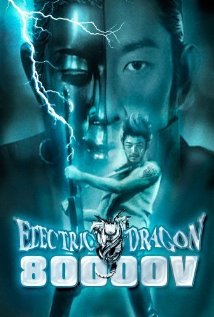
Saturday Matinee: Electric Dragon 80000 V

MV5BNDg2MDA3NTYyMl5BMl5BanBnXkFtZTcwMTc0OTIzMQ@@._V1_SY317_CR5,0,214,317_AL_


“Electrict Dragon 80,000 V” (2001) Is a hyperkinetic experimental film directed by Sogo Ishii, whose noise-punk band Mach 1.67 provided the soundtrack. Tadanobu Asano stars as Dragon Morrison, a reptile whisperer with the ability to channel electricity who confronts Thunderbolt Buddha, a TV repairman/vigilante with similar electric powers. Deciding there’s only room in the city for one electric powered superhero, they have an epic showdown on the rooftops of Tokyo. As Augustine Joyce, the YouTuber who uploaded the film accurately noted: “One of the most rocknroll movies of all times. Surreal, Bizarre and Unique… Seems this is a Cult Film.”

Jodorowsky’s new film ENDLESS POETRY (Poesía Sin Fin)

jodorowsky_endless_poetry_poster

By Satori Films

Source: Kickstarter

Alejandro Jodorowsky, father of the midnight movie, wants to exchange your money into Poetic Money to make his latest film.

About this project

I was trying not to prepare anything. I didn’t want to prepare what I was going to say to you. Why? Because I am searching for my inner truth, I want to know what will I say. In two more days I will be 86 years old… it’s a lot. Why, at 86 years of age, am I fighting to make a picture? Why? Nothing is that important for me. Is it so important for a person who can die one day to the other, to make a picture? Because when you are 86 years old, every morning you awake and you say “I am still alive”. You are happy to be alive but you are maybe at the end of something. Why make a picture? What is a picture? Some pictures are only fun and show. It’s necessary, because in the world we are all nervous about everything that’s happening, no? They even say we are destroying the planet. So we need to go, to see a picture, to forget ourselves. Perhaps this is necessary, but for me a picture is not that. For me a picture is for remembering your self, not for forgetting yourself. But what does it mean to remember your self? What can we remember? For me, movies are really an art. And what is art? It is the search for your inner beauty. That is art. I don’t want to make a picture in order to make money. But if money comes, I open the pocket in order to make more pictures. But that’s not the finality. It’s not the finality to being admired by others. It’s not the finality to lie and invent things you’ve never lived.

In order to say something you need to know the thing you’re speaking of. It needs to be an experience, what you show on the screen. What will I show in this picture? What are human beings, art, museums and movie theatres showing to us? Are we those anti-heroes? Those people who have no dignity? We are slaves? We are liars? Thieves? What are we now? I don’t want to show that kind of person. I don’t know how to make pictures of everyone fighting one another, to have money, to steal money Why ?! I don’t want to speak about “love” either; about this “love” that isn’t real, that’s a fairytale. Love is something great, incredible, “sublime”… I don’t know how you say “sublime” in English… The most beautiful thing. Marpa was a saint in Tibet and he said “ Life, everything, is an illusion”. One day his son died, his young son died and he was crying and crying and crying and the disciples asked Marpa “Why are you crying? Your son is an illusion.” “Yes, my son is an illusion. But he is the most beautiful illusion.” Movies are an illusion but need to be the most beautiful illusion. I know what it’s like to scream because one of your sons died. It’s terrible. It’s terrible And in that moment you ask yourself, “ Why am I doing art, movies? Why?!” and then you say I am making movies and art in order to heal my soul. I need to open! Open ! open ! myself, in order to fin myself. To remember what the human being is. The beautifulness of the human being. The beautifulness of you. I need to show how beautiful the human being is. Now.

In Chile, in the forties, I was 24 years old… it was a fantastic moment. The war was all over the planet, and in Chile : no war. Because we are far and separate of the world: no television, mountains, ocean, peace! It was so peaceful. It was beautiful. And then a miracle happened : Poetry came to the country. Great poets started to write marvelous, marvelous poems; two of them have the Nobel Prize, Pablo Neruda and Gabriela Mistral – our father and our mother.

And then, everything was poetry. We were living our adolescence in this situation: poetry everywhere. And we started to search for the “poetical act”. For how it was to live with beautifulness. How it was to live in the mind: free! In heart : in union with world. In the sex: in full creativity.

How to make poetical action in order to discover the beautifulness of Life. There it was. In that time, the poetry was there. The human being was there. We had love, we had artists, we discovered all kinds of art.

And that suddenly disappeared. When I was 24 I left this paradise, and went to Europe where the world is illusion or disillusion, you don’t know.

But now I want to show what a spiritual paradise is: a young person, searching for the beautifulness of poetry. That is all that I want. I want to express… how to say it in English?… How I am obliged to this past… because I knew how it was to live in poetry. I knew that. And I want to show the world that it’s possible. It’s possible to remember your self. It’s possible to open your mind. It’s possible to open your heart. It’s possible to open your creativity. To live with less, but to live well. Well. That is what I want. Poetry without end. Endless Poetry. That is what I will do.


ENDLESS POETRY(Poesía Sin Fin) Official site: http://www.poesiasinfin.com/

After a 23 yearlong absence, the director of cult classics El Topo (1969) and Holy Mountain (1973) made his comeback in film direction in 2013 with The Dance of Reality. The film was based on the first part of Alejandro Jodorowsky’s homonymous autobiographical book, depicting his childhood years in Tocopilla, Chile. His new film ENDLESS POETRY (Poesía Sin Fin) will be based on the latter half of the same book, depicting the author’s youth in lively Santiago de Chile.

Our world is suffering from a devastating absence of poetry. Naïvely we sometimes hope to reconnect with it through film. But the greed-riddled industry, having colonized this magnificent art form, has done everything to strip it of its poetic power. With this film, Jodorowsky directs his energy more than ever into creating a film that can serve as a vehicle for awaking consciousness. It is our duty to enable all efforts to fight the powers that insist on lowering cinema to just a product in a commercial market. This film will bring forth an example of film’s poetic power.

ENDLESS POETRY (Poesía Sin Fin) flashes back to those decisive years in Alejandro Jodorowsky’s youth; years that defined the principle that would reign over his entire life: Poetry. The director’s life has been a constant effort to expand his imagination and push back against his own limits in order to apprehend and harness the potential for liberation that lies within each and every one of us. His career has been an open invitation to follow him in his efforts.

ENDLESS POETRY (Poesía Sin Fin) will be carried out as an offering both to film and to the general audience, who are infinitely more profound, intelligent and sensitive than the Hollywood industry would like to admit.

ENDLESS POETRY (Poesía Sin Fin) explores the magic reality underlying our surrounding world. The film seeks to inspire and encourage us all to dare to find our true selves. It is an invitation to Life.

Synopsis

Leaving his childhood and his native Tocopilla behind, the adolescent Alejandro Jodorowsky follows his parents to Santiago de Chile. Between his lack of self-confidence and the family pressure he is under, Alejandro struggles to express his desires and find his own path. But the flourishing capital, filled with artists and poets offers the perfect setting for him to grow out of his cage. Thinking he’d fit in well, Alejandro’s cousin Ricardo takes the young boy to the home of Veronica and Carmen Cereceda, where puppeteers, dancers, sculptors and painters all live and create together. There, defying all of his old limitations, Alejandro takes the first step on his path to becoming a poet in the Chilean artistic epicenter of the 1940s. Alongside rising poets like Enrique Linh, Nicanor Parra and in the arms of his first love, Stella Diaz, Alejandro’s poetic destiny takes form and a new world unravels … changing his life forever.

Production Schedule and Budget

The film will be shot in Santiago de Chile from July to August 2015 for eight weeks. Its post-production such as editing, music tracks, visual effects and so forth will take place in Paris and Tokyo with completion slated for the end of February 2016. The total buget will be about three million dollars.

Why Kickstarter?

Alejandro Jodorowsky says; « The necessity for expression is more important than the type of film you want to make. I make a film when I have something I need to express. I don’t think about investors, industries or commercialisation. I just need to express myself.

In order to realize Jodorowsky’s new film production, we need the support of micro producers across the world who understand his vision of cinema.

Jodorowsky’s Poetic Money

Jodorowsky thinks that all money should be transformed into poetry. And so that is what he will do with this Kickstarter project. No matter what level you pledge at, Jodorowsky will exchange your pledge into his brand new Poetic Money (DINERO POÉTICO) and send it back to you. This money can’t be spent on any material goods — only on the poetry of the universe.

The exchange rate is 1US$=1DP.

(In the case of $10,000 or more pledge, it is 0.5US$=1DP)

There are 3 bill denominations: 1DP, 10DP and 100DP. Each bill has an original money-related poem written by Jodorowsky printed on it in Spanish. There are two versions of each DP bill, each version of the bill presenting a different poem. There are 6 kinds of bills in total.

Jodorowsky wants to fill the world with poetry. So when you pledge, please mumble a poem in your heart. If you have a twitter account, please tweet a poem with #EndlessPoetryMyPoem. Your poem will be on the official site of ENDLESS POETRY (Poesía Sin Fin).

Jodorowsky’s Poems About Money and Wealth

 <1 Dinero Poético>

1 dinero poético – A
Money is like the Buddha; you can’t obtain it unless you work for it. If you keep it from flowing, it disappears.

1 dinero poético – B
To those who use it to make the flower of the world blossom, money gives its light. Those who glorify themselves, mistaking wealth for the soul, money destroys.

<10 Dinero Poético>

10 dinero poético – A
In pursuance of wealth I throw a spear through the Goddess and bathe in her blood.

10 dinero poético – B
Just as gold does not cease to shine when clouds cover the sun, the soul, beneath flesh and bone, continues to glow with its own light.

<100 Dinero Poético>

100 dinero poético – A
There is no difference between money and consciousness.
There is no difference between consciousness and death.
There is no difference between death and wealth.

100 dinero poético – B
Money is like blood: it gives life if it flows.
Money is like the Christ: it blesses you if you share it.
Money is like a woman: it offers itself to you if you cherish it.

Read more and/or back the project at Jodorowsky’s Kickstarter Page.


Welcome to the Matrix: Enslaved by Technology and the Internet of Things

m2m-graphic1-2013-01-564x317_contentfullwidth

By John W. Whitehead

Source: The Rutherford Institute

“There will come a time when it isn’t ‘They’re spying on me through my phone’ anymore. Eventually, it will be ‘My phone is spying on me.’” ― Philip K. Dick

If ever Americans sell their birthright, it will be for the promise of expediency and comfort delivered by way of blazingly fast Internet, cell phone signals that never drop a call, thermostats that keep us at the perfect temperature without our having to raise a finger, and entertainment that can be simultaneously streamed to our TVs, tablets and cell phones.

Likewise, if ever we find ourselves in bondage, we will have only ourselves to blame for having forged the chains through our own lassitude, laziness and abject reliance on internet-connected gadgets and gizmos that render us wholly irrelevant.

Indeed, while most of us are consumed with our selfies and trying to keep up with what our so-called friends are posting on Facebook, the megacorporation Google has been busily partnering with the National Security Agency (NSA), the Pentagon, and other governmental agencies to develop a new “human” species, so to speak.

In other words, Google—a neural network that approximates a global brain—is fusing with the human mind in a phenomenon that is called “singularity,” and they’ve hired transhumanist scientist Ray Kurzweil to do just that. Google will know the answer to your question before you have asked it, Kurzweil said. “It will have read every email you will ever have written, every document, every idle thought you’ve ever tapped into a search-engine box. It will know you better than your intimate partner does. Better, perhaps, than even yourself.”

But here’s the catch: the NSA and all other government agencies will also know you better than yourself. As William Binney, one of the highest-level whistleblowers to ever emerge from the NSA said, “The ultimate goal of the NSA is total population control.”

Science fiction, thus, has become fact.

We’re fast approaching Philip K. Dick’s vision of the future as depicted in the film Minority Report. There, police agencies apprehend criminals before they can commit a crime, driverless cars populate the highways, and a person’s biometrics are constantly scanned and used to track their movements, target them for advertising, and keep them under perpetual surveillance.

Cue the dawning of the Age of the Internet of Things, in which internet-connected “things” will monitor your home, your health and your habits in order to keep your pantry stocked, your utilities regulated and your life under control and relatively worry-free.

The key word here, however, is control.

In the not-too-distant future, “just about every device you have — and even products like chairs, that you don’t normally expect to see technology in — will be connected and talking to each other.”

By 2018, it is estimated there will be 112 million wearable devices such as smartwatches, keeping users connected it real time to their phones, emails, text messages and the Internet. By 2020, there will be 152 million cars connected to the Internet and 100 million Internet-connected bulbs and lamps. By 2022, there will be 1.1 billion smart meters installed in homes, reporting real-time usage to utility companies and other interested parties.

This “connected” industry—estimated to add more than $14 trillion to the economy by 2020—is about to be the next big thing in terms of societal transformations, right up there with the Industrial Revolution, a watershed moment in technology and culture.

Between driverless cars that completely lacking a steering wheel, accelerator, or brake pedal, and smart pills embedded with computer chips, sensors, cameras and robots, we are poised to outpace the imaginations of science fiction writers such as Philip K. Dick and Isaac Asimov. By the way, there is no such thing as a driverless car. Someone or something will be driving, but it won’t be you.

The 2015 Consumer Electronics Show in Las Vegas is a glittering showcase for such Internet-connected techno gadgets as smart light bulbs that discourage burglars by making your house look occupied, smart thermostats that regulate the temperature of your home based on your activities, and smart doorbells that let you see who is at your front door without leaving the comfort of your couch.

Nest, Google’s $3 billion acquisition, has been at the forefront of the “connected” industry, with such technologically savvy conveniences as a smart lock that tells your thermostat who is home, what temperatures they like, and when your home is unoccupied; a home phone service system that interacts with your connected devices to “learn when you come and go” and alert you if your kids don’t come home; and a sleep system that will monitor when you fall asleep, when you wake up, and keep the house noises and temperature in a sleep-conducive state.

The aim of these internet-connected devices, as Nest proclaims, is to make “your house a more thoughtful and conscious home.” For example, your car can signal ahead that you’re on your way home, while Hue lights can flash on and off to get your attention if Nest Protect senses something’s wrong. Your coffeemaker, relying on data from fitness and sleep sensors, will brew a stronger pot of coffee for you if you’ve had a restless night.

It’s not just our homes that are being reordered and reimagined in this connected age: it’s our workplaces, our health systems, our government and our very bodies that are being plugged into a matrix over which we have no real control.

Moreover, given the speed and trajectory at which these technologies are developing, it won’t be long before these devices are operating entirely independent of their human creators, which poses a whole new set of worries. As technology expert Nicholas Carr notes, “As soon as you allow robots, or software programs, to act freely in the world, they’re going to run up against ethically fraught situations and face hard choices that can’t be resolved through statistical models. That will be true of self-driving cars, self-flying drones, and battlefield robots, just as it’s already true, on a lesser scale, with automated vacuum cleaners and lawnmowers.”

For instance, just as the robotic vacuum, Roomba, “makes no distinction between a dust bunny and an insect,” weaponized drones—poised to take to the skies en masse this year—will be incapable of distinguishing between a fleeing criminal and someone merely jogging down a street. For that matter, how do you defend yourself against a robotic cop—such as the Atlas android being developed by the Pentagon—that has been programmed to respond to any perceived threat with violence?

Unfortunately, in our race to the future, we have failed to consider what such dependence on technology might mean for our humanity, not to mention our freedoms.

Ingestible or implantable chips are a good example of how unprepared we are, morally and otherwise, to navigate this uncharted terrain. Hailed as revolutionary for their ability to access, analyze and manipulate your body from the inside, these smart pills can remind you to take your medication, search for cancer, and even send an alert to your doctor warning of an impending heart attack.

Sure, the technology could save lives, but is that all we need to know? Have we done our due diligence in asking all the questions that need to be asked before unleashing such awesome technology on an unsuspecting populace?

For example, asks Washington Post reporter Ariana Eunjung Cha:

What kind of warnings should users receive about the risks of implanting chip technology inside a body, for instance? How will patients be assured that the technology won’t be used to compel them to take medications they don’t really want to take? Could law enforcement obtain data that would reveal which individuals abuse drugs or sell them on the black market? Could what started as a voluntary experiment be turned into a compulsory government identification program that could erode civil liberties?

Let me put it another way. If you were shocked by Edward Snowden’s revelations about how NSA agents have used surveillance to spy on Americans’ phone calls, emails and text messages, can you imagine what unscrupulous government agents could do with access to your internet-connected car, home and medications? Imagine what a SWAT team could do with the ability to access, monitor and control your internet-connected home—locking you in, turning off the lights, activating alarms, etc.

Thus far, the public response to concerns about government surveillance has amounted to a collective shrug. After all, who cares if the government can track your whereabouts on your GPS-enabled device so long as it helps you find the fastest route from Point A to Point B? Who cares if the NSA is listening in on your phone calls and downloading your emails so long as you can get your phone calls and emails on the go and get lightning fast Internet on the fly? Who cares if the government can monitor your activities in your home by tapping into your internet-connected devices—thermostat, water, lights—so long as you can control those things with the flick of a finger, whether you’re across the house or across the country?

As for those still reeling from a year of police shootings of unarmed citizens, SWAT team raids, and community uprisings, the menace of government surveillance can’t begin to compare to bullet-riddled bodies, devastated survivors and traumatized children. However, both approaches are just as lethal to our freedoms if left unchecked.

Control is the key here. As I make clear in my book A Government of Wolves: The Emerging American Police State, total control over every aspect of our lives, right down to our inner thoughts, is the objective of any totalitarian regime.

George Orwell understood this. His masterpiece, 1984, portrays a global society of total control in which people are not allowed to have thoughts that in any way disagree with the corporate state. There is no personal freedom, and advanced technology has become the driving force behind a surveillance-driven society. Snitches and cameras are everywhere. And people are subject to the Thought Police, who deal with anyone guilty of thought crimes. The government, or “Party,” is headed by Big Brother, who appears on posters everywhere with the words: “Big Brother is watching you.”

Make no mistake: the Internet of Things is just Big Brother in a more appealing disguise.

Even so, I’m not suggesting we all become Luddites. However, we need to be aware of how quickly a helpful device that makes our lives easier can become a harmful weapon that enslaves us.

This was the underlying lesson of The Matrix, the Wachowski brothers’ futuristic thriller about human beings enslaved by autonomous technological beings that call the shots. As Morpheus, one of the characters in The Matrix, explains:

The Matrix is everywhere. It is all around us. Even now, in this very room. You can see it when you look out your window or when you turn on your television. You can feel it when you go to work… when you go to church… when you pay your taxes. It is the world that has been pulled over your eyes to blind you from the truth.

“What truth?” asks Neo.

Morpheus leans in closer to Neo: “That you are a slave, Neo. Like everyone else you were born into bondage. Born into a prison that you cannot smell or taste or touch. A prison for your mind.”


Corporate Monopoly Themes in ROBOCOP

index

An interesting analysis of the corporate themes in Paul Verhoeven’s Robocop (note: original video was removed by author but will be available on Rob Ager films & articles volume 7 at his site. This shorter version is still up at the moment):

The creator of the video, Rob Ager, has a number of equally intriguing film dissections on his YouTube channel and website for other genre classics such as 2001: A Space Odyssey, A Clockwork Orange, The Shining, The Matrix, Starship Troopers and Alien.

Bonus Clip: Ager’s first impressions of Mad Max 4: Fury Road

The Difference Between the Death Star and the Pentagon

StarWarsPentagon

By Carey Wedler

Source: The Anti-Media

The Imperial Death Star from Star Wars and the Pentagon have much in common. It is not difficult to observe the similarities between the two behemoth structures and what they represent-especially in recent years.

For one, both used to be part of representative republics and both represent the military wings of the empires in power. In 2007, Alternet reported that the U.S. had 737 bases, 38 of which were “major,” and that

“…perhaps the optimum number of major citadels and fortresses for an imperialist aspiring to dominate the world is somewhere between thirty-five and forty.”

The desire of the military’s operatives to exert control over regions all over the world parallels the desire of the Emperor and Vader to rule the galaxy.

Another similarity is the desire of both the Death Star’s leaders and those at the Pentagon to weed out dissent. One of the main objectives of the dark side’s adherents is to find the rebels and eliminate them.

Though the Pentagon hasn’t quite started assassinating political dissidents (or entire planets, though Hiroshima and Nagasaki are an earthly comparison to Alderaan), it has made its views crystal clear: protesters are a form of terrorist and anyone deemed associated with terrorism may be denied his or her rights.

Still another commonality between the two ministries of war and destruction is the level of decadence afforded to the galactic and American agencies. The Death Star was a moon-sized, laser-clad behemoth for the Dark Side. The Pentagon employs 23,000 people in a floor space three times the size of the Empire state building and spawns doomsday technology. In both societies, the resources devoted to violence far outweigh those dedicated to promoting peace or the well-being of humanity (or alienhood).

It is easy to compare the Death Star and the Pentagon as manifestations of evil that seek power and rule by force. But there exists at least one stark difference:

In the Washington Post this week, it was revealed that the Pentagon is looking for someone to fill its “Yoda” position.

The job ad for “Director of the Office of Net Assessment” currently reads:

“The Director’s primary function is to develop assessments that compare the standings, trends and future prospects of U.S. military capability and military potential with that of other countries.”

The job was founded and held by longtime analyst Andrew W. Marshall, who recently retired. Because of his wisdom and knowledge throughout the years, he came to be known as “Yoda.”

And therein lies the difference between the rulers of the Death Star and the rulers of the Pentagon: at least Darth Vader, the emperor and their cohorts knew they were evil.

Vader repeatedly spoke of the powers of the Dark Side, of the great benefit of crossing over into evil. In the Empire Strikes Back, he tempted Luke to join the dark side to rule the galaxy with him:

“Luke, you can destroy the Emperor. He has foreseen this. It is your destiny, join me and together we can rule the galaxy as father and son.”

He iterated the slavery of being on the dark side in Return of the Jedi:

“You don’t know the power of the dark side. I must obey my master.”

Considering the empire practices what is called the “dark side” of the force, its members knew exactly what they signed up for.

But to a clearly significant portion of employees at the Pentagon, the irony is lost. It has gone over their heads that working for the world’s biggest, arguably most vicious military, is not working on the side of morality, peace, or freedom.

By calling a man who works for the Pentagon “Yoda”-a virtuous practitioner of the force- it is clear that many who work for the Pentagon believe they are working for a “force” of good. It’s scary. It’s scarier that the Pentagon likely has employees who know of its evil and yet continue to work there.

May all Pentagon employees recognize its evil, quit their jobs at the American Death Star, and work to promote the true meaning of the “force” (the same goes for soldiers of governments around the world). As the real Yoda said:

“Fear is the path to the dark side. Fear leads to anger. Anger leads to hate. Hate leads to suffering.”

This is exactly how violent governments keep their people and foot soldiers under control and realizing this is the first step to achieving freedom and peace.