Into the black hole: an interview with comics author Grant Morrison

index

‘Annihilator,’ antiheroes, and the creation of modern myths

By Adi Robertson

Source: The Verge

More than almost anyone, Grant Morrison has plumbed the weirdness that lies at the heart of comics. Since the 1980s, he’s helped redefine the superhero genre, producing surreal, fourth-wall-breaking titles like Animal Man and Doom Patrol, as well as popular iterations of Batman and Superman and the DC Universe-wide Final Crisis storyline. The Invisibles, one of his best-known works, slowly unfurled from a straightforward story about a team of countercultural rebels into a mind-bending deconstruction of reality itself. His nonfiction book Supergods analyzed superheroes as mythological archetypes that we create and rework to express the basic elements of being human.

Morrison’s career is too long to neatly summarize, but one of its central themes is the highly permeable boundary between fiction and reality. His upcoming six-issue series, Annihilator, is no exception. Drawn by artist Frazer Irving, it’s about a screenwriter named Ray Spass struggling to write a sci-fi blockbuster about a rebel named Max Nomax, who has been exiled to the penumbra of a black hole for committing “the ultimate crime.” Soon, he’s writing not for a studio but for Nomax himself, who is simultaneously a fictional character, the ur-template for Byronic antiheroes throughout history, and a real man who gives Ray seven days to write him a past.

Devil deals and black-hole prisons notwithstanding, Annihilator doesn’t have the otherworldly trippiness of some of Morrison’s best-known work. In some places, it’s a take that to Hollywood banality; in others, it’s an attempt to distill fictional characters down to their most basic essence. With the first issue out tomorrow, we talked to Morrison about myth-making, originality, and the dark undercurrents of modern fiction.

Interview has been condensed and edited for clarity.

Annihilator feels less packed with surreality than some of the things that I remember you for. It seems more traditionally designed and plotted.

You’re absolutely right. It was deliberately designed to seem more like a Hollywood thing, and that’s why it was the perfect project for Legendary, who are a Hollywood movie studio. So when they came to me and we talked about doing comics with Bob Schreck and Thomas Tull, this was the idea I thought was most appropriate for Legendary, because it was about filmmaking, it was about Hollywood, it was about the movies. So yeah, I mean, it’s a lot more real than some of the stuff that I write. But also it, as you’ll see, it goes into pretty bizarre areas. But I find that the mundane and the fantastic are pretty closely linked anyway, so I kind of enjoy doing both.

Ray Spass reminds me a little of the Stephen King prototype, the down-and-out writer.

The thing about Ray is that he’s not entirely down and out, he obviously has a little bit of money because he buys quite a nice house at the beginning of the book. But I think morally he’s down and out, and creatively he’s down and out. But he was based very much on a bunch of different people that I actually met in Los Angeles and found quite fascinating. People who’d live and work in Los Angeles on a pretty regular basis. So I was kind of basing it on my observations of people in the town.

You’ve talked about how Annihilator is sort of all about Los Angeles.

Absolutely. As I’ve said, obviously you start to cover similar ground, but I find the place fascinating. I’ve got a house there, and I’ve spent a lot of time there and I have a lot of friends there, and while there’s a certain softness and glamor and glitter to Los Angeles, I think what’s really interesting is what’s underneath. It’s a very dark place, and it has connections to this strange occult stuff, the whole Church of Satan and Anton LaVey, which I’ve mentioned before, or the Jack Parsons Jet Lab connection, or the Manson family, of the Doors and the Snake and the underground caverns that they used to talk about. And I think it’s got a very strange undercurrent that I find quite fascinating, because it’s completely at odds with the way most people think of Hollywood, probably.

And it’s a town of devil deals, it’s a town of people selling their souls for fame or success or money, so I think it’s got a very strange atmosphere. I tried to capture that, with Frazer [Irvine’s] help, in Annihilator.

It’s an incredibly dark comic.

At the same time, hopefully what we tried to do with it was make it funny, because I think if you’re trying to confront the dark in that sense, I think it has to at least be leavened with humanity’s great gift, which is a sense of humor. So hopefully it’ll at least give you a few laughs as well.

There were a couple of bits that were really fantastic. I loved the “cure for death” page, because it totally captured something being fantastic and then going to the next page and saying, “Wow, that’s also really overwrought and dramatic. But still great.”

That was like, the period at the end of that sentence, which sounded so full of bravado, and then you turn the page and have the sense of everything as a vast, black hole that doesn’t go away.

How do you approach creating an archetype like Max Nomax, compared to just using an actual existing character? You’re reinterpreting both, but how do you deal with them differently?

I was trying to do Ray Spass as a contemporary screenwriter who’s working in Hollywood right now,

and right now, Hollywood, as you know, is pretty obsessed with superheroic characters or, as you see, pretty archetypal characters. It’s easy to understand what Batman represents, for instance. So I was, I wanted to show that he was doing that kind of movie, that he was trying to create a hero for the 21st century, in these fraught and fretful times we live in.

So then I got to thinking about characters like Batman, and Hamlet, and that kind of high-cheekboned, Byronic, antihero character that’s kind of haunted all of our literature and so many of our movies and books and TV shows, and it was really just about going back. Because ultimately I thought that all tracks back to Milton’s Satan to be honest. So I kind of was telling a story about a devil, through the medium of science fiction. And I think the character came to me through these different angles, and then I thought about the different portrayals of that character in popular culture, so we connected them to Fantomas, you know, the early 20th-century surrealist hero who was kind of a pulp fiction character, or to characters like Diabolik from the 1970s Italian comic books, or Criminale, who was another, a character who dressed in a skull suit and went around robbing people and shooting things.

They were very dark antiheroes, and I was kind of trying to track the lineage of those guys right back to the original, and build up Nomax from basically Milton’s Satan via lots of these other portrayals of the ultimate rebel antihero poet dissident character that we’ve been haunted by.

What’s the difference to you between something like this, an archetype of something classic, and just a cliche?

Who knows? I think it just depends on how you deploy them. Perhaps it can easily shift into cliché — I mean, as long as I don’t feel it’s a cliché, then I’m fine with it. But I think if other people start to see that, then yeah, obviously it becomes embarrassing. So hopefully Nomax won’t be a cliché. We’ve tried to give him a personality that’s pretty strong and pretty direct, and again quite funny; he’s got a certain take on things. So I think the only way to do it is to be aware of its origins, and kind of the ubiquity of these figures, but at the same time give them enough personality that… Max Nomax is very different from the other iterations of the dark man I’ve mentioned, so hopefully he has his own personality as well.

The female characters that I’ve seen so far tend to be love interests and prostitutes. I’m wondering if that’s something that’s going to change?

It’s actually about that; there’s a character who comes in in Issue 3 who’s really central to the entire thing, and it’s kind of about the attitude of men to women in Hollywood. Again it’s something that you’ll see unfold, but actually part of the story is about the way men treat women. About how the screen treats women.

How do you do that without just replicating it? How do you depict that without it just being another part of Hollywood — talking about how men treat women but just treating them the same way?

By making the character strong, and by giving her things to do, which aren’t necessarily the traditional things that happen in stories like these. And that’s honestly what it’s all about, as you’ll see, I think. The female character who enters this story is very important to how it plays out.

Do you think these themes and myths are all something that are already set, and we’re just going back to a monomyth? Or are we still developing new archetypes, and new myths, and new ideas?

I honestly.. from having observed it, I think we keep going back to what are basically six human default personalities. We have these different characters: there’s the comedian, there’s the lover, there’s the stern judge, there’s the critic… I think people have always developed gods and ideas like that around these basic default states of the actual human personality. I think it’s just part of how we’re made up. It’s almost like the periodic table of being human. And I think no matter how modern these characters look, I’m not entirely convinced…

I think certain things like the atom bomb created a new archetype, and we saw how that appeared in fiction, and in pop culture. So yeah, there’s probably the potential for new technologies and new ideas to create their own archetypes, but I honestly think the human personality hasn’t changed much over our entire span of time. I know I live in the 21st century, so I have no idea what people felt like in the 1300s!

But that’s kind of my take on it, right or wrong, I kind of think we do go back to the same well often, because I think these are the characteristics we recognize in ourselves and others as being kind of universal.

Are there types that you wish you’d been able to write so far that you haven’t? Or that you’re interested in?

I guess as a writer you’re often drawn to characters like Nomax the rebel, because a lot of writers like to self-imagine themselves as rebels against society when in fact most of the time we’re just part of society. I’ve kind of tried to write about characters that I felt at least some connection with, but I think through my life I’ve always written about people who are slightly at right angles to society, and maybe that’s just… maybe I need to write more about kings and queens and dukes.

You were talking about Annihilator and darkness and this being a place that we are culturally right now. Do you think there’s something that follows that, something that we’re going to be moving into?

It’s hard to say, because we seem to be very enamored by darkness. Things just keep coming out like True Detective, which came out earlier in the year and was really talking about darkness and nihilism, and that obviously was inspired by a lot of the same books I read when I was working on Annihilator. But that was a great show and it really seemed timely and important and modern. I think whether it’s created by the media — because really as we know, most people are living better lives now than they have at any time in history, most people are safer, especially in the Western world, the child mortality rate has gone down, the chance of dying has lessened — so we actually live in a much better world, but our entertainment seems really very interested in the dark areas of experience. It goes all the way from the zombies to the obsession with war and violence that we have. I don’t know if it’s just because we’re so comfortable we can afford to play with these things, or if there is just something wrong with humanity.

Besides True Detective, what are you looking at right now in terms of contemporary artists, authors, etc.?

Not an awful lot of stuff. I tend to just lock myself away and work. But again a lot of stuff kind of relates to what I’m doing. I picked up a book quite recently called Luminarium by Alex Shakar, an author, and it just seemed to be talking about the same stuff that I’m talking about in Annihilator. It’s all about the abyss at the center of our lives that we try to forget about and we make stories about and we orbit around. So I’m just… I’ve been reading a lot of that, and then nihilism, like Raymond Brassier, the nihilist philosopher, and Thomas Ligotti, because I really wanted to get down into the dark areas of human experience.

If it doesn’t sound too grandiose, what kind of stuff do you think people are going to be mining your work for, and everybody else’s work for, in 40 years? The way that we’re looking back at things from the mid-20th century and reinterpreting them?

I don’t know. I think honestly it will just be more Batman. I think a lot of us will be forgotten in 40 years. I really don’t expect — my work is talking about the world I’m in, with the people that I live in the world with right now, so I never think about the future. I honestly think I’ll be forgotten in two generations, and what will be there is Sherlock Holmes and all the stuff that we’re kind of fascinated with, unless people break out of their nervous fear of the future and start to innovate again. Right now it seems like everybody’d kind of rather look backwards than forwards, because forwards seems a bit scary.

The Working Class Is Underrepresented In Rap

Killer_Mike

By Eric Ducker

Source: The Believer

Killer Mike is always in command. The thirty-nine-year-old rapper and business owner is a forceful presence, and his dexterity and depth are further improved by the unexpected perspectives he often takes. In his verses, he’s mastered thickly detailed street narratives, big and beastly battle raps, hilarious punch lines, and fierce political exhortations.

It has been well over a decade since the MC left Morehouse College and gave up selling drugs to focus on his rap career. He was introduced to most listeners as a protégé of Outkast—particularly member Big Boi—the first Atlanta rap group to be shown respect by the national hip-hop audience. A member of their Dungeon Family crew, Killer Mike was given a showcase spot on “Snappin’ and Trappin’,” a song from Outkast’s Stankonia album, from 2000. Between that record and 2003’s Speakerboxxx/The Love Below, he had featured verses on the single “The Whole World” and “Land of a Million Drums,” from the live-action Scooby-Doo movie. His own 2003 album, Monster, and single “A.D.I.D.A.S.,” on Columbia Records, were moderate successes. After moving to Big Boi’s Purple Ribbon Records, the label’s issues with Sony Records prevented his follow-up, Ghetto Extraordinary, from receiving an official release. Between that album and his apparent resurrection these days, he kept developing his talents and his underground following with the street albums I Pledge Allegiance to the Grind, I Pledge Allegiance to the Grind II, and PL3DGE. From 2006 to 2008, he also worked on Frisky Dingo, an animated show cocreated by Archer’s Adam Reed, creating music and providing the voice for one of its characters, and beginning his relationship with Cartoon Network’s Adult Swim.

In 2012, Killer Mike released R.A.P. Music, a furious and emotionally raw record that paired the forceful Atlanta-based rapper with the malevolent beats of El-P, a longtime champion of New York City’s independent hip-hop. This on-the-surface odd couple teamed up again the next year for the Run the Jewels project, further united in an attempt to update the approach of late-’80s and early-’90s hip-hop artists like Ice Cube and EPMD. With these two impeccable releases, Killer Mike further established himself as a powerful and imposing voice in modern music.

Mike spoke to me on the phone from Graffitis SWAG Shop, the barbershop he owns in Atlanta, first from the main floor and then from somewhere much quieter. He had recently returned from a trip to New York, where he was working with El-P on Run the Jewels 2. Earlier, El-P had posted a list on Twitter of the amount of drugs that were consumed during those sessions: “2 ounces of sour, 1 ounce of shrooms and 4 grams of hash in 6 days…”

—Eric Ducker

THE BELIEVER: At what point in your life did you decide that being a rapper was going to be your life’s work?

KILLER MIKE: I decided that when I was nine years old; it just didn’t happen in a very linear way. I learned to fly planes at fifteen years old because one of my teachers thought I’d be a better pilot than rapper. I was in the arts program all through high school. I got a scholarship to Morehouse, where I went. My desire for higher learning has always been high, but I wanted to get out and really start chasing rap. I did some of the right things and some of the wrong things. Right when I had my first daughter, who is now seventeen years old, I said, I gotta do it, and I’ve gotta do it for real. I independently started pushing, Big Boi got wind of it, and he gave me an opportunity around 2000.

BLVR: At any stage between when you were nine years old and where you are now, did you think it might not work out?

KM: Yeah, you think that. Doubt has always fueled me. I get nervous before every show. To get onstage I have to fight through that doubt. When I was younger, because of the geography of where I lived, [being a rapper] wasn’t possible. I was in the South. And then later on it was less about geography and more about how I don’t make pop rap, I don’t make dance rap. That was the burden. I can’t tell you that I’m 100 percent sure that my career is totally on the path it should be and how everything is going to go after this. I know that a huge fear is going back to the place I was six, seven years ago, when I had “fallen off.” I don’t ever want to feel that again, so I work hard every day.

BLVR: When you were in that period when you had supposedly fallen off, were you thinking about cutting your losses?

KM: You think about cutting your losses, but I’ve lived my life fueled by a dream. What that time taught me was that even though I wasn’t going to give up rapping, I did have to figure out a financial way to support myself, which is why I’m sitting in the middle of a barbershop that I own, doing this interview.

BLVR: Tell me about that decision to start the barbershop. Was it a matter of having something to fall back on?

KM: You just need multiple sources of income. I like not having to depend on rap money, and the way I don’t have to depend on rap money is finding other endeavors, whether it’s merchandising T-shirts or merchandising the shop or developing a product to support, which we’re currently in the process of doing. For me, it’s always been about creating as many streams of revenue as I possibly can, so I can be free to rap the way I wanna rap.

If I wish to rap something like “Burn” or “That’s Life” or “Reagan,” I have to be more like Hosea Williams and less like other members of the civil rights movement. Hosea Williams was one of the most outspoken of Dr. King’s lieutenants. He was able to be defiant only because of who he was. I watched him my whole childhood; I went to see him speak in the seventh grade. I realized that he was able to be as outspoken as he was because he owned businesses. He was a chemistry major, and he owned businesses off of that. He owned property; he owned a bonding company in Atlanta. He was my example of what you should be as a leader. I knew that if I was ever given the opportunity to have lump sums of money again, I was going to invest directly in things that were accepted by the community and that didn’t have anything to do with music. The barbershop became one of those things.

BLVR: Do you think having multiple income streams legitimizes you in the eyes of others, so they will let you do what you want?

KM: The motivation to me is to make money and not be dependent upon the shallow pool called the entertainment world or the rap world or the hip-hop world. My value in hip-hop matters. My value in another field as a hip-hop guy matters more. Take Ted’s Montana Grill: Ted Turner is a hell of a guy. Ted Turner has a television station I grew up watching. Ted Turner is someone I may or may not ever meet, but I can go to his restaurant and get a piece of his vision for eating clean and being an outdoorsman, so I feel better connected to Ted Turner. The same works for the barbershop. I’m able to make money by brokering whatever celebrity I have into a shop. The shop looks beautiful. It’s more like a Hard Rock Cafe with haircuts than it is a regular barbershop, so I bring added value to the trade, but this is about creating a new stream of revenue. It’s revenue that sustains wealth, it sustains parts of our household, and I’m not dependent upon rapping and touring in the same capacity. I love rapping. I’m going to rap even if no one pays me to rap, but just in case people ever decide to stop paying me for rapping, I have to make sure that my four children and my wife are going to be well taken care of.

Another reason I wanted to open the barbershop is to provide jobs. I have six barbers working for me. I went and bought two new chairs today because two new barbers want to be hired. And I have two barbers moving in from out of town. So I’m capped off at ten barbers. Within the next few weeks, when those four chairs will be filled, we’re going to be looking for another location and opening another shop. First and foremost, I represent a group of men in this country who are doubly unemployed nationwide. Black men have double the unemployment rate [of white Americans], but no one seems to be alarmed by that.

BLVR: One of the things over the past couple years that has helped people connect with what you’re doing is that you’re rapping from the perspective of someone in their thirties rather than someone in their teens or twenties. Do you think that older perspective is missing or underrepresented in rap right now?

KM: I don’t know if it’s an age thing for me, but it is very much a class thing. The working class is underrepresented in rap. There is something valuable that the working class has to offer that doesn’t get honored in rap music in the way that it should be or could be. I don’t drink champagne that often; I drink whiskey every day I can. That’s the difference. So I tend not to rap about champagne-type things, I tend to rap about whiskey things, things that a workingman gets off his job and contemplates. Scarface was twenty-three years old when he wrote “I Seen a Man Die.” There are rappers who are forty-three years old who will never write anything with that type of depth.

BLVR: It seems like a lot of younger rappers feel the need to rap about the champagne-type things because they’re projecting a fantasy.

KM: Yeah, and I can’t criticize the fantasy; it’s just a fantasy, though. Kids have fantasies. Kids rap about Bentleys and diamonds because that’s what they want or that’s what they think you’re supposed to do to get rich. My job is to offer an alternative, because the people I saw who got rich, they did some diamond-y things, but they also did very practical things that I saw my grandparents do. When I think of rich rappers, I’m thinking less of the guys who I see on MTV every day and I’m thinking more of E-40, who independently became rich, got big checks from rap, then diverted that into community and businesses. It’s why I tell people that one of my favorite rappers is Rick Ross. The fact that he owns a Wingstop and is in negotiations to buy twenty-five more: when I hear that I go, Wow, he’s probably going to employ two hundred to two hundred and fifty people. That’s very significant to me. That’s a reason to congratulate and to support him.

BLVR: You’ve rapped about the culpability of rap artists in terms of the values and ideas that they spread and what they give back to the communities that they came from. When did this obligation begin? Did rappers always have this obligation, or was it when rap became a global and commercial force?

KM: It’s always been. I don’t place obligations on you because you’re a rapper; I place obligations on you because you’re a man. Most rappers are black men. If you’re a black man, you owe something to the community that you came from. If you’re rapping about the community that you came from, and you’re romanticizing parts of it for the entertainment of people who don’t look like you, you certainly owe something to the community. That’s why when people try to criticize a person like my good friend T.I., I remind them that all the shit you want to talk about him, one of the first things he ever did with his money was start a construction company, and they were building houses in the community. How many rappers have the gall to do that, to build a construction company to build houses in the inner city? To me that shows a lot of forethought.

I hold rappers just as accountable as I hold the 100 Black Men of Atlanta. I hold them just as accountable as I hold Herman Russell. I know they don’t have a hundred million dollars like Herman Russell, but you’ve got twenty-five thousand dollars to open a chicken-wing stand, and to make sure that the people working in that chicken-wing stand look like you, and to make sure you don’t have bulletproof glass and the people aren’t being served like animals in cages at the zoo. You can do that instead of buying a funky-ass gold chain.

BLVR: There’s an interesting dynamic in all music, but it’s particularly at the forefront in hip-hop, where the artist has to decide how much they want to differentiate between writing and rapping from the perspective of himself or from the perspective of a fictional character. How do you approach that issue? There are two interesting examples of storytelling raps on R.A.P. Music. On “JoJo’s Chillin’” you tell the story of a character you’ve created, but “Don’t Die” is a fictional story that incorporates actual autobiographical details, like your father being a cop.

KM: I sit down and think, I’m going to write a truth. Not, I’m going to write the truth. What I’m writing is going to be a real truth all across the board, or it’s going to be a truth that resonates with certain people for a certain reason. When I did “Don’t Die,” that certainly is a mesh of some autobiographical stuff, some historical stuff, and just some characterization. The autobiographical stuff is that my dad is a police officer. The historical stuff is Larry David and, in particular, Fred Hampton—Fred Hampton because he was a twenty-one-fucking-year-old man who was murdered by the Chicago police department, and the whole world now is like, “What do we do about Chicago?” We’re forgetting that Chicago and its establishment helped put us here by killing off the leaders of the community who were trying to make a radical change that revolved around poverty and violence. And it’s a characterization because I want to put people in a hyper-visualized violent place, to let them know what, at times, I feel this country is becoming. This country is becoming a place where police departments are being replaced by storm troopers. It’s a place where police departments are busting in on grandmothers and killing them because they assume they have a gun. It’s a way to give an audio movie to people to get them to think about their rights in a different way.

Now, with “JoJo’s Chillin’,” I just got to tell you, I’m a fan of the bad guy. I’ve always been enamored of villains in movies, because a lot of times villains have very noble causes. I wanted to tell a story that was like [Slick Rick’s] “Children’s Story,” but without the repercussions of people getting caught. JoJo is never really admittedly a criminal; JoJo just kind of got caught up in the mix. I thought it would be an entertaining story to do about a guy who doesn’t know if he’s on the run or not. JoJo is kind of crazy. You don’t know if it’s really his schizophrenia or paranoia. Nobody really knows why JoJo is running, as much as JoJo thinks the Feds are after him. Although I haven’t known that story to be true, bar for bar, I’ve known people who were like that in the neighborhood, slangin’, hustlin’. You meet all kinds of wild and weird people.

BLVR: “Don’t Die” is a good example of this, but how do you blend having a concept about a social issue you want to get across and telling a compelling story?

KM: I don’t feel the need to preach or dictate. Minister Farrakhan, the pope, the president—all those people do a great job at that. I mean that with no condescension. I’m trying to entertain you to think. I’m trying to “edutain” you, dare I say, like KRS-One did years ago. I want you to be entertained. I don’t want to prove a particular point as much as I want you to think about the point because I’ve forced you to come to the right conclusion. I trust that humans have the empathy to understand why police violence is wrong. The kids who are listening to “Don’t Die” are going to be graduating from college in two years. These children are going to work. Some of them are going to be police officers. I would like those children to have heard “Don’t Die.” My cousin, who is a police officer, listens to “Don’t Die.” I would like to think that he engages with the public in a different way than some of the officers I’ve known. I have empathy and sympathy, and, dare I say, love for men who put their lives on the line to serve our community, like my father and my two cousins. With that said, if you’re a police officer and you abuse that power, I feel that life imprisonment and the death penalty should be options, based on the fact that you’re abusing the public trust.

BLVR: Maybe it’s changing now with the greater availability of production software, but I’ve often found that when rappers are younger, they write out their rhymes without music, but as they get older and start getting into studios, they start writing to specific beats. At this point in your career, are you still writing first, or do you always write to the beat?

KM: I do both. I write without a beat, and some of those records you guys will never hear, because they’re all just thoughts. And then when I get into the studio, different beats tell me what to say. I don’t really pick up a pen anymore unless I’m at home, sort of practicing. In the studio I don’t use a pen or pad. I know a lot of people say that, and I don’t say that with any brag on it as much as I didn’t write R.A.P. Music, it just poured out of me. The beats will tell me what to do, or I’ll come in with thoughts and ideas, and the producers and I figure out the beat to give the emotion that I want.

BLVR: You have a point you want to get across or a feeling you want to get across?

KM: Sometimes. Sometimes it’s a whole concept. Sometimes it’s just an emotion. Like “Willie Burke Sherwood.” I always wanted to write a record that talked about the values that my grandfather had. A lot of times the values that are celebrated in some cultures, and are kind of looked down upon by others, are values that rappers have grown up with. We just haven’t had the freedom to express them. The only other rapper I’ve heard say “I fish,” besides me, is Young Buck. Both of us are from the South. My thing is, if you’re from the South, how could you grow up not fishing? If you grow up in Atlanta, maybe, but if you grow up anywhere else in Georgia, how could you grow up not being outdoors in some capacity? “Willie Burke Sherwood” is a song that gave me an opportunity to honor men like my grandfather. And I believe the vast majority of men in the South are like that. I used that opportunity to get that emotion across.

But I don’t always sit down, like: the concept is going to end here. I don’t know where it’s going to end when I start the record; I just start telling the story. I’m like everybody else: by the time I finish the last bar, I’m on the edge of my seat sometimes. I didn’t know I was going to end “Reagan” with “I’m glad Reagan’s dead.” Me and El were just in the studio and he was like, “It’s gotta be something like when Kris [KRS-One] said, ‘You know, I’m kind of glad Nixon died.’” It had to be a punch. It had to be an exclamation point at the end.

BLVR: Going into the business side of the music industry, we’re at this stage where no one knows what’s going to happen. R.A.P. Music was put out by Williams Street Records, which is the label of Cartoon Network’s Adult Swim, and Run the Jewels was originally put out as a free download through Fool’s Gold. By some measures, these are the two most successful releases of your career, and you didn’t put them out in traditional ways. Did those two models work because of the quality of the product, because of the following you already had, or because of the models themselves?

KM: I’ve been making quality records. I’m not one of those artists who doubts that they made dope-ass records. From the first record to now, each record has gotten better. I started dope, so I’ve just gotten doper and doper and dopest and super dope. The first record I did went to number ten on the Billboard chart and went gold and yada yada yada. That was cool, but I couldn’t tour that record, because at that time I was part of an industry machine that demanded that the lead guys were the main events and the side guys were satellites. So you have Nelly and the St. Lunatics, you have Jay Z and Roc-A-Fella. When I was getting on, Outkast was going through some differences in terms of where they were going. All the satellites around them had to figure other stuff out. In my figuring it out, Pledge 1, 2, and 3 really are the foundation that my current career is built on. Those are the advance ships and those are the supporters outside of the Outkast realm, outside of me tagging along, outside of “he came from the Dungeon Family.” These kids discovered Pledge 1, 2, and 3 on their own, and they trusted me to do R.A.P. Music, and when they got R.A.P. Music, they appreciated it. And they showed their appreciation by coming out and growing an audience.

I’m happy where I’ve ended up. There’s been hard days, I’ve been afraid some days that it wouldn’t work out, but I’m glad I kept my nose to the grindstone.

BLVR: Do you think hip-hop and the hip-hop community put too much stock in conspiracies?

KM: How can a black man not be paranoid? How can I look at any statistic that tells me that if you’re not an average reader by ten years old, you’re destined for prison? How can I say someone doesn’t have a vested interest in making sure the public-school systems stay fucked-up? How can I trust you when it was less than a hundred years ago that there was something called the Tuskegee experiment, which allowed black men to live with syphilis just to see the effects on the human body. As a rapper, how can I not believe in conspiracies?

That doesn’t mean I believe there’s some secret room of people who had a meeting about gangster rap, and that it was pushed. I’m talking about why public schools are truly fucked, why neighborhoods that never could get fixed, all of sudden when people start gentrifying them, we get public services like trash and regular police patrols. Why are churches getting money to shut up or push certain political campaigns through the community? Those are the real conspiracies I worry about, because those are things that are really affecting us.

I don’t have to think that there’s some grand satanic conspiracy for people to inject reptilian minds into mine; I don’t know about all that. But what I do know is that I don’t trust the church or the government, and anything the church or the government tells me I assume to be a lie or a conspiracy, until proven true.

BLVR: Are you optimistic about the future of America?

KM: Let me say that I am a very proud American. This is truly one of the greatest countries on Earth, and I think that we are severely off track with what we should be doing next. Honestly, my wife has already said that we’re going to retire out of the country. I don’t know where I’m going to end up, but I don’t think I’m going to end up here. I don’t like to see such a loss of power on behalf of people. I’m afraid that parts of the Civil Rights Act have been struck down. I’m very afraid of some of the justices who have been appointed in the last twenty to twenty-five years. I don’t have a lot of hope that individual rights are going to be the same in this country. As a person who represents a community of people who are only about fifty or sixty years into real freedom, if I can’t get it here, I’m definitely going to try to find it somewhere else.

BLVR: Is there anything in your life or any topic that you haven’t felt comfortable rapping about yet?

KM: Yeah, of course there is. Of course there are always dark parts of every writer that you’re afraid to expose. But the more personal I get, the more it seems to be therapeutic for me and the more it seems to be therapeutic for a greater community of people. I was going to do an album called 16 in the Kitchen that would be about the experiences of being a teenager growing up with a mom who was a major cocaine distributor and what that life was like. My mom asked me not to put that record out. It would have been a great album, but my mother didn’t want that out there. And who is going to go against their mother?

Saturday Matinee: Panther

220px-Panther1995_movie_poster

“Panther” (1995) is an excellent yet underrated historical drama directed by Mario Van Peebles and written by his father Melvin Van Peebles. The film traces the founding of the organization and backlash from the FBI’s COINTELPRO program. Unlike many historical dramas, Panther is engaging, entertaining, and stays close to historical facts. It also features excellent performances from a great cast including Kadeem Hardison, Bokeem Woodbine, Marcus Chong, Angela Bassett, Chris Rock, Joe Don Baker and M. Emmet Walsh.

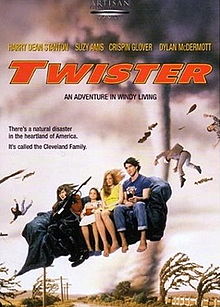
Saturday Matinee: Twister

220px-Twister_1989_film

No, not the 1996 disaster flick, but a relatively little-known indie movie from 1989 directed by Michael Almereyda and based on the novel “Oh” by Mary Robison. The film explores the self-contained world of an eccentric family whose various escalating emotional issues coincides with an oncoming tornado.  What it may lack in comparison to a standard Hollywood budget and plot it more than makes up for in atmosphere, humor and unforgettable performances.

It features one of Harry Dean Stanton’s best performances (after “Paris, Texas” and Repo Man”), Crispin Glover’s most eccentric character (out of many he has portrayed), great supporting roles by Charlayne Woodard, Suzy Amis, Dylan McDermott, and cult actress Jenny Wright, and a cameo by William S. Burroughs.

Bukowski on Quitting a Soul-Sucking Job to Become a Full-Time Writer

Charles_Bukowski_smokingTomorrow marks the birthday of working class poet and author Charles Bukowski (he would have been 94). Bukowski’s creativity had been stifled for most of his adult life as a wage slave until at age 49 he seized an opportunity to break free. Bukowski showed his gratitude to his benefactor, Black Sparrow Press, by publishing most of his subsequent major works with them while supporting countless other independent presses across the country with numerous poetry and short story submissions. He also wrote a letter of thanks to John Martin, owner of Black Sparrow Press in 1986, (also containing thoughts on modern life many of us can relate to) featured in the following article:

Bukowski’s Letter of Gratitude to the Man Who Helped Him Quit His Soul-Sucking Job and Become a Full-Time Writer

By Maria Popova

Source: Brain Pickings

“To not have entirely wasted one’s life seems to be a worthy accomplishment, if only for myself.”

“Unless it comes unasked out of your heart and your mind and your mouth and your gut,” Charles Bukowski wrote in his famous poem about what it takes to be a writer, “don’t do it.” But Bukowski himself was a late bloomer in the journey of finding one’s purpose, as his own “it” — that irrepressible impulse to create — took decades to coalesce into a career.

Like many celebrated authors who once had ordinary day jobs, Buk tried a variety of blue-collar occupations before becoming a full-time writer and settling into his notorious writing routine. In his mid-thirties, he took a position as a fill-in mailman for the U.S. Postal Service. But even though he’d later passionately argue that no day job or practical limitation can stand in the way of true creativity, he found himself stifled by working for the man. By his late forties, he was still a postal worker by day, writing a column for LA’s underground magazine Open City in his spare time and collaborating on a short-lived literary magazine with another poet.

In 1969, the year before Bukowski’s fiftieth birthday, he caught the attention of Black Sparrow Press publisher John Martin, who offered Buk a monthly stipend of $100 to quit his day job and dedicate himself fully to writing. (It was by no means a novel idea — the King of Poland had done essentially the same for the great astronomer Johannes Hevelius five centuries earlier.) Bukowski gladly complied. Less than two years later, Black Sparrow Press published his first novel, appropriately titled Post Office.

But our appreciation for those early champions often comes to light with a slow burn. Seventeen years later, in August of 1986, Bukowski sent his first patron a belated but beautiful letter of gratitude. Found in Reach for the Sun: Selected Letters 1978–1994 (public library), the missive emanates Buk’s characteristic blend of playfulness and poignancy, political incorrectness and deep sensitivity, cynicism and self-conscious earnestness.

August 12, 1986

Hello John:

Thanks for the good letter. I don’t think it hurts, sometimes, to remember where you came from. You know the places where I came from. Even the people who try to write about that or make films about it, they don’t get it right. They call it “9 to 5.” It’s never 9 to 5, there’s no free lunch break at those places, in fact, at many of them in order to keep your job you don’t take lunch. Then there’s overtime and the books never seem to get the overtime right and if you complain about that, there’s another sucker to take your place.

You know my old saying, “Slavery was never abolished, it was only extended to include all the colors.”

And what hurts is the steadily diminishing humanity of those fighting to hold jobs they don’t want but fear the alternative worse. People simply empty out. They are bodies with fearful and obedient minds. The color leaves the eye. The voice becomes ugly. And the body. The hair. The fingernails. The shoes. Everything does.

As a young man I could not believe that people could give their lives over to those conditions. As an old man, I still can’t believe it. What do they do it for? Sex? TV? An automobile on monthly payments? Or children? Children who are just going to do the same things that they did?

Early on, when I was quite young and going from job to job I was foolish enough to sometimes speak to my fellow workers: “Hey, the boss can come in here at any moment and lay all of us off, just like that, don’t you realize that?”

They would just look at me. I was posing something that they didn’t want to enter their minds.

Now in industry, there are vast layoffs (steel mills dead, technical changes in other factors of the work place). They are layed off by the hundreds of thousands and their faces are stunned:

“I put in 35 years…”

“It ain’t right…”

“I don’t know what to do…”

They never pay the slaves enough so they can get free, just enough so they can stay alive and come back to work. I could see all this. Why couldn’t they? I figured the park bench was just as good or being a barfly was just as good. Why not get there first before they put me there? Why wait?

I just wrote in disgust against it all, it was a relief to get the shit out of my system. And now that I’m here, a so-called professional writer, after giving the first 50 years away, I’ve found out that there are other disgusts beyond the system.

I remember once, working as a packer in this lighting fixture company, one of the packers suddenly said: “I’ll never be free!”

One of the bosses was walking by (his name was Morrie) and he let out this delicious cackle of a laugh, enjoying the fact that this fellow was trapped for life.

So, the luck I finally had in getting out of those places, no matter how long it took, has given me a kind of joy, the jolly joy of the miracle. I now write from an old mind and an old body, long beyond the time when most men would ever think of continuing such a thing, but since I started so late I owe it to myself to continue, and when the words begin to falter and I must be helped up stairways and I can no longer tell a bluebird from a paperclip, I still feel that something in me is going to remember (no matter how far I’m gone) how I’ve come through the murder and the mess and the moil, to at least a generous way to die.

To not to have entirely wasted one’s life seems to be a worthy accomplishment, if only for myself.

yr boy,

Hank

Complement with Bukowski’s “so you want to be a writer,” then revisit this essential compendium of advice on how to find your purpose and do what you love and the spectacular resignation letter Sherwood Anderson wrote when he decided to quit his soul-sucking corporate job and become a full-time writer.