John Coltrane (b. September 23, 1926 d. July 17, 1967)


Many interesting insights on the nature and power of music in a recent article posted at Montalk.net. Tom’s writings on his site are steeped in knowledge on physics, spirituality, and multidisciplinary research on a number of academic and esoteric fields of study. The piece excerpted below is no exception, begining with an exploration of the various cultural, environmental, physiological and emotional factors forming one’s musical preferences, continuing onto effects of music on soul, spirit, and psychology and concluding with speculation on the origins, evolution and future of music:
There are subjective and objective reasons why you might prefer one song over another. Subjective reasons include:
Alone, these factors have little to do with the intrinsic musicality of the song. They merely project subjective values upon what is heard.
True music is measured by the degree to which its melody, harmony, rhythm, and texture in and of themselves evoke an objective response in us. For example, a minor chord sounds sad without us ever needing to be conditioned to feel that. Infants can distinguish between harmonious and dissonant chords well before their enculturation. A beat can make us clap or tap our foot without having to be taught to do so, as seen in babies who bend their knees and bounce to the music instinctively. Similarly, an odd pattern of strange sounds can make us tilt our heads in curiosity.
Some objective responses stimulate the intellect, some the physical body, and some the emotional and spiritual aspects of our being. So in addition to the aforementioned subjective reasons for musical preference, there are also objective ones:
Songs typically represent a mixture of all the above. When a song combines several factors, it has greater impact and wider appeal:
We know that people differ in the degree to which they respond to a song. Some may not identify with the tradition being represented; some find its intellectual complexity confusing and irritating; some only desire groove and find little appeal in a slow emotional ballad; some do not have within their souls the aspects that a song is aiming to resonate; some never had a meaningful or emotional experience linked with a particular song that, for someone else, has much sentimental value.
So when different people respond differently to the same song, understand that in regard to the objective factors, the difference involves only the degree to which that factor is present in that person. A quirky and complex experimental piece might arouse much interest in one person, little interest in another, and strong disinterest in a third. When a song has groove, one person will dance uncontrollably, another will only tap his or her foot, and another with no sense of rhythm will fold his arms in boredom. When a song resonates the emotion of happiness, one person will have tears in her eyes, another will merely feel uplifted, and another might not care for feeling happy at the moment. It’s about varying degrees on the same scale.
On the other hand, the subjective factors have no such consistency:
Strong antipathy against certain music is usually due to a combination of lack of resonance, negative conditioned associations, clash against one’s tradition or subcultural affiliation, and dislike of the bodily responses induced by a song’s texture and rhythm (such as strong dance beats coming off as licentious to the prudish, or distorted guitars grating the ears of those who prefer comfort and gentleness).
So the question arises, what does musical preference say about a person? Here are some possibilities:
These factors don’t provide much insight into your inner emotional, spiritual, archetypal composition. For that, we must look at the resonance factor, whereby something in music resonates something in you. In other words, pure communication from song to soul.
Our internal compositions differ; we don’t all have the same emotional resonance spectrum. A song can only resonate what is there to be resonated, and if a portion of one’s inner spectrum is absent, then the corresponding qualities of the song will not be noticed, let alone felt. Like two people with different types of color blindness, it’s possible for one person to see something in a song that the other cannot, and vice versa. This kind of difference is not due to a difference in subjective projection or association, but inner perception of what is objectively there.
So what we’re really talking about here is soul resonance characteristics, meaning the unique spectrum of emotions, themes of experience, and pathways to fulfillment that you most deeply respond to and yearn for. These can be glimpsed by asking yourself the following questions:
The answers may correspond to the music you resonate with most. Esoterically, the answers to these questions also correspond to the “story of your life.” The same soul resonance characteristics that are touched by music are also touched by your inner responses to life events. In fact, it is these resonance characteristics that synchronistically attract such events in the first place through quantum-metaphysical processes. Thus the theme of your life, the nature of your soul, and the musical qualities of the songs you resonate with all share correspondence.
Read the full article with audio examples at http://montalk.net/metaphys/265/soul-resonance-and-music

“Goodbye 20th Century” (1998) is a twisted but ambitious Macedonian film (directed by Darko Mitrevski and Aleksandar Popovski) connecting three allegorical tales from different eras. In the first segment, a man cursed with immortality in a post-apocalyptic world encounters a trickster who may hold the key to ending his existence. A shorter segment follows depicting the tragic first wedding captured on film in 190o. The film concludes in 1999 when a man in a Santa suit’s interruption of a military wake has violent consequences for all involved.
For English subtitles, click on the “cc” button near the bottom right corner of the video window.
9/7: On Expanding Minds, hosts Maja D’Aoust and Erik Davis have a conversation with Andy Sharp of English Heretic about death, Horror films, Hiroshima, psychogeography, and his latest release, The Underworld Service.
9/8: R.U. Sirius joins hosts Chris Dancy and Klint Finley to discuss technology transhumanism, and the current social/political climate among other topics.
https://soundcloud.com/itsmweekly/pending-mindful-cyborgs-episode-37
9/9: Peter Null interviews Professor Andrew Kolin, a professor of political science at Hilbert College in Hamburg and Kevin Carson, researcher at the Center for a Stateless Society, on militarization of police, centralization of power, war and the military-industrial complex.
9/10: On the C-Realm, KMO and June Pulliam discuss and dissect the archetypes and cultural meaning of zombie apocalypse narratives.
http://c-realmpodcast.podOmatic.com/enclosure/2014-09-10T12_48_22-07_00.mp3
9/11: Christopher Knowles joins Aeon Byte Gnostic Radio to examine how Gnosticism connects to alternative cultures, politics and humanity’s existential crisis.
9/12: On New World Next Week, James Corbett and James Evan Pilato report on 9/11 terror hysteria, Obama’s private CFR event with Sandy Berger (9/11 document thief) and the cryptocurrency/anti-surveillance potential of a new off-the-grid communications technology.
http://www.corbettreport.com/mp3/2014-09-11%20James%20Evan%20Pilato.mp3

“The Color of Life” (2002) is a feature-length compilation of some of the oddest of the many odd moments from cult Japanese late night comedy/variety program “Vermilion Pleasure Night”. Recurring skits featured on the show include NSFW English language and cooking educational programs, an alien trapped on a starship resembling a Japanese studio apartment and antics of families of zombies, mannequins and human Barbie dolls. Interspersed through the film and television episodes are surrealistic musical and/or animated segments.
For English subtitles, click on the “cc” button near the bottom right corner of the video window.
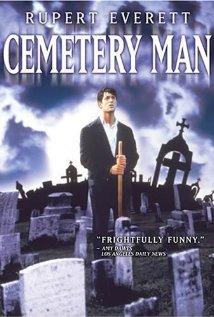 “Cemetery Man” (1994) is a film adaptation of the novel “Tiziano Sclavi” and directed by Michele Soavi. It’s an interesting hybrid of horror, comedy and art film in which Rupert Everett plays a caretaker of a cemetery whose recent arrivals come back to life a few days later. This zombie film stands out of the crowd for its visual flair and philosophical subtext. Cemetery Man should appeal to fans of early Sam Raimi, Dario Argento, and cult horror cinema in general.
INDIAN COUNTRY NEWS
"It is the duty of every man, as far as his ability extends, to detect and expose delusion and error"..Thomas Paine
Human in Algorithms
From the Roof Top
I See This
blog of the post capitalist transition.. Read or download the novel here + latest relevant posts
अध्ययन-अनुसन्धानको सार
 After the Crash