It’s a $cam! The American Way of War in the Twenty-First Century

war-is-money

By Tom Engelhardt

Source: TomDispatch.com

Let’s begin with the $12 billion in shrink-wrapped $100 bills, Iraqi oil money held in the U.S.  The Bush administration began flying it into Baghdad on C-130s soon after U.S. troops entered that city in April 2003.  Essentially dumped into the void that had once been the Iraqi state, at least $1.2 to $1.6 billion of it was stolen and ended up years later in a mysterious bunker in Lebanon.  And that’s just what happened as the starting gun went off.

It’s never ended.  In 2011, the final report of the congressionally mandated Commission on Wartime Contracting estimated that somewhere between $31 billion and $60 billion taxpayer dollars had been lost to fraud and waste in the American “reconstruction” of Iraq and Afghanistan.  In Iraq, for instance, there was that $75 million police academy, initially hailed “as crucial to U.S. efforts to prepare Iraqis to take control of the country’s security.”  It was, however, so poorly constructed that it proved a health hazard.  In 2006, “feces and urine rained from the ceilings in [its] student barracks” and that was only the beginning of its problems.

When the bad press started, Parsons Corporation, the private contractor that built it, agreed to fix it for nothing more than the princely sum already paid.  A year later, a New York Timesreporter visited and found that “the ceilings are still stained with excrement, parts of the structures are crumbling, and sections of the buildings are unusable because the toilets are filthy and nonfunctioning.”  This seems to have been par for the course.  Typically enough, the Khan Bani Saad Correctional Facility, a $40 million prison Parsons also contracted to build, was never even finished.

And these were hardly isolated cases or problems specific to Iraq.  Consider, for instance, those police stations in Afghanistan believed to be crucial to “standing up” a new security force in that country.  Despite the money poured into them and endless cost overruns, many were either never completed or never built, leaving new Afghan police recruits camping out.  And the police were hardly alone.  Take the $3.4 million unfinished teacher-training center in Sheberghan, Afghanistan, that an Iraqi company was contracted to build (using, of course, American dollars) and from which it walked away, money in hand.

And why stick to buildings, when there were those Iraqi roads to nowhere paid for by American dollars? At least one of them did at least prove useful to insurgent groups moving their guerrillas around (like the $37 million bridge the U.S. Army Corps of Engineers built between Afghanistan and Tajikistan that helped facilitate the region’s booming drug trade in opium and heroin).  In Afghanistan, Highway 1 between the capital Kabul and the southern city of Kandahar, unofficially dubbed the “highway to nowhere,” was so poorly constructed that it began crumbling in its first Afghan winter.

And don’t think that this was an aberration.  The U.S. Agency for International Development (USAID) hired an American nonprofit, International Relief and Development (IRD), to oversee an ambitious road-building program meant to gain the support of rural villagers.  Almost $300 million later, it could point to “less than 100 miles of gravel road completed.” Each mile of road had, by then, cost U.S. taxpayers $2.8 million, instead of the expected $290,000, while a quarter of the road-building funds reportedly went directly to IRD for administrative and staff costs.  Needless to say, as the road program failed, USAID hired IRD to oversee other non-transportation projects.

In these years, the cost of reconstruction never stopped growing.  In 2011, McClatchy Newsreported that “U.S. government funding for at least 15 large-scale programs and projects grew from just over $1 billion to nearly $3 billion despite the government’s questions about their effectiveness or cost.”

The Gas Station to Nowhere

So much construction and reconstruction — and so many failures.  There was the chicken-processing plant built in Iraq for $2.58 million that, except in a few Potemkin-Village-like moments, never plucked a chicken and sent it to market.  There was the sparkling new, 64,000-square-foot, state-of-the-art, $25 million headquarters for the U.S. military in Helmand Province, Afghanistan, that doubled in cost as it was being built and that three generals tried to stop.  They were overruled because Congress had already allotted the money for it, so why not spend it, even though it would never be used?  And don’t forget the $20 million that went into constructing roads and utilities for the base that was to hold it, or the$8.4 billion that went into Afghan opium-poppy-suppression and anti-drug programs and resulted in… bumper poppy crops and record opium yields, or the aid funds that somehow made their way directly into the hands of the Taliban (reputedly its second-largest funding source after those poppies).

There were the billions of dollars in aid that no one could account for, and a significant percentage of the 465,000 small arms (rifles, machine guns, grenade launchers, and the like) that the U.S. shipped to Afghanistan and simply lost track of.  Most recently, there was the Task Force for Business Stability Operations, an $800-million Pentagon project to help jump-start the Afghan economy.  It was shut down only six months ago and yet, in response to requests from the Special Inspector General for Afghanistan Reconstruction, the Pentagon swears that there are “no Defense Department personnel who can answer questions about” what the task force did with its money.  As ProPublica’s Megan McCloskey writes, “The Pentagon’s claims are particularly surprising since Joseph Catalino, the former acting director of the task force who was with the program for two years, is still employed by the Pentagon as Senior Advisor for Special Operations and Combating Terrorism.”

Still, from that pile of unaccountable taxpayer dollars, one nearly $43 million chunk did prove traceable to a single project: the building of a compressed natural gas station.  (The cost of constructing a similar gas station in neighboring Pakistan: $300,000.)  Located in an area that seems to have had no infrastructure for delivering natural gas and no cars converted for the use of such fuel, it represented the only example on record in those years of a gas station to nowhere.

All of this just scratches the surface when it comes to the piles of money that were poured into an increasingly privatized version of the American way of war and, in the form ofovercharges and abuses of every sort, often simply disappeared into the pockets of the warrior corporations that entered America’s war zones.  In a sense, a surprising amount of the money that the Pentagon and U.S. civilian agencies “invested” in Iraq and Afghanistan never left the United States, since it went directly into the coffers of those companies.

Clearly, Washington had gone to war like a drunk on a bender, while the domestic infrastructure began to fray.  At $109 billion by 2014, the American reconstruction program in Afghanistan was already, in today’s dollars, larger than the Marshall Plan (which helped put all of devastated Western Europe back on its feet after World War II) and still the country was a shambles. In Iraq, a mere $60 billion was squandered on the failed rebuilding of the country.  Keep in mind that none of this takes into account the staggering billions spent by the Pentagon in both countries to build strings of bases, ranging in size from American towns (with all the amenities of home) to tiny outposts.  There would be 505 of them in Iraq and at least 550 in Afghanistan.  Most were, in the end, abandoned, dismantled, or sometimes simply looted.  And don’t forget the vast quantities of fuel imported into Afghanistan to run the U.S. military machine in those years, some of which was siphoned off by American soldiers, to the tune of at least $15 million, and sold to local Afghans on the sly.

In other words, in the post-9/11 years, “reconstruction” and “war” have really been euphemisms for what, in other countries, we would recognize as a massive system of corruption.

And let’s not forget another kind of “reconstruction” then underway. In both countries, the U.S. was creating enormous militaries and police forces essentially from scratch to the tune of at least $25 billion in Iraq and $65 billion in Afghanistan.  What’s striking about both of these security forces, once constructed, is how similar they turned out to be to those police academies, the unfinished schools, and that natural gas station.  It can’t be purely coincidental that both of the forces Americans proudly “stood up” have turned out to be the definition of corrupt: that is, they were filled not just with genuine recruits but with serried ranks of “ghost personnel.”

In June 2014, after whole divisions of the Iraqi army collapsed and fled before modest numbers of Islamic State militants, abandoning much of their weaponry and equipment, it became clear that they had been significantly smaller in reality than on paper.  And no wonder, as that army had enlisted 50,000 “ghost soldiers” (who existed only on paper and whose salaries were lining the pockets of commanders and others).  In Afghanistan, the U.S. is still evidently helping to pay for similarly stunning numbers of phantom personnel, though no specific figures are available.  (In 2009, an estimated more than 25% of the police force consisted of such ghosts.)  As John Sopko, the U.S. inspector general for Afghanistan,warned last June: “We are paying a lot of money for ghosts in Afghanistan… whether they are ghost teachers, ghost doctors or ghost policeman or ghost soldiers.”

And lest you imagine that the U.S. military has learned its lesson, rest assured that it’s still quite capable of producing nonexistent proxy forces.  Take the Pentagon-CIA program to train thousands of carefully vetted “moderate” Syrian rebels, equip them, arm them, and put them in the field to fight the Islamic State.  Congress ponied up $500 million for it, $384 million of which was spent before that project was shut down as an abject failure.  By then, less than 200 American-backed rebels had been trained and even less put into the field in Syria — and they were almost instantly kidnapped or killed, or they simply handed over their equipment to the al-Qaeda-linked al-Nusra Front.  At one point, according to the congressional testimony of the top American commander in the Middle East, only four or five American-produced rebels were left “in the field.”  The cost-per-rebel sent into Syria, by the way, is now estimated at approximately $2 million.

A final footnote: the general who oversaw this program is, according to the New York Times, still a “rising star” in the Pentagon and in line for a promotion.

Profli-gate

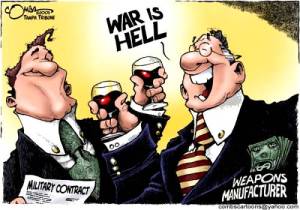
You’ve just revisited the privatized, twenty-first-century version of the American way of war, which proved to be a smorgasbord of scandal, mismanagement, and corruption as far as the eye could see.  In the tradition of Watergate, perhaps the whole system could be dubbed Profli-gate, since American war making across the Greater Middle East has represented perhaps the most profligate and least effective use of funds in the history of modern warfare.  In fact, here’s a word not usually associated with the U.S. military: the war system of this era seems to function remarkably like a monumental scam, a swindle, a fraud.

The evidence is in: the U.S. military can win battles, but not a war, not even against minimally armed minority insurgencies; it can “stand up” foreign militaries, but only if they are filled with phantom feet and if the forces themselves are as hollow as tombs; it can pour funds into the reconstruction of countries, a process guaranteed to leave them more prostrate than before; it can bomb, missile, and drone-kill significant numbers of terrorists and other enemies, even as their terror outfits and insurgent movements continue to grow stronger under the shadow of American air power.  Fourteen years and five failed states later in the Greater Middle East, all of that seems irrefutable.

And here’s something else irrefutable: amid the defeats, corruption, and disappointments, there lurks a kind of success.  After all, every disaster in which the U.S. military takes part only brings more bounty to the Pentagon.  Domestically, every failure results in calls for yet more military interventions around the world.  As a result, the military is so much bigger and better funded than it was on September 10, 2001.  The commanders who led our forces into such failures have repeatedly been rewarded and much of the top brass, civilian and military, though they should have retired in shame, have taken ever more golden parachutes into the lucrative worlds of defense contractors, lobbyists, and consultancies.

All of this couldn’t be more obvious, though it’s seldom said.  In short, there turns out to be much good fortune in the disaster business, a fact which gives the whole process the look of a classic swindle in which the patsies lose their shirts but the scam artists make out like bandits.

Add in one more thing: these days, the only part of the state held in great esteem by conservatives and the present batch of Republican presidential candidates is the U.S. military.  All of them, with the exception of Rand Paul, swear that on entering the Oval Office they will let that military loose, sending in more troops, or special ops forces, or air power, and funding the various services even more lavishly; all of this despite overwhelming evidence that the U.S. military is incapable of spending a dollar responsibly or effectively monitoring what it’s done with the taxpayer funds in its possession.  (If you don’t believe me, forget everything in this piece and just check out the finances of the most expensive weapons system in history, the F-35 Lightning II, which should really be redubbed the F-35 Overrun for its madly spiraling costs.)

But no matter. If a system works (particularly for those in it), why change it?  And by the way, in case you’re looking for a genuine steal, I have a fabulous gas station in Afghanistan to sell you…


Tom Engelhardt is a co-founder of the American Empire Project and the author of The United States of Fear as well as a history of the Cold War, The End of Victory Culture. He is a fellow of the Nation Institute and runs TomDispatch.com. His latest book is Shadow Government: Surveillance, Secret Wars, and a Global Security State in a Single-Superpower World.


The Business of War is the Cause of War

war-is-money

By Sergey Baranov & Ethan Indigo Smith

Source: Waking Times

If you objectively and consistently observe the mainstream media and its interpretation of global events, its omissive and deceptive character soon becomes abundantly clear. This could hardly be called incompetence. The coverage, which is popularly called “news,” is in fact nothing but a propaganda mechanism, designed to persistently shape public opinion in favor of war.

Who benefits from war?

Certainly not the people on the warring sides. People always suffer in war; their futures ruined and their lives destroyed. In fear, they look to their government to protect them, the very same government that is invested in war. War is a dirty business that profits off death and destruction while generating blood money for the profiteers. The people are told to look the other way, outside of their country – where the ‘enemy’ supposedly resides.

But what if the real enemy is inside the country, and wears expensive suits, not turbans? What if he speaks your language while living in luxury and sending his children to study at Princeton, Yale and Harvard? While your kids are sent off to fight in fraudulent wars for corporate interests masquerading as ‘patriotism’.

This is in fact jingoism – a nationalized fervor of aggression, based on the notion of supremacy, and usually founded in a lust for power and riches. This mindset, of course, isn’t new and is no different from Adolf Hitler’s extreme nationalism, or fascism.

Today we are living under the rule of oligarchical, trans-humanist, eugenicist elites that continuously consolidate power in order to control and confine humanity while methodically stripping us of the power to govern ourselves. One of the best ways to achieve this is to keep the people in constant fear of wars and threats of terrorism, that, in reality governments themselves typically create or sponsor. For example, we can look at the current threat of ISIS which is in fact a remodel of Al Qaeda, a group the CIA created in the 1970’s to fight the Russians in Afghanistan.

Constant mainstream promotion of ISIS with newly released videos of beheadings and other types of inhuman cruelty is used to scare the American people into the further submission, and ever-greater losses of rights and personal freedoms. The growing surveillance and domestic police state, and the passage of laws including the recent renewal of the Patriot Act, wouldn’t be possible without always frightening the general public. This policy ensures the constant funding of the military industrial complex, which unfortunately has taken over the government, as Dwight D. Eisenhower, the 34th President of the United States had foreseen and warned us about on Jan. 17th, 1961.

READ: Former Presidents Warn About the “Invisible Government” Running the United States

How can we stop the war machine?

Well, certainly not by fighting against it using its means. That’s what the machine is designed for, and an armed resistance will only be playing into its hands. After all, they’ve got the nukes and they will use them as they have already done in Hiroshima and Nagasaki. There must be another way to shut down this engine of death.

What is the way to a global peace? Certainly it isn’t paved with war… how absurd! Nor is it threats and rhetoric of war.

Furthermore, the nuclear threat means that the situation today is dire. The wars most of us have known in our lifetimes have not been nuclear which is why you need to wake up and get involved before it happens. There are no survivors under mushroom clouds – everybody dies.

There is no defense in the case of a nuclear war being unleashed – unless you were to commit yourself to living underground in a bunker for the rest of your life, without ever again seeing and feeling the sunshine. It is a death by a thousand cuts if you remain on the surface. There is no technology to clean up radiation and take it out of the air, water and land. The half-life of nuclear radiation is 4.5 billion years, equal to the age of our planet. That means that during this time, the radioactive particles will remain as deadly as they are today. This could be the end of all of us if nuclear war were to be released on a massive scale – a probability that is as high today as it has ever been, and growing proportionally with the insanity of politics.

The cold war between the Soviet Union and USA never ended, only slowly heated up. And even though the nuclear arms race developed through paranoia, the threat of nuclear war today, is in fact a very present and real one.

Realizing that war is an instrument to have us kill and be killed on behalf of corporate interests, we should be refusing the very notion of war, no matter how much we are lied to and instigated to do otherwise. War defeats individuals and empowers institutions. Wars do not happen naturally. They are orchestrated for political and economic advantage by corporate entities for which human life is only a means to a greater enrichment. The United States of America is not the only country in which the military industrial complex has taken over. The same can be seen in many modern nations.‘’War is good for the economy,’’ is a slogan often heard on the news in Israel.

But for which economy? For the economy of peace, or for the economy of war? Is it good for the people or is it good for those who are in the business of bullets and bombs?

Traveling the world and observing ordinary people, one will inevitably come to the conclusion that no one actually wants war. Regardless of the geographical location, nationality, skin color, social status etc., people want peace, and to see their children grow. Wars, although they may appear, are not fought between people. They are fought between military industrial factions and alliances warring for domination and control.

READ: All Wars Are Well Planned Banker Wars, Including World War 3

Banks financing the governments of warring sides are even more heavily involved than the war materials industries. They fund the entire game by lending money to the governments, further sinking nations in debt, while they use this money to kill each other off. Federal spending surges as the military is mobilized. Outlays for troops, weapons and munitions increases as conflicts escalate. Thee fraudulent and never-ending war in Iraq has already cost over 3 trillion dollars and counting – a steady flow of income for all those who are employed and benefiting from war.

While the average person wants to be left alone to live his or her life in peace on either side of an orchestrated conflict, government, corporations and institutions drag us into conflict time and again. The world has become a place where corporate interests, backed by corrupt governments, all funded by evil banks, violate human rights, freedom and dignity beyond measure. This poses an existential threat to the survival of our species that will not abate as long as the military industrial complex maintains its grip on our society and our culture.


About the Authors

Sergey Baranov is the author of Path: Seeking Truth in a World of Lies. Follow him on Facebook here. Follow Sergey on Facebook here https://www.facebook.com/sergey.baranov.path

Activist, author and Tai Chi teacher, Ethan Indigo Smith was born on a farm in Maine and lived in Manhattan for a number of years before migrating west to Mendocino, California. Guided by a keen sense of integrity and humanity, Ethan’s work is both deeply connected and extremely insightful, blending philosophy, politics, activism, spirituality, meditation and a unique sense of humour. Follow Ethan on Facebook here: https://www.facebook.com/pages/Ethan-Indigo-Smith/423549761069857?fref=ts

To France from a Post-9/11 America: Lessons We Learned Too Late

us-imperialism-nepal-south-asia-revolution

By John W. Whitehead

Source: The Rutherford Institute

“They that can give up essential liberty to obtain a little temporary safety deserve neither liberty nor safety.” ― Benjamin Franklin

“Voice or no voice, the people can always be brought to the bidding of the leaders. All you have to do is tell them they are being attacked and denounce the pacifists for lack of patriotism and exposing the country to danger. It works the same in any country.”—Hermann Goering, German military commander and Hitler’s designated successor

For those who remember when the first towers fell on 9/11, there is an unnerving feeling of déjà vu about the Paris attacks.

Once again, there is that same sense of shock. The same shocking images of carnage and grief dominating the news. The same disbelief that anyone could be so hateful, so monstrous, so evil as to do this to another human being. The same outpourings of support and unity from around the world. The same shared fear that this could easily have happened to us or our loved ones.

Now the drums of war are sounding. French fighter jets have carried out a series of “symbolic” air strikes on Syrian targets. France’s borders have been closed, Paris has been locked down and military personnel are patrolling its streets.

What remains to be seen is whether France, standing where the United States did 14 years ago, will follow in America’s footsteps as she grapples with the best way to shore up her defenses, where to draw the delicate line in balancing security with liberty, and what it means to secure justice for those whose lives were taken.

Here are some of the lessons we in the United States learned too late about allowing our freedoms to be eviscerated in exchange for the phantom promise of security.

Beware of mammoth legislation that expands the government’s powers at the citizenry’s expense. Rushed through Congress a mere 45 days after the 9/11 attacks, the USA Patriot Act drove a stake through the heart of the Bill of Rights, undermined civil liberties, expanded the government’s powers and opened the door to far-reaching surveillance by the government on American citizens.

Pre-emptive strikes will only lead to further blowback. Not content to wage war against Afghanistan, which served as the base for Osama bin Laden, the U.S. embarked on a pre-emptive war against Iraq in order to “stop any adversary challenging America’s military superiority and adopt a strike-first policy against terrorist threats ‘before they’re fully formed.’” We are still suffering the consequences of this failed policy, which has resulted in lives lost, taxpayer dollars wasted, the fomenting of hatred against the U.S. and the further radicalization of terrorist cells.

War is costly. There are many reasons to go to war, but those who have advocated that the U.S. remain at war, year after year, are the very entities that have profited most from these endless military occupations and exercises. Thus far, the U.S. taxpayer has been made to shell out more than $1.6 trillion on “military operations, the training of security forces in Afghanistan and Iraq, weapons maintenance, base support, reconstruction, embassy maintenance, foreign aid, and veterans’ medical care, as well as war-related intelligence operations not tracked by the Pentagon” since 2001. Other estimates that account for war-related spending, veterans’ benefits and various promissory notes place that figure closer to $4.4 trillion. That also does not include the more than 210,000 civilians killed so far, or the 7.6 million refugees displaced from their homes as a result of the endless drone strikes and violence.

Advocating torture makes you no better than terrorists. The horrors that took place at Abu Ghraib, the American-run prison in Iraq, continue to shock those with any decency. Photographs leaked to the media depicted “US military personnel humiliating, hurting and abusing Iraqi prisoners in a myriad of perverse ways. While American servicemen and women smiled and gave thumbs up, naked men were threatened by dogs, or were hooded, forced into sexual positions, placed standing with wires attached to their bodies, or left bleeding on prison floors.” Adding to the descent into moral depravity, the United States government legalized the use of torture, including waterboarding, in violation of international law and continues to sanction human rights violations in the pursuit of national security. The ramifications have been far-reaching, with local police now employing similar torture tactics at secret locations such as Homan Square in Chicago.

Allowing the government to spy on the citizenry will not reduce acts of terrorism, but it will result in a watched, submissive, surveillance society. A byproduct of this post 9/11-age in which we live, whether you’re walking through a store, driving your car, checking email, or talking to friends and family on the phone, you can be sure that some government agency, whether the NSA or some other entity, is listening in and tracking your behavior. This doesn’t even begin to touch on the corporate trackers such as Google that monitor your purchases, web browsing, Facebook posts and other activities taking place in the cyber sphere. We are all becoming data collected in government files. The chilling effect of this endless surveillance is a more anxious and submissive citizenry.

Don’t become so distracted by the news cycle that you lose sight of what the government is doing. The average American has a hard time keeping up with and remembering all of the “events,” manufactured or otherwise, which occur like clockwork and keep us distracted, deluded, amused, and insulated from the reality of the American police state. Whether these events are critical or unimportant, when we’re being bombarded with wall-to-wall news coverage and news cycles that change every few days, it’s difficult to stay focused on one thing—namely, holding the government accountable to abiding by the rule of law—and the powers-that-be understand this. In this way, regularly scheduled trivia and/or distractions that keep the citizenry tuned into the various breaking news headlines and entertainment spectacles also keep them tuned out to the government’s steady encroachments on their freedoms.

If you stop holding the government accountable to the rule of law, the only laws it abides by will be the ones used to clamp down on the citizenry. Having failed to hold government officials accountable to abiding by the rule of law, the American people have found themselves saddled with a government that skirts, flouts and violates the Constitution with little consequence. Overcriminalization, asset forfeiture schemes, police brutality, profit-driven prisons, warrantless surveillance, SWAT team raids, indefinite detentions, covert agencies, and secret courts are just a few of the egregious practices carried out by a government that operates beyond the reach of the law.

Do not turn your country into a battlefield, your citizens into enemy combatants, and your law enforcement officers into extensions of the military. A standing army—something that propelled the early colonists into revolution—strips the citizenry of any vestige of freedom. How can there be any semblance of freedom when there are tanks in the streets, military encampments in cities, Blackhawk helicopters and armed drones patrolling overhead? It was for this reason that those who established America vested control of the military in a civilian government, with a civilian commander-in-chief. They did not want a military government, ruled by force. Rather, they opted for a republic bound by the rule of law: the U.S. Constitution. Unfortunately, we in America now find ourselves struggling to retain some semblance of freedom in the face of police and law enforcement agencies that look and act like the military and have just as little regard for the Fourth Amendment, laws such as the NDAA that allow the military to arrest and indefinitely detain American citizens, and military drills that acclimate the American people to the sight of armored tanks in the streets, military encampments in cities, and combat aircraft patrolling overhead.

As long as you remain fearful and distrustful of each other, you will be incapable of standing united against any threats posed by a power-hungry government. Early on, U.S. officials solved the problem of how to implement their authoritarian policies without incurring a citizen uprising: fear. The powers-that-be want us to feel threatened by forces beyond our control (terrorists, shooters, bombers). They want us afraid and dependent on the government and its militarized armies for our safety and well-being. Most of all, they want us distrustful of each other, divided by our prejudices, and at each other’s throats.

If you trade your freedom for security, the terrorists win. We’ve walked a strange and harrowing road since September 11, 2001, littered with the debris of our once-vaunted liberties. We have gone from a nation that took great pride in being a model of a representative democracy to being a model of how to persuade a freedom-loving people to march in lockstep with a police state. And in so doing, we have proven Osama Bin Laden right. He warned that “freedom and human rights in America are doomed. The U.S. government will lead the American people in — and the West in general — into an unbearable hell and a choking life.”

To sum things up, the destruction that began with the 9/11 terror attacks has expanded into an all-out campaign of terror, trauma, acclimation and indoctrination aimed at getting Americans used to life in the American Police State. The bogeyman’s names and faces change over time, but the end result remains the same: our unquestioning acquiescence to anything the government wants to do in exchange for the phantom promise of safety and security has transitioned us to life in a society where government agents routinely practice violence on the citizens while, in conjunction with the Corporate State, spying on the most intimate details of our personal lives.

The lesson learned, as I document in my book Battlefield America: The War on the American People, is simply this: once you start down the road towards a police state, it will be very difficult to turn back.

Follow the Money: From Paris to ISIS to Paris

By James Corbett

Source: The Corbett Report

Let us for one moment accept the whole Paris attacks narrative hook, line and sinker.

That the French government could not possibly have foreseen an attack.

That a multi-site emergency exercise planned for the same day just happened to be simulating an armed group committing attacks around the city just hours before that very scenario unfolded.

That the “mastermind” of the attacks just happens to be the latest in a string of terrorist boogeymen who manage to escape capture time and time again.

OK, fine. The question that the French people should STILL be asking themselves, even if they believe all of that, is this: How does the Islamic State, a ragtag band of jihadis who are supposedly at war with the combined military might of the US, Turkey, the Saudis, the Russians, the Iraqis, the Iranians and many others (including, of course, the Syrians) manage to fund and coordinate spectacular international terror attacks, including not only the Paris attack, but also (apparently) bombings in Turkey and Lebanon, and the take down of Russian airliners? How is it that governments can flag and track the “suspicious” financial transactions of anyone withdrawing or transferring over $10,000 from their own bank account, but can’t seem to find a way to restrict cash flows, arms and munitions to a geographically isolated enemy who are dependent on oil sales for their financial survival?

Good question. Just don’t ask the US State Department spokesman those questions, because he doesn’t have the answers. When asked earlier this week by RT’s Gayane Chichakyan “whether the US has sanctioned any banks suspected of carrying out transactions for ISIL,” department spokesman Mark Toner responded with a resounding: “I’d have to look into that. I don’t have the answer in front of me.”

Apparently the question of how ISIS is financing its operations is of so little interest to the State Department that they haven’t bothered to look into it. So in the interest of helping them out with their homework, let’s connect a few dots, shall we?

Earlier this year it was revealed that French President François Hollande had authorized illegal shipments of arms to the Syrian terrorists in 2012. The deliveries–including cannons, machine guns, rocket launchers and anti-tank missiles–were in direct contravention of an EU embargo that was in place at the time.

In late 2012 it was revealed that one of the most prominent backers of the Syrian terrorists was the French government, who in addition to their illegal arms shipments were also delivering money directly to the terrorist opposition leaders.

Last year the French arms export industry enjoyed its best sales in 15 years, with revenues up 18%. The reason for the Merchant of Death bonanza? A spike in sales to Saudi Arabia and Qatar, two of the main funders and supporters of ISIS.

Of course, not all of the blame for the fostering, funding, arming, equipping and training of ISIS belongs to France. Much of it belongs to the United States, its Gulf allies, Turkey and Israel, as well as assorted other NATO members. But there is a line to be drawn from the arms and funds that France supplied to the “moderate” terrorists in Syria and the seeming international operational abilities of this seemingly unstoppable terrorist boogeyman group.

France is a nation in mourning. But perhaps the French people can reserve at least some of their outrage for the government which has used their own tax money to fund, supply and support the terrorists they are now at war with.


Related Video:

Politicians Exploit School Shooting While Ignoring Bombing Victims

Ron_Paul_0723

By Ron Paul

Source: Ron Paul Institute

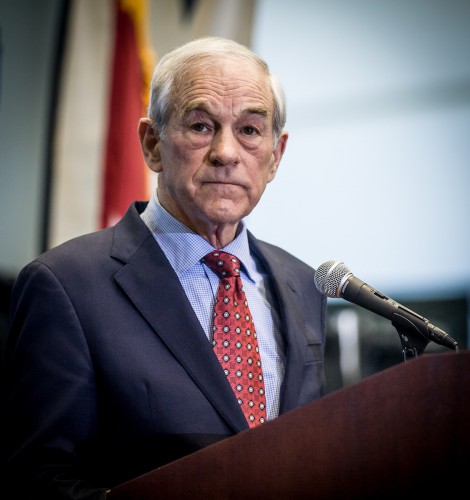
Following the recent Oregon school shooting, many politicians rushed to the microphones to call for new gun control laws. President Obama even called on gun control supporters to “politicize” the shooting, while some members of Congress worked to establish a special commission on gun violence.

The reaction to the shooting stands in stark contrast to the reaction to the US military’s bombing of an Afghanistan hospital run by the international humanitarian (and Nobel Peace Prize winning) group Doctors Without Borders.

Our Nobel Peace Prize winning president did apologize to his fellow Nobel laureate for the bombing. However, President Obama has not “politicized” this tragedy by using it to justify ending military involvement in Afghanistan. No one in Congress is pushing for a special commission to examine the human costs of US militarism, and the mainstream media has largely ignored Doctors Without Borders’ accusation that the bombing constitutes a war crime.

The reason for the different reactions to these two events is that politicians prefer to focus on events they can “politicize” to increase government power. In contrast, politicians ignore incidents that raise uncomfortable questions about US foreign policy.

If the political and media elites were really interested in preventing future mass shootings, they would repeal the federal “gun-free” schools law, for example. By letting shooters know that their intended victims are defenseless, the gun-free schools law turns schoolchildren into easy targets.

Even some who oppose gun control are using the shooting to justify expanding federal power instead of trying to repeal unconstitutional laws. Some opponents of new gun control laws say Congress should expand the federal role in identifying, tracking, and treating those with “mental health problems.” This ignores the fact that many shooters were using psychotropic drugs prescribed by a mental health professional when they committed the horrible acts. Furthermore, creating a system to identify and track anyone with a “mental health problem” could deny respect for individuals’ Second Amendment and other rights because they perhaps once sought counseling for depression while going through a divorce or coping with a loved one’s passing.

While our political and media elites are eager to debate how much liberty people must sacrifice for safety, they are desperate to avoid debating the morality of our foreign policy. To admit that the US military sometimes commits immoral acts is to admit that the US government is not an unalloyed force for good. Even many proponents of our recent wars support using the US military for “humanitarian” purposes. Thus they are as reluctant as the neoconservatives to question the fundamental goodness of US foreign policy.

Anyone who raises constitutional or moral objections to the US use of drones, bombs, indefinite detention, and torture risks being attacked as anti-American and soft on terrorism. The smear of “terrorist apologist” is also hurled at those who dare suggest that it is our interventionist foreign policy, not a hatred of freedom, that causes people in other countries to dislike the United States. Which is a more logical explanation for why someone would resent America — a family member killed in a drone attack launched by the US military or rage over our abundance of liberty?

The disparate reactions to the Oregon school shooting and the Afghanistan hospital bombing shows the political class is unwilling and unable to acknowledge that the US government cannot run the world, run our lives, or run the economy. Clearly, politicians will never stop expanding government and give us back our lost liberties unless and until the people demand it.

Why Hillary Won the Debate (Even though She Didn’t)

images

By Gary Leupp

Source: Dissident Voice

CNN and Facebook co-sponsored last week’s Democratic presidential frontrunners’ “debate.” After the event, CNN conducted a poll. “Who won the debate?” it asked. The result: 83% Bernie Sanders; 12% Hillary Clinton.

Facebook also took a poll. “Who do you think won?” Over 79% responded, “Bernie Sanders.”

The CNN editors’ take? “CLINTON’S CONFIDANT SWEEP.”

Slate conducted a poll. “Who won the presidential debate?” asked the magazine. 75% of respondents said Bernie Sanders; 18% gave it to Hillary Clinton.

“Hillary Clinton won,” reported Slate “senior writer” Josh Vorhees exuberantly. “She just needed to be solid in the debate. Instead, she was spectacular.”

Spectacular! with 18% of Slate’s own polling numbers. Go figure.

“Who do you think won?” asked Time Magazine. The response?  Bernie Sanders: 70%, Hillary Clinton 16%.

The Time headline:  “CLINTON IN CONTROL.”

Are you disgusted yet? This goes far beyond distortion, and far beyond the tampering with facts that characterized Soviet-style reporting in Izvestia and Pravda in the decade before the USSR collapsed. This is in-your-face rejection of empirical reality, to say nothing of an insult to the viewers polled. The entire mainstream news media is complicit.

Imagine if the “free” press—free to publish whatever its corporate editors want, including even the truth, at their discretion—had sought to spin this story differently.

“POLLS SHOW BIG WIN FOR SANDERS,” CNN might have proclaimed, between commercials.

“A great night for Sanders,” Slate might have announced.

“SANDERS TROUNCES CLINTON,” Time might have acknowledged.

But no, and this is par for the course. The TV cable news anchors took ages to concede that, well, yes, maybe Jed Bush—despite his solid RNC support and Wall Street’s firm endorsement—is not the inevitable GOP candidate. They’ve had to acknowledge that (for whatever reasons) Donald Trump’s actually striking a much deeper chord than warmonger Dubya’s little brother among likely voters.

But they’re stubbornly refusing to recognize some things they don’t want to see—things that don’t follow their script.

They don’t understand that people in their twenties who constitute the 75-year-old Sanders’ support base have no problem with “socialism” but rather have lots of problems with Wall Street. These “millenials” are even—horrors!—increasingly inclined to question the national god of capitalism itself. It has fewer positive connotations to them than it did for their parents who grew up during the Cold War and were subjected to its particular brainwashing agenda.

That’s the sort of brainwashing that allows Trump, a demagogue preying on the most abjectly ignorant to tell cheering crowds that he calls Sanders “a ‘socialist, slash, communist,’ okay? ‘Cause that’s what he is!”

‘Cause that’s what he is! Sanders is a communist. End of story. End of rational thought.

I myself am not a Sanders supporter. He’s nowhere nearly left enough for me. But then I’m not a supporter of the whole bogus, skewed, money-driven two-party electoral system itself, which seems designed to hoodwink people, channel their energies into itself, and then produce disillusionment soon after the election, as the elected official reneges on promises and proved to be anything other than a harbinger of “change.” The system is wired to then hoodwink people again, re-channel their energies (again back into itself), bouncing people back and forth between two hopelessly corrupt parties that are really two factions of a single corporate party.

The system tells us, “If you don’t vote, you have nothing to say” and reduces political involvement to endorsing one of its (safe) choices. It excludes from the debate stage even the discussion of needed radical change. The electoral process is designed to keep you out of the street (where history is really made) and lead you into a box, like a confessional booth or a porno video cubicle, a private space in which you’re touched by something greater than yourself and leave with a sense of gratification. You were a good citizen. You exercised your precious right to VOTE and did your part!

Casting that ballot in private is supposed to make you feel good about yourself, as a participant in the state. It’s supposed to make you think that, since you actually participated in the construction of the existing polity, when you talk about what it does, you can accept personal responsibility for its crimes.

For example, you might say: “We shouldn’t have invaded Iraq.” In doing so you implicitly include yourself—despite your disagreement—among those who actually did the vicious deed. I prefer to say, “Leave me out of that ‘we,’ since I had nothing to do with it. I fought against it, tooth and nail, attending every anti-war demonstration I could and railing against it to all who would listen.”

“Well, our government did it,” you might correct yourself. “We voted for it.” But I will reply I didn’t; I stayed at home on election day, 2000. It’s like I was invited to a party that day, and disliking all who’d be there, I politely declined to attend.

When you vote, you vote not so much for a person as for the system itself, validating it and the rules surrounding the procedure. Casting the ballot is the state’s highest ritual, the individual’s most intimate connection with the state. It makes you feel one with it. It’s rather like taking the Holy Communion at mass. You’re swallowing something, and making a statement of faith: I believe in this system!

This (corporate) system you vote for, every time you vote at all, commands the (corporate) media to such an extent that it can do what we see in the reportage cited above. It can turn reality on its head and get away with it, whether it’s shaping public opinion about Saddam’s weapons of mass destruction, a Russian invasion of Ukraine, U.S. successes against the Taliban in Afghanistan, Syrian “moderates” gaining against Assad, or victory in a farcical televised debate.

Whatever you think about Sanders, is it not outrageous that the mass media can obscure his plain victory in that exercise as a triumph for Hillary Clinton? Even a “spectacular” win? Isn’t it clear that she was pronounced the victor not because she actually won out over Sanders but because powerful people steering the “free” press needed her to do so?

As PR/disinformation master Karl Rove once put it (and this should be repeated as often as we repeat that wonderful quote from the imprisoned Goebbels at Nuremberg about using fear to build mass support for war): “We’re an empire now, and when we act, we create our own reality.”

It’s not a sentiment unique to Republicans. Recall how, during the 2012 Democratic national convention, the crowd clearly voted down the inclusion of a line supporting Jerusalem as the eternal, undivided capital of Israel in its platform. The change required a two-thirds majority of the vote, according to party rules. At least half the delegates voted against it.

Still, the convention chairman to the outrage of many present announced (after some hushed consultation) that the “Ayes” carried the day. So much for democracy at the “Democratic” Party’s convention.

The mainstream press, by and large, wants Hillary Clinton to be the Democratic nominee for president. Wall Street’s leading candidates are Jeb Bush and Clinton; both are beloved of big money and either one will do. Sanders (even though in office he would likely buckle to their will, the same way Greece’s “socialist” Alexis Tsipras buckled to the IMF and European Central Bank) is anathema to Wall Street. And the connections between Wall Street, the Washington power elite, and the press are—to use the Chinese expression—as close as lips and teeth.

Finance capital rules the world and will do so until the “millions and millions” Bernie keeps talking about find some way to effectively challenge it.

Thus Sanders could not win the debate, even though he did. And Hillary was destined to win the debate, even though she didn’t. Get it? And isn’t it great you have the right to vote for her?


Gary Leupp is a Professor of History at Tufts University, and author of numerous works on Japanese history. He can be reached at: gleupp@granite.tufts.edu. Read other articles by Gary.

Putin’s Blitz Leaves Washington Rankled and Confused

putin-obama-620x350

By Mike Whitney

Source: Counterpunch

On Monday, Russian President Vladimir Putin delivered a blistering critique of US foreign policy to the UN General Assembly.

On Tuesday, Barack Obama shoved a knife in Putin’s back. This is from Reuters:

“France will discuss with its partners in the coming days a proposal by Turkey and members of the Syrian opposition for a no-fly zone in northern Syria, French President Francois Hollande said on Monday…

French Foreign Minister Laurent Fabius “in the coming days will look at what the demarcation would be, how this zone could be secured and what our partners think,” Hollande told reporters on the sidelines of the annual United Nations General Assembly…

Hollande said such a proposal could eventually be rubber-stamped with a U.N. Security Council resolution that “would give international legitimacy to what’s happening in this zone.”…(France, partners to discuss northern Syria ‘safe zone’: Hollande, Reuters)

Hollande is a liar and a puppet. He knows the Security Council will never approve a no-fly zone. Russia and China have already said so. And they’ve explained why they are opposed to it, too. It’s because they don’t want another failed state on their hands like Libya, which is what happened last time the US and NATO imposed a no-fly zone.

But that’s beside the point. The real reason the no-fly zone issue has resurfaced is because it was one of the concessions Obama made to Turkish President Recep Tayyip Erdogan for the use of Incirlik airbase.  Washington has kept the terms of that deal secret, but Hollande has let the cat out of the bag.

So who put sock-puppet Hollande up to this no-fly zone nonsense?

Why the Obama administration, of course. Does anyone seriously believe that Hollande is conducting his own independent policy in Syria?  Of course not.  Hollande is just doing what he’s been told to do, just like he did when he was told to scotch the Mistral deal that cost France a whopping $1.2 billion. Washington and NATO didn’t like the idea that France was selling state-of-the-art helicopter carriers to arch-rival Putin, so they ordered Hollande to put the kibosh on the deal. Which he did, because that’s what puppets do; they obey their masters.  Now he’s providing cover for Obama so the real details of the Incirlik agreement remain off the public’s radar. That’s why we say,  Obama shoved a knife in Putin’s back, because, ultimately, the no-fly zone damages Russia’s interests in Syria.

The significance of the Reuters article cannot be overstated. It suggests that there was a quid pro quo for the use of Incirlik, and that Turkey’s demands were accepted. Why is that important?

Because Turkey had three demands:

1–Safe zones in north Syria (which means that Turkey would basically annex a good portion of Syrian sovereign territory.)
2–A no-fly zone (which would allow either Turkish troops, US Special Forces or US-backed jihadi militants to conduct their military operations with the support of US air cover.)
3–A commitment from the US that it will help Turkey remove Assad.

Did Obama agree to all three of these demands before Erdogan agreed to let the USAF use Incirlik?

Yes, at least I think he did, which is why I think we are at the beginning of Phase 2 of the US aggression against Syria. Incirlik changes everything. US bombers, drones and fighters can enter Syrian airspace in just 15 minutes instead of 3 to 4 hours from Bahrain. That means more sorties, more surveillance drones, and more air-cover for US-backed militias and Special Forces on the ground.  It means the US can impose a de facto no-fly zone over most of Syria that will expose and weaken Syrian forces tipping the odds decisively in favor of Obama’s jihadi army. Incirlik is a game-changer, the cornerstone of US policy in Syria.  With access to Incirlik, victory is within Washington’s reach. That’s how important Incirlik is.

And that’s why the normally-cautious Putin decided to deploy his warplanes, troops and weaponry so soon after the Incirlik deal was signed. He could see the handwriting on the wall. He knew he had to either act fast and turn the tide or accept the fact that the US and Turkey were going to topple Assad sometime after Turkey’s snap elections on November 1. That was his timeline for action. So he did the right thing and joined the fighting.

But what does Putin do now?

On Wednesday, just two days after Putin announced to the UN General Assembly:  “We can no longer tolerate the current state of affairs in the world,” Putin ordered the bombing of targets in Homs, an ISIS stronghold in West Syria. The attacks, which were unanimously approved by the Russian parliament earlier in the day, and which are entirely legal under international law (Putin was invited by Syria’s sitting president, Assad, to carry out the airstrikes), have put US policy in a tailspin. While the Russian military is maintaining an open channel to the Pentagon and reporting when-and-where it is carrying out its airstrikes, U.S. State Department spokesman John Kirby said that the US plans to “continue to fly missions over Iraq and Syria” increasing the possibility of an unintended clash that could lead to a confrontation between the US and Russia.

Is that what Washington wants, a violent incident that pits one nuclear-armed adversary against the other?

Let’s consider one probable scenario: Let’s say an F-16 is shot down over Syria while providing air cover for Obama’s militants on the ground. Now that Russia is conducting air raids over Syria, there’s a good chance that Putin would be blamed for the incident like he was when the Malaysian airliner was downed over East Ukraine.

So what happens next?

Judging by similar incidents in the past,  the media would swing into full-propaganda mode exhorting the administration to launch retaliatory attacks on Russian military sites while calling for a broader US-NATO mobilization. That, in turn, would force Putin to either fight back and up-the-ante or back-down and face disgrace.  Either way, Putin loses and the US gets one step closer to its objective of toppling Bashar al Assad.

Putin knows all this. He understands the risks of military involvement which is why he has only reluctantly committed to the present campaign. That said; we should expect him to act in much the same way as he did when Georgian troops invaded South Ossetia in 2007. Putin immediately deployed the tanks to push the invading troops back over the border into Georgia and then quickly ended the hostilities. He was lambasted by critics on the right for not invading Georgia and removing their leader, Mikheil Saakashvili, in the Capital. But as it turned out, Putin’s restraint spared Russia the unnecessary hardship of occupation which can drain resources and erode public support. Putin was right and his critics were wrong.

Will his actions in Syria mirror those in South Ossetia?

It’s hard to say, but it’s clear that the Obama crew is thunderstruck by the speed of the intervention. Check this out from the UK Guardian:  “Back at the White House, spokesperson Josh Earnest suggests that Vladimir Putin did not give Barack Obama warning about his intentions to begin air strikes in Syria.

“We have long said we would welcome constructive Russian coordination,” Earnest says, before qualifying that the talks between US and Russian militaries will be purely tactical: “to ensure that our military activities and the military activities of coalition partners would be safely conducted.” (The Guardian)

What does Earnest’s statement mean?  It means the entire US political class was caught off-guard by Putin’s  blitz and has not yet settled on an appropriate response. They know that Putin is undoing years of work by rolling up proxy-units that were supposed to achieve US objectives, but there is no agreement among ruling elites about what should be done. And making a decision of that magnitude could take time, which means that Putin should be able to obliterate a fair number of the terrorist hideouts and restore control of large parts of the country to Assad before the US ever agrees to a strategy. In fact, if he moves fast, he might even be able to force the US and their Gulf allies to the bargaining table where a political solution could be reached.

It’s a long-shot, but it’s a much better option then waiting around for the US to impose a no-fly zone that would collapse the central government and reduce Syria to Libya-type anarchy. There’s no future in that at all.

MIKE WHITNEY lives in Washington state. He is a contributor to Hopeless: Barack Obama and the Politics of Illusion (AK Press). Hopeless is also available in a Kindle edition. He can be reached at fergiewhitney@msn.com.

isis_russia_10-1-2015_8-21-13_am